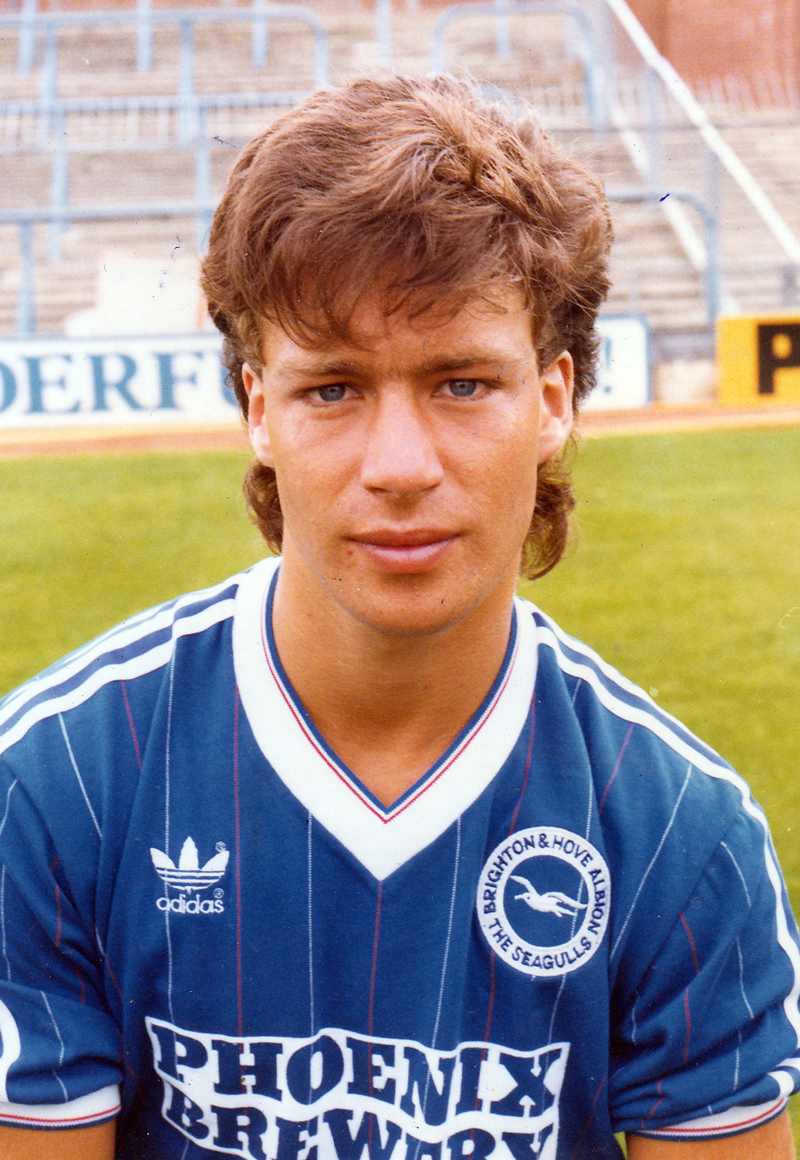
Category Archives: Photo Opportunities

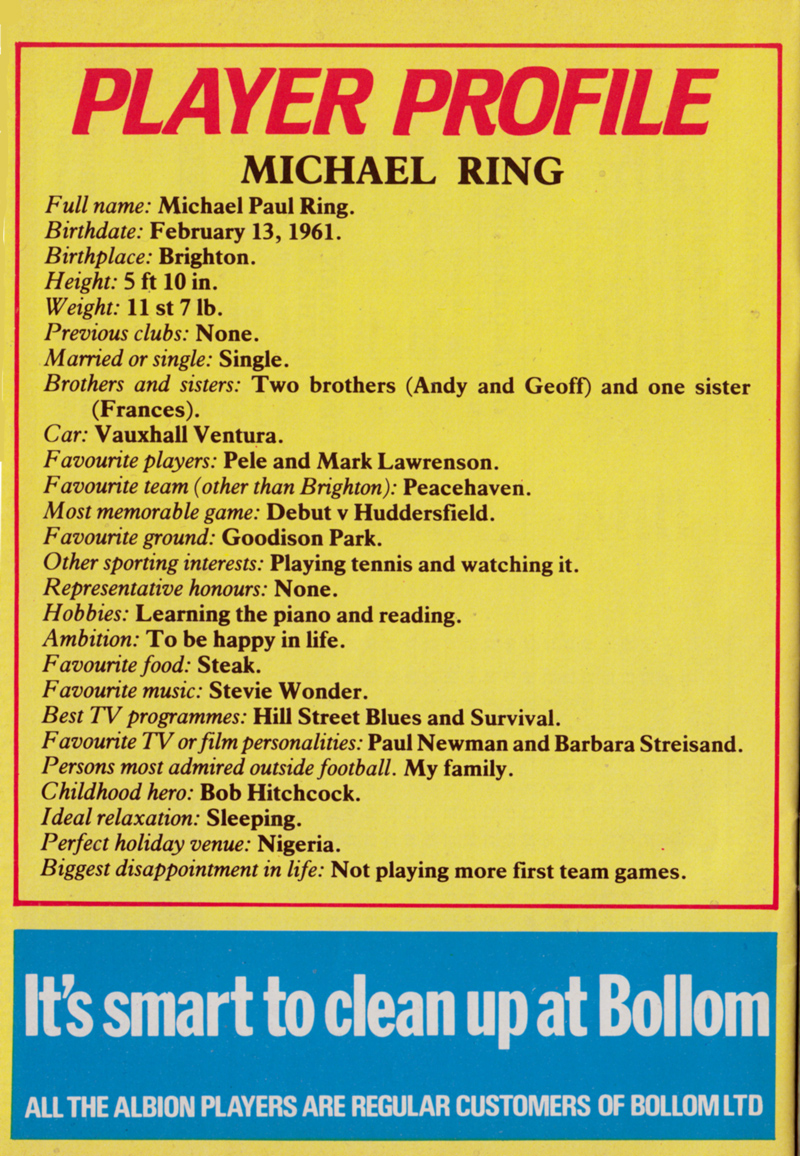
Michael Ring – player profile

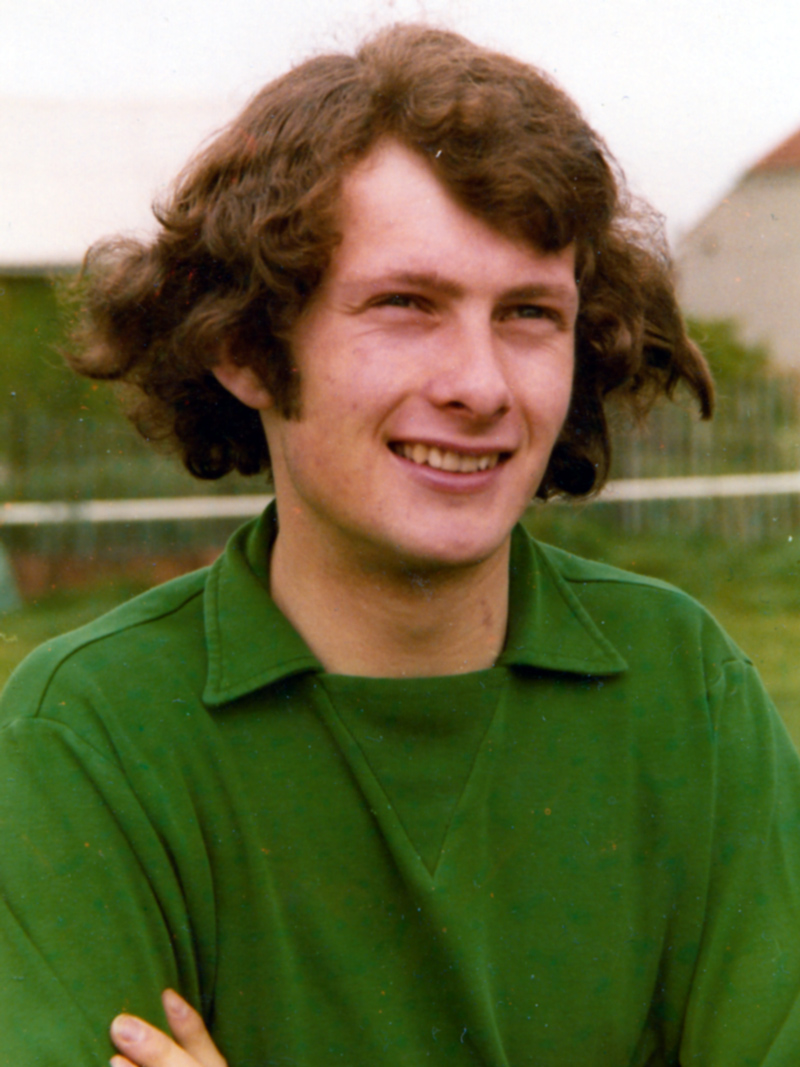
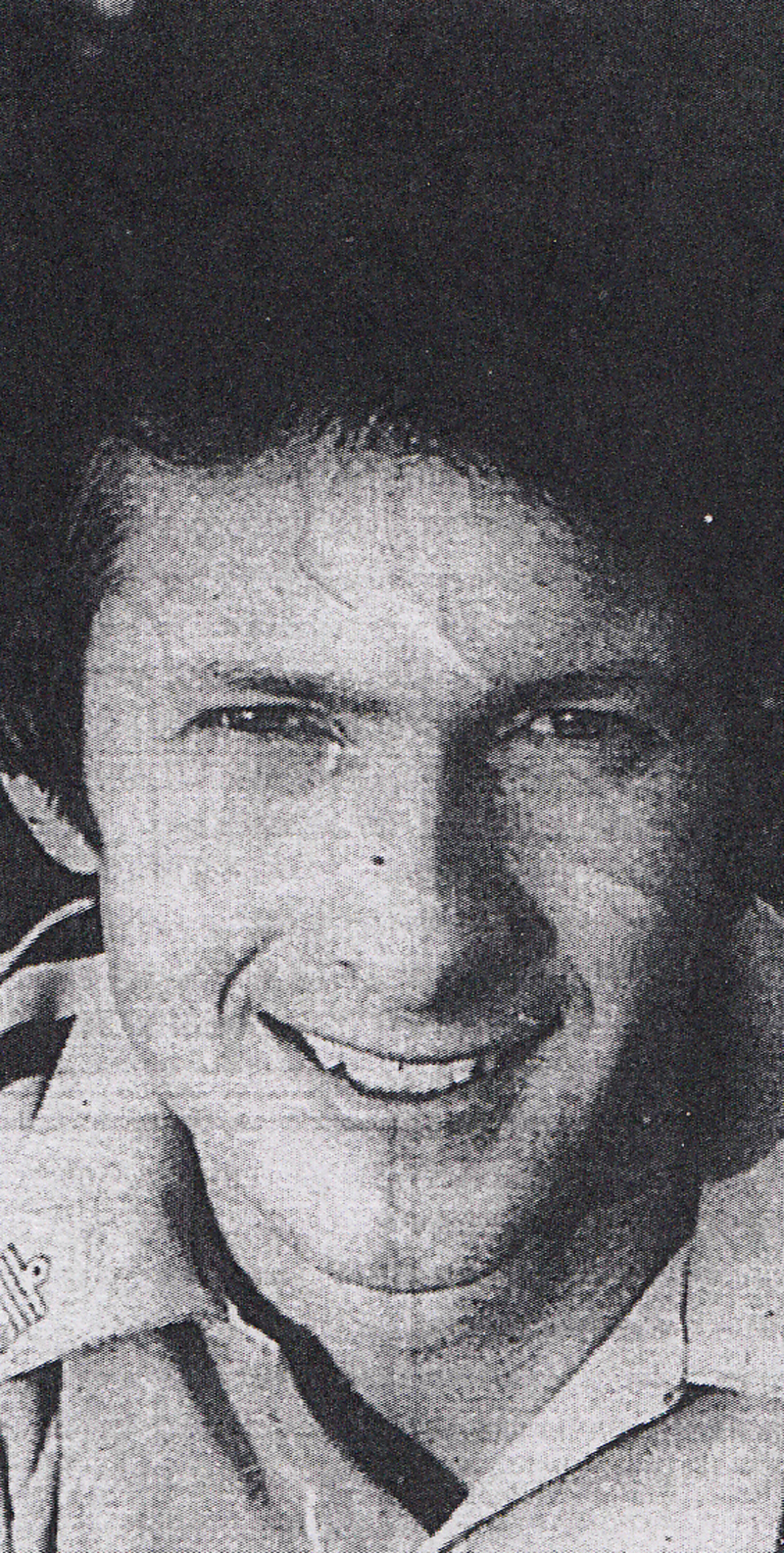
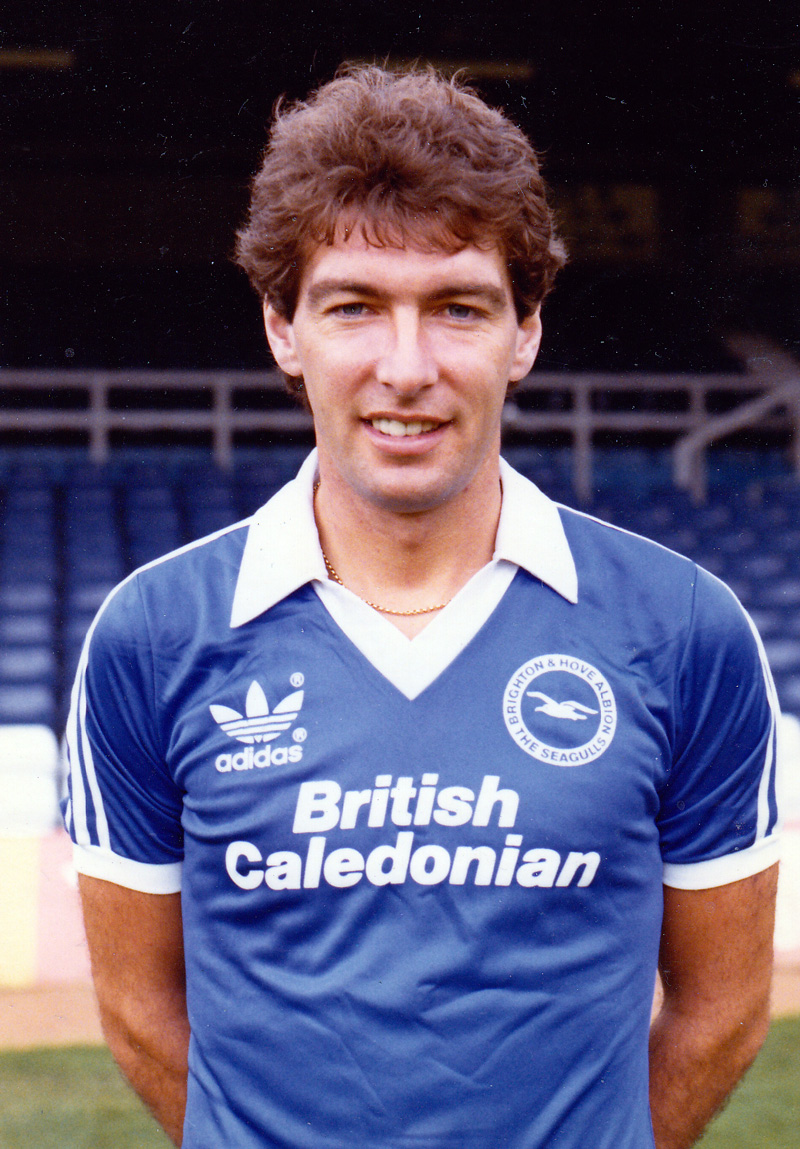
Here is 20 year old Brighton forward Michael Ring before the 1981/82 season:

michaelring2

No smiles for him! Perhaps his last answer in his player profile gives an indication as to why the long face:

michaelringprofile

Turning professional in 1978, the youngster announced himself with six goals as Brighton’s youngsters beat Eastbourne Town’s youth side 21-0 in the Southern Youth League on 17th September 1978. Other scorers were Peck 6, Vessey 4, Liddle 2, Cox, Gent and Stevens.

After developing in the reserves, Ring eventually made his Albion first team debut at Huddersfield in the League Cup 2nd Round 1st Leg in October 1981, under Mike Bailey. However it was an unhappy occasion for the club, as the Terriers won 1-0. Ring lost his place straight away, missing the return leg which the Seagulls won 2-0 thanks to Andy Ritchie and Tony Grealish both scoring in the last five minutes.

in April 1982, Ring joined Morton on loan and appeared in four Scottish Premier League matches. When he returned to the Goldstone, he figured in a welcome 2-0 home victory over Wolves in May, only Brighton’s second victory in twelve League matches.

If the Brighton-born attacker thought this was the start of him breaking into the first team, he would be disappointed. He made a single substitute appearance throughout 1982/83, in a 5-0 whitewash by Luton Town, before coming off the bench three more times the following season. Still, silverware was around the corner as he went on an extended loan to Ballymena in 1983/84, and came home with an Irish Cup winner’s medal.

At the end of the season, he was released, and signed for Brian Horton’s Hull City side.

Tagged

Albion’s youth side 1973

From the Brighton v Charlton programme from September 1973:

albionyouth1973

It’s the Albion’s youth party at the Freiburg Youth Tournament from July that year.

Back row: Dave Busby, Stephen Barratt, Richard Sopp, Steven Piper, Trevor Bryson, Glen Wilson (trainer).

Middle row: Tommy Barden, Lee Williams, Paul Holder, Garry Wilkins, Michael Jones, Pat Hilton, Malcolm Lord.

Front row: Francis Fraser, Terry Norton, Glen Geard, Tony Towner, Mick Conway.

Look at how small Glen Geard is in this photo – but then he was just 13 years old at the time!

With him in that front row is Francis Fraser, dad to Tommy Fraser, who was with the Seagulls from 2004 to 2009. Francis’ dad was former Richardson gang member ‘Mad’ Frankie Fraser.

Tagged , , , , , ,

Willie Young blows up

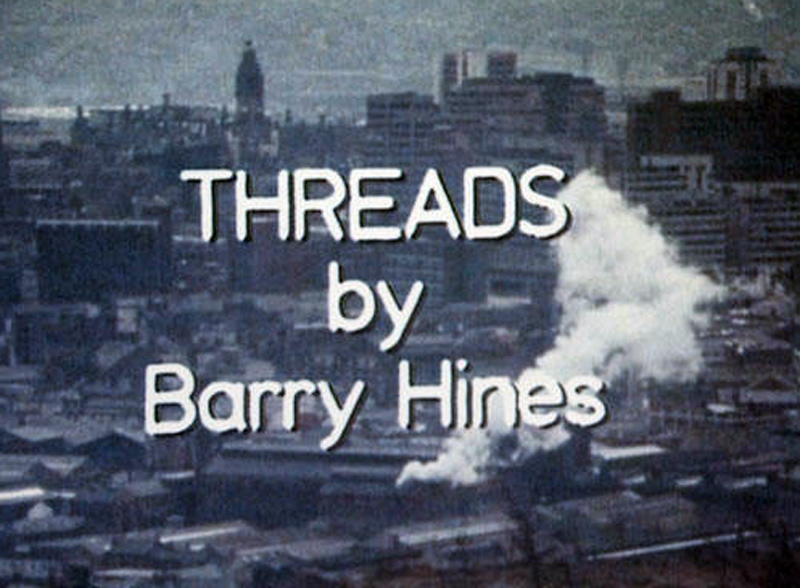
The BBC’s ‘Threads’ is a shockingly realistic docudrama from 1984 that tells the story of a nuclear strike on Britain. I remember watching this in my youth and I’m probably still traumatised by it!

threads

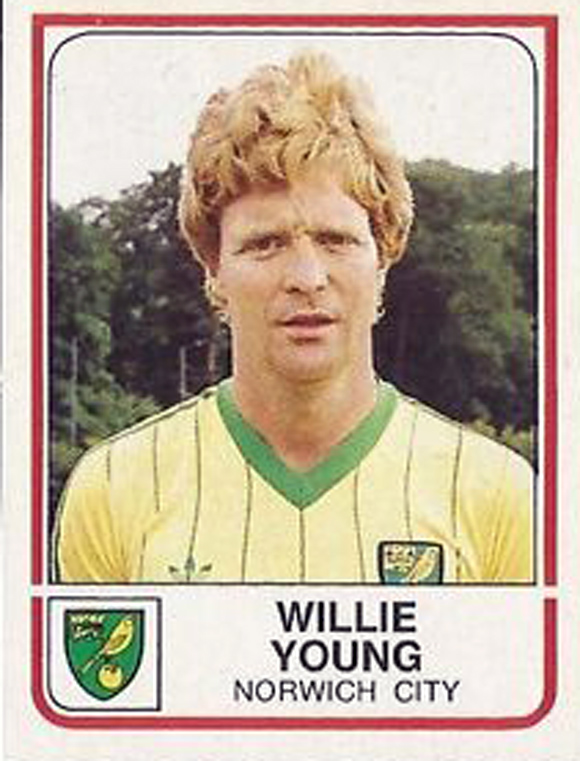
willieyoungAt the time of the film, Willie Young was a Norwich City defender who had joined Brighton on loan to stand-on for the suspended Steve Gatting. The start of ‘Threads’ features a young couple on top of a hill with Jimmy Kemp (Reece Dinsdale) turning over the station to hear the half-time football scores. On 3 minutes, you get to hear the Second Division score from Fratton Park – Portsmouth 0 Brighton 1, thanks to Danny Wilson’s penalty:

That’s as good as it got for the Seagulls as Willie gave a quite frankly apocalyptic performance in the second half with Brighton caving in 5-1 by full time. Here’s how John Vinicombe reported it in the Evening Argus:

Out of the shambles may come some good. If Cattlin had been undecided about taking Willie Young on contract this performance may well have made up his mind. Hitherto, Young had not let the side down in his previous three loan appearances, but Mark Hateley, ten years his junior, gave him a terrible runaround.

Brighton had taken the lead in the first half through a Danny Wilson but their defence started to creak:

The last 15 minutes of the first half saw Hateley starting to lose Willie Young with monotonous regularity. He began to look more fallible than ever when required to turn and radiated nothing like the confidence seen at Derby and Leeds. Following a booking at the half-hour for a foul on Hateley, Young was lucky not to be sent off when he bowled Hateley over from behind. Hateley was in a goalscoring position, and at the time, Albion were still in front.

Pompey, and Hateley in particular, started to play on Young’s slowness. A foul eventually led to Webb’s 58th minute equaliser, and when Hutchings’ clearance two minutes later reached Doyle 25 yards out the ball was thundered back past Corrigan.

The third goal saw Hateley turn Young and finish with his 27th goal in all football, which includes the England under-21s side.

In all, Portsmouth blitzed the Seagulls with five goals in a 13 minute spell. It was Willie Young’s last match for Brighton, with namesake Eric Young replacing him for the Grimsby match that followed, the last fixture within Willie’s short spell on the south coast.

Tagged ,

Here we go round the Mullery bush

Alan Mullery with his wife June and children Samantha (left) and Neal in the garden of their home at Cheam, Surrey,

Alan Mullery with his wife June and children Samantha (left) and Neal in the garden of their home at Cheam, Surrey,

As the 1976/77 season approached, new Brighton boss Alan Mullery spoke to Malcolm Folley of the Daily Express (10th August 1976):

In the three weeks Alan Mullery has been manager of Brighton he has salt with a procession of players wishing to air their grievances.

He could hardly have increased the demand for personal interviews had he promised trading stamps to anyone visiting his office.

Most of the callers wanted to tell their new manager that they felt they warranted first-team football. They were welcomed by Mullery, for he accurately deduced that there is nothing unhealthy about a club with ambitious players.

Yet he discovered one or two players had translated his arrival as a trial of strength to be resolved by unarmed combat.

Such as the player who went to him recently to ask for a rise. Not the most original reason for seeking an audience, granted but rather special in its own way.

There wasn’t a race of a smile on the man’s face as he presented his case. He needed an increase in pay he said, because he and his wife were thinking of increasing their family.

Somehow, Mullery controlled the urge to laugh aloud, “You’re thinking of increasing your family?” he asked in a fashion that did not require an answer.

“I can tell you what, you can come back when you actually have.”

“The lad left my office realising I wasn’t as gullible as he might have thought. He was just trying it on – but what he’d forgotten was that until a few months ago I’d have stood where he had.

“I had 10 players knock on my door last week to tell me they thought they should be in the first team. That was fine by me. I told them to go out and prove themselves.

“I won’t miss playing one bit,” he told me. “As manager, I’m now playing in 11 positions instead of one. I’m sure I shall use more energy watching Brighton than I used when I was out on the park myself.

But that does not mean that Mullery will allow himself to be submerged by demands which over the years have left a trail of broken spirits in the profession he has just joined.

“I’m lucky because when five o’clock comes I can get in my car, drive home, and leave all my worries behind me. The problem will still be there in the morning, so who’s the use in losing any sleep over them?”

Mullery has plenty going for him. He works for a board which cares, really cares, about the welfare and success of Brighton.

Chariman Mike Bamber and three directors travelled with the team to Torquay last weekend to watch a friendly. They are the team’s most loyal supporters.

Tagged

Lovey Dovey!

alan dovey

Alan Dovey was a 6ft tall teenage keeper, signed as a understudy to Brian Powney for £1,000 from Chelsea in July 1971. He had joined Chelsea straight from school following representative honours with Thurrock Boys. Facing competition from Peter Bonetti, Tommy Hughes and John Phillips (the latter two were to eventually join the Albion), Dovey failed to make a first team appearance for the Stamford Bridge side. After stand-in goalie Ian Seymour returned to Fulham, Dovey came to Brighton on loan as cover for Brian Powney in March 1971, before signing permanently for Brighton in July 1971 in a £1,000 deal. Dovey made his debut in the season’s penultimate match at Bristol Rovers in May 1971, before also playing the final match of the season to give him experience.

In 1971/72, having signed a permanent deal with Brighton, Dovey appeared against Norwich in the League Cup, making some daring saves despite the 0-2 defeat. Again he played twice in League matches, including a ‘Man of the Match’ performance at York.

His first game of the 1972/73 season was in the club’s nervy 2-1 victory over Exeter in the League Cup in August when a header by future Albion player Fred Binney past Dovey had given the Fourth Division side a shock lead. Just like in the two previous seasons, Dovey played just twice in the League that campaign, in the 0-4 defeats at Preston in November and Sunderland in January. When Tommy Hughes joined the Albion in February, Dovey was once again below his former Stamford Bridge team-mate in the goalkeeping pecking order. With limited first team action, Dovey was placed on the transfer list in March and was released at the end of the season to pursue a career in insurance.

He carried on playing locally, for Southwick and then Worthing. However, his spell with Worthing appeared to be coming to an end on 6th April 1984, according to the Evening Argus:

Alan Dovey faces the axe from Worthing’s goal after three seasons in their double promotion-winning squad.

Manager Barry Lloyd is set to bring back giant youngster Graham Bannatyne in place of the out-of-form Dovey for tomorrow’s Isthmian League premier division game with Harlow at Woodside Road.

Lloyd has been far from happy with the former Sussex keeper’s handling this season, and Dovey’s mistake at Sutton on Tuesday, when he let a shot bounce off his chest and into the net, may be the final straw for the Worthing boss.

“Alan has done exceptionally well for us over the past three years, but he’s not really aggressive enough in this premier division,” says Lloyd.

Dovey had joined Worthing at the same time as Lloyd, in 1981, from Southwick.

dovey2

Not sure what he’s up to these days but a thread on North Stand Chat suggests he’s a keen tennis player.

Tagged

The Argus’ promotion colour cover 1979

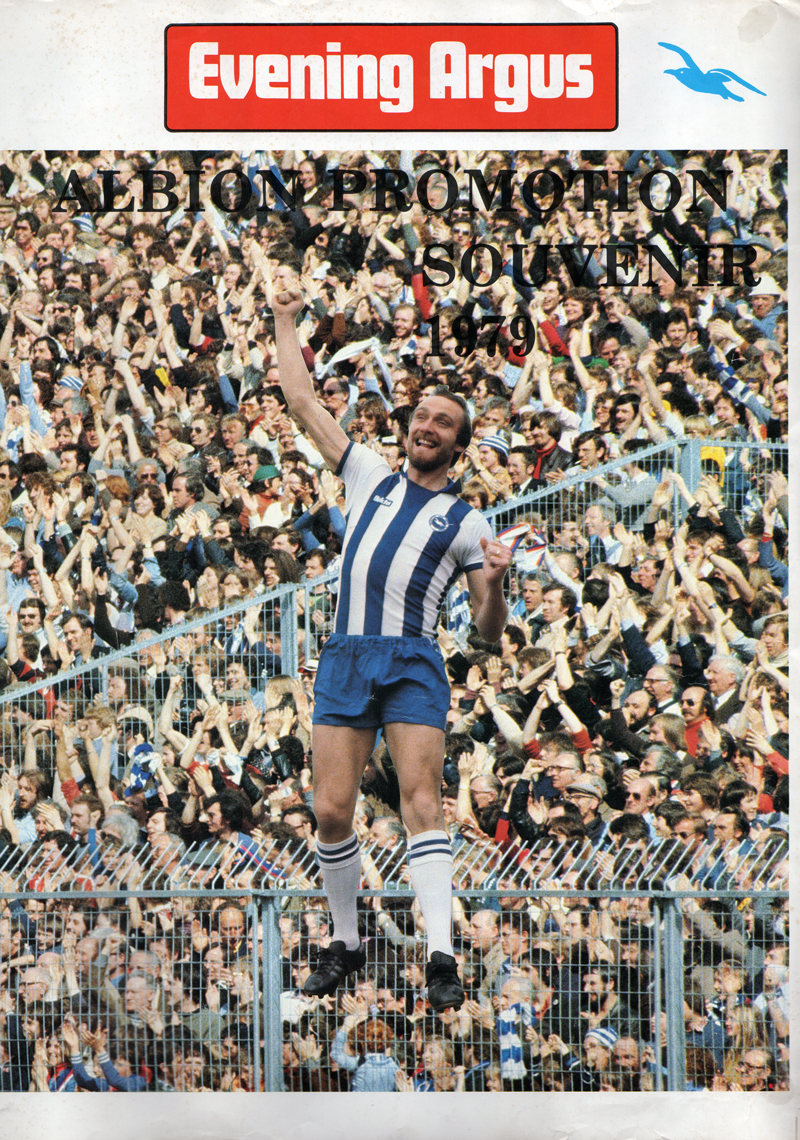
In 1979, Brighton & Hove Albion achieved their dream of reaching the top flight. Unsurprisingly, the Evening Argus marked the achievement with a 40 paged ‘Division One – Here We Come’ supplement.

This included a seven-part review of the season, an Alan Mullery eulogy by John Vinicombe, a discussion of the club’s prospects in the First Division plus pen pictures of the squad. All in black and white newsprint… which is where this foray into colour comes in: on the final page, it says:

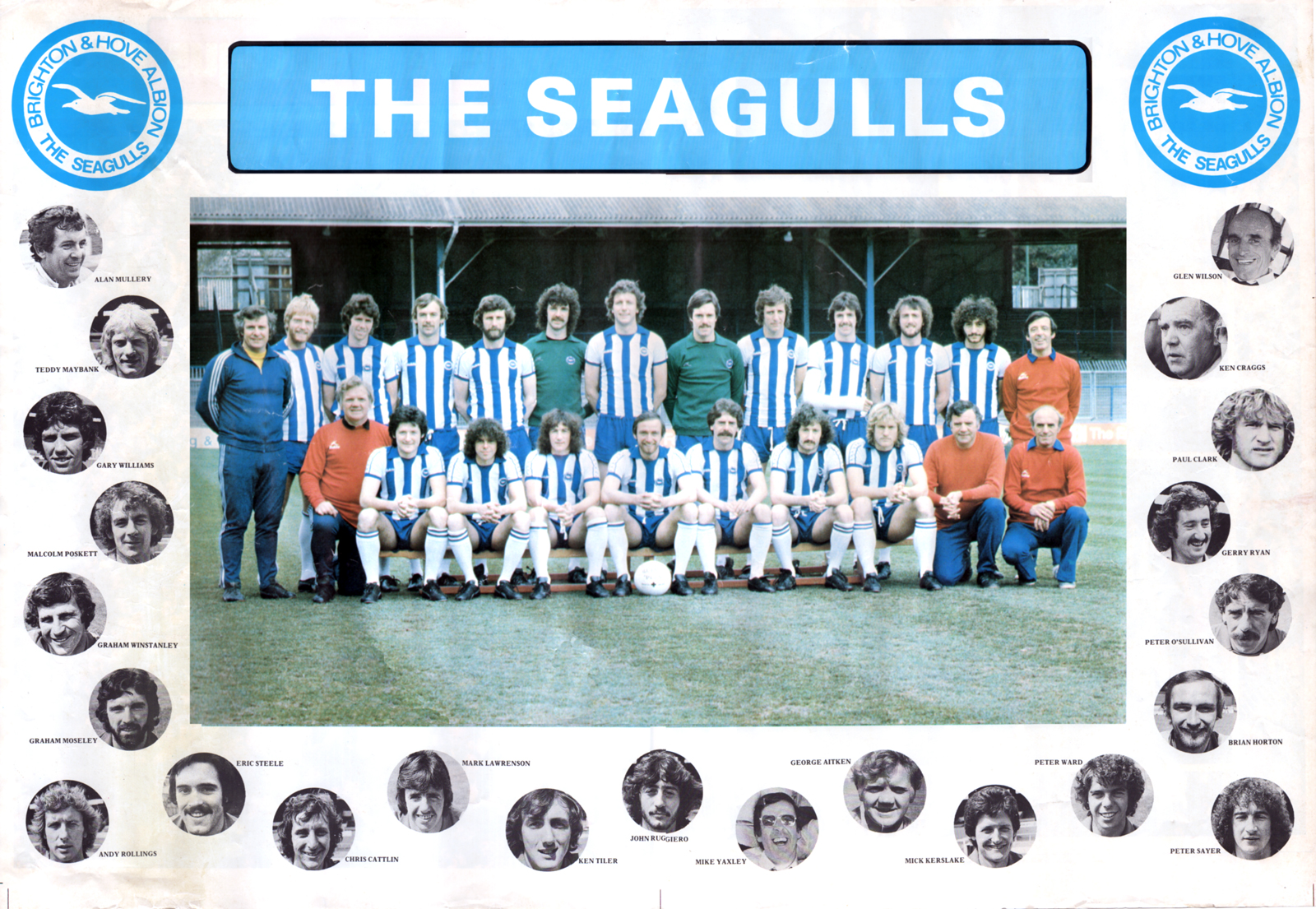
To obtain a free full-colour folder celebrating Albion’s promotion, fans can collect vouchers from six different days’ issues of the Evening Argus, starting on Monday. Each voucher carries the name of a different Albion player. The folder, printed on art paper, includes a team picture in full colour. You can use it as a cover for this souvenir supplement or alternatively as a wall poster – or both if you collect two sets of vouchers.

All you had to do was bring your vouchers to any Evening Argus office on or after Wednesday 23rd May or send it off to the Argus promotions department.

Here is the front cover, with Brian Horton apparently jumping for joy in front of a delirious home crowd. On closer inspection, you can see his body has been cut out and crudely superimposed on the background. All done without Photoshop:

argus1979p1

As for the centre spread, there is a marvellous team photo. I’m sure that would have made the wall of many supporters at the time:

argus1979p3

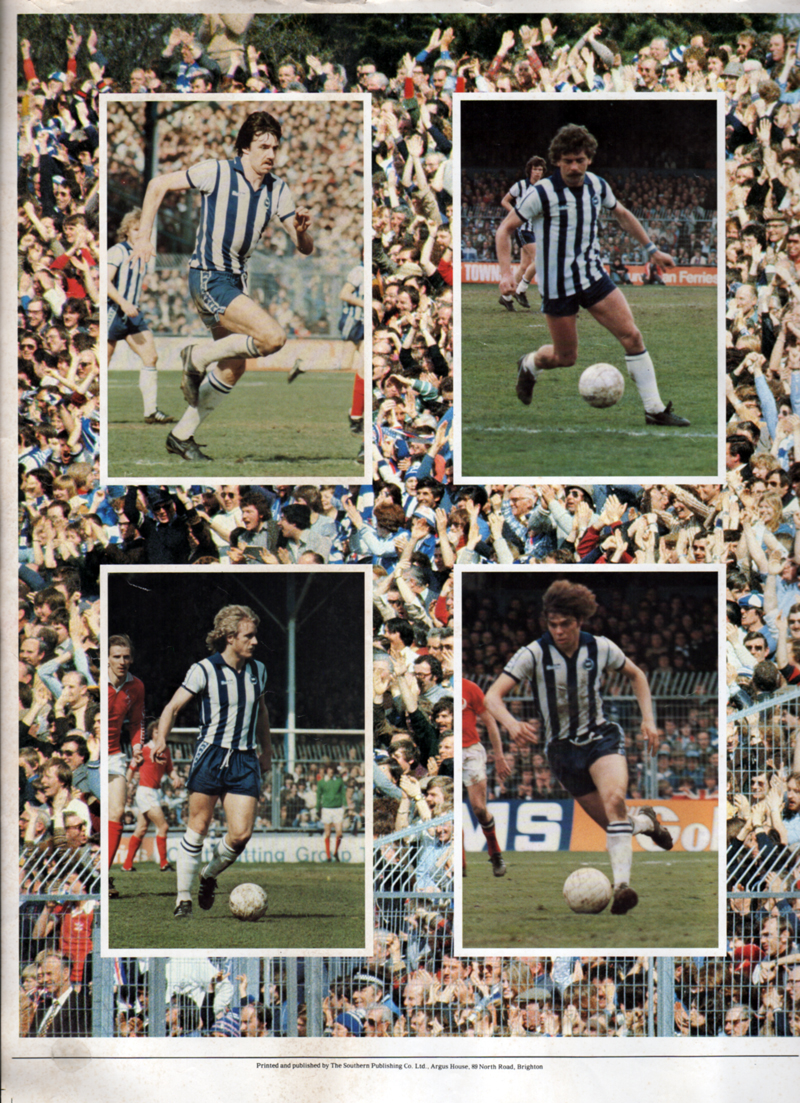
Finally, the back page features action shots of key players Mark Lawrenson, Peter O’Sullivan, Teddy Maybank and Peter Ward:

argus1979p2

Tagged , , , ,

‘Trevor Brooking? I’m more like Martin Peters,’ declares Gordon Smith

gordonsmith1982

Having led his club to safety in Division One at the end of 1979/80, Alan Mullery went on an eye-watering spending spree as he sought to establish Brighton as a major force in the top flight. Together with Michael Robinson, Scotsman Gordon Smith ended up forming the striking partnership that took Brighton to the FA Cup Final in 1983.

However, when has bought, it wasn’t as an out-and-out centre-forward. Hence the comparison with the silky skills of subtle, creative English players:

Gordon Smith, Brighton’s £400,000 recruit from Rangers, was rather perturbed when some precocious, pressing journalist compared his midfield talents with those of England’s Trevor Brooking.

Here was a 25-year-old Scot, travelling south to play in the English League’s First Division without so much of a hint of a Scottish cap, receiving the full treatment from the media.

Smith flashed a smile and said wickedly: “Brooking? I’m no Trevor Brooking. He doesn’t have my pace!”
Gordon Smith has come to taste the good life in England with a talent and a diss-arming and essential sense of humour.

He treads the same path which has carried many young Scottish hopefuls south. Some, like Kenny Dalgllsh and West Ham’s Ray Stewart, stayed to fulfil the rich promise nurtured In the Scottish heathers, others never made the grade and returned to the homeland disillusioned.

Jim Bone went to Norwich and decided to use the second half of his return ticket shortly afterwards. Alfle Conn never made it at Spurs. Eamonn Bannon prefers to forget his Chelsea experience. Peter Marinello swept through the gates at Highbury more than a decade ago hailed as “the new George Best”. He failed to maintain the pace of his pre-publicity.

Now comes Gordon Smith, spotted by Brighton’s manager Alan Mullery in a four-team tournament at Ibrox with Rangers, Brighton, Kilmarnock and West Ham competing.

The difference between Gordon Smith and some of his predecessors is that the Rangers star has. harnessed a sense of humour to his abundance of elegant talents.

“I’ll be delighted to be thought of as Trevor Brooking,” says Smith, who has recently moved into a detached fourobedroomed house in Hove, Brighton, which would have cost him £20,000 less were he buying It north of the border.

“My game is different from Trevor’s: I like to run from deep positions, playing one-twos in the box in the hole or finding an opening which I can exploit.

“I’d say I am more like Martin Peters than Trevor. I love watching Peters. He relies on stealth and superb positioning.

“Like him, I am always looking for that blind side position which catches a defence unawares.” The player, whose simple name reveals nothing about his Scottish ancestry, confesses to knowing little about English football.

“1 would say that the Scottish Premier Division is more competitive than the English First Division if last season is any guideline.

“My main problem In the early weeks of the new season has been to adapt. My absolute priority is to make sure I keep my place in the Brighton team. It is all right commanding a big fee In the transfer market, but unless you fulfil the hopes of the club who have laid out that sum, you are useless.

“Forget me, think about others given an opportunity to make it in the big time. Mick Robinson, who left Preston for Manchester City, is a classic example.

“A good, honest, skilful, fast striker. His problem was he struggled In his first season, playing for a team struggling to survive in the First Division. People underestimate the demands of this game. A good player in a bad team can be terribly disappointingto men who have placed their confidence, and money, in his ability to dowell for them.” If the faithful who sing a chorus of “Seagulls” whenever they clamp eyes on a blue and white shirt expect the former Rangers player to combine construction with a demolition job helping out in defence they will be bitterly disappointed.

Smith is not a heavy tackler. He is a maker of goals who likes to get his name on the scoresheet as well. “Alan Mullery has told me that he wants me to get forward as much as possible this season. I am not a defensive marking player. I like to get into the box and get some goals. I am only 25 and hope to give Brighton the best years of my career. I reckon a player of my type doesn’t reach his peak until 28.”

Gordon Smith has a delightful penchant for coaching youngsters and maintains a ready ear for anyone wishing to exchange a technicality with him.

He wants to become a coach when he decides to quit the game in the latter half of the 1980s.

“Coaching is so important. People talk about becoming managers. Highly commendable – but the problem with British football is that the coaching has often been weak. British players often lack a lot of imagination. A great deal of natural ability is often coached out of them. How wonderful to see Van Moer, the Belgian, the Italian, and Rummenigge, West Germany’s cultured player.”

Smith has gained considerable experience against European opposition in several outstandIng years at Ibrox. He has played against PSV Eindhoven, Cologne and Juventus, gaining experience from those matches which should blend happily with Brighton’s line-up of experience and young talent.

He carries a firm ambition to win a full Scotland cap yet is realistic enough to realise that his style does not endear itself to the current managerial regime under Jock Stein.

“I think I would have to change my style to make the Scotland team,” he says. “The system does not allow for a player like me. They are often looking for two ball-winners In the middle of the pitch. I don’t win much ball. My strength is running off the ball into positions which can carry an attack forward. I like to attack and will take every opportunity to get forward. I don’t want to let Brighton down. I’m a good player, but will not find it easy fitting into the team pattern.

“Liverpool can afford to buy a player, stick him in the reserves, and allow him time to settle into their pattern of play. Brighton do not have the resources to do that. They want an early reward for their outlay.”

Fortunately, Gordon Smith has managed to settle down in the Brighton area within weeks of signing a contract. He and his charming wife, Marlene, have wasted no time moving their belongings to a £67,000 detached Georgian in Hove. Smith was determined to secure his home life down south, if only to provide a settled existence for their new-born baby Grant.

He admits to holding Alan Mullery, Brlghton’s manager, in great esteem.

“He is ambitious. He made it clear he wanted me and me alone. I shall do my utmost not to let him down,” says Smith, the joint-third most expensive Scot to cross the border in the wake of £800,000 Steve Archibald, Kenny Dalglish at £440,000 and Ray Stewart, £400,000.

“I am determined to show he is also a good judge!”

Smith and Robinson both settled at Brighton very early into 1980/81, while Ritchie was a regular scorer at the turn of the calendar. Even so, that expensive frontline of Robinson and Ritchie, with Smith just behind, despite costing £1.4 million, was not enough to turn Brighton into a side that could finish into the top-half of Division One.

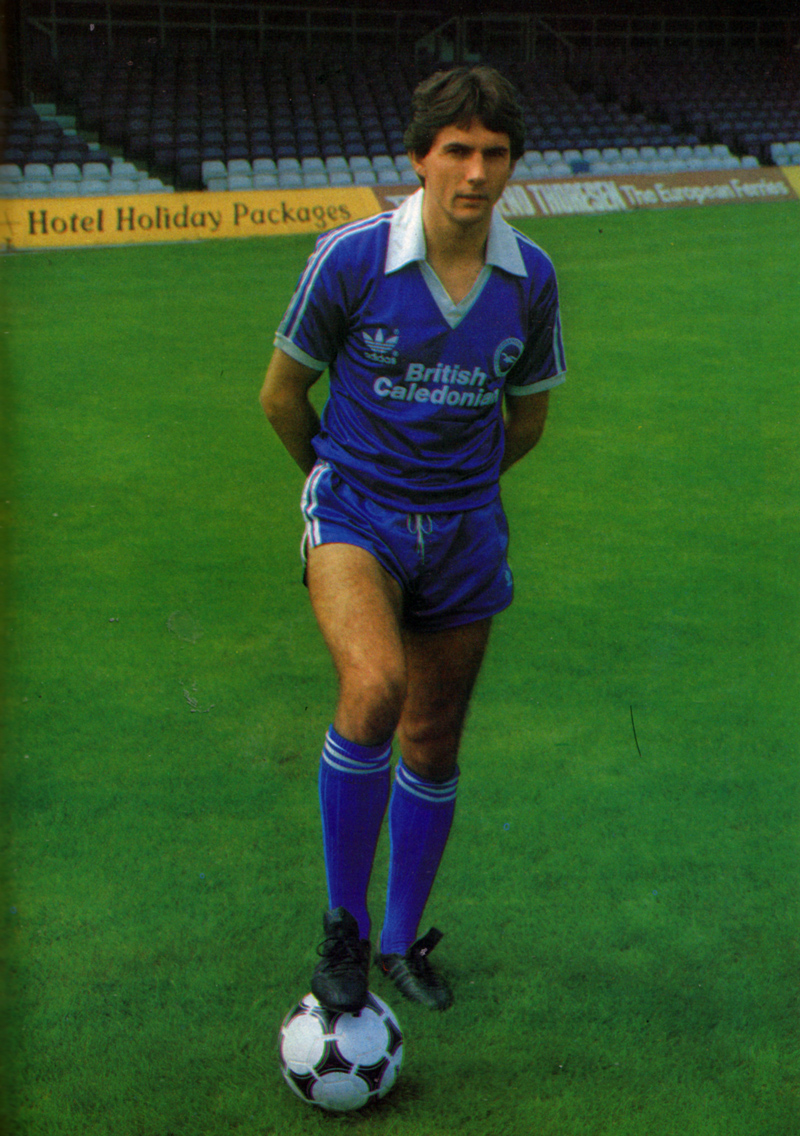
With falling Goldstone attendances, cuts had to be made. Chairman Mike Bamber sought to slash the coaching staff wage bill and a cash-only sale of Mark Lawrenson. It led to the departure of Alan Mullery, to be replaced by Mike Bailey. However, Smith did not hold Mullery’s successor in the same esteem, particularly as the new boss seemed to regard the Scotsman as a luxury player that did not add much to the rigid system he sought to develop for the side. Loaned to Rangers in 1982/83, Smith seemed to be on his way out until the Jimmy Melia era restored his place within the starting line-up, in time for the FA Cup Final…

Tagged

Chris Ramsey – not exactly a star of the screen

chrisramsey1982

Taken from the Brighton v Stoke programme from February 1983, here is Tony Norman’s portrayal of the life and times of Albion’s young right-back:

The first time I met Chris Ramsey, he was a quiet, shy apprentice at Bristol City. Since then, City have fallen on hard times, but Chris has realised the ambition he talked quietly about at that first meeting.

‘Like any other young apprentice, my dream was to play in the First Division,’ he says. ‘I must admit that even after coming to Brighton, I had times when I wondered if I’d make it. But now I’ve got my chance and I’m keen to make the most of it.’

Regular fans at the Goldstone will have enjoyed seeing the progress Chris has made this season. His confidence has grown. He looks to have all the makings of a top class full-back. He has pace and agility, but can tackle like a demon too. Beneath that shy smile there is a sharp competitor.

Not that Chris is often shy at the Goldstone. When he does look serious, a joke from friends like Steve Foster, Michael Robinson or Andy Ritchie will soon bring a huge grin to his face. Chris is a popular member of the first team squad.

‘I think the Albion is a happy club,’ he says. ‘I like Brighton, but I still live at home with my family in Islington, London. There are five girls and two boys in all. At the moment, five of us are still living at home with mum.’ Needless to say, there’s never a dull moment!

‘I’m always joking around at home with my younger brother, Kevin.

He’s my best mate too. We spend a lot of our free time listening to music. I like Motown and reggae. We get records on import. I could tell you the names of reggae bands, but to be honest, I don’t think you would know any of them!’ Has Chris ever thought of joining a group himself?

‘Well, I did have a go at learning the drums once,’ he grins, ‘but I didn’t get very far. I think I’m better at listening than playing!’

One of his other interests is watching movies from the Golden Age of Hollywood.

‘I like the old musicals with stars like Gene Kelly, Fred Astair and Ginger Rogers, but my favourite actor is James Cagney. He made some great films.’ Chris is one of many talented black players making their name in the game. Does he think racial prejudice still exists in football?

‘Yes, it’s still there. You get stick from away fans. But the way I look at it, if they weren’t shouting about that, they’d find something else. Like, you’re too fat or too thin. They’ll always find something, so it doesn’t really bother me.’

Chris Ramsey has had his share of hard times, but like any good Hollywood movie, his story looks like having a very happy ending… here at the Goldstone.

Ramsey had a chequered history in front of the TV cameras that season. He was sent off against Spurs in April for some very reckless tackling:

Then, while feeling down about being suspended for the FA Cup Semi-Final, he had his pockets picked by Everton’s Kevin Sheedy for the Toffees’ first goal a week later:

Finally, in the second-half of the FA Cup Final against Manchester United, Norman Whiteside’s horrific tackle put Chris out of the game and the replay:

Tagged

Mullery quits after bust-up

mullery1980-81

This week, the story playing out is of Oscar Garcia’s resignation as head coach. Back in the summer of 1981, the man quitting the Seagulls was manager Alan Mullery. Both very different men, with very different personalities and strengths, but both felt moved to quit the Albion. Here is how Steve Curry and Philip Osborn from the Daily Express reported things on 13th June 1981:

Brighton manager Alan Mullery walked out on the club yesterday over a point of principle.

The former Spurs, Fulham and England player severed his five-year relationship with Brighton after a stormy disagreement with his board of directors about the future running of the club.

And Mullery, who flies off to Malta today for a two-week holiday with his family, described his feelings about leaving the side he led from the Third Division to the First.

He said: “At the end it was a matter of principle regarding certain things at the club. The directors wanted something to happen that I was not prepared to accept.

“It was nothing to do with the terms of a new contract or anything financial. I don’t really believe there would be any purpose going into details about why we have split. I am not one for mind-slinging.

“I didn’t think it would come to this because I had five very happy years there. We have had some great times, memorable days that I shall remember for the rest of my career.

“I shan’t forget it was Brighton who gave me my chance in management when I decided to pack in as a player at Fulham. I think I have been good for them and they have been good for me. But maybe the time has come to move on.”

Bamber, who offered Mullery a new three-year contract five weeks ago, flew out for a golfing holiday in Spain after the meeting, unaware of his manager’s decision.

He said from Spain last night: “I am shocked and absolutely amazed to learn of this but I will not stand him his way if that is what he wants. I can only presume he had something on his mind. Perhaps someone has tapped him for another job, but I don’t know that.”

Mullery, whose sometimes abrasive manner does not hide a talent for management, is unlikely to be out of work for long. He would appear to be a natural successor at West Brom to the extrovert Ron Atkinson, who moved to Manchester United.

In his autobiography from 2006, Mullery described proposed changes to his backroom staff as a bone of contention with Bamber:

“At the end of the season, he called me in and told me to sack all my backroom staff, including Ken Craggs and George Aitken who had worked so hard for the club. He even wanted to get rid of the kitman Glen Wilson who had been at Brighton for years. The club meant the world to him. I couldn’t have lived with myself if I’d fired these people. Bamber knew that; he was doing all he could to undermine me.”

There was also a disagreement over the sale of Mark Lawrenson. Although he accepted the need for a sale to raise money, Mullery had cut a deal with Ron Atkinson at Manchester United involving a player coming to Brighton from Old Trafford, whereas Bamber had done a cash-only deal with Liverpool.

With Mullery’s departure, it was a very sad and uncertain time for Seagulls’ fans.

Just like it is with Oscar Garcia in 2014, Alan Mullery felt that budget cuts at the club were undermining his ability to do his job in 1981. He also disliked how he was not able to get his voice heard and acted upon in the buying and selling of players. However, the Lawrenson deal apart, the axe in 1981 seemed to be falling more on the coaching staff rather than the players, although that may have been Bamber participating in mind games.

In their respective resignations, there are also parallels between Mullery’s thanking of the club for giving him his first opportunity in management and Garcia’s appreciation to Tony Bloom for his first chance in England. Lastly, it’s pure coincidence that upon leaving, both were tipped by some for the vacant position at West Bromwich Albion.

The fallout from Garcia’s resignation is still playing out. Now as the club ambassador, and as someone who has been through it all, I wonder what Alan Mullery makes of the situation today.

Tagged ,

Derby delight for the Seagulls

Smith does score!

Smith does score!

It was time to stop the rot. After opening with three successive defeats, Gordon Smith converted a penalty as relieved Brighton under Jimmy Melia picked up a very welcome 1-0 victory against Derby County at the Goldstone in September 1983.

At the time, the Rams had seasoned players of the calibre of Roy McFarland, Archie Gemmill and John Robertson. However, they were all past their best. County were managed by ex-Albion boss Peter Taylor, who had returned to the Baseball Ground in November 1982, having ended his long partnership with Brian Clough by quitting Nottingham Forest six months previously. Together, Clough and Taylor had shocked the world by leading the Midlands side to the League Championship in 1972. However, going it along a decade later, Taylor struggled, although he did put one over Ol’ Big ‘Ead when the Rams beat Forest in the FA Cup in January 1983.

By the return match between Derby and Brighton at the Baseball Ground in March 1984, County were on their way towards Division Three and Taylor heading towards the sack. Helping them on their way was the Rams’ emphatic defeat to Cattlin’s Brighton side. Here’s how John Vinicombe of the Evening Argus reported it at the time:

Chris Cattlin’s rebuilding programme, aimed at promotion next season, continued apace at crisis-ridden Derby.

A wholly satisfying 3-0 victory also stilled any criticism at selling Steve Foster and Tony Grealish. Dissenting voices, always a minority, must now be faint echoes in the light of this latest performance.

Displays like this beat out Cattlin’s promise that the last two and half months of the campaign will not be allowed to peter out.

Amazingly, Peter Taylor axed four key players, including skipper Archie Gemmill and, before Gordon Smith scored the third and best goal of the match after 75 minutes, the Baseball Ground was a scene of bitter rancour.

Peter Taylor, who with Brian Clough, threw Albion a precious lifeline a decade ago, is himself in need of rescue.

Second from bottom, this grad old club, a founder member of the Football League, face relegation to the Third Division for only the second time, in their centenary year as well as today’s Inland Revenue winding-up petition in the High Court.

Perhaps Robert Maxwell will save Derby after all, but the prospect of charing a Third Division club cannot be that attractive. If he were to pay the preferential creditors in full, Derby could be had for under £1m.

Vinicombe blamed Derby’s poor financial affairs on poor housekeeping and contends that Brighton will never suffer such problems under Chris Cattlin, whose financial acumen was being demonstrated by his opposition to long-term contracts and the sale of senior players. Their opponents had the look of a veterans’ side, with Kenny Burns and Dave Watson also recruited to fight Derby’s relegation battle. Of the Rams, Vinicombe wrote:

Derby, this time shorn of not only Gemmill, but Paul Futcher who says he never want to play for Taylor again, John Robertson and Steve Cherry, had only endeavour to offer.

This is really only a polite way of saying their football was nothing but kick and rush, but there was a moment in the first half when the game might have gone their way.

That is did not was entirely due to Perry Digweed rectifying Willie Young’s mistake and preventing a certain goal by Bobby Davison. Digweed smothered the ball at Davison’s feet after Willie’s ill-timed pass back, and a few minutes’ later, when there didn’t appear to be a call, collecting one of Eric Young’s size 11 boots in the face.

For at least ten seconds, Digweed didn’t know what time of day it was. This was his first game for Cattlin, and only re-affirmed the manager’s high opinion of his second-string keeper.

A first ever Albion goal for Steve Penney.

A first ever Albion goal for Steve Penney.

Brighton took the lead on 54 minutes when Alan Young’s header found Steve Penney. The Ballymena-born winger turned Steve Buckle inside out and finished off the far post just as goalie Yakka Banovic tried to close the angle.

Striker Alan Young turned from provider to goalscorer eight minutes later, latching onto Gary Howlett’s pass to fire the ball home off Banovic’s foot.

Finally, Gordon Smith wrapped up the match with his last ever goals for the Seagulls, and it was a good one too. Danny Wilson caught ex-England defender Dave Watson at sixes and sevens and fed the Scotsman who rifled the ball into the roof of the net.

At the end of the season, Brighton finished ninth and Derby in 20th. However, it was a brief stay in the Third Division for the Rams and they returned to the Second Division in 1986 under the canny leadership of Arthur Cox.

Tagged , , , ,