Yearly Archives: 2013

Storybook start for new-look Albion in 1974

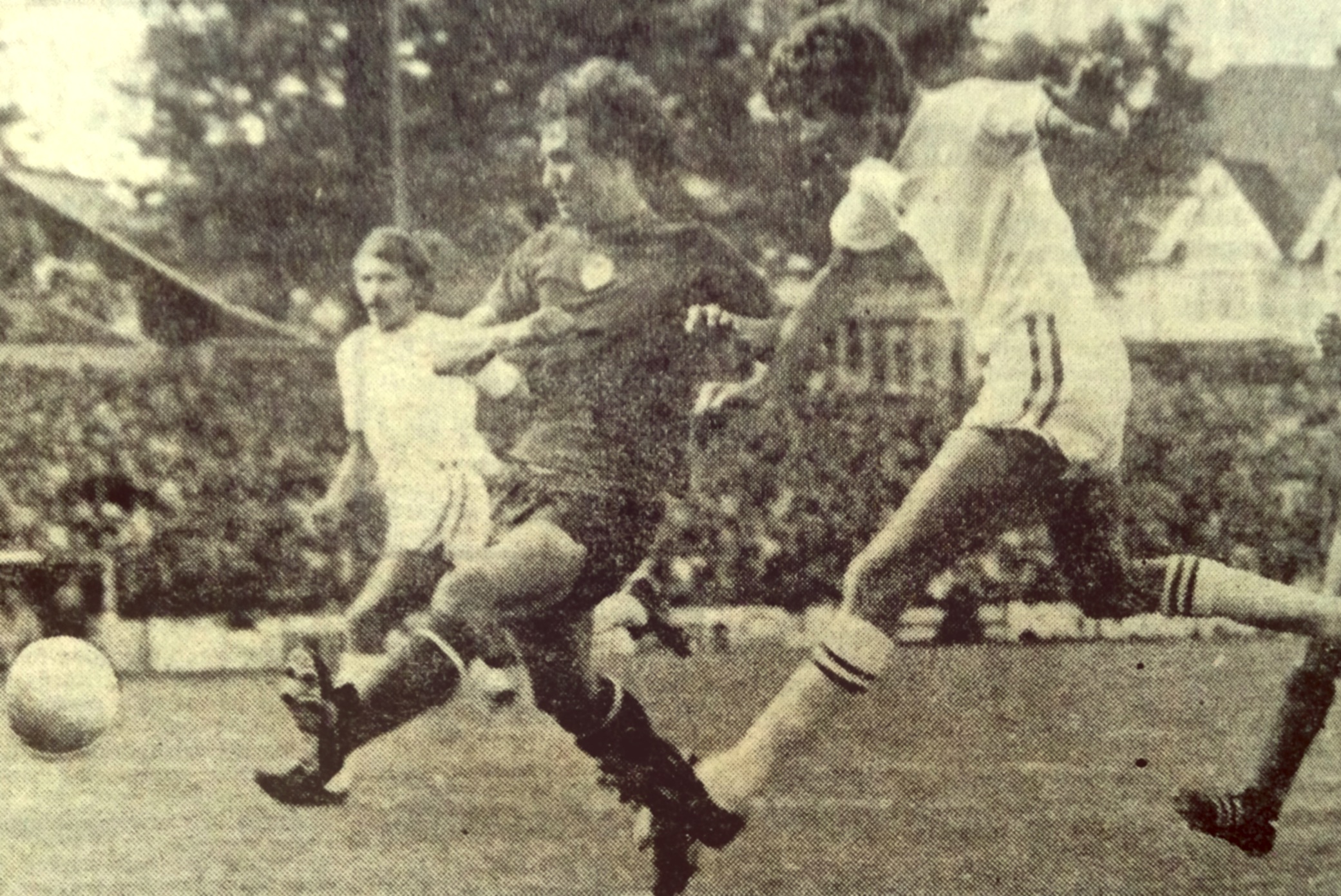
Ian Mellor's left foot flashes and the winner is on its way. Two Palace defenders are left struggling

Ian Mellor’s left foot flashes and the winner is on its way. Two Palace defenders are left struggling

Here’s a classic John Vinicombe match report on the opening day of the season in August 1974. It was Peter Taylor’s first competitive match in charge of the Albion and he saw the Dolphins record a sweet 1-0 victory over Crystal Palace. Back then, the rivalry was hotting up. The bumper attendance giving a good indication of the interest from each set of supporters:

Never in the 74 years history of the club, have Brighton and Hove Albion made such a momentous start to a season. A 26,235 crowd paid £11,000 to see virtually a brand-new team defeat superior Crystal Palace by an Ian Mellor goal in the 69th minute – the first time in ten seasons that Albion have started with a win.

On two counts Albion can feel a high degree of satisfaction: The team displayed sterling character to beat Palace, who were playing in the First Division two seasons ago; and the attendance was bettered by only eight turn-outs in Division One.

The last time Albion kicked-off with a win was season 1964-65 when Barrow were beaten 3-1 before a 20,058 Goldstone gate. Bobby Smith pulled the crowds in and obliged with two corking goals. Albion remained unbeaten at home in going to win the Fourth Divison championship.

The Argus public respond quicker than most to the big occasion, the opportunity to relish flair, and until half-time they were still coming in dribs and drabs to swell the shirt-sleeved throng.

Palace, of course, were attended by a large crowd, despite the misfortunes of the past two seasons, and the inevitable clashes in the North Stand where police did a splendid job in keeping rival factions apart.

This is the ugly side of football, the tedious side of the game that only deters decent spectators from enjoying a match. Given the same set of circumstances 10 years ago, before violence became a way of life for a vicious minority, there would have been 30,000 for the start.

Overall, Football League attendances were down on the corresponding time last season. But Albion, as usual, are very, very far from being an average club. The directors hoped for 25,000, and were not disappointed. They badly need money after massive expenditure of the past few months and happily the public responded by keeping their side of the bargain.

From a playing point of view, one should not expect too much. There will not be many cleverer sides in the Third Division than Palace, nor do I expect to see teams capable of generating industry on the Brighton side.

Peter Taylor and trainer-coach Gerry Clarke have quickly assessed the strengths and weaknesses – hence great emphasis in pre-season training on work rate. It will take time to achieve a blend of skill, and Taylor only knows this too well. But every crowd loves a trier, and Albion had eleven who never knew when they were beaten.

Any doubts about Peter Grummitt after the Ipswich game were dispelled. he kept superbly. Explained Taylor: “Under the amount of pressure to which we were subjected, it was a tremendous show of character on our part. We were outplayed for long spells. But I saw nobody hide. I was waiting for the first one, and he would have been off. Peter Grummitt kept us in the game. He never mishandled, or put a foot wrong, and inspired the back-four. We played, and beat, the best side in the Third Division, make no mistake about that. That’s why we have such good prospects. All we are lacking is know-how. I wish we could have had Ernie Machin on when we scored, somebody to control the game our way.”

Malcolm Allison talking to Taylor in his office afterwards, was remarkably restrained, considering the number of chances wasted by his feeble attack. The bitterness was unmistakable as he recalled the Mel Blyth goal disallowed by referee Robert Perkin. “There was no way that goal could have been offside, no way. Alan Whittle headed on to the bar, and the ball went back out to Mel and he knocked it in. Whittle wasn’t interfering with play.”

From the sidelines Blyth’s shot looked perfectly legal, but Mr Perkin indicated that Whittle was the offender, and after 37 minutes Albion were let off the hook for the umpteenth time. Mick Hill had missed a couple, Whittle and Don Rogers squandered equally good chances, and when Allison was asked the answer, he retorted “Rodney Marsh and Francis Lee.”

The fact that Mellor netted the winner was not lost on Allison: “I remember Spider when I was at Manchester City. I didn’t want to see him leave for Norwich. Directors force you to do that sort of thing, then they sack you. Spider was a late developer, but his timing is so good now.”

It is not surprising that the owner of such long legs and thin frame as Mellor should be dubbed as Spider by his mates. He is a player of deceptive pace, and is at his most dangerous off the ball. The goal was created out of nothing.
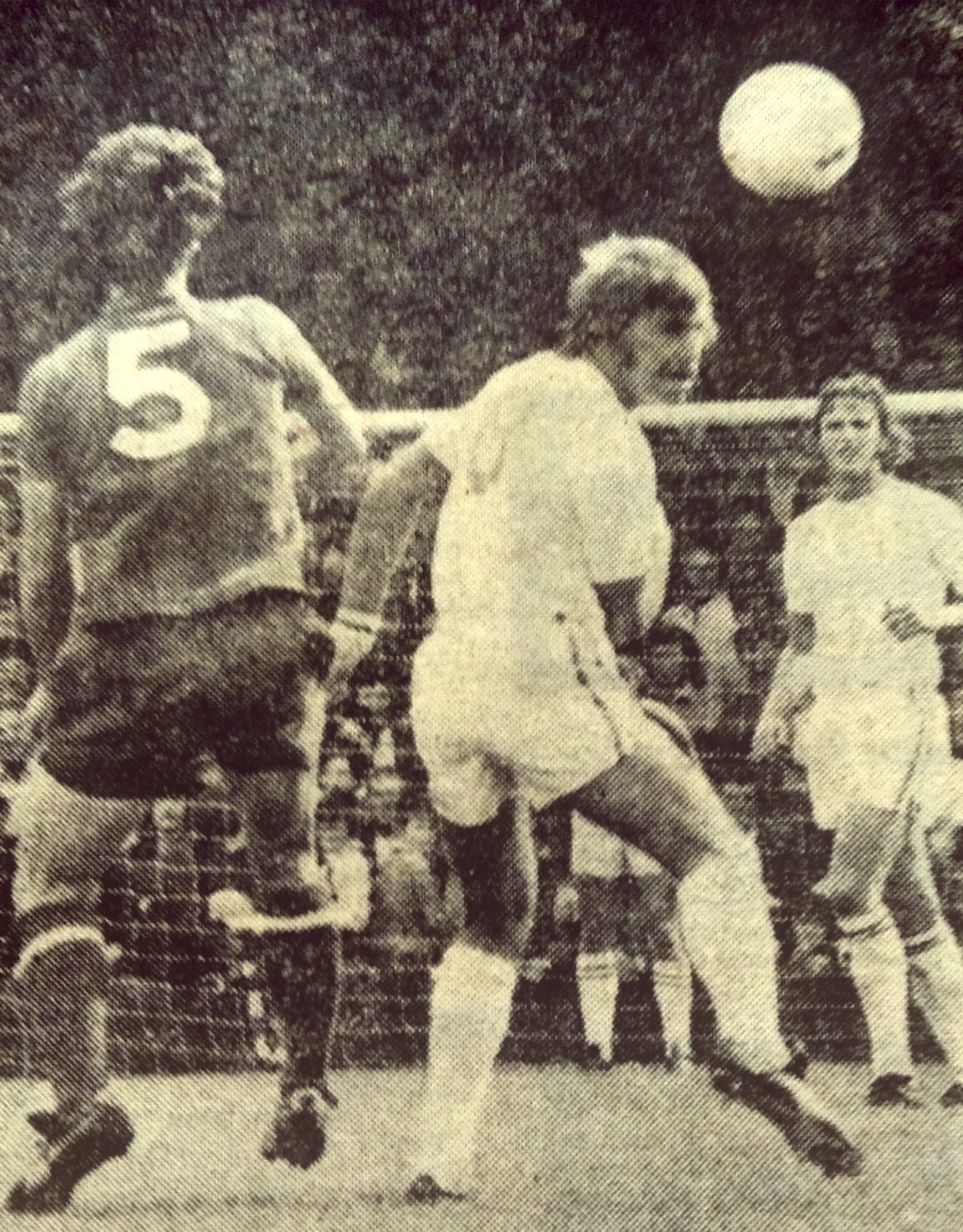
Fred Binney flashes a header wide after beating Derek Jeffries.

Fred Binney flashes a header wide after beating Derek Jeffries.

Around him vigorous Ricky Marlowe and busy Fred Binney put in an unselfish 90 minutes, and the transformation promised in Peter O’Sullivan was there for all to see. There is far greater urgency about O’Sullivan, as Taylor has promised.

Elsewhere the theme was work, and not once did a player lose control when confronted by higher skills. Rogers often threatened, but the old hands were not far wrong in saying that he seldom has a good match against Albion. For me, Whittle was the chief danger in a side that badly needed power.

Let Allison have the last word: “I cannot remember Brighton having a chance. The goal wasn’t a chance, but they kept battling away, and I give Brighton’s front players full marks for fighting against the odds.”

Albion: Grummitt, Piper, Wilson, McEwan, Rollings, Govier, Welch, Binney, Marlowe, Mellor, O’Sullivan. Sub: Towner.
Crystal Palace: Hammond, Mulligan, Jump, Johnson, Jeffreys, Blyth, Whittle, Lindsay, Hill, Rogers, Taylor. Sub: Swindlehurst for Hill (58 minutes)
Referee: Mr R. N. Perkin (Stafford)
Bookings: Taylor (foul)
Attendance: 26,235
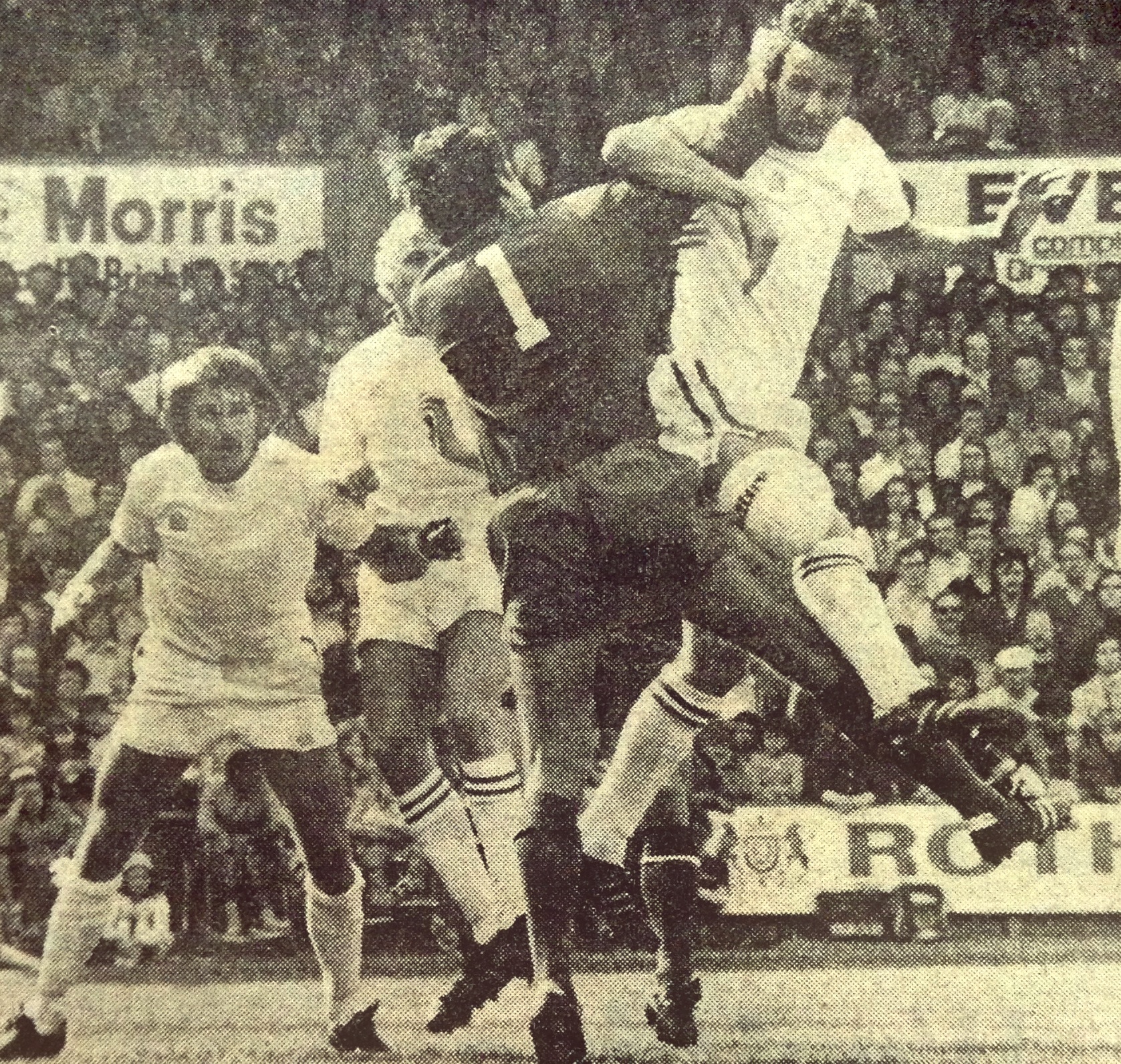
Crystal Palace goalkeeper Paul Hammond misses his punch and the ball runs down between him and Albion's Andy Rollings as Fred Binney and Ricky Marlowe move in following a corner at the Goldstone.

Crystal Palace goalkeeper Paul Hammond misses his punch and the ball runs down between him and Albion’s Andy Rollings as Fred Binney and Ricky Marlowe move in following a corner at the Goldstone.
Tagged , ,

New arrivals hold the key in 1980/81

newsigning1980v2

The 1980/81 Albion squad was probably the strongest in the club’s history. At least on paper. With their first season of top flight football behind them, Brighton looked to build on their experience, and were bolstered by Michael Robinson and Gordon Smith, two £400,000 captures. The Robinson-Ward striking partnership appeared to promise an avalanche of goals while Mark Lawrenson and Steve Foster seemed likely to keep things solid at the back.

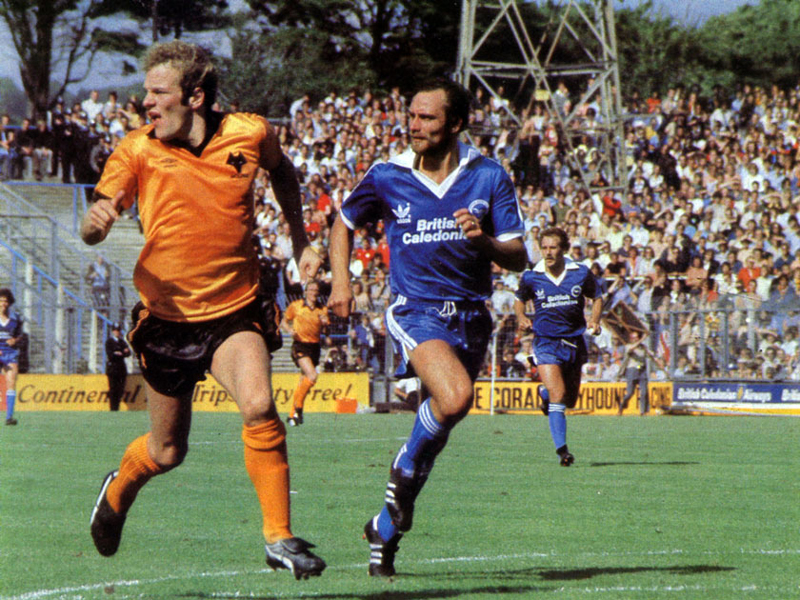
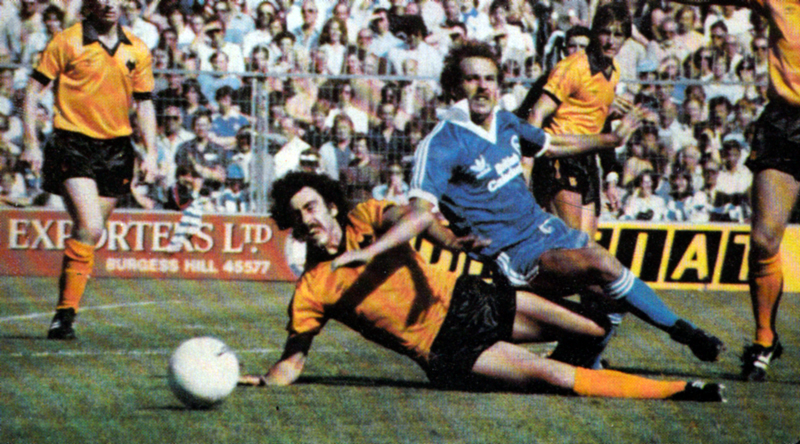
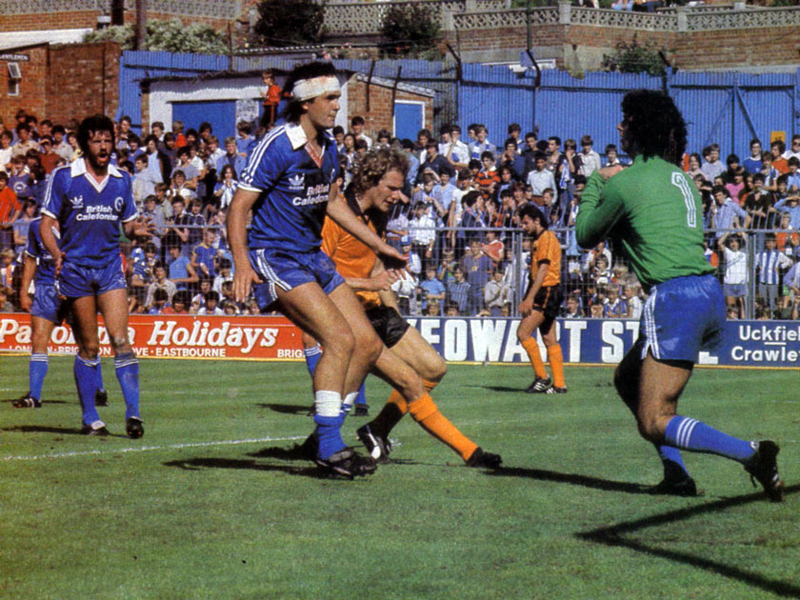
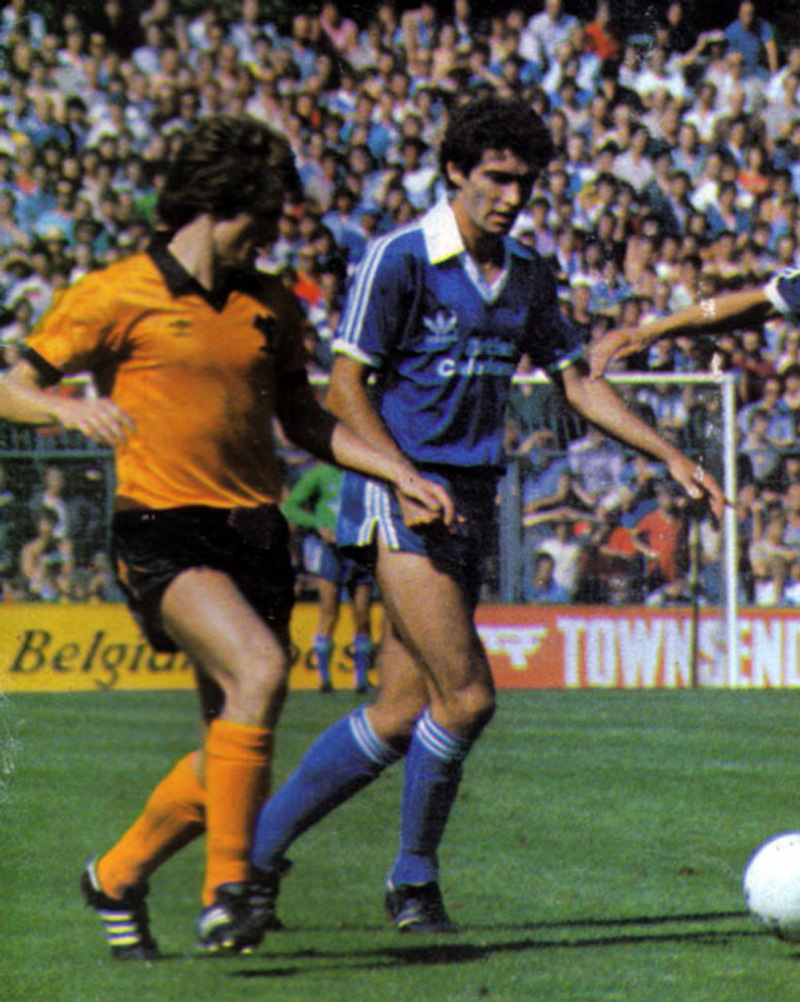
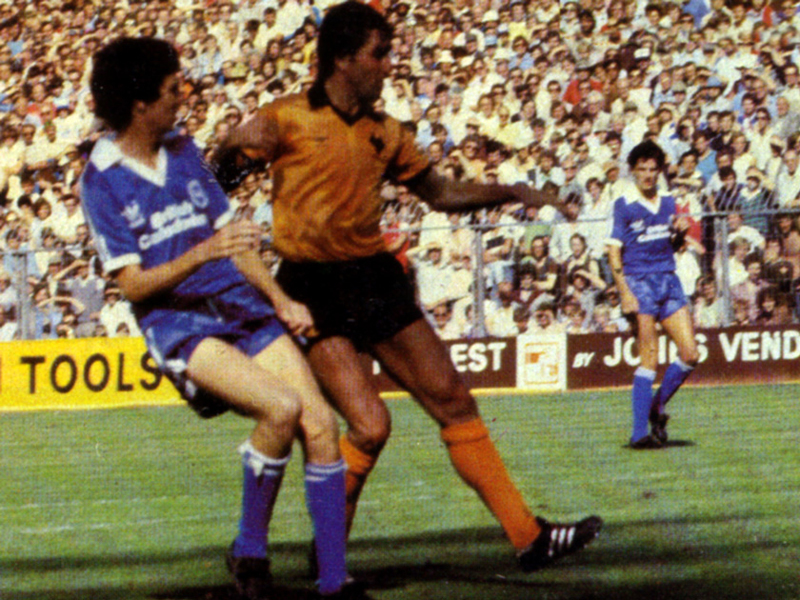
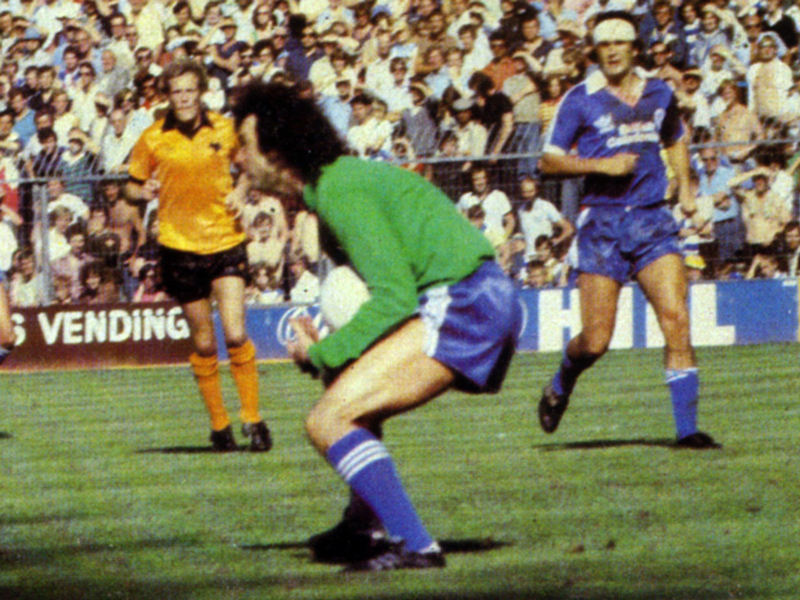
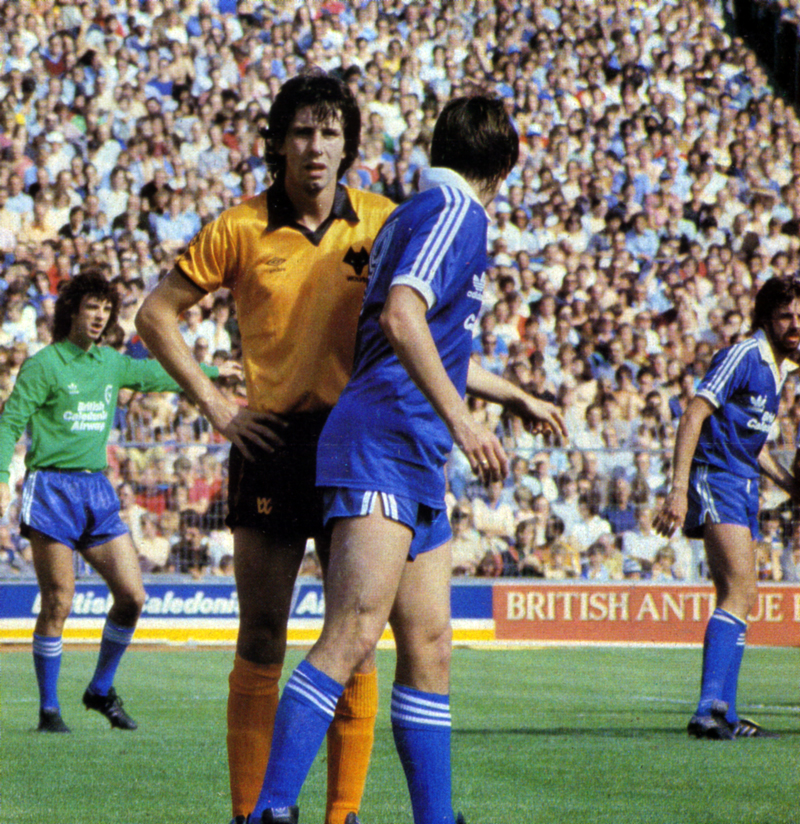
It certainly didn’t pan out that way, which is perhaps testament to the outstanding contributions that Ray Clarke and Peter Suddaby made to the Brighton side. They both had a profound effect on Albion’s season when they joined mid-way in 1979/80. Their departures certainly coincided with a downturn in Albion fortunes, despite the opening day success, a comfortable 2-0 victory over Wolverhampton Wanderers in the sunshine at the Goldstone in August 1980.

An outstanding article by Dave Spurdens dissects the functioning of the Brighton team at the time:

Last season the First Division induced in Brighton the sort of timorous insecurity common to squatters awaiting removal from their borrowed abode.

No mean appraiser of life’s realities in the big league, Alan Mullery saw clearly that reinforcements would have to be moved up if Brighton was to grow from a rather crotchety tenant to an established mortgagee.

The departures of Ray Clarke, Peter Suddaby and Andy Rollings to pastures new heralded the expected re-jig and after a series of wrangles Mullery forked out a million pounds and came up with Gordon Smith, signed from Rangers, Ray McHale, the generator behind Swindon’s surge, Moshe Gariani, spotted in Israel during a club trip and finally, after much ado, Michael Robinson (below, middle), the Manchester City reject, unloaded by Malcolm Allison in a cut price deal.

wolves3

Robinson went to the Goldstone Ground hopefully to prove that Allison had been right to buy him in the first place, but hopefully remiss in sending him packing after one short season.

Apart from those four it’s the same Brighton and at the end of the day success will depend on these players being better than those they have replaced, coupled with the experience of more prolonged First Division status.

Mullery’s prognostications that Brighton will cause a few surprises started off with a bang when Wolves, the team many tip to challenge the leaders, were reminded that the supposed no-hopers from the south would certainly not help them in their aspirations and were duly beaten by them 2-0.

The blend looked good. Smith, everybody in Brighton averred, was another Trevor Brooking. McHale’s industry was commendable and Robinson, if nothing else, confirmed that he was unlikely in the next few years to halve his value again. Robinson, whom nobody apart from Malcolm Allison thought a near million-pound player, now has to prove that he is a near half-million player.

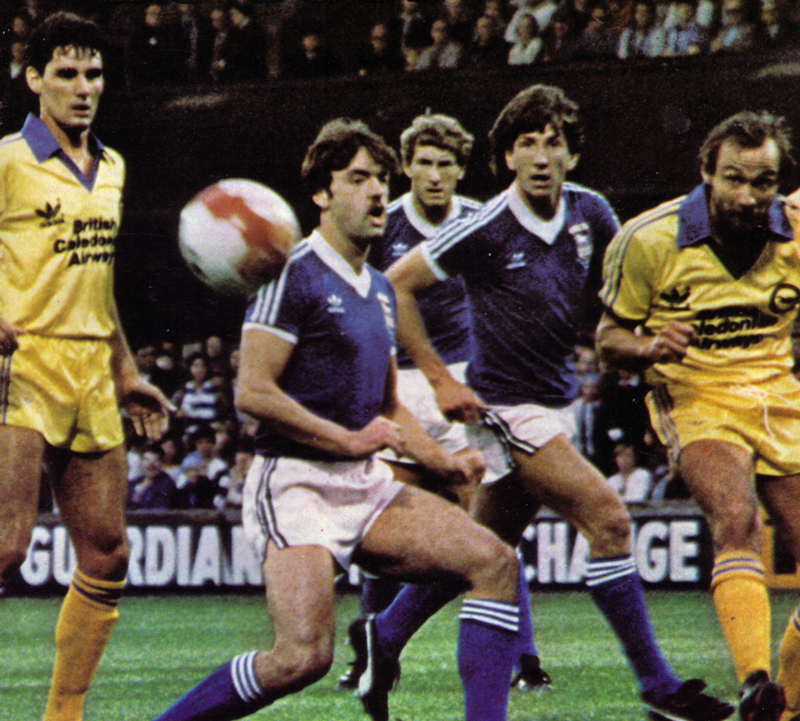
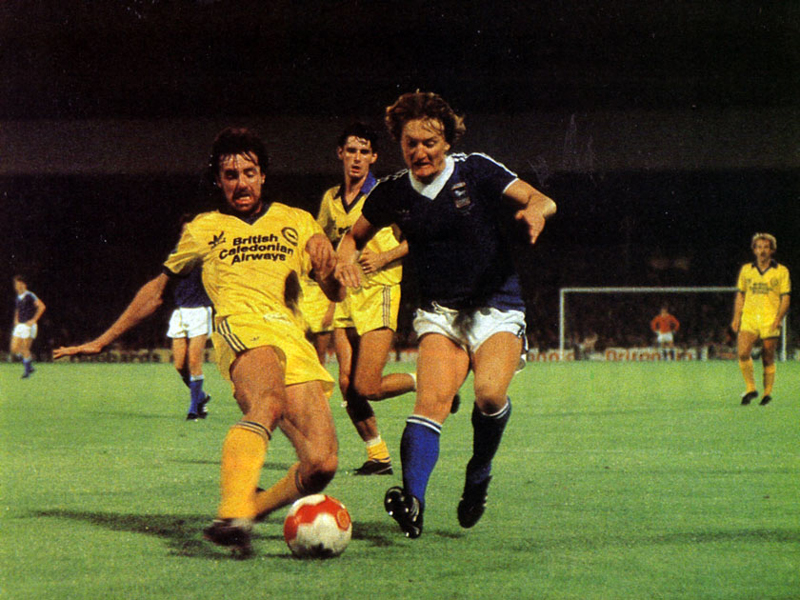
The next game was not so auspicious but nevertheless, despite defeat, demonstrated Brighton’s senior status against another of this year’s tips for the great ‘Nick the title off Liverpool’ campaign, Ipswich.

Taken all round in victory and defeat, this new-look Brighton is a tight outfit with a very solid back four, a midfield that is directed by skipper Brian Horton and a front line that once gets to know itself could produce problems for even the best.

wolves7

Horton (above), a ubiquitous character, has an influence in the three lines slotting into the back whenever Mark Lawrenson takes off for advanced territory, running the midfield and going on occasional forays behind his front three whenever the opportunity presents itself.

In four seasons at Brighton, since he arrived from Port Vale, he has matured into an integrating force with a strong sense of how to exploit time and space. His influence gives Brighton a varied tempo and a less predictable pattern of advance.

ipswich

Horton (above) plays a complete midfield role and his defensive work is tenacious and very professional.

Unlike his two midfield colleagues, who allow players to steal goalside oblivious of the pressure it puts on the back four players, Horton is an expert tracker and uses his experience to transfer marking responsibilities when he feels he is being pulled too far away from crucial zones.

raymchale

McHale (above), though he operated well forward, is an industrious player busily looking for possession from the man with the ball, but he is not so aware of the damage those without the ball can do.

Neil McNab falls into the same trap of being less than attentive to those who ghost behind his area of concentration. On the ball, he has the look of threatening competence as he moves forward with control. The final pass is often less incisive than anticipated, and some of his forward probes are too easily read by those who should be troubled by them.

Brighton’s build-up when started by Horton or full-back John Gregory is patient and constructive, but tends to be a fifteen-yard game which is easily closed down by good defenders or by teams that fall off and vacate the midfield space.

With a build-up like this, one waits frustratingly for the breakthrough from the back or the run into space which has been created by the diagonal drift of their build up.

So often play develops from the right to left, dragging opposition players with it and leaving large spaces into which back or midfield players should be running in order to exploit opportunities on the blind side.

Even when they are developing their game around the midfield, and where the opposition is turned minimally, there is still a great need for play to be switched once the options have closed down on one flank or the other.

If there was a major reason, in their second game, why their opponents could sit reasonably comfortably it was this tendency to attack in straight lines.

ipswich1

It has been generally accepted by the Seasiders that (above) Lawrenson’s best role is at the centre of the back four.

Certainly with he and Steve Foster at the heart of the defence there is a solidarity that will stand them in good stead whenever they play.

Brighton’s resources probably dictate this policy, lacking the luxury of being able to use players in their perfect role.

I thought Lawrenson playing in front of the two centre-backs last season was more effective because of the strength of his forward runs, and he didn’t have the worry of leaving gaps at the back.

wolves5

Foster (above) is playing better than ever alongside Lawrenson, with tireless courage and aggression.

There are those who feel him to be one of the best young centre-backs in the country. Against Ipswich, it was interesting to see him with the two favourite contenders for the spots currently held so securely by Thompson and Watson.

Under far greater pressure, Foster made several early errors – especially when it came to picking up high balls on the edge of the box. But once he settled down, he looked the equal to anybody aspiring to international status.

wolves4

At full back, Gregory (above) turn in his usually immaculate performance both defensively and creatively when he plays the ball forward, but his energy in getting forward into good space seems seriously curtailed. Whether through disinclination or orders, only the player and his manager can know.

wolves1

On the other flank, young Gary Williams (above) gives the impression that, unless he tightens up on his jockeying to players who run at him withthe ball, he could be in for a skinning before the season gets much older.

The rest of his game seems to be developing well and the way he linked up with the centre-back in the middle when his partner had been pulled out wide suggests he is learning his craft quickly.

wolves2

Behind this promising back four Graham Moseley (above) looks quick and agile, enjoying the confidence of those in front of him.

There are times when he could be more positive in his communication but I suspect his diffidence may be prompted by the perpetual dialogue conducted by Foster just in front of him.

The 1980/81 season turned out to be another one of struggle as Brighton’s reshaped side blew hot and cold in the First Division. After the opening day victory over Wolves, it took another six games to record another League victory. Peter Ward left for Nottingham Forest in the middle of a ten match winless spell from late September that saw Brighton vacate the League Cup and marooned at the bottom of Division One by mid-November. Then, a surprise 1-0 win over League leaders Ipswich Town kick-started a brief run of good form. After another slump in the New Year, when Brighton won just twice in fifteen matches, the Seagulls saved themselves with a miraculous spell of four wins in four matches at the end of the season.

This late form showed what Mullery’s most accomplished looking side was capable of. However, it was not without its flaws, as journalist Dave Spurdens capably showed. Although Michael Robinson came good with 22 goals, this did not fully paper over the cracks. When Mike Bailey took over in the summer of 1981, another re-jig of the squad was in the pipeline.

Tagged , , , , , , , , , ,

From Alan Young’s autobiography: Jimmy Case goes AWOL

During 1983/84, Brighton & Hove Albion had three Youngs in their squad: Eric Young, Willie Young and Alan Young, none of whom were related! In a seldom seen aligning of the stars in March 1984, all three made the starting line-up in the fixtures against Manchester City, Derby County and Leeds United. It proved a winning combination as Albion drew 1-1 against promotion-chasing City before thrashing both Derby and Leeds 3-0.

Scoring a powerful volley from a Gary Howlett cross in the second half against Derby was Alan Young, a burly striker who was exceptional in the air, yet also had fine technique on the ground. The Scot had been signed by Jimmy Melia in a £150,000 deal for Brighton from Sheffield United in August 1983 as a replacement for Michael Robinson. He announced his arrival at the south coast club in September 1983 with a spectacular overhead kick in his debut against Chelsea.

alan_young

Although he had only one season at the Goldstone Ground, and was in and out of the side with injuries, he was regularly on the scoresheet when playing for Brighton. Thanks to Simon Kimber, who has allowed me to share an extract from Alan Young’s autobiography ‘Youngy’:

I didn’t realise until I looked recently that my goal return at Brighton was pretty decent; I got 12 goals in 26 matches and I really enjoyed my time at Brighton.

The supporters were still recovering from losing the FA Cup Final to Manchester United in 1983 (this was the game when Gordon Smith should have won the Cup for Brighton with a late chance when he was one on one with Gary Bailey) and the whole euphoria of the day and the occasion. I’m not saying that Brighton isn’t a proper football club but in Brighton the football was viewed as part of the entertainment industry. The football they tried to play reflected that and if the fans weren’t being entertained then they got at the players and the manager.

At Brighton we played with a lot of freedom. There were no restrictions. We were allowed to make our own decisions on the pitch. We had the players with the right experience to do that and I’m thinking of international players like Corrigan, Ryan, Grealish and experienced lads like Jimmy Case and Steve Foster. The football was very enjoyable there and never more so than when Jimmy Case and I were playing together; I loved playing with Jimmy. He was very quiet and has a hearing aid because he doesn’t hear too well.

I remember we finished training one day and headed off to Woody’s as usual and then on to the gentlemen’s club for a game of pool. Then everyone starting to drift away and by ten o’clock in the evening there are only about six of us left. (Bear in mind that we didn’t have mobile phones back then so you couldn’t phone up to let anyone know you were going to be late.)

jimmycase9

So I got home and Karen asked me where I had been so I told her and then she asked me if Jimmy had been with us because Lana (Jimmy’s wife) had been on the phone asking if we knew where he was. I told her not to worry because he left same time as me and would probably be home any time soon. The next day Jimmy is nowhere to be seen and nobody knows where he is. So there is a little bit of panic around. Nobody has a clue where he has gone until the following morning at training when Jimmy saunters in, whistling and acting as if nothing is wrong. So I asked him: “Jim, where the f*ck have you been?” and he looks at me and says “What do you mean?.”

I said “Jim, nobody knows where you have been, we’ve been panicking”.

Then he smiles and goes. “Ha! The Avenue” and I’m like “The Avenue? What Avenue?” and he says “The f*cking Avenue de Champs Elysee!.” Then he tells us how, after we all went our separate ways that night he fancied going to Paris! So he went up to Gatwick and jumped on a plane to Paris. He showed us the stamp in his passport to prove it – he had gone to Paris for a day just because he could and he fancied it.

On the pitch he was different class though. I once saw him on the receiving end of a dreadful challenge when a guy (I forget who) tried to get the ball off him and put his studs down the back of his calf and Achilles. That really bloody hurts and Jim just let the ball roll away and turned on this guy and, through gritted teeth, said “Don’t you ever, ever f*cking do that to me again!” and then he turned and went after the ball and got it back before it went out. I watched this going on and the guy was sh*tting himself. That is the only time I have really seen one professional footballer genuinely scared of another. Because Jimmy could be a hard bastard and really knew how to look after himself.

He used to do about two hundred sit ups every days after training. He would wear one of those polystyrene bags that you get from the dry cleaners when he did them. He got me in to it as well!

If you are interested in reading more, you can buy ‘Youngy,’ the Alan Young autobiography here on the accompanying site.

You can also order a rather wonderful Alan Young t-shirt from Cult Zeros.

1984-85v3

Back row: Mark Jones, Steve Penney, Steve Jacobs, Alan Young, Graham Pearce, Kieran O’Regan, Gary Howlett;

Middle row: Sammy Nelson (coach), Hans Kraay, Eric Young, Joe Corrigan, Perry Digweed, Frank Worthington, Terry Connor, George Petchey (youth development officer);

Front row: Neil Smillie, Chris Hutchings, Jimmy Case, Chris Cattlin (manager), Steve Gatting, Gerry Ryan, Danny Wilson.

Tagged ,

EastEnders’ Anita Dobson meets Albion gals

angie

From the Brighton v Peterborough programme in March 1986:

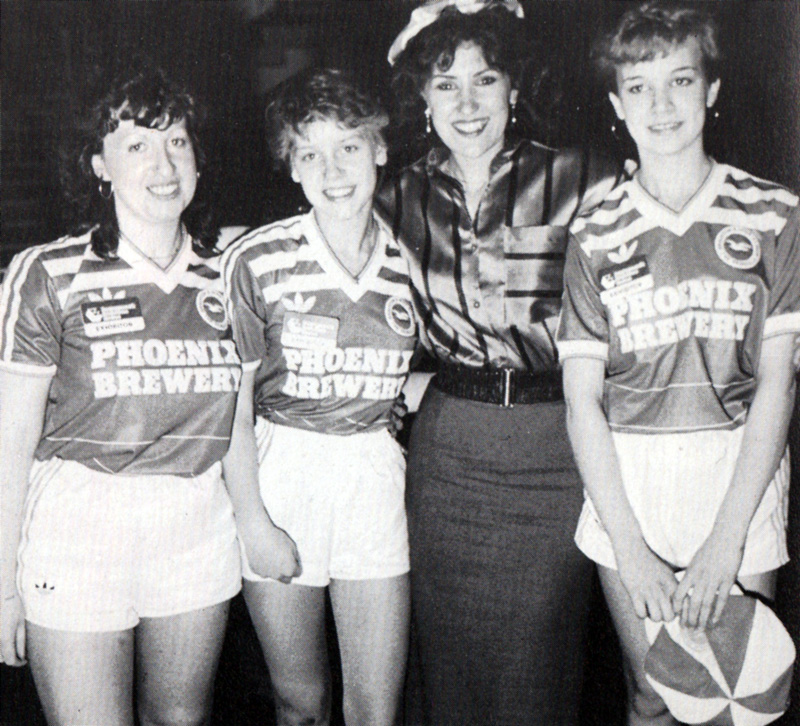
Our feature photo shows some very attractive young ladies on the Supporters’ Stand at the Brighton Ideal Home Exhibition three weeks ago. Gill Lacey, Claire Williams and Kieron Dorey are wearing the Albion shirts but the ‘gal with a smile’ in plain clothes is Angie from EastEnders, screen wife of ‘Dirty Den’, otherwise (known as) actress Anita Dobson.

Maybe the fans could have interested her in securing a deal for Phoenix Brewery at the Queen Vic!

Tagged

Avoiding Jimmy Savile, here’s Jason’s big day with his Albion heroes

In the 1970s and 1980s, the Evening Argus newspaper was living in the dark ages compared with the lesser known West Sussex Gazette, which sometimes offered glorious technicolor coverage of Brighton & Hove Albion. I have a wonderful edition that shows the 1979 promotion parade in colour, but I’ll save that for another time.

Rolling on four years, Brighton were still in the First Division, but struggling to maintain its place in such lofty heights. Nevertheless, they were still hero-worshipped by Seagulls fans lucky enough to be growing up in the town at the time. On Thursday 27 January 1983, the West Sussex Gazette reported on a young mascot’s big day, one where he was made highly welcome by towering Albion skipper Steve Foster:

mascot

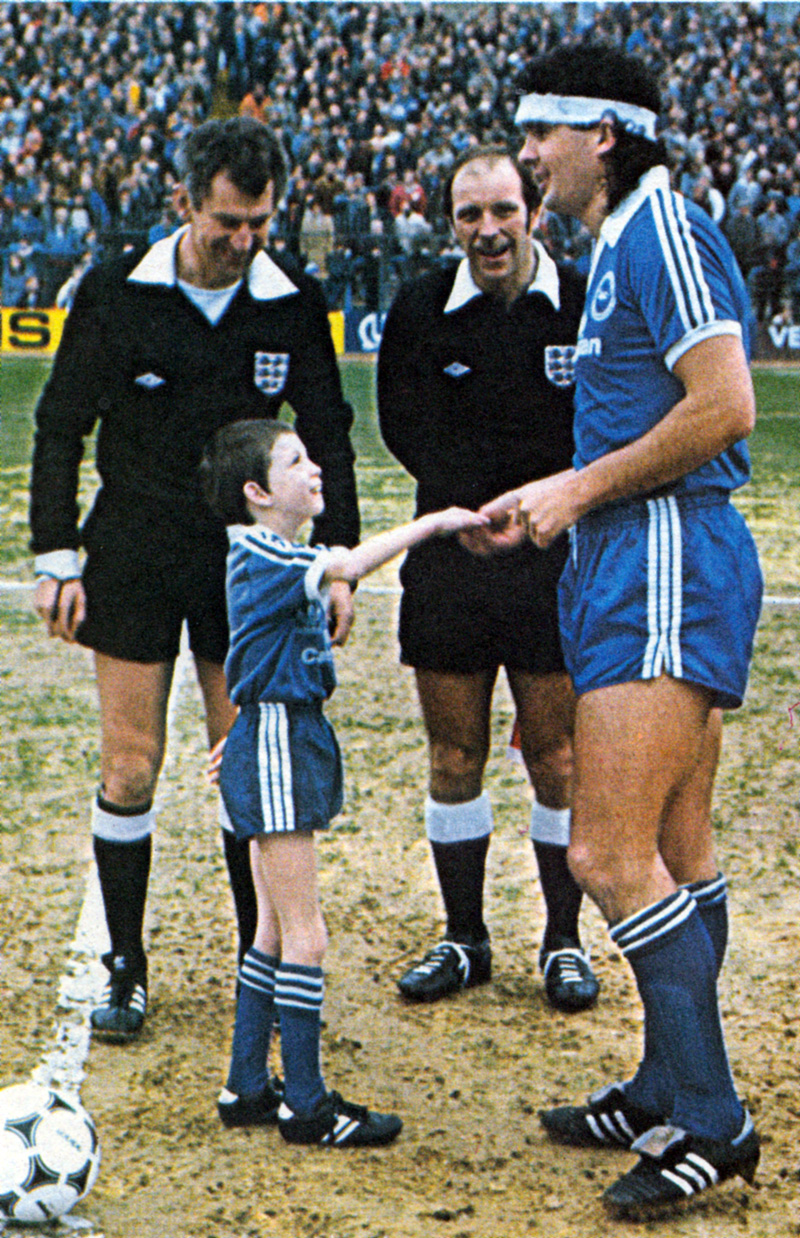
A dream came true for ten-year-old Jason Byrne on Saturday. He changed into football kit and led out the Brighton & Hove Albion team before their match against Luton.

Jason, who lives in Coombes Road, Steyning, regularly watches all the team’s home matches and has longed to meet his hero, player Peter Ward.

His grandfather, Mr Ernest Lidbetter, of Storrington, tried to arrange a meeting with the team by writing to Jimmy Savile. But when that failed he wrote direct to Brighton and Hove Albion themselves.

Yes, you read that right. Just as well!

So, Jason became mascot for the day to the team he avidly supports – and it was a double celebration for his family. His debut before the crowd was on his mother’s birthday.

“It could not have been a better birthday present. When I watched him lead the team out I was overwhelmed and it brought tears to my eyes, says Mrs Sandra Byrne after the match.

Jason’s father, Mr Michael Byrne, was also there to watch his son have a kick around with the Brighton team before the match. He had bought tickets for all of Jason’s grandparents so they could watch.

Jason is a very keen footballer and players for the under-11 team for Steyning Strikers. He is a pupil at Steyning Junior School.

He had his autograph taken with his team, and Peter Ward, and with the referee and now has a referee’s whistle from the match to remind him of his big day.

He kissed the coin for good luck before it was spun to start the game – but the two goals it brought Brighton was not enough: they lost 2-4.

1983_v8

Tagged ,

Mark Fleet – from soccer scrapheap to Skipton success

In Lawrie McMenemy’s ‘Book of Soccer’ from 1981, it gave an insight into the world of the football apprentice back then:

Life as an apprentice footballer is a hard slog – have no doubt about that. The basic hours are nine to five from Monday to Friday, with a game on Saturday morning. The social life is very limited. You still want to be an apprentice? Well read on, because if you love football, then – at the risk of repeating myself – it’s a wonderful life. Whatever you earn, you are being paid for doing what you enjoy. You have free lodgings and meals. You ‘play games’ for most of the time. And, if you’re with a big club, you mix with, and learn from, the stars.

The chapter went on to state that in the Football League, clubs were permitted a maximum of fifteen apprentices at any one time. At 16, the wages of an apprentice at the time were about £16 a week, rising to £20 at 17, the maximum the Football League would permit in those days. At 18, an apprentice would find out whether he will be retained or not. According to the book, these young hopefuls had a full programme of training in the morning and afternoon, with chores fitted in before or after training. Famously, the biggest chore was cleaning boots, which apprentices nowadays no longer do. However, as the old-school voice of McMenemy argued:

The chores that apprentices do are all connected with the cultivation of pride in the club. They are not provided just for the sake of finding them something to do. All are necessary jobs and someone has to do them. An apprentice is not a groundstaff boy, as youngsters used to be, although there are jobs connected with maintenance that he might occasionally help with.

At the Goldstone Ground, Mark Fleet was one of several Brighton & Hove Albion apprentice footballers in the early 1980s. Here he was proudly wearing the club colours:

markfleet2

Hailing from Southport, he came to the club as an apprentice in September 1980, featuring regularly for the Albion in the youth side that won both the Hampshire Youth League and Youth Cup in 1980/81, before playing for Albion reserves in the Midweek Football League. A left-back by trade, he had a strong robust physique for one so young. He was picked for the Irish youth trials in Dublin in November 1980. At the age of 16, he eventually became an Eire Youth International when he played in the number 3 shirt in a 2-2 draw against Wales in Swansea in February 1981 as part of the European Youth Championship. Despite international recognition, he suffered with his knees, and it soon blighted his progress.

Goalkeeper Simon Steele (below left), who was to play for Brighton against Real Madrid in a pre-season friendly in 1983, joined a little later than Fleet, around 1982 and he and Fleet were originally quite close friends and they both received support with their progress from Jimmy Melia, then working as chief scout and as part of the coaching staff.

simon_steeledannydeansmatthewwiltshire

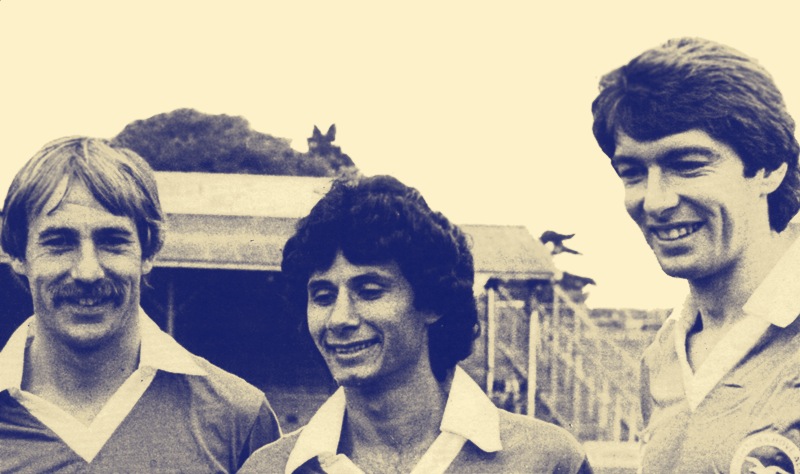
Out of an intake of about nine second-year apprentices in 1982, Mike Bailey signed Fleet and Danny Deans (central photo above) on a year’s professional contract and Matt Wiltshire (right) on a two year pro deal. Although a matchday programme from March 1983 mentioned that Fleet had been “improving steadily among the defenders”, he had to have a knee operation that summer and then suffered a recurrence of knee trouble following a very crude tackle on him in a reserve game with Arsenal in the September that followed. It was his last ever game for the club. Fleet and Deans didn’t gain a further contract, and Wiltshire left too after his two year deal expired.

The matchday programme vs Portsmouth in December 1984 announced Fleet’s retirement along with Giles Stille’s. Regarding Fleet:

During the summer he had another operation, but unfortunately the specialists have decided he can no longer play full-time football. We hope each of these lads find a successful career outside the game.

Nowadays, Mark Fleet has certainly made a name for himself outside the game. Unlike midfielder Giles Stille who now works as a coach and manager in Swedish football, it’s in the world of financial services where Fleet has proved himself. He is currently Distribution Director at Skipton Building Society, having previously held been managing director at AWD Moneyextra and Skipton Financial Services.

Having done a Google search, I found that there are quite a few interviews and quotes of his on various financial news sites. As you can imagine, it’s mostly almost unrecognisable from the lingo you usually hear from professional footballers.

I did try to contact Mark Fleet at Skipton by calling his office to see if I could grab an interview and ask about his memories of his playing days as well as charting the dramatic change and upturn in his career. Sadly, I didn’t get a reply!

Tagged , , , , ,

Autographs – Brighton & Hove Albion 1970s

Very occasionally on The Goldstone Wrap, I will reblog articles from other blogs that help to celebrate the history of the club. In Jackie Dinnis’ lovely nostalgic blog, she recalls collecting autographs of Brighton players in the Pat Saward era. A very wonderful colour photo of the 1971/72 promotion side is here too. Please click the link above.

Jackie Dinnis's avatarMeeting my family

After collecting signatures from my friends at school in the late 1960s I progressed to the next level – famous sporting stars.  I managed to get some when we were on our family holidays, as visiting sports stars made appearances once a week.  Then I began collecting some from my local football team – Brighton & Hove Albion.  I first went along there in 1972, and I think these autographs came from around that time.  I have very little recollection of obtaining these signatures, it was during the time the players would be ‘warming up’ before the game, when they could be persuaded to come over to the side of the pitch and scribble their name on a programme or in a book.  I managed to get several signatures, but I’m sure this was mainly due to Dad pushing my book in front of the players for me.  I also had a team photograph…

View original post 11 more words

Tagged ,

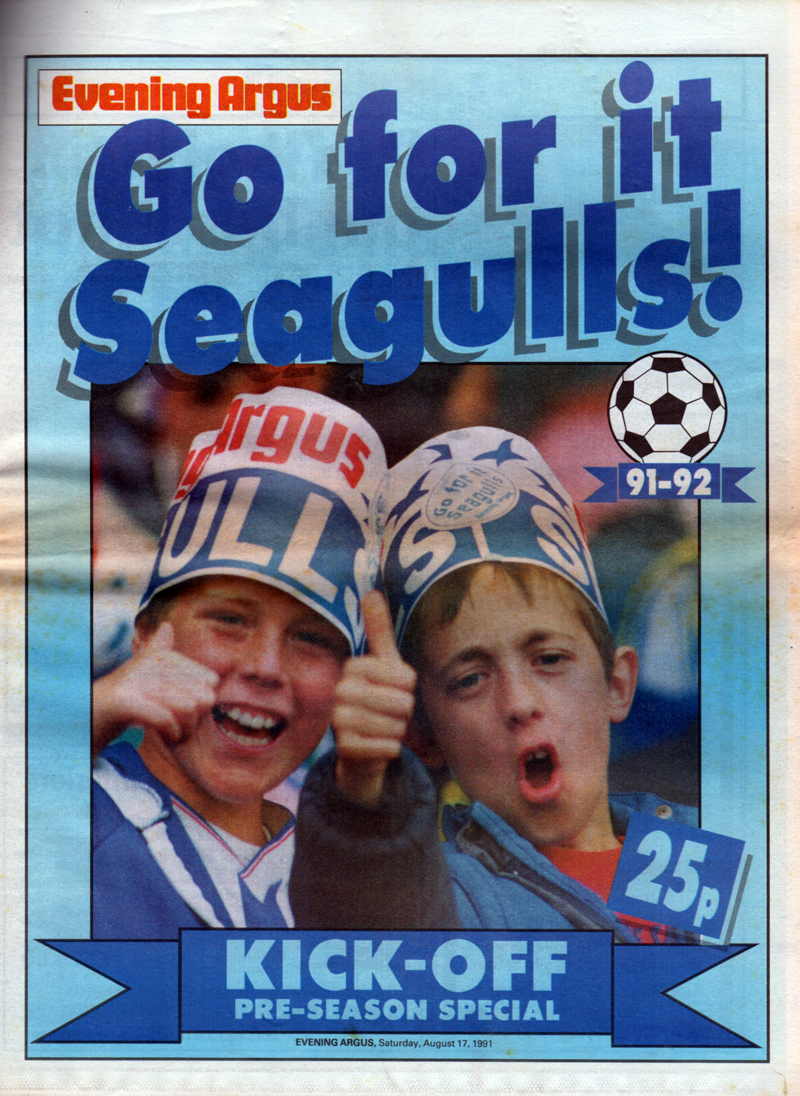
Evening Argus Pre-Season Pull-Out: ‘Go For It Seagulls!’

This blast from the past is a spectacular illustration of how high hopes from pre-season can prove wildly off the mark.

Look at these two daft-looking chaps with Argus banner rolled around their heads. They’re clearly imbued with the kind of elevated expectations that hadn’t yet been ground down by decades of disappointment as a Brighton supporter!

1991-92argus

In the pre-season to 1991/92, manager Barry Lloyd, although hatless, was also very optimistic about the season ahead. As John Vinicombe wrote:

Albion embark on their fourth successive season in the Second Division after going so close to promotion only two months ago.

This campaign, the Seagulls aim to recover the championship place they lost in 1983 by gaining an entry place outright instead of an ordeal by play-off.

“It is more important now than ever before to get into the First Division,” says manager Barry Lloyd.

“I believe that, in the not to distant future, some clubs will not be able to keep going, and will drop out of the Football League through shortage of money. Very few clubs these days have got any cash to spare, and even some of the big ones are having to count their pennies and make cuts. The First Division is the only real place for us and our supporters, and we will be giving it our best shot.”

Brighton certainly didn’t need the Play-Offs this time around – they were relegated! In 1990/91, the final home league match against Ipswich secured Brighton’s Play-Off position. A year later, the final away match against Ipswich secured Brighton’s relegation, and to rub Albion fans’ noses in it, it was also celebration time for Ipswich Town who had achieved the dream that continues to elude the Seagulls – promotion to the Premier League.

How is that a club that had previously reached the Play-offs, now found themselves relegated? On the outset, many supporters point to what a fluke the 1990/91 season really was as Albion conceded more goals than they scored in the League and yet were almost promoted. Even so, a side that gave Liverpool such a run for their money over two FA Cup games must have had something going for it. Yet once star strikers Mike Small (to West Ham) and John Byrne (to Sunderland) departed the Goldstone in 1991, there seemed to be only one direction for Brighton to head, and that was downwards. The less-than-stellar performances of their replacements Mark Farrington and Raphael Meade did little to halt the slide.

Nevertheless, Barry Lloyd still proved himself capable of unearthing a gem of a signing on occasion, such as with Mark Gall, a £45,000 bargain from Maidstone United, who rewarded his manager with his skill and strength, not to mention fourteen goals. However, when Lloyd was appointed to the Board as managing director in December with the task of the day-to-day running of the club, it most certainly took his eye off what was happening on the pitch. It also led to Martin Hinshelwood’s influence on first-team matters increasing. A recipe for disaster?

Tagged ,

Brian Clough lays down the law

brianclough2

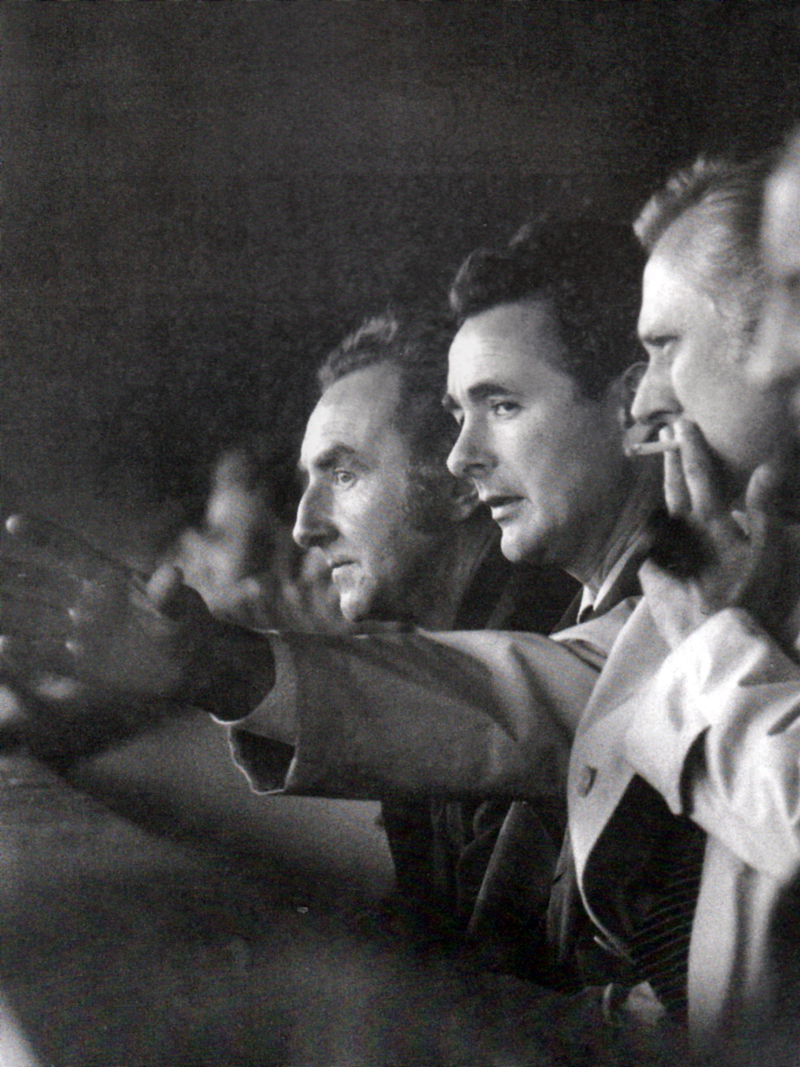
Taken from the Brighton & Hove Albion Supporters Club Handbook 1974/75, Clough’s swaggering words leap off the page:

If I’ve turned Brighton upside-down and inside-out since my arrival from Derby County I don’t apologise.

This club needed a clean sweep and I’ve never been one for wasting valuable time. The work has always been hard, often frustrating but I can, at last, see the light.

I returned from Majorca with the team recently and began to wonder if the full realisation of what I have done here has reached the supporters.

We played one game on that beautiful island and won 8-2.

The score didn’t matter one iota. BUT WE HAD 10 NEW PLAYERS REPRESENTING BRIGHTON ON THAT PITCH. Two had never met their team mates before!

If there’s ever been a new start made in the history of football, then we have made it here at Brighton!

Certain players were not happy to be shown the door at the Goldstone Ground, but Peter Taylor and myself wanted, nay, demanded, new talent and new determination for our big push towards the Second Division.

We think we have reorganised well and are fully aware of the fact that we’ve left ourselves with 16 players.

Don’t be afraid of the drastic measures we have taken. We know what we are doing and we have a fair record at the bottom and top levels in this game of football.

Peter has already told you that we are men of action. Accordingly, we place ourselves at the mercy of the public because we are completely open to everybody’s judgement. We hide no secrets, we make no excuses – we believe our way is the healthy way.

It was Liverpool manager Bill Shankly who said at his team’s FA Cup banquet in London that too many clubs set out for survival rather than victory. I hope he doesn’t list Brighton among the survivors.

I promise that we will have a big, big, go to bring you entertainment and results in the same, successful package deal.

It wouldn’t be fair to ignore the fact I made trips abroad, during the season just passed and came under heavy fire from certain quarters.

I would ask you to bear this in mind… first of all my chairman, Mr Michael Bamber, was aware of all my movements, and secondly, I needed those breaks.

Leaving Derby County, a team we had built so well and so carefully, obviously led to personal difficulties.

I found much-needed comfort and Brighton benefited, too, from my travels. I’m sure my employers understood the turmoils I was facing at the time.

Now, we are looking forward to a great start from a new team. Exciting days, we are convinced, are coming to Brighton.

We will, I promise, give you plenty to shout about and we do look forward to your support.

Reading this, it’s the first and only time I’ve heard Clough justify his mid-season excursions, such as missing the away game at Cambridge in January 1974 to fly to New York to watch the Muhammad Ali boxing match with Joe Frazier. During his nine month spell as Brighton manager, he had also returned to Derby to campaign for Phillip Whitehead, the Labour candidate for Derby North. To cap it all, while Brighton were in the middle of a relegation battle, Brian Clough also travelled to Iran as a guest of the Shah with a view to taking over as manager the national side.

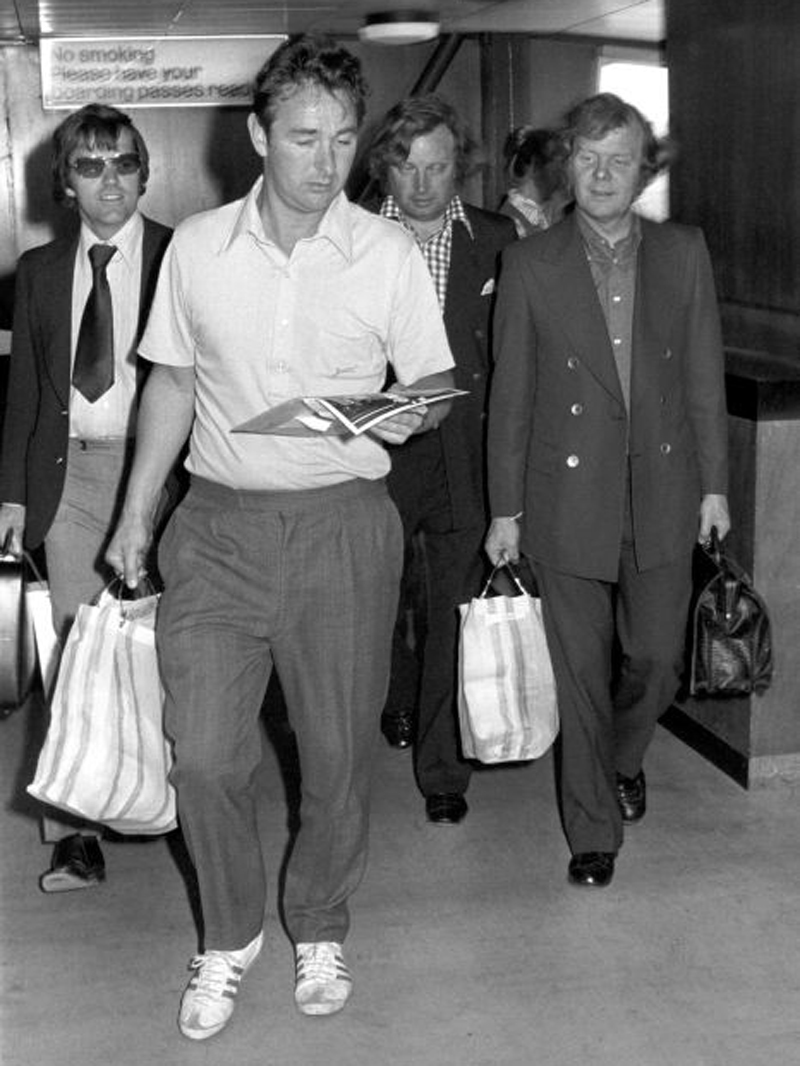
It was hard to escape the impression that Clough lacked commitment to his position at Brighton. Such an unsatisfying perception rang true when the Leeds United vacancy became available. Here is Brian Clough arriving at Heathrow Airport after cutting short his stay in Majorca to open talks with Leeds chairman Manny Cousins:

brianclough3

By the time the Supporters’ Club Handbook had left the printers, and Brighton fans got to read Brian Clough’s rhetoric about ‘looking forward to a great start from a new team’, the manager was already gone.

Tagged ,

Ancient Albion season tickets – from the 1920s and 1930s!

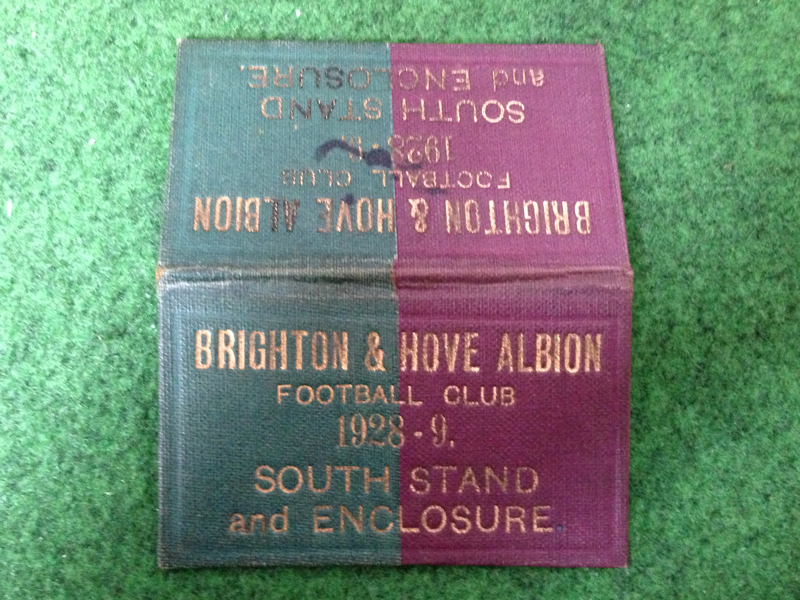
Eighty year or so years ago, if you had bought a season ticket at the Goldstone Ground, you’d have received a card that would have looked something like these. And what exquisite items they are! They’d have fitted easily into your wallet, purse or even your cigarette case… and probably quite easy to lose as well.

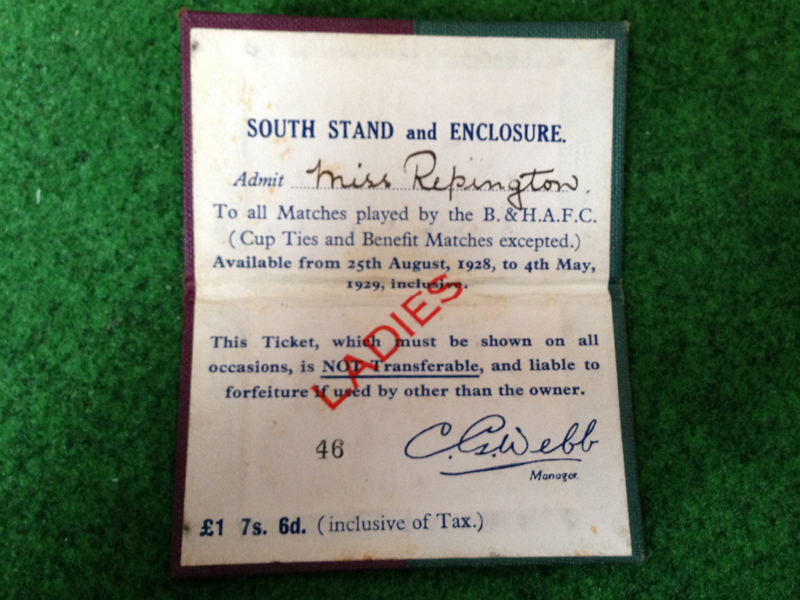
Presented with some classy gold lettering, this is the burgundy and green season ticket for the South Stand and Enclosure from 1928/29.

seasonticket1928-29

With a single horizontal fold, they opened up to list the terms and conditions in blue ink, not to mention the signature of Charlie Webb, Brighton boss from 1919 to 1947.

seasonticket1928-29p2

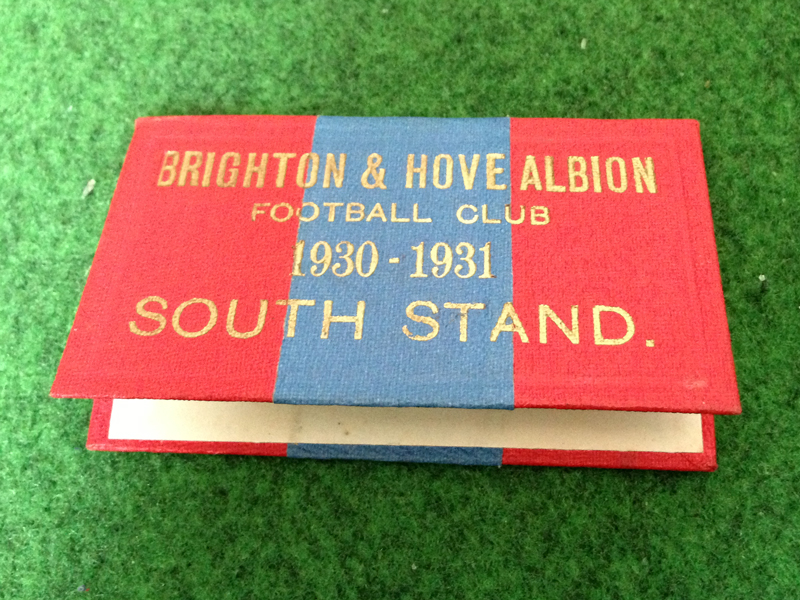
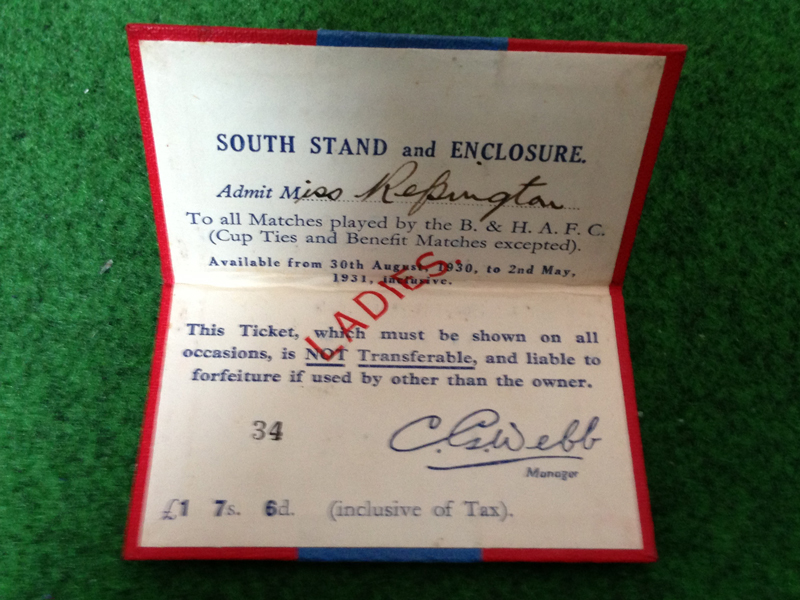
By 1930/31, the colour of the card had changed to a suspiciously Crystal Palace-like red-and-white combination. Having said that, although in the same division, Palace were yet to become arch rivals and, anyway, they played in claret and light blue at the time, so it’s the first card that most matched their colours, not this one.

seasonticket1930-31

seasonticket1930-31p2

As you can see, the price for a season ticket for Ladies was £1 7s 6d (I wonder if this was the same price for men) which, using the thoroughly useful Measuring Worth website, suggests it would be the equivalent to somewhere between £71.33 (using the purchasing power calculator) to £449.20 (the economic power value). Interestingly, the latter value is roughly what my current season ticket at the Amex Stadium costs today.

And what joyous football entertainment was Miss Repington able to enjoy in those two seasons in the Football League Division Three (South)? In 1928/29, Brighton dropped eleven places to fall to 15th position but at least she would have enjoyed some formidable performances in the home matches as the Albion won fourteen of their 21 League matches at the Goldstone. By 1930/31, the team had arrested their decline despite losing then record scorer Hugh Vallance in October (for ‘serious misdemenour’) and surged back up to fourth position. Again, the Albion had turned the Goldstone Ground into a fortress, with thirteen victories being recorded there.
Due to the fact you had to be Champions to get promoted, chances of going up were severely limited. It took another twenty-seven years for this to be achieved by Brighton. I hope Miss Repington got to see it!

(Many thanks to southasp for supplying me with the season ticket cards).

Tagged