As covered in a previous post about the life and times of Norman Gall, the Book of Football was a weekly partwork from the early 1970s, building up to an authoritative encyclopaedia of the game over the course of 75 weeks. I bet, if you around then and had collected every issue over a year and half, you’d quite rightly have been very satisfied with yourself. And wouldn’t think anything of it as you proceeded to bring all six volumes down the pub and proceeded to bore your friends with your newly acquired knowledge on football tactics, club histories and goalscoring feats…!
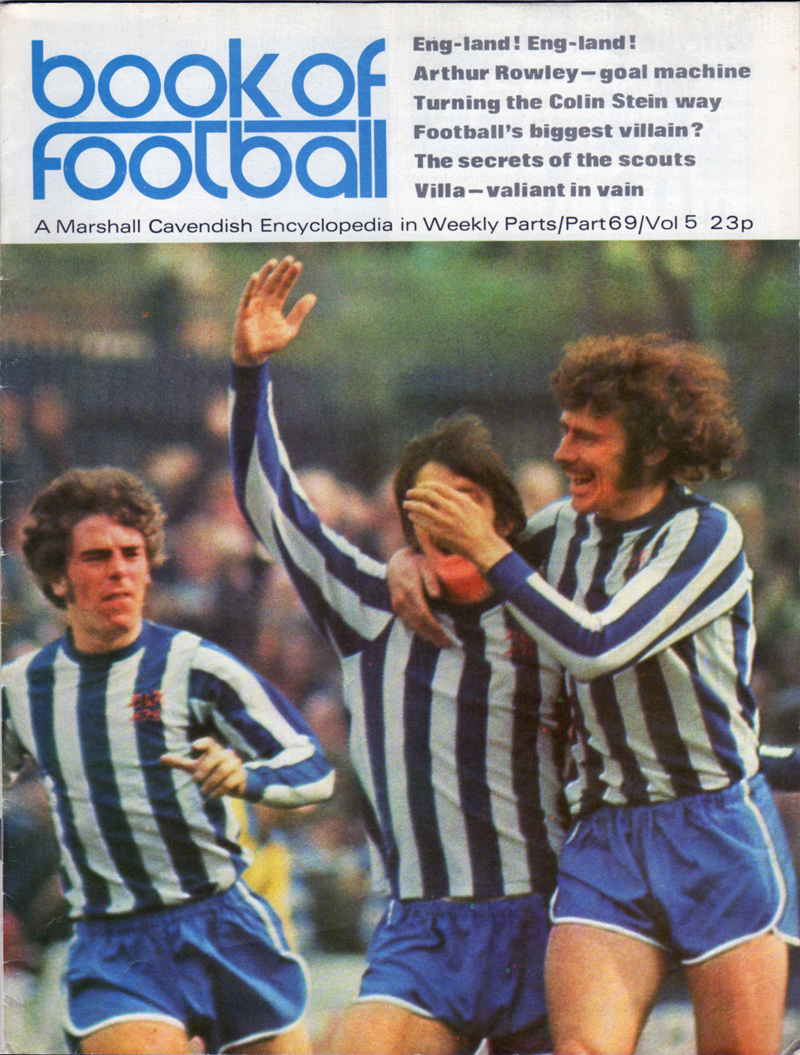
Nearing the end of the completion of Marshall Cavendish’s series, came Part 69 which featured Peter O’Sullivan, Willie Irvine (face partially concealed) and Kit Napier, three happy men in their running shorts, celebrating an astonishing team-goal in March 1972.
As the inside cover says:
One of the highlights of the 1971-72 season for Brighton. Kit Napier congratulates Willie Irvine after his goal which gave Brighton the lead in the vital promotion match against Aston Villa. Brighton won 2-1 and Irvine’s fine goal was featured on Match of the Day.
And what a diamond of a goal it was!
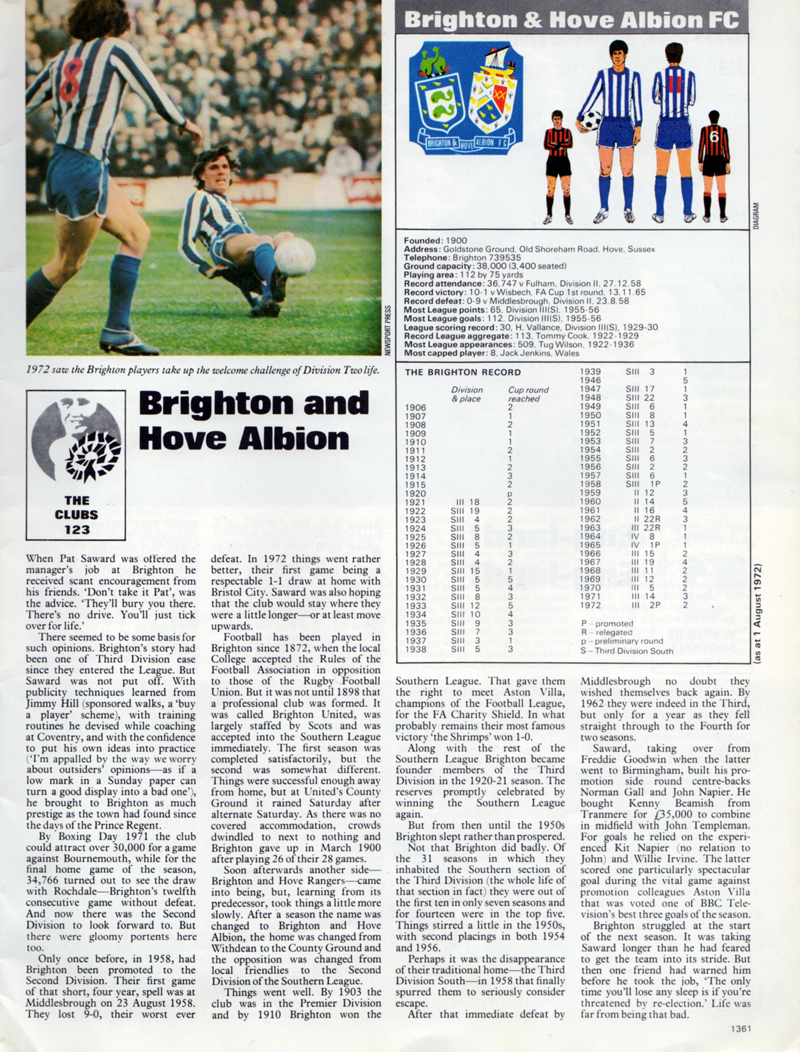
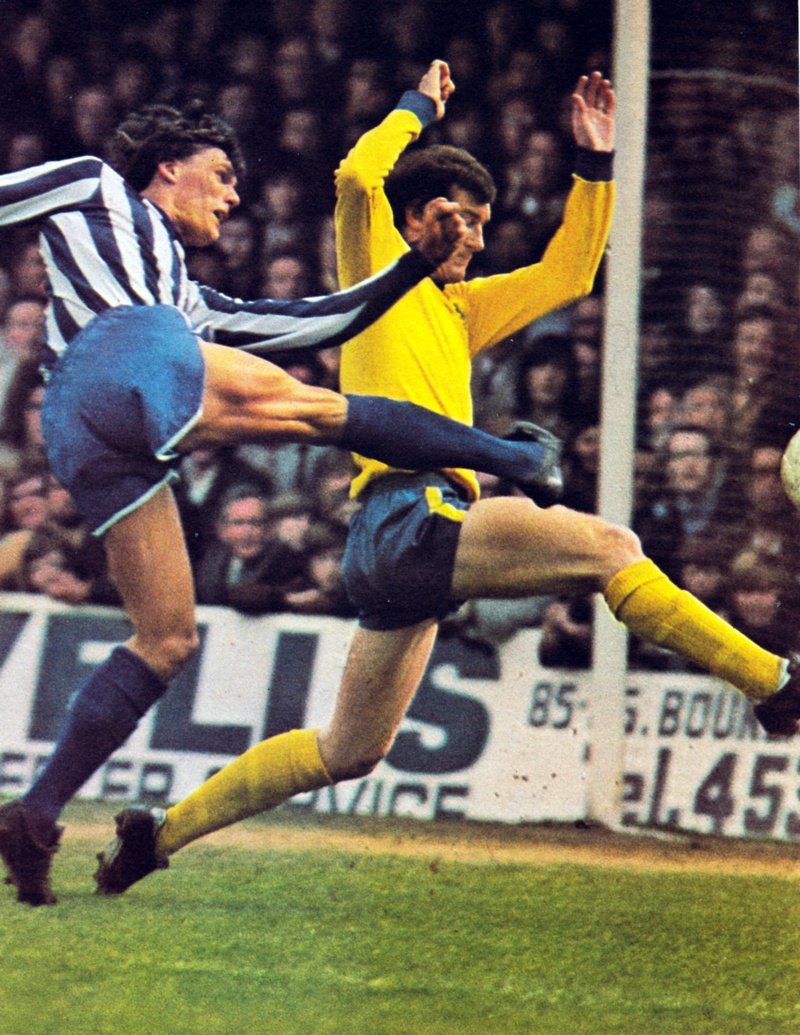
Inside we are treated to another colour photo (of Kit Napier, number 8, and Ken Beamish, on the floor) plus a potted history of Brighton & Hove Albion. Written very concisely, it charts a local Brighton college’s acceptance of the Rules of Association Football in 1872 (yes, the dark ages before Brighton & Hove Albion were formed), through to the creation of the club, the Southern League days, Brighton winning the Charity Shield (also against Villa), through to victory in Division Three (South) in 1958, to Pat Saward’s then current struggles as his charges flopped in the early months of Second Division football in 1972/73.
There are also some excellent illustrations of the coat of arms the club used in the 1960s and early 1970s, as well as some mostly accurate drawings of the home and away kit (persnickety alert: the only omissions were the red lettering on the home shirt and some white hoops from the away socks). Together with Brighton’s season-by-season record in the League and FA Cup, it all makes for a splendid portrayal of what the Albion was like back then and its relative stature to other club within the football world. And if you want more, there’s all the other 74 parts you can read too!
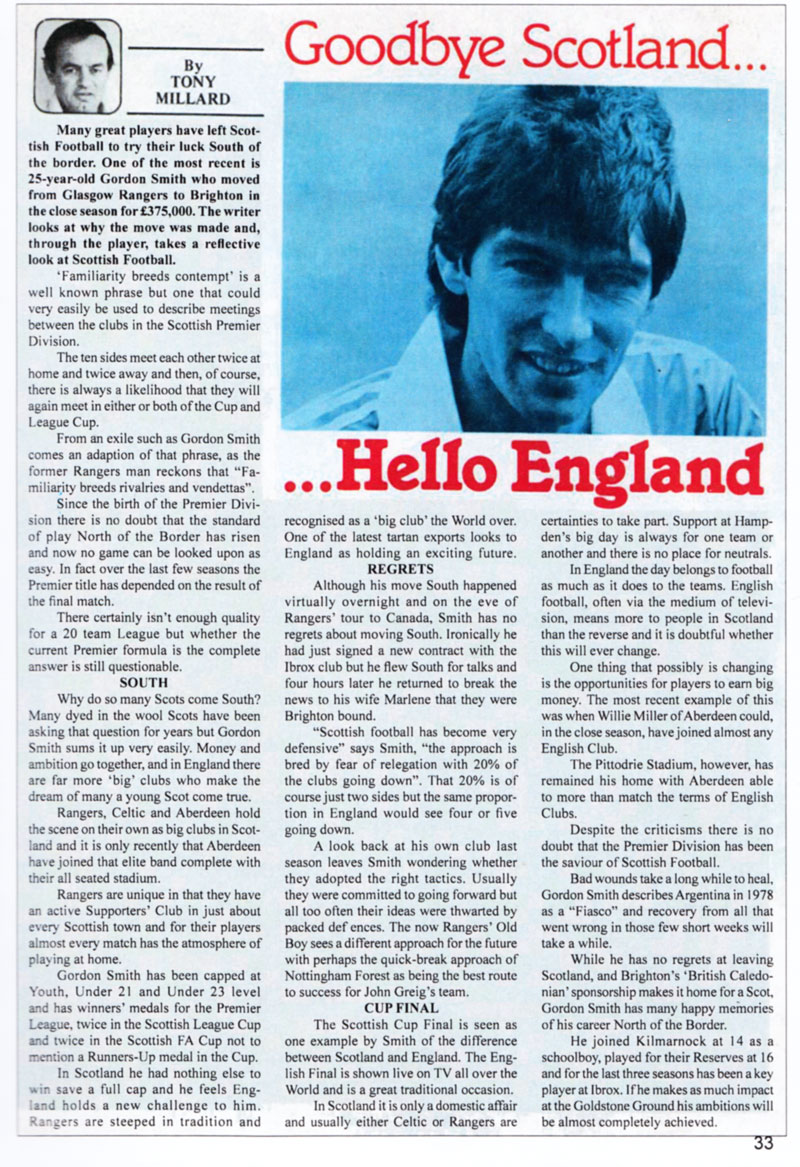
From Programme Plus, a piece by Tony Millard, covering the recent move of Gordon Smith from Rangers to Brighton, and the state of the game north of the border:
While he has no regrets at leaving Scotland, and Brighton’s ‘British Caledonian’ sponsorship makes it home for a Scot, Gordon Smith has many happy memories of his career North of the Border. He joined Kilmarnock at 14 as a schoolboy, played for their Reserves at 16 and for the last three seasons has been a key player at Ibrox. If he makes as much impact at the Goldstone Ground his ambitions will be almost completely achieved.
Years later, in his autobiography ‘And Smith Did Score’ (page 118), Smith expresses more about the changes he experienced:
“When I first went to Brighton, I was stunned by the difference and how well the players were treated compared to up in Scotland. When the Brighton players were travelling to away games on the coach, we had stewards serving us food like on an aeroplane. At Rangers, if the bus stopped on the way back from somewhere like Aberdeen, the players would have to buy their own fish suppers. And, if Willie Waddell decided that the bus wasn’t stopping, then we wouldn’t even get a fish supper!”
An insightful piece by Tony Norman, capturing what it was like being a famous footballer in Brighton in the late 1970s, courtesy of an interview with Peter Ward:
“You should have got here earlier, Wayne,” said the street kid, outside the Goldstone.
A smile creased his grubby face, as he held out a battered autograph album in triumph. “I got Peter Ward. Magic!”
There’s only one star in Brighton. In the bars along the shoreline, they’ll nod approvingly of Gregory, or the skill of O’Sullivan. But there’s only one Peter Ward.
“He signed twice for me,” crowed the street kid. “You should have been here, Wayne.”
Wayne said nothing. He just shuffled awkwardly, trying to hide his disappointment and envy. He felt like a losing captain at Wembley, when the wrong man walks up the stairs and lifts the Cup. Deep inside, Wayne was sick as a parrot!
“Most of the supporters are with me, said Ward later, as we drove back along the south coast to his home. “I know they’re on my side. They expect a little more from me. They want me to turn it on every week, but that’s impossible. Extra pressure? I suppose so, but it doesn’t worry me. I go out there and do my best. It’s as simple as that.”
But, of course, it really isn’t so easy to live with the pressure of being a being a star, in a town where First Division football is still a novelty.
“When I go out, they’s always someone asking for an autograph. If I go to a club for a game of snooker or darts, I can hear people saying: ‘Look over there, it’s Peter Ward’. But if you go to the same places a few times, the novelty wears off and people leave you alone.”
It seems to be Ward’s policy to play down his star status in Brighton. But he lives the kind of goldfish bowl life that drove Best to drink. perhaps the biggest steadying influence on Ward is his happy home life, with his wife, Sue, and their two daughters, Rachael, 3, and Rebekah.
Best lived in a magnificent, empty shell. Ward’s home is his haven.
“I try to forget everything, when I get home. I’ve got my family to think about. Brighton’s a nice place to live. We’re buying a new house and we’ll be even nearer the Downs then. I like going up there and taking our dog, Sumi, for a run. I’ve joined a local fishing club too. I’ve only been out a few times, but that’s another good way to relax.
“I think I’m pretty easy-going. Nothing really bothers me, I enjoy taking it easy at home, doing a crossword, listening to records, or watching TV. I’ve bought one of those video recorders, so I can watch my favourite shows, like Fawlty Towers anytime I like.
“When you’re well-known, things can cut into your private life. You get reporters ringing you at home and that sort of thing, but I don’t mind. The only time it bothered me was when I was on the list, last summer. I took the phone off the hook. I knew I’d be inundated with calls.”
From Charles Buchan’s Football Monthly in July 1964:
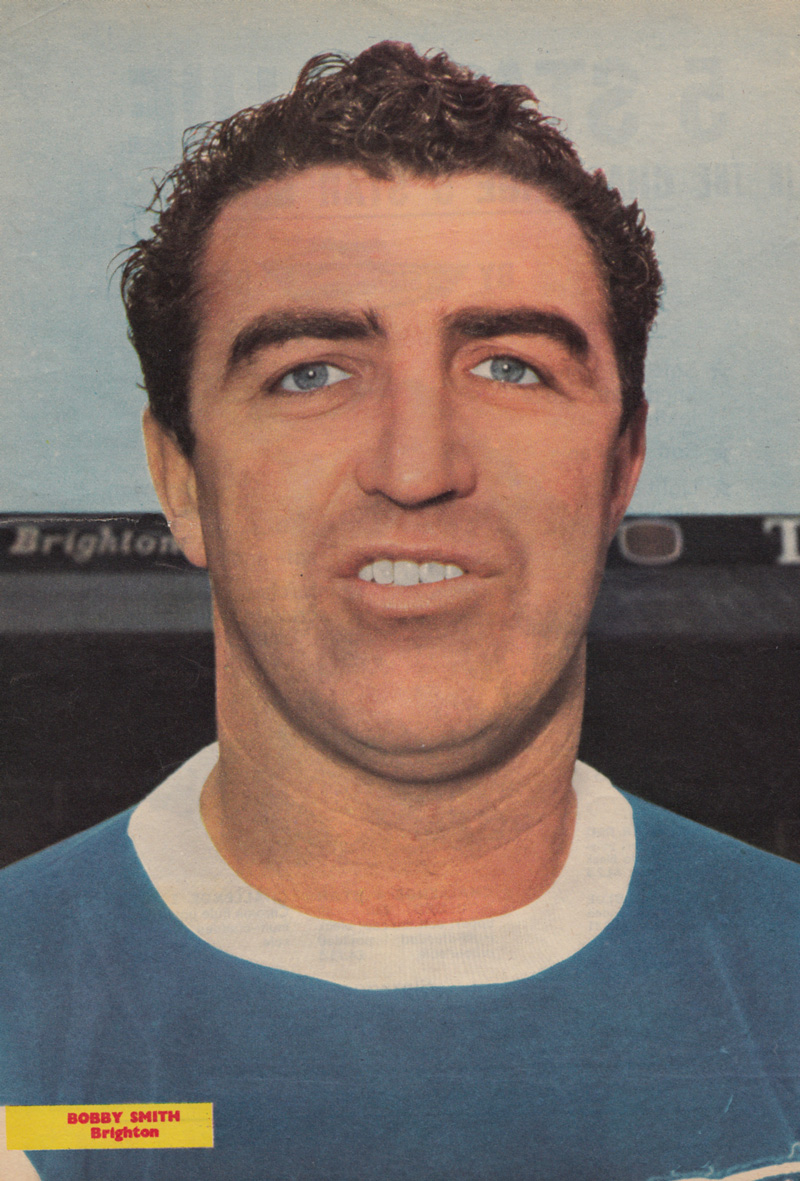
In the history of British football there has seldom, if ever, been such a sudden plummet as that of Bobby Smith. Seven months ago he was centre-forward of England (15 caps) and Spurs. He had been Spurs’ leader when they won the League and Cup double in 1960-61. In that season he equalled the 1896-97 record of W.C. Athersmith, of Villa, by winning all honours available. Yet suddenly, last season, he was sold to Brighton for a reported fee of £5,000. This is his story…
People stop me in the street and ask me about it… “if Spurs let you go for only £5,000 there must be something wrong somewhere… you must have had an argument or something.”
I’ve lived in that atmosphere long enough now to be past wondering, but there’s something I want to say right away…
Every time I turn out for Brighton next season I will be determined to show Bill Nicholson how wrong he was to let me go… to show him and Spurs that there is a lot of the old Bobby Smith fire left – and that it is going to be used to help Brighton bid for better things. Brighton and the Fourth Division are a challenge to me. I could have gone to bigger clubs, could have stayed in London, could still be in the First Division with Fulham.
But now I’m an Albion man, and great, new experience lies ahead.
I’ve never played League football outside the First Division, for I have only been with two clubs, Chelsea and Spurs. I gave Tottenham nine years of loyal, all-out service, but come the new season I aim to bang them in with Brighton. I still can!
I’ve been told I’m in for a tough time; that I will suffer plenty of knocks; that the football in the Fourth Division is too crude to suit me… But I can take care of myself in this new sphere. I’ve always been able to do that. As to the standard of play I’ll just have to wait and see, but I know there will be a lot of “football” from Brighton with a manager like Archie Macaulay in charge of us.
Strange how quickly the tide can turn for you in this game. Seven months ago on a crisp November evening I led an England attack which whipped eight goals past Northern Ireland. Jimmy Greaves got four that night, Terry Paine helped himself to three and I got the other.
There can hardly have been such a sudden transition as mine – from England to the Fourth Division. But that’s how the cards have been dealt and that’s the hand you have to take.
When I think of the £5,000 Brighton paid for me, I know I should be glad it was so low because it made it easy for me to move.
I read that Brighton’s “return” for getting me is already beginning to show with increased season-ticket sales. That pleases me: it doesn’t increase the size of my head. It pleases because it shows the interest is being heightened. It is certain that a successful Brighton side would mean gates many Second Division clubs would envy. So I’m really looking forward to having a go with them. I know quite well that what I have been, and what I have done, will not cut any ice next season. To everybody I shall be Bobby Smith, just starting again – for Brighton.
I’m looking forward to it immensely. I want to do well for my new club… I feel sure I can. There’s one thing they can count on – 100% effort. That’s the only way I know how to play this game.
Perhaps unsurprisingly, given his pedigree and positive attitude, Bobby Smith was a phenomenal success in the 1964/65 season. Considering the last home game the previous season had attracted under nine-thousand, the box office value of Smith was incredible. 20,058 packed into the Goldstone to watch Smith score twice in a 3-1 win over Barrow on the opening day of the campaign. In all, he hit twenty goals (including nineteen in the League) in just 33 games and his swashbuckling style and deft touch also helped five other players reach double figures. In the end, Brighton won the Fourth Division Championship in style, scoring 102 League goals.
But how is that a basement league side such as Brighton were able to sign an England international from mighty Tottenham? In an article for Shoreham Herald, Ian Hart sheds some light:
Like most footballers of that time, Bobby enjoyed a fag and a drink. Unfortunately, he also liked a bet, correction, he loved a bet, the only problem was he wasn’t very good at it.
The level of his gambling debts had allegedly reached a point where the then Spurs boss Bill Nicholson felt that with Smith past his best on the pitch, his problems off of it might have a detrimental effect at White Hart Lane.
Legendary local bookmaker George Gunn was aware of this situation and, along with the Brighton board, managed to broker a deal which saw Smith’s extensive gambling debts paid off as part of his transfer to Brighton.
Despite the successful first season, the good times were not to last. Manager Archie Macaulay suspended Smith for two weeks when the centre-forward reported for pre-season training in July 1965 weighing over 15 stone. Then, Smith’s controversial articles for a Sunday newspaper led him to be transfer-listed and, finally, sacked in October 1965. Nevertheless, his presence and magnificent contribution to the Championship season, with a buzzing Goldstone filled to the rafters, is still remembered as one of the highlights of supporting the Albion in the 1960s.
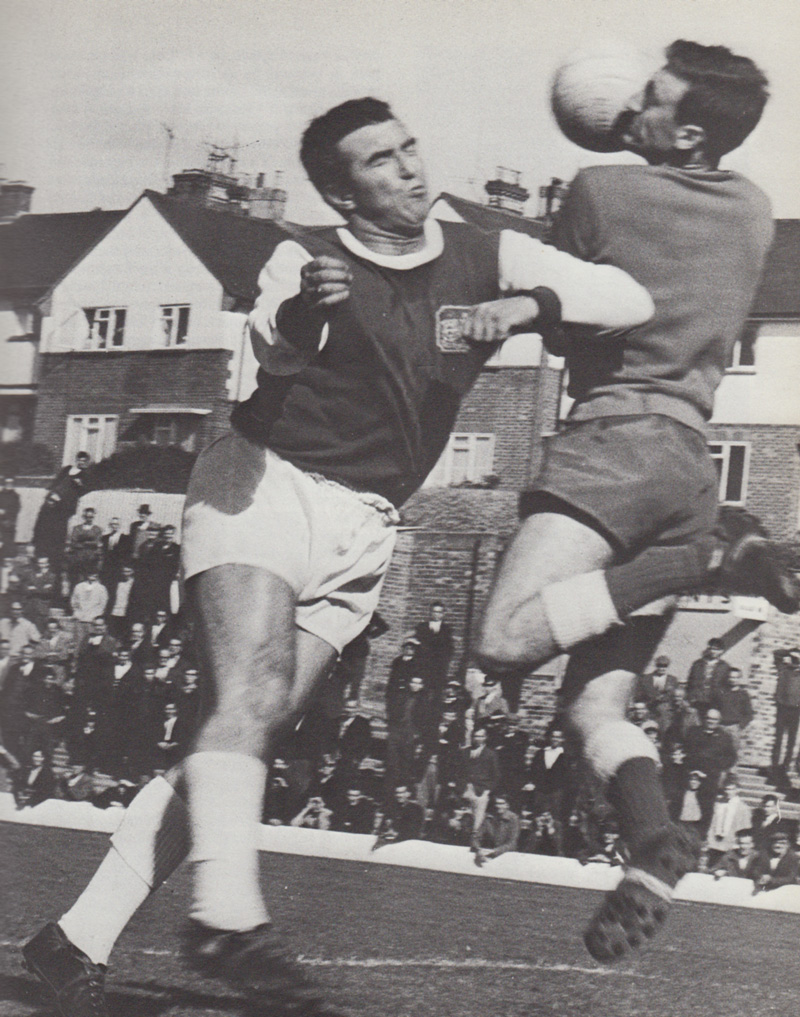
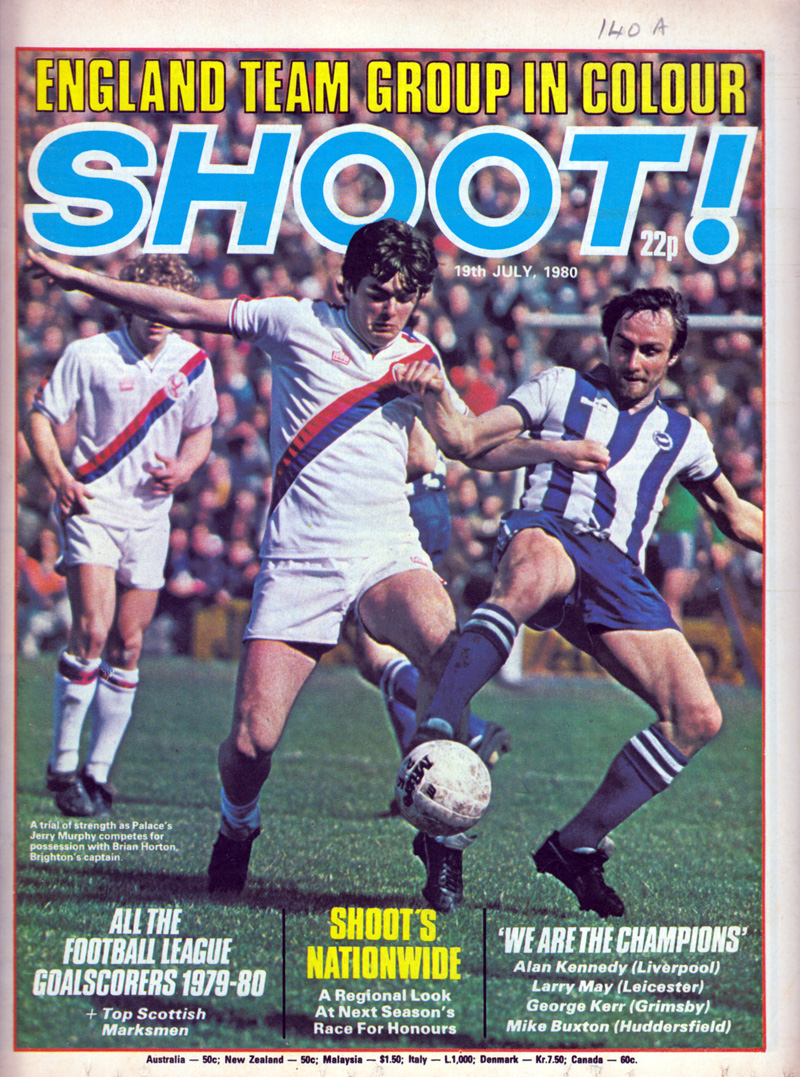
An excellent photo of ‘Nobby’, so-called because of the uncompromising nature of his play when he appeared for Hednesford. Here, he competes for the ball with Crystal Palace’s young midfielder Jerry Murphy in April 1980, during Brighton’s first season in the top flight. The game ended 1-1.
What isn’t known by many Albion fans, however, is how Horton could have signed for Crystal Palace, not Brighton & Hove Albion, in 1976.
In an article in Backpass magazine (issue 26), Horton talks fondly of his time at Port Vale:
We had a fantastic spirit because we were all free-transfer lads brought in by Gordon Lee and, later, Roy Sproson. In 1976, we played at Crystal Palace just before transfer-deadline day. Terry Venables (Palace’s player-coach and soon-to-be manager) got a message to me beforehand saying, ‘Don’t sign for anyone, I’ll sign you in the summer’. We drew 2-2 and afterwards Sproey said, ‘I’m sorry but we’re selling you to Brighton for 30 grand. We need the money.’ The deal was already done and everyone knew but me.
Next day I went to Brighton and met (manager) Peter Taylor in the Metropole hotel. He offered me a deal and my then-wife came down to look around. We watched them play Shrewsbury that night and the next morning I tried it on over wages – there were no agents then – but he called my bluff. He said, ‘Take it or leave it. But if you sign I’ll look after you.’
Horton duly signed.
After a few games for Brighton, Horton was handed the captaincy by Taylor and retained the position when Alan Mullery succeeded Taylor as Albion boss in June 1976. In the season that followed, the tough-tackling skipper was involved in a controversial incident against Palace, the club he almost signed for, in the famous FA Cup 1st Round 2nd Replay at Stamford Bridge.
Horton slotted home a penalty but referee Ron Challis ordered a retake after encroachment by Palace players. Yes, you heard that right, by Palace players. When Horton retook it, Eagles keeper Paul Hammond saved it and Brighton lost 1-0.
Horton did get on the scoresheet in the away match against Crystal Palace in October 1978, but his fine goal proved a consolation goal. Very small consolation, indeed, as Brighton lost painfully, 3-1, as part of a spell where the Albion did not beat Palace in any of Horton’s first nine matches involving the two sides.
It took until that 1979/80 for Brighton to lift the Crystal Palace hoodoo. Horton tucked home a penalty after five minutes to set the Seagulls on the road to a comprehensive 3-0 thrashing of their rivals. After that, Horton never lost again while playing for Brighton against Palace, and played both matches when the Seagulls did the double over the Eagles in 1980/81.
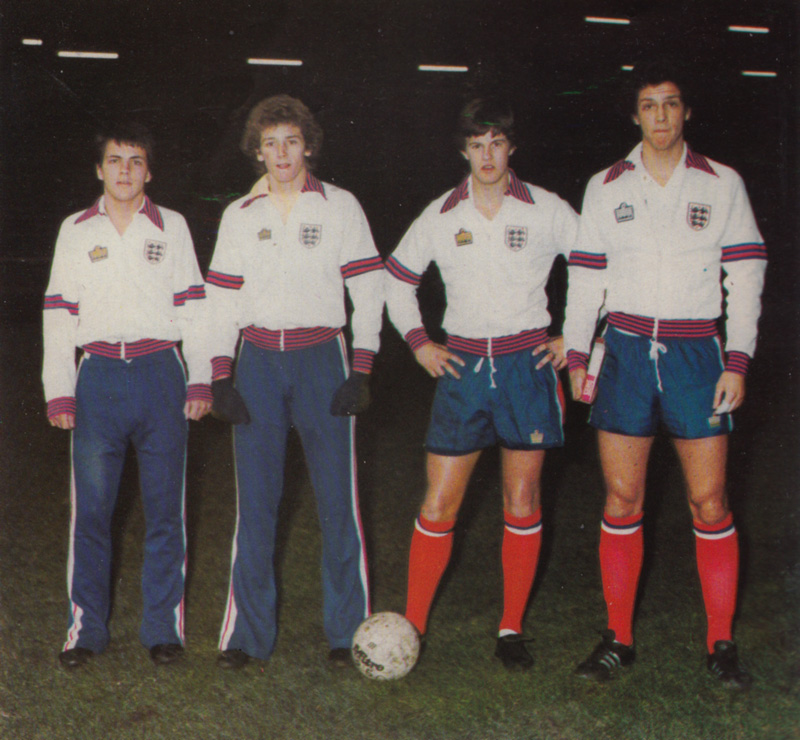
Looking for all the world like he’s dressed in a set of pyjamas, here’s a rather startled-looking Perry Digweed, second from left, showing off his Admiral England clobber along with fellow Fulham lads Mark Lovell, Tony Maloney and Tony Gale. While Brighton striker Peter Ward was banging in a famous hat-trick for England Under-21s against their Norwegian counterparts at the Goldstone around this time in late 1977, Digweed had played in the FA Youth team against Norway at Craven Cottage. The young keeper ended up joining the Albion three seasons later in a £150,000 deal, an incredible fee for a teenage reserve goalie. Nevertheless, he repaid the faith, serving twelve years with the club.
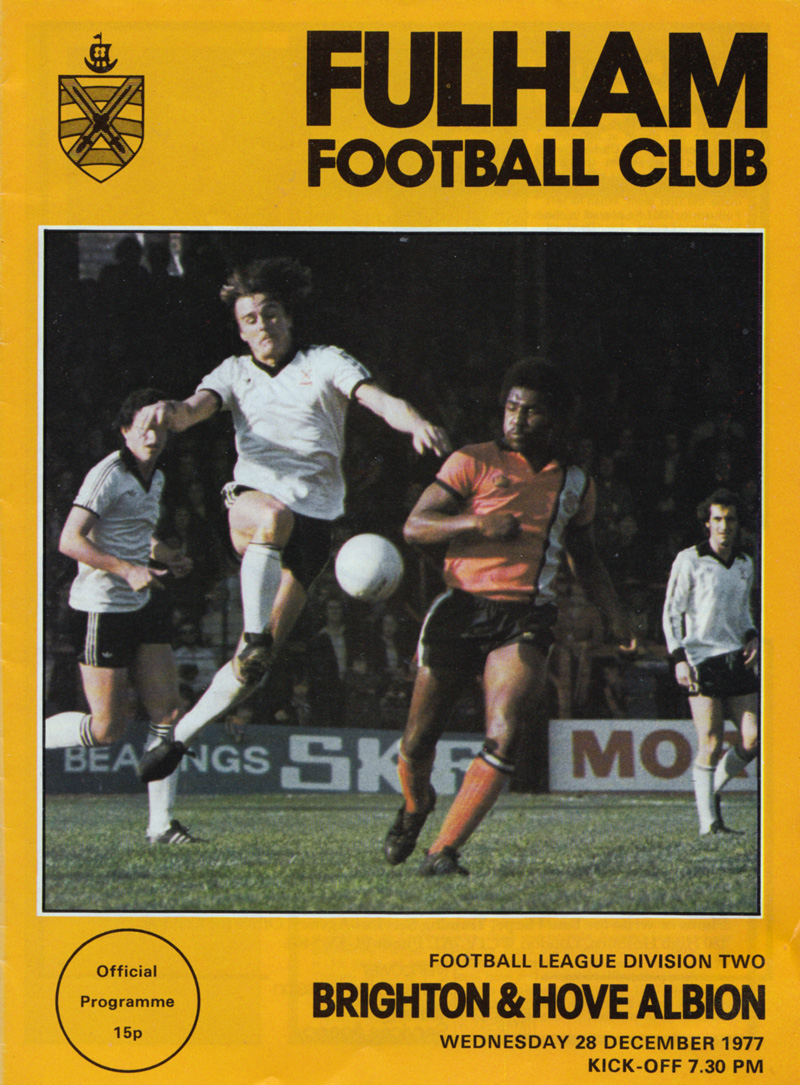
The photo above is taken from the Fulham v Brighton match on Wednesday 28th December 1977:
The programme has some nice tidbits, such as what a ‘TV Video-set’ for rental looked like in 1977, some colour photography of recent matches (rare at this time) and a half-time quiz asking which two former Fulham players have managed Brighton (Barry Lloyd and Micky Adams can now be added to the answers of Archie Macaulay and Alan Mullery). Some words and photos also shed some light on the lives of the Lilywhites’ assistant manager Ken Craggs and young apprentice professional Tommy Mason, 17, before they eventually arrived at the Goldstone Ground.
Unsurprisingly, there is a warm welcome offered to the Brighton boss:
The name of Alan Mullery is something of a legend here at Craven Cottage – and it was a sad moment both for Fulham and for English football when he decided to quit the playing side of the game at the end of the 1975-76 season.
It is rather prescient that the piece finishes:
One of Mullery’s biggest assets – and some say his faults – is single-mindedness. But he’s just single-minded enough to get Brighton into the First Division – and good luck to him if he does it.
Indeed he was. The point about being single-minded is particularly apt given that recollections of this quality of Mullery’s that led to his appointment as Albion boss in 1976. Brighton chairman Mike Bamber had been asleep, dreaming of the time the then Fulham midfielder had struck team-mate Jimmy Dunne in a Second Division match with Albion in January 1973. (Yes, because that’s what we all dream about when we go to sleep!) His wife, Jean Bamber, though, was rather startled when he woke her up by announcing Mullery’s name, declaring ‘that’s who we’ll get as the next manager.’ As Mullery wrote in his autobiography in 1985:
Fulham had been winning 2-0 when our centre-half Paul Went was concussed in a collision with Brighton’s centre-forward Ken Beamish. I told Dunne to change his role in the team until we could get Went examined at half-time, but he ignored the instruction and within minutes a ball was played over the head of a wobbly Went and Beamish scored. I argued with Dunne. He told me that Beamish wasn’t his man and so I hit him hard on the chin. Brighton did the same a minute later only this time goalkeeper Peter Mellor made a great save and I had another go at Dunne. The argument continued in the tunnel at half-time and I smacked him a third time, until at last he saw sense and we eventually ran out 5-1 winners.
Hitting a team-mate is something I’m not very proud of, but it was done in the heat of the moment, and that first punch got me the manager’s job at Brighton. Bamber felt that if I could hit a member of my own team, nothing would stand in my way. ‘He must be a winner.’ he added as his startled wife tried to go back to sleep.
Mullery certainly proved a success as manager at the Goldstone Ground and wasn’t afraid to pay big to enhance his squad. Starting his tendency of paying astronomical prices for Fulham players, that continued with Digweed, the Brighton boss had completed the £238,000 signing of Teddy Maybank from Craven Cottage the previous month. With the transfer being too soon to be dismissed as overly expensive, the match programme is optimistic about the striker prospects: ‘Teddy immediately started to repay Alan Mullery’s faith in him by scoring in his first two games.’
He also scored a consolation in this fixture from December 1977 against his former side. Unfortunately for him, though, the Seagulls went down 2-1.
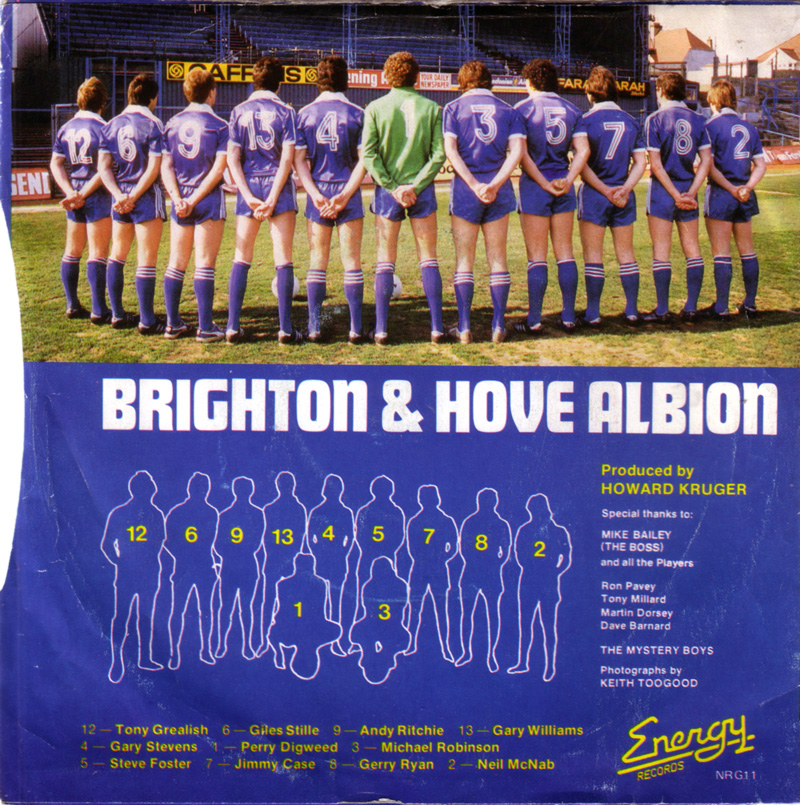
First Division footballers they may have been, but Brighton’s team of ’82 also made an audacious bid for pop fame and hip-hop credibility.
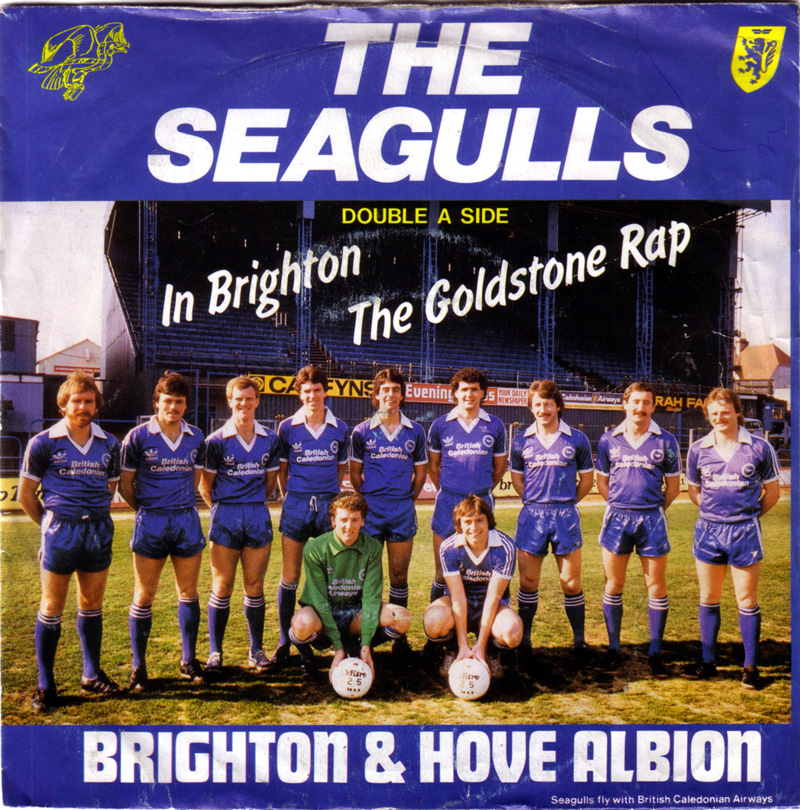
From left to right, here are the rather earnest-looking Gordon Smith, Steve Gatting, Perry Digweed, Andy Ritchie, Jimmy Case, Gary Williams, Gary Stevens, Gerry Ryan, Michael Robinson and Steve Foster seeking to set the world alight with their dulcet tones and Farah slacks, not to mention their previously unrevealed rapping skills:
In the Brighton v Tottenham match programme from March 1982, it was announced:
Last Wednesday our first team squad had a unique day out when they travelled to recording studios in South London to cut their first record. The record is entitled ‘In Brighton’ and should be available on general sale in early April.
Howard Krugar, who lives in Hove and specialises in organising concerts for some of the world’s biggest stars, is the man behind the idea and he is hopeful of the disc making the charts. In fact it is highly likely that the Albion squad will appear on ‘Top of the Pops’.
Also involved in the record is BBC football commentator Peter Brackley who livens things up with commentary on a memorable Albion goal… which one? Well, for that you’ll have to buy the record.
Thanks to the lads at We Are Brighton, you can hear ‘In Brighton’ here:
Based on the Drifters’ song ‘On Broadway,’ the song received a positive response from John Henty who gave it a spin at Radio Brighton on Sunday 4th April. With dubious lyrics such as ‘Big Fozzie keeps it tight for Brighton’ and the boast of ‘Playin’ at the Goldstone Ground, where good football’s always found’ (sadly, no football of any kind down there now), not to mention even dodgier singing, the song probably did not have much of a fanbase outside of Brighton supporters.
Nevertheless, it was also played by Peter Powell on Radio One. However, as notes that month in the Brighton v Manchester United programme lamented:
Last week Peter Powell played the disc on his Radio One show but allowed his own support of Wolves to colour his comments on the merits of the recording.
The song was also erroneously aired on BBC’s ‘Match of the 80s’ series in the 1990s in its coverage of Brighton’s FA Cup run of 1983, with Danny Baker hesitating about even calling it a ‘song’! And, just in case you are wondering, the Andy Ritchie goal that Brackley acts out a commentary on is almost certainly this swerving free-kick belter from the Brighton v West Bromwich Albion game in February 1982:
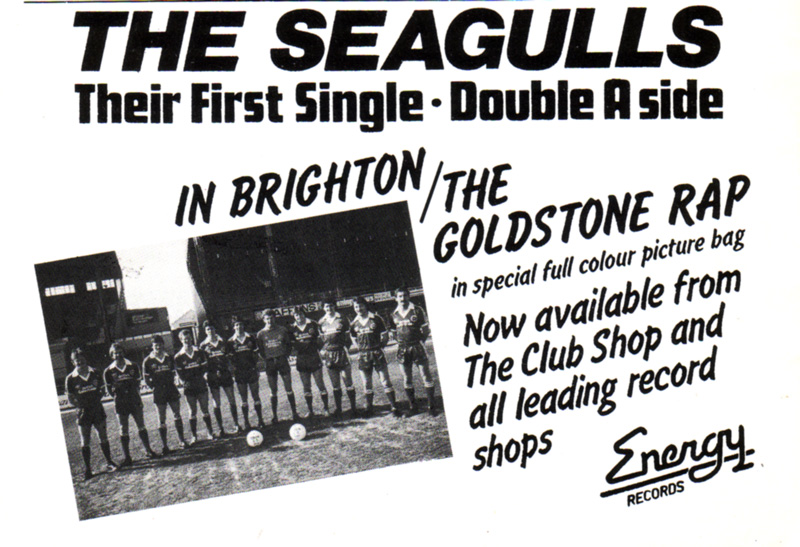
The other track on this Double A-side was ‘The Goldstone Rap’, which this very blog you are reading takes its name from. Looking at it now, it’s amazing to think that Brighton & Hove Albion were at the forefront of the UK hip-hop scene in 1982, especially as this was almost certainly the first ever football song to feature rapping.
Unlikely to win any prizes at the MOBO awards, the rap memorably includes such lyrical gems as: ‘When you make that cross you’re gonna cross it fine / Give the ball to the player on the dead ball line.’
Never mind the MOBOs, though. Were you at Busby’s Night Club on Kingswest, Kings Road, in Brighton on the evening of Tuesday 6th April 1982? If you were, you would have been present to the grand launch of the single, as Brighton & Hove Albion’s first team squad belted out their musical masterpieces on stage! Sadly, I have no video footage of this priceless moment.
When released to the general public, the colour sleeve of the 7″ looked splendid, with the players proudly posing in front of the temporary Lego Stand in all its glory:
The price was a bargain £1.20. Buyers of the single from the club shop were also given a chance to enter a great competition to win two tickets to Dallas, Texas, with British Caledonian Airways.
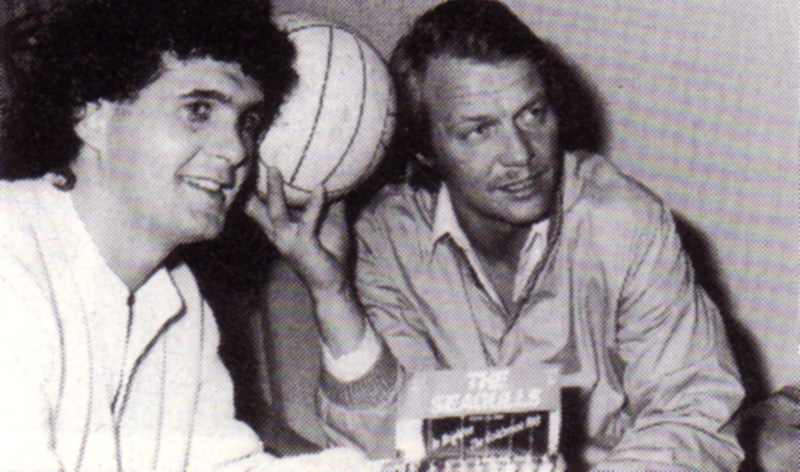
So, was the Brighton release a launchpad to instant chart fame and fortune? Unfortunately, the single sank without trace but it gave Steve Foster (whose vocals also featured on the England 1982 World Cup song ‘This Time’), an opportunity to meet up with proper singer David Soul and wing a copy to the ‘Starsky and Hutch’ star:
Years later, I was wondering about ‘The Goldstone Rap’ and imagining what it would have sounded like if it adopted the electro sound of 1982’s other great hip-hop release, ‘The Message’ by Grandmaster Flash & The Furious Five. Thanks to the power of the internet, and due to a discussion on North Stand Chat, I got to find out.
Major props to Ian, the DJ who created this ‘Goldstone Message’:
A much enhanced version, I hope you’ll agree. In terms of pushing at the limits of what was possible for music and Brighton & Hove Albion footballers, it was certainly close to the edge.
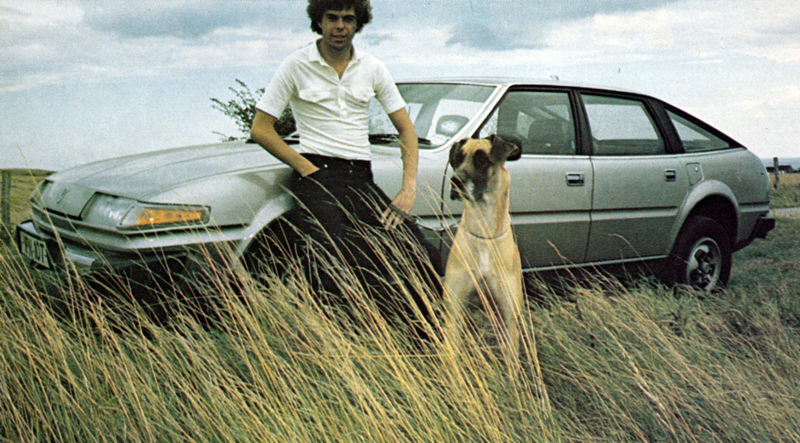
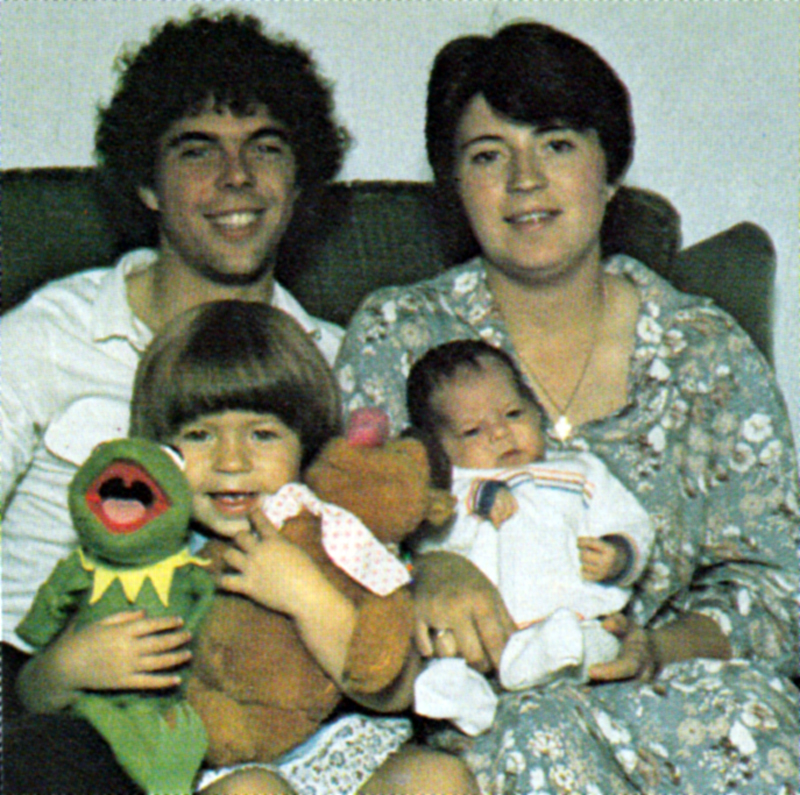
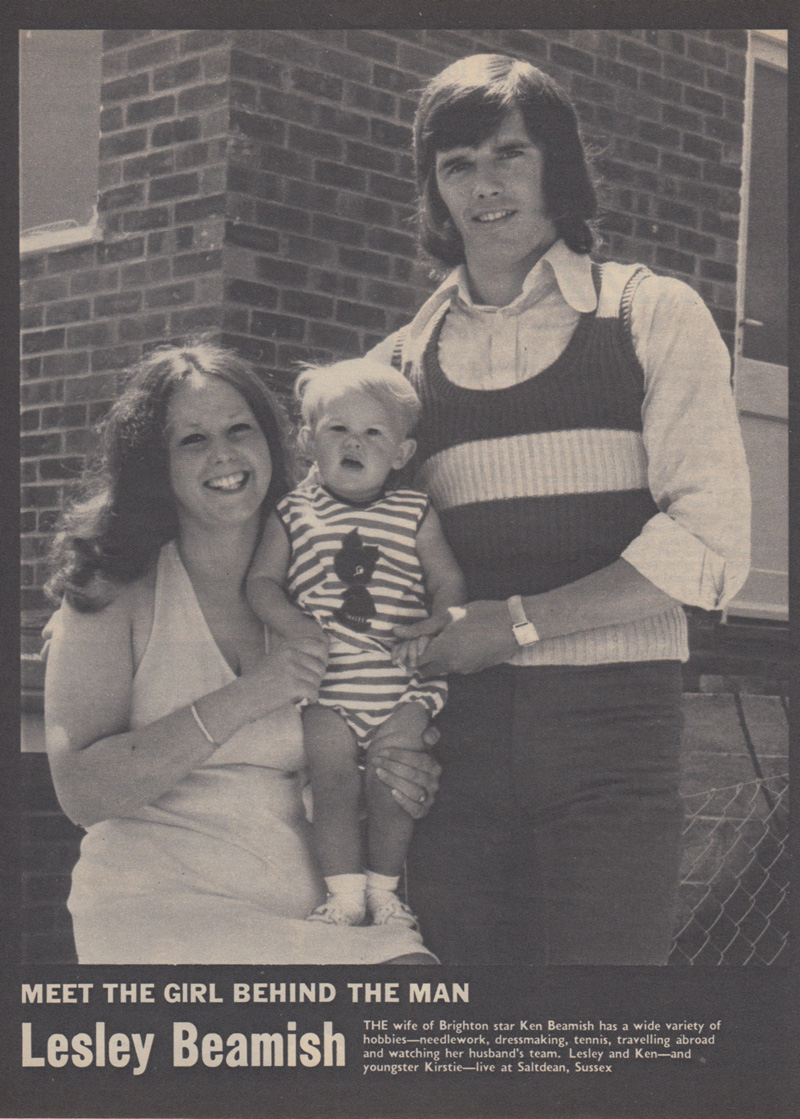
The wife of Brighton star Ken Beamish has a wide variety of hobbies – needlework, dressmaking, tennis, travelling abroad and watching her husband’s team. Lesley and Ken – and youngster Kirstie – live at Saltdean, Sussex.
What an absolute beauty, showing the elegance, style and warmth that undoubtedly appealed to our goalscoring hero. I am, of course, referring to Ken Beamish’s magnificent tank top!
Beamish had joined Brighton from Tranmere in March 1972. As he told Backpass Magazine (issue 18):
“Pat Saward was the Brighton manager who took me down there and the fee was £30,000 [actually £25,000] plus a player, whose name now escapes me [Alan Duffy]. Brighton were very much on the up and the south coast had great appeal. When you add in the fact that I was also doubling my wages, then it made for a very exciting move for me.”
Beamish quickly found his feet at the Goldstone. Above, he shoots for goal against Aston Villa in the crunch match of the promotion race in March 1972. He totalled six goals in twelve starts for the Albion in 1971/72 and was then joint top scorer with nine goals when Albion’s brief flirtation with the Second Division ended cataclysmically.
In the season that followed the Goal Magazine feature, 1973/74, Saward was sacked in October as Brighton faced falling attendances amid the prospect of a second successive relegation. Enter Brian Clough:
“I recall the first time I met Brian quite clearly. We were staying in a hotel in Lewes ahead of his first game and we had been told to expect the new manager to join us for dinner. We all trooped down to the dining room and finished the meal, but no sign of Cloughie. We were wondering whether he would show up and he suddenly appeared at the top end of the table and asked everyone what they wanted to drink. The first couple of guys said half-a-lager and I joined with the same order. I had never had alcohol from Wednesday onwards during the season.
“By the time the round had been completed I think we all had half-a-lager except for one lad who ordered a coke. I don’t know to this day what Brian made of us – the South Coast drinking gang or what – but he let it pass without comment.
“His managerial methods were unconventional. We trained down at Sussex University playing fields and sometimes he would have us there at 5pm, even in mid-winter when it was getting very dark. He only really joined in on us on Thursdays and Fridays and was a little distant.
“I was never quite sure what he made of me, but I certainly got the message at the end of my third season. I had finished top scorer and was looking forward to a team trip to Spain. The flip flops were out and ready to be packed up when the travelling party was announced my name wasn’t on it. To say I was surprised would not do justice to how I felt. I was gutted – and confused.
“I don’t think Cloughie spoke to me again and the local media down there was full of speculation that I would be leaving. I got most of my information from a next-door neighbour who was forever coming up to me to say what he had read about me in the local paper or heard on the radio.”
It was a sad end for Beamish, who had hit twelve League goals and had done so much to prevent Brighton falling into the Fourth Division. Indeed, it was the striker’s double at Southend in the 2-0 win in April 1974 that saw the Albion home and dry to fight another campaign in Division Three. As hotshot Fred Binney arrived at the Goldstone Ground, Beamish was sold to Blackburn Rovers for £26,000, becoming a favourite at Ewood Park after his two-and-a-half year stint as an Albion striker, and Saltdean resident, was up.
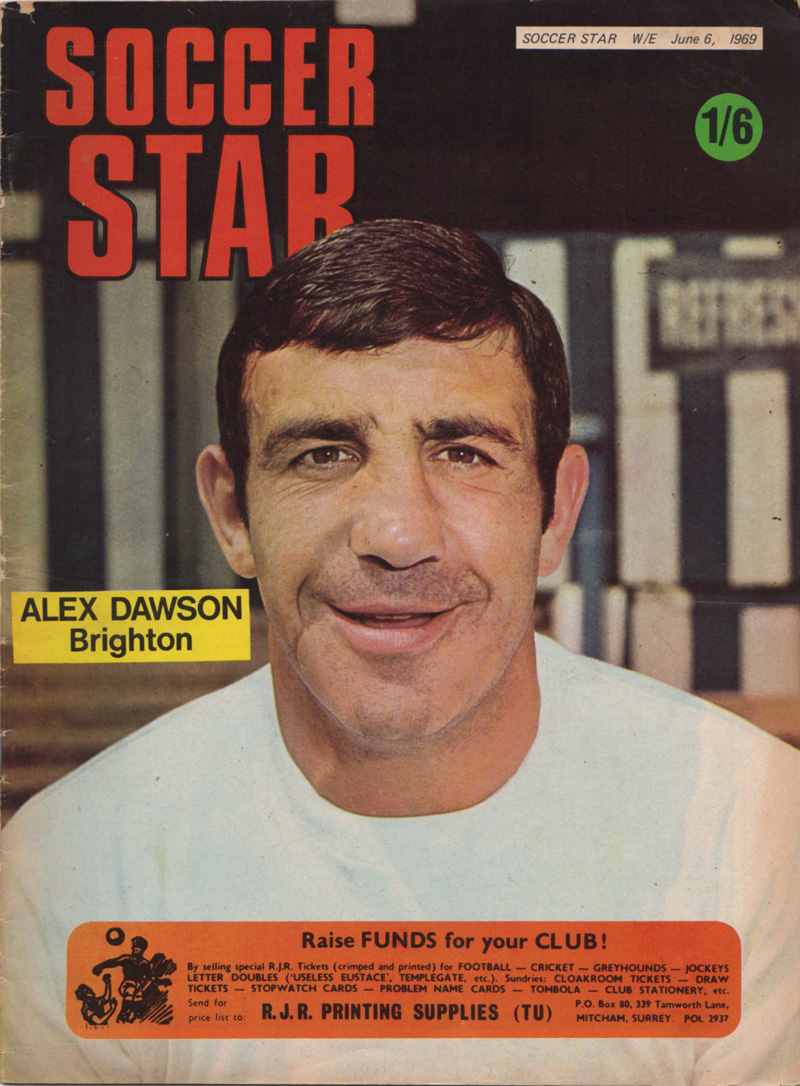
Albion fans would surely have been excited to see a colour photo of their swashbuckling centre-forward Alex Dawson gracing the front cover of Soccer Star magazine in June 1969.
Even though that’s a Preston shirt he was wearing, it clearly denotes the south coast club as his current side.
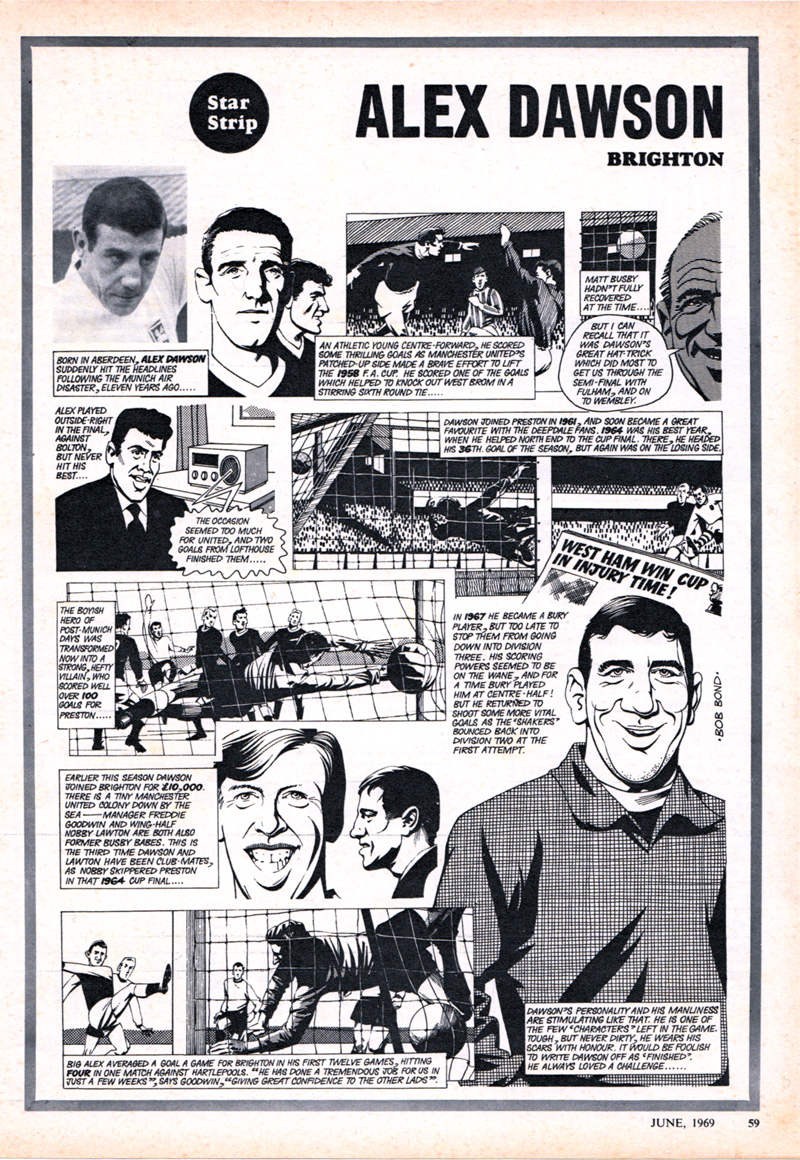
However, Brighton followers would be wasting their one shilling and sixpence if they were purchasing the magazine on the strength of the cover alone because sadly, there is absolutely no content on Dawson, or even the Albion side, inside the pages. As if to make up for this, the edition of Charles Buchan’s Football Monthly that month did carry a feature on Brighton’s larger-than-life striker, by way of this comic strip:
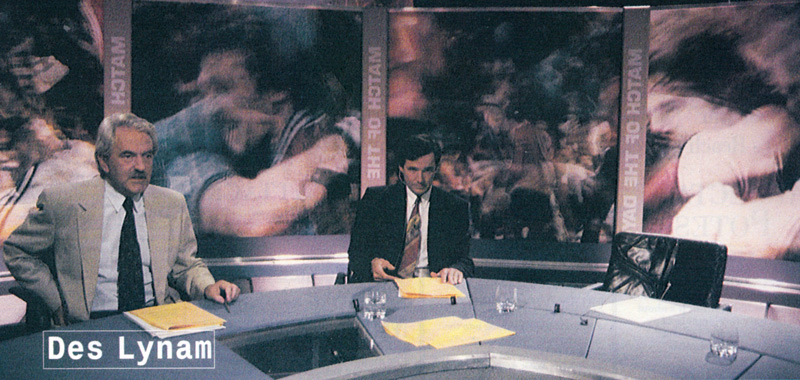
As a reader, having outgrown Shoot! and with Match dumbing down to becoming little more than a poster magazine, I became a big fan of 90 Minutes magazine in the 1990s. Irreverent and intelligently written, it’s a weekly magazine that I wish was still going. Here’s a fascinating read from its pages on 28th January 1995. Interview by Kevin Palmer:
Des Lynam may spend his Saturdays discussing the ins and outs of the Premiership with his Match of the Day colleagues, but what he’d really like to be doing is breathing in the sea air and cheering on his beloved Brighton at the Goldstone Ground. 90 Minutes dons a jacket and tie and asks our Des to spend an imaginary £8million on his Seagulls Dream Team.
Why Brighton?
My family originally come from Ireland, but when we moved over here and into the Brighton area I started going to watch and developed a real interest. I started to go to the Goldstone Ground more and more as time went on, but I did play on Saturdays for school teams which meant I missed some games. Since I’ve been working on TV I’ve become associated with Brighton and have even been offered a place on the board, although I wasn’t mad enough to take it.
First game?
I clearly remember the first game I ever attended at Brighton and it wasn’t especially for the football. It was around 1952 and they still used those big, heavy leather footballs. I went along to the game with a neighbour and his daughter and unfortunately a ball smashed the child in the face and knocked her out cold. We were dragged away from the game while they got treatment. I have always said it was the first time I had ever experienced a woman’s headache getting in the way of a lot of fun! We did manage to see some of the game in the end, but it was an interesting afternoon that was somewhat spoilt by the pre-match ‘entertainment.’
This season?
I don’t get to see the team as often as I like because I have to work every Saturday with Match of the Day, but I follow their fortunes very closely. I also live in the London area now which makes it a little more difficult to go. But a team like Brighton are always going to find it very hard in a modern football environment. Liam Brady is doing a good job, but they’ve had a bad run of late which has pulled them down somewhat. I still feel Brady has a lot to prove as manager, but Brighton is a great place for him to make his mark. There has been talk of him moving in as the new Arsenal manager if George Graham was to leave, but I don’t think Arsenal would want to make such an ambitious appointment with an unproven manager. The main aim for Brighton this season has got to be survival in the Second Division and then we can look to build from there.
An £8 million injection would surely have been enough to stop the club from selling the Goldstone Ground. But if it had to go on players who would Des have chosen?
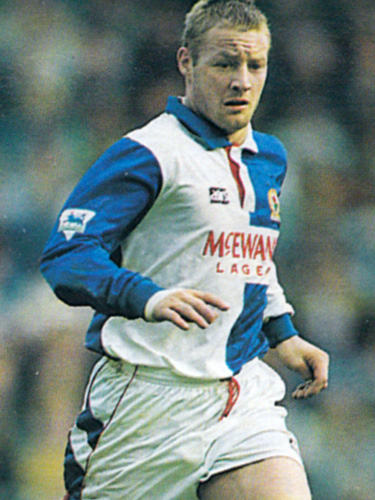
David Batty
Current club: Blackburn Rovers
Fee: £2.95 million
He’s a great competitor and would give us the extra edge we need in the midfield, although we do have Jimmy Case who’s still a good performer even if he is past his 40th birthday. Batty would win the ball for you and let the others play the football, though he has improved his passing game immensely in recent years.
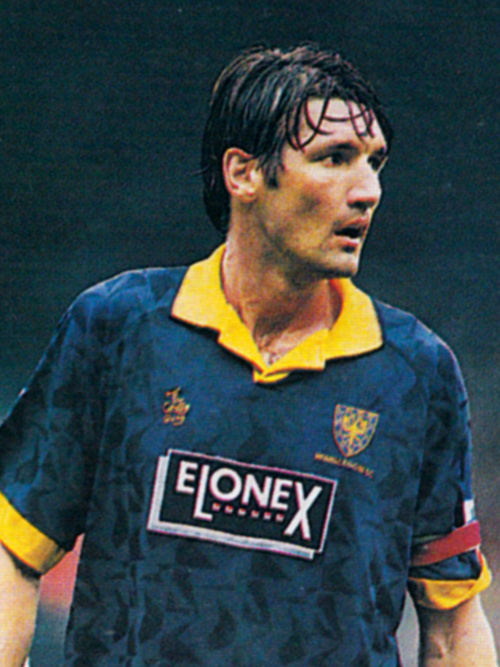
Mick Harford
Current club: Wimbledon
Fee: £50,000
This will be a surprise choice for most, but he is perhaps the sort of player we could hope to sign with the financial situation at brighton. Harford would put the fear of God up the defenders in our division and would cause a lot of problems. He’s proved he still has the ability with his recent burst of goals for Wimbledon in the Premiership.
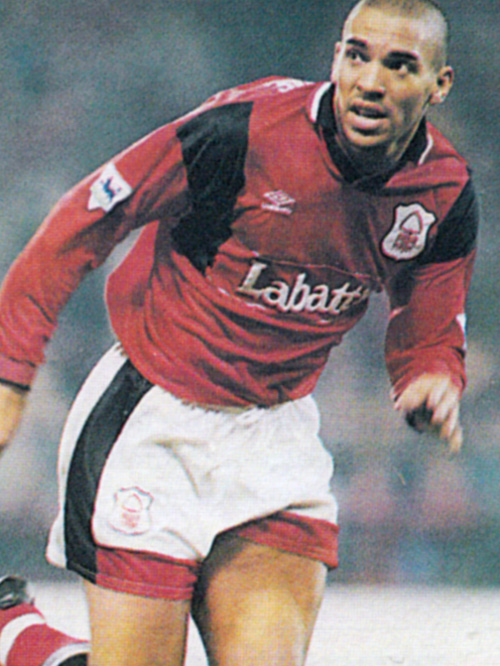
Stan Collymore:
Current club: Nottingham Forest
Fee: £5million
One of the most sought-after players in the Premiership and it’s not surprising. Everything he does makes him look like a class striker. I wouldn’t say he’s the best in the country, though. Alan Shearer’s the best striker around, but with just £8million to spend, I wouldn’t have enough to make a bid for him.



 The Goldstone Wrap