Author Archives: Goldstone Rapper

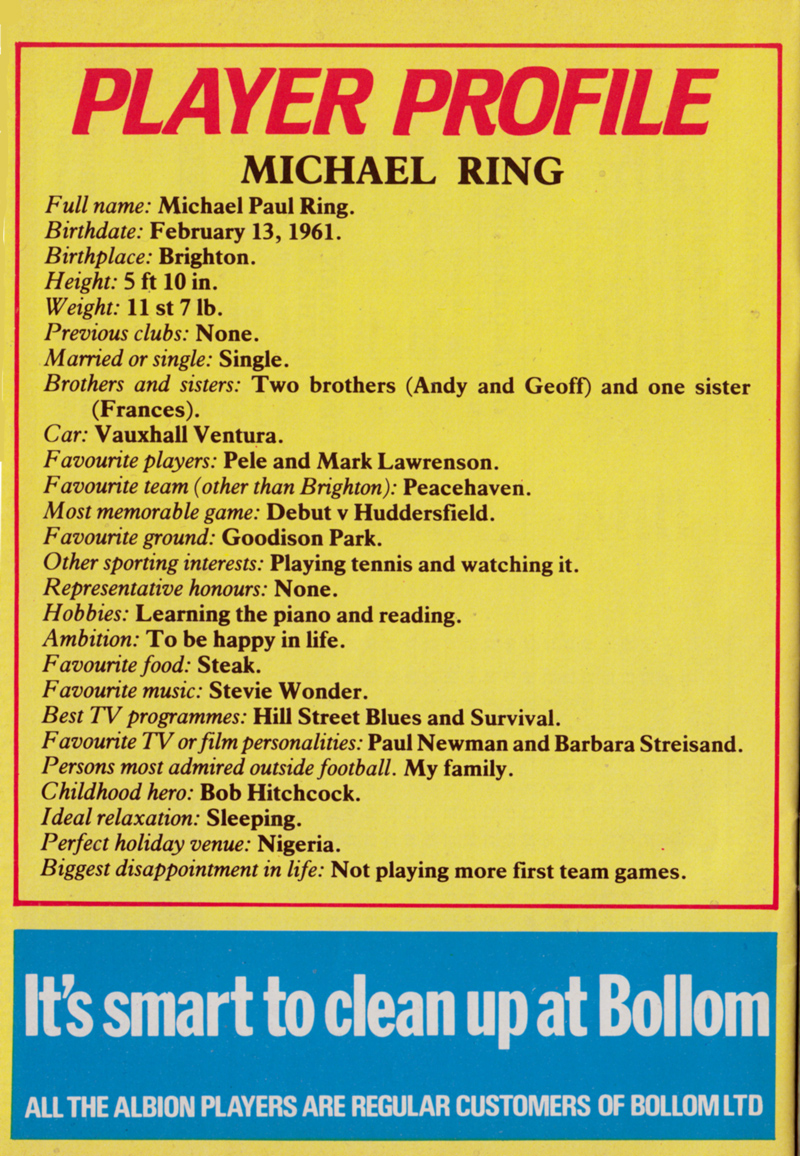
Michael Ring – player profile

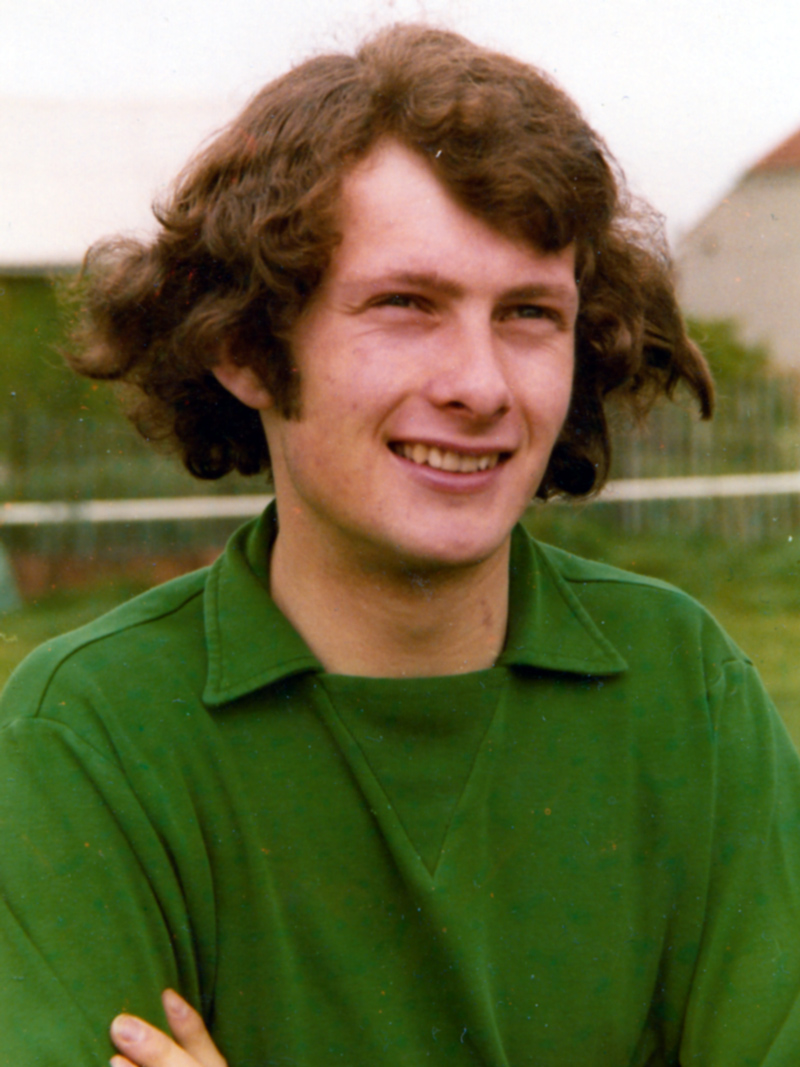
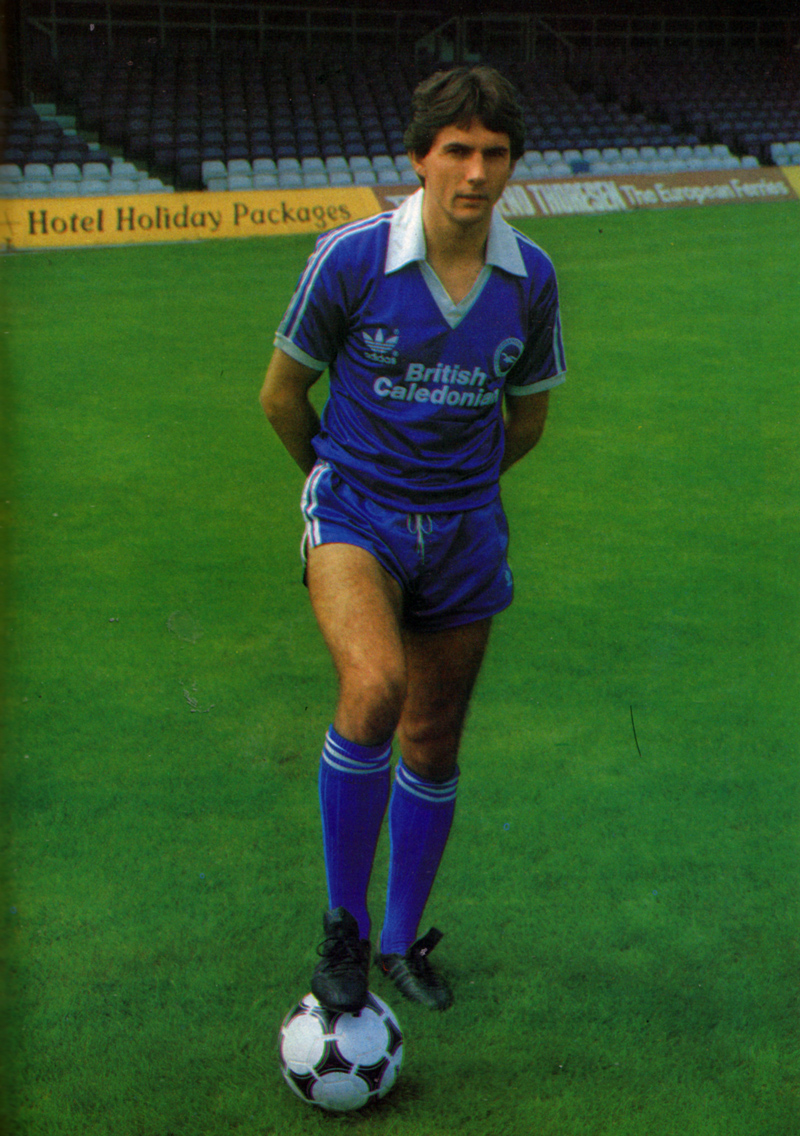
Here is 20 year old Brighton forward Michael Ring before the 1981/82 season:

michaelring2

No smiles for him! Perhaps his last answer in his player profile gives an indication as to why the long face:

michaelringprofile

Turning professional in 1978, the youngster announced himself with six goals as Brighton’s youngsters beat Eastbourne Town’s youth side 21-0 in the Southern Youth League on 17th September 1978. Other scorers were Peck 6, Vessey 4, Liddle 2, Cox, Gent and Stevens.

After developing in the reserves, Ring eventually made his Albion first team debut at Huddersfield in the League Cup 2nd Round 1st Leg in October 1981, under Mike Bailey. However it was an unhappy occasion for the club, as the Terriers won 1-0. Ring lost his place straight away, missing the return leg which the Seagulls won 2-0 thanks to Andy Ritchie and Tony Grealish both scoring in the last five minutes.

in April 1982, Ring joined Morton on loan and appeared in four Scottish Premier League matches. When he returned to the Goldstone, he figured in a welcome 2-0 home victory over Wolves in May, only Brighton’s second victory in twelve League matches.

If the Brighton-born attacker thought this was the start of him breaking into the first team, he would be disappointed. He made a single substitute appearance throughout 1982/83, in a 5-0 whitewash by Luton Town, before coming off the bench three more times the following season. Still, silverware was around the corner as he went on an extended loan to Ballymena in 1983/84, and came home with an Irish Cup winner’s medal.

At the end of the season, he was released, and signed for Brian Horton’s Hull City side.

Tagged

Albion’s youth side 1973

From the Brighton v Charlton programme from September 1973:

albionyouth1973

It’s the Albion’s youth party at the Freiburg Youth Tournament from July that year.

Back row: Dave Busby, Stephen Barratt, Richard Sopp, Steven Piper, Trevor Bryson, Glen Wilson (trainer).

Middle row: Tommy Barden, Lee Williams, Paul Holder, Garry Wilkins, Michael Jones, Pat Hilton, Malcolm Lord.

Front row: Francis Fraser, Terry Norton, Glen Geard, Tony Towner, Mick Conway.

Look at how small Glen Geard is in this photo – but then he was just 13 years old at the time!

With him in that front row is Francis Fraser, dad to Tommy Fraser, who was with the Seagulls from 2004 to 2009. Francis’ dad was former Richardson gang member ‘Mad’ Frankie Fraser.

Tagged , , , , , ,

Willie Young blows up

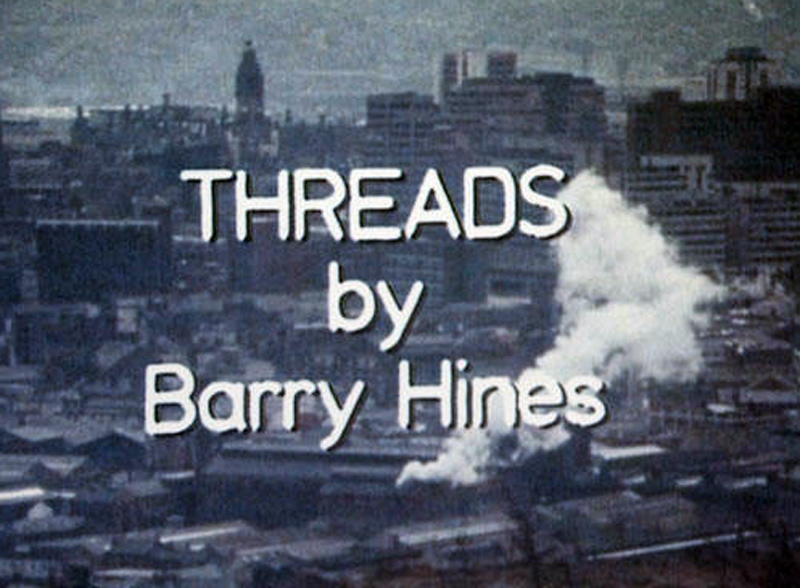
The BBC’s ‘Threads’ is a shockingly realistic docudrama from 1984 that tells the story of a nuclear strike on Britain. I remember watching this in my youth and I’m probably still traumatised by it!

threads

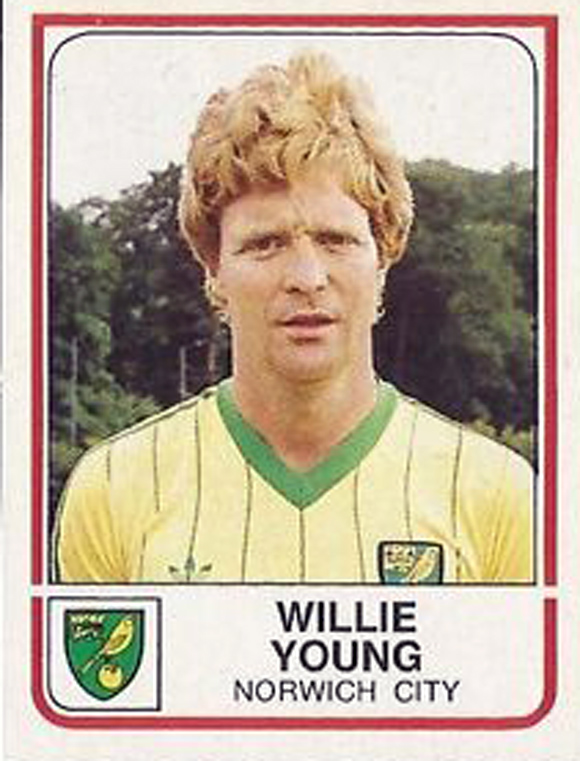
willieyoungAt the time of the film, Willie Young was a Norwich City defender who had joined Brighton on loan to stand-on for the suspended Steve Gatting. The start of ‘Threads’ features a young couple on top of a hill with Jimmy Kemp (Reece Dinsdale) turning over the station to hear the half-time football scores. On 3 minutes, you get to hear the Second Division score from Fratton Park – Portsmouth 0 Brighton 1, thanks to Danny Wilson’s penalty:

That’s as good as it got for the Seagulls as Willie gave a quite frankly apocalyptic performance in the second half with Brighton caving in 5-1 by full time. Here’s how John Vinicombe reported it in the Evening Argus:

Out of the shambles may come some good. If Cattlin had been undecided about taking Willie Young on contract this performance may well have made up his mind. Hitherto, Young had not let the side down in his previous three loan appearances, but Mark Hateley, ten years his junior, gave him a terrible runaround.

Brighton had taken the lead in the first half through a Danny Wilson but their defence started to creak:

The last 15 minutes of the first half saw Hateley starting to lose Willie Young with monotonous regularity. He began to look more fallible than ever when required to turn and radiated nothing like the confidence seen at Derby and Leeds. Following a booking at the half-hour for a foul on Hateley, Young was lucky not to be sent off when he bowled Hateley over from behind. Hateley was in a goalscoring position, and at the time, Albion were still in front.

Pompey, and Hateley in particular, started to play on Young’s slowness. A foul eventually led to Webb’s 58th minute equaliser, and when Hutchings’ clearance two minutes later reached Doyle 25 yards out the ball was thundered back past Corrigan.

The third goal saw Hateley turn Young and finish with his 27th goal in all football, which includes the England under-21s side.

In all, Portsmouth blitzed the Seagulls with five goals in a 13 minute spell. It was Willie Young’s last match for Brighton, with namesake Eric Young replacing him for the Grimsby match that followed, the last fixture within Willie’s short spell on the south coast.

Tagged ,

Here we go round the Mullery bush

Alan Mullery with his wife June and children Samantha (left) and Neal in the garden of their home at Cheam, Surrey,

Alan Mullery with his wife June and children Samantha (left) and Neal in the garden of their home at Cheam, Surrey,

As the 1976/77 season approached, new Brighton boss Alan Mullery spoke to Malcolm Folley of the Daily Express (10th August 1976):

In the three weeks Alan Mullery has been manager of Brighton he has salt with a procession of players wishing to air their grievances.

He could hardly have increased the demand for personal interviews had he promised trading stamps to anyone visiting his office.

Most of the callers wanted to tell their new manager that they felt they warranted first-team football. They were welcomed by Mullery, for he accurately deduced that there is nothing unhealthy about a club with ambitious players.

Yet he discovered one or two players had translated his arrival as a trial of strength to be resolved by unarmed combat.

Such as the player who went to him recently to ask for a rise. Not the most original reason for seeking an audience, granted but rather special in its own way.

There wasn’t a race of a smile on the man’s face as he presented his case. He needed an increase in pay he said, because he and his wife were thinking of increasing their family.

Somehow, Mullery controlled the urge to laugh aloud, “You’re thinking of increasing your family?” he asked in a fashion that did not require an answer.

“I can tell you what, you can come back when you actually have.”

“The lad left my office realising I wasn’t as gullible as he might have thought. He was just trying it on – but what he’d forgotten was that until a few months ago I’d have stood where he had.

“I had 10 players knock on my door last week to tell me they thought they should be in the first team. That was fine by me. I told them to go out and prove themselves.

“I won’t miss playing one bit,” he told me. “As manager, I’m now playing in 11 positions instead of one. I’m sure I shall use more energy watching Brighton than I used when I was out on the park myself.

But that does not mean that Mullery will allow himself to be submerged by demands which over the years have left a trail of broken spirits in the profession he has just joined.

“I’m lucky because when five o’clock comes I can get in my car, drive home, and leave all my worries behind me. The problem will still be there in the morning, so who’s the use in losing any sleep over them?”

Mullery has plenty going for him. He works for a board which cares, really cares, about the welfare and success of Brighton.

Chariman Mike Bamber and three directors travelled with the team to Torquay last weekend to watch a friendly. They are the team’s most loyal supporters.

Tagged

An interview with Jimmy Melia

jimmymelia1983

A few months ago I was lucky enough to interview Jimmy Melia for Viva Brighton magazine. The best bits can be read here.

However, there were some other questions and answers that didn’t make the final edit. Here are some of them:

Is it true that you were an Everton fan?
When i was at school i used to watch Everton. I was an Everton supporter. I joined the Liverpool ground staff at the age of 15 because I knew Bobby Campbell, who eventually went on to manage Chelsea. He was in the same street as me and we were big mates. He went to liverpool so I followed him there. Everton were down at the household too I was at because i was captain of Liverpol schoolboys and also played for England Schoolboys.

You had a great career at Liverpool, getting promotion to the First Division and eventually becoming English champions in 1964. Why did you leave in March 1964, before the season had finished?
I got an injury and wasn’t playing well and felt I needed a change and Shankly was the manager and I was sold to Wolves after ten years of service, for £50,000 – a lot of money in those days. I stayed at Wolves for one year. They fired Stan Cullis and I spoke on his behalf and they transferred me to Southampton and stayed there for five years. We won the Second Division and I got the goal that got us up, i was player manager at Aldershot for four years and had a few good cup runs, then to Crewe for a few years – it was very hard work. We had no money. Then I went to Dubai for three or four years, then to California, before coming to Brighton as chief scout. Then I got the manager’s job.

What was it like working as chief scout to Mullery and Bailey?
Mike was a good guy. He knew the game but he had a way of playing that didn’t go down very well with the supporters or people at the club. He did a good job the first year he took over. Second year wasn’t very good so when he left they put me in charge. Unfortunately, we didn’t do so well in the league although I made a lot of changes that got them playing a lot better, even though results didn’t go our way.

Was it a deliberate decision to take the lead when you were joint manager with George Aitken?
It wasn’t done officially but with my knowledge and background, George let me take over. The players should a lot of respect for me too.

What do you remember about getting to the Cup Final?
It was a great day. It was a tremendous thing because we’d never been there. Seeing all the supporters there at Wembley was a great day. We had a great time. it was a tremendous feat. Great memories. People still remember. They ask me, “When are we going to have another cup run and get to Wembley?” I always hope they can get there again and maybe win it. It looks like they’re getting everything right at the club, and the stadium and the finances are right and are very stable.

Could you have turned the club’s fortunes around the Second Division?
When we went to the Second Division we sold so many players. Gary Stevens left for Spurs, Robinson went to Liverpool. It’s a pity we didn’t just stabilise. and leave things alone for about three years because I could have built the club up. I had all the contacts and knew who I needed. i didn’t get the time.

And is it true you never had a contract?
I remember Mike Bamber saying ‘Let’s meet. I want to talk to you about a contract.’ So we met at lunch and saw his mother – we didn’t even talk about a contract! I was happy doing what I was doing. I didn’t feel I needed a contract. I made a couple of mistakes bringing people into the club who i shouldn’t have brought in, but hey! That’s life.

Can you give your version of what happened with Chris Cattlin? Was he picking the side?
The chairman wanted him to get involved with the coaching with me as the manager making the decisions. I still wanted to be outside all the time with the team. It was a bad mistake on my part to put him in but the chairman seemed to like him – it happens. i wanted to bring in Laurie Calloway, a good friend of mine who I trusted, knew the game and played the game, as my assistant but we couldn’t get that to happen so he brought in Chris. Things happen – thats the way it it and life goes on.

When you look back at your time with the Seagulls, how do you feel about it?
I really enjoyed my time at Brighton. It was terrific. As soon as I left Brighton I went to Portugal and won another championship with Belanedas – and then finished 5th in the Portuguese League – they were a very good couple of years. Winning two championship medals as a player and getting a team to the cup final and winning a championship. My career has been good, plus I’m still working – nowadays I’m teaching the kids at Liverpool FC America.

And finally… what became of the disco shoes?
They are still around, but they don’t get much use these days!

Tagged

Lovey Dovey!

alan dovey

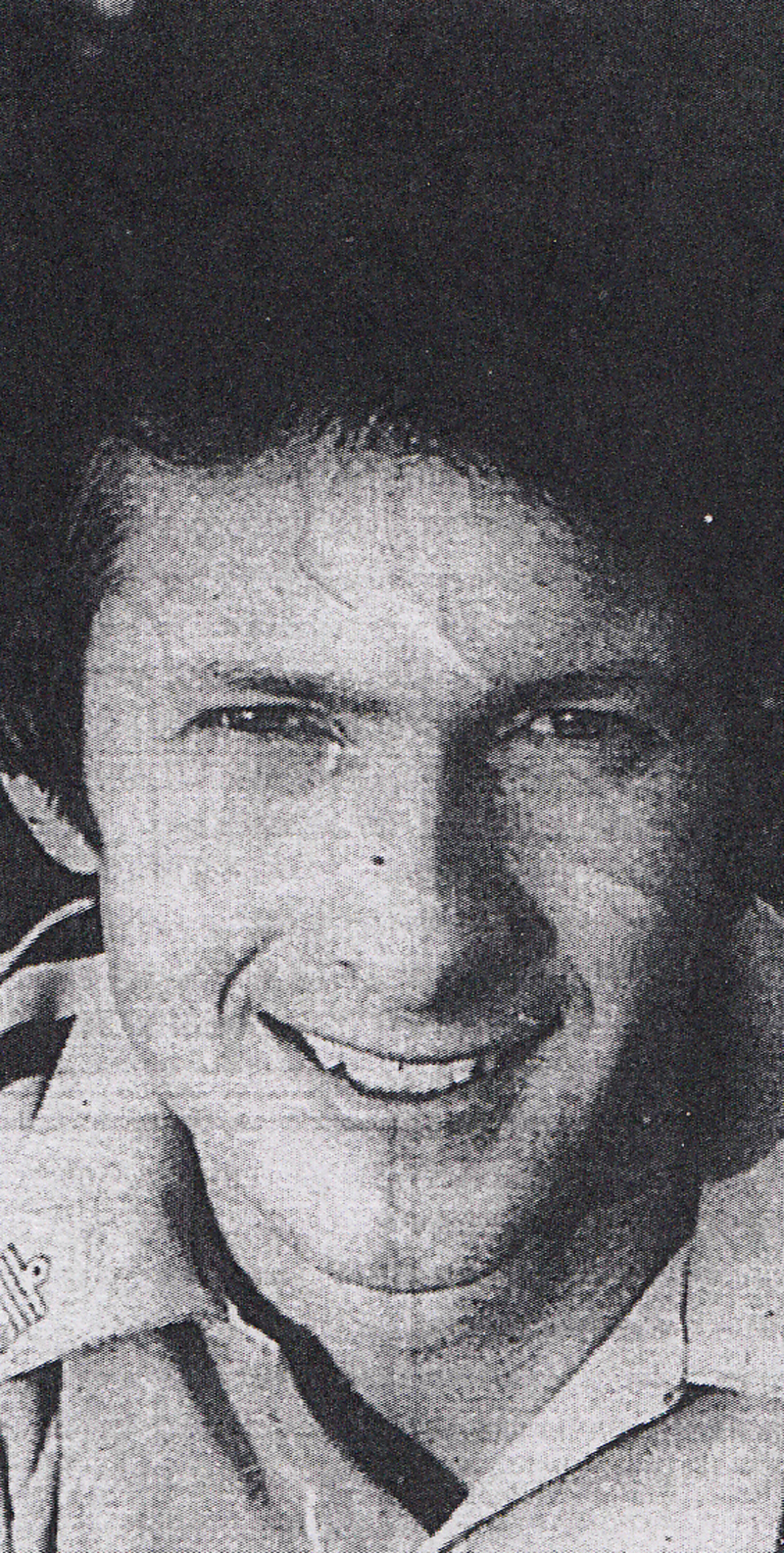
Alan Dovey was a 6ft tall teenage keeper, signed as a understudy to Brian Powney for £1,000 from Chelsea in July 1971. He had joined Chelsea straight from school following representative honours with Thurrock Boys. Facing competition from Peter Bonetti, Tommy Hughes and John Phillips (the latter two were to eventually join the Albion), Dovey failed to make a first team appearance for the Stamford Bridge side. After stand-in goalie Ian Seymour returned to Fulham, Dovey came to Brighton on loan as cover for Brian Powney in March 1971, before signing permanently for Brighton in July 1971 in a £1,000 deal. Dovey made his debut in the season’s penultimate match at Bristol Rovers in May 1971, before also playing the final match of the season to give him experience.

In 1971/72, having signed a permanent deal with Brighton, Dovey appeared against Norwich in the League Cup, making some daring saves despite the 0-2 defeat. Again he played twice in League matches, including a ‘Man of the Match’ performance at York.

His first game of the 1972/73 season was in the club’s nervy 2-1 victory over Exeter in the League Cup in August when a header by future Albion player Fred Binney past Dovey had given the Fourth Division side a shock lead. Just like in the two previous seasons, Dovey played just twice in the League that campaign, in the 0-4 defeats at Preston in November and Sunderland in January. When Tommy Hughes joined the Albion in February, Dovey was once again below his former Stamford Bridge team-mate in the goalkeeping pecking order. With limited first team action, Dovey was placed on the transfer list in March and was released at the end of the season to pursue a career in insurance.

He carried on playing locally, for Southwick and then Worthing. However, his spell with Worthing appeared to be coming to an end on 6th April 1984, according to the Evening Argus:

Alan Dovey faces the axe from Worthing’s goal after three seasons in their double promotion-winning squad.

Manager Barry Lloyd is set to bring back giant youngster Graham Bannatyne in place of the out-of-form Dovey for tomorrow’s Isthmian League premier division game with Harlow at Woodside Road.

Lloyd has been far from happy with the former Sussex keeper’s handling this season, and Dovey’s mistake at Sutton on Tuesday, when he let a shot bounce off his chest and into the net, may be the final straw for the Worthing boss.

“Alan has done exceptionally well for us over the past three years, but he’s not really aggressive enough in this premier division,” says Lloyd.

Dovey had joined Worthing at the same time as Lloyd, in 1981, from Southwick.

dovey2

Not sure what he’s up to these days but a thread on North Stand Chat suggests he’s a keen tennis player.

Tagged

Great Albion Kits: 1980/81 to 1983/84 Away

Strangely, when Adidas took over the contract to supply the Brighton kit from the 1980/81 season onwards, they did not sell replicas of the yellow away kit.

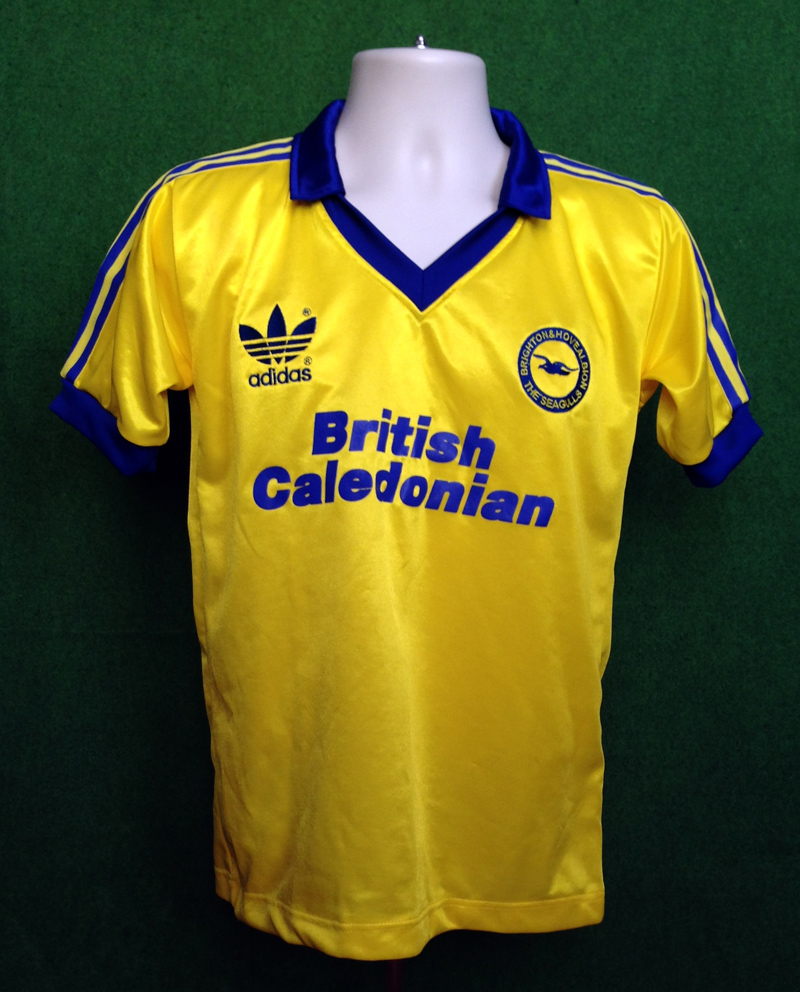
It took until the 21st century for the club to issue a remake of this polyester wonder for the club shop, but understandably it came without the trefoil on the breast and the classic adidas stripes down the sleeves. However, this was addressed in a Thailand factory somewhere as this effort did the rounds on eBay a few years ago:

yellowadidasshirt

Although the collar was not as flared as the original, it was a pretty faithful rendition. The most glaring error is that it was ‘British Caledonian Airways’ for the change shirt, not just ‘British Caledonian’. If you want to be extra picky, the type of the sponsors’ logo was also not in bold, which is how it was in the Thai version. A good effort, nevertheless.

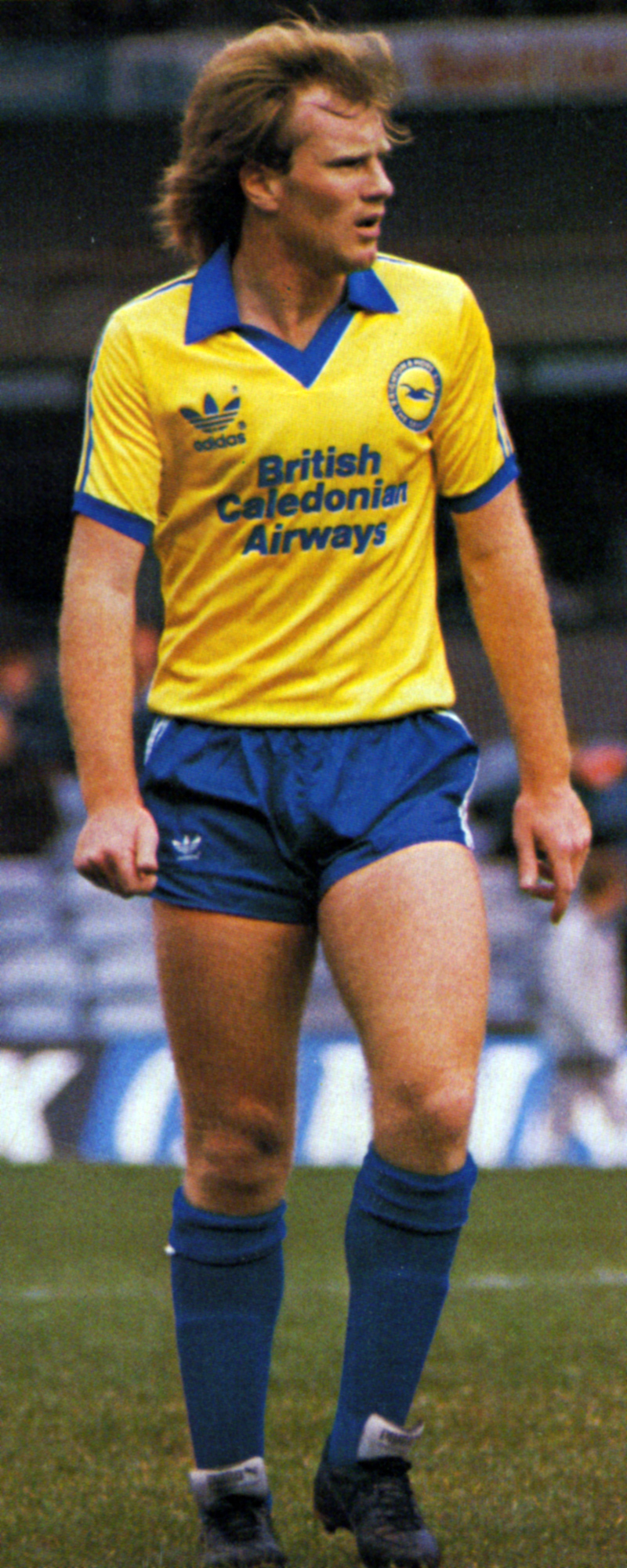
The kit was usually combined with yellow shorts and yellow socks, and very smart it looked too, especially on a sunny day. Sometimes, though, blue shorts and socks were worn instead:

andyritchieyellow

At the time of the launch of the kit, Football League clubs were not allowed to wear shirt sponsors on televised matches apart from local news. This led an incident where ITV could not show highlights of Aston Villa’s match with Brighton in October 1980, as the Seagulls sought to protect their sponsorship interests. As the Brighton v Middlesbrough programme said:

There was controversy before the match when ATV, the Midlands ITV company, wanted to film the game, to show highlights the following evening in a two-minute news sequence. The Albion were however clad in the yellow ‘British Caledonian’ shirts and after a ‘phone call between Alan Mullery and Gary Newbon, the TV presenter, it was clear that the game could to be shown. Albion were well within their rights to refuse to change, other than for a featured game and ATV felt that the regulations would not allow the showing.

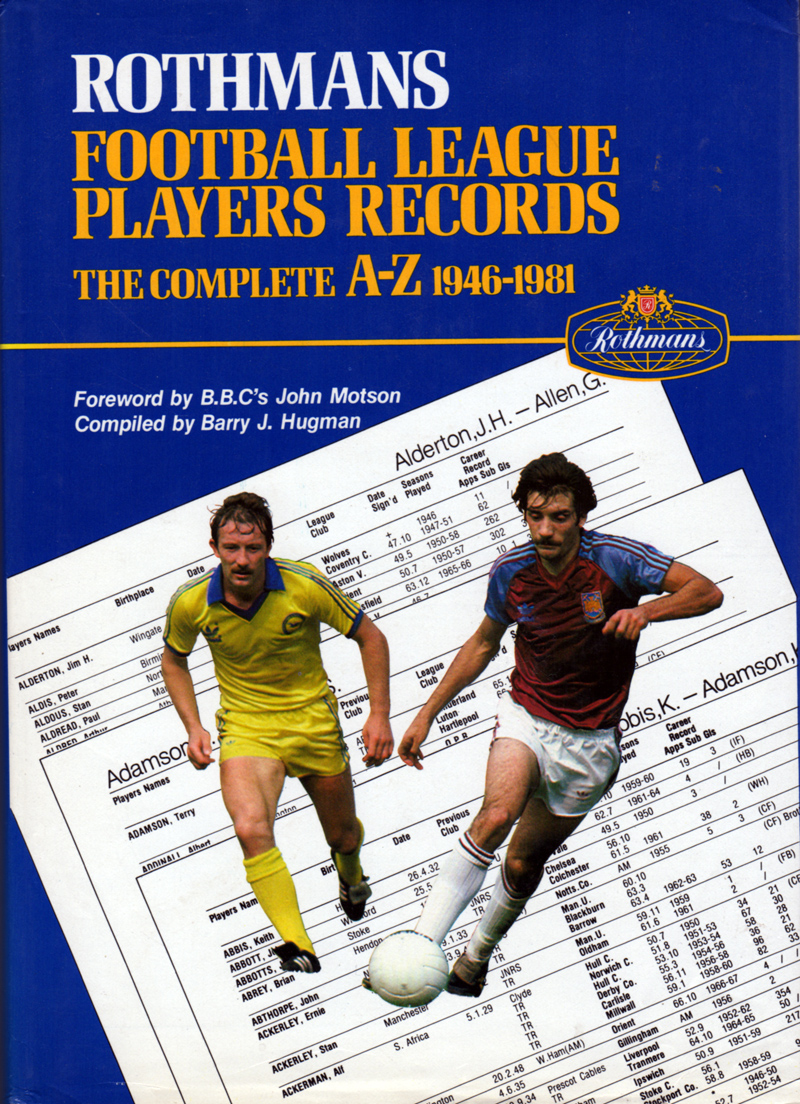
Minus a shirt sponsor, the all-yellow kit combination made the cover of Rothmans Football League Players Records 1946-1981:

case-rothmans

However, it got its best exposure at the FA Cup Semi-Final between Brighton and Sheffield Wednesday. It even outlasted the home version, as it was worn for a few matches in the 1983/84 when the new white away kit did not provide enough contrast at the likes of Bristol Rovers and Blackburn.

Tagged , , , ,

The Argus’ promotion colour cover 1979

In 1979, Brighton & Hove Albion achieved their dream of reaching the top flight. Unsurprisingly, the Evening Argus marked the achievement with a 40 paged ‘Division One – Here We Come’ supplement.

This included a seven-part review of the season, an Alan Mullery eulogy by John Vinicombe, a discussion of the club’s prospects in the First Division plus pen pictures of the squad. All in black and white newsprint… which is where this foray into colour comes in: on the final page, it says:

To obtain a free full-colour folder celebrating Albion’s promotion, fans can collect vouchers from six different days’ issues of the Evening Argus, starting on Monday. Each voucher carries the name of a different Albion player. The folder, printed on art paper, includes a team picture in full colour. You can use it as a cover for this souvenir supplement or alternatively as a wall poster – or both if you collect two sets of vouchers.

All you had to do was bring your vouchers to any Evening Argus office on or after Wednesday 23rd May or send it off to the Argus promotions department.

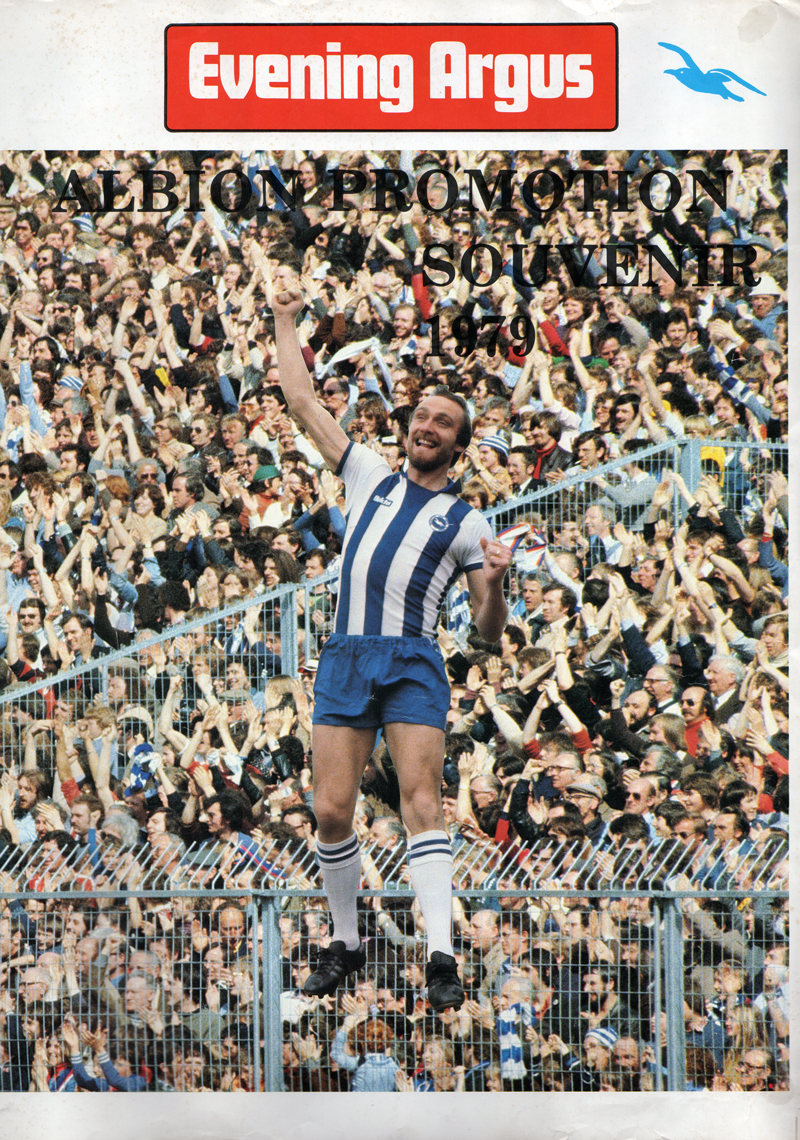
Here is the front cover, with Brian Horton apparently jumping for joy in front of a delirious home crowd. On closer inspection, you can see his body has been cut out and crudely superimposed on the background. All done without Photoshop:

argus1979p1

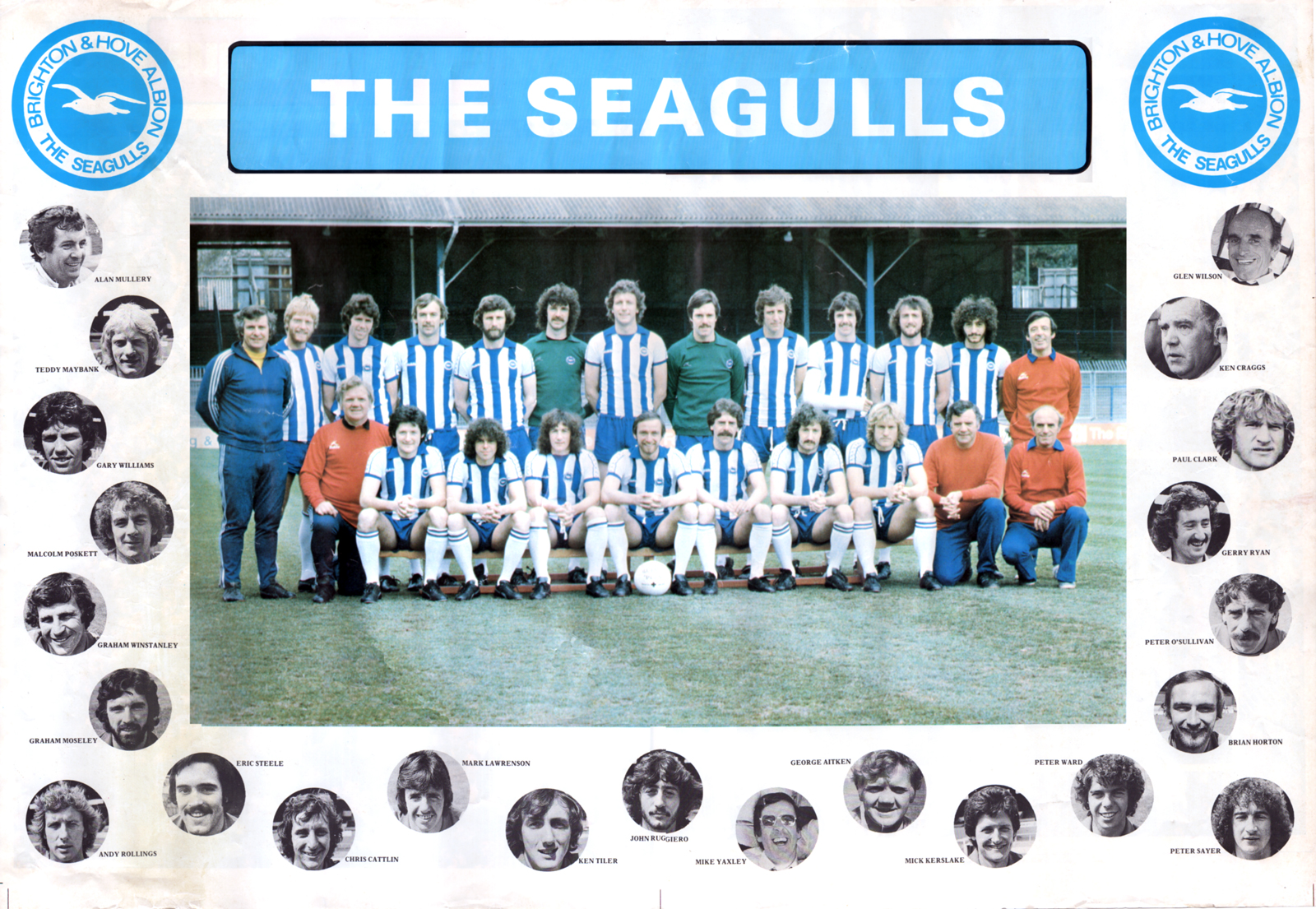
As for the centre spread, there is a marvellous team photo. I’m sure that would have made the wall of many supporters at the time:

argus1979p3

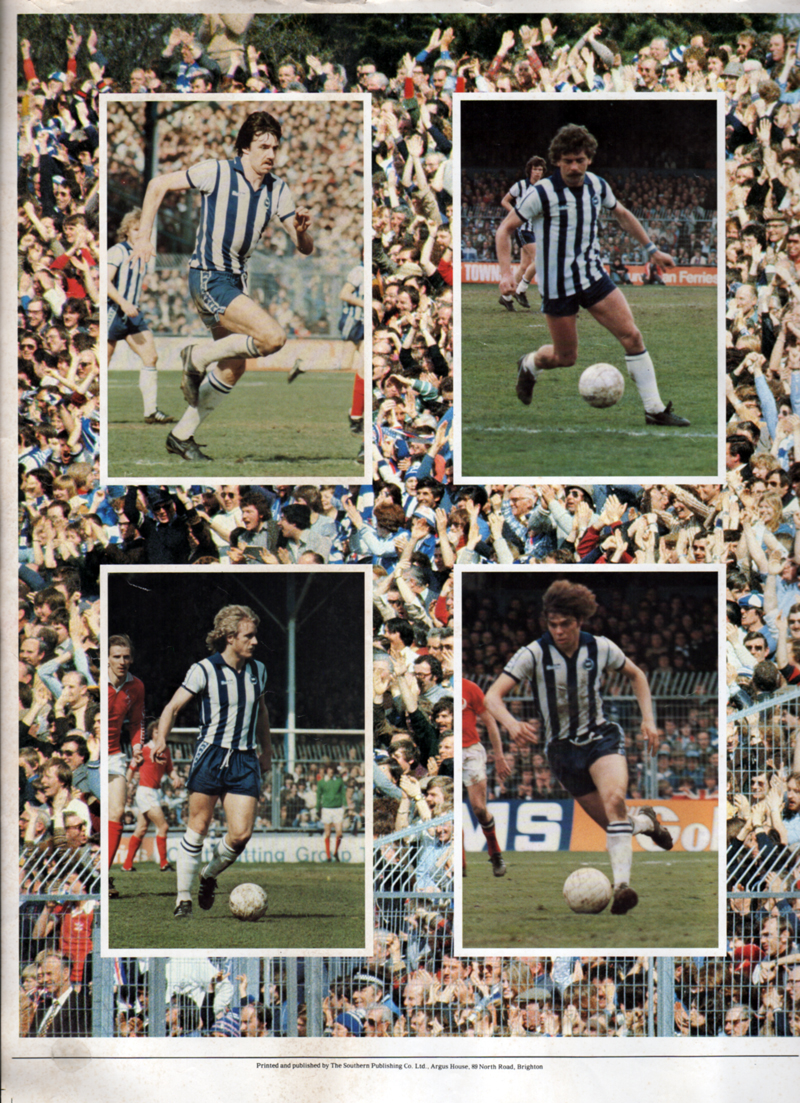
Finally, the back page features action shots of key players Mark Lawrenson, Peter O’Sullivan, Teddy Maybank and Peter Ward:

argus1979p2

Tagged , , , ,

Happy 60th birthday, Jimmy Case!

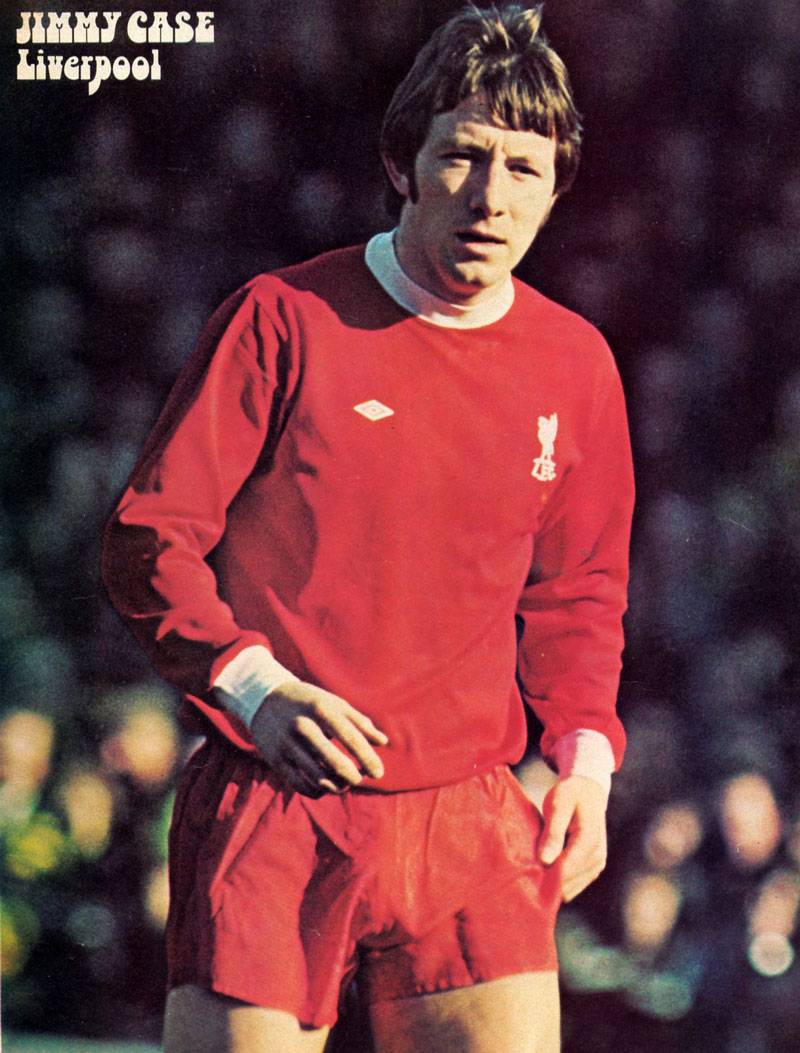
For he’s a jolly good fellow, for he’s a jolly good fellow! Yes, it’s a special day for for one James Robert Case, who hits the big 6-0 today. It doesn’t seem that long ago when Jimmy was a 39 year old, plying his trade as a footballer at Brighton & Hove Albion.

Here is a superb interview by Harry Pratt from Matchday magazine (March 1994) all about his return to the Goldstone Ground:
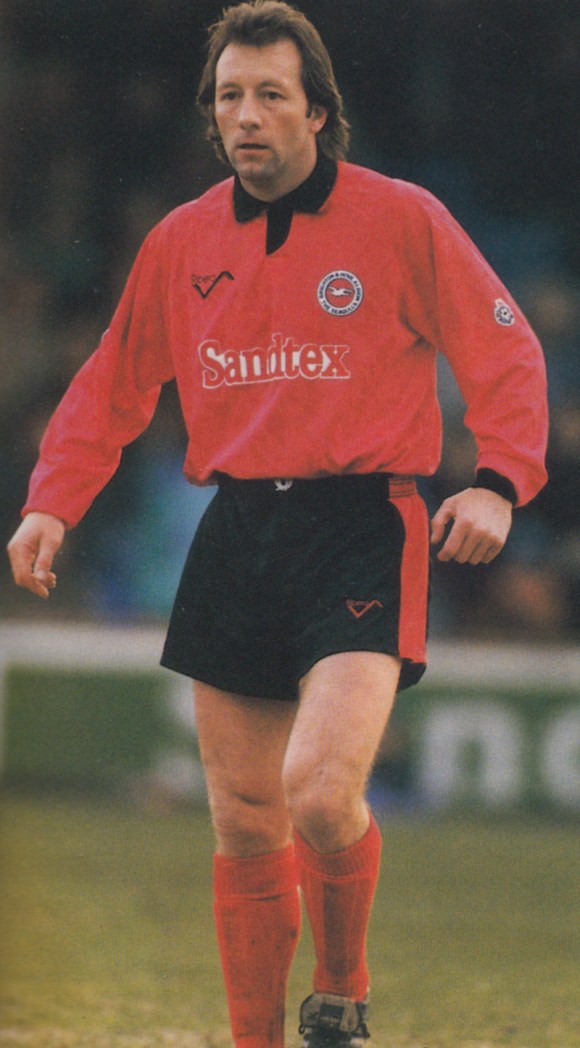
jimmycase11

Jimmy Case is completing his 20th season in the professional game. Yet he retains the enthusiasm and dedication more readily associated with a teenage trainee.

That has been the Case way throughout a career that has taken him from the mighty heights of Liverpool to the lower regions of non-League football with Sittingbourne.

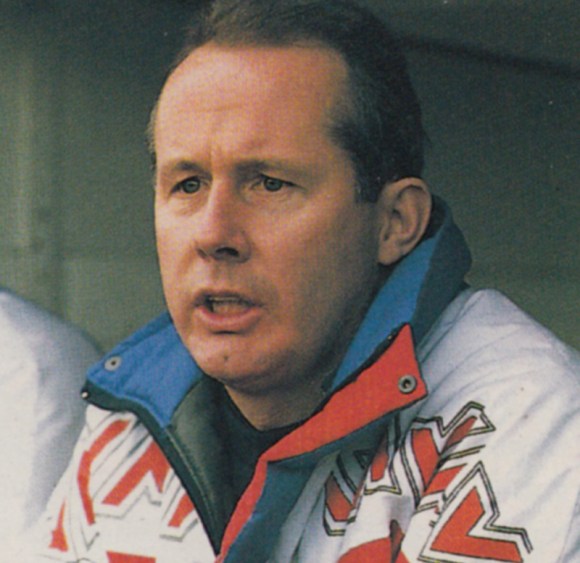
Despite being 39, Case was still the target for Liam Brady when he took over as manager of struggling Brighton towards the end of last year.

Brady saw Case as the perfect player-coach as he began the difficult task of arresting Brighton’s dramatic plunge into the Second Division relegation area.

For Case, who after a nomadic 12 months had suddenly found himself playing in the Beazer Homes Premier Division with Sittingbourne, Brady’s job offer was a Godsend.
liambrady4

‘I think Liam reckoned Brighton were light in midfield and while talking among friends my name cropped up,’ says Liverpool-born Case.

‘I had no hesitation in accepting. I still have the appetite for the game and want to continue playing for as long as possible.

‘I had only come across Liam a few times before coming to Brighton. But I knew all about his footballing ability. I used to play against him, but we never came too close together. Liam was not keen on crunching tackles!

‘But seriously, he had tremendous vision and superb passing ability that few have matched. The main difficulty was getting the bail off him.’
jimmycase15

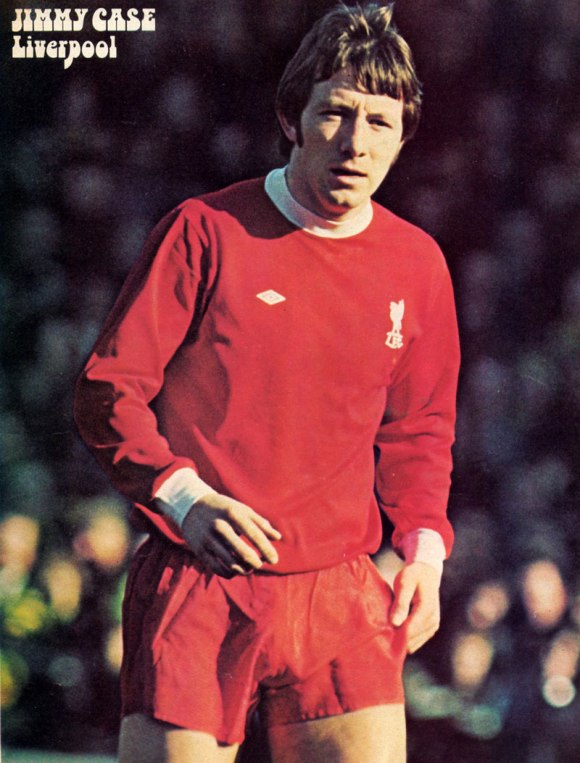
Case was the complete midfielder in his prime when he graced the all-conquering Liverpool team of the 1970s. Tenacious in the tackle and a quality passer, his blistering shot and a willingness to run himself into the ground made him a vital component of Bob Paisley’s team.

His first professional season at Anfield was 1973-74, and in the next eight years Case won virtually very club honour in the game – four League Championships, three European Cups, one UEFA Cup and one League Cup. The only things missing from his collection was an FA Cup winners’ medal he scored in the 2-1 defeat by Manchester United in the 1977 Final – and an England cap.

In today’s era he would surely have been an England regular. But he was unfortunate that in his heyday there was an abundance of skilful midfielders banging on the England door – Hoddle, Brooking and McDermott, to name a few.
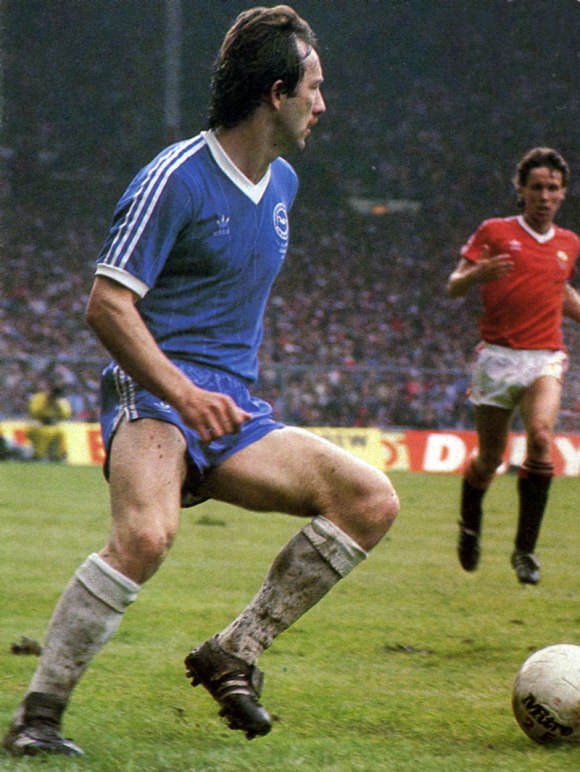
jimmycase14

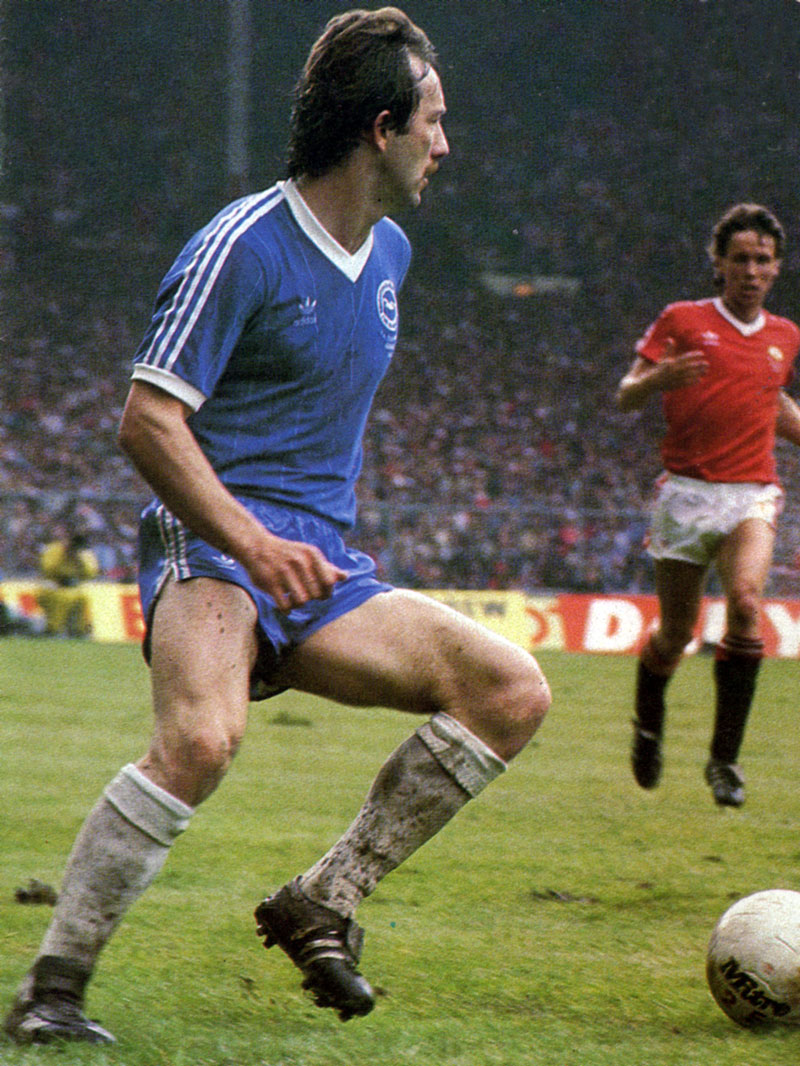
His time at Liverpool ended in 1981 when he joined Brighton, then in the First Division. Case’s presence was instrumental in one of the club’s most progressive periods that culminated in them reaching the 1983 FA Cup Final. Once again it was Manchester United who denied him that elusive winners’ medal as the Seagulls crashed 4-0 in a replay. However, reaching Wembley detracted from Brighton’s League form and they were relegated at the end of the season.

‘That was a great time,’ recalls Case of the Cup run. ‘It was nice to know that the success I had enjoyed with Liverpool could still continue somewhere else.’
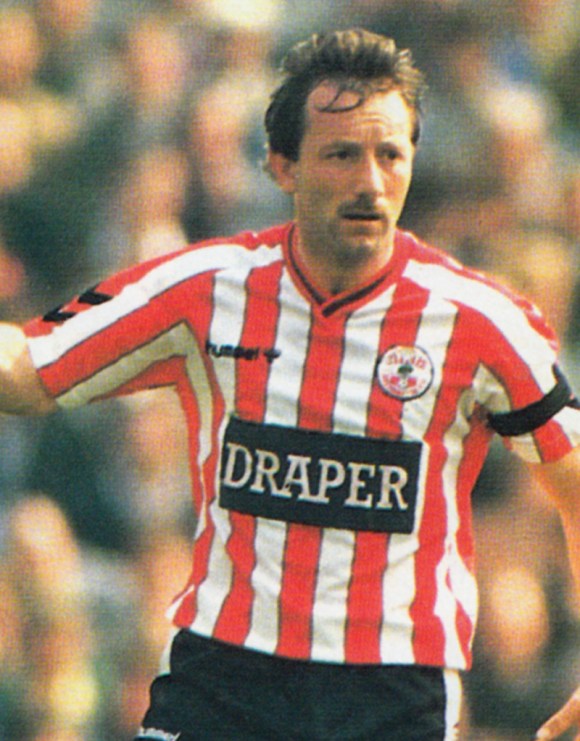
jimmycase12

By 1985, Case was on the road again as he moved along the south coast to Southampton, where he was to remain for six years. He followed that with brief spells with Bournemouth, Halifax and Wrexham.
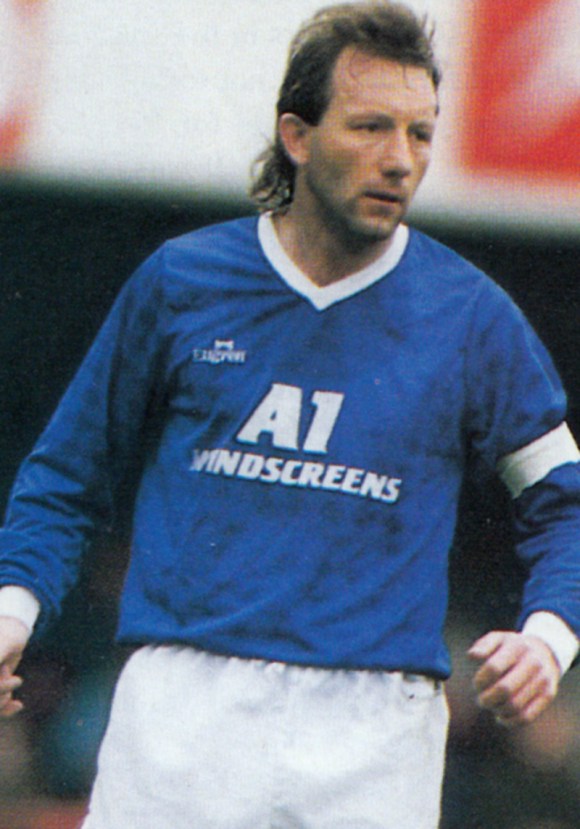
jimmycase13

‘Bournemouth released me because they had severe financial problems and had to let go players out of contract,’ explains Case.

‘After that I had half a season with Halifax before Wrexham boss Brian Flynn came in for me. That was only to help them out until the end of the season.’

Many in Case’s position would have decided the time had come to call it a day. But underlining his determination to continue, Case spent last summer keeping in trim by playing in Perth, Australia.

Not the most likely setting, and Case admits the standard of football left a lot to be desired. ‘When I came back,’ he says, ‘I found that I was off the footballing map in England as the papers had reported that my
mnva to Australia was permanent.’

While looking for a new club, Case was far from idle as he worked as a scout for Wrexham. Yet, at 39, Case struggled to secure long-term employment and admits: ‘A lot of clubs looked at my age and were not prepared to offer me more than a one-season contract.

‘But that has never really bothered me. For the last nine years I’ve been on one-year contracts with all my clubs, and that includes six years at Southampton.

‘I’ve always believed that it’s up to me to prove I’m worth keeping on. If I play to my ability then I have no fears.’

Brady clearly believes Case is still good enough for first-team football and that judgement was proved fight as Brighton’s form picked up immediately after his arrival with a four-game unbeaten run that eased relegation worries.

Playing in a deep central midfield role, Case’s main task is to help the team play as a cohesive unit. He is no longer charging all over the pitch, but more involved in picking up possession and then initiating the flowing football that is Brady’s trademark.

The new style introduced by Brady is already paying dividends with attendances at the Goldstone Ground increasing significantly. Crowds of over 10,000 when they are at the wrong end of the table indicate Brighton’s potential for top-flight football.

‘We’re looking to play football,’ Case says, ‘and that has attracted new support. But results are equally important because at the end of the day fans are always going to judge their club by their League position – it’s a thin line. The main aim for this season is to pull clear of relegation and stabilise our position which will give us something to build upon.’

Brighton’s future, despite crippling financial problems, is now considerably brighter.
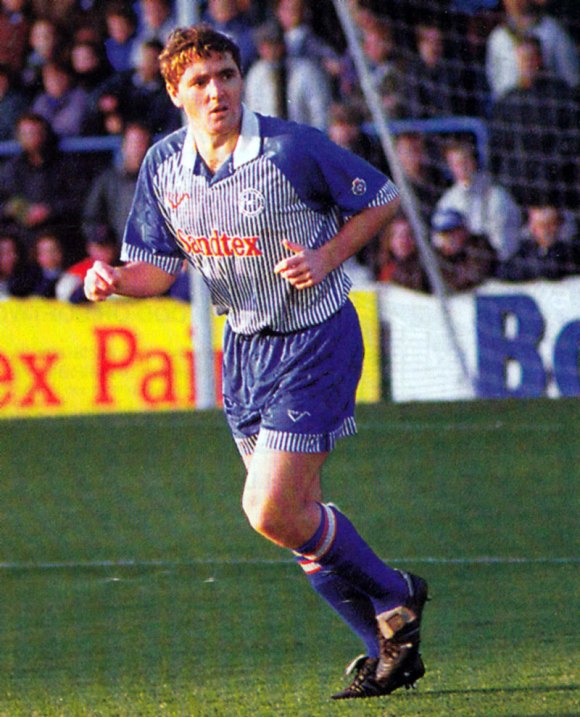
paulmccarthy1

Highly-rated Irish Under-21 central defender Paul McCarthy (above) has signed a new contract, as has striker Kurt Nogan.

‘The outlook is rosier. Paul and Kurt have seen the light and that has given everyone here greater confidence with regards to the future,’ says Case.

Such was the popularity of Case that a crowd 15,645 came to see his testimonial match between Brighton and Liverpool in October 1994. He finally retired in November 1995 following a neck injury in a reserve match. Then, two weeks, later, he became the manager of Brighton & Hove Albion, following Liam Brady’s resignation. It certainly was the impossible job, especially for a new boss.

Although it ended unhappily with the sack in 1996, Albion fans’ memories of Case are mainly of the happy kind, as indicated by the showing of his extraordinary FA Cup Semi-Final free-kick of 1983 before each Brighton match at the Amex, for supporters old and new to enjoy. Happy birthday, Jim.

Tagged ,

It’s the big day today! When the entire nation stops to watch the FA Cup Final

What time does ‘Cup Final Grandstand’ start? I’ve misplaced my copy of the Radio Times but I am welling up with anticipation about the big build-up, watching reports from the team’s hotel and ‘It’s A Cup Final Knockout.’

Maybe we’ll get to hear each team’s FA Cup Final song and get to vote for the ‘Goal of the Season.’

Also, I’m looking forward to seeing the new tracksuits that each team will be sporting as they walk out of the tunnel and hearing the 100,000 crowd at Wembley all joining in with ‘Abide With Me’.

At 3pm, will you be watching the match on TVS or BBC 1? Or at Wembley in person?

I hope it’s a good open game and that the players don’t freeze on undoubtedly the biggest occasion of their careers. Personally, I think it might go to a replay.

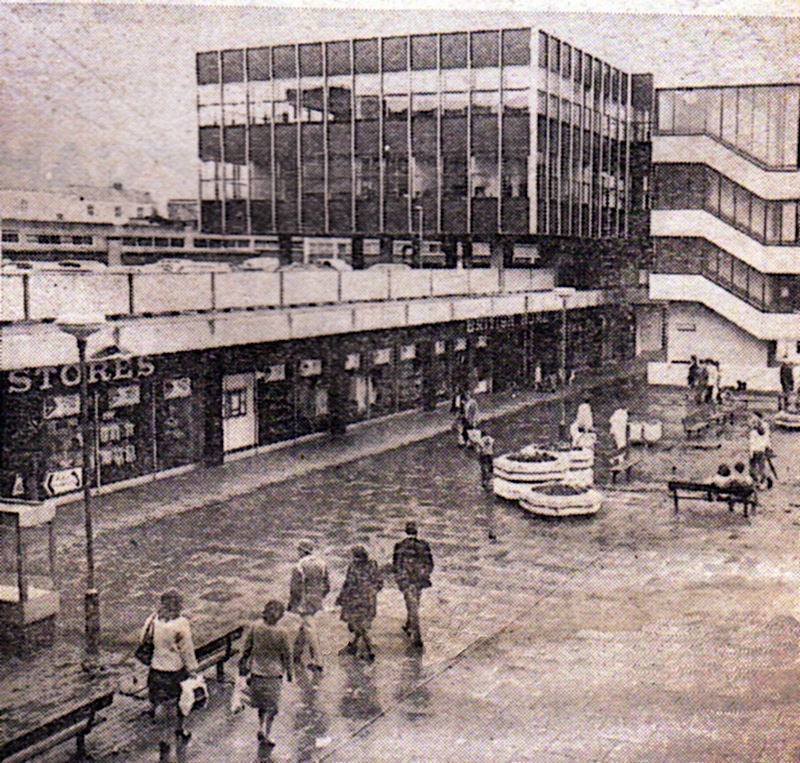
Back in 1983, the FA Cup Final was undoubtedly the highlight of the football calendar. Churchill Square, Brighton, was deserted, except for a few football-haters:

churchilsquarea

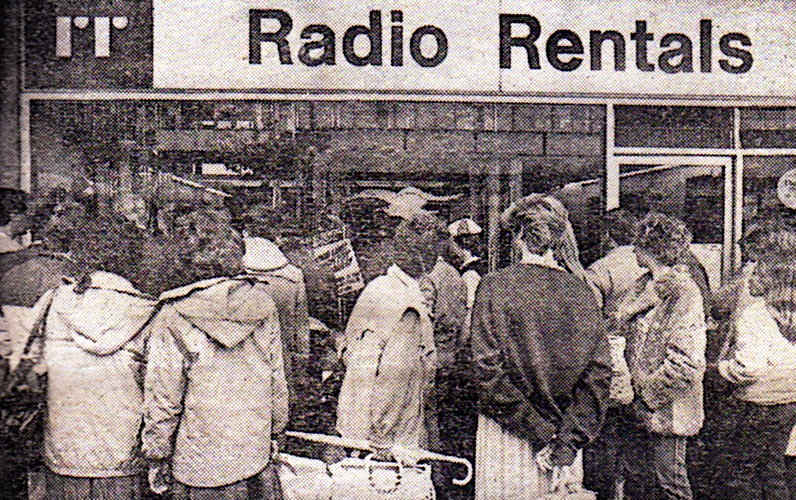
But by the time of the kick-off, many couldn’t stay away from the action, thanks to Radio Rentals, and a roar went up when Gordon Smith put Albion ahead:

radiorentalsa

Tagged