Monthly Archives: May 2014

Derby delight for the Seagulls

Smith does score!

Smith does score!

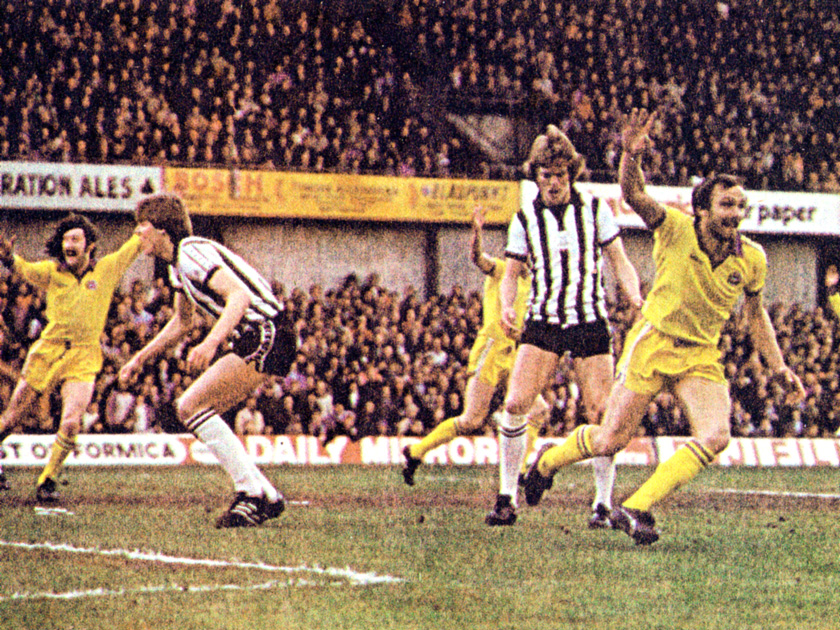
It was time to stop the rot. After opening with three successive defeats, Gordon Smith converted a penalty as relieved Brighton under Jimmy Melia picked up a very welcome 1-0 victory against Derby County at the Goldstone in September 1983.

At the time, the Rams had seasoned players of the calibre of Roy McFarland, Archie Gemmill and John Robertson. However, they were all past their best. County were managed by ex-Albion boss Peter Taylor, who had returned to the Baseball Ground in November 1982, having ended his long partnership with Brian Clough by quitting Nottingham Forest six months previously. Together, Clough and Taylor had shocked the world by leading the Midlands side to the League Championship in 1972. However, going it along a decade later, Taylor struggled, although he did put one over Ol’ Big ‘Ead when the Rams beat Forest in the FA Cup in January 1983.

By the return match between Derby and Brighton at the Baseball Ground in March 1984, County were on their way towards Division Three and Taylor heading towards the sack. Helping them on their way was the Rams’ emphatic defeat to Cattlin’s Brighton side. Here’s how John Vinicombe of the Evening Argus reported it at the time:

Chris Cattlin’s rebuilding programme, aimed at promotion next season, continued apace at crisis-ridden Derby.

A wholly satisfying 3-0 victory also stilled any criticism at selling Steve Foster and Tony Grealish. Dissenting voices, always a minority, must now be faint echoes in the light of this latest performance.

Displays like this beat out Cattlin’s promise that the last two and half months of the campaign will not be allowed to peter out.

Amazingly, Peter Taylor axed four key players, including skipper Archie Gemmill and, before Gordon Smith scored the third and best goal of the match after 75 minutes, the Baseball Ground was a scene of bitter rancour.

Peter Taylor, who with Brian Clough, threw Albion a precious lifeline a decade ago, is himself in need of rescue.

Second from bottom, this grad old club, a founder member of the Football League, face relegation to the Third Division for only the second time, in their centenary year as well as today’s Inland Revenue winding-up petition in the High Court.

Perhaps Robert Maxwell will save Derby after all, but the prospect of charing a Third Division club cannot be that attractive. If he were to pay the preferential creditors in full, Derby could be had for under £1m.

Vinicombe blamed Derby’s poor financial affairs on poor housekeeping and contends that Brighton will never suffer such problems under Chris Cattlin, whose financial acumen was being demonstrated by his opposition to long-term contracts and the sale of senior players. Their opponents had the look of a veterans’ side, with Kenny Burns and Dave Watson also recruited to fight Derby’s relegation battle. Of the Rams, Vinicombe wrote:

Derby, this time shorn of not only Gemmill, but Paul Futcher who says he never want to play for Taylor again, John Robertson and Steve Cherry, had only endeavour to offer.

This is really only a polite way of saying their football was nothing but kick and rush, but there was a moment in the first half when the game might have gone their way.

That is did not was entirely due to Perry Digweed rectifying Willie Young’s mistake and preventing a certain goal by Bobby Davison. Digweed smothered the ball at Davison’s feet after Willie’s ill-timed pass back, and a few minutes’ later, when there didn’t appear to be a call, collecting one of Eric Young’s size 11 boots in the face.

For at least ten seconds, Digweed didn’t know what time of day it was. This was his first game for Cattlin, and only re-affirmed the manager’s high opinion of his second-string keeper.
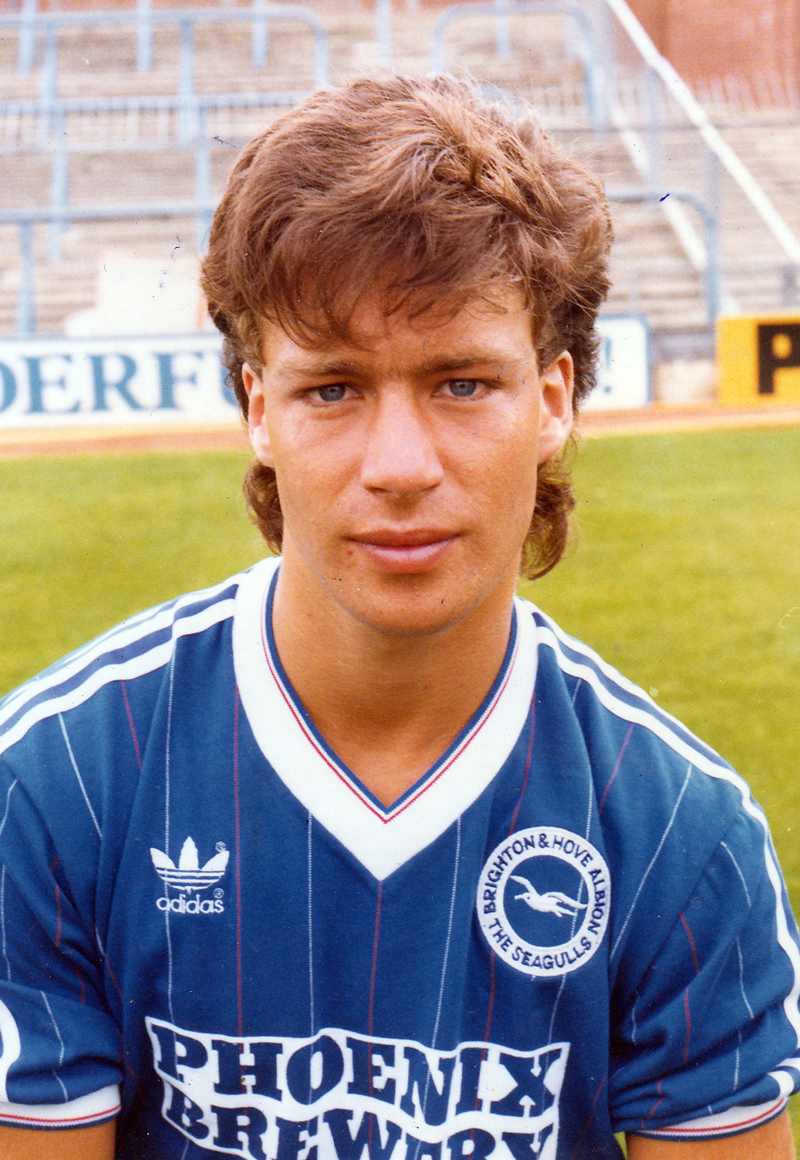
A first ever Albion goal for Steve Penney.

A first ever Albion goal for Steve Penney.

Brighton took the lead on 54 minutes when Alan Young’s header found Steve Penney. The Ballymena-born winger turned Steve Buckle inside out and finished off the far post just as goalie Yakka Banovic tried to close the angle.

Striker Alan Young turned from provider to goalscorer eight minutes later, latching onto Gary Howlett’s pass to fire the ball home off Banovic’s foot.

Finally, Gordon Smith wrapped up the match with his last ever goals for the Seagulls, and it was a good one too. Danny Wilson caught ex-England defender Dave Watson at sixes and sevens and fed the Scotsman who rifled the ball into the roof of the net.

At the end of the season, Brighton finished ninth and Derby in 20th. However, it was a brief stay in the Third Division for the Rams and they returned to the Second Division in 1986 under the canny leadership of Arthur Cox.
Tagged , , , ,

Sully keeps in the swing

osullivan

A retro piece from ‘Seagull News’ from its Autumn Edition 1991 gave the rundown on what Peter O’Sullivan was up to after hanging up his boots:

A former Albion star who thrilled thousands with his displays of attacking football is now providing cover in his role as an insurance consultant.

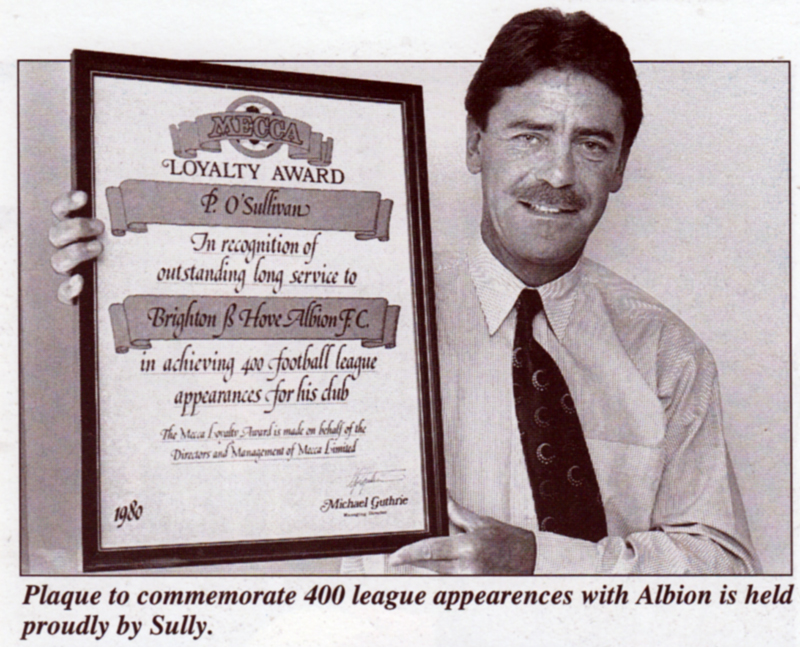
Peter O’Sullivan, known affectionately as Sully, was the Seagulls’ longest serving post-war player with over 400 League games to his credit.

The former Welsh international – he played three matches, two against Scotland and one against Malta scored over 40 goals while with the Albion in his position as a raiding left-winger.

Now living with his wife in Shoreham, Sully reflects happily on his years with the Albion, when he served under five managers who included Freddie Goodwin, Pat Saward, Brian Clough, Peter Taylor and Alan Mullery.

“Often when fans see me they recount the times I appeared to them to tear along the line with the ball in pursuit of a goal,” he says, adding modestly: “I always have a quiet smile at their memory of the events. The truth is I never had any real pace at all.”

He had his debut with the Albion in August 1970 with a Division 3 home match against Torquay and scored his first goal for the club two months later against Rochdale.

Sully, who was on Manchester United’s books before joining Brighton, was part of the team which won promotion from the Third to the Second Division while with the Albion.

After leaving Brighton he had spells at Fulham, and San Diego, where he played against such players as Becenbauer, Cruyff and George Best.

Looking trim and spritely for his 40 years, Sully returned to the game last year when he provided valuable support in helping County Leaguers Newhaven get promotion.

He played with the team because of his friendship with Andy Rollins, a former Albion team-mate. “I thoroughly enjoyed myself and it was good to help a friend, but I haven’t any future ambitions in that direction. Not at the moment, anyway,” added Sully.

The only patch of green grass he currently plays on can be found on a golf course. Always a keen golfer, he now plays off a single-figure handicap.

sullyswing1

Tagged

Seagulls swoop for £250,000 Austrian World Cup star

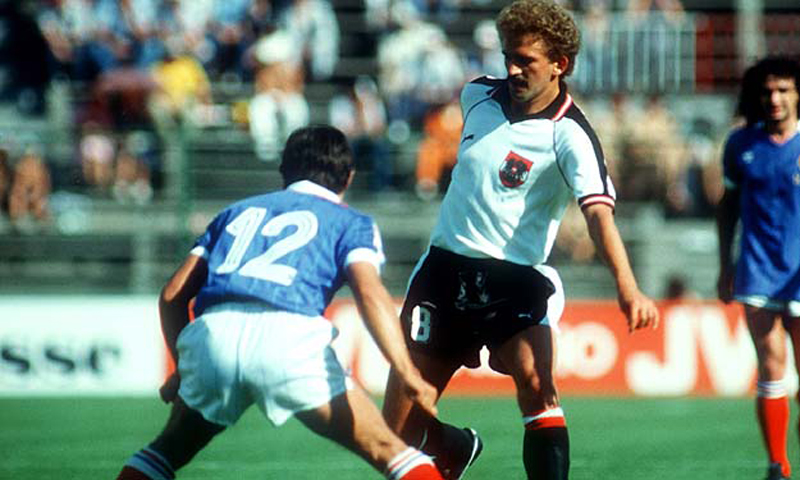
Juan Carlos Oblitas and Percy Rojas were not the only World Cup stars that Brighton & Hove Albion tried to sign in their glory years. According to Wikipedia, Prohaska was a deep-lying playmaker who is considered one of the best Austrian footballers of all time.

In January 1980, the Daily Express carried reports that the Seagulls were swooping for Prohaska’s services:

prohaska

Brighton are set to make a spectacular swoop for Austrian World Cup star Herbert Prohaska (writes Ray Bradshaw).

The 24-year-old KF Austria (Vienna) midfield ace flies over for talks with Brighton chairman Mike Bamber on Tuesday after Albion moved in quickly to beat off a challenge from Leeds.

Brighton secretary Ken Calver confirmed last night that negotiations for Prohaska’s transfer have been concluded and they hope to clinch the deal next week.

Said Calver: “We have been given permission by his club to speak to him and we are confident we can persuade him to join us.”

Prohaska, who has won 35 caps for his country, is expected to sign a £250,000 deal if terms are satisfactory.

Brighton have collected £500,000 in transfer sales in the last two months and will still have cash in hand for another big signing if they land Prohaska.

Sadly, it was Inter Milan that proved to be Prohaska’s destination in 1980. He joined Roma in 1982 before returning to Austria Vienna year later. For his country, he earned 83 caps and played in both the 1978 and 1982 World Cups.

Tagged

Vaughan’s great leap forward

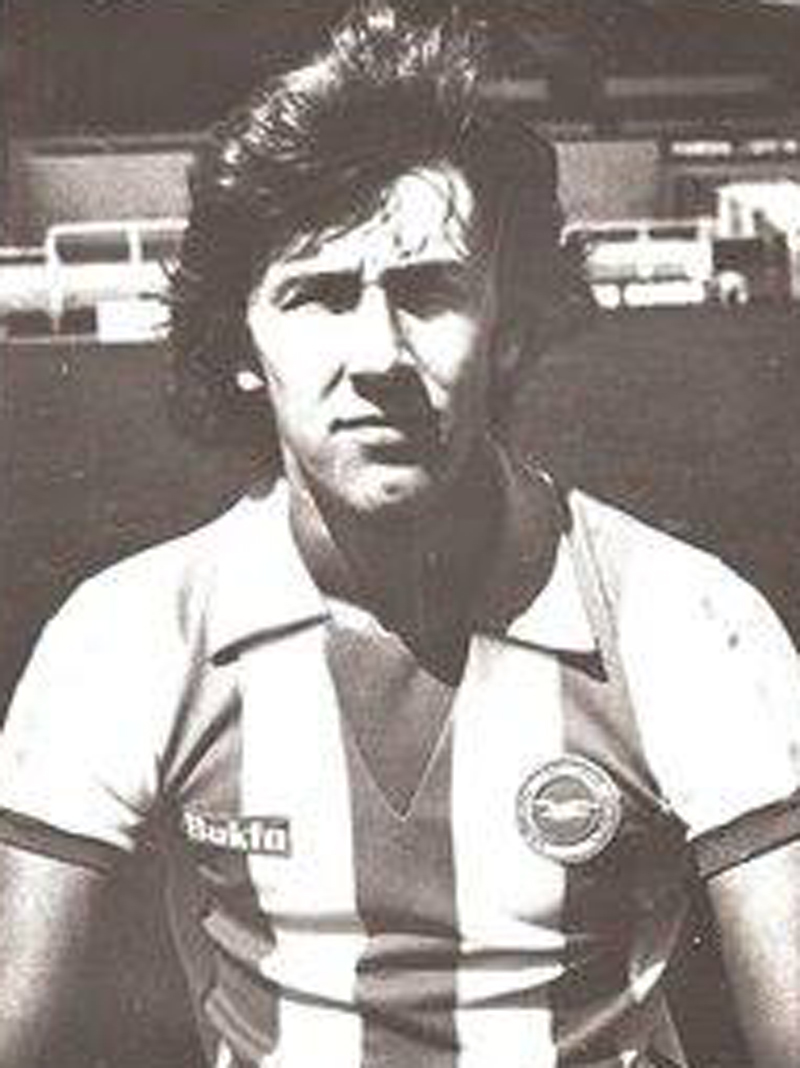
Vaughan in a pre-season photoshoot

Vaughan in a pre-season photoshoot

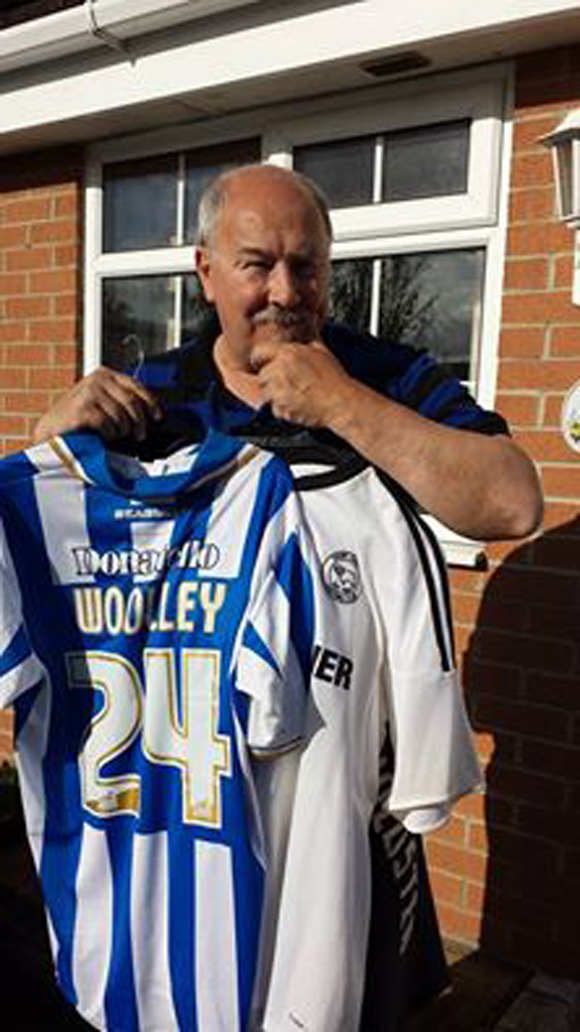
“I’m slightly torn between two teams that are very close to me. In a way I’ve got to be happy if either team goes through. I had great memories at the Albion, but Derby is where I grew up and my home town.”

So says Vaughan Woolley, a reserve centre-back on Brighton & Hove Albion’s books between 1975 and 1978.

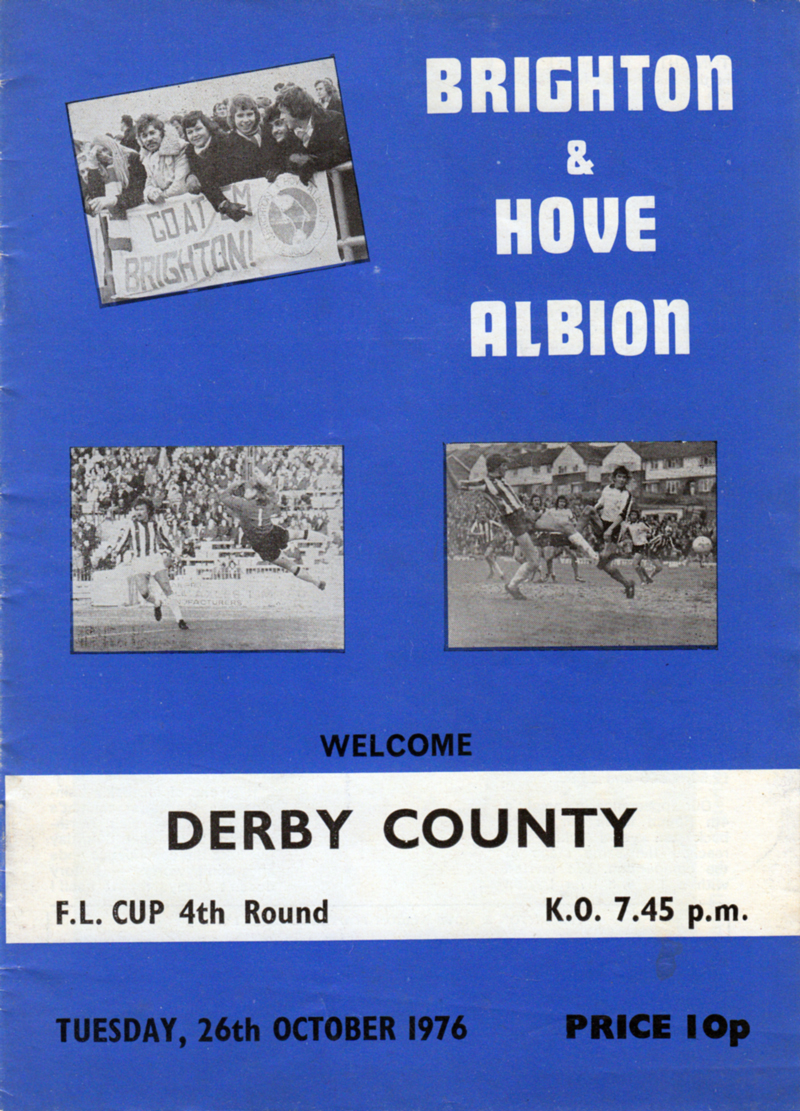
He has Derby County partly to thank for his most unforgettable experience in Albion colours. In the League Cup in 1976/77, Alan Mullery’s high-flying Brighton first team had knocked out Ipswich Town and West Bromwich Albion, both formidable First Division sides at the time. In the fourth round in October 1976, the Third Division outfit faced a star-studded Rams team featuring seven internationals including Roy McFarland, Colin Todd, Charlie George and Leighton James.

derby

With demand for cup tickets running high, the Albion’s marketing team came up with the novel idea of making them available at the reserve match with Charlton that month. In all, 17,554 watched as Brighton reserves ran out 3-0 victors against the Addicks’ reserves.

“We only used to get around 800 to 1,000 fans for normal reserve matches at the Goldstone, but they were selling cup tickets for the Albion match against Derby County,” Vaughan says. “When I ran out the ground looked full. The Argus published an article about me in 2009 about the match and the fact that so many fans went to see the reserves when the first team at Withdean was only getting around 8,000.”

And to cap it all, Vaughan got on the scoresheet and spectacularly dived into the fans! “Chris Cattlin, who latterly became the Seagulls manager, also scored one. I remember mine clearly. It was just before half-time. I was playing left side midfield on that occasion. We won a corner. Tony Towner took it, and I rose high to head into the top right corner. I was ecstatic, so I just continued running past the goal and lunged into the celebrating fans. Great memories, I just loved playing at the Goldstone Ground.”

Not that left midfield was his normal position: “I came to Brighton as a centre-back. I remember Peter Taylor who was the manager of Albion at the time told me that he wanted to build the future Brighton team around me and Robin Madden, another reserve team player from the Worthing area. It didn’t work out unfortunately for either of us.

“I was quite versatile as I could kick as well with either foot. So I ended up playing in midfield as well. I was gutted in a way when Albion signed Mark Lawrenson as he played in my position, plus he was a record signing at the time so it made things difficult for me.”

Peter Taylor and Brian Clough both knew Vaughan from Derby as he was captain of Derby Boys when at school. Another Brighton reserve, Stephen Ward, and Vaughan grew up together, went to the same school, Noel-Baker, and played for Derby Boys at the same time. Vaughan reminisces: “Steve Ward was my best friend at school. He was very skilful but not the quickest of players. He went on to play for Halifax Town and Kettering Town. I lost touch with Steve in recent years as he moved out of the Derby area.”

“Steve joined Albion in June 1975. As for me, I was originally asked to go on trial at Brighton for six weeks that August. After the first week I was asked to sign as an apprentice. Of course, I said yes and loved every minute of it. Moving to the south coast was possibly the toughest thing, moving away from my family and not able to travel home that often. I guess I was a little home sick.”

You must have encountered the subsequently more well-known Ward, Peter (no relation to Steve!), in the reserves, just before he broke in the first team?

“I loved my time at the Albion and frequently in training had the pleasure of marking Peter Ward. I thought I always did quite well in marking him but his history speaks for itself. He was certainly a legend of the club. I used to get on with Pete really well. He was also from Derby. I saw Pete several times in Derby in subsequent years and since then I bought and read his autobiography. Very interesting!”

Vaughan believes he also got close to making a breakthrough: ‘I think I was being thought of for first team, I had scored the home reserve game the week before the Charlton game. We played Northampton Town and I scored a header in a 2-2 draw. I also played in Brighton & Hove Albion ‘Select’ 11 when we played local town teams in the Sussex Cup matches. As well as this, I also played in a behind closed gates friendly against Fulham. This was mostly consisting of first teamers and I started the match. It was unfortunately marred when Sammy Morgan went into a tackle with the Fulham left-winger and unfortunately broke the lad’s leg. It was a nasty compound fracture.”

Apart from the two Wards, which other reserve players does Vaughan remembers most vividly? “There was a decent young lad join as apprentice from the Brighton area, Glen Geard. He went to school in the Brighton area. He was a real laugh, a bit cocky and full of himself but genuinely a nice lad. I think he might have gone on to play for the firsts. There was also Mark Elliott, a Welsh lad, really nice. He made his debut but didn’t play much. After I left, another of my friends from the Derby area joined the Seagulls, a lad called Tony Vessey. He was a centre-half who made an appearance for the first team. Not sure where he ended up afterwards. Might have gone to the States to play!”

Well, Tony Vessey had an illustrious non-league career with Crawley. He also played for them against Brighton in the FA Cup 3rd Round at the Goldstone in January 1992. To which, Vaughan replies: “Crawley, that’s interesting because I was in digs or lodgings in Portslade by Sea with two other guys, Eric Steele who helped teach me to drive. Now he’s the goalkeeping coach at the Rams. Also, a lad named Carmine Porpora, He also played for Crawley. He was released by the Albion after his apprenticeship. I met up with him and my old landlady for a meal down at the Marina a couple of years back. ‘Pop’ as he was known played for time in Italy, in their second division, I think. He played in same team as Claudio Ranieri apparently. He went on to play for Crawley Town in the 80s, I believe.”

Sadly, Vaughan Woolley didn’t make any appearances for the Seagulls’ first team: “I made a decision to leave Brighton in the summer of 1978. On reflection I was foolish but I had no agents, mentor or father figure to guide me. I asked Mr Mullery to pay me more otherwise I would have to leave. He said he wasn’t paying me any more, so I’d set myself up. I wished I hadn’t.”

After Brighton, Chesterfield were interested in signing Vaughan. However, he became disillusioned after leaving the Seagulls and really wanted time out: “I signed for a local team and played in the East Midlands Regional league mainly playing teams in Derbyshire and Notts area. I enjoyed my football and was with my old friends. I think, on reflection, I needed guiding by someone but that didn’t happen. I was basically on the dole. I joined Rolls-Royce and have worked there ever since. It’s all history. As I say, you have to accept what you do and the decisions you take in life. But if I have one regret it is leaving Brighton. If I could have played the way I did in the years following my departure, who knows what might have happened?”

How did you develop as a player after leaving the club? “I matured in the years after that and became a better and stronger player,” Vaughan contends. “However, I seriously broke my leg in two places in 1984 and that finished my playing career, aged 25. Oh well. I cannot get too regretful as many lads just don’t get the chances that I did.”

Have you been back to watch Brighton & Hove Albion? “I have been to the Amex, I went to one of the first games there with my son against Gillingham. I would have played to have played there. What a stadium! But it doesn’t hold the memories of the Goldstone. Anyway, I look forward to watching the Play-Off semi-final game this next week and hope whoever wins go on to promotion.”

Any predictions? “I think it will be 1-1 at the Amex and 2-0 to the Rams at the iPro,” Vaughan reveals. “Sorry to all Seagulls fans, but my head is ruling my heart. Best of luck to all involved, though.”

vaughanwoolley2

Tagged , , , , ,

Gully is a girl!

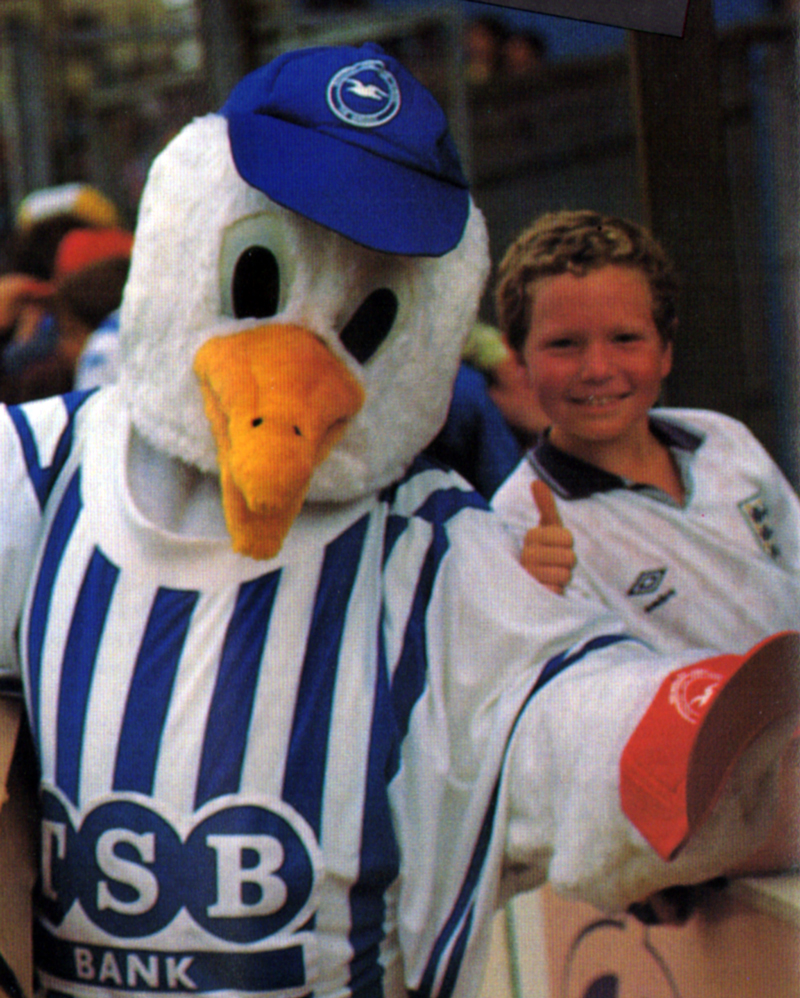
As you can see, Gully looked rather different in its early 1990s form:

gully

In the Seagulls News Autumn Edition 1991/92, the origins of Gully, the Brighton & Hove Albion mascot, was revealed:

gullyidea

Gully has been brought to life at the Albion by Mike Cuerden, the newly-appointed Press and Public Relations Manager.

Last year the character was used for the first time as a cartoon character in leaflets produced by Albion’s Lifeline Club.

Said Mike: “There was a good reaction to the character and I thought the club could benefit if the character
became life-size and was able to appear at various functions.”

He added that it was important that Gully should become a warm and friendly character which would enable the fans to identify with the image which “we at the Albion want to portray”.

“We are a friendly club who care very much for our fans, and if this enables us to get over the message all the better,” explained Mike.

According to the PR Manager, Gully also has an important role to play in ‘warming up’ the crowd before the kickoff. The appearance of Gully by the ‘dug-out’ heralds the arrival of the teams, encouraging enthusiastic support.

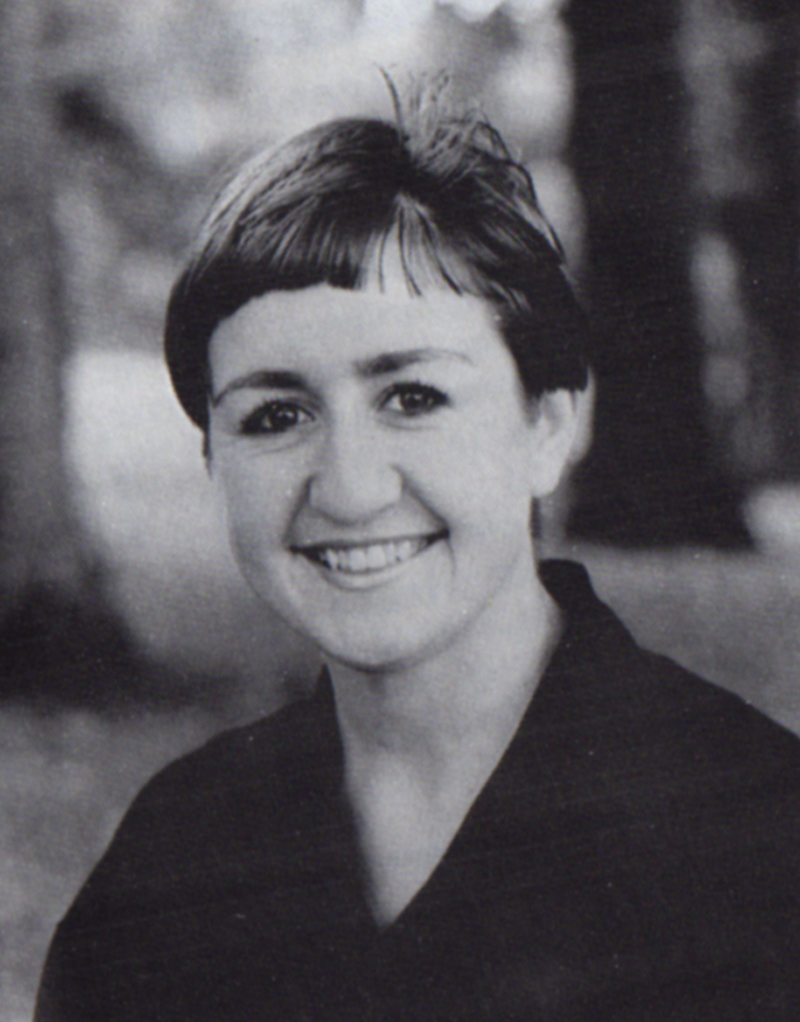
And to top it all, the magazine then shattered a million childhood illusions by revealing that Gully was a mere costume worn by a young woman:

Alison Norris

The secret is out! Gully, the Albion’s friendly, feathery mascot, is pretty 24-year-old Alison Norris.

The cheeky Brighton character introduced at the Goldstone Ground at the beginning of the season has become the darling of the fans and an established part of the soccer scene.

Performing different roles is no new activity for Littlehampton-born Alison, who went from her local comprehensive to the Cardiff Drama School six years ago.

“I really enjoy playing the part of Gully and I look forward to the home matches so that I can don the outfit and go out and about around the pitch,” said the slightly-built actress.

Alison, who currently manages a local restaurant, explained that she has appeared in plays ranging from dramas to comedies. She has already written six shows that have been performed for children and young adults.

“When I was asked to do Gully I was delighted,” explained Alison, who added: “I love making children happy and there is no doubt that Gully is a real personality that the fans look forward to seeing at home matches.”

It takes Alison just five minutes to don the outfit that consists of yellow tights, plastic feet, body outfit and head.

She added: “I’m getting to know many of the fans by name now. They even feed Gully. They have found out how to push sweets and crisps through the beak!”

* And just a quick reminder: This blog is coming to an end as a daily blog in 49 days, on 25th June 2014. The entire archive will remain online, and there will be occasional new posts but it won’t be a daily beast any more!

Tagged ,

Horton leads Brighton to glory

While he was with Luton Town, Brian Horton took the time to reflect upon the greatest moment in his career, winning promotion to the First Division with Brighton, after a 3-1 victory at Newcastle. This is from Shoot! Magazine:

Brian Horton meticulously gathered together the contents of his kit bag for the most imporrant match of his life. Then, just as carefully, he made sure he had not forgotten the lucky charm that is his constant companion.

A Sphinx, given to him while he was playing for Brighton in the Third Division, has not left his keyring since.

Horton explains: “One of our supporters handed it to me, saying the Sphinx would bring me good luck, That night we played at Lincoln and Steve Piper, who was with me at the time, and myself each scored a goal.” So Horton, now doing the same inspiring captain’s job at Luton as he did with Brighton, was not without the key-ring when his team made the trip from the South • Coast to play Newcastle at St. James’ Park on May 5th, 1979.

Brighton needed to win to be certain of gaining promotion to Division One for the first time. There could be few more daunting trips than to the heart of Geordieland.

Horton, a tenacious midfield player, recalls: “We travelled to Newcastle by train on the Wednesday before the match, played golf on the Thursday and trained on Friday. Alan Mullery, our manager, wanted to get us in as relaxed a frame of mind as possible.

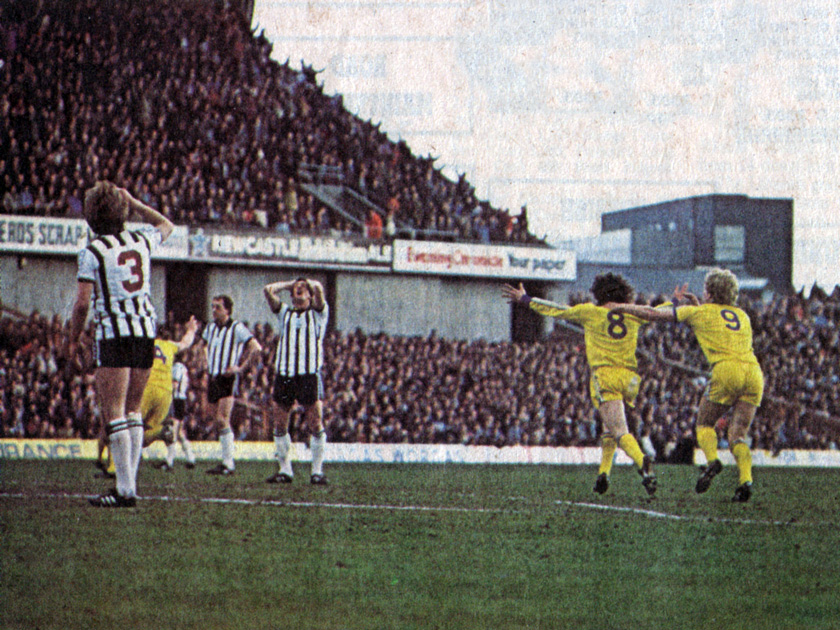
Goal 1: Brian Horton

Goal 1: Brian Horton

“I managed to score an early goal with a near-post header from a corner. When I think about it even now, I can almost feel the ball hitting my head. It is probably the most important goal I’ve ever scored and it gave us the perfect start.

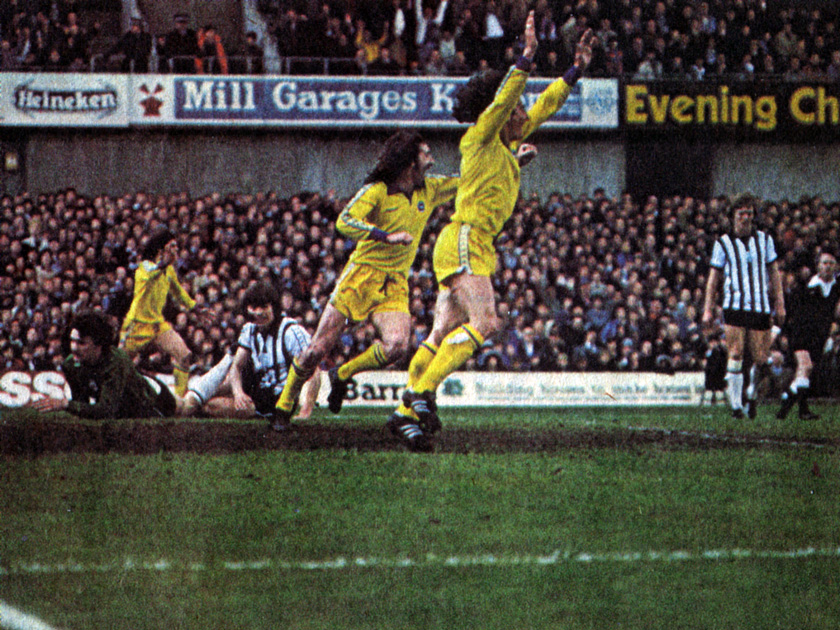
“Peter Ward and Gerry Ryan added further goals to give us a 3-0 lead at half-time.”

Goal 2: Peter Ward

Goal 2: Peter Ward

Goal 3: Gerry Ryan

Goal 3: Gerry Ryan

“Newcastle pulled one back in the second-half, but we’d done enough in our superb performance before the interval. We came home the same night and the champagne hardly stopped flowing all the way from Newcastle to Brighton. There were hundreds of fans on the train as well, so the atmosphere was marvellous.

“When we arrived back at Brighton in the middle of the night there were thousands of people to greet us and there were memorable celebrations when we went round the town the next day.” Horton was a significant figure in Luton’s promotion last season.

He says the two campaigns were different: “Everybody expected Luton to go up and we were clearly the best team.
“But at Brighton, we’d missed out a couple of times in tight finishes and we realised that it was imperative we made it.” Horton received a Second Division Championship medal with Luton last season, but did not get any medal for leading Brighton to the First Division. Players from clubs finishing second or third do not receive any momento from the League.

“But I do have my lucky Sphinx to remind me of Brighton’s day of glory.”

Horton still sees some members of the Brighton side that never failed to finish in the first four of either Division Three or Two in four successive seasons.

Whenever he wants to recall that memorable day in May at Newcastle, he needs merely to insert the television recording in his video.

“Every now and again I watch it,” he says. “It always makes me feel good.”

Tagged , ,

Brighton on the top deck

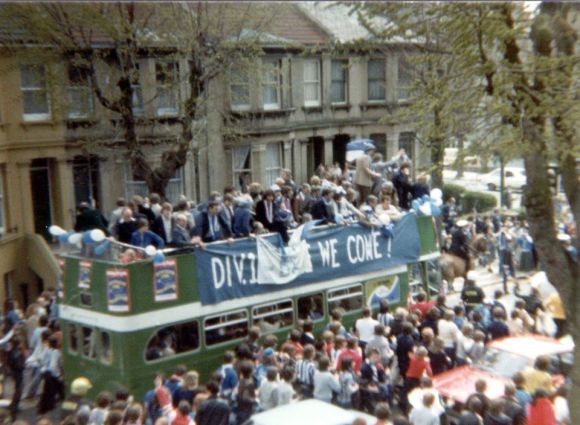
1979promotionparade2

Years before the Argus followed, West Sussex Gazette had the foresight to use colour in its coverage of the Albion in the 1970s and 1980s. Here is its coverage of Brighton’s promotion parade in May 1979:

Brighton have made it. They gained promotion to Division 1 for the first time in their history with a 3-1 win at Newcastle on Saturday and after an emotional week-end manager Alan Mullery sounded out a warning to the big-guns Albion will be facing next season, writes Alan Thatcher.

“We are not going into Division 1 just to survive,” he said. “We want to make an impact and I know we have the players to do it.”

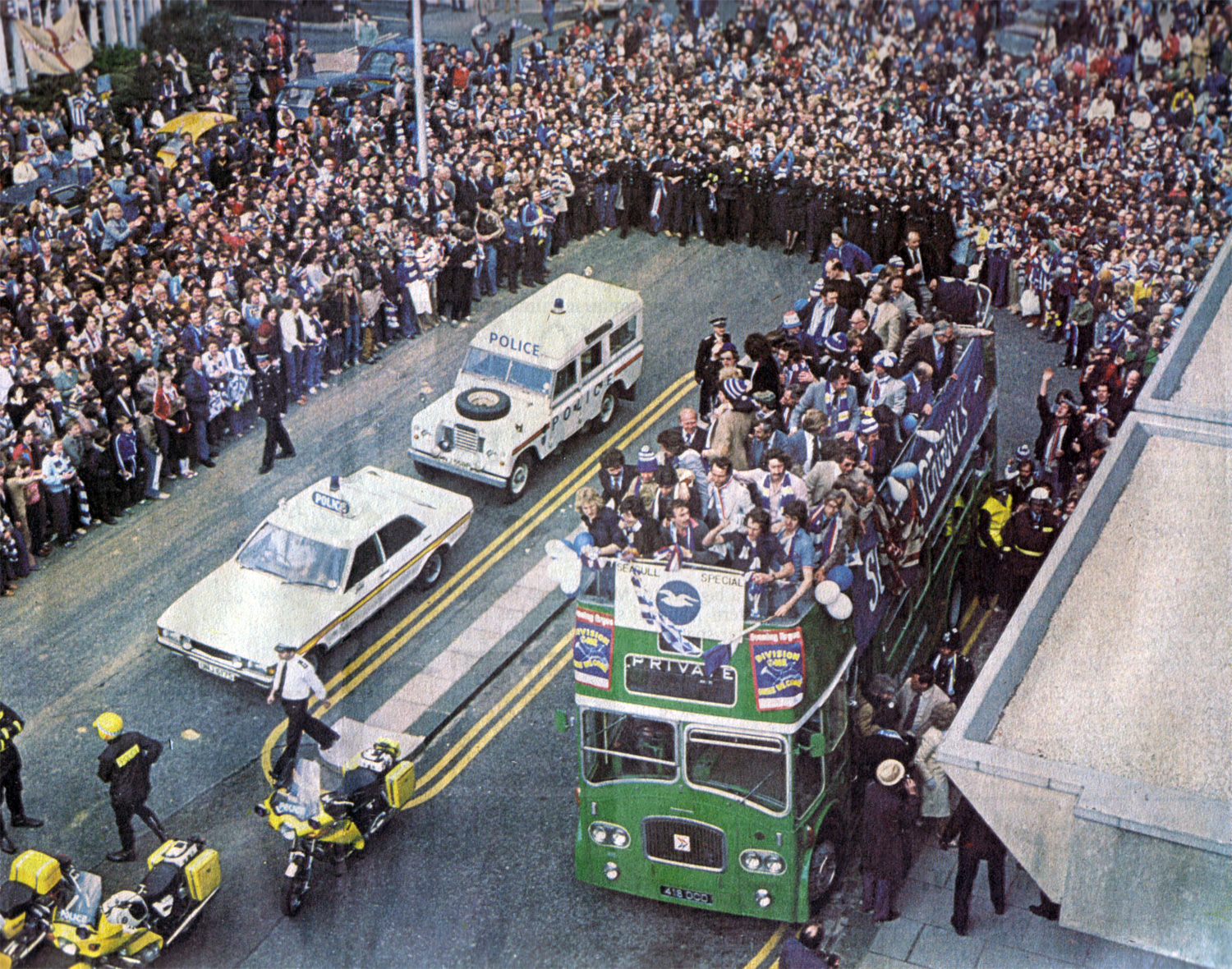
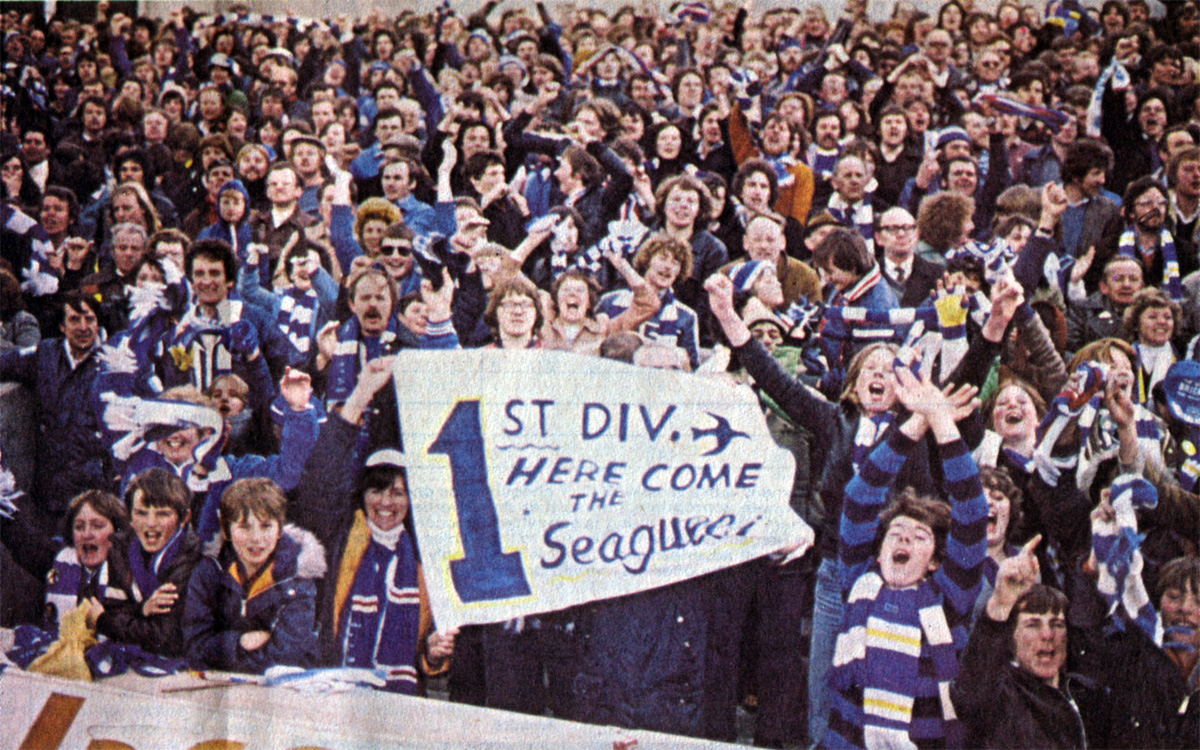
Above is the picture that sums up the players’ triumph – an open-topped bus journey through the streets of Brighton and Hove on Sunday morning. More than 100,000 delighted fans packed the roadside to cheer their heroes.

In just three years, Mullery has taken Brighton from Division III to a place amongst the country’s soccer elite – and now he is looking forward to meeting clubs like Liverpool, Manchester United and Arsenal next season. “Some of our players have never played in Division I before – but I know that men like Brian Horton and Mark Lawrenson will do well. Our Division I is the best in the world and that’s where players like these belong.”

Saturday’s champagne party in the North-East was followed by a delirious welcome home by crowds of Albion followers on Sunday. After the open-topped bus journey it was on to Hove Town Hall, where the Sussex stars waved from the balcony to thousands of supporters before a special reception from the mayors of the two boroughs.

Albion’s promotion was a just reward after missing out so narrowly last year, when they were pipped by Tottenham – Mullery’s old club – on goal difference. This season, Albion made an indifferent start – but a tremendous revival got under way in December to send them rocketing into the promotion stakes. The position at the top of Division II was so tense, with five clubs fighting tooth and nail for the three promotion places, that Brighton’s destiny was not resolved until their last match – at St James’s Park.

“We had to be positive,” said Mullery. “Before the game I told the players to outplay Newcastle, to attack and score goals. And that’s exactly what they did.”

Brighton chairman Mike Bamber was full of praise for Mullery and his almost magical touch. “I believe he is the best manager in the game,” he said. “Alan has the greatest thing in football – the will to win. Alan came to us three years ago without experience, but he has done a tremendous job.”

Looking ahead to next season, Mr. Bamber is hoping for massive support at the Goldstone – despite the club’s plans to look for a new ground on the outskirts of town. “I am sure we will get big gates. The towns of Brighton and Hove are waiting for it, just as the whole of Sussex is waiting for it. With big crowds and our fund-raising schemes due to bring in half a million pounds in the next year I am sure we can survive.”

But Mr. Bamber added: “I know we have got the worst ground in Division II, and it’s worse than many in Division III. But our talks with the local councils are at an advanced stage and before long we hope to move to a new home.
This will take care of all our problems and I hope it will cut down on vandalism as well.”

Goalscorers in the historic display at Newcastle were Brian Horton, Peter Ward and Gerry Ryan – all in the first half. Newcastle scored in the second half, but there was no stopping Albion’s march towards the big time.

crowd

Robert Covington’s photo from his flat in Sackville Road:

parade1979-robert-bovington

Tagged ,

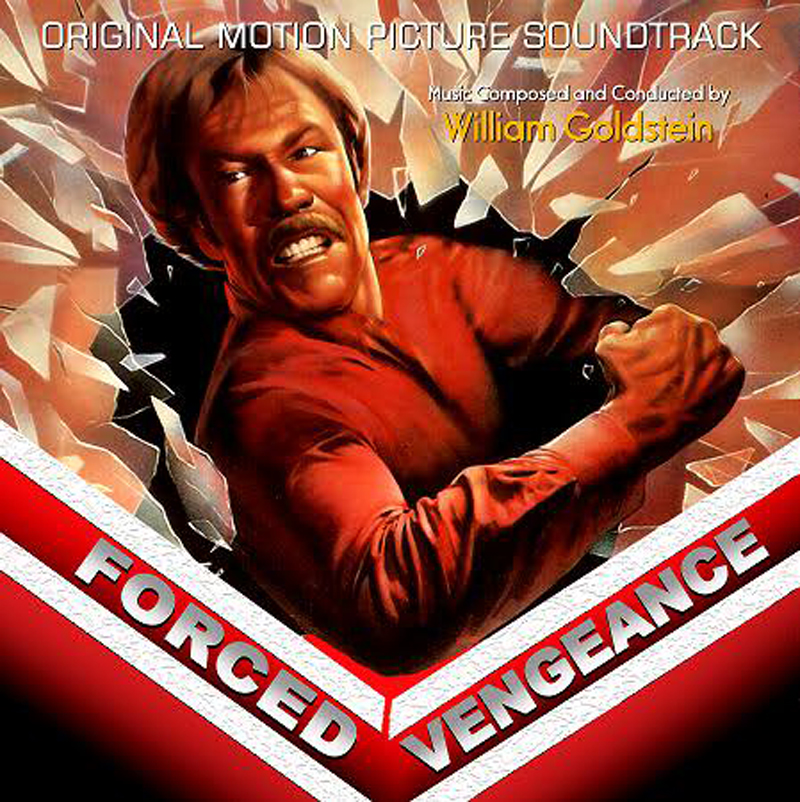
Forced Vengeance

forcedvengeance

Quite astonishingly, the 1982 movie Forced Vengeance, starring Chuck Norris, includes Gordon Smith’s fine goal in Brighton’s 2-1 defeat to Forest in September 1981:

Norris’ sublime phrase ‘Uh-oh, Brighton’s gonna score again!’ proved rather apt yesterday afternoon, didn’t it?

You can watch the full highlights here:

Oh, and if you wish to enjoy the full action-packed movie, here it is on YouTube:

Still doesn’t hold a candle to the drama at the City Ground yesterday, as Brighton & Hove Albion sealed a Play-Off place with a last-gasp goal.

Tagged

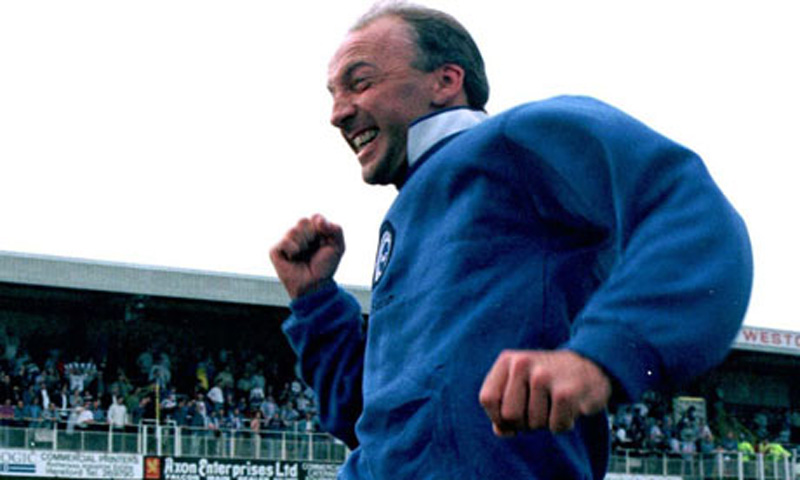
Steve Gritt: Hereford as I saw it

stevegritt5

Writing in Goal Magazine in July 1997, not long after his moment of triumph:

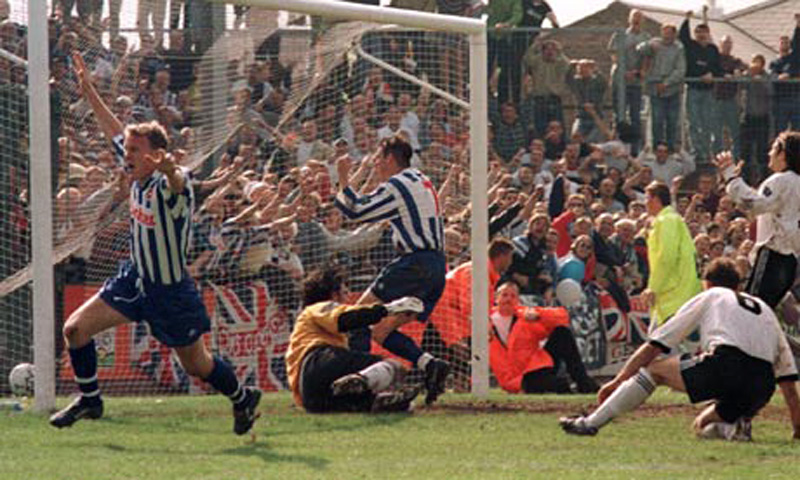
If I stay in football until I’m 60, I doubt I’ll experience a game as tense as Brighton’s final League match against Hereford. The prize at stake was so great that a lot of my players just seemed to freeze in the first half. It was only after I’d got them in at half time and shook them up a bit by reminding them that there aren’t too many grounds worth visiting in the Vauxhall Conference that they started to battle.

Without doubt, it would have been a tragedy for a club the size of Brighton to slip out of the League – there’s enormous potential here, as proved by the fantastic support we attracted in our last few home games. But it doesn’t matter who you are or what your pedigree, no one’s got a divine right to expect to stay in the League, and that’s something I had to keep reminding our players of.

I do have every sympathy with Hereford. No one wants to see any club drop out of the League, but I’m afiaid it was a case of them or us. Exeter could have been dragged in to it, too. If we’d lost, we would have gone down by two points; the two points that the FA docked. Given that scenario, it was very likely that we would have returned to court to appeal and had that been successful, Exeter could have been relegated.

With Premiership sides hogging the headlines, it’s all too easy to overlook the plight of smaller clubs. It’s something that needs to be addressed because I’m convinced if one club went out of business, others would quickly follow suit. Despite the big-money TV deals and all the glamour of the Premiership, there’s got to be a place for clubs like Brighton. In the past, clubs at this level have proved to be a useful feeding ground for Premiership sides. I’m sure the big boys would want that to continue.

The gulf between the Premiership and the lower leagues was brought home to me again with Aston ViUa’s recent £8million signing of Stan Collymore. I can’t complain, though, because like every other manager, I’d jump at the chance to spend that sort of money on players.

But, of course, it’s not how much you’ve got to spend, it’s how you spend it. Anyone can throw £20million at a problem, but the proof of the pudding is what you get for your money. That’s why I admire Kenny Dalglish’s reign at Blackburn so much. He spent wisely to ensure them promotion, then when he had a lot of money to spend, he spent it well and won the championship – you can’t argue with a return on your investment like that.

Mind you, I haven’t done too badly this season. I pushed the boat out and spent £15,000 on Robbie Reinelt and at Hereford he paid it back ten-fold with just one goal. Not even Kenny ever got that sort of value for money.

hereforda1

Tagged ,

The great stitch-up of 1972?

In May 1972, Brighton needed just one point against Rochdale to return to the Second Division. Those who complain that Southampton and Spurs stitched up the Albion in 1978 perhaps need to examine the final game of the 1971/72 campaign more closely!

Before a Goldstone crowd of 34,766, Pat Saward’s men got off to a great start against the Dale after four minutes when John Templeman got the opener. As the Daily Mirror reported it at the time:

Ken Beamish, standing on the edge of the Rochdale penalty area, got the ball from skipper Brian Bromley and pushed it back to the unmarked John Templeman. From about twenty-five yards, Templeman unleashed a drive without leaving the ground – and sent the crowd into ecstasies.

Rochdale were under constant pressure but they handed the Goldstone a shock on 59 minutes when Peter Gowans gathered a cross from Malcolm Darling and lashed in a 25 yard special that gave Albion keeper Brian Powney no chance.

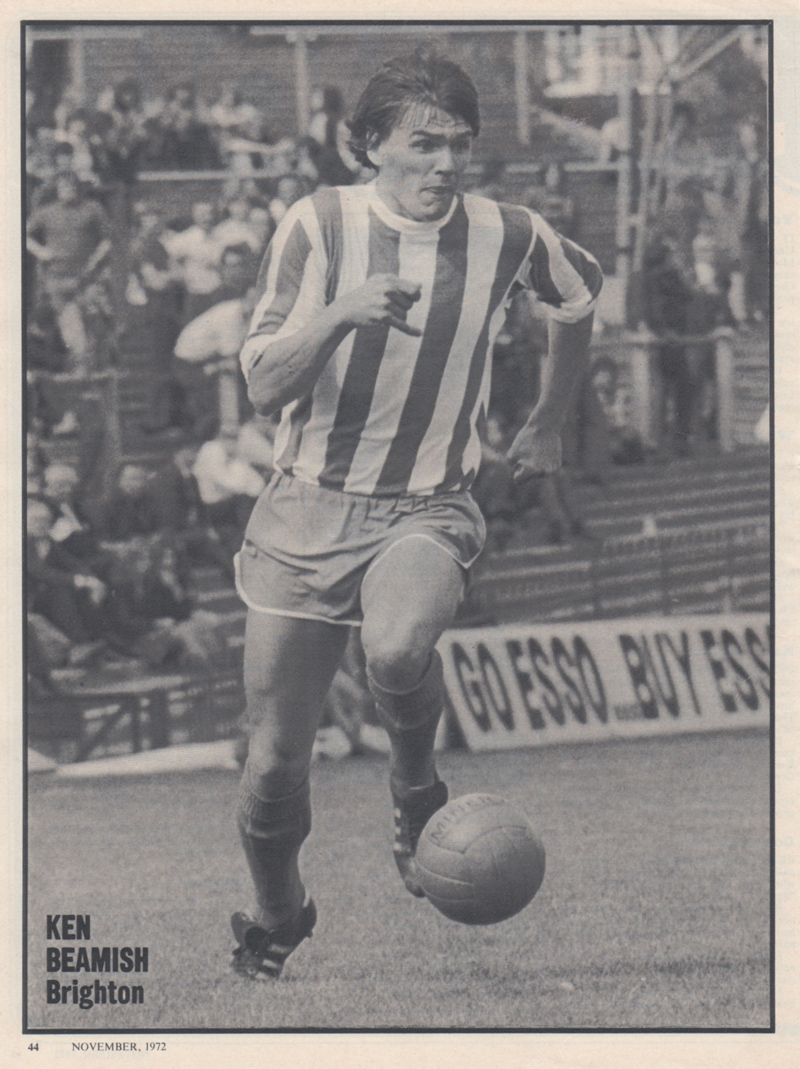
And then the drama suddenly petered out. As Ken Beamish recalled in ‘Match of My Life: Brighton & Hove Albion’:

kenbeamish1972_3

With about 20 minutes to go, the game suddenly died a death. As things stood we had the point we needed and they were safe from relegation. With hand on heart I can say it was never in our plans just to play the game out; it just materialised. Neither side had a shot on goal in those final minutes; nor did either team look to penetrate each other’s defence. It probably wouldn’t happen nowadays because the final matches of the season are all played on the same day, but back then we were playing after the end of the season and so both knew what we had to do.

A similar tale is told by his striking partner Willie Irvine in his autobiography ‘Together Again’:

willieirvine1972

We’d played this game at 100 miles an hour until the score became 1-1. At this point I’d noticed Saward and the Rochdale manager talking on the touchline. Somehow the game seemed to slow down dramatically except for me putting in an almighty challenge on their centre-half and almost scoring. “Bloody hell”, he said, “don’t you know we’re playing for t’draw now?” No I didn’t, nobody had bloody told me.

Tagged , ,