Monthly Archives: March 2014

Mark’s fire and skill

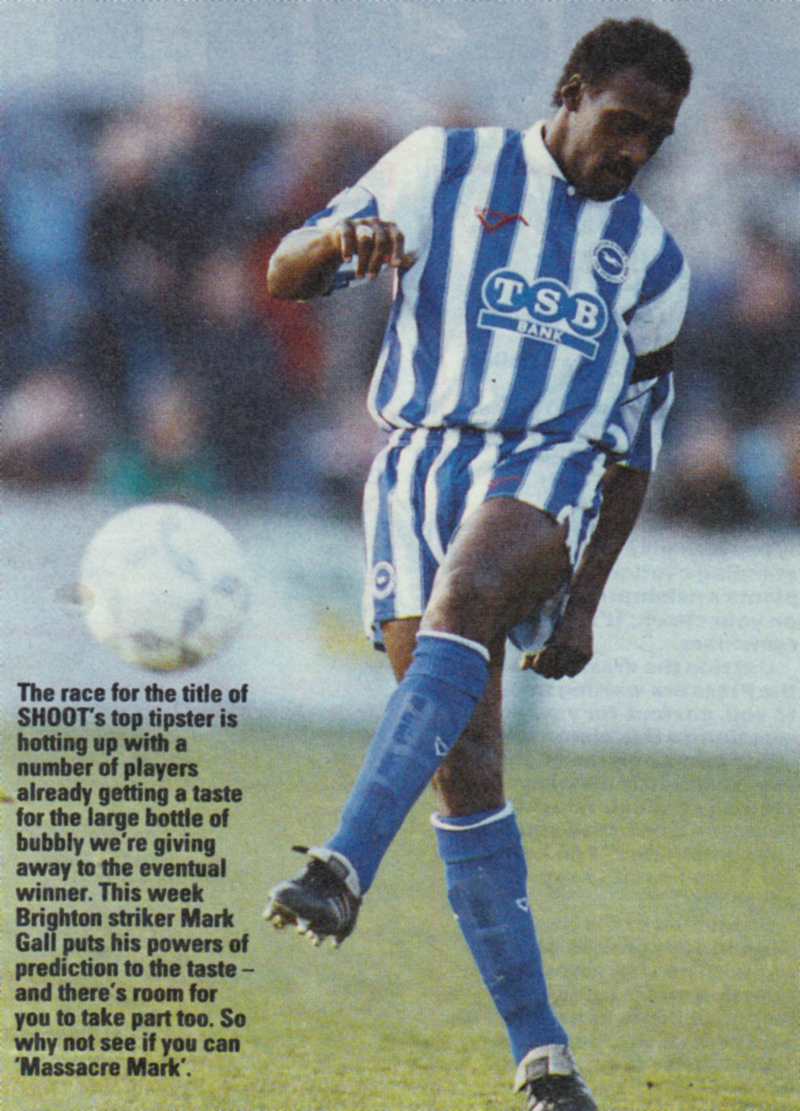
Brighton striker Mark Gall was a guest tipster in Shoot! magazine for one week in 1991/92, vying with readers to accurately guess the scores of the forthcoming fixtures:

markgall

With the Seagulls struggling, defeat was probably a ‘safe’ prediction for Brighton during most weeks. But with Gall fighting fit, there was always the chance that his influence could turn some matches in Albion’s favour.

While ultimately, Gall was unable to stop the Albion from suffering relegation, his strength, trickery and goal touch ensured the club had a fighting chance right up to and including the last day of the season. Signed from Maidstone for £45,000 in October 1991, he immediately lifted the Goldstone crowds that were still mourning the departure of John Byrne and Mike Small. Gall’s 13 goals from 30 League appearances for the struggling south coast side was an excellent return for a mid-season signing.

Emphatically, he also scored the opener in the FA Cup match with Crawley in January 1992:

Two months later, he notched the only goal at St James’ Park in a victory over Kevin Keegan’s Newcastle United. Strangely, it was the only League fixture where Gall’s scoring contributed to an Albion victory. Indeed, when the Londoner hit a goal in each of the first four games in April 1992, Brighton only secured a single point.

One of his most telling performances came in the 2-1 victory over FA Cup Semi-Finalists Portsmouth later that month:

Although he did not score, Gall repeatedly gave the Portsmouth defence the runaround.

Unsurprisingly, he was voted Albion Player of the Season at the end of 1991/92. A knee injury from early on in his career then sadly caused problems that forced him to retire, aged 29.

Tagged

Sun Soccer Stamps 1971/72

sunsoccerstamps

As Nigel’s WebSpace puts it:

Following on from the undoubted success of the Swap cards the Sun followed up in 1971/72 with the ambitious Soccerstamps collection. The Soccerstamps were stamps, rather than cards, and came in a wide variety of sizes, shapes and colours. The tokens for Soccerstamps appeared in the Sun each day. The Sun only accepted tokens in lots of six, plus 5p, to get your 12 Soccerstamps by return post.

The stamps were to be mounted in the spaces for them in the 164-page Football Encyclopaedia and Soccerstamp Album (available from newsagents for 10p). The album suggests that you stick them in with stamp hinges. Collectors of these stamps therefore distinguish between those which were (a) never stuck into an album, (b) stuck in with stamp hinges or (c) stuck in as stamps.

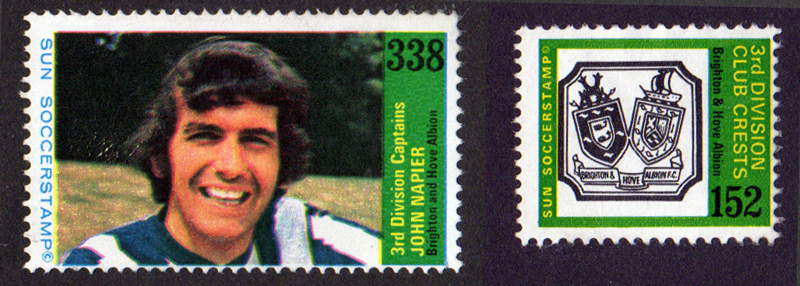
With 504 stamps in the collection, Third Division clubs such as Brighton & Hove Albion were afforded three stamps. Here is the team photo stamp:

sunsoccerstamps1

Captain John Napier and the old style coat of arms also appeared on two smaller stamps:

sunsoccerstamps2

Despite getting promoted in 1971/72, I’m pretty sure Brighton don’t feature in the 3D star cards that The Sun ran with the following season.

Tagged ,

Meridian TV: Goodbye Goldstone

Bill Archer gives the show a touch of the surreal

Bill Archer gives the show a touch of the surreal

Yesterday on North Stand Chat, a user called The Great Gatsbt answered a request by posting the infamous hour-long special on Brighton’s plight, on Sunday 9th February 1997:

It makes for remarkable viewing. As Foster’s Headband remarked:

Bellotti and Archer were on telling the usual lies and a few very irate fans. Tony Millard, John Vinnicombe, Atilla, Paul Samarah, Alan Mullery, Mark Lawrenson, Gerry Ryan all had their say and Ivor Caplin who proved that both Archer and Bellotti to be lying about a supposed planning application they had put in, but Caplin informed the programme this had already been refused.

Here is an extract from Stephen North and Paul Hodson’s ‘Build a Bonfire’ (p.166-167) about the show:

WARREN CHRISMAS: We’d all had such a great time at Fans United and everyone was still buzzing on the coach going over to Meridian to record the programme. We weren’t made to feel very welcome and it was a bad programme. It was bad PR for Albion supporters, it just didn’t go right. At the beginning of the programme Geoff Clarke says there will be plenty of opportunity for Albion’s fans to ask questions, and there never was and before we knew it, it was over and it wasn’t until it was over that everybody started to get really angry.

PAUL SAMRAH: Fans United on the Saturday was a brilliant day – the Sunday, the ‘Goodbye Goldstone’ debate on Meridian TV, was a disaster. We went in there rather naively thinking that all the facts surrounding the furore about the club will be explained in a balanced view and it wasn’t. Dick Knight was not going to attend because Bill Archer wouldn’t attend. Well, to our surprise Bill Archer was there, David Bellotti had the cheek to turn up and also arrived with his wife which was even more galling because in our negotiations with Bellotti he’d asked us to refrain from any verbal or other attacks on his wife and we naturally assumed that, really, she would take a back seat.

Regrettably things got out of hand and we didn’t get our case across in a professional way and it ended up being a shouting match and I was glad the programme ended when it did because I think we could have done our cause an awful lot of harm.

Bellotti is brilliant in front of the cameras, he’s a superb guy in an interview – he can answer a subsidiary question and miss the main question.

Archer came across as a nice guy sitting in a studio in Liverpool.

As soon as I came out of the debate I rang Dick Knight and said, ‘Did you know that Archer was appearing?’ and he told CEDR because it was a CEDR agreement that they wouldn’t go. Driving back the 60 miles from Southampton we felt cheated, we felt hijacked and the most annoying thing was that we knew it was down to us. It wasn’t anybody else really that had let us down, it was ourselves that let ourselves down.

LIz COSTA: The ‘Goodbye Goldstone’ programme was a total triumph for Archer and Bellotti. And this having taken place a week after Bellotti had said to us, ‘Please leave my wife alone’, he brought her into that studio. She had nothing whatsoever to do with that programme – she had no input, was not expected to have any input.
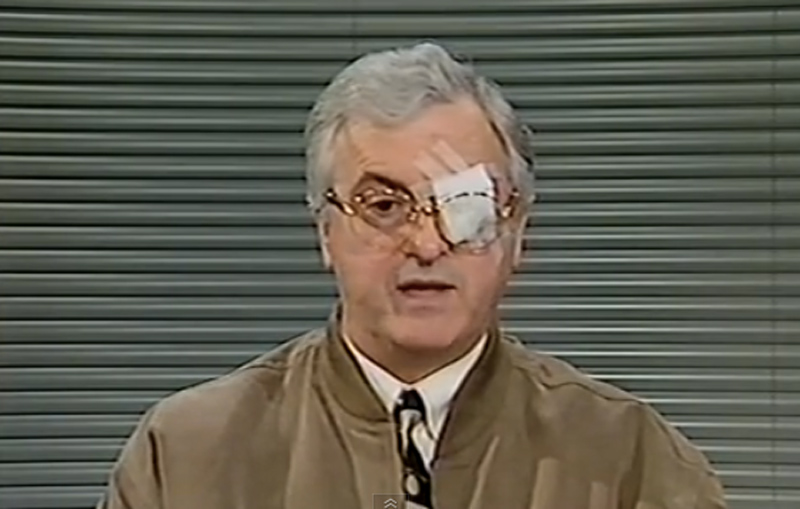
Archer was there with a patch over his eye, we were told, because he had corneal problems. The neutrals, the people who didn’t really know what was going on or had chosen not to take any notice, must have thought, ‘What the hell are the supporters on about? Archer and Bellotti are so totally feasible.’ Well, that’s how they bloody wriggled their way in in the first place, by being feasible.

TONY FOSTER: To some extent we were stitched up on that – as far as I’m concerned so was Dick Knight and the consortium. Things were edited, we had to re-do quite a bit and at the end of the programme re-record certain bits that probably didn’t come across on the programme.

PAUL SAMRAH: I am afraid it was the low point of our campaign.

Tagged , , , ,

Shattered dreams

jimmycasesouthampton

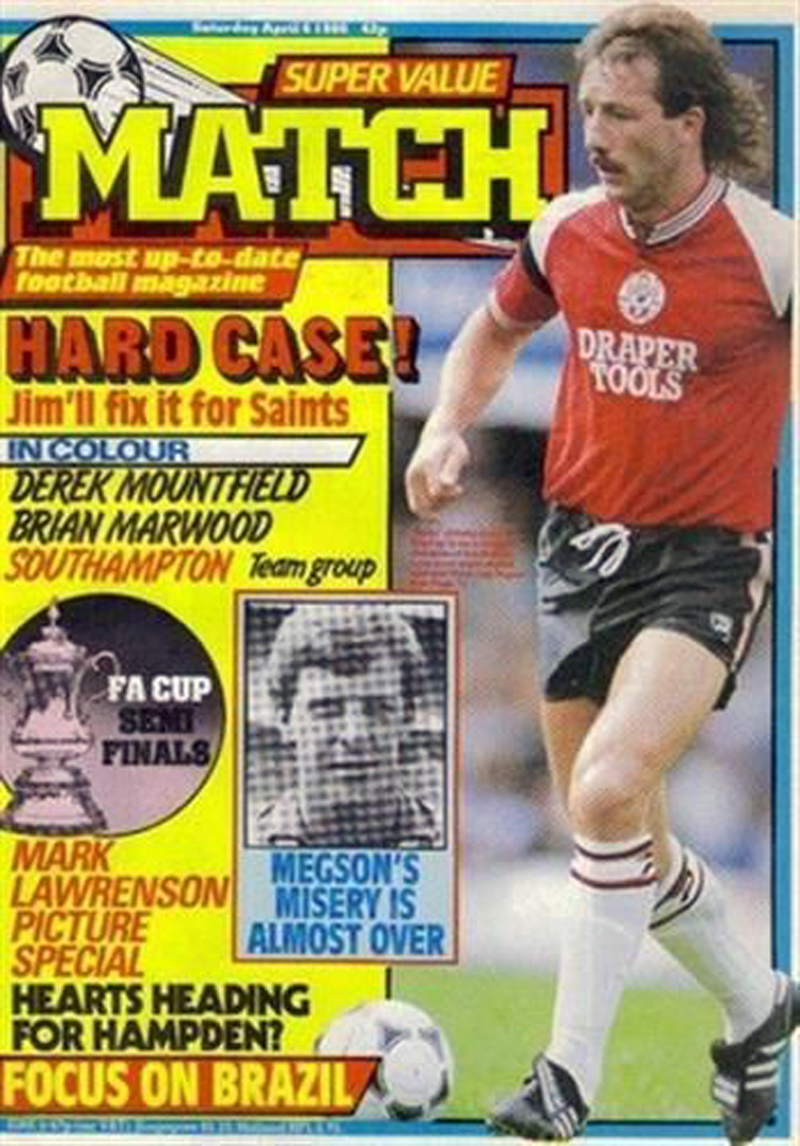
Having been sold to south coast rivals Southampton a year before, Jimmy Case came back to haunt the Seagulls in the FA Cup Quarter-Final at the Goldstone on 8th March 1986.

In the first half, the Saints seemed to be first to every loose ball, and quickly gained a foothold against a rejigged Brighton side. Chris Cattlin dropped Chris Hutching at right-back, shifted Steve Jacobs from midfield to fill his place, and gave Mick Ferguson his first home start since November 1985. Suffice to say, it didn’t work:

Brighton did make more of a fight of it in the second-half but the two goals in the first half had given First Division Southampton an unassailable lead. A pity that Ferguson and Biley couldn’t have stuck those chances away here:

Chris Cattlin’s programme notes the following week reflected on the emphatic defeat:

“I would like to start this afternoon by saying what a great disappointment it was to us all that we failed to do ourselves justice last Saturday, against Southampton. That disappointment is, I know, shared by all our supporters and I appreciate how you feel. We had done so well to get so far in the competition, with battling displays in all the other rounds, but to be honest, the way we played last Saturday did not justify our presence in the Quarter-Finals. We did not play anything like we can on the day.”

Tagged , , ,

Joe’s not for keeps

joecorrigan

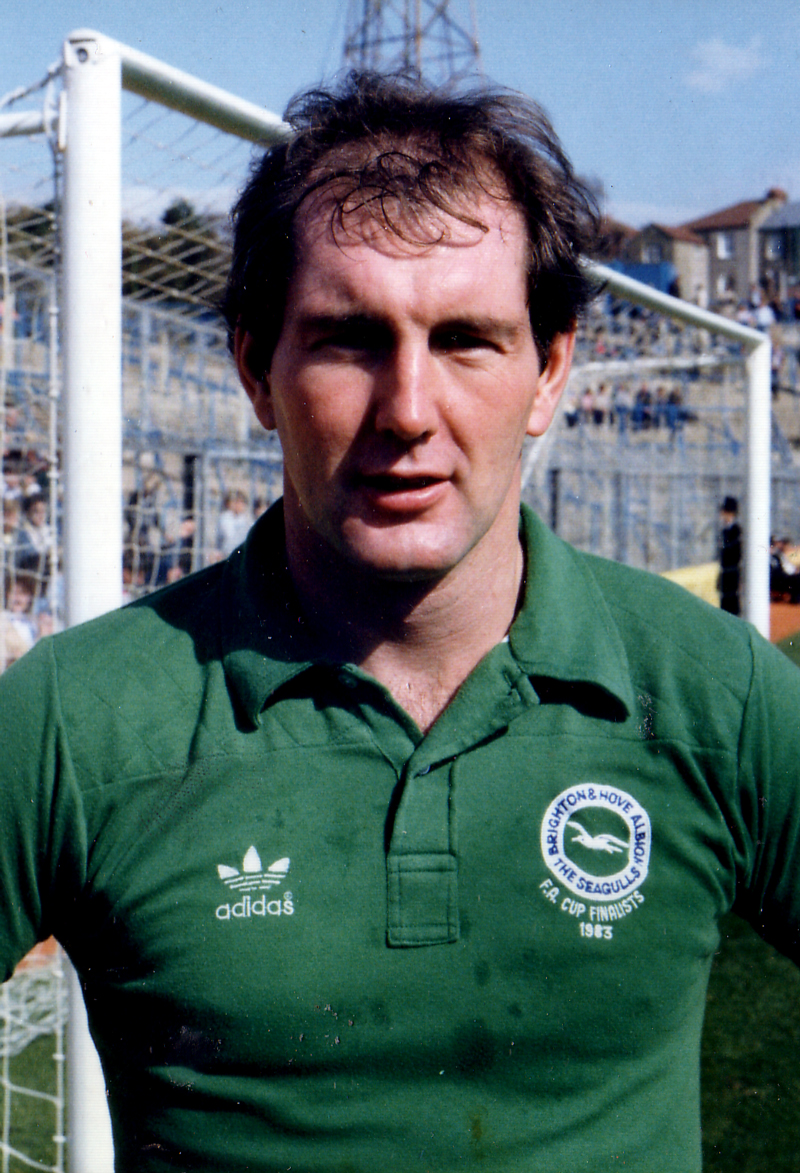
After an illustrious career with Manchester City, Joe Corrigan had a short spell with Seattle Sounders before the club folded in the summer of 1983. The 34 year old ex-England international keeper then returned to the United Kingdom, with Brighton & Hove Albion in September 1983.

Memories from Seagulls’ supporters on Corrigan’s year on the south coast tend to be very positive. Most memorably, the experienced shot-stopper performed admirably in front of the ‘Big Match Live’ cameras in Brighton’s famous 2-0 victory over Liverpool in the FA Cup in january 1984. Disappointingly, the keeper himself is far less positive about his experience with Albion, in his autobiography ‘Big Joe’:

On his signing

I returned to England in September 1983 ready to begin life as a Brighton player. It would be the first time I’d played for a club outside the top flight having never actually seen any first-team action during my loan spell at Shrewsbury. They had the makings of a decent squad and most people felt we could bounce back to the top flight at the first attempt. It was a beautiful place to live, but completely different to life in Manchester. I’d come from an area where you could nip down to the local and have a pint on your own if you felt like it. At the same time, you were never lonely as punters would always come up and talk about City. It was much more standoffish in Sussex, where, if you went out on your own, you probably wouldn’t talk to a soul. Neither Val nor I knew anyone in Brighton apart from the players and so we decided to rent a house in Hove rather than diving in feet first and buying a place.

The sea was five minutes away and we enrolled the kids at an excellent local school, so, off the pitch, everything was great, which, as any player will tell you, is just as important as everything being right on it.
I had always negotiated my own contracts so when I sat down with chairman Mike Bamber and manager Jimmy Melia, I was surprised that Jimmy was asked to leave the room before we began to discuss my terms.

For some reason, I asked the chairman what would happen if I was badly injured. What would happen to my wages? He asked me why I asked that and I didn’t really know the answer but he added, ‘Don’t worry about it, Joe. We’ll insure you for £100,000.’ That was the first time I’d really heard of insurance policies on players, but it would turn out to be a question well worth asking, though I’m still not sure why I’d asked in the first place.

On the phantom Keegan transfer

‘Jimmy Melia stitched me up,’ chairman Mike Bamber told me. I asked him what he meant and he replied: ‘Well he promised me you and Kevin Keegan, but only you turned up.’ I thought that Jimmy had probably been sacked because of poor results, not because he’d failed to get Keegan, but it was hard to imagine Kevin ever signing for Brighton.

On Chris Cattlin

Jimmy Melia was sacked shortly after I’d signed my contract. Maybe that’s why he’d been excluded from the negotiations – and Chris Cattlin took over. He was a former Coventry City left back and would turn out to be the worst manager I’d ever played under. He owned a rock shop in the town and also had a home in Brighton so whether that swung the job for him, I don’t know. He brought in former Arsenal player Sammy Nelson as his right-hand man. Cattlin just didn’t have the right character to manage, in my opinion, and things deteriorated pretty quickly during his tenure.

On being an Albion player

Playing for Brighton felt a little like being on holiday. It was by the sea, we were renting a home and the players had a different attitude. The lads enjoyed a good social life and I felt things weren’t as focused as they should have been, but whether that was down to the division we were in, the lads at the club or the manager, I’m not sure, though Cattlin was certainly part of the reason. We had players like Steve Gatting, Steve Foster, Jimmy Case, Tony Grealish and Gordon Smith – a terrific bunch of lads – but we lacked direction and drive. It was hard to get used to the smaller crowds at the Goldstone Ground after so many years at Maine Road playing in front of crowds of 40,000 or more.

On playing while drunk

Brighton had been an experience and while I’d been there I learned a lot about myself. I also realised how much drink was influencing my life, more than at any other club I’d been at. It was while playing for them that, for the only time in my career, I went into a game drunk. There is no excuse for such a lack of professionalism, but it was the laid-back culture at Brighton that made it so easy. On a Friday after training we went to an Italian restaurant in the town and everybody would have a couple of glasses of wine and then go home. But I was too easily swayed and if anyone said, ‘Come and have another one, Joe,’ I would tag along. Travelling to Watford on one occasion, I got on the coach with two bottles of brandy in my pocket and drank one in my hotel room the night before the game. We were beaten 3-0 by a very good Watford side – managed by Graham Taylor and with the likes of John Barnes in the side – but while I wasn’t to blame for any of their goals, it was totally unacceptable. It made me realise how far I’d allowed myself to drift and since I had more time on my hands than ever before, I had to make sure the boozing didn’t get out of control.

On playing Manchester City

It hadn’t seemed like I’d been gone five minutes and already I was on my way back to Maine Road, this time in the colours of another team, which would be very strange. I flew up to Manchester before the rest of the team travelled so I could spend some time with my mum and dad and then I met up with the squad at a Manchester-airport hotel and we were soon setting off for Moss Side. The drive along Princess Parkway was surreal and I kept away from the windows, trying to keep my emotions in check. When I got off the bus I got a lovely reception from the fans around the main entrance and all the old feelings started to flood back, though it was a bit odd getting changed in the away dressing room. Finally, it was time to walk down the tunnel and as soon as I stepped on to the pitch I was greeted by the most wonderful standing ovation from the entire ground. It seemed to go on for an age. It was incredible and brought a lump to my throat. The rest of the Brighton team may have lost their focus in the emotion of the occasion and we didn’t perform at all on the day, going down 4-0.

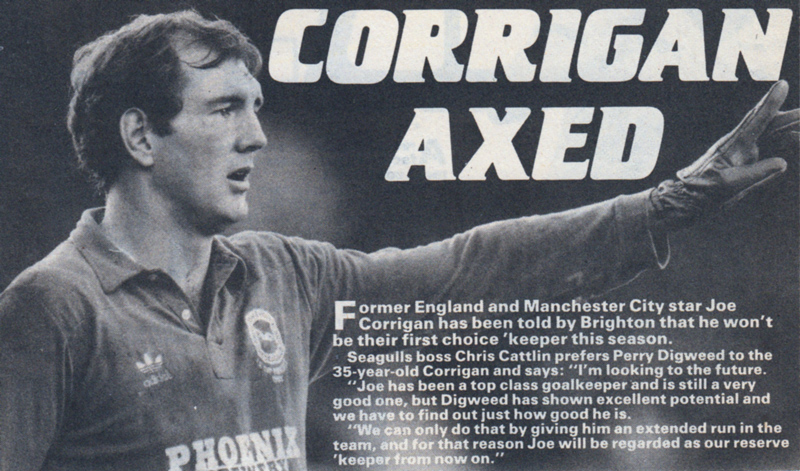
corriganaxed

On being axed

Our season bumbled along and the return match with City a few months later was also a memorable encounter. I took a whack on my elbow, the one I’d had floating bone in, and was given an injection at halftime and told I’d be going out again, which I’d wanted to do anyway. Again, I got a fabulous reception from the travelling City fans and the match ended one apiece, honours even. I’d signed a three-year deal and the first season passed without much incident or success and I returned to pre-season training hoping that things would pick up and we could have a crack at winning promotion. Then Cattlin asked me to meet him in his office shortly after the first training session of the summer.

‘I’m just telling you now that you’re not going to play for the first team again.’
‘Oh,’ I replied. ‘For what reason?’
‘Why? Because I’ve made my decision and we’ve decided to go with Perry Digweed this season. In fact, I don’t want you here any more and would prefer it if you left the club.’
‘Fair enough,’ I said. ‘You find me a club and I’m gone.’

The main reason, I assumed, was my wages. Getting me off the payroll would free up enough cash to pay two or three decent players. I understood it was a business decision and didn’t take it personally.

On his tribunal victory

When I was interviewed a little while into the season, I told the reporter in so many words that I was disillusioned with life under Chris Cattlin and his attitude towards me, which I found disrespectful and ignorant. After it appeared in the paper, he fined me two weeks’ wages for ‘going public’.

I wasn’t having that because all I’d done was spoken the truth and if Cattlin didn’t like it, so what? He had made it clear I was surplus to requirements so I owed him nothing and I launched a formal appeal, which my union, the Professional Footballer’s Association, fully supported. Gordon Taylor, their top man, called me up to tell me they’d had enough and that if managers could speak publicly about players, why shouldn’t players be able to speak up when they wanted? It was deja vu because it had happened before at City under Malcolm. As things stood, we were fined every time we opened our mouths.

A tribunal was arranged at FA headquarters in London. Chris Cattlin, Gordon Taylor and I were in front of a panel and Gordon was magnificent. He put everything across in a manner that would have been beyond me and despite Brighton’s protestations that the ruling would open a can of worms, the panel ruled in my favour.

Cattlin was livid. ‘I can’t fucking believe you, Joe,’ he said. ‘The club will never let this lie.’ Whatever he thought, Brighton had to refund my fine. I had got one over on him and I wondered what his reaction would be. I didn’t have to wait long to find out.

On Cattlin’s revenge

The day after I received a phone call from Sammy Nelson telling me not to report for training, but to meet him at the ground at 4.30 that afternoon. I said that would be no problem and arrived at the designated time. Only the kit man was there, so I got changed and eventually Nelson turned up and said, ‘Right, you’ve got to run and run and run …. ‘ I told him that was fine by me and began to jog around the pitch as slowly as I possibly could. In my opinion it showed how petty Cattlin and company were; they’d obviously spat their dummies out of the pram. It seemed to me they were trying to break my resolve but they couldn’t. I’d been through a lot in my career. I was a thirty-five-year-old former England keeper and this was child’s play to me, though I admit it was the worst period of my career. It must have taken me three or four minutes to complete the lap and while I was meandering round Sammy was watching me, so I said, ‘Look, I’ll do what I have to do, but you’re going to stand there and watch me until I’ve finished.’ I continued my gentle jog around the Goldstone and took forever to complete the task.

The next morning Cattlin hauled me in.

‘We’re not having that again.’

I retorted, ‘Chris, let’s get this straight. I’m not twenty-five, I’m thirty-five and coming to the end of my career. I’ve got a good contract so if you want me to go, find me a club. If you want me to play in the youth team, fine. If you want me in the reserves, I’ll play. That’s what I’m paid to do – play football. That’s what the article was all about: playing for the first team.’

Out of favour in 1984/85, Corrigan had a loan spell with Norwich in September 1984 and then with Stoke City in November. He eventually retired in 1985 after a disc in his neck burst during a Brighton reserve match.

Tagged ,

Stick in the mud

On this day in 1982, Mike Bailey led Brighton to an astonishing 1-0 triumph over Liverpool at Anfield. As Peter Welbourn of the Sunday Express wrote:

The defensive discipline which has been the cornerstone of success on Brighton’s travels emerged triumphant again at Anfield. An untidy goal snatched five minutes before half-time was enough to cost Liverpool vital championship points. Alan Hansen could only watch in despair as Andy Ritchie’s shot struck his knee to skid over the line.

There was further luck for the Seagulls late on when mud played its part. Bob Greaves believed that Liverpool:

…were well beaten by a combination of an own goal and a wicked pitch. Take that moment 13 minutes from time when Grealish committed a horrific back pass to give Rush an equaliser on a plate. The Liverpool man hit the ball towards an empty net from some 12 yards, it suddenly stopped in the mud and was cleared.

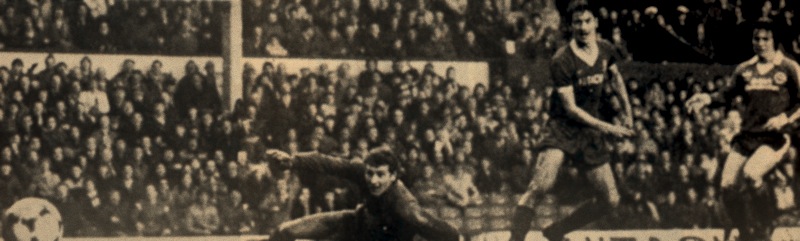
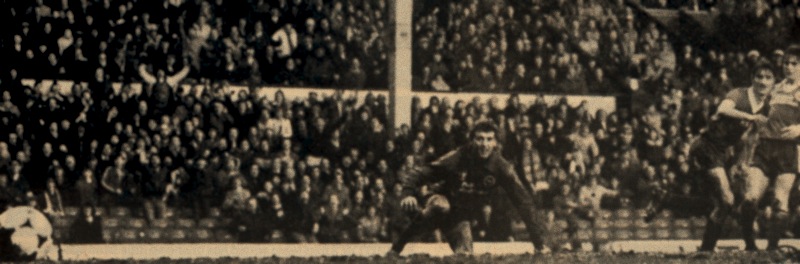
Here’s some photos from that pivotal moment:

liverpoolmud1a

Keeper Digweed looks helpless here but Foster was able to make the clearance:

liverpoolmud2a

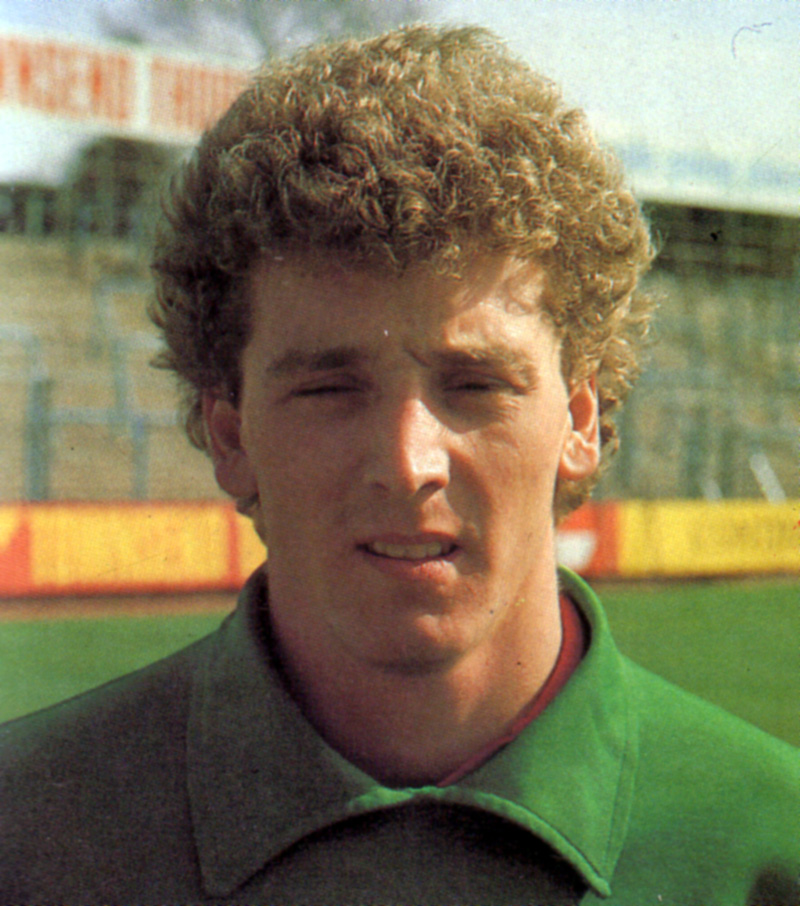
No wonder Perry Digweed quipped about the mud after the match: “I think I’ll take a bucketful of this stuff and spread it in the Brighton goalmouth.”

digweed82

Even so, the good fortune would have counted for little if it wasn’t for the gritty determination that kept the Seagulls in the game despite the second half onslaught by Liverpool. The Evening Argus’ John Vinicombe was moved to write:

For a display of character and defensive ability, Albion’s performance could not be faulted. The spectacle, while being almost entirely one way, was full of excitement and passion as Albion gradually came to terms with the demands imposed Liverpool on visiting sides•. But that is not to say that Albion didn’t stretch Liverpool’s defences and there were times when the European champions were forced to sweat it out. Everybody performed beyond the line of duty in this action packed drama and Digweed, brought in on the big occasion, had an excellent game. To come to Anfieid and play like this was the highlight of Albion’s season so far, and reinforced the view that their best games have all been away from the Goldstone.

Both Steve Gatting and Steve Foster had immaculate matches at the back. Despite almost gifting the home side an equaliser with his rush of blood moment, Tony Grealish’s industry and excellent play also caught the eye in helping to take Brighton to 8th in Division One. Following the game, manager Mike Bailey was understandably delighted:

“The result at Liverpool was one of the most satisfying it is possible for a manager to get. Although we were all very happy after the game and it was a good journey home, I don’t think the players realised quite what they had achieved. Not many teams go to Anfield and come away as winers, and I certainly never did it as a player. It just shows how far this club has come in the last few years. Five years it would have been unthinkable for Brighton to have gone to Anfield for a League game and come away as winners.

Tagged , , , ,

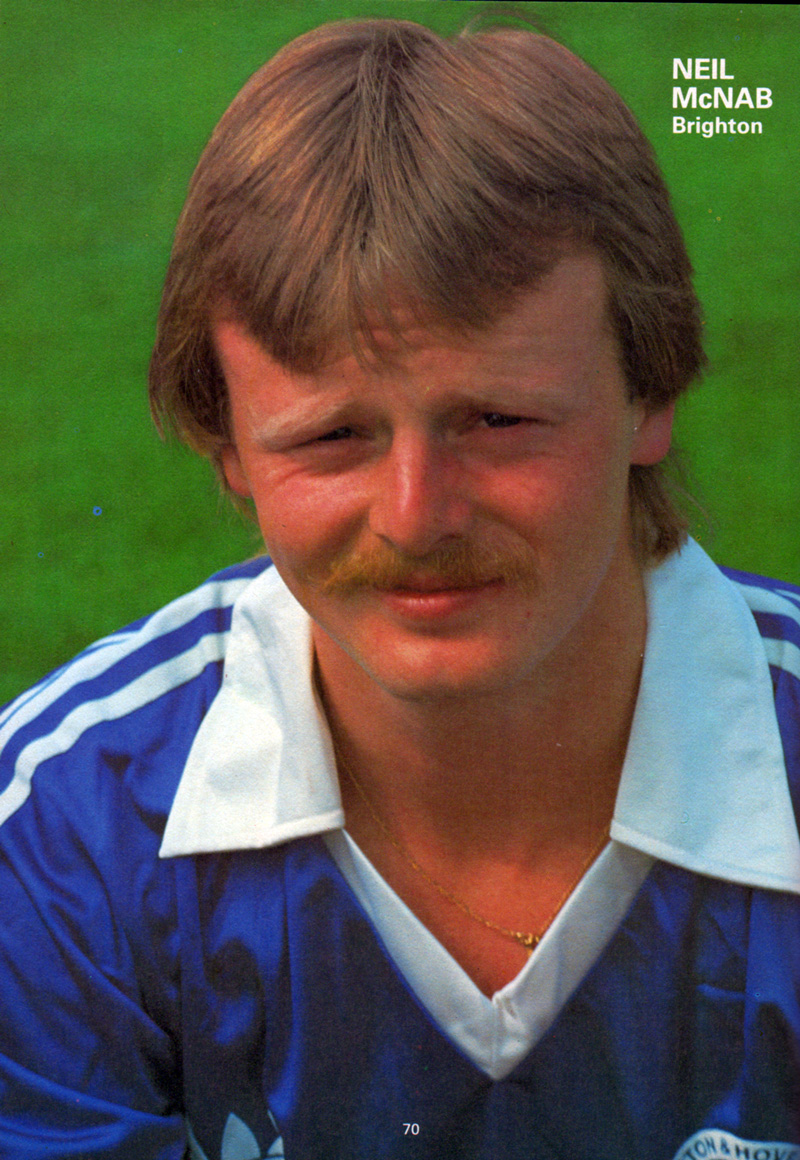
McNab aims to end his jinx

neilmcnab1983

From Shoot! magazine before Brighton’s clash with Tottenham on 31st January 1981:

Although Neil McNab will have no mixed feelings about the outcome of Spurs’ visit to the Goldstone; he warns his former colleagues that despite Brighton’s lowly League position they will certainly not prove to be easy meat.

“On our day we can beat anybody, as we’ve proved by taking both points off Ipswich and Aston Villa this season.

“Much will depend on how we play, but if we can reproduce the form we showed after Christmas I see no reason why we shouldn’t win,” McNab predicted.

But whatever the result McNab determined to end the jinx which has haunted him since he left White Hart Lane to join Boiton before moving to the South Coast.

“I’ve never played well against Spurs either for Bolton or for Brighton,” McNeb reflected.

“I can’t explain it other than to say that I know I can do well against them and feel that in the past I have probably been trying too hard to prove it.

“To me it’s always a strange feeling playing against old friends, which is probably another reason for my disappointing performances, but I’ll be treating it as another game and will be going flat out to help Brighton win.” McNab is only too aware of how vital it is for Brighton to take both points on Saturday in their struggle to avoid relegation to the Second Division.

“We showed what we could do when we played them up there in the early part of the season by getting a point, which was a good result for us as Spurs are one of the best attacking sides in the country.

“Hoddle and Ardiles were on song for them that day but Gordon Smith played very well for us.

“Our League position is very false as we’ve got far too many good players to be near the bottom, which is why I am certain that there is no way we’ll be going down,” McNab commented.

McNab is also confident that Saturday’s match will continue his club’s revival, which started when they took maximum points from their three matches over the Christmas period.

“Those results certainly made up for the times when we’ve been unlucky and lost though not playing badly.

“I think it takes up to Christmas for struggling clubs to realise they could be in a lower division the following season,” McNab said.

McNab is also certain that a Brighton victory on Saturday will help compensate the fans for the disappointment of losing to Manchester United twice in the same week earlier last month.

“Those results were very frustrating – especially as we should have won that first Cup-tie and then we played our best game against them the following week and were still beaten.

McNab commented: “While it’s nice to have a run in the Cup and continue the winning habit, I’d rather play against the elite every week rather than winning the Cup and finding myself playing in Oivision Two the next season.

“Certainly I’ve become a much better player since I left Spurs. I don’t feel that I’ve got a point to prove on Saturday, but I would love to do well against them for once as it is sure to be a hard fought game in front of a big crowd.”

While the Scottish midfielder was hoping for a change in fortune against Tottenham, it did not materialise as Brighton left the field defeated by their more illustrious counterparts:

The scoreline was part of a curious spell when the Seagulls leaked two goals in eight consecutive matches from December 1980. Unsurprisingly, five of those matches were lost.

It took until the following season, 1981/82, when McNab finally got the better of his former team mates. Helped by a considerably tightened defence, Michael Robinson’s goal secured a Seagulls victory at White Hart Lane for the very first time.

Tagged

‘Evil’ Paul Clark plays ketchup

Malcolm Poskett was criticised for not following a poor Birchenall back pass into the net

Malcolm Poskett was criticised for not following a poor Birchenall back pass into the net

It was not just any other spring Saturday morning on 21st April 1979. Brighton were within sight of promotion. Three games, including the day’s match at Luton, separated them for Division One, as reported in Football Handbook in ‘One Stop from Division One’:

At Brighton station there’s a blue and white queue filing on to the ‘Seagull Special’. There are no beer cans, no early morning drunks. These are, they claim, ‘the best behaved supporters in the land’.

Suddenly a murmur of excitement disturbs the quiet. Cat, Whizzo, Sully, Nobby, Tot, Leo… are all walking alongside them on the platform. To anyone outside the close confines of the club, these men are Chris Cattlin, Peter Ward, Peter O’Sullivan, Brian Horton, Graham Winstanley, Peter Sayer and the rest of the Brighton first team.

On board the train, some play cards, some read, some just listen to the radio and look out of the window. They’re keyed up, but confldent. At East Croydon a cluster of fans tdisplays a flurry of derisory gestures. But then this is Crystal Palace country…

At Clapham Junction Alan Mullery and assistant manager Ken Craggs come on board to ironic cheers from the team. ‘Oh no, he’s not still wearing his Marks and Spencer shoes is he?’ It’s a standing joke. Mullery wears the same suit and shoes for every match, home and away.

Outside Luton station the team stands to one side while the police escort the line of Brighton supporters which snakes its way past us. As they disappear down the road a chant of ‘Clark is E-vii’ goes up. Paul Clark is the young Brighton ball winner. When Albion played Luton earlier in the season Paul Fucillo’s leg was broken in a challenge with Clark.

lutonp1

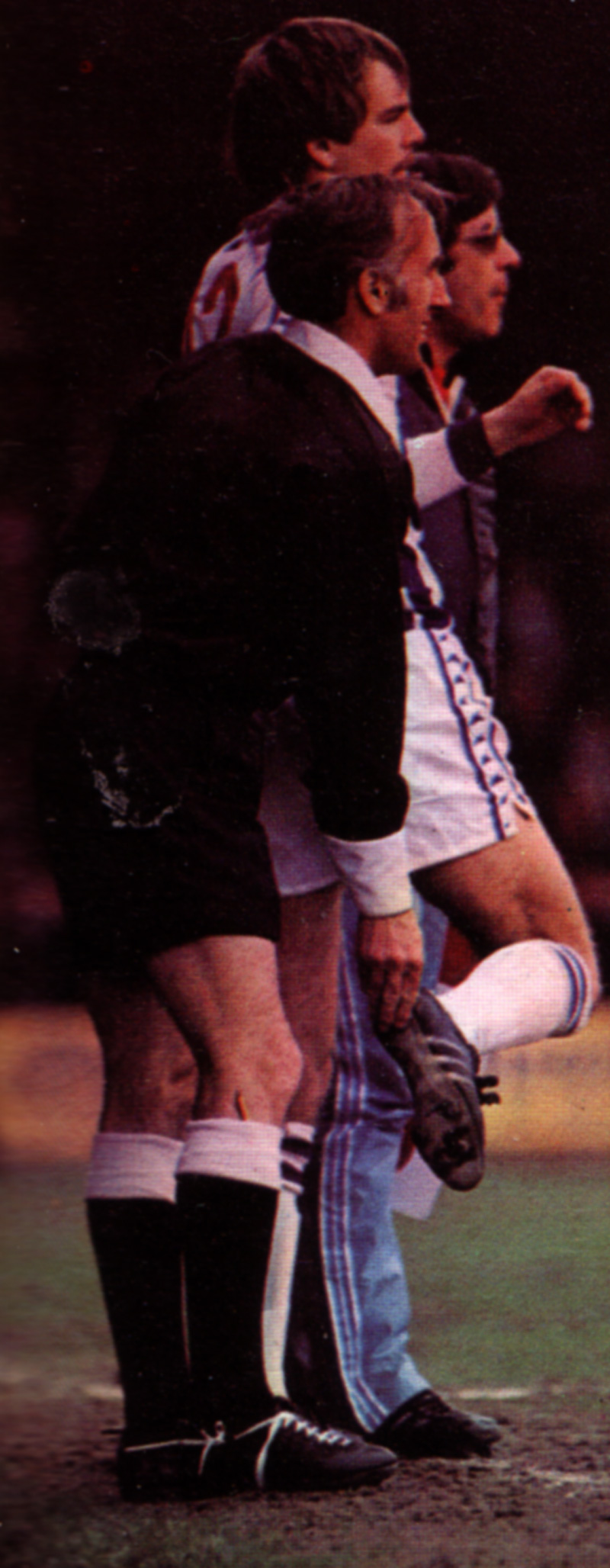
If Clarky is wondering how the Luton fans are going to react to that incident he soon finds out. As the teams are announced over the tannoy at the ground there is mass booing at the mention of his name, and when the Brighton team emerges from the tunnel a Luton fan tips tomato sauce over his head. Just what you need before a vital promotion match.

Brighton’s nerve ends are showing in the first five minutes of the game and Maybank and Sully have a shout at each other. Gary Williams hits a simple pass into touch and his captain, Horton, gives him the palms down, ‘calm down’ sign. Two old sweats, Alan Birchenall and Bob Hatton, organise the Luton side.into some promising moves.

Clark ‘the tank’ is playing in low gear, his usual aggressiveness blunted by the crowd’s reaction to the Fucillo incident. Their hysterical shrieking every time he touches the ball seems to have subdued him. There are none of his usual earth-removing runs through the middle as he looks to play safe, obvious, square passes.

Brian Horton bellows at his team and claps his hands for more effort all round. Clark slips the ball to Maybank, takes the return and almost before the boos are out of the home supporters’ mouths tonks a left-foot drive just wide of the post with the keeper struggling. Donaghy, the Luton number four, panics on finding himself directly up against Ward. He yells ‘Kirk, Kirk’ – and right-back Kirk Stephens scuttles back to help him out.

But the momentum dies. Ricky Hill shrugs off a challenge from Sully and crosses the ball from the right. Alan West shoots tamely but as goalkeeper Eric Steele bends to gather the ball Gary Williams sticks out a toe and deflects it past him for an own goal.

Gary Williams had  disappointing game - an own goal and subbed in the second half.

Gary Williams had disappointing game – an own goal and subbed in the second half.

Brighton are on the rack. At the end of 45 minutes those two promotion points look a long way away.

After three minutes of the second half the ball falls to Ward in the box. He takes his time, tees up and right foots it past the keeper, but Brighton’s first shot on target is booted off the line. Within a minute Luton are clean through at the other end. For a split second it looks all over, but Steele rushes out to get an arm to the shot and the ball loops wide of the goal for a corner. Brighton are still alive – but they’re living dangerously.

On the hour a Luton defender appears to handle in the box. Brighton players swarm round referee Clive Thomas but he ignores their appeals for a penalty. Horton stands, hands on head, unable to believe it.

Striker Poskett was brought on in the second half

Striker Poskett was brought on in the second half

Mullery throws on striker Poskett for full-back Williams. All or nothing now. Birchenall tries to calm the Luton side with a back pass towards his own goal, but it slides under the advancing keeper. Poskett follows the ball but stops running when it looks certain to dribble into the net. The Brighton players’ arms are in the air saluting the ‘goal’ as the ball drifts against the inside of an upright.

‘You’re staying down with us’
Poskett realises to his dismay that it’s not going to go in but Donaghy is fractionally quicker off the mark to beat him to the ball and knock it to safety.

Horton is booked. Nobody knows why. ‘You’re staying down with us…’ The Luton fans revel in Brighton’s despair.

Five minutes to go and the First Division is a million miles away. Brighton get a free-kick. Maybank has a word with Horton and wanders away. Horton’s pass finds him on the left side of the penalty area. He checks, holds, picks his spot and drives it into the right-hand corner of the net.

The crowd sang 'Good Old Sussex by the Sea' when Teddy Maybank equalised.

The crowd sang ‘Good Old Sussex by the Sea’ when Teddy Maybank equalised.

Horton clenches his fists and the veins stand out on his neck as he screams for that last little bit from his team. Gerry Ryan risks the back of his legs by taking the ball to the corner flag for a classic piece of time wasting, but as Luton boot the ball out of the ground for the third time it’s clear that they’ll settle for the draw.

At the final whistle the players scurry down the tunnel. Relief floods through the dressing-room.

‘Well done, Teddy boy. The King.’ Chris Cattlin applauds Maybank’s goal. ‘I told you never to fluster, my son,’ Maybank is nonchalant. Then: ‘I caught it really sweet. I haven’t hit one of them since I was 17.’

Suddenly the hollering dies and a hush descends as the other results come out of the tranny. Mullery stands arms folded and straight-faced. Hoots and jeers greet the results of their promotion rivals, but Sunderland and Stoke have done well. The pressure hasn’t eased.

Now for the post mortems. Poskett’s miss: ‘He should’ve followed that ball in.’ Mullery is critical. The turned-down penalty: ‘Definite penalty. The ref was looking at it.’ Horton is certain.

‘What did he book you for Nob?’ Lawrenson asks him.

‘Facial expression.’

‘No.’

‘Yeah. Facial expression,’ Horton assures him.

‘Was it one of your special looks Nob?’ ‘Yeah, show us.’ The rest of the side request a Horton grimace. He obliges.

‘Good job it wasn’t Tot, he’d have been sent off.’

‘Tot’ Winstanley smiles a toothless smile.

Not a pretty sight…

Silent reflection
As the train draws away from Luton the blinds are pulled down so that if stones are thrown at the windows by rival fans the glass will not spray all over the place. The mood is quiet on the journey back. Not the abject gloom which would have accompanied a defeat but silent reflection on the fact that in a 42-match season the dividing line between success and failure can be almost nonexistent. Last year they missed promotion by goal difference. Will today’s draw be enough at the final reckon up? Surely fate would not be so cruel a second time round.

It wasn’t.

Back on track... manager Mullery and skipper Horton share a joke on the way home.

Back on track… manager Mullery and skipper Horton share a joke on the way home.

With this result, Brighton dropped down to second place, one point behind Stoke City on 53 points. Quite remarkably, the Albion had amassed the same points total, after forty matches in 1977/78. What an amazing level of consistency displayed by Mullery’s men. Their next fixtures were Blackburn at home and then Newcastle away. No one knew it at the time but a win and a draw would see them through…

Tagged , , , ,

Terry Connor’s own goal

Terry Connor was undoubtedly a firm favourite with Brighton supporters:

terryconnor1985-86

Signed from Leeds United in March 1983, as a direct swop with Andy Ritchie, the powerful centre-forward struggled to find his range at first. Nevertheless, he got the winner against Coventry on 23rd April 1983, Brighton’s last ever victory in the top flight.

Over the following four seasons in Division Two, Connor blossomed at the Albion, hitting 50 goals in 146 League appearances. The strikes mark him out in history as Albion’s most prolific striker in the second tier. However, I doubt this bustling forward scored many headers as spectacular as this one past Perry Digweed in Brighton’s match against Norwich at Carrow Road in April 1986:

The clip is featured in the first edition of Danny Baker’s ‘Own Goals and Gaffs’ VHS tapes.

Tagged

The loner who dared to speak his mind

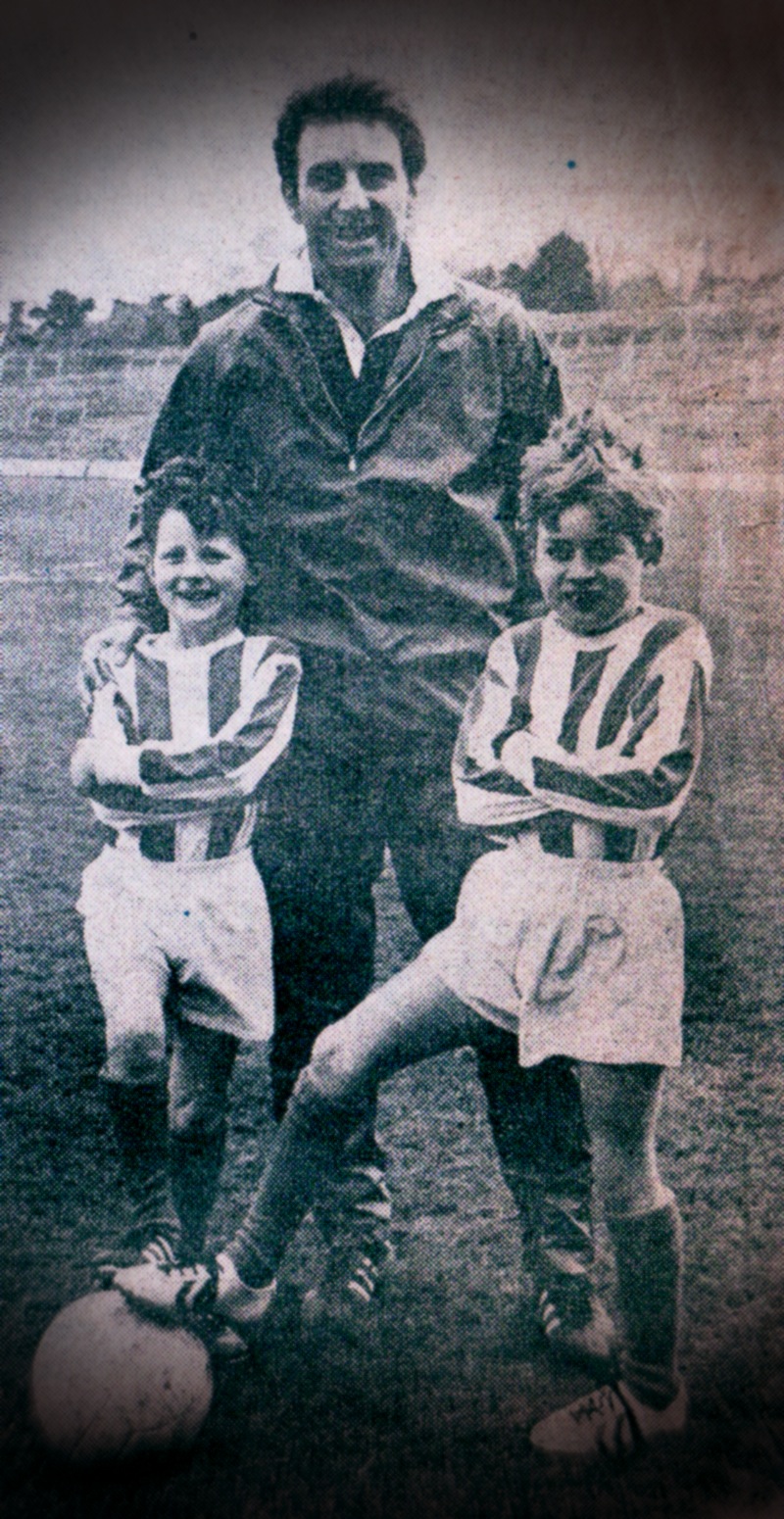
Pat Saward in relaxed mood at the Goldstone with sons Leonard and Sean

Pat Saward in relaxed mood at the Goldstone with sons Leonard and Sean

In the Evening Argus souvenir pull-out from May 6th 1972, John Vinicombe put together this portrayal of manager Pat Saward in his hour of triumph, with his low-budget Brighton side having clinched promotion to Division Two:

Pat Saward has been Albion’s manager for a year and ten months. In what seems, an astonishingly short time, he has not only achieved promotion, but created an entirely new image for the club.

He has torn down the old, and shown a refreshing boldness in tackling the many problems that existed at the Goldstone on his arrival in June, 1970.

He succeeded Freddie Goodwin, a deep-thinking and widely respected manager who went on to make his mark with Birmingham City. At the time Albion’s board were utterly deflated.

They could not see another filling Goodwin’s shoes so capably and, indeed, the outlook was grim. When eventually the short list was whittled down to two, the final choice lay between Seward and Tony Waiters, the former Blackpool and England goalkeeper.

The board were deeply impressed With Saward’s tremendous enthusiasm, although he had not had previous managerial experience, Nor had Waiters.

They decided to give Saward the job.

He turned out a complete contrast to his predecessor. Goodwin’s phlegmatic approach was one thiing; the flamboyance of the new man quite another. In short. Saward took some getting used to… there were those who thought him brash, and far too outspoken. Every day, it seemed, he stuck his neck out. Albion had always been used to managers with the velvet glove touch, and suddenly they had a man whose ideas and statements seemed outrageous.

But Saward was noticed, and gradually people listened. And, most valuable of all, he proved a fast learner, and a good listener. He realised straight away that he had to make people think. As he said at the time: “I speak my mind, always. Too many people fear ridicule, and making a wrong decision.”

Saward was then 39, but looking young enough to be mistaken for one of his own players. He was still thinking in terms of the Division One setup he had left at Coventry. It took time to get the Goldstone in his sights, but once he did, the show got on the road.

The firs€t season saw the team skirt dangerously close to relegation only to pull clear with a brave late burst. Saward, with practically no money, made loan coups in the shape of Bert Murray and Wiliie Irvine.

He went to the public for money, cap in hand. They were cautious at first, and then warmed to the man who told them: “This is your club as much as mine. Help make it great.”

Saward’s fundamental five points upon which he bases his philosophy is: projection, appeal, experience, dedication, and an elemem of the unconventional. He certainly has the personality to win friends and influence people. There was no doubt about his experience; having captained Astan Villa and Eire, and played for Millwall and Huddersfield. He was a skilful wing half, as they called them in those days. There is no brogue in his speech; elocution lessons long ago saw to that.

As for public appearances, a stint as a male fashion model taught him how to make an entrance. His chief task was to win over the players, and this he did by making them feel important. Nothing was too much for them.

Soon they had their own car park, and a room where they could meet and relax. He spoke earnestly to them about pride of profession. All the time it was lift, lift, lift – players were encouraged to believe more and more in themselves, and discard the Third Division tag.

Above all, Saward wanted his team acting like real professionals. He listened attentively to their ideas on appearance and pre-match build-up. Everything was geared to getting thor minds right.

Since Saward took over, he has written a weekly article in the Evening Argus. At first we received letters from supporters who violently disagreed With his views. Then the criticisms tailed off, and now the column is widely acclaimed. It is one way the manager can reach the public, and of course now, in his hour of triumph, there is no more popular figure in Brighton and Hove.

Throughout, Saward has stressed the need for his players to display strength of charaoter. But he never talks about the stress and strain that his job imposes.

While this activity or that interest might be good for motivating players Saward will not let on about the driving force that keeps him cool, calm and collected in the hot seat.

He loves fresh air, particularly the ozone that gushes into his bungalow window every morning on Shoreham Beach. Fitness means so much to him.

He plays squash and golf, but is seldom so happy as being on or close to the Sea.

Like most men who must make vital decisions, Saward is a loner… and he wouldn’t have it any other way.

Tagged