Yearly Archives: 2013

Brian Clough signs on at the Goldstone

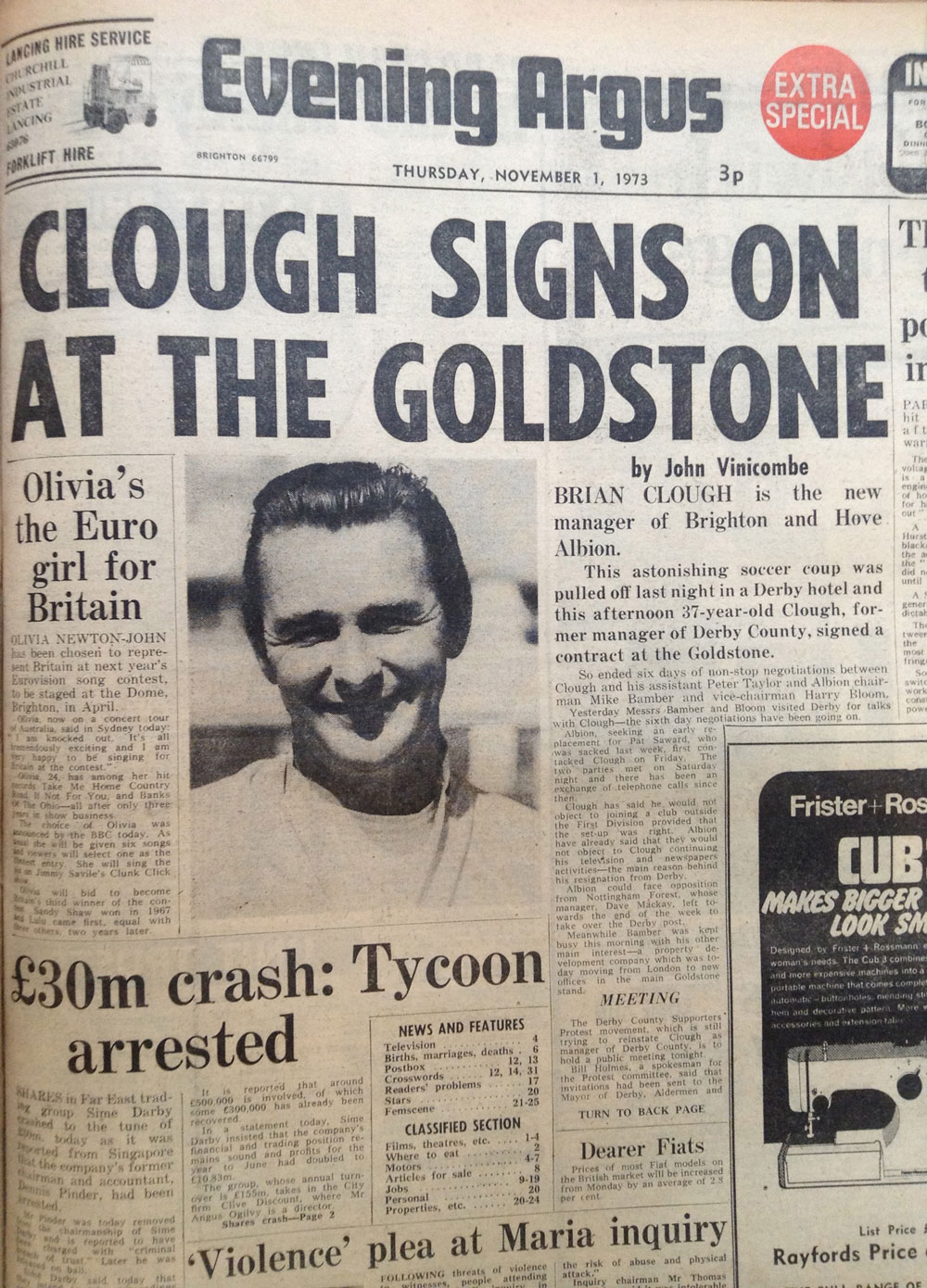
Here is the Evening Argus front page from exactly forty years ago, on 1st November 1973:

cloughsigns

Penning by far the biggest story of his journalist career, John Vinicombe wrote:

Brian Clough is the new manager of Brighton and Hove Albion.

This astonishing soccer coup was pulled off last night in a Derby hotel and this afternoon 37-year-old Clough, former manager of Derby County, signed a contract at the Goldstone.

So ended six days of non-stop negotiations between Clough and his assistant Peter Taylor and Albion chairman Mike Bamber and vice-chairman Harry Bloom.

Yesterday Messrs Bamber and Bloom visited Derby for talks with Clough – the sixth day negotiations have been going on.

Albion, seeking an early replacement for Pat Saward, who was sacked last week, first contacted Clough on Friday. The two parties met on Saturday night and there has been an exchange of telephone calls since then.

Clough has said he would not object to joining a club outside the First Division provided that the set-up was right. Albion have already said that they would not object to Clough continuing his television and newspaper activities – the main reason behind his resignation from Derby.

Albion could face opposition from Nottingham Forest, whose manager, Dave Mackay, left towards the end of the week to take over the Derby post.

Meanwhile, Bamber was kept busy this morning with his other main interest – a property development company which was today moving from London to new offices in the main Goldstone stand.

Tagged ,

Maybank: ‘Peter… one of the reasons I went to Brighton’

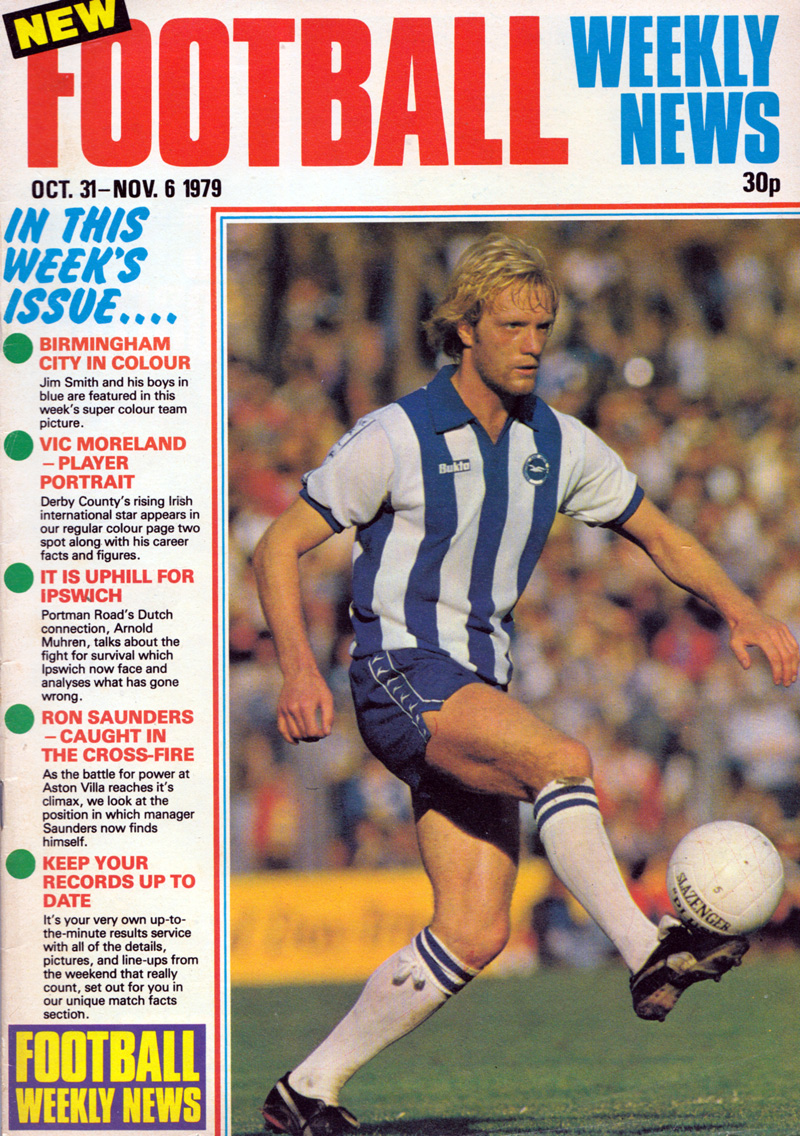
footballweeklynews

As the 1978/79 season approached, Teddy Maybank had high hopes of forming a deadly strike force with Peter Ward:

A partnership that has got fantastic potential ~ but hasn’t really fulfilled any of it as yet. That’s how I’d sum up our partnership at the end of last season.

I can’t deny it’s been a bad time for me since I went to Brighton. I cost them £238,000 from Fulham and I suppose people expected miracles for that sort of cash. But it took me longer to settle than I anticipated and then I got a bad knee injury, which put me back even further.

About the same time, Peter was going through a rare lean spell and •even dropped into the reserves for a couple of games to try and find his goal-touch once again.

It all meant our partnership, which had looked so promising, wasn’t getting off the ground. But I can promise the Brighton fans – we’ll get It together next season.

What we can do together is unlimited and I’m vary excited about the potential.

I will play as the Brighton target man with Peter feeding off me. But I’ll try and use my skill on the ground, too, so I take a bit of attention sway from Peter and give him some room to score goals.

I can’t waIt to start fresh next season. Peter has got tremendous skill and is a natural goalscorer; you can see that the way he nips in to score goals all the time. His ability, and the desire to play alongside him, was one of the main reasons why I went to Brighton in the first place.

I’d always fancied playing upfront wIth him after seeing him score so often earlier in the season. I jumped at the chance to join but I’ve had to put up with a lot of frustrations and disappointments, mainly through injury and my poor form. But I still believe in my own ability ~ make no mistake about that.

Peter Ward can be a world beater. He’s got great skill on the floor and we were Just beginning to show what we could do together, when I got my knee injury. That wrecked it but I’ll be back.

My strength and his skill, speed and ability to snap up any half chances can really do things for Brighton next season.

After Albion fired two blanks in their opening two fixtures, against Wrexham and Cambridge, a purple patch of ten goals in the eight matches between Maybank and Ward suggested the partnership was finally beginning to gel.

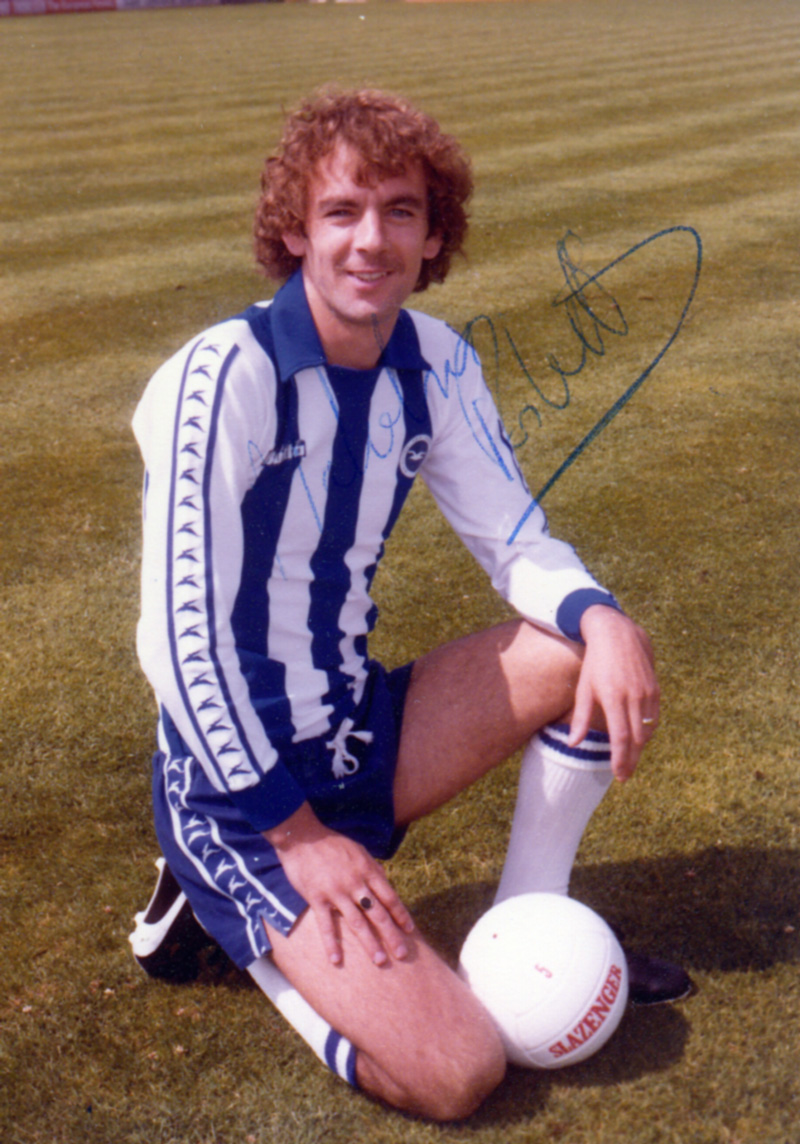
peterward12

With Maybank bearing the brunt of the physical battle and Ward feeding off the scraps, the duo were able to find the way to goal, despite the former Fulham man not being blessed with the same touch and technique and ‘Magic’ not always being as selfless in the partnership. After a wonderful team performance against Burnley at Turf Moor in the League Cup, when Maybank got one and Ward grabbed two, including a rare one with his head, the goals suddenly dried up.

While Ward showed his goal touch against Nottingham Forest in mid-December, it took until a Boxing Day hat-trick for Maybank to hit the net again. By that point, it appeared to Mullery that a Maybank-Poskett (below) partnership was a better bet during the winter months.

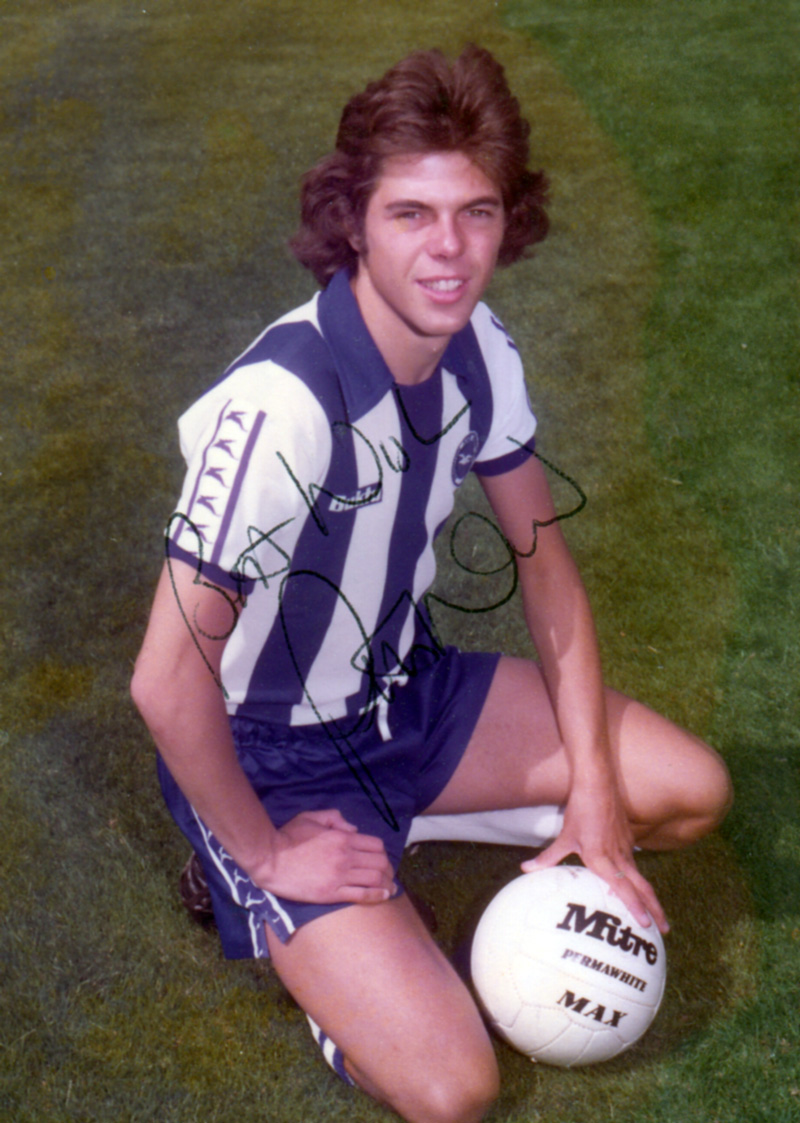
malcolmposkett5

Tagged , ,

Happiness in the bath at Newcastle, 1983

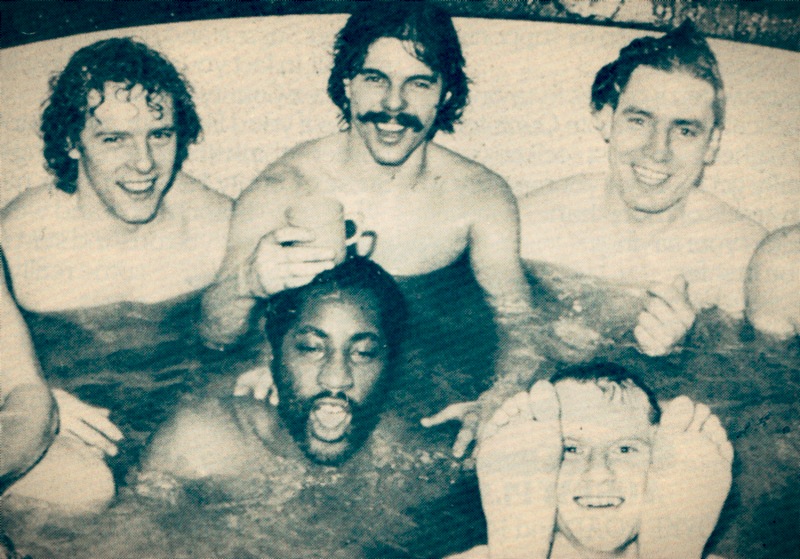
Neil Smillie, Peter Ward, Steve Gatting, Chris Ramsey, and especially that japester Andy Ritchie (!), are all smiles following the surprise replay victory at St James’ Park on 6th January 1983. The result sets Albion’s historic FA Cup run on its way…

newcastleaway1983a

Tagged , , , ,

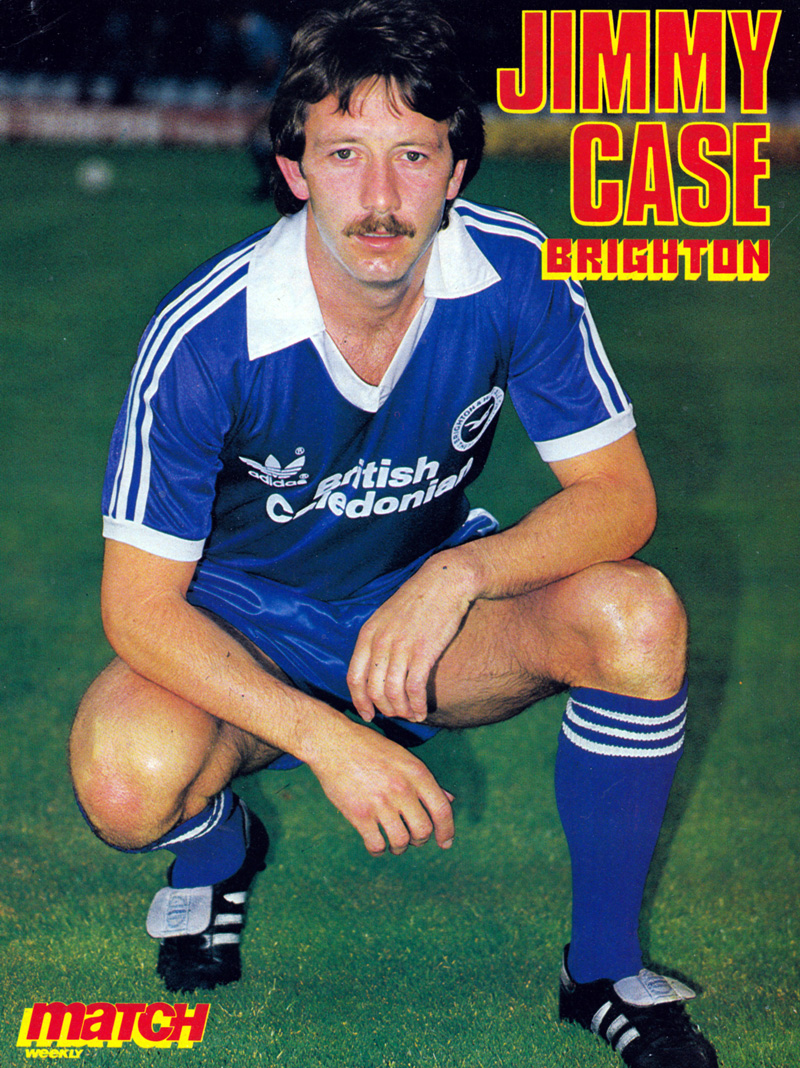
‘Smashing’ Brighton suits Jimmy Case

jimmycase16

A nice magazine interview with Jimmy Case at the start of the 1981/82 season:

When a Scouser regretfully shakes the Liverpool dust from his feet, life, at least in the football sense, is never the same again.

Jimmy Case, a Reds favourite since he was s starry-eyed 18-year-old from Wooiton, has, however, made a rapid conversion to Brighton and Hove Albion, which lies snugly in the soft underbelly of the South.

If, say, a year ago Case had been asked where he would be playing at the start of the 1981-82 season, then Brighton would have been the unlikeliest answer.

Little did he know, but his destiny was wrapped-up in the ambitions of Mark Lawrenson, the Brighton and Eire central defender.

When Lawrenson told Brighton he wanted, after four years, to join a club with a realistic chance of winning a major trophy, there was no way the Goldstone could hold him.

At first it was Manchester United who showed a lively interest, then Arsenal and finally Bob Paisley set the wheels in motion that took Lawrenson to Anfield for £900,000. Part of the deal allowing Lawrenson to leave was that Brighton would have Case, 27, for £350,000.

The nearest Case had previously been to Brighton was a holiday in Hastings with his parents. Apart from a couple of visits with Liverpool, Brighton might just have been a vague spot on the map. Yet the welcome he received quickly warmed Case’s heart.

Breezy Brighton also delighted Lana, Case’s wife. Both Jimmy and •Lana were born and bred in Woolton, and they have a daughter, Emma, of five months.

It is a long way from Liverpool where the Case’s look around the smart furnished bungalow that Brighton have made available.

Case didn’t fancy hotel living, and quickly asked his wife to join him. So much for the tearsway image.

“Brighton and the area is ideal for us,” he said. “The place itself is smashing, especially all the antique shops.”

Case, after 186 League games for Liverpool and 23 goals in the Championship, is only too well aware that he has joined a side that has struggled for the first two seasons to stay in the First Division.

“If they look like going down this time, I’m not one to say that I’ll be off. I’ll just keep fighting. I shall commit myself fully to what I am contracted to do.” Mike Bailey has told Case that he wants him to get into the box more than he did at Liverpool.

“Nell McNab makes s lot of runs similar to Terry McDermott, and that will help me. I’ll be looking for a few goals. I had a good season in 1977, and I managed to get some vital goals. It’s high time I did the same again.”

Brighton players were almost total strangers when Case arrived in time to play in three pre-season friendlies. “I remembered Graham Moseley, the goalkeeper, from the England Under-23 squad in Hungary a while ago, end I had spoken to McNeb before and met Mike Robinson briefly at Manchester City,

“I well remember my last appearance at Brighton. That was at right-beck and Liverpool were disorganised at the back around that time.

“My favourite position is wide on the right, and there you can receive the ball easily with your back to the touch-line and then be able to turn. I like to be busy.”

And he admitted: “I thought I would be at Liverpool for my entire career. I had two years as a semi-pro and signed full time at 20. They asked me to sign at 18, but I turned them down because I wanted to finish my apprenticeship. I’ve had six marvellous years at Liverpool with medals every year; three in one year, in fact.

“‘1 suppose in my heart of hearts I knew eventually I would have to move, but I didn’t think it would be so soon.

“If I had gone to a Midlands club, or Manchester, or Leeds, it would have meant commuting by motorway, and being behind the wheel of a car for long periods is the easiest way to pull muscles.

“If you must move, then a long distance is preferable from the point of view of fitness. Travelling kills you up and down the motorways.”

Life at Brighton may lack the bustling pace of Merseyside and there is not such a committed following for the game, but it will suit Jimmy Case, who, when not playing football, likes to shoot and fish. “I reckon this could become my kind of place you know. And all I really care about now is keeping Brighton in the First Division.”

Although Brighton reached thirteenth position in Division One in 1981/82, their highest League position, Case’s form was patchy, rarely hitting the heights of his time at Anfield. For all his flaws as a League manager, it took the reign of Jimmy Melia for Case to truly sparkle, famously scoring in each round of the FA Cup bar one on the round to Wembley in 1983.

After Brighton were relegated, the ex-Liverpool hard man kept his word and continued to battle for the club in the Second Division, helping towards to a tilt at promotion in 1984/85. At a talk I went to last week given by Chris Cattlin, Melia’s successor said there was a specific reason why he felt he had to sell Case in March 1985, but out of respect to Jimmy, he couldn’t disclose it at the meeting…

Tagged

Brighton rock Wrexham

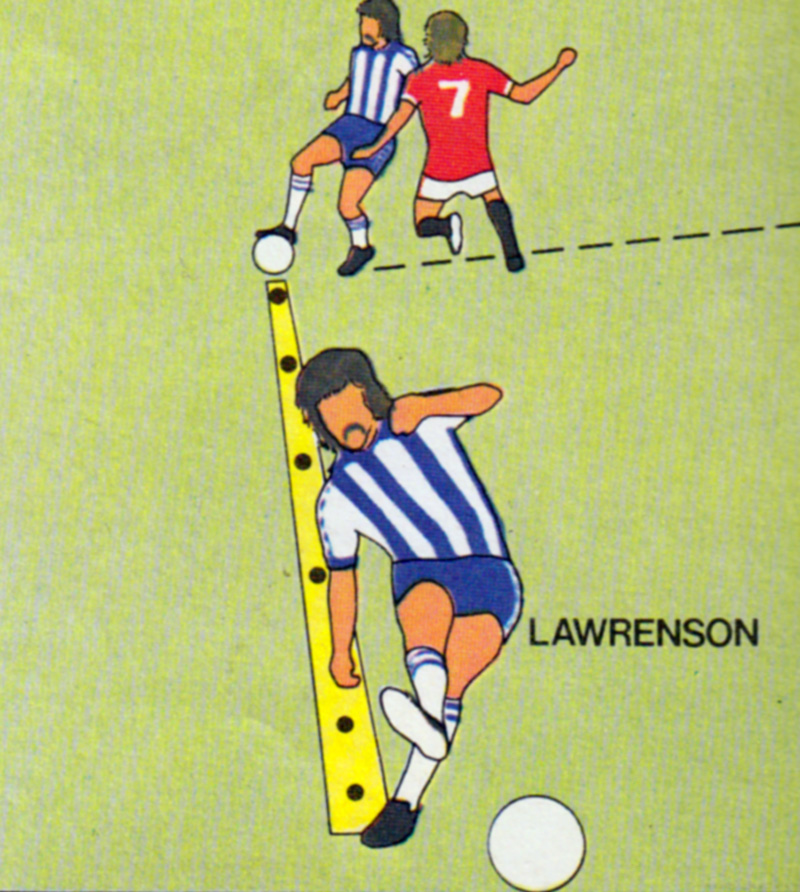
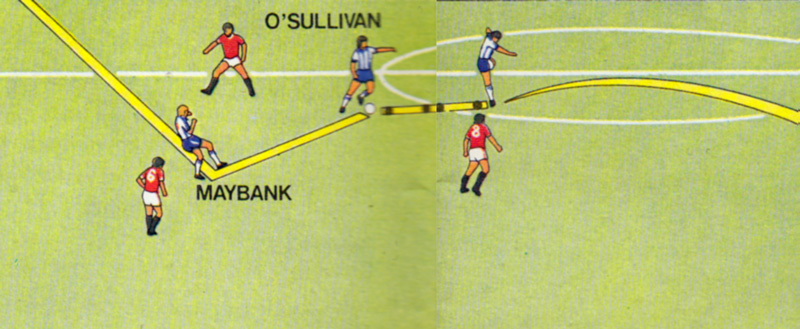
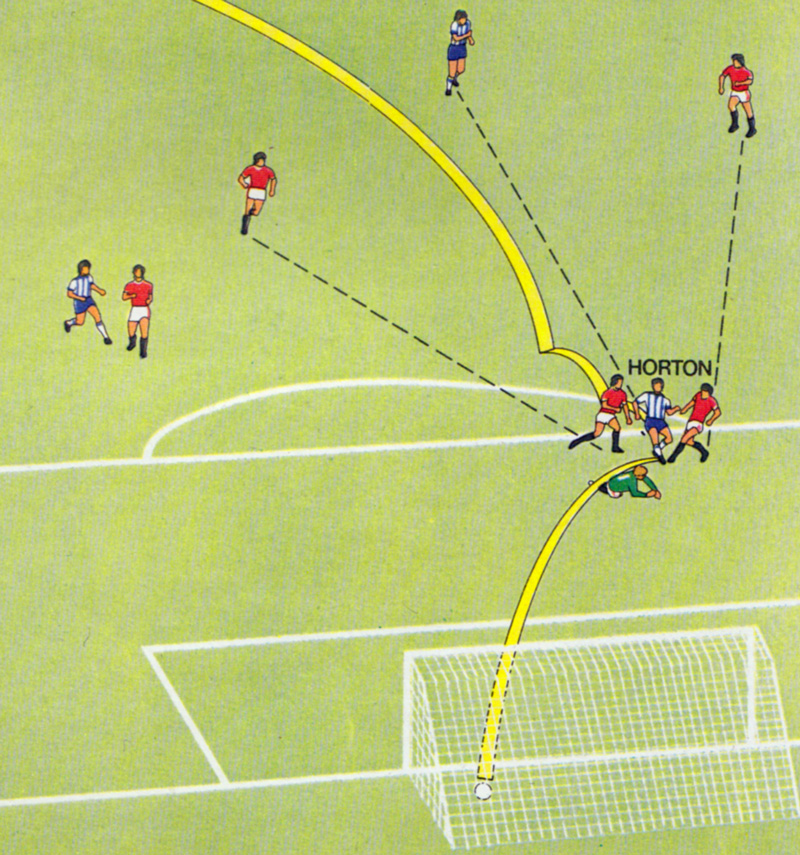
Football Handbook (part 21) was glowing in praise of Albion’s play in victory over Wrexham on 11th November 1978, a result that moved the club to sixth position in the Second Division. So much so, the partwork took the time to charmingly illustrate the decisive strike:

Brighton owe much of their success in recent seasons to their captain and midfield anchor-man Brian Horton.

The former Port Vale half-back played an important part in the Seagulls’ win over Wrexham in November, culminating with a well-taken winning goal.

brightonrockwrexham1

Mark Lawrenson, another key figure in Brighton’s promotion push, started the move when he intercepted a Mel Sutton pass intended for Bobby Shinton deep on the right of Albion’s defence.

brightonrockwrexham2

Lawrenson knocked the ball forward to Teddy Maybank just inside his own half, and Maybank laid it off first time to Peter O’Sullivan, who hit a long, raking pass for Horton to run on to.

brightonrockwrexham3

Two Wrexham defenders and keeper Dai Davies converged . . . but Horton – known as ‘Nobby’ to his team-mates – just got there first, knocking the ball with the outside of his right foot over Davies. It gave Brighton a 2-1 lead –a lead they preserved until the final whistle – and two more vital points in the close fought Second Division promotion race.

Graham Taylor’s analysis was this:

Certainly Brighton look ready for promotion – if this goal is anything to go by.

All four players involved did extremely well. It was one of those goals where everything comes right, all the training is suddenly worthwhile.

And it’s a tremendous boost to a side when a goal like this goes in. You can see them looking at each other and saying: ‘Look at that. That’s how good we are.’

I liked the way Lawrenson won the ball and was confident enough to turn with it and hold it.

Every back four needs at least one player like that, who’s quick to cover and can use the ball. And O’Sullivan did well, not only seeing the gap in the Wrexham defence but being quick and accurate enough to expose it.

Horton saw it too, of course. He found himself in yards of space with a clear run at goal. You could see him signalling for the ball – and probably he couldn’t believe his luck…

Because you’ve got to say that the defence wasn’t entirely blameless. You can forgive them for not picking up Horton immediately. After all, an attack had just broken down… and Horton was probably about on the halfway line when it happened. He didn’t present any immediate danger…

Wrexham’s first priority was to sort themselves out at the back. Instead they left that great gap-between Joey Jones and Gareth Davis, wasn’t it? – which Brighton used so well. O’Sullivan’s through ball was perfect… and there was nothing wrong with Horton’s finishing; he was very cool, even under considerable pressure. He kept his head, got to the ball first, waited for the right moment, then stuck it away well.

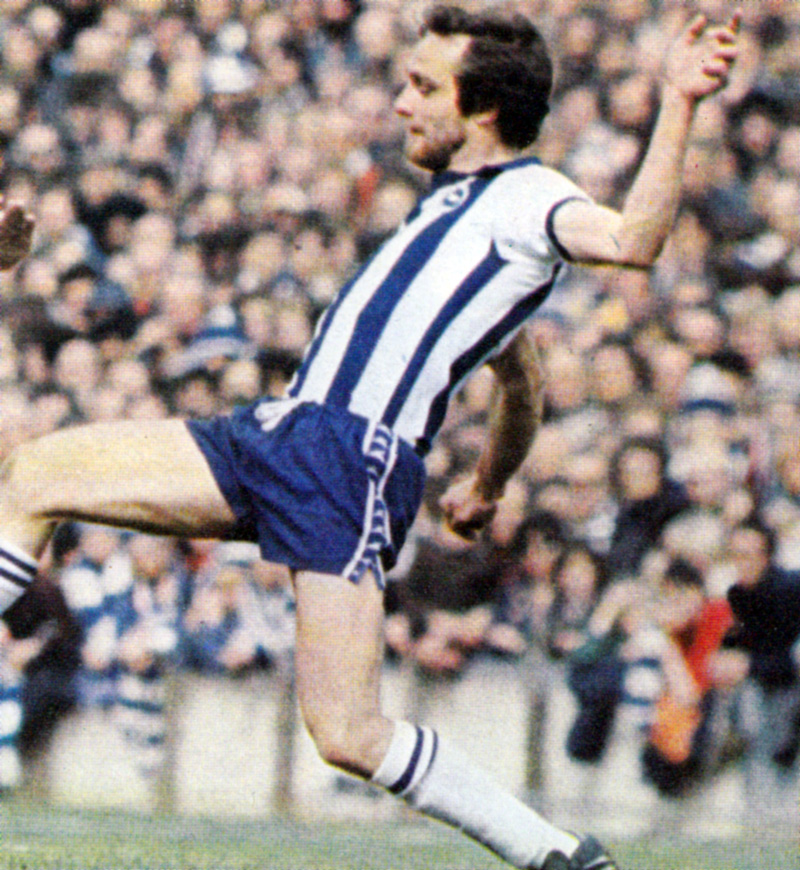
brianhorton6

Tagged

Rare photo: Hula hooping at the Goldstone

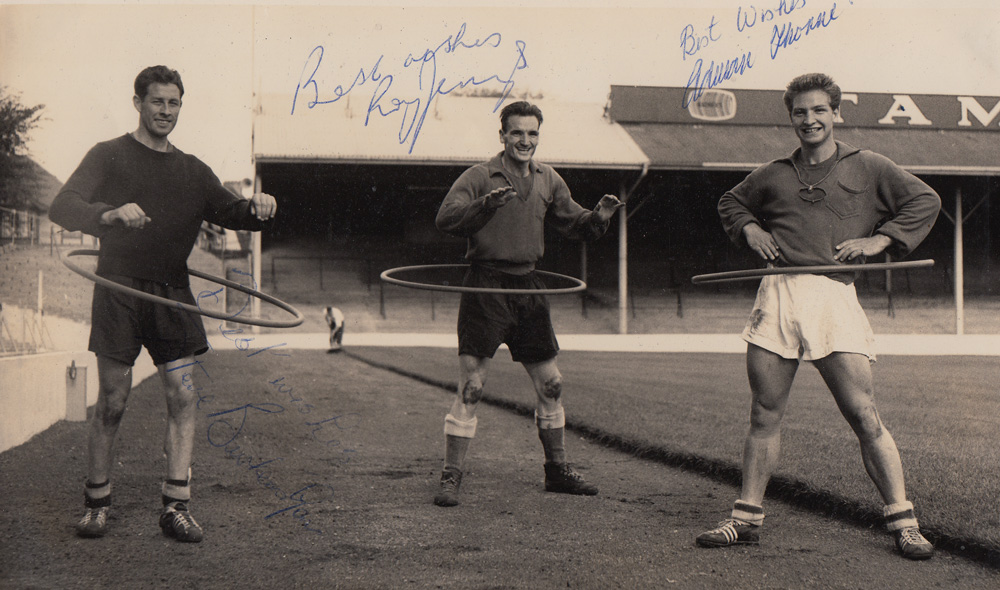
Here are Steve Burtenshaw, Roy Jennings and Adrian Thorne all getting fit at the Goldstone Ground:

hulahooping

Portslade-born, super-hoopin’ Steve Burtenshaw enjoyed a sixteen year career at Brighton as a wing-half from 1951 to 1964, being granted a testimonial match in November 1963. He became assistant coach the following year, before beginning a long association with Arsenal. He also had spells as coach at QPR and Everton.

In the centre, hip-gyratin’ Roy Jennings was an Albion colleague for almost all of that period, signing for the club in May 1952 before being released on a free transfer to Crawley at the end of the 1963/64 campaign. Signed initially as a full-back, Jennings’ conversion in a stopper centre-half in Christmas 1958 did so much to preserve the club’s hard-won Second Division status.

As for sharp-shootin’ Adrian Thorne, it was the five goals of this Hove lad in the thrashing of Watford in April 1958 that made sure Albion were to enter the Second Division for the first time. Making his debut in the January of the promotion year, Thorne made 84 appearances for the Albion, scoring 44 goals before putting in a transfer request and leaving for Plymouth Argyle in June 1961.

Tagged , ,

The inner game of Freddie Goodwin

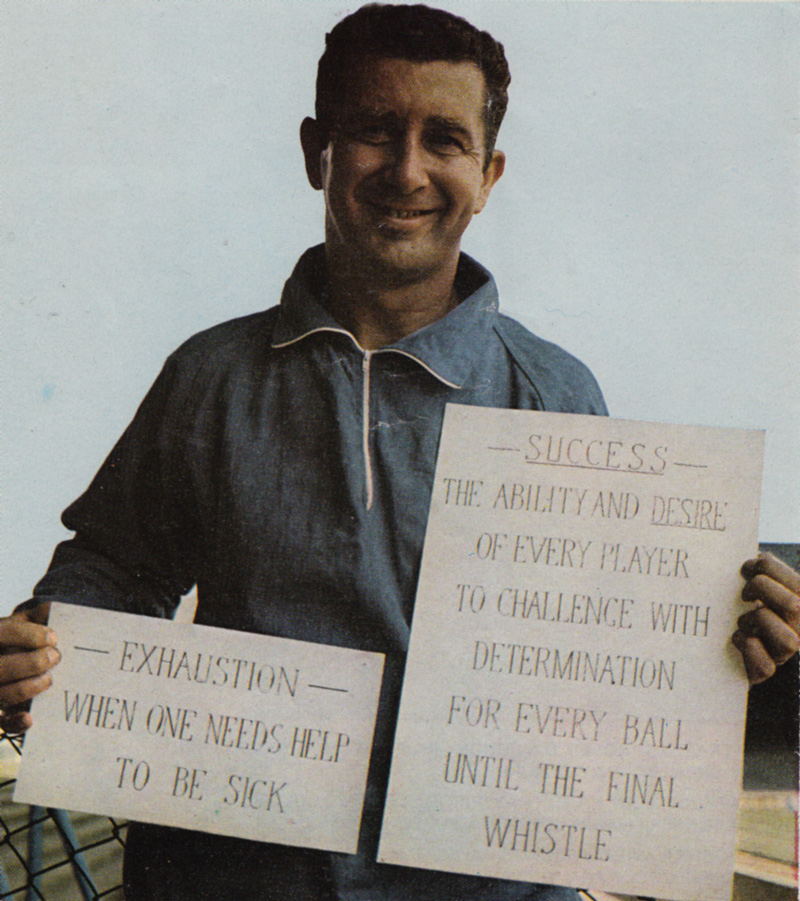
freddiegoodwin2a

Years ahead of his time? Or patronising messages from a cod pychologist?

From Football League Review in the 1969/70 season, with photo by Peter Robinson:

Brighton manager Freddie Goodwin reckons he has part of the answer to easing pre-match dressing room tensions… a dose of philosophy and a touch of psychology.

For the walls of the home dressing room at the Goldstone Ground are decorated with the thoughts of manager Fred – philosophical titbits for his players.

Examples: “It’s tough at the top – it’s hell anywhere else.” … “We supply everything here except guts.” … “Exhaustion – when one needs help to be sick.”

Explains the young Brighton boss: “It’s an idea I picked up in the States. Try to condition players to think in depth about the game and life in general, and it helps everyone.”

The former Manchester United and Leeds defender who took over the Brighton job after a spell in America has taken a night-school course in psychology. “I am sure it helps in a job like this when you are dealing with people of different temperaments,” he says.

Does philosophy in the dressing room help results on the field? Says Fred: “It may just be coincidence but after I had put up the sayings on the wall last January, the team hit a good patch of form.”

So teams visiting Brighton this season beware.., you’ll be facing 11 players with this thought in mind: “Success for the club adds up to better money for everyone.”

Whatever the positive effects the sloganeering may have provided, they must have wore off by the time Albion’s promotion push from Division Three hit the rocks in late March 1970. By mid-April, it was exhausted. To note one of the messages in Goodwin’s hand, I’m not sure anyone needed help to be sick then.

Tagged

Smoke bombs in draw with Palace

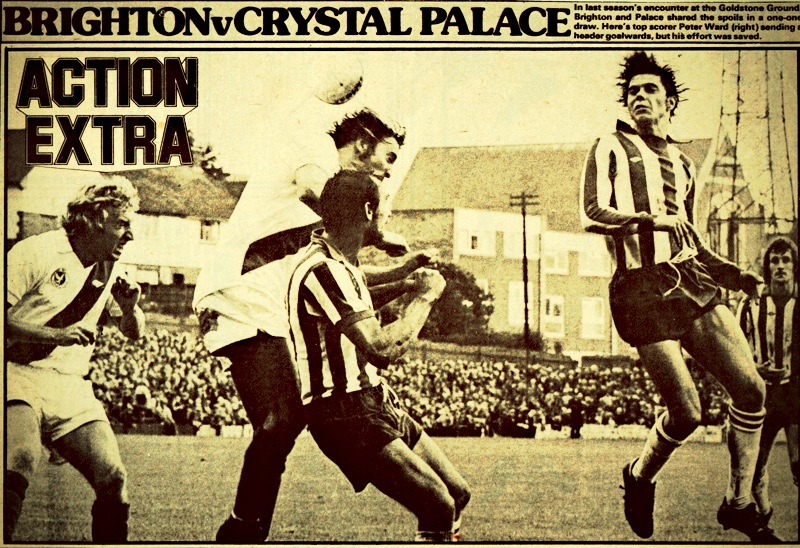
In October 1976, Brighton drew 1-1 with Crystal Palace in Division Three at the Goldstone. It was the first of Albion’s first five clashes with the Eagles that season. This match report is from John Pyke:

palace1976b

Brighton manager Alan Mullery was far from happy after his high-flying team let a point slip to old rivals Palace.

“We should have won: we had a lot more chances” he said.

And he blamed Albion’s lost impetus on two smoke bombs thrown onto the pitch in the second half.

They held up play for a couple of minutes – “and the game went dead after that,” complained Mullery.

But a crowd of 27,059 obviously enjoyed a duel that was a credit to the Third Division.

Brighton striker Peter Ward, rapidly becoming one of the hottest properties in the lower divisions, was a constant menace to Palace.

This $4,000 bargain from Burton Albion has plenty of skill and is always involved.

Brighton had by far the better half with Ian Mellor, Brian Horton and Ward prominent in their flowing movements. But they missed the contructive skills of the injured Welsh international Peter O’Sullivan.

Palace ‘keeper Paul Hammond made several fine saves and one real sizzler – when he shot rund the post.

It must have been a bit of a shock to Albion when Palace took the lead in the first minute of the second half. Dave Swindlehurst’s pass set up the chance and Jim Cannon shot hard and low past Peter Grummitt in the Brighton goal.

But it brought swift response from Brighton and six minutes later they were level from a move that started with a Dennis Burnett free-kick to Harry Wilson.

Wilson’s centre was flicked on by the busy Ward, and ‘Keeper Hammond could only push the ball into the path of defender Ken Sansom, who put it into his own net.

It was bad luck for Sansom who had defended strongly.

Palace played well as a team, and manager Terry Venables was well satisfied with the point.

Barry Silkman, drafted in to replace the now departed Peter Taylor, did not get much chance to shine. He was injured in the second half and replaced by Phil Holder.

Mullery could not help joking afterwards when he said: “I wonder if those smoke bombs were a move by Venners!”

But the last laugh was nearly on Brighton. In the closing stages Swindlehurst broke through and Grummitt had to produce the save of the day to tip his fierce drive over the bar.

Brighton – Grummitt; Tiler, Wilson, Horton, Rollings, Cross, Fell, Ward, Mellor, Piper, Burnett. Sub: Cattlin.

Palace – Hammond; Wall, Sansom, Connon, Jump, Evans, Chatterton, Hinshelwood, Perrin, Swindlehurst, Silkman. Sub: Holder.

Tagged , , ,

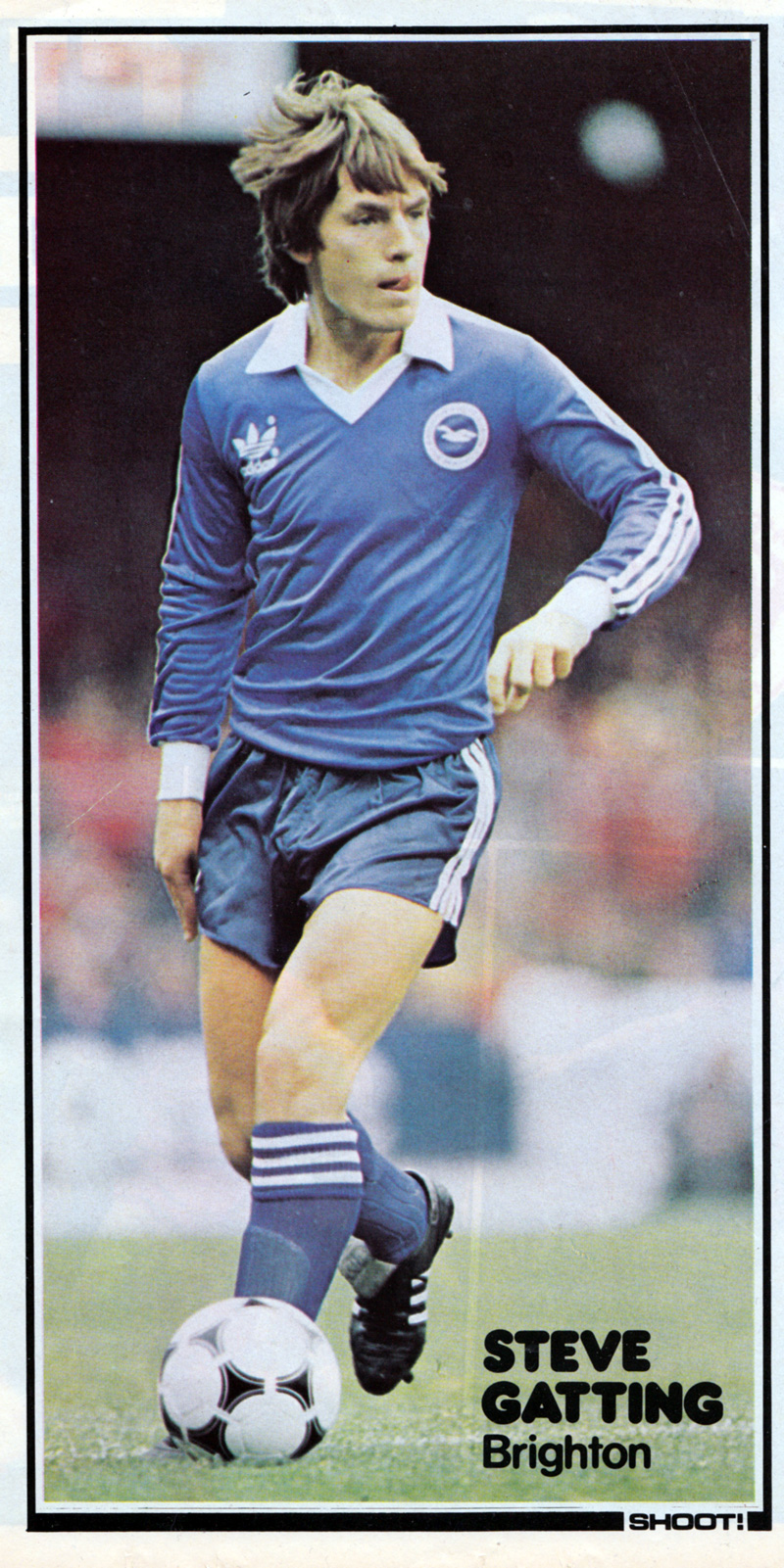
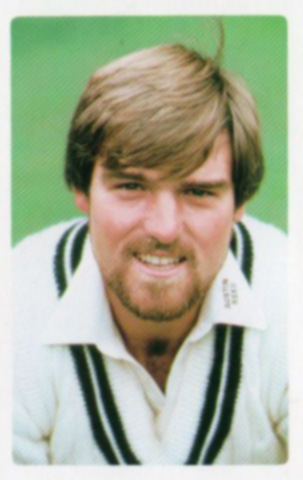
The Gattings at play

stevegatting5

An article from The Sun newspaper in the 1981/82 season:

If Mrs Vera Gatting had assessed her sons correctly, young Steve would be sweating it out in India and mighty Mike would be the talk of the Goldstone Ground.

The mother of England’s muscular middle order batsman and Brighton’s emerging First Division defender had no doubts that both would be sporting successes.

She said: ‘It’s just that Mike was always the aggressive one and still is, for that matter. I thought football would give him the chance to use that aggression. Stephen was quieter and more suited to cricket.

‘And Don Bennett, the Middlesex coach, once told Steve that if he ever gave up football he would be welcomed with open arms at Lords.’

Steve, at 22, is two years younger than Mike, moved to the South Coast this season from Arsenal, the club he joined as a schoolboy.

He said: ‘Mike and I were lucky because our parents worked behind the bar at a sports club at weekends. We used to spend all our time out in the open.

mikegatting

‘I am still a big cricket fan, playing as often as I can. But these days I only get the chance to watch Mike when Test matches are on TV.

‘I think he will mature into a fine Test player, but he needs a big score for England to build his confidence.

‘I remember, though, that he took a long time to get his first 100 for Middlesex and once he had broken through the barrier he went on to get quite a few.’

If Mike bags his elusive Test ton in India this winter, it would be the excuse for a double celebration in the Gatting’s North London home.

Brighton manager Mike Bailey has been comparing Steve’s recent performances to those of ex-England captain, Bobby Moore.

‘Sure the lads have given me a lot of stick about that’, grins Steve, ‘They are all going around calling me Mooro’.

‘I don’t mind the leg pulling, though, I am quite delighted the boss said it because it does me credit.’

Nobody is more delighted at Steve’s success with Brighton than his elder brother Mike.

‘Moving to Brighton was the best thing Steve ever did’, said Mike. ‘He wasn’t being given a chance at Arsenal. He only got a game when somebody else was injured and they stuck him in any old position.

‘It didn’t matter how well he played, he always seemed to be out again as soon as the other bloke was fit.

‘Mike Bailey at Brighton seems to have given him the chance to be a key player and he is playing the best football of his life.’

The Gatting boys have played cricket and soccer together all their lives. In fact, when they were very young it almost looked as if Mike would turn out to be the footballer and Steve the cricketer.

‘I played soccer for Watford juniors as a full back and Steve, who is a wicket-keeper and bats a bit as well, has played for Middlesex second team’, said Mike.

‘We have played cricket together for Brondesbury Cricket Club who are in the Middlesex League, and Steve still plays for them.

‘But Steve’s build suited him better to soccer than mine. He is tall and thin and he is very fast. But I am short and stocky. I can still get about a bit but my physique is better suited to cricket.

‘He is always pulling my leg about me taking to cricket because I could see that he was going to be a better footballer than me. That’s not quite true and at least I’ve been lucky enough to make it into the England team.

‘What I would really like now is for Steve to go all the way and play soccer for England. I could be wrong but I think the last pair of brothers to do that were the Comptons… and Dennis played for Middlesex.’

joegattingUnfortunately, Steve did not make the step up to international duties for England, despite his stylish and consistent performances for Brighton in the First Division.

Decades later, Steve’s son, Joe Gatting (left) followed in his father’s footsteps, playing for the Brighton first team in 2006 before being released in October 2008. Joe now plays cricket for Sussex.

Tagged

They played for Brighton & Portsmouth

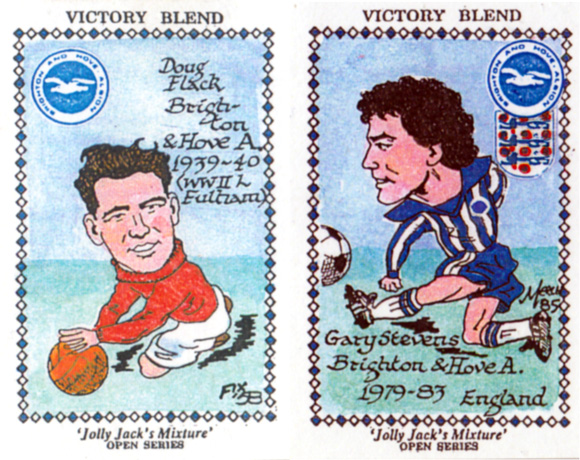
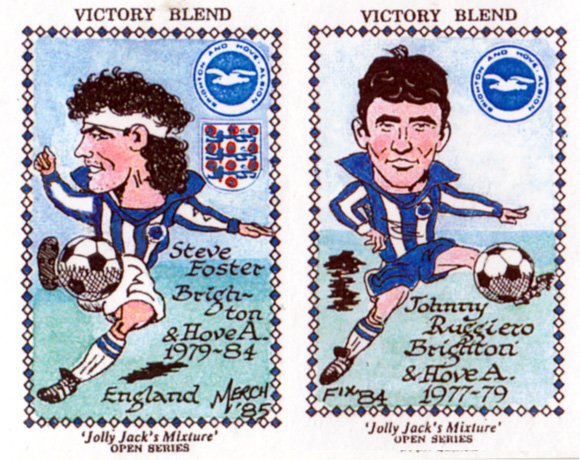
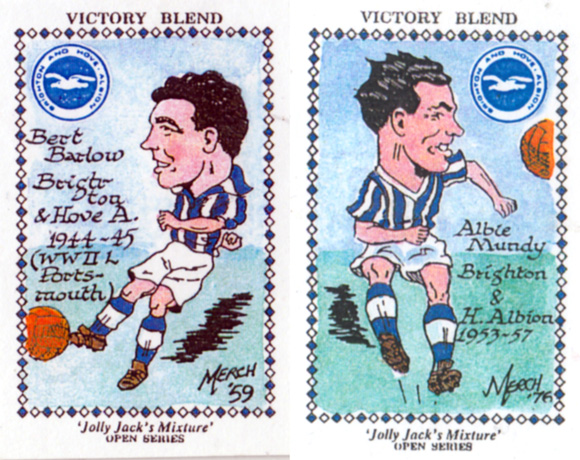
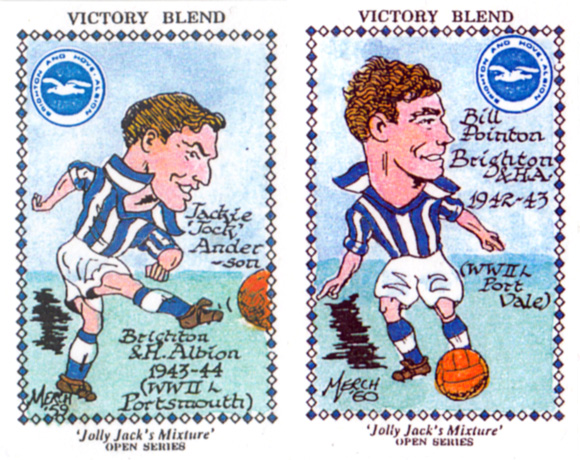
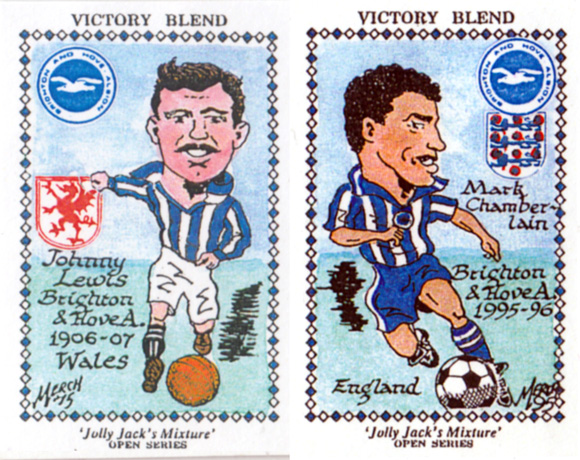
Recently, I’ve discovered a rather curious collection of coloured drawings of players who played for the Albion and Portsmouth. Leant to me by Nick from Fishersgate, they are neither stickers nor cards. These Victory Blend illustrations are simply printed on small sheets of paper.

Maybe the rest of the collection includes the players of Fratton who have fraternised with Southampton… or Crystal Palace… or Millwall – I just don’t know! If anyone has any details about this series, please comment. For now, I will concern myself with these ten collectables. Give or take a Warren Aspinall, I wonder if it’s possible to construct a decent, well balanced football team out of these players:

victorya

Goalkeeper: Doug Flack.
Fulham’s goalkeeper who joined the club in 1935 and made one war-time appearance for the Albion in January 1940, losing 1-0 at Reading. Also guested for Portsmouth in the war years before being a regular in Fulham’s 1948/49 Second Division championship side.

Centre-back: Gary Stevens.
Outstanding, classy defender during Albion’s glory years in the top flight. He joined Tottenham and played for England before injury problems wrecked his career. Joined Portsmouth on loan in January 1990, which became a permanent deal.

victoryb

Centre-back: Steve Foster.
Beginning with Portsmouth as a centre-forward, he turned into a central defender and transferred to Brighton after the club had gained its First Division status in 1979. After spells with Aston Villa, Luton and Oxford, Fozzie rejoined the Albion in the 1992/93 season.

Midfielder: John Ruggiero.
Joined Brighton in June 1977, scoring on his League debut against Southampton. Loaned to Portsmouth for a month in December 1977 before making his final Albion appearance in the famous match with Blackpool in April 1978.

victoryc

Inside forward: Bert Barlow.
Portsmouth’s Bert Barlow scored in the 1939 FA Cup Final, but I could find not record of him playing for Brighton. Perhaps there was confusion with K Barlow, a Southampton born lad leant to the Albion for a game against his own club in 1944/45.

Inside-forward / Centre-forward: Albert Mundy.
With his 87 goals in 165 League appearances for the Albion from 1953 to 1958, mainly as an inside forward, Mundy is the second highest scorer in Albion history. He joined the club from Portsmouth where he established a growing reputation.

victorye

Centre-forward: Jackie ‘Jock’ Anderson.
A Portsmouth player for thirteen seasons, he scored against Wolves in the 1939 FA Cup Final victory. Played three times for Albion during the war as a guest, beginning with a home match with West Ham in 1943.

Inside forward: Bill Pointon.
A Port Vale player who made a single appearance guesting for Brighton at home to Portsmouth in April 1944. I’m unsure when he played for Portsmouth, but it was probably as a wartime guest player as well.

victoryd

Inside forward: J. Lewis.
Looking rather like a member of Frankie Goes To Hollywood! He played for Portsmouth in between two spells with Bristol Rovers. The second time at Eastville led to a call up to Wales’ team, where he figured in a 1-0 win over England in March 1906. Two months later, he left for Brighton where he played 43 times before joining Southampton.

Winger: Mark Chamberlain.
Explosive winger who made his name with Stoke and England early in his career. An unsuccessful move to Sheffield Wednesday marred his career before returning to form with Portsmouth. He had a so-so spell with Brighton in the 1990s before being released. You can read more about him here.

As you can see, even though with only ten in the side, this team is refreshingly attack-minded. If only Oscar Garcia could choose an Albert Mundy or a ‘Jock’ Anderson (in their prime, of course!) to solve Brighton’s very current striker crisis!

Tagged , ,