Yearly Archives: 2013

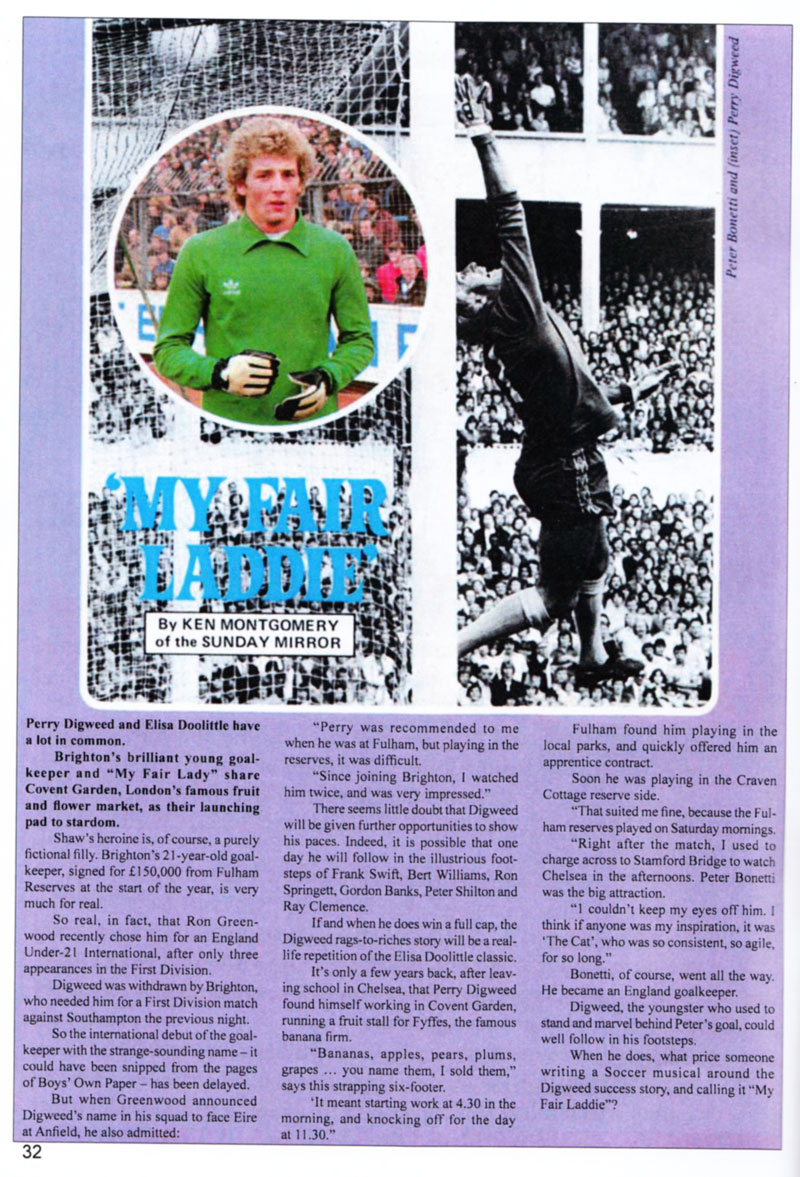
Perry Digweed – My Fair Laddie

perrydigweed

From Programme Plus:

Perry Digweed and Elisa Doolittle have a lot in common. Brighton’s brilliant young goalkeeper and ‘My Fair Lady’ share Covent Garden, London’s famous fruit and flower market, as their launching pad to stardom. Shaw’s heroine is, of course, a purely fictional filly. Brighton’s 21-year-old goalkeeper, signed for £150,000 from Fulham Reserves at the start of the year, is very much for real.

So real, in fact, that Ron Greenwood recently chose him for an England Under-21 International, after only three appearances in the First Division.

Since the international debut of the goalkeeper with the strange-sounding name – it could have been snipped from the pages of Boys’ Own Paper – has been delayed. But when Greenwood announced Digweed’s name in his squad to face Eire at Anfield, he also admitted:

“Perry was recommended to me when he was at Fulham, but playing in the reserves, it was difficult. Since joining Brighton, I watched him twice, and was very impressed.”

If and when he does win a full cap, the Digweed rags-to-riches story will be a real-life repetition of the Elisa Doolittle classic.”

Tagged

Non-stop Turner is sure Brighton will go up

daveturner

From Goal Magazine, 1969/70:

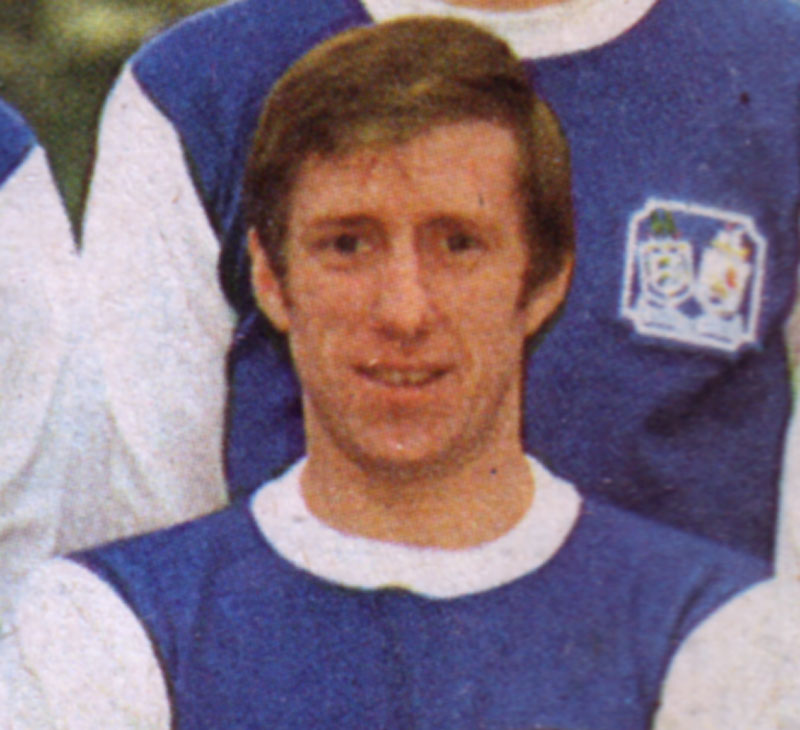
Dave Turner is one of the unsung heroes of Brighton. He has played nearly 300 games for the club, been involved in a Fourth Division championship victory, and is now in the middle of another bid for glory.

Brighton are fighting to get into the Second Division and the 26-year-old midfield star is a key man in their battle.

Ever since he joined them from Newcastle in December, 1963, Turner has played a vital role in the Brighton set-up.

It is Turner’s consistency which is helping Brighton in their promotion struggle. And he thinks they can do it.

He says: “I’m pretty confident we can go up. But so can any of the top ten at the moment. We’ve been playing well all season, but early on we just couldn’t get the right results. Everyone was getting a bit disappointed. Then everyone started getting stuck in a bit more – it began to pay off. We had a long undefeated run in the League after November and conceded only one goal in nine games. Even that was a penalty. The defence has been playing very well, and the whole team has been coming back and doing its fair share of the work. It would be nice to score a few more goals, but if you don’t let any in, it means you have at least one point before you start.”

Turner’s ample power and energy in the middle of the pitch was a key component of Albion’s play in the 1960s. As the 1970s began, it looked all set to push Albion over the final hurdle. Indeed, Brighton were in top spot after a 2-0 win over Reading on 27th March 1970. However, the side under Freddie Goodwin limped to a fifth spot finish after a wretched run of four defeats in the last five matches.

By the time Albion were promoted, in 1971/72 under Pat Saward, Dave Turner was a squad player. He had been hampered by a knee injury during the previous campaign and faced heavy competition from the peerless Brian Bromley from November 1971 onwards. Sadly, he did not experience Second Division football with Brighton, joining Blackburn on a free transfer in the summer of 1972.

Tagged ,

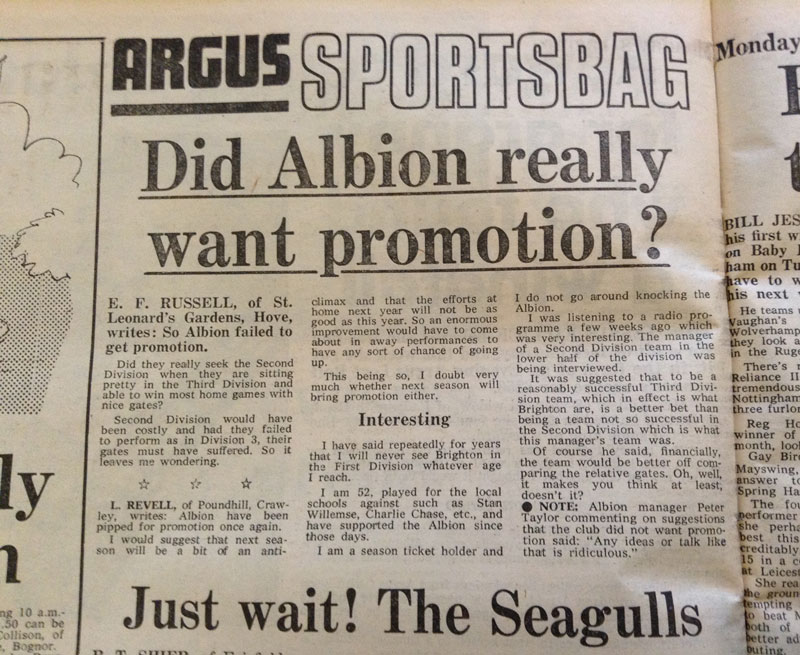
Did Albion really want promotion in 1976?

Some angry and sceptical letters from E.F. Russell and L. Revell in the Argus in April 1976, as Brighton’s promotion push in Division Three peters out with one win in their last eight matches, despite rookie striker Peter Ward hitting six goals in that period.

promotionletter

L. Revell (no relation to Alex?) wrote:

“Albion have been pipped for promotion once again. I would suggest that next season will be a bit of an anti-climax and that the efforts at home will not be as good as this year. So an enormous improvement would have to come about in away performances to have any sort of chance of going up. This being so, I doubt very much whether next season will bring promotion either. I have said repeatedly for years that I will never see Brighton in the First Division whatever age I reach.”

The understandable sense of frustration from season ticket holders such as him was probably not helped by the Argus reporting a few weeks before on the eve of the busy Easter schedule:

There is no specific promotion target for Albion manager Peter Taylor. With just four matches remaining, he is content to play each game as it comes. With the big game at Millwall coming up on Friday, Taylor said he was confident of a result. “But I am not thinking about a target. We shall continue to play our best.”

In the end, Albion were tonked 3-1 at the Den.

Happily, Revell’s pessimism was misplaced. In fact, 1976/77 went down as one of the most golden, most celebrated seasons in Albion history, signalling the start of the glory years. As formidable a home record as Brighton had in 1975/76 (W18 D3 L2), they improved their Goldstone record the following campaign (W19 D3 L1). In 1976/77, they also significantly enhanced that wretched away record, from W4 D6 L13 to W6 D8 L9.

However, it was to take all the motivational drive of Alan Mullery, and the deposing of top scorer Fred Binney (who got a mere five away League goals in 1975/76), to bring this to fruition. Peter Taylor had long departed, but he did also achieve promotion in 1976/77, with Brian Clough, of course, as Nottingham Forest sneaked back into Division One. Glory was just around the corner for them too.

Tagged ,

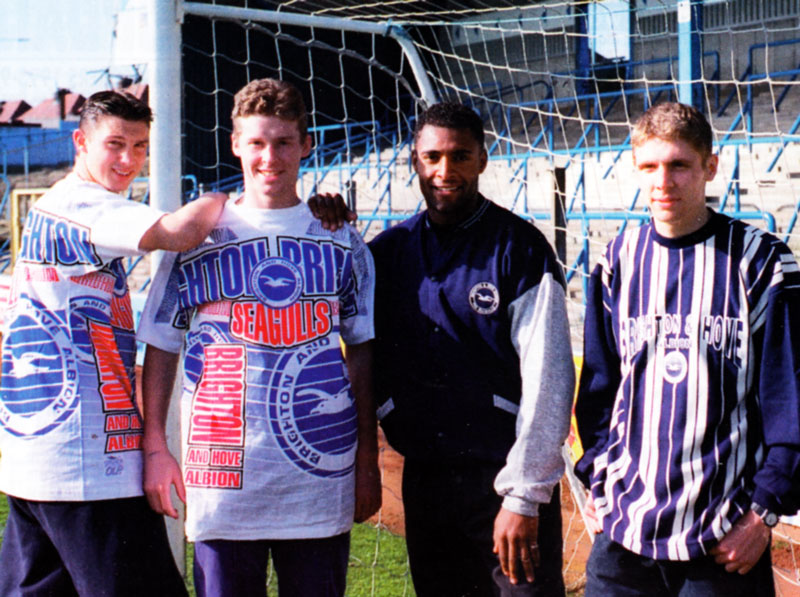
New items in the Seagulls Shop ’94

fashion1993-4

That navy blue bomber jacket still looks the bees’ knees!

Tagged

In happier days: Danny Wilson

wilson

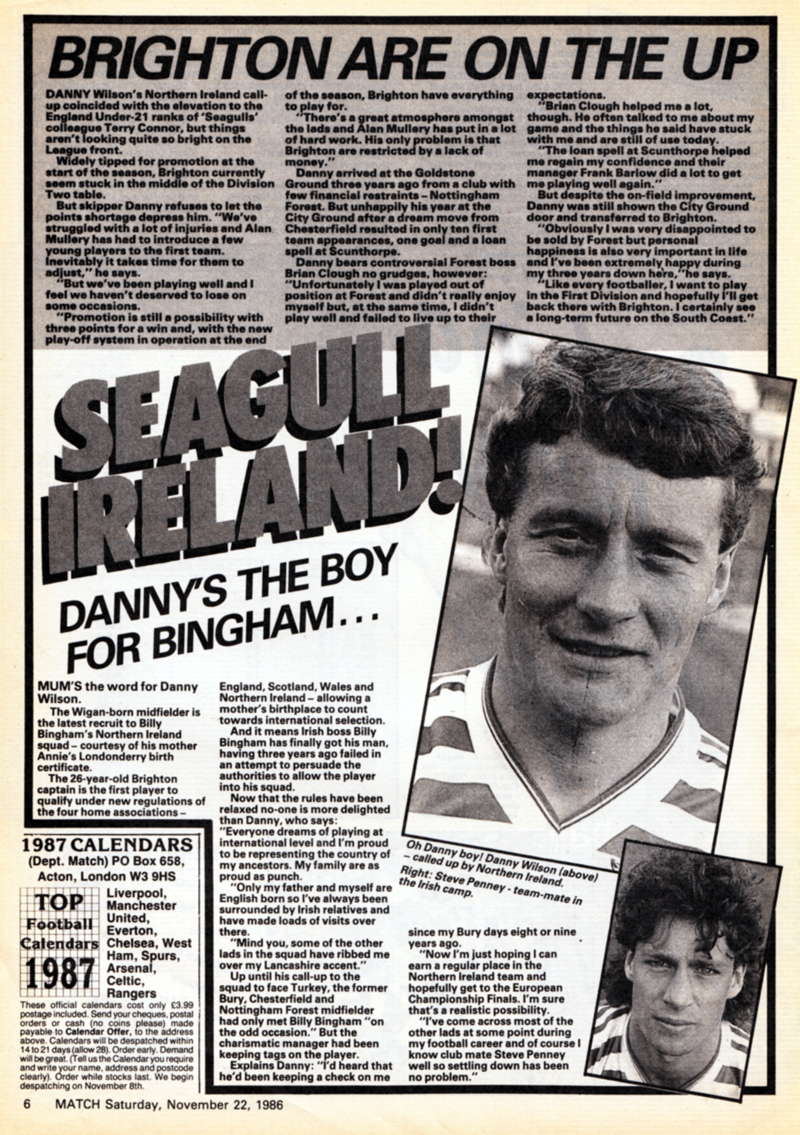
Sacked yesterday as manager by Sheffield United, fifth in League One, Danny Wilson has had much better times, not least in his playing days. Joining initially on loan from Nottingham Forest, Brighton fans remember Wilson fondly as a dynamic midfield player in the 1980s with great tackling and wonderful passing, as well as an eye for goal. Indeed, he opened the scoring in a 2-0 win at arch rivals Crystal Palace on Boxing Day 1983 and also hit the net at Selhurst Park the following season to rescue a point for the Albion in a 1-1 draw. All together, the inspirational midfielder played 135 League appearances for Albion, have signed in a bargain £45,000 deal in January 1984.

In Match Magazine, in November 1986, he said:

“We’ve struggled a lot with injuries and Alan Mullery has had to introduce a few young players to the first team. Inevitably it takes time for them to adjust. But we’ve been playing well and I feel we haven’t deserved to lose on some occasions. Promotion is still a possibility with three points for a win and, with the new play-off system in operation at the end of the season, Brighton have everything to play for.

Like every footballer, I want to play in the First Division and hopefully I’ll get back there with Brighton. I certainly see a long-term future on the south coast.”

In other news, Danny Wilson was called up by Billy Bingham for the Northern Ireland squad, with the Wigan-born player qualifying through his mother’s Londonderry birthplace.

“I’ve come across most of the other lads at some point during my football career and of course I know club mate Steve Penney well so settling down has been no problem.”

Wilson made three appearances for Northern Ireland as a Brighton player before his £150,000 move to Luton in July 1987.

dannywilson

Tagged

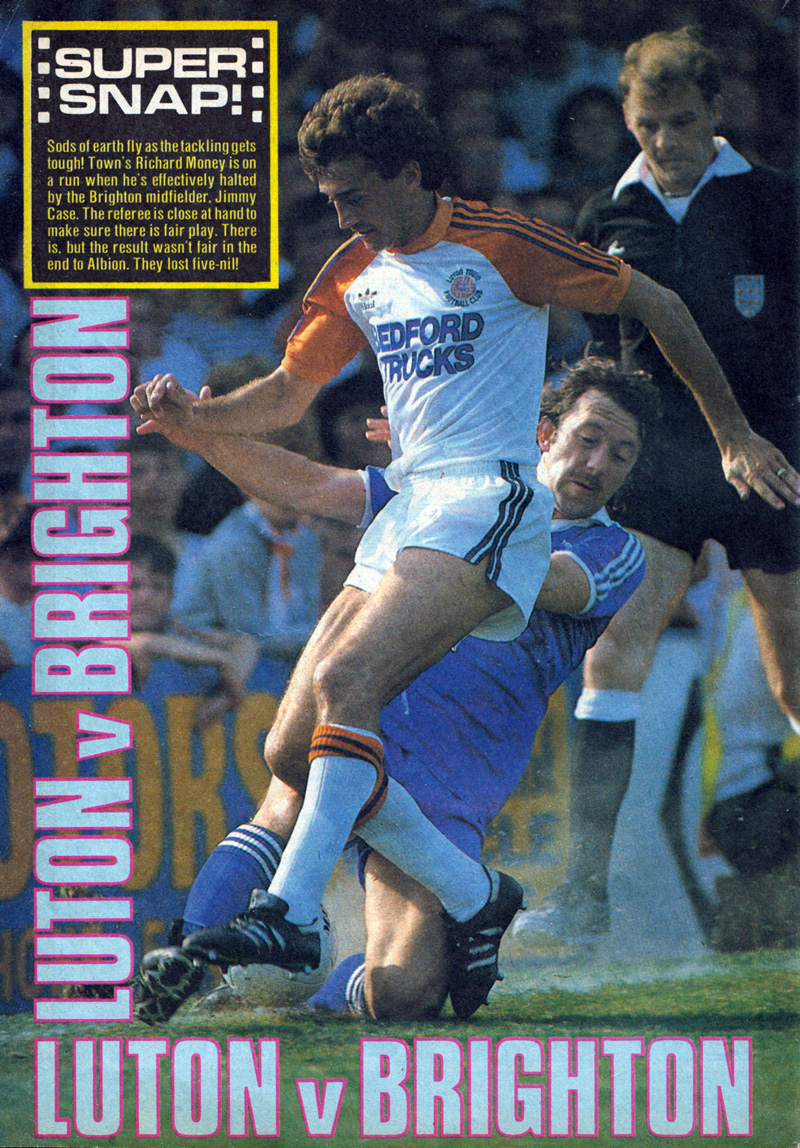
Jimmy Case goes in hard against the Hatters

From Roy of the Rovers magazine:

jimmycase1

Sadly, Brighton are tonked 5-0 by newly promoted Luton Town, powered by Brian Horton. By the end of September 1982, Albion’s away record read:

Played 3 Won 0 Drawn 0 Lost 3 Goals For 0 Goals Against 14 Points 0.

And people still think Mike Bailey left ‘by mutual consent’ in December 1982 because Albion were boring! No, it was because Albion were boring and losing. 20 defeats in Bailey’s last 31 League games suggested that it was time for a change, although it is worth pointing out that Albion weren’t in the relegation zone when Bailey left. Jimmy Melia’s meagre record of two League victories in four months soon changed that.

Tagged , ,

North meets South with Nobby Lawton

nobbylawton

From Goal Magazine article ‘North moves in on the South Coast’:

Brighton is one of the most cosmopolitan neighbourhoods in the British Isles, so perhaps it is appropriate that they have a man from the North as captain of their Third Division Football side.

‘Nobby” Lawton is the thoughtful new brain, signed from Preston North End last year, to succeed the industrious Dave Turner, as skipper on Brighton’s sea front. Nobby is the ideal link-man, much appreciated by new manager Freddie Goodwin. Both of douse, are ex-Manchester United stars.

His display for Preston in the 1964 Cup Final brought comparisons with Eddie Colman, one of the victims of the air disaster and Nobby’s own personal hero. His natural wing-half foraging was responsible for many Preston achievements, although he is happier in the scheming position up front. At inside-left, he has settled down into his former position at Brighton with relish and is an ideal link with the attacking probes of Turner and the sharp shooting of Napier or Livesey.

His Brighton form at first was hampered by a knee injury, but it has made him all the more determined to prove his worth before a southern audience. The Brighton fans are not quite so loyal as in Manchester and Preston – or so numerous – but they know a talented worker and schemer when they see one. Nobby Lawton has fitted into the Brighton scheme, especially as more spirit and stamina needs to be installed if they are ever to get into a higher division.

Nobby Lawton is always ready to give one hundred per cent in the interests of the club.

His family are happily settled into a Shoreham bungalow and he is one of the most contented northerners to settle into a southern club.

That 21-day suspension handed out to Nobby last week means he misses the Cup game which is punishment in itself. Nobby will be have to be patient until the weekend before Christmas. It’s a lesson that he will painfully learn.

Anyone know what this 21-day suspension was about?

By the time he joined Brighton, he had little pace, but could still ghost past players. Using his vast experience, Lawton was available to receive a passes, even in the most crowded of midfields.

He is remembered by some Brighton fans for scoring an incredible volley against Shrewsbury from the half-line in February 1969 when future Albion keeper John Phillips’ kick-out was returned with interest. After losing his place under Pat Saward in 1970/71, Nobby requested a transfer. He eventually joined Lincoln in February 1971 before retiring the following year.

He died in April 2006, aged 66.

Tagged

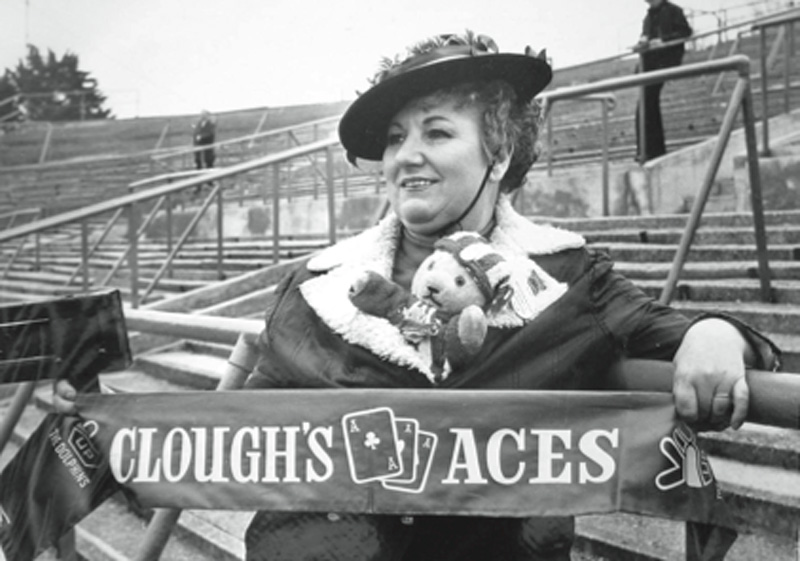
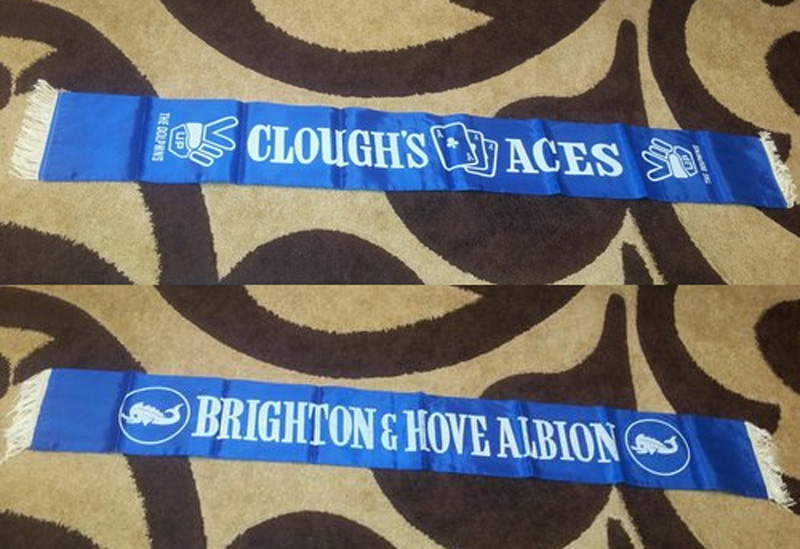
Up the Dolphins with Brian Clough’s Aces!

cloughsaces1

cloughsaces

A quite marvellous piece of Albion tat from the club shop during the 1973/74 season – and the first piece of Brighton merchandise I’ve seen that mentions Brian Clough’s name. The hand graphic features the slogan ‘Up The Dolphins.’

Tagged

Eric Steele, the ‘executive’ fashion king!

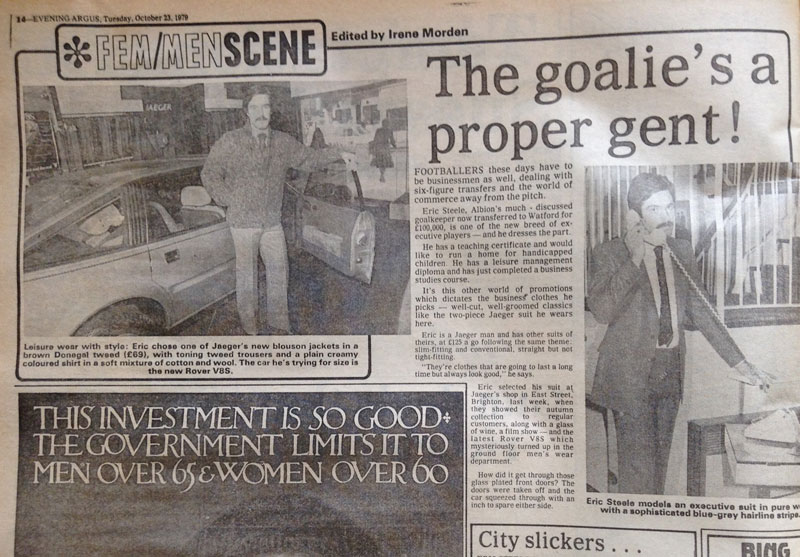
As Eric Steele made his way to Watford in October 1979, within weeks of his clash with team-mate Gary Williams at Old Trafford, Albion fans were given something to chuckle over when they saw this piece in the women’s page of the Evening Argus:

ericsteele1

Eric Steele models an executive suit in pure wool, with a sophisticated blue-grey hairline stripe.

The goalie’s a proper gent! By Irene Morden

Footballers these days have to be businessmen as well, dealing with six-figure transfers and the world of commerce away from the pitch.

Eric Steele, Albion’s much-discussed goalkeeper now transferred to Watford for £100,000 is one of the new breed of executive players – and he dresses the part.

He has a teaching degree and would like to run a hospital for handicapped children. He has a leisure management diploma and has just completed a business studies course.

It’s this other world of promotions which dictates the business clothes he picks – well-cut, well-groomed classics like the two-piece Jaeger suit he wears here.

ericsteele2

Leisure wear with style: Eric chose one of Jaeger’s new blouson jackets in a brown Donegal tweed (£69), with toning tweed trousers and a plain creamy coloured shirt in a soft mixture of cotton and wool. The car he’s trying for size is the new Rover V8S.

Eric is a Jaegar man and has other suits of theirs, at £125 a go following the same theme: slim-fitting and conventional, straight but not tight-fitting.

‘They’re clothes that are going to last a long time but always look good,’ he says.

Eric selected his suit at Jaeger’s shop in East Street, Brighton, last week, when they showed their autumn collection to regular customers, along with a glass of wine, a film show – and the latest Rover V8S which mysteriously turned up in the ground floor men’s wear department.

How did it get through those glass plated front doors? The doors were taken off and the car squeezed through with an inch to spare either side.

ericsteele3

The article even got a mention in the 1979/80 match programme v Arsenal (League Cup). It said: “There is no truth in the rumour circulating that Eric Steele departed from the Goldstone solely to avoid the snide remarks of his team-mates following his appearance last week as the subject matter of the Women’s page in The Evening Argus.”

Tagged ,

The Book of Football: Part 2 (Norman Gall)

bookoffootball2

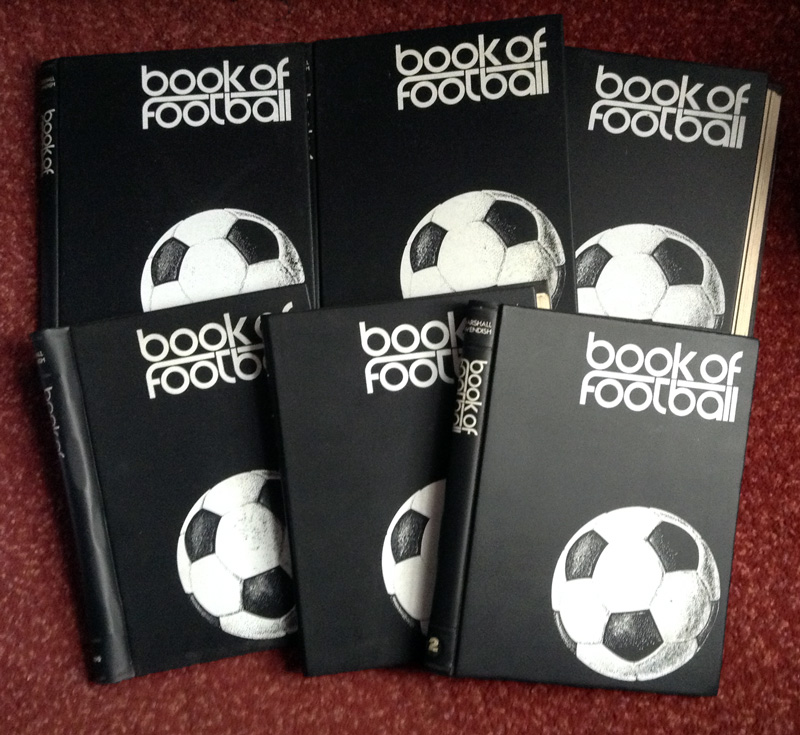
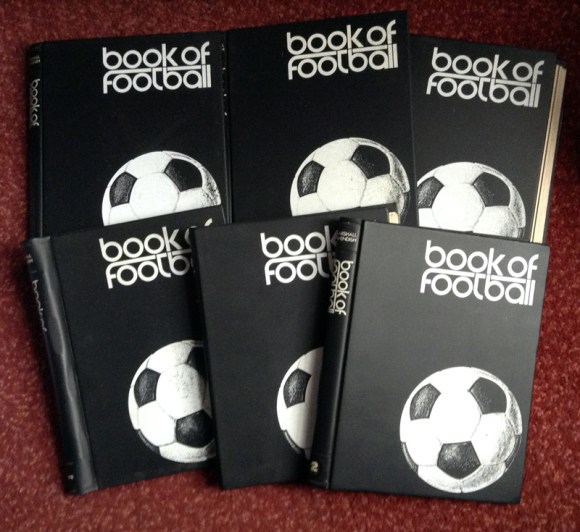
In the early 1970s, Marshall Cavendish brought out a magnificent partwork called ‘Book of Football’. Covering all aspects of the game, such as club histories, the development of tactics and strategy, and profiles of many players at different levels of the game, writers such as Martin Tyler, Brian Glanville and Phil Soar created an authoritative snapshot of how the game was back then. Accompanied by photo captions, the widespread use of colour photography and diagrams was revolutionary at the time when most magazines were in dull monochrome. This was a point that Phil Shelley, of oldfootballshirts.com was keen to emphasise when he kindly leant me all five volumes a couple of months ago.

The idea with ‘Book of Football’ was that each week, you’d buy one part of a 75-part set of journals that formed a football encyclopaedia, housed in five stylish black binders. Much of the text and photos were later repurposed for the book ‘The Story of Football’ by Soar and Tyler, published in 1986.

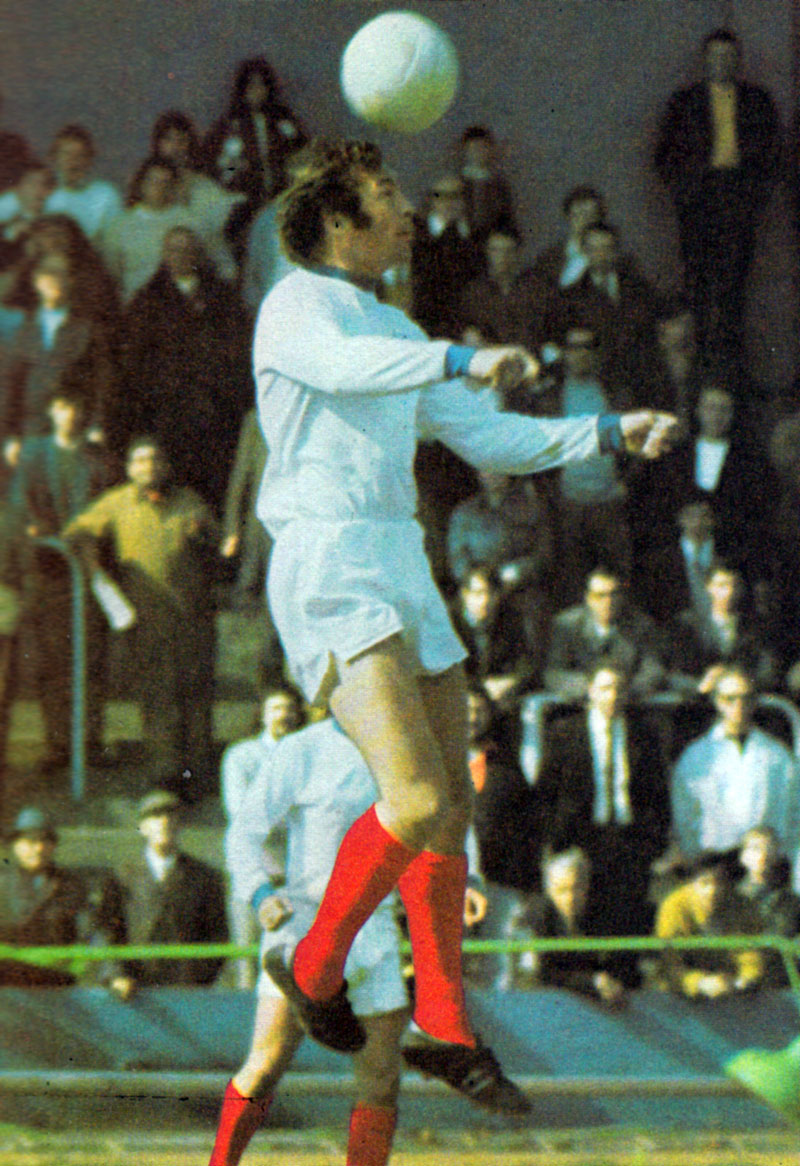
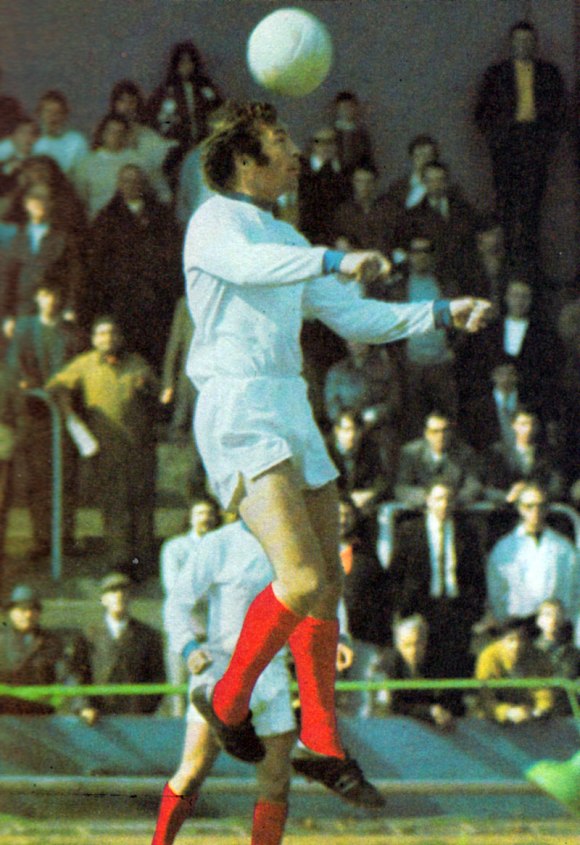
Albion fans didn’t have to wait long to see their club featured in ‘Book of Football’. In the second issue, ‘Football star, football satellite’ compared and contrasted the careers of Arsenal striker Ray Kennedy and Brighton’s Norman Gall. There were also this photo of Gall heading away a Bristol Rovers attack at the tail end of the 1970/71 campaign.
bookoffootball-1v2

Of the central defender, it says:

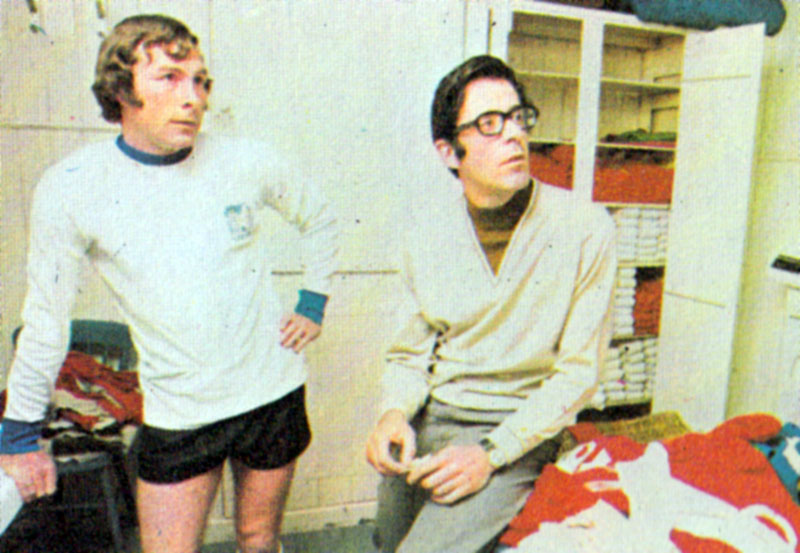
In March 1962, when he was 19, he was approached by Brighton and Hove Albion, then also in the Second Division. He went south this time, liked what he saw of the resort town, and signed. “They offered me good money and I just jumped at it,” he explains. He joined a club then on the slide to Division Three. He was not able to do much to help. Gall did not get out of the reserves in his first season nor for much of his second. But on his twentieth birthday he made his League debut. Gall played in three consecutive games in place of Roy Jennings, a ten-year veteran with the club. All the games were lost and Brighton were in trouble at the foot of the table. His memories of his first home game are not happy: “As soon as I went on the pitch they booed and during the kick-about they were on my back. They chanted, ‘We want Jennings.’ I played quite well, but it affected my play a bit and I think it ruined me for the rest of the season. Anyway, I was dropped right after that.”

However, Gall did establish himself and a local newspaper is quoted as singing his praises:

“The complete footballer, quiet on the ground and decisive in the air. Few people get past him. Gall’s strength is in his marvellous timing and crispness of tackling. Mobility is another strong point and he has the legs of most attackers. An intelligent fellow, he reads the game with uncanny precision and is invariably in the right place at the right time. His coolness infuses confidence among his fellow defenders and he seldom wastes the ball in distribution.”

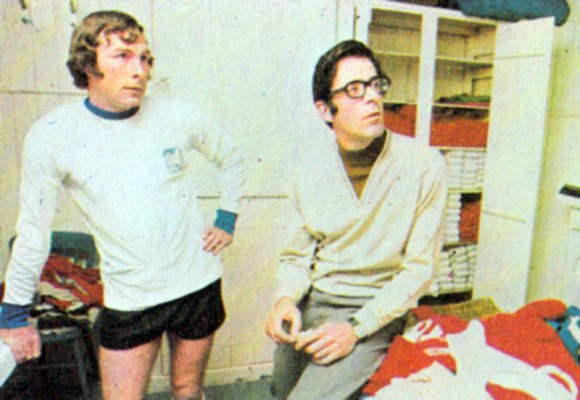
One of the things I didn’t know before reading the article was the fact he was cleared of assault in court after a scuffle with a spectator during a promotion battle at Rochdale in 1968 when he was ‘dragged over the barrier and into the crowd.’
bookoffootball-3v2

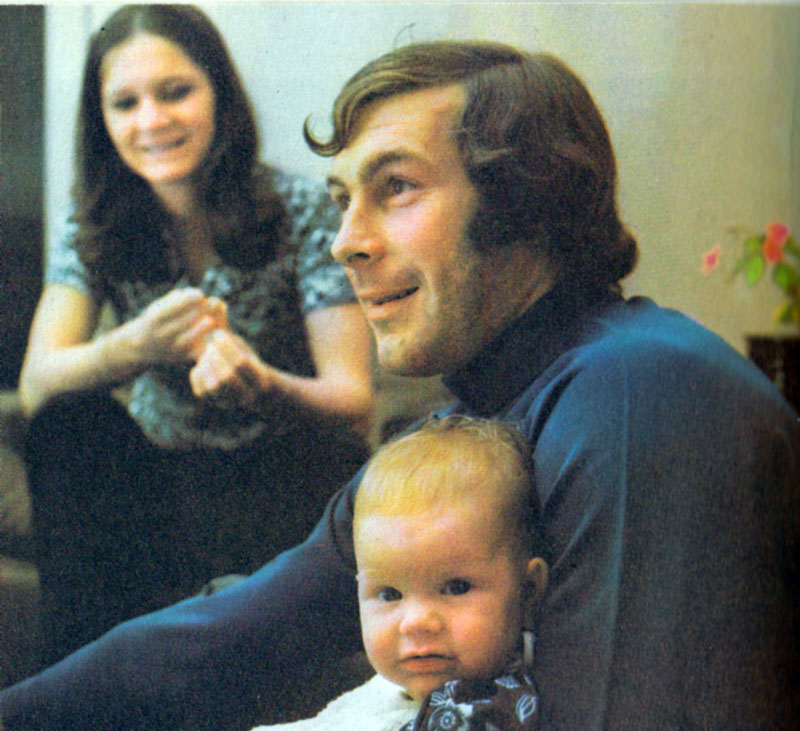
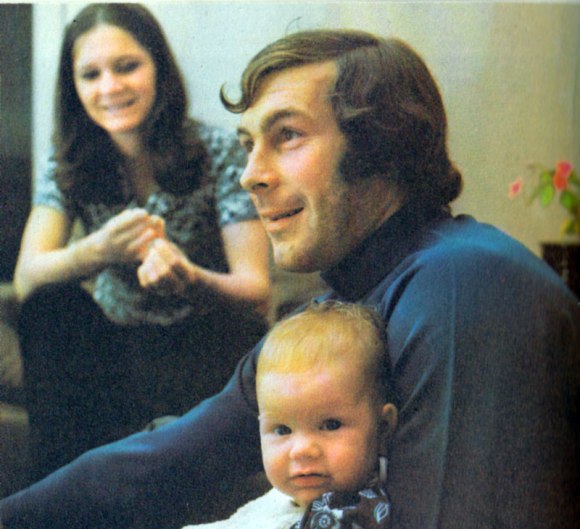
Gall is portrayed as married to Jackie, a local girl, with a baby daughter Sarah, and living in a modern house in the village of Upper Beeding in the South Downs. He worries a bit about what he will do for a job once he reaches 33 or 34. ‘Still, there’s always non-League football.’ he adds.
bookoffootball-3v3

In this highly candid interview, Gall also shares the fact he would not recommend the life of professional football to any son of his, and says he only really enjoyed about 15 of the 40 games he played in the previous year. He also openly describes what it is like being a lower league player:

“A lot of times you feel you want a move because of the attitude of the club, or the manager. If you don’t get the money you ask for, again you want to get out. Then if the club’s not doing too well, you think you can do better and you want to move. Then you get stuck in a rut and you decide to get away to get your game going again. Or, simply, you might get bored. Then one day, a new manager comes and the place is different overnight, so you stay.”

When he said that, I’m pretty sure he must have had Pat Saward in mind.

Tagged