Monthly Archives: May 2013

Pro Set Cards 1990/91

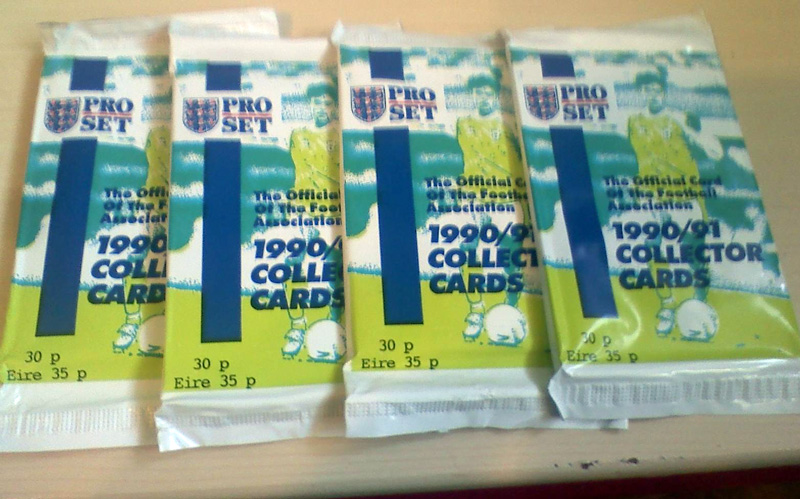
Anyone remember collecting these cards in the early 1990s?

Pro set was a Dallas company founded by Ludwell Denny. It began with a set of cards covering American football from 1989 onwards. Indeed, ‘pro set’ is the name of a formation commonly used in this sport. (After a look at wikipedia, it’s roughly a 2-1-8 formation, I think!). By the early 1990s, ice hockey and golf enjoyed the fledgling company’s card-making ways, as it made great use of the deals it had signed to gain access to extensive photo libraries. It even put together a patriotic ‘Desert Storm’ series based on the Gulf War!

Skipping over the Atlantic ocean, in 1990/91, Pro set also launched a set of 328 cards based on the English Football League, designed to be housed in plastic wallets within an oversized binder. Division One clubs enjoyed thirteen or fourteen player cards each while little Brighton & Hove Albion, together with the other Second Division sides, were allocated two to four player cards.

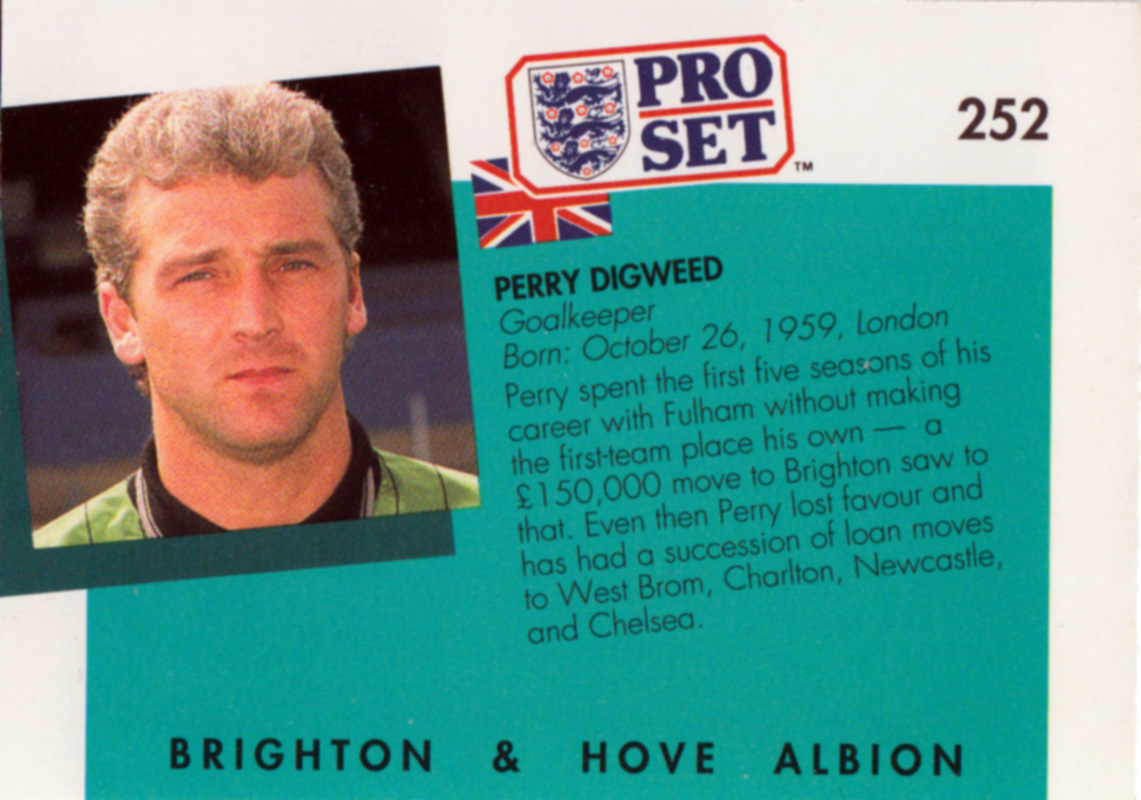
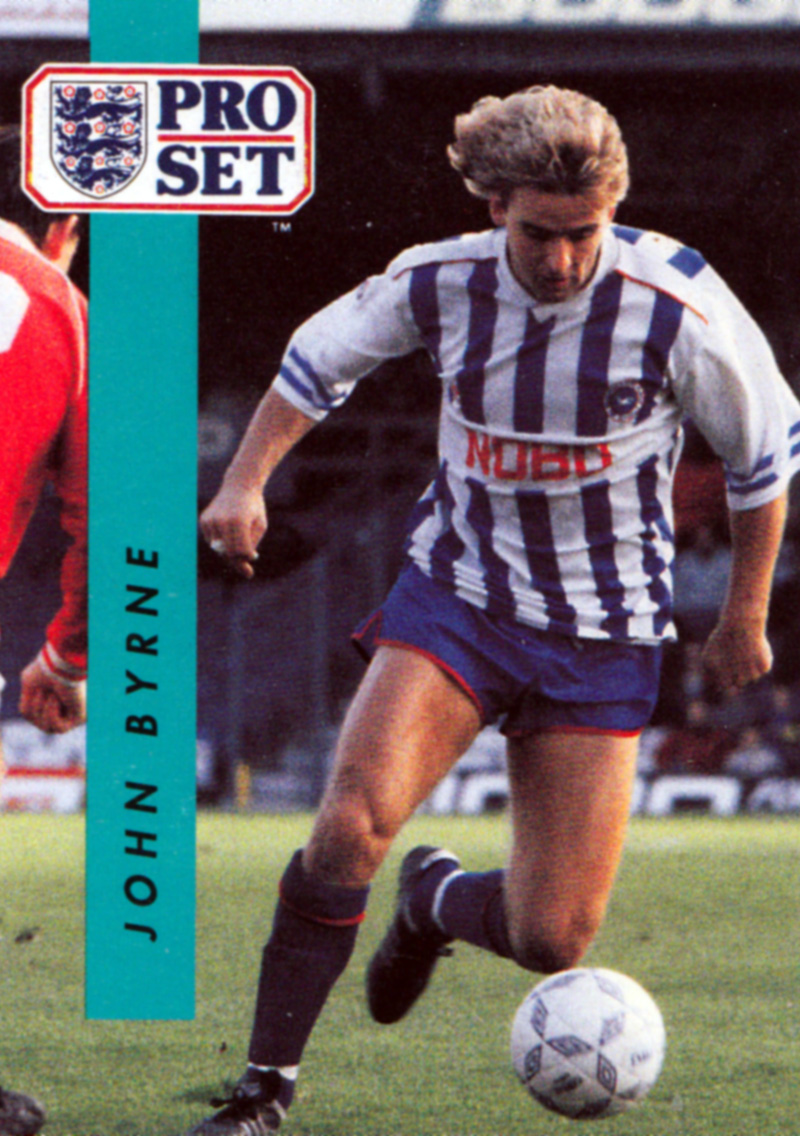
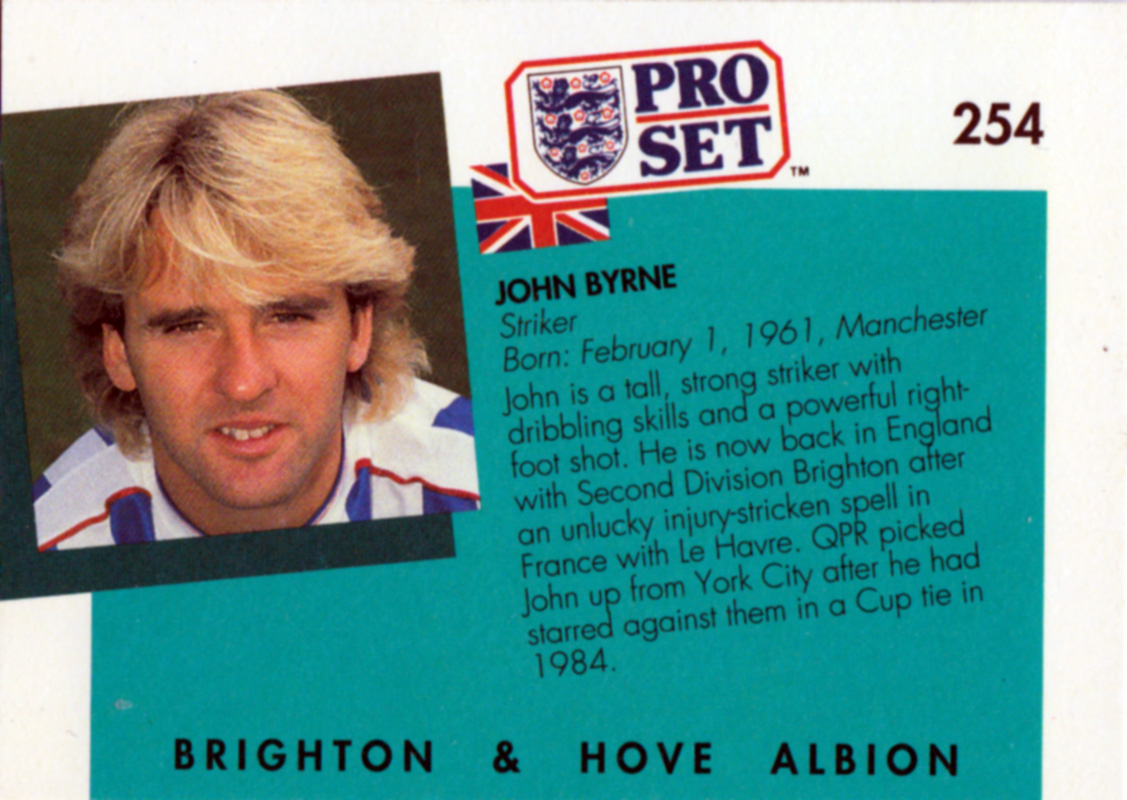
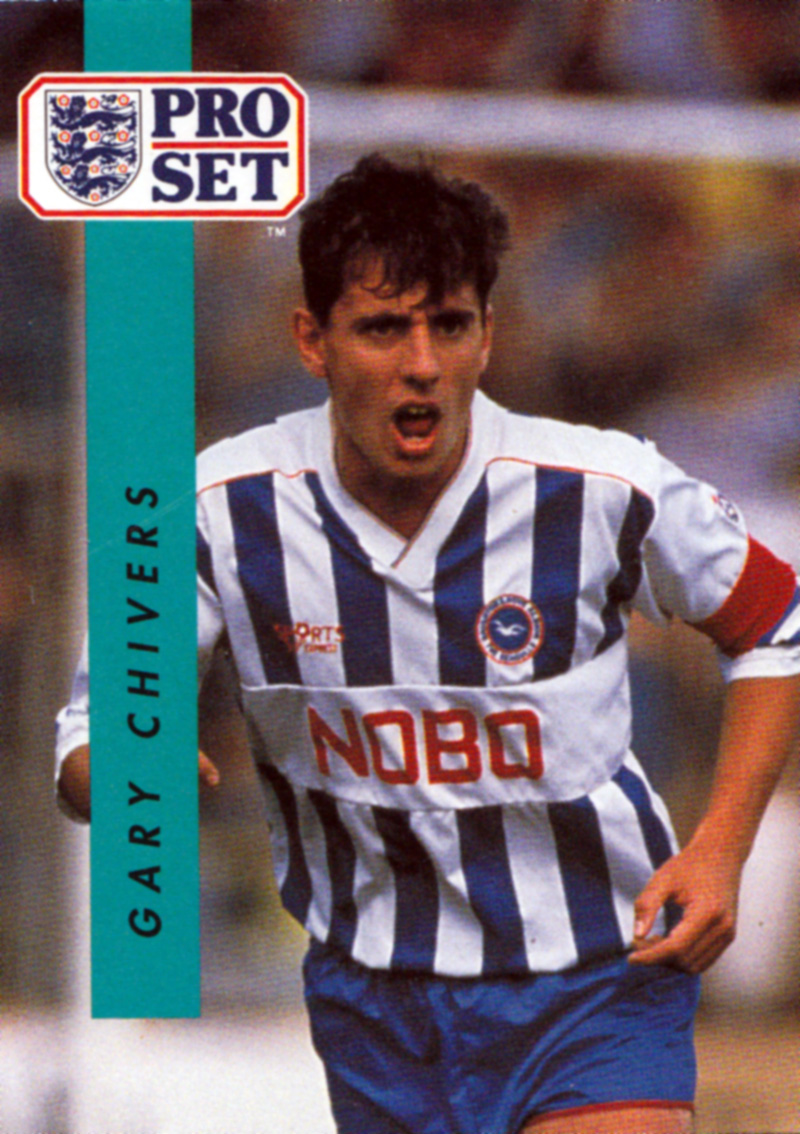
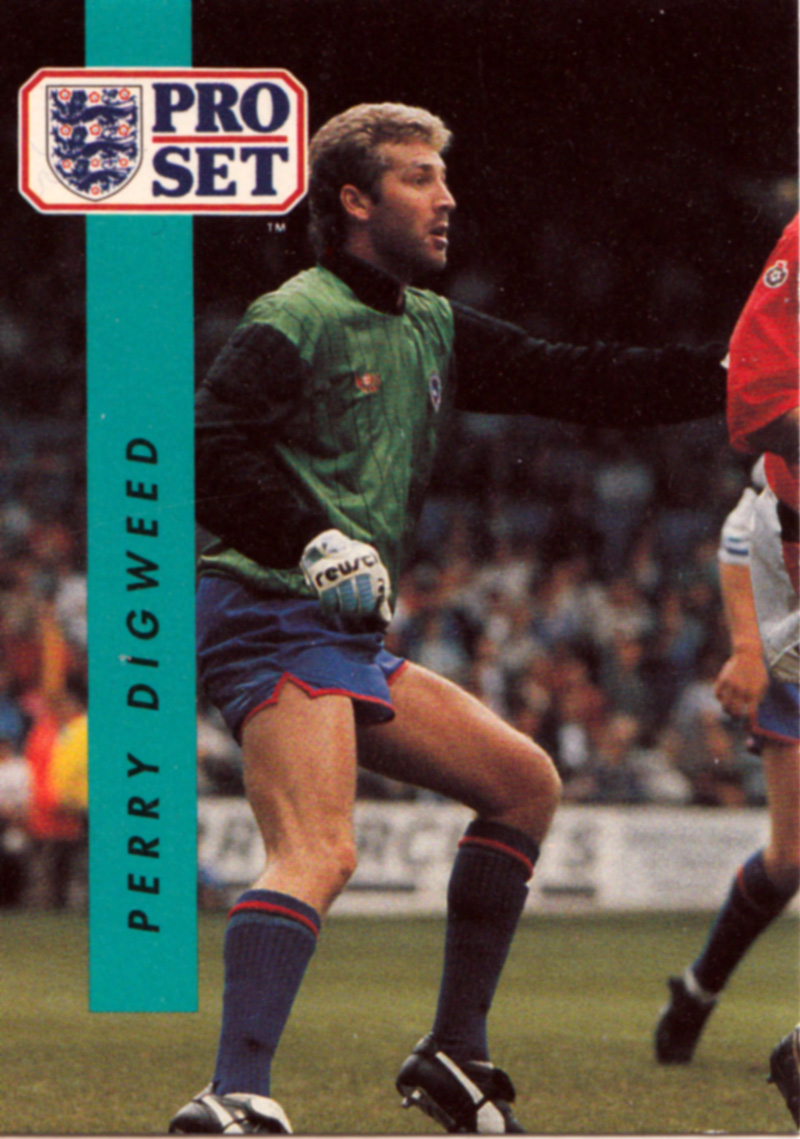
Here’s the set of three Brighton cards in this series:

proset-91-digweed1

proset-91-digweed

With me having been schooled in the ways of Panini, it certainly was unmistakeable that Pro set cards had a different sensibility, with the head and shoulders shot of the player relegated to the back of the card. The front of the card featured a high quality borderless action shot of the player in the home or keeper’s kit (not in a tracksuit nor away shirt, unlike some other collections I could mention!) within the drama of a match. Drawing from a rich stock of images, you can also be sure that this really was Perry Digweed that you were looking at, with absolutely no photo jiggery-pokery of superimposed heads on other players’ bodies!

proset-91-byrne1

proset-91-byrne

For me, as a school child, having only really known Panini stickers and not having yet clapped my eyes on the Topps’ cards of the 1970s, it was so novel to see that players plying their trade below the top flight were getting their own individual card or sticker. John Byrne had previously had his own individual sticker in Panini Football 86, 87 and 88, although that was, of course, with a Division One club at the time, Queen’s Park Rangers.

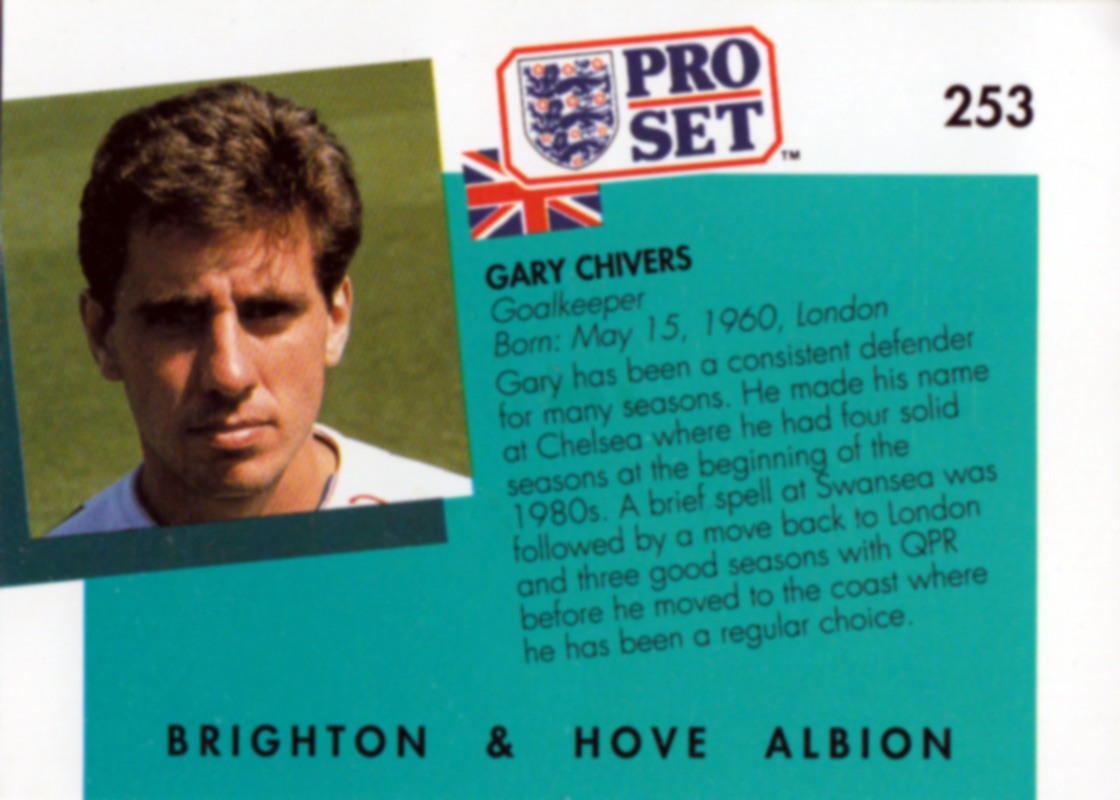
proset-91-chivers1

proset-91-chivers

John Byrne is joined by Gary Chivers, his former team-mate at QPR, who played 42 League games during the 1990/91 season. It was a fine time for Brighton devotees to collect these cards, as our team had a great season, reaching the Play-Off Final. Had we beaten Notts County, we’d have had even more incentive to collect during the following season. As it was, I can only remember my brother and I still showing interest in them by 1991/92!

proset

Tagged , ,

Barry Butlin scores the winner at Selhurst Park

butlin

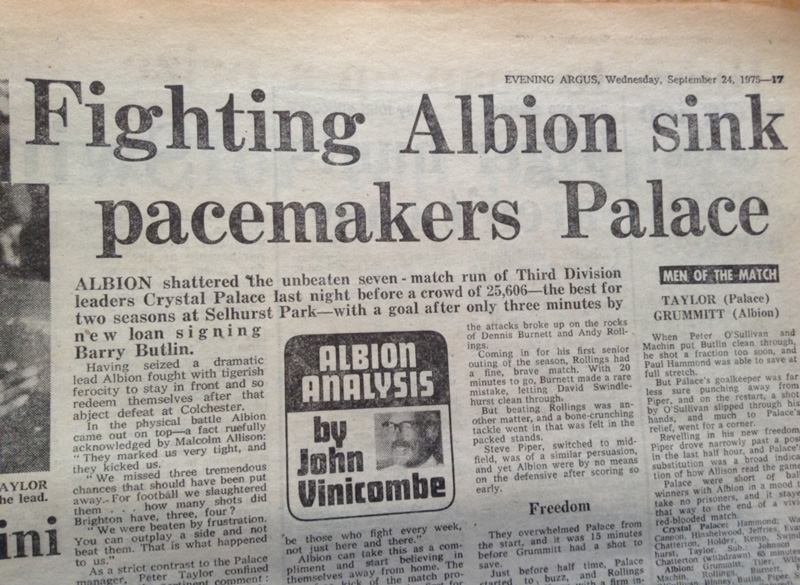
Classic match report by John Vinicombe from the Evening Argus in September 1975:

Fighting Albion sink pacemakers Palace

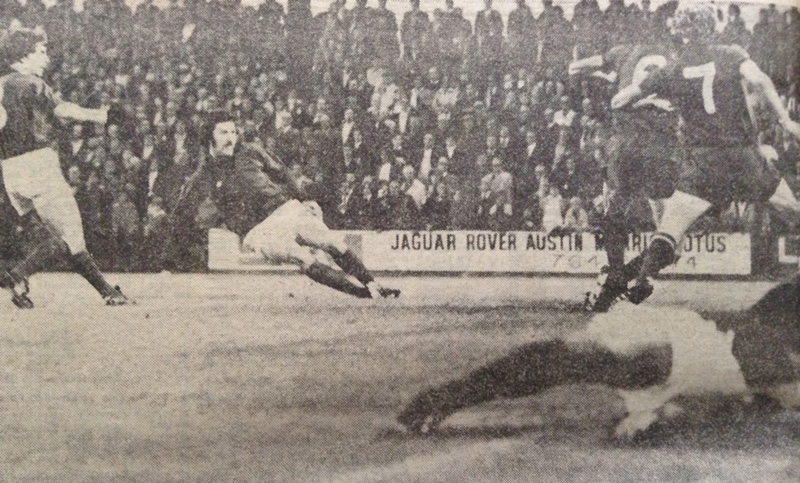
Albion shattered the unbeaten seven-match run of Third Division leaders Crystal Palace last night before a crowd of 25,606 – the best for two seasons at Selhurst Park – with a goal after only three minutes from new loan signing Barry Butlin.

Having seized a dramatic lead Albion fought to stay in front and redeem themselves after that abject defeat at Colchester.

In the physical battle Albion came out on top – a fact ruefully acknowledged by Malcolm Allison: “They marked us very tight and they kicked us. We missed three tremendous chances that should have been put away. For football we slaughtered them… how many shots did Brighton have, three, four? We were beaten by frustration. You can outplay a side and not beat them. That is what happened to us.”

As a strict contrast to the Palace manager, Peter Taylor confined himself to the pertinent comment: “I was delighted with the result, but I have talked too much this week. The lads did the talking out there tonight.”

Indeed, they did: it was a performance that could well herald the much-promised revival. This was no ordinary League match.

The exchanges were conducted in a cup-tie atmosphere, and the cut-and-thrust carried through with the zest of deadly rivals.

No quarter was asked, or given, but not once did I see a vicious or mean foul awarded by the TWO referees. The first half was run by Denis Turner of Cannock. But he strained an ankle and the second period saw John Hazell from Colchester promoted from senior linesman to the middle.

On 22 occasions Albion were penalised, while Palace had 18 free kicks given against them. This stiffening of resistance by Albion was a direct contrast to their last outing when Allison had them watched. “I was told that Brighton didn’t fight very hard. Well, you saw them tonight… the teams that will go up from this division will be those who fight every week, not just here and there.”

Albion can take this as a compliment and start believing themselves away from home. The first free kick of the match produced the only goal and a first for Albion from Butlin. Machin split Palace with his artful kick and Fell, with room to move, hit a low cross that Binney jumped over. When the ball arrived at the far post, Butlin’s shot was unstoppable.

butlin3

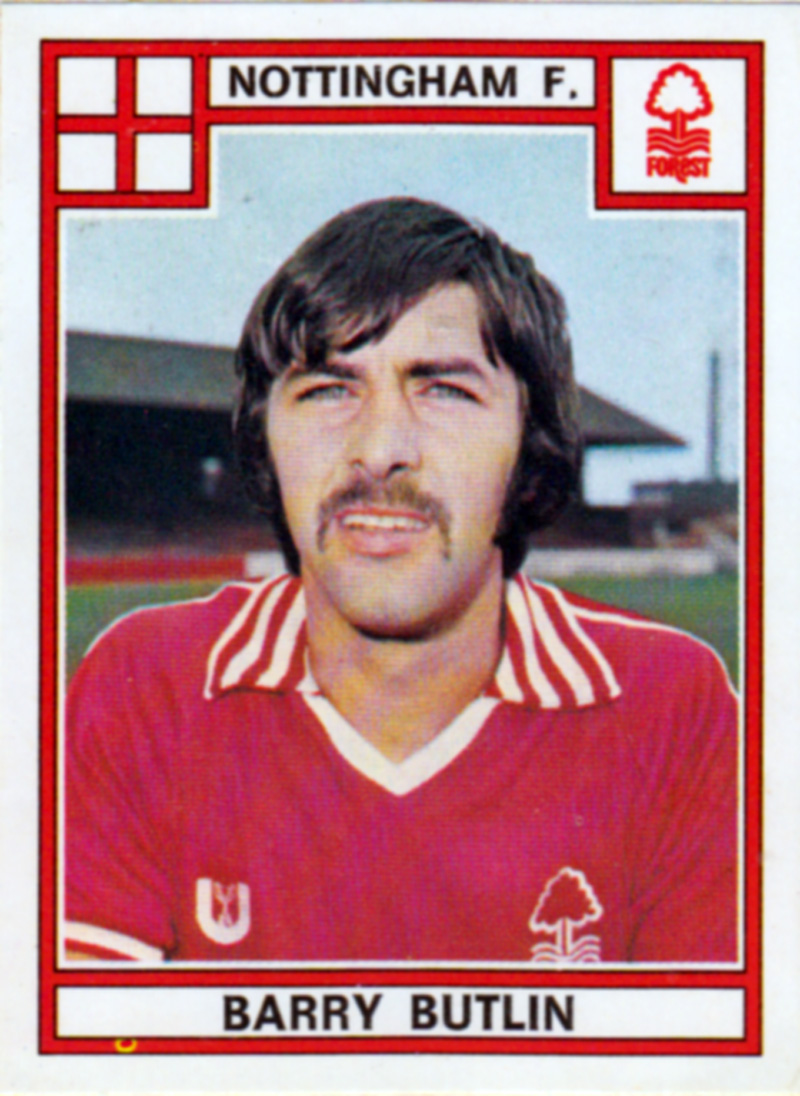
Barry Butlin was a former Derby and Luton striker who had topped the Second Division scoring charts when his seventeen goals helped the Hatters to promotion in 1973/74. (You can see footage of him scoring for Luton in a remarkable game in the snow and fading light against Huddersfield). He had joined Nottingham Forest in a £120,000 deal in October 1974. Making smart use of his ties with Brian Clough, Brighton boss Peter Taylor was able to secure Butlin on loan in September 1975. The goal at Selhurst Park was in the second of the attacker’s five appearances with the Albion. He followed up his Selhurst winner in the next game with another goal as Brighton romped to a 3-0 win against Chesterfield at the Goldstone.

The two successive victories pushed Brighton up to sixth position, a welcome relief after three successive campaigns battling relegation. Nevertheless, inspired by the flamboyant Malcolm Allison and breathtaking wing-play of Peter Taylor (as opposed to the then Brighton boss of the same name), Crystal Palace were still sitting pretty at the top of Division Three, with the loss to the Albion their only League reverse of the season so far. It was still their sole defeat by 6th December when the South London side held a yawning seven point gap between them and second place Brighton. Surely an unbridgeable gap? In the promotion chase that followed, however, Albion completed the League double over Crystal Palace in February 1976, with Sammy Morgan getting both goals at the Goldstone. Helped by wins such as this, Brighton held the runners-up slot as late as 3rd April 1976, before a run of one win in the last five matches ended their dreams. As for Crystal Palace, they seemed distracted by a wonderful run to the FA Cup Semi-Final where they enjoyed famous victories over Leeds, Chelsea and Sunderland. The League form of Malcolm Allison’s side imploded and they finished the campaign weakly with one win in eight matches. By the season’s conclusion, they had nosedived to fifth spot, one place behind the Albion.

butlin2

Tagged ,

When the year ends in ‘3’

It was often said by football folk that it’s a good year for Tottenham Hotspur when the year ends in ‘1.’ They’ve won the FA Cup in 1901, 1921, 1961, 1981 and 1991 and the League Championship in 1951 and 1961. For Brighton & Hove Albion, I’m not aware of any particularly ‘lucky’ years. However, it’s true that the club has a truly appalling League record when the year ends in ‘3’. Let’s have a flick through post-war history…

It was not so bad in 1952/53, with Brighton finishing 7th in Division Three (South). Fast forward ten years later to 1962/63 and the club suffered relegation from Division Three, finishing 22nd out of 24 clubs. The manager was George Curtis (not the same one who managed Coventry in the 1980s) who had a disastrous spell in charge at the Goldstone, having seen the club relegated from the Second Division the previous campaign.

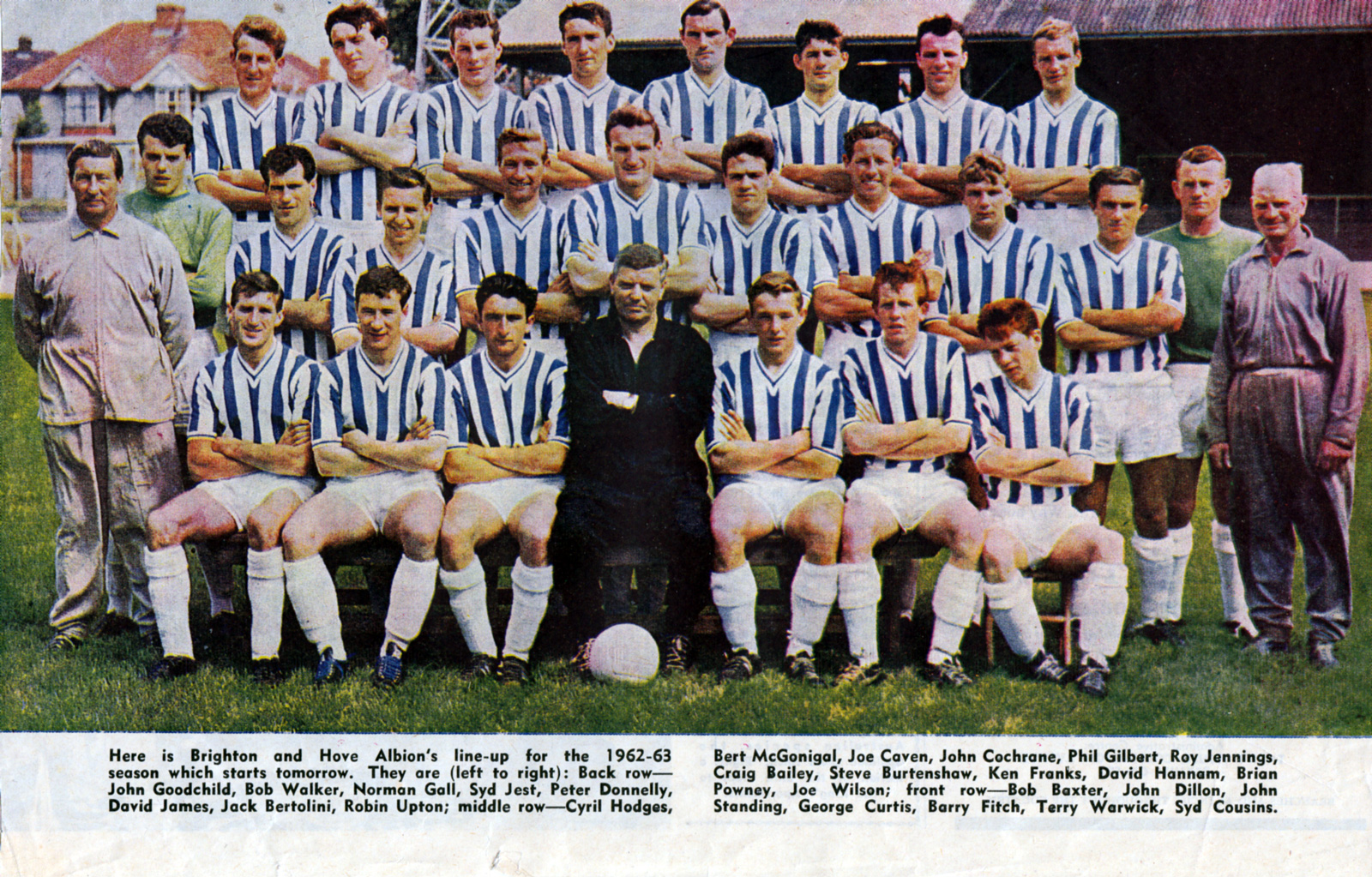
Here’s the team photo for the inglorious season:

1962-63 brighton

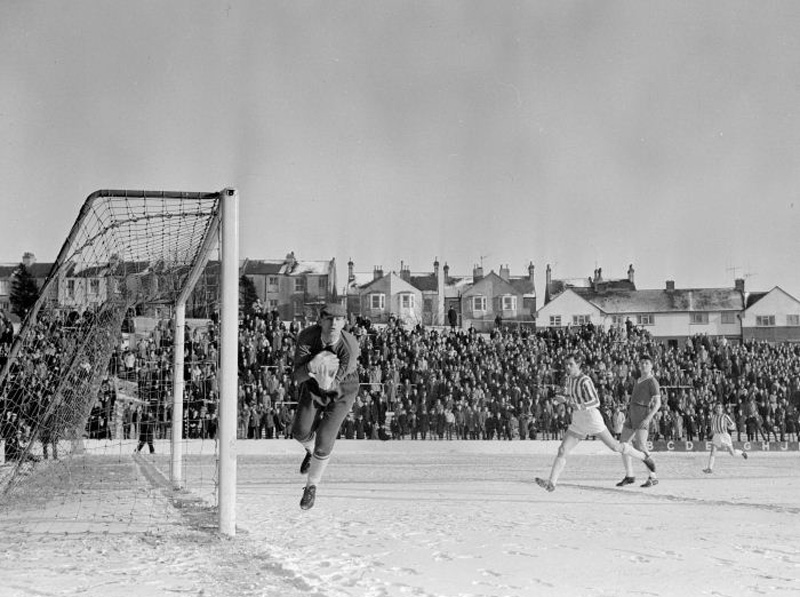
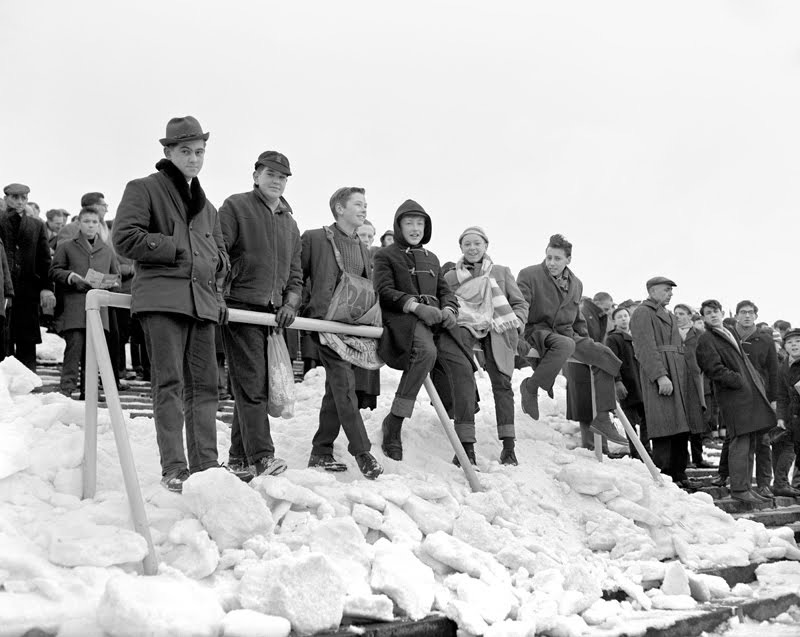
The season was memorable for the heavy snow in the New Year. Here’s some shots from the Halifax match in January 1963. The pitch looks like an ice rink:

1963brighton-v-halifax-1

1963brighton-v-halifax

And from the Crystal Palace match in the same month:

1963palace

The younger players were dubbed ‘Curtis’ Cubs’ as he put his faith in youth. New signings included teenagers John Dillon (Sunderland), Bobby Walker (Gateshead), and David James and Ken Franks (Blantyre Victoria). A day before his twentieth birthday, defender Norman Gall, made his debut at Watford in September 1962, replacing popular captain Roy Jennings, before being dropped after a mere three matches, all lost. This was in the middle of a twelve match run without a win. Not surprisingly, Curtis left the club by mutual consent in February 1963, with Archie Macaulay being appointed in April after a caretaker managerial spell by Joe Wilson.

Ten years later, in 1972/73, goalkeeper Brian Powney and defender Norman Gall were the only survivors in the Brighton side that finished bottom of the Second Division under Pat Saward. Another long winless run put the kybosh on the season. This one ran for sixteen matches with the last thirteen all ending in defeat! A decade on, Brighton & Hove Albion again finished bottom, in Division One, but at least they had an FA Cup Final to look forward to. In 1992/93, Brighton finished ninth in the third tier (Division Two) before another relegation in 2002/03 (Division One – second tier), when twelve successive League matches were lost from mid-August 2002.

With Brighton & Hove Albion in the Championship play-offs in 2013, this League season is probably the best one ending in ’3′ in the club’s history. Time to lay the ghosts of 1963, 1973, 1983 and 2003 to rest.

Tagged

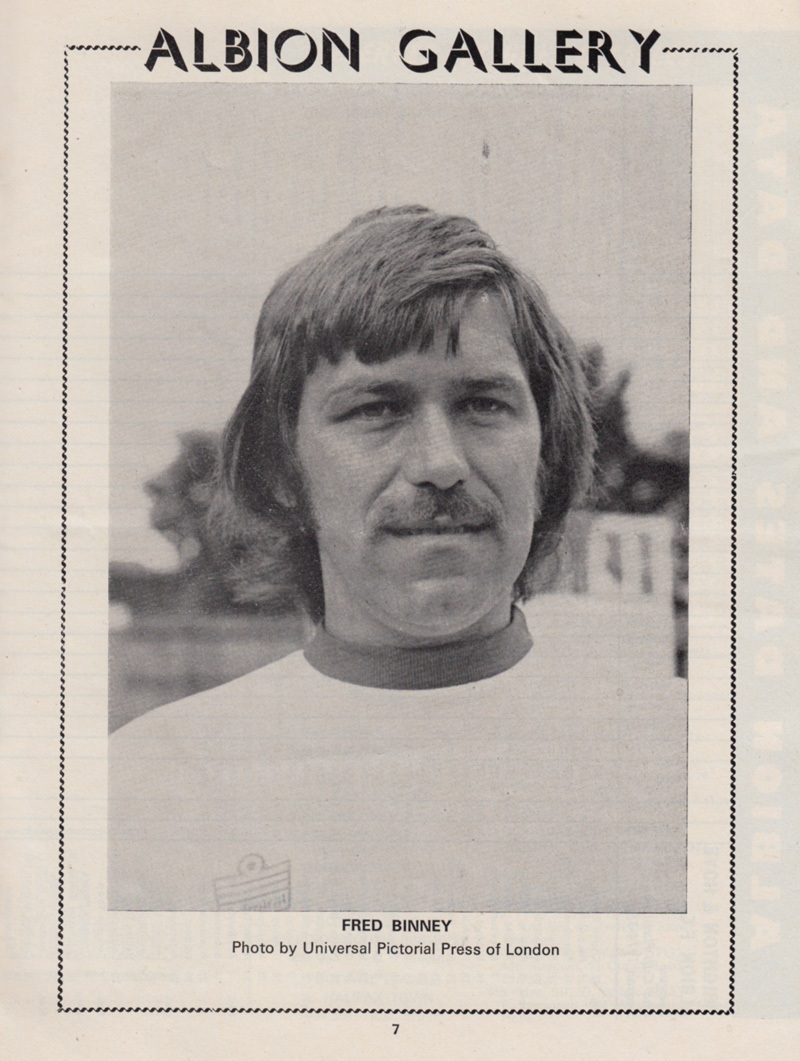
Your questions for Fred Binney

fredbinney3

Through doing The Goldstone Wrap blog, I’ve been contacted by Fred Binney’s son Adam. As many of you know, Fred was the Brighton team’s goal poacher supreme in the mid-1970s, hitting 23 League goals in 1975/76 (all but five at the Goldstone) before losing his place to the Ward-Mellor partnership the following season.

Adam says his dad is “retired now and spends as much time on his narrow boat with my mum as possible. He’s invited to go back to Brighton to walk the pitch every year and loves it when he has the time to get there. Apart from that he stopped coaching Plymouth Uni this season, But I suspect he misses it.”

His son also adds “he is not really interested in being lauded and doesn’t look for any kind of adoration. He doesn’t really like the attention, but he does love Brighton & Hove Albion and remembers his time there fondly.”

I asked if Fred was willing to do an interview with questions from Albion fans, and he was. So, if anyone has any questions for Fred, or thoughts on him as a player, please add them as a comment or email them to seagulls@me before adding .com at the end.

Thanks!

Tagged

The Dolphins badge

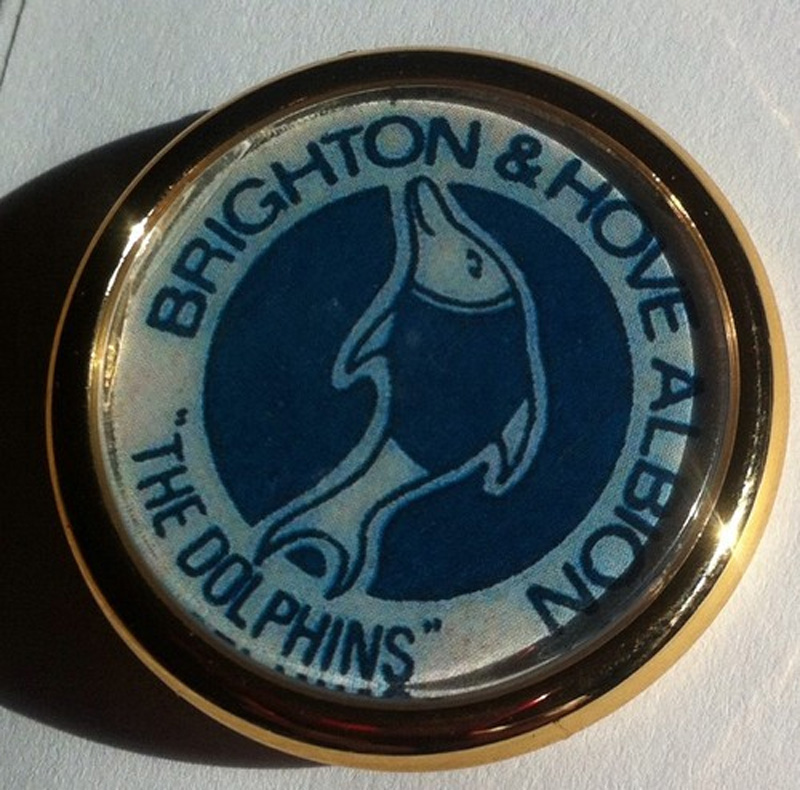
dolphins1

This rather gorgeous item was found on eBay a few months ago. It is from the brief period of time in the mid-1970s when Brighton had adopted the Dolphins nickname. Flicking through a 1974/75 match programme, this Club Lapel badge would have cost 25p, while a pin badge would have set you back 5p.

Curiously, the Dolphin design never made it onto the shirts of the team but some enterprising Albion fans have taken a step in this sartorial direction. The very wonderful Albion fanzine The Seagulls Love Review have produced T-shirts in a range of colours (white, black and royal blue) with the Dolphins logo, cheekily sticking their zine name on it.

tslr

If you’re interested, you can buy one here. Good work, chaps!

Tagged , ,

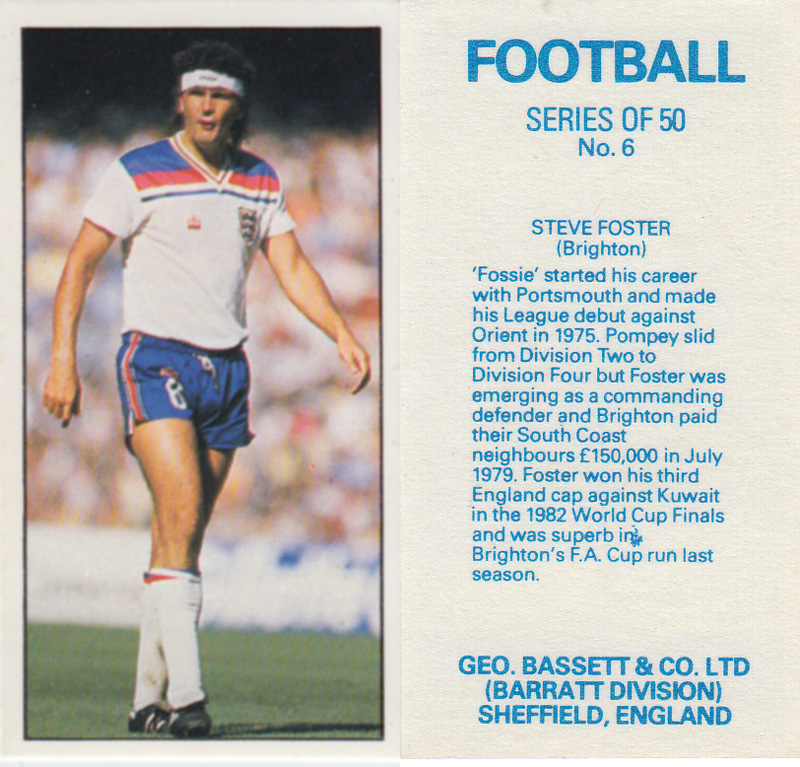
Steve Foster: third choice as captain

stevefoster1

From Match Weekly:

Brighton defender Steve Foster wasn’t the club’s original choice as skipper… he was third in line!

Before the season started Brian Horton, who led ‘Seagulls’ to the First Division in 1979, was expected to carry on the captaincy.

But his surprise move to Second Division promotion favourites Luton created a chance for Eire international Mark Lawrenson and he took charge for a couple of pre-season friendlies.

Mark didn’t keep the job for long because he too fond his way from the Goldstone Ground when Liverpool manager Bob Paisley parted with £900,000 to take him to Anfield.

So new manager Mike Bailey found himself looking for another leader and he had no hesitation in choosing 23 year-old Steve.

‘Mike’s decision to make me skipper came right out of the blue – I’d never even thought about leading the team before,” said Steve. “But it’s a great honour and I’m really enjoying the job. I suppose I play in the ideal position for a captain. Being a defender means you can see more of the game and can tell where things are going right or wrong. I see my role as putting over what the manager wants on the field. It’s my job to make sure each player does what he has been told to do. I’m a bit of a moaner on the field. Part of my game is talking and if things go wrong I’m not scared of bullying my team-mates.

‘The lads have been tremendous. They’ve just knuckled down and done what I’ve told them. I think we can do really well this season. We’ve made a good start and I’m sure we can build on it.’

Foster did so well in 1981/82 that he found himself picked for the England World Cup squad in Spain that summer.

stevefoster3

stevefoster2

Tagged

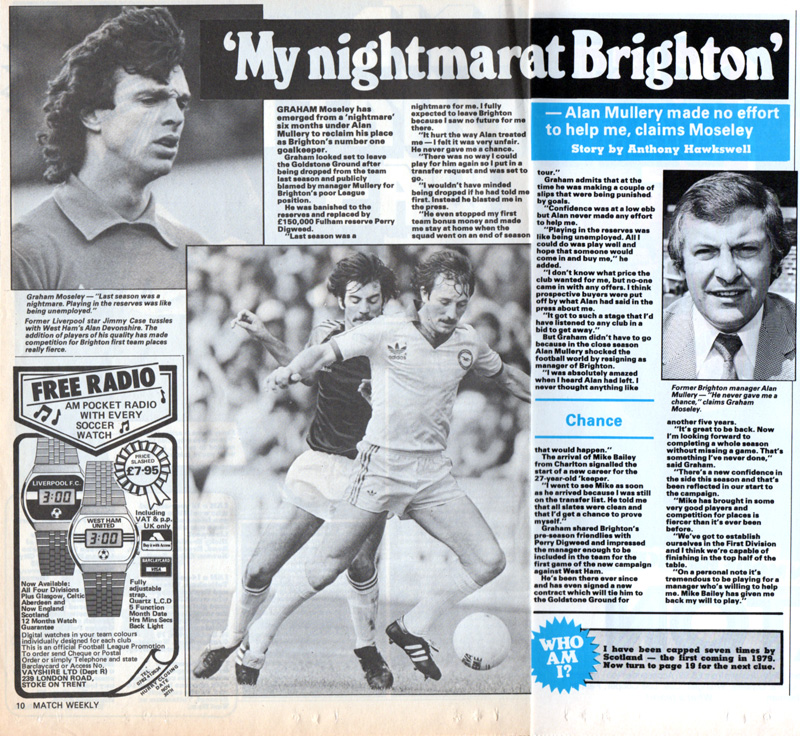
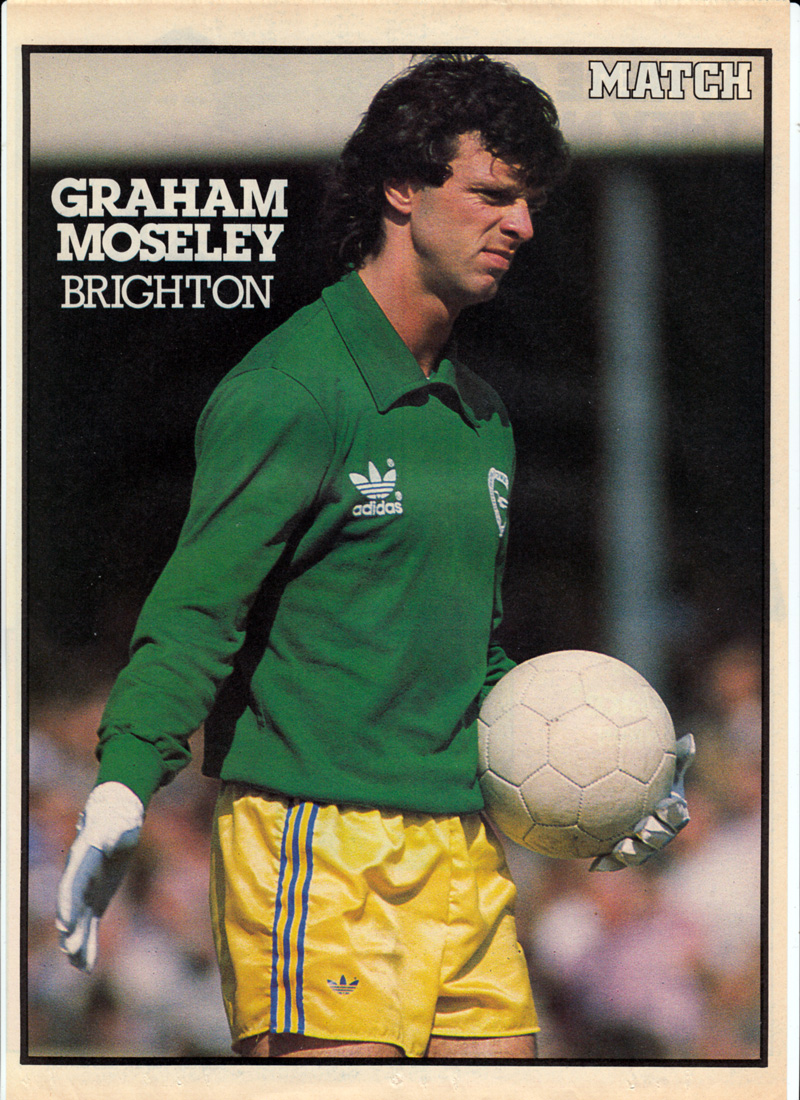
Graham Moseley: My Brighton nightmare

moseley2

From Match Weekly in 1981/82:

Graham Moseley has emerged from a ‘nightmare’ six months under Alan Mullery to reclaim his place as Brighton’s number one goalkeeper.

Graham looked set to leave the Goldstone Ground after being dropped from the team last season and publicly blamed by manager Mullery for Brighton’s poor League position. He was banished to the reserves and replaced by £150,000 Fulham reserve Perry Digweed.

“Last season was a nightmare for me. I fully expected to leave Brighton because I saw no future for me there. It hurt the way Alan treated me – I felt it was very unfair. He never gave me a chance. There was no way I could play for him again so I put in a transfer request and was set to go. I wouldn’t have minded being dropped if he had told me first. Instead he blasted me in the press. He even stopped my first team bonus money and made me stay at home when the squad went on an end of season tour. Confidence was at a very low ebb but Alan never made any effort to comfort me. Playing in the reserves was like being unemployed. All I could do was play well and hope that someone would buy me.

When Alan Mullery resigned as Brighton boss in the summer of 1981, Mike Bailey’s arrival gave Moseley a second chance:

“I went to see Mike as soon as he arrived because I was still on the transfer list. He told me that all slates were clean and that I’d get a chance to prove myself. There’s a new confidence in the side this season and that’s been reflected in our start to the campaign. Mike has brought in some very good players and competition for places is fiercer than it’s ever been before. We’ve got to establish ourselves in the First Division and I think we’re capable of finishing in the top half of the table. On a personal note, it’s tremendous to be playing for a manager who’s willing to help me. Mike Bailey has given back my will to play.”

By the end of the season, Moseley had re-established himself at the club, playing 30 League games with Brighton in 13th spot in Division One, their highest ever finish.

grahammoseley-match

Tagged , ,

Willie Irvine: How Promotion Was Won in ’72

willieirvine

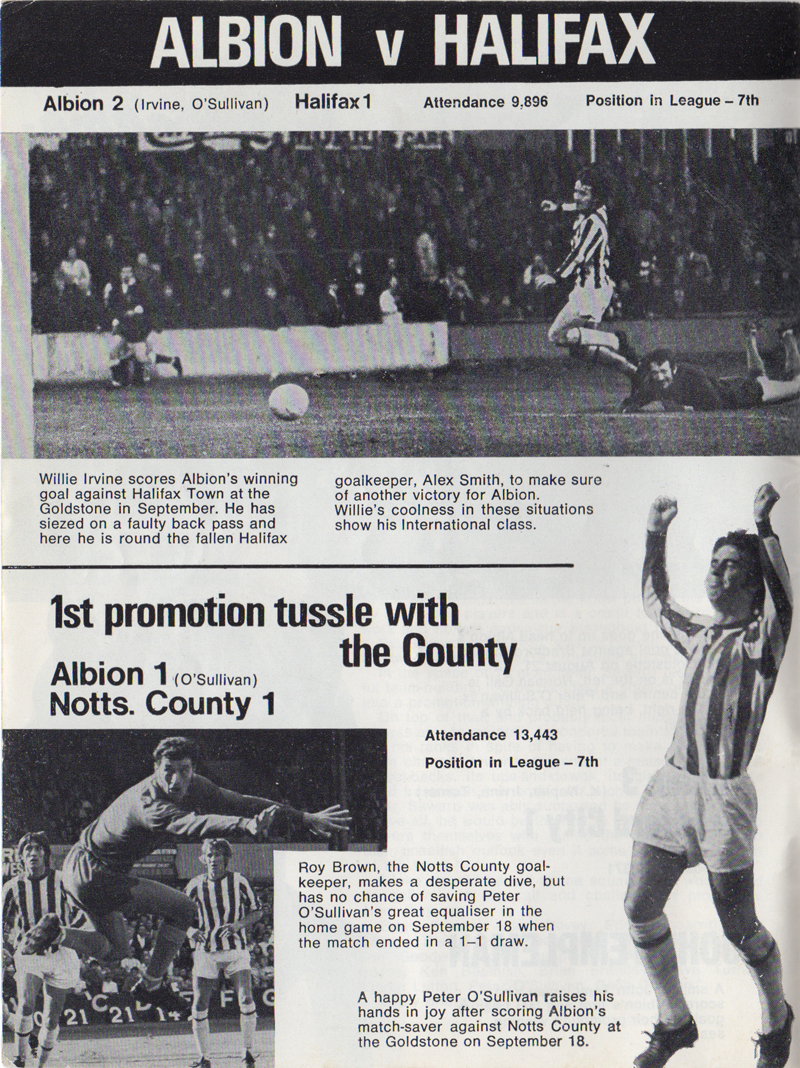
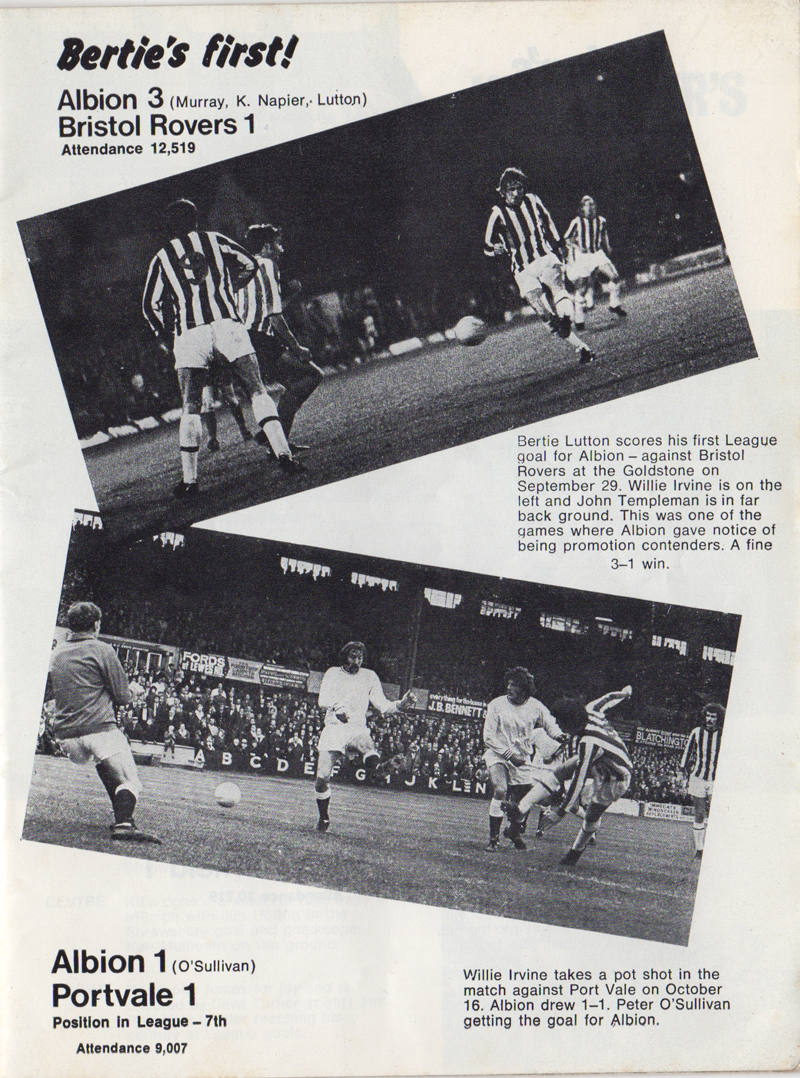
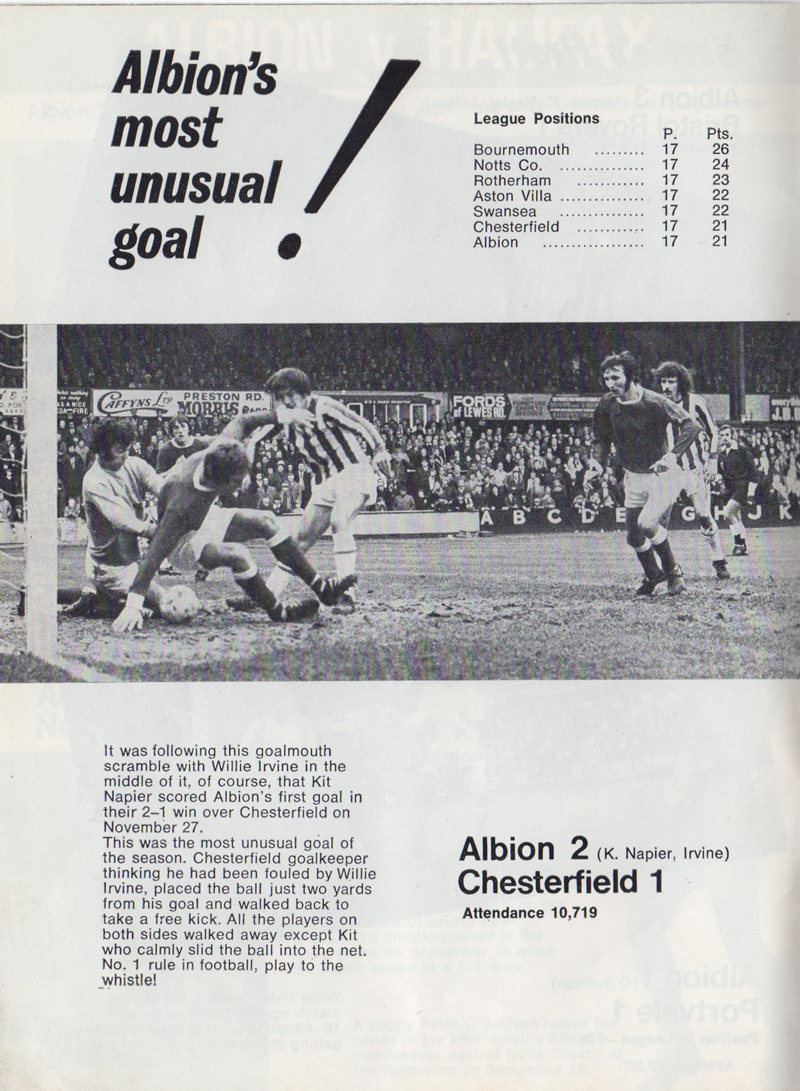
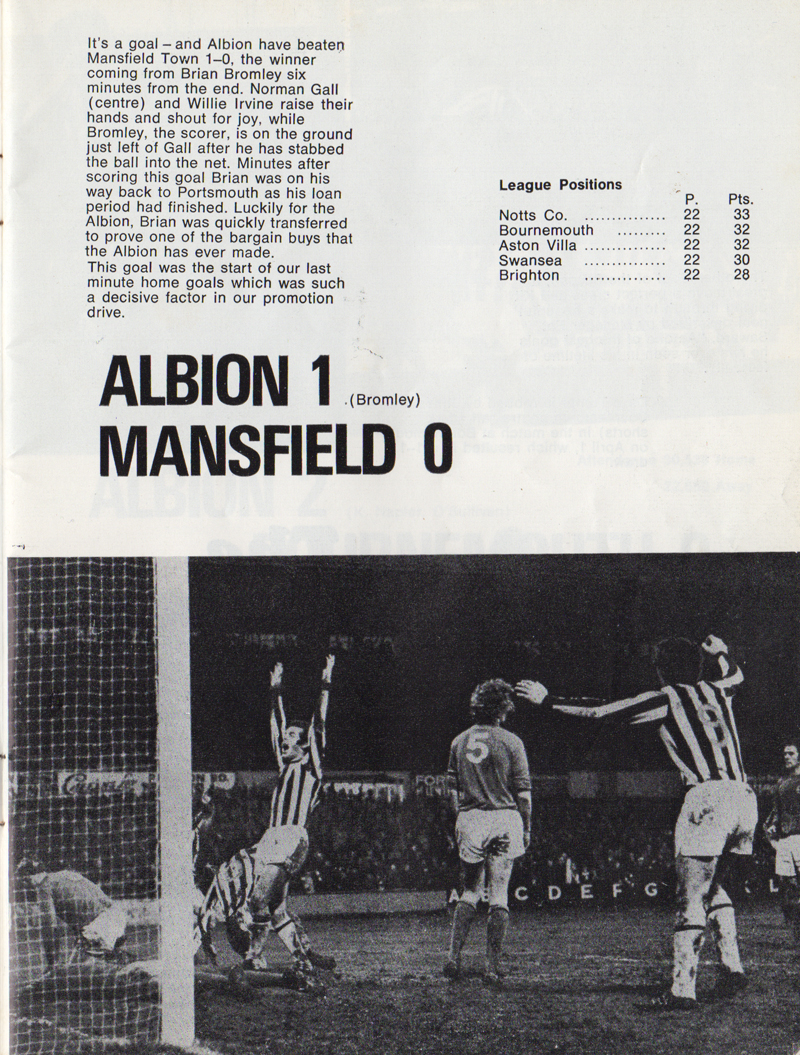
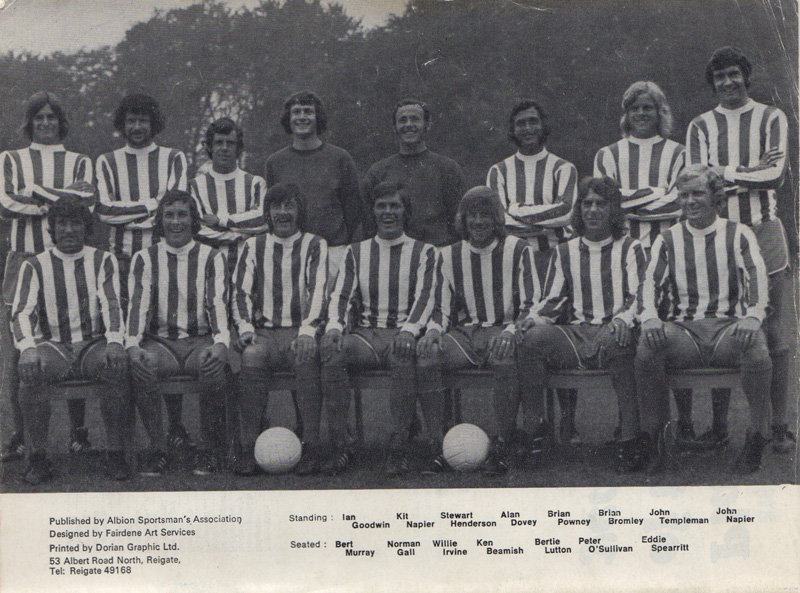
In ‘Together Again,’ the autobiography of former Burnley, Preston, Brighton and Halifax hotshot Willie Irvine, he recounts the story of how Albion’s scintillating all-out attacking play achieved promotion from Division Three in 1971/72. Alongside the equally prolific Kit Napier, his sixteen League goals made him the club’s joint top scorer. Irvine’s strikes against Torquay, Halifax, Walsall (FA Cup) and Bristol Rovers were all in the dying minutes, earning him the nickname ‘Late Goal Willie.’ He also scored this incredible goal against Aston Villa:

More on that later!

Unusually, but effectively, the classy Northern Ireland international reminisces about the famous season through the context of a booklet from those times:

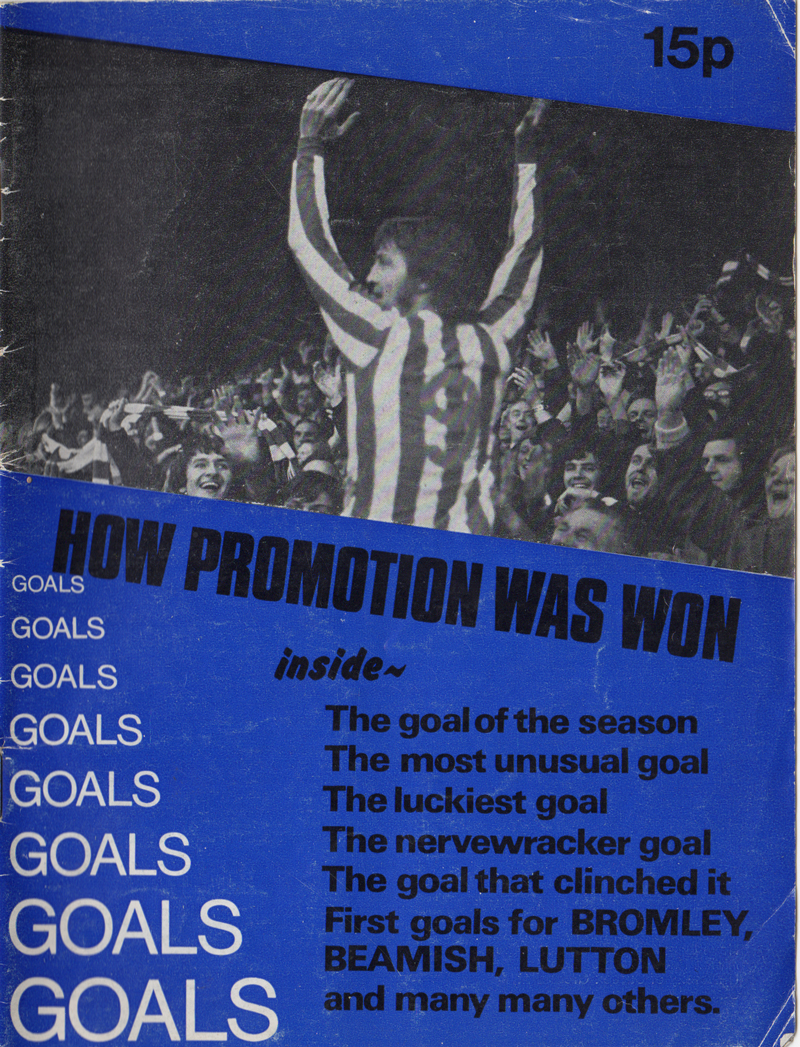
Among my few bits and pieces of memorabilia is a torn, battered, moth-eaten copy of a little programme-sized souvenir booklet produced by Chris Bale, who was sports editor of the Brighton and Hove Gazette. It’s a story in pictures of that memorable season, one of the happiest and most rewarding I spent.
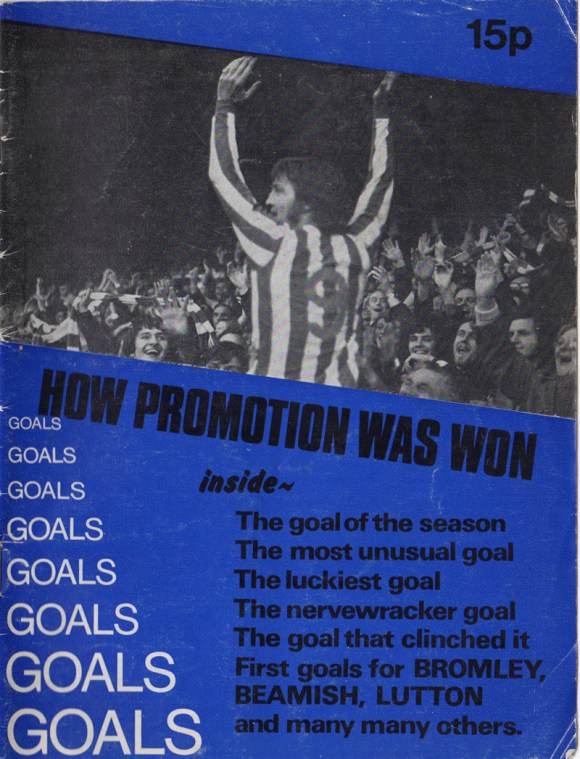
72-1

I look at it now and all the best memories come back as if the 30 years and that have passed by since that year have melted away. It says on the blurb it was the most exciting season since Albion had won promotion from the Third Division 14 years earlier.

I flick through the pages and am reminded of the chairman Tom Whiting, Pat Saward’s right-hand man Mike Yaxley, Ray Crawford the coach, and a bloke called Joe Wilson who had been at the club in one capacity or other since Noah’s Ark first hit the waves.

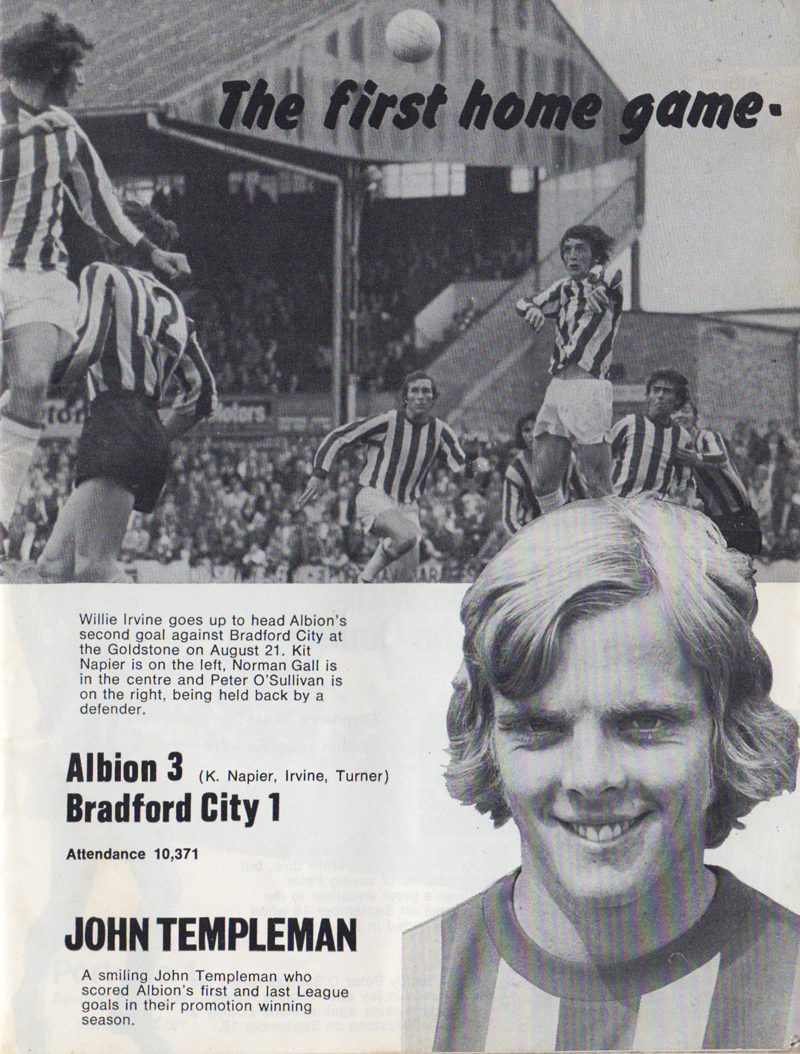
The pages of the booklet aren’t even numbered but there I am on the first page that hits you, scoring against Bradford City, soaring like an eagle, eyes on the ball, shirt flapping, hair flying. Bang, back of the net, bloody magic.
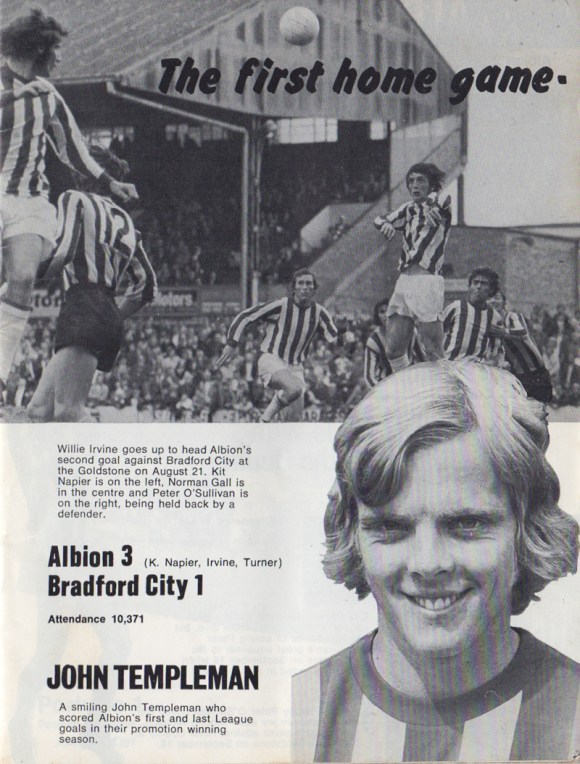
72-2

Next page, scoring the winning goal on our home ground, seizing on a faulty back pass and going round their keeper to make sure it goes in. “Willie’s coolness in these situations shows his international class”. Chris Bales’ words, not mine.
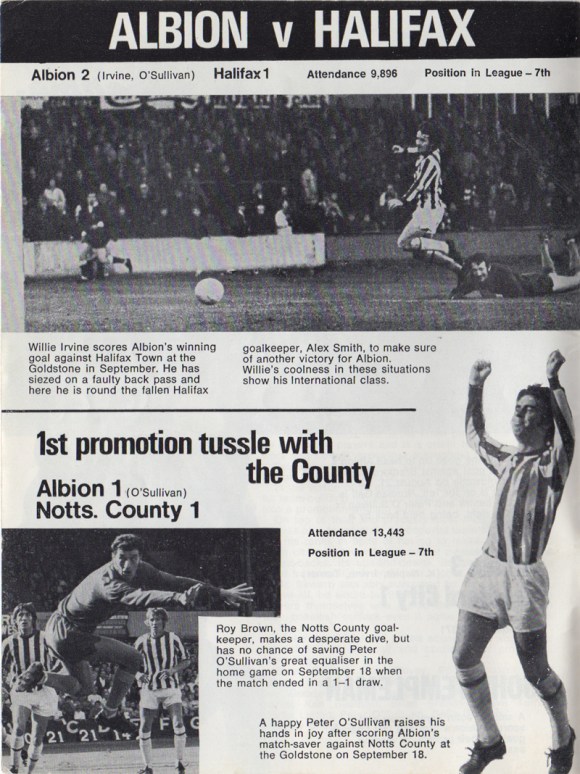
72-3

Next page: two pictures of me, one back to the camera, slim, muscular, striped shirt, number 9 big and bold on the back, Bertie Lutton slamming the ball home. Under that one is me talking a pot shot, great picture, almost horizontal above the ground; damn, missed.
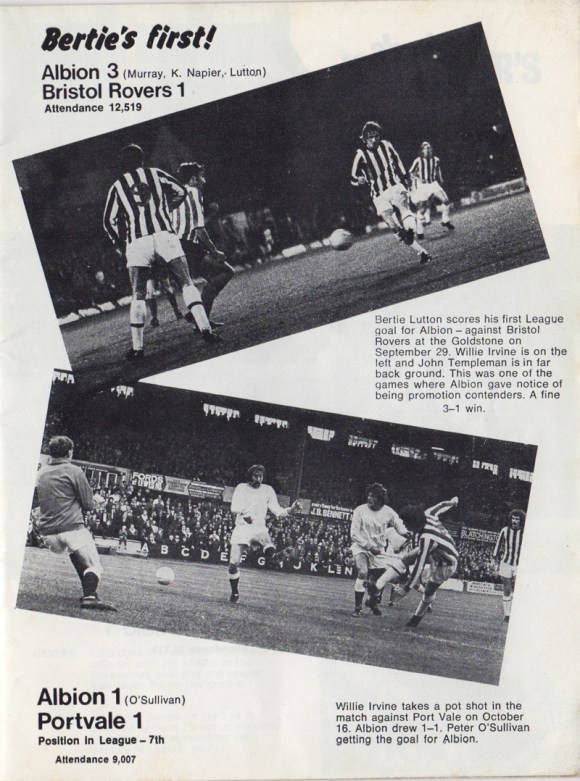
72-4

Next page, after 7 games, seventh in the table, five points behind Bournemouth at the top, Albion’s most unusual goal comes next and I’m responsible for it; a goalmouth scramble, me in the middle of it, the Chesterfield goalkeeper thinks I have fouled him and stops playing and puts the ball down for a free kick. He walks back a couple of yards to take the free kick and everyone bar just one player walks back to take up new positions. But that’s just one problem. The referee hasn’t blown for any foul so Kit Napier, cool as you like, puts the ball into the back of the net. Mayhem, stunned Chesterfield players. Stunned Brighton players for that matter; Albion 2 Chesterfield 1. Who gets the other? Me.
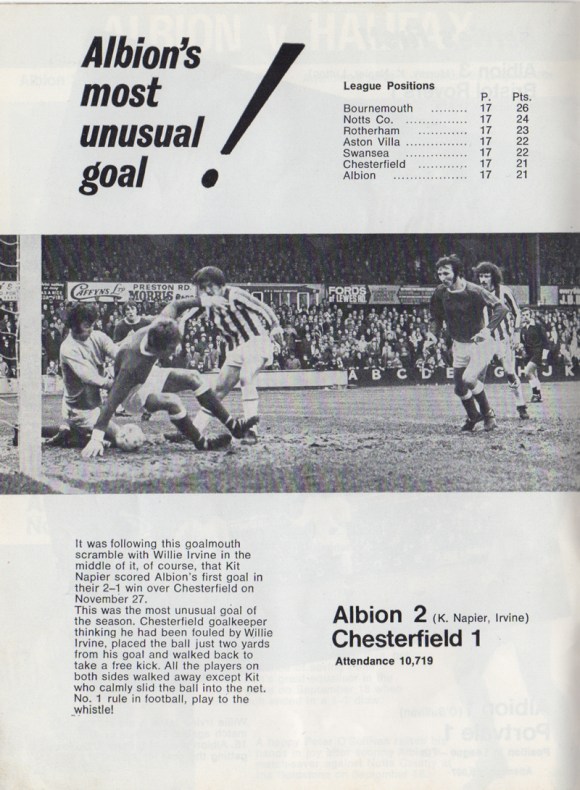
72-5

Nearly half-way through the booklet: 22 games played, Brighton fifth, five points behind Notts County, Brian Bromley scores; me, arms raised in joy, and a dejected Mansfield number 5.
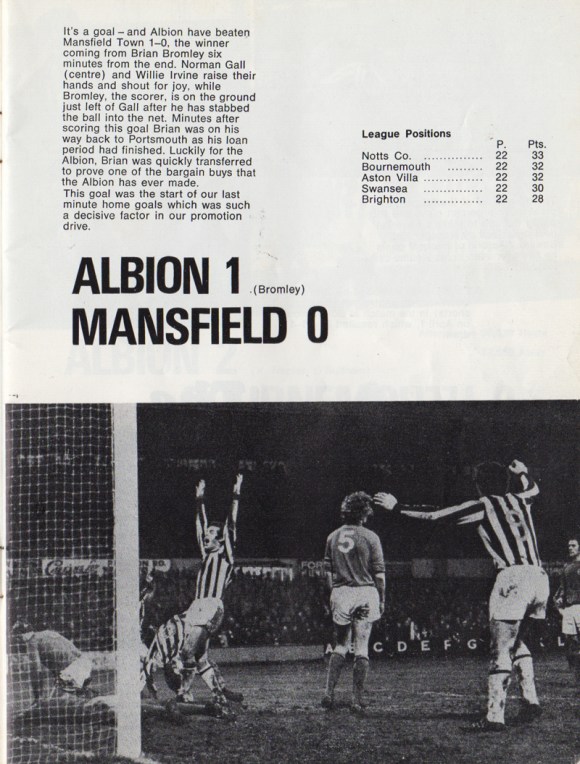
72-6

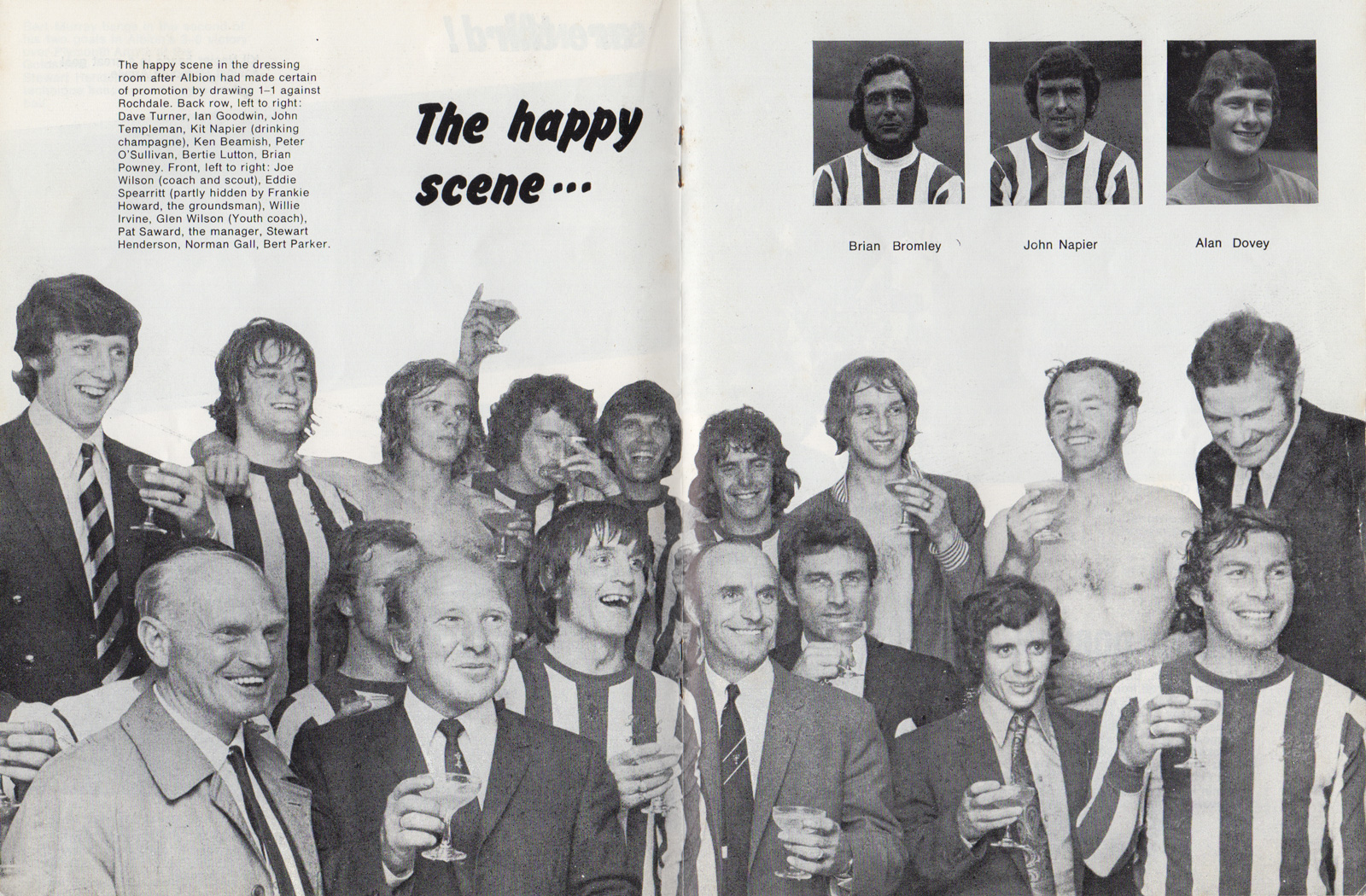
The middle pages of the souvenir have us all smiling and holding champagne glasses. I’ve wangled myself a position in the centre of the picture, hair all over my face. Pat Saward, just to my left, looking cool and calm as if this kind of thing happens every day, but as a former male model this could be his photograph face. Good-looking fella.
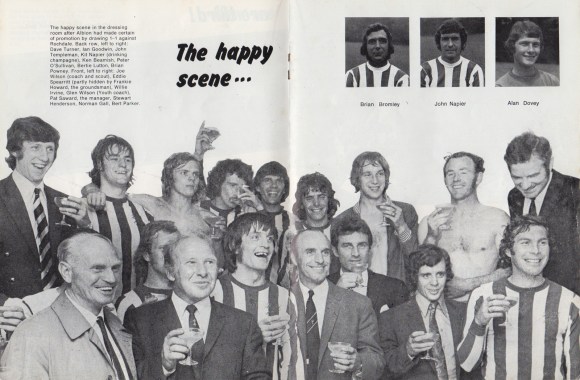
72-7

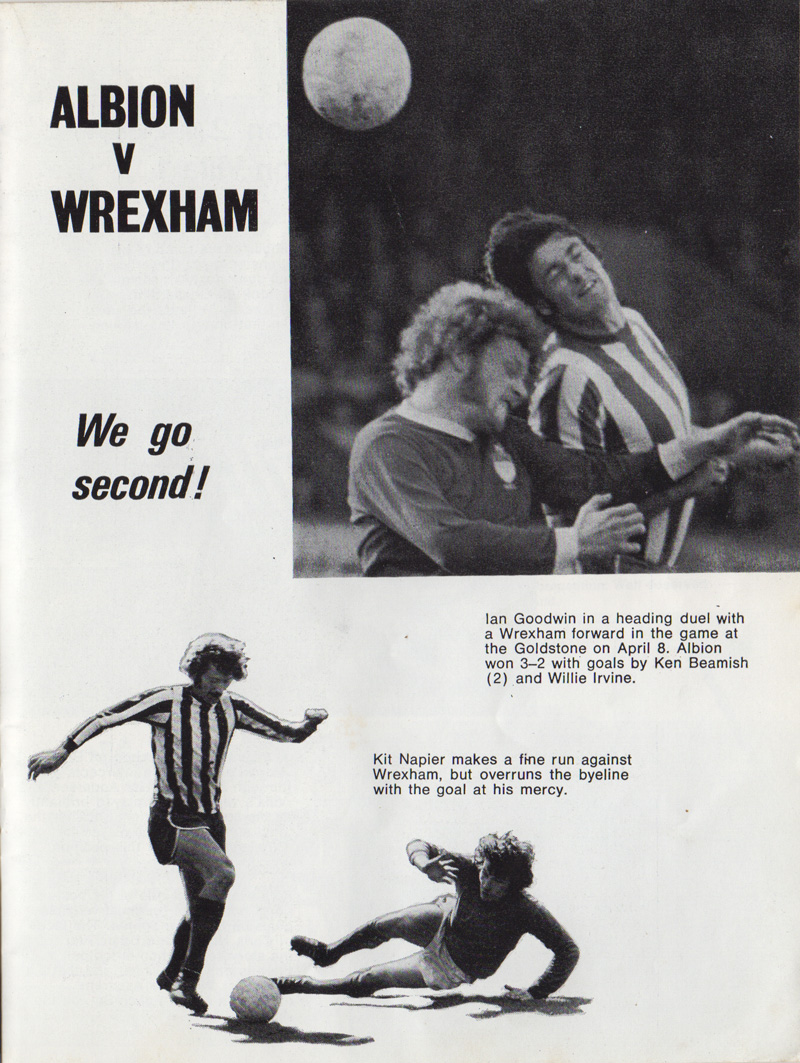
Page whatever it is – it’s a bugger they’re not numbered – and we go second: Albion 3 Wrexham 2, one from me.
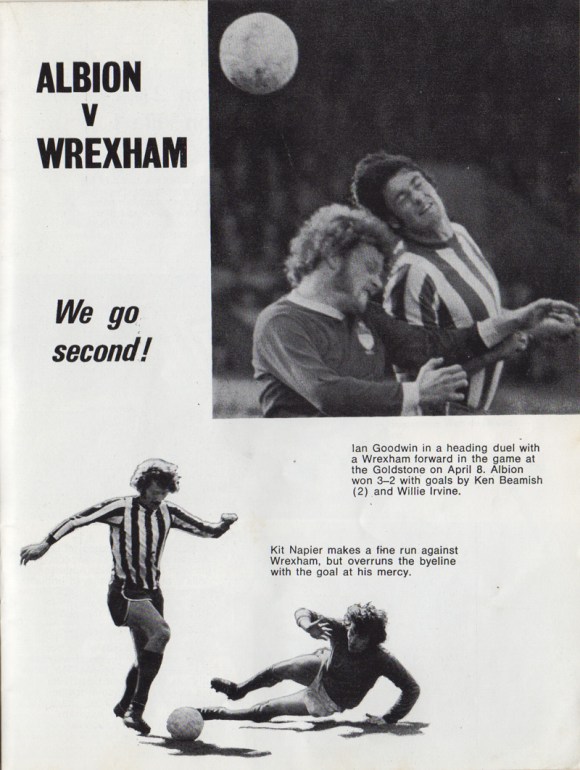
72-8

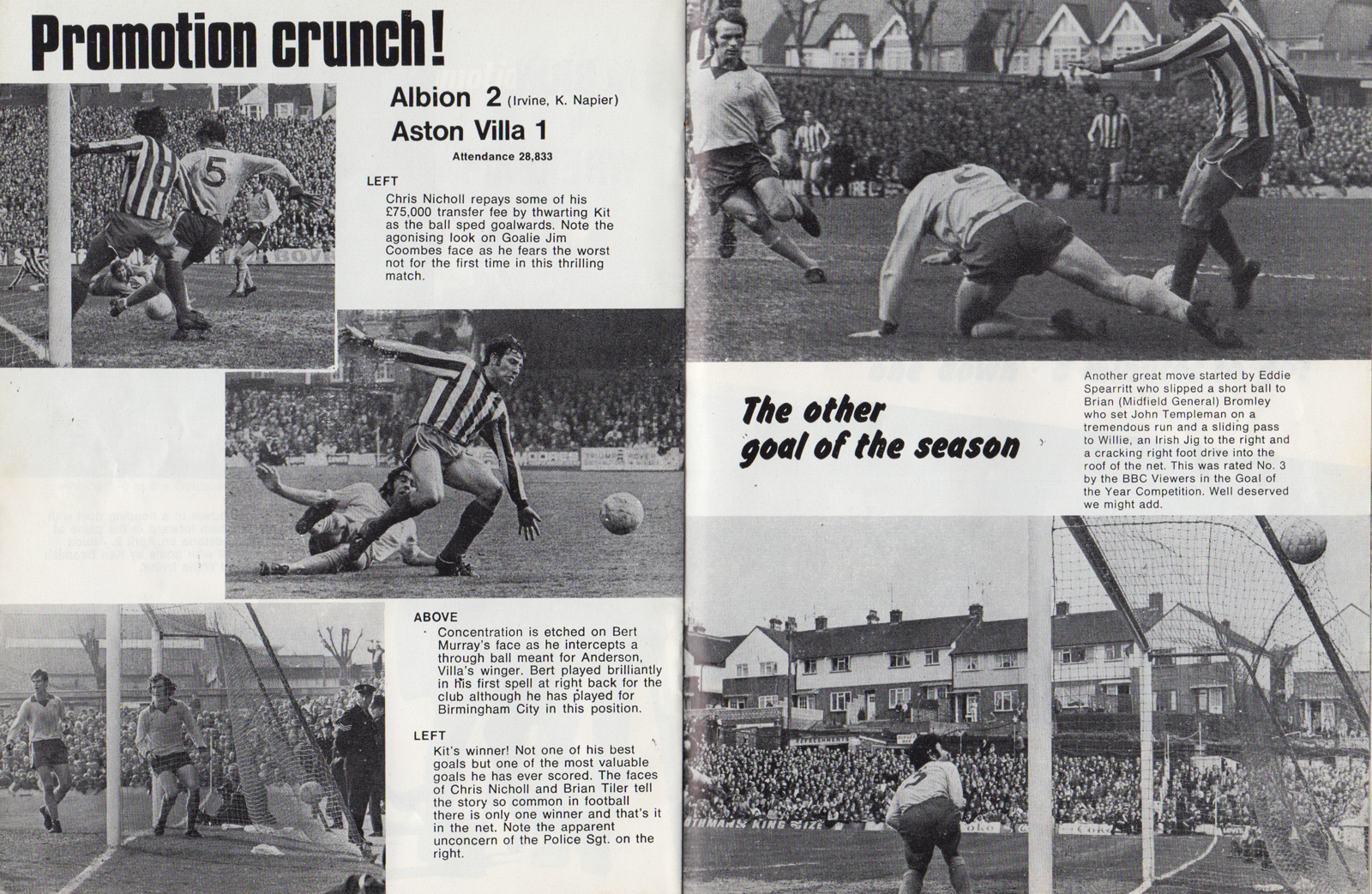
And then the big one, the promotion crunch game, at home to Villa. It was a win that really made us think and believe we could do it: win promotion and get our names into Brighton history books. There were a few drinks that night. The BBC cameras were there for that game and there, next to the Villa page, there’s a picture of me scoring and the goal was voted by BBC viewers into Goal of the Season runners-up.
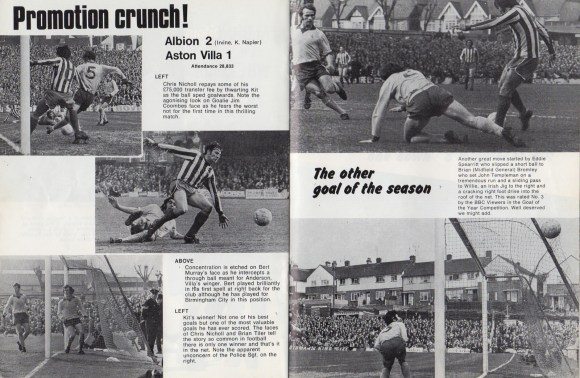
72-9

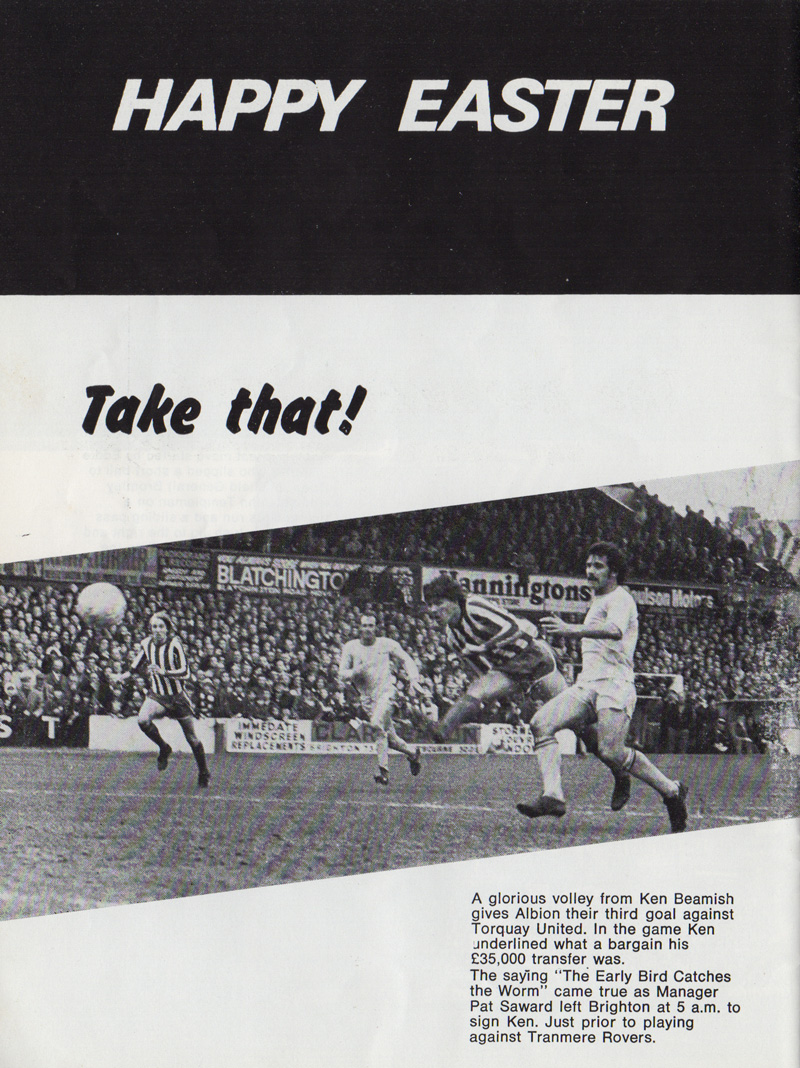
Next page, Ken Beamish is pictured with a flying header. He was a £35,000 bargain and demonstrated that the saying “the early bird catches the worm” is absolutely true. Pat Saward left Brighton at 5am one morning to sign him. I’ve half an idea he signed him from Tranmere, who we played the next day.
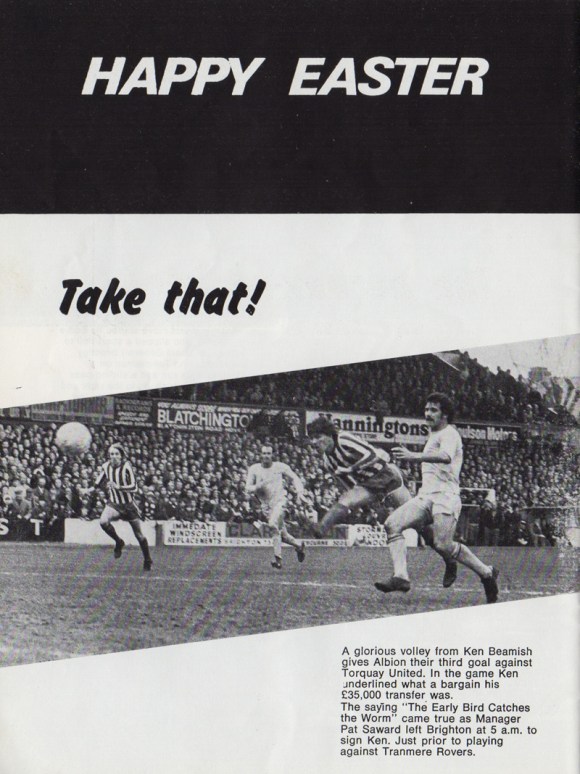
72-10

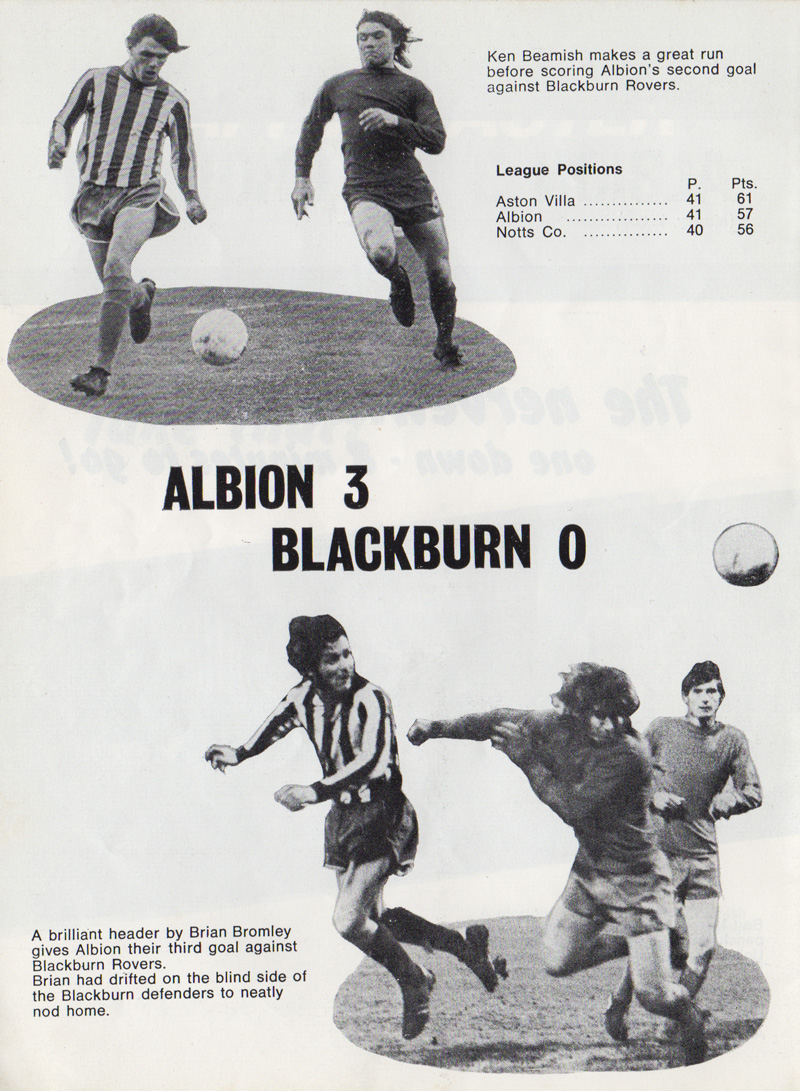
Albion 3 Blackburn 0 and I scored. I always seemed to score against Blackburn so when I see their old centre half Derek Fazakerley, I always say, “You won’t recognise me now, will you?” He always asks why. “Because all you ever saw was my back and you could never keep up,” I reply.
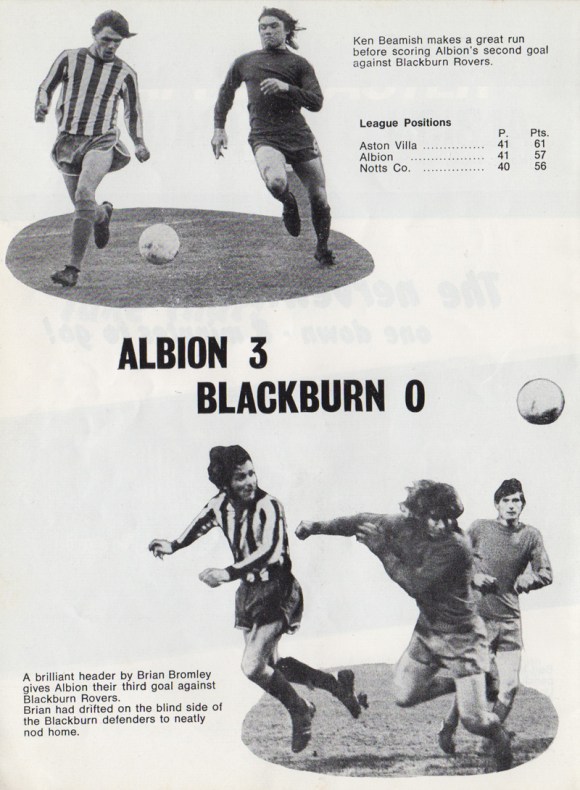
72-11

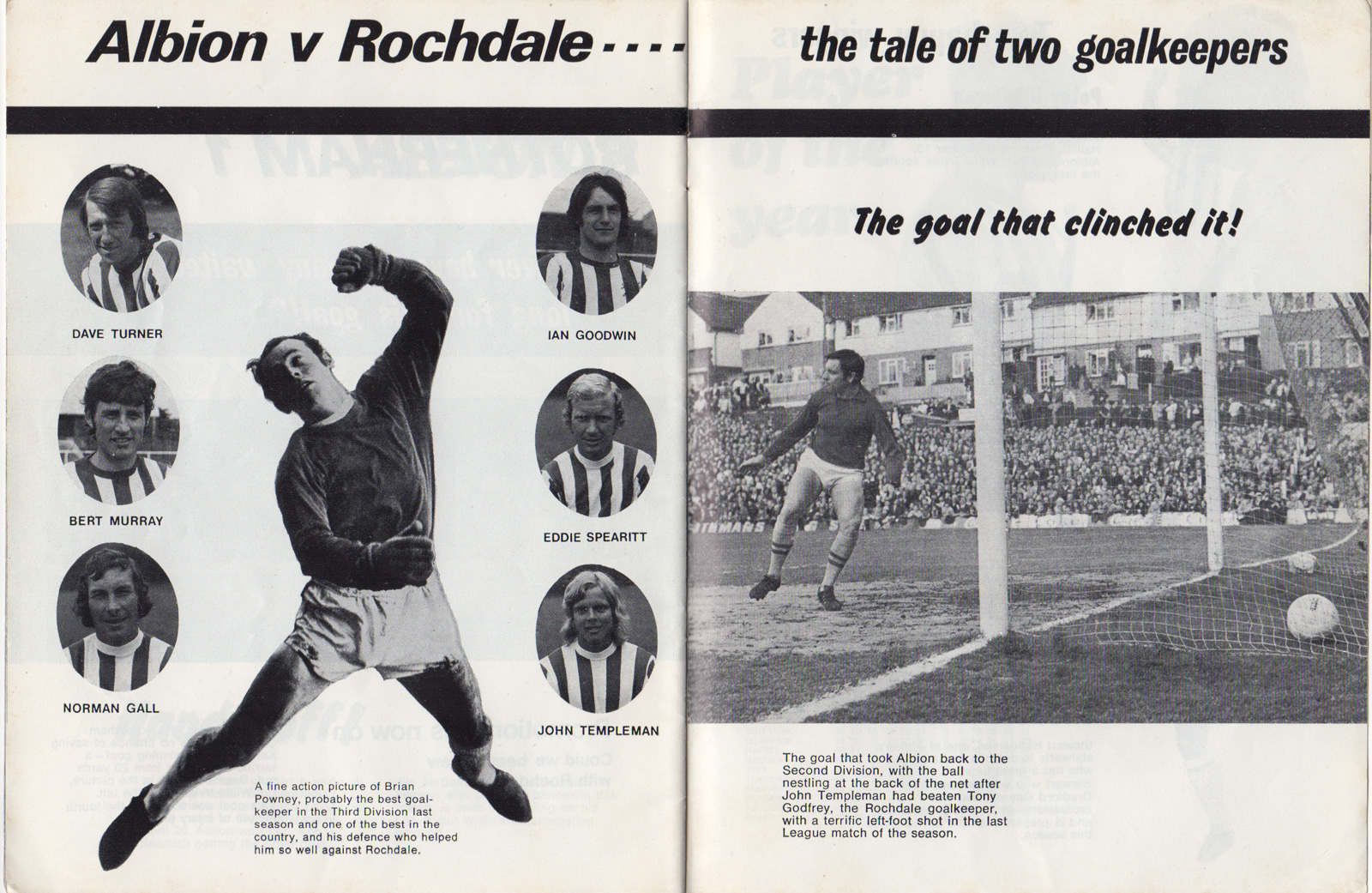
Now here’s the back end of the booklet. Did we by some quirk play Rochdale twice in the final two games?
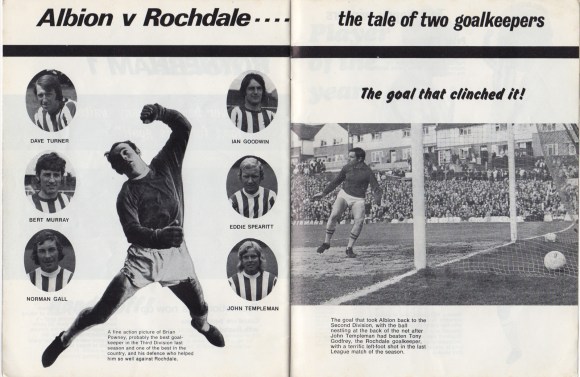
72-14

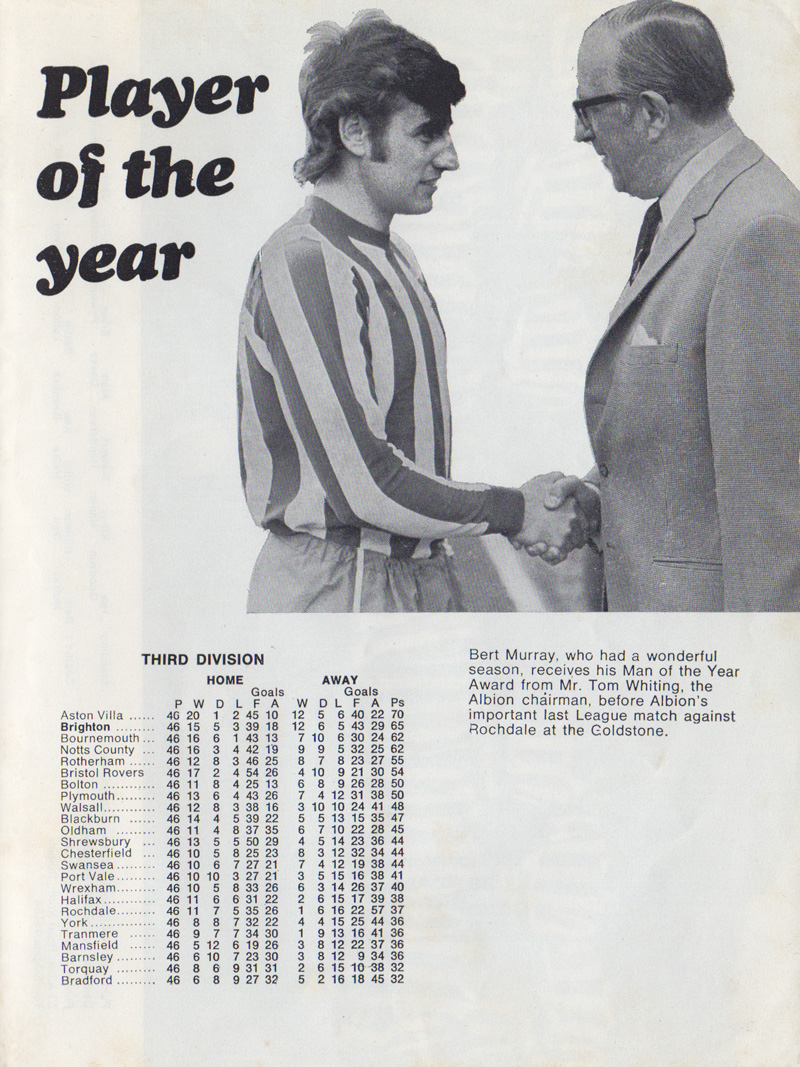
The final table reads: Aston Villa top with 70 points and then us in second place with 65 points, just three ahead of Bournemouth. Absolute jubilation.
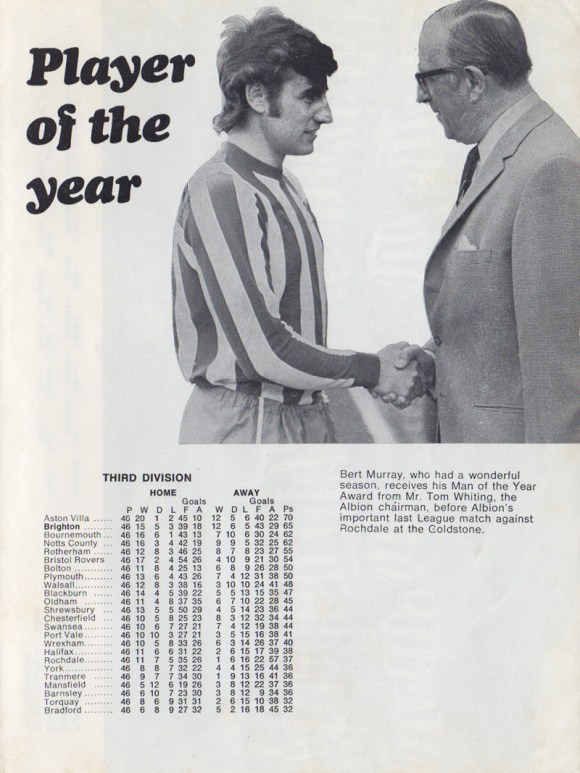
72-12

It’s a priceless memento – in spite of my ridiculous Mexican bandit moustache, plus the obligatory ’70s hairstyle. Eat your heart out, Omar Sharif. We all had those big hairstyles then. I just wish I had some left today and didn’t look quite so old.”
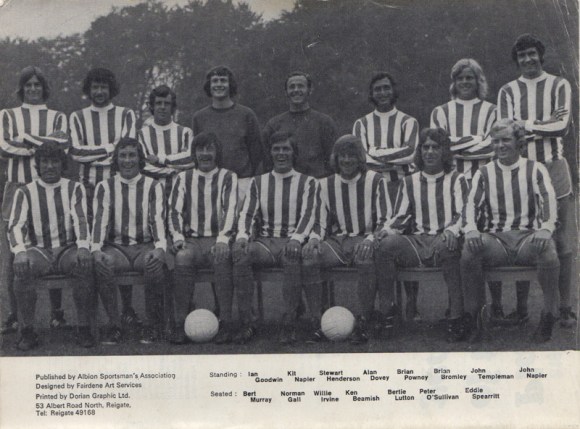
72-13

Such was Willie Irvine’s tremendous form in 1971/72 for the Albion that he fought his way back into the Northern Ireland team in the summer of 1972. Here, he gets an assist for Terry Neill’s winner against England at Wembley in the Home Internationals:

Tagged , ,

Dean Saunders gets a taste for coaching

deansaunders

From the Brighton v Reading programme from 1986/87:

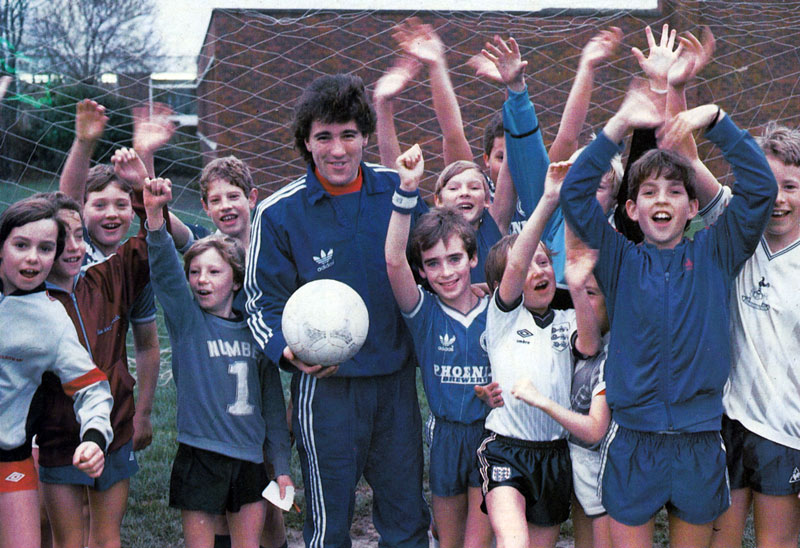
“I go into schools every couple of weeks through the season,” says Dean. “I usually do my coaching sessions with Steve Penney and we enjoy it. They are always very keen and they always try their best. We concentrate mainly on the more positive sides of the game. Passing, taking on players and shooting on goal. That sort of thing. Steve and I have got our routine worked out now. We always end the session with a game, which the kids enjoy. The only trouble is they are pretty quick into the tackle! Steve plays for one side and I play for the other. It’s a good laugh, but we’ve learnt not to do too much dribbling now. We just get it up to the front men and let them get on with it.

Will those be the Wolves tactics for the match at the Amex?!

Tagged ,

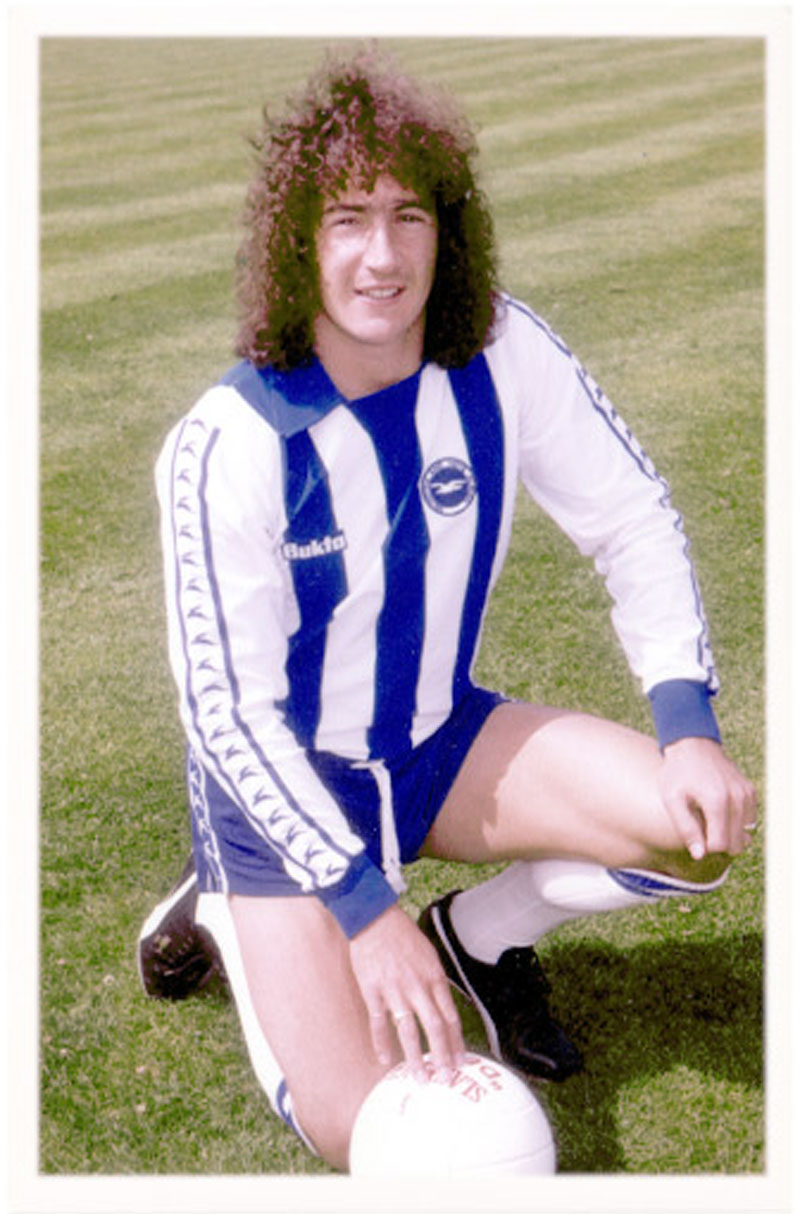
Star Sign: Peter Sayer (happy 58th birthday today)

sayer800

From Shoot! Magazine’s star signs feature:

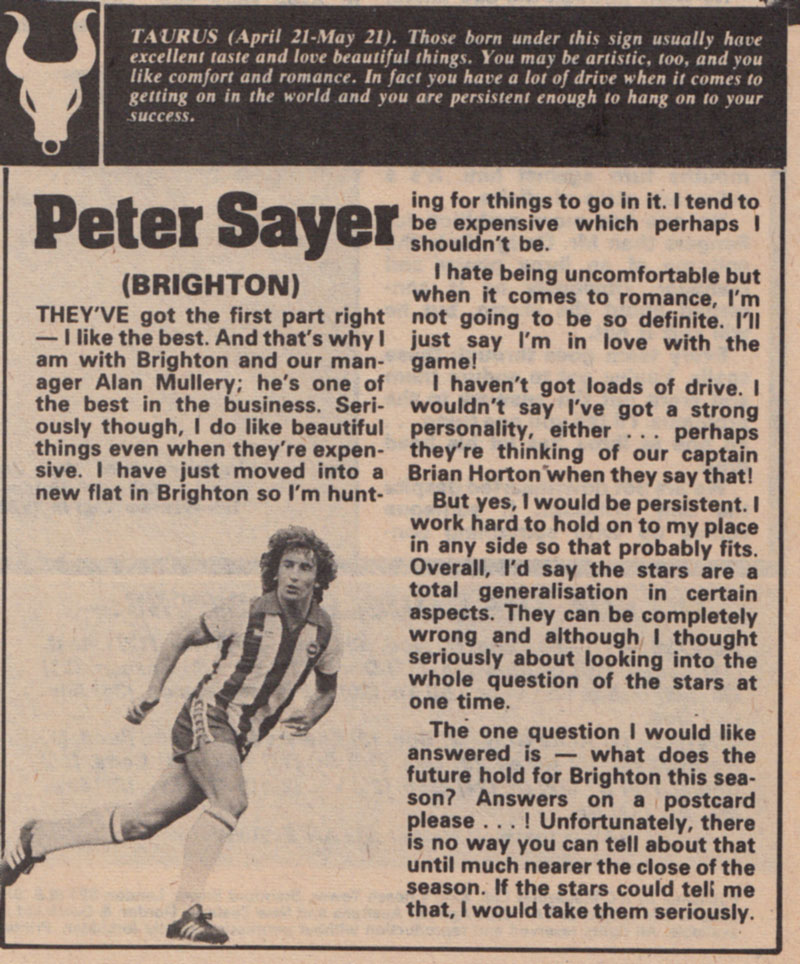
Taurus (April 21 – May 21) Those born under this sign usually have excellent taste and love beautiful things. You may be artistic, too, and you like comfort and romance. In fact you have a lot of drive when it comes to getting on in the world and you are persistent enough to hang on to your success.

And this is what Peter says about this:
petersayer

Tagged