Tag Archives: alan mullery

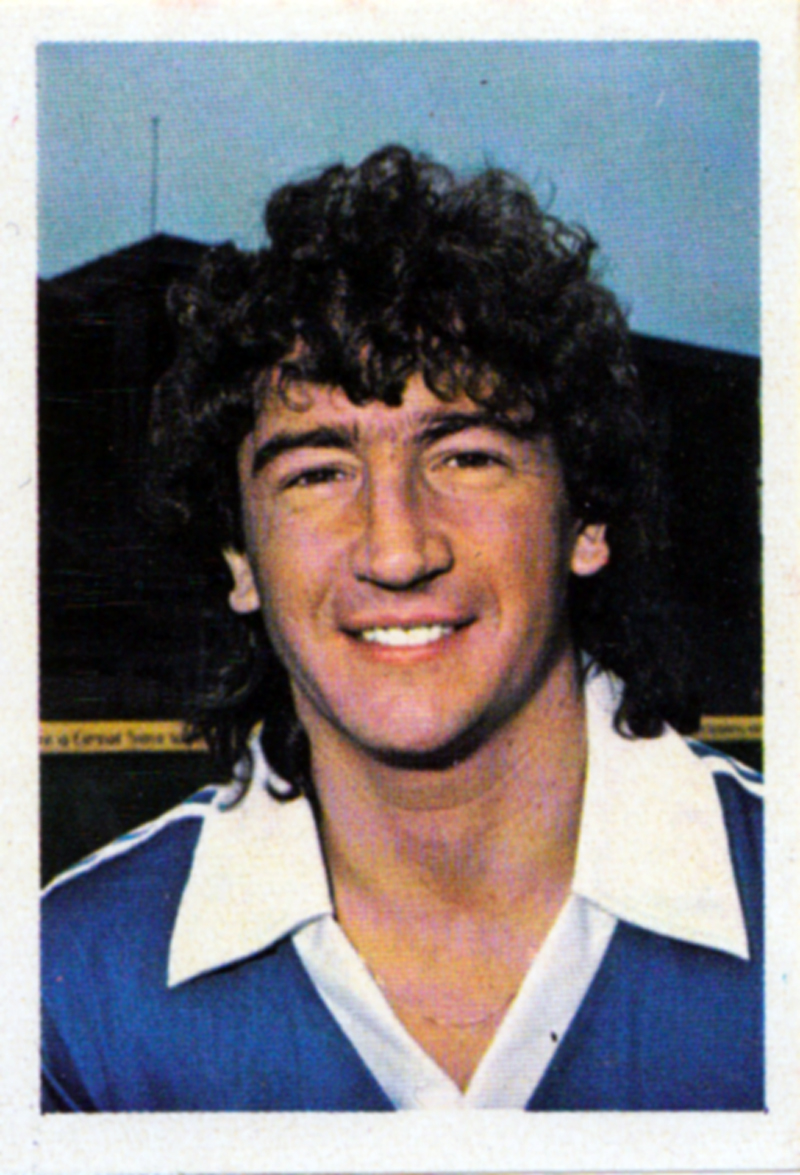
The class of Lawrenson shuts out Dalglish and Francis

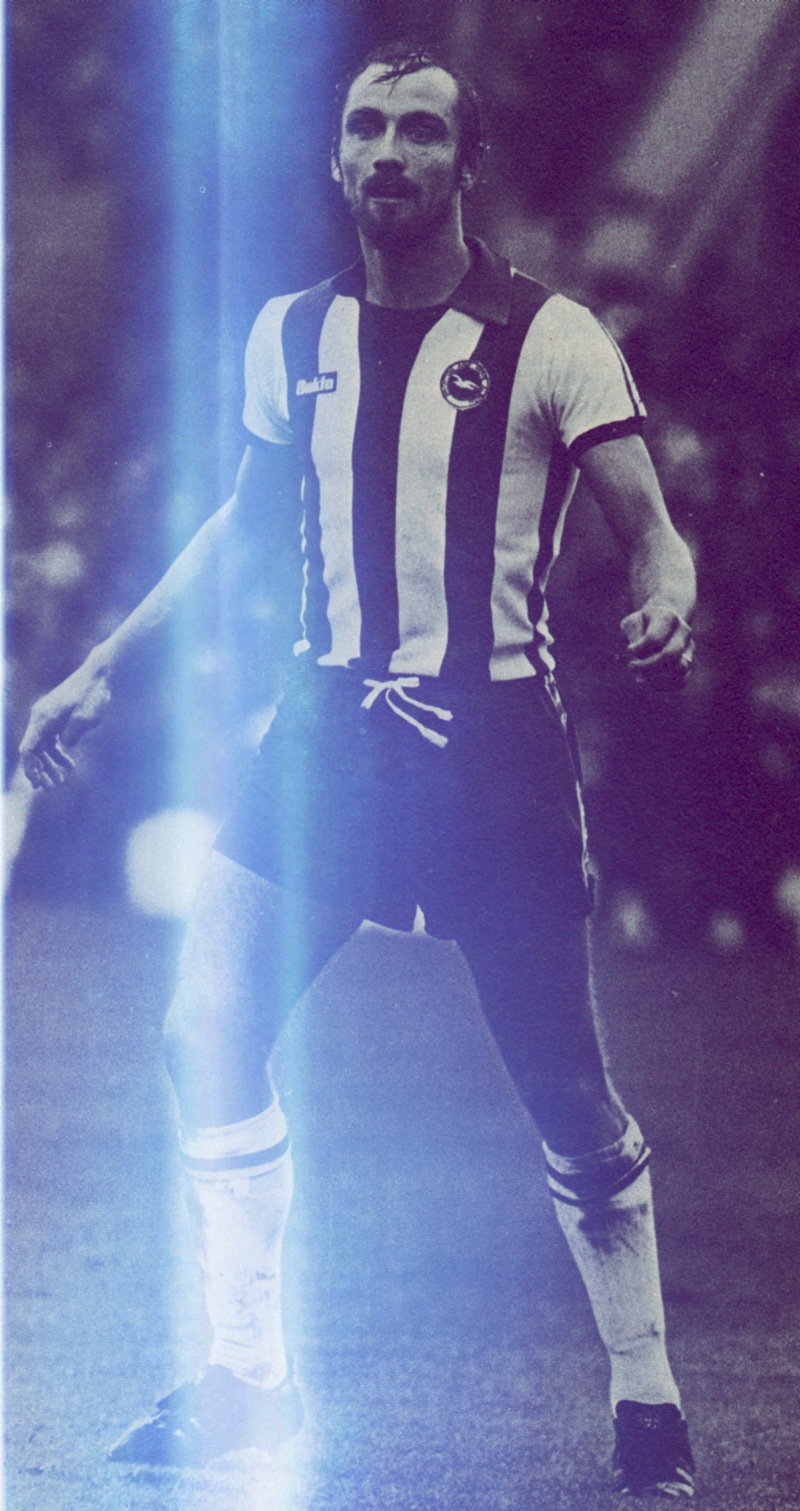
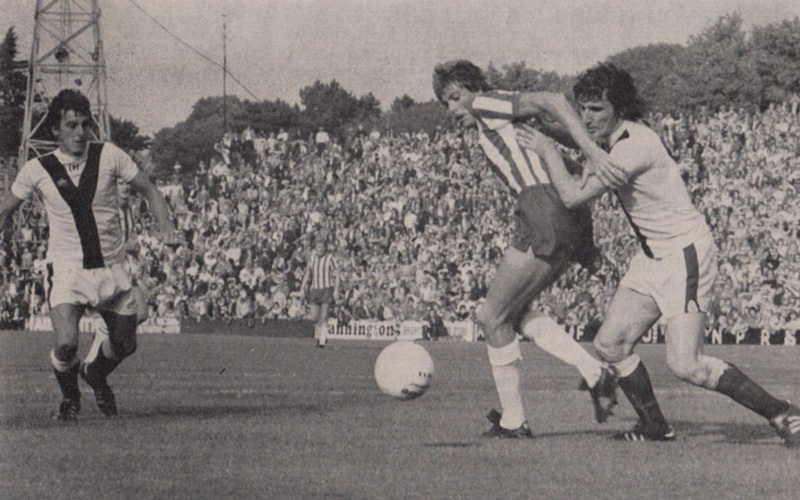
Below, Mark Lawrenson vies for the ball with Arsenal’s Alan Sunderland:
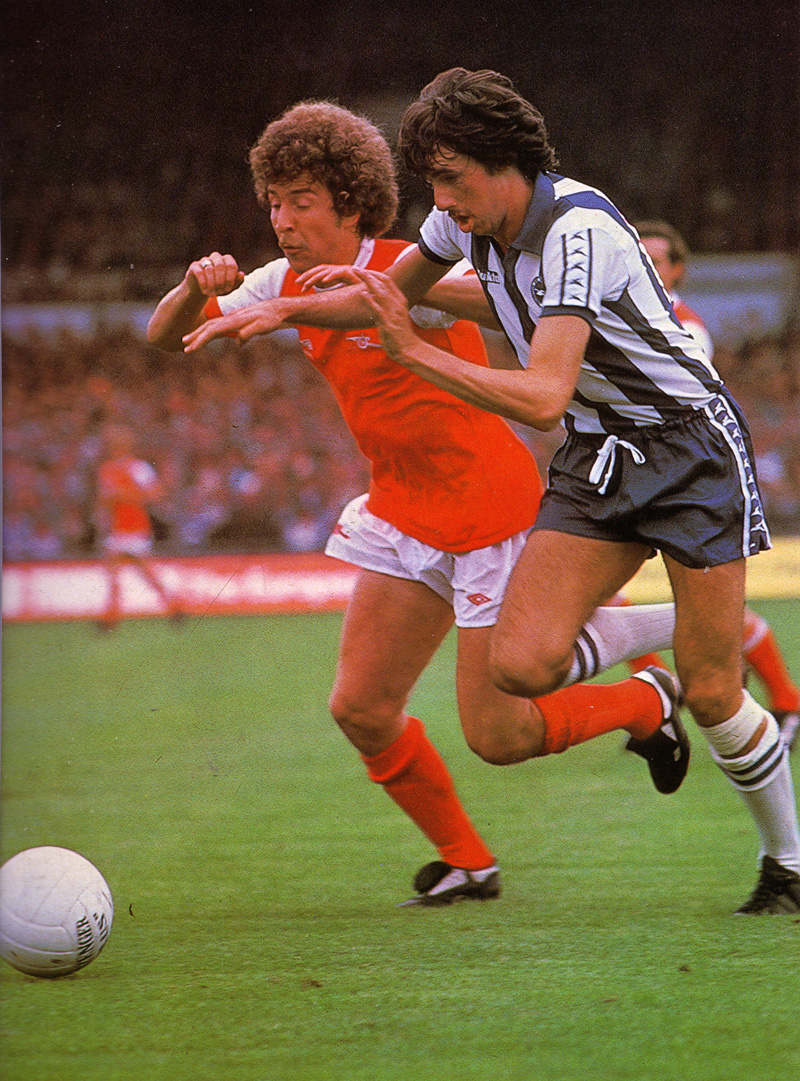
lawrenson6

In 1979/80, Mark Lawrenson gets interviewed by Keir Radnedge in Football Weekly News (April 9–15, 1980). As the season draws to a close, he reflects on his growing reputation. The ex-Preston star also discusses his surprising switch to midfield that played a significant role in Brighton’s revival in their debut campaign in Division One:

I bet Ron Greenwood and his coterie of England aides regret Mark Lawrenson’s decision to play for the Republic of Ireland. When you hear Brighton manager Alan Mullery describing his player as world class among sweepers – not once, but several times over on repeated visits to the south coast – you start to wonder what rare talent England have missed out on.

Lawrenson is a player of obvious class, shows the sort of accuracy and control whether he plays in defence or midfield which will light up the First Division for a long time to come. And yet he chose to play for the Republic because of his parents’ birth qualifications, even though he was born in good old Preston. But Lawrenson has no such second thoughts on the subject.

“Already I’ve been all over Europe,” he says, “and won 10 caps. I’ve really enjoyed my international football. I don’t sit at home and think: ‘I wish I’d waited. To be quite honest, I never thought I’d be good enough to play for England. When the chance came along to play for Ireland I was glad to take it.

“I know people say that with England I’d have a far better chance of one day playing in the World Cup Finals. But I’m not so sure I’d be all that better off with England – apart from whether I’d get in the team.

“I think we have a pretty good chance in our group. And it didn’t do us any harm the other week to start with a win in Cyprus.”

Yet, it’s to an England World Cup hero of 1966 that Lawrenson looks first when he traces back the steps of his career, and considers the varied influences which have made him the popular player he is. Preston was always going to be his club. Not just because of his birthplace but because of family connections past and present, and it was Bobby Charlton who signed him professional. However, it’s not Charlton whom Lawrenson recalls with gratitude for guidance, but Nobby Stiles.

“He’s been the biggest influence on my career,” says Lawrenson. “Bigger even than Alan Mullery – at least so far. I was a winger when I joined Preston, while he was coach, and he was the one who converted me to my present position – in the middle of the back four, that is. Nobby was very good with the youngsters. He was almost like a father-figure. He commanded respect not only because of what he’d achieved himself but because of the way he’d help iron out your faults.”

There could hardly appear a greater contrast in playing manners, but those who remember Stiles as a mere terrier in the tackle might now care to consider him in a new light, if they haven’t done so already for his work in charge at Deepdale.

The one thing he couldn’t do was keep Lawrenson. Preston needed the money and the player had ambitions. So for little more than £100,000 – the figure seems ludicrous now – he travelled to the south coast to join Brighton, little dreaming that in two years he’d be in the First Division.

“I didn’t think about it when I moved. People said to me that Brighton were a good club, a club who were going places. That they had a forward-thinking attitude with a good crowd and used their money to buy players to keep strengthening the team. But I didn’t join because I thought this was the quickest way into the First Division.”

Lawrenson’s career was, in fact, to progress by leaps and bounds. He’d won his first cap at 19. Then, in his first season on the south coast, Brighton missed promotion on goal difference. The next year … up they went. Lawrenson hasn’t found a great deal of difference between divisions. “The only thing is that in the Second Division, where most teams have six or seven very good players, in the First Division it’s at least nine,” he feels.

More’s the pity then that Brighton had, as Lawrenson described it “a nightmare start to the season. “We were wondering when we’d ever pick up a point. If we’d made a reasonable start, got a few points, then we could have played a bit of football, relaxed a bit and it would have been much easier. Still, I like to think the worst is behind us now. Next season we’ll be that much better adjusted. And, hopefully the pitch will have been sorted out. The groundsman has put in more hours this season than almost anyone at the club,” said Lawrenson. “He’s just had to keep sanding it. But during the summer something will be done and that’ll make it so much easier for us next season.”

As for his own career, he adds: “I haven’t had much in the way of setbacks. It’s all gone so fast, everything that happened has helped me progress.”

Lawrenson’s favourite position is in the centre of defence, as sweeper. But he doesn’t complain about the recent switch to midfield to help out manager Mullery. “It was a bit awkward going into midfield, but I enjoyed it. I still think though that the middle of defence is my best position. That’s where I see myself playing the rest of my career.

“At Brighton? Yes, why not? It’s a good club. Good management. Alan Mullery’s been great. I pay him pretty well for those nice things he’s said about me! Seriously, he’s given me a lot of encouragement.”

When you consider he’s still in his early 20s, then the man who’s been called “Brighton’s Beckenbauer” clearly has a long way to go. It’s reasonable to assume that as he progresses so will Brighton. Already they’ve surprised a lot of people by holding on in the First Division, their determination and will to survive exemplified by the seasonal double over European champions Nottingham Forest.

The home game was the one in which Lawrenson snuffed out the threat of Trevor Francis. The previous week he’d dealt similarly with Kenny Dalglish – whom Lawrenson freely acknowledges as the best forward in English football.

The way Mark Lawrenson is going, a lot more fine forwards will find themselves shuffled up the back alleys of play in seasons to come.

Lawrenson went on to play one more season at Brighton, and was briefly made captain, before his big transfer to Liverpool in August 1981, for £900,000.
Tagged ,

Van-ity Fair!

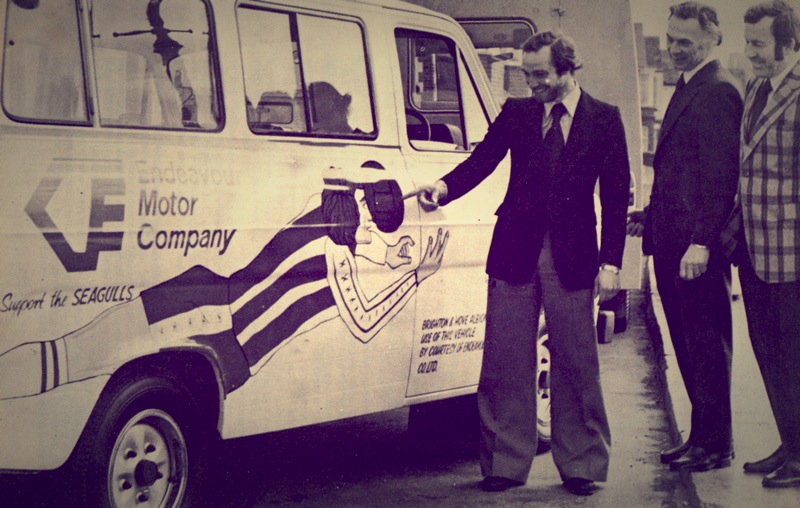
Having your own van must have been a big deal in the 1970s. The Endeavour Motor Company of Brighton kindly provided the Albion with a transit van for the Seagull Lottery. Here you can see Commercial Manager Ron Pavey and skipper Brian Horton taking delivery of the vehicle in 1978:

endeavourvans1

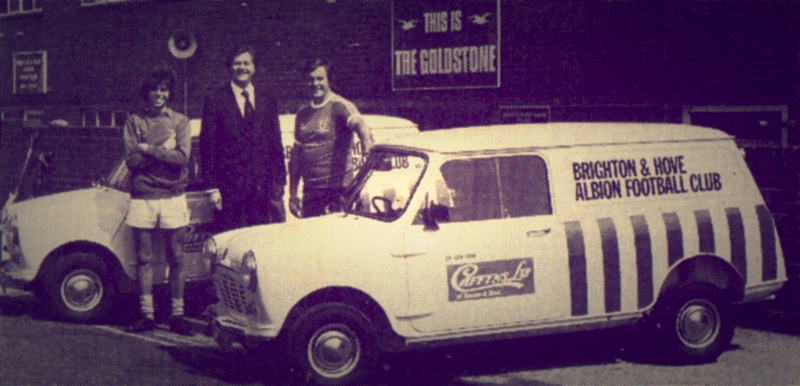
A year later, Caffyns got in on the act.

caffyns1

As the Brighton v Cambridge match programme puts it:

During the next week or so Albion fans will have a chance to see vans in Seagulls’ colours around the area as a result of the generosity of Caffyns. Our local British Leyland dealers have supplied the club with two minivans for use by the lottery staff who cover many miles distributing tickets which help to keep finances straight.

Caffyns have also supplied cars for manager Alan Mullery and for Peter Ward and it is these two who took delivery last week of the vans at the ground.

The manager and striker are seen in the picture together in the sunshine with Caffyns Group Commercial Venture Sales Manager Steve Hoy.

Seems a little unfair, if you ask me. If you were in the Albion first team at the time and not a pint-sized striker with a bubble perm, you’d be quite within your rights to ask why you weren’t getting your own car too. Hopefully, the other Brighton players protested. And if they did, it wouldn’t have been the first time that British Leyland was associated with industrial strife in the 1970s!

Tagged , , ,

It Was Magic!

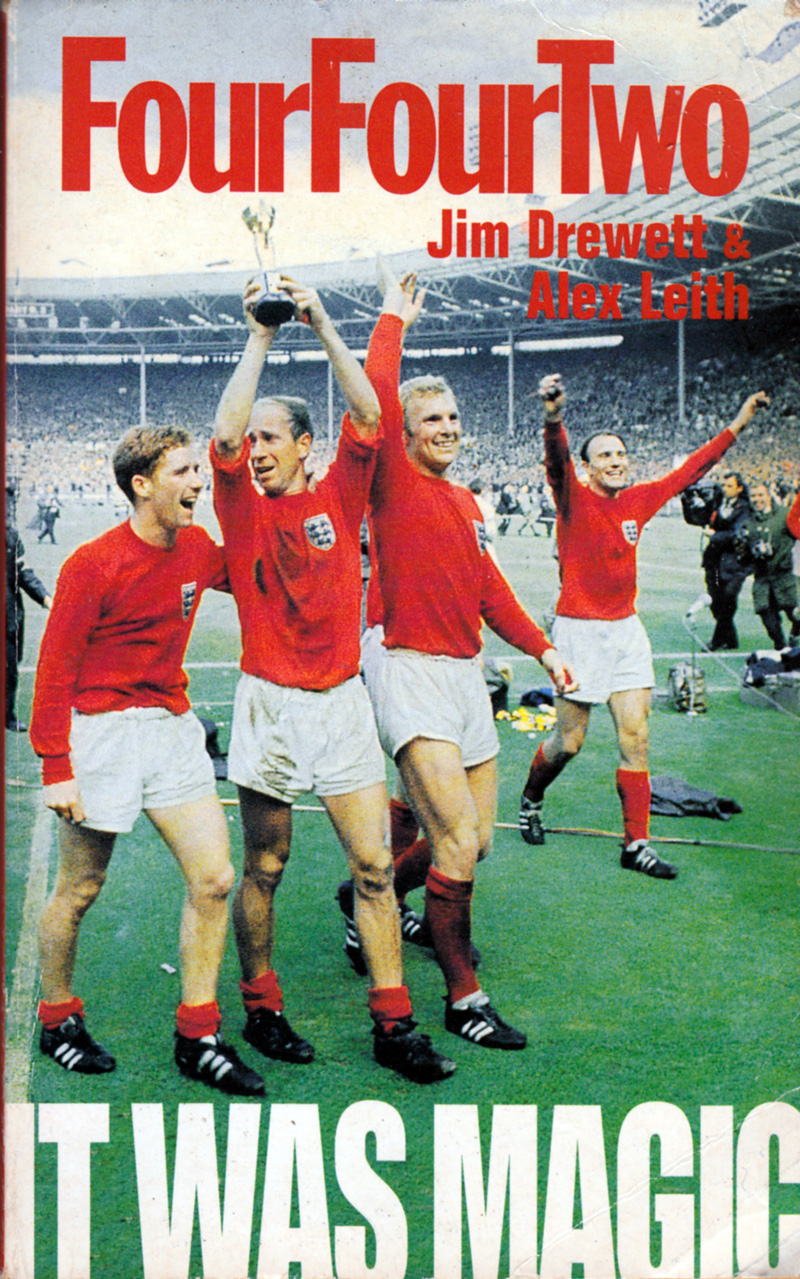
I found this fascinating book in a second-hand shop years ago for just 99p. Published in 1997, and written by Jim Drewett and Alex Leith:

itwasmagic

It’s a compilation of the best ever 100 football matches. As the back cover says:

“Hundreds of football stars from Sir Stanley Matthews, Gordon Banks and Glenn Hoddle to Steve Ogrozovic, Bob Wilson and Sepp Blatter voted for their favourite games of all time.”

It’s a stirring synopsis of some quite marvellous matches from football history. From England’s 3-6 humbling by Hungary in 1953, Brazil 4-1 Italy in 1970, to Charlton beating Huddersfield 7-6 in 1957. Others include Second Division Watford responding to a 4-0 defeat in the first leg of a League Cup tie against Southampton by thrashing the First Division side 7-1 in the return leg in 1980. Oh, and Crystal Palace 4-3 Liverpool in 1990.

Besides these highly appealing inclusions (even the Palace one), for Seagulls fans, there was added interest as in his introduction, Jim Drewett stated:

The inevitable British bias meant Brighton and Hove Albion looked like making an astonishing three appearances in the top one hundred (which has more to do with Alan Mullery’s choices than my co-author’s loyalties, honest!)

Brighton’s 3-2 victory over Sheffield Wednesday at the Goldstone Ground in 1976/77 made it in at number 67 in the book’s list. It was a result which guaranteed promotion from Division Three. Drewett’s co-author Alex Leith wrote:

peterward76

Peter Ward was the darling of the Brighton fans in the 1976/7, and a quick burst of acceleration and a lethal shot made him the most feared striker in the division. Every time he got the ball he looked like scoring, which he did thirty-six times that season. But he nearly blew it for Brighton in this vital end-of-season match.

Ward was backed by a gutsy team, with Ian ‘Spider’ Mellor alongside him up front, Brian ‘Nobby’ Horton running midfield, and Irish international Peter O’Sullivan on the flank. But Jack Charlton’s Wednesday, in seventh position, did their best to spoil the party on the night, scoring in the first minute, and holding out to go into the interval 1-0 up. Just after the restart the nervous crowd could afford to relax slightly when Brighton were awarded a penalty, and Ward stepped up to take it. Everyone was confident. He was deadly in the box… until he missed. But Ward made amends with a fifty-seventh minute equaliser, and on seventy-one minutes he won another penalty for Brighton. A season’s toil rested on one kick.

brianhorton

Skipper Brian Horton took it this time, and made no mistake.

steve_piper

Local boy Steve Piper slammed home a third goal four minutes from time which meant that Wednesday’s second goal, scored in the last minutes, served only to add to the tension.

1977

The referee’s final whistle signalled a celebratory crowd invasion, and Brighton were on a roll that eventually took them to the First Division and the FA Cup Final.

A cracking piece, and it’s followed by the 1983 FA Cup Final coming in at number 92 and the Newcastle v Brighton match in 1979 featuring at number 97. That last game must have been of particular interest to Alex Leith as in the author notes in this book he is described as:

Born in Newcastle and brought up just outside Brighton, which means his heart is split in two between United and Albion. He became a sports journalist after the lure of the lira saw him spend four seasons in Italy.

Purely by fluke, I was in contact with Alex on Twitter and realised he was one of the authors of this book I had read. I asked him his thoughts on putting together ‘It Was Magic’, sixteen years on:

Difficult book to write! We did a survey of 100s of people in the game. It was before the internet was a useful research tool, so we relied on books and word of mouth and programmes and suchlike. Labour of love. An Albion bias because of the people we asked. Mullers etc. Got interviewed on Radio 5 by John Inverdale but it got cut short because it was the day Dolly the Sheep was announced!

Alex is now editor of Viva Brighton which has done some superb interviews with some Albion greats from yesteryear such as Brian Powney, Peter Ward, Alan Mullery and Brian Horton.

Tagged , ,

Captain Fantastic – Brian Horton

Loving the groovy graphic design of the 1970s? Me too!

brianhorton4

I’m unsure which football annual this article is from, but it’s a cracker. Alan Mullery talks glowingly about the qualities of his captain Brian Horton, surely the best ever skipper the club has ever had.

Try telling Alan Mullery that all you need a captain for these days is to trot out and choose ends.

For the Brighton manager’s achievement in taking the ambitious south coast club into the First Division for the first time in their 79-year history would have been much more difficult without his right hand man on the field – midfield general Brian Horton.

‘He’s got the same approach as I have,’ says the former Spurs and Fulham skipper who played 35 times himself in England’s midfield.

‘Brian’s a winner who can’t bear losing. He gets everyone else going.’

And Mullery admits that when he found Horton on the staff at the Goldstone Ground when he took over two years ago, he was happy to drop the priority item on his shopping list.

‘Before I went into management, I thought that having a good captain would be essential. Luckily Brighton had one in Brian Horton.’

As he has subsequently said, any thoughts that Mullery may have had of being a player-manager were quickly extinguished by the performances of Horton in 1976/77.

Mullery is quick to point out that it was his predecessor, Peter Taylor, who bought Horton, adding: ‘That’s just another example of the good judgment he’s brought to Nottingham Forest.’

The 29-year-old Horton was born and bred in the West Midlands at Hednesford and was inspired by watching the great Wolves sides of the 1950s from the Molineux terraces.

He’s still a fan and one of his schoolboy pals, Geoff Palmer, has played nearly 200 games for Wolves.

They will meet again in the First Division this season but while Palmer has been with Wolves since he was an apprentice, Horton’s route to the big time has been very different.

‘There were times I thought I’d never make it,’ he says. ‘My biggest fear was that I was too old.’

But after more than 200 games at unfashionable Port Vale, then in the Third Division, along came Peter Taylor to take him to Brighton for a modest £30,000.

And Brian has gone on to prove that there are as many late starters in football as in any other profession.

His goals last season were a vital factor in a promotion race which turned out to be a real cliff-hanger. But none was more important than the one which put Brighton ahead in that memorable end-of-season match at Newcastle.

The Seagulls had to win to be certain of going up and it was Brian’s goal which put them on the way when he showed typical determination and courage going in for a low diving header.

‘That was the clincher,’ he recalls. ‘It was doubly satisfying, too, because I don’t get many with my head.’

If anything pleased Brian as much as promotion last season, it was recognition by his fellow players by being named in the PFA’s Second Division side.

They weren’t asked to pick a captain but the betting is that Brian Horton would have topped the list in that category too.

brianhorton5b

Tagged ,

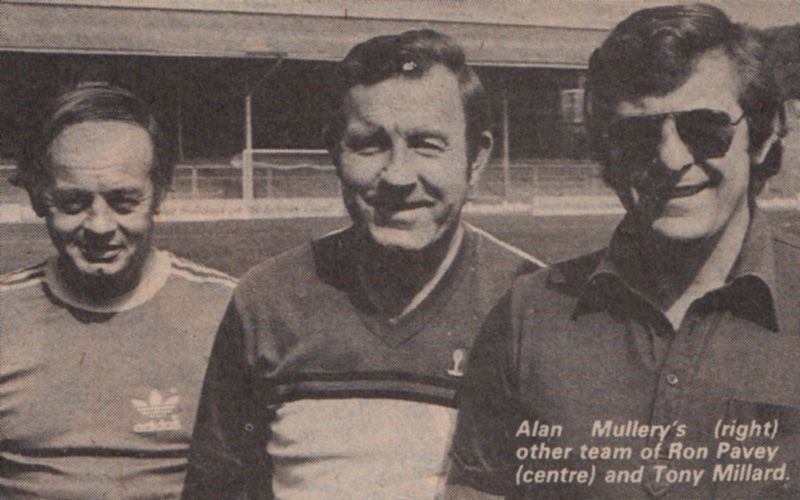
How Millard, Pavey & Mullery led The Goldstone Goldrush

At the Brighton v Millwall match today, there will be a full tribute to the life of Tony Millard, who sadly passed away last week.

millard-pavey-mullery

I’m not sure which magazine this cutting is from, although it’s probably Shoot! It covers the increasingly lucrative commercial side of the game of the late 1970s, with Albion doing a much better job than Arsenal at the time!

As Brighton battle to win praise and points in their first season of First Division football, Alan Mullery’s other side are already top of their League! When it comes to making money for the club, commercial manager, Ron Pavey, and promotions expert, Tony Millard, have started a Goldstone Goldrush!

This season, the Seagulls’ financial team look set to earn £600,000 from lotteries, promotions, club shop sales, programmes, ground advertising and TV fees. And that puts them above huge clubs like Arsenal, in the money game.

arsenalplaque

“You’ve got to have it,” says manager Alan Mullery, “because you can’t get your revenue back through the gate. We were averaging gates of around 22,000 at home last season. Now, that will pay people’s wages, but it won’t put any money in the bank for you. So the commercial side is very important.

“For example, we have match ball sponsors for every League match. We’ll use 21 in a season and each ball costs about £35. If we had to pay for them, it would be expensive over a full season. It’s the same with boots. We’re sponsored by Puma. They supply us with about 250 pairs a year. That’s a big saving too.”

Mullery has seen Pavey and, more recently, Millard make great steps, since his arrival at the Goldstone in July, 1976.

“At that time, the club was taking around £800 a week, from all sources. Now, it’s over £500,000 a year. So, what they’ve done on the commercial side has been fantastic. All right, our success on the field has been a help and people don’t really want to advertise and bring money into a club if it’s not doing well. But they’ve put in a lot of hard work.

“Basically, they’re trying to help me. If they can bring money into the club, and I need to buy new players, it’s a boost for me. Since I’ve been here we’ve had a new pitch, built a new stand and spent £1,250,000 on players. There’s no way we could have done these things without the commercial side.”

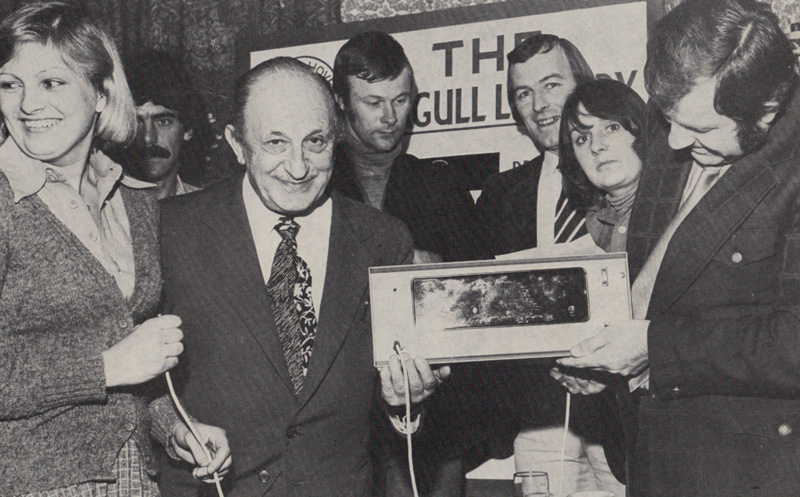
In the 1970s, even the commercial aspect of the game had a certain naive  charm to it, unlike nowadays. The Seagull Lottery is held weekly every Monday at a different venue around the County. The second lottery was held at the Southdown Hotel in Worthing and together with Ron Pavey (commercial manager) and the lottery promoter Joan Shipp are vice-chairman Harry Bloom and players Peter O'Sullivan and Peter Grummitt.

In the 1970s, even the commercial aspect of the game had a certain naive charm to it. The Seagull Lottery was held weekly every Monday at a different venue around the county. The second one was held at the Southdown Hotel in Worthing. That contraption is a lottery drawing machine. Very hi-tech, I’m sure!

One of the biggest money-spinners at Brighton is the lottery system. The club runs two weekly lotteries and these produce a yearly profit in the region of £250,000. Ron Pavey is the mastermind behind this area of big business. When he joined the club, five years ago as commercial manager, Brighton were £200,000 in the red. Things have changed a little since then!

“I think we compare quite well with the bigger clubs in the First Division,” says Ron. “We’ve made quite a lot of progress and we’re learning all the time. Being a small club helps us in a way. There’s more of a family atmosphere here. We’ve got a good team, working closely together.

“Everyone who’s involved wants to do their best, because at hear, we’re all Brighton fans! And if we do a good job on the commercial side, we know it can only help the team.”

Tony Millard echoes that brand of positive thought: “Everyone knows football must be commercial to survive. All of us involved in the game love it. We all know football is the number one. But we also know it needs financial support and every aspect must be explored. There’s no doubt about that.

“People who suggest the game has become too commercial are burying their heads in the sand. The way we look at it, we need the support of companies outside the club and we intend to give them value for money. As far as we’re concerned, you’ve got to ride with the times.”

Brighton toured America last summer. Like most lovers of the game, Mullery was irritated by the commercial circus that surrounds every match in the States. He knows British fans don’t want their Saturday afternoons dressed up in gimmicks and candy floss. But Brighton are proving to the soccer world that it is possible to milk the commercial possibilities, without any loss of dignity or pride.

“before I came here, I remember reading about Brighton manager, Pat Saward, going along the seafront with a box, collecting for the Save Brighton Fund,” said Mullery, finally. “We’ve certainly come a long way since then.”

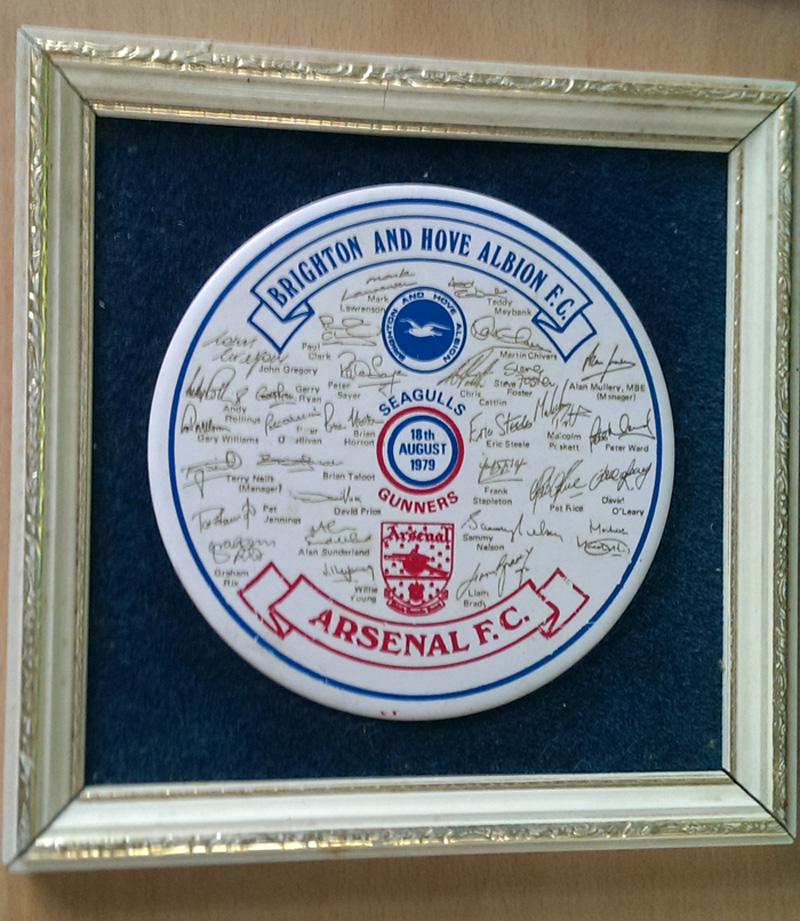
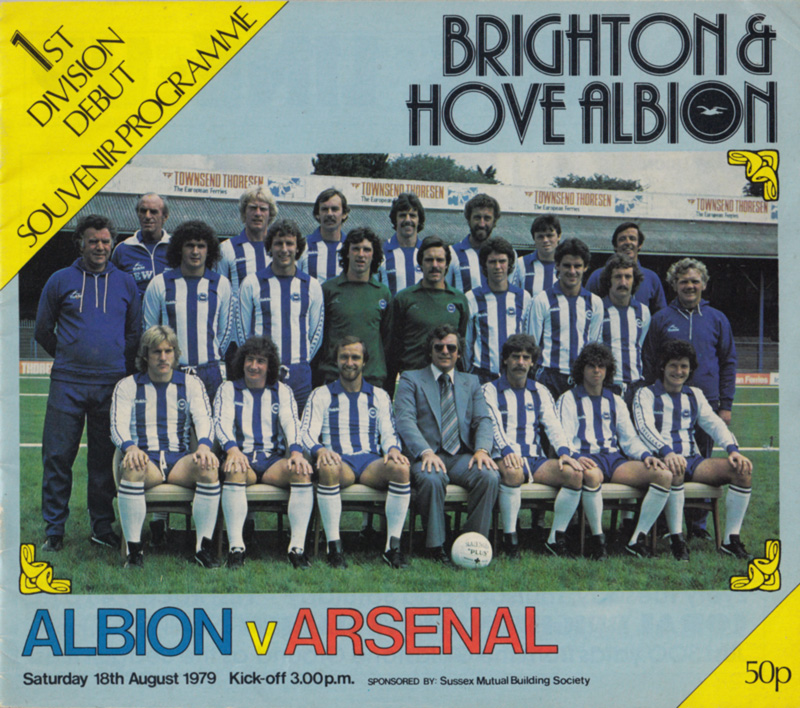
The special souvenir programme for the Brighton v Arsenal match, the Albion's debut in the First Division, in August 1979. Price 50p. Sponsored by Sussex Mutual Building Society.

The special souvenir programme for the Brighton v Arsenal match, the Albion’s debut in the First Division, in August 1979. Price 50p. Sponsored by Sussex Mutual Building Society. I wonder what became of them.

Tagged , ,

Match report: Brighton 7-2 York City, 1976

wardmellor

yorkheadline

Well, here’s a treat for you. The match report from the Evening Argus, by Sydney Spicer, after the famous rout in front of the Match of the Day cameras on 18th September 1976. Brighton scored 7 – yes, (seven)!

Alan Mullery must be a past master at giving players a rocket! Brighton were being held to a 2-2 draw by lowly York at half-time – and then manager Mullery went into the Goldstone Ground dressing room to talk to his boys. The result? Albion swept to an impressive triumph with five more goals.

This put them back on top of the Third Division.

Afterwards, Mullery said: “I had a few words to say in the interval! They went out for the second half with an entirely different attitude.

“After we scored the third goal, the floodgates were open. I don’t think we will ever play much better. It was superb.”

Indeed, it was.

Peter Ward beats a defender to get in a shot.

Peter Ward beats a defender to get in a shot.

In a splendid team performance 20 year-old Peter Ward, so quick in turning with the ball, was outstanding. Peter O’Sullivan and the leggy Ian Mellor in his first full game of the season were thoroughly impressive and substitute Gerry Fell who replaced centre forward Fred Binney after 50 minutes led the bemused York defence a merry dance.

Pas de deux in the York City penalty area with goalkeeper Graham Crawford looking on.

Pas de deux in the York City penalty area with goalkeeper Graham Crawford looking on.

This was an inspired substitution by Mullery, who explained: “Fell was eager to get on and run at them and I felt he could pass them on the flanks.” It all went to plan.

Brighton went ahead in 22 minutes with a delightful goal. Ward, seemingly hemmed in, turned smartly and sped past two defenders before lodging the ball in the far corner.

Five minutes later Steve Piper rammed home the second from Brian Horton’s free kick and Brighton looked to be on their way.

Not just yet, though. Dennis Burnett breasted down a Jimmy Seal cross which he could have headed clear and there was Jim Hinch a yard or two out to slam the ball home on the half hour.

To the further embarrassment of Brighton, Piper dallied over a clearance and Brian Pollard nipped in and scored from an acute angle.

osullivanward

After the break we saw a supercharged Brighton. In the 50th minute O’Sullivan took a pass from Ward to score from 30 yards, and Ward would have quickly added a fourth had not Peter Scott run across to kick away for a corner.

But after 60 minutes a sweeping move – so typical of Brighton’s more open play in this half – involving Ward and O’Sullivan, resulted in the simplest of chances for Mellor.

york5a

Three minutes later O’Sullivan crossed for Fell to head the fifth and, with Brighton taking the York defence apart with ridiculous ease, Ward scored from an O’Sullivan pass in 71 minutes and, to complete the slaughter, Mellor headed home Fell’s centre five minutes from the end.

Ian Mellor goes through despite being impeded by the York defenders.

Ian Mellor goes through despite being impeded by the York defenders.

York’s Northern Ireland international defender Peter Scott let in the scorers for the last two, and his afternoon’s misery was increased by a booking for upending Fell on one of his deadly runs. James was also booked for dissent.

Wilf McGuinness, York’s manager, put on a brave face on this crashing defeat, admitted: “Every time Brighton attacked in the second half they looked like scoring.”

Brighton: Grummitt, Tiler, Wilson, Horton, Cross, Burnett, Mellor, Ward, Binney, Piper, O’Sullivan. Sub: Fell

York: Crawford, Scott, Woodward, Joy, Topping, James, Pollard, Holmes, Hinch, Cade Seal. Sub: Downing.

Another one in the back of the net for Crawford to pick out.

Another one in the back of the net for Crawford to pick out.

(Thanks to Guy for supplying the match report)

Tagged , , , , , ,

Selling Peter Ward? Mullery gets death threat

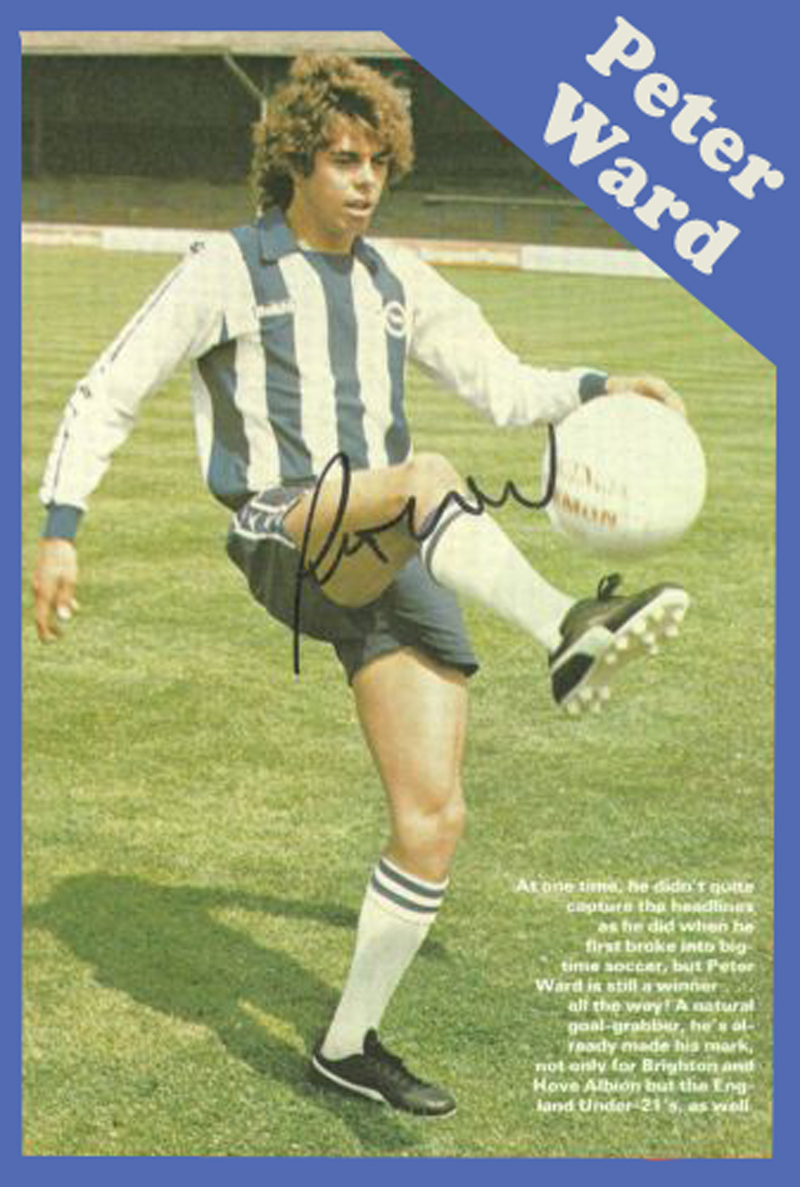
ward_juggle2

On the eve of Brighton’s debut in the top flight in 1979 came this unsettling story. Alex Montgomery reports:

Alan Mullery reluctantly put brilliant striker Peter Ward up for sale last night and then prepared to man the Brighton barricades.

The South Coast club, newly promoted to the First Division, expect a storm of abuse from their fans who adore Ward – rated in the £750,000 class.

Mullery admitted that he has already had one death threat warning him against ever selling Ward.
But it seems certain now that the former Young England star will be leaving the Goldstone and the odds are that he will join Kevin Keegan, Dave Watson and Laurie Cunningham on the big money trail into European football.

Watson’s new club Werner Bremen have already contacted Brighton and Cologne are another West German side who have been asking questions about Ward.

But first, top English clubs like European champions Nottingham Forest will get the chance to put their money where only their mouths have been so far.

Mullery made no secret at his deep disappointment and said: “I don’t take the death threat seriously of course. But it highlights the depth of feeling there is surrounding Peter down here.

“I can understand it. he is a top class player and I don’t want to lose him. But I have no alternative but to transfer-list him because he wants to leave and it is not my policy to hold onto a player in these circumstances.”

Ward himself would only say: “I’ve thought about it over carefully and have decided my future lies away from Brighton.”

Happily, Ward settled his differences and hit an impressive sixteen First Division goals in 1979/80, capping his enhanced reputation by appearing for the full England side in the close season friendly against Australia.

Tagged ,

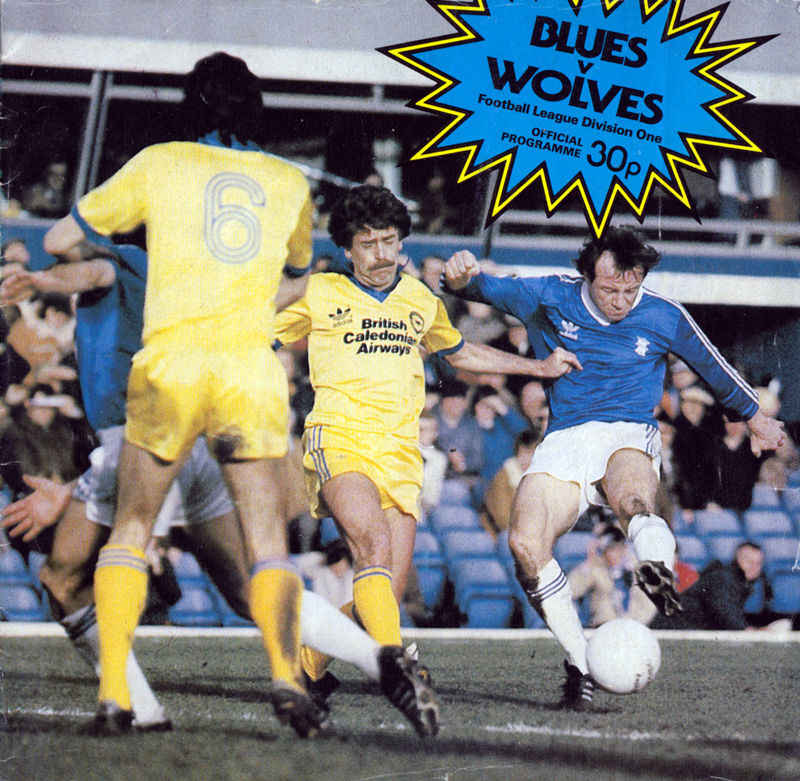
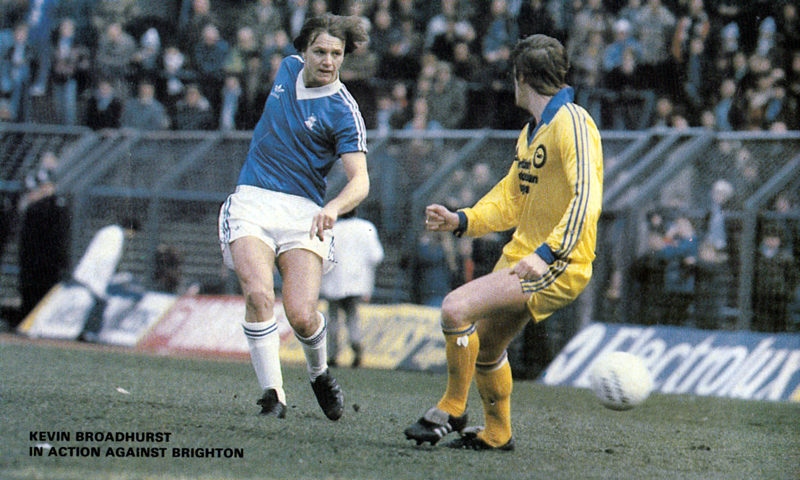
Colour photos: Birmingham v Brighton 1980/81

As Alan Mullery said to Neil Harman, of the Evening Mail, in 1980/81:

“We may be desperate for points, but we are not a desperate side. We won’t go down. I have always felt, despite our setbacks that we are not far behind the best teams around. Now we’ve got to prove it. Either we have been unlucky or we are not good enough. I think we’ve been unlucky.”

His words appeared in the matchday programme for the clash at St Andrews, on 7th February 1981, only the second ever League game between the sides. The first ended in a 2-2 draw at the Goldstone earlier in the season. Albion scorers were Neil McNab and Mark Lawrenson.

By the time of this return match in Division One, Brighton stood in 19th position, one place above the relegation zone. Birmingham were one place above the Seagulls but crucially had a four point cushion.

Just like in the 2013/14 season, Albion had a new yellow away kit and sponsor to show off. Here’s Peter O’Sullivan trying to stop a Blues attack.

birmingham1

Albion went down 2-1, with goals from Tony Evans and future Seagull Alan Curbishley ensuring a fifth straight defeat for the south coast side. Converting a low cross from the overlapping John Gregory, Michael Robinson got a consolation goal for Brighton 19 minutes from time. It was a frustrating afternoon at St Andrews for the Albion, who found the opposing goalkeeper Jeff Wealands in inspired form.

By the end of the season, the Blues had cemented their First Division status, pushing up to 13th position, although this was overshadowed by their neighbours Aston Villa carrying off with the First Division title.

Given the number of times Wealands had thwarted the Seagulls during the February match, it certainly gave credence to Mullery’s assertion that Brighton were unlucky that season. However, the Albion boss’ contention that his side would not get relegated also proved true. Four wins out of four at the end of the season made sure of this. As Neil Harman said of Mullery at the end of his piece in the programme:

“He isn’t wrong all that often.”

birmingham2

Tagged , ,

Blimey O’Reilly… Gary’s back at Goldstone!

garyoreilly

From the Argus ‘Go For It Seagulls!’ pre-season preview of 1991/92:

There is a touch of Blarney about Gary O’Reilly’s return to Albion on a free transfer from arch rivals Crystal Palace. Believe it or not, the 30-year-old defender played for both England and the Republic of Ireland as a schoolboy.

The reason? Gary’s father hails from Dublin, but his mother is English.

Isleworth-born O’Reilly, who joins a strong Eire contingent at the Goldstone, took his first significant step towards stardom in an Essex Boys team.

Arsenal wanted him on associate schoolboy form, but their North London neighbours, Spurs, snapped him up at the age of 13. Among O’Reilly’s youth team-mates at White Hart Lane were Kerry Dixon and Mick Hazard. Nobody’s fool, he had the offer of a sports scholarship at Columbia University before signing for Spurs as a full pro.

O’Reilly made 45 first-team appearances in five seasons at Tottenham, including the Charity Shield at Wembley against Liverpool and a quarter-final victory in the UEFA Cup over German giants Bayern Munich.

But the arrival of Gary Stevens, ironically from Albion, and the now-retired Danny Thomas, led to him requesting a transfer, even though he still had two years of his contract remaining.

A willing listener, O’Reilly’s mentor during his stay at White Hart lane was Osvaldo Ardiles, now manager at Newcastle.

“Fear is a big killer in the game, and I learned a lot about that from playing against Ardiles in practice games and listening to him afterwards,” he said.

Albion’s then manager, Chris Cattlin, bought O’Reilly for £45,000 in August 1984. Cattlin recalls: “I watched him eight times before signing him, and six times with Tottenham Reserves he had stinkers. But I thought then he had great potential.”

He made 79 appearances in three seasons with Albion, scoring three goals. He was virtually an ever-present for the first two seasons, but injuries, including a worrying hamstring condition, restricted him to just eight games in the ill-fated 1986-87 season.

O’Reilly was a popular figure at the Goldstone with a social conscience. He led a campaign to help youngsters fight drug addiction and was president of the Junior Seagulls.

Supporters were upset when he joined Palace for £40,000 on January 3 1987.

Albion were in dire need of cash at the time, and his move came just two days before Alan Mullery was sacked in his second spell as manager.

O’Reilly played 70 times in his first four seasons at Selhurst Park and scored Palace’s opening goal in the 1989-90 FA Cup Final against Manchester United.

But he did not figure in Steve Coppell’s plans once last season and had just one game on loan with Birmingham City.

Now the versatile 5ft 11in. defender, who has been given a two-year contract by Barry Lloyd, is intent on holding down a regular place in Albion’s line-up.

“There’s no substitute for first-team football,” he said. “There is nothing like playing regularly to give a player the right degree of confidence.”

On returning to Brighton, Gary O’Reilly played in the crazy 5-4 friendly victory over mighty Steaua Bucharest in August 1991:

gary o'reilly

The classy defender then made 31 appearances for the club in the highly disappointing relegation season of 1991/92. He scored three times, including the only goal against Plymouth in November 1991, but a series of unsuccessful knee operations led to him retiring from the game in April 1993. Since hanging up his boots, he embarked on a successful broadcasting career for Sky, BBC and Trans World International’s Premier League international feed.

O’Reilly had underlined his credentials as a man of principle by supporting the fans’ campaign against the Albion board in 1996/97. As he said to the Argus in 2001:

“I recall going back (to the Goldstone) as a broadcaster for the Fans United match against Hartlepool in February 1997. I twisted Sky’s arm to be there because I knew it would be a great day. It was. There were 10,000 fans from Europe as well as all over the country to show support for a club going through bad times. The Goldstone was special. When it was full it was vibrant, full of excitement and possibilities until the last game. After they pulled it down I couldn’t bring myself to go to the retail park they built in its place until I had to take a bike back for my daughter Grace, who was born on a Saturday Albion beat Swansea. When the bulldozers went in it was devastating.”

No wonder in 2009, while on Radio 5 Live’s ‘Fighting Talk,’ when asked “Who is the one person whose hand you would refuse to shake?”, he said “Ex-Brighton and Hove Albion Chief Executive, David Bellotti.”

Well said, Gary.

Tagged , , ,

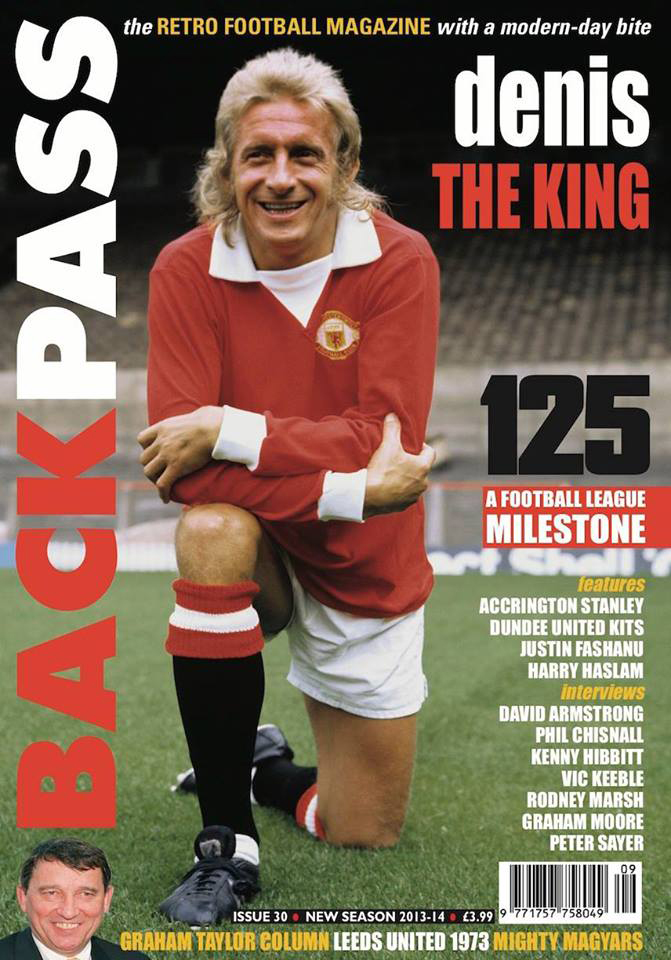
Peter Sayer, Justin Fashanu and Alan Mullery in the new Backpass magazine

backpassdenis

It’s a lovely feeling to be filled with expectation about a new edition of a magazine that’s about to hit the newsstands. I don’t know about you, but football-wise, I haven’t felt this way since 90 Minutes magazine died a death in the 1990s and Tuesday mornings were never quite the same again. In a previous post, I have documented the excellent coverage Brighton & Hove Albion has received in past issues.

With its first edition of the new season, a refreshed Backpass Magazine is now up to issue 30, and now defines itself as ‘the retro football magazine with a modern-day bite.’

In terms of Brighton interest, there is a great interview with Peter Sayer. A substantial part of the article recalls his wonderful winner for Cardiff against Tottenham in the FA Cup in 1977:

Albion fans chiefly remember Peter’s magical wing-play in the late 1970s while playing in Brighton’s blue and white stripes. Even so, I have found an FKS Soccer ’82 sticker of Peter in the B-Cal Brighton shirt of the early 1980s:

petersayer2

However, Albion fans didn’t get much of a chance to see him in it as he was an unused substitute on the opening day of the 1980/81 season against Wolves and made no further appearances for the first team before departing for Preston.

Nevertheless, he speaks well of his years at the Goldstone Ground:

It was an excellent time at Brighton. There were some very good players at the club and I was playing well. I especially remember when we won promotion to the old First Division at Newcastle in 1978-79. We had our own train which we used to travel to away games on! It was great for team morale.”

When Albion struggled to maintain their place in the First Division, Peter lost his place in the side:

I ended up in the reserves even though I was playing well. I got asked to go to Newcastle but failed the medical. The club then had an opportunity to sell me to Preston and they perhaps felt they needed to offload some players. Maybe I should have dug my heels in and fought.

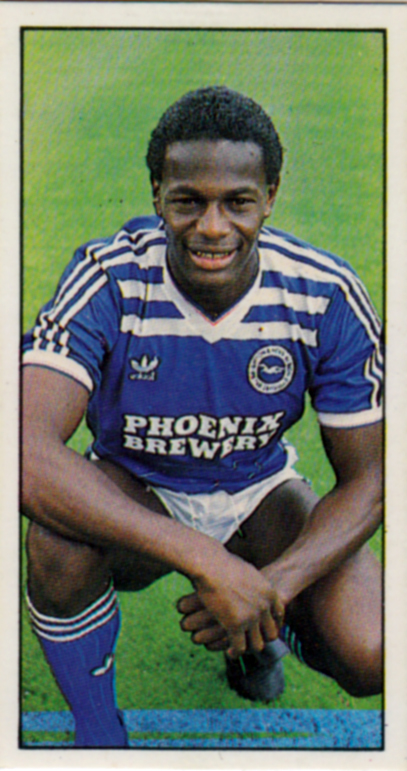
justinfashanu3Elsewhere, Jim Read’s fascinating biography of Justin Fashanu covers the latter part of the striker’s career and strongly argues against the myth that seems to be grown that some of the main facts known of Fashanu:
a) He was a promising footballer (as shown by the ‘Goal of the Season’ against Liverpool)
b) He came out as gay
c) His manager at Nottingham Forest, Brian Clough, and his brother John were far from supportive.
d) He committed suicide

were somehow all linked and that coming out as gay led to his death as be became ostracised from the football community. The details of Fashanu’s life, especially his struggle with injury (he actually retired from the professional game when he was released by Brighton) and his particularly brand of religion, not to mention the varying social values of football fans and players, show that things were far more complicated than that.

Spencer Vignes writes a splendid piece about ‘football specials’, the trains that carried the team and supporters to away matches in the 1970s and 1980s. He mentions the Seagulls Specials and there is a lovely quote from Mark Lawrenson about the party on the train after Brighton clinched promotion to Division One with a 3-1 win at Newcastle.

mullery_bigAs Alan Mullery said in his latter autobiography:

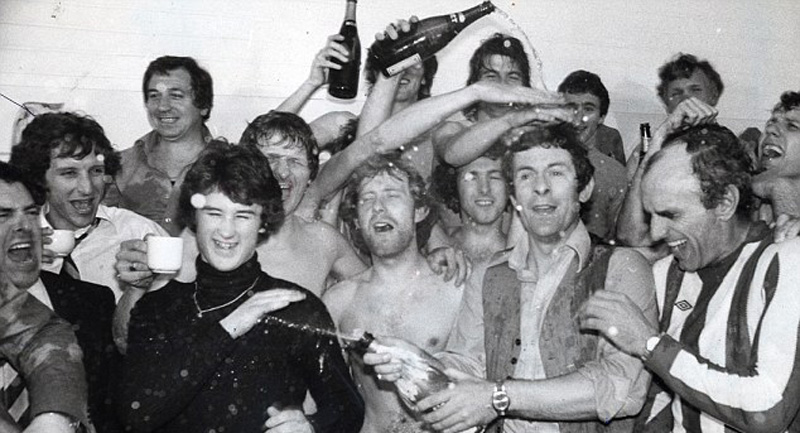
“We travelled home by train and The Seagull Special became The Paralytic Express. There was champagne everywhere. The journey back seemed to take a lifetime, but nobody cared. I walked the length of the train with the team, thanking the fans for their support. Everyone who was on that train will remember it forever.

Presenter Alan Mullery is also the ‘star’ of a low budget video nasty reviewed by Chris O from the Football Attic.

Finally, the magazine also charts the fall and heartwarming rise of Newport County, Brighton & Hove Albion’s League Cup opponents on Tuesday evening.

So, if this has whetted your appetite, feel free to nip off to the newsagent now. Or subscribe online via www.backpassmagazine.co.uk. Just £3.99.

Tagged , ,