Category Archives: Photo Opportunities

Striker Mike gives Brighton a lift

michaelrobinson18

Yesterday, Brighton disappointingly lost 2-0 at home to a canny Ipswich Town. The story was different in November 1980. Then, Bobby Robson’s Ipswich were one of the best teams in Europe, with players of the calibre of John Wark, Frans Thijssen and Arnold Muhren helping to play some of the most attractive football available in the Football League.

The Blues mounted an ambitious treble bid in that 1980/81 season, and were second in the First Division at the time. However, bottom-placed Albion turned the tables on their more illustrious counterparts with a shock victory in front of 17,055 crowd at the Goldstone. Here’s how the Daily Mirror reported the Tuesday evening match:

Mike Robinson breathed fresh life and hope into Brighton last night with a goal that ended Ipswich’s unbeaten First Division record.

And so rock-bottom Brighton succeeded where 14 other sides have failed, and their victory was greeted by ecstasy by their long-suffering crowd.

It was Albion’s first win in 10 League games, and Ipswich’s second defeat in 38.

The acclaim of the 17,000 crowd must have delighted chairman Mike Bamber.

He had earlier warned that, unless support improved, Albion would finish the season with more than £250,000 in the red.

He also indicated that if Brighton slipped back into the Third Division – from where they stepped five heady seasons ago – neither he nor Alan Mullery would remain at the club.

It was a year this week that Albion rose off the bottom of the table by ending Nottingham Forest’s unbeaten home run that had lasted for two seasons.

Mullery said: “We are not a bottom-of-the-table side when we play like that.

“On the evidence of tonight we are not far off ipswich. But I must admit, towards the end I kicked nearly every ball out there.”

Albion’s best efforts were frustrated by a patched up Ipswich side, shorn of some of their key players who had helped them into second place in the table.

But the goal that came in the 83rd minute was well taken.

Mark Lawrenson found Robinson and the £400,000 striker turned quickly to lose Allan Hunter and drive in a low, right-footed shot.

Earlier, Ipswich had defended heroically as they protected Laurie Sivell, the smallest keeper in the League.

Mick Mills cleared off the line, Sivell was in constant action, and in the 33rd minute Robinson missed a chance that was almost too easy.

Russell Osman slipped on the soaking pitch and Robinson closed in, but as he prepared to shoot, Sivell came racing out to save bravely at his feet.

Andy Ritchie had a goal disallowed and then went close with two other fine efforts before Robinson stepped in to fire the goal that Brighton believed will signal a rapid climb to safety.

The Seagulls had clearly caught Ipswich at a sticky point in the season. Despite being unbeaten, Town had drawn five of their previous six League games. Even so, Albion’s result was a magnificent achievement, given that until the middle of March 1981, Ipswich only lost one other Division One match. As for Brighton, they followed up this against-the-odds victory over Robson’s men with another win, away at Wolves, that took the Sussex side out of the relegation zone for the first time in four weeks. By the middle of March, Brighton were still hovering on the edge of the relegation trapdoor. Just as Ipswich Town fans were to discover, the season was heading for a nail-biting finale.

Tagged

Debutant Mark Elliott helps put Albion on top

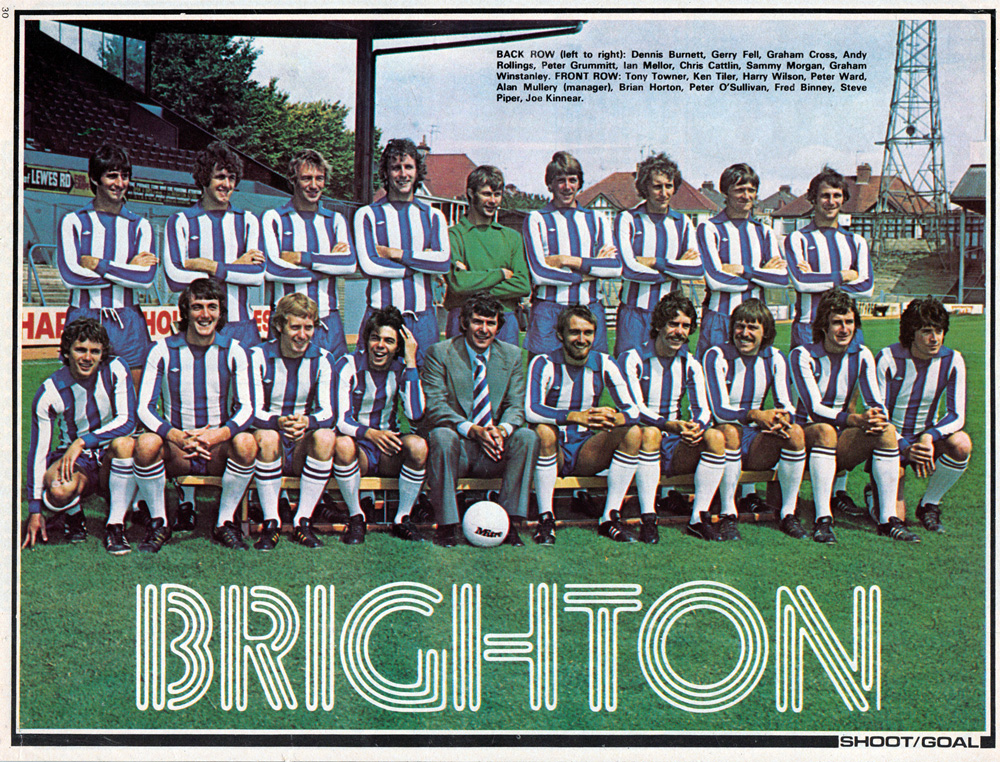
The 1976/77 Brighton promotion squad is one of the most celebrated in the club’s history. Undoubtedly, its most famous names are that of strikers Peter Ward and Ian Mellor, along with captain Brian Horton. Tony Towner, Gerry Fell, Fred Binney and Peter Grummitt are also fondly remembered by many supporters of that vintage. Even the names of those that were not quite its headline-making players still endure in the memory bank: Ken Tiler, Harry Wilson, Graham Cross, Andy Rollings, Graham Winstanley…

1976-77

But what about Mark Elliott? Who?!

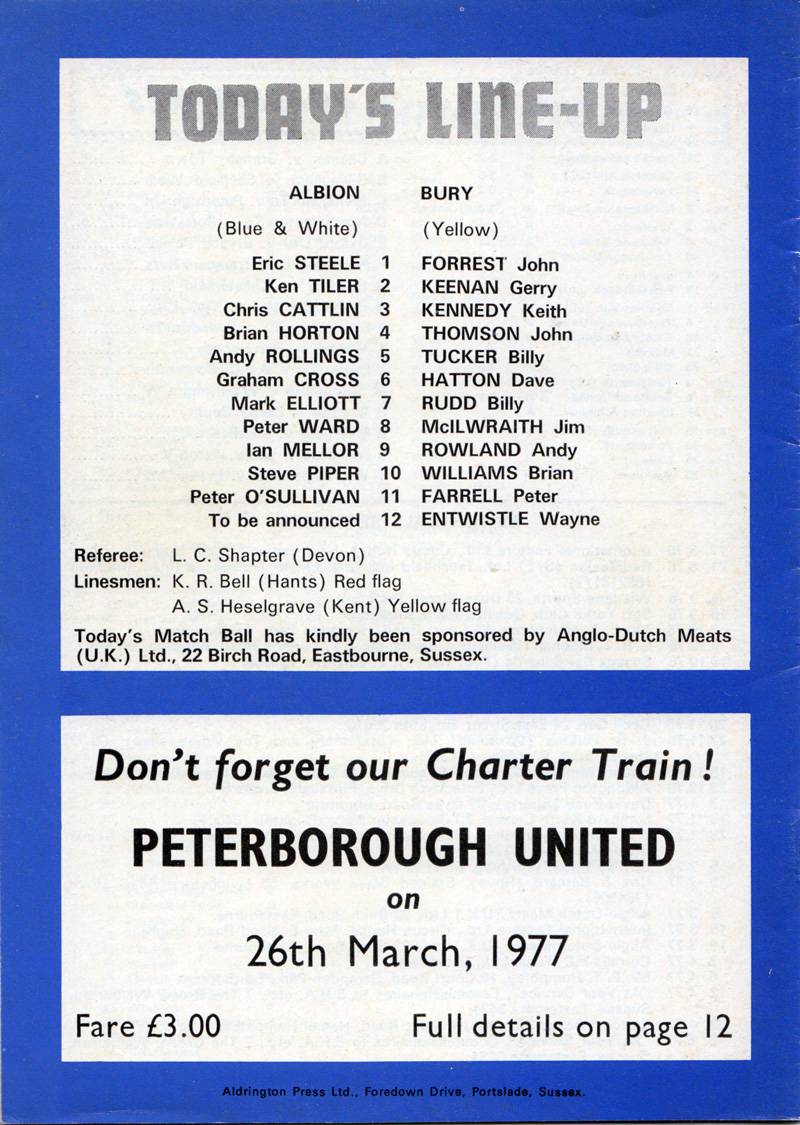
markelliottOn this day in 1977, Brighton thrashed Shrewsbury 4-0 in front of 17,404 fans at the Goldstone. A teenager with that name made his Albion debut on that Tuesday evening. He was a Welsh winger who played for Ton Pendre before he was recommended to Brighton by his trainer John Stead. After a successful trial, Elliott was snapped up in February 1977. Three days before his 18th birthday, Elliott had his Brighton baptism on 15th March 1977. As the Daily Mirror reported, the young attacker did very well:

Brighton stormed back to the top of the Third Division by shattering Shrewsbury with a four-goal burst at the Goldstone Ground.

What a night for 17-year-old winger Mark Elliott to make his senior debut!

The Swansea youngster, brought in to replace Tony Towner, repaid manager Alan Mullery’s faith with a fine all-round performance.

Shrewsbury, once promotion candidates, but now slumping rapidly, somehow survived until half-time.

Then, just when the home fans were getting a bit edgy, Steve Piper had them cheering. He beat two men and split the defence with a perfect pass for Brian Horton to score.

Peter Ward made it 2-0 with a penalty after Elliott had been toppled by Ian Atkins. Five minutes later, are hit his 27th goal of the season.

And Mellor completed the scoring near the end.

Elliott kept his place for the following two matches, against Bury at home and Peterborough away, but on both occasions he was withdrawn during the game.

bury

Although he was chosen for the Welsh youth squad in September 1977, he never featured in another Brighton first team match and moved to Cardiff on a free transfer in September 1979. He subsequently played for AFC Bournemouth (loan), Ton Pendre, Wimbledon, Walton and Hersham, and Tonyrefail.

Tagged

The loner who dared to speak his mind

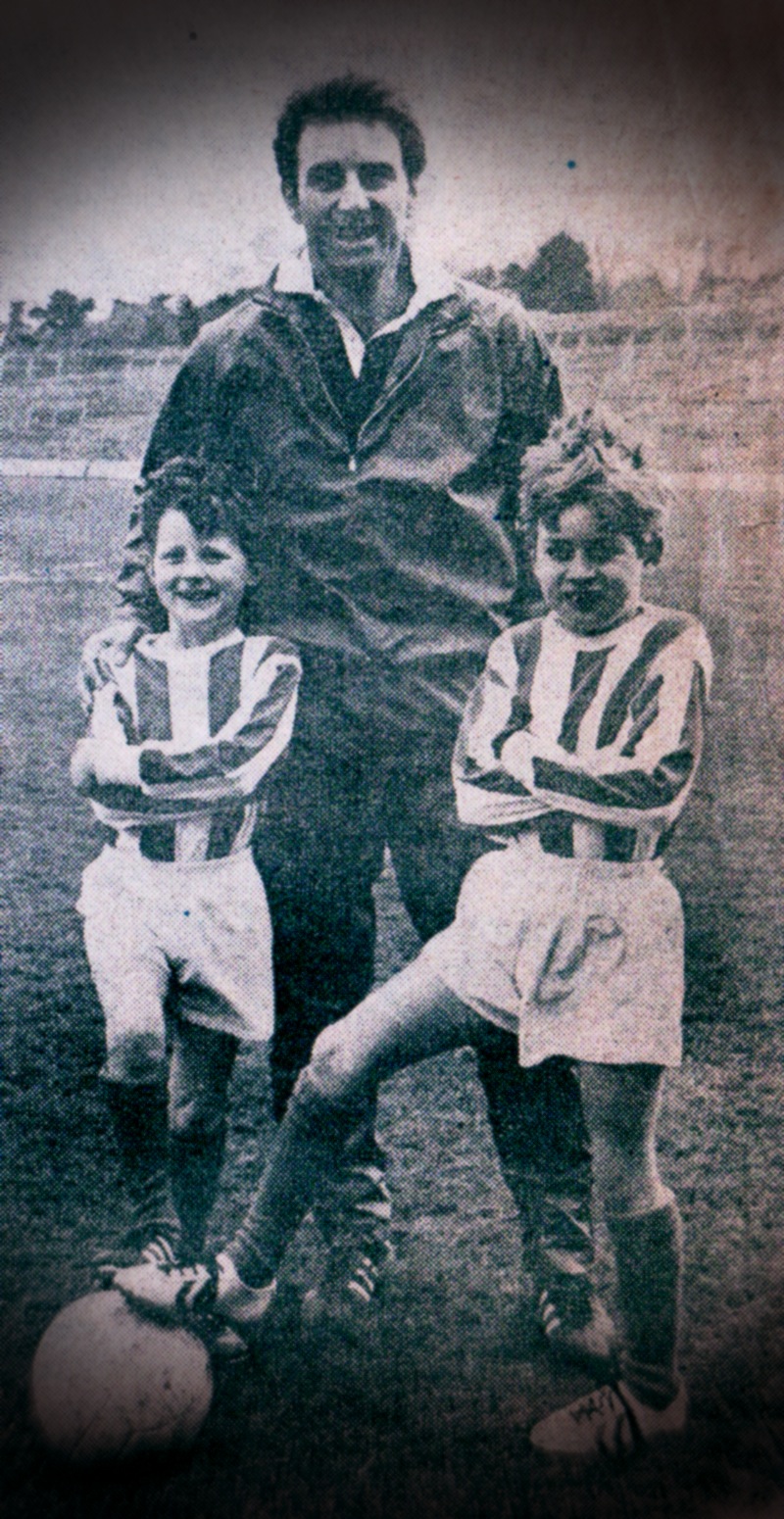
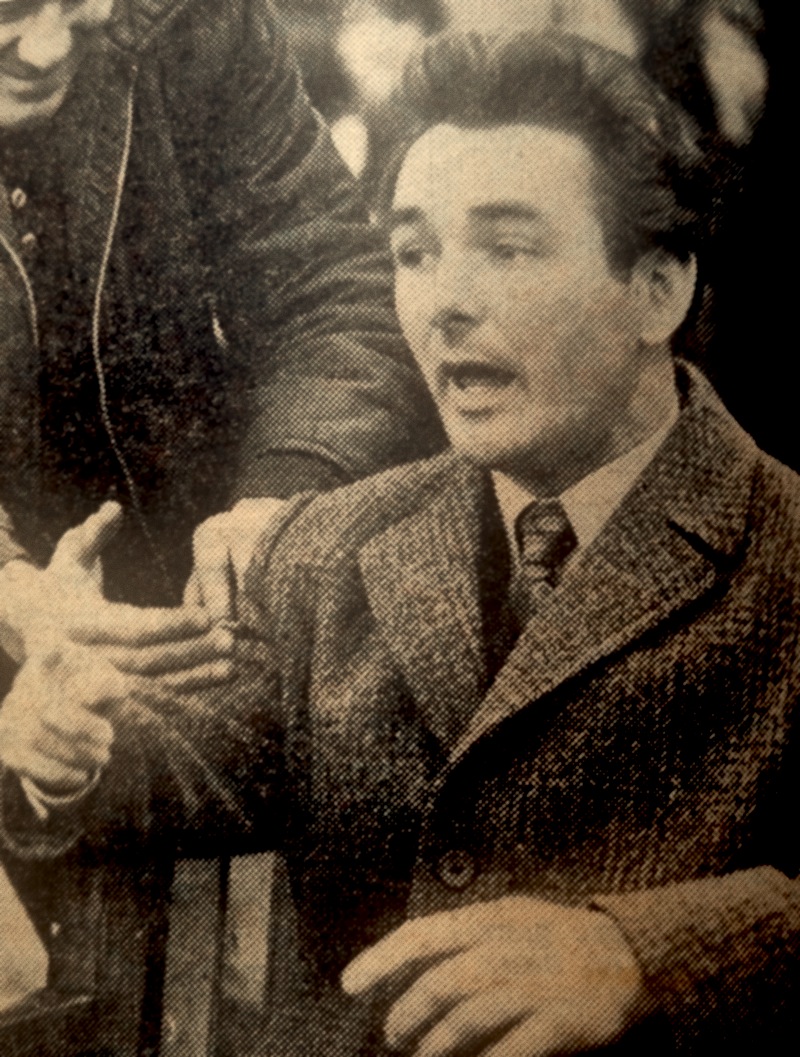
Pat Saward in relaxed mood at the Goldstone with sons Leonard and Sean

Pat Saward in relaxed mood at the Goldstone with sons Leonard and Sean

In the Evening Argus souvenir pull-out from May 6th 1972, John Vinicombe put together this portrayal of manager Pat Saward in his hour of triumph, with his low-budget Brighton side having clinched promotion to Division Two:

Pat Saward has been Albion’s manager for a year and ten months. In what seems, an astonishingly short time, he has not only achieved promotion, but created an entirely new image for the club.

He has torn down the old, and shown a refreshing boldness in tackling the many problems that existed at the Goldstone on his arrival in June, 1970.

He succeeded Freddie Goodwin, a deep-thinking and widely respected manager who went on to make his mark with Birmingham City. At the time Albion’s board were utterly deflated.

They could not see another filling Goodwin’s shoes so capably and, indeed, the outlook was grim. When eventually the short list was whittled down to two, the final choice lay between Seward and Tony Waiters, the former Blackpool and England goalkeeper.

The board were deeply impressed With Saward’s tremendous enthusiasm, although he had not had previous managerial experience, Nor had Waiters.

They decided to give Saward the job.

He turned out a complete contrast to his predecessor. Goodwin’s phlegmatic approach was one thiing; the flamboyance of the new man quite another. In short. Saward took some getting used to… there were those who thought him brash, and far too outspoken. Every day, it seemed, he stuck his neck out. Albion had always been used to managers with the velvet glove touch, and suddenly they had a man whose ideas and statements seemed outrageous.

But Saward was noticed, and gradually people listened. And, most valuable of all, he proved a fast learner, and a good listener. He realised straight away that he had to make people think. As he said at the time: “I speak my mind, always. Too many people fear ridicule, and making a wrong decision.”

Saward was then 39, but looking young enough to be mistaken for one of his own players. He was still thinking in terms of the Division One setup he had left at Coventry. It took time to get the Goldstone in his sights, but once he did, the show got on the road.

The firs€t season saw the team skirt dangerously close to relegation only to pull clear with a brave late burst. Saward, with practically no money, made loan coups in the shape of Bert Murray and Wiliie Irvine.

He went to the public for money, cap in hand. They were cautious at first, and then warmed to the man who told them: “This is your club as much as mine. Help make it great.”

Saward’s fundamental five points upon which he bases his philosophy is: projection, appeal, experience, dedication, and an elemem of the unconventional. He certainly has the personality to win friends and influence people. There was no doubt about his experience; having captained Astan Villa and Eire, and played for Millwall and Huddersfield. He was a skilful wing half, as they called them in those days. There is no brogue in his speech; elocution lessons long ago saw to that.

As for public appearances, a stint as a male fashion model taught him how to make an entrance. His chief task was to win over the players, and this he did by making them feel important. Nothing was too much for them.

Soon they had their own car park, and a room where they could meet and relax. He spoke earnestly to them about pride of profession. All the time it was lift, lift, lift – players were encouraged to believe more and more in themselves, and discard the Third Division tag.

Above all, Saward wanted his team acting like real professionals. He listened attentively to their ideas on appearance and pre-match build-up. Everything was geared to getting thor minds right.

Since Saward took over, he has written a weekly article in the Evening Argus. At first we received letters from supporters who violently disagreed With his views. Then the criticisms tailed off, and now the column is widely acclaimed. It is one way the manager can reach the public, and of course now, in his hour of triumph, there is no more popular figure in Brighton and Hove.

Throughout, Saward has stressed the need for his players to display strength of charaoter. But he never talks about the stress and strain that his job imposes.

While this activity or that interest might be good for motivating players Saward will not let on about the driving force that keeps him cool, calm and collected in the hot seat.

He loves fresh air, particularly the ozone that gushes into his bungalow window every morning on Shoreham Beach. Fitness means so much to him.

He plays squash and golf, but is seldom so happy as being on or close to the Sea.

Like most men who must make vital decisions, Saward is a loner… and he wouldn’t have it any other way.

Tagged

Geard for success?

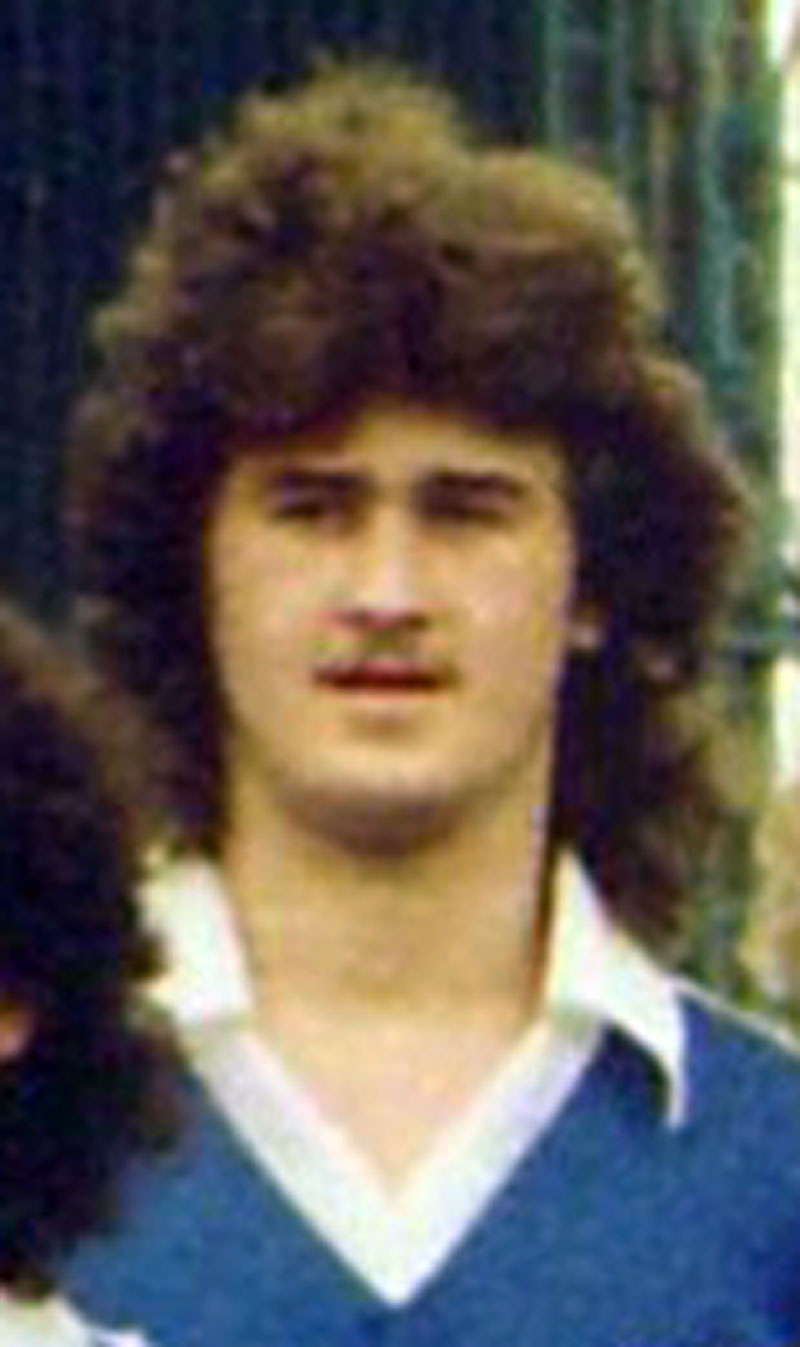
In the 1977/78 season, the Brighton programme featured page profiles of its first team. In the Albion v Burnley edition on 11th February, it spotlighted rising star Glen Geard who had joined Brighton in October 1976 as an apprentice. He turned pro in the same month as this feature, although this bubble perm was to come a little later:

glen geard

Most of the players already featured in this series are regulars in the first team but always at any Football League club there are youngsters waiting in the wings for an opportunity to make their name.

One such young man is Glen Geard who, although not born in Brighton, is very much locally bred. Glen was in fact born in Malta on February 25, 1960, but was educated in Brighton. He spent his junior days at Bevendean School and then went on to Patcham Fawcett, a school very much to the fore in local football.

A single man, Glen lives at home with his parents and sister Julie and he also has a married brother, Damon. At schoolboy level he represented both Brighton and Sussex Boys and went on to trials with the England Boys side although not being lucky enough to receive a cap.

Very much an all-round sportsman, Glen represented his school at rugby, basketball and athletics as well as football. He joined the Albion after a spell with Lewes who at that time were in the Athenian League.

As befits a youngster on the Goldstone staff, his first ambition is to play first team football for the Seagulls and he also hopes that one day he may be good enough to play for England. For a young man not yet 18, he certainly has a promising career in front of him.

Musically, Glen is a fan of Stevie Wonder and the Stylistics and from the world of films Clint Eastwood and Charles Bronson are his favourite stars. Steak and Chicken are his favourite foods and, as yet none too widely travelled, a home loving Glen says England is his pet country.

The next stage in this ambitious young man’s career is first team football and that, says Glen, is a chance he is eagerly awaiting… there are many youngsters in Brighton who would like to have come as far as he has already… here’s one who hopes to go a little further.

Wild hair for a wild child

Wild hair for a wild child

After impressing for the reserves, Geard eventually made his debut, starting in the number 7 shirt in a dreadful 4-0 League Cup 4th Round replay defeat to Arsenal at Highbury on 13th November 1979. He was eventually substituted, with Gerry Ryan coming on.

Seen by many people as a truly gifted midfield player, Geard’s attempt at becoming a hard man proved to be part of his undoing. Alan Mullery once tipped Geard for a full England cap. However, poor discipline led to the wayward pro being handed a free transfer by the Brighton boss in March 1981.
In 1981/82, he joined Horsham, becoming top scorer in the League with nine goals from 40 matches. He also masterminded a famous comeback in the FA Vase, scoring twice as the Hornets came back from 3-0 down against Hastings to force a draw. In the replay, Geard got the winner in a 3-2 victory.

Because of good form, Geard was given a second chance by Albion boss Jimmy Melia in 1983 but he did not make the most of his second chance.

According to
one source on North Stand Chat, Geard’s view of himself is that he ‘wasted his talent.’

As well as Horsham, he hotheaded midfielder played for many local sides in Sussex including Whitehawk, Eastbourne United, Worthing, Southwick, Shoreham, Crawley, Lewes and Littlehampton, before embarking on a managerial career.

When he left as Ringmer boss in 2002, having felt let down by many of the players, he said:

To be honest I’d like to get my boots back on and play against a few of them.

Tagged

Clough’s wheeling and dealing

clough73a

After achieving their first Brighton win, a tight 1-0 victory over Walsall in November 1973, Brian Clough and Peter Taylor had to endure two grim 0-0 draws before an atrocious run of five successive defeats including the infamous capitulations against Walton & Hersham (0-4) and Bristol Rovers (2-8). They then watched further defeats to Tranmere (1-4), Watford (0-1) and Aldershot (0-1).

With Albion morale at an all-time low in November and December, Clough and Taylor set about bolstering the squad. After the annihilation by Bristol Rovers, Clough told Brian Moore on The Big Match:

‘No one’s going to panic Peter Taylor and I into doing something we don’t want to do. If we have to sit through 8-2 defeats for the next six weeks before the type of player we requires comes on the market we’ll do just that.’

In the end, they did make signings. The only problem was that the pedigree of their captures was not the kind to set pulses racing. Still, most of them did a sound job as Albion sought to escape the relegation zone.

York keeper Ron Hillyard had already joined the Albion on loan to cover Brian Powney. This was before the accomplished Peter Grummitt, another loanee, arrived to become first choice as keeper after the Rovers debacle, quickly making his debut in a 4-1 pasting at Tranmere.

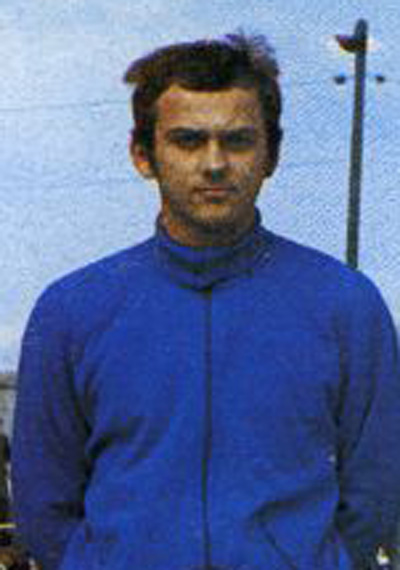
goodeveThen reserve central defender Ken Gooveve, aged 23 (left), was signed for £20,000 from Luton Town. Not completely unsurprisingly, for player who had only played fifteen times for the Hatters in three years, Goodeve’s form was patchy to say the least. As John Vinicombe commented in the Evening Argus:

The chief disappoint so far has been the failure of Ken Goodeve to recapture his Luton form. Goodeve, who started in the back four with Albion at Tranmere, has subsequently appeared in midfield and so far not made his mark.

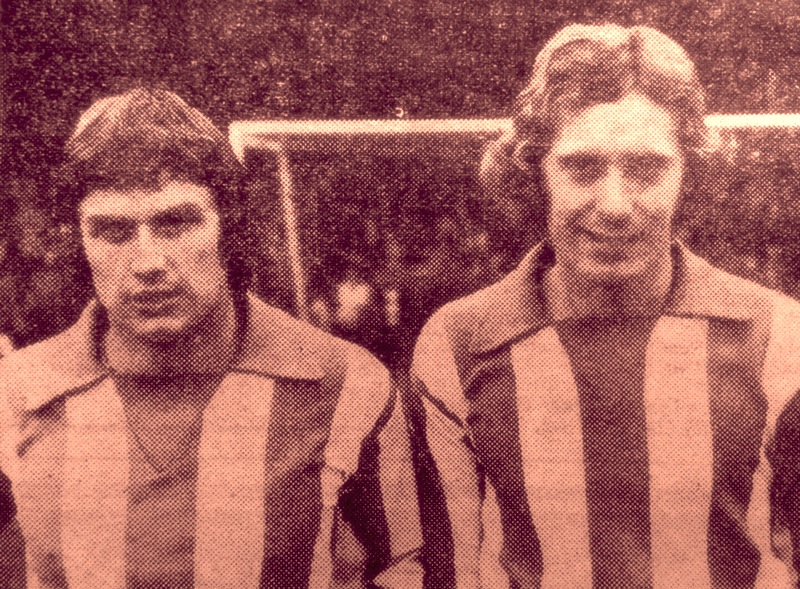
With a lack of proven quality on the market, especially for the money that Brighton could afford, Clough and Taylor had little choice but persist with a policy of signing other teams’ reserves. Before the narrow home defeat to Aldershot on Boxing Day, they also made a double swoop for midfielder Ronnie Welch, 21 (below left), and left back Harry Wilson (below, right), 20, from Burnley, for £70,000:

welchandwilsona

Early signs of both ex-Burnley lads were promising. Wilson acquitted himself well in his debut against Aldershot. After a subdued first-half Welch had a storming second half against the Shots, impressing with his energy.

On 29th December 1973, this reshaped Albion side finally arrested their decline with an encouraging 1-0 victory over Plymouth with Ken Beamish’s second half effort deciding the match. It was a result that kept Brighton in 20th position in Division Three, one place above the drop. Argyle’s side featured a young Paul Mariner. As well as seeing one Mariner effort hit the bar, Peter Grummitt showed his quickfire reflexes in turning another effort away from point blank range. In his report, Wilson and Welch also drew enormous praise from Argus writer John Vinicombe for their play:

After two matches Harry Wilson, the 20 year old left-back from Burnley, is looking something of a fire-eater. He has a rare zest for the game and relishes the close, physical contact that is synonymous with his position.

He knows how to destroy and create, and does both in a manner befitting a five year background at the academy of fine footballing arts. His colleague from Turf Moore, Ronnie Welch, is not so completely extrovert, but is no less involved in midfield, and has a fine turn of speed. He made one mistake through trying to play the ball instead of hoofing it away, but this can only be described as a ‘good’ fault.

Wilson was to make the number three shirt his own for the rest of the season. As for Welch, he continued to impress, so much so that when Norman Gall was absent in February and April later on in the season, the captaincy was passed on to the youngster. Unfortunately, the burden of being skipper at such a young age affected his form for the side. For Goodeve, his fortunes did not recover. Dropped to the bench against Plymouth, he was to play just two more matches for the Albion, two defeats at the end of March 1974, before joining Watford in June.

Tagged , , ,

Love the Tiger feat

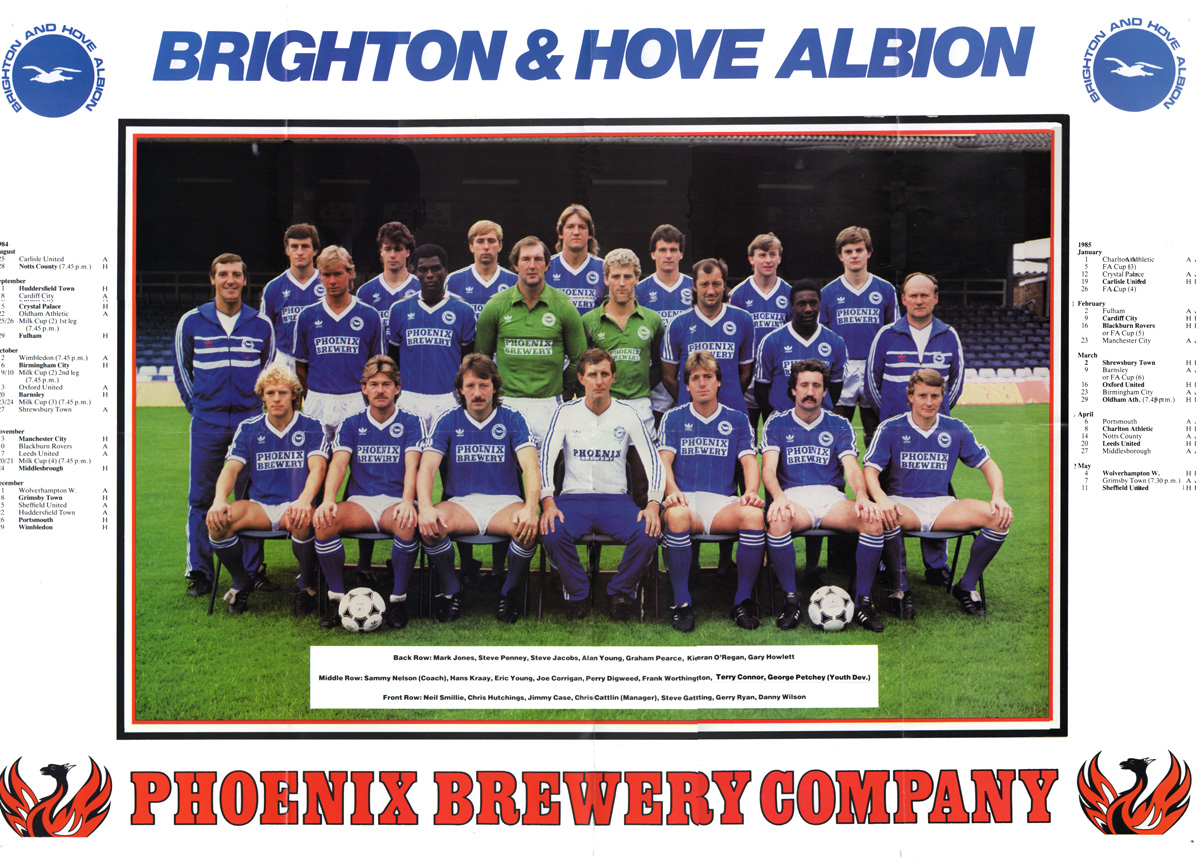
Here’s Chris Cattlin’s formidable Albion squad ahead of the 1984/85 season. Having beaten Liverpool the season before, the Seagulls had cup pedigree and feared no-one in a knockout competition.

1984-85v6

When Brighton drew Hull City in the FA Cup in both 1984/85 and 1985/86, they achieved satisfying victories in both encounters. However, it could not paper over the fact that the Tigers, led by player-boss Brian Horton, were set to surpass the Albion in the League.

As Chris Cattlin wrote in his programme notes before the third round clash of 1984/85:

“I would like to welcome Brian Horton and his team. He and I have many happy memories of our days together with the Albion both on and off the field. I know he will be particularly keen to do well against his old club, but he will certainly remember his happy days at the Goldstone.

I am sure he shares my memories and will want his team to win but I hope I don’t see anything of that bristling beard until around 5 o’clock… then I am sure we’ll have a drink together and the years will go rolling back.”

In the match, played in front of 11,681 in the January frost, ex-Albion striker Michael Ring was also re-united with the Goldstone, playing up front for Hull City:

michaelring

However, it was the Seagulls’ Chris Hutchings who scored the only goal in a second half counter-attack:

By the end of the season, while Albion narrowly missed out on returning to the top flight, Hull City had succeeded in clinching promotion from the Third Division.

When the sides met in the Second Division in 1985/86, goals from Connor, Wilson and Fashanu firmly put the new boys in their place, as Hull crashed 3-1 at the Goldstone in November 1985.

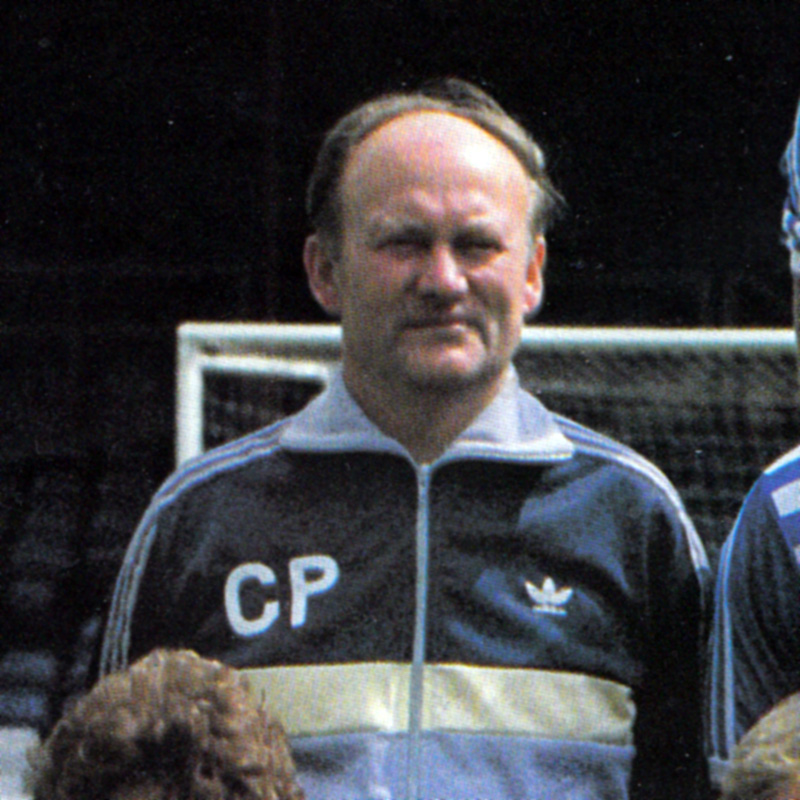
In the FA Cup, in January, in the Fourth Round at Boothferry Park, Albion prevailed again. A Cup Indian sign, perhaps? Or maybe a home jinx, seeing as Hull have not beaten Albion away to this day since 1965. On 25th January 1986, Dean Saunders and Terry Connor (2) scored the goals to take Albion through in a 3-2 victory. The rapidly improving Hull City did get revenge in the League, however, beating Albion on the last day of the season, and pushing up to sixth position, five places above the fading Seagulls, now managed on a temporary basis by assistant George Petchey (below), after Cattlin had been given the sack days before.

georgepetchey

Tagged , , , , , , ,

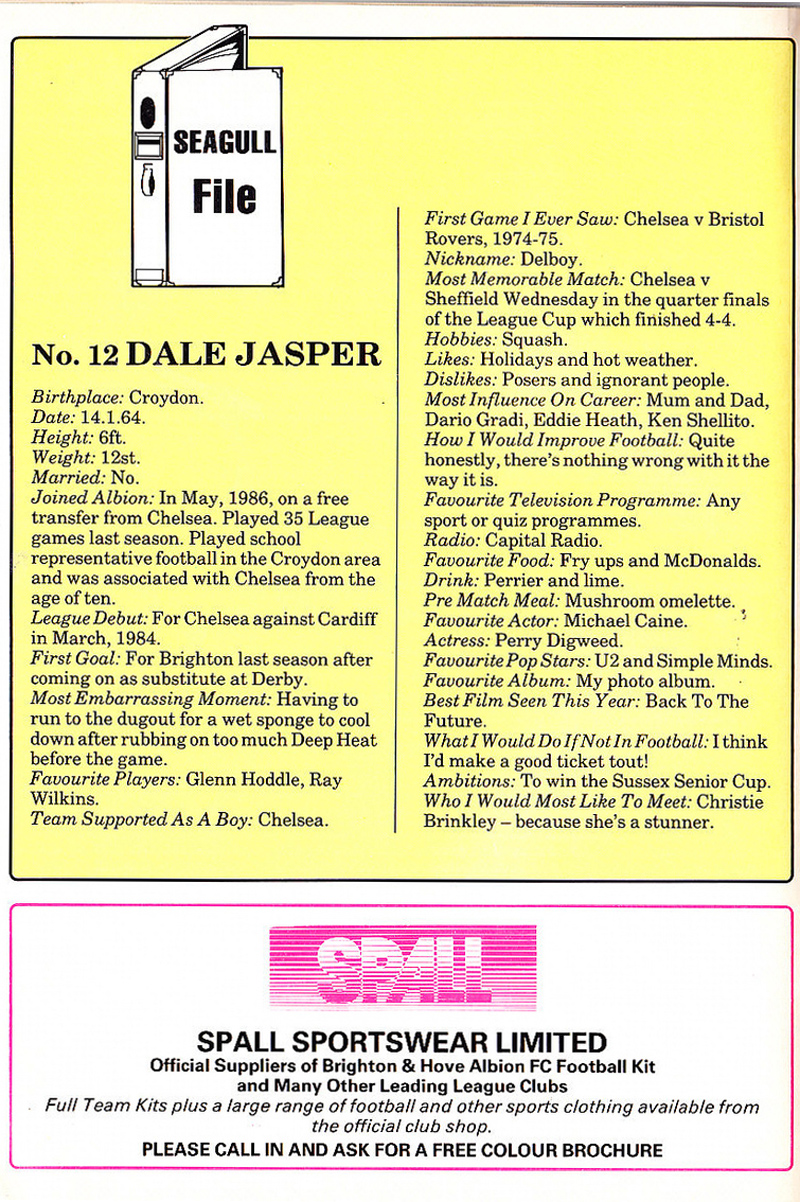
A day out with Dale Jasper

Croydon-born Dale Jasper was a Chelsea supporter who did not have a successful time as a first team player at Stamford Bridge. Nevertheless, he was once rated as an outstanding prospect in both defence and midfield. Kelvin Barker on the Sporting Heroes site notes:

Dale had a composed, elegant playing style which was pleasing to the eye and he was given an immediate opportunity to exhibit his skills at the highest level when the new season [1984/85] began.

Sadly, he turned Chelsea fans against him when he conceded two penalties after coming on as a substitute in the Milk Cup Semi-Final First Leg at Sunderland in 1985:

His Chelsea career never recovered. Seeking a fresh start, he joined Brighton on a free transfer in May 1986, before the end of the 1985/86 campaign.

Tony Norman wrote a splendid piece about Jasper for an Albion matchday programme in 1986/87. Could this ex-First Division player be the man to get the Seagulls back into the top flight?

dalejasper2

When 23-year-old Dale Jasper signed for Albion a year ago. he couldn’t believe his luck.

Within three days, he was walking up the steps of a British Caledonian let and heading off for the trip of a lifetime to Hong Kong.

“That was quite a start to my days at the Goldstone,” said Dale as we sat in the sunshine in the deserted stadium. “I had been determined to get away from Chelsea, because I wanted regular first team football Quite a few clubs showed an interest in me, including Reading and Charlton, but when Brighton came in for me, that was it. I knew right away this was the club I wanted to play for.

“I signed on the Monday and three days later I flew out to Hong Kong with the team, so it wasn’t a bad week, was it? We played an exhibition match over there. I was a bit disappointed when a goal I scored was disallowed, but I was smiling by the end of the game, because we won 3-1.

“We were away for about a week and it was a very good way for me to meet the rest of the p!ayers and get to know them. It all seemed a bit unreal, because it had all come out of the blue, but it was very enjoyable.”

Dale had been linked with Chelsea Football Club from the tender age of eleven and when he decided to move on, he expected it to be a big wrench.

“I thought it would be a bit difficult to settle, but it was no problem at all,” he explained. “This is such a happy, family club. I love it here. I’ve never missed Chelsea. I still keep in touch with some of the players at Stamford Bridge, but I’ve never regretted leaving.”

Dale has his own home near East Croydon railway station which is just 40 minutes up the line from Brighton But he pops in to see his mum and dad every day.

“We’ve always been very close. They ve travelled all over the coumry to watch me play, and I don’t think I would be playing professional football today if it wasn’t for them. When I was younger, I had a wild streak in me, like a lot of kids do. But my parents kept me on the ‘right track’. They’ve always set a good example and I respect them for that.

Dale has a sister and two brothers•. “Football’s always been a big thing in our family. My brother Tony plays in New Zealand and our younger brother Wayne has had offers to train with Crystal Palace, Tottenham Hotspur and various other clubs, so things are looking promising for him too,”

Dale likes to keep himself fit during the summer break with a few games of squash and he is planning to do some decorating in his Croydon home too. But there will be time to relax.

“I’m planning to have a couple of weeks in Corfu with some friends of I mine. I’ve been to Spain and those busy resorts are nothing but I aggravation. So, I fancy going somewhere reasonably quiet and taking it easy.”

Dale will be taking some famous musical friends with him too.

“Sitting back in the sun listening to tapes of my favourite bands like Simple Minds, UB40 and U2, that’s my idea of a great day out on holiday.” Then Dale will be fit and ready to play his part in a new season that will, we believe, see the Seagulls smiling again!

dalejasper

He played 32 League appearances plus two as substitute in the disastrous relegation season of 1986/87, scoring twice, including a 30 harder in the 4-1 defeat at Derby in October 1986. Clocking up his game time, he then amassed a further 12 League starts, plus two as sub, the following season as Barry Lloyd’s side unexpectedly achieved promotion from Division Three. One of his four goals that season was this equaliser at Bristol Rovers in October 1987:

Memories of his contribution to the Albion’s play are mostly negative, however. As Zeitgeist on North Stand Chat remarked in 2004:

Dale Jasper was generally pants. Coming from Chelsea you’d expect him to have a bit of pedigree about him. Afraid not, Charlie. The Chelsea of that era were a piss poor apology of the moneybags superstars of today. They didn’t have a pot to piss in and were on the verge of dropping into the second division. Dale Jasper’s five minutes of fame was punching the ball into the net whilst lying on the ground for a late equaliser against Chesterfield. Fortunately, Stevie Wonder was the ref and we got away with it.

dalejasper5

Interesting that as a joke, he lists winning the Sussex Senior Cup as the extent of his ambitions:

dalejasper4

In May 1988, he featured in the reserve side that lifted the Sussex Senior Cup for the first time. A few weeks after this triumph, he was released, eventually playing for Crewe, Crawley and Kingstonian.

According a piece in the Football League Paper in early 2012, Jasper was ‘last known to be living above a pub in South London and working on the building industry.’

Tagged

90 Minutes Live: Fans United, 1997

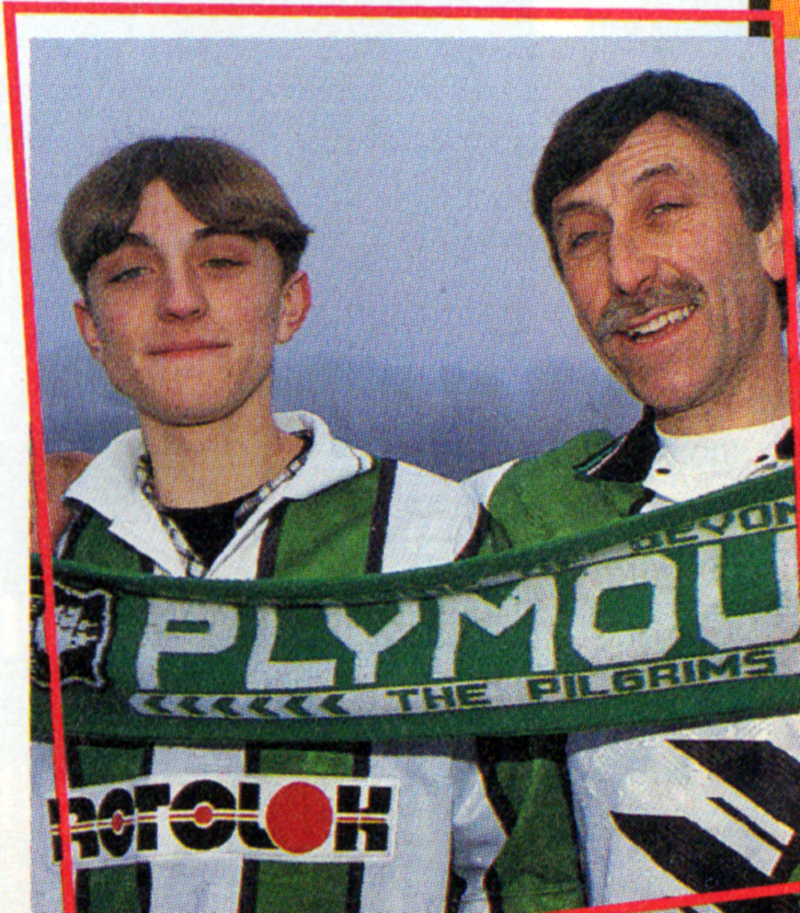
Seventeen years today, Fans United happened. It was a massive show of strength as supporters from all around the country, and the world, (including a young Richard Vaughan) came to the Goldstone Ground to support Brighton fans in their battle to save the club. From 90 Minutes magazine in February 1997:

Saturday 8 February will go down as the day the fans reclaimed the game. Against the backdrop of Brighton’s possible loss of league status and the threat of closure, over 8,000 fans from all over the country descended upon the Goldstone ground to show the money men who really runs things. 90 Minutes was on hand to witness the massive show of fan power in the fight to save Brighton and Hove Albion FC.

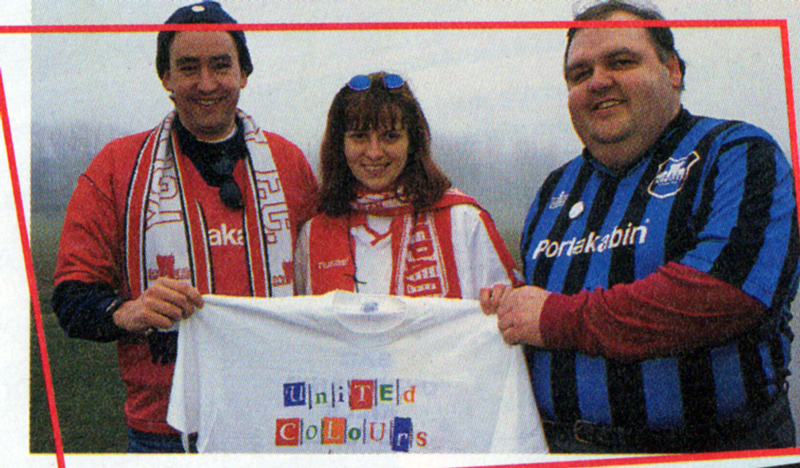
The Goldstone Ground was awash with shirts and scarves on supporters from all over the country. We asked some fans outside the Goldstone: “Your tea’s not playing today, so why are you here in Brighton?”

fu-aldershot

Ian Fennell supports Aldershot
Ian:
“Aldershot went out of business which upset a lot of people, and I’d hate the same thing to happen to Brighton. Let’s hope today sends a statement that football fans from all clubs are standing together to stop, not only Brighton, but any other club from going out of business. We’ve simply all had enough of poor an untrustworthy management.”

fu-arsenal

Ros Constable & Sandra Jenner support Arsenal
Ros:
“These people are buying into clubs cheaply in the lower Divisions and then, basically, raping them. These people at Brighton have to be stopped. If not, it’s like setting a legal precedent. If one bugger gets away with it, more will follow, and no club will be safe.”
Sandra: “These businessmen have looked to football clubs to make a fast buck. The fans should have a faster learning curve to outwit them and stop them in their tracks. We’ve come here today to support football and stop clubs in the lower Divisions being kicked out of existence.”

fu-astonvilla

Graham Underwood & Steve Jones support Aston Villa
Graham:
“I’m here today to show my support for the Brighton fans’ battle against some men who, thank God, are not in charge at Aston Vlla. It grieves me to say it, but, again, thank God we’ve got Doug Ellis, and not this lot down here, running our own club.”
Steve: “Who could sell a ground, before another one’s ever been found? The man’s a joke – it’s just a case of money before football. If one man gets control of a club, no one’s safe, not even Premiership sides.”

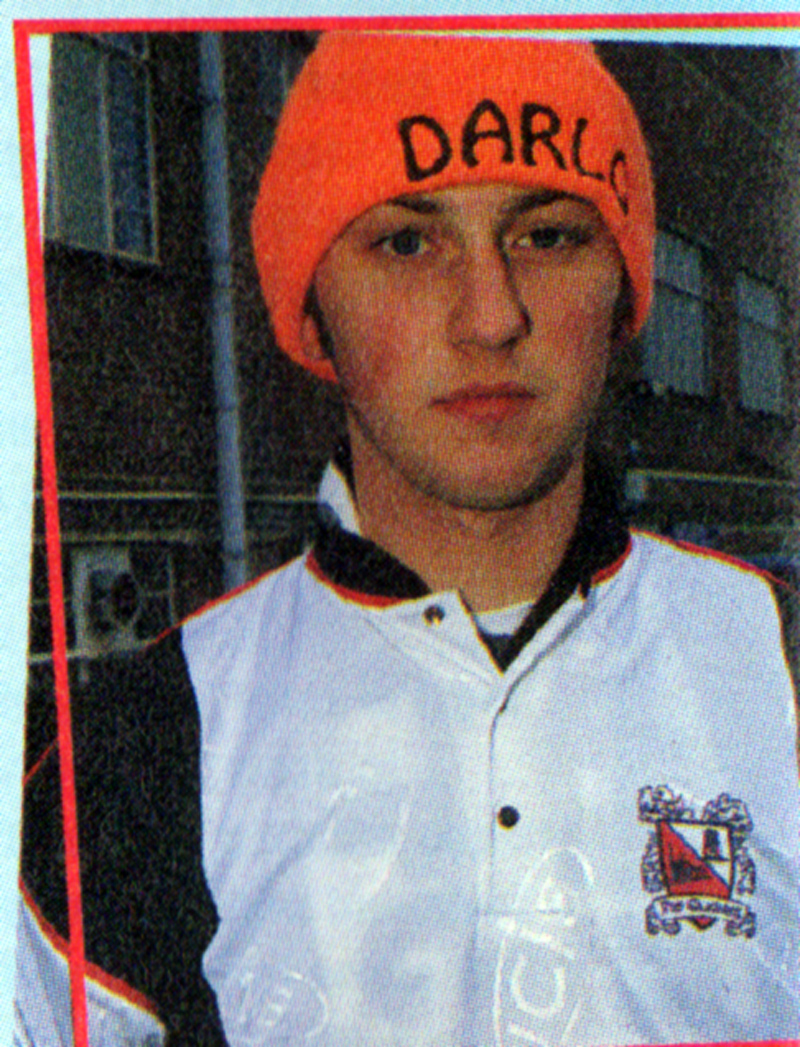
fu-darlington

Miles Beecham supports Darlington
Miles:
“I’m here today because Darlington football club are in a similar position to Brighton. We have directors who say one thing, do another, give promises and don’t deliver. It’s about time directors woke up to how fans feel, and respected them, because if the fans don’t turn up, there’s no club, no directors and no money for them.”

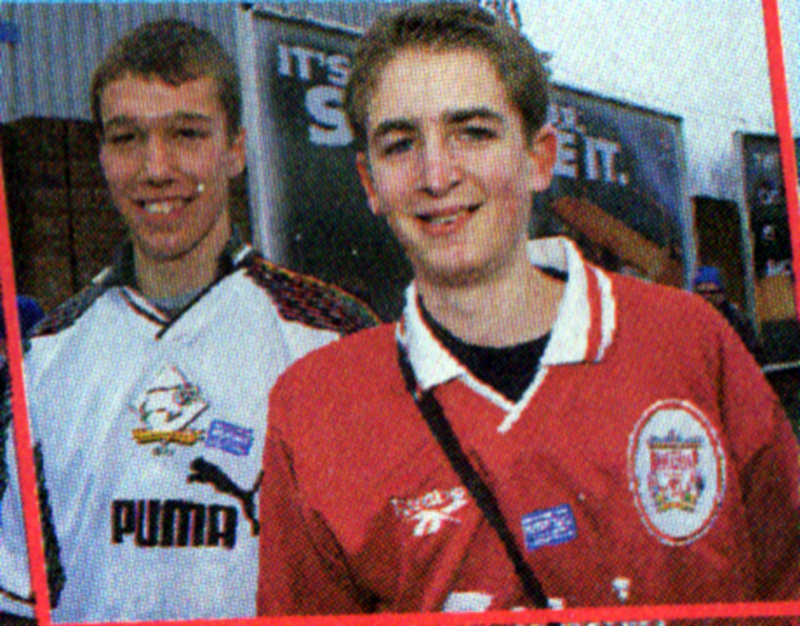
fu-liverpoolderby

James Randall supports Derby & Richard Cole supports Liverpool
Graham:
“Five years ago, Derby were playing Brighton. It could’ve been us that went down and down, and it’s important that these clubs continue to exist. Without them, there wouldn’t be any clubs anywhere in the long-term. We all rely on each other.”
Richard: “It’s about time the fans had a say in the running of clubs, not just the board and the business people. The game belongs to us, not to individuals with an eye to what the game can give them. It should be what they can do for the good of the game. Most of the top players are discovered by the smaller clubs (e.g. Keegan), so they must survive at all costs, or there is no long-term future for any club, big or small.”

fu-plymouth

Richard & Roger Vaughan support Plymouth
Roger:
“There was a campaign page on the internet looking for ideas on how to protest about what’s going on at Brighton. There were loads of messages of support from supporters all over the country, even Europe, and it gave me the idea of organising a FANS UNITED day to help out Brighton. It shows football fans do care about other clubs. Richard put a message on the internet that started the ball rolling. The people organising Brighton Resistance thought it was a wonderful idea and put it into motion. We had to come today to see the end result and give our personal support. People are now coming from all over Europe and America to support the Brighton fans’ attempts to rescue their club. We’re here to show how people up and down the country are feeling about clubs that put money before fans. It’s a sport, not a money-making exercise.”

fu-southampton

Trevor Hulstrop & Gaby Binstead support Southampton and Danny Blackmore supports Brighton
Trevor:
“I’m protesting because I believe that if clubs like Brighton are allowed to go under, it’s the beginning of the end. Football clubs are part of the community and people shouldn’t be allowed to come in, buy the club, asset strip it, run it into the ground and then dump it. A club like Brighton belongs to the people that support it and made it what it is over the last 100 years. Not one or two individuals.”
Gaby: “If they get away with this, and clubs go out of business, who are we going to play? Football clubs are all inextricably linked, so when one’s in trouble, we all have to rally round to save it.”
Danny: “Today is a statement saying: Football will win. Football is a lot of people’s lives, and it’s great that fans from all over are here today to help us – so thanks to everyone who’s supported us.”

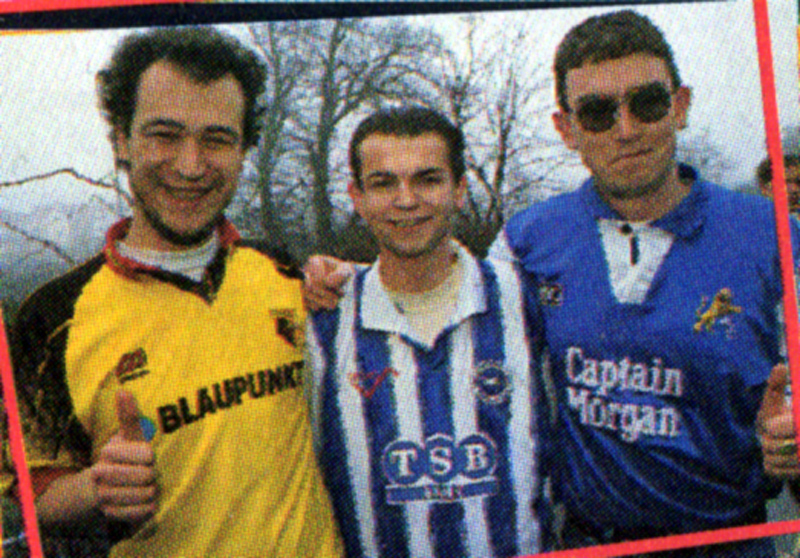
fu-watfordmillwall

Toby Radenhurst supports Millwall, David Fordham supports Watford & Paul Chesworth supports Brighton
Toby:
“With what’s going on at my club, Millwall, I’ve come here today to show solidarity with Brighton fans – to say enough is enough. Directors running clubs into the ground are not going to get away with it.”
David: “It’s critical that football clubs aren’t allowed to die because of the attitude of these directors who are only there to make money at the expense of football. What these people are doing is wrong and it has to be stopped.”
Paul: “Today is showing that people care about all football, not just their own club. It’s fantastic that fans from other clubs care about whether we continue or not.”

fu-york

John Cotton & Paul Hilton support York City and Milena Radosavcjevic supports Red Star Belgrade
John:
“Ot could happen to any club – to our club – if we let Brighton be destroyed. It could be the first of many. It has to be stopped so we’re here today to lend our support.”
Paul: “If someone tris to make a quick profit out of a club, he’s not only taking on the directors, but also the fans. If you’re fan of a club, you’re a fan of football and anyone destroying football has to be stopped. That’s why we’re here.”
Milena: “People need their football club because it’s part of the local community. Why should it be taken away from them, just so an individual can make a quick profit?”

Finally, to round off an excellent feature…

Gulls’ Eye view:
For the first time in living memory, Brighton, Chelsea and even Crystal Palace shirts stood united by one cause. Seagulls devotee Johnny Dee reflects on this event and the shock of seeing that ‘I’ll get me coat’ bloke off the Fast Show:

In the teary-eyed closing scene of It’s A Wonderful Life, hundreds of familiar faces save the fallen George Bailey from bankruptcy and giving him all their cash and joining in a rousing chorus of Auld Lang Syne.

Last Saturday, every Brighton fan must have felt like old George. Under the banner Fans United, football supporters converged on the Goldstone Ground from Leeds, Birmingham, Glasgow, Newcastle and beyond. They came to see Brighto play Hartlepool but, more significantly, to show solidarity with a group of supporters in their season of need. They swelled the gate to double the season’s average, learned the hosts’ songs, saw a pretty decent game and left, reminded of the true spirit of football. It was bloody ace.

The reason so many took part in Fasn united was simple: if it can happen at Brighton, it can happen to anyone. Bought for a pittance by chairman Bill Archer, Brighton have found their ground sold, their assets sold off and a ludicrous groundshare with Gillingham looming. Yet the FA still has no powers to legislate against such actions.

Albion fans have become expert protesters this season, ahtough, sadly it was only the ‘violence’ after the pitch invasion last season that received national media attention. Fans united remedied matters a little, but it still wasn’t enough.

Every fan should hope Brighto manager to oust the disgraced Archer, because if Brighton fall, then plenty will follow. Visit Goldstone while you can (it’ll be bulldozed in May), but check with Seagulls fans first – if Archer’s still in charge, chances are they’ll boycott the match.

Tagged ,

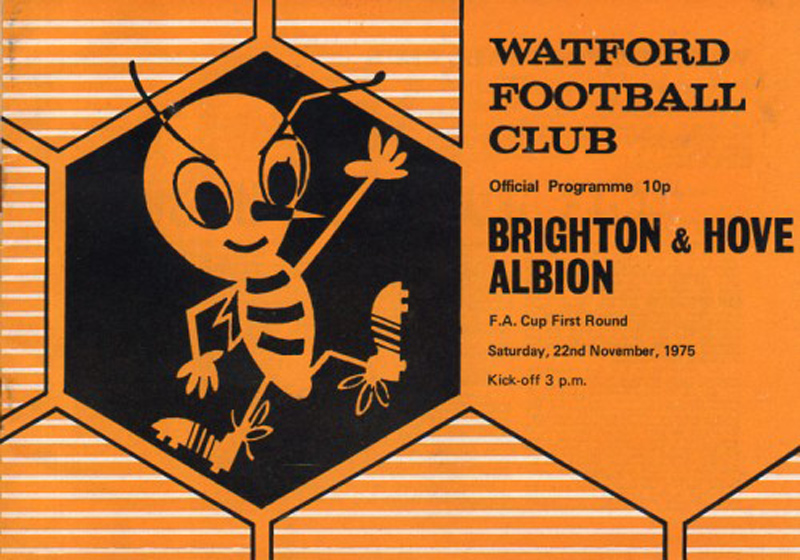
When Albion walloped Watford 3-0 at Vicarage Road

watford1975b

Brighton were mostly dreadful away from home under Peter Taylor in the mid-1970s, and Fred Binney usually less than effective. But every dog has its day, as this FA Cup victory on 22nd November 1975 showed. Here’s John Vinicombe’s account that Saturday afternoon:

Albion took Watford apart in the first round of the FA Cup before a 9,283 Vicarage Road crowd this afternoon.

Watford, in the wrong half of Division IV, were outclassed and lucky to escape with a 3-0 hiding.

Albion had it all their own way, taking the lead at 32 minutes through Neil Martin. A brief Watford revival was snuffed out as Albion turned on the power and Fred Binney sewed it up with goals at 55 and 82 minutes, bringing his tally for the season to 13.

Albion were given a great ovation by fully 2,000 fans, many of whom had travelled by charter train.

It was one of Albion’s best Cup performances in recent seasons and their first win at Watford in six visits. This was Albion’s fourth away win and quite the most emphatic.

Mellor put Watford in a state of panic with a fierce cross that caught Rankin out of position but at this early stage there was only one team in it.

Watford had a goal disallowed at 20 minutes when Bond crossed smartly and Horsfield hooked the ball into the net, but was ruled to have handled.

Tiler had three fine runs and each time Watford resorted to desperate measures to check Binney and Martin (twice). Then Lees was glad to turn Fell’s low cross behind and Joslyn was a wee it lucky when he headed clear but only just missing the far post.The pressure ultimately brought a goal at 32 minutes. Fell took Albion’s ninth corner, Mellor ghosted away from his shadow and headed the ball on to the far post where Martin met it at full pelt and blasted Albion into the lead from point blank.

Fred Binney - double delight

Fred Binney – double delight

After 56 minutes Binney scored his 12th goal of the season after Mr Daniels had played the advantage rule when Martin was fouled on the half-way line.

The ball then ran to Mellor with Mr Daniels waving play on and the pass arrowed fully 25 yards to Binney who timed his run to perfection. He accelerated past Garner and as Rankin came out drilled a brilliant goal.

Eight minutes from the end Binney scored a classic goal. Just outside the box he gained possession and with his back to goal did not seem to pose any danger – or at least so Watford thought.

Within a flash he turned like lightning and placed a low left-footer to the far corner, catching Rankin wrong-footed.

Albion: Grummitt, Tiler, Wilson, Machin, Piper, Burnett, Fell, O’Sullivan, Binney, Martin, Mellor. Sub: Kinnear.

Watford: Rankin, Howe, Akers, Joselyn, Lees, Garner, Scullion, Bond, Horsfield, Jenkins, Walsh. Sub: Greenhigh.
Referee: Mr B.H. Daniels (Brentwood).
Attendance: 9,283.

The victory was Albion’s fourth on the trot. It was helped by Fred Binney’s outstanding goal touch. He was in a glorious spell of seven goals in just six matches. Despite Fred being on the scoresheet again on 3rd January 1976, Albion’s interest in the FA Cup was ended at the third round stage, losing 2-1 at the Goldstone to Southend.

Tagged ,

Matthew Wiltshire – back to the future

I was delighted to hear from Matthew Wiltshire. He’s the father of one Cameron Wiltshire, a young, promising midfielder currently progressing through the ranks at Brighton to play in the under-18s team and development squad. As bn1&bn3 Albion commented on North Stand Chat in August 2012, Cameron:

Came on as a substitute in today’s Development Squad game. Only 16, had a good touch and well composed considering he was playing against people twice his size. Could be a great player for the future.

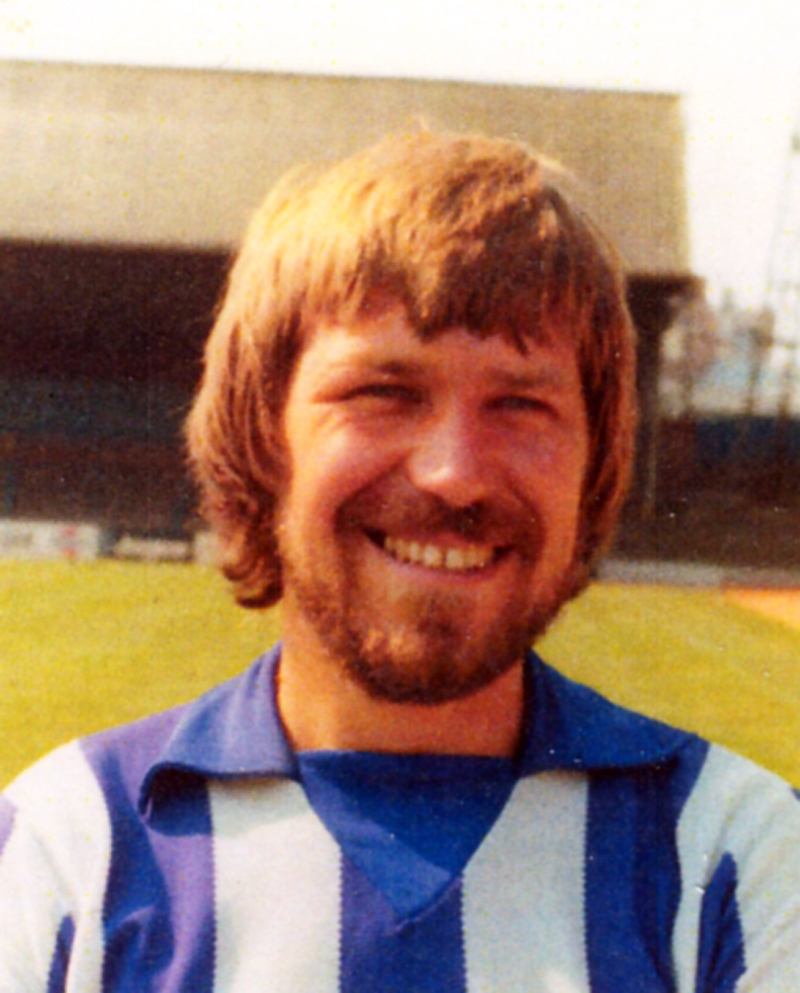
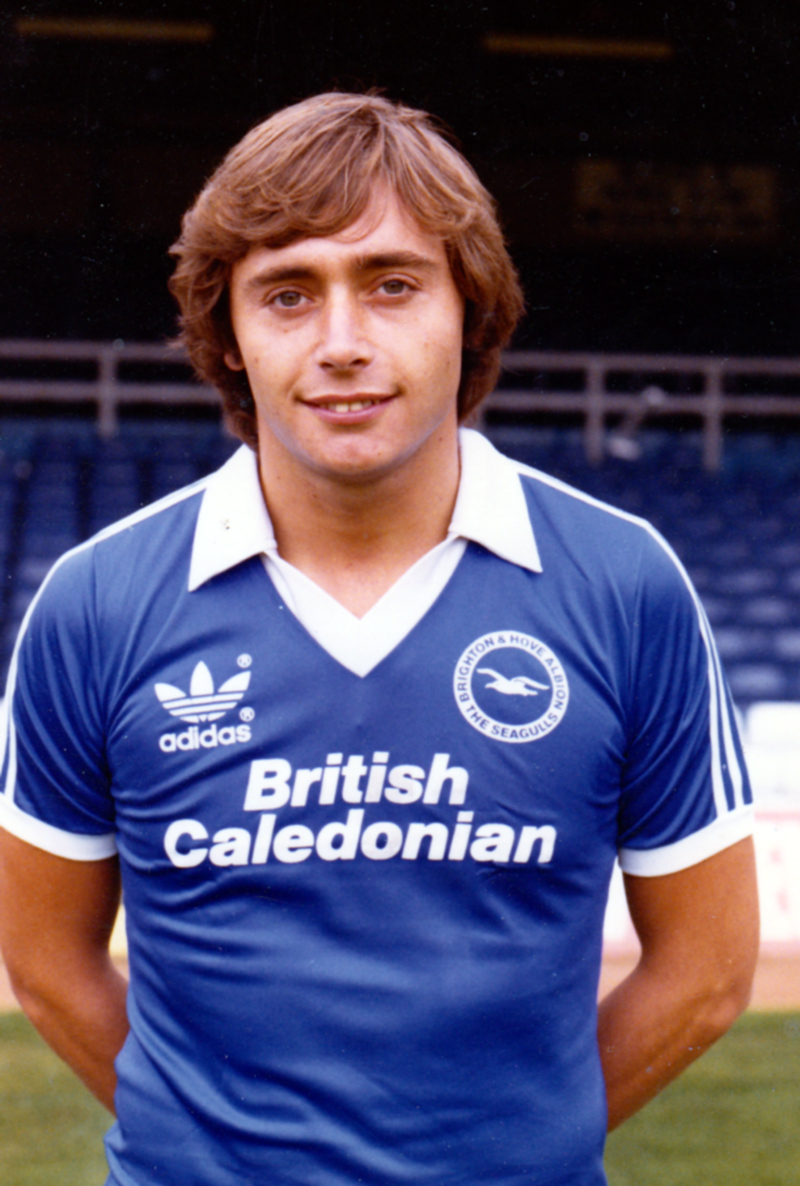
It’s helpful that his family are no strangers to Brighton & Hove Albion. Matthew Wiltshire came through the newly formed youth system in the late 1970s. He was an apprentice for two years and then a young pro for another couple of years. Mat went to Germany, Holland and the USA before returning to play with many clubs in senior Sussex football. Here’s a photo of the him in his Albion days:
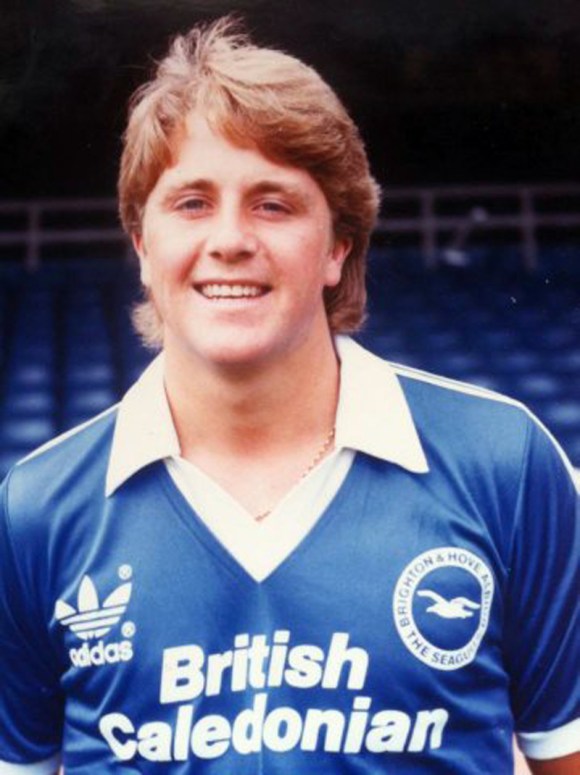
mattwiltshire

When Matt emailed me a few months ago, he said: ‘I have recently become an avid reader of The Goldstone Wrap and your other stuff – great work’. Marvellous! Not only that, he was kind enough to answer some questions I had:

For the people who never got to see you play, could you describe what kind of player you were? What were the strengths to your game were?

mattwilshirepaniniThats a little tough to say, I was a midfielder and probably seen as technically competent 🙂 I do have a dodgy photo from a Dutch Panini Sticker book that say’s that I was a ‘two footed midfielder, a real playmaker’, but in Germany the English had a reputation for toughness, so they looked at me as more combative.

How did you get to join the Albion? How close to a first team appearance did you get?

My older brother Greg was scouted by the brand new youth system introduced by Mullery and ran by John Shepherd. I was soon mentioned and started at about 12 years old through to being released at 20 years. There was a time when Mike Bailey was manager that it looked more likely that I might be involved and was lucky enough to travel as part of the squad against Coventry away. When I signed pro I was hopeful, but I was signed as an apprentice by Mullery, a pro by Bailey, then Jimmy Melia/George Aitken were there for the FA Cup Final and Chris Cattlin gave me a free transfer. Near the end I didnt really have an ally on the coaching side, something young players need.
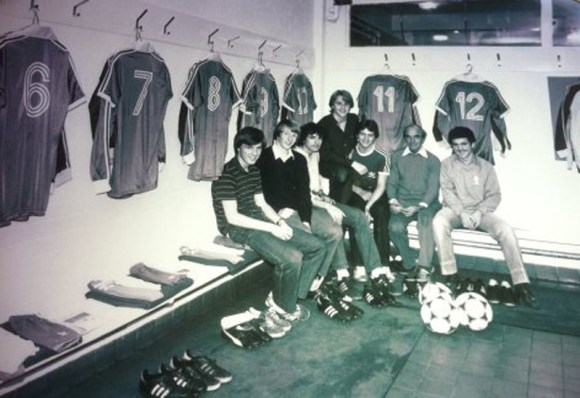
brightonchangingroom3

Which players do you most enjoy playing with? Who most looked like they would break into the first team?

It was a time of real top players and characters, Mark Lawrenson, Peter Ward, Steve Foster, Jimmy Case, Andy Ritchie, Gordon Smith, Graham Moseley, Tony Grealish, Michael Robinson, Brian Horton. For a local youngster to train and watch them close up each day was fantastic, but perhaps surprisingly the one stand out player for me was Neil McNab. No doubt he would have been appreciated in Brighton’s current team much more. He was the one for me that when I trained with him he impressed me with his tricks and technique, I liked his style of play.

When you are young, each player has their own attributes and you generally don’t immediately pinpoint those that will make it. However, you are only too aware of those who are being progressed from within the club. Gary Stevens, although a couple of years older, was progressing well and his mentality and professionalism (in today’s terms) was obvious.

After you left Brighton in 1984, who did you play for? Are there any memories that particularly stand out?
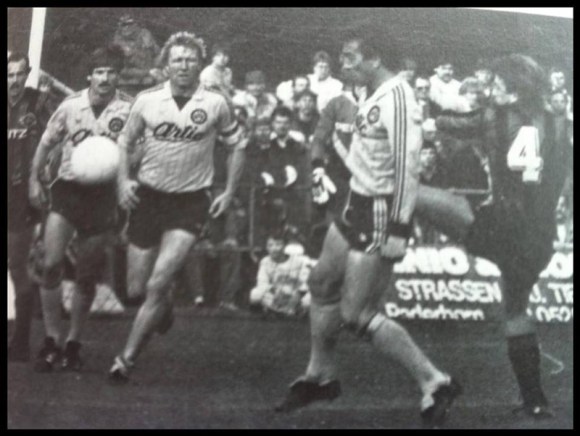
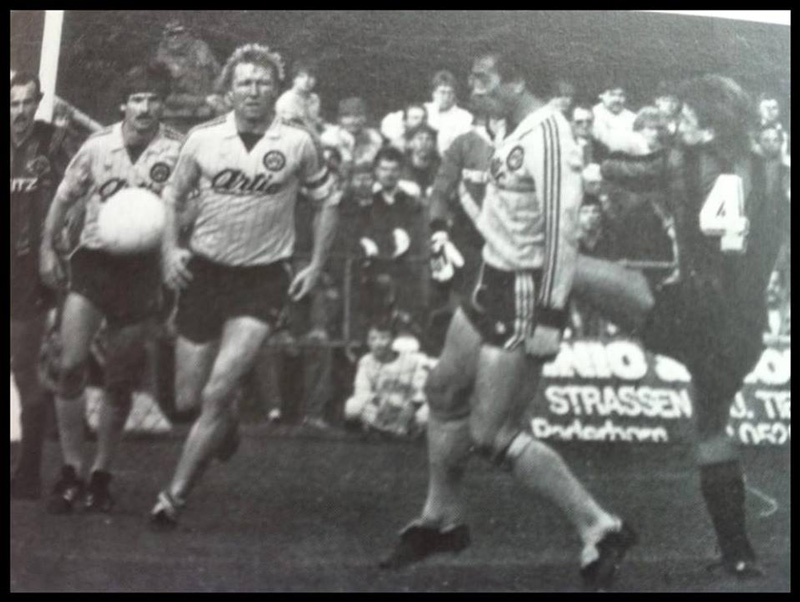
Playing against Borrussia Dortmund, Mat is the number 4 with the high-footed tackle to challenge Romanian international  Raducanu whilst Hurst Hrubesch, the German International, looks on

Playing against Borrussia Dortmund, Mat is the number 4 with the high-footed tackle to challenge Romanian international Raducanu whilst Hurst Hrubesch, the German International, looks on
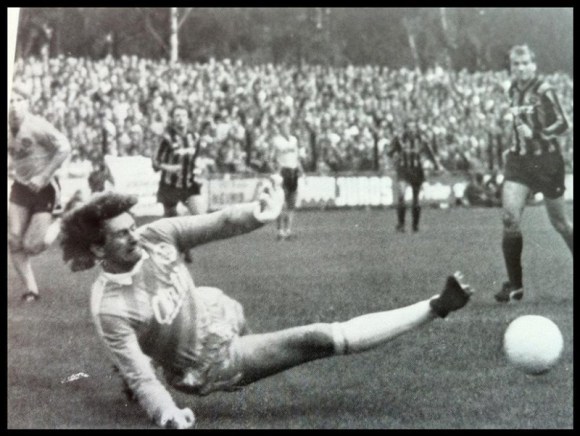
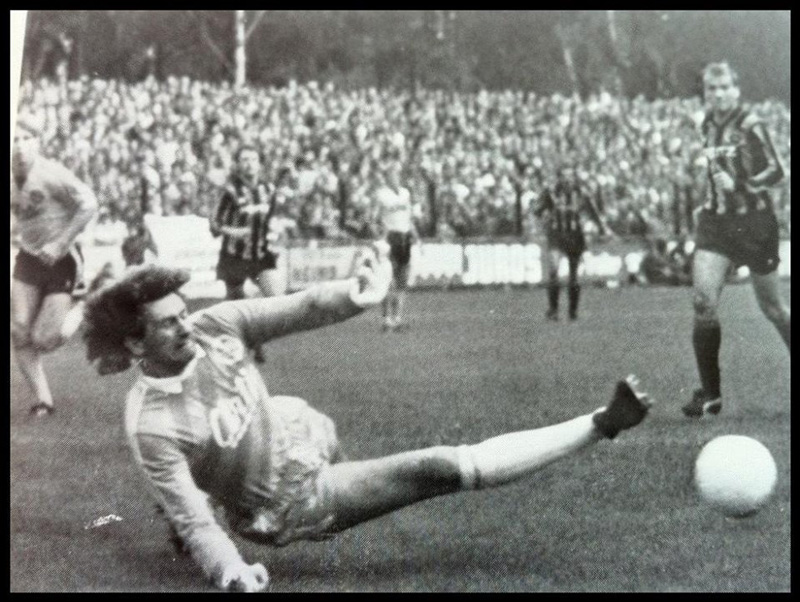
In the striped shirt second front left in the background, Mat watches his side take the lead against Dortmund

In the striped shirt second front left in the background, Mat watches his side take the lead against Dortmund

Germany: 1984 – 1986: TuS Paderborn-Neuhaus (now SC Paderborn 07). Bundesliga 2: Ex-Polish captain Jan Liberda was my coach. In 1986 we played Borrussia Dortmund in the last 16 of their FA Cup (I’ve got an old dodgy video somewhere!) winning 2-0 at half time, lost 2-4. My midfield partner Michael Henke went on to become one of the top German coaches, notably being assistant to Ottmar Hitzfield at Borrussia Dortmund and more recently was Aston Villa’s European Scout. A nice man.
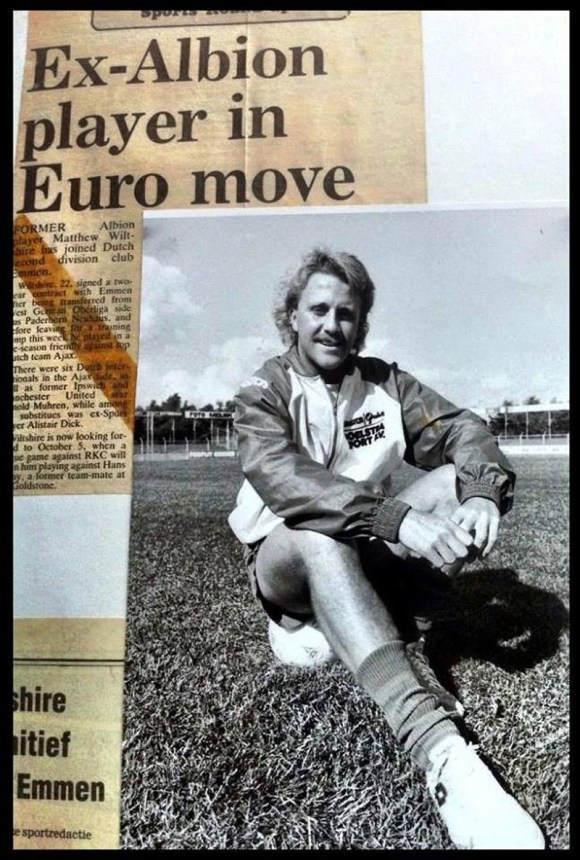
wiltshire-holland

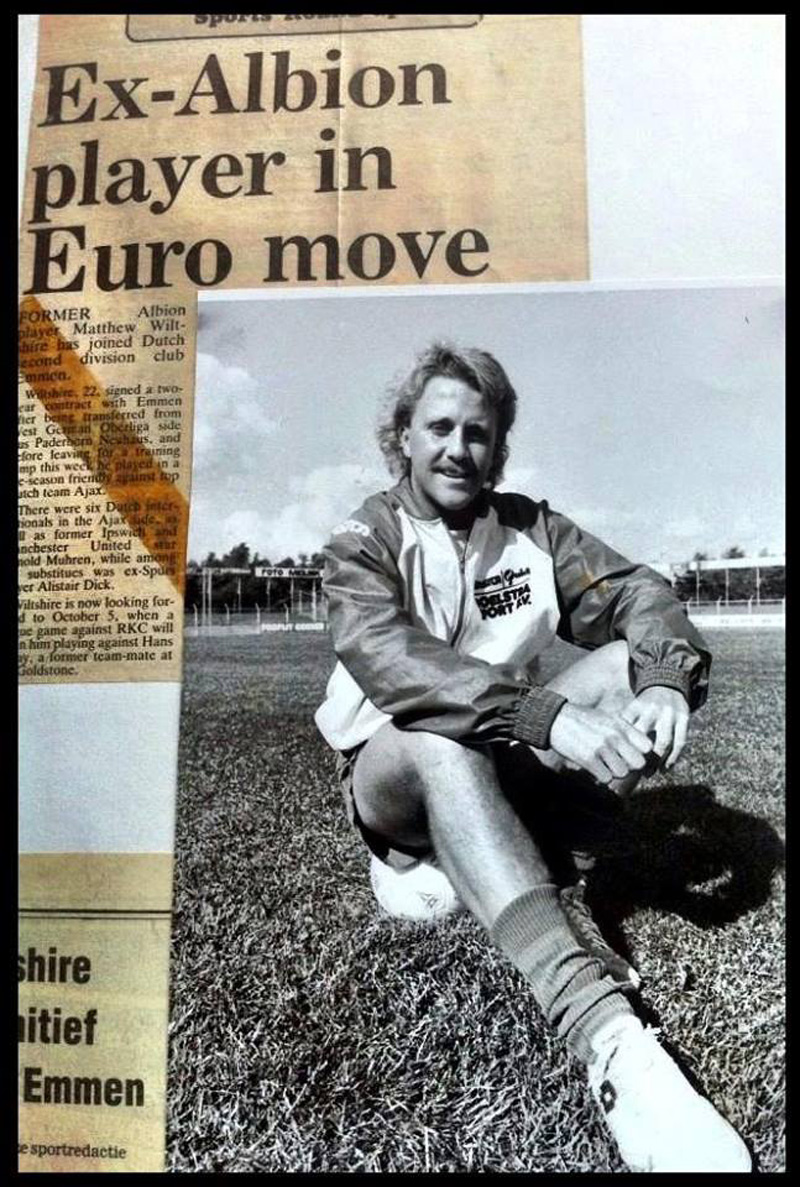
dutchHolland: 1986 – 1987: VV Emmen Dutch 1st Division. Disappointing time, most notable exception was meeting up again with my old playing buddy Dean Wilkins. We have remained best friends ever since. Best man at wedding, Wendy and I godparents to his daughter blah blah blah and sat in the directors box this Saturday to see Reading lose to Brighton this month! 🙂
Sting-wiltshireUSA: 1987 – 1988: Chicago Sting: Major Indoor Soccer League. Brilliant experience, flying to games, razzmatazz, good indoor crowds. I think out of the roster of 22 professionals there was 19 nationalities! And bumping into old BHA team mates (in the loose sense of the word), Peter Ward (Cleveland Force/Witchita Wings) and Mickey Thomas (Wichita Wings) I think. Both were great blokes, but Mickey was slightly mad but very generous, would always give me stuff when we met!

USA 1988: Albany Capitals: MSL.

Then played for Lewes, Worthing, Bognor, Newhaven, Eastbourne Borough, Peacehaven, Eastbourne Town.

Has the life of an apprentice changed much since you were one?

Yes, to a degree. It’s quite funny when Cameron comes home and his humour towards his fellow scholars is very similar to what we were doing 35 years ago! The biggest aspect is the education and the conundrum is that the failure rate amongst young players remains very high so the governing bodies have implemented an in-depth college course, which seems to make sense, but perhaps impinges on the scholars’ football training, rest and study of the game, so it unwittingly exacerbates the failure stats. That then prompts more focus on education and so it continues.

We used to have to clean changing rooms, boots and sometime pitch maintenance at the Goldstone, and more excitingly be in the old ‘boot room’ opposite the home dressing room on match days and see these stars of football walk by. Some would stop and talk. Even had Clough chase his star player John Robertson before a game for smoking in our bootroom!

Cameron has to clean his changing rooms and then college.

cameronwilshireHow do you think it’s helped Cameron to have a dad who has been with a professional football club?

If you accept that coaching and advice is important to any young player then it should follow that having advice and a mentor 24/7 might help.

When did the club discover him and what progress has he made?

He was asked to train at 8 years and signed when he was 9 years old, I think he has done very well. He is a really good kid (takes after his Mum) and approaches the game in the right way. How things will progress at Brighton & Hove Albion is not yet decided, but I am sure he will be fine wherever he goes.

What’s you line of work nowadays?

I have run soccer schools for some time now including going into a few schools here in Peacehaven and in Worthing on a daily basis.

Tagged