Category Archives: Photo Opportunities

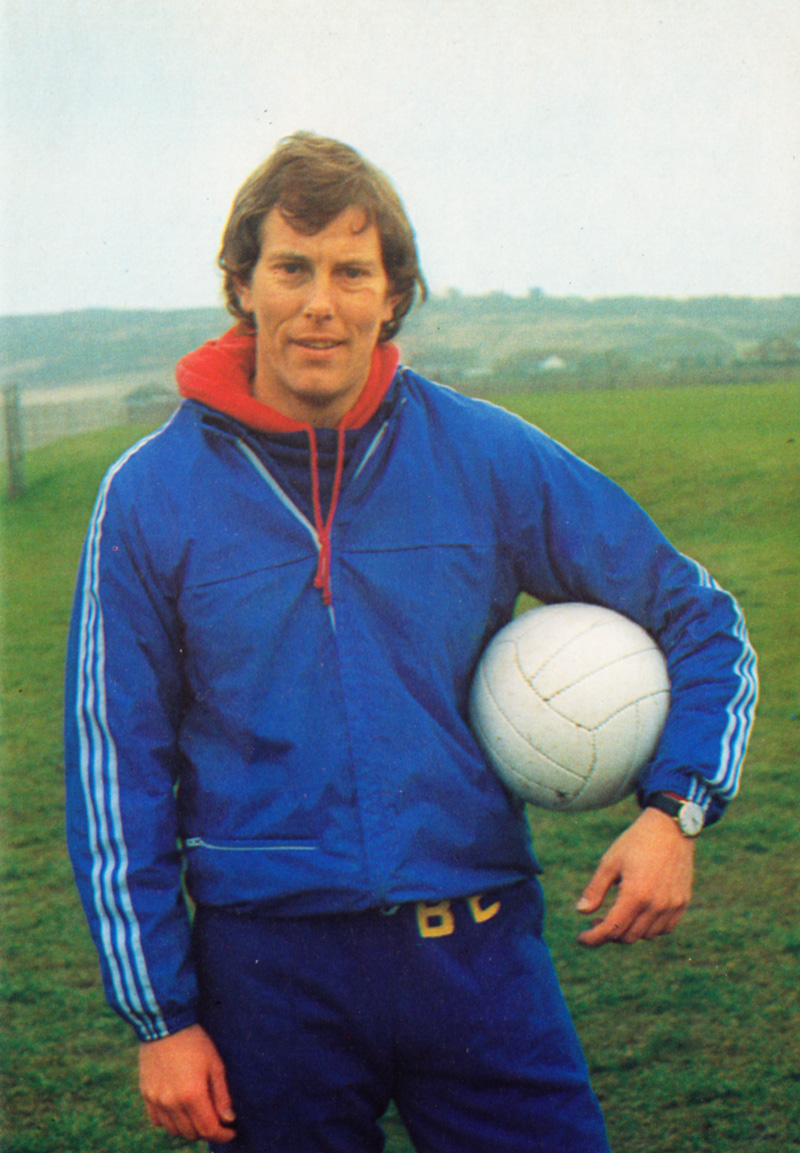
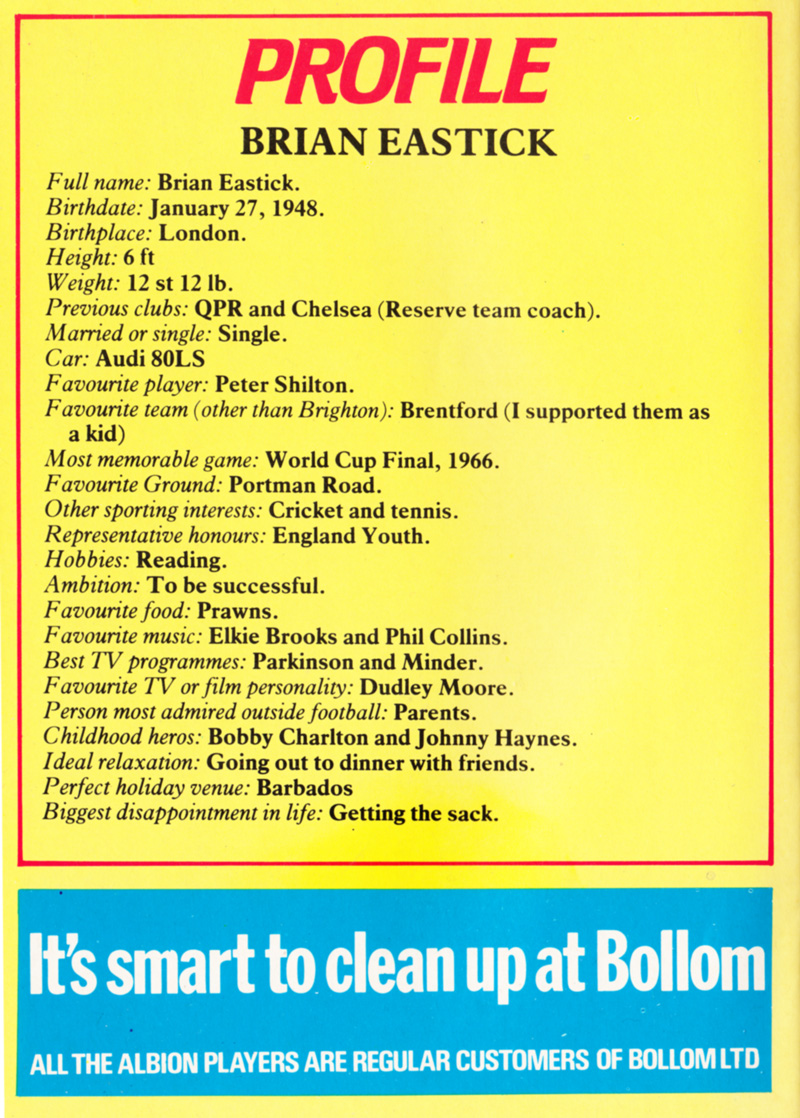
Brian Eastick and the imaginary football

brianeastick1

Brilliant anecdote from Gordon Smith’s ‘And Smith Did Score’ autobiography, page 123:

The players look at each other and wonder if they should believe what they have just heard. Standing on the training ground, they look askance at the Brighton youth team coach, Brian Eastick, who is taking the first-team training for he first time.

‘Right lads,’ he has just told us, ‘We’re going to have a game of football, so pick two sides. But what’s different about this game – and if you take this seriously it will be a great help to you – is that we’ll be playing with an imaginary ball.’

‘It’s twenty minutes each way – a practice game with a pretend ball.’

He senses a reluctance from the players and nobody moves. ‘Look,’ says Brian, ‘the boss is watching and it’s either this or he’ll have you running all morning – what’s it to be?’

Since anything’s better than running round a track for a couple of hours, we decide to go along with this rather unconventional training method. We’re about to start the 1982-83 season and this is undoubtedly the weirdest training session I have ever taken part in and that would go for the rest of the Brighton players as well.

We get ourselves into teams and line up to kick off. The former Arsenal star, Charlie George, has joined Brighton on a month’s loan and he’s in my team. I kick off by touching the imaginary ball to Charlie who makes an imaginary pass to our winger, ex-Manchester United player, Mickey Thomas, Mickey then makes a 20-yard run at full pace, slides along the touchline and jumps up to shout, ‘For fuck’s sake, Charlie, play it to my feet, will you?’

The players can hardly stand up for laughing and that’s the end of the game. Brian Eastick is not happy and, since we’re not taking his game with the imaginary football seriously, it’s back to running round the track.

Brian had been on the continent looking at how the European teams train and noting their coaching methods. He must have seen some foreign team trying out this practice match with no football and decided to introduce it to the British game. Brian had persuaded Brighton’s then manager, Mike Bailey, to let him take the first-team training for a morning and try out these new methods. Unfortunately, the British footballers weren’t quite ready for such progress and diversity of coaching methods.
brianeastick2

Tagged , ,

Michael Robinson, Albion’s sharpshooter, guns for Malcolm Allison

michael robinson cowboy

Over three seasons, Robinson scored 37 First Division goals for the club, more than any other Albion player. He joined Brighton in a £400,000 deal in the summer of 1980. In March 1981, he returned to Maine Road with the Seagulls to play in the First Division fixture against his old side. By that point, it was clear that his move to the South Coast had been a success. Although his new club was facing a relegation battle, Robinson was ever-present and his seventeen League goals so far had rebuilt his confidence and reputation as a centre-forward.

On the eve of the match, he spoke to Peter Gardner of the Manchester Evening News:

Michael Robinson returns to Maine Road today for the first time since his transfer to Brighton last summer with the controversial admission: ‘I had to leave City to get away from Malcolm Allison and save my career.’

Robinson lines up against a City side now without the man whose views forced him to leave the Blues. And the man who had earlier handed Preston a then-club record fee of £750,000 for the striker’s talents. Robinson says: ‘Malcolm Allison and I just didn’t see eye-to-eye – it became inevitable that I would have to leave the club. It was a total conflict of ideas. Malcolm wanted me to do things I didn’t think I was capable of doing. He was asking me to play wide up front, on my own or on the wing… crazy things like that. It just wasn’t me. All I ever wanted to do was to be successful for City as a centre-forward, my best position. But Malcolm somehow got these ideas that I should play everywhere except that one, and I could never agree. Being messed about like that was making me a poorer player. In those circumstances I just had to leave.

Looking back on his move to Brighton, Mike says: ‘Alan Mullery told me from the outset that he wanted me to play just as I always wanted to play, and I shall always be grateful to him for that. I am thoroughly enjoying my football once again. And that is certainly a relief after all the agonies and frustrations I went through in the later part of my stay at City.’

Robinson admits to still being baffled by the Allison strategy: ‘I couldn’t understand it then and I still can’t work it out now,’ he says, adding: ‘The season before Malcolm bought me he had Peter Barnes and Mike Channon drifting wide down the flanks, but no centre-forward to take advantage of the service. Then, when I arrived as an orthodox centre-forward, he sold Barnes and Channon. So where was I expected to get the service form? Since I have left City, I feel I have come on leaps and bounds. My game was deteriorating at Maine Road where Malcolm, in his time, blinded the players by science. Their minds were blank by the time they went out on the field. Here at Brighton I have found a new lease of life.’

The match at Maine Road ended in a 1-1 draw. Although Robinson didn’t score, he headed a long clearance by Digweed to give goalscorer John Gregory, in oceans of space, an excellent chance to make it two points rather than one, but Gregory stubbed his toe and the ball ran wide. Nevertheless, Robinson added two more goals to bring his League total for the season to nineteen. He also received the Albion Rediffusion ‘Player of the Season’ award.

Years later, Robinson was much more receptive to what Allison was conveying to his players as a coach. He said: “”I used to think Malcolm Allison woke up in the morning wondering how to complicate my life. He would speak to me about angles and zones. And I wasn’t the only one. Mick Channon didn’t understand a blind word either. But I archived it somewhere. Later, what Malcolm had been saying fell into place.”

Tagged

Brighton players training at Hove Park, 1983

1983-training-brighton

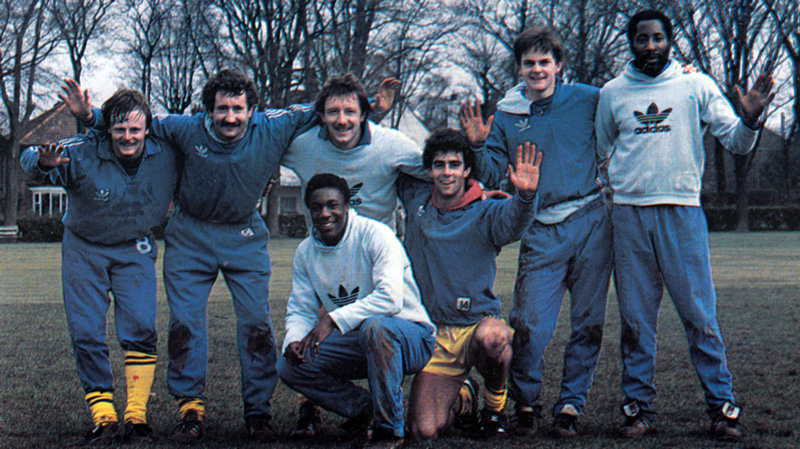
Minus a proper training ground, Brighton players used to practise their skills at the nearby park in Hove. Still, they seem in pretty good spirits here. Neil McNab, Gerry Ryan, Jimmy Case, Gary Stevens, Gary Howlett, Chris Ramsey and Terry Connor all smile for the camera in their classic adidas apparel.

Tagged , , , , , ,

A trophy at last – The Jewish Chronicle Cup

jewish chronicle cup

Who says the Albion have not triumphed in international club competitions?

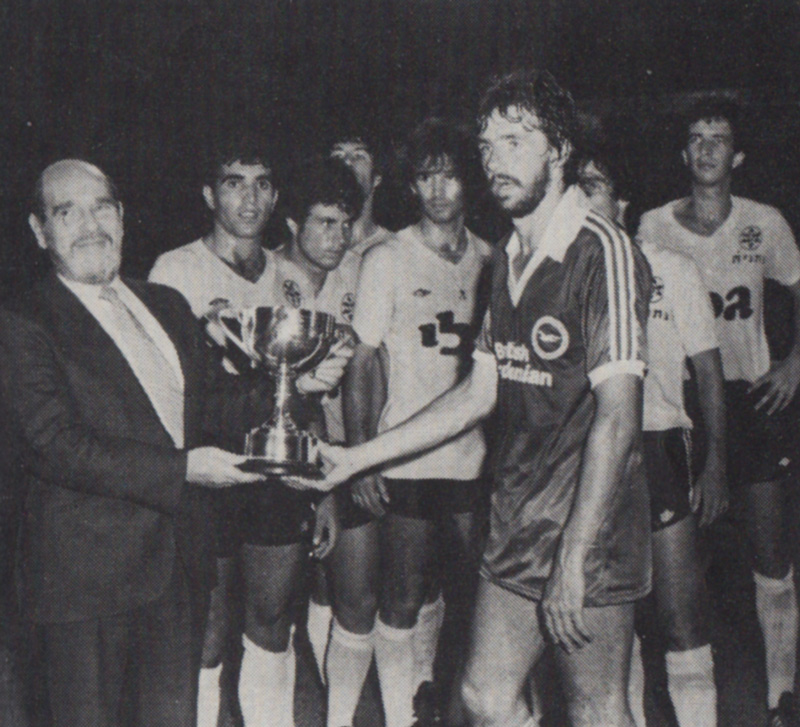
A magnificent Albion performance leads to Brighton triumphing 2-0 against mighty Maccabi Netanya in the Jewish Chronicle Cup at the Goldstone in 1980, thanks to goals by Ray McHale and Peter Sayer.

Mark Lawrenson is presented with the trophy by newspaper editor Geoffrey Paul.

Two seasons on, the Cup maintains pride of place at the Goldstone. Until Fred Dineage breaks it!

Tagged , ,

Dean Saunders gets a taste for coaching

deansaunders

From the Brighton v Reading programme from 1986/87:

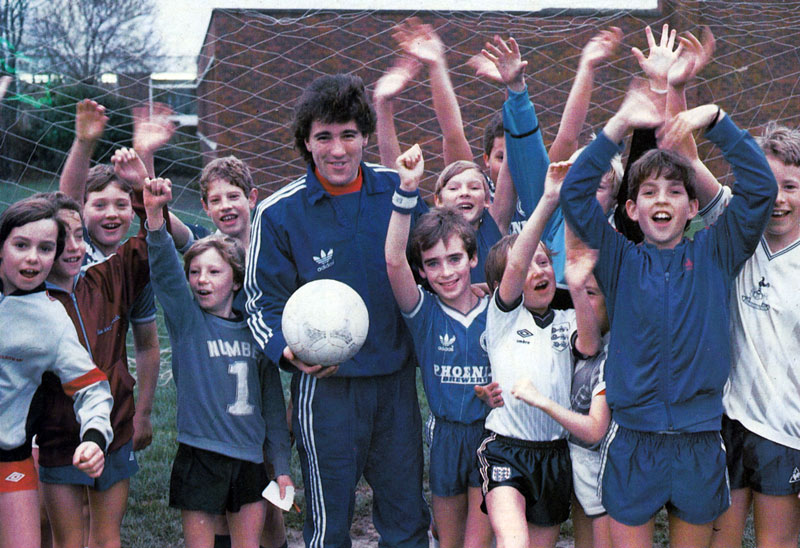
“I go into schools every couple of weeks through the season,” says Dean. “I usually do my coaching sessions with Steve Penney and we enjoy it. They are always very keen and they always try their best. We concentrate mainly on the more positive sides of the game. Passing, taking on players and shooting on goal. That sort of thing. Steve and I have got our routine worked out now. We always end the session with a game, which the kids enjoy. The only trouble is they are pretty quick into the tackle! Steve plays for one side and I play for the other. It’s a good laugh, but we’ve learnt not to do too much dribbling now. We just get it up to the front men and let them get on with it.

Will those be the Wolves tactics for the match at the Amex?!

Tagged ,

Tony Grealish (1956-2013), Rest in Peace

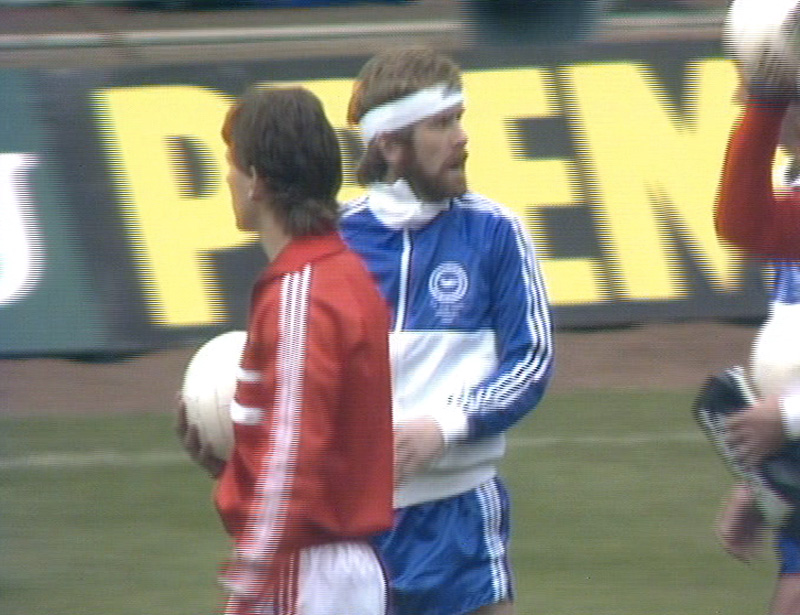
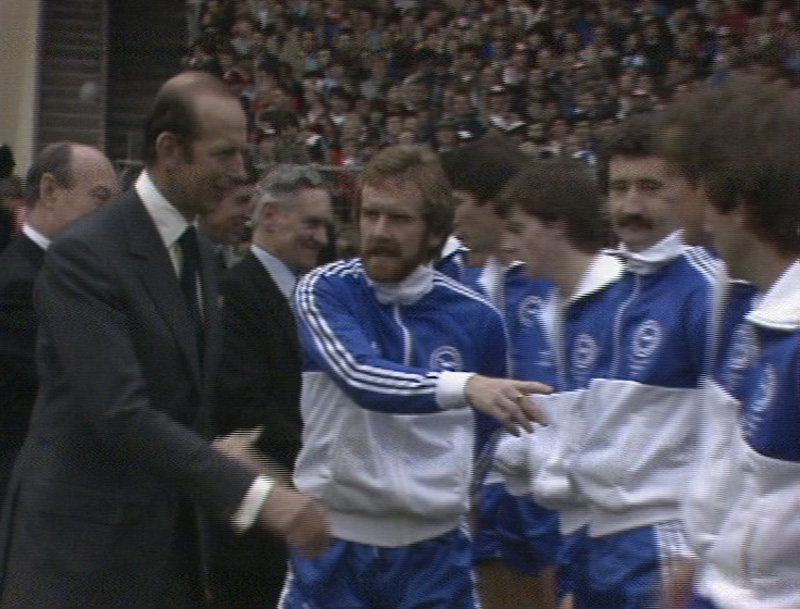
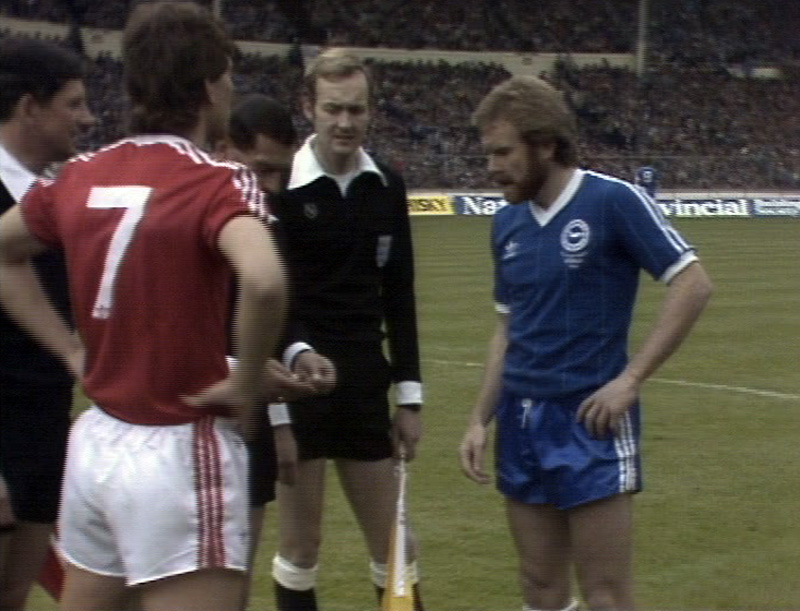
It’s very sad news to hear of a former Brighton & Hove Albion player who has died. It’s particularly regretful that the first Albion player from the glory years of 1976 to 1983 to no longer be with us is the man who captained the side at its first ever FA Cup Final, in May 1983.

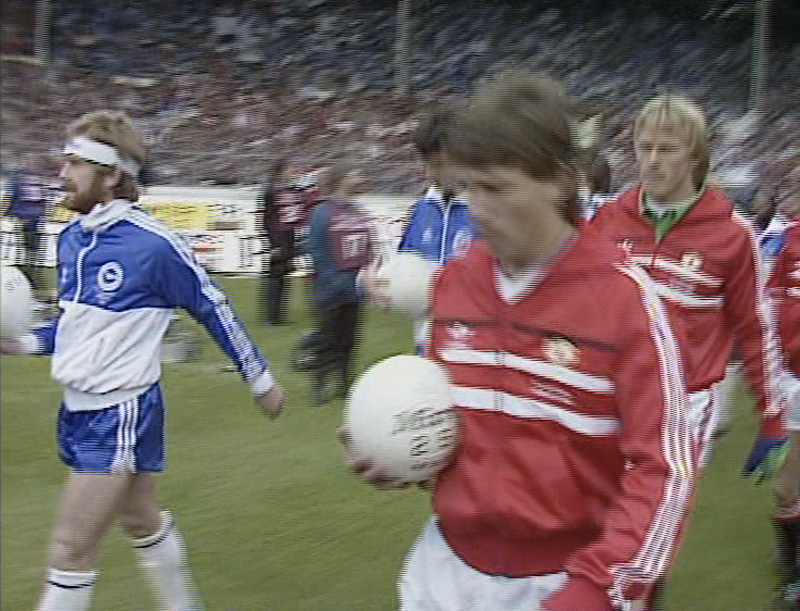
Here, he delighted the watching millions by wearing a headband to show solidarity with the suspended Steve Foster:

tonygrealish1

tonygrealish2

tonygrealish3

tonygrealish4

It’s fair to say that Tony Grealish was not so popular with fans when he was signed from Luton Town for more than £100,000 by new manager Mike Bailey in July 1981. The tenacious midfielder was not in the best of form in his first season, and he had the difficult job of replacing ex-skipper and crowd favourite Brian Horton who found his way to Tony’s previous employers, Luton.

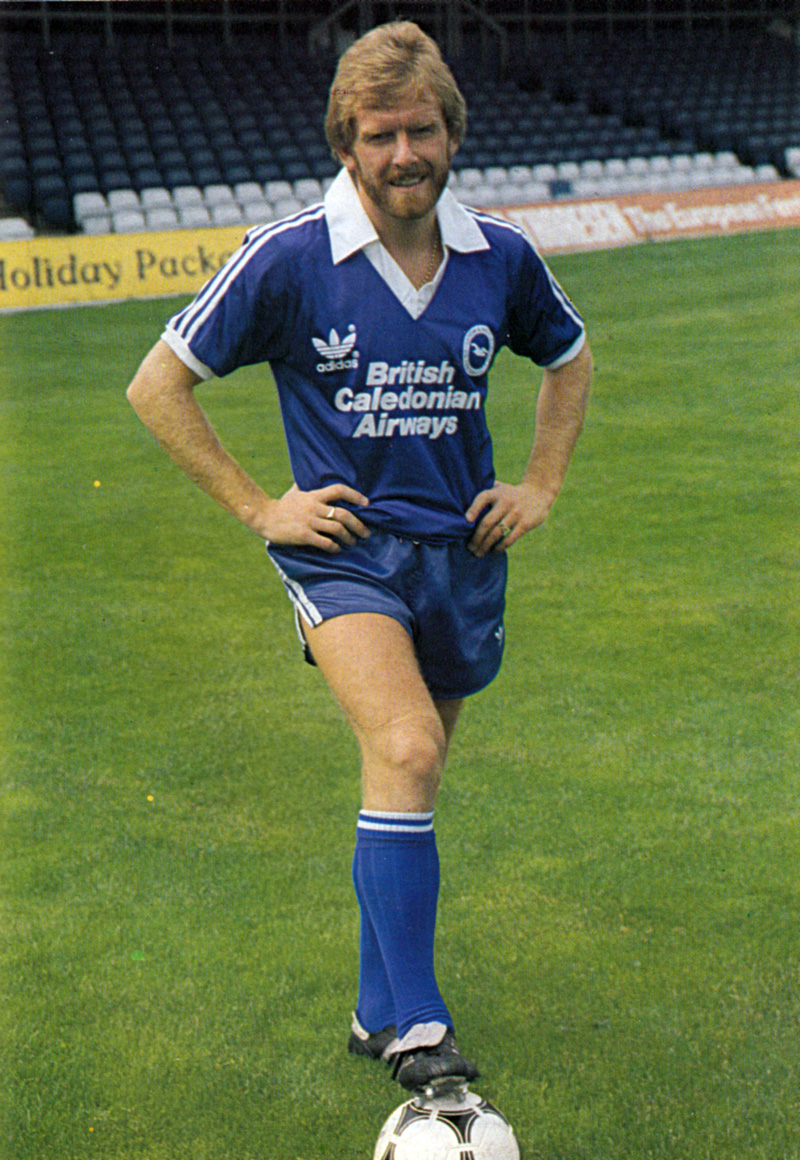
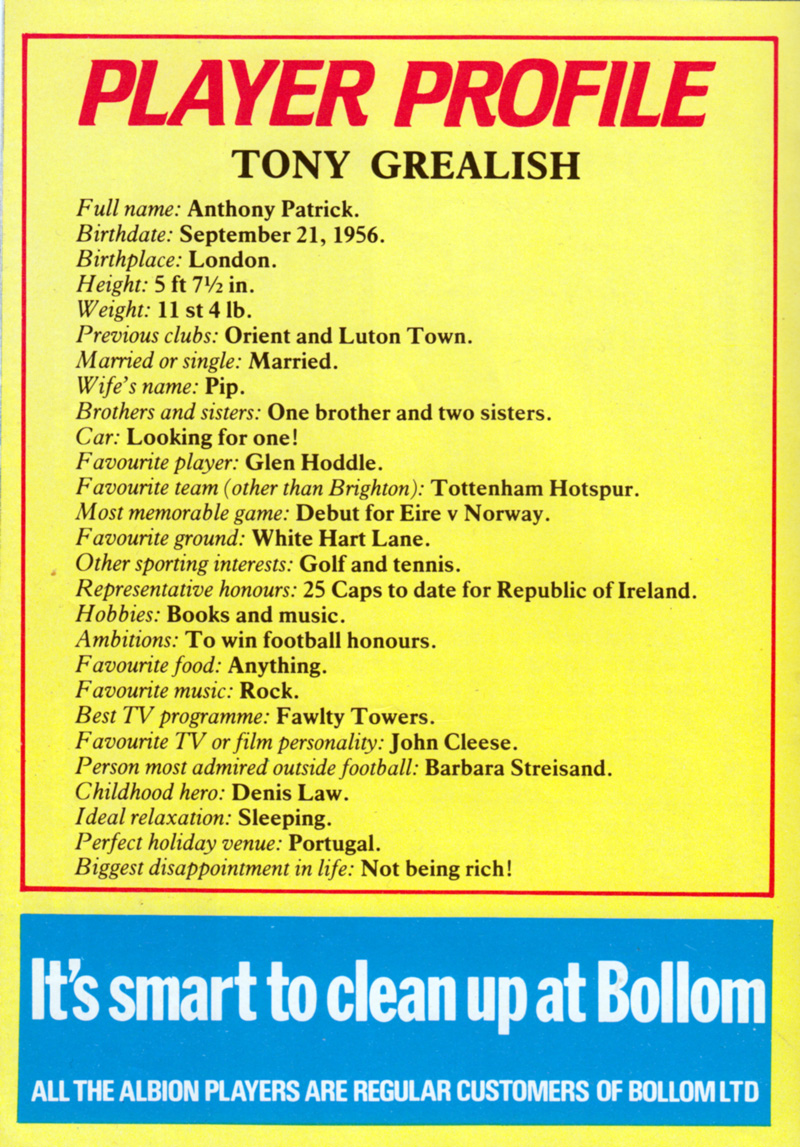
Even so, he seemed in good spirits in this pre-season photoshoot and player profile from the Brighton v Swansea match programme in 1981/82:

tonygrealish6

tonygrealish5

Over time, Grealish won over his detractors with his steely determination in breaking up opposition attacks, supplying colleagues with the ball and occasional forays upfield. He was the engine of the side. You can see a fine performance and goal from him from Brighton’s 3-1 win over Everton at the Goldstone in February 1982 (23 mins):

In total, he made 121 appearances for the Seagulls between 1981 and 1984. His contributions to the FA Cup run of 1983 are fondly remembered, such as this dribble past two Manchester City players before a defence splitting ball for the first of Michael Robinson’s double in the 4-0 win (2 mins):

He teed up Jimmy Case’s scorching goal in the FA Cup Semi-Final against Sheffield Wednesday with a cheeky backheeled free-kick (1 min).

As well as a characteristically wholehearted performance, the Seagulls’ number four was involved in the build-up of both of Brighton’s goals in the FA Cup final against Manchester United, switching the ball out wide for Gary Howlett to cross for Gordon Smith’s opener and then pushing the ball into the path of Gary Stevens. In the following season, Tony Grealish (and Danny Wilson) ran the Liverpool midfield ragged in another famous FA Cup game.

The industrious Republic of Ireland international eventually left in March 1984, signing for West Bromwich Albion in a £95,000 deal.

grealish

If not a player what job would you do? ‘Don’t know. In the current recession I wouldn’t have a lot of choice. Perhaps an airline pilot!’

That’s rather fitting, and not just because of his British Caledonian shirt! In the words of a North Stand Chat user called ‘rool’, Grealish now joins Alan Davies in the 1983 FA Cup Final reunion in the sky.

Tagged

Albion players on World of Sport

A very, very rarely seen picture:

worldofsport3a

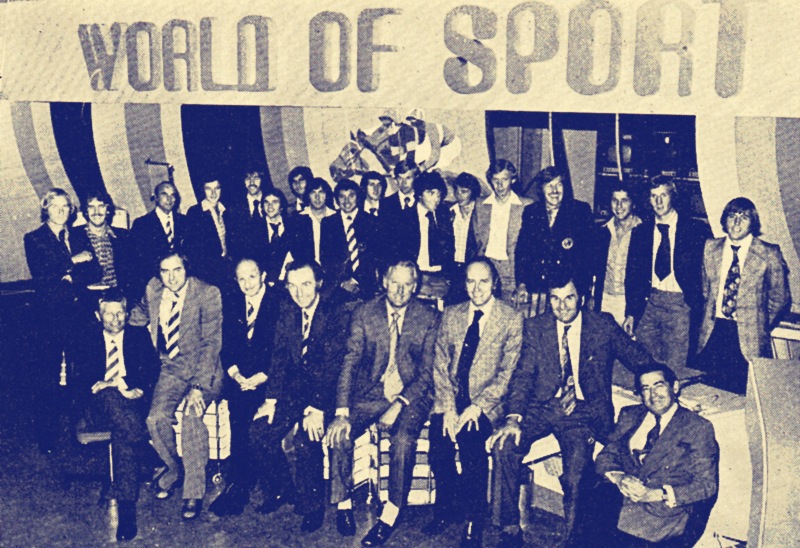
The Albion team of 1975/76 lined-up for a different sort of team picture when they had a break from training and went behind the scenes at the World of Sport studio at London Weekend Television.

‘World of Sport’ was ITV’s answer to Grandstand, BBC’s flagship sports programme on Saturday afternoons. WoS ran from 1965 to 1985.

The visit was arranged by Eric Flackfield, a director of LWT who was a frequent visitor to Goldstone matches. He is seated on the right. At the studios on London’s South Bank, the party met Brian Moore, host and presenter on ITV’s On The Ball (which later evolved into ‘Saint and Greavsie) and London Weekend’s The Big Match.

The line up:

Back row (left to right): Phil Beal, Peter O’Sullivan, Glen Wilson (physiotherapist), Steve Piper, Barry Butlin, Tony Towner, Dennis Burnett, Ken Tiler, Ken Gutteridge (coach), Gerry Fell, Peter Grummitt, Joe Kinnear, Ian Mellor, Harry Wilson, Fred Binney, Andy Rollings, Robin Madden, Ernie Machin.

Front row: Brian Daykin (assistant manager), Dudley Sizen (director), Harry Bloom (vice-chairman), Mike Bamber (chairman), Peter Taylor (manager), Brian Moore, Tom Appleby (director), Eric Flackfield.

Tagged , ,

The Goldstone Staff Photo 1979

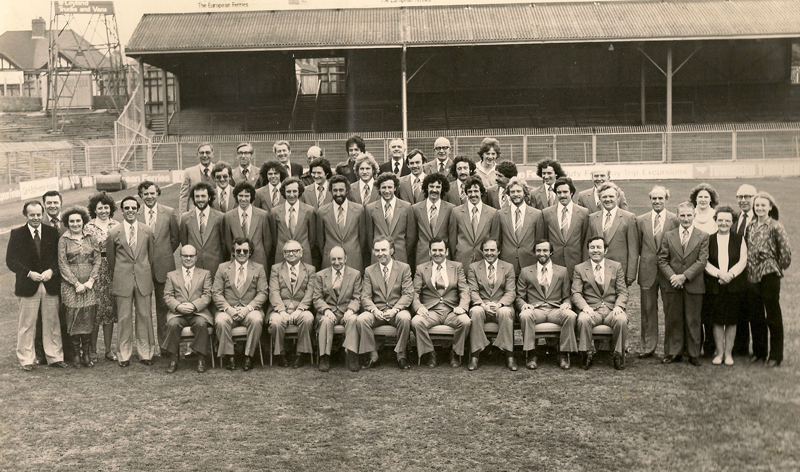
I received an email from the son of Fred Woolven with this intriguing photo attached:

staff1979

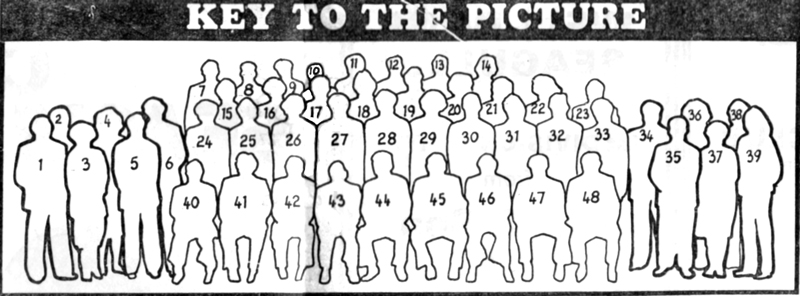
The photo also appears in the Argus supplement ‘Division One Here We Come’ from 1979, along with this useful key to the Albion family:

1979staffkey

The manager, the players, the board capture all the limelight as Albion soar to success. But there is more to the Goldstone than that. Many people work away, unnoticed, in the background, to ensure that the Seagulls take wing. Here we present the Goldstone team in full, from chairman Mike Bamber to tea lady and cleaner Hilda Bennett, who has been producing the match day cuppas for many a year now.

1. Tony Millard. Freelance journalist, Tony, became programme editor and announcer at the Goldstone this season.
2. John Shepherd. Ex-Albion player, John, is now the youth team manager, having had spells in local soccer management. He has also managed both the Sussex County FA side and Sussex County League Southwick.
3. Joan Shipp. She is promoter of the Seagull Lottery, which brings in £250,000 a year for the Albion. She came to the Goldstone five seasons ago from the Sussex Sunday League, along with commerical manager Ron Pavey.
4. Jeanne Carter. She has been with the Albion for about three years and is secretary to manager Alan Mullery and club secretary Ken Calver.
5. Mike Yaxley. Ex-Brighton, Hove and Sussex Grammar School teacher, Mike, is in his second spell with the Albion. He was on the coaching staff from 1968-73, became a sales rep, and managed Eastbourne united and is now physiotherapist.
6. Ken Craggs. Former teammate of manager Alan Mullery in Fulham days, Ken came from Craven Cottage early last year and is assistant manager.

Half-Million Pound Team
Here is the nucleus of the commercial staff who help with the Albion’s fund raising schemes which bring in about half-a-million pounds a year. They are:
7. Bill Phillips.
8. Fred Woolven.
9. John McNichol.
10. Ray Woodford.
12. Allan Williams
13. Bill Allfrey.

11. Duncan Perry. Assistant to groundsman Frankie Howard.
14. Paul Burton. Assistant to maintenance man Sam Capon.
15. Nigel Williams. Assistant secretary Nigel came to the Goldstone from Fulham 12 months ago.

Players:
16. Peter Ward.
17. Mick Kerslake.
18. Paul Clark.
19. Malcolm Poskett.
20. Gerry Ryan.
21. Peter O’Sullivan.
22. Peter Sayer.

23. Frankie Howard. Goldstone groundsman Frankie is an ex-Albion player who played in the 1958 promotion winning side.

Players:
24. Ken Tiler.
25. Gary Williams.
26. Chris Cattlin.
27. Martin Chivers.
28. Andy Rollings.
29. Graham Moseley.
30. Mark Lawrenson.
31. Teddy Maybank.
32. Eric Steele.

33. George Aitken. George hails from the North-East, having played for Middlesbrough and Workington and later managed Workington. He was brought to the Goldstone by Peter Taylor as coach.

34. Glen Wilson. He captained Albion’s promotion winning side of 1958 and is now kit man.

35. Sam Capon. Maintenance man Sam used to run is own business, but now he is the odd-job man who does what ever needs to be done.

36. Jackie Harriott. Has been with the commercial staff for 18 months assisting with fund-raising.

37. Hilda Barnett. She is the cleaner and on match days she is tea lady.

38. Arthur Mates. Latest addition to the fund-raising staff working on the new Wishbone Lottery.

39. Shirley Holland. Accountant and bookkeeper.

40. Ken Calver. Club secretary, Ken was previously with Charlton. The promotion celebrations saw him develop an unexpected talent for singing.

41. Alan Mullery. The ex-Fulham and England skipper who stepped into the Goldstone hot seat and despite having no managerial experience, has taken the club to its finest hour.

42. Herzi Sless. Club doctor.

43. Harry Bloom. The vice-chairman of Hove Motors and has now broadened his interests by becoming a hotelier.
44. Mike Bamber. The man who has masterminded Albion’s rise to glory, having made his money as a property developer.
45. Tom Appleby. Director Tom lives in Isfield. He is a farmer and a talented seven-handicap golfer.
46. Dudley Sizen. A director who runs a farm near Lindfield and has two plastics factories in Kent.
47. Brian Horton. The Albion skipper, whose initial attempt to get into professional football failed, has proved his abilities as a player and leader in the best possible way, with success.
48. Ron Pavey. Commercial manager, Ron has been the key to providing cash to carry Albion to success. He came to the Goldstone with experience of fund-raising as secretary to the Sussex Sunday League.

Out of the 48 here, Fred is the only one still employed by the club!

Tagged ,

In happier days: Danny Wilson

wilson

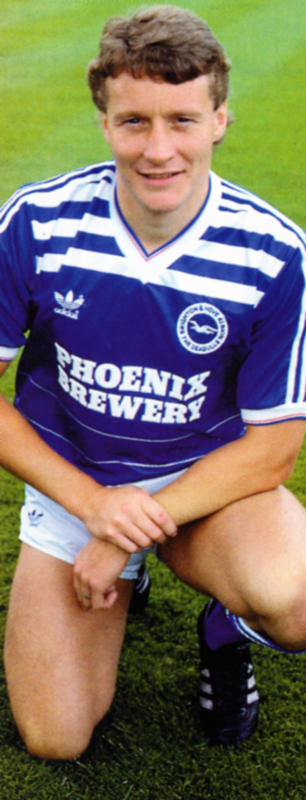
Sacked yesterday as manager by Sheffield United, fifth in League One, Danny Wilson has had much better times, not least in his playing days. Joining initially on loan from Nottingham Forest, Brighton fans remember Wilson fondly as a dynamic midfield player in the 1980s with great tackling and wonderful passing, as well as an eye for goal. Indeed, he opened the scoring in a 2-0 win at arch rivals Crystal Palace on Boxing Day 1983 and also hit the net at Selhurst Park the following season to rescue a point for the Albion in a 1-1 draw. All together, the inspirational midfielder played 135 League appearances for Albion, have signed in a bargain £45,000 deal in January 1984.

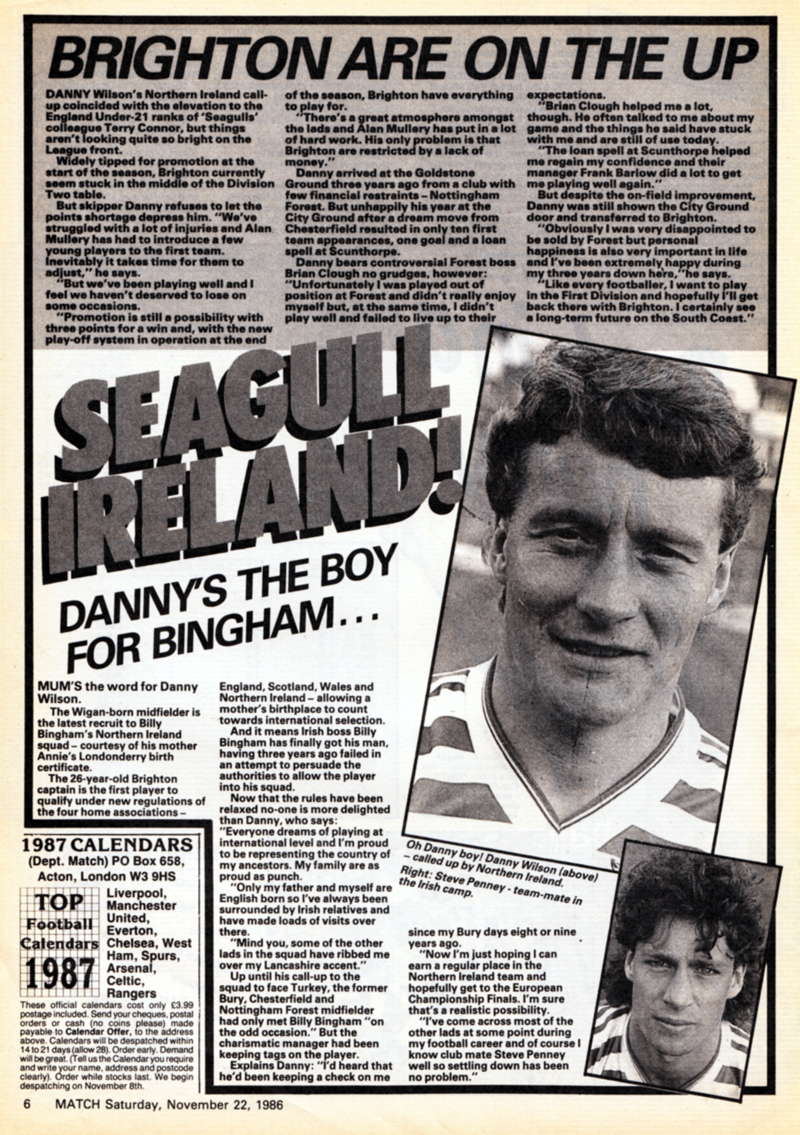
In Match Magazine, in November 1986, he said:

“We’ve struggled a lot with injuries and Alan Mullery has had to introduce a few young players to the first team. Inevitably it takes time for them to adjust. But we’ve been playing well and I feel we haven’t deserved to lose on some occasions. Promotion is still a possibility with three points for a win and, with the new play-off system in operation at the end of the season, Brighton have everything to play for.

Like every footballer, I want to play in the First Division and hopefully I’ll get back there with Brighton. I certainly see a long-term future on the south coast.”

In other news, Danny Wilson was called up by Billy Bingham for the Northern Ireland squad, with the Wigan-born player qualifying through his mother’s Londonderry birthplace.

“I’ve come across most of the other lads at some point during my football career and of course I know club mate Steve Penney well so settling down has been no problem.”

Wilson made three appearances for Northern Ireland as a Brighton player before his £150,000 move to Luton in July 1987.

dannywilson

Tagged

North meets South with Nobby Lawton

nobbylawton

From Goal Magazine article ‘North moves in on the South Coast’:

Brighton is one of the most cosmopolitan neighbourhoods in the British Isles, so perhaps it is appropriate that they have a man from the North as captain of their Third Division Football side.

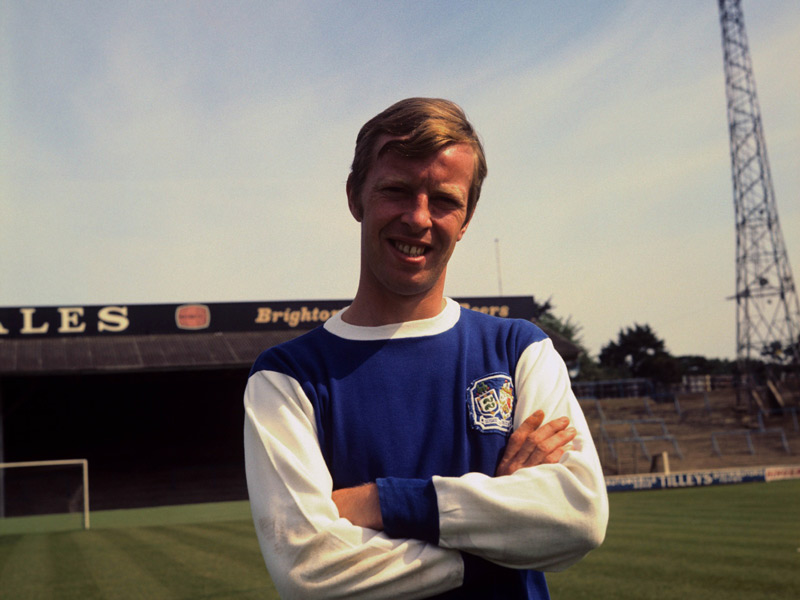
‘Nobby” Lawton is the thoughtful new brain, signed from Preston North End last year, to succeed the industrious Dave Turner, as skipper on Brighton’s sea front. Nobby is the ideal link-man, much appreciated by new manager Freddie Goodwin. Both of douse, are ex-Manchester United stars.

His display for Preston in the 1964 Cup Final brought comparisons with Eddie Colman, one of the victims of the air disaster and Nobby’s own personal hero. His natural wing-half foraging was responsible for many Preston achievements, although he is happier in the scheming position up front. At inside-left, he has settled down into his former position at Brighton with relish and is an ideal link with the attacking probes of Turner and the sharp shooting of Napier or Livesey.

His Brighton form at first was hampered by a knee injury, but it has made him all the more determined to prove his worth before a southern audience. The Brighton fans are not quite so loyal as in Manchester and Preston – or so numerous – but they know a talented worker and schemer when they see one. Nobby Lawton has fitted into the Brighton scheme, especially as more spirit and stamina needs to be installed if they are ever to get into a higher division.

Nobby Lawton is always ready to give one hundred per cent in the interests of the club.

His family are happily settled into a Shoreham bungalow and he is one of the most contented northerners to settle into a southern club.

That 21-day suspension handed out to Nobby last week means he misses the Cup game which is punishment in itself. Nobby will be have to be patient until the weekend before Christmas. It’s a lesson that he will painfully learn.

Anyone know what this 21-day suspension was about?

By the time he joined Brighton, he had little pace, but could still ghost past players. Using his vast experience, Lawton was available to receive a passes, even in the most crowded of midfields.

He is remembered by some Brighton fans for scoring an incredible volley against Shrewsbury from the half-line in February 1969 when future Albion keeper John Phillips’ kick-out was returned with interest. After losing his place under Pat Saward in 1970/71, Nobby requested a transfer. He eventually joined Lincoln in February 1971 before retiring the following year.

He died in April 2006, aged 66.

Tagged