Category Archives: Media Coverage

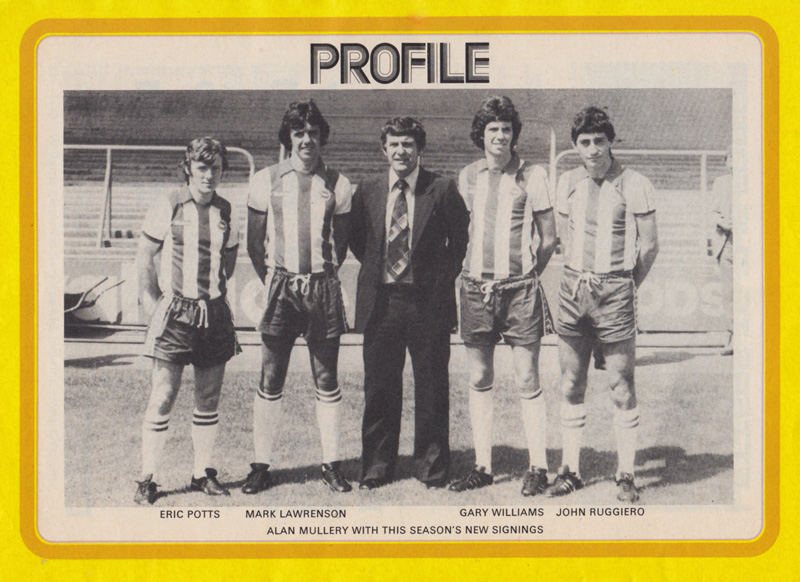
Getting to Division One: Alan Mullery’s budget

mullerysignings

The wheeling and dealing side of being a football manager was something that certainly appealed a lot to Alan Mullery. Luckily for him, he had far more cash to play with than, say, Pat Saward, at the start of the 1970s. It’s often commented that Mullery had a massive transfer budget. Trying to get beyond the opinion, I wanted to see to what extent this was true and have (to the best of my ability) tried to collate all the incomings and outcomings from 1976/77 to the end of 1978/79:

In
Steele £19,000
Lawrenson £112,000
Ruggiero £30,000
Potts £14,000
Williams swop
Clark £30,000
Maybank £238,000
Poskett £60,000
Sayer £100,000
Ryan £80,000
Chivers £15,000

Total: £700,000

Out
Beal free
Kinnear free
Morgan £15,000
Cross Swop
Wilson Swop
Binney Free
Towner £65,000
Ruggiero Free
Potts £37,000
Mellor £30,000
Fell Swop

Total 147,000

To my eyes, despite the over-inflated price for Teddy Maybank, a deficit of £553,000 at late 1970s prices seems a reasonable price to pay for a club going from the Third Division into the top flight. Still, it wasn’t me writing the cheques! Undoubtedly, the Albion boss’ best capture of the time was Preston defender Mark Lawrenson. In this article from Shoot! magazine, the Brighton manager explains how he tried to balance the budget in the summer of 1977 after a big outlay:

Brighton caused a bit of a stir in the close-season when they splashed out a club record £112,000 to buy unknown defender Mark Lawrenson from Preston. It was a bold move from a progressive club who are determined to make a big success of life now they have been promoted to the Second Division.

And manager Alan Mullery is the first to admit they had no intention of spending that sort of cash when they first decided to go into the market. Mullery – who capped his first season as a manager by steering Brighton to the Third Division top two – explains:

“At first all we were going was a standby for Graham Cross – someone to play in the reserves and come into the first team when necessary. “But clubs were asking a ridiculous amount for this type of player. They were demanding £40,000 or £50,000 – and there was no way we were going to pay that for reserves. So then we decided to change our tactics and go in and spend big on a player who could come straight into the first team. I called all the staff together to discuss names of likely prospects. And they all came up with the same one – Mark Lawrenson.

“My chairman, Mike Bamber, and my coaching staff had all seen the lad play and were all impressed. And I thought he was tremendous on the three occasions I had seen him last season – twice against us, once at Crystal Palace. With so many people raving about him, it was obvious he was the man we wanted – so we moved in and did the deal. I know a lot of people have not heard to much about him yet. But they all will – believe me, they will.

“He is only 20, is big and strong and will make his mark in a big way. he settled down as soon as he joined us for pre-season training and seemed to be enjoying life on the South Coast. The thought of spending that sort of money on an unknown does not frighten me. A football manager has got to be prepared to back his judgement and I’m sure Mark will turn out to be a huge success.”

Mullery’s only regret is the enforced change of deal brought Cross’s time at the Goldstone Ground to an end. Soon after Lawrenson arrived, Cross and full-back Harry Wilson moved to Preston as part of a deal that brought another defender, Gary Williams, to Brighton from Deepdale. “Graham had an absolutely tremendous 1976-77 season for us and I can’t speak too highly of him,” said Mullery. “When I started planning for the new term I reckoned on having him in the side for our step up into the Second Division. Then events overtook us as I have explained, and things worked out differently. I wish him well at Preston and can assure their supporters they are getting one of the most honest lads in the game in Graham.”
Tagged , , , , ,

Seagull Line – Brighton 8049

seagullslinelaunch

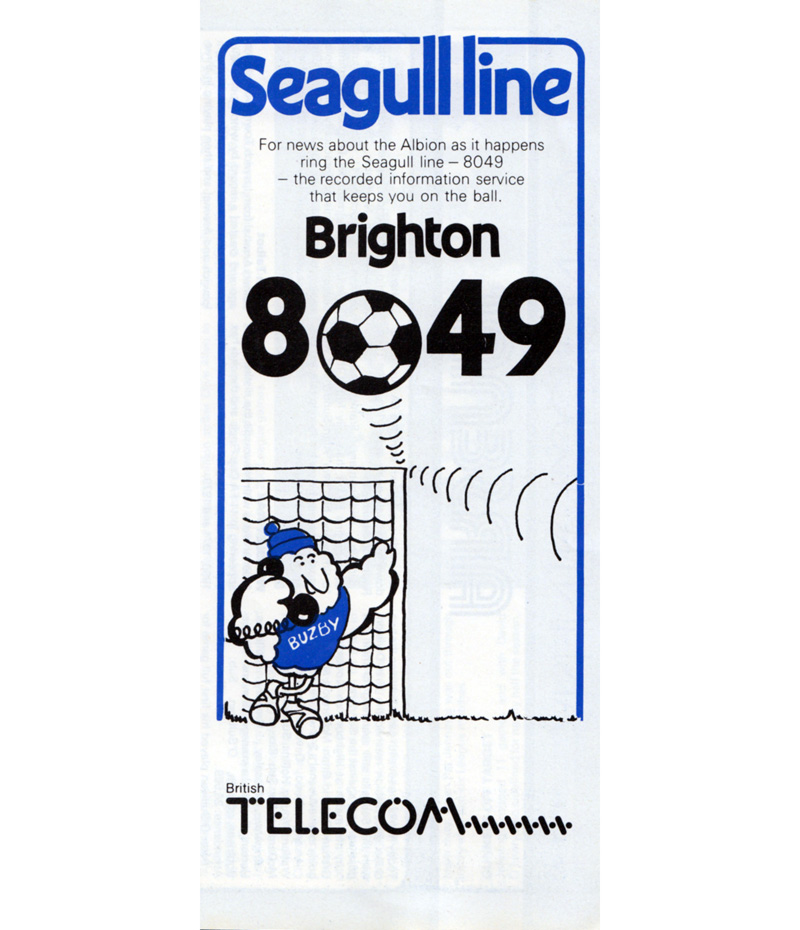
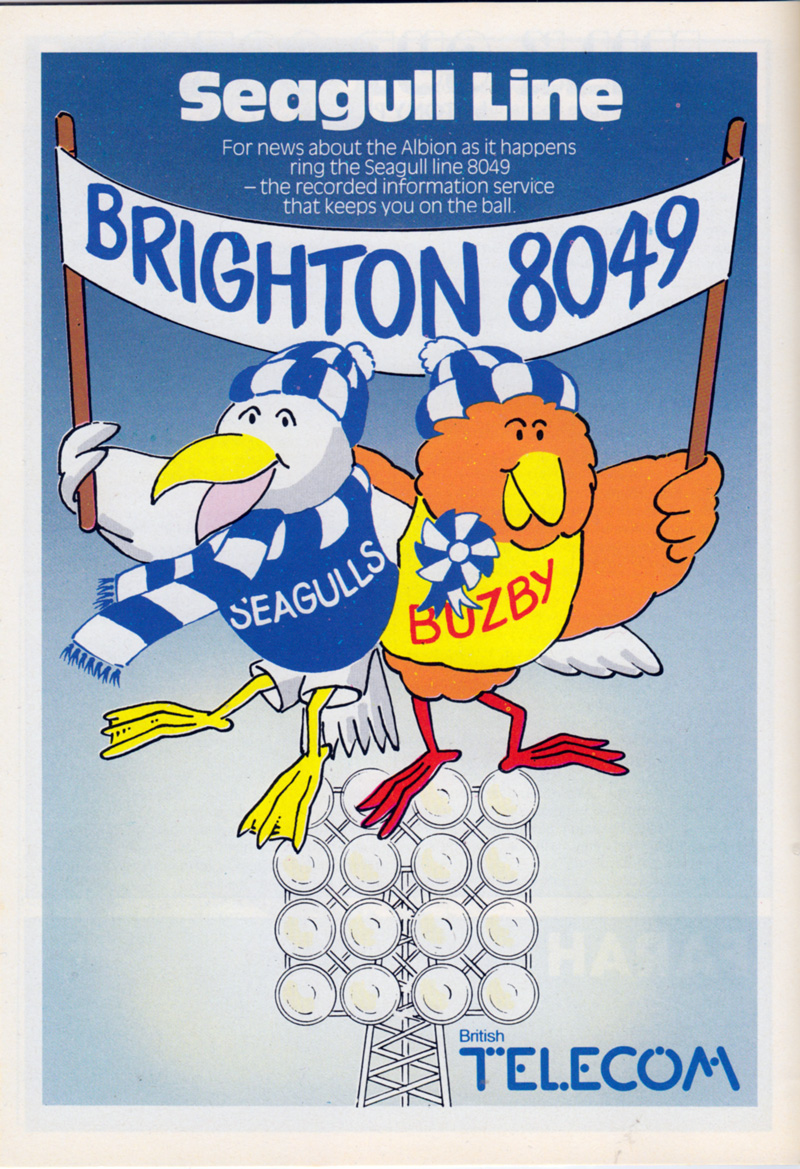
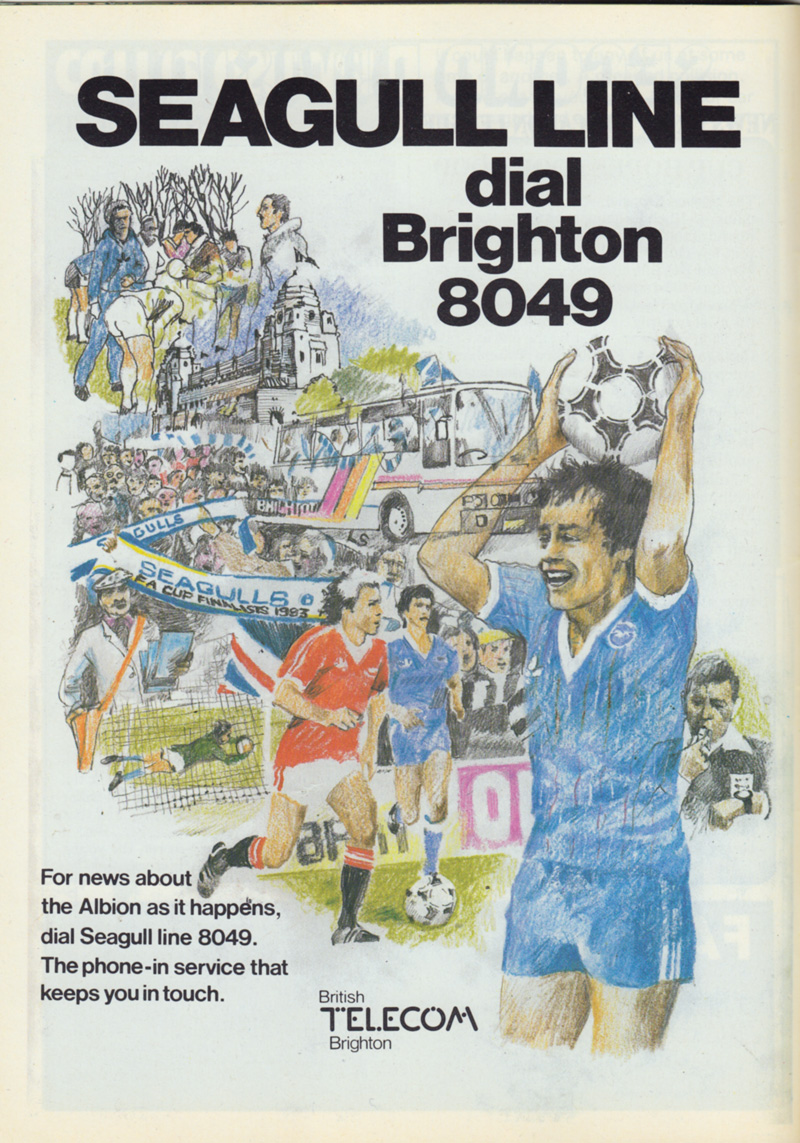
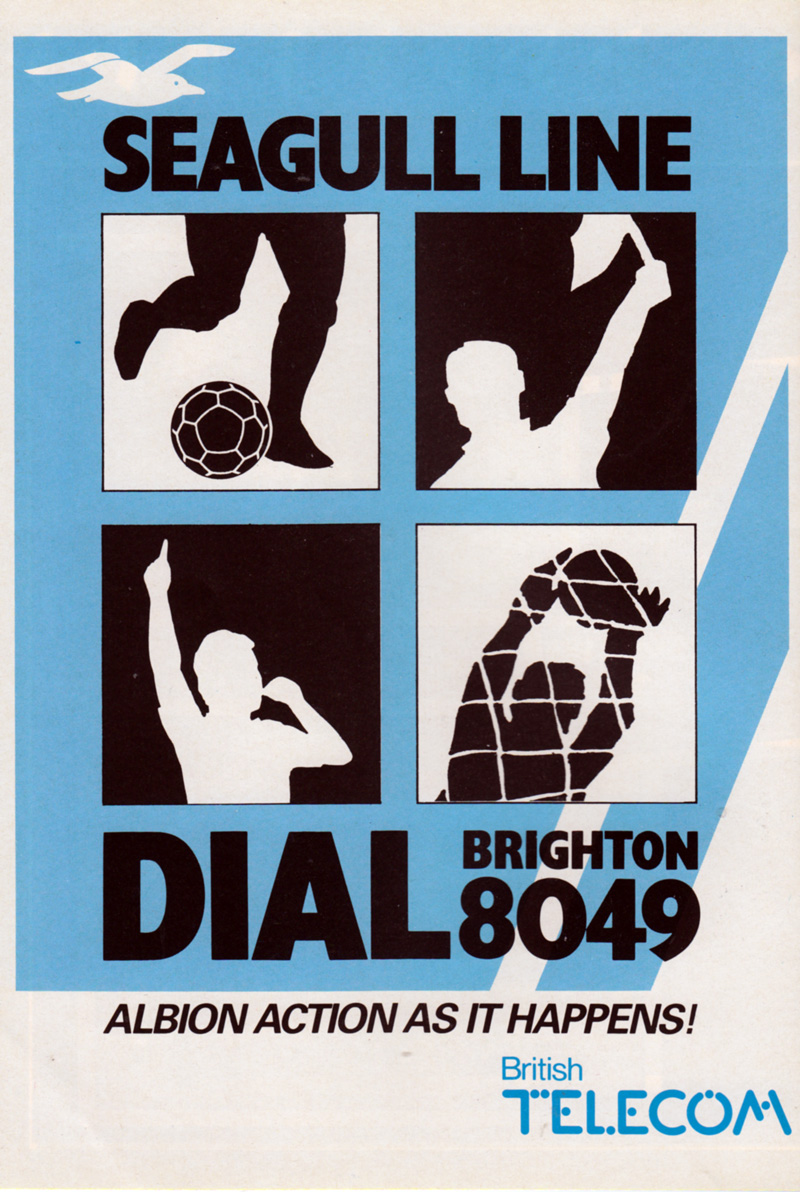
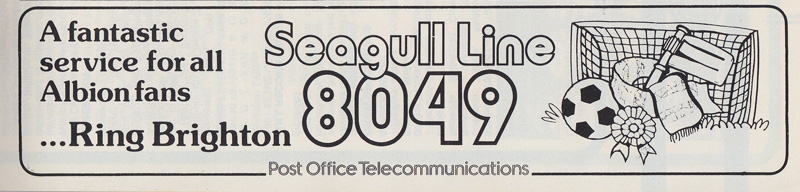
In the days before the internet took hold, finding out the up-to-date news about your club was a lot harder. The Seagull Line, Brighton 8049 was set up by the Post Office on 13 April 1979 and was one of the first of its kind in the country.

In the Brighton v Bristol Rovers programme from that month, it said:

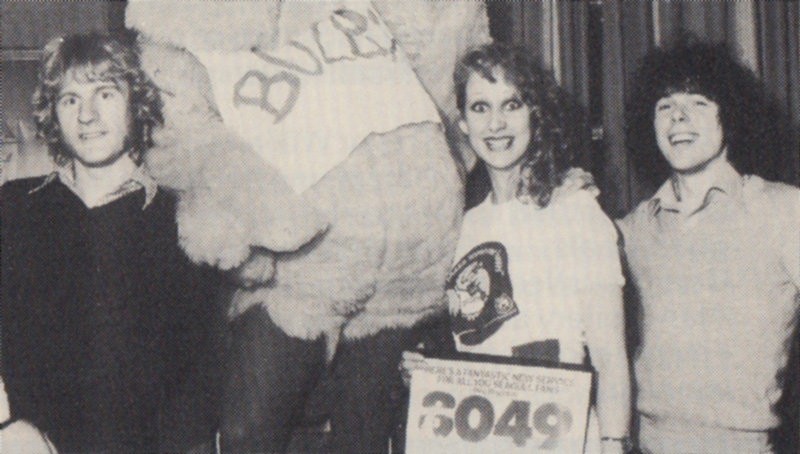
The service started this week and 24 hours a day information may be heard on Brighton & Hove Albion, simply by dialling 8049… remember it rhymes… 8049, the Seagull line. Last Monday at the Adur hotel when our weekly lottery draw was held there was a chance to know just what Buzby is all about and to hear about the Seagull line. Our picture shows Paul Clark and Peter Ward happily accompanied by a young lady who is clearly hoping to ‘Make someone happy.’

Ahem!

With his catchphrase ‘And it’s bad news for the Albion’, often heard when reporting on an away fixture, commentator and programme editor Tony Millard is remembered as the mouthpiece of the premium rate service. He’d begin “You’ve called the Seagull Line on Brighton 8049, that’s the number for Albion information every day… 24 hours a day…” After informing fans of the telephone number that they know about because they’ve just dialled it, he would then precede to waffle on about various matters of little interest, such as how the reserves got on, the groundsman’s opinion on the state of the pitch before next Saturday’s game before… FINALLY!… giving supporters the news they wanted at the end. Devious tactics, Tony!

From the memory of Storer 68 from North Stand Chat:

“You’ve called the Seagull Line on Brighton 8049. The line for Albion information everyday, 24 hours a day. Later we’ll have news from Wembley where the Albion were playing Manchester United in the F.A. Cup final, but first, the results of Seagull Lottery number 762 drawn by assistant physio Mike Yaxley at the Swan pub in Falmer…”

With the high calls costs incurred, there are several stories of young Brighton followers getting into trouble with their parents for running up huge phone bills. Some fans even reminisce about their parents suspecting that they were calling premium rate sex lines! The mums and dads were only persuaded otherwise by calling the number themselves, ‘although Millard did breathe quite heavily if I recall,’ adds Easy 10, another Albion supporter.

Even though it was a premium rate service, this rather significant detail did not feature in the adverts in the matchday programme. Neverthless, some wonderful artwork appeared advertising the service. Seagull Line was replaced by a more general, premium rate service called Sussex Sportsline in 1987/88 before making a comeback two seasons later on 0898 and 0891 numbers. Anyway, enjoy this stroll down Seagull Line Memory Lane…

1979/80

seagullsline79-80

1980/81

seagullsline80-81x

1981/82 – 1982/83

seagullsline81-83

1983/84 – 1984/85

seagullsline83-85

1985/86 – 1986/87

seagullsline85-87

Tagged , ,

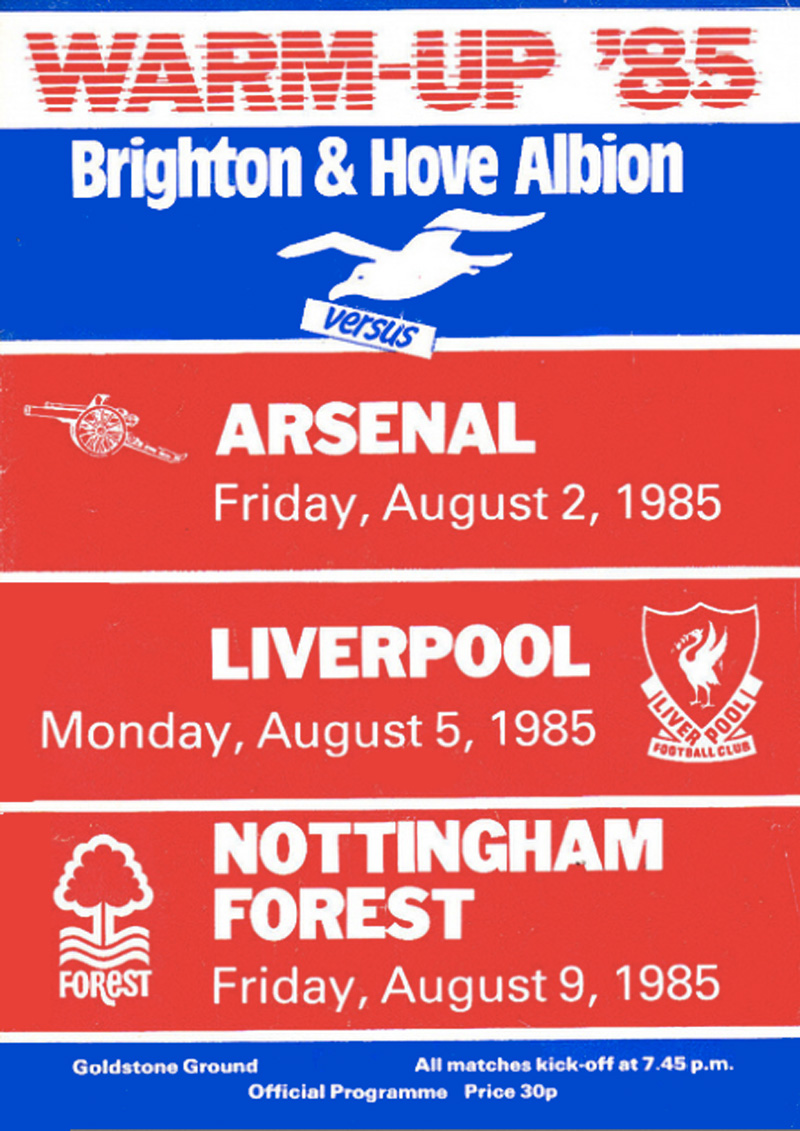
Warm Up ’85

warmup85

A mouth-watering pre-season programme in the summer of 1985 saw First Division giants Arsenal, Liverpool and Nottingham Forest make the journey to the South Coast.

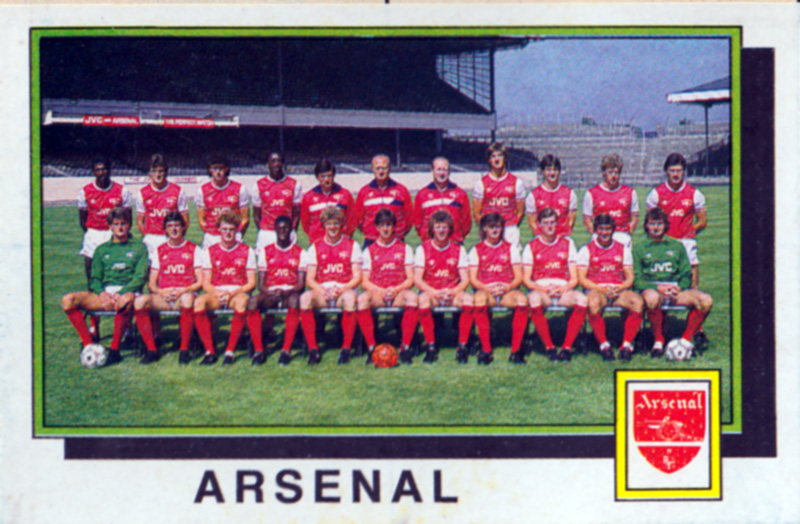
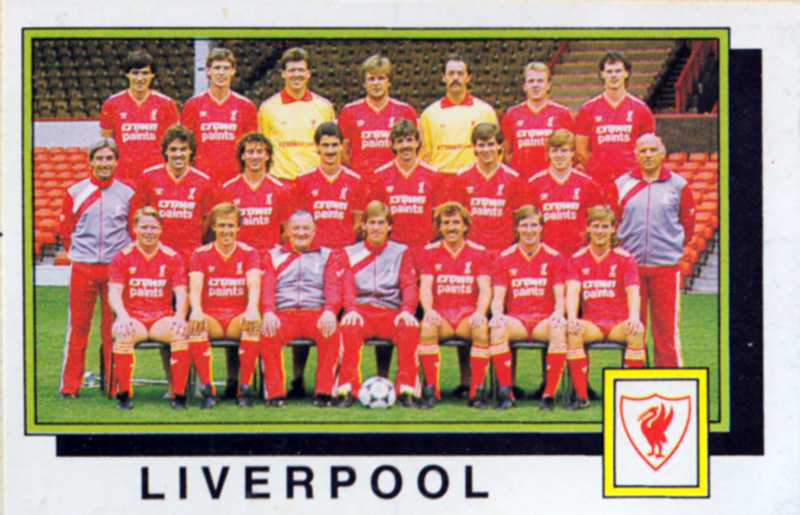
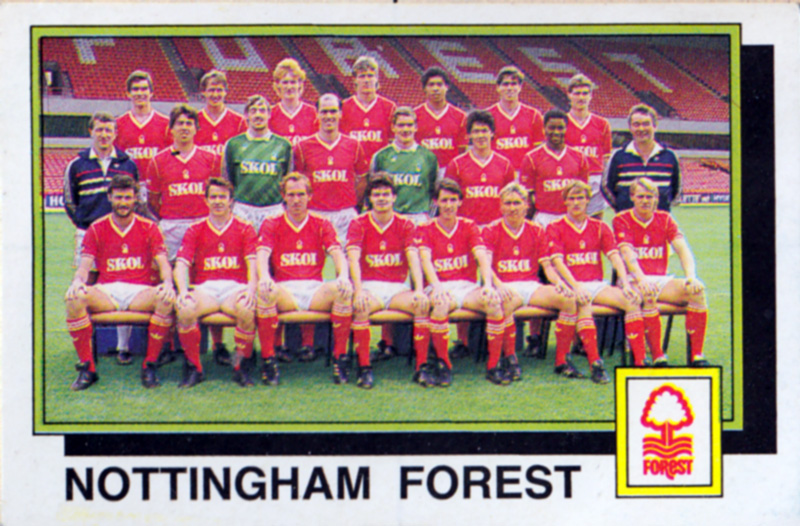
With the help of some Panini stickers from ‘Football 86’, I will let the words of Tony Millard from the Brighton v Grimsby programme from 1985/86 give you a sense of how Second Division Brighton fared against the big boys:

warmuparsenal

The first home game was against Arsenal on Friday August 2. A full-strength Gunners side came to the Goldstone, and among their substitutes was Martin Keown who is now back at the Goldstone on loan. Albion played with the wind and rain behind them in the first-half, and took the lead with a cracking goal from Dennis Mortimer. The former Villa man certainly looked the part when he gave John Lukic no chance in the Arsenal goal.

A defensive slip that saw Graham Moseley stranded gave Paul Mariner a simple chance to put Arsenal level, and a header from Stewart Robson provided the winner for the Londoners after the interval. They might have netted a third, but Charlie Nicholas missed from the spot after Eric Young had been penalised.

warmupliverpool

The biggest pre-season crowd turned out for the game with Liverpool on Monday, August 5. With new manager Kenny Dalglish also in action as a player, it was a full strength Liverpool side that was looking for revenge against the club that had, twice in three seasons, knocked them out of the FA Cup.

It took Liverpool just seven minutes to take the lead, with Dalglish playing a 1-2 with the Dane Jan Molby, before slotting home from some eight yards. Molby was also involved in the second goal. A precision pass set Steve Nicol away on the right, and he made no mistake. Before the interval it was perhaps predictable that Ian Rush would find the net. Dalglish took advantage of defensive hesitation, Rush showed typical perception and nodded in from only two yards out to score a third for Liverpool.

The fourth too came from Rush, once again Dalglish was the architect, and the Welsh striker found space-a-plenty in the Albion area.

Albion scored a late goal through Steve Jacobs, by now pushing forward in midfield, but by then Liverpool had shown that they will once again be among the best this season.

warmupforest

Albion reserved their best for last Friday at the Goldstone when they walloped First Division Nottingham Forest 5-2. The match was a real thriller for the fans, and no one except perhaps for Brian Clough and his team, went home unhappy.

Justin Fashanu had an outstanding game against his former team mates. Enforced changes had to be made in Albion’s side. Christ Cattlin had signed 22 year-old defender Gavin Oliver on loan from Sheffield Wednesday. He filled the number five shirt.

Albion took the lead when a short corner gave Mortimer the chance to cross from the right and Biley headed in. That provided the only goal of the first-half.

The second 45 minutes was a real thriller. Steve Hodge put Forest level after the Albion defence had been caught napping. Albion were soon back in front when Steve Jacobs crashed the ball in, after Fashanu had nodded on a right-wing corner. The joy was short-lived when an error by Perry Digweed presented Nigel Clough with a ‘sitter’.

The finale from Albion surely left the Goldstone regulars with an appetite for more. First Martin Keown pushed forward. His run produced a corner which Mortimer floated in, Fashanu’s header caused havoc and Dean Saunders provided the finishing touch.

Danny Wilson grabbed the goal he certainly deserve when Fashanu again provided an important touch, not to mention distraction to the visiting defence, and the final goal came from just about the most powerful shot seen at the Goldstone for years. Fashanu connected from 15 years out. Segers could only parry the ball, and O’Reilly tapped it over the line.

While Chris Cattlin gave his team guarded praise in the press room after the match, Brian Clough declined to be interviewed. The praise from Cattlin was well justified, and the performance of his team has surely whetted the appetite of supporters, to kindle that feeling of anticipation of an enjoyable and productive season ahead.

Tagged , ,

Joe Kinnear’s short stay at Brighton

joekinnear

He is now known as the rather opinionated Director of Football at Newcastle United. Back in the 1970s, though, Joe Kinnear was a classy full-back for Tottenham and the Republic of Ireland, winning four major cup competitions in a glittering career lasting over a decade at White Hart Lane.

When the 28 year-old was signed by Peter Taylor for Brighton, part of the deal involved the defender enjoying a benefit match between his old and new club in March 1976. Tottenham won 6-1 at the Goldstone with Kinnear scoring a consolation penalty. While the score was not to their satisfaction, Brighton fans must have rubbed their eyes in disbelief to see Jimmy Greaves, Rodney Marsh and Terry Venables all appearing for their side.

In ‘Still Crazy,’ his biography with Hunter Davies, Kinnear’s account of his time on the south coast rather unintentionally gives an impression of a pampered professional footballer chasing one final pay cheque. When Peter Taylor departed for Nottingham Forest, new boss Alan Mullery was not impressed with his former team-mate. In Joe’s own words:

I signed for Brighton and Hove Albion in August 1975. The transfer fee was officially £40,000. That’s what was announced, a reasonably average sum for the times, but it was agreed that I would get it all. Normally, with a transfer fee at the time, a player only got a small percentage. I think it was really a sort of thank you, for the years of loyal service. I didn’t get it in one lump sum. It was to be spread over several years, as part of my salary. I paid tax on it all, in the normal way.

We kept on our home in London, in Woodside Park, Mill Hill, at least for the time being. I decided I could commute by train each day to Brighton, getting off at Hove, returning in the afternoon after training. On match days, Bonnie would come to watch me. We’d have a meal in Brighton after the match, then come back to London together. That was the plan.

When I arrived at Brighton for the first training sessions, I did still worry if I’d done the right thing. My pride had been hurt by being transferred. I still wondered if I should have stayed, played in the reserves, fought to get my place back. But I couldn’t have faced the reserves any more.

I knew it was a come-down, going to a smaller club, in a lower division, down in the third division, after the glamour of Spurs. Still, Phil (Beal) had told me the club was ambitious and had a good set-up. It turned out to be not quite what I expected.

First of all, Peter Taylor was hardly there. Dunno where he was, what he was doing, but we only saw him on Fridays after training, then on Saturday at the match.

Second, we didn’t have our own training ground. We’d assemble at the Goldstone Ground, the club’s stadium in Hove, which wasn’t bad, but we rarely trained there. Instead, we’d jog for 15 minutes or so through the streets and do our training on a public park. There would be dogs walking over the pitch, mums with prams. There weren’t even any goalposts. We just had cones on the ground or a pile of bibs.

Third, the coaching was mostly a joke, when you consider it was a so-called professional club with paid coaches. I don’t know how one of the coaches got his job. We called him the Spud Man. We were told that he sold potatoes, that was his real job. Apparently he’d been providing Cloughy and Peter Taylor with potatoes. He had a job as a coach. That’s what we heard anyway. I’m sure it was just a joke. But it was clear all the same that he had little idea about coaching.

In the first season I was there, we did quite well. We were on the fringes of promotion to the Second Division. Then in an away match at Port Vale, I got tackled by their left winger. Not a nasty tackle, but I did my cruciate ligaments. My knee got twisted round, ending back to front. I’d snapped the ligaments. That was it, stretched off.

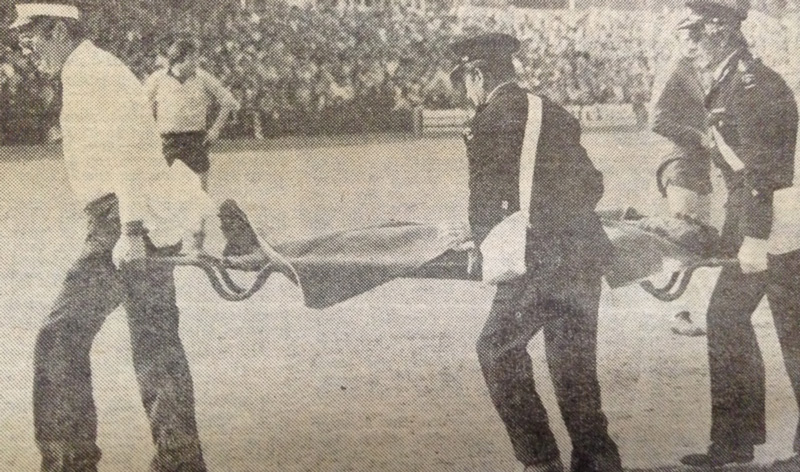
In fact, the match Kinnear refers to was the last-but-one of the 1975/76 season against Gillingham at the Goldstone in April. Here’s a photo of him being stretchered off in the 70th minute with what was reported by the Evening Argus’ John Vinicombe as a ‘locked knee that could mean a cartilage operation’:

kinnear2

The injury capped a disastrous Easter 1976 for Kinnear. In the game with Millwall, Joe’s calamitous backpass to Peter Grummitt gifted Millwall’s second goal in a 3-1 defeat at The Den. In the match where he got injured, his eighteenth and last for Brighton, Joe had also missed a penalty against Gillingham after Dave Shipperley had handled. He hit the spot-kick to the goalkeeper Phil Owers’ right with insufficient power and the shot turned around the post.

Says Kinnear:

I couldn’t play for six months. I could have had an operation, but I was told the success rate was only 50-50. I did try to come back and started training again. I had my leg all strapped up but I was still limping. Then I had a brace, but it was agony every time and it just swelled up.

I’d begun by then to get on quite well with Peter. He’d call me in to discuss the team, who should be played, the tactics. We chatted generally about ideas, how football should be played, or discussed the opposition, the strengths and weaknesses. I did tell Peter that I fancied going into coaching. He was quite encouraging.

Then he left. I’m not sure if he got the sack or just packed it in. But anyway, that was it, he was gone.

If I’d been stronger at the time, as a person, and more confident, I might have asked what the chances were of me being considered for manager. But I didn’t say anything, I didn’t push myself forward. The chairman, Mike Bamber, did call me in and told me who they were thinking of appointing – Alan Mullery. He asked me what he was like, as I’d played with him at Spurs. I said his pedigree is terrific – Spurs captain, England captain – can’t get a better CV than that.

So he was appointed. I was looking forward to working with him again – I hoped that as I knew him, and had been his team-mate, he’d give me some sort of coaching job. That was my hope. But then when he arrived he’d brought his own coaching staff.

Kinnear never featured in a game under Mullery and instead left Brighton for Woodford Town becoming player-manager. Who knows how things would have turned out if the Eire international has become one of the coaching staff at the Goldstone? Would he have been with a chance of eventually progressing to the manager’s hot-seat at Brighton? Impossible to say. However, if you are puzzled as to why the new boss was not impressed enough to offer Kinnear a coaching job, you can find the answer in Mullery’s ‘An Autobiography’ from 1985:

“A few old pros had heard that under Taylor and Clough there was a few bob about and it was up to me to get rid of the driftwood, keeping the players I wanted and bring in some youngsters. It wasn’t an easy time and a few of the senior stars gave me a rough ride. Kinnear was the worst and, after watching him play in a friendly at Maidstone, I accused him of still behaving as if he was at Tottenham or in Europe and I ordered him to lose a stone in weight. We had a number of rows and so I threatened to end his contract only to discover from secretary Ken Calver that the club owed him £18,000. He continued to rebel and eventually left the club without getting all his money.”

So, that was that. Mullery won his first real test as a manager. Kinnear, for his part, proved to be a very different character as Wimbledon boss to his lackadaisical approach as a player, relying for much of his managerial success on his ability to motivate his players. In terms of priorities, at least this was something he and Mullery could both agree upon!

Tagged , ,

Bukta yellow away shirt now in club shop

buktayellow1

I had a lovely surprise while walking past the Seagulls Store on Queen’s Road, Brighton, yesterday when I spied this glorious short-sleeved wonder gleaming in the shop window.

Was it an original 1978-80 Brighton away shirt and therefore a display item (i.e. not for sale)? Although it would have been lovely to see an original in person, thankfully, no. Manufactured by Toffs, it turned out that this beauty was a new reproduction that could be mine (or yours) to wear for £39.99. They definitely kept that quiet! It’s neither currently for sale on the Brighton & Hove Albion Seagulls Direct store website nor on the Toffs site. And, in case you’re wondering, and from a 1970s timewarp, not from David Rose Sports either.

Instinctively (and not suspiciously at all, I promise!), I gave the garment the once-over to compare it to the original (well, what I recall of an original, having seen a photo of one on Phil Shelley’s excellent Old Football Shirts site). Sure, it isn’t made of that nasty scratchy material that Bukta shirts of the late 1970s were made out of. And the badge and manufacturer’s logo could have been closer to the collar. But other than that, it’s a very faithful rendition of the shirt Brighton wore back in the day.

And hallelujah! Toffs have finally sorted out my decades-long complaint with the Brighton badge on their Albion shirts having a superflous white and blue ring around the badge. Above, as you can see, there is no annoying blue stroke around another unnecessary white border around the badge. If you wish to be pedantic, you could point out that it’s not quite the shirt that Brighton wore when they clinched promotion to the First Division with a win at Newcastle in 1978/79. During that season, the Brighton yellow shirt had the Bukta lettering but not the buk graphic above:

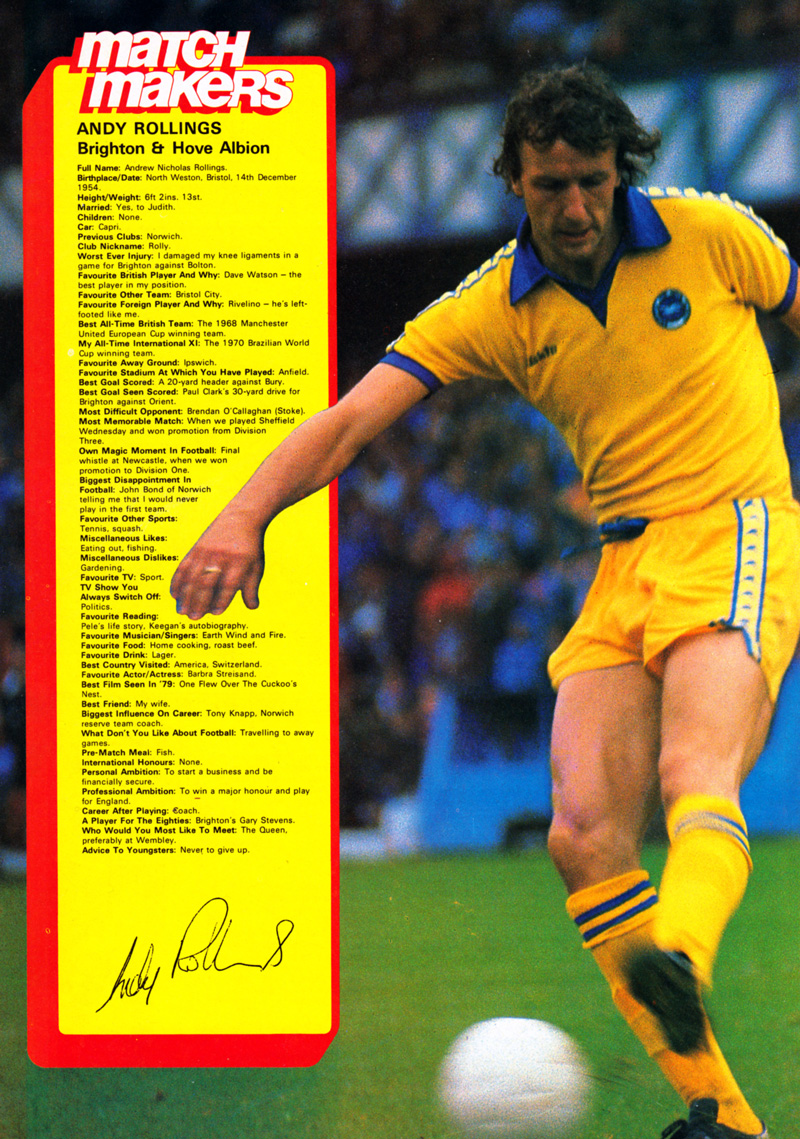
But you’d have to be super-picky not to want to pretend to be Brian Horton powering a bullet of a near-post header or Gerry Ryan slamming the ball into the Newcastle goal while wearing this shirt in the park. You may even wish to pretend to be Andy Rollings, who in Match Magazine, chooses as the magic moment of his career: ‘Final whistle at Newcastle, when we won promotion to Division One’:

andyrollings

It’d be getting into dangerous levels of football shirt-spottery to know that it was in 1979/80, the club’s first in the top flight, when the buk appeared above the logotype, just like on the Toffs reproduction. Games when this yellow shirt was worn include the match at Manchester United, when an altercation took place between Seagulls team-mates Eric Steele and Gary Williams. Not really an incident to re-enact in a ‘Phoenix From The Flames’-style, I don’t think. More happily, the shirt was also worn during this 2-0 win at Bolton in January 1980:

As a shirt design, this Toffs / Bukta garment has many things going for it. Just like on the original, the flared collar also added a touch of ’70s panache. The buks down the sleeves always looked great, not least because they resemble a line of seagulls from a distance. In fact, the production quality now is even better than the original sewn-on band where the yellow contrast on the blue buks down the sleeves always seemed too lemony to match the rest of the shirt. Perhaps the overall design would have looked more coherent with a yellow and blue badge, instead of white and blue, although that seemingly slapdash approach (or deliberate retro styling) is now being emulated in the new yellow Brighton shirt for 2013/14.

And, question on supporters’ lips: will the 2014 team emulate the side of the late Seventies and early 1980s? I’m unsure, but if Brighton make it up this time, they may need to exercise caution at times, but not cowardice. And, on the road, they will need to exhibit other positive characteristics associated with the colour yellow, such as hope, optimism and energy, traits the Albion side of 1978-80 had in abundance.

Tagged ,

Roy Jennings: The Sole Survivor in 1961

Brighton’s first ever match in Division Two was a disaster. It was at Middlesbrough in August 1958 and the Albion were thumped 9-0 with future Brighton manager Brian Clough grabbing five of the goals. The return game at the Goldstone Ground in December saw the Sussex side treated to a 4-6 home defeat. By 1961, the Brighton line-up was much changed, but the club was still competing in the Second Division.

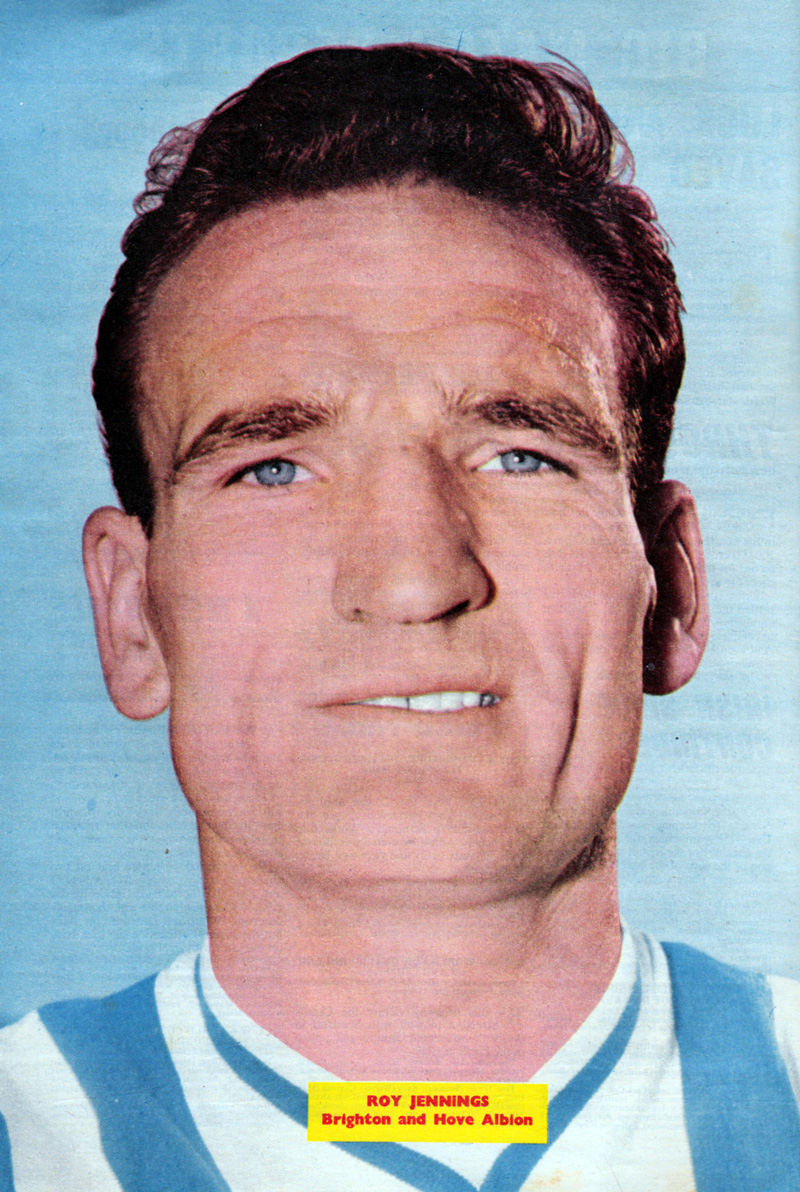
royjennings

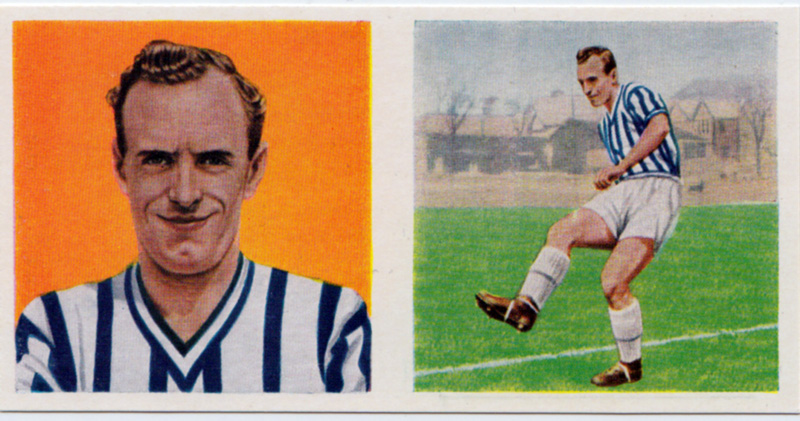
Roy Jennings was the tough-tackling stalwart of the side. In Charles Buchan’s Football Monthly in December 1961, he looked back at the previous few years:

It doesn’t seem three years since Brighton won the old Third Division South championship and promotion to the Second Division. Yet we are now in our fourth season as a Second Division club – and I am the only survivor of the side which won a championship medal in 1958.

True, Steve Burtenshaw, our regular left-half, was a colleague at that time, but Steve played only occasionally in the League side and did not qualify for a medal.

I made the bare 14 appearances needed to earn a medal. I was mainly a full-back in those days and Brighton were well off in that department. All the other stalwarts of our Third Division days have moved on… Jim Langley, Eric Gill, Glen Wilson, Denis Gordon, Peter Harburn, Frankie Howard and co.

There have been other changes in my time at Goldstone Road. A new stand to replace the rickety old construction which did duty as the main building for too many years; new dressing rooms; floodlighting.

Mr Billy Lane, who steered us to promotion and whose powers of persuasion had so much to do with my joining Brighton, has also gone. The place doesn’t seem the same without him although I feel sure that his successor, George Curtis, from Sunderland, is going to do a great job for us.

When we won promotion some people said we would be out of our depth in the Second Division. When we took two early beatings from Middlesbrough it seemed as though the critics were right.

But we recovered and more than held our place in the higher grade.

The Second Division is the toughest one from which to gain promotion. Each season there seem to be about four top-class sides challenging, with the rest cutting each other’s throats week by week.

For the last three years I have been the regular centre-half and now I am club skipper. At school, in my native Swindon, I was a full-back and won England Youth and Wiltshire county honours at the same time as John Atyeo, of Bristol City.

I had no ambition to become a professional footballer. I was keen on accountancy and studied it. I was working as a clerk in a garage when Ted Nash, a local scout, recommended me to Southampton manager George Roughton.

I signed amateur forms for Southampton and played a few games in their reserves before going into the RAF. Then I had a firm offer from Brighton and, in 1952, I signed for them as a full-time professional – and forgot about a career as an accountant.

I was switched to first team centre-half soon after those Middlesbrough defeats I have mentioned. A good game against Tottenham reserves (I managed to blot out Dave Dunmore) earned me promotion and since then I have held my place. Only twice have I missed a match through injury.

One of my most memorable games in our first season in the Second Division was a Boxing Day meeting with the then League leaders, Fulham, in 1958. Their visit drew a record Goldstone Road crowd of 36,747, with receipts of £4,376.

We beat them 3-0, Johnny Haynes and all, and I shut out centre-forward Maurice Cook out of the game.

A quick thumb through the record books show that on Boxing Day, 1958, Brighton actually lost 3-1 at Craven Cottage. Here is some very ropey footage from the match:

Brighton’s magnificent 3-0 victory over Fulham came on the following day, and was aided by the return of Jimmy Langley. Two Tommy Dixon goals and one by Adrian Thorne beat the eventual Division Two runners-up.

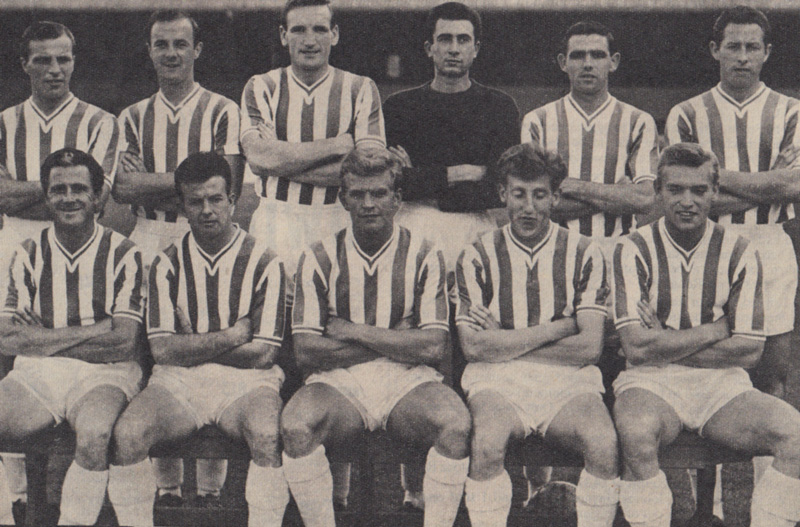
Sadly, after a four-year stay in the Second Division, Brighton finished bottom at the end of 1961/62, the season of this feature in Football Monthly. Albion were relegated, with Jennings’ faith in the managerial ability of George Curtis proving misplaced. Here’s the team photo from the same edition:

1961-62brighton

In the following season, such was his popularity, that when Jennings was dropped for three games in favour of youngster Norman Gall, Curtis’ decision prompted ‘We Want Jennings’ chants from the Brighton supporters. Roy was then restored.

He was eventually given a free transfer at the end of 1963/64 and joined Crawley Town, where he eventually became player-manager. He had made 297 appearances for Brighton, scoring 22 times (13 of which were from the spot).

Tagged , ,

Brighton finish second in five-a-side tournament

From Match Weekly, December 13-19, 1979:

five-a-side

Not sure it would happen these days, but on 28th November 1979, Brighton & Hove Albion sent their first team to take part in a Daily Express national five-a-side tournament at Wembley Arena. The side defeated Rangers 1-0 in the first round, and then sweetly, ended the hopes of arch rivals Crystal Palace, winning 2-1. (It was the first win over Palace in ten attempts under Alan Mullery and provided the impetus for Brighton’s magnificent 3-0 win over the Eagles in the Division One game in December 1979).

In the Semi-Final, Brighton beat Mullery’s old club Tottenham Hotspur 2-1. Sadly, in the final, Sunderland proved too strong, triumphing 2-0 over the Seagulls.

Tagged

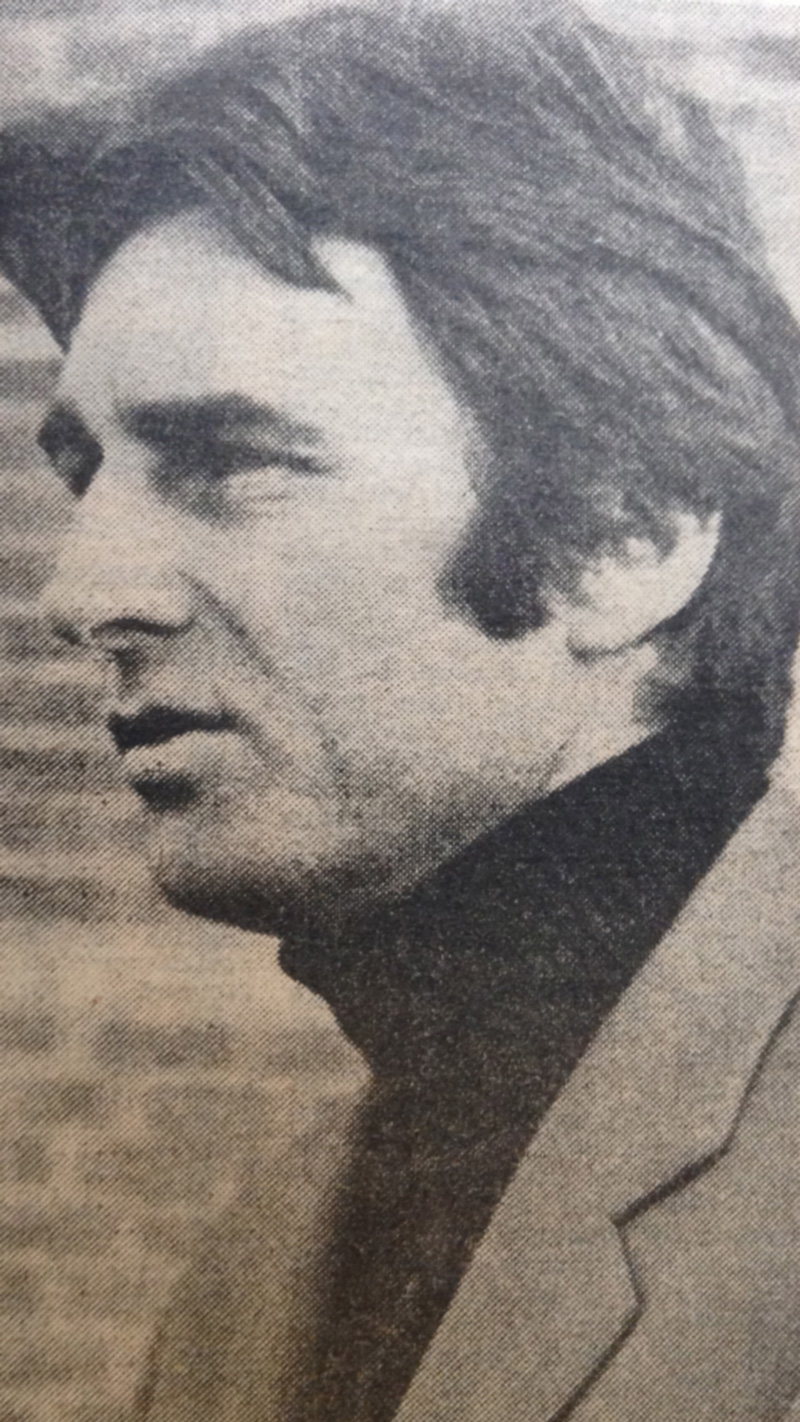
Why Pat Saward had to go – by Mike Bamber

patsaward5

From the Evening Argus, 23 October 1973, by John Vinicombe:

The dismissal of Albion manager Pat Saward was confirmed today at the Goldstone Ground by chairman Mike Bamber.

Mr Bamber met Mr Saward and after a meeting with the players, he said: “Pat Saward has been sacked. The decision was made after the game with Shrewsbury on Saturday evening. The parting has been on the cards for some weeks but there is no ill-feeling between us,” said Mr Bamber.

“I have seen Pat Saward. He is very upset and very sick. I would also feel very sick. But we have had six home defeats and are down to crowds of 5,000 wonderful people. No club can live on such gates.

“The running of the team is the manager’s responsibility. I feel sorry for managers in a way but if they want to be managers it is up to them.

“Naturally, some of the players are upset at him going. But I have just had a meeting with the players and morale is high.

“We will come to an agreement with Mr Saward over his contract. We have not approached anybody and will be advertising the job and hope to get a really top manager.

“Money will be available for players. It is not easy to get them and we have been after half a dozen this year without success.”

Club captain Eddie Spearritt told me that Mr Saward was backed by the players and they did not want him to leave.

Spearritt himself communicated the same message weeks ago at the same time that joint chairman Len Stringer resigned from the Board.

It was then felt that Mr Saward was in a position of receiving full support from the directors and indeed this was the message conveyed when Mr Bamber took over as head of the club executive.

Mr Saward has three and a half years of his contract to run and today he visited the ground for the last time and told me he wanted to think about his position and whether or not he would comment on his departure.

Confessed Saward: “I still cannot believe it has happened. But I will say nothing to knock the club, nothing at all. Of what happened yesterday, I can remember very little. The reason I have been sacked is that they say I can no longer motivate the players. What I need now is a holiday to get away from it all.”

In the meantime Glen Wilson, the trainer, is responsible for running the playing side of the club, assisted by Ray Crawford, who is now youth coach.

Tomorrow night, Albion are at home to Southport and today the players were training very much down in the dumps.

The atmosphere in the dressing room was solemn, although Spearritt admitted that two players were not unanimous in their support of Mr Saward.

Saward’s departure was on the agenda as Brighton had suffered six successive home defeats at the start of the 1973/74 campaign.

It was a rude re-awakening to Third Division football, after the club had played such pulsating football to finish runners-up in 1971/72. This promotion had led to a calamitous season in Division Two, when the Albion finished bottom of the table. Now back in Division Three, the side’s slump continued. It was relegation, not promotion, that was on the horizon and this ultimately cost Saward his job.

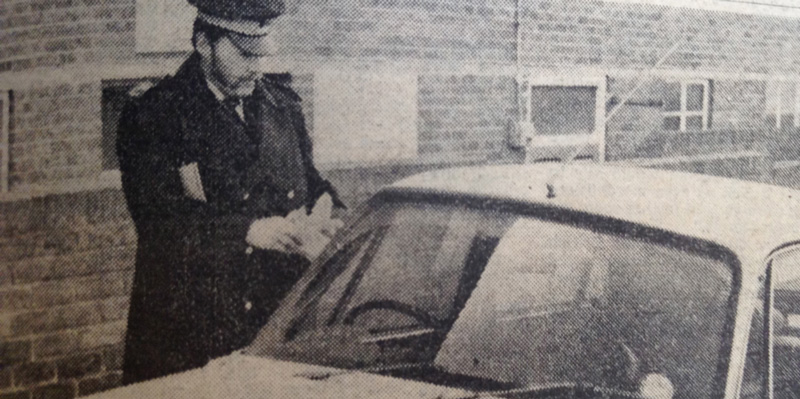
Other bad news was to follow that day when Saward’s club car received a parking ticket outside the Goldstone.

saward6

Tagged , ,

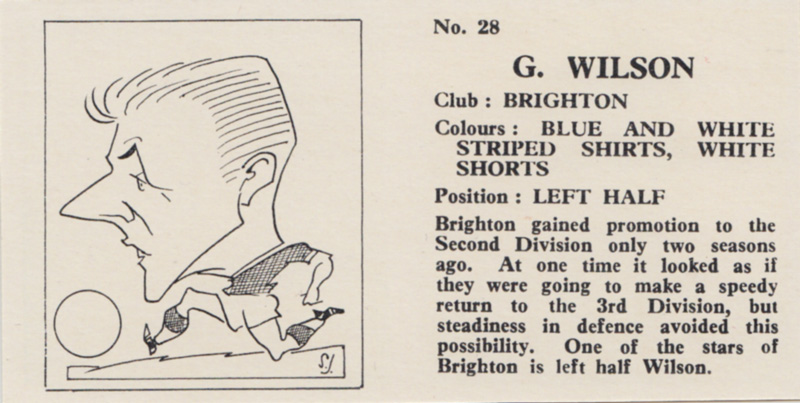
Glen Wilson, a great man of many guises

glenwilson1

glenwilson2

Glen Wilson, who died in 2005, became synonymous with the club during Goldstone Ground era, first as a player, then trainer, caretaker manager, physio and kit man. Although he was a Geordie, he was devoted to the Albion. He made his debut as inside-right in September 1949 against Bournemouth but it was as left-half where he clocked the most of his 436 appearances for Brighton. He was captain of the Billy Lane’s side that won the Third Division (South) Championship in 1958.

In North Stand Chat, Brighton fan nobody’s dupe recalls:

At The Dell I called something derogatory out to him as he was going down the tunnel at half time. He stopped and gave me a well-deserved verbal lashing. He saw me a few days later at a training session at The Goldstone and he continued the ‘conversation’. The next time he saw me was a couple of weeks later at Ashton Gate before a game against Bristol City. He got off of the team coach, came straight up to me and gave me a complimentary ticket for the match.

I also remember a game at Swindon. All through the game he and one Swindon player were giving each other physical stick. Glen was seemingly the only one to be punished with a string of free kicks against him. Towards the end of the game he was booked. Just after the final whistle the Swindon player held a hand out to Glen with a broad grin on his face. Glen stepped forward and delivered a beautiful left hook, and left the guy flat on his back. He then walked down the tunnel leaving a hell of a commotion behind him.

Sammy Morgan will tell you that when Glen was the physio he left him on a treatment table for ten minutes wired up to a heat treatment machine. The only thing was that Glen had forgotten to turn it on, but on his return he asked Sammy if he felt better for it. Sammy wholeheartedly agreed and got down from the table and did a little jig to demonstrate.

Apparently during this time his massages were delivered in a very zealous manner. The players nicknamed him after The Boston Strangler. Hence, Billy Boston.

I used to enjoy talking to him at the various dinners he attended. We used to jog each other’s memories about Albion matches. He loved The Albion through and through.

In 1978/79, Glen Wilson switched from being physio to kit man and, in this position, he was interviewed by David Bobin on the eve of the FA Cup Quarter-Final with Norwich City in 1983:

Tagged

Arsenal Annual 1982

arsenalannual

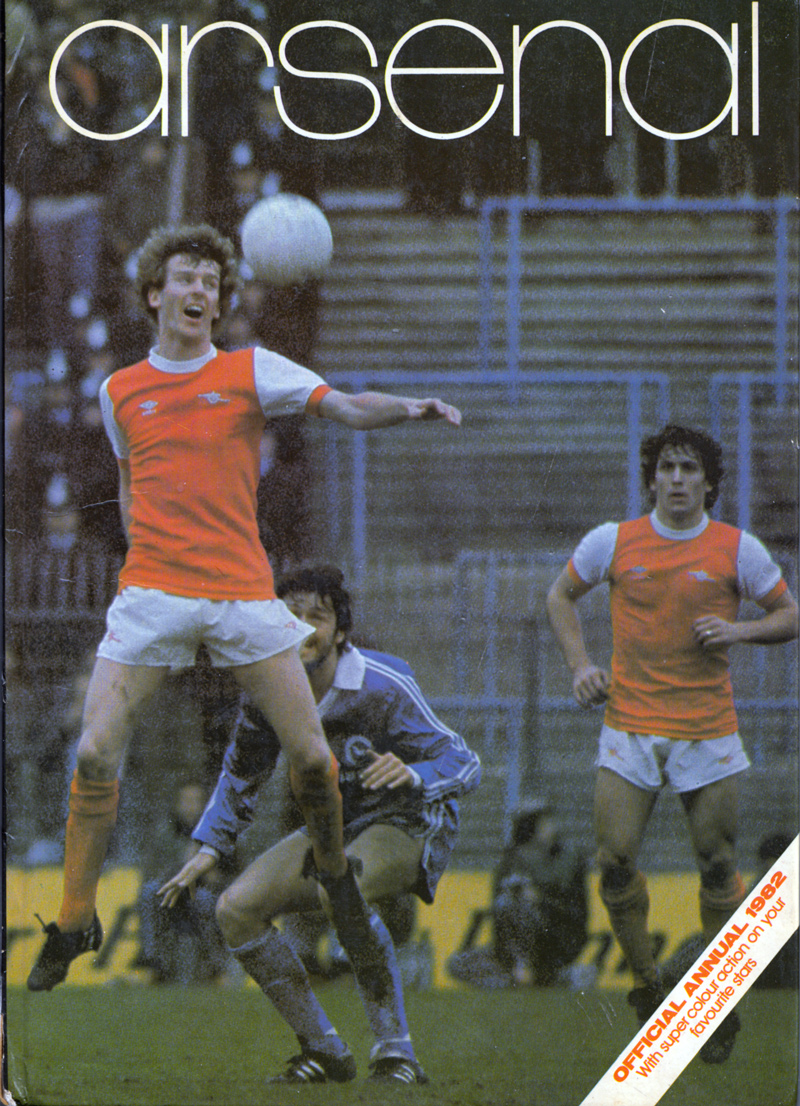
Here’s Graham Rix rising like a salmon while Giles Stille sniffs the visitor’s shorts, as Kenny Sansom watches in the background.

It’s an arresting image, and one that makes for a captivating front cover for the Arsenal Annual released in time for Christmas 1981.

The match was played in April ’81 at the Goldstone Ground, and ended in a 1-0 defeat, leaving Brighton’s First Division survival on a life support machine. It didn’t help that boss Alan Mullery’s managerial record against the Gunners was lousy. Played 7 Won 0 Drawn 1 Lost 6 Goals For 0 Goals Against 16.

Still, Mullery does get a mention in the annual:

We are now used to the idea that the fortunes of a football club depend very largely on the calibre of the man in charge, on his ability to recruit the right players, to make the right team changes, to plan effective tactics, to motivate his players. When Alan Mullery became manager of Brighton, the club entered the soccer elite for the first time in its eighty-year history.

However, although the annual is a fascinating read throughout there isn’t much in the way of Brighton interest, which was the initial motivation for buying it in the first place.

There are photos from Sammy Nelson’s testimonial match for Arsenal v Celtic before his departure to Brighton. Elsewhere, there is a bigging up of the John Hawley-Ray Hankin strike partnership. Hankin vowed forlornly, ‘I’ll make the fans forget Stapleton’. Maybe he could have competed against the 38 year-old veteran version of Frank Stapleton that helped out Brighton boss Liam Brady in November 1994 by playing two games, but not at a time when the Eire centre-forward was one of the most feared strikers in the Football League.

Also turning up at the Goldstone Ground in the 1990s was Raphael Meade, then a rising star at Highbury. In a profile of young Gunners, it says:

Raf got very close to a first-team game last season but finally got his reward this season. He’s got a hell of a lot of pace and is fantastically brave in the box. He’s got all the makings of a top player. However, he’s another one who has got to work on his control like Brian McDermott with tighter controls and lay-offs. But with his type of pace he will always be a threat.

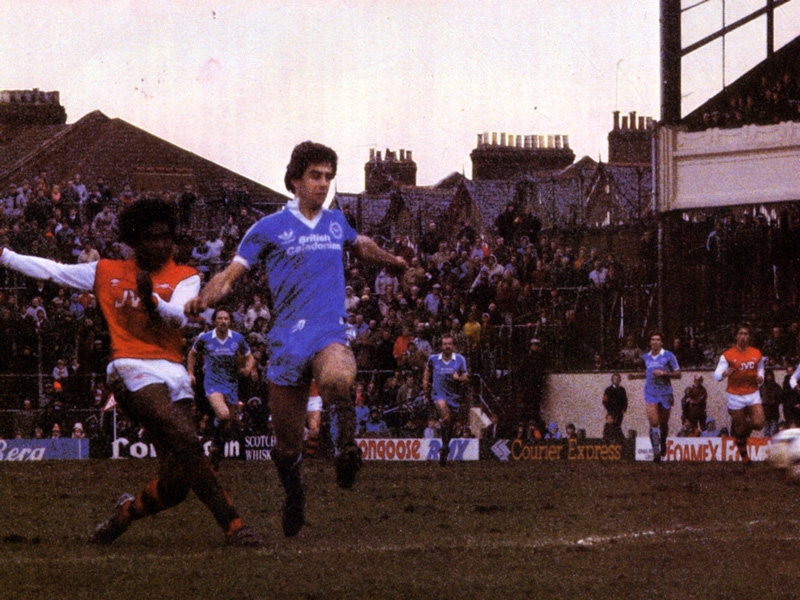
Showing his attacking prowess, here he is getting the better of Gary Stevens to score at Highbury, about a decade before Meade’s two short spells with Brighton:

meade

Tagged ,