Category Archives: Media Coverage

Mike Yaxley, physio… writer!

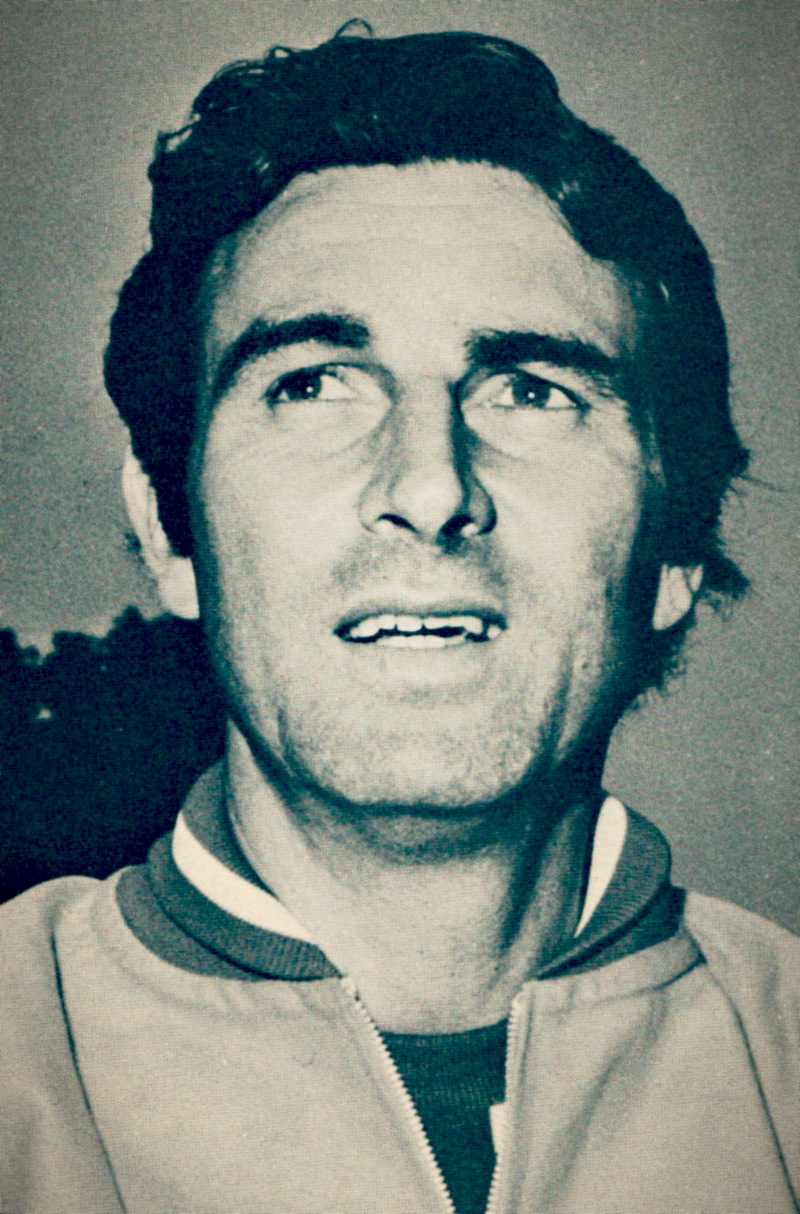
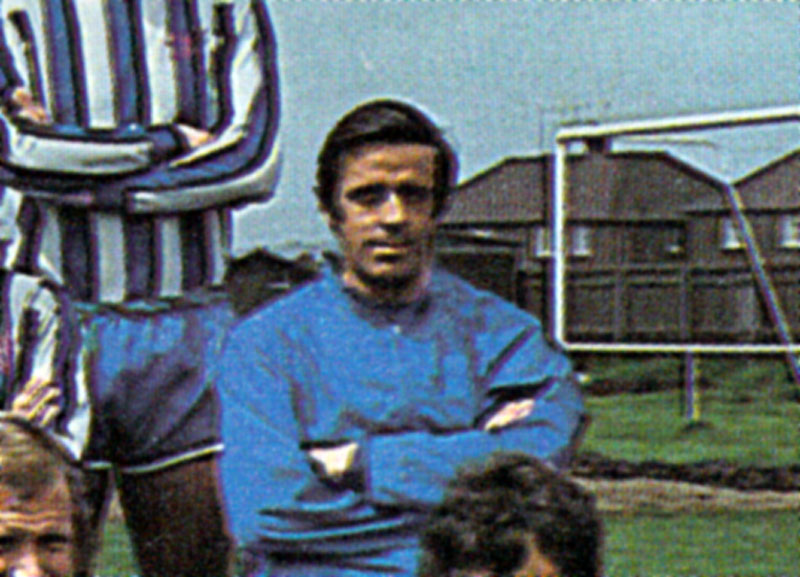
A Norwich City supporter in his youth, Mike Yaxley is a fully qualified FA coach. He gained the Diploma of Loughborough Colleges in Physical Education in 1961 and then moved to the Sussex area where he was appointed Sports Master at Brighton, Hove & Sussex Grammar School (now BHASVIC Sixth Form College).

He successfully coached the Sussex Youth team, and joined the Albion staff in 1968/69 before becoming Pat Saward’s new right-hand man in the celebrated 1971/72 campaign:
mikeyaxley2

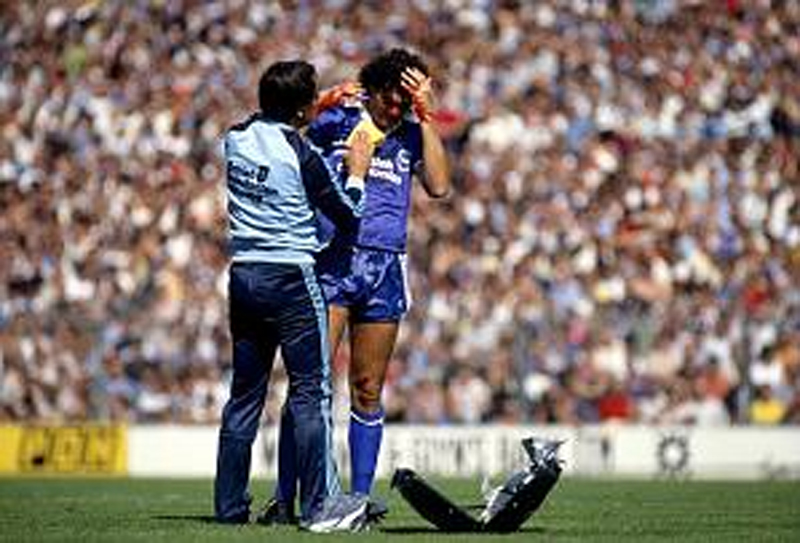
Yet, helped by the expertise of the late, great Bert Parker, who treated Albion players from the 1960s to 1990s, it was in his many years of great service as physiotherapist that Mike Yaxley became best known to Albion fans. Here he is resplendent in a snazzy navy and light-blue Adidas tracksuit treating Steve Foster against Wolves on the opening day of the 1980/81 season. Fozzie’s injury led to the introduction of his trademark headband. Equally stylish, I think!
wolves8

Outside of his immediate duties for the club, Yaxley carved out a niche as a writer, as this profile in the Brighton v Blackburn programme from 2nd January 1984 explained:

mikeyaxley1

When you meet Albion’s physiotherapist Mike Yaxley, it soon becomes apparent that he is a man with many interesting ideas and theories. He is, quite simply, a sports fanatic. But his areas of specialist interest are coaching and, of course, the treatment of sporting injuries. So, it comes as no surprise to learn that Mike spends much of his free time committing his ideas to paper.

Away from it all, he’s an author!

‘I started writing for local papers when I was at college at Loughborough,’ says Mike. “We ran nine soccer sides and I was club secretary, so I gave up playing to concentrate on the administration. We got involved in an Amateur Cup run and we wanted as much publicity as we could get, so I started contributing articles about the team to local papers.

‘After that they asked me to do more match reports and then I did some articles on keep fit and so on. I enjoyed it and I carried on doing a little writing for the Argus when I left college and moved down here.’
At that time, Mike was a teacher and he has always had an interest in coaching youngsters. That interest paved the way for his first book.

‘I wrote it about four years ago. A publisher suggested a simple coaching guide for young players and I enjoyed doing it. The book will help anyone who is organising coaching sessions for the first time, but it covers more advanced work too, so it would be useful for coaches preparing for their FA preliminary award.’

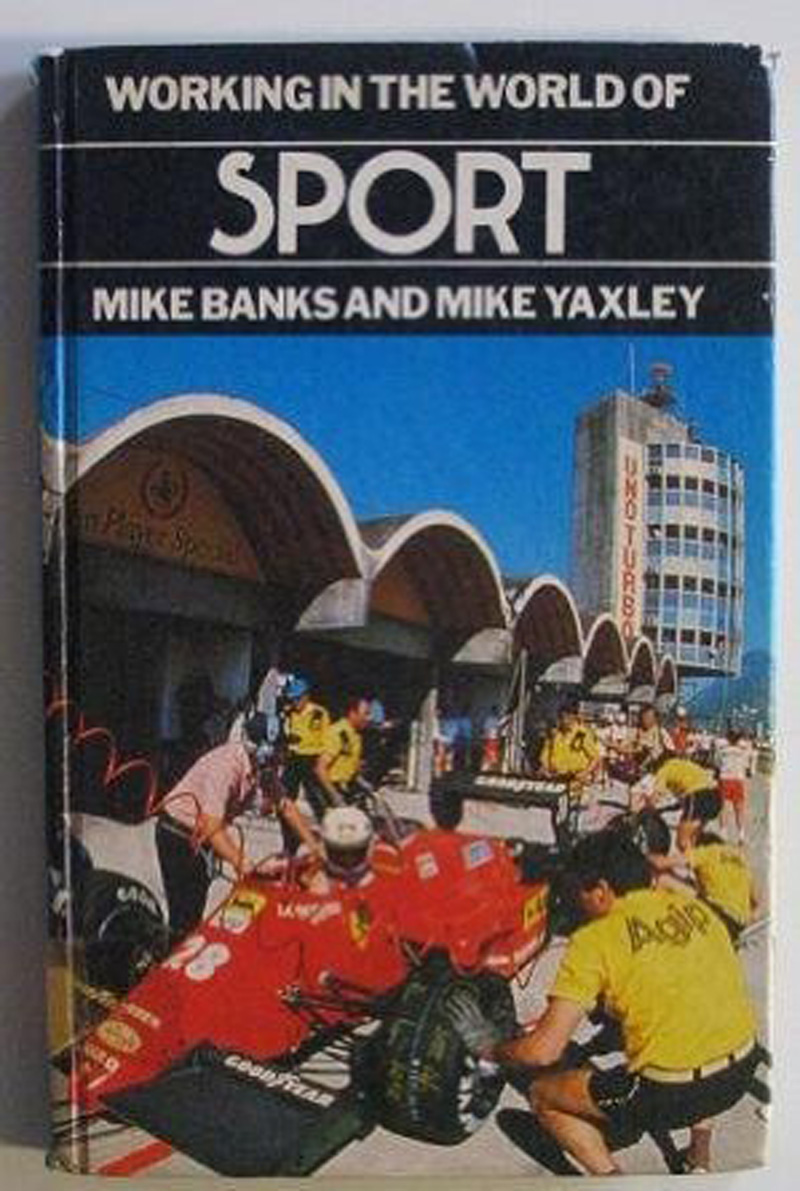
Mike has obviously hit the right level with his book, Soccer. It is available in schools and libraries, as well as bookshops throughout the UK. It has been reprinted here and has enjoyed similar success in South-East Asia and Australia.

‘It’s surprising how it all snowballs,’ says Mike.

He is now working on two more books. The first sounds like an excellent idea which will again appeal to a wide audience. ‘It’s a careers guidance book for young people who want to work in professional sport. Just because you’re not good enough to participate as a competitor, it doesn’t mean you can’t work in sport. There are many other openings. This book will cover many different sports, from soccer and tennis, to horse racing and Grand Prix racing. In each section, I will outline the team around the sportsmen and provide information and addresses for the reader. So, whether they want to be a stable boy, a Grand Prix mechanic or a football physiotherapist, we’ll put them on the right path.

‘The other book I’m working on is more specialist, covering the cause and treatment of sporting injuries. If people understand the background to injuries it can help the healing and rehabilitation process. I think there’s a need for a book like this and I hope it will help people when it is published.’

1984 looks like being a busy time for Mike Yaxley the author. ‘My work with the players here at the Goldstone always comes first,’ Mike explains. ‘I write when I can find time. Often on the coach to and from away matches. Finding the time to write is the biggest problem, but when I finish a book, the hard work is always worthwhile. It gives me a great sense of satisfaction.’
mikeyaxley3

Tagged ,

Last-gasp Gary Williams goal rocks Roker

Remember when local newspapers published a sports edition on Saturday evening to cover that day’s football results? Well, this report is from Geoff Storey of Football Echo (from the Echo in Sunderland), on April 25 1981:

garywilliams5a

Sunderland 1 Brighton 2

Sunderland’s fight against relegation turned into a nightmare against Brighton at Roker Park this afternoon when an injury time goal gave them everything to do against Liverpool next week.

Brighton who needed maximum points to starve off their relegation threat had gone ahead in the 35th minute through Mick Robinson’s 22nd goal of the season and despite Sunderland having most of the play they were unable to make their advantage count.

Alan Brown set the ground alight in the 61st minute when he equalised with his fifth goal of the season but Gary Williams stunned the Roker fans with an injury time goal for Brighton.

Afterwards, there is a barebones account of the action in the match, which doesn’t actually make very interesting reading, so I’ll spare you it. In any case, I have actual glorious video highlights of this do-or-die game. I didn’t even know was televised! Enjoy…

While Steve Foster’s body-check escaped a caution, which was no surprise in those days, Andy Ritchie was certainly very lucky after his X-rated tackle. Journalist Geoff Strong put it like this:

In the 54th minute Andy Ritchie who had already been booked was amazingly allowed to stay on the field following a disgraceful tackle on Elliott which sent the Sunderland defender flying but there was no sterner action than a talking to.

However, it is for Gary Williams’ stunning late volley from Smith’s floated cross that the match is best remembered by Seagulls’ fans.

The seemingly daunting trip to Roker Park was part three of Albion’s four-match winning streak at the end of the 1980/81 season that preserved the club’s First Division status. Sunderland were crestfallen after the game, but then incredibly went on to beat Liverpool at Anfield the following week to maintain their place as well.

Oh, and in case you were wandering, Gustavo Poyet was 13 years old when this match took place…

Tagged

Kerslake: in the Seagulls’ shadow

Jackie Chan’s classic kung fu film ‘Snake in the Eagle’s Shadow’ hit the screens in 1978, the same year that up and coming full-back Mick Kerslake joined Brighton & Hove Albion. Now I have no idea whether the young Mick went to watch the action-packed martial arts comedy at, say, ABC Cinema on East Street with his new team mates. Even so, he must have hoped that there was an ‘old master’ at the football club that would help turn him from a raw talent into a champ.

mickkerslake

As a seventeen year old Fulham defender, Kerslake had made his League debut when he played against Orient in October 1975 in a 1-1 home draw. When his four years at Craven Cottage ended, he undoubtedly wished that an Albion club keen to augment its squad with his services would get to see his career blossom. As the promotion race in Division Two was hotting up, there was even a ‘Personality Parade’ profile on him in the Brighton v Charlton programme on 13th April 1979:

In any football club with ambition there needs to be players in the shadows waiting for their chance. History is full of unknowns having sensational debuts and then coming through to make a place their own.

Many current internationals have started in just this way and here at the Goldstone we have a young full-back who has spent this season waiting for his chance.

Mick Kerslake signed for the Albion last May after three seasons on the professional staff at Fulham. He came very close to playing in the first team just before Christmas and would have played against Queens’ Park Rangers in the friendly that was cancelled in January. Supporters though are still awaiting his debut in Albion’s first team.

Mick was born in Bethnal Green 21 years ago, the son of a docker. He has two brothers and a sister, and his younger brother is already showing talent on the soccer field. He’s a regular with Spurs youngsters and plays for his school in Stepney.

The younger brother mentioned in the last two sentences above is almost certainly David Kerslake, the former QPR, Swindon, Tottenham and Leeds right-back of the 1980s and 1990s, who is currently assistant manager at Cardiff City. Thanks to Paul from Cult Zeros for this information. On a visit to Wembley, Paul remembers seeing Mick’s bro as captain of England Schoolboys against West Germany in May 1981.

The article continues:

Mick himself went to St Mary’s and St Michael’s Primary School in Stepney and moved from there up to St John’s Secondary School. He first kicked a football at the tender age of 10 and played for both his school and for East London Schools. He gained representative honours at all ages up to 15 and was captain for his last two seasons.

He spent a short while with Chelsea as a schoolboy but on leaving school he signed apprentice professional forms with Fulham, then managed by Alex Stock. At the time, Alan Mullery was the senior player at Craven Cottage, while Ken Craggs, who originally spotted Mick, was Youth Team Manager.

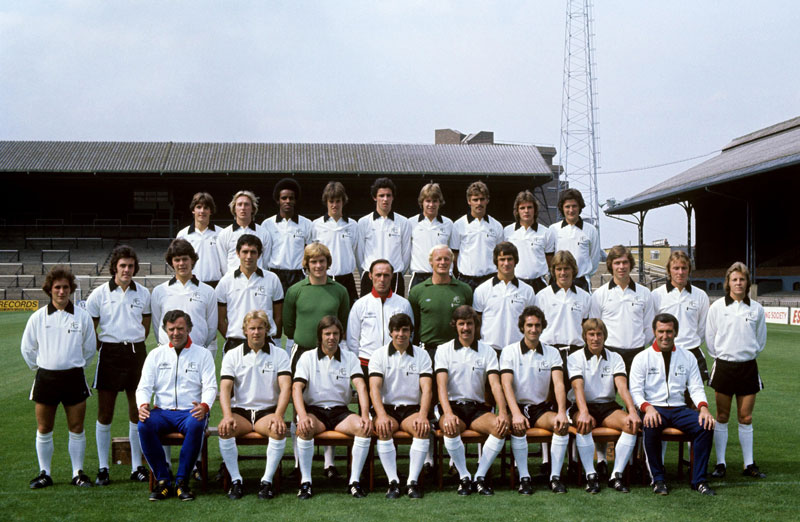
Craggs and Kerslake, as well as Barry Lloyd, are in this Fulham photo that AZ Gull found yesterday:

Fulham 1876

Fulham 1876: (Back row, l-r) Marcus Ellwood, Brian Greenaway, Tyrone James, Tony Mahoney, Tony Gale, Dennis Byatt, Viv Busby, Terry Bullivant, Michael Kerslake. (Middle row, l-r) Paul Howes, John Dowie, Steve Hatter, John Lacy, Richard Teale, Ron Woolnough (physio) Peter Mellor, Ernie Howe, John Mitchell, Steve Camp, John Margerrison, Steve Scrivens. (Front row, l-r) Ken Craggs (coach), Barry Lloyd, Les Barrett, Jimmy Conway, Alan Slough, Les Strong, John Cutbush, Bobby Campbell

After a year he signed full professional forms but in his time there he only played one full League game and had two more as substitute.

He played twice for England Youth XI against Wales three years ago alongside John Deehan, Glenn Hoddle and Gary Owen among others. In his one game for Fulham he played alongside Alan Mullery and Bobby Moore.

He had little hesitation in coming to the Goldstone when offered the chance and having been here almost a year has lodged with George and Bet Kirby who’ve accommodated so many Albion players over the years.

However, he hopes to get married in the near future to a London girl, Jane Wells, and in preparation he’s bought a flat in Clarendon Villas into which he expects to move shortly.

Away from football Mick plays a fair amount of tennis, weather permitting, and at school he was an outstanding athlete. He attained representative honours in the 100 metres and long jump.

He’s an ambitious young man who hopes to make the grade as a regular First Division player with the Albion.

Very, very sadly, he never got his chance for the Brighton. He was released at the end of the 1979/80 season and his subsequent career details are unknown. Nevertheless, like the nondescript and enigmatic Woody Allen film character ‘Zelig’, Kerslake has the distinction of having featured in numerous Albion team photos of the time, rubbing shoulders with the stars… while not many people looking back at the images really know who he was!

If you knew Mick or know what Mick did next, please get in touch either via the comments, email or on Twitter. It would be great to find out what he’s up to now. Kung-fu, probably!

In between George Aitken and Peter Ward

In between George Aitken and Peter Ward

Tagged , ,

Albion fans say no to John Barnes

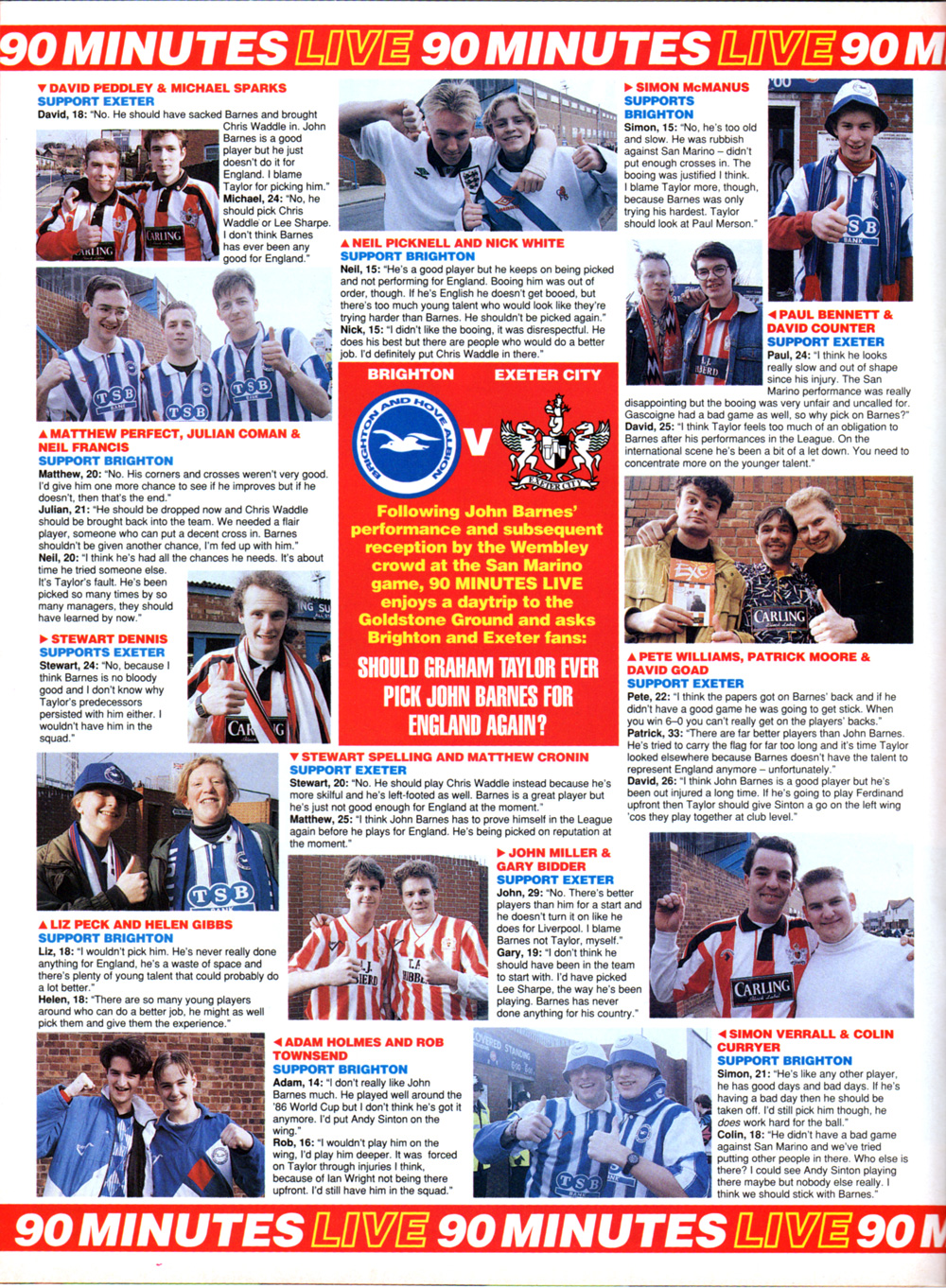
It seemed a perennial question for much of the 1980s and 1990s: should John Barnes play for England? Had he been able to regularly reproduce his Liverpool form, the answers would surely have been yes. But by February 1993, when Andros Townsend was just two years old and not quite ready for international duty, visions of Barnes’ sensational solo goal against Brazil in 1984 were quickly receding.

In 90 Minutes’ issue 144 (6 March 1993), the magazine presented the question as this:

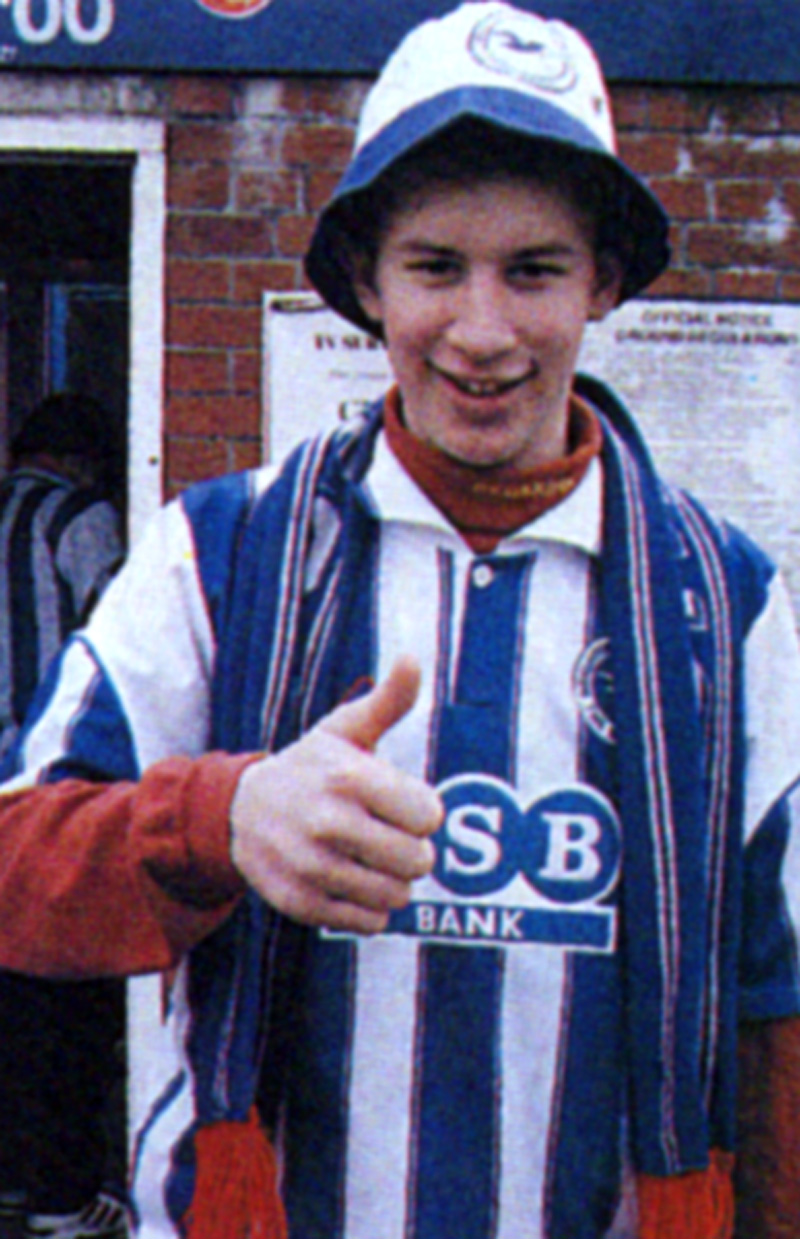
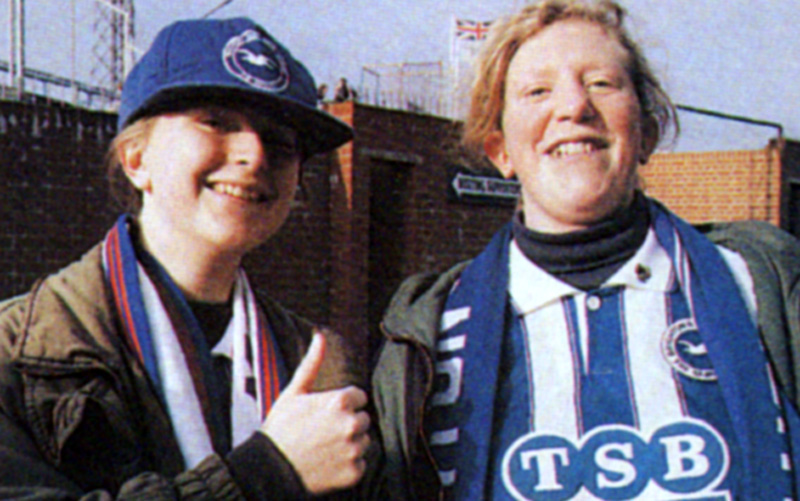
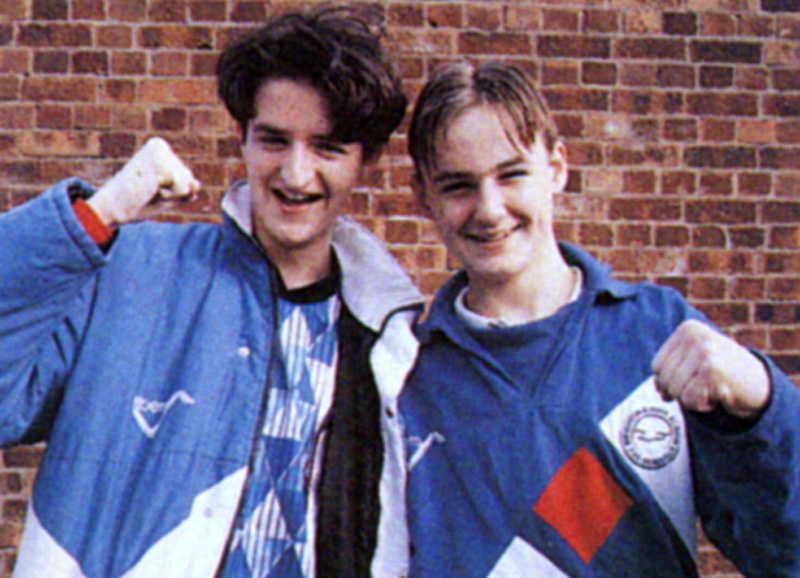
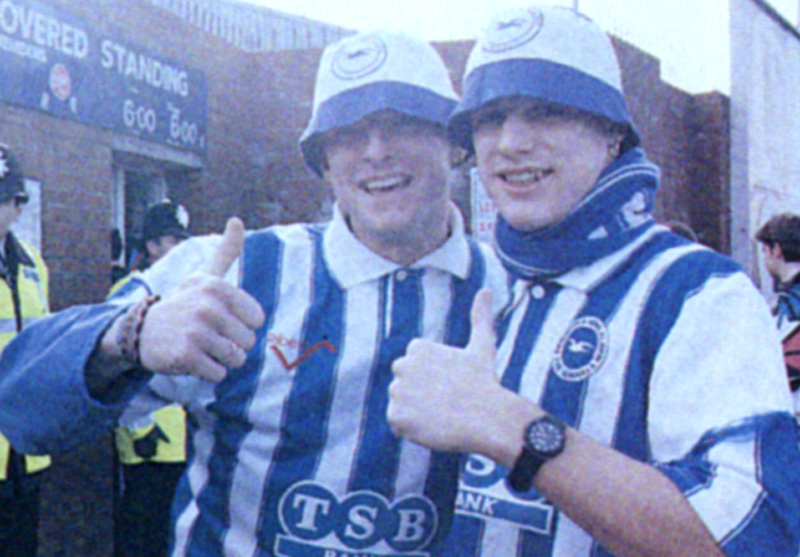
Following John Barnes’ performance and subsequent reception by the Wembley crowd at the San Marino game, 90 MINUTES LIVE enjoys a daytrip to the Goldstone Ground and asks Brighton and Exeter fans: Should Graham Taylor ever pick John Barnes for England again?

Below are the Brighton fans’ responses from the match (which incidentally was won 3-0 with goals from Kurt Nogan, Andy Kennedy and Clive Walker):

90minuteslive5

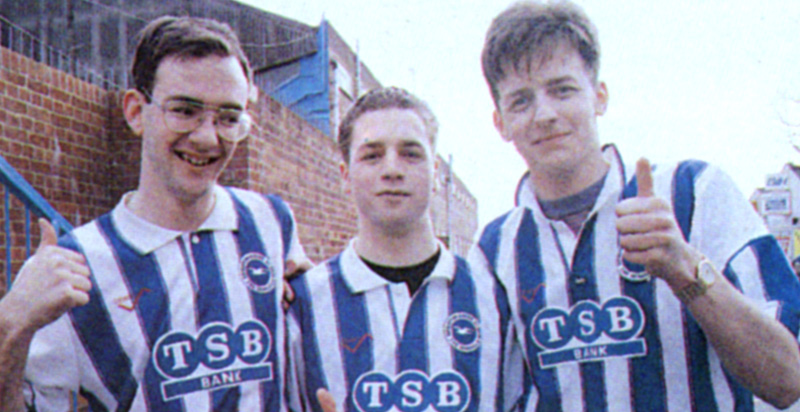
Matthew Perfect, Julian Coman & Neil Francis
Support Brighton
Matthew, 20: “No. His corners and crosses weren’t very good. I’d give him one more chance to see if he improves but if he doesn’t, then that’s the end.”
Julian, 21: “He should be dropped now and Chris Waddle should be brought back into the team. We need a flair player, someone who can put a decent cross in. Barnes shouldn’t be given another chance. I’m fed up with him.”
Neil, 20: “I think he’s had all the chances he needs. It’s about time he tried someone else. It’s Taylor’s fault. He’s been picked so many times by so many managers, they should have learned by now.”

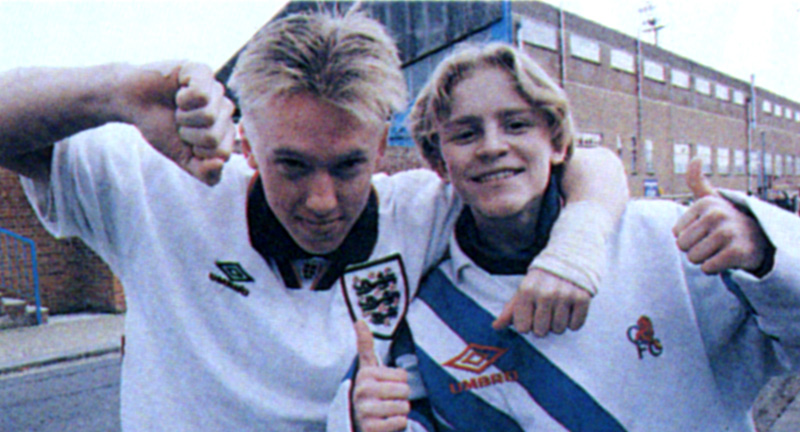
90minuteslive7

Neil Picknell and Nick White
Support Brighton
Neil, 15: “He’s a good player but he keeps on being picked and not performing for England. Booing him was out of order, though. If he’s English he doesn’t get booed, but there’s too much young talent who would look like they’re trying harder than Barnes. he shouldn’t be picked again.”
Nick, 15: “I didn’t like the booing. It was disrespectful. He does his best but there are people who would do a better job. I’d definitely put Chris Waddle in there.”

90minuteslive6Simon McManus
Supports Brighton
Simon, 15: “No, he’s too old and slow. He was rubbish against San Marino – didn’t put enough crosses in. The booing was justified I think. I blame Taylor more, though, because Barnesy was only trying his hardest. Taylor should look at Paul Merson.”

90minuteslive8

Liz Peck and Helen Gibbs
Support Brighton
Liz, 18: “I wouldn’t pick him. He’s never really done anything for England, he’s a waste of space and there’s plenty of young talent that could probably do a lot better.”
Helen, 18: “There are so many young players around who could do a better job, he might as well pick them and give them the experience.”

90minuteslive9

Adam Holmes and Rob Townsend
Support Brighton
Adam, 14: “I don’t really like John Barnes much. He played well around the ’86 World Cup but I don’t think he’s got it any more. I’d put Andy Sinton on the wing.”
Rob, 16: “I wouldn’t play him on the wing. I’d play him deeper. It was forced on Taylor through injuries I think, because of Ian Wright not being there upfront. I’d still have him in the squad.”

90miuteslive10

Simon Verrall and Colin Curryer
Support Brighton
Simon, 21: “He’s like any other player, he has good days and bad days. If he’s having a bad day then he should be taken off. I’d still pick him though, he does work hard for the ball.”
Colin, 18: “He didn’t have a bad game against San Marino and we’ve tried putting other people in there. Who else is there? I could see Andy Sinton playing there maybe but nobody else really. I think we should stick with Barnes.”

(Click the image below to see the whole vox pops feature in all its glory).

johnbarnes1

Tagged

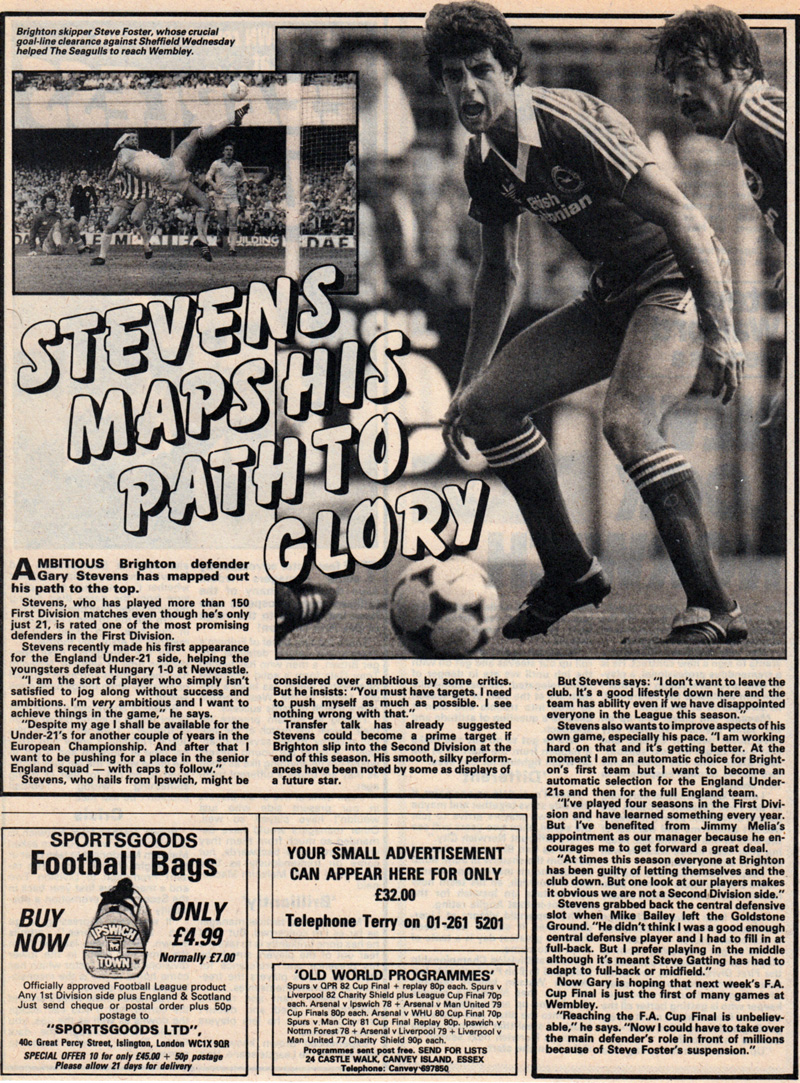
Stevens maps his path to glory

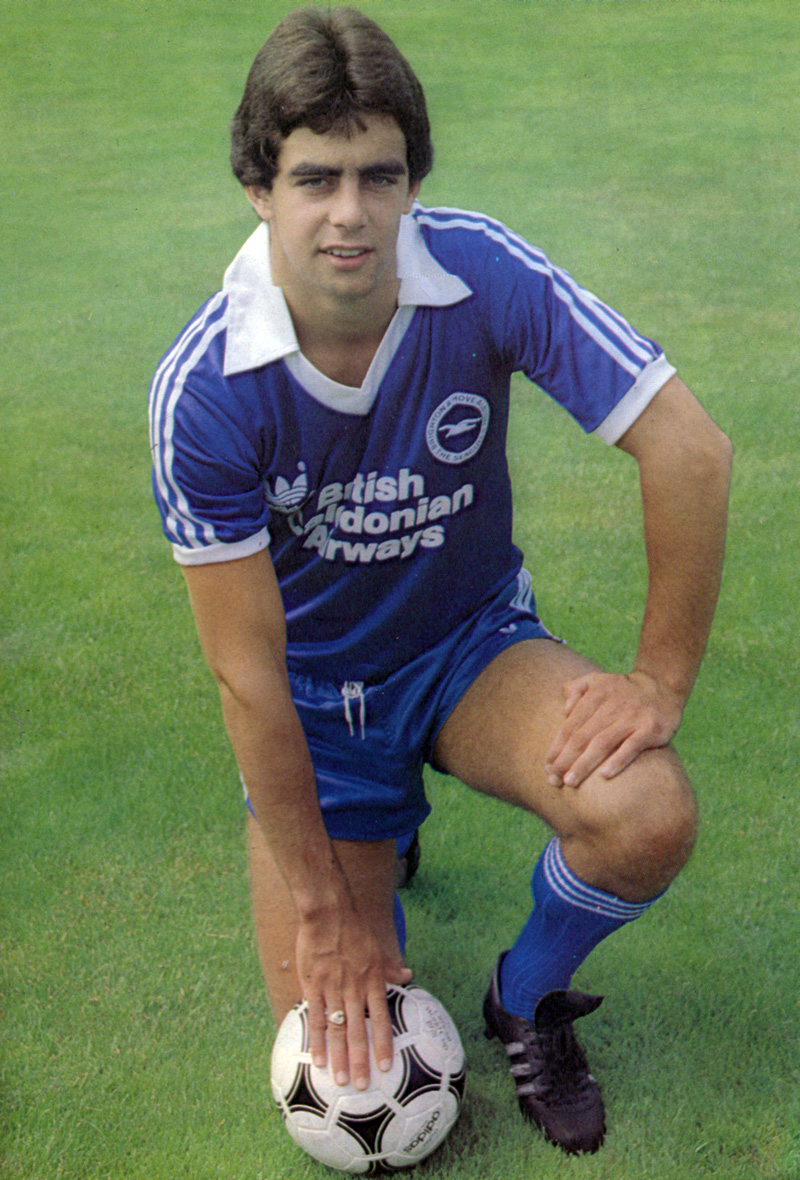
garystevens1

I’m not sure if its from Match Weekly or Shoot! Magazine. However, Gary Stevens’ determination to reach the top is unmistakeable:

Ambitious Brighton defender Gary Stevens has mapped out his path to the top.

Stevens, who has played more than 150 First Division matches is one of the most promising defenders in the First Division.

Stevens recently made his first appearance for the England Under-21 side, helping the youngsters defeat Hungary 1-0 at Newcastle.

“I am the sort of player who simply isn’t satisfied to jog along without success and ambitions. I’m very ambitious and I want to achieve things in the game,” he says.

“Despite my age I shall be available for the Under-21’s for another couple of years in the European Championship. And after that I want to be pushing for a place in the senior England squad – with caps to follow.”

Stevens, who hails from Ipswich, might be considered over-ambitious by some critics. But he insists: “You must have targets. I need to push myself as much as possible. I see nothing wrong with that.”

Transfer talk has already suggested Stevens could become a prime target if Brighton slip into the Second Division at the end of the season. His smooth, silky performances have been noted by some as displays of a future star.

But Stevens says: “I don’t want to leave the club. It’s a good lifestyle down here and the team has ability even if we have disappointed everyone in the League this season.”

Stevens also wants to improve aspects of his own game, especially his pace. “I am working hard on it and it’s getting better. At the moment I am automatic choice for Brighton’s first team but I want to become an automatic selection for the England Under-21s and then for the full England team.

“I’ve played four seasons in the First Division and have learned something every year. But I’ve benefited from Jimmy Melia’s appointment as our manager because he encourages me to get forward a great deal.

“At times this season everyone at brighton has been guilty of letting themselves and the club down. But one look at our players makes it obvious we are not a Second Division side.”

Stevens grabbed back the central defensive slot when Mike Bailey left the Goldstone Ground. “He didn’t think I was a good enough central defensive player and I had to fill in at full-back. But I prefer playing in the middle although it’s meant Steve Gatting has had to adapt to full-back or midfield.”

Now Gary is hoping that next week’s FA Cup Final is just the first of many games at Wembley.

“Reaching the FA Cup Final is unbelievable,” he says. “Now I may have to take over the main defender’s role in front of millions because of Steve Foster’s suspension.”

garystevens

Tagged

Pat Saward: ‘I am in a fog’

In 1971/72, a confident, enterprising Brighton side slaughtered Halifax 5-0 at The Shay in the Third Division on their way to runners-up spot. Such was their attacking might, they mustered 43 League goals away from home in a glorious march up the table.

However, the heart of the Albion side was broken apart the following season, with the likes of Kit Napier, John Napier and Willie Irvine departing, and Brian Bromley losing the captaincy, as the club lasted a single campaign in Division Two. With the frequency of the hammerings they suffered, a return to the lower reaches of the Football League seemed almost a merciful act.

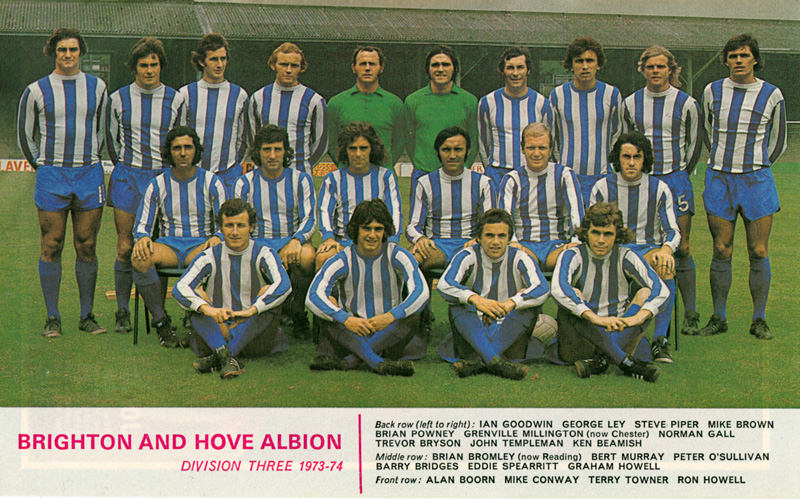
Time to regroup and refresh in the less choppy waters of Division Three. And go for promotion once more, with this motley crew:

1973-74

At least that was the plan. Yet by October 1973, hopes of a revival by Pat Saward’s men were dismantled by another atrocious start, with just two wins in eleven matches. Indeed, the Goldstone Ground proved a victory-free zone on the eve of the clash with Halifax Town on Saturday 13th. Again, disaster befell the side, as the Argus’ John Vinicombe reported:

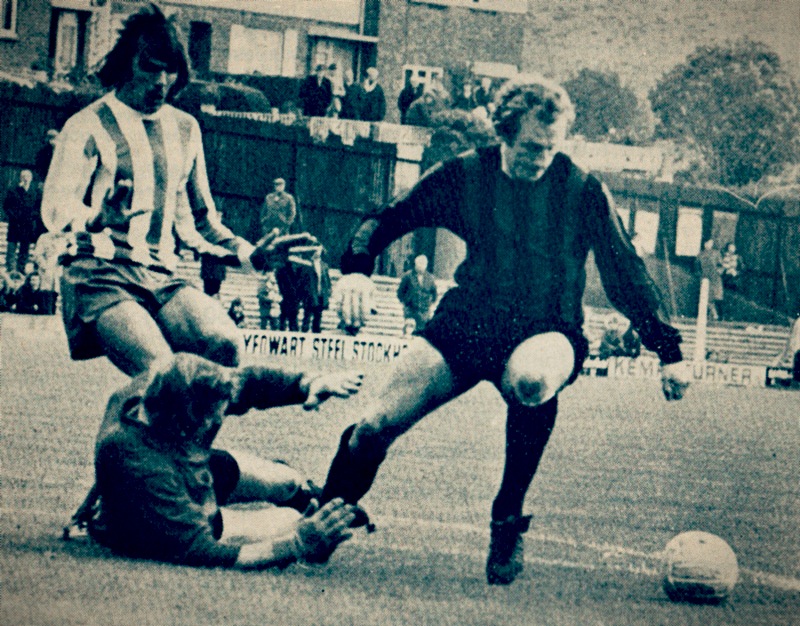
With the halifax goalkeeper on the ground, Beamish loses the ball to Pickering.

With the halifax goalkeeper on the ground, Beamish loses the ball to Pickering.

The Goldstone nightmare continues: 540 minutes of sheer agony and six defeats in a row with just three goals scored and ten against. And defeat by a makeshift Halifax side was watched by the lowest crowd of the season – 6,228.

Towards the end many of the rain-or-shine fans had had enough. Their patience was so exhausted that they didn’t bother to barrack. By turning backs en masse on the match the faithful hundreds slipped away, too fed up to fling a last parting shot.

Surprise, surprise! An Albion attack by Beamish and Hilton is thwarted by the Halfiax defence.

Surprise, surprise! An Albion attack by Beamish and Hilton is thwarted by the Halfiax defence.

Albion were dreadful. There is no point in searching for stronger adjectives. At home there is no semblance of confidence.

It is difficult to see what course now lies open to the club. The board, with Mike Bamber at the head, following Len Stringer’s resignation, back the manager. So do the players.

The worst start in living memory is grievously damaging to morale, and Mr Saward himself confessed that he was left speechless by this latest debacle. ‘I am in a fog. I just don’t know why they played as they did,’ he said afterwards.

He is brutally honest. Here we have a situation where the man who should be supplying the answers and remedies has actually admitted to being stumped.

In the 1-0 defeat, the Halifax winner was scored by striker David Gwyther six minutes before half-time, making sure after Wilkie had steered the ball past Powney, when there was an absence of an Albion challenge for the ball from Shanahan’s cross. Afterwards, Vinicombe contended that new players were needed at the Goldstone, but permanent ones rather than loans:

‘Too much reliance has been placed on temporary transfers and Albion have a bad name in the game as a result.’

He also drew parallels with 1962/63 when the club, having dropped out of Division Two, fell straight through to the Fourth Division. Flashing the cheque book did not save Albion then, and with an overdraft of over £150,000 in 1973/74, and falling attendances, the club could not afford to be too wild now.

In the end, a desperate Pat Saward did register a first home win a week later, with goals from Ron Howell and Ken Beamish securing a 2-0 Brighton victory over fellow strugglers Shrewsbury Town. Not that the manager saw it. Extraordinary as it seems now, he missed the game as he was on a scouting mission. However, the win was not enough to save Saward. He was sacked two days later, with three years of his contract remaining.

patsaward3a

Tagged

Howard’s way stifles Chamberlain

Howard Wilkinson is the only ex-Brighton & Hove Albion player to manage the England national football team, which he fulfilled on a caretaker basis in two spells, in 1999 and 2000.

In his playing career, he was an ex-England youth international who joined Sheffield Wednesday in June 1962, making his First Division debut in the 1964/65 season. After 22 League games and three goals, he arrived at the Goldstone Ground in July 1966.

Posing with Bob Fuller, an Albion reserve

Posing with Bob Fuller, an Albion reserve

At Brighton, he is remembered as a smart and direct outside-right who could skin a full-back for pace and put in a good cross. Even so, in his book ‘Managing to Succceed’ in 1992, Howard Wilkinson described how he was ‘gaining no sense of fulfilment from being a Third Division footballer with Brighton.’ Perhaps this was because after an injury in December 1966, he never fully re-established himself and was often substitute.

He went on to say that:

‘When I was a player at Brighton, under manager Archie Macaulay’s guidance, we had some remarkable preparations for important matches and cup-ties. There were liberal doses of sherry and raw eggs, calves foot jelly, fillet steak, and plenty of walks on the seafront where we were taken to fill our lungs with the ozone.’

After featuring sporadically in 1969/70, Wilkinson found first-team chances limited by the emergence and form of Peter O’Sullivan. As a result, he was given a free transfer in May 1971.

With his propensity for hugging the line, Wilkinson was rarely a goal threat himself in his time at Brighton, getting on the scoresheet just twice in his final two seasons. When he entered management, Wilkinson’s idea of the role of a wide man did not bring out the best of a future Albion player:

markchamberlain

The highly skilful Mark Chamberlain was an England international winger. Graham Barnett, his coach at Port Vale, described him as ‘like a bloody gazelle… a black jewel… he’s got the bloody lot… he’s class… so much better than John Barnes.’

This explosive goal for Stoke City against Brighton in 1982/83 is an example of what he was capable of:

Although he had slipped down the England order by then, a disastrous move to Wilkinson’s Sheffield Wednesday in 1986 for £700,000 put paid to any hopes of further caps. As Chamberlain told 90 Minutes magazine (24 July 1993):

It was a nightmare. I just didn’t fit in with his scheme of things. Like all of his teams, Wednesday played to a very strict pattern and anybody who slipped out of that pattern was seen as a liability. In the end I couldn’t really get away quick enough.

He joined Portsmouth in 1988 but endured injury problems and loss of form. When Jim Smith arrived as Pompey boss, it led to a renaissance in his career:

‘He told me that I wasn’t just a winger who should sit out wide and wait for things to happen, that I should get myself involved throughout the game. Last season, things really clicked. I felt a lot happier with my consistency and I think I played the best football of my career since I left Stoke.’

After a hernia operation in summer 1994, Chamberlain arrived at the Goldstone for a trial. He scored on his debut against Plymouth in August with this splendid drive:

Thereafter, though, he struggled for form having lost a lot of his pace, and 24 years after Wilkinson received the same fate from Brighton, Chamberlain was released at the end of 1994/95. Perhaps Archie Macaulay’s methodology, described above, involving sherry and raw eggs, calves foot jelly, fillet steak, and plenty of walks on the seafront, might have done wonders for Chamberlain’s twilight years. As it was, when he joined Exeter, he took a more conventional step for an ageing winger seeking to extend his career, by shifting to right-back position.

markchamberlain2

Tagged ,

Please play Peter Ward

peterward13

With the current striker injury crisis, how Brighton & Hove Albion could do with a young Peter Ward in their side. However, in October 1979, he began to experience a dip in form that led to Mullery dispensing with his services for the clash with Sheffield United at the start of the following month. As John Vinicombe wrote in ‘Up, Up and Away’:

What Albion badly needed was an away win, and it came at Bramall Lane. After the West Ham defeat, Mullery was faced with a fairly basic problem among managers. Quite simply, his star player, Peter Ward, had ceased to glitter. But the easy get-out of dropping him was not the complete answer. For instance, Mullery was concerned with not just improving the side, but re-motivating a young man with the ability to swing a match on his own.

In and out of the Albion side, Peter Ward did not hit a single League goal for the Albion from October to January. Nevertheless, he had staunch support from some Seagulls fans as letters to the Evening Argus illustrate. Take this one by Vincent Neal, of Erroll Road, Hove:

I have been an Albion supporter for 24 years and have rarely missed a game. One thing seems patently obvious to me.

Albion are foolishly wasting the enormous potential of one of their greatest assets – Peter Ward.

He reads the game like a master, moves into open spaces intelligently, has good close control and pace, but rarely receives the service that only a Liam Brady or Trevor Brooking could provide.

On countless occasions I have noted his frustration and desparing gestures towards his team mates when failure to play the early ball or to read his quicksilver mind has resulted in wasted opportunities.

Ward is a gifted player and in my opinion his talents can only properly be complemented by players of equal status.

Currently he is on the fringe of the first team and appears to be trying too hard to prove himself every time he makes a short appearance.

I feel, also, that he needs to be less individualistic and self-centred and concentrate on combining with his colleagues.

My suggestion is for him to play deeper – concentrating on making runs from behind and/or providing accurate passes for Malcolm Poskett, Maybank and Peter Saver to capitalise on.

I guarantee that our recent drop in gate attendances would receive the necessary boost if Ward were an ever present, as even I have been tempted to forego some matches when he has not even been on the substitutes bench.

J Pearce, of Portland Place, Brighton, was equally unequivocal about what he wanted:

When is Ward going to get a fair crack of the whip? Alan Mullery states that it is no use playing him when the grounds are too hard or too soft. That means he is reduced to part-time level. Brighton should either play him regularly or sell him. He’s too good a player to be messed about.

Peter Ward on the bench as an unused substitute at Orient in April 1979

Peter Ward on the bench as an unused substitute at Orient in April 1979

Tagged

Brighton 7-0 Charlton

In the match programme for Brighton v Charlton Athletic in October 1983, Jimmy Melia wrote:

We aim to provide more entertainment and hopefully this will produce the goals we want. We need a bit of adventure, we need to allow players to show their skills and inventiveness, and that is the only way we will bring people back through the turnstiles to watch our matches.

A crowd of 11,517 was rewarded (well, the Albion fans anyway!) with a goal frenzy that lived up to Melia’s emphasis on attacking play and enjoyment. In Match Magazine (22 October 1983), a short article called ‘Case cracker’ waxed lyrical about the Albion, and Case’s, performance:

case6

Brighton hot-shot Jimmy Case set the Goldstone Ground buzzing with his hat-trick goal in the demolition of Charlton.

His third goal was a spectacular effort straight out of the Case text book and one which has become his trademark over the years. A thundering shot from the edge of the box and the ball was in the back of the net before the ‘keeper had time to move.

Says Jimmy: “They are the sort of goals the fans love to see and players love to score – it certainly gave me a lot of pleasure. I’ve always been aware that long-range efforts like that excite the crowd and that’s probably why I’m prepared to have a go from any distance. Sometimes they don’t come off, but I have always said that if you don’t shoot then you don’t score. And I think more players are adopting that attitude this season, which has got to be a good thing.”

Jimmy’s moment of magic wasn’t the only thing that Brighton fans had to cheer against Charlton as the Seagulls romped away to an emphatic 7-0 win.

He says: “The supporters deserved to see a good performance because we hadn’t played too well at home until that game. All the players were keyed up before the match and determined to turn in a good display… and once we got the first two goals there was no stopping us. Everyone was full of confidence and every time we went forward we looked like scoring, it wasn’t much fun for Charlton, but our fans went home happy.”

Brighton’s seven-goal display was in stark contrast to their performances at the start of the season when they lost their first three games.

Says Jimmy: “We were forced to use three different goalkeepers in as many games, which didn’t help, and we gave away some silly goals. But, since Joe Corrigan arrived, we have had more stability at the back and confidence has spread throughout the team. The turning point was probably the 1-0 win against Derby, which set us back on the right road. We still weren’t 100 per cent happy when we went into the Charlton game, however, and we decided to change our style a little bit. We played with a more attacking formation and it paid off.

“We always try to play entertaining football, especially at home, and that is obviously going to help bring the fans back through the turnstiles. In fact I think that more and more clubs are realising their responsibility to provide the public with open, attacking football and, of course, plenty of goals.”

The performance was all the more impressive as Charlton arrived at the Goldstone far from being lambs to the slaughter. The Addicks were previously undefeated and had only conceded three goals in seven matches. However, the Seagulls made mincemeat of the Athletic defence, with diagonal balls proving especially troublesome. Terry Connor’s speed down the wing caused havoc, with Gerry Ryan taking advantage with the first two goals, before Gordon Smith tucked in another Connor cross to make it 3-0.

Then, Case smashed the fourth in from the edge of the area after efforts by Connor and Kieran O’Regan had been well saved by the busy Charlton keeper Nicky Johns before Connor notched up a well-earned goal through a header before half-time.

In the second half, it was the Jimmy Case show. As Pat Needham in the Sunday Mirror wrote:

Case flicked home Smith’s cross before completing his first League hat-trick with the goal of the match. O’Regan and Ryan broke from deep inside their half and Case nearly burst the net from 20 yards.

After the match, Case was presented with the match ball:

jimmycase5b

It was the first Albion hat-trick since Gordon Smith’s at Coventry almost exactly three years before.

And if you wish to celebrate the Charlton match with a Jimmy Case T-shirt, please head here to the ‘Cult Zeros’ site. There is even a design for the unfortunate Charlton keeper on the day, Nicky Johns.

Tagged , ,

The class of Lawrenson shuts out Dalglish and Francis

Below, Mark Lawrenson vies for the ball with Arsenal’s Alan Sunderland:

lawrenson6

In 1979/80, Mark Lawrenson gets interviewed by Keir Radnedge in Football Weekly News (April 9–15, 1980). As the season draws to a close, he reflects on his growing reputation. The ex-Preston star also discusses his surprising switch to midfield that played a significant role in Brighton’s revival in their debut campaign in Division One:

I bet Ron Greenwood and his coterie of England aides regret Mark Lawrenson’s decision to play for the Republic of Ireland. When you hear Brighton manager Alan Mullery describing his player as world class among sweepers – not once, but several times over on repeated visits to the south coast – you start to wonder what rare talent England have missed out on.

Lawrenson is a player of obvious class, shows the sort of accuracy and control whether he plays in defence or midfield which will light up the First Division for a long time to come. And yet he chose to play for the Republic because of his parents’ birth qualifications, even though he was born in good old Preston. But Lawrenson has no such second thoughts on the subject.

“Already I’ve been all over Europe,” he says, “and won 10 caps. I’ve really enjoyed my international football. I don’t sit at home and think: ‘I wish I’d waited. To be quite honest, I never thought I’d be good enough to play for England. When the chance came along to play for Ireland I was glad to take it.

“I know people say that with England I’d have a far better chance of one day playing in the World Cup Finals. But I’m not so sure I’d be all that better off with England – apart from whether I’d get in the team.

“I think we have a pretty good chance in our group. And it didn’t do us any harm the other week to start with a win in Cyprus.”

Yet, it’s to an England World Cup hero of 1966 that Lawrenson looks first when he traces back the steps of his career, and considers the varied influences which have made him the popular player he is. Preston was always going to be his club. Not just because of his birthplace but because of family connections past and present, and it was Bobby Charlton who signed him professional. However, it’s not Charlton whom Lawrenson recalls with gratitude for guidance, but Nobby Stiles.

“He’s been the biggest influence on my career,” says Lawrenson. “Bigger even than Alan Mullery – at least so far. I was a winger when I joined Preston, while he was coach, and he was the one who converted me to my present position – in the middle of the back four, that is. Nobby was very good with the youngsters. He was almost like a father-figure. He commanded respect not only because of what he’d achieved himself but because of the way he’d help iron out your faults.”

There could hardly appear a greater contrast in playing manners, but those who remember Stiles as a mere terrier in the tackle might now care to consider him in a new light, if they haven’t done so already for his work in charge at Deepdale.

The one thing he couldn’t do was keep Lawrenson. Preston needed the money and the player had ambitions. So for little more than £100,000 – the figure seems ludicrous now – he travelled to the south coast to join Brighton, little dreaming that in two years he’d be in the First Division.

“I didn’t think about it when I moved. People said to me that Brighton were a good club, a club who were going places. That they had a forward-thinking attitude with a good crowd and used their money to buy players to keep strengthening the team. But I didn’t join because I thought this was the quickest way into the First Division.”

Lawrenson’s career was, in fact, to progress by leaps and bounds. He’d won his first cap at 19. Then, in his first season on the south coast, Brighton missed promotion on goal difference. The next year … up they went. Lawrenson hasn’t found a great deal of difference between divisions. “The only thing is that in the Second Division, where most teams have six or seven very good players, in the First Division it’s at least nine,” he feels.

More’s the pity then that Brighton had, as Lawrenson described it “a nightmare start to the season. “We were wondering when we’d ever pick up a point. If we’d made a reasonable start, got a few points, then we could have played a bit of football, relaxed a bit and it would have been much easier. Still, I like to think the worst is behind us now. Next season we’ll be that much better adjusted. And, hopefully the pitch will have been sorted out. The groundsman has put in more hours this season than almost anyone at the club,” said Lawrenson. “He’s just had to keep sanding it. But during the summer something will be done and that’ll make it so much easier for us next season.”

As for his own career, he adds: “I haven’t had much in the way of setbacks. It’s all gone so fast, everything that happened has helped me progress.”

Lawrenson’s favourite position is in the centre of defence, as sweeper. But he doesn’t complain about the recent switch to midfield to help out manager Mullery. “It was a bit awkward going into midfield, but I enjoyed it. I still think though that the middle of defence is my best position. That’s where I see myself playing the rest of my career.

“At Brighton? Yes, why not? It’s a good club. Good management. Alan Mullery’s been great. I pay him pretty well for those nice things he’s said about me! Seriously, he’s given me a lot of encouragement.”

When you consider he’s still in his early 20s, then the man who’s been called “Brighton’s Beckenbauer” clearly has a long way to go. It’s reasonable to assume that as he progresses so will Brighton. Already they’ve surprised a lot of people by holding on in the First Division, their determination and will to survive exemplified by the seasonal double over European champions Nottingham Forest.

The home game was the one in which Lawrenson snuffed out the threat of Trevor Francis. The previous week he’d dealt similarly with Kenny Dalglish – whom Lawrenson freely acknowledges as the best forward in English football.

The way Mark Lawrenson is going, a lot more fine forwards will find themselves shuffled up the back alleys of play in seasons to come.

Lawrenson went on to play one more season at Brighton, and was briefly made captain, before his big transfer to Liverpool in August 1981, for £900,000.

Tagged ,