Category Archives: Around The Goldstone

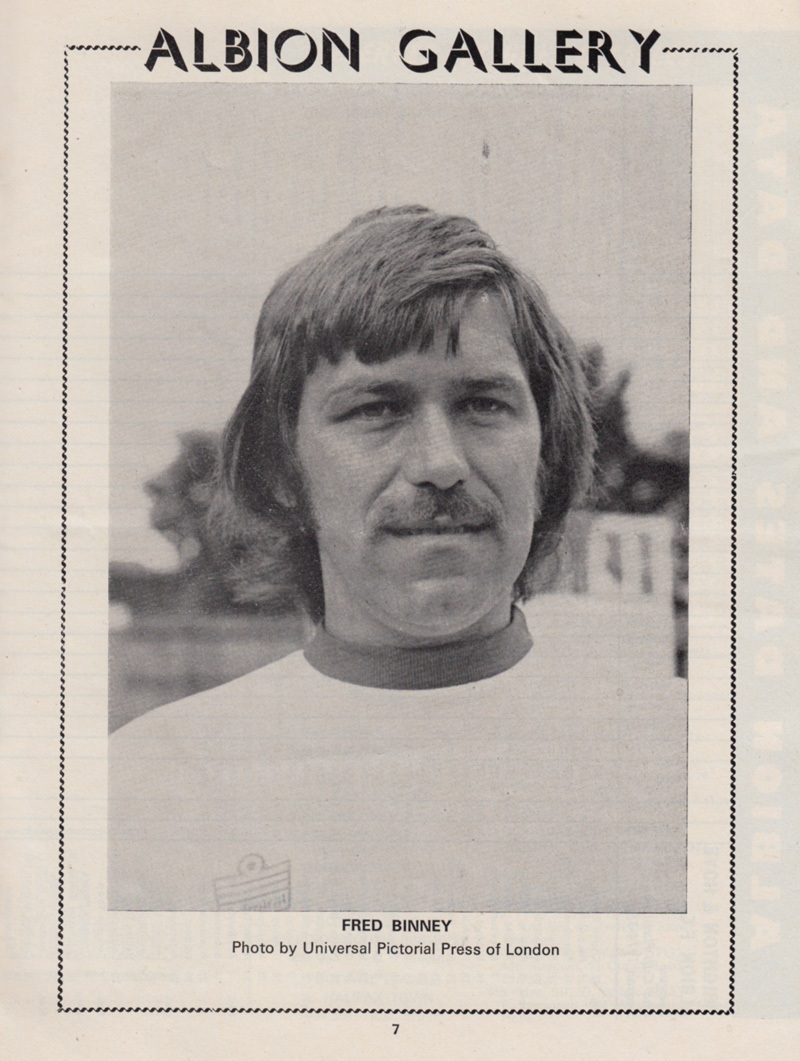
Your questions for Fred Binney

fredbinney3

Through doing The Goldstone Wrap blog, I’ve been contacted by Fred Binney’s son Adam. As many of you know, Fred was the Brighton team’s goal poacher supreme in the mid-1970s, hitting 23 League goals in 1975/76 (all but five at the Goldstone) before losing his place to the Ward-Mellor partnership the following season.

Adam says his dad is “retired now and spends as much time on his narrow boat with my mum as possible. He’s invited to go back to Brighton to walk the pitch every year and loves it when he has the time to get there. Apart from that he stopped coaching Plymouth Uni this season, But I suspect he misses it.”

His son also adds “he is not really interested in being lauded and doesn’t look for any kind of adoration. He doesn’t really like the attention, but he does love Brighton & Hove Albion and remembers his time there fondly.”

I asked if Fred was willing to do an interview with questions from Albion fans, and he was. So, if anyone has any questions for Fred, or thoughts on him as a player, please add them as a comment or email them to seagulls@me before adding .com at the end.

Thanks!

Tagged

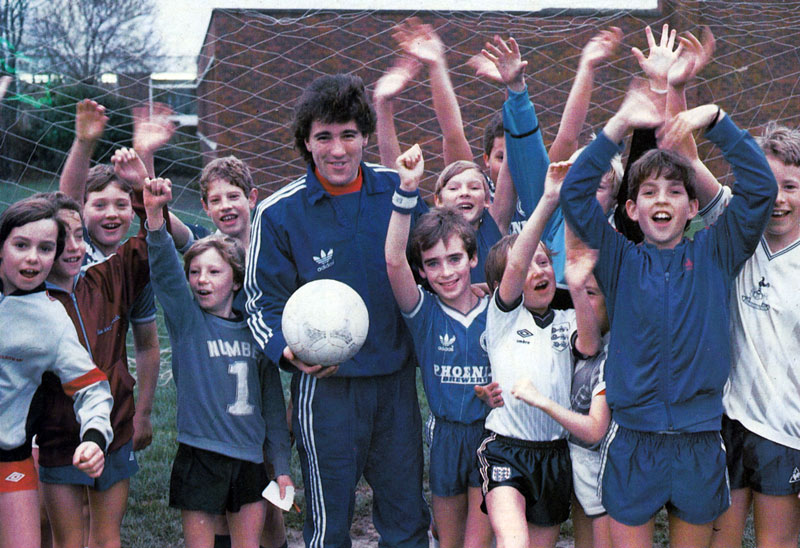
Dean Saunders gets a taste for coaching

deansaunders

From the Brighton v Reading programme from 1986/87:

“I go into schools every couple of weeks through the season,” says Dean. “I usually do my coaching sessions with Steve Penney and we enjoy it. They are always very keen and they always try their best. We concentrate mainly on the more positive sides of the game. Passing, taking on players and shooting on goal. That sort of thing. Steve and I have got our routine worked out now. We always end the session with a game, which the kids enjoy. The only trouble is they are pretty quick into the tackle! Steve plays for one side and I play for the other. It’s a good laugh, but we’ve learnt not to do too much dribbling now. We just get it up to the front men and let them get on with it.

Will those be the Wolves tactics for the match at the Amex?!

Tagged ,

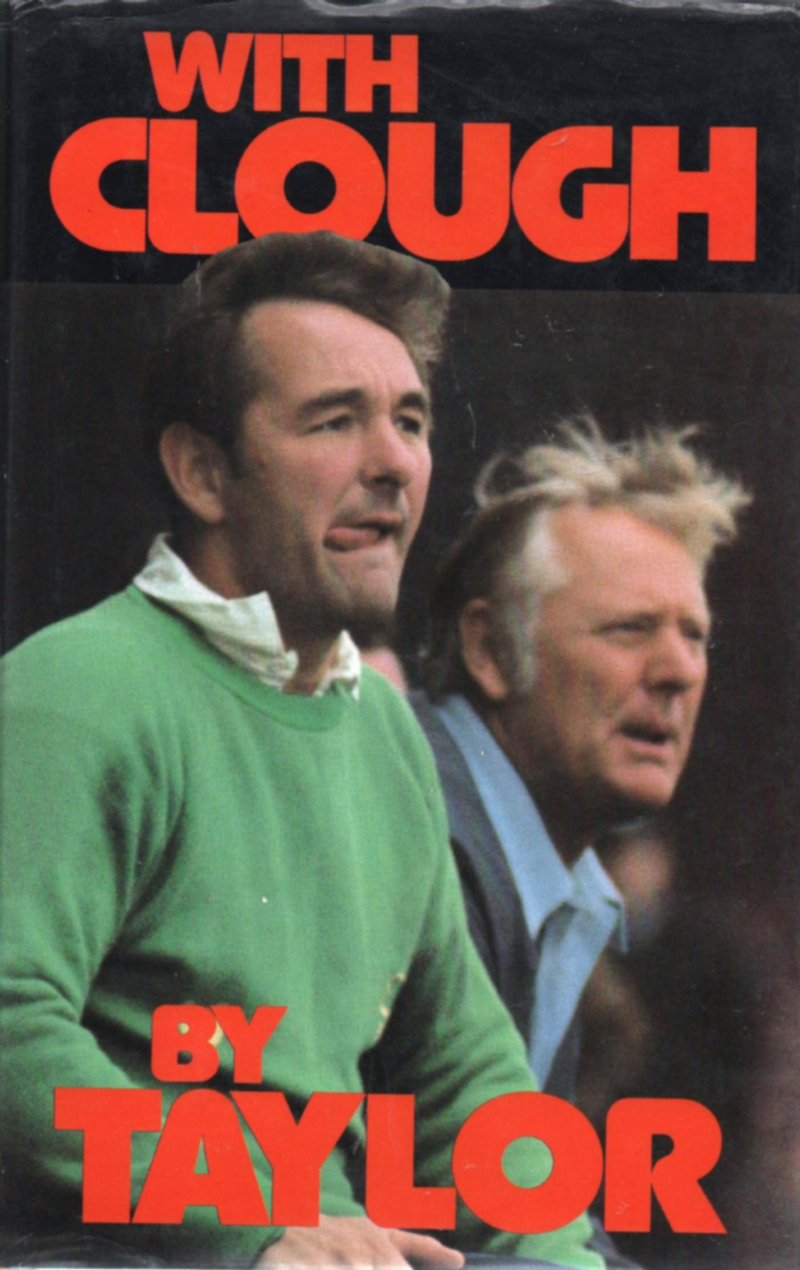
With Clough By Taylor: The Peter Ward Story

withcloughbytaylor

Fascinating extract from this book by Peter Taylor first published in 1980:

I wish Peter Ward had signed for us earlier. I saw Ward slotting straight into Woodcock’s position, with Trevor Francis striking from midfield; everything about the deal looked right, yet everything went wrong.

I had signed Ward for Brighton from Burton Albion – a deal that came about through appointing Ken Gutteridge, Burton’s manager, as a coach at Brighton. He told me, ‘I’ve two or three players at Burton who are good enough for the Third Division. They are Ward, Corrigan and Pollard. Clubs have looked but turned them down. Now will you have a look?’ I sent my assistant manager Brian Daykin, who watched them in an away match and gave the thumbs down. Gutteridge, though, persisted and said, ‘You must rate me to have fetched me all the way from Burton to Brighton so at least give me the satisfaction of seeing these three for yourself.’

There was no answer to that, so I went to Burton and watched them in the second leg of the FA Trophy semi-final against Buxton, whose centre-half was Peter Swan, the old England player. Swan gave Ward a hard time and Burton lost, but I still thought, ‘Yes, he’ll do.’ Burton played at Maidstone four days later and I took Brian Daykin with me. He’d seen Ward once and voted no; I’d seen him once and voted yes, so it seemed a good idea to watch him together. The pitch was bad; Burton, who had turned up with a scratch side, were bad; and Ward was bad – yet he still showed a few class touches, enough to make him worth a £4,000 gamble.

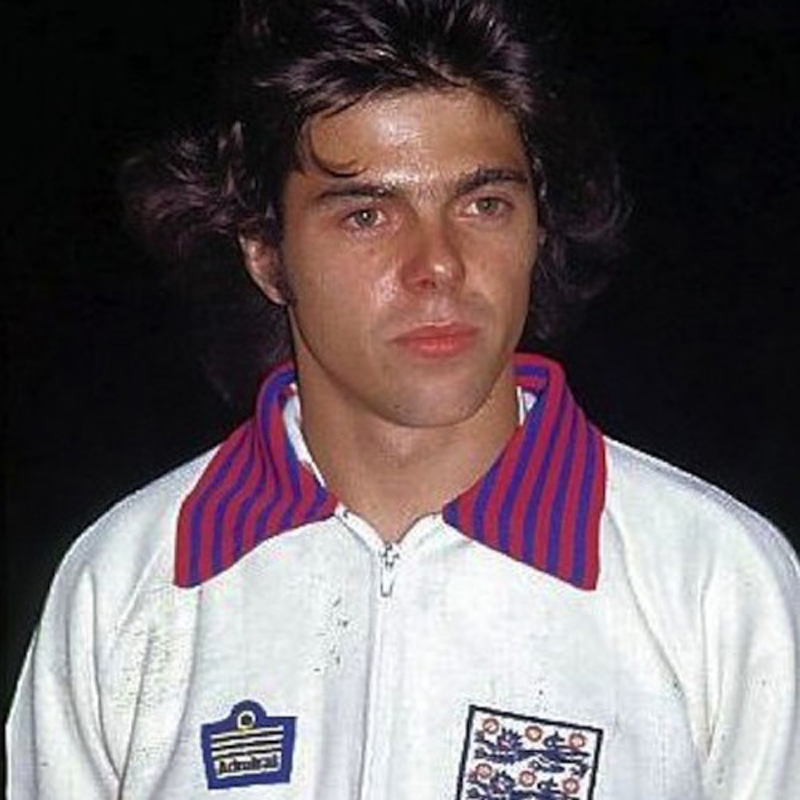
peterward-england

Ward has scored a hat-trick for England Under-21s and had a place in the full England squad but I don’t think he’ll realise his full potential because of inconsistency. Yet I like him. He is very good with his back to goal because he can turn and lick defenders and finish. That’s a rare quality – sticking it in the net.

I thought he would be good value for Forest at £300,000, the price I agreed with Brighton chairman Mike Bamber on the night before leaving for a European Cup tie in Romania. The signing was arranged for the day after our return but, shortly after landing, I heard a story that Derby were hoping to exchange Gerry Daly, their Irish midfield player, for Ward. Efforts to contact Alan Mullery, Brighton’s manager, were unsuccessful, which made me suspicious. Then Brian, for the first time in our partnership, doubted my judgement and asked, ‘Are you right about Ward?’

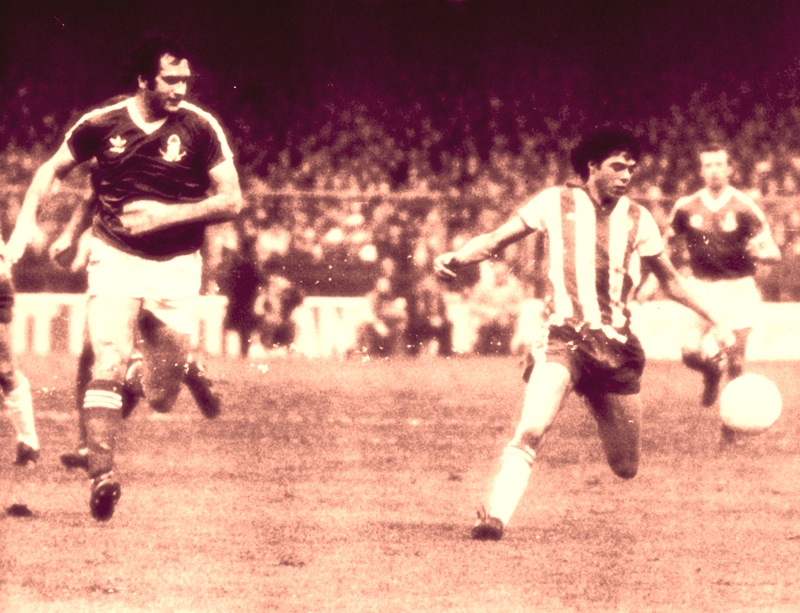
I felt floored and insulted. ‘Right?’ I shouted. ”I’ve got every detail about him except his fingerprints. I’ve bought him once; I’ve played him. He’s tried and tested. I know him as well as I know you’ – and with that, I left the ground. Brian, on seeing my conviction and eagerness to complete the deal, then got in touch himself with Mullery and Bamber but found them no longer anxious to sell, because Ward was returning to form. He played at Forest in November and gave a dazzling display in Brighton’s 1-0 win. This was our first home defeat in the League for fifty-one consecutive matches, stretching back to April 1977. Mullery said afterwards, ‘You couldn’t have him for £600,000.’

ward-forest-odessa

Tagged , , , ,

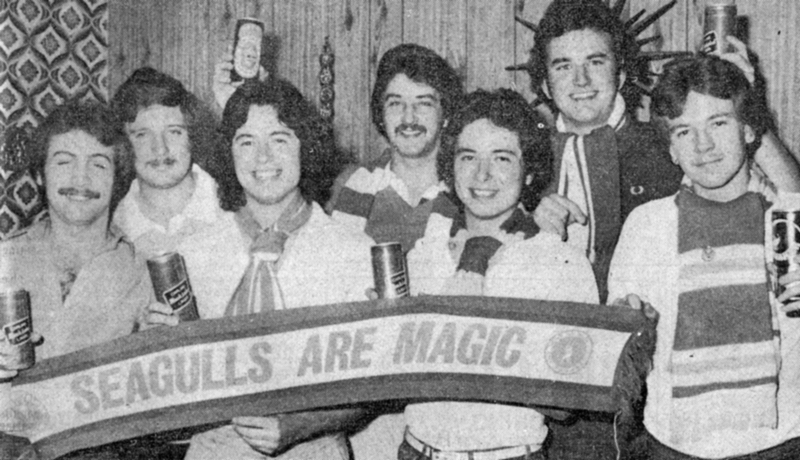
The lads who gave Seagulls their name

seagullschant

(left to right): Peter Warland, Derek Chapman, John Bayley, Jeff Walls, Kevin Bayley, who is twin brother of John, Lee Phillips and Stevie Smith.

A brilliant story from the Argus ‘Division One Here We come’ supplement in 1979:

Albion are called the Seagulls because of Crystal Palace. The group who dubbed them the Seagulls begrudgingly give their arch-rivals a little credit. But we have traced the lads who thought up the name and, as the revelry over promotion continued, they explained how it all began.

The Seagulls were christened with liberal swiggings of beer on Christmas eve of 1975. Christmas festivities were in full swing in the Bosun pub in West Street, Brighton. A group of Albion fans were analysing their vocal failings after a visit to Crystal Palace and decided how to put things right. Said Jeff Wells of Bowring Way, Brighton: “At Selhurst Park the Palace supporters started chanting ‘Eagles’ and the volume was so loud that we could not sing anything louder than them.”

The cry Dolphins never roll easily off the frenzied lips of even the most ardent fan – even when your team was getting the better of Crystal Palace. The Albion have always tried to develop the seaside theme and in pre-war days were known as Shrimps. Many would suggest the nickname was rather appropriate: they were rather small fry and inclined to be gobbled up by the Football League’s big fish. Added to that, Gillingham were also known as the Shrimps, which complicated things. The re-named Dolphins was intended to develop the local link as the Brighton town crest has them, but it never had popular appeal.

Jeff Walls had the marine connection in mind at this Christmas booze up, when he queried: “What do you call those birds down the seafront?” His mate Lee Phillips chanted “Seagulls” and then the nickname was out. It soon spread around the pub, a favourite meeting place for fans. By February the terraces were picking it up and by the end of the season it caught on good and proper. The police had given a helping hand, as well. A crackdown on behaviour in the North Stand led to migration to other parts.

The chant of Seagulls had the Albion soaring to new heights… and it left Rob Pavey, now commercial manager with a Dolphin-sized headache. The fervour from the terraces had to be kept up with. Already one sports shop in Brighton was selling Seagull scarves. Said Ron: “We had a whole lot of stock with Dolphins on it and really all I could do was ditch it. Alan Mullery gave scarves and things like that to children’s homes and we concentrated on the Seagulls.”

Said Derek Chapman, one of the group who gave them the name: “We didn’t really mean to give Albion a nickname. All we were trying to do was have a go at Palace and find a chant that could drown their fans.”

Now, as they toast the Seagulls, with lager, and Newcastle Brown of course, they can admire the Seagull emblem which they helped put on Brian Horton’s jersey. Said Jeff’s mum: “I said at the time that maybe the new name would bring them good luck. Now look at them in Division One.”

Nowadays, Derek Chapman is a director at the club. Also, as mentioned before on this blog, despite what the article says, the club were never known as the Shrimps.

Tagged

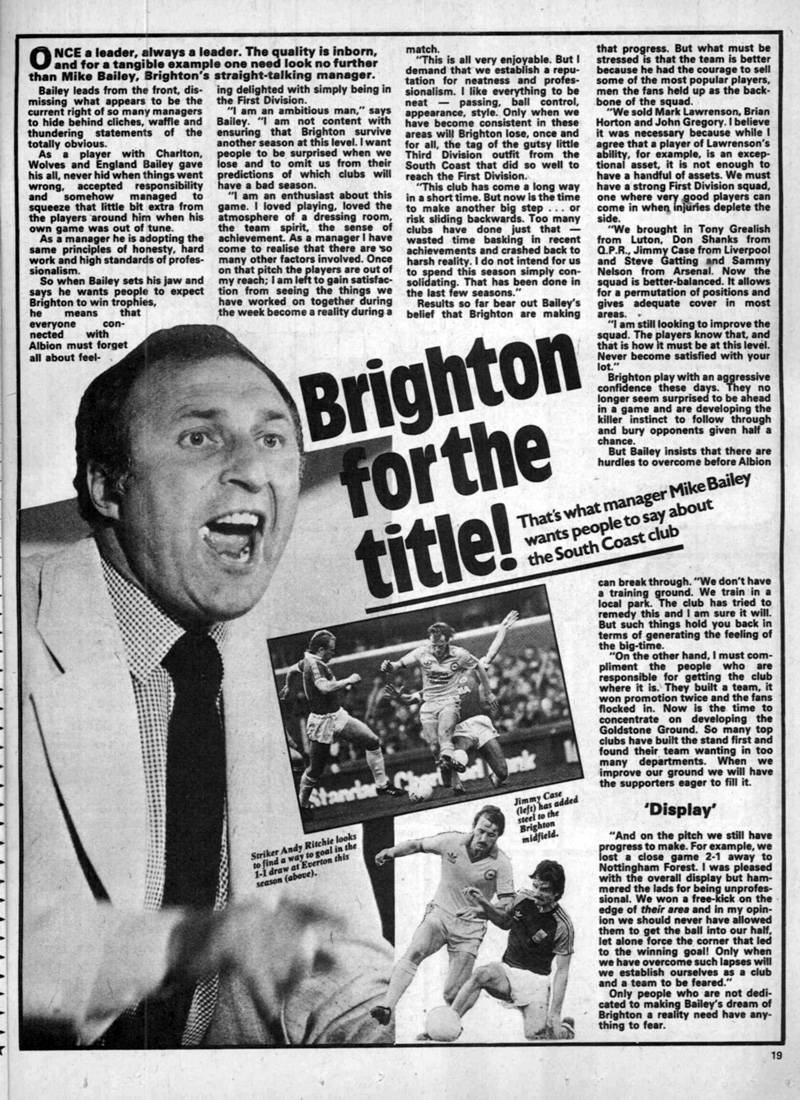
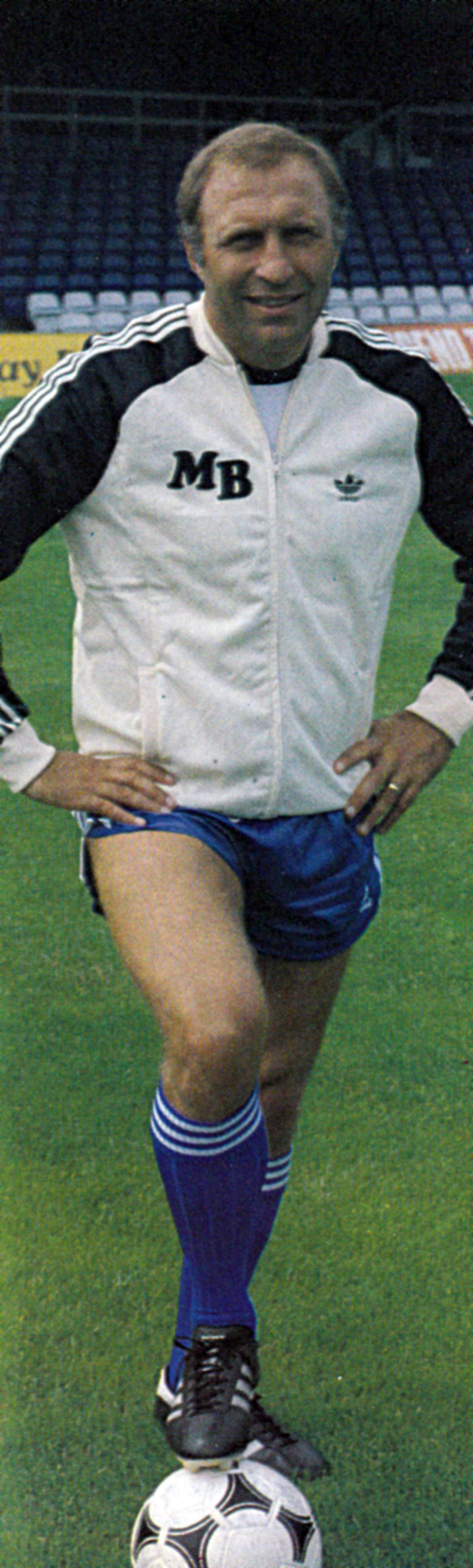
Mike Bailey: Brighton for the title!

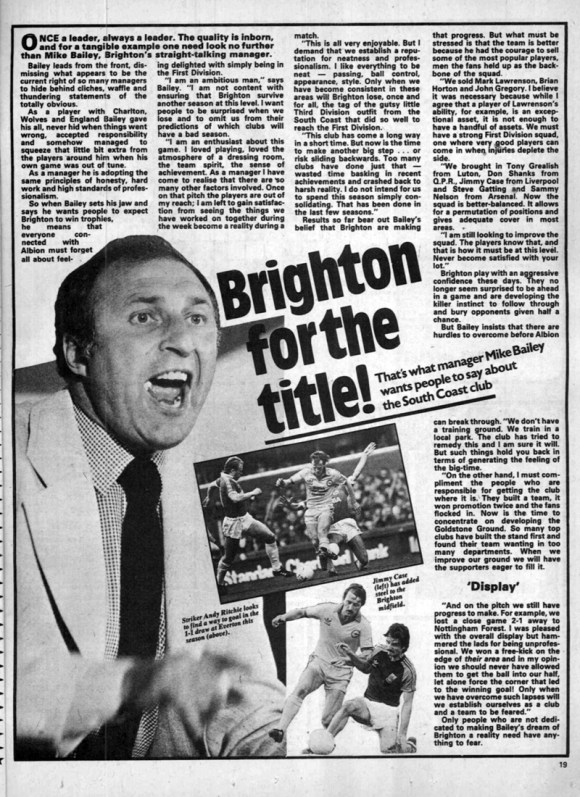
Many thanks to Chris Oakley from The Football Attic for scanning this article from Shoot! Magazine from November 1981:
mikebailey

It may seem fanciful to talk about the title in relation to a club that eventually finished in 13th position but the club seemed to be in good shape in 1981/82. Brighton and Hove Albion were fifth in Division One in late September following Andy Ritchie’s winner at Wolves. It was the club’s highest ever league placing. In December, the Seagulls were still soaring high, getting to sixth spot after a 2-0 win against Southampton at The Dell. A place in Europe beckoned.

Said Bailey:

“I am an ambitious man. I am not content with ensuring that Brighton survive another season at this level. I want people to be surprised when we lose and to omit us from their predictions of which clubs will have a bad season.

I am an enthusiast about this game. I loved playing, loved the atmosphere of a dressing room, the team spirit, the sense of achievement. As a manager I have come to realise there are so many other factors involved. Once there on that pitch the players are out of my reach; I am left to gain satisfaction from seeing the things we have worked on together during the week become a reality during a match.

I like everything to be neat – passing, ball-control, appearance, style. Only when we have become consistent in these areas will Brighton lose, once and for all, the tag of the gutsy little Third Division outfit from the South Coast that did so well to reach the First Division.

We sold Mark Lawrenson, Brian Horton and John Gregory. I believe it was necessary because while I agree that a player of Lawrenson’s ability, for example, is an exceptional talent, it is not enough to have a handful of assets. We must have a strong First Division squad, one where very good players can come in when injuries deplete the side.

We brought in Tony Grealish from Luton, Don Shanks from QPR, Jimmy Case from Liverpool and Steve Gatting and Sammy Nelson from Arsenal. Now the squad is better balanced. It allows for a permutation of positions and gives adequate cover in most areas.”
mikebailey2

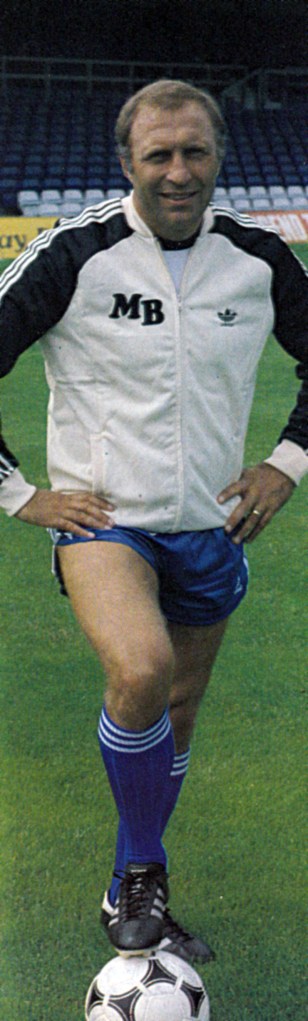
In an unusual managerial swop of sorts, Bailey had been appointed at the Goldstone in June 1981 from Charlton Athletic, with ex-Brighton boss Alan Mullery eventually taking over the vacancy at Charlton.

The new Albion boss certainly made Brighton a hard team to beat by mid-November 1981, with only two League defeats by then. A surprise 1-0 victory was even recorded against Tottenham Hotspur at White Hart Lane in October, thanks to Michael Robinson’s goal.

‘Don’t concede away from home and try to nick a goal’, seemed to be the Bailey plan. The very cautious, defensive tactics he employed may have made the Albion a force to be reckoned with, but it bored many supporters who had been used to the free-flowing, attacking football played under his predecessor Alan Mullery. Only Liverpool attracted over 20,000 to the Goldstone before Christmas.

The return fixture against the Reds in March 1982 was the high noon of Bailey’s spell as Brighton manager. A backs to the wall display led to a famous 1-0 win at Anfield against the European Cup holders, with Andy Ritchie getting the decisive goal and Ian Rush’s goalbound shot getting stuck in the mud! The club stood eighth but the wheels came off thereafter with ten defeats in the last fourteen matches. With the club safe from relegation, Bailey had been persuaded by supporters at a fans forum to get the team playing a more open, attacking game.

And with that, the genie was out. The team was never the same solid, defensive force under Bailey’s reign, in this or the following campaign, and were never again lording it in the top half of the top division. If Bailey had stuck to his guns, and not listened to the fans, would the club have enjoyed a UEFA Cup place at the end of 1981/82?

What is clear is that it was important to keep the supporters on side, as gate receipts were the lifeblood of the club. The days of Sky Sports and big television money for top division clubs had not yet arrived. Falling attendances at the Goldstone had led to concern from the board. While many blamed the ‘boring football,’ in the Shoot! article, Bailey saw it more to do with a bigger problem, that of the club’s infrastructure:

“We don’t have a training ground. We train in a local park. The club have tried to remedy this and I’m sure they will. But such things hold you back in terms of generating the feeling of the big time. On the other hand, I must compliment the people who are responsible for getting the club where it is. They built a team, won promotion twice and the fans flocked in. Now is the time to concentrate on developing the Goldstone Ground. When we build our ground we will have the supporters eager to fill it.”

Tagged

The Goldstone Staff Photo 1979

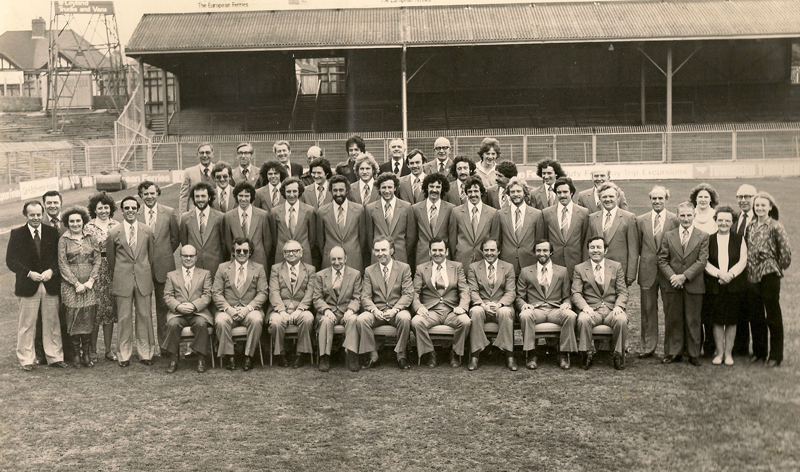
I received an email from the son of Fred Woolven with this intriguing photo attached:

staff1979

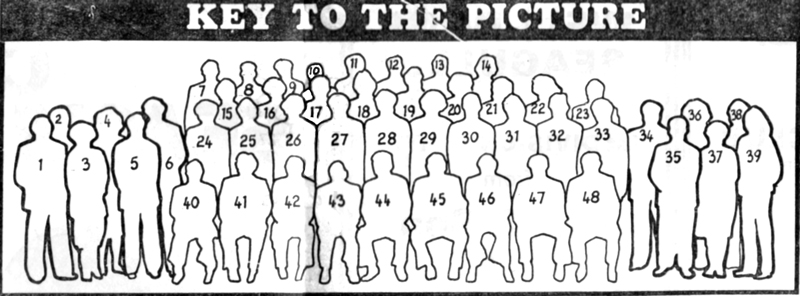
The photo also appears in the Argus supplement ‘Division One Here We Come’ from 1979, along with this useful key to the Albion family:

1979staffkey

The manager, the players, the board capture all the limelight as Albion soar to success. But there is more to the Goldstone than that. Many people work away, unnoticed, in the background, to ensure that the Seagulls take wing. Here we present the Goldstone team in full, from chairman Mike Bamber to tea lady and cleaner Hilda Bennett, who has been producing the match day cuppas for many a year now.

1. Tony Millard. Freelance journalist, Tony, became programme editor and announcer at the Goldstone this season.
2. John Shepherd. Ex-Albion player, John, is now the youth team manager, having had spells in local soccer management. He has also managed both the Sussex County FA side and Sussex County League Southwick.
3. Joan Shipp. She is promoter of the Seagull Lottery, which brings in £250,000 a year for the Albion. She came to the Goldstone five seasons ago from the Sussex Sunday League, along with commerical manager Ron Pavey.
4. Jeanne Carter. She has been with the Albion for about three years and is secretary to manager Alan Mullery and club secretary Ken Calver.
5. Mike Yaxley. Ex-Brighton, Hove and Sussex Grammar School teacher, Mike, is in his second spell with the Albion. He was on the coaching staff from 1968-73, became a sales rep, and managed Eastbourne united and is now physiotherapist.
6. Ken Craggs. Former teammate of manager Alan Mullery in Fulham days, Ken came from Craven Cottage early last year and is assistant manager.

Half-Million Pound Team
Here is the nucleus of the commercial staff who help with the Albion’s fund raising schemes which bring in about half-a-million pounds a year. They are:
7. Bill Phillips.
8. Fred Woolven.
9. John McNichol.
10. Ray Woodford.
12. Allan Williams
13. Bill Allfrey.

11. Duncan Perry. Assistant to groundsman Frankie Howard.
14. Paul Burton. Assistant to maintenance man Sam Capon.
15. Nigel Williams. Assistant secretary Nigel came to the Goldstone from Fulham 12 months ago.

Players:
16. Peter Ward.
17. Mick Kerslake.
18. Paul Clark.
19. Malcolm Poskett.
20. Gerry Ryan.
21. Peter O’Sullivan.
22. Peter Sayer.

23. Frankie Howard. Goldstone groundsman Frankie is an ex-Albion player who played in the 1958 promotion winning side.

Players:
24. Ken Tiler.
25. Gary Williams.
26. Chris Cattlin.
27. Martin Chivers.
28. Andy Rollings.
29. Graham Moseley.
30. Mark Lawrenson.
31. Teddy Maybank.
32. Eric Steele.

33. George Aitken. George hails from the North-East, having played for Middlesbrough and Workington and later managed Workington. He was brought to the Goldstone by Peter Taylor as coach.

34. Glen Wilson. He captained Albion’s promotion winning side of 1958 and is now kit man.

35. Sam Capon. Maintenance man Sam used to run is own business, but now he is the odd-job man who does what ever needs to be done.

36. Jackie Harriott. Has been with the commercial staff for 18 months assisting with fund-raising.

37. Hilda Barnett. She is the cleaner and on match days she is tea lady.

38. Arthur Mates. Latest addition to the fund-raising staff working on the new Wishbone Lottery.

39. Shirley Holland. Accountant and bookkeeper.

40. Ken Calver. Club secretary, Ken was previously with Charlton. The promotion celebrations saw him develop an unexpected talent for singing.

41. Alan Mullery. The ex-Fulham and England skipper who stepped into the Goldstone hot seat and despite having no managerial experience, has taken the club to its finest hour.

42. Herzi Sless. Club doctor.

43. Harry Bloom. The vice-chairman of Hove Motors and has now broadened his interests by becoming a hotelier.
44. Mike Bamber. The man who has masterminded Albion’s rise to glory, having made his money as a property developer.
45. Tom Appleby. Director Tom lives in Isfield. He is a farmer and a talented seven-handicap golfer.
46. Dudley Sizen. A director who runs a farm near Lindfield and has two plastics factories in Kent.
47. Brian Horton. The Albion skipper, whose initial attempt to get into professional football failed, has proved his abilities as a player and leader in the best possible way, with success.
48. Ron Pavey. Commercial manager, Ron has been the key to providing cash to carry Albion to success. He came to the Goldstone with experience of fund-raising as secretary to the Sussex Sunday League.

Out of the 48 here, Fred is the only one still employed by the club!

Tagged ,

Great Albion kits: 1985/86 Away

stevegatting2

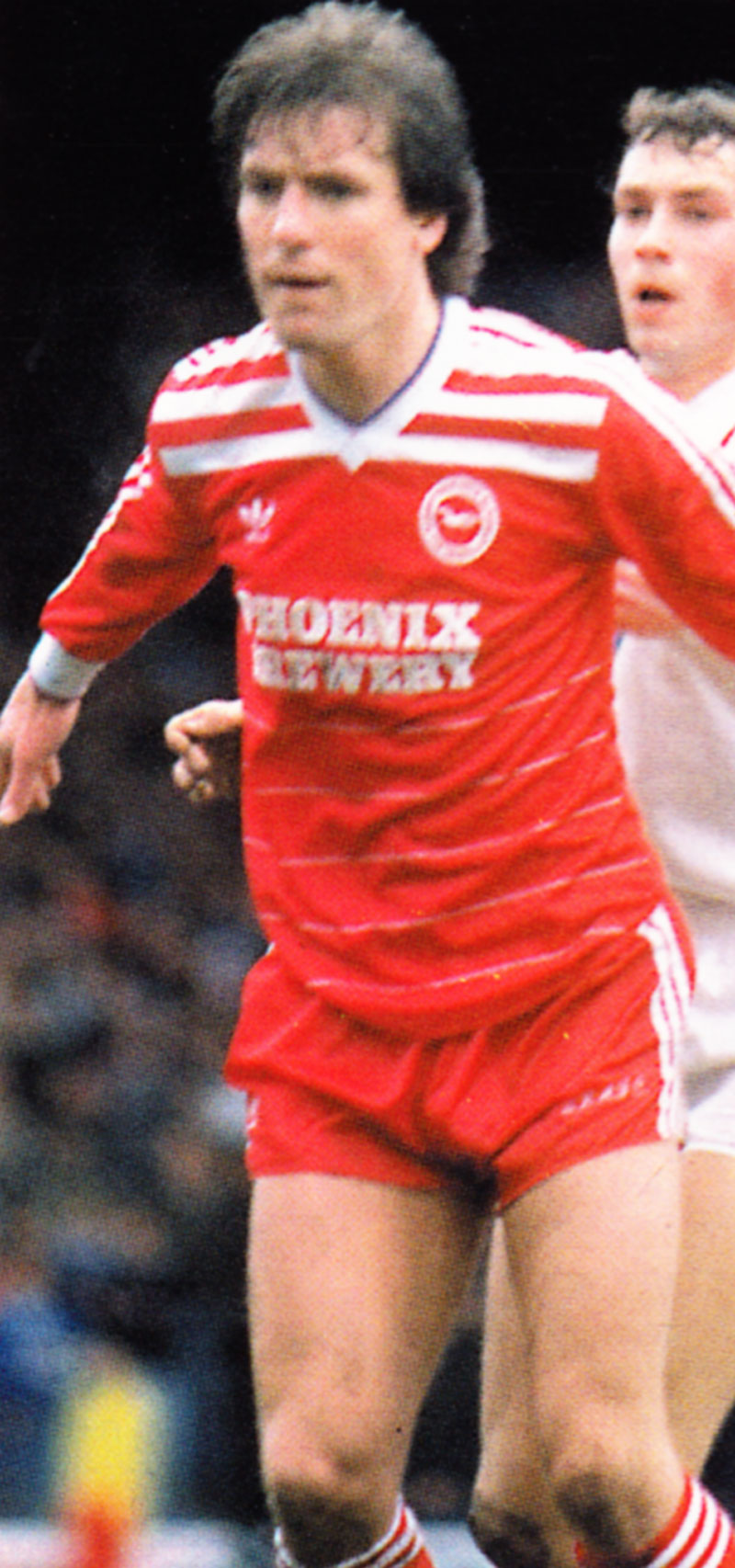
Worn in the famous snowy away tie in the FA Cup against Peterborough in February 1986, this striking kit is fondly remembered by Brighton fans of that time.

It had three large bold horizontal stripes on the side of the collar, a design that was unique to us despite all the other clubs that adidas manufactured shirts for at the time.

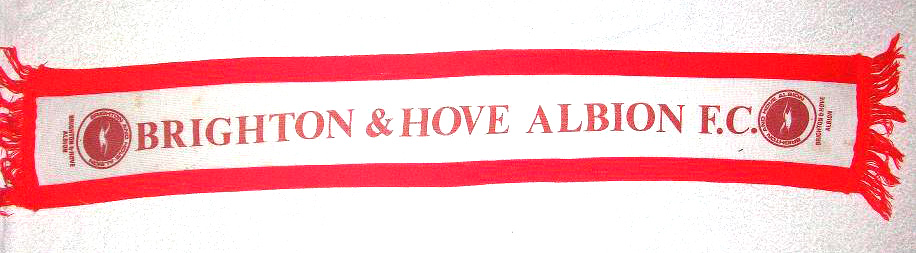
At the Peterborough game, the freezing Albion fans were given free red scarves. Brighton fan and North Stand Chat user Stat Brother has kept his in very good nick:

redscarf

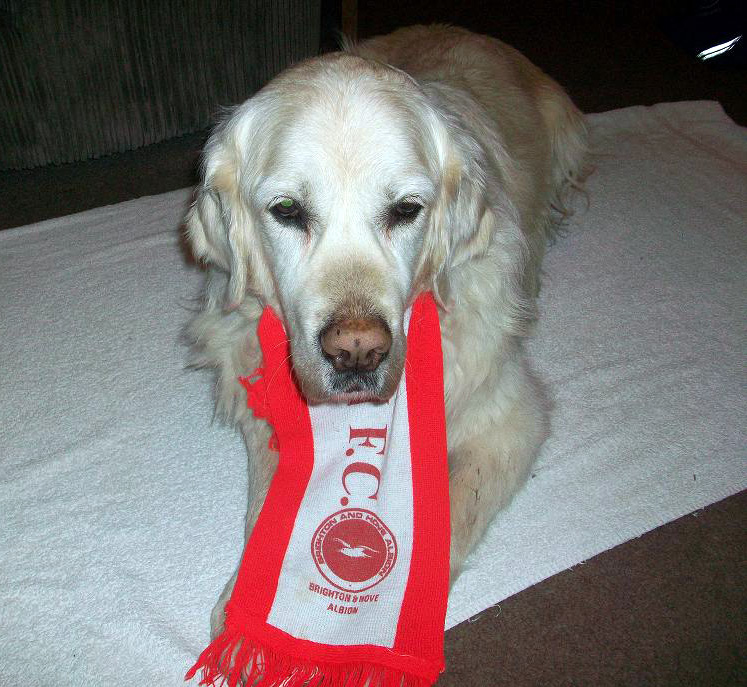
… although with Stat Brother’s six month old golden retriever Lionel around, it may not last forever!

redscarfdoglionel

A season later, NOBO replaced Phoenix Brewery as the sponsor for the Albion shirt.

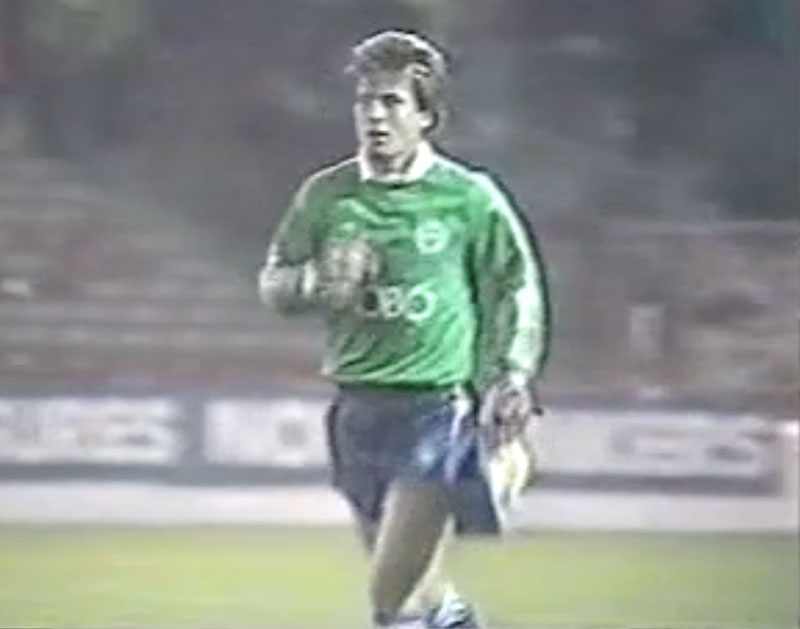
As for Steve Gatting, he continued to serve well in whatever shirt he was asked to play in, red, blue, or even the green goalkeepers’ top:

stevegatting4

A retrospective piece in the Albion programme in 1994/95 stated:

It has not been often in modern times that a player has served Albion continuously for ten years – Steve did so in defence or midfield and battled back from a bad pelvic injury to play again when many might have thrown in the towel. He was, indeed, a versatile player but he never scored an FA Cup goal for Albion – in fact, he once played for much of a League Cup match in goal when, at the City Ground, he replaced the injured Perry Digweed between the posts for Albion and he didn’t do at all badly.

Tagged , , , ,

Did Albion really want promotion in 1976?

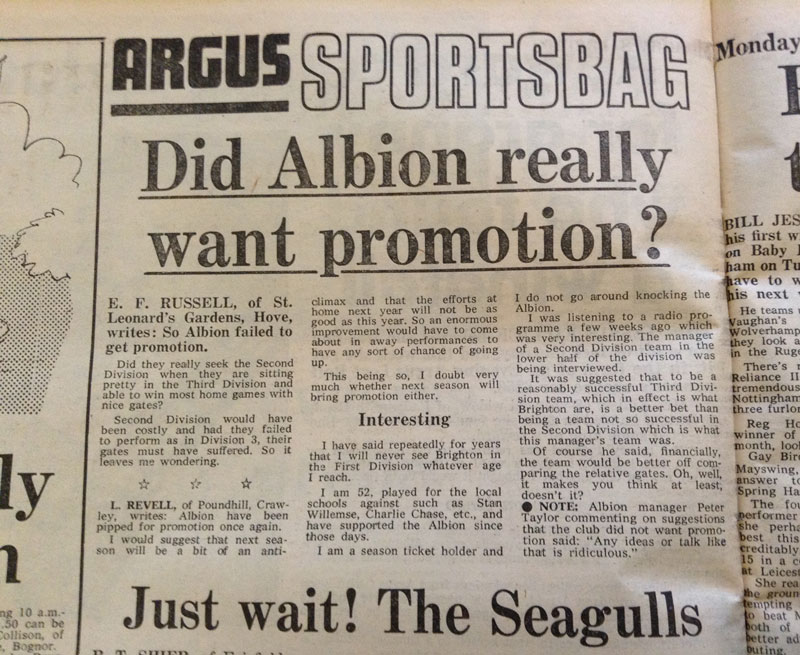
Some angry and sceptical letters from E.F. Russell and L. Revell in the Argus in April 1976, as Brighton’s promotion push in Division Three peters out with one win in their last eight matches, despite rookie striker Peter Ward hitting six goals in that period.

promotionletter

L. Revell (no relation to Alex?) wrote:

“Albion have been pipped for promotion once again. I would suggest that next season will be a bit of an anti-climax and that the efforts at home will not be as good as this year. So an enormous improvement would have to come about in away performances to have any sort of chance of going up. This being so, I doubt very much whether next season will bring promotion either. I have said repeatedly for years that I will never see Brighton in the First Division whatever age I reach.”

The understandable sense of frustration from season ticket holders such as him was probably not helped by the Argus reporting a few weeks before on the eve of the busy Easter schedule:

There is no specific promotion target for Albion manager Peter Taylor. With just four matches remaining, he is content to play each game as it comes. With the big game at Millwall coming up on Friday, Taylor said he was confident of a result. “But I am not thinking about a target. We shall continue to play our best.”

In the end, Albion were tonked 3-1 at the Den.

Happily, Revell’s pessimism was misplaced. In fact, 1976/77 went down as one of the most golden, most celebrated seasons in Albion history, signalling the start of the glory years. As formidable a home record as Brighton had in 1975/76 (W18 D3 L2), they improved their Goldstone record the following campaign (W19 D3 L1). In 1976/77, they also significantly enhanced that wretched away record, from W4 D6 L13 to W6 D8 L9.

However, it was to take all the motivational drive of Alan Mullery, and the deposing of top scorer Fred Binney (who got a mere five away League goals in 1975/76), to bring this to fruition. Peter Taylor had long departed, but he did also achieve promotion in 1976/77, with Brian Clough, of course, as Nottingham Forest sneaked back into Division One. Glory was just around the corner for them too.

Tagged ,

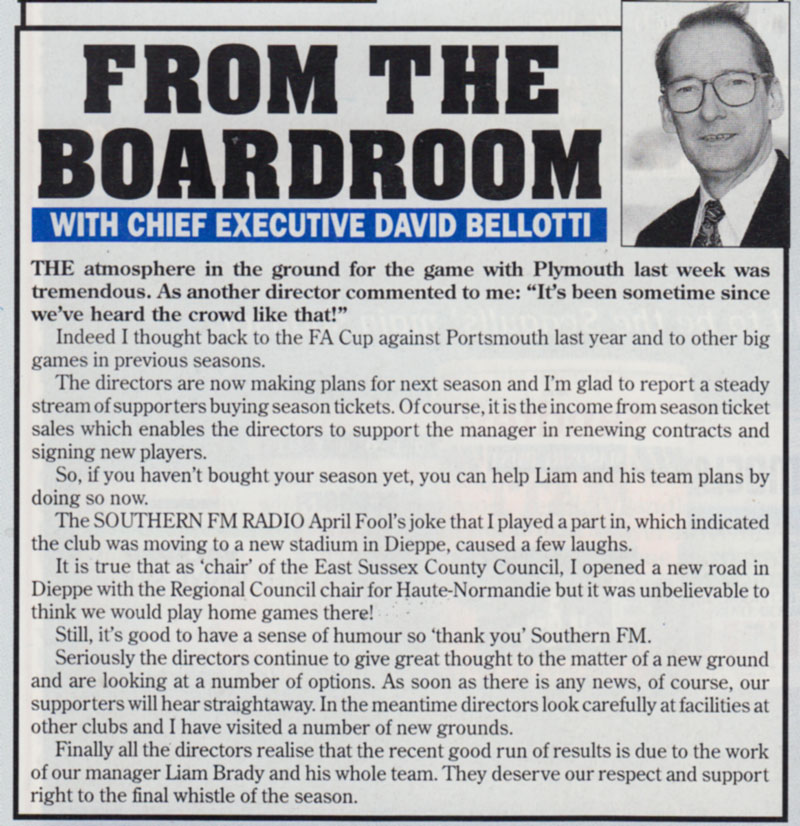
April Fool’s Joke: David Bellotti says new stadium is in Dieppe

bellotti

Ha, bloody ha. Evidence that Bellotti possibly didn’t take fans’ sensitivity about moving home fixtures away from Brighton particularly seriously. This is from the match programme against Swansea in April 1994.

And yet, was he once ‘one of us’?

In the programme against Doncaster in April 1997, the last at the Goldstone, the chief executive regales tales of how he became a fan:

My first visit to the Goldstone was back in 1973. Having moved to Sussex to a new job and being mad on football at the time the first thing I did was buy a season ticket. Sitting in the back row of E block the stadium looked huge. The first game I watched at the Goldstone we lost 2-0 to Bournemouth. Later that season Brian Clough arrived and we were knocked out of the Cup 4-0 by Walton and Hersham and thrashed in the League at home by Bristol Rovers 8-2! The horror of those games remain in my memory. However we did get revenge in 1989 beating Rovers 2-1 to secure promotion to the Second Division. My greatest memory was the very first game in the First Division against Arsenal at the Goldstone. There were tears of joy all around me in the stand. We may have lost 4-0 but we were there.

Ian Hine is doing a wonderful joke scanning Albion programmes from yesteryear at www.seagullsprogrammes.co.uk. He has also started a thread on Bellotti’s missives on North Stand Chat.

Tagged

Brighton’s ‘Preston mob’

prestonmob1

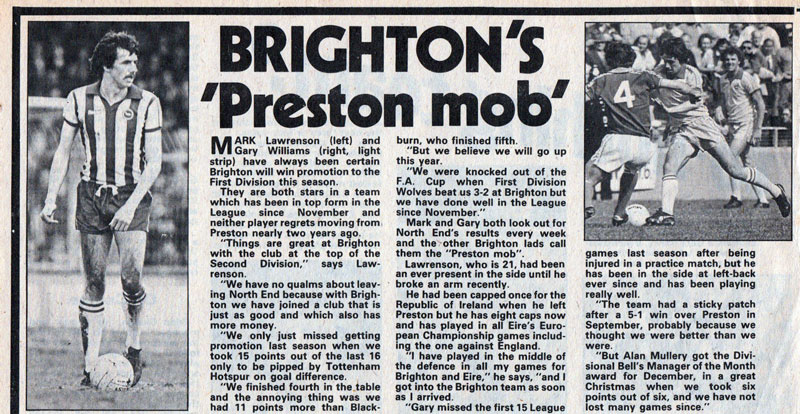
From Shoot! Magazine in 1978/79:

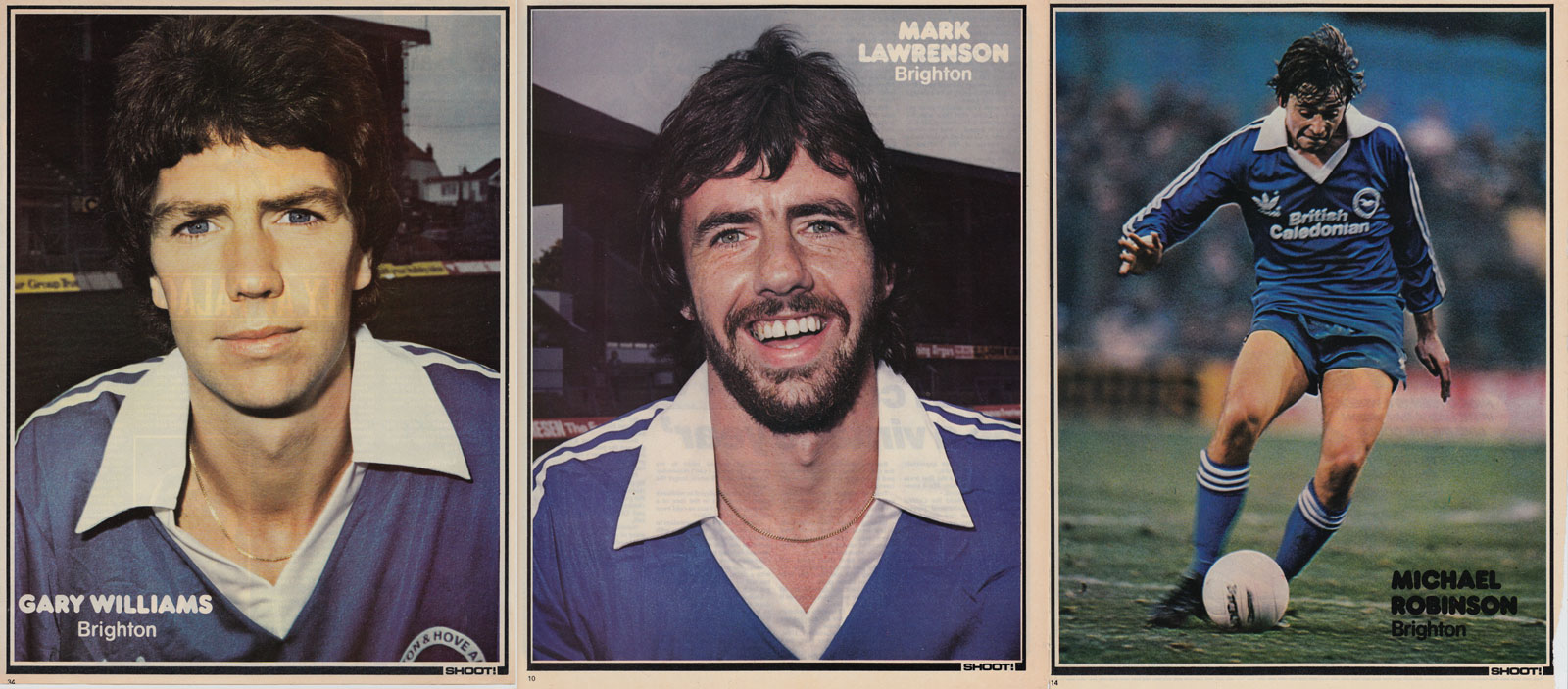
Mark Lawrenson and Gary Williams have always been certain Brighton will win promotion to the First Division this season.

They are both stars in a team which has been in top form in the League since November and neither player regrets moving from Preston nearly two years ago.

“Things are great at Brighton with the club at the top of the Second Division.” says Lawrenson.

“We have no qualms about leaving Preston North End because with Brighton we have joined a club that is just as good and which also has more money.

“We only just missed getting promotion last season when we took 15 points out of the last 16 only to be pipped by Tottenham Hotspur on goal difference.”

“The team had a sticky patch after the 5-1 win over Preston in September, probably because we thought we were better than we were.”

“But Alan Mullery got the Divisional Bell’s Manager of the Month award for December, in a great Christmas when we took six points out of six, and we have not lost many matches since.”

In 1978/79, just like Lawrenson and Williams at Brighton, bustling centre-forward Michael Robinson had hoped to get into the First Division himself with Preston. However, the Lilywhites suffered a terrible start. Nevertheless, he was sure he had nothing to fear. As he said to Football Handbook (Part 31): “I can’t see how we are going to go down. We have only the poor sides to play.” Speaking of the 5-1 score at the Goldstone, he added, “There’s nothing to fear because only Brighton have hammered us.” Preston eventually finished seventh, helped by winning the return match at Deepdale 1-0 in February.

robinsonpreston

The Preston holy trinity was complete when Williams and Lawrenson were eventually joined at the Albion in the summer of 1980 by Robinson who arrived at the Goldstone via an unhappy spell at Manchester City.

prestonmob1600

Tagged , ,