Author Archives: Goldstone Rapper

John Gregory – happy by the sea

johngregory5

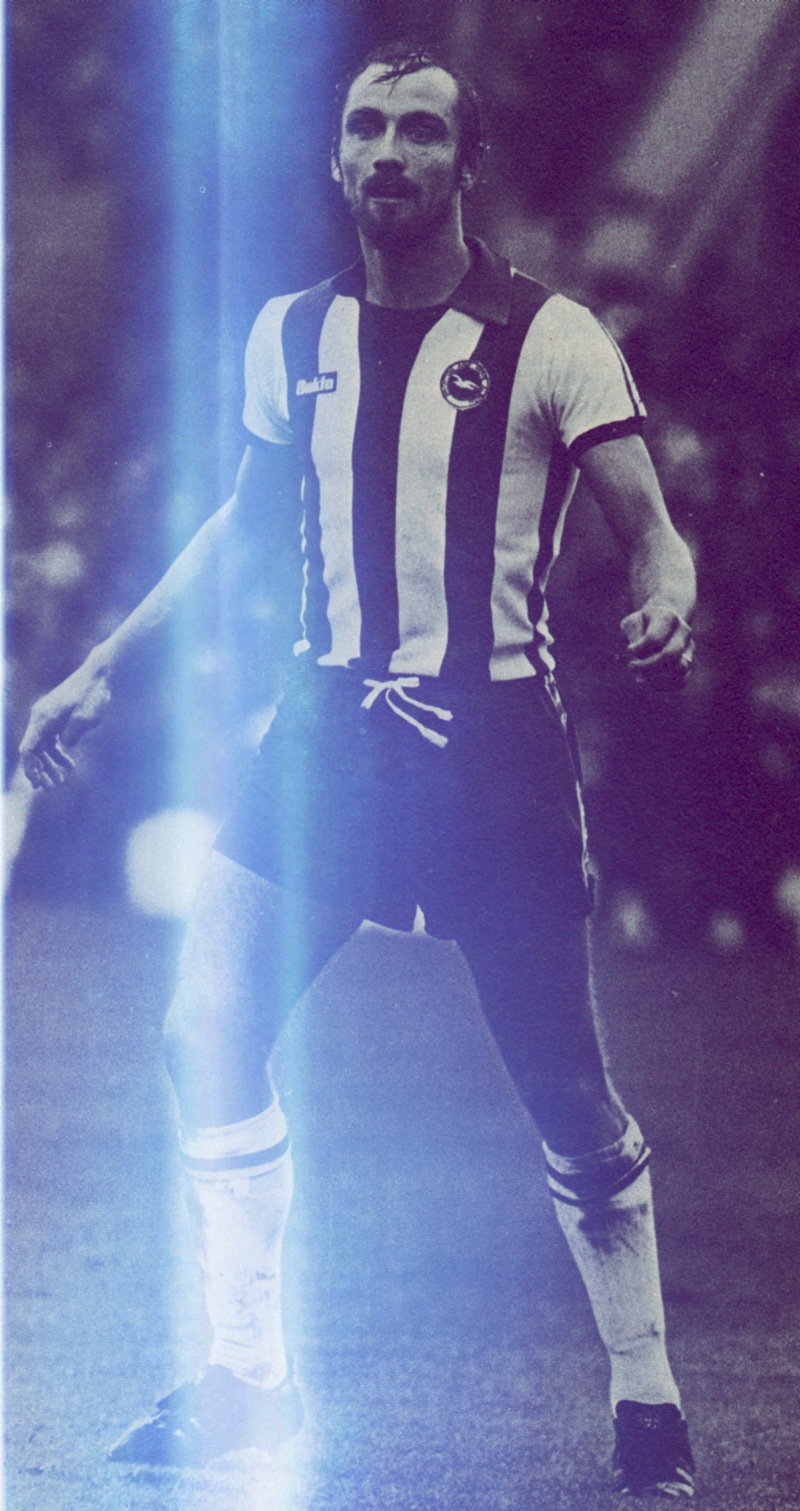
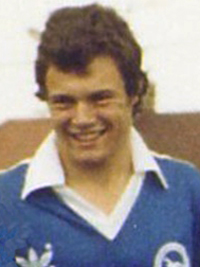
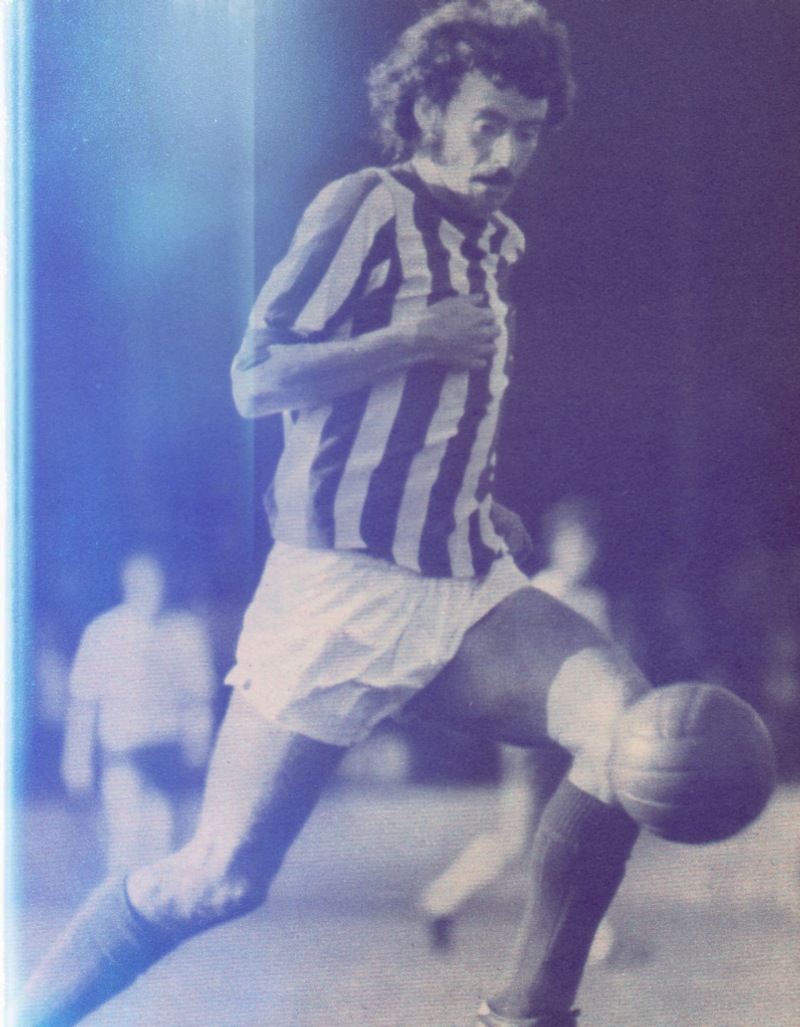
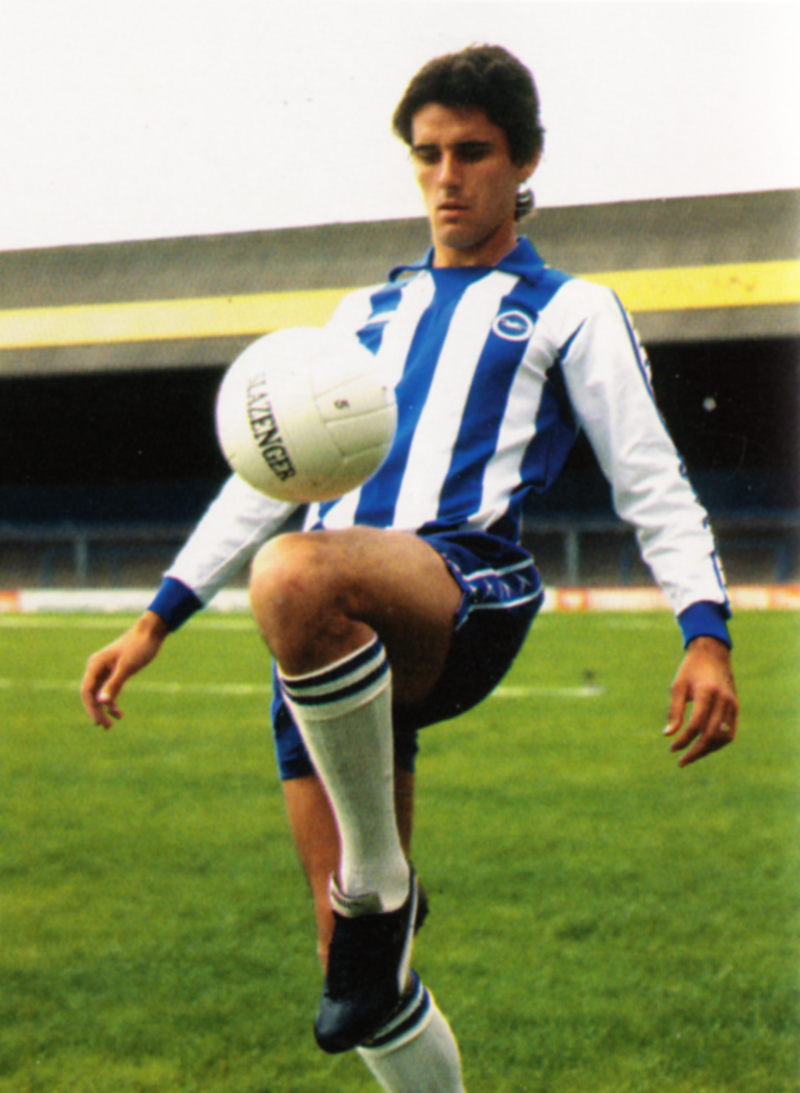
He may have blotted his copybook with Brighton fans years later, when seeking to sign Gareth Barry as Aston Villa manager without compensation, but there is little doubt that John Gregory provided sterling service to the Seagulls in those first two seasons in the First Division. A strong tackler, Gregory added steel and good positional play, as well as the ability to go on overlapping runs. His high transfer fee, then a club record, was worth every penny.

The £2S0,000 Brighton paid for Aston Villa defender John Gregory was almost chicken feed compared to some of the close season deals.

Says Gregory: “Once Trevor Francis went for a million pounds, everybody else’s price shot up by £50,000 to £100,000.

“Even so, the money I cost was •lot for Brighton, and you’ve got to put things into perspective. Costing that kind of money obviously causes a• little bit of burden but I hope not too much of one for me.

‘It took me •a long while to decide whether I would come here or not but that was nothing to do with the club or the terms they offered me. It’s just that my wife was brought up in the Midlands end had never travelled more then an hour away from there before. So her happiness, end that of our two children, had to be taken into account.

“They all like it down here though – and the kids love being by the sea. They’re treating it as •a permanent holiday.”

Gregory knows, though, that it won’t be any holiday for his team in the First Division during this crucial season of 1979-80. They’ll have to fight for their right to play in the top sphere.

“From what i’ve seen so far, I think we’ll certainly hold our own. We haven’t got many players with First Division experience but having seen how the other half lives in the lower regions of the Second and Third Divisions, I think our won’t went to give up life in the First too easily.

“I’ve probably got the most experience of the First Division. But Gerry Ryen’s been there, too. And we have Chris Cattlin end Graham Moseley, who know what it’s like.”

Gregory hopes that hell finally find himself a settled position at Brighton.
.
“At Villa, they seemed to regard me as a• player who could do •a job anywhere. I played full-back, central defender – even centre-forward. Now I’d like to settle at right-back.”

In his first season at the Albion in 1979/80, Gregory made 33 League appearances, all in the number two shirt, just the way he wanted.

Tagged

Captain Fantastic – Brian Horton

Loving the groovy graphic design of the 1970s? Me too!

brianhorton4

I’m unsure which football annual this article is from, but it’s a cracker. Alan Mullery talks glowingly about the qualities of his captain Brian Horton, surely the best ever skipper the club has ever had.

Try telling Alan Mullery that all you need a captain for these days is to trot out and choose ends.

For the Brighton manager’s achievement in taking the ambitious south coast club into the First Division for the first time in their 79-year history would have been much more difficult without his right hand man on the field – midfield general Brian Horton.

‘He’s got the same approach as I have,’ says the former Spurs and Fulham skipper who played 35 times himself in England’s midfield.

‘Brian’s a winner who can’t bear losing. He gets everyone else going.’

And Mullery admits that when he found Horton on the staff at the Goldstone Ground when he took over two years ago, he was happy to drop the priority item on his shopping list.

‘Before I went into management, I thought that having a good captain would be essential. Luckily Brighton had one in Brian Horton.’

As he has subsequently said, any thoughts that Mullery may have had of being a player-manager were quickly extinguished by the performances of Horton in 1976/77.

Mullery is quick to point out that it was his predecessor, Peter Taylor, who bought Horton, adding: ‘That’s just another example of the good judgment he’s brought to Nottingham Forest.’

The 29-year-old Horton was born and bred in the West Midlands at Hednesford and was inspired by watching the great Wolves sides of the 1950s from the Molineux terraces.

He’s still a fan and one of his schoolboy pals, Geoff Palmer, has played nearly 200 games for Wolves.

They will meet again in the First Division this season but while Palmer has been with Wolves since he was an apprentice, Horton’s route to the big time has been very different.

‘There were times I thought I’d never make it,’ he says. ‘My biggest fear was that I was too old.’

But after more than 200 games at unfashionable Port Vale, then in the Third Division, along came Peter Taylor to take him to Brighton for a modest £30,000.

And Brian has gone on to prove that there are as many late starters in football as in any other profession.

His goals last season were a vital factor in a promotion race which turned out to be a real cliff-hanger. But none was more important than the one which put Brighton ahead in that memorable end-of-season match at Newcastle.

The Seagulls had to win to be certain of going up and it was Brian’s goal which put them on the way when he showed typical determination and courage going in for a low diving header.

‘That was the clincher,’ he recalls. ‘It was doubly satisfying, too, because I don’t get many with my head.’

If anything pleased Brian as much as promotion last season, it was recognition by his fellow players by being named in the PFA’s Second Division side.

They weren’t asked to pick a captain but the betting is that Brian Horton would have topped the list in that category too.

brianhorton5b

Tagged ,

Draw your heroes… and get their autographs!

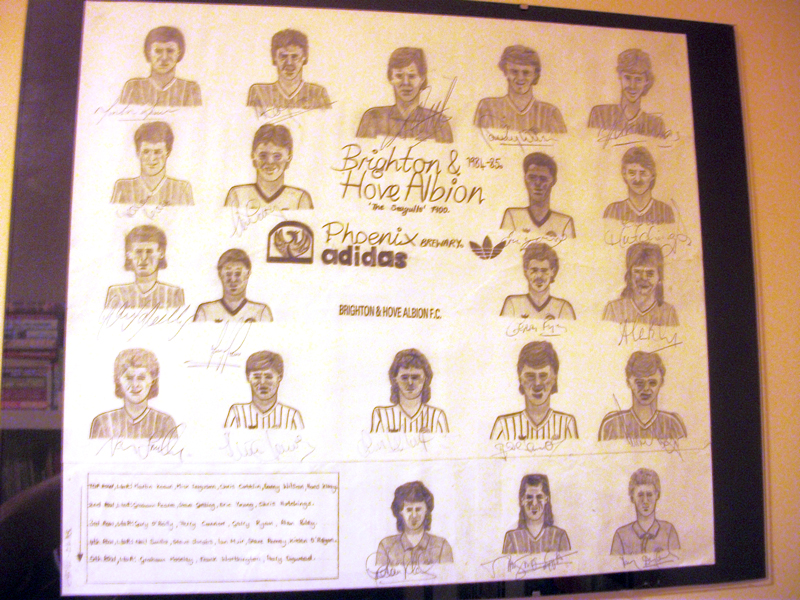
Which football fans haven’t had a go at illustrating their heroes with pencil and paper some time in their life? But not everyone was as enterprising as a young Christopher Worrall, who used his ingenuity to acquire the signatures of his heroes.

Chris sent me this photo yesterday evening:

autographs

In an attempt to stay ‘on message’, note this supporter’s respect for the commercial side of the game, with nods to Phoenix Brewery and Adidas, two great names associated with Albion in the mid-1980s. Both are highly evocative of those times and fondly remembered, unlike, say, Focus DIY in the 1990s.

Chris said:

This is my rather unique collection of Albion autographs from 1984/85. I drew the squad, rolled it up, shoved it in a tube and sent it to the Goldstone. Back it came, as requested, fully autographed and given the official club stamp.

Still to this day on my study wall, 29 years later! Keown, Ferguson, Cattlin, Wilson, Kraay, Pearce, Gatting, Young, Hutchings, O’Reilly, Connor, Ryan, Biley, Smillie, Jacobs, Muir, Penney, O’Regan, Moseley, Worthington and Digweed are all here, drawn in home, away and third kits.

A splendid, creative effort, Chris!

If, like Chris, you have self-produced Albion creations that you’ve kept (or anything else of potential interest!) feel free to email a photo to seagulls@me followed by .com

Tagged

Topps Footballer Card Collector’s Album, 1981/82

Just like FKS by the early 1980s, Topps was on the decline. The chewing gum firm’s garish bubblegum cards were a big part of many childhood memories from the 1970s, but its position was now under increasing threat. It was certainly slow get in on the sticker market that Panini was sewing up. In addition, perhaps Topps had also over-stretched itself trying to cover the whole of the Football League rather than focus on the more lucrative First Division. For instance, in 1978/79, it had rather delightfully issued eight playing card-sized ones for Brighton & Hove Albion, who were still a Second Division side. Although, for that, I will always retain a soft spot for Topps!

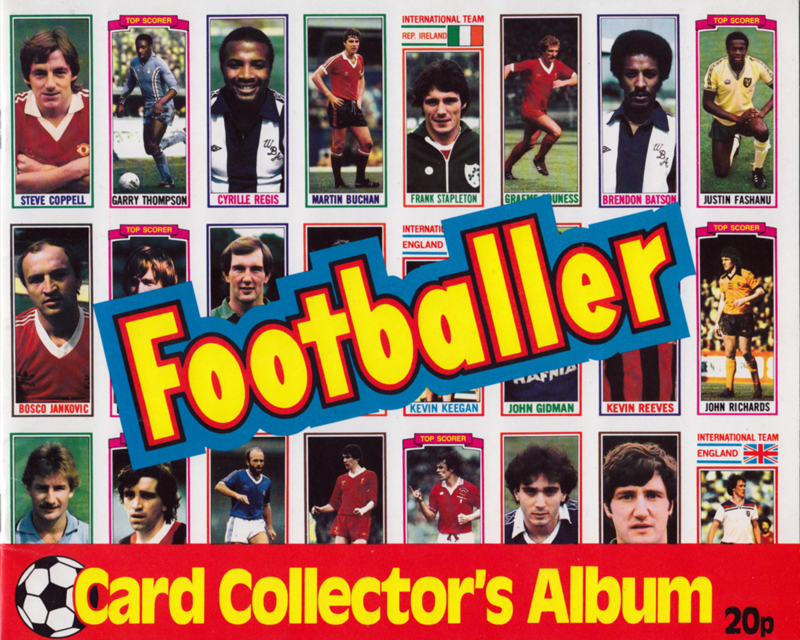
Fast-forward three seasons, and perhaps to counter the threat from Panini, Topps issued an actual album that you could glue on your cards. Here is the eye-catching cover:

topps1981

As you can see, all cards were now shrunk to cigarette card size. If you were a supporter of Arsenal, champions Aston Villa, Ipswich, Liverpool or Manchester United, you were given a full page of eleven player cards of your favourite side to stick in.

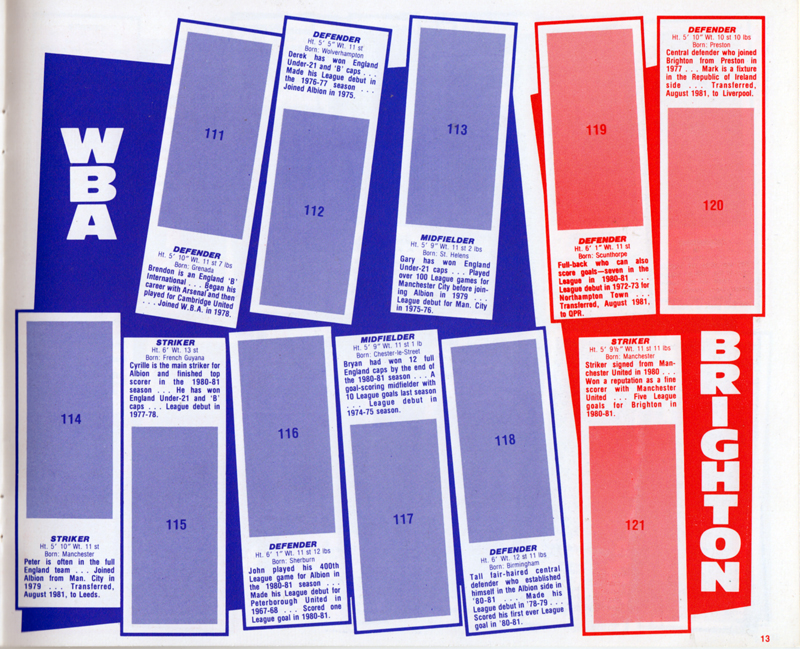
Disappointingly, as Brighton who were one of the smaller fish in the top flight, the Seagulls were only allocated three cards, and had to share their page with the ‘other Albion’, West Brom:

topps1981p3

But spare a thought for Norwich City, who were only issued with one card, of Justin Fashanu! (Actually, they were issued with another, on a 1980/81 top scorers page of all the top flight clubs. And yes, that was also Justin Fashanu!)

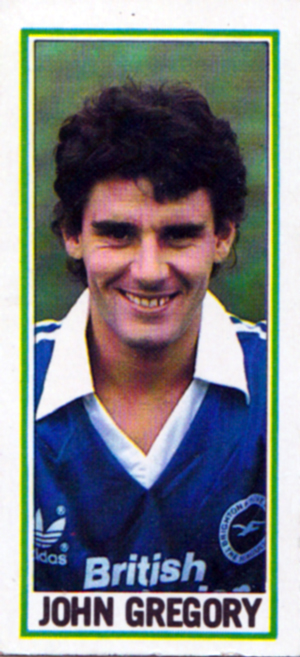
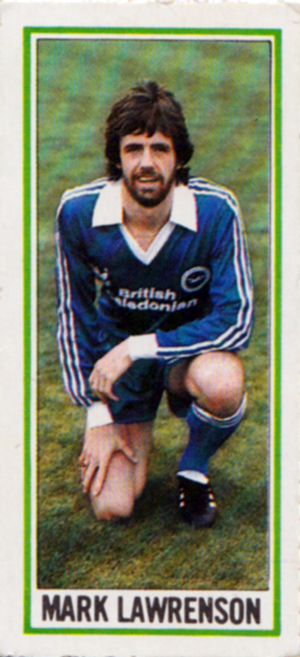
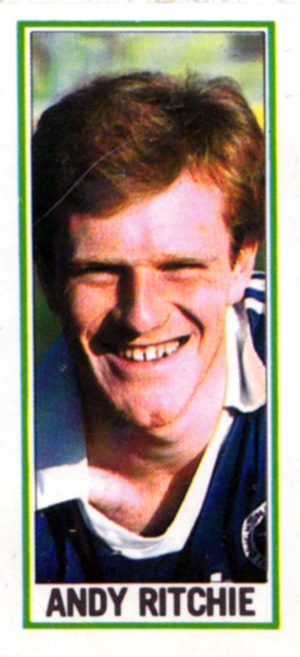
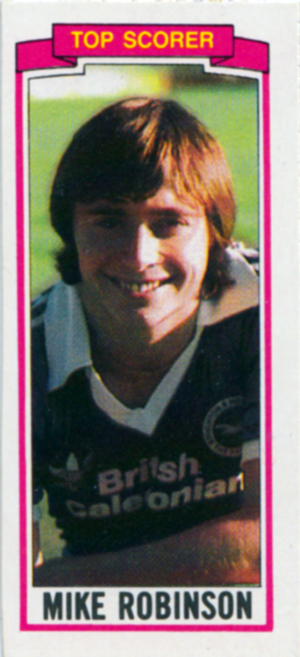
As for the actual cards, themselves, the cardboard quality was quite poor (think cereal box card) and the borders often uneven. Here are the Brighton ones. Gregory and Lawrenson both left the Albion before the season, but here they are along with Michael Robinson’s from the aforementioned 1980-81 top scorer page:

topps81-gregory

topps81-lawrenson

topps81-ritchie

topps81-robinson

Tagged , , , , ,

Why Malcolm Poskett asked Brighton for a transfer

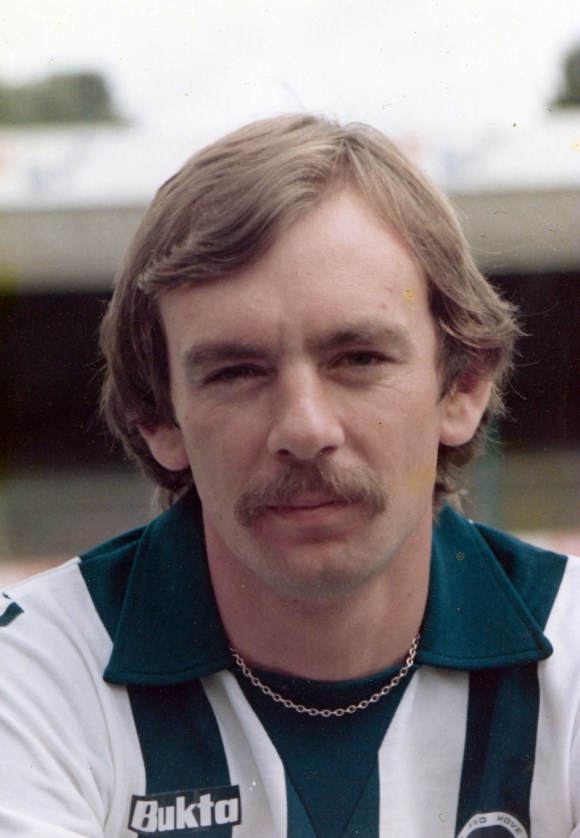
With his gold chain, classic moustache and impressive goalscoring ability, the lanky marksman Malcolm Poskett became a favourite at the Goldstone in the late 1970s, following a £60,000 transfer from lowly Hartlepool in February 1978. All this despite competition from Peter Ward and Teddy Maybank.
malcolm_poskett

With Maybank facing a cartilage operation, Poskett scored on each of his first two matches for the Seagulls, against Hull and Burnley before a cherished hat-trick at Bristol Rovers in April 1978.

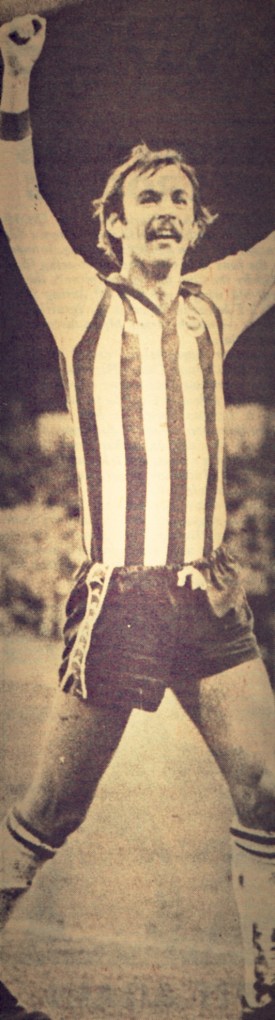
This article is from Shoot! magazine in 1978/79, when Maybank had a firmer grip of the number nine shirt:
poskett3a

Malcolm Poskett’s brilliant goalscoring has been one of the most important reasons for Brighton’s rise up the Second Division table after a poor start to the season.

Yet earlier this term, the £60,000 striker had wanted to leave the Goldstone Ground.

He explains: “I felt I was playing well enough to be in the first team, but I wasn’t getting a chance. Peter Ward and Teddy Maybank had the two striking roles and I couldn’t see how I was going to get into the team. The boss, you see, doesn’t think it works for all three of us to play in the same side. And I couldn’t see either of the other two being dropped. I asked for a transfer and I was actually on the list for a few weeks.”

But then Alan Mullery asked me to withdraw my request and a short time afterwards, I was in the first team,

“I don’t really mind who I play alongside in the forward line, but I do seem to get on particularly well with Teddy Maybank. I prefer playing with a big target man up-front. It’s the way I used to play at Hartlepool.”

“My strengths are my control on the deck, going past people to get into shooting positions.” Incredibly, Poskett is in only his second full season of League football. Having been turned down by Jack Charlton at Middlesbrough as a youngster, he got a job as a plater and played part-time for Whitby.

But he didn’t hesitate when he got another chance of League football in the 1976-77 season even though the club after him were struggling Hartlepool.

Poskett decided to give himself two years to make the grade.

His career was made, he says, by Hartlepool manager Billy Horner. “When I first went there I was a lazy player. At Whitby I just used to hang around goal and wait for the ball to come to me. But Billy made me work hard – almost to the point of exhaustion sometimes. And he told me I’d play in the First Division one day.”

If Brighton’s goal record had been a little better, Poskett would be there now, But they missed out last season because Tottenham had a slightly better margin, though the teams finished level on points.

Even so, Poskett thinks it will turn out to be only a temporary setback. He thinks this season, Brighton will prove good enough for promotion.

“I think we’re as good as anybody in the Second Division, although it’s so close, any of ten teams could go up. There’s been no outstanding side so far, but I reckon Palace will make it: “I just want to keep banging the goals in, so that I stay in the Brighton side. With three of us: competing for the two places, I never believe I’m in the side until I pull the shirt over my head on Saturday afternoon.

“I’ve set myself a target of 20 goals this season. I got 16 in the League last season — ten at Hartlepool and six in 11 full games at Brighton.

“So I don’t think 20 should be beyond me. And if the other front lads get the same, we’ll be pretty sure of a place in Division One.”

In the end, Ward, Maybank and Poskett each hit the target in the League ten times in the 1978/79 season, with Poskett’s hat-trick at Charlton in December showing him at his most prolific. Helped by Brian Horton’s magnificent tally of eleven strikes in Division Two, Albion’s goalscorers provided the perfect platform for Albion to build a successful promotion campaign to Division One.

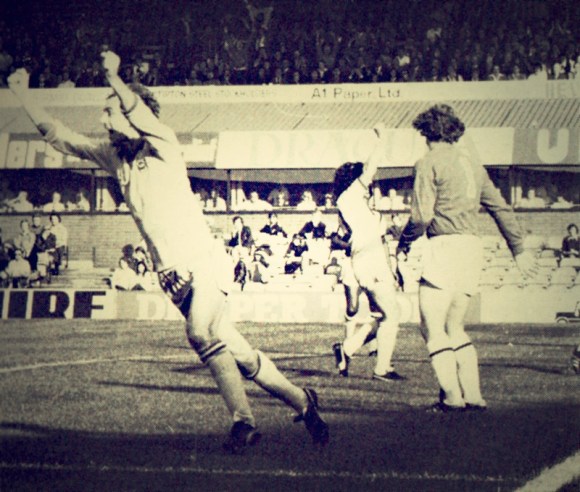
Poskett did not experience much First Division football with the Seagulls, however. A substitute in the first two matches of 1979/80, he lost his place only to return in a League Cup clash with Northampton, where he hit the winner. Spurred on by this, and Maybank failing a fitness test, Poskett was recalled for the away Division One fixture at West Bromwich Albion, where (below) he nodded in Peter Ward’s cross after 83 minutes. One First Division start, one goal. This was a very impressive ratio.
poskettgoal2

With no more appearances due to the blossoming Peter Ward-Ray Clarke partnership, Poskett was sold to Watford for £120,000 in January 1980. According to John Vinicombe, ‘Poskett went like a shot to Vicarage Road.’ There, he played his part in the Hornets’ eventual promotion to the top flight in 1982, hitting seventeen goals in 63 League games.

Poskett later had spells with Carlisle, Darlington, Stockport, and Carlisle and Hartlepool again before hanging up his boots. For a man who took a pay cut of £50 a week to play for Hartlepool in his first spell at the club, the striker had certainly grabbed his chance to play professional football.

(And if you wish to relive your days as a, erm, Posketteer, a Malcolm T-shirt could be yours from Cult Zeros).

Tagged , ,

Black day at the Goldstone Ground: Brighton v Chelsea 1983

chelsea5

According to Tim Carder and Roger Harris’ ‘Seagulls!’ book, discussing the 1983/84 season:

An anonymous supporter took out a four-page advert in the Evening Argus on 2 September, appealing for more support and, in particular, for more vocal support; he wanted the game the following day to be a fun afternoon for everyone. He should not have wasted his money – it was the Chelsea match!’

Thirty years to the day, it certainly seemed like a match to savour, the first ever Football League encounter between recent FA Cup Finalists Brighton against a resurgent Chelsea, with rising stars such as Kerry Dixon, David Speedie, Pat Nevin, Colin Pates and Nigel Spackman firing all cylinders alongside very experienced players such as John Hollins and Colin Lee (below):

chelsea4

The Blues had trounced Derby County 5-0 on the opening day of the season. However, the spectre of football hooliganism was to mar the Albion v Chelsea game. As authors Carder and Harris went on to say:

Friday night saw running battles between Chelsea followers, police and local youths; and the game was played in a brooding atmosphere before 20,874 people, 8,000 of them from London.

Played out in the sunshine, the highlight of the match for Brighton supporters was Alan Young’s spectacular banana shot after 76 minutes. Reporting in the Sunday Mirror, Pat Garrow wrote:

Chelsea were quickly in their stride and when the hapless Steve Foster handled in the box, Dixon gave the visitors the lead.

…a shaken Brighton stormed back. It started when Jimmy Case took a free kick that Niedzwiecki failed to hold and Young did the rest with a spectacular overhead kick.

Brighton’s joy was short-lived. A minute later Chelsea scored the winner. This time it was the consistent Clive Walker who squared the ball almost from the byeline across goal.

‘Keeper Digweed could only get his left hand to it and he pulled it down for Dixon to volley into the net.

chelsea1

The game was far from rough but referee Ken Baker kept bringing out his notebook.

Indeed, he showed the red card to one of the Chelsea players, which surprisingly drew fierce criticism from Brighton boss Jimmy Melia who said: “The referee was diabolical. The decision to send Canoville off for retaliation was terrible.”

But the drama did not end there. As Carder and Harris explained:

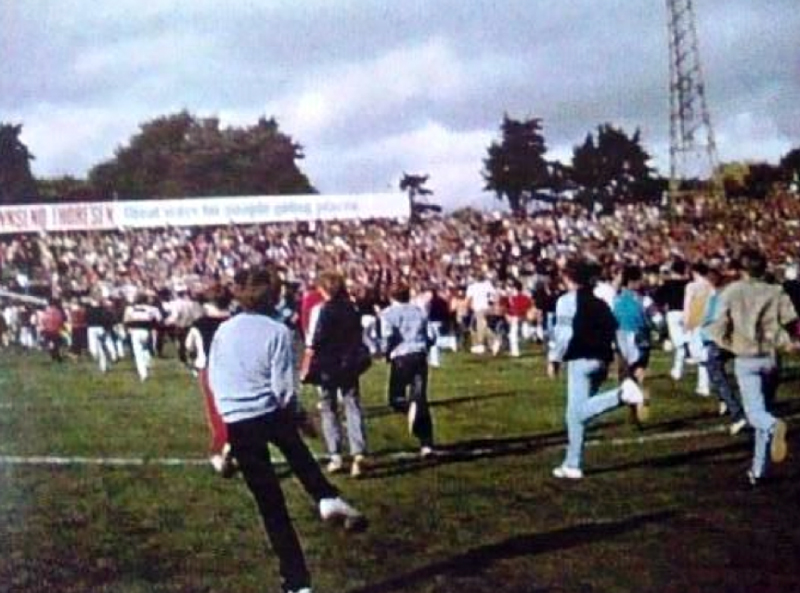
Chelsea supporters infiltrated all parts of the ground, and at the final whistle the hooligans invaded the pitch from all unfenced areas to launch a vicious attack on the hopelessly outnumbered police. By the time a police horse had managed to clear the pitch, seven constables were injured and the north goal was broken. It was the worst outbreak of violence ever seen at the Goldstone.

chelsea2a

Chelsea’s left-back Chris Hutchings even got in on the act, and was charged with threatening and abusive behaviour for swearing at police trying to clear the pitch. According to an article by Spencer Vignes in the Brighton v Sheffield Wednesday programme in 2012/13, it started when he applauded the visiting support after the match, an act interpreted by a policeman as inciting further crowd trouble. As Hutchings said:

“All I did was clap them and this copper comes over and says ‘Get off the pitch at me.’ I said ‘No’ so he said ‘get off the pitch’ again and tried to help me on my way, and I told him to ‘Fuck off’ and ran down the tunnel. Next thing I know he’s nicking me!’

By the time the case was heard at Hove Magistrates Court, Chris Hutchings the Chelsea player had become an Albion player, signing for the Seagulls in a £50,000 deal in November 1983. I’m sure his signing on fee covered the £250 fine he received!

hutchings

With Hutchings a fixture at left-back, Brighton were eager to avenge the defeat in the corresponding fixture at Stamford Bridge on the last day of 1983. It was not to be as the sharpshooting David Speedie grabbed the winner to complete the League double over the Albion.

chelsea3

Tagged , ,

Steve Foster – Match Weekly profile from 1981/82

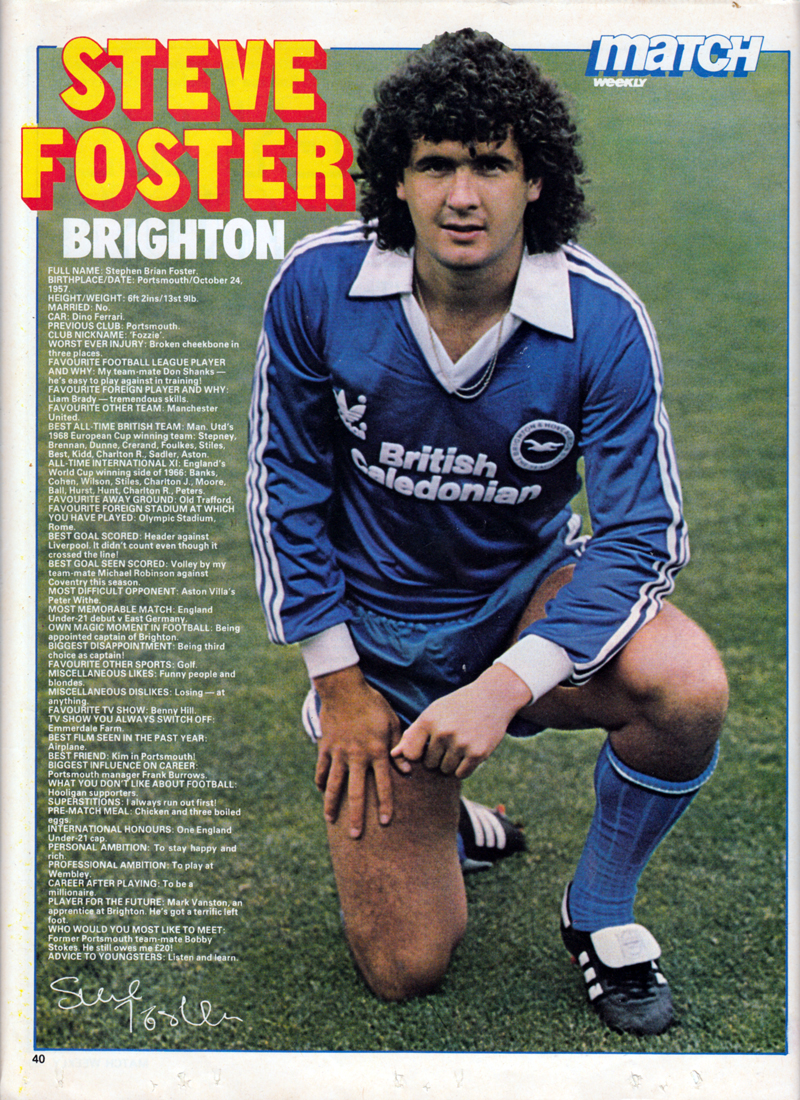
Here’s a profile of Albion skipper Steve Foster, sans headband, from Match Weekly:

stevefoster10

(Click on the image to enlarge and read the profile in full).

It mentions his best goal as a header against Liverpool: ‘It didn’t count even though it crossed the line!’ Surely if he’s referring to the one in the 3-3 draw at the Goldstone in that season, it certainly counted, even though it may not have crossed the line. Well, I don’t think it did, judging from the footage!

Also note the positive words about his player for the future: ‘Mark Vanston, an apprentice at Brighton. He’s got a terrific left foot.’ If I had been Vanston, I’d have been overjoyed to read that. According to the Middlesbrough v Brighton programme in the 1981/82 season Vanston was a:

markvanston

Steyning born youngster who is still an apprentice but averaged better than a goal a game in all his appearances in the Youth and Reserve teams for Brighton last season. Only 17 but he seems destined to make the great (sic) among a unique breed of goalscorers.

Unfortunately, he never did make any first team appearances and consequently, never had a chance to have his own Match Weekly profile…

Other than that, Foster’s was a pretty standard fare for a 1980s footballer profile, although I doubt many professional players ate three boiled eggs to go with chicken as a pre-match meal!

Tagged ,

My little Powney!

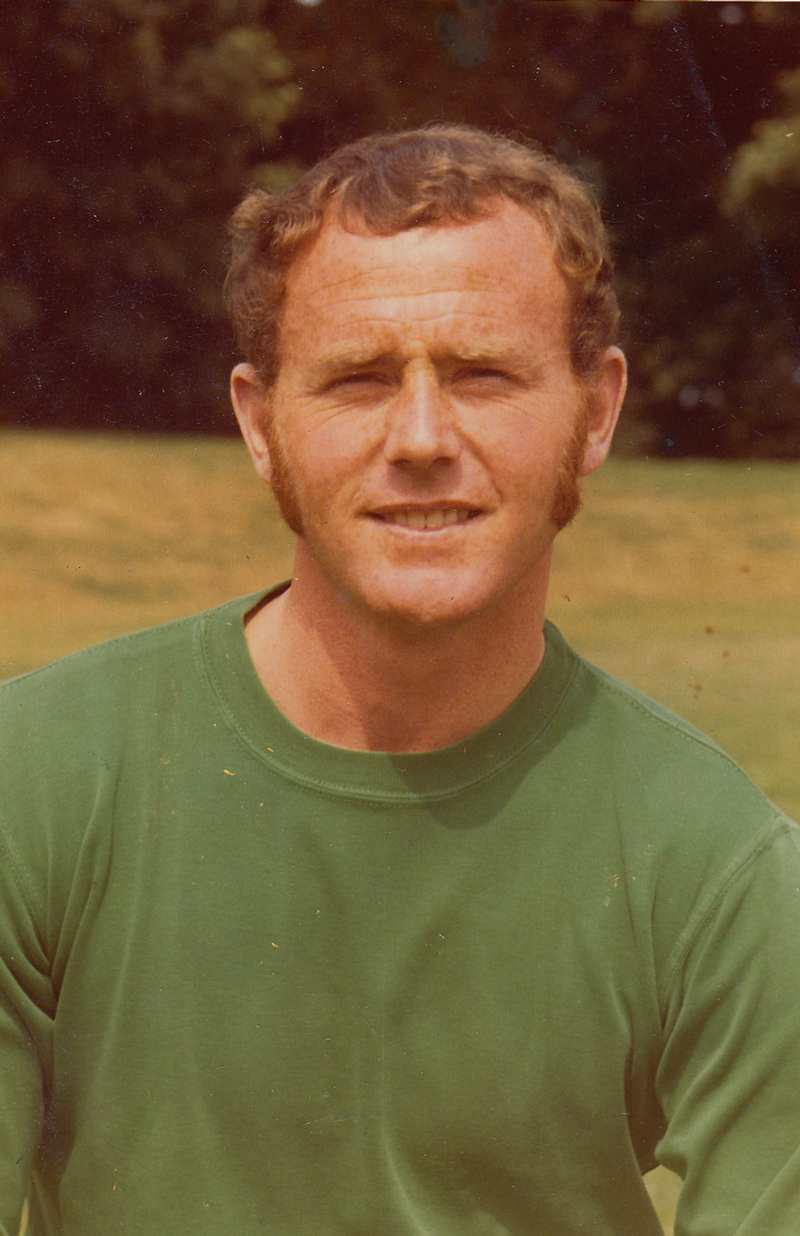
You may know him as Brighton’s long-serving goalkeeper of the 1960s and 1970s, who made up for his lack of height through his amazing agility and courage in tight situations. Or even as the keeper who let in eight goals against Bristol Rovers in December 1973 because of the shoddy defence in front of him. But did you know that after he left the club in May 1974, the 29 year-old Sussex man established himself as a midfield player for Southwick?

brianpowney1

As player-manager, he even led the club to the Sussex County title and entry into the First Round of the FA Cup. Unfortunately, it ended miserably for him at Southwick early in 1975/76. He was sent-off for violence of the tongue during his side’s visit to Wigmore. As the Evening Argus reported:

“The threat of a 28-day suspension imposed on Southwick for accumulated disciplinary points does not appear to have calmed the tempers of some of their players judging by this 2-2 draw. Referee Brian Sweetland of Crawley, had to put up with backchat and abuse from players and finally in the 80th minute he sent off former Albion goalkeeper Powney for four and abusive language.”

Matters came to a head a few days later:

Brian Powney and Southwick, the Sussex County League champions, have parted company.

At a committee meeting last night Powney’s two year contract that was due to expire in May 1976 was terminated by “mutual consent.”

Bill Earl, the Southwick chairman, said after the meeting, that was attended by ex-Albion goalkeeper Powney:

“It was decided to have a special meeting after Brian was sent off on Saturday. We though we had to take some positive action as we have been banned by the county for 28 days, and our appeal against that decision has still to be heard by the FA. The position was brought to a head by the sending off, and Brian felt recent circumstances and publicity made his job impossible. He thought this was the best course. It was a very amicable meeting, but somebody had to suffer.”

Gary Brown, Southwick’s senior player and also a former Albion man, was later asked to take over as caretaker and has accepted.

The County FA ban was imposed earlier this month because Southwick had incurred too many points.

No date for the appeal has yet been conveyed to Southwick.

Powney was appointed in 1974. He played in midfield and then in goal. A year ago he decided to stay after settling his differences with the club. On being summoned to meet the committee, he was ready to resign.

The point at issue was committee interference in his methods, but the row was patched up.

After his Southwick sojourn, Powney later went on to play for Bexhill and Eastbourne United before managing Newhaven in 1976. He also managed Seaford Town from 1987 to 1991.

brianpowney2

Tagged

How Millard, Pavey & Mullery led The Goldstone Goldrush

At the Brighton v Millwall match today, there will be a full tribute to the life of Tony Millard, who sadly passed away last week.

millard-pavey-mullery

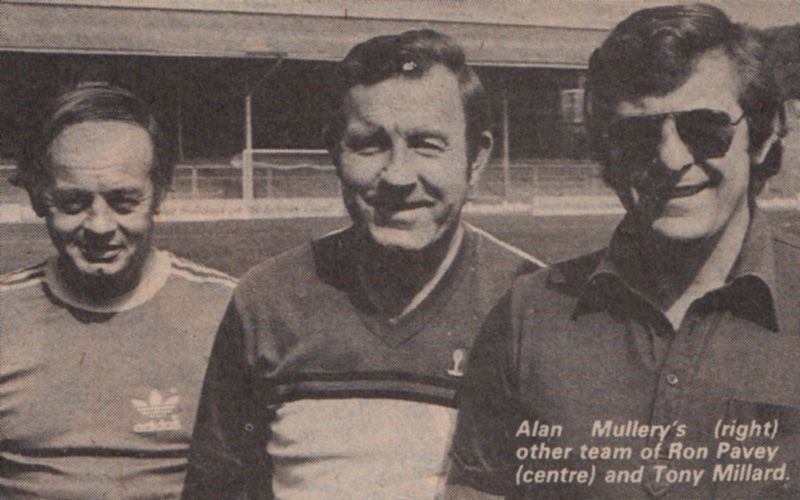
I’m not sure which magazine this cutting is from, although it’s probably Shoot! It covers the increasingly lucrative commercial side of the game of the late 1970s, with Albion doing a much better job than Arsenal at the time!

As Brighton battle to win praise and points in their first season of First Division football, Alan Mullery’s other side are already top of their League! When it comes to making money for the club, commercial manager, Ron Pavey, and promotions expert, Tony Millard, have started a Goldstone Goldrush!

This season, the Seagulls’ financial team look set to earn £600,000 from lotteries, promotions, club shop sales, programmes, ground advertising and TV fees. And that puts them above huge clubs like Arsenal, in the money game.

arsenalplaque

“You’ve got to have it,” says manager Alan Mullery, “because you can’t get your revenue back through the gate. We were averaging gates of around 22,000 at home last season. Now, that will pay people’s wages, but it won’t put any money in the bank for you. So the commercial side is very important.

“For example, we have match ball sponsors for every League match. We’ll use 21 in a season and each ball costs about £35. If we had to pay for them, it would be expensive over a full season. It’s the same with boots. We’re sponsored by Puma. They supply us with about 250 pairs a year. That’s a big saving too.”

Mullery has seen Pavey and, more recently, Millard make great steps, since his arrival at the Goldstone in July, 1976.

“At that time, the club was taking around £800 a week, from all sources. Now, it’s over £500,000 a year. So, what they’ve done on the commercial side has been fantastic. All right, our success on the field has been a help and people don’t really want to advertise and bring money into a club if it’s not doing well. But they’ve put in a lot of hard work.

“Basically, they’re trying to help me. If they can bring money into the club, and I need to buy new players, it’s a boost for me. Since I’ve been here we’ve had a new pitch, built a new stand and spent £1,250,000 on players. There’s no way we could have done these things without the commercial side.”

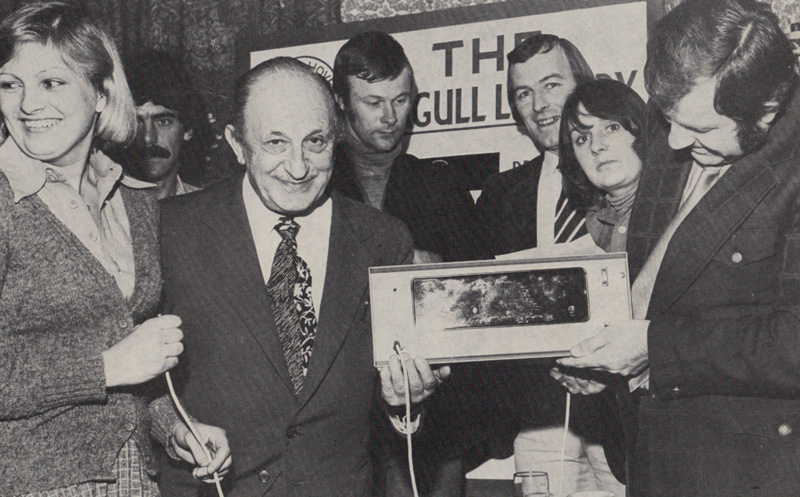
In the 1970s, even the commercial aspect of the game had a certain naive  charm to it, unlike nowadays. The Seagull Lottery is held weekly every Monday at a different venue around the County. The second lottery was held at the Southdown Hotel in Worthing and together with Ron Pavey (commercial manager) and the lottery promoter Joan Shipp are vice-chairman Harry Bloom and players Peter O'Sullivan and Peter Grummitt.

In the 1970s, even the commercial aspect of the game had a certain naive charm to it. The Seagull Lottery was held weekly every Monday at a different venue around the county. The second one was held at the Southdown Hotel in Worthing. That contraption is a lottery drawing machine. Very hi-tech, I’m sure!

One of the biggest money-spinners at Brighton is the lottery system. The club runs two weekly lotteries and these produce a yearly profit in the region of £250,000. Ron Pavey is the mastermind behind this area of big business. When he joined the club, five years ago as commercial manager, Brighton were £200,000 in the red. Things have changed a little since then!

“I think we compare quite well with the bigger clubs in the First Division,” says Ron. “We’ve made quite a lot of progress and we’re learning all the time. Being a small club helps us in a way. There’s more of a family atmosphere here. We’ve got a good team, working closely together.

“Everyone who’s involved wants to do their best, because at hear, we’re all Brighton fans! And if we do a good job on the commercial side, we know it can only help the team.”

Tony Millard echoes that brand of positive thought: “Everyone knows football must be commercial to survive. All of us involved in the game love it. We all know football is the number one. But we also know it needs financial support and every aspect must be explored. There’s no doubt about that.

“People who suggest the game has become too commercial are burying their heads in the sand. The way we look at it, we need the support of companies outside the club and we intend to give them value for money. As far as we’re concerned, you’ve got to ride with the times.”

Brighton toured America last summer. Like most lovers of the game, Mullery was irritated by the commercial circus that surrounds every match in the States. He knows British fans don’t want their Saturday afternoons dressed up in gimmicks and candy floss. But Brighton are proving to the soccer world that it is possible to milk the commercial possibilities, without any loss of dignity or pride.

“before I came here, I remember reading about Brighton manager, Pat Saward, going along the seafront with a box, collecting for the Save Brighton Fund,” said Mullery, finally. “We’ve certainly come a long way since then.”

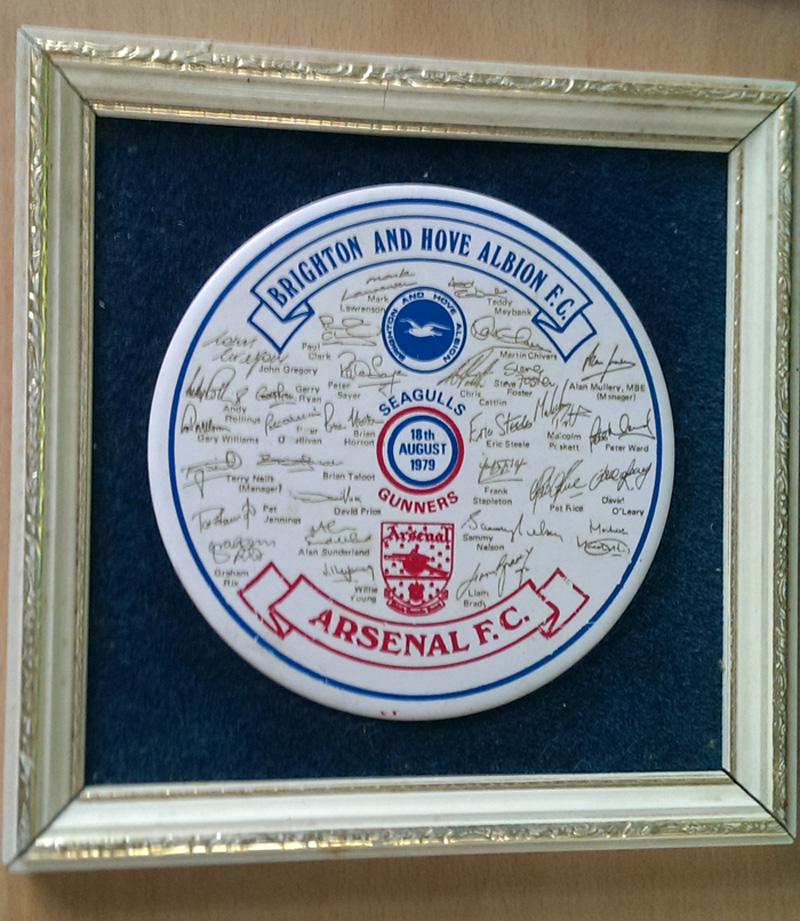
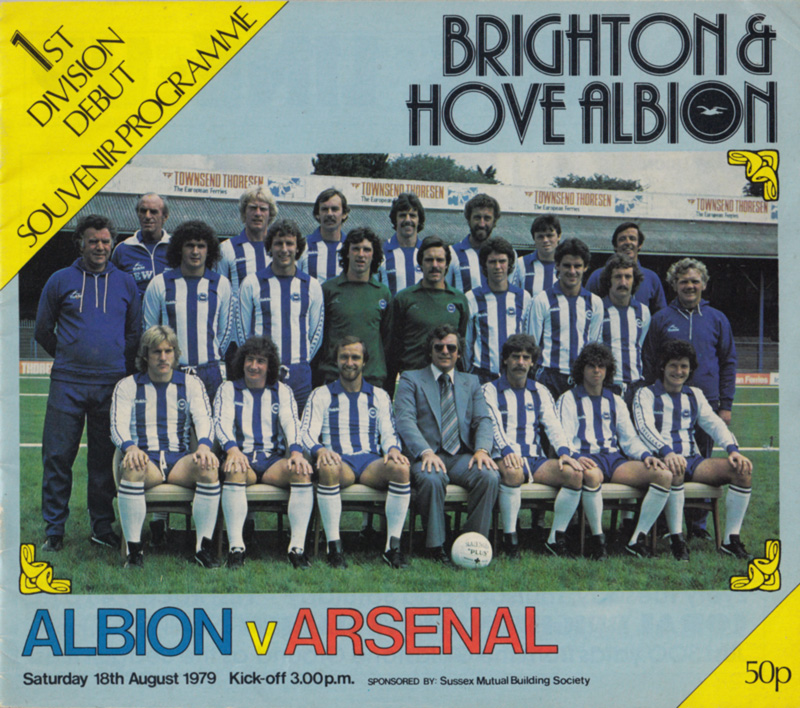
The special souvenir programme for the Brighton v Arsenal match, the Albion's debut in the First Division, in August 1979. Price 50p. Sponsored by Sussex Mutual Building Society.

The special souvenir programme for the Brighton v Arsenal match, the Albion’s debut in the First Division, in August 1979. Price 50p. Sponsored by Sussex Mutual Building Society. I wonder what became of them.

Tagged , ,

Kit Napier gets back among the scorers

kitnapier3

Kit Napier is rightly considered an Albion legend. He was a ball-playing attacker, skilful with both feet, and with tremendous talent for goalscoring. At the Goldstone, Napier’s class and quick-witted play endeared him to the crowds. After being top scorer for the Albion in four of the previous five campaigns, Napier again was having a prolific season in 1971/72 as the Albion flew high in the Third Division.

From Goal magazine on 18th March 1972:

While Aston Villa, Bournemouth and Notts County have been stealing the promotion headlines this season, Brighton, strugglers for part of last term, have slid quietly into a threatening position and are poised for a takeover bid that could shoot them into the Second Division.

Much of the credit for the Hove team’s confident aspirations must go to manager Pat Saward, the former Coventry coach. Saward worked himself to a standstill last season to make the players believe in themselves.

Now his determination and drive have brought their own reward. His players have responded to his inspiring example and are playing the best football the team has produced since Albion were promoted from the Fourth Division in 1965.

One player to benefit from Saward’s hard work is 27-year-old striker Kit Napier. The player who has played over 200 first team games and scored more than 70 goals is once again among the club’s leading scorers.

His goals could be instrumental in bringing Second Division soccer to the Goldstone Ground for the first time in 10 years. Kit has spent only five of those years with the club, but he believes that the club is now ready to leap into Division Two and stay there.

Says Kit: “There isn’t a better team than us in the Third Division and I really fancy our chances of going up. Once we get there I don’t think we’ll have trouble staying up.

“The standard of football we are playing this season is so high that if we were in the Second Division now we would probably be pushing for promotion.

“We would not have any trouble with the financial burden of playing in a higher division either. Brighton has a a tremendous crowd potential as was proved by that 30,000 crowd we had at Christmas against Bournemouth. If we were in the First Division I’m sure we could get gates of 40,000 regularly.

“Possibly the only trouble with our fans is that they are a bit fickle. We have a few bad results and they start to stay away. But they come round in the end. Ad for myself, they’ve always treated me fairly.”

That is why northerner Napier, who was previously with Blackpool, Preston, Workington and Newcastle is so happy down south.

“Brighton are the best club I’ve been with,” says Kit. “My wife and I are happy. We never had any bother settling down here. It is such a nice town. I much prefer it to living up north.

“The only regret of my career is that I never had more of a chance in the First Division when I was at Newcastle. I only played nine games for them.

Having played for five clubs Kit has a vast experience of the wide differences and he believes that the third Division is the hardest to play in.

“In the First Division you have time to play the ball,” explains Kit. “but in the Third Division you don’t have that time.

“But the quality of the football is definitely improving.

“You’ve got good teams like Aston Villa coming down or Bournemouth coming up. And of course the referees clampdown has helped things as well. It has certainly helped me my play. Now he is determined to achieve his ambition – to win something. “All the clubs I’ve been with before Brighton have never done well,” says Kit, “So I’d be happy and satisfied just to win promotion with them.”

The way he and his team-mates are playing, Napier could be in the Second Division next season.

By the end of the 1971/72 season, Kit Napier was top scorer once more with sixteen League goals, although this feat was equalled by Willie Irvine. Albion won promotion, as runner-up after a phenomenal season of attacking play.

In the Second Division Division the following season, Napier’s optimism was dashed as Brighton’s campaign was unhinged by lack of funds and his falling out with manager Pat Saward. Made just three appearances before being sold to Blackburn Rovers for £15,000 in August 1972.

kitnapier2

Tagged ,