Author Archives: Goldstone Rapper

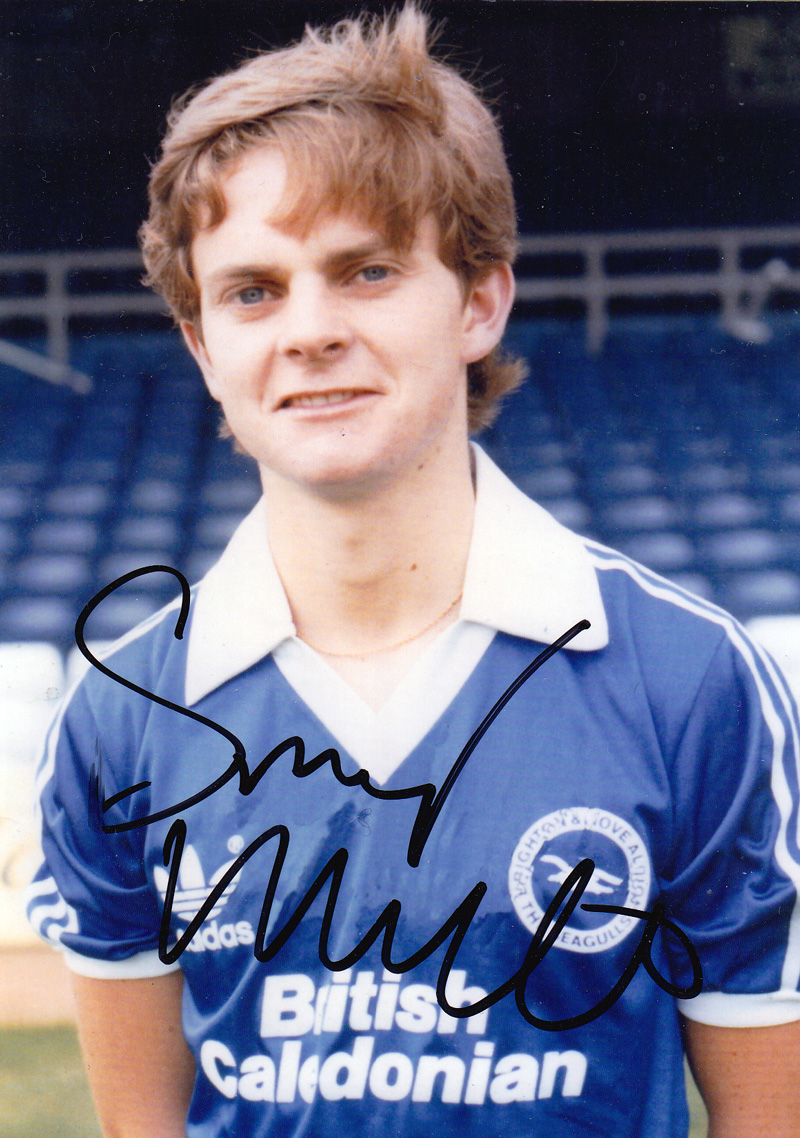
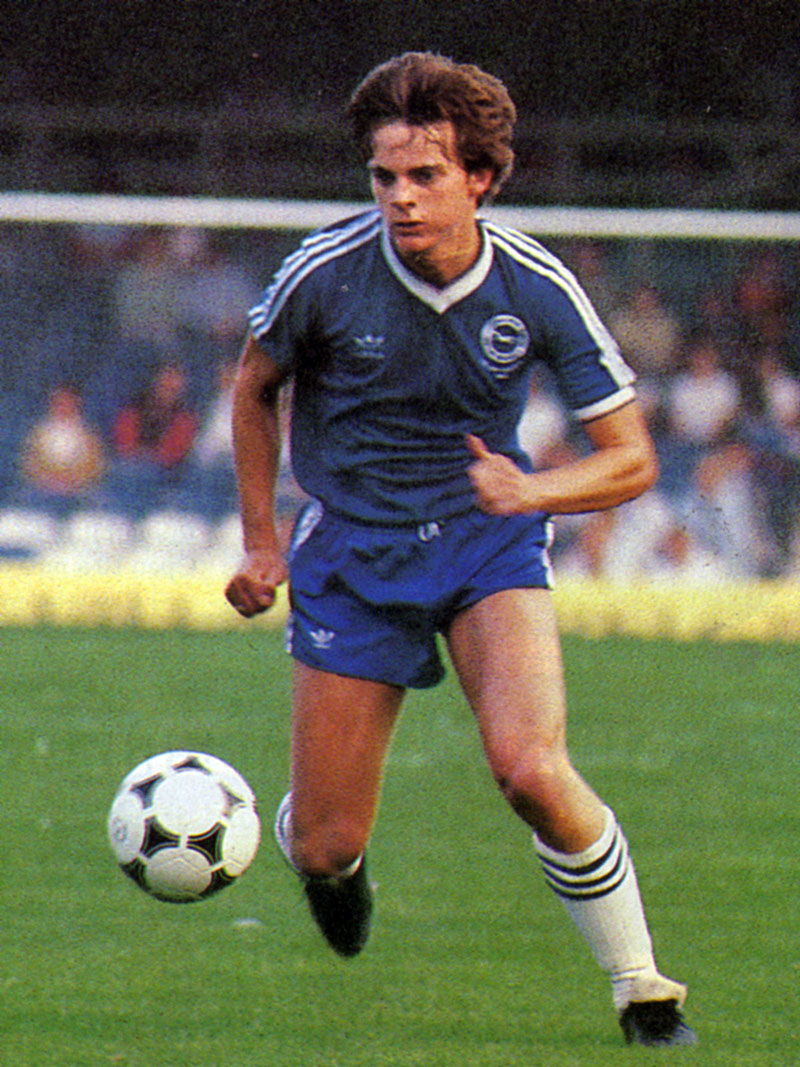
Howlett’s howitzer

garyhowlett82

From The Argus in 6th August 2001:

Eighteen years on from his dramatic debut for Albion, Gary Howlett is getting ready for another emotion charged occasion back in Ireland.

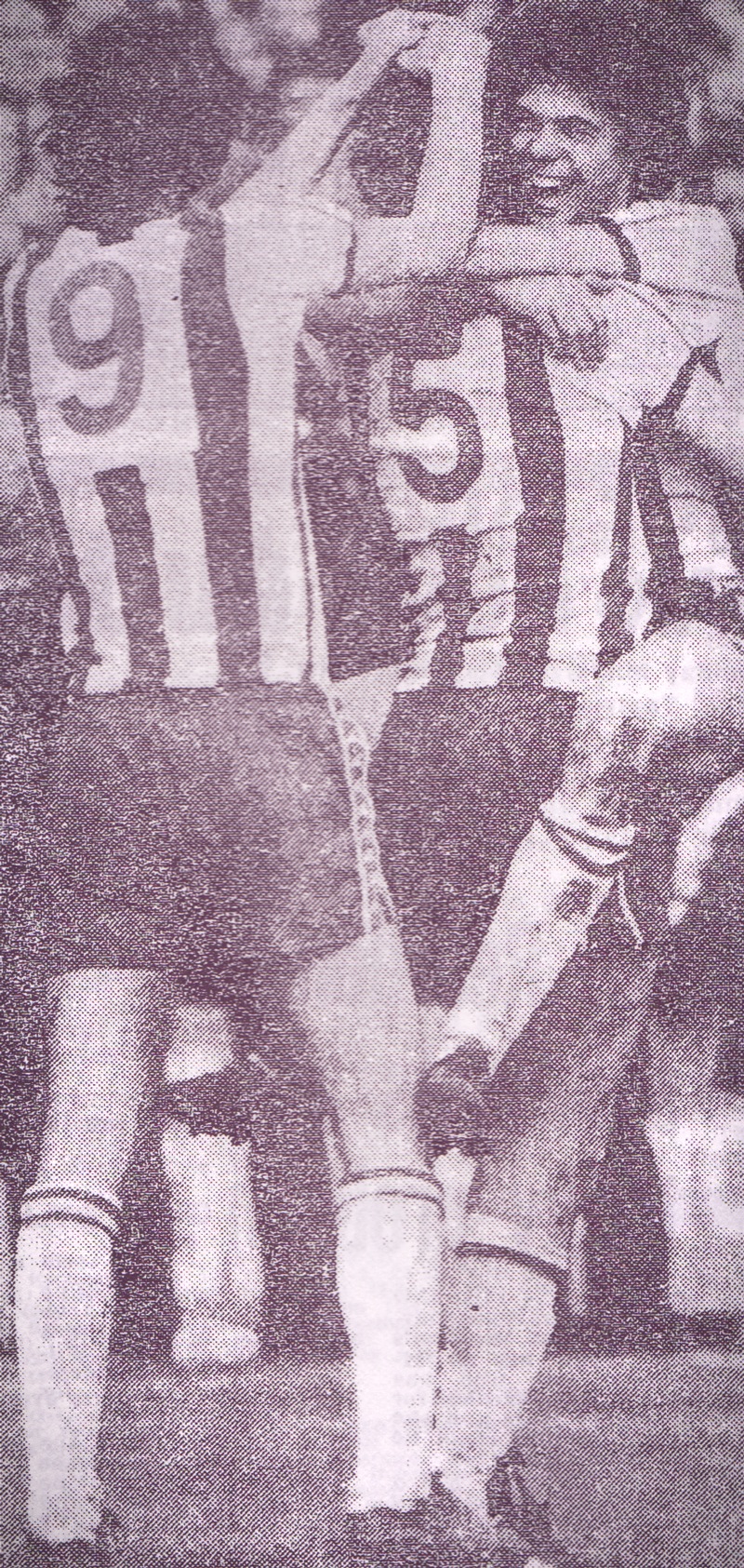
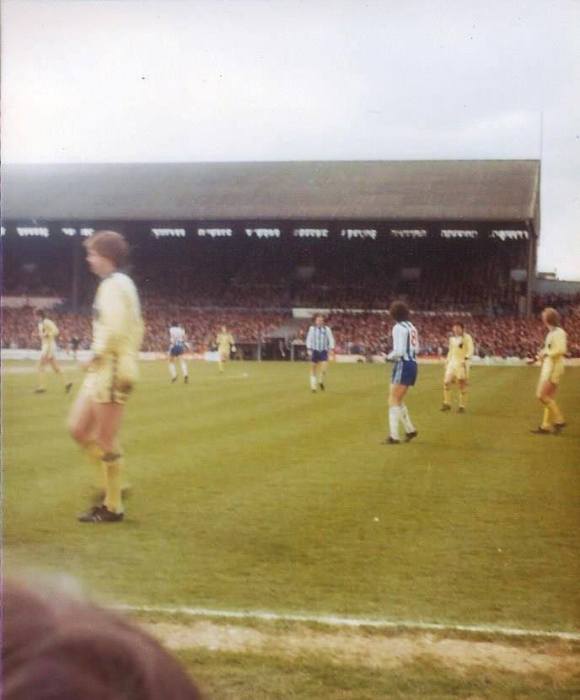
It was back in March 1983 that the young Irishman, then coming up 20, thrilled Goldstone fans with a goal on his debut as the Seagulls gave mighty Liverpool a fright.

Within months of that first senior outing, he had played in a cup final, tasted relegation and won his only cap for the Republic of Ireland.

According to Les Scott’s ‘555 Football Facts To Wow Your Mates’, Howlett had quite a journey to gain international hours:

Gary Howlett (Brighton) travelled to the other side of the world to earn his first and only international cap, and played for just 19 minutes. On 3 June 1984, Howlett was named as a substitute for the Republic of Ireland’s game against China, which was taking place in Japan. Nineteen minutes from time Howlette replaced Pat Byrne (Hearts), but was never chosen for the Republic again.

The Argus article continues:

His career never really progressed as many expected, but he gave good service to Bournemouth and York before winning trophies with Shelbourne in his native Dublin.

These days he combines an administration post with Aer Lingus at Dublin airport with raising a young family and working part-time as assistant manager with newly promoted Monaghan United.

Along with former Shelbourne midfield sidekick Bobby Browne, he has just guided Monaghan into the Premier League for the first time.

The fixture computer has given them a game with Shelbourne to kick-off the season next Sunday. It could be quite an occasion, but it will have to go some to beat that Seagulls debut.

Howlett, having been released by Coventry, had done enough in the reserves for Jimmy Melia to throw him into a midweek clash with Liverpool.

Goals from Michael Robinson and Howlett delighted most of the 25,000 in the Goldstone and had fans taunting the visiting goalkeeper with choruses of: “Brucie, what’s the score?”

Grobbelaar replied with the appropriate number of fingers before Ian Rush provided the more eloquent response of two goals as the Reds grabbed a point on their way to the title.

Howlett joked: “There must have been an injury crisis for me to get in.

“It was a great night at the Goldstone and I got probably the only headed goal I ever scored.

“As soon as I went to Brighton I loved the place. I remember getting the train down there the first time and walking to the ground and just feeling like I fitted in straight away.

“I was in digs at Southwick, then I got a place on Hove seafront, near the King Alfred.

“There was a group of us all the same age playing in the reserves and it was just a fabulous place to be when you were 19 or 20.

“I remember playing well and with lots of confidence. It seemed so easy to play and train and have a good time.

“The squad was full of good midfielders like Neil McNab, Jimmy Case and Tony Grealish. That was the competition I was up against.”

Howlett was in midfield when Albion beat Sheffield Wednesday at Highbury to clinch their cup final place.

Indeed, he had an audacious attempt on goal from way out:

As Spencer Vignes’ article in the Brighton v Nottingham Forest programme in December 2012 revealed, Howlett was on the phone to family and friends after the match, talking about his effort. Sadly for him, it didn’t make ITV’s cut of the highlights.

The Argus goes on:

Then the worrying started.

He admitted: “Even though we were facing relegation the place was buzzing.

“After getting to the final the question was, would I be in the side?

“The last league game was against Norwich and the guys who were 50/50 for a place in the final all played brilliantly but I had just done enough and Jimmy decided to stick me in on the left side.”

Howlett went walkabouts to create the opening goal for Gordon Smith with a pinpoint cross.

He said: “It was all United for 20 minutes and Graham Moseley was playing brilliantly.

“I just remember defending and trying to keep it simple when we had the ball and then of course there was the goal.

“For some reason I found myself out on the right. I could do a couple of things well on a football pitch and one of those was passing a ball. It was just a simple pass which found Gordon who put it away well.

“I was on my hands and knees on the halfway line worn out when he had that chance at the end. His touch let home down but at the time we didn’t mind because we were looking forward to another trip to Wembley on the Thursday.”

Howlett’s form dipped the following season as Albion finished in mid-table.

He played just twice in the next campaign before the coaching skills of Harry Redknapp enticed him to Bournemouth, who he helped to promotion while the Seagulls were going down.

There was more success with Shelbourne, who he helped win the league for the first time in 30 years.

He played 128 time for Shels, though injuries ruled him out of three cup finals. When he took Monaghan back to Tolka Park for a cup tie last season, the match programme described him as one of the most popular players ever to appear for the club.

Persistent ankle problems brought his career to an end but he got coaching qualifications and still runs Shelbourne’s successful under-12 team.

He said: “Last year was a great achievement for Monaghan. We train three nights, we play on Sundays and we might go in on Saturday mornings as well, so it is a huge commitment.

“The football is improving over here and so are the facilities. The rewards are there and our aim is to get into Europe.”

Howlett has been married to Annette for three years and has two daughters Kate, 15 months, and Ellen, who was born the day Albion touched down in Ireland for their recent tour.

Fans arriving in Dublin to follow the Seagulls probably did not notice one of their former favourites as they headed through the airport terminal But Howlett certainly remembers his time in Sussex.

He said: “My career was littered with highs and lows. Over a course of a season I lacked the consistency and I didn’t realise that until I came back home.

“I can always relate to Brighton because I made so many friends there who are still friends and I met some great characters. It was special.”
howlett83

Tagged

Life’s a riot as Brighton crush Spurs

Here’s Brighton team photo in August 1977, before a momentous Second Division campaign where Alan Mullery’s attacking side proved themselves serious candidates for a second successive promotion:

Back row: Ken Gutteridge (assistant manager), Ken Tiler, Mark Lawrenson, Ian Mellor, Andy Rollings, Eric Steele, Peter Grummitt, Chris Cattlin, Gary Williams, Sammy Morgan, Graham Winstanley, George Aitken (coach); Front row: Tony Towner, Eric Potts, Peter Ward, Brian Horton, Alan Mullery (manager), Steve Piper, John Ruggiero, Peter O'Sullivan, Glen Wilson (trainer).

Back row: Ken Gutteridge (assistant manager), Ken Tiler, Mark Lawrenson, Ian Mellor, Andy Rollings, Eric Steele, Peter Grummitt, Chris Cattlin, Gary Williams, Sammy Morgan, Graham Winstanley, George Aitken (coach);
Front row: Tony Towner, Eric Potts, Peter Ward, Brian Horton, Alan Mullery (manager), Steve Piper, John Ruggiero, Peter O’Sullivan, Glen Wilson (trainer).

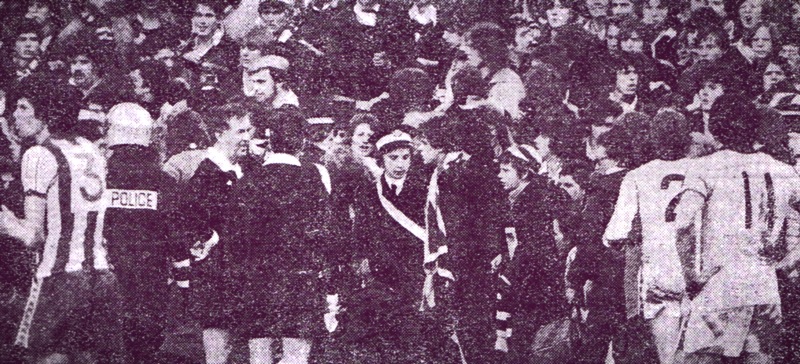
On 15th April 1978, Albion overwhelmed leaders Tottenham Hotspur, but not before Spurs hooligans had tried to bring the game to a premature end. Terry Smith from the Daily Mirror reported on this crucial match:

spurs1978-1c

Referee Alan Turvey praised Spurs’ skipper, Terry Naylor, for the way he tried to calm his fans after they had rioted twice, the second time to try to save their team from a heavy defeat.

The game was delayed for thirteen minutes after spectators had spilled on to the ground with this crucial Second Division promotion match only twelve minutes old.

Spurs fans who stole sixteen cars and burned one when they got to Brighton, started fights early on and local spectators were forced over the barriers for safety.

Turvey stopped the match and sent the players to the dressing rooms. The game resumed 13 minutes later after he said he would play all night to get the game completed.

League leaders Spurs, on their first visit to Brighton had just gone 1-3 down and had Don McAllister sent-off when their hooligan fans rushed the pitch in the seventy-fourth minute, this time to try to get the game abandoned.

But police stopped the invasion and the game continued after another four-minute delay.

Brighton people who refused to let Millwall play one of their ‘banned’ home games at homely Hove, saw ticket touts selling £2.20 tickets for £50 each and heard a constant wall of ambulance sirens in the town.

There were 91 arrests during the day and 83 people injured.

And ex-Detective Chief Superintendent Jim Marshall, a keen Brighton fan, said: “I’ve never seen such scenes in all my life.

“The time has come to give these thugs custodial sentences in establishments akin to wartime glasshouses, rather than holiday camps.”

Brighton manager Alan Mullery, a former Spurs’ star, accused rioting Spurs supporters of attempting to get this promotion battle abandoned.

He said: “Tottenham are a great club but their fans tried to get the match stopped.” Referee Turvey admitted: “If I was honest I would say I was a bit frightened during the crowd trouble. I thought the police did a good job and I must praise Spurs defender Terry Naylor for the way he tried to calm the fans down.”

A senior police officer said: “The trouble started before the game when Spurs fans got in early and occupied the space behind the goal normally reserved for the home fans.”

Brighton took the lead with a solo goal from midfielder Paul Clark after 16 minutes.

Chris Jones equalised six minutes later after a bad goal kick from Eric Steele.

Brighton defender Graham Winstanley made it 2-1 after 43 minutes.

The third goal which killed off Spurs was surrounded in controversy.

Eric Potts, the Brighton sub, claimed the final touch but Spurs argued bitterly that striker Malcolm Poskett had been offside.

spurs1978-2a

It was tight at the top. Spurs, Southampton and Bolton were all on 53 points with Brighton four points behind, but (just like Bolton) a game in hand over the top two clubs. With four matches to go for the Seagulls, Mullery’s men were hoping for one of their rivals to slip up in order to capitalise. No doubt about it: Tottenham were beatable. The promotion battle really was going to the wire.

Here are some images that Trev Smith has kindly allowed me to use on this site:

brighton-v-spurs-1-rollingsbrighton-v-spurs-2-tilerbrighton-v-spurs-3-wardbrighton-v-spurs-4brighton-v-spurs-5-townerbrighton-v-spurs-6brighton-v-spurs-7-imagebrighton-v-spurs-8brighton-v-spurs-9brighton-v-spurs-10-colin-lee

Tagged , , ,

Albion slogan badges

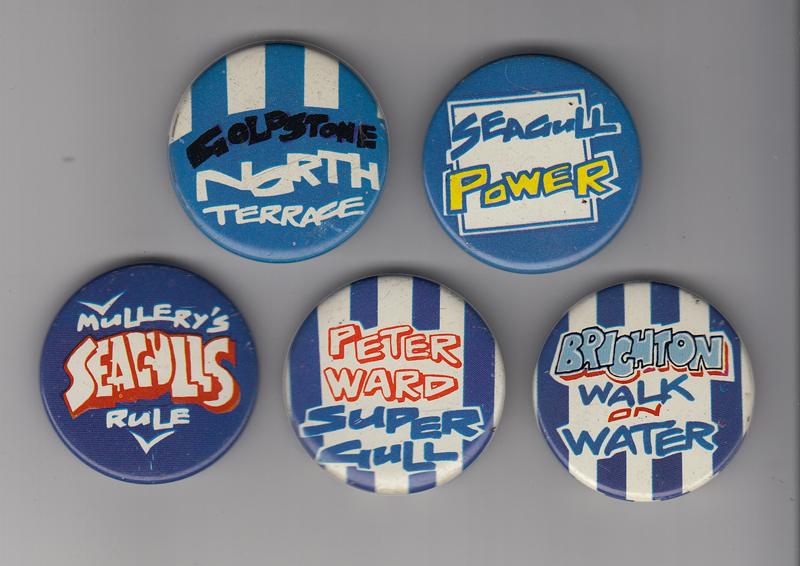
Measuring 35mm x 35mm, here are some beauties from the late 1970s:

badges8

With their fun, informal typeface, they were perfect to help young Seagulls supporters to declare their love and enthusiasm for their side.

Tagged , ,

Bedson blasts ‘stupid’ streamer stunt

It’s not just Manchester United’s David Moyes that has had to deal with messages in the sky undermining his managerial reign. Chris Cattlin faced the same issue in November 1985 during Brighton’s 1-1 draw with Norwich City at the Goldstone when a Cessna flew from Shoreham Airport calling for him to be replaced. Here’s how John Vinicombe from the Evening Argus reported it:

bedsonblastbanner

Albion chairman Bryan Bedson today slammed the West Stand season ticket holders who hired an aircraft to advertise their call for a return of Alan Mullery to the Goldstone.

“It was absolutely stupid – I presume people in our stand are supporters, not knockers.

My directors feel the same way. They all said it was a ludicrous thing to do and a complete waste of money.” The plane, hired from Air South at Shoreham, €circled the ground twice just before the Norwich game trailing a streamer bearing the words: “Come back Mullery all is forgiven.”

It cost £200 to hire and 20 West Stand season ticket holders were responsible and went to extraordinary lengths to keep their identities secret. Staff at Air South said the money was paid by a man who insisted thai no name appear on the invoice,

Manager Chris Cattlin did not see the stunt. The canopy of the stand also prevented many occupants reading the message. Those on the terraces who did, gave it a chilly response.

John Vinicombe was also negative about it:

My first reaction to the couple of circuits of the Goldstone as the players came out was what had Mullery to be forgive for. Anyway, the exhortation fell flat. There were boos from the crowd, an odd handclap here and there, and the kite buzzed off. As a piece of agitation, it was a flop.

I had received a telephone call during the morning saying what was in the air and that the object of the tasteless exercise was to draw attention to the directors that Mullery would be welcome back.

Not for one minute do I think the skywriting coincides with the publication of Mullery’s autobiography. Mullery wouldn’t dream of being party to anything like that. He said as much yesterday and sympathised with Cattlin who was a player in his promotion team.

Cool shades for Mullery

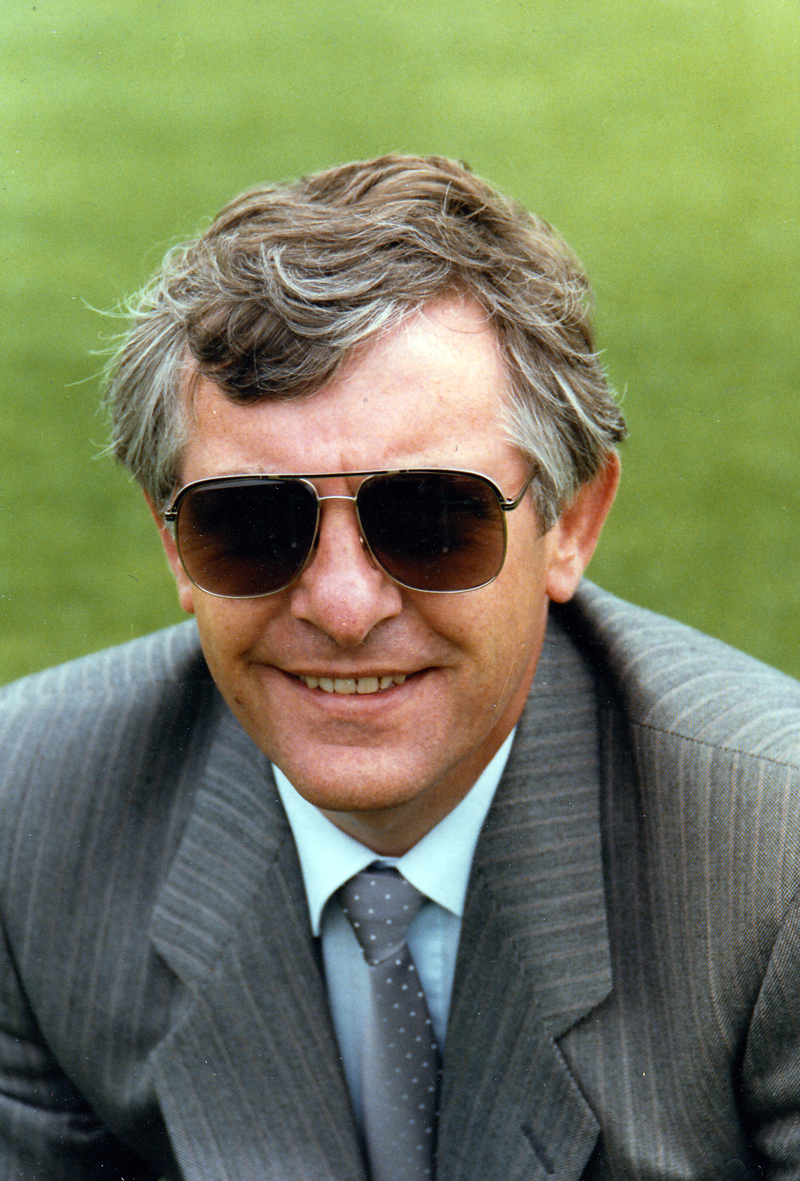
Cool shades for Mullery

“I was going to the game,” he said. “But then we decided to visit friends instead. Then early in the evening, a friend came up from Brighton and told me about this aeroplane. I needed that like a hole in the head. I have been in a similar situation myself the night I got the sack from QPR with people chanting for me to leave, was terrible. It is a difficult time for a manager especially when you are doing your best. I feel very much for Chris in this position.

“Somebody must have money to waste, but everyone is entitled to their opinion. I found it hilarious when I read about it in all the papers.”

Having come so close to promotion back to the top flight the previous season, Albion looked out of sorts in 1985/86. At the time of the draw with Norwich, they stood in eighth position, six points off a promotion spot. In their previous three matches, a leaky defence had shipped thirteen goals, losing to Charlton (3-5), Oldham (0-4) and Liverpool in the Milk Cup (0-4).

Although only one above the Seagulls in Division Two, Norwich looked a cut above the Albion in terms of quality. Future Seagulls Ian Culverhouse and Mark Barham were mere youngsters then. Yet they were showing promise in a City packed with outstanding players, such as Chris Woods, Steve Bruce, Mike Phelan and Dave Watson (the one who eventually played with Everton). Supported by the potent strike force of Kevin Drinkell and Wayne Biggins, the Canaries then powered up the table, starting a sparkling ten match winning run later that month. Ken Brown’s side were crowned Second Division champions by the end of 1985/86, with an impressive seven point margin.

As for Brighton, Cattlin’s men did rediscover their form, and looked outside bets for promotion, before tailing off towards the end of the season. Cattlin was sacked after Brighton lost 2-0 in the penultimate match at relegation-bound Carlisle. In the summer of 1986, Bedson sought Alan Mullery as the successor. Through the power of suggestion, perhaps the banner was not as big a flop as Vinicombe had surmised. Nevertheless, anger at the banner and the departure of Cattlin still exists to this day.

Tagged , ,

Perimeter fencing goes up at the Goldstone

In the Hillsborough Independent Panel’s report, it discusses the Harrington Report of 1968 into ‘hooliganism’:

1.40 Noting the tragedy at Burnden Park, the Report instructed ‘appropriate authorities’ to respond ‘before another disaster occurs’. John Harrington warned that perimeter fences ‘could be dangerous in the event of massive crowd disturbances as safety exits to the field would be blocked’. Gangways and tunnels servicing terraces created bottlenecks, rendering them ‘useless’ for evacuation in an emergency.

Ten years on from Harrington, Brighton faced Tottenham on 15th April 1978. As Tim Carder and Roger Harris’ history of the club ‘Seagulls!’ put it:

The all-ticket visit of Spurs was the most glamourous match of the season, but it brought the worst football-related violence the town had ever seen. Mobs from London invaded Brighton on the Friday night, and the ‘aggro’ continued at the Goldstone the following day with 51 arrests and 85 casualties, 20 ending up in hospital. Tottenham supporters, supposed to be confined to the East and North-East Terraces, infiltrated the North Stand in large numbers. The resultant fighting spilled onto the pitch and referee Alan Turvey was forced to take the teams off for fourteen minutes. There were five further minutes of interruption throughout the match…

Despite Harrington’s report, the Football Association ordered Brighton & Hove Albion to erect a perimeter fence around the Goldstone pitch the following season.

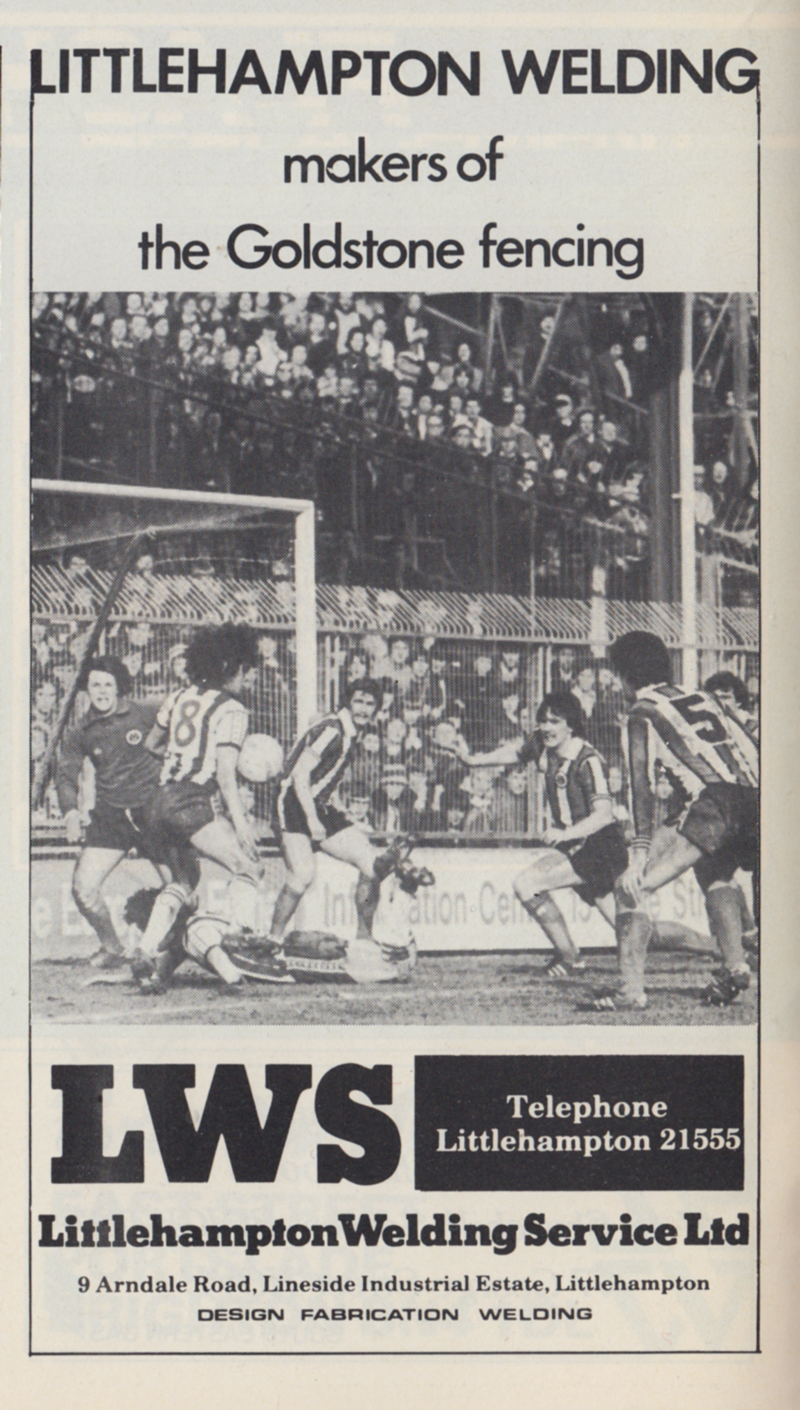
Although Albion supporters disliked being caged in, Littlehampton Welding were proud enough of the job they did to advertise themselves as the company behind it in the matchday programme during the 1979/80 season:

fencing

The death of Liverpool supporters in the FA Cup Semi-Final in 1989 led to the removal of the hated fencing at many clubs. However, as the Morning Star reported on 19th April 1989:

Before the Hillsborough disaster Brighton had taken down two thirds of their fences and they only remain in front of the North stand and part of the East Terrace where visit supporters are segregated.

Secretaty Steve Rooke said: “We are satisfied that in the event of a major incident supporters could escape in a matter of minutes through our large fences, which open both ways.”

Tagged

Roy of The Rovers – Brighton v Charlton, 1979

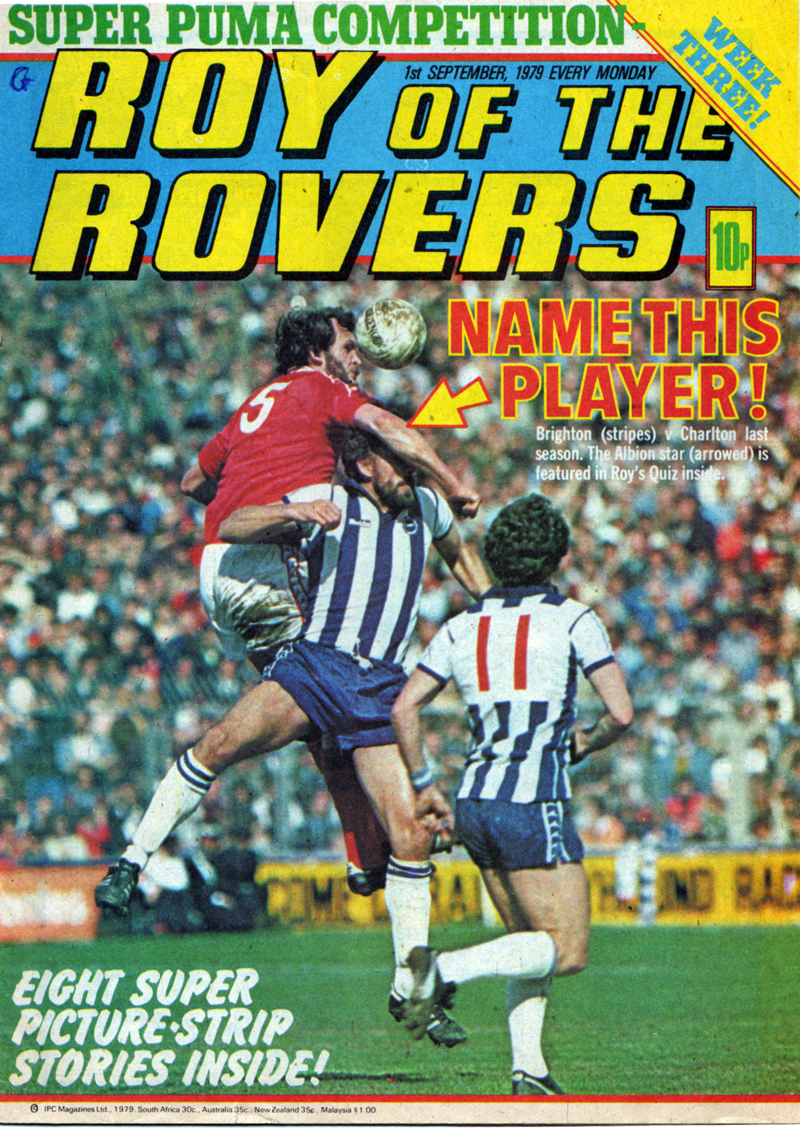
On 13th April 1979, Brighton beat relegation-threatened Charlton Athletic 2-0 to cement their place at the top of the Second Division. Five months later, an action shot of Martin Chivers and Peter O’Sullivan even made it onto the cover of Roy of the Rovers magazine:

royoftherovers-charlton

Here’s the match report from Jack Steggles of the Daily Express:

The South Coast took on a carnival atmosphere yesterday a Brighton kept bang on course for promotion from the Second Division.

The glorious weather brought a crowd of 30,859 – the second biggest of the season – to see the league leaders.

Brighton added a refreshingly different touch by adding the Ray Shields Big Band at the cost of £600.

They welcomed the Seagulls onto the pitch with ‘In The Mood’ – which is what Brighton were in a blistering opening spell.

charltoncrowd

They tore Charlton to pieces with superb football and should have been two up before the impressive Paul Clark – ‘The Tank’ to Brighton fans – achieved the breakthrough with a magnificent 11th minute goal.

A free-kick from Peter O’Sullivan was headed away by Peter Shaw to Clark, who brought it down with his right foot and struck a left foot volley of unbelievable power from 25 yards.

Martin Chivers watches on as Lawrenson gets into the thick of the action

Martin Chivers watches on as Lawrenson gets into the thick of the action

The goal seemed to be the first of many for Brighton, bristling with ideas and aggression, were in absolute control.

But they failed to build on that lead.

They could have brought the band back at the interval to play ‘The Carnival is Over.’

Lawrenson uses his skill to put Gary Churchouse off balance, while Rollings covers the space behind.

Lawrenson uses his skill to put Gary Churchouse off balance, while Rollings covers the space behind.

Poskett celebrates Shaw's own goal past Chalrton keeper (and future Albion boss) Jeff Wood

Poskett celebrates Shaw’s own goal past Chalrton keeper (and future Albion boss) Jeff Wood

But Brighton did finally manage a second in the 76th minute when the unfortunate Shaw turned an O’Sullivan cross into his own goal.

You could see the tension lift from them.

upupandaway

Tagged , , ,

The amazing Mullery – Bailey job swop saga

Shoot! magazine ran a fine article in the summer of 1981 over the comings and goings at the Goldstone Ground, where Alan Mullery sensationally quit, to be replaced by Charlton boss Mike Bailey:

alanmullery1980

In his eventful five-year spell as manager of Brighton, Alan Mullery managed to steer what had always been regarded as a typical •Third Division club which did not always realise its true potential into the First Division for the first time in the club’s history.

Having inherited a side from Peter Taylor, who rejoined Brian Clough at Nottingham Forest after just failing to take Brighton into the Second Division, Mullery went one better in the first attempt.

And that was only the foretaste of what was to come as in the next season Brighton just missed out on promotion to the top flight.

They achieved this by beating Newcastle 3-1 at St James’ Park in the final League match of the 1978-79 season. But despite Mullery’s confident prediction that Brighton would come through their tremendous test, the last two seasons have been a constant struggle for survival.

Last season, speculation about Mullery’s future at the Goldstone started when he was closely linked with vacant managerial positiom at Crystal Palace and Chelsea.

His resignation last month stunned everybody connected with the club, but chairman Mike Bamber wasted no time in naming Bailey as his successor.

Within a week of Bailey’s appointment Mullery accepted an offer to take over at The Valley and so complete a remarkable managerial swap which took piece as follows.

May 2: Speculation about Mullery’s future as Brighton’s manager continues despite their 2-0 victory over Leeds which assured them of another season in the First Division. “I wouldn’t want to give all this up easily – I like being a First Division manager too much. I’ve got my plans for next season and if the players show the same commitment that they have shown in the last four matches we’ll be a very good side next season,” Mullery commented.

May 5: Mike Bsmber summons Mullery in for talks following – rumours of Mullery being linked •with the vacant managerial job at Stamford Bridge. Mullery himself scotches this possibility and adds that if he felt he couldn’t do any more for Brighton he would walk out immediately.

May 6: After discussing details of Muilery’s new three-year contract (which Mullery had accepted) Bamber refuses to confirm a report that in cash terms it is worth £35,000 a year. “I make a firm point of never discussing wages and salaries. The important thing is that Alan has now agreed to stay which means that we can continue our partnership,” Bsmber commented.

For the next six weeks Mullery’s contract was in the hands of his solicitors, and it was not until the second week of June that there was any indication of the remarkable events which were to follow.

June 8: Four days before leaving for a family holiday in Malta, Mullery had further talks with Bamber and appears to be nearer to signing his contract. But with Brighton £500,000 in the red the talks also centre round a broad policy for next season.

June 12: On the day that Brighton’s fixtures are announced for next season, Alan Mullery ends his connection with the club in dramatic style. At a meeting attended by him, Bamber and two directors, Dudley Sizen and Tom Appleby, Mullery refuses to agree to cuts on his staff. After hi•s departure Muilery stresses that the parting had been amicable.

“We •hook hands-and there’s• no going back on the decision although it’s a sad day for me and for Brighton. Some people will think i’m crazy, but on •matter of principle it was something that had to be done. i’m not interested in slinging any mud about and nobody’s going to get me to say anything against the Brighton
chairman or directors.

It’s been a great chapter in my life and I’ve got some very happy memories. I shell never forget that it w•as Mike Bamber who gave me my first chance in management.

But what happened at the meeting this morning forced me to leave the club.

“I haven’t quit over •a contract or over buying or selling players. The directors and I were together for two and a half hours and made it clear that i was putting myself under pressure by adopting my stance.
But I wouldn’t budge from certain proposals regarding members of the staff. I’m not worried about getting another job nor am I worried about not getting any compensation. All I want now is to get away and enjoy my holiday.” Before leaving for his holiday Mullery applied for the vacant manager’s job at West Bromwich Albion.

July 1st: Mullery finally loses patience with West Bromwlch Albion and accepts an offer from Charlton chairman Mike Gliksten which he describes as “one I would have found hard to refuse in normal circumstances. Now I can’t wait to get started at The Valley,” he added.

With a vacancy at Valley Parade, who better to fill it than the jobless Mullery? Meanwhile, Mike Bailey was settling into the job at hand at the Goldstone:

mikebailey1981

Although Brighton manager Mike Bailey has only seen his new club in action on the television end at reserve teem level, he needed no prompting to apply for the vacancy caused by Alan Mullery’s sudden departure from the Goldstone.

His track record – both as player end manager – also impressed Mike Bambor who made no secret that Bailey was the front runner from the 100 applications he received for the job.

“Mike may be relatively inexperienced as manager, but to my mind he proved himself by taking Chadton beck to the Second Division at first attempt last season.

“That and our policy of giving young managers a chance here is why he was first choice from the ten names from which we made the final choice,” Bamber explained.

Even before meeting his players for the first time, Bailey spoke enthusiastically about becoming Brighton’s 12th post-War manager.

‘Obviously coming to •a First Division club was a big attraction, but I’ve felt for some time that Brighton is one of those clubs which has a bit of sparkle which made it all the more pleasing to know that they wanted me.

“You’ve only got to set foot in the club to see that it’s alive, and there’s so much potential here with players like Lawrenson, Robinson and Foster,” he said.

Bailey is also convinced that having survived two seasons in the top flight, Brighton will take a big step forward in helping achieve Bamber’s next aim of bringing European football to Sussex.

But he refuses to commit himself on whether he will employ the same tactics which saw Chariton win ten of their away games last season.

“I think Brighton have done tremendously well in the last five years. For any club to stay in the First Division after being promoted for the first time shows they must be learning what life is all about among the elite.

“It’s difficult to say what tactics I’ll use until I’ve seen the team play”, Bailey, continued, “at the moment I don’t know what their strengths and weaknesses are.

‘I was certainly an attacking player and enjoy that sort of game, which is why we’ll adopt that sort of policy if possible.”

In the end, Bailey can’t have thought much of Albion’s chances as an open, attacking team, and a tight defensive unit proved his way forward as Brighton bored their way up the table under his leadership! Still, it seemed to work for a time on the pitch during the 1981/82 as the Seagulls mounted a bid for a UEFA Cup place. However, poor form eventually cost Bailey his job in December 1982.

As for Mullery, he lasted a season at Charlton where an unlikely period in the upper echelons of the table also had supporters giddy. Indeed, Athletic stood in fifth place as late as 30th January 1982. An incredible achievement for a cash-strapped club. However, just as with Bailey at Brighton, the unexpected run of form also fizzled out and Mullery left for Crystal Palace.

Tagged ,

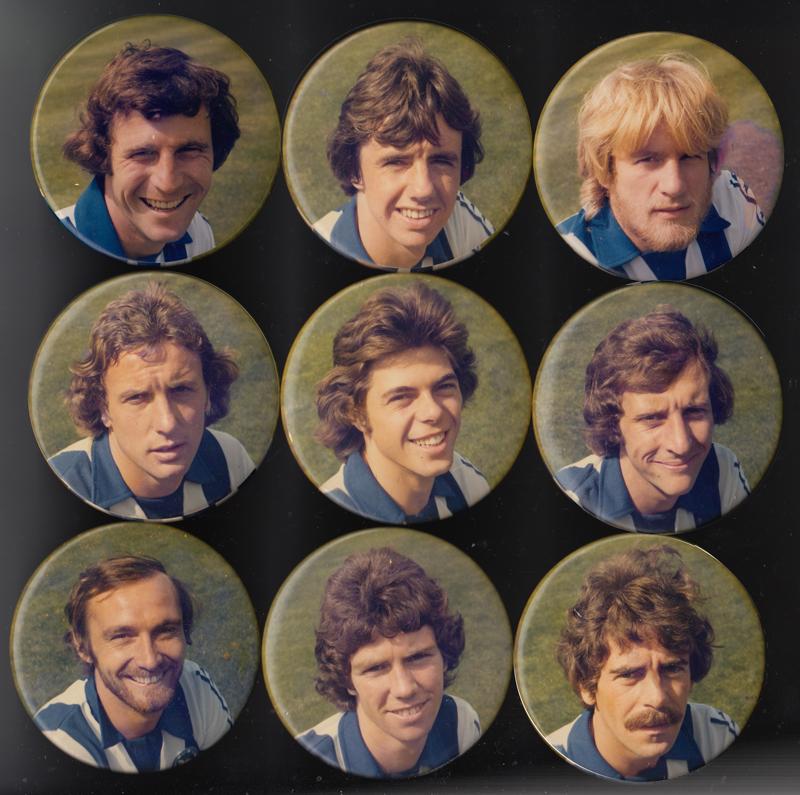
Player badges from the late-1970s

A trip to the home of Nick from Fishergate led me to scanning these rather lovely 65mm x 65mm badges from the late 1970s:

Top row: Gary Winstanley, Mark Lawrenson, Paul Clark Middle row: Andy Rollings, Peter Ward, Chris Cattlin Bottom row: Brian Horton, Gary Williams, Peter O'Sullivan

Top row: Graham Winstanley, Mark Lawrenson, Paul Clark
Middle row: Andy Rollings, Peter Ward, Chris Cattlin
Bottom row: Brian Horton, Gary Williams, Peter O’Sullivan

Apparently, according to Nick, there were shops along Sackville Road, Hove, that used to sell badges such as these on Saturdays, to make a bit of money as supporters made their way to the Goldstone Ground on Old Shoreham Road.

I was actually given a set of these when I was about five or six in the mid-1980s, as I decided that making badges was a very fine hobby. So, yes, I took off the head and shoulder images of the various Brighton players and replaced them with my own designs. Silly me.

Suffice to say that I won’t be doing that with these!

Tagged , , , , , , , ,

Peter Ward’s England Under-21s hat-trick

wardengland

On 31 August 1977, new England boss (and Hove resident) Ron Greenwood chose 22 year-old Albion striker Peter Ward as one of two over-age players for the England Under-21 squad to face Norway in a European Championship qualifier. As Alan Mullery explained in the ‘He Shot. He Scored. It Must Be Peter Ward’ biography by Matthew Horner:

He spoke about putting on an England Under-21 game at the Goldstone and asked what sort of crowd I thought he’d get. I told him an Under-21 game would probably get a crowd of between 8,000 and 10,000 but if Peter Ward played you’d probably get nearer to 20,000. He said ‘Are you sure?’ and I told him how much everybody loved Peter in Brighton.

Ron did pick him and played him, and it was a sell-out. Ron was delighted – the night was a great success.

In Horner’s book, the author mentions how matchday staff were falsely under the impression that the stadium had swelled to its 33,500 capacity, and turned many fans away. This led to the rather more modest, but still impressive, 18,500 actual attendance. The club also invested £40,000 in new floodlights that enabled television coverage of evening matches. However, after the main fuses were blown when they were switched on, an ad-hoc solution was found by Seeboard. Because of the success of this, you can enjoy Wardy’s goals here:

In the euphoria following this match, there was immediate media clamour for Ward to make his full England debut. Hardly surprising as the national team needed to score a hatful against Luxembourg in an ill-fated attempt to qualify for the World Cup in Argentina.

Tagged

Weller Weller Weller… oops!

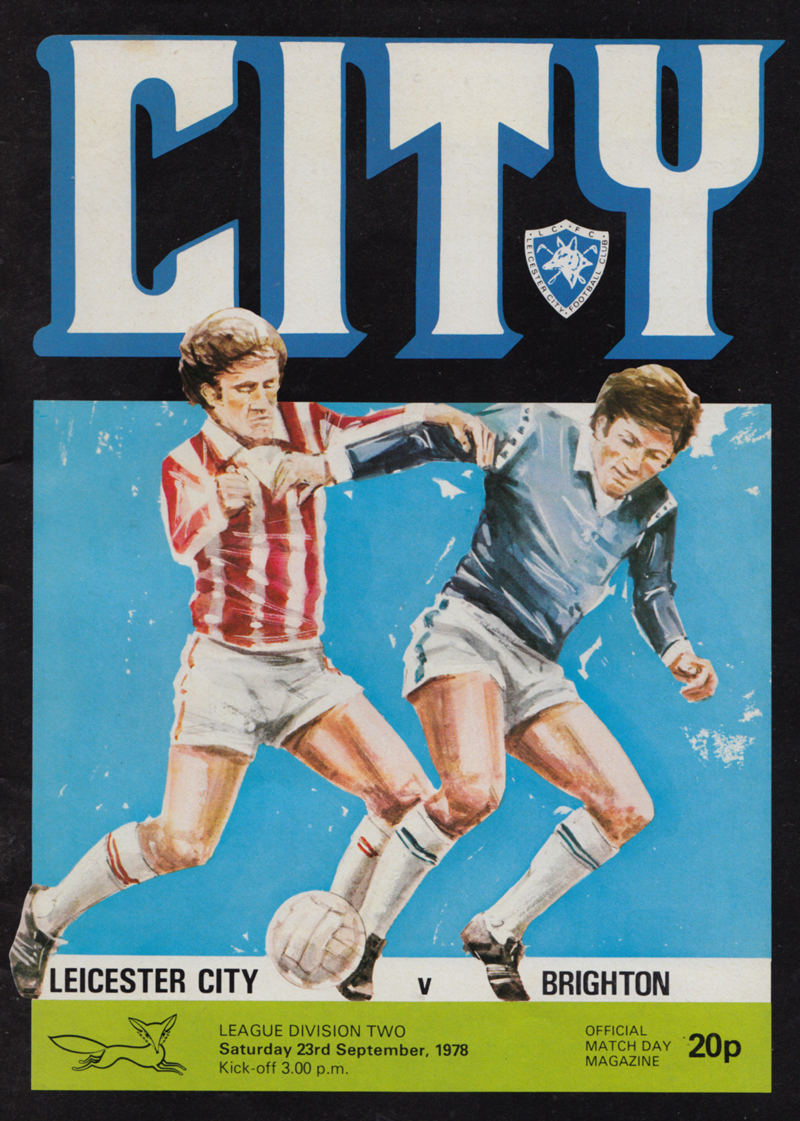
leicester1978

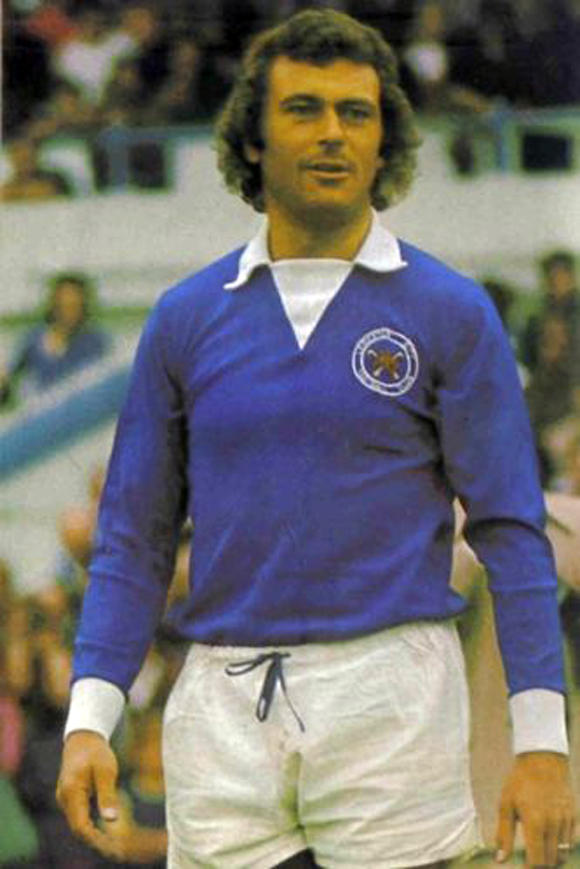
Former England wing wizard Keith Weller, who died in 2004, is considered one of Leicester City’s greatest ever players. In September 1978, he tore the Albion team apart with a scintillating display. The 4-1 victory was the Foxes’ first of the season. It was also Albion’s heaviest defeat since they returned to the Second Division. From the Daily Express:

If Albion were still suffering from the flu germ that forced the postponement of the previous week’s match against Stoke, it was Weller who sent Leicester fans’ temperatures soaring with a vintage display.

He played the key role in Leicester’s first three goals, then capped a first-class display with a goal of his own.

keithweller

Weller gave warning of what was to come when, after four minutes, he cut past three men and struck a shot over the bar.

Leicester then had to survive a purple patch by Albion, before going ahead after 20 minutes. Steve Kember, who controlled midfield for most of the match, found Weller on the right – and Trevor Christie tucked Keith’s low cross inside the far post.

Eight minutes later, Leicester were two up. Weller won the corner and took it himself. And with the bewildered Albion defence massed at the post, Billy Hughes placed his header just inside the near post.

But Brighton did enough before half-time to suggest that Leicester still had a fight on their hands. Peter O’Sullivan missed a first half sitter, and Teddy Maybank’s strong running caused moments of blind panic in the Leicester defence.

Leicester indeed looked to lose their rhythm until a 57th minute penalty by Hughes put the result beyond doubt.

Again, it was Weller’s good work that created the opening. He seemed certain to score until Mark Lawrenson brought him down.

The usually immaculate Lawrenson had his name take for dissent and Leicester centre-half Steve Sims was also booked for a stiff challenge.

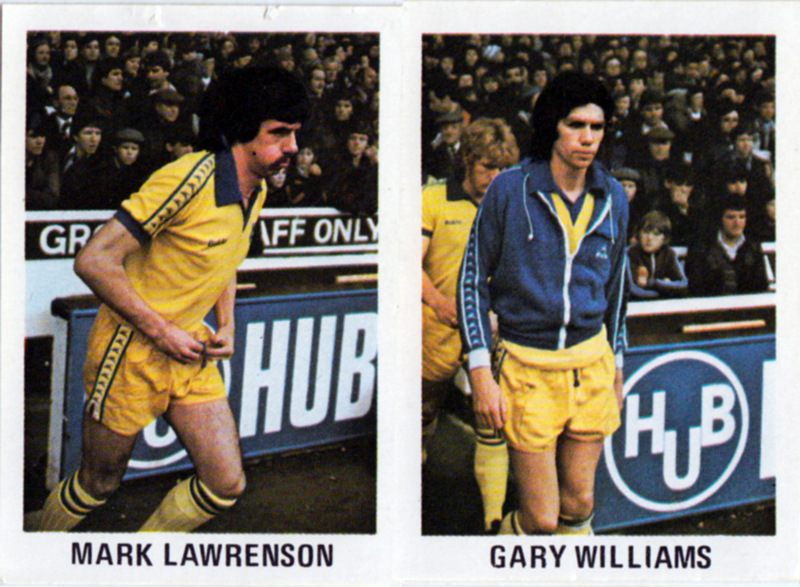
williamslawro

But by then, Leicester were beyond caring. For although full-back Gary Williams pulled one back for Albion with a superb volley 15 minutes from the end, it was then too late to mean much.

And a minute later Weller got the goal he so richly deserved when he pushed a short ball from Christie past the helpless Eric Steele.

Leicester: Wallington, Whitworth, Rofe, May, Sims, Kelly, Weller, Kember, Christie, Duffy, Hughes. Sub: Welsh.

Brighton: Steele, Tiler, Williams, Horton, Rollings, Lawrenson, Towner, Ward, Maybank, Clark, O’Sullivan. Sub: Sayer.

Having won their previous three League games, the Seagulls dropped to tenth following the trouncing. In the Brighton v Leicester City programme earlier on this current season, Alan Mullery provided an interesting postscript to this defeat:

It was a mystery to me why we had performed so badly. On the Tuesday following the defeat, I received a letter saying all the lads had been spotted out in a nightclub in Worthing on the Thursday night. Maybe there was a reason for our poor performance after all and there was going to be hell to pay if it was true. I confronted the lads in a group the next day in training and gave them the opportunity to see me in my office if they were involved.

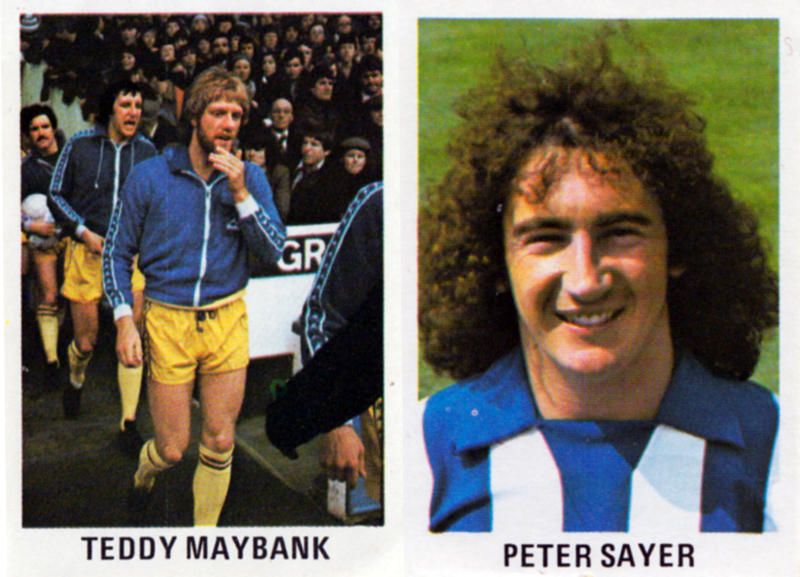
In the end, Teddy Maybank and Peter Sayer both knocked on the door and admitted they had been at the club, but hadn’t been drinking any alcohol. Both were fined two week’s wages which went to a guide dogs’ charity.

Two very naughty boys

Two very naughty boys

Tagged , , , ,