Monthly Archives: January 2014

Brighton on Cloud 9

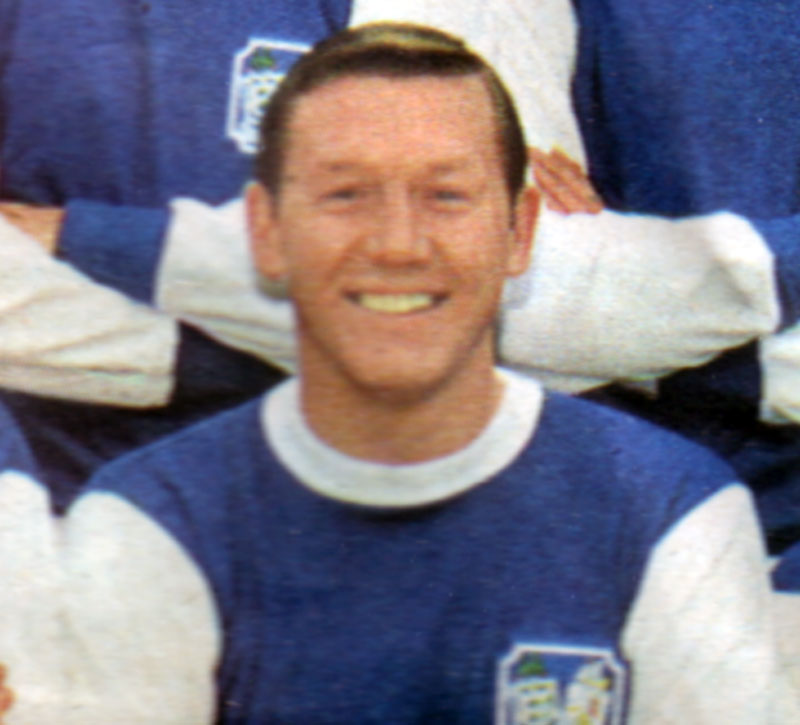
Inside forward Jimmy Collins opens the scoring

Inside forward Jimmy Collins opens the scoring

Having clinched the Fourth Division Championship the previous season, in 1965/66 boss Archie Macauley set about consolidating the side, especially with Bobby Smith’s unsettling departure from the Goldstone in the early stages of the Division Three campaign.

The former Spurs striker, who had been an integral part of the 1960/61 double winning side, was suspended by Brighton for a fortnight for weight problems before being sacked after contributing newspapers articles, which breached club rules.

Early season results for the club were poor. When the side lost 2-1 at Walsall at the start of November, Brighton lay in 21st position and a relegation battle loomed. Then the side thrashed Wisbech Town 10-1 in the 1st Round of the FA Cup, with Jack Smith and Bill Cassidy hitting two, and Charlie Livesey bagging a hat-trick.

Two games followed before Albion then put Southend to the sword in an astonishing 9-1 Third Division victory at the Goldstone played on 27th November 1965. Here is how the Daily Mirror reported the match:

Brighton equalled their best-ever League performance with this slaughter of Southend.

And manager Archie Macaulay enthused about his latest signings, Leck and Magill.

“With three or four new players in the next year or two, we should be back back in the Second Division. I shall not be content until we are there,” he said.

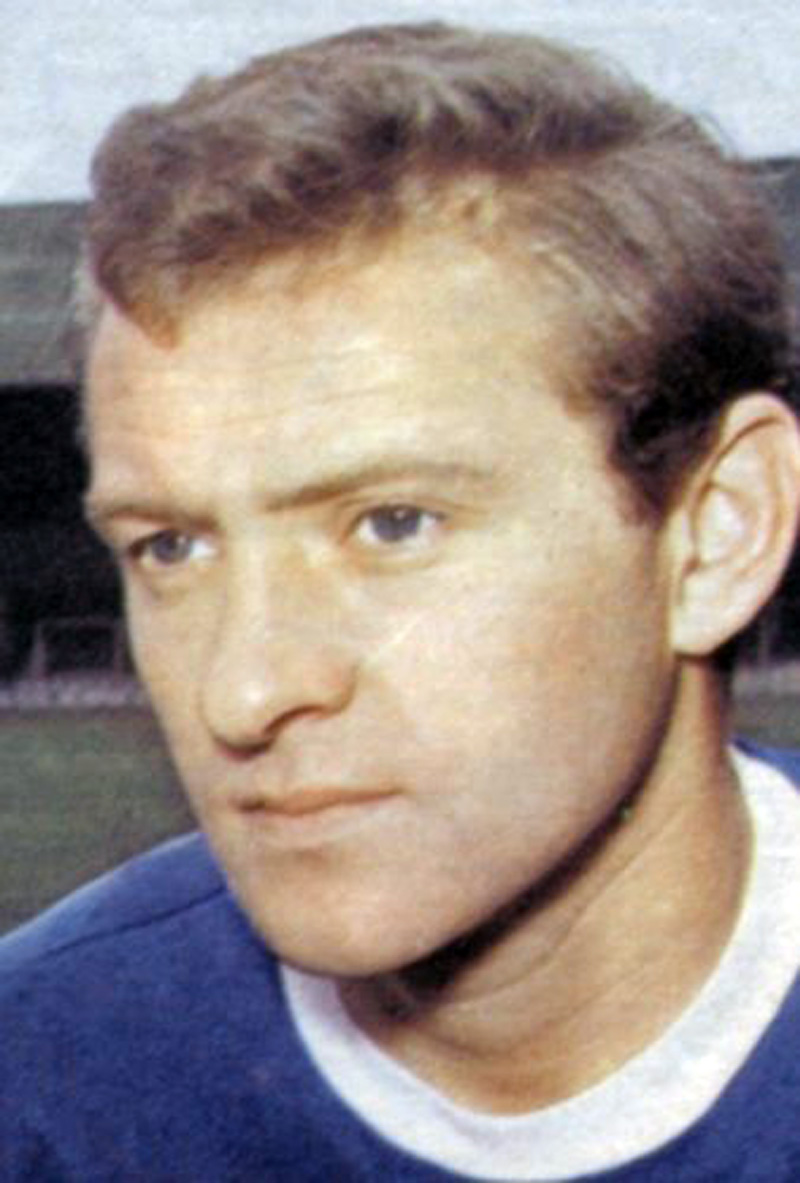
Wally Gould - on the scoresheet

Wally Gould – on the scoresheet

After Jimmy Collins opened the scoring in the sixth minute, followed by Gould in the 15th, Southend never knew what hit them.

It was one-way traffic on their goal, with reserve ‘keeper Ray White doing well to stop a dozen passing him.

Jack Smith, who escaped serious injury in the first minute when he tumbled over a wall behind a goal, was top scorer with three, and man-of-the-match, centre forward Charlie Livesey, grabbed two in the last five minutes.

In their last four matches Brighton have scored twenty goals.

Smith was the first to spark off, with goals in the 60th and 62nd minutes, with Johnny Goodchild hitting his second and sixth at 64 minutes.

The late rush was started by Livesey in the 85th minute. with Smith smashing in his third three minutes later and Livesey powering a great goal in the last minute.

Charles Livesey - at the double

Charles Livesey – at the double

Southend lost skipper Terry Bradbury with a leg injury in the 57th minute and miraculously got through with a goal when right half Mel Slack hit a 40 harder to make it 6-1.

Following this match, Albion fell back to earth with a big bump. They were held at the Goldstone by Bedford Town before succumbing 2-1 to the non-League side in the replay. Nevertheless, Macaulay’s side responded with great resilience in the league, and a 4-3 win over Bristol Rovers and an astonishing 6-4 win over Mansfield (Albion were 5-2 up at the interval) in January entertained the Goldstone crowds while breathing new confidence into the side.

By the end of the 1965/66 campaign, Albion stood in 15th place. It was mission accomplished. After that, all eyes were fixed on the World Cup to be held in England that summer.

Tagged , , , , ,

Strutting Seagulls in unlikely promotion push

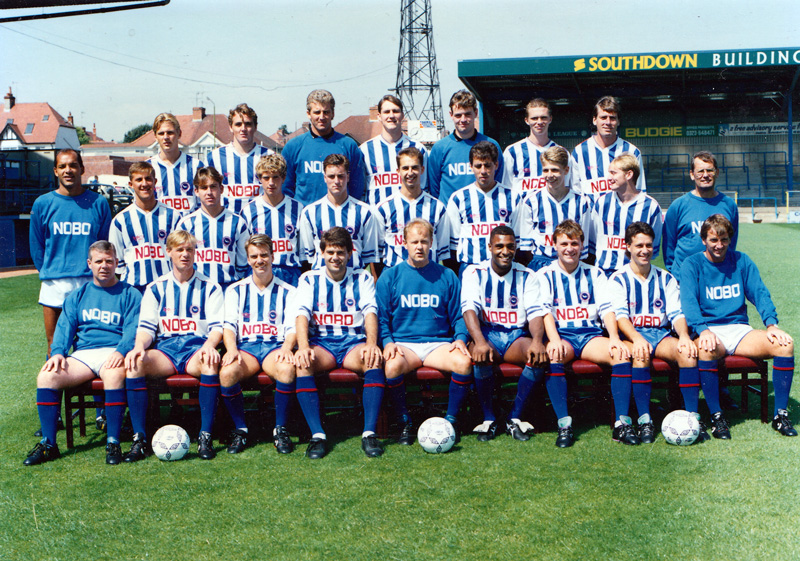
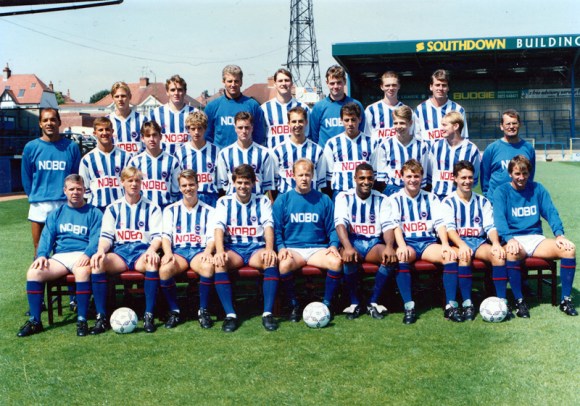
Front row: David Coldwell, Paul McCarthy, Perry Digweed, Nicky Bissett, Brian McKenna, Wayne Stemp, Steve Gatting. Middle row: Larry May, John Robinson, Derek McGrath, Chris Lyons, John Crumplin, Adrian Owers, Gary Chivers, Stuart Munay, Lee Cormack, Ted Streeter. Front row: Malcolm Stuart (physio), Garry Nelson, Mark Barham, Dean Wilkins, Barry Lloyd (manager), Robert Codner, Ian Chapman, Steve Penney, Martin Hinshelwood (coach)

Front row: David Coldwell, Paul McCarthy, Perry Digweed, Nicky Bissett, Brian McKenna, Wayne Stemp, Steve Gatting.
Middle row: Larry May, John Robinson, Derek McGrath, Chris Lyons, John Crumplin, Adrian Owers, Gary Chivers, Stuart Munay, Lee Cormack, Ted Streeter.
Front row: Malcolm Stuart (physio), Garry Nelson, Mark Barham, Dean Wilkins, Barry Lloyd (manager), Robert Codner, Ian Chapman, Steve Penney, Martin Hinshelwood (coach)

The South Coast may not be a soccer hotbed but, as Chris Folley from 90 Minutes magazine reported in 1990/91, Brighton were ‘challenging the town’s apathy with a push for promotion to the top flight’:

As football hotbeds go, Brighton must rate as cold to lukewarm.
Tradition still has a firm grip on the cosmopolitan capital of the South Coast, with a mix of affluent and bohemian lifestyles distracting the locals away from any intense sporting passion.

Until that amiable Scouser Jimmy Melia danced his way to stardom in I983, Brighton & Hove Albion had to regularly take a back seat. Brian Clough briefly woke them up in the late ’70s, but it wasn’t until that famous flight to Wembley that anyone took the Seagulls seriously.

Apart from the two promotions and two seasons in Division One under Alan Mullery, of course.

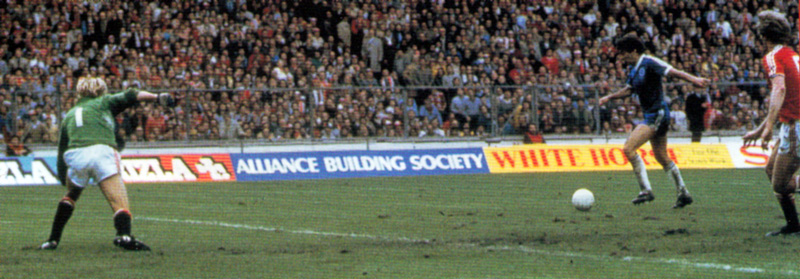
Even on Cup Final day itself, as the players announced their arrival at the old stadium courtesy of a British Caledonian helicopter, the romance seemed to go too far – perhaps they forgot they were still a First Division club (sic).

These days, the legend of Gordon Smith’s extra-time miss still looms large in Brighton folklore – but more as a joke than a sign of despair.

Meliamania did not last long after the 4-0 drubbing handed out by Manchester United in the replay, and the club has since gone back into its shell.

But all that could change this year, as Brighton once more challenge for a place in the First Division. After last season’s modest effort, many tipped them for relegation this year, but the wise heads at the Goldstone Ground had other ideas.

As the Second Division promotion race opens up, with the top three all dropping crucial points, the Seagulls have suddenly found themselves thrust into the heat of the battle. An impressive 3-1 win at Bristol Rovers on Easter Monday shot them into fourth place, and now, even the town’s Saturday shoppers stop in their tracks when they look at Final Score and realise what’s really happening.

Leading the way this time is Barry Lloyd, a low-profile, lower-division man quite unlike the flamboyant, carefree Jimmy Melia who so personified the great Cup adventure.

Lloyd started his playing career at Chelsea in the 1960s, alongside George Graham, John Hollins and Peter Osgood, but after failing to break into the big time he learnt his trade at Fulham and Brentford as a robust defender and midfielder.

His first taste of management was just as humble – on the famous Huish Park slope at Yeovil Town.
Lloyd came to Brighton as a coach under Alan Mullery, his skipper at Fulham in the 1975 Cup Final side.

The majority of the team stayed on when he took over in January 1987, and with Steve Gatting, Gary Chivers and Dean Wilkins still around. Lloyd is not surprised at this season’s lift-off.

“Without meaning to sound blasé,” he says, “I knew we had a much better squad this year and thought we had a chance. We managed 50 points last year, and with a couple of new signings I thought we could add another 15 or 20 points to that tally.”
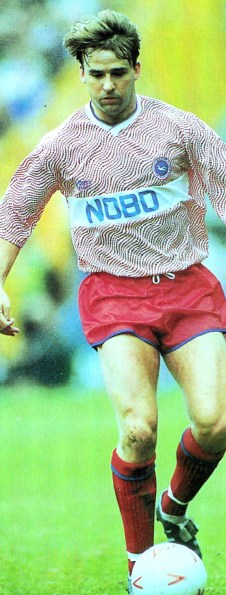
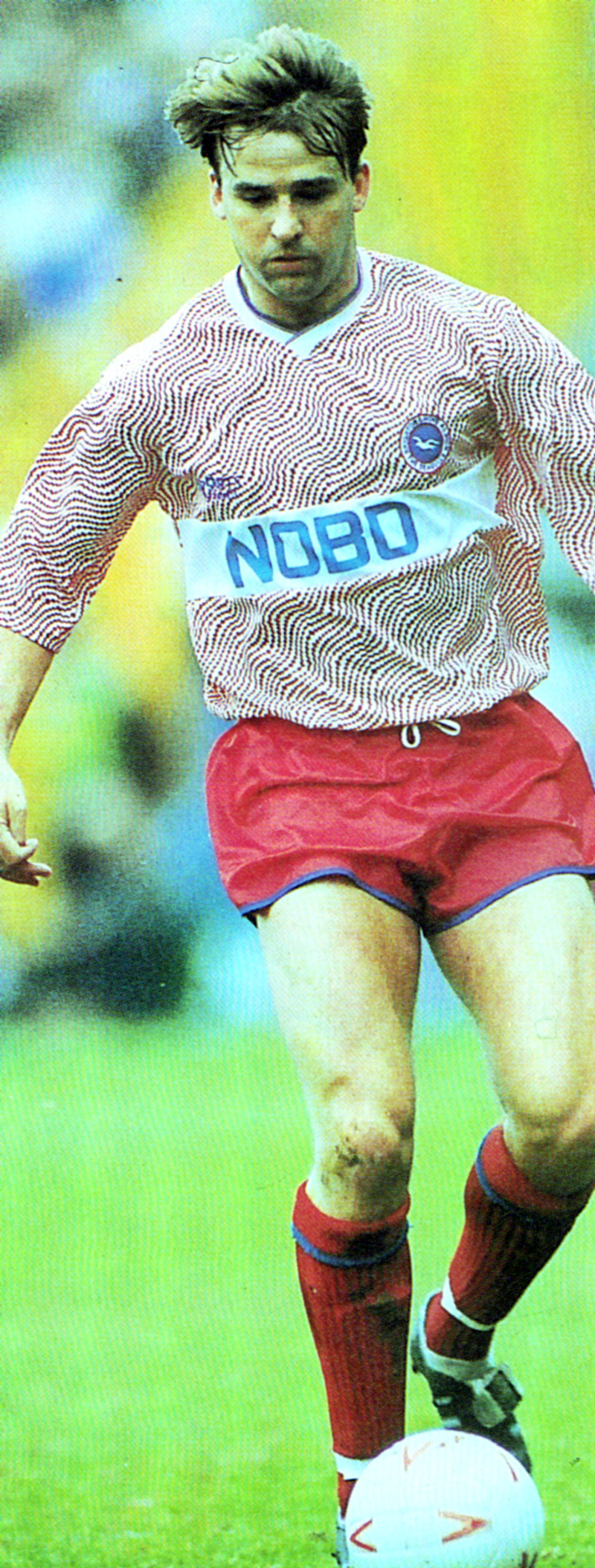
John Byrne in action. Did we really mount a promotion bid wearing this?

John Byrne in action. Did we really mount a promotion bid wearing this?

Inevitably, Lloyd refers to his new strikeforce of Mike Small and John Byrne. Their partnership has blossomed this season, with both players looking to make up for their respective periods of wilderness in Greece and France.

“You live or die by your performances upfront,” Lloyd says, eager to vindicate the chequebook action he
undertook at the end of last season.

“I was offered a ridiculous price for John Byrne to start with but I kept in touch because I needed someone like him. And at £125,000, he’s been an excellent buy for us.”

Byrne’s renaissance will delight those fans who like their football played with a bit of style. The Irish striker’s career took a nasty deflection after he briefly donned the famous QPR No.10 shirt once worn by Marsh and Bowles, but a fruitless spell at Le Havre has made him hungry for a second chance – and perhaps even a place in Jack Charlton’s international plans.

But it’s been the nomadic Mike Small who has hit the headlines this season with his powerful presence in the penalty area. Eight years on the Continent, drifting from Standard Liege to Twente Enschede to PAOK Salonika, may make him a great advert for EuroRail but his move home has resurrected his career.

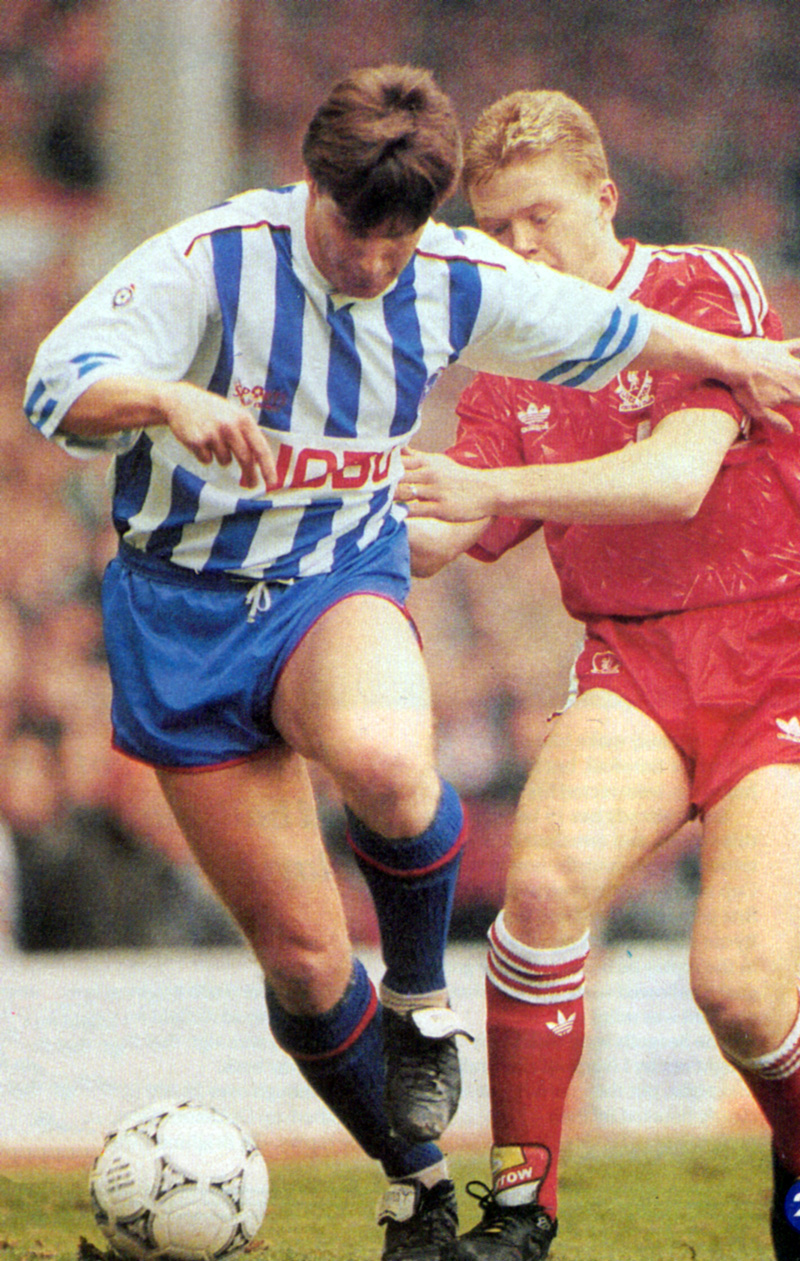
Small already has 19 League goals this season, and armchair fans will remember his contribution in the Cup matches with Liverpool. In the first game he scored and then set up Byrne’s spectacular equaliser, while in the replay he had a perfectly good goal disallowed while the one that counted was miles offside.
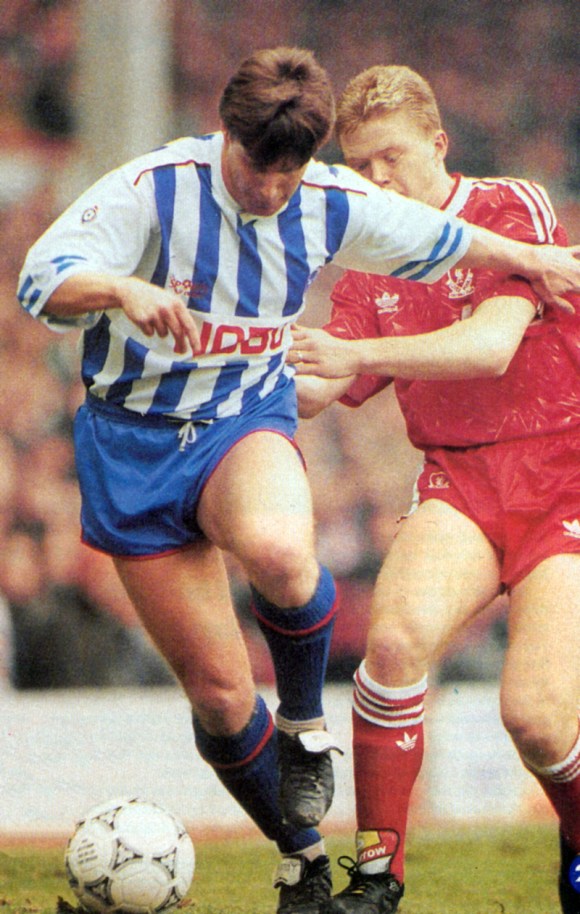
liverpool1991v2

The Seagulls were ultimately caught out by Liverpool’s late rally that night, but their confidence was clearly boosted by their performance. To Lloyd’s amazement over 5,000 Brighton fans winged their way to Anfield for the first match – a sure sign that the club was on its way back.

But although over 20,000 filled the patched-up Gotdstone Ground for the replay the Brighton public have yet to be stirred into action by playing Liverpool next season in the League.

“To be honest, we’ve been disappointed with the response, particularly after they made such an effort for the Cup,” says Lloyd.

“Hopefully they’ll be back when the crunch comes.” As you might expect, Lloyd firmly believes nothing will be decided until the last kick. With the three-point system and the play-offs making the Second Division even more of a dogfight, he has wisely chosen to enhance his resources. Colin Pates was recently rescued from the Highbury reserves and put straight into central defence alongside his former Chelsea team-mate Gary Chivers. With Steve Gatting slotting in at left-back, Perry Digweed in goal and Clive Walker still speeding down the wing, there is plenty of First Division experience. Indeed, jokes about ‘Dad’s Army’ taking the Division by storm are already flowing thick and fast.

The over-30s also include transfer-listed striker Garry Nelson. who has scored in the last three games in the three games in the absence of the injured Small, For Gatting, the only remaining member of the 1983 Cup Final team still at the Goldstone Ground, the season has been an unexpected bonus. With brother Mike temporarily out of the cricketing (and tabloid) limelight, he hopes the Gatting name can soon return to the back pages.

“Before the Cup Final, we had a good season in the First Division and that was probably the best side I played in,” he recalls. “But this side compares very favourably. The team is a lot steadier now than it has been for the last two seasons, when we’ve played well but not got the results.

“Barry has mixed it together well this season,” he adds. “We’ve got a lot of good ball-plavers but we’re also playing with a lot more discipline. Realistically, it should be the play-offs, but anything could happen.”

As the final stretch approaches, however, the growing optimism on the pitch is being checked by uncertainties off it. Already, plans have been made for a new 25,000 all-seater stadium outside Brighton to comply with the requirements of the Taylor Report but with debts running into millions, the Seagulls are approaching the First Division on rocky ground.

Yet while the commercial wranglings continue, Lloyd knows the best job he can do is on the pitch. His collection of experienced pros are all looking for that chance to haunt their old enemies, and the younger players are having a fling too.

Both Paul McCarthy and Derek McGrath were in the Irish Under-21 squad which tost 3-0 to England at GrifTm Park, while local tad John Robinson has emerged as a new talent in midfield alongside Dean Wilkins.

“We’ve been very fortunate with the youth policy.” aclds Lloyd, “McCarthy has done very well alongside the senior players and having that strength in depth is very important. We’ve got 27 pros here, and at a crucial stage of the season all of them are going to have a say in the future of this club.”

The young Gulls’ time may yet come, but for the moment it’s the old birds who are strutting along the front with a spring in their step. The sea air must be doing them the world of good. •
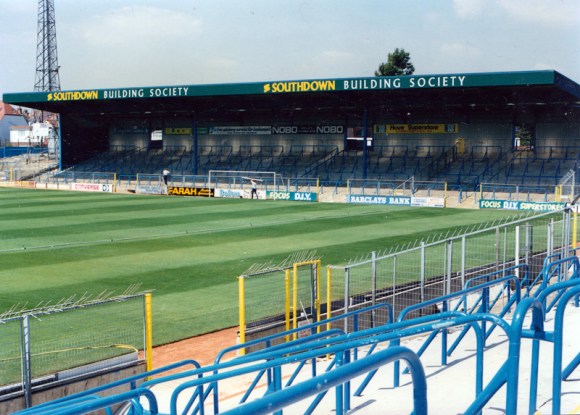
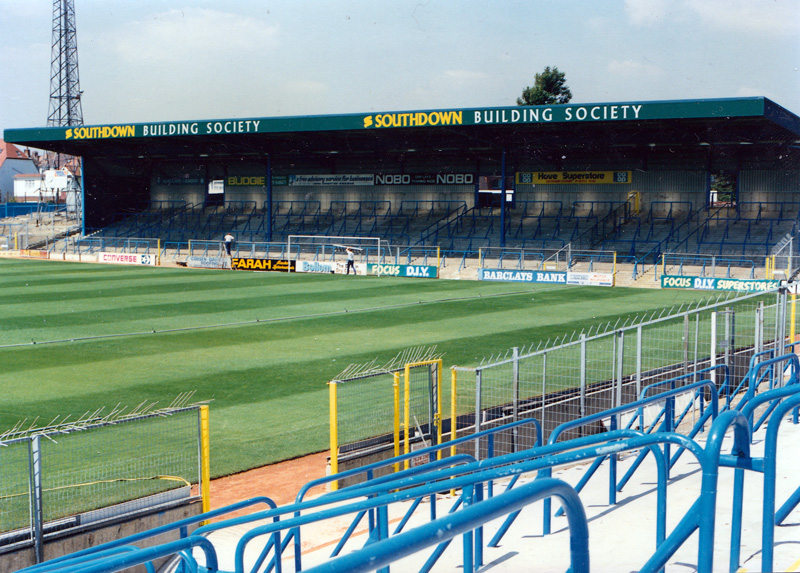
goldstoneground1990

Tagged , , ,

If Smith had scored

Not only was the moment so excruciating. So much has been written about the defining moment of the FA Cup Final 1983 that it’s probably hard to generate fresh interest from Brighton fans on Gordon Smith’s choker. Happily, Nick Hancock and Chris England’s amusing and fascinating ‘What Didn’t Happen Next’, published in 1997, imagined the repercussions had the Scotman’s put his effort away. It makes for a delightful read:

Smith must score

Smith must score.

Gordon Smith can hear the men he now works with on the phone sometimes. ‘I’m working with Gordon Smith … yes, that one.’ Gordon Smith should have scored. He’d even scored a last-minute winning goal in a Cup final before, for Rangers in the 1978 Scottish League Cup.

Mind you, haven’t we all. I know my garden frequently echoed to the sound of a familiar voice – mine – declaring:

‘It’s Hancock! What drama! In the dying seconds he has the chance to clinch the Cup for Stoke … and he’s done it! A shot so fierce that United keeper Paddy Roche has been carried through the net and impaled upon some railings here at Wembley.

‘And dramatic news! The United directors have decided to disband the club, such is the finality and power of the goal. Chairman Edwards has just commented: “What’s the point? We can never compete with a club like Stoke and their brilliant if slightly overweight striker Hancock. l’ve suspected it all along, but now I may as well admit it. We are shit.”‘

In 1983 Gordon Smith was in a position to live the dream. Wembley. The Cup final. The last minute. Manchester United 2, Brighton and Hove Albion 2. Michael Robinson had broken away, and the beleaguered defence was drawn to him like Stan Collymore to a signing-on fee.

Robinson slipped the ball to the unmarked Smith, who steadied himself as the commentator – and very likely Gordon himself – cried: ‘Smith must score!’, and fired the ball at the keeper’s legs. If only Coronation Street uniped Don Brennan had been his opponent, this tale would have had a different ending. As it was, it was blond Brad Willis lookalike Gary Bailey, and he made the save.

Inevitably United won the replay easily, and Brighton left Wembley empty-handed.

Relegation to the Second Division was hardly consolation – although the prospect of Second Division football would today have Brighton fans leaping about and counting the days till next season.

Yes, as I said, this book was published in 1997…

Smith didn't score

Smith didn’t score. Well, not in the last minute.

But what if Smith had notched?

The most profound repercussions would have fallen on Smith himself, and not all of them that welcome. The close proximity of Michael Robinson, a strapping lad of no fixed hairstyle, would almost certainly have meant that Smith was in line for a lingering and passionate congratulatory kiss from the Eire international, and it is this prospect which many experts believe may have caused Smith’s fateful hesitation.

The caption from the book read 'Michael Robinson. An enigma: he lives in Spain but he's not an armed robber'

The caption from the book read ‘Michael Robinson. An enigma: he lives in Spain but he’s not an armed robber’

Brighton would have held on to Gary Stevens (a good thing) and Steve Foster (a good thing for Luton Town), whose Brian May hairstyle is coveted by Manager Jimmy Melia.

The European Cup Winners’ Cup campaign would have been a brief flirtation – a la Robbie Williams and Anna Friel – with the Seagulls crashing out 4-0 on aggregate to Hungarian cable TV operators Videoton.
•
United sack Ron Atkinson for his lack of success, and for his tactlessness in wearing more silverware at Wembley than the club has picked up in recent years.

Candidates to replace Big Ron include ordinary-sized Ron Saunders, John Toshack and Graham Taylor, the manager with the Midas touch at Lincoln and Watford.

Taylor gets the job, and clears out Bailey, Muhren, Wilkins and Coppell, and, after a surprise auditor’s report, Nobby Stiles, who United had mistakenly kept under contract since 1974. By keeping very quiet and hiding behind a boiler, Nobby had, without kicking a ball, been drawing a wage of thirteen guineas a week.

•At Brighton, Jimmy Melia, the man who’d managed them to Cup triumph, is also sacked for supposed ‘financial irregularities’. Apparently, the substantial cash rewards the Cup had brought had gone missing, and investigations revealed that Melia had blown it all on a series of dubious hair restoration and transplant schemes, which left Brighton in dire straits but Jimmy looking like Michael Bolton.

Graham Taylor puts silverware on the United mantelpiece within three years, and many of that Third Division championship winning side are still held in much affection by the supporters of Manchester City.
•
Nick Hancock’s mould-breaking unfunny bloopers video, And Smith Did Score, is a best-seller in the Brighton area, where Gordon Smith has become the town’s very popular mayor.

Steve Foster's famous captain's armband

Steve Foster’s famous captain’s armband

In a parallel universe far, far away, it really did happen…

Tagged , ,

Dressing up as Gary Glitter for Fans United

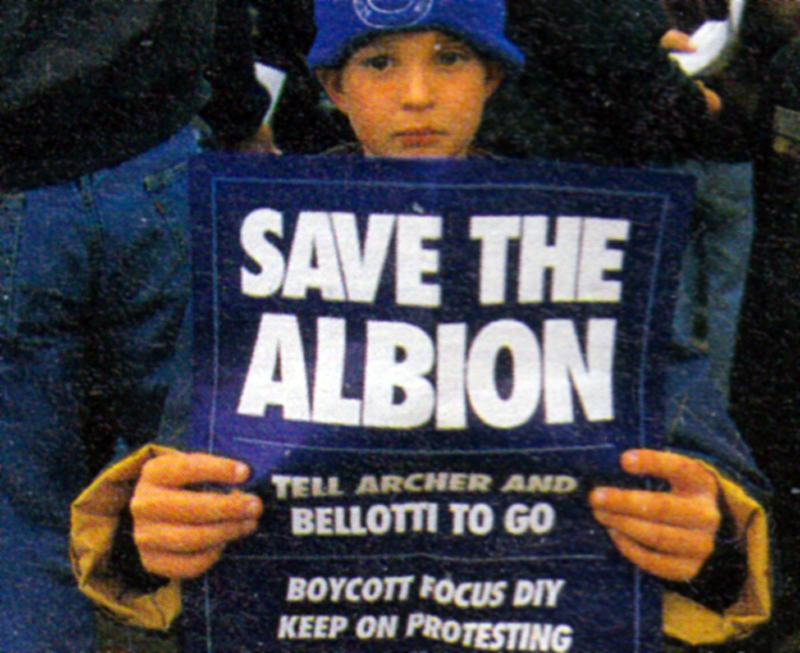
savethealbion

From 90 Minutes Magazine, 25 January 1997:

Unless you’ve been living under a paving stone for the past couple of years, you can’t have failed to notice that Brighton and Hove Albion are in a bit of bother just now. Bottom of the Third Division and staring the Vauxhall Conference in the face, the beleaguered South Coast side’s directors have sold their Goldstone Ground, leaving the club homeless and on the verge of extinction.

To date, Brighton fans have already organised countless demonstrations and petitions, protested outside board members’ houses and even marched through London to FA headquarters to get their point across, all it seems to no avail. But they’re not finished yet. Not by a long chalk.

In their latest protest, Fans United, Brighton fans are asking all other football fans to put aside their own allegiances and to attend the Goldstone Ground on Saturday 8 February for the Seagulls’ clash with Hartlepool in a show of solidarity against the Brighton board and against greed and corruption in football as a whole. There’s no Premiership games and a restricted First Division programme so if you want to help a club and its fans in their hour of need, why not head for Brighton a week on Saturday. Your efforts will be appreciated.

Trevor Payne is pictured with co-star Gary Anderson, who plays Elvis in the show

Trevor Payne is pictured with co-star Gary Anderson, who plays Elvis in the show

Getting into the spirit of it was former Albion triallist Trevor Payne who planned to swap football boots for platform boots to help save the club. As The Evening Argus reported in February 1997:

Trevor, star of the musical That’ll Be The Day, in which he appears as Gary Glitter, has arranged a benefit show for the Fans United fighting fund.

Earlier this month, thousands of fans from all over Britain and Europe descended on the Goldstone to back Seagulls supporters protesting against the board, blamed for the club’s demise.

Worthing-born Trevor, 50, was a teenage triallist for the Seagulls in the Sixties, but chose to follow a showbiz career instead.

And now, as writer, director and star of That’ll Be The Day, he has offered to donate an entire night’s profits to the Albion fans’ cause.

The show will be held at Brighton’s Dome Theatre on March 5, as part of a 60-date UK tour,

Trevor said: “Most of the cast and production team are avid football fans and we were all impressed by the recent Fahs United day at the Goldstone.

“We all wanted to do something practical to help the fans and this seemed to be the best way, as well as giving them a great night out.” Sixties classics like You’ll Never Walk Alone, since adopted as a football anthem, feature in the show, which Albion supporters’ club vice-chairman Liz Costa is convinced will be a sell-out.

She said: “I was very emotional when Trevor contacted us to say he would be donating this money to the fighting fund. It could generate up to £7,000 for us.”

Fans are being urged to wear Albion strips to the show.

Suffice to say, these plans came before Gary Glitter was arrested in November 1997 on suspicion of indecent images stored on a computer he had brought to a store to fix.

Tagged ,

Graham Winstanley as you’ve never seen him before

A myth seems to have grown around Peter Taylor’s time at Brighton being some kind of halcyon era-lite for Albion’s side that eventually won two promotions in two seasons in 1977 and 1979. That it was expertly and steadily pieced together from 1974 onwards. All that Alan Mullery had to do afterwards was to not cock things up, and it’s Division One, here we come.

The reality was that Taylor’s side played in fits and starts. Far from having a Midas touch, his dealings in the transfer market were hit and miss. While famous for capturing Horton, Binney and Ward, he also signed many players that did not set the Third Division alight. These included Allen Lewis, Steve Govier, Ricky Marlowe, Tommy Mason, Billy McEwan and Jim Walker. Even Ian Mellor only became a hit after Mullery took over, while skipper Ernie Machin spent much of the 1974/75 season out injured.

By 26th October 1974, Brighton were in 22nd position as the final whistle blew on Graham Winstanley’s debut for the side, a 2-1 defeat at Gillingham. Thankfully, things improved, in no small part to the new centre-back’s uncompromising performances. At the time, Andy Rollings was in his first year in the Albion starting line-up. The guidance that Winstanley gave to ‘Rollo’ helped the rookie defender’s game immeasurably.

With a curious emphasis on his wearing of glasses (yes, it’s definitely ‘of it’s time’!), here’s what John Vinicombe and Peter Fieldsend wrote about the man nicknamed ‘Tot’ in an article in the Evening Argus on 19th December 1974:

winstanley2

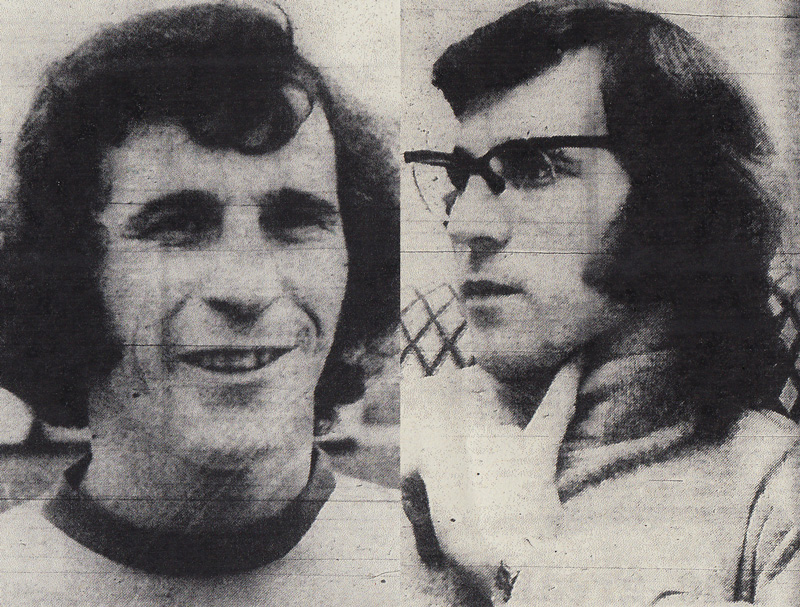
These are the two faces of Graham Winstanley, Albion captain.

One shows him in working gear, the other is the man fans could be excused for passing in the street without so much as a second glance.

Professional footballers aren’t generally reckoned to wear spectacles, and Graham Winstanley is one of a band that relies on contact lenses. Without the little plastic discs that stick close as a skin to the eyeball, Graham, and others like him, would be unable to earn a living in their chosen profession.

Cushioned
Graham has worn glasses since he was 18 and that is nearly eight years ago. The moment he realised he needed glasses was the day of his first driving test as when asked to read the number plate of a car some distance away, he could not pick out the letters distinctly.

At the time, he was with Newcastle United, the club he joined straight from school and served for six years.

The shock of discovering defective eyesight was cushioned by using lenses, an like others in the game he has overcome the discomfort of wearing artificial aides to better seeing.

Graham knows what it feels like to get a ball in the eye from close range and stare at a mirror with one good one at a rapidly discolouring and bloodshot optic.

Promotion
He has lost lenses on the field, but his two previous clubs, Newcastle and Carlisle United, have picked up the £40 tab each time.

Since Graham joined Albion for a £20,000 fee from Carlisle last month after a loan period, the side have picked up.

His experience in the middle of the back four has rubbed off on to younger players, and for the first time in his career, Graham feels as though he is a vital link.

At St James’ Park he was by no means a first-team regular, with only five League games and two appearances as substitute.

When Newcastle sold him to Carlisle for £8,000 in 1969, he found himself with a club who run only one professional side. He had a total of 164 League outings but he was in and out last term when the club gained promotion to the First Division.

Interest
From the start, Graham was in but after the second game, when Carlisle crashed 6-1 at Luton, he was dropped and did not get back until 14 games later.

With only three points from the first six matches, it can readily be appreciated how well Carlisle pulled round to go up.

But Graham knew he did not figure in manager Alan Ashman’s plans.

This term, he played twice in the first team – in midfield against Colchester in the League Cup and at full-back when Spurs visited Brunton Park.

When Peter Taylor showed interest, Graham jumped at the chance to come to the Goldstone.

I am enjoying my football down here. It is a matter of settling in and concentrating on the job in hand. I don’t regard myself as being in the side purely as a sweeper. I get free as often as I can.

“It is important to know one’s strengths and to play to them.”

Considering Graham was short of match practice when he joined Albion, he has done remarkably well. Apart from those outings against Colchester and Spurs, he was on the sidelines in company with Eddie Spearritt who went to Carlisle on a free transfer in the summer.

Just a coincidence that Graham now lives in a house at Shoreham with his wife Joan only a stone’s throw from where Eddie had his home. Now more than 500 miles separate them.

Captained
How does Graham view the situation at the Goldstone? “We are in a false position according to the form of the last three or four games. We played great stuff at Halifax, of instance, but came away with nothing.

‘If we keep playing like that it has to come right. The side work hard and have skill. I haven’t seen anybody drop their heads and I don’t think I shall.’

Apart from schools’ soccer this is the first time Graham has captained a side.

Peter Taylor has high regard for his leadership qualities and ability to read a game. But ask Graham to reel off car numbers 75 yards away and he’d be sunk.

Brighton eventually finished 19th. Having promised promotion, Taylor was relieved to see his side stay in Division Three.

As reward for his leadership in strengthening the defence, Winstanley was appointed club captain in August 1975. However, he broke his nose and never again regained his place as a regular in the side. Dennis Burnett and Graham Cross were preferred as centre-back partners for Andy Rollings in the Third Division under Taylor and Mullery. Once the Seagulls hit the Second Division in 1977, it was Mark Lawrenson who took the number six shirt.

winstanley3

Even so, Winstanley was described by Alan Mullery as the ‘perfect professional’ for his excellent attitude and solid performances. While he rarely made the headlines on the pitch, one of his rare goals was a volley for Albion’s second in a 3-1 victory over Spurs in April 1978. Had I been writing the headlines that day, they would have been something poor along the lines of ‘Tot finishes off Tottenham.’ OK, I won’t give up my day job.

After Brighton secured promotion to Division One, Winstanley eventually returned to Carlisle on a free transfer in July 1979.

Tagged

The original Stephen Ward

Does anyone remember the first Stephen Ward?

stephenward1

Not the Republic of Ireland international currently on loan at the Amex, but Albion’s reserve player of the 1970s.

When I asked on North Stand Chat, ‘One Teddy Maybank’ replied:

Yes, I don’t think he made an appearance for the first team, but being a keen youngster at the time, I watched a fair amount of mid-week league reserve fixtures. He probably would have been OK in the old Div 4, but just didn’t quite have the ability for the level Mullery had us playing at. He was sort of ungainly in movement…..

He was never going to displace Horton, Piper, Clark or any of the other midfielders around that time.

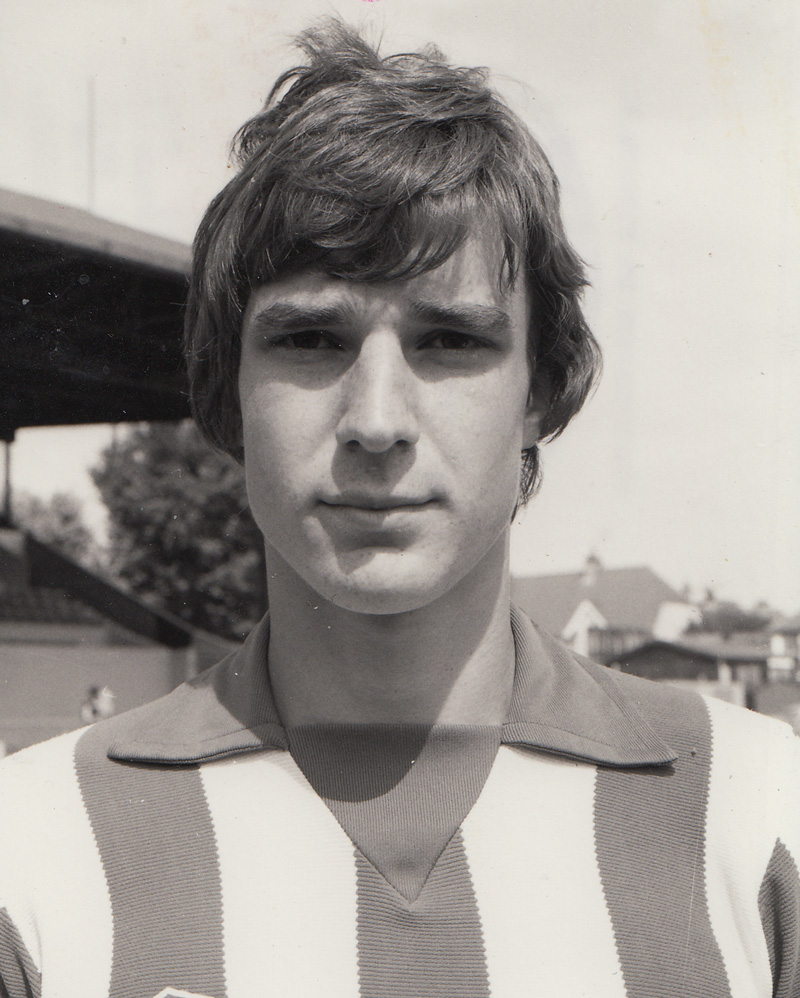
Although no relation to Peter, Stephen Ward does feature in various Brighton squad photos from 1975/76 to 1978/79. Here he is in 1976/77:

1976-77large2

Back row: Tony Towner, Joe Kinnear, Vaughan Woolley, Stephen Ward, Robin Madden, Alan Lewis, Carmine Porpora, Steve Eley.
Middle row: Alan Mullery, Michael Jones, Dennis Burnett, Gerry Fell, Graham Cross, Andy Rollings, Ken Gutteridge, Ian Mellor, Chris Cattlin, Sammy Morgan, Graham Winstanley, Colin Murphy, Mike Bamber.
Front row: Glen Wilson, Ken Tiler, Harry Wilson, Peter Ward, Peter Grummit, Michael McKen, Philip Smith, Brian Horton, Peter O’’Sullivan, Fred Binney, Steve Piper, George Aitken.

Tagged

The forgotten FA Cup match of 1983

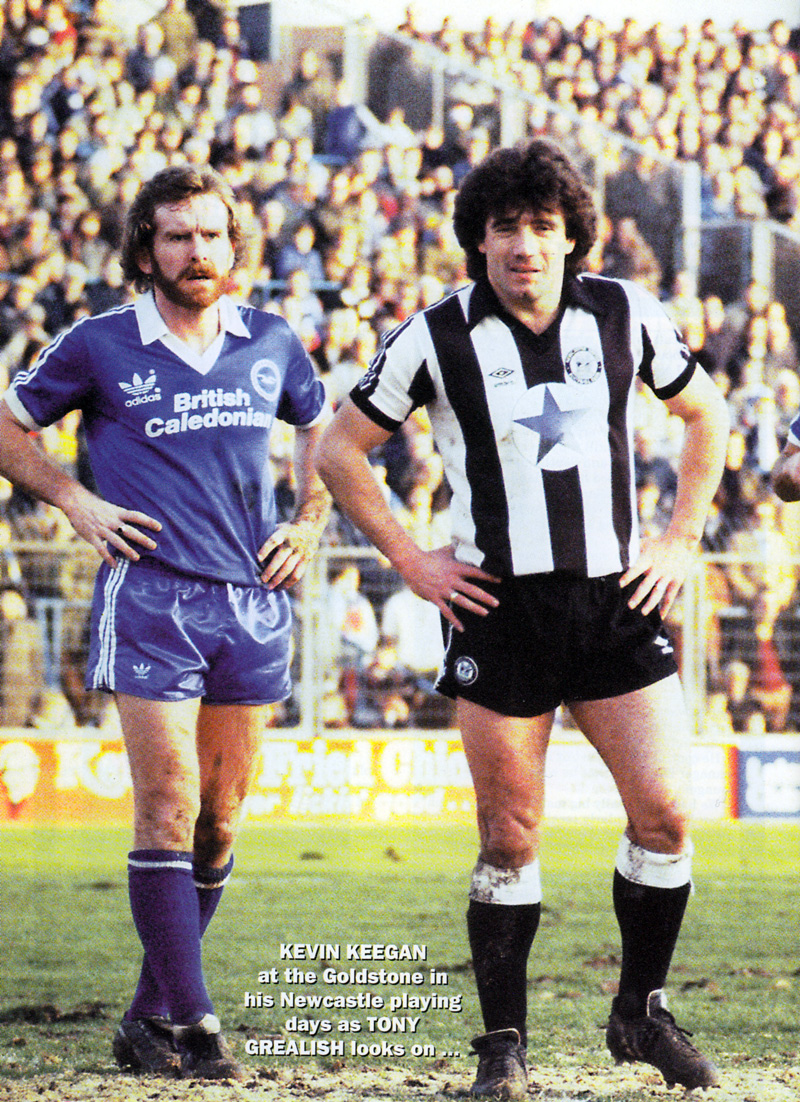
grealish-newcastle

Brighton famously embarked on a glorious FA Cup run in 1983, but it began inauspiciously. Who can remember much of the January afternoon at the Goldstone when the Seagulls were held by Second Division Newcastle, Keegan et al?

Here’s John Vinicombe’s thoughts in the Evening Argus in the aftermath:

A series of mixed blessings attach to Albion’s FA Cup replay at Newcastle on Wednesday.

For a start, they are still in the competition, albeit with a slimmer chance of reaching the fourth round.

At St James’ Park, where there must surely be a crowd of around 30,000, Albion stand to pick up around £20,000 as their share of the gate.

And although skipper Steve Foster’s two match suspension is now advanced by the course of events, he will be eligible for the important First Division match at home to Luton Town on January 22.

There is little doubt to my mind as to which is the most important engagement from the long-term point of view. Retaining championship status is all-important, while the cup has so often proved a flight of fancy for Albion.

Can anyone seriously imagine them winning it, or even reaching the final?

No, no one at the time could have imagined Brighton doing that. How wrong we were all proved to be!

Far from benefiting the side drawn at home, the Goldstone pitch was certainly problematic for Melia’s Brighton side trying to play a more flowing game with three strikers:

Conditions reduced Saturday’s affair to a lottery, although the 1-1 draw was right on balance, and the ground was the same for both sides. But what has happened to that stretch of grass that was once known as Frankie Howard’s pride?

After 15 minutes or so, divots were carved out everywhere, and it was putting an impossible premium on skill asking players to run with the ball, or pass with any certain degree of accuracy.

Newcastle had the better of the play early on with Steve Foster slipping:

An untimely loss of balance let Keegan in and Graham Moseley deflected for a corner when Albion could so easily have gone a goal down. Again Moseley rescued Albion with a flying, one-handed save from Keegan. This was at 23 minutes when Newcastle were much the better side.

But suddenly they were put under pressure when Andy Ritchie’s shot was cleared off the line by John Anderson.

Varadi looked sharp, and so did Chris Waddle who continually pushed up on the left, and had a fascinating duel with Chris Ramsey.

Only 21, Ramsey has the youth to triumph over stamina tests, and Giles Stille also gave Melia what he wanted with non-stop running.

Brighton took the lead on 56 minutes:

When Stille’s cross came over after snapping up a poor clearance, the ball took a slight deflection off Clarke. This found Ritchie on the left in plenty of space. For what seemed an eternity he fidgeted to find a spot, and then appeared to mis-hit the shot. The ball, however, rolled gently past Carr’s right hand.

1-0 to the Seagulls, who were then on top, even gaining their first corner on 65 minutes. Even so, Newcastle battled on and had a penalty claim for a supposed push on Keegan by Gary Stevens but the referee did not award it. As Vinicombe noted:

Plenty of referees would have given a penalty but Tony Glasson hasn’t been on the list for 24 seasons for nothing.

However, Newcastle did hit back a minute later:

In terms of experience, Newcastle have the edge. Apart from Keegan, there is a wily and abrasive Terry McDermott whose 77th minute equaliser capped a shrewd piece of kidology.

When Moseley turned the ball round for a corner, McDonald’s flag kick came to Keegan, and he dummied for McDermott to drive home a beauty.

While appearing to turn it on and off in patches, McDermott was always threatening, a similar sort of role to Case, except Case didn’t score.

Graham Moseley pulled off a great save from Newcastle’s Mick Martin late on, while Stille just failed to connect with a Jimmy Case cross.

When the final whistle blew, it was all-square. A replay was hastily arranged for St James’ Park, where Peter Ward proved keeper Kevin Carr’s master once more, just like in 1979.

Tagged ,

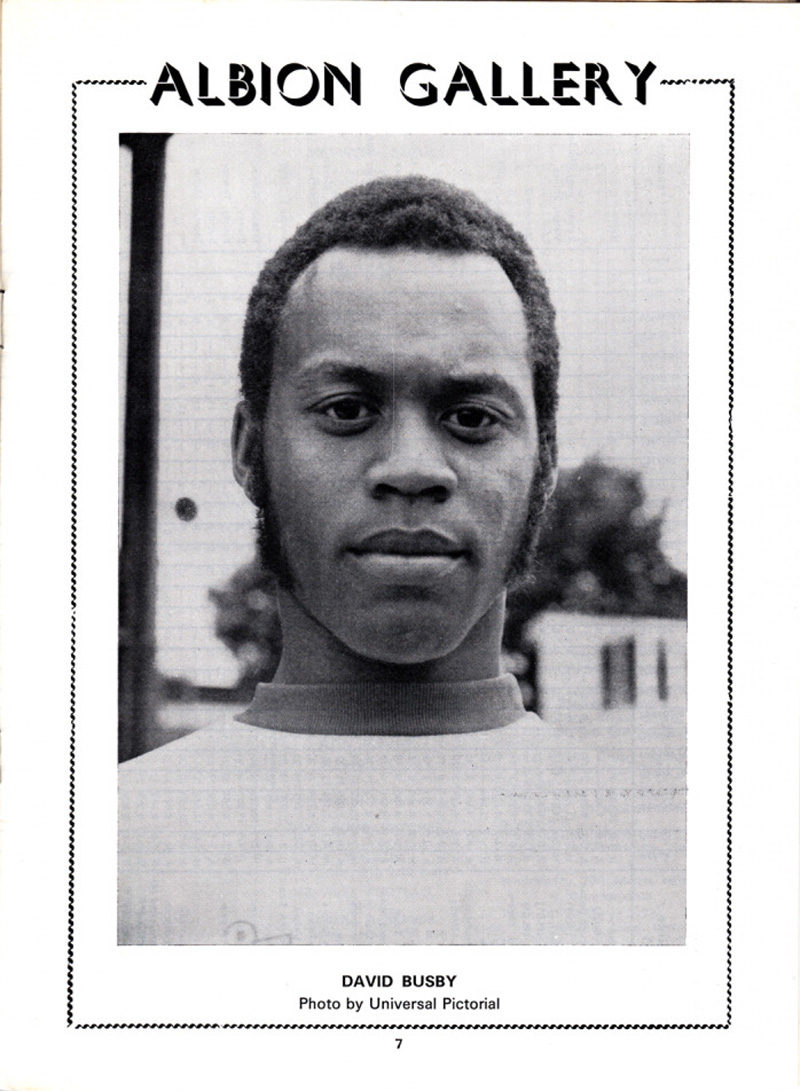
Dave Busby – Albion’s first black footballer

davebusby3

“My best asset was speed,” says Dave Busby. “I had a lot of natural pace. I had some good skills but my speed gave me time.”

Aged 17 at the time, the Paddington-born striker made history on 20th October 1973, becoming the first black player to appear for the first team of Brighton & Hove Albion.

In the dying days of the Pat Saward era, struggling Brighton beat Shrewsbury 2-0 thanks to goals from Ron Howell and Ken Beamish, to move up to 19th in Division Three. Busby came on as a substitute for loanee John Boyle on 78 minutes: “It was so good to come on and hearing the crowd cheering my name.”

His manager Saward missed it, though. He was in Crewe watching a transfer target, goalkeeper Bryan Parker.

Perhaps it was no coincidence that Busby got his chance with trainer Glen Wilson deputising. As Dave says: “Pat Saward was a good manager. As far as I was concerned, though, he just was not brave enough to put the youngsters in when we were hot. The first team should have been made up of both the young and the experienced and we would have been great.”

Having gone to school in Heathfield, Sussex, where Frank Bruno was a fellow pupil, Busby joined the Goldstone staff as an apprentice in 1973, having played as a junior for Heathfield United. When Brian Clough arrived at Brighton, Busby was one of the few to have encountered him before: “Not a lot of people know this. I played under Brian Clough at Derby County for three weeks as a trialist before I came to Brighton. He said to me then that I would stand a good chance in a lower league.”

Even so, following his debut, Dave did not see first team action under Clough, with Pat Hilton, Ken Beamish, Lammie Robertson and Barry Bridges higher up in the pecking order up front. This setback did not put him off from continuing to score regularly for the reserves. As a result, Busby eventually signed a contract as a professional in August 1974.

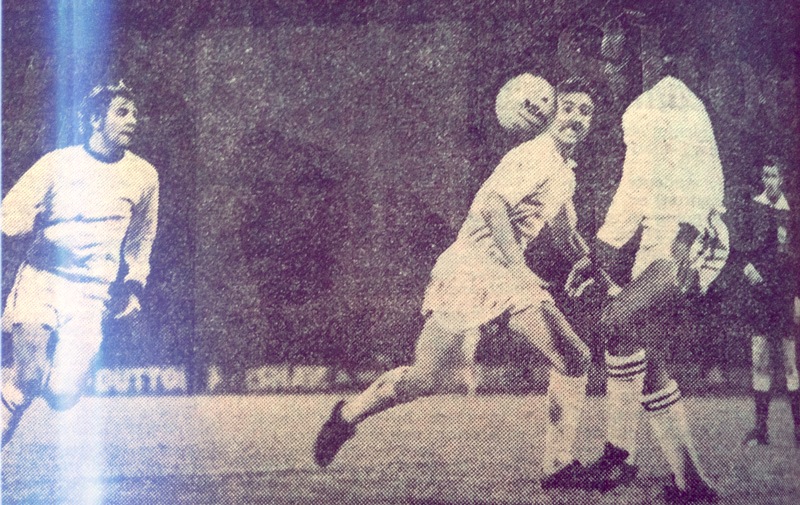
In the 1974/75 season, with Peter Taylor now a boss going solo, Busby was an unused substitute in the August matches against Reading (League Cup 1st Round Replay) and Chesterfield, before making his second appearance from the bench in the 3rd replay against Reading, with his side losing 3-2 at the Goldstone:

Busby gathers a pass near Reading's goal as team mate Ernie Machin rushes to support

Busby gathers a pass near Reading’s goal as team mate Ernie Machin rushes to support

Dave ventures that Peter Taylor “was quite the opposite of Mr Clough. He did not shout as much. He was not as aggressive. He would talk to you a little more.”

In the match that followed the Reading cup marathon, on 7th September 1974, Dave got his big chance in making the starting line-up, against Blackburn Rovers at Ewood Park. He almost scored as well. Ronnie Welch found Busby with a peach of a first time ball from defence, but the attacker was denied by a foul from the Rovers keeper Roger Jones.

Dave then came on as a substitute at home to Port Vale later in the month, but that was his final Albion first team appearance. He was given a free transfer in May 1975. He then worked at a greengrocer’s, became a car mechanic, before spells with Worthing, Blackpool, Barrow, Gravesend & Northfleet, Tooting & Mitcham United and Littlehampton.

Having hung up his boots, he is justifiably proud of his accolade as a trailblazer: “Being Brighton first black player is just great. I just wish they had given me more of a chance and I would have been fine.”

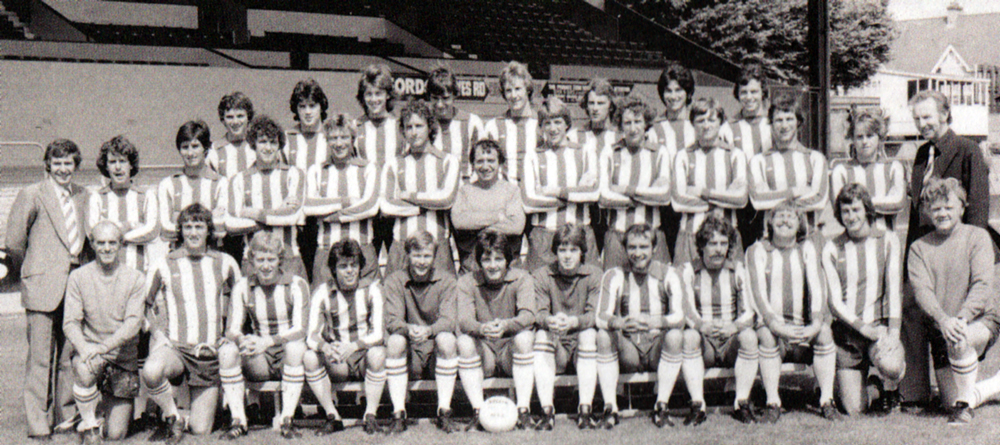
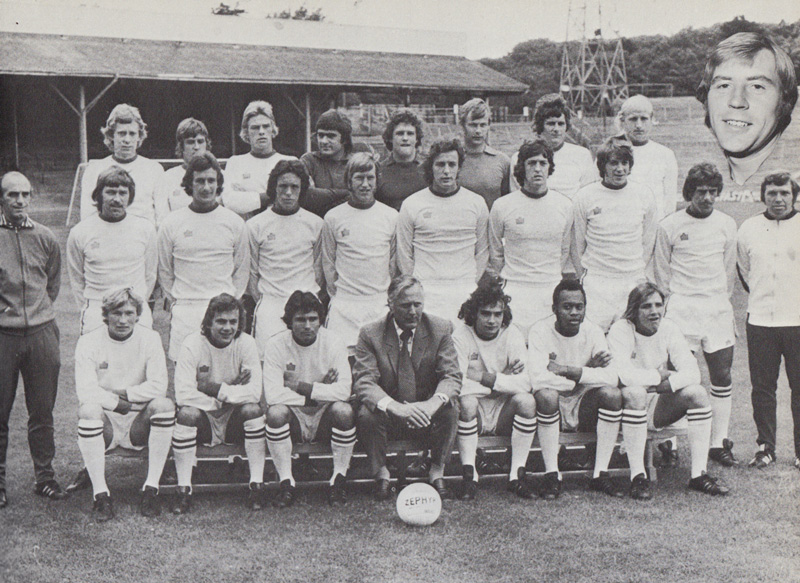
Dave Busby, in the front row of the 1974/75 team photo

Dave Busby, in the front row of the 1974/75 team photo

Tagged

The Brighton brawl! Video – Brighton v Chelsea (FAC) 1973

bridges

In 1972/73, Pat Saward’s Brighton were having a horrendous time at the foot of the Second Division, losing ten consecutive League matches. However, there was excitement in the air in the shape of a cup tie at the Goldstone with the superstars of Chelsea.

From a magazine in January 1973:

Brighton and Barry Bridges eagerly await their Cup crunch with Chelsea on Saturday, if only because it gives them the opportunity to forget all about their Second Division troubles.

Albion’s desperate struggle for survival – they are firmly rooted at the foot of the table – will be forgotten at the Goldstone Ground on Saturday as the spotlight shifts to the Cup and Chelsea.

As former Chdsea striker Barry Bridges says: “It will be nice to forget about our League position for a change and just go out on the park and concentrate on one result.

“It’s a tremendous draw for the club and a dream draw for Bert Murray and myself who both started our careers at Chelsea.

“Personaily, it will be nice to see most of the Chelsea lads again. I grew up at Stamford Bridge with Peter Bonetti, Ron Harris and Ossie. It will be great to meet them again even though they are on the opposite side.”

Can lowly Brighton really raise their game and shock Dave Sexton’s men on current League form?

“You can forget about League form in the Cup,” claims Bridges. “It’s the way you play on the day that counts. The Cup has a way of lifting everyone and with home advantage I feel we must have every chance.
“Mind you, I’ve got tremendous respect for Chelsea. They are a fabulous side with allround ability. I’ve still got a soft spot for them and try to see them whenever I’m in town.

“I know our League form has been very disappointing but this is the sort of draw that could really gee us up. A good performance against Chelsea could stoke up a lot of confidence after a lean spell.

“Our big problem at the moment is that we have stopped scoring goals. I’ve only scored a couple of times lately and I’m not too happy about that.

“But goals seem to come in spells for me and it would be nice to break the ice against Chelsea. It would be even better if we can beat them because the directors and manager here have worked very hard for success.

“The potential here is tremendous. When the club was going for promotion last season home gates were over the 30,000 mark. The whole set-up here is geared for success. Even though we are struggling in the League you couldn’t find a better atmosphere.

“There are no chins down just because things aren’t going right. As I said, the folks here deserve success. It’s a crying shame that we’re struggling because the facilities here are second to none.

“Obviously, we need to start getting the right results now before it’s too late. A win against Chelsea could be just the boost we need to get out of trouble in the League. So we’ll all be trying really hard.” The obvious sincerity of Bridges, veteran of over 400 League games and a consistent scorer with Chelsea, Birmingham, Queen’s Park Rangers and Millwall, will be a key factor in this intriguing duel.

And Brighton will be banking on his goal-den touch to give them the shot in the arm they need.

Well, what a humdinger of a match it turned out to be, with two sending-off and some horrendous foul play. A quite incredible atmosphere by the end!

Tagged

Brighton face FA penalty after new pitch invasion

Here’s The Guardian’s Peter Nichols report on the events of Tuesday 1st October 1996:

pitchprotest1

Brighton face the threat of playing behind closed doors and having three points deducted, after supporters invaded the pitch during last night’s Third Division game against Lincoln at the Goldstone Ground. Play was halted for 12 minutes in the first half when Lincoln took the lead.

Shortly after play resumed Brighton equalised but two further goals for Lincoln consigned them to last but one in the league. The second goal prompted another invasion but this time the spectators did not reach the centre circle and they were booed off. Even the faithful had had enough.

The damage, though, may well have been done. Brighton have a Football Association sentence hanging over them after fans rioted and caused the abandonment of a Second Division relegation game against York City at the end of last season. That sentence could now come into effect after the referee Steve Bennett was forced to take the players off the pitch.

Trouble had been anticipated. Fans were angry at the breakdown of talks on Monday between the club chairman Bill Archer and the consortium headed by the advertising millionaire Dick Knight wanting to take over the club. But appeals to stay calm went unheeded. There was already a volatile atmosphere, with cries of “Archer out”. before matters spilled over in the 25th minute.

About 50 supporters from the North Stand invaded the pitch, and the referee immediately took the teams to the safety of the dressing-rooms.

Another 100 or so supporters from other sections of the ground then spilled on to the pitch, and the entire group congregated in the centre circle before leaving en bloc to return to the North Stand. The police adopted a “softly, softly” approach and, as invasions go, by Goldstone standards it was brief and bloodless. There were five public order arrests.

pitchprotest2

Archer, the object of the supporters’ disaffection, was not there to witness the protest. He had bought into Brighton and Hove Albion for £56.25 and, through dealings that might be described as Byzantine, sold the ground to Chartwell, a company connected to the Kingfisher Group and with which he is also involved. Chartwell paid £7.4 million, most of which went to pay off the club’s mounting debts.

The club now rent the ground back on a single-year lease which costs £480,000. At the end of the season, after 94 years at the Goldstone Ground, Brighton will be homeless. The ground will be dug up in June for a retail development.

Supporters might have been less alienated if Archer had employed a little PR during his tortuous dealings.

Talking to the supporters would have been a start. Nobody in this seaside town has the faintest idea of his plans.

Archer has attended only a handful of games and yesterday’s was not one of them. David Bellotti, the former Liberal MP, has been the front-man and, though he did visit the ground yesterday, he made his excuses and left before the game.

This particular crisis was precipitated by Monday’s meeting at the Park Court Hotel in London, where the FA attempted to arbitrate between Archer’s group and the Knight consortium.

Liz Costa, vice-chairman of the Brighton and Hove Albion Supporters’ Club, was one of many who predicted the worst for last night’s match.

“It will make York City look a like a Christmas party,” she forecast. “There’s going to be bedlam.” In that match almost 3,000 spectators spilled on to the pitch to demostrate against the board.

If those fears were unfounded, there was no disguising the despondency of the manager Jimmy Case. “Since I’ve been here there’s not been one ounce of good news, written or implemented,” he said. “When Liam Brady was here he said he couldn’t work in an unharmonious atmosphere, and it’s got worse.

“All we want as a manager and a football team, and especially the supporters, is a ground to play in. This situation affects everyone, down to the tea-ladies. I’ve never brought it up before but there comes a time. Any good news would be a breath of fresh air for me, the players and the tea-ladies.”

From ‘Build A Bonfire’:

Bill Swallow: I have to say, and maybe this puts me in a minority of one, I wasn’t terribly happy wit the Lincoln protest. I didn’t think it was wise. If they’d opened fire on David Bellotti I wouldn’t have had a problem with that, no difficulty at all. I thought the strategy went off the rails.

Tim Carder: Everyone supported it – I mean there were about two cries of ‘get off the pitch’ because we were under suspended sentence at that point. We knew that anyone going on the pitch and holding the game up was going to cost us points, but we were in such a desperate state at the time that the vast majority of the crowd applauded them. I clapped them. It was all very orderly and the crowd was in full support. We had to show that, even with the threat of losing points – and we were very near the bottom at this stage.

Significantly, after the Lincoln match, there was a marked change in emphasis in the protests that followed. Out went the kind that were liable to cost the club league points and made it easy to brand the loyal supporters as hooligans, and in came the imaginative kind such as the charm offensive at the village of Mellor, Bill Archer’s home in Lancashire.

Tagged , , ,