On Facebook, there are a few groups that can help you get your Brighton retro fix. For instance, there is the sublime Brighton-Past where members share an incredible archive of photos relating to the city/town. With more of an Albion focus, there is the equally splendid He Shot, He Scored. It Must Be Peter Ward group.
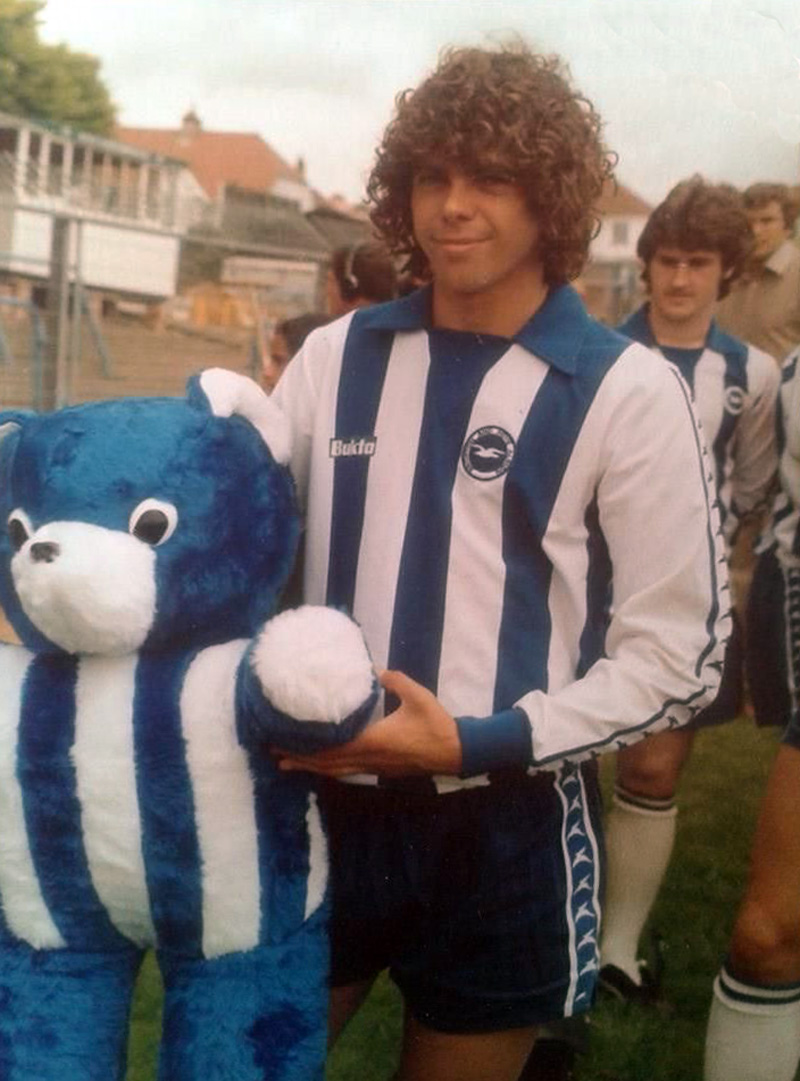
One photo that did the rounds a few months ago was this evocative image of Peter Ward holding a teddy bear, with former ‘next big thing’ Glen Geard in the background:
As you may remember, last year, we already looked at this bear in these snaps during Albion’s promotion season in 1978/79:
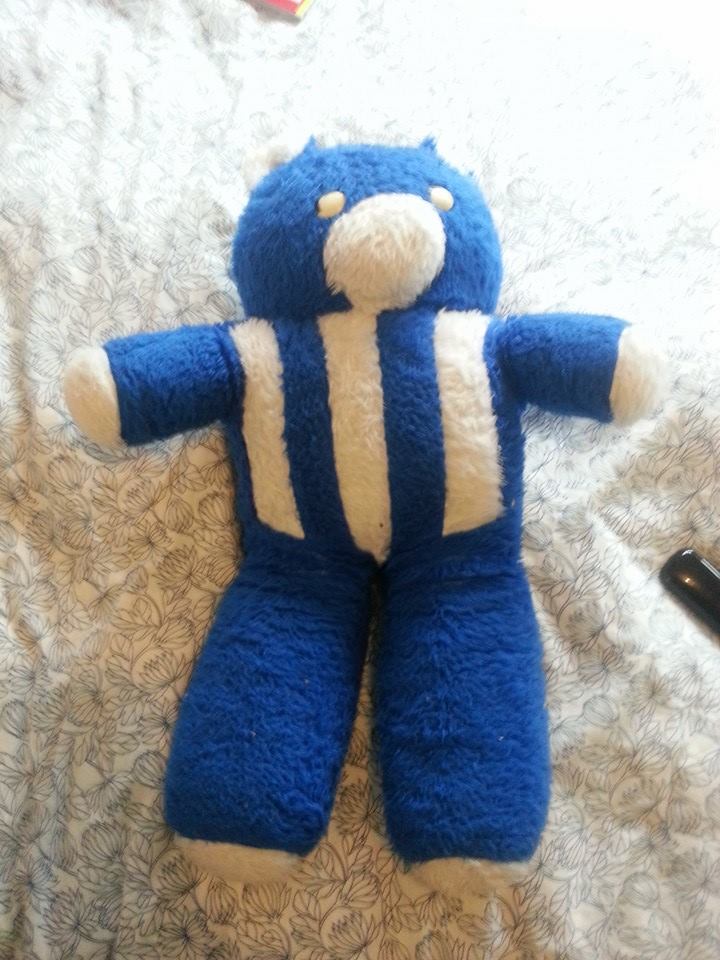
But now, there are a few more to add to the pile. For instance, in the Peter Ward group, Matthew Yeates wrote of his now increasingly scary looking bear – look at those eyes now:
30 years on and I still have that teddy in my loft. Think my mum and dad bought it for me from the old club shop at the Goldstone. Spent most of its life on my bed wearing my old British Caledonian kit.
Meanwhile, Graham Lucas scanned a photo of himself with a rude slogan on T-shirt, plus the fluffy pal he took to Newcastle in 1979:
Thanks, chaps! That bear seemed to have been ubiquitous at the time. Clearly, Maybank wasn’t the only Teddy in town.
With former Brighton favourite Bill Cassidy in superb goalscoring form, Cambridge United entered the Football League in 1970 after struggling Bradford Park Avenue were voted out. Helped by the versatile Scot’s experience, the new boys quickly established themselves in that debut season. Even after he left in 1971, they eventually progressed to third in the Fourth Division in 1972/73 to win promotion.
During the following season in Division Three, Brighton’s first ever visit to the Abbey Stadium ended 1-1 in January 1974. Mick Brown’s only ever goal for the Albion helped gain a valuable point for Brian Clough’s side against their fellow strugglers. Then, in April, a handsome 4-1 victory for the Sussex side, with goals from Bridges, Welch, McEwan and Ron Howell (pen), at the Goldstone took Albion as high as 14th, and Cambridge closer to the abyss.
The U’s were relegated later that month while Brighton survived. However, it wasn’t long before the two locked horns again. Indeed, games involving both clubs curiously became a highly frequent affair towards the end of the decade, particularly at the start of a campaign.
Take August 1977 when Brighton and Cambridge played out two 0-0 draws in the League Cup 1st Round legs before two goals from Horton (1 pen) and Ward settled the matter in the replay at the Goldstone at the end of the month. Future Albion striker Alan Biley responded on the scoresheet for Cambridge in that replay. In that August, Biley was also joined up front by centre-forward Sammy Morgan. Morgan, who left Brighton for the U’s, and eventually made 37 League appearances, playing his part in the club’s second successive promotion season.
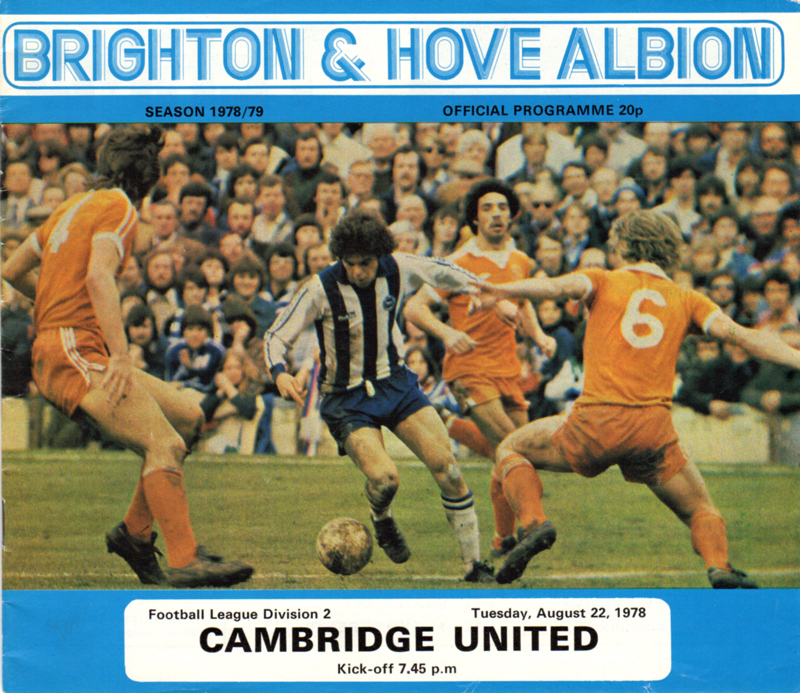
During the following August, in 1978, with Cambridge now a Second Division side for the first ever time, they humbled promotion-chasing Brighton 2-0 at the Goldstone in front of 21,548 fans. This upset came thanks to a couple of soft goals, one to Floyd Streete and then a Graham Winstanley own goal after confusion with Eric Steele. It was the Brighton’s first home league defeat since October 1977 and left some pessimistic supporters scratching their heads as to whether the Seagulls really could make it to Division One after a shaky start.
Here is the matchday programme cover:
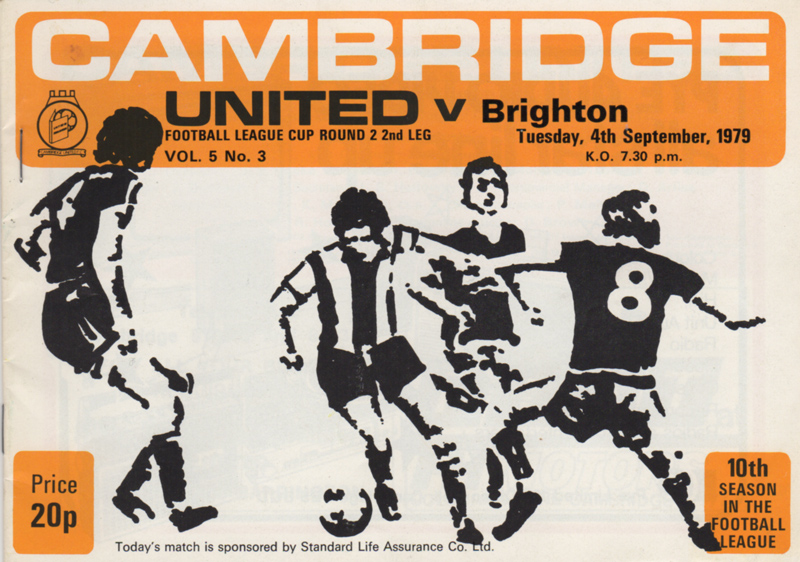
Not only did Cambridge steal the win, they seemingly got hold of our lovely matchday programme, and traced the Peter Ward image with blotchy felt tips to use on their own publication cover for the following season. Here is the end product for 1979/80, a sight that Albion fans saw when Brighton drew the U’s in the first round of the League Cup once more:
In August 1979, Brighton won the 1st leg 2-0 thanks to a Horton wonder goal and a last minute Ward effort at the Goldstone. A month later, they then beat Cambridge and their programme cover copycats 2-1 in the away leg. It proved that cheats don’t always prosper, at least not ones armed with felt tip pens and a high level of temerity.
* Cambridge weren’t the only programme copycats at the time. Notts County’s illustration for their cover in the early part of 1982/83 was based on a photo of players of rivals Nottingham Forest celebrating John Robertson’s goal in the European Cup Final in May 1980. With the Forest influence becoming widely known, by the time Brighton visited Notts County in April 1983, the illustration had been replaced by an action photo.
For those heartbroken at his departure, look away now.
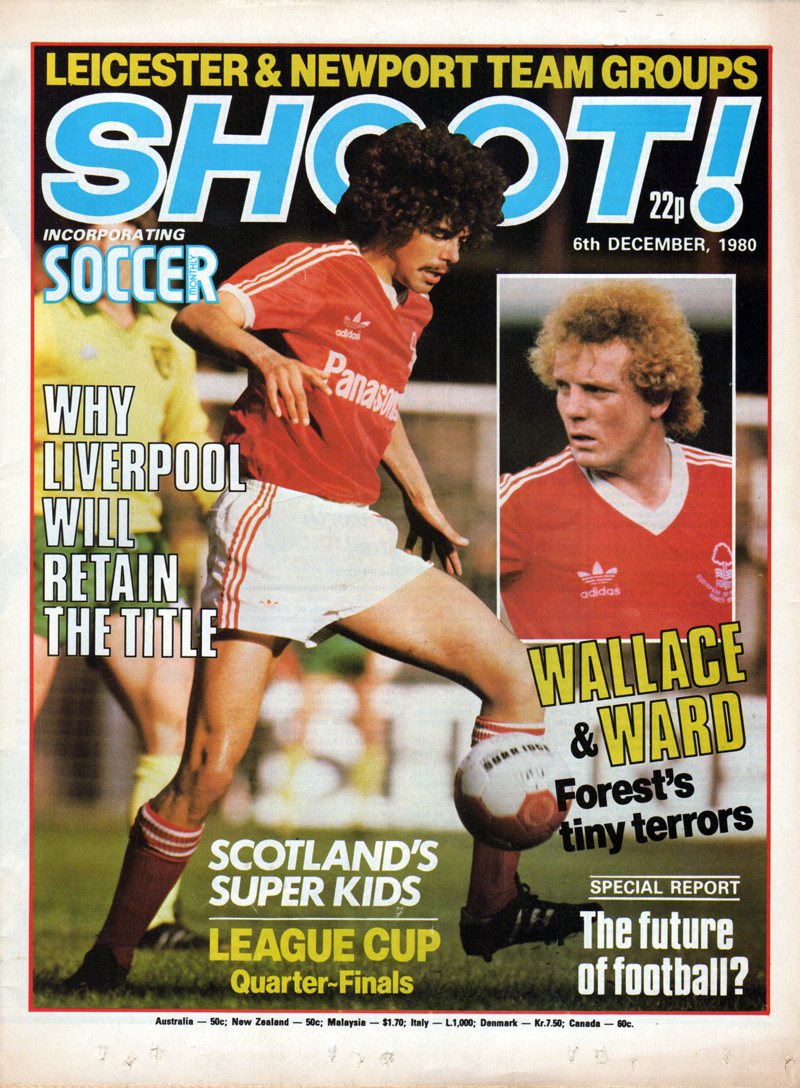
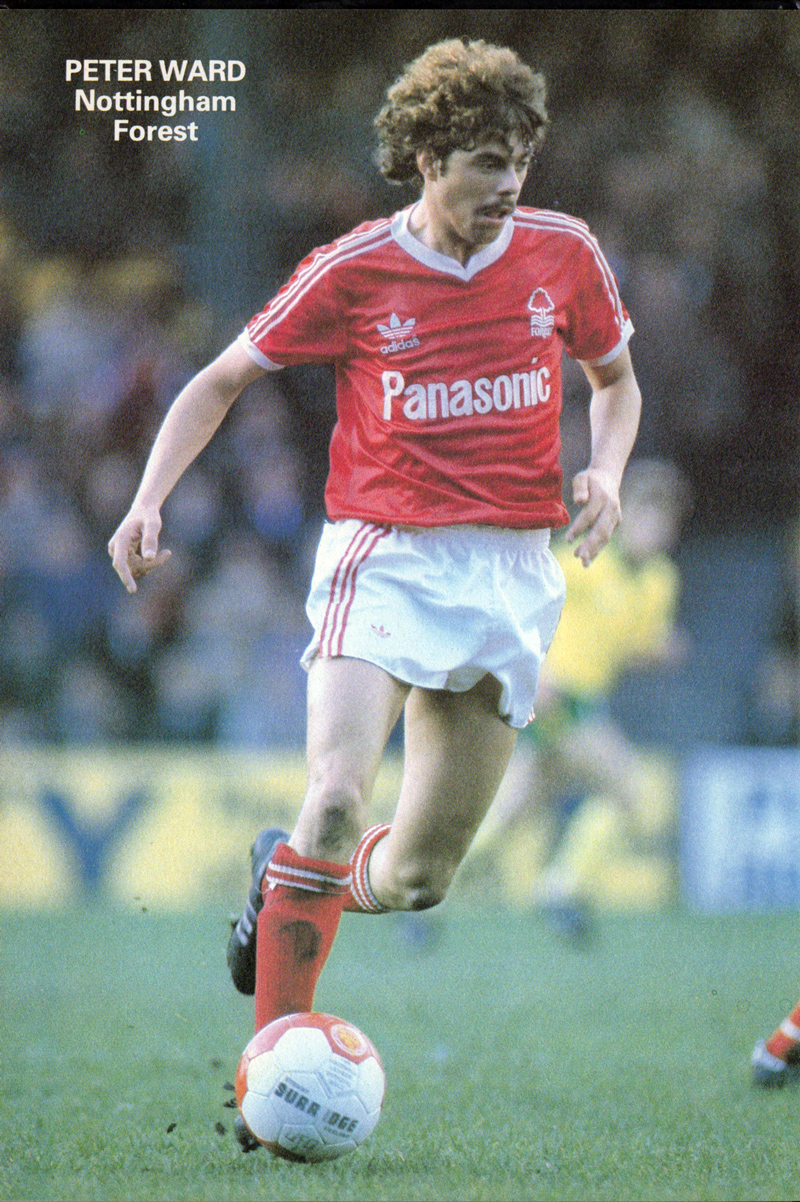
When Peter Ward made the cover of Shoot! magazine on 6th December 1980, it was as a Nottingham Forest striker rather than a Brighton one:
Inside, was a fascinating feature talking up the Peter Ward – Ian Wallace duo as part of a new trend in smaller, mobile strike partnerships:
At a time when £1 million can just about fetch a player capable of those mystical qualities, ball control and vision, Nottingham Forest threaten to unleash a veritable basement bargain on the unsuspecting First Division.
The sale of Peter Ward from Brighton to Forest for a reported £400,000 came as no surprise to those who became ultimately bored with the on-off transfer saga.
But what will take away a few breaths is the opinion of assistant-manager Peter Taylor who believes that Ward is only one step away from becoming one of the best strikers in the game.
It was Taylor who signed Ward from Burton Albion during his reign as Brighton manager. For a while it seemed that he had unearthed a pot of gold as Ward revealed definite qualities of natural goalscoring instinct.
This season, however, the boy who became the idol of the Sussex Coast fired too many blanks for the liking of Albion manager Alan Mullery, who seemed almost relieved to complete the deal.
Forest unveiled their tiny-tot strike force of Scottish international lan Wallace and the unpredictable Ward against Leeds at the City Ground on October 22, and after goals by Wallace and Ken Burns sealed a 2-1 win, Taylor said: “Ward tore Leeds apart. His speed, skill and eye for openings proved too much for them.
“People ask me why we play with two strikers, neither of whom tops 5′ 8” tall. But if you were to spend your time looking for a really tall striker to complete the target-man and partner combination you could be looking for ever.
“There is a lot of nonsense talked about how tall strikers should be. The important question for any managerial team is… can this lad play? In the case of Peter Ward the answer is definitely “yes’.
“In fact I am convinced that when he moves from Brighton back to his native Midlands and settles down, he will make a lot of people sit up and marvel at his ability.
“We are more interested in the basic ability of our two strikers. And there can be no question that they pose nightmares for big defenders. Players with the qualities of Wallace and Ward will always get goals and always worry defences.
“I don’t think people know just how good a player Ward is. It is just a matter of time before he settles into the Forest way of things, and then we will see him at his best.
“The fact that neither of these players happens to be a giant is neither here nor there. Ability is the key, not stature. And these players have the ability.” Ward scored his first goal for Forest against Southampton on November 1 and looks more at home with every game. But what problems do the Forest mini-duo pose for the First Division’s top defenders?
Arsenal’s giant Scottish centre-half Willie Young believes that the Forest duo are a sign of the times.
Young said: “I probably speak for all central defenders when I say that we generally prefer to play against the bigger strikers, the likes of John Toshack, Derek Dougan and Joe Jordan. But times are changing and so is football.
“If you look around the League you will find less of the big target players than, say, five years ago.
The modern striker has to be sharp, mobile and capable of pulling a defence out of position.
The days of the big man standing in the box waiting for a high ball to knock down are fast fading.
“Down the road at Tottenham they use Garth Crooks and Steve Archibald.
“Andy Gray and John Richards at Wolves are very sharp and mobile, Kenny Dalglish and Dave Johnson at Liverpool move all over the place. These sides don’t use a battering ram player down the middle.
“Ward and Wallace will make it difficult for big defenders because they are quick and skilful and can turn you if you lose concentration. But teams will still knock in the high balls and put you under pressure. I would play against them the same way I would play against any forwards. Perhaps light-weight players like them find it difficult to break down a tight defence, but give them room and they will create problems.”
Winter pitches and tight marking may combine to upset Forest’s plans now that the running power and height of Garry Birtles no longer provides alternatives. But knowing Clough and Taylor it is more likely that Ward and Wallace will buzz and sting more often than they are swatted.
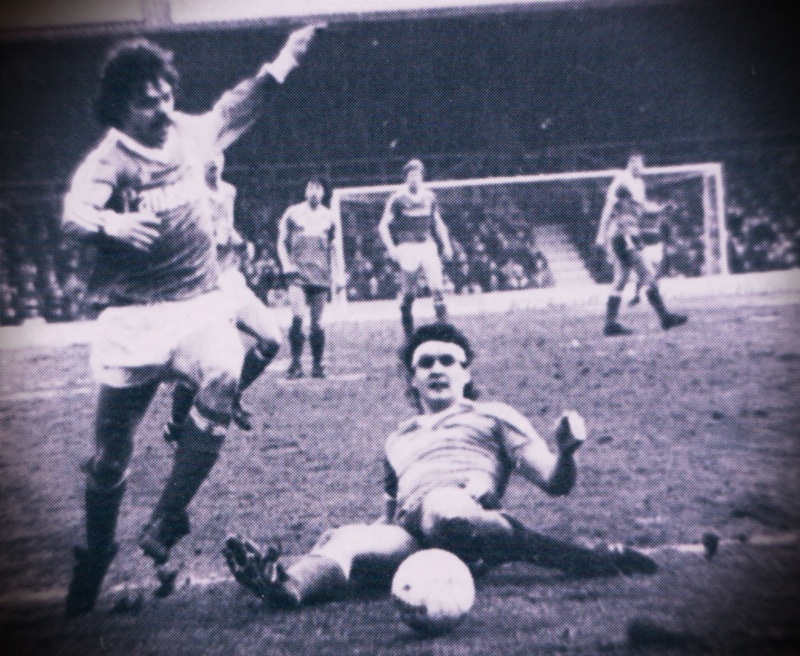
In his first season at the City Ground, Peter Ward came off the bench for the last eight minutes of Forest’s 4-1 victory over Brighton in March 1981. However, his impact on the match was minimal. It was the clash the following season, at the Goldstone on 20th February 1982, when he truly showed his class against his former team mates. In and out of the Midlands side at the time, Ward capped a fine performance by scoring Nottingham Forest’s winner in a 1-0 away win. As John Vinicombe wrote:
Before any side can beat Forest, they have to get past Shilton, and this proved beyond Albion’s capabilities. Not that Shilton alone stood between them and victory; on the contrary. But he was always there when required and in the meantime it was Ward, often quite scintillating, who plotted the downfall of his old club. Once he had settled down he led them a merry dance and impudently settled the issue with a header, which has never been his strong department.
Ward’s goal followed a Bryn Gunn cross after John Robertson’s corner. That he scored it with his head rubbed salt into the wounds for Steve Foster, often so dominant in the air. Foster did show he could match Ward’s pace in the second half, recovering well after Ward had stole the ball from him. However, in front of England manager Ron Greenwood, Ward’s artistry and aggression appeared to damage Foster’s World Cup chances.
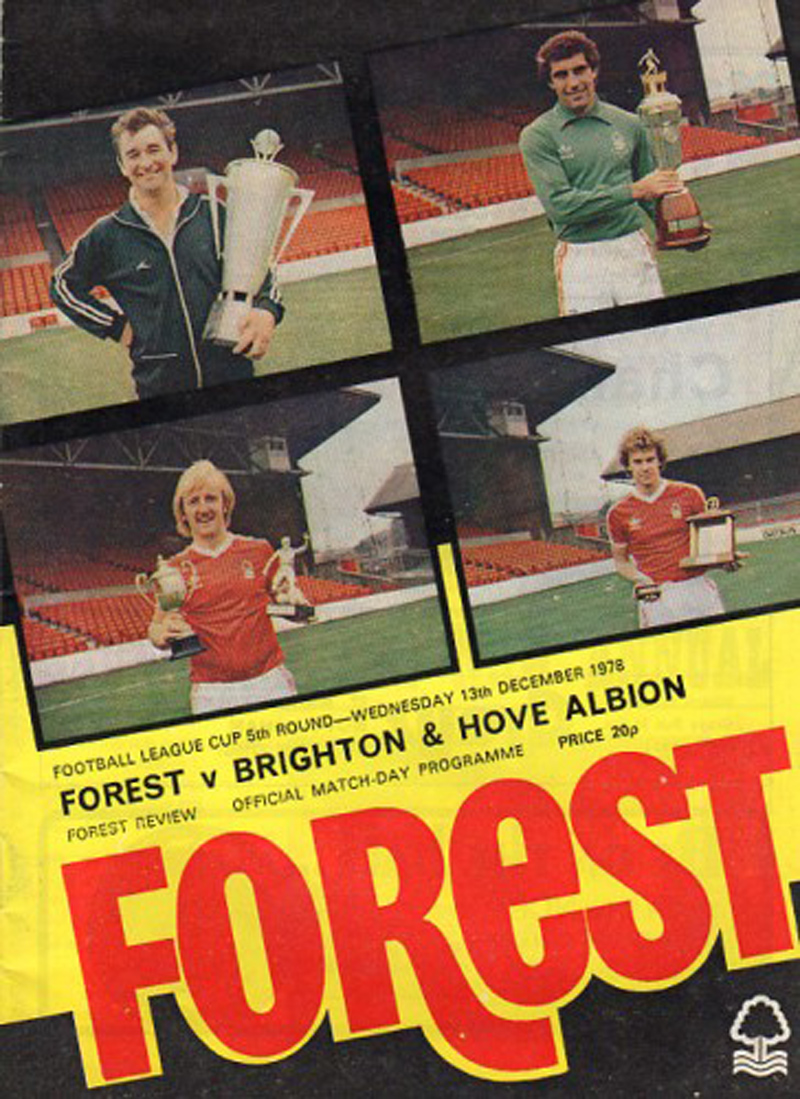
In a scintillating League Cup Quarter-Final, Alan Mullery’s men put on a great performance against the reigning English League champions and League Cup holders on 13th December 1978. The Seagulls succumbed to a 3-1 defeat against Clough’s side that retained the trophy and then also lifted the European Cup that season.
An estimated 5,000 Albion supporters cheered the Seagulls on at the City Ground. However, the support would have been even more if two of the three charter trains had not broken down en route.
In the Brighton v Stoke programme from 1978/79, there is a nice piece on how the club in January that season made it up to the supporters who missed this exciting cup tie:
With all the recent bad weather there has been a lot of work for the Promotions Office with re-arranging trains, etc. But one event that we had to work particularly hard on was the film showing of the Notts Forest Albion League Cup quarter-final. It was, of course, staged for the benefit of our unlucky supporters who were stranded on the two special trains which didn’t reach the City Ground.
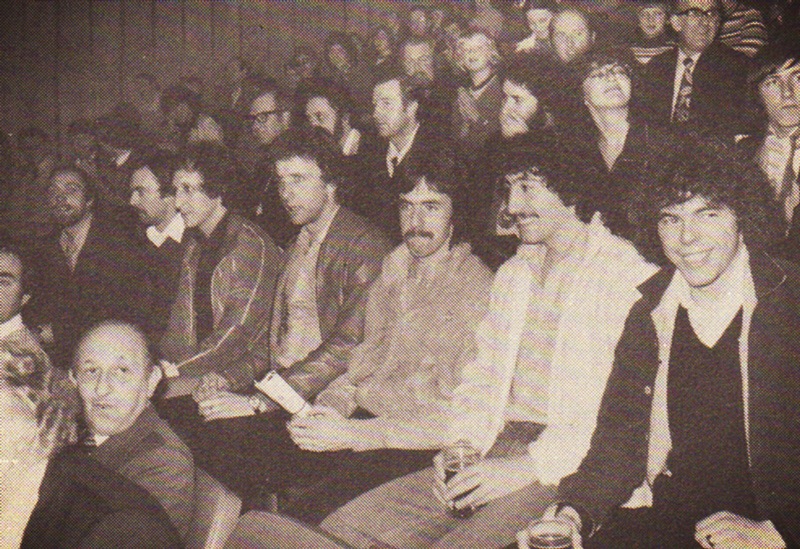
Just under 1,000 people attended Hove Town Hall for the evening last Tuesday and several of the players came along to the delight of the supporters. The row shown in the picture shows the lads really enjoying some of their glory moments.
Some of the comments from the players made commentator Hugh Johns’ sound almost an amateur. Naturally everyone hopes we would never again have a similar situation but we hope supporters will agree that we’ve done our very best to make up for the disappointment.
Each one of the audience at Hove Town Hall was even issued with a black and white copy of the matchday programme:
Update 26/12/15: Two of the goals (from John McGovern and John Robertson) made it into the recent ‘I Believe in Miracles’ film:
Yesterday, Brighton won 3-1 against Port Vale in the FA Cup 4th Round. In April 1977, though, they battled in the Third Division in front of 23,446 supporters at the Goldstone, with Gerry Fell getting the only goal.
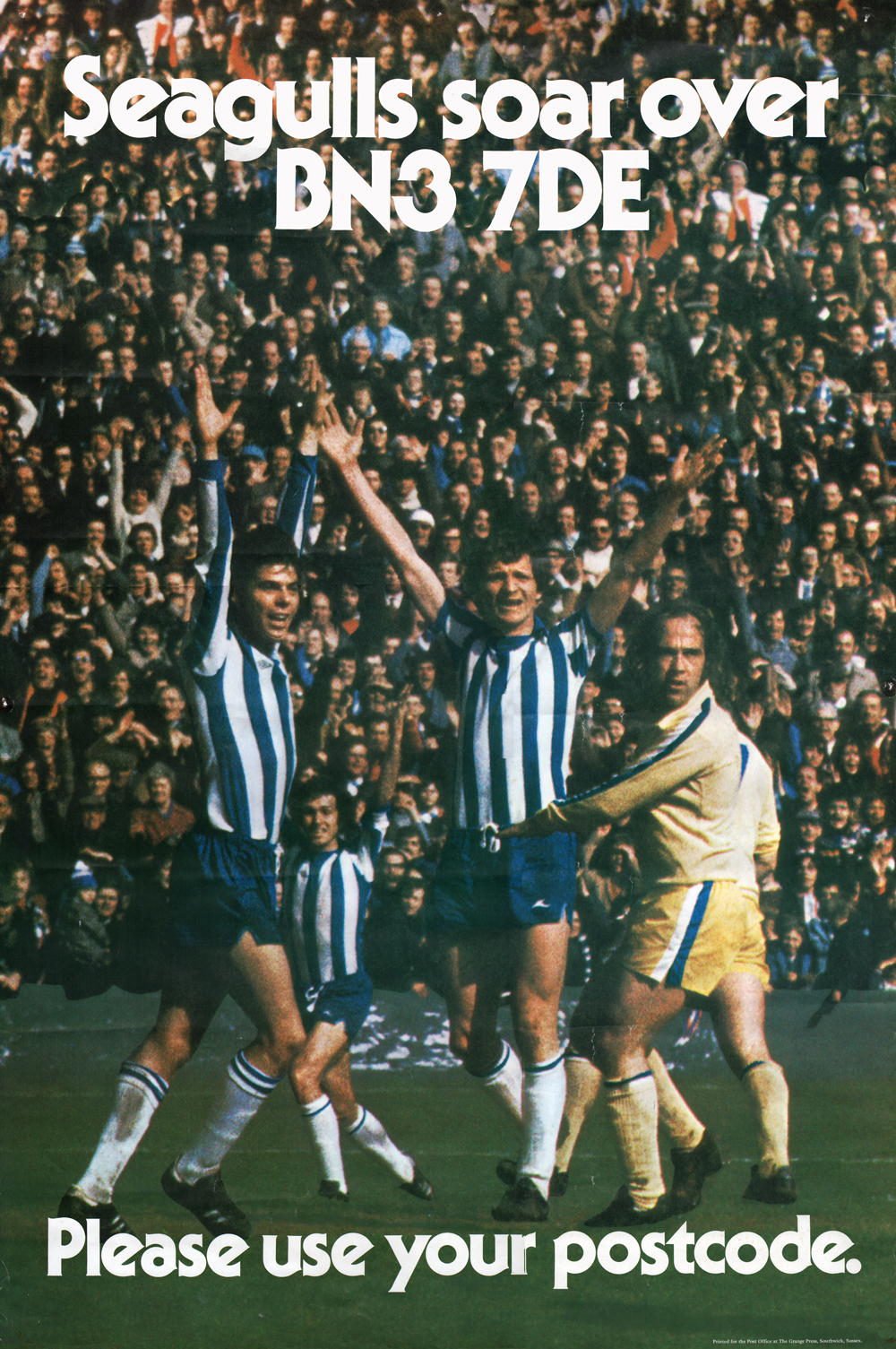
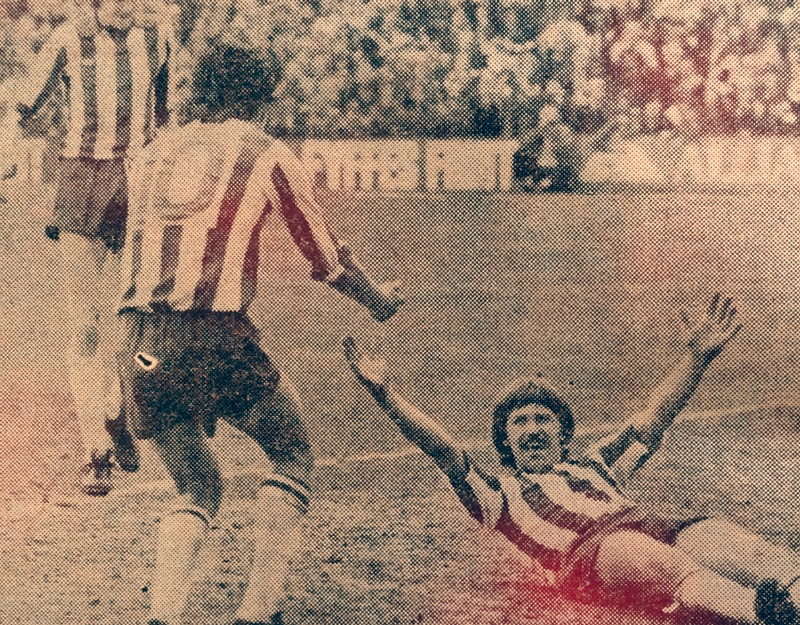
The jubilation surrounding the goal was captured by photographer Ken Tyhurst of the Brighton Gazette, and used in a magnificent poster for the Post Office:
As you can see, Peter Ward and Sammy Morgan led the celebration (with a mixture of Bukta and Umbro branding on their kit), plus Ken Tiler in the background.
According to a piece by Tim Carder:
Bill Swallow of the Swallow Company, designers of the current Albion programme, tells me that he was the Post Office’s Press Officer for the South East in 1977 and the poster was his idea. Apparently the ‘bean counters’ wouldn’t allow him to get it printed until promotion was certain, but he wanted to get it on the side of mail vans as soon as possible after the date so it was prepared it in advance.
In the article, Bill said:
“The image was actually a bit of a cheat. Although the Goldstone crowd was over 23,000, the terraces didn’t go back far enough to take the image to the top of the poster. So, in those pre-Photoshop days, we fiddled it by adding a tier or two of faces from elsewhere.”
Tim Carder added:
The poster was a great success. It went on nearly all local vans during May 1977 and, to Bill’s delight, numbers of them were stolen off the sides, probably an unprecedented occurence! Bill later did a Reading FC poster – very similar but obviously not as nice!
I won my copy of the poster at an auction at Withdean many seasons ago. It is also on display in the BHAFC fan bedroom at the new museum at the Amex stadium, which will hopefully be opening very soon.
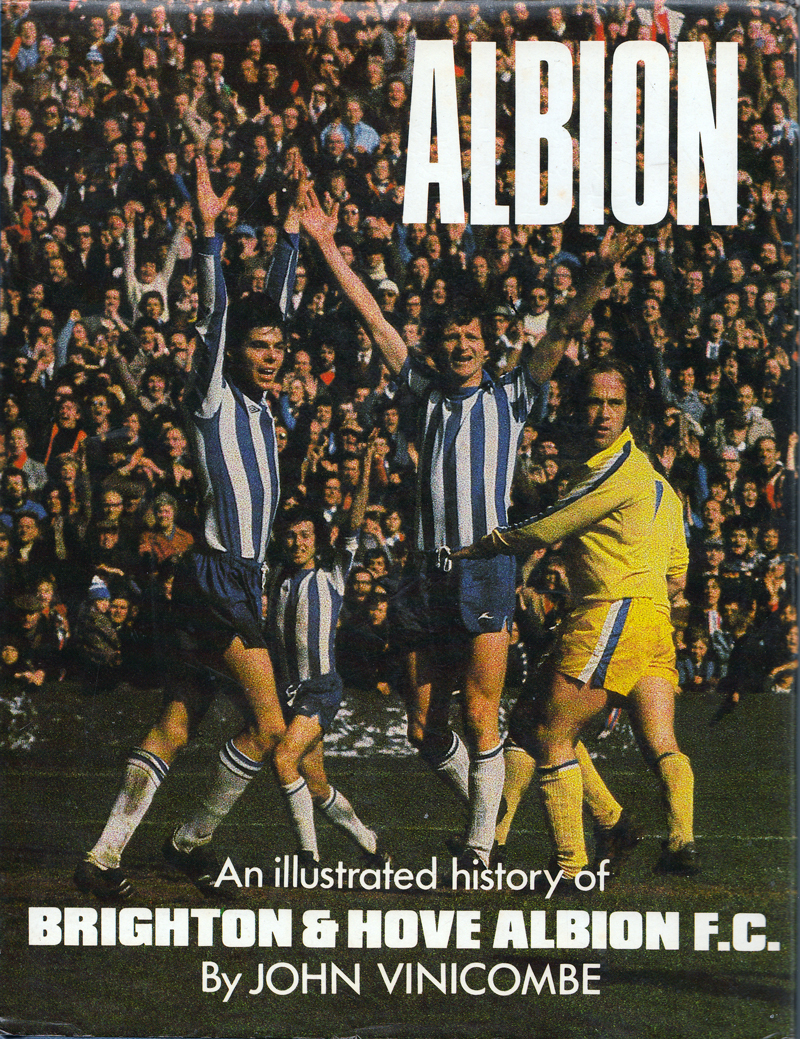
Of course, the image from the 1-0 victory over Port Vale was also used on the front cover of ‘Albion – An illustrated history of Brighton & Hove Albion FC’ by John Vinicombe. This rather error-ridden book was published in 1978, covering the story up to the end of the 1977/78 season in Division Two. At the time, the matchday programme described how ‘the sales of the book from our Promotions shop was both brisk and plentiful.’ It was almost certainly helped by having such a striking image on the cover.
Brian Horton, Port Vale’s midfield general, signed for Albion today. A £30,000 fee was agreed between the clubs after manager Peter Taylor made his approach last night when Horton played in the 2-2 draw at Crystal Palace.
Horton, 27, visited the Goldstone this morning when formalities were completed. He will watch his new club against Shrewsbury Town tonight.
The signing is highly regarded as one of the hardest players in Division 3, and Taylor has never concealed his admiration of the player.
No doubt Taylor wants a harder approach away from home by his promotion-striking squad, and sees Horton as just the man to inject more power.
Captain Brian Horton, third from right in the middle row
Captain of Port Vale, Horton has played over 250 games for the club, and joins another former Vale player at the Goldstone, striker Sammy Morgan. He cost £30,000 from Aston Villa.
When the transfer was completed 24 hours before the deadline, Taylor said: ‘I have always admired Brian. He has been very loyal to Vale, and he possesses the qualities I want in players.
“His age is right in terms of experience, and I am delighted he has agreed to come to the Albion.”
A final check was made on Horton last Saturday when Vale won 2-1 at Rotherham. He has been under close scrutiny for the past two months.
Port Vale earlier had inquiries about Horton from Hereford and Peterborough, but these were turned down. When Albion came in with their bid, there was no hesitation by Vale’s directors.
The move is the first in Horton’s career, although he began as an apprentice with Walsall. He has been at Port Vale six seasons and captain the last two.
“I knew Brighton were interested only last night. I had no doubts about coming in such a tremendous set-up. The support and potential is wonderful, and this is what attracted me.”
With Vale, Horton played a left-side, midfield role. Injury kept him out of the team when Albion drew 1-1 at Vale Park on September 6, and he has been injured recently.
There was a possibility of a second signing before the deadline, but Taylor said that he was now content to play a waiting game to get the player he wants.
Albion expect a 20,000 plus Goldstone gate tonight for the visit of promotion rivals Shrewsbury Town.
Injured winger Gerry Fell will enter hospital tomorrow for a knee operation.
Victory would give Albion a 15th straight home League win and close the gap between them and leaders Hereford United to two points.
A 15th consecutive home win proved beyond Brighton, as Shrewsbury took a shock 2-0 lead before half-time. However, Albion rallied to secure a 2-2 draw. Horton made his debut for Brighton in the following match, at Preston on 13th March 1976, and played for the remainder of the 1975/76 campaign. Even so, if Taylor had hoped for an immediate upturn in results away from home, he was to be disappointed. Brighton lost 1-0 at Deepdale and would not gain another away victory for the rest of the season. Three points short of Millwall in third place, this ultimately cost the side promotion to Division Two.
As for Port Vale, despite the need to balance the books, their supporters were understandably livid about the sale of their inspirational captain for such a low fee. From being eighth after Horton’s final match for Vale, it was unsurprising that Roy Sproson’s team’s form dipped. It took them until a 3-1 victory over Wrexham on 5th April 1976, with two goals from Terry Bailey and one from Colin Tartt, before they witnessed another win.
Number 10, Peter Ward, on his home debut, extends a glad hand to Fred Binney who scored Albion’s opener
Five days later, Brighton rubbed salt into the wounds at the Goldstone, decisively winning 3-0 with goals from Binney, Mellor and Ward. By then, Brian Horton was the new Albion skipper, a role he held with great distinction for the next five full seasons.
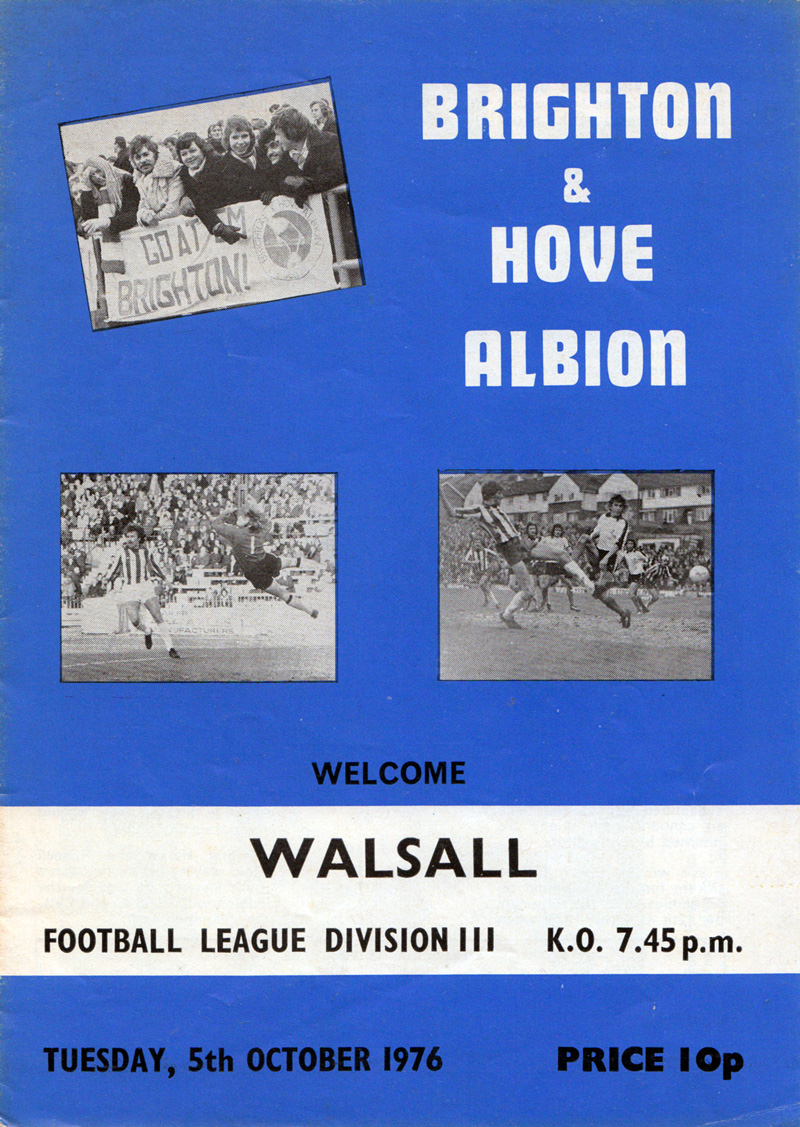
One of Brighton’s most memorable games of the 1976/77 season was the 7-0 slaughtering of Walsall. Here’s the match programme:
The sensational result was all the sweeter as the Saddlers had become bit of bogey side. In 1974/75, Brighton suffered a 6-0 drubbing at Fellows Park before Walsall did the league double over Peter Taylor’s men the following season.
Things did not look promising at the Goldstone on 5th October 1976 when the players left for the interval with the match scoreless. However, as Nigel Clarke of the Daily Mirror reported, lethal Brighton looked a different side after Alan Mullery’s half-time team talk:
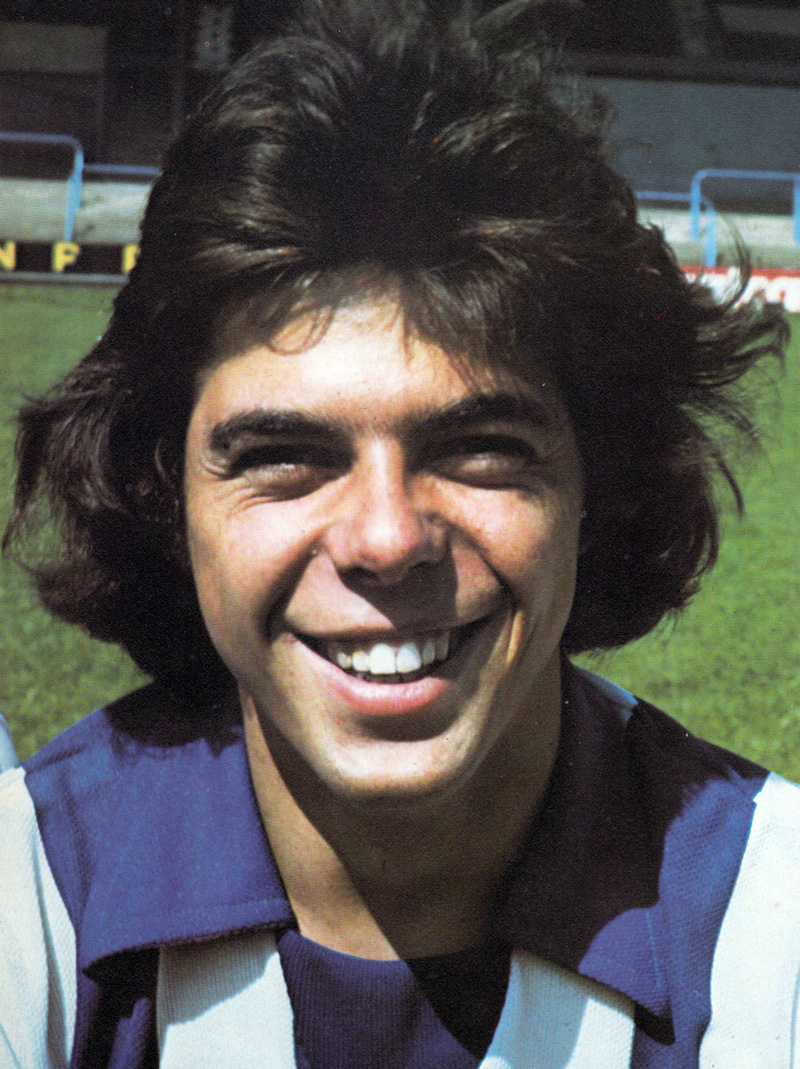
The ‘boy wonder’ Ward
Peter Ward grabbed four goals last night and lan Mellor three as Brighton blitzed their way back to the top of the Third Division.
All the goals came in a sensational second half as Brighton turned on their second seven-goaI romp in three weeks – York were their other victims.
Ward, 21, is rapidly emerging as a £250,000 transfer target. A professional, for just four months, he has now scored fifteen times in seventeen League games.
He began his League career last March and scored with his first kick in his first match.
Now with eleven goals already this season, Ward has the sprinkle of stardust all over him.
Watched by West Ham manager Ron Greenwood, he and Mellor were superb.
Said Brighton manager Alan Mullery: “I have never seen finishing quite like that. Both lads were tremendous. It was the most magnificent second half of football I’ve ever seen.”
In the fifty-first minute the flood of goals began. Ward cleverly juggled an opening for Peter O’Sullivan whose fierce shot was pushed out by keeper Mick Kearns. But there was Mellor to knock the rebound from close range.
Ian ‘Spider’ Mellor
Five minutes later Brian Horton robbed Alun Evans, ran 40 yards and slipped the ball to Ward, who scored with a fierce rising drive.
In the 61st minute it was Ward again, finishing brilliantly, and two minutes later Mellor headed home Harry Wilson’s cross.
In the 70th minute Gerry Fell set up Mellor for his hat-trick, and Ward completed the rout with two in two minutes.
First, he took a long clearance from Grummitt in his stride to get a superb solo goal, then he put home the rebound after Mellor’s shot had been blocked.
In Match Weekly many years later Peter Ward commented:
“I can’t remember in what order the goals came but I know it was 6-0 and both Ian and I had scored three when the ball came over and ian volleyed it against the Walsall post. I knocked it in from the rebound. As for the other goals, two came from through balls, I believe when I ran on and beat the keeper. And the other came after a mazy dribble where I beat a couple of defenders before slotting ball in.”
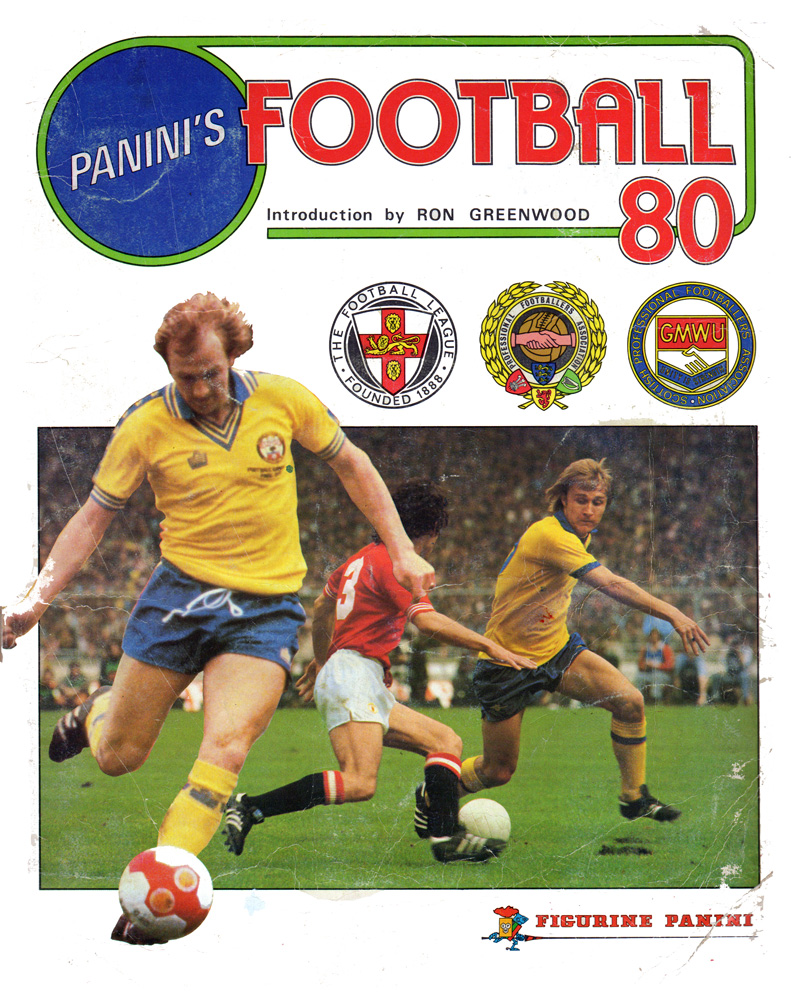
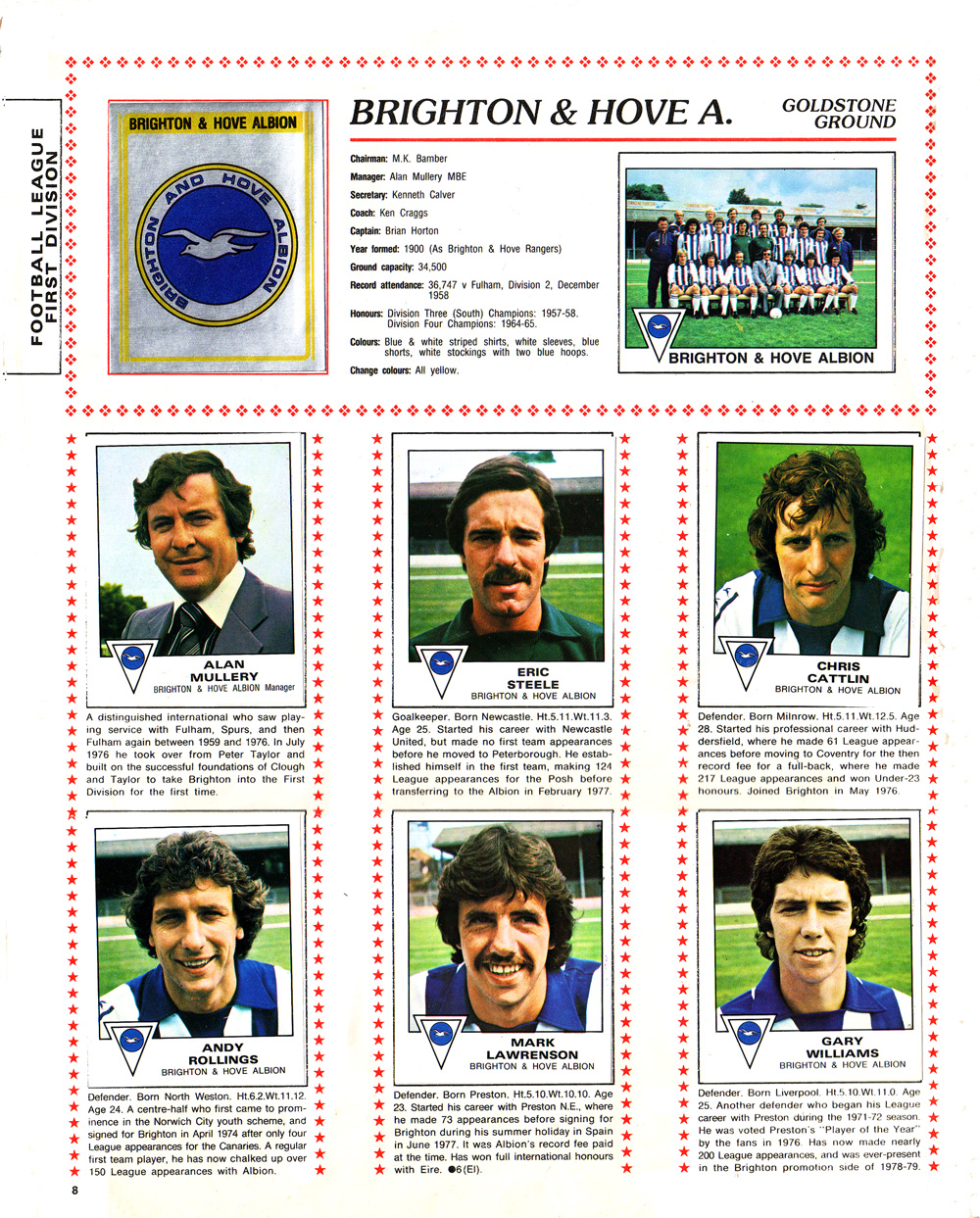
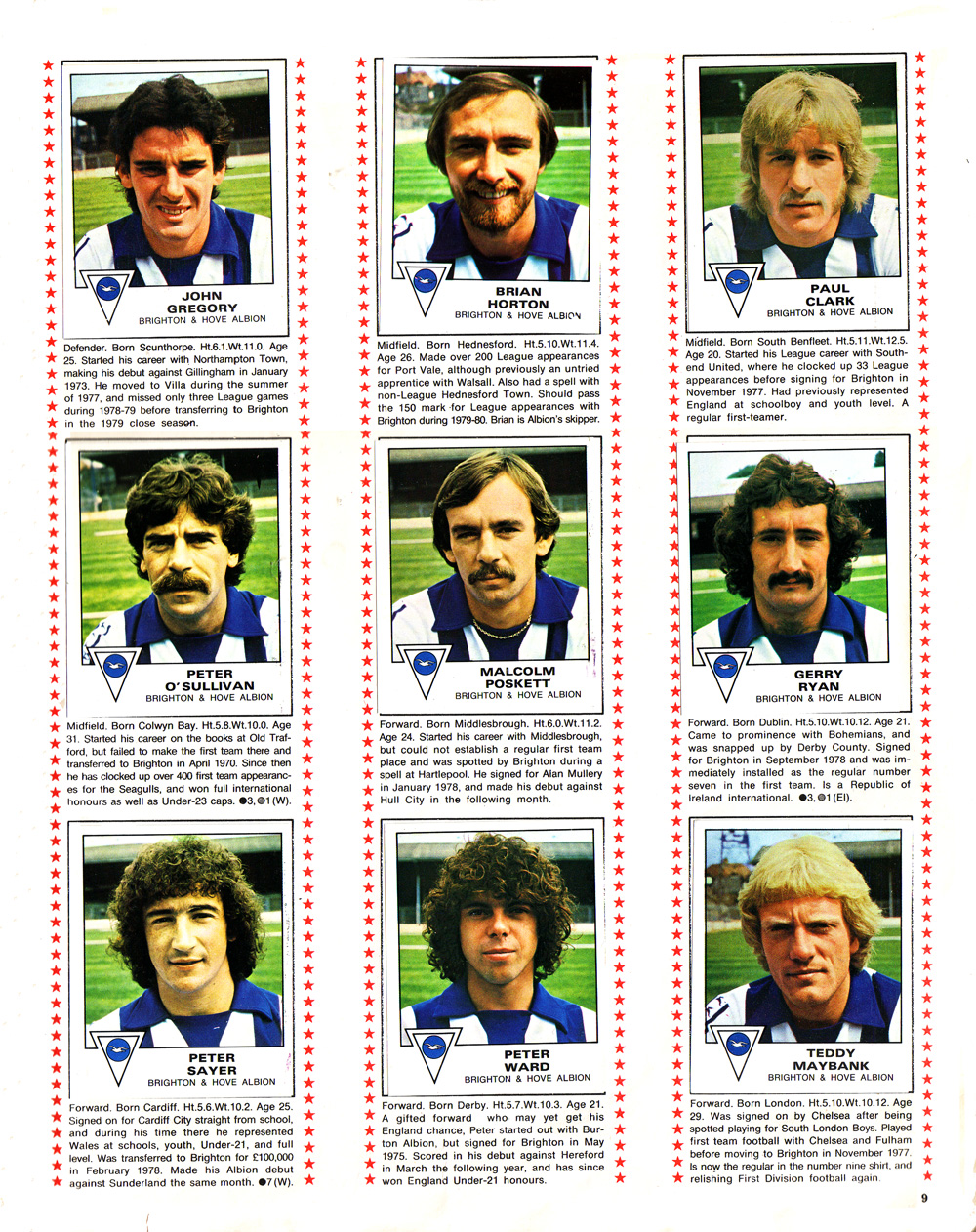
I originally bought this second hand at the Sunday market outside Brighton train station in the early 1990s. I thanked my lucky stars that all the Albion stickers were there. This was years before eBay, so finding someone with a spare Peter Sayer sticker lying around would have been tricky, whereas now it would only take a few seconds…
Looking at the Arsenal pages now, it’s striking that out of the 14 Gunners on display, five would eventually join Brighton (Steve Gatting, Willie Young, Sammy Nelson, Liam Brady and Frank Stapleton). Neil McNab lined up as a Bolton player sticker for the last time, while future Seagull favourite Michael Robinson smiled for his Manchester City photo shoot with a joviality that was not reflected in his unhappy year at Maine Road.
However, it’s the Albion double-spread that really catches the eye!
In these head and shoulder shots, we get to see the bubble perms of Sayer and Ward, but even these are outnumbered by the popularity of moustaches within the Brighton first team, through Lawrenson, Horton, Clark, O’Sullivan, Poskett and Ryan. Curiously, our players here are wearing flared collars with a triangular panel at the bottom, whereas during the season (I’m addressing fellow shirt anoraks, here!) it was open flared collars that were on display, at least for the home kit.
As the season unfolded, keeper Eric Steele gave way to Graham Moseley. Gary Stevens and Steve Foster also played much stronger roles in defence than either Chris Cattlin or Andy Rollings. Sayer, Maybank and Clark would be further casualties as Mullery moved his Panini stickers around his imaginary album to try to find a winning formula. Then, from nowhere (OK, Blackpool in the Third Division) Peter Suddaby took Lawrenson’s spot in defence while the Republic of Ireland international was pushed further forward. He would have taken one of the midfielder stickers, while Neil McNab and Ray Clarke would have been the new arrivals bringing high quality passing and forward play to the Goldstone. Good swopping, Mullers!
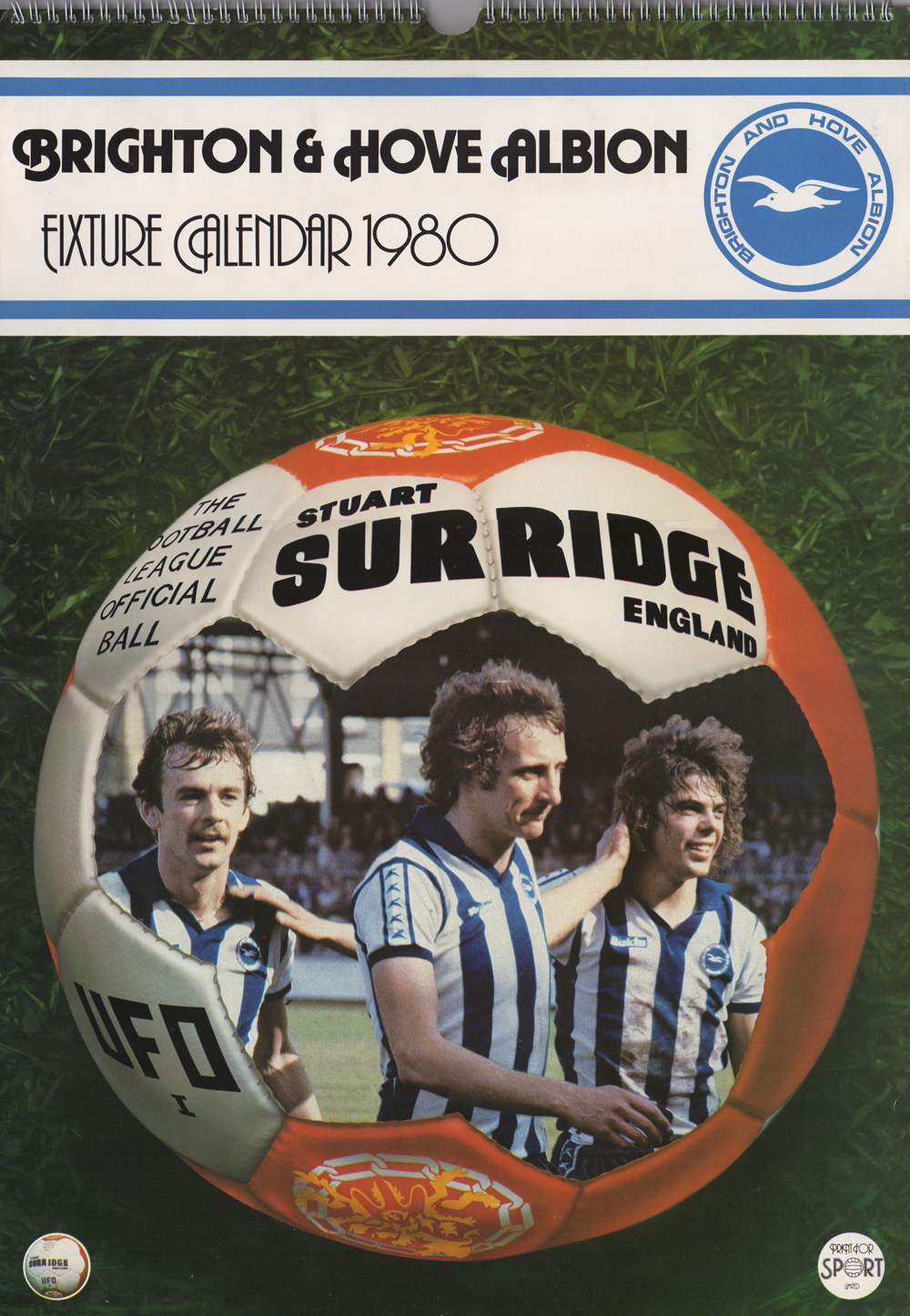
Short of Peter O’Sullivan, Teddy Maybank and Gary Williams turning up at your door tipsily singing ‘Auld Lang Syne’, what finer retro Albion way to see in the New Year than an invitation for you to feast your eyes on a Brighton football calendar from 1980?
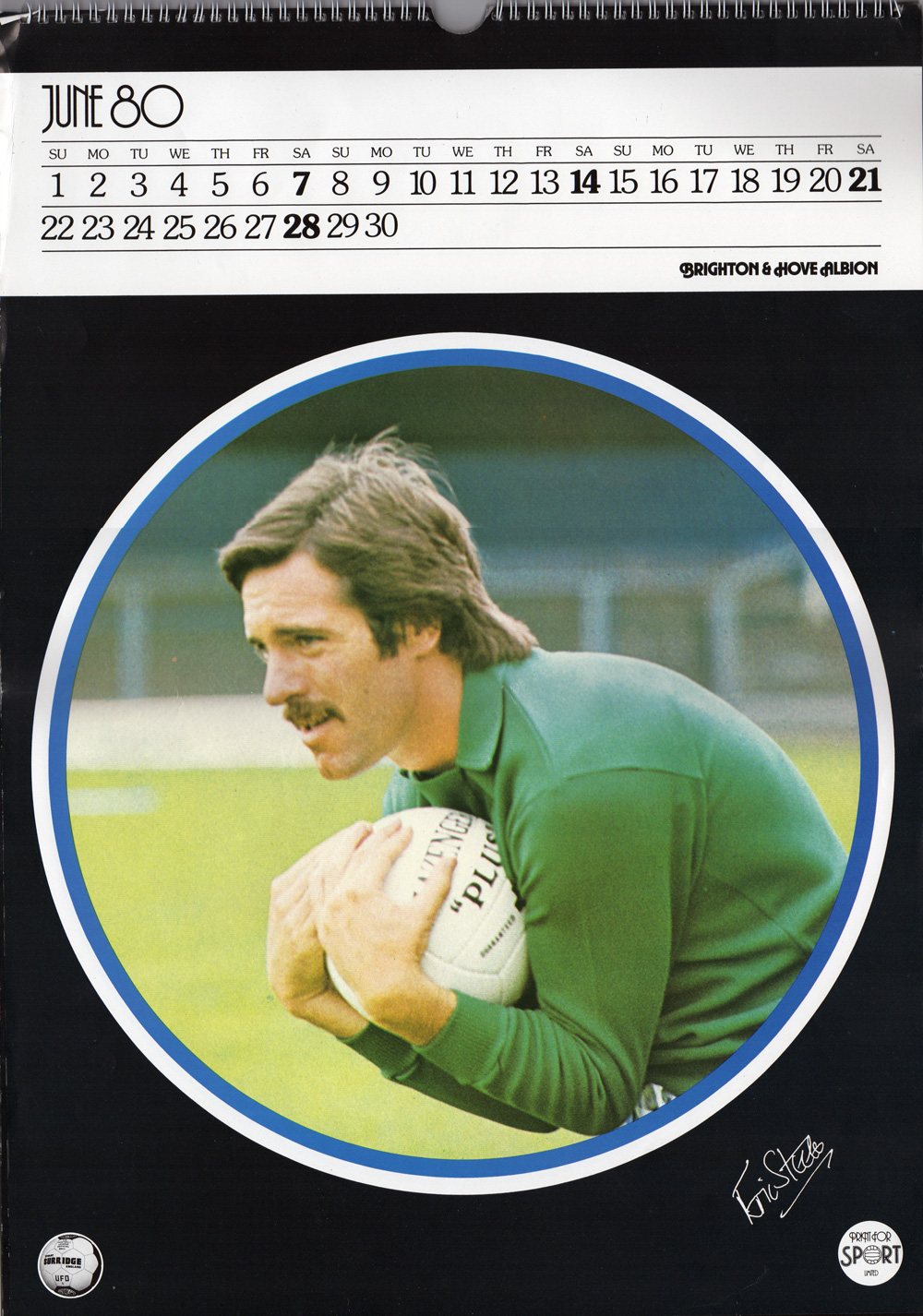
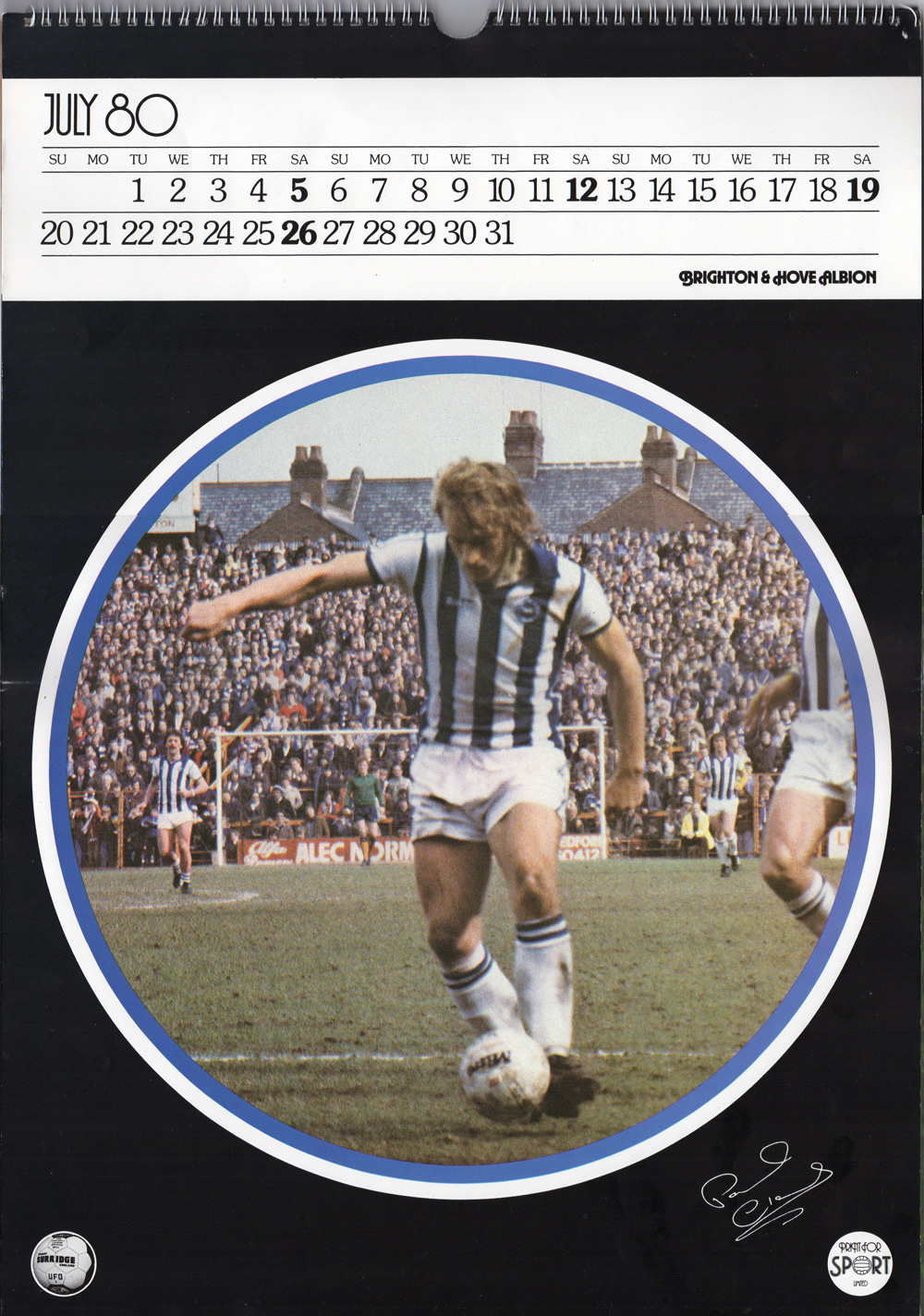
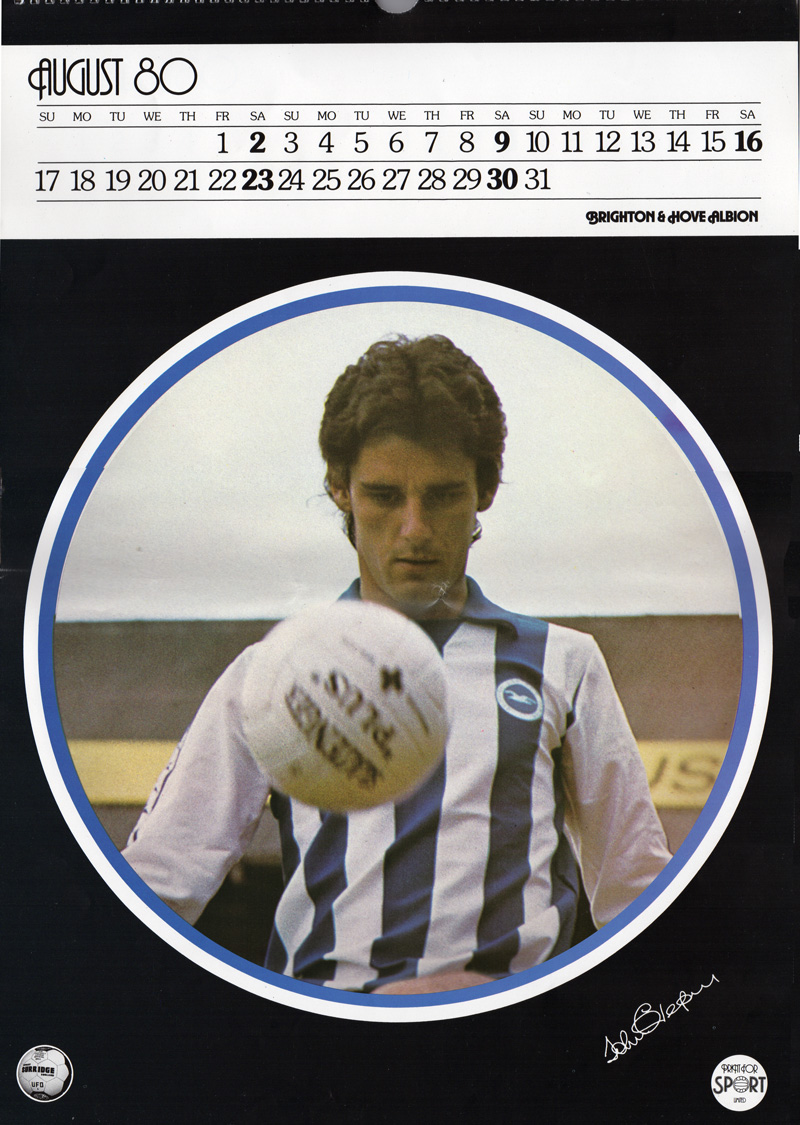
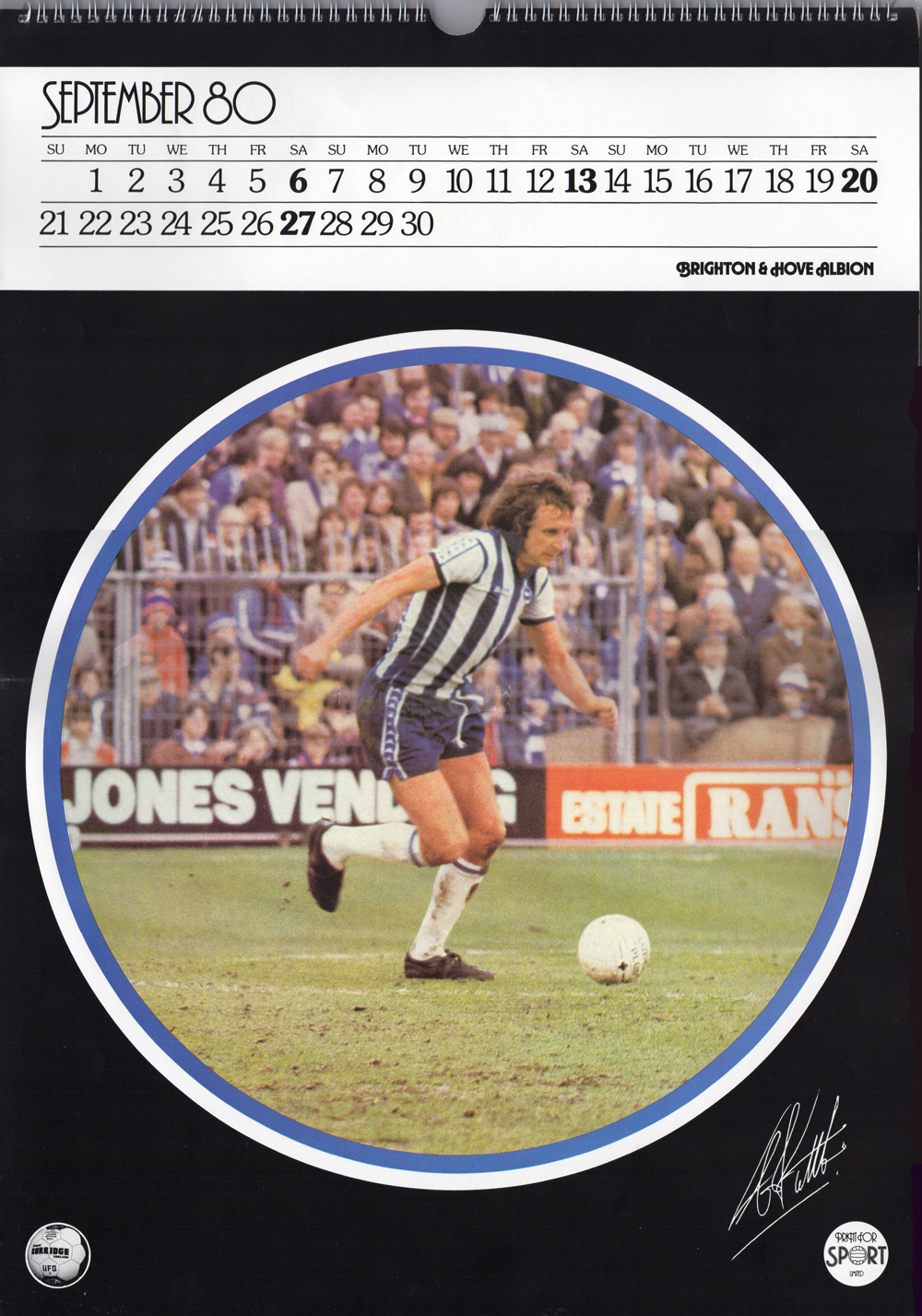
In 1979/80, a company called Print For Sport Ltd launched some lavish A2-sized Soccer Action Calendars for each First Division club, some ‘top’ Second Division clubs (West Ham, Leicester, Sunderland, Newcastle and Burnley, Luton and QPR) and the England team. For just £2.49 each, you received one for your favourite team with twelve colour action shots of first-team players.
The item, advertised heavily in the likes of Shoot! Magazine and Match Weekly, also included red ‘You-Fix’ stickers allowing fans to mark match dates and opponents on the calendar itself. I suppose they could have pre-printed the fixtures directly onto the relevant dates themselves but this was what counted as ‘fun’ and ‘interactive’ in those days!
Here is the Brighton & Hove Albion calendar, lovingly scanned by yours truly:
In a clever, eye-catching design, Malcolm Poskett, Chris Cattlin and Peter Ward are the cover stars.
Then into January is… ermm, Brian Horton with a full head of hair in the perm? Well, it’s definitely Nobby’s signature on the bottom right but, as Alan Wares (Albion Roar) from North Stand Chat has identified, it’s Andy Rollings blocking the shot from Orient’s Alan Whittle in a memorable 3-3 draw. Peter O’Sullivan and Mark Lawrenson are in the background, along with Clark’s hair!
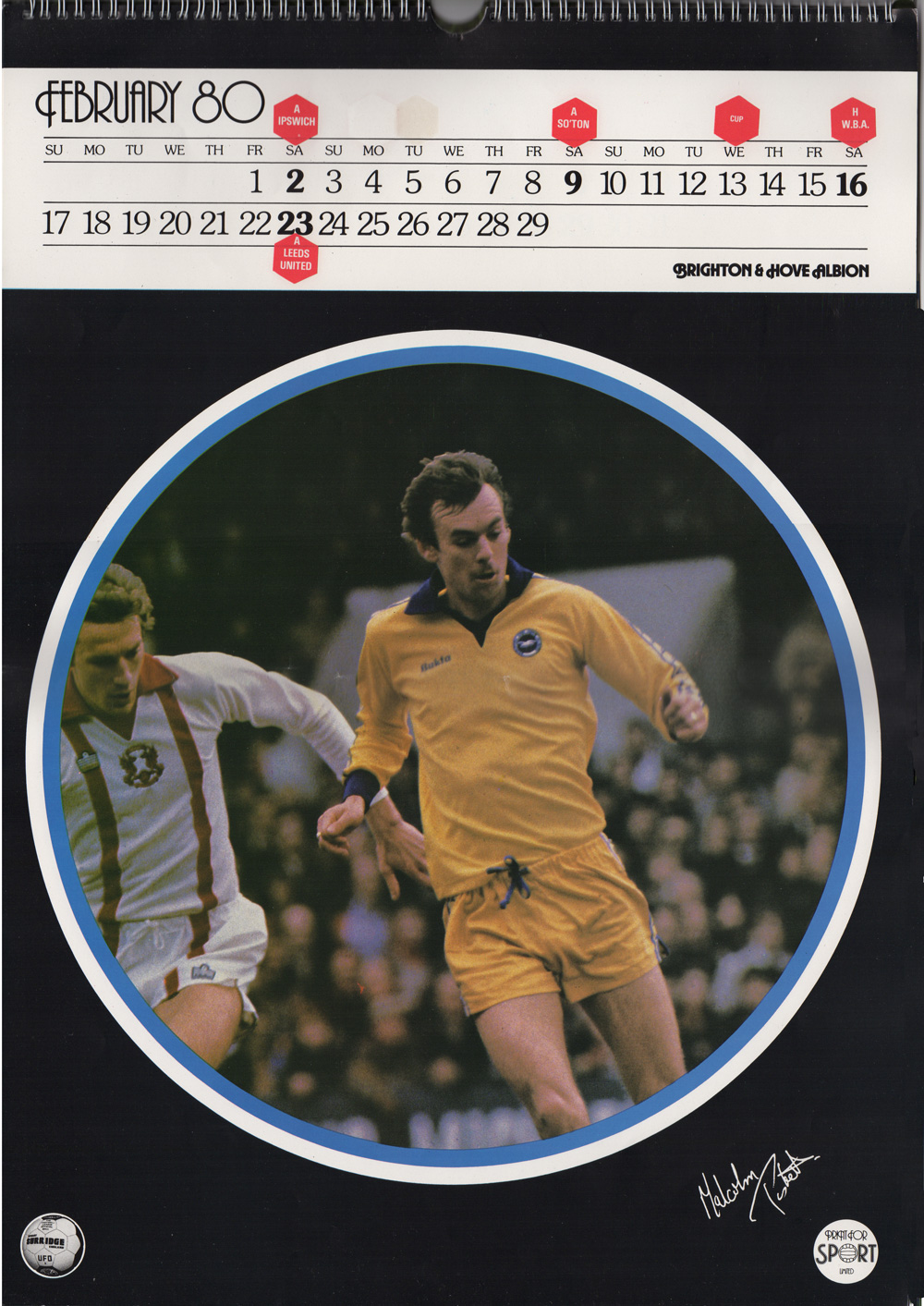
Next up is Malcolm Poskett, also in action against Orient, out to prove Alan Mullery was right to prefer him to Wardy in the number eight shirt for this match.
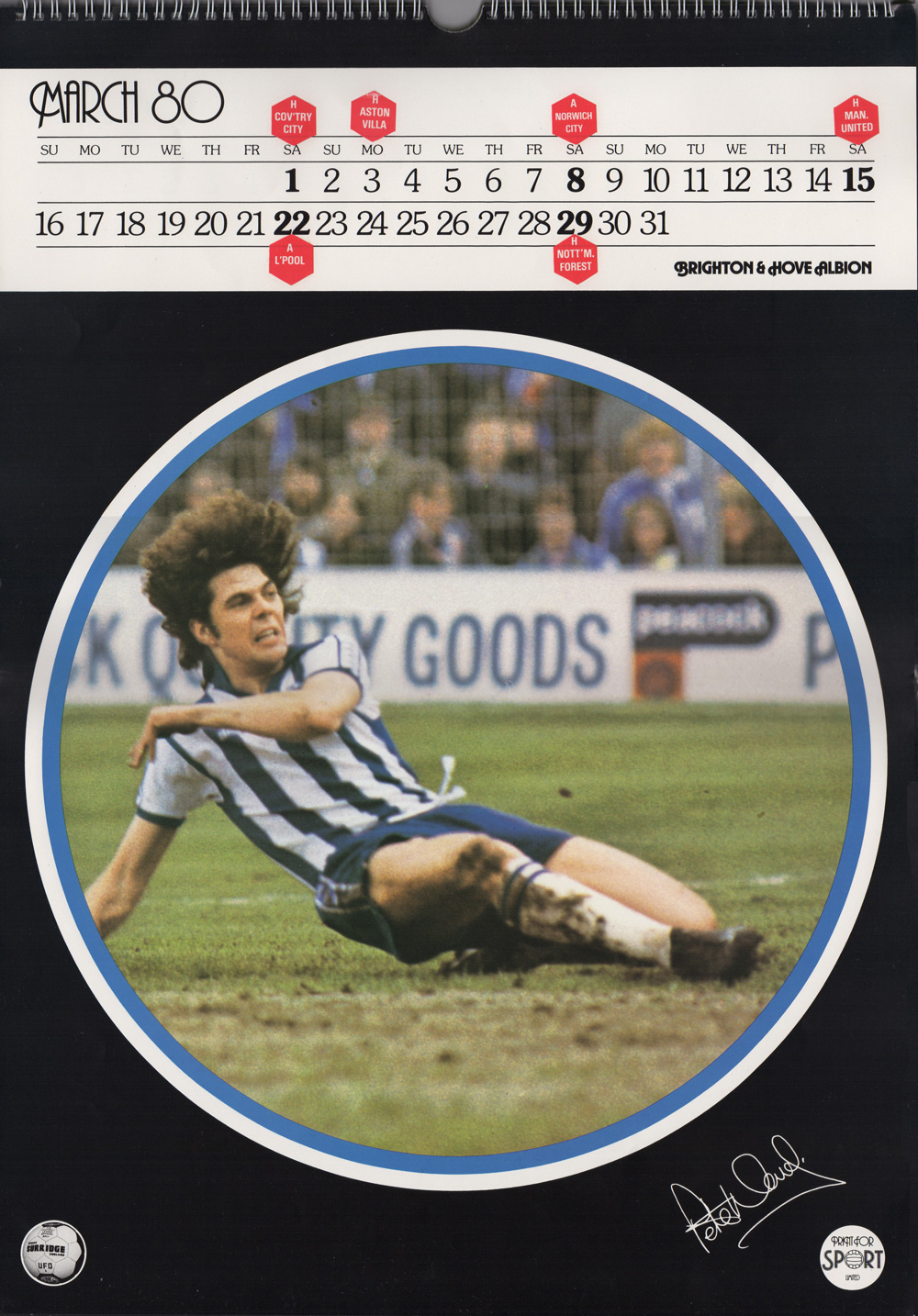
When Peter Ward does show up in March, it’s on a bad hair day.
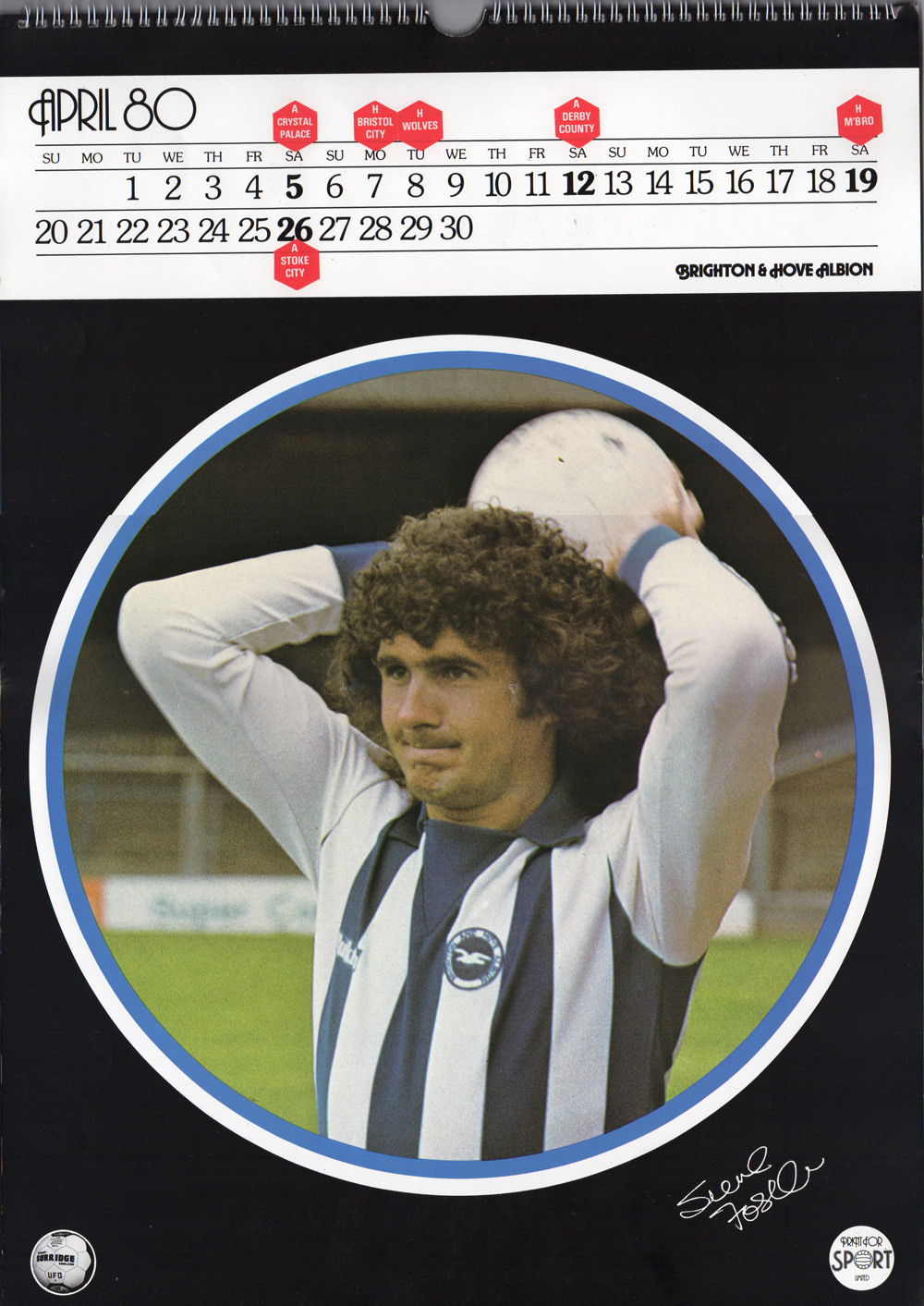
Steve Foster had signed for the Seagulls in pre-season in the summer of 1979. Without a genuine match appearance for Brighton to his name yet, he strikes a pose for the camera instead.
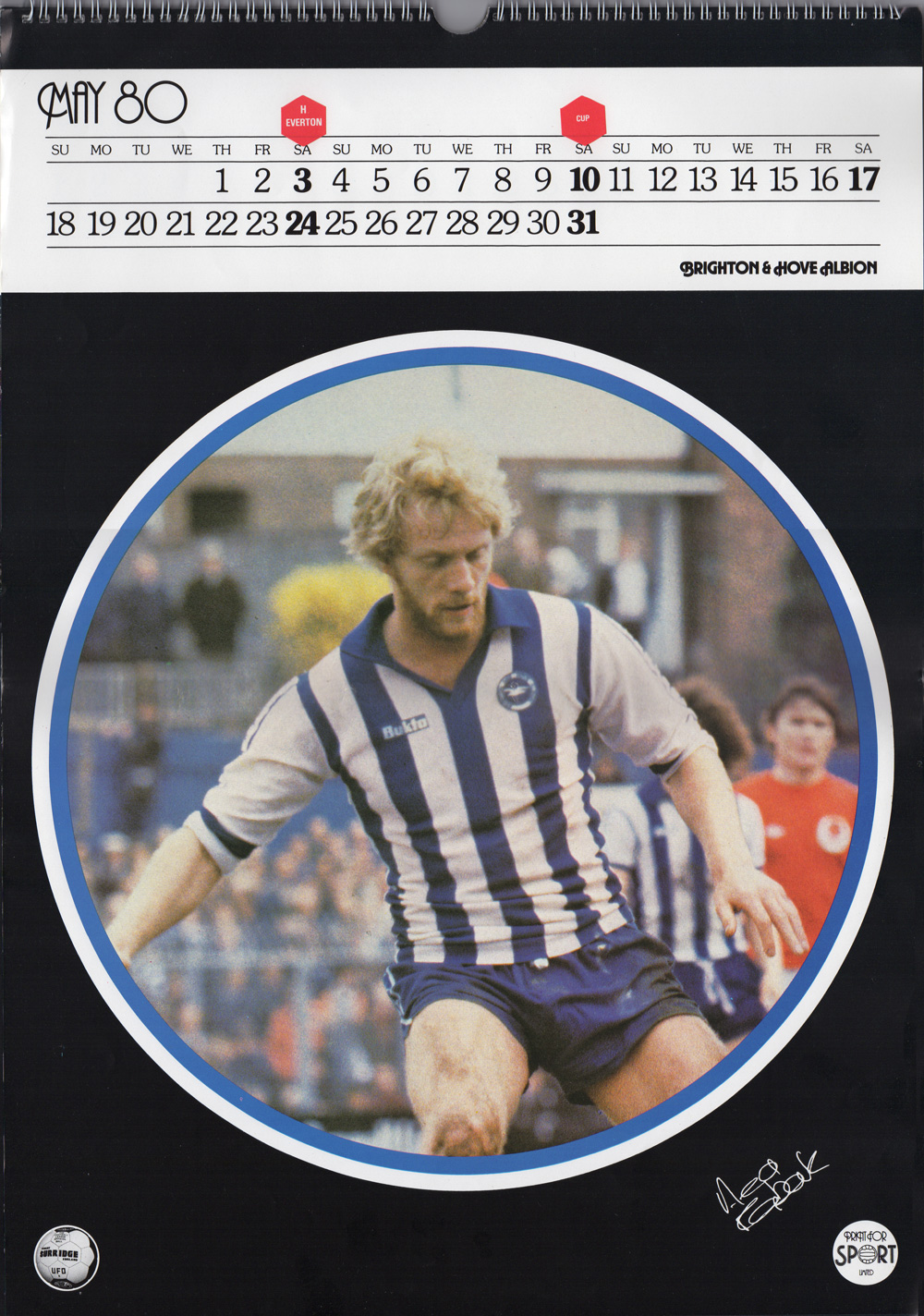
In the same Blackburn game where he scored a goal in the midst of a smoke bomb going off, here’s Teddy Maybank challenging for the ball.
Eric Steele shows a safe pair of hands for the camera.
‘Viking’ Paul Clark on the ball, possibly against Luton in April 1979.
New signing John Gregory juggles the ball.
Veteran Chris Cattlin is star of the month for September 1980 even though his Albion playing were over by then.
Gary Williams carries the ball out against Blackburn.
Proving his acting skills are no better than his punditry skills, Mark Lawrenson fakes celebrating a goal!
And finally, Gerry Ryan goes for a dribble.
As you can see, 1st January 1980 fell on a Tuesday, whereas 1st January 2014 is a Wednesday, so you’ll be disappointed if you were hoping to print this out and use it, unamended, as your calendar for the New Year. Significantly, 1980 was also a leap year so you’ll have to wait all the way until 2036 before this calendar fits the bill again. Never mind! I hope that you are patient. In the meantime, Happy New Year!
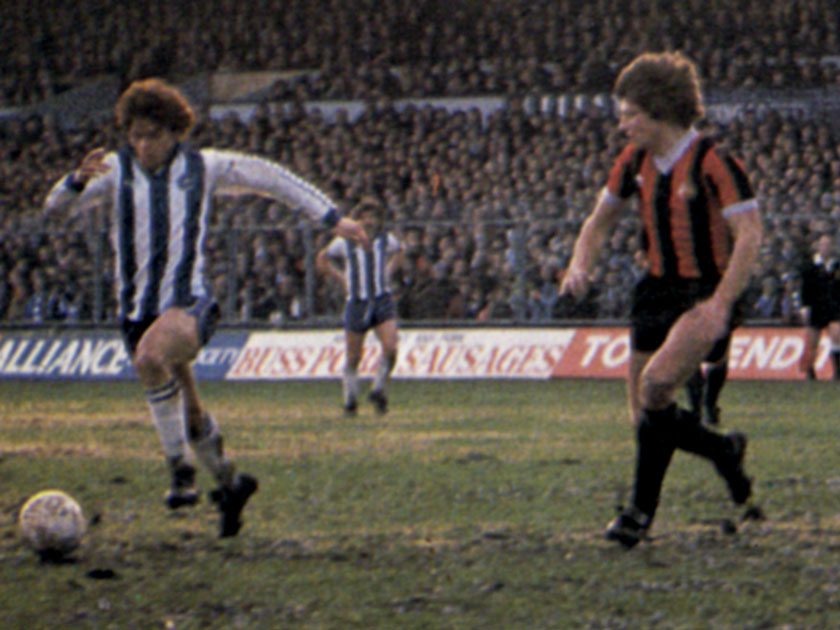
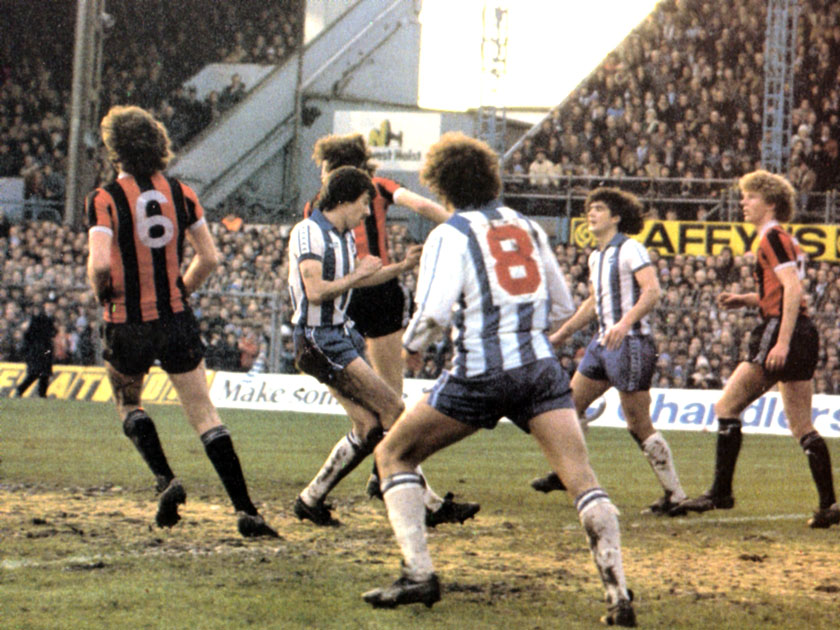
They were heady at the Albion in December 1979. When the decade had started, the side was in the Third Division and now it had rocketed up to the giddy heights of the top flight. When the then current campaign had started, the Seagulls looked like relegation fodder. However, in the Christmas season, a resurgent Brighton played like nothing short of champions. Having trounced Wolves and Crystal Palace, two top-half sides, they proceeded to wipe the floor with Manchester City.
Here is a piece from the Daily Express that perfectly captures the delight in Sussex at the magnificent turnaround at the club:
As the decade draws to a close it is fitting to reflect on the fortunes of Sussex’s only League club whose First Division lifeline has grown progresslvely stronger over Christmas.
When the seventies were new Albion enjoyed a brief flirtation with the Second Division.
Once again they resumed an all too familiar Division Three tag, but as the influence of the incoming chairman, Mike Bamber, began to be felt a fresh picture took shape. The management team of Clough and Taylor halted a headlong plunge towards the Fourth Division and achieved vital breathing space with a crash programme and Taylor, alone, had a near miss in 1975-76.
Success
The Alan Mullery touchstone brought unprecedented success with two promotion seasons out of three and then, inevitably, came the slump.
Anything less on merely a nodding acquaintance with the best company in the country would be expecting too much.
As Mullery said during the darkest moments: “Our mistake is in treating famous clubs on reputations, and not as 11 players.”
Albion are no longer overawed in their present suroundings. It has taken them half the season to acclimatise and pick up very much in the same fashion as last Christmas – maximum points from three games, and ten goals.
Last year the spurt sent them towards promotion; this time they have taken a further important step away from the rock bottom strugglers.
The yawning chasm of relegation has receded, but Mullery knows that the fight must continue, and any relaxation at this stage could be fatal.
Nevertheless, these last three games have seen Albion play more like a team better suited among championship contenders than down among the no-hopers.
In nine days they have demolished Wolves, Crystal Palace and now Manchester City, all clubs in the top half of the table.
Once might have been a fluke, but we have seen enough lately to measure Albion’s growing stature. On current form they are in a grossly false position, and while the prevailing mood is with them, they need fear no side.
In a splendid match, particutarly a memorable first half, Albion outclassed City who may yet feel the chill breath of relegation waft through the plush carpeted corridors of Maine Road.
For Mullery, at Albion’s helm, could well come the accolade of Manager of the Month.
He has motivated his players to work out their own salvation and instilled that priceless asset – self-confidence.
Fluency
Even bearing in mind some of those high scoring Second and Third Division days, I cannot recall seeing Albion play so well as a team-as that opening 45 minutes against City.
Malcolm Allison, declined to grant interviews and preferred to keep his own counsel. Just as well.
There was nothing he could fairly say after his team succumbed to Albion’s fluency. In fact, they could have gone down by a good siX goals such was their lack of method and application.
The impetus of a goal inside half a minute leaves its mark and once Ray Clarke had profited by terribly slack marking to convert Mark Lawrenson’s centre, the crowd and team became as one.
For the first time this season the Goldstone really got behind Albion.
They had been wound-up by the Palace defeat, and suddenly here, was a killing thrust before many had time to settle.
City went to pieces after Clarke’s first goal. Eager to drive forward Sully missed from Brian Horton, and Joe Corrigan saved point blank from Peter Ward.
Then he got down well to the irrepressible Ward on two occasions. Next it was Gerry Ryan opening the way for Ward again, but his finishing let City off the hook.
Thirst
A player with such a thirst Ward now has for goals eouldn’t keep missing, and at 27 minutes he scored his fifth in three straight outings.
The build-ups were coming from all points of the compass, especially a series of penetrating long passes and centres by John Gregory.
Just past the half hour, Clarke whipped in a third when Ryan, Ward and Sully were involved, and the North Stand chorussed: “You’re worse than Palace.”
There haven’t been many occasions when the fans have been able to rub it in, and they made the most of it this time.
They were momentarily silenced by Stuart Lee pulling one back for City, and just before the break, Graham Moseley made a daring save that prevented the lead being whittled to one.
A rare miscue by the normally composed Steve Foster let Gary Power in, and Moseley raced from his line to make a brave stop on the edge of the box.
Fears that Tommy Caton’s tackle on Lawrenson in the dying seconds of the half would prevent his reappearance were assuaged.
Early in the restart, Ward laid on delightful pass for Lawrenson to surge through the cloying mud and hit Corrigan’s bar.
There were still enough City heads still held high to make a game of it, but the result was put beyond doubt by the best goal of the match.
It was scored by Ryan who ran half the length of the pitch after gathering a throw from Moseley.
Had a Liverpool player scored it, I’ve no doubt it would be hailed as the goal of the century or some such exaggeration.
This was a masterly effort from a player who contributed much by strong running and intelligent passing.
He collected nine in 34 outings as a winger last term, but hasn’t had much luck so far.
When one player, in this case, Ward, starts to buzz, it rubs off.
The positions he reached prompted Sully to spray a series of fan-tailed passes from midfield, and Clarke, after nine games with Ward, now has settled to becoming an intuitive partner.
Ward kept turning the defence at will long after Ryan’s goal had passed Corrigan.
He was after another hat-trick, but I reckon he has done enough to prod England manager Ron Greenwood.
The Hortons of football, don’t gain international honours, but he’s as good a pro as you’ll find anywhere, and better than most.
I hope to get full highlights of this game soon. When I do, I’ll share here!
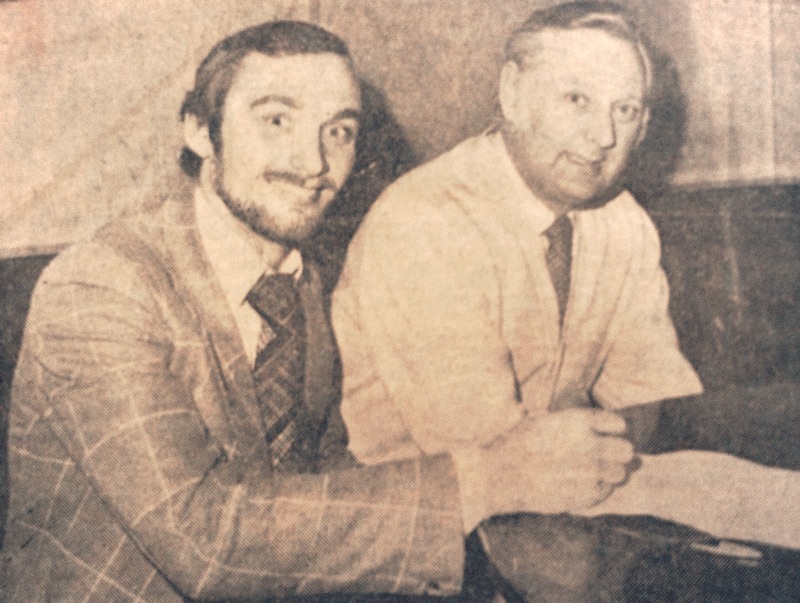
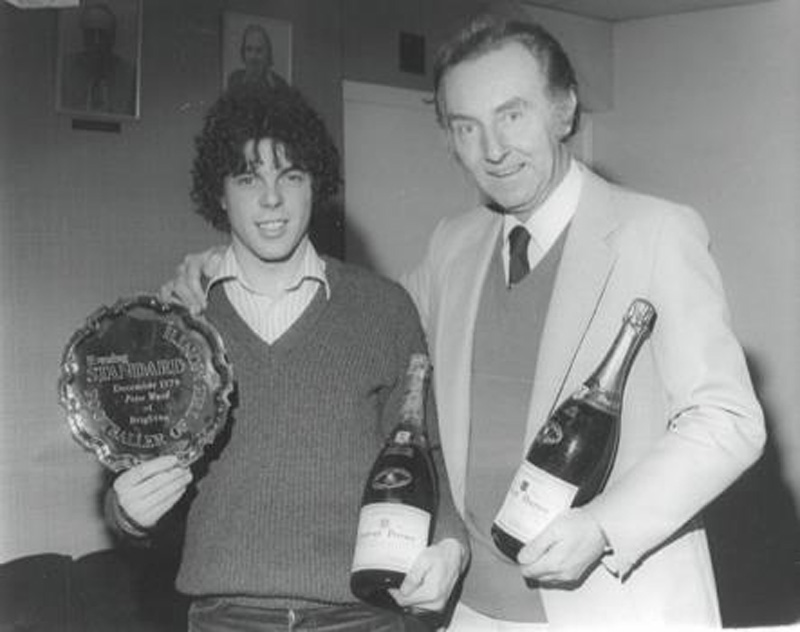
One accolade that came out of the glorious form was that Peter Ward ended up receiving the Evening Standard player award for December 1979. Here he is with chairman Mike Bamber and two bottles of bubbly:
Well done, Wardy!
In the meantime, I’d like to wish you all a Happy New Year. Roll on the 1980s!









 The Goldstone Wrap