Category Archives: Photo Opportunities

Big Match Cross Talk: Brighton v Southampton

With Southampton going so tremendously well in the Premier League at the moment, you might be wondering how long until Brighton can join them.

Things were different in 1979/80, however, when fans were able to savour the first ever top flight match between the two clubs. When the fixtures for the season were published in the summer, Saturday 22nd September 1979 was announced as the date of the eagerly awaited south coast derby at the Goldstone Ground.

In the build up, there was this magazine discussion between the Seagulls skipper Brian Horton and Saints striker Phil Boyer.
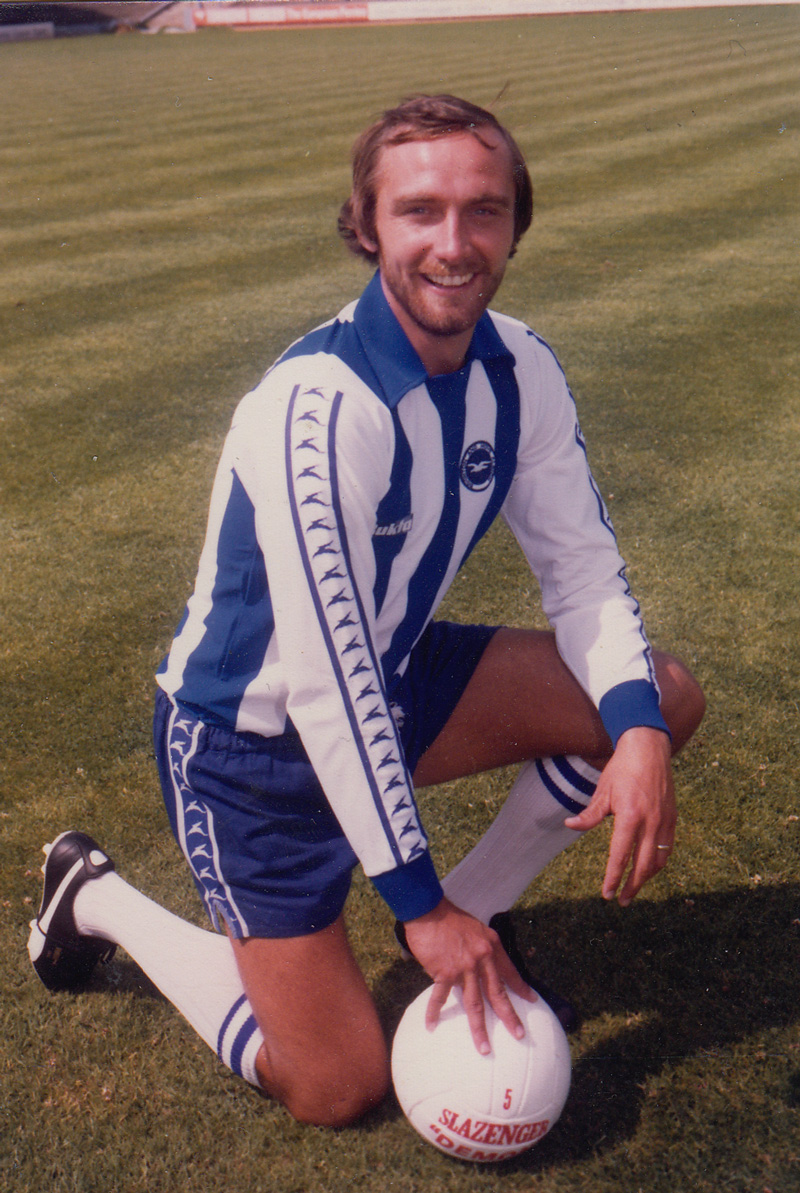
"We're still adjusting to life in the First Division" - Brian Horton

“We’re still adjusting to life in the First Division” – Brian Horton
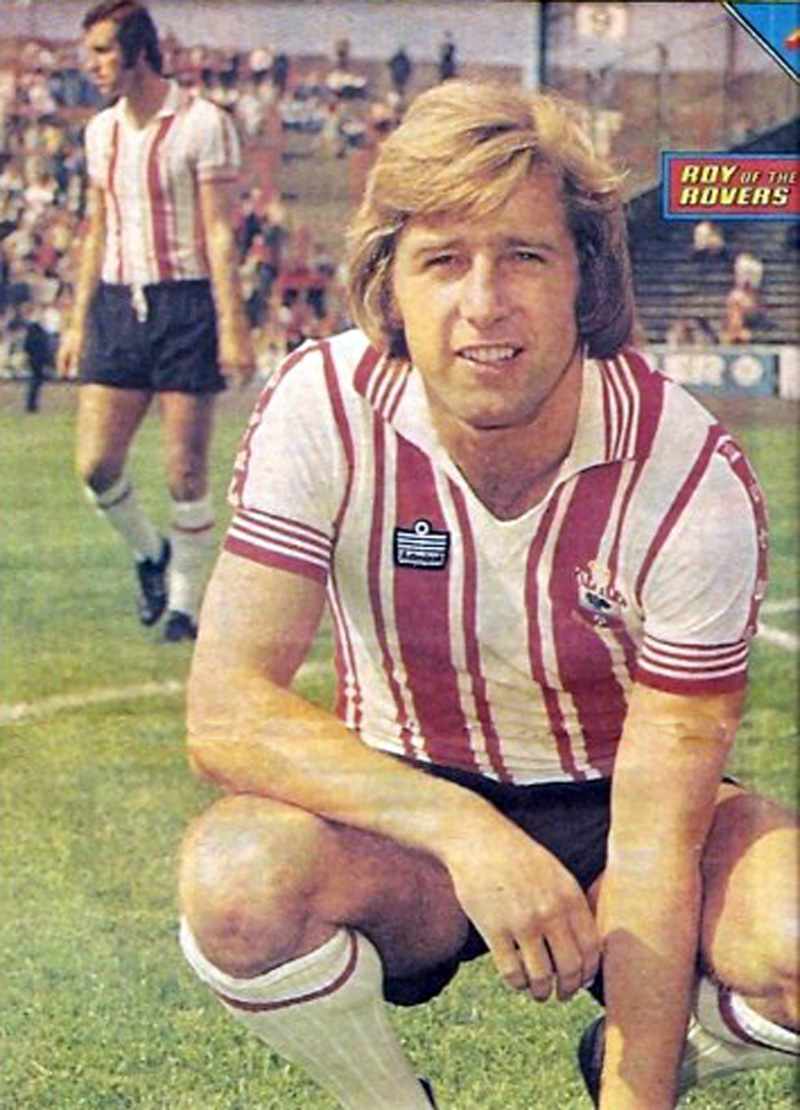
"Yes, but you are good enough to survive" - Phil Boyer

“Yes, but you are good enough to survive” – Phil Boyer

Don’t expect a fiery war of words between two rival players, though, as the conversation stays amiable, even matey, from start to finish:

BOYER: Your indifferent start to the season will mean nothing when we clash at your place on Saturday. We know you will make things hot for us.

HORTON: You can bank on that, Phil. We have not really done• ourselves justice in the First Division yet and that’s something we are desperately anxious to put right. You can imagine how relieved everyone at the Goldstone Ground was when we achieved our first victory since promotion against Bolton at home at the beginning of the month.

BQYER: It’s always tough in new surroundings and that first win is very important. Now you’ve got a couple of points in the bag the pressure will be off and you’ll be on your way.

HORTON: That’s the way we feel about it. We have too many good players to really struggle and we showed what we are capable of with our display at Villa a couple of weeks ago. We got beaten 2-1 there, but played really well and deserved something from the game.

BOYER: It’s two years since we last met – in the Second Division. But you still have the nucleus of that side. It’s a good all round team certainly good enough to survive comfortably.

HORTON: What we have got to do is adjust to the requirements of First Division football. We are, of course, facing a better class of player and any errors are punished more readily.

BOYER: That’s right, Brian, and I just hope you make some on Saturday for me and the lads to cash in on.

HORTON: You must be joking pal! You are the last person in the world we can afford to be charitable to. I’ve been playing against you for many years when you were at Bournemouth and I was with Port Vale… so I know exactly what you are capable of. Our lads got chatting recently when Brighton and Southampton were on the same train back from the North and they all said what a good player you are and how they would have you in any team of theirs.

BOYER: You have not done so badly yourself as it happens. And there will be a lot of good players out on the park on Saturday. You have several in your side and one that impresses me tremendously is Peter O’Sullivan, who seldom gets the praise and publicity he deserves.

HORTON: Yes, he does a steady, if unspectacular, job and is a vital member of the team. And what about the players you can call on? Apart from yourself there’s Steve Williams, a brilliant prospect, Chris Nicholl, a tremendous pro – and now you have Charlie George back to full fitness. What a class player he is.

BOYER: Absolutely. He can be world class on his day and our boss, Lawrie McMenemy pulled off a real coup when he signed him.

HORTON: And we are not forgetting that Alan Ball will be back from America and leading you again for this match. He adds a bit to your game, doesn’t he?

BOYER: He certainly does. ‘Ballie’s a great influence on us and his return should help to give us a settled side. That’s something we could not get in the, opening games.

HORTON: Will he captain the side?

BOYER: Oh, yes, unless Lawrie McMenemy has a rush of blood. That’s unlikely, for you couldn’t get a cooler boss. David Peach has done a good job as skipper, but ‘Ballie’ is the obvious choice. He’s a natural leader, Brian, just like yourself.

HORTON: Thanks for the tribute. But it’s the toughest job in the world, especially when you have been promoted to the First Division for the first time in your life. Not only do I have to make the right decisions, but have to play well to justify my place in the team. This is the ‘big one’ as far as South Coast fans are concerned. It’s a local derby and creates a very special kind of atmosphere.

BOYER: Exactly. Past results mean absolutely nothing when this one comes around. There’s a friendly rivalry between the clubs and I hope the same feeling exists among both sets of supporters. Interest is certainly sky high when we clash. We had two great games in the Second Division two years ago – both drawn – and as you don’t give too much away at home we are prepared for a right old battle.

HORTON: We hope to have picked up some more points by the time you arrive. But we will still be looking for a couple more – that’s always our target in home games. And if they should come against you they will be all the more welcome. They will certainly help ease the pressure a little. Anyway, see you Saturday, Phil. Look forward to a great game.

All together now: Awwwwwww, how sweet!

The match itself ended 0-0 in front of a crowd of 26,918. Teddy Maybank headed the bar against the woodwork twice in the second half, but Southampton generally had the better of the tussle. The return fixture in February 1980 was a disaster, with Brighton losing 5-1 at the Dell.

It took until February 1981 for Albion to get the better of Southampton in the First Division, with a Gary Williams penalty and a Giles Stille header (below) securing the victory:
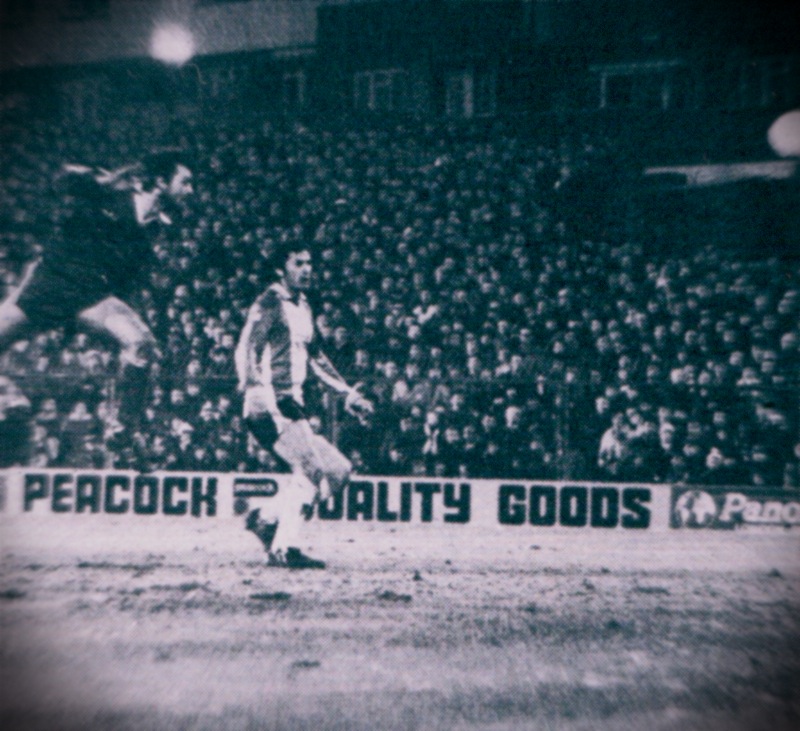
gilesstille7b

Sadly for Horton, he missed the match through suspension.
Tagged ,

Many happy returns for Keeley

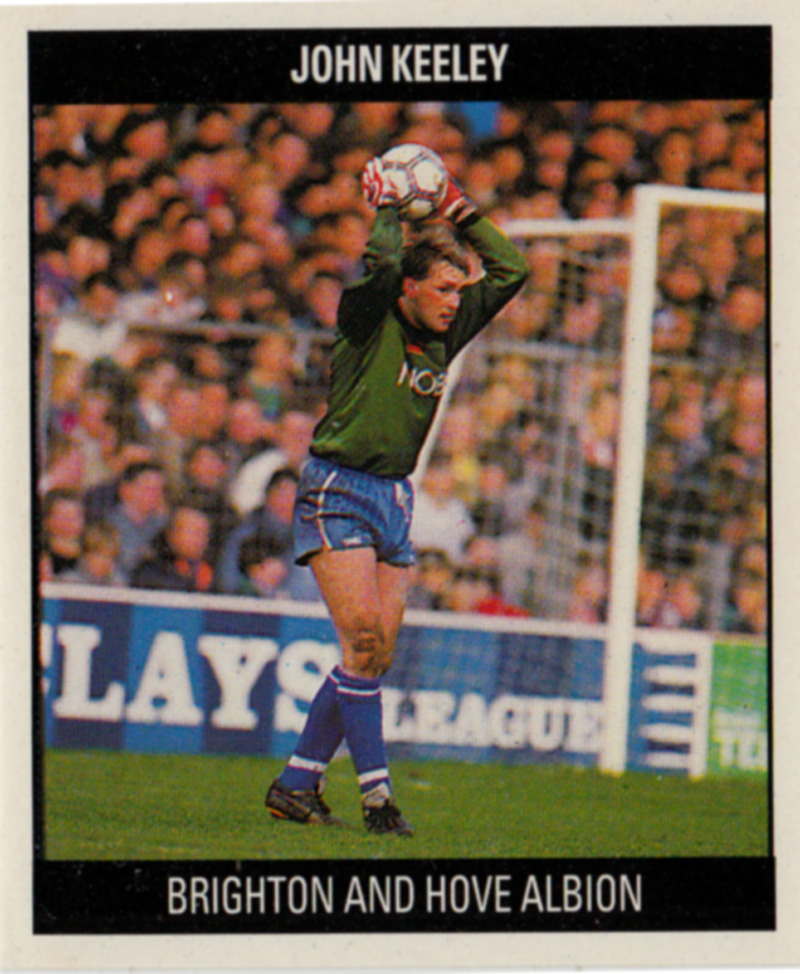
johnkeeley

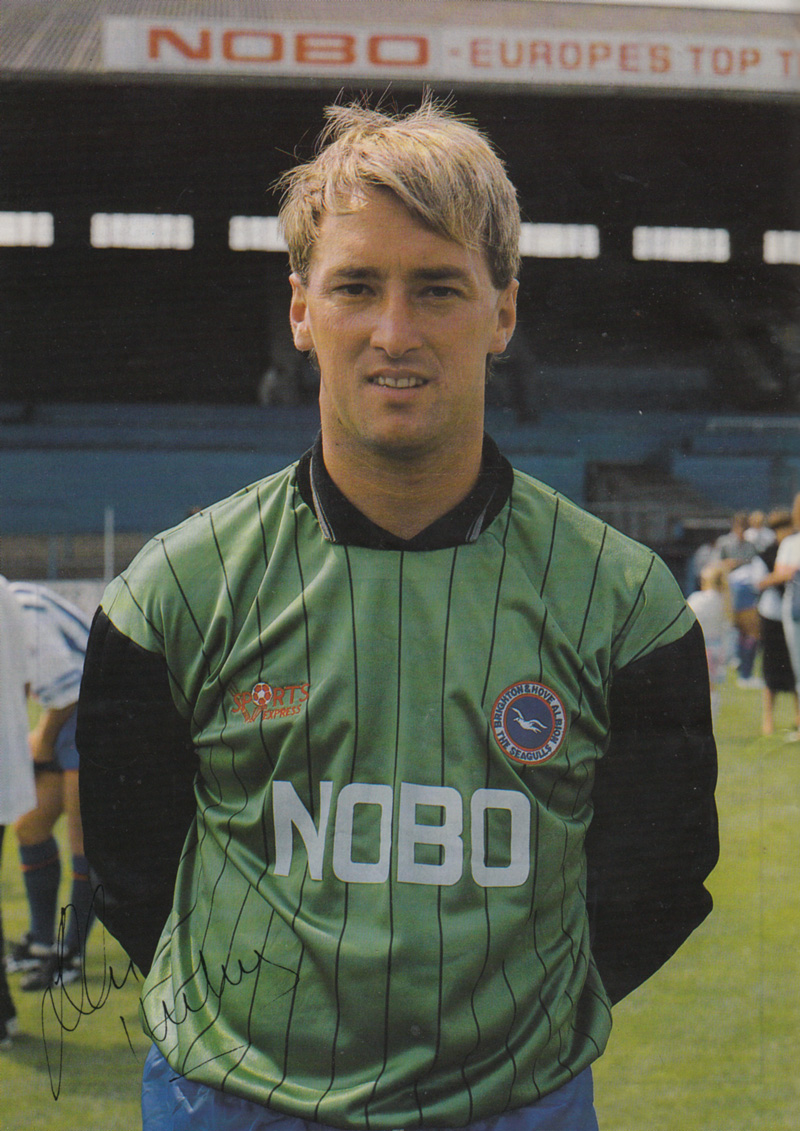
John Keeley is Blackburn Rovers’ current goalkeeping coach and will almost certainly be at the Amex today. Hopefully, he’ll receive a warm welcome from Brighton supporters. He’s already been at the stadium in Falmer before, having served in the same capacity for Portsmouth after stepping up from being Pompey’s academy goalkeeping coach in 2010. Before that, he had a stint as Albion goalkeeping coach in the Withdean years.

However, it’s as Brighton’s number one in the 1980s that he is most fondly remembered in Sussex. The 6ft shotstopper began his League career with Southend but quit in December 1984 after falling out with manager Bobby Moore. After becoming a taxi driver, Keeley impressed Albion scout Terry Gill while playing for Maldon Town and Chelmsford City.

Costing just £1,500 in 1986 (which was roughly the same price as a home computer with monitor at the time!) he won rave reviews at the Goldstone with his stunning reflexes and good handling. In 1987/88, he was a key player in the Brighton side that won promotion from Division Three. In an interview with Dave Beckett from the Albion match programme v Bradford in August 1988, he spoke openly about his unconventional journey as a professional footballer:

‘I suppose if I had the chance to start all over again I probably would do things a bit differently second time around – I certainly wouldn’t have given up football when I did although, of course, it’s easy to say that now!’

At twenty seven years old it seems that Albion goalkeeper John Keeley is at last getting something back from the game which in the past has been harsh on him.

Promotion to the Second Division was undoubtedly the highlight of his career so far, and a happy change in fortunes for a man who found League soccer with Southend so depressing that he quit the sport with no intention of ever coming back. Instead John took up taxi-driving in Canvey Island, a job he had little enthusiasm for but at the same time is glad to have experienced. ‘When you take a couple of years out and work like that you appreciate the sort of success Albion had last season all the more. Although I’d have stayed in soccer if I was doing it all over again that doesn’t mean I regret what’s happened to me. My view is that it might not have been fun sometimes, but at least it paid the bills and I was glad for that.

Maybe it’s because of that background that the fans adopted me quite quickly – I’ve never really thought about it like that before to be honest. I just don’t see that I’m any different from anyone on the terraces. I’d hate it if I ever thought that people were going to treat me differently from anyone else, I hope I’m really just as down-to-earth as I was back in Canvey Island.’

Of course, no matter how approachable a player is off the field (and Keeley ranks •highly in that department), there will be little sympathy if he does not produce the goods on the pitch. No problems there though either. Last season John was one of just two ever-presents in the side, turning out 57 times and letting in only 47 goals one of the best records in the division.

johnkeeley4The return to Division Two in 1988/89 proved to be bumpy as Albion got off to a disastrous start of eight successive defeats. Keeley’s record of 63 consecutive appearances was broken when he ruptured thumb ligaments and missed the 1-0 home defeat to West Bromwich Albion in September 1988 (the match where Digweed was also injured). The ex-taxi driver returned to complete 37 League appearances by the season’s end and was voted Player of the Season. He was sold to Oldham Athletic for £240,000 in 1990 but rarely got a sniff of first team action at Boundary Park. After spells at Colchester, Chelmsford, Stockport County, Peterborough United and Chelmsford (again), he was back as a taxi driver and ended up playing for Isthmian League side Canvey Island.

There, he was part of a great FA Cup fairytale when his non-league side forced a replay with Brighton in November 1995:

Keeley was able to make a return to the Goldstone Ground later that month, to a great reception, where his side was defeated 4-1 by the Seagulls thanks to goals from John Byrne (2), Junior McDougald and Peter Smith, in Jimmy Case’s first game in charge:

Tagged

Digweed’s meteoric rise

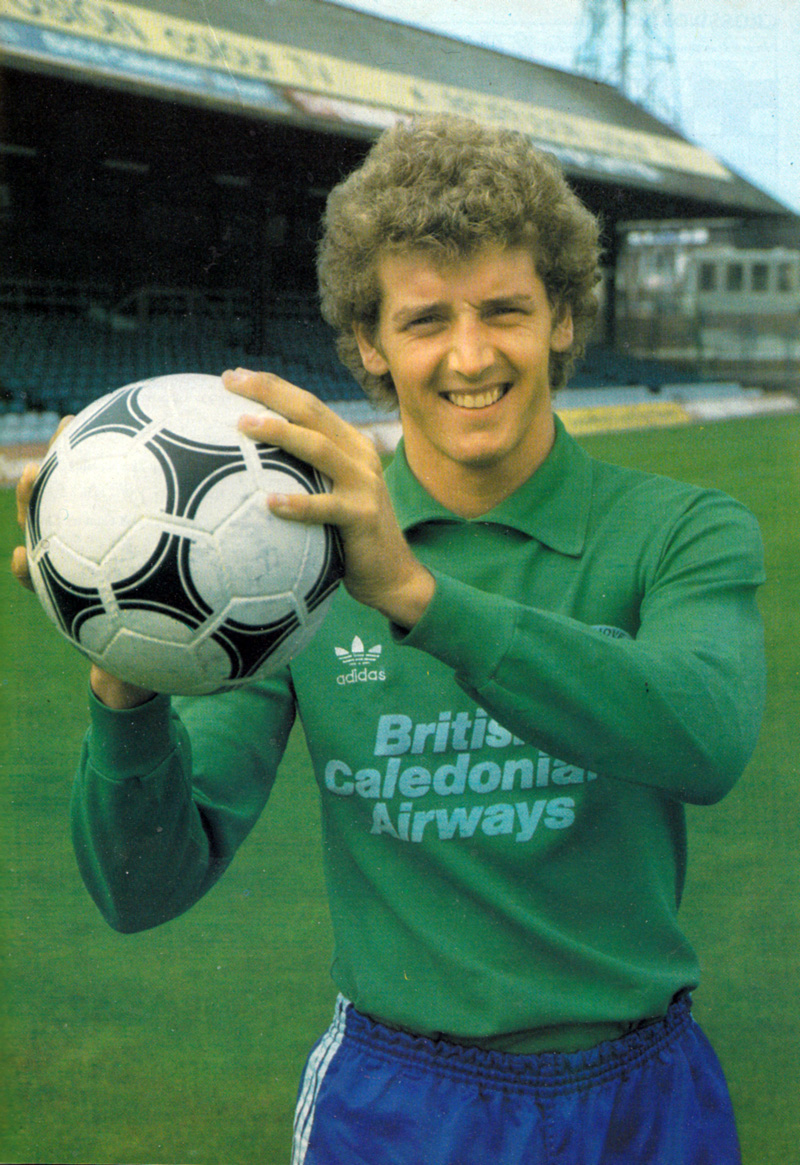
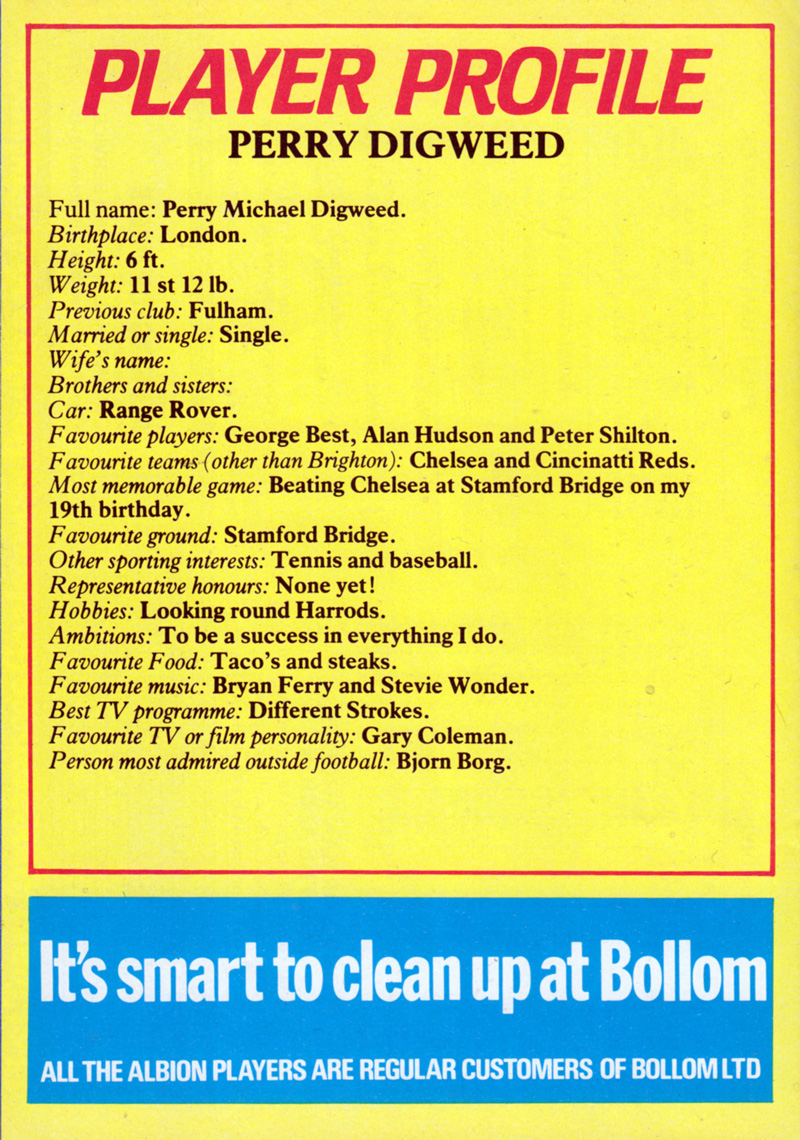
digweed5

digweed4

From either Shoot! or Match Weekly in 1980/81:

The opportunity of playing First Division football as Brighton’s first choice goalkeeper seven days after playing in front of a meagre 400 spectators for Fulham reserves left Perry Digweed with no doubts about leaving Craven Cottage.

“I’d asked for a move about a month before. I’d only played in a handful of first team games in five years and felt the time had come for me to establish myself somewhere.

“I was a little surprised to join a First Division club,” Digweed admitted, “although I had read that Brighton were interested in me.” But even though Digweed conceded two goals against West Bromwich Albion on his First Division debut and his 16th League appearance, Alan Mullery felt his new ‘keeper had justified the £150,000 gamble he had taken in plucking Digweed out of obscurity.

“Obviously we were after the best when it became clear that Graham Moseley was costing us vital points, but neither Peter Shilton nor Ray Clemence were available, which is why we had to look to the future,” Mullery explained.

“OK, so the lad was at fault with the first goal he let in, but his overall debut convinced me more than ever that we’ve signed someone who’s going to become a very good ‘keeper,” Mullery commented. And as if to confirm Digweed’s rapid arrival at the top, he was recently called into the England Under-21 squad for the game against the Republic of Ireland.

“He had to withdraw from the squad due to League commitments, but although he could not hide his disappointment, Perry was undoubtedly encouraged by his sudden arrival in the limelight. Digweed, who lives just a stone’s throw from Stamford Bridge, has always been an avid Chelsea supporter and is confident that he will be playing against his heroes in the First Division next season.

“Of course it will take time for me to adjust to the First Division, but it hasn’t taken me long to settle with Brighton as they’re such a young team. This is why there’s such a terrific spirit in the club, which makes me feel that once we’re established in the First Division we must be candidates for European football,” Digweed predicted.

Moving to Brighton has also enabled Digweed to rejoin Brighton’s assistant manager Ken Craggs, who was largely responsible for Digweed joining Fulham.

“My uncle, who played for Hounslow, is a great friend of Ken’s, and because of this, started training with Fulham when I was 13. Eventually Alec Stock saw me play and signed me up.

“It baffles me how Fulham have slipped so quickly,” Digweed continued. “They’ve always played attackinq football and should have pulverised some sides. Their problem has been that they haven’t scored many goals which is, after all, what the game’s about.

“It doesn’t worry me that I’ve joined a struggling club, because there is so much difference between playing here and the reserves. While my immediate aim is to help Brighton maintain their place among the elite, my main aim is to play for England,” Digweed stressed.

Digweed wrestled the first team keeper’s jersey from Graham Moseley, and ended up playing fifteen of the last sixteen matches of the 1980/81 season. However, when Mike Bailey took over the following season, the ex-Fulham player found himself back in the reserves again. Nevertheless, he had the distinction of playing in both the famous victories at Anfield in 1981/82 and 1982/83 and remained with Albion into the 1992/93 season. Despite his long service for the club, he was not awarded a testimonial match, and was fobbed off with a ‘golf event’ to celebrate his decade at the club.

Want to show your appreciation? You can buy a Perry Digweed T-shirt or hoodie at Cult Zeros. I wonder if they do special tracksuit bottoms as favoured by Perry himself…

Tagged ,

A rush to watch Brian Clough’s first match

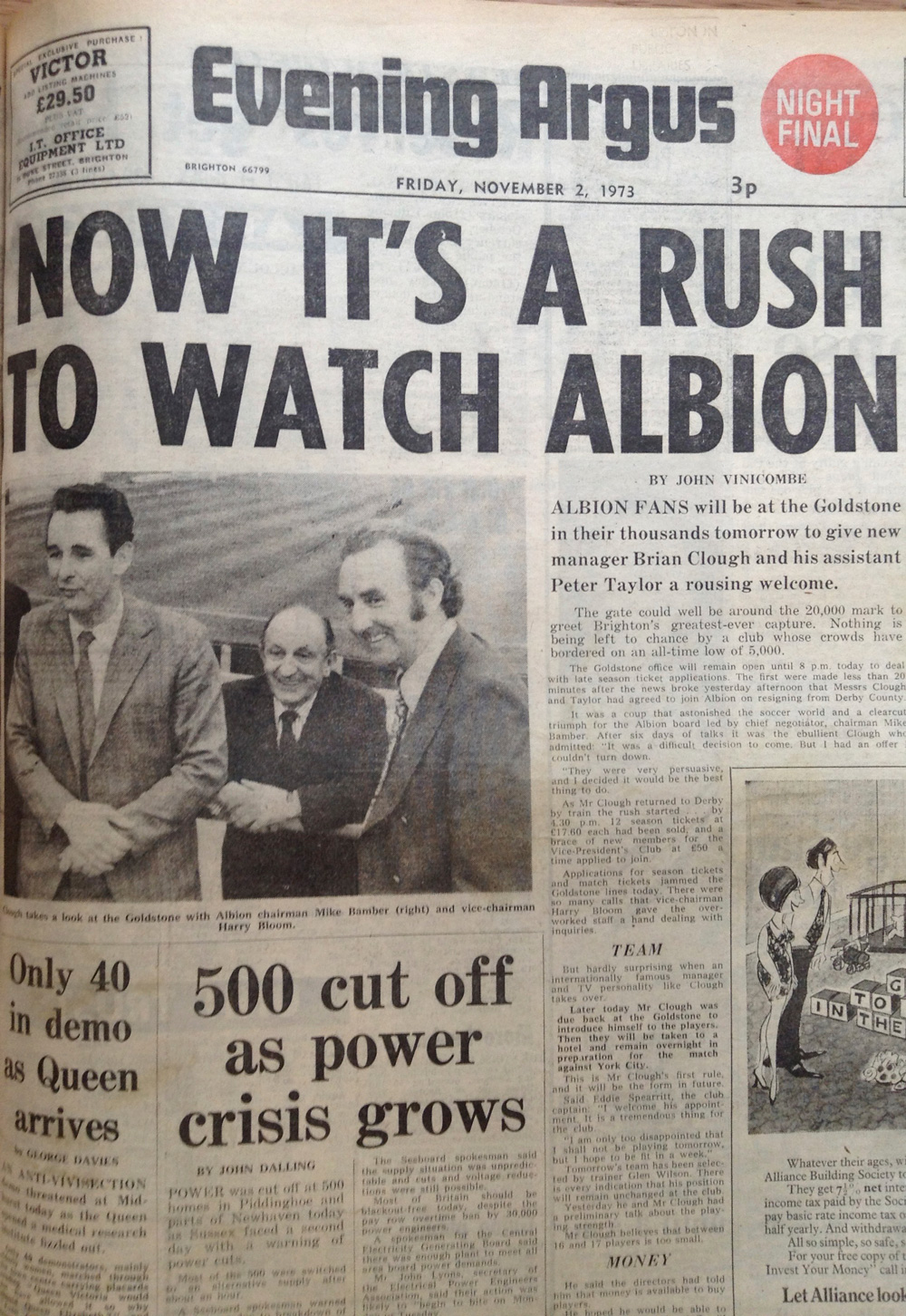
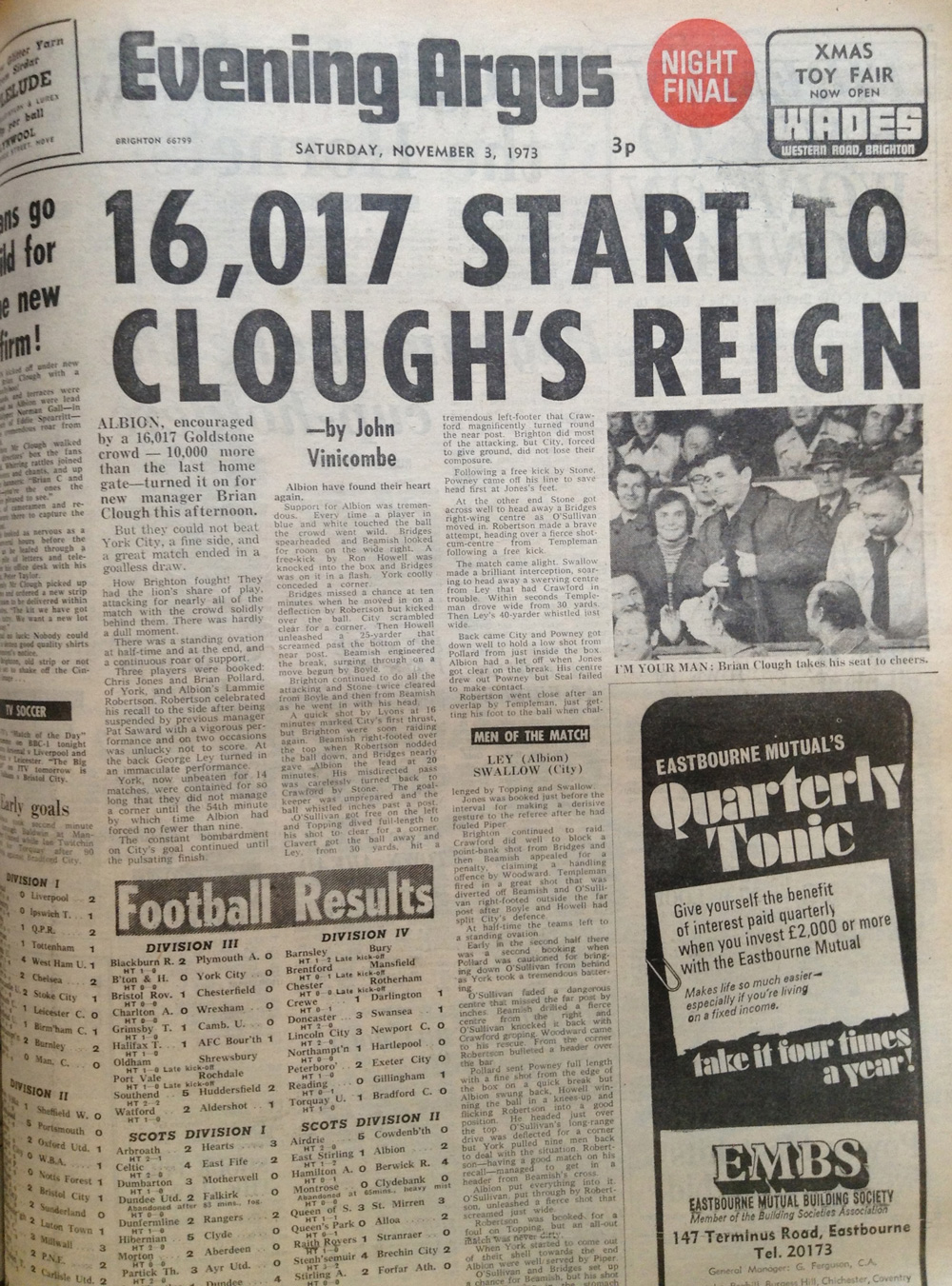
Unsurprisingly, there was a massive media whirlwind around the sensational news that Brian Clough had taken over as the manager of Third Division Brighton. As a result, the story dominated the front page as well as the back page of the Evening Argus over the next few days. From Friday 2nd November 1973:

cloughsigns4

Albion fans will be at the Goldstone in their thousands tomorrow to give new manager Brian Clough and his assistant Peter Taylor a rousing welcome.

The gate could well be around the 20,000 mark to greet Brighton’s greatest-ever capture. Nothing is being left to chance by a club whose crowds have bordered on an all-time low of 5,000.

The Goldstone office will remain open until 8pm today to deal with late season ticket applications. The first were made less than 20 minutes after the news broke yesterday afternoon that Messrs Clough and Taylor had agreed to join Albion on resigning from Derby County.

It was a coup that astonished the soccer world and a clearcut triumph for the Albion board led by chief negotiator, chairman Mike Bamber. After six days of talks it was the ebullient Clough who admitted: “It was a difficult decision to come. But I had an offer I couldn’t turn down. They were very persuasive, and I decided it was the best thing to do.”

As Clough returned to Derby by train, the rush started – by 4.30pm, 12 season tickets at £17.60 had been sold, and a brace of new members for the Vice-President’s Club at £50 a time applied to join.

Applications for season tickets and match tickets jammed the Goldstone lines today. There were so many calls that vice-chairman Harry Bloom gave the over-worked staff a hand dealing with inquiries.

But hardly surprising when an internationally famous manager and TV personality like Clough takes over.

Later today Mr Clough was due back at the Goldstone to introduce himself to the players. They will be taken to a hotel and remain overnight in preparation for the match against York City.

This is Mr Clough’s first rule, and it will be the form in the future.

Said Eddie Spearritt, the club captain: “I welcome his appointment. It is a tremendous thing for the club. I am only disappointed that I shall not be playing tomorrow, but I hope to be fit in a week.”

Tomorrow’s team has been selected by trainer Glen Wilson. There is every indication that his position will remain unchanged at the club.

Yesterday, he and Mr Clough had a preliminary talk about the playing strength. Mr Clough believes that between 16 and 17 players is too small. He said that directors had told him that money is available to buy players.

He hoped he would be able to motivate the present staff: “I have got to get it out of them. We are now in the bottom six of the Third Division. It will take a lot of hard work to get into the Second. Before anyone starts talking about the First, let’s get into the Second. I think I would settle for staying in the Third for a few months…”

Come Saturday, 16,017 packed into the Goldstone to watch the curious affair of Clough’s debut match as Brighton boss, almost 10,000 more than the previous gate against Southport. From Vinicombe’s report, it seems as if Albion had the lion’s share of the possession:

cloughsigns6

[Lammie] Robertson celebrated his recall to the side after being suspended by previous manager Pat Saward with a vigorous performance and on two occasions was unlucky not to score. At the back George Ley turned in an immaculate performance. York, now unbeaten for 14 matches, were contained for so long that they did not manage a corner until the 54th minute by which time Albion had no fewer than nine.

The constant bombardment on City’s goal continued until the pulsating finish. Albion have found their heart again. Support for Albion was tremendous. Every time a player in blue and white touched the ball the crowd went wild.

The 0-0 draw left Brighton in 19th position, barely above water in the fight against relegation. Clearly, there was a lot of work to do by the new men in charge with players who Taylor later described as ‘a bunch of amateurs and layabouts.’

Tagged ,

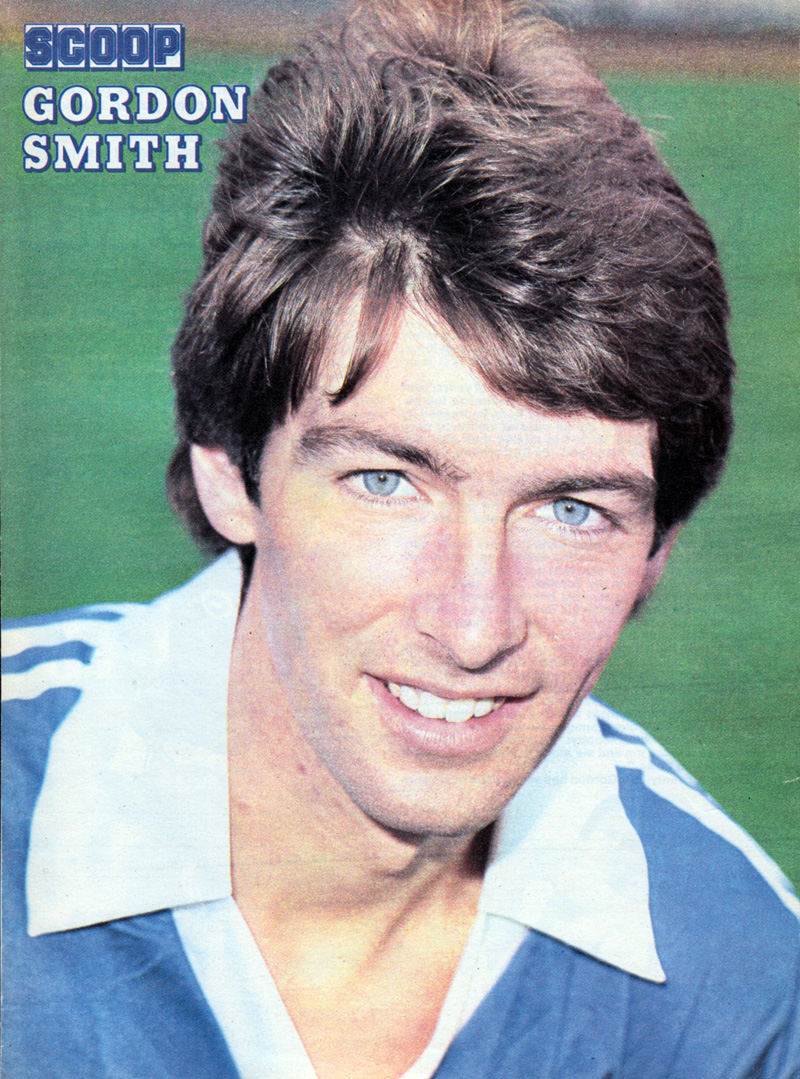
Gordon Smith: ‘I shall do my utmost not to let Mullery down’

gordonsmith7

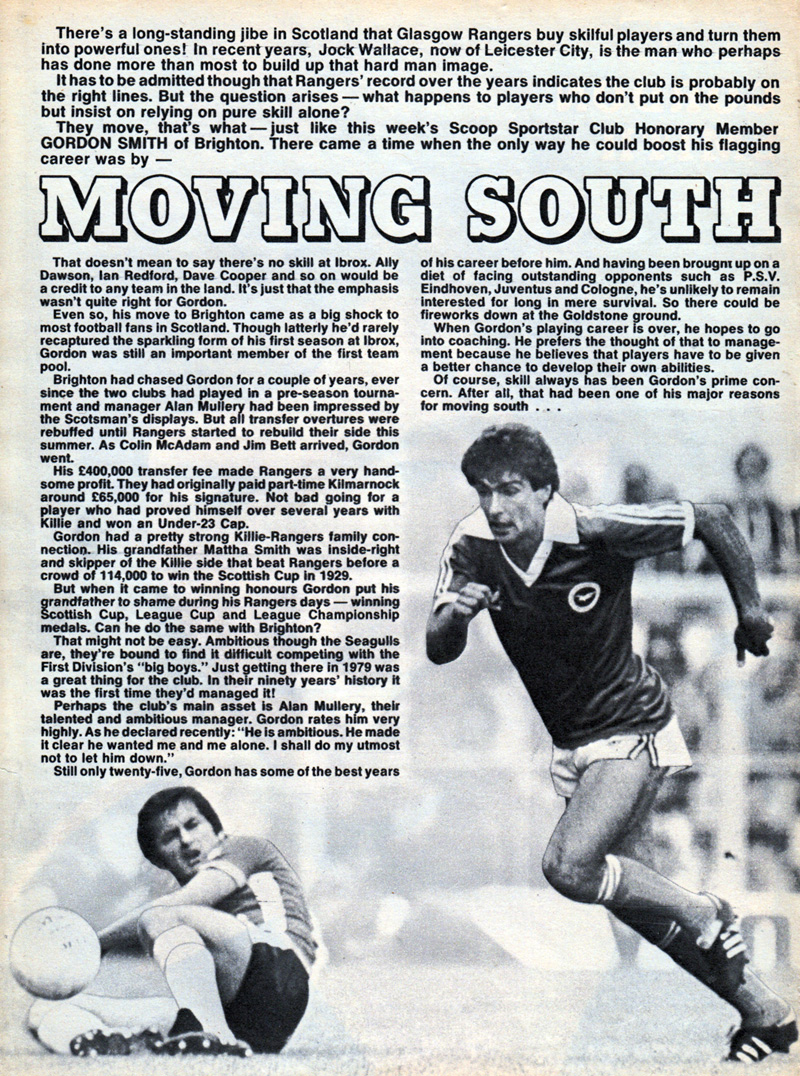
This feature in Scoop magazine on Gordon Smith came in 1980/81, after he had completed his move from Rangers to Brighton. It doesn’t seem as if they had direct access to the Scottish attacker, but the article makes for an interesting read nevertheless. I’m sure he feels privileged about being a Scoop Sportstar Club Honorary Member!

There’s a long-standing jibe in Scotland that Glasgow Rangers buy skilful players and turn them into powerful onest in recent years, Jack Wallace, now of Leicester City, is the man who perhaps has done more than most to build up that hard man image.

It has to be admitted though that Rangers’ record over the years indicates the club is probably on the right lines. But the question arises – what happens to players who don’t put on the pounds but insist on relying on pure skill alone?

They move, that’s what – just like this week’s Scoop Sportstar Club Honorary Member Gordon Smith of Brighton. There came a time when the only way he could boost his flagging career was by moving south.

That doesn’t mean to say there’s no skill at Ibrox. Ally Dawson, lan Redford, Dave Cooper and so on would be a credit to any team in the land. It’s Just that the emphasis wasn’t quite right for Gordon.
Even so, his move to Brighton came as a big shock to most football fans in Scotland. Though latterly he’d rarely recaptured the sparkling form of his first season at Ibrex, Gordon was still an important member of the first team pool.

Brighton had chased Gordon for a couple of years, ever since the two clubs had played in a pre-season tournament and manager Alan Mullery had been impressed by the Scotsman’s displays. But all transfer overtures were rebuffed until Rangers started to rebuild their side this summer. As Colin McAdam and Jim Belt arrived, Gordon went.

His £400,000 transfer fee made Rangers a very handsome profit. They had originally paid part-time Kilmamock around £65,000 for his signature. Not bad going for a player who had proved himself over several years with Killie and won an Under-23 Cap.

Gordon had a pretty strong Killle-Rengers family connection. His grandfather Mattha Smith was inside-right and skipper of the Killie side that beat Rangers before a crowd of 114,000 to win the Scottish Cup in 1929.

But when it came to winning honours Gordon put his grandfather to shame during his Rangers days – winning Scottish Cup, League Cup and League Championship medals. Can he do the same with Brighton? That might not be easy. Ambitious though the Seagulls ere, they’re bound to find it difficult competing with the First Division’s “big boys.” Just getting there in 1979 was a great thing for the club. In their ninety years’ history [seventy eight, actually!] it was the first time they’d managed it!

Perhaps the club’s main asset is Alan Mullery, their talented and ambitious manager. Gordon rates him very highly. As he declared recently: “He is ambitious. He made it clear he wanted me and me alone. I shall do my utmost not to let him down.”

Still only twenty-five, Gordon has some of the best years of his career before him. And having been brought upon a diet of facing outstanding opponents such as P.S.V. Eindhoven, Juventus and Cologne, he’s unlikely to remain interested for long in mere survival. So there couM be fireworks down at the Goldstone ground.

When Gordon’s playing career is over, he hopes to go into coaching. He prefers the thought of that to management because he believes that players have to be given a better chance to develop their own abilities.

Of course, skill always has been Gordon’s prime concern. After all, that had been one of his major reasons for moving south…

Smith certainly made a quick impact, scoring the opening goal in the 2-0 victory over Wolves on the opening day of the 1980/81 season. Thriving in a free role behind the strikers Ward and Robinson, he enjoyed a purple patch in front of goal, hitting the target seven times in just nine League matches, including a famous hat-trick at Coventry when Albion stormed back from 3-0 down.

However, as the Scot recalled in his ‘And Smith Did Score’ autobiography: ‘When a few results started to go against us, I was put in a more defensive role.’ After that, the goals dried up. Not only that, but Brighton were in serious danger of relegation from Division One. It took a crucial decision at a team meeting before the season’s finale for Smith to be restored as an attacking force:

‘Now I was back in that free role again and playing in front of midfield just behind the strikers. It was a 4-3-1-2 formation and it worked well for us. There’s no question that has always been my best position.’

The change paid dividends. The Seagulls won each of their last four games to save themselves from the drop. Smith contributed with a towering header that capped a superb 3-0 victory at relegated Crystal Palace. He also supplied the cross for Gary Williams’ winner at Sunderland. Summing up 1980/81, Smith said:

I had scored ten goals from midfield that season, which was quite a good return for a midfielder at that level. For me, it had been a good season – we had stayed up, I felt I had made a significant contribution to the cause and I was getting on well with the manager.

Then two weeks later, things changed dramatically. Mullery resigned, Bailey was brought in, and Smith found himself out of favour.

gordonsmith8

Tagged

Happiness in the bath at Newcastle, 1983

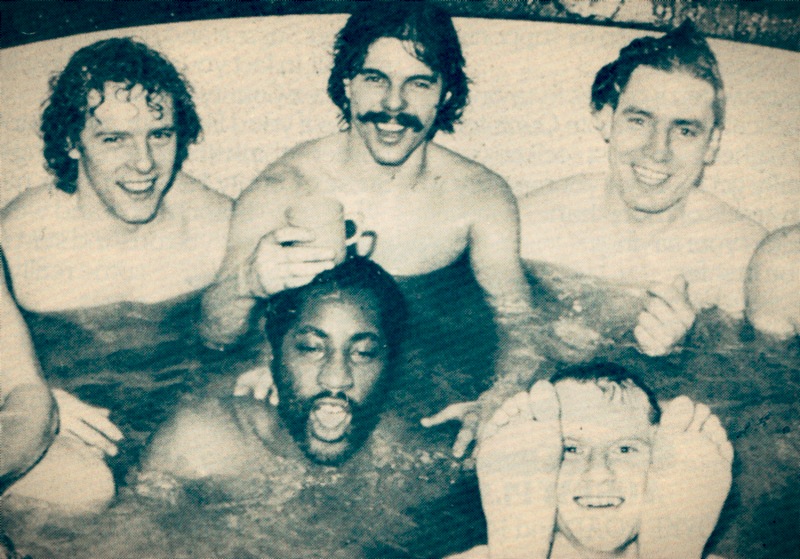
Neil Smillie, Peter Ward, Steve Gatting, Chris Ramsey, and especially that japester Andy Ritchie (!), are all smiles following the surprise replay victory at St James’ Park on 6th January 1983. The result sets Albion’s historic FA Cup run on its way…

newcastleaway1983a

Tagged , , , ,

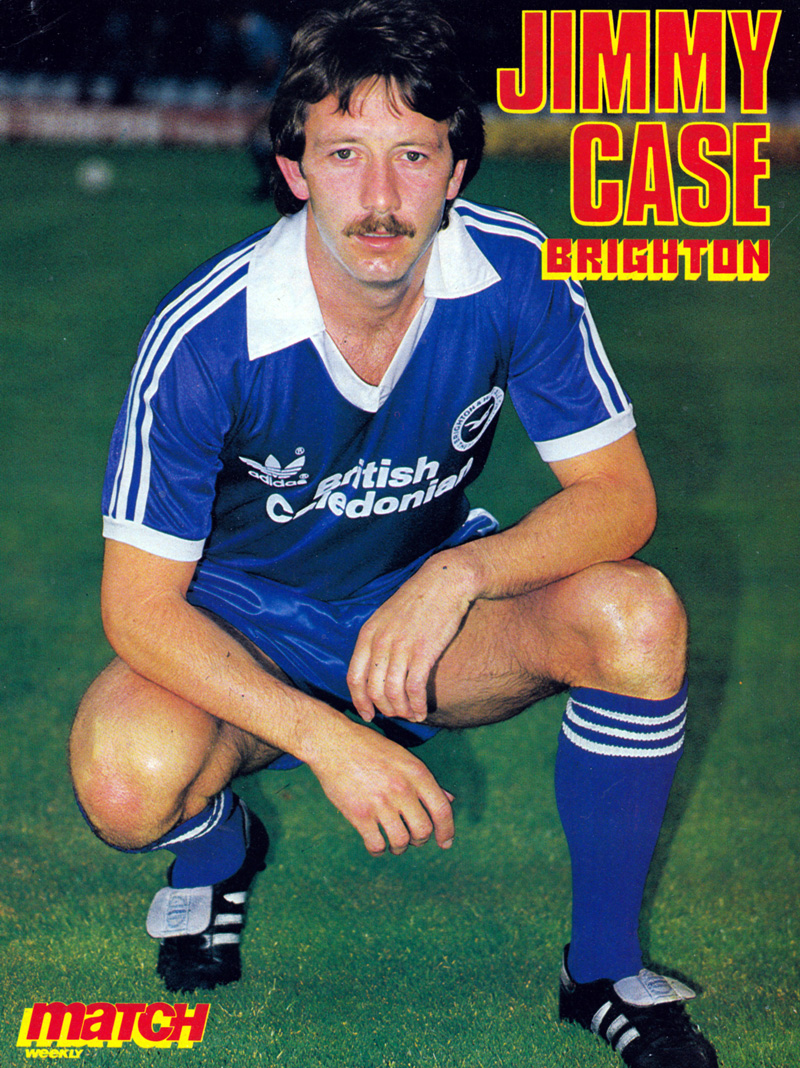
‘Smashing’ Brighton suits Jimmy Case

jimmycase16

A nice magazine interview with Jimmy Case at the start of the 1981/82 season:

When a Scouser regretfully shakes the Liverpool dust from his feet, life, at least in the football sense, is never the same again.

Jimmy Case, a Reds favourite since he was s starry-eyed 18-year-old from Wooiton, has, however, made a rapid conversion to Brighton and Hove Albion, which lies snugly in the soft underbelly of the South.

If, say, a year ago Case had been asked where he would be playing at the start of the 1981-82 season, then Brighton would have been the unlikeliest answer.

Little did he know, but his destiny was wrapped-up in the ambitions of Mark Lawrenson, the Brighton and Eire central defender.

When Lawrenson told Brighton he wanted, after four years, to join a club with a realistic chance of winning a major trophy, there was no way the Goldstone could hold him.

At first it was Manchester United who showed a lively interest, then Arsenal and finally Bob Paisley set the wheels in motion that took Lawrenson to Anfield for £900,000. Part of the deal allowing Lawrenson to leave was that Brighton would have Case, 27, for £350,000.

The nearest Case had previously been to Brighton was a holiday in Hastings with his parents. Apart from a couple of visits with Liverpool, Brighton might just have been a vague spot on the map. Yet the welcome he received quickly warmed Case’s heart.

Breezy Brighton also delighted Lana, Case’s wife. Both Jimmy and •Lana were born and bred in Woolton, and they have a daughter, Emma, of five months.

It is a long way from Liverpool where the Case’s look around the smart furnished bungalow that Brighton have made available.

Case didn’t fancy hotel living, and quickly asked his wife to join him. So much for the tearsway image.

“Brighton and the area is ideal for us,” he said. “The place itself is smashing, especially all the antique shops.”

Case, after 186 League games for Liverpool and 23 goals in the Championship, is only too well aware that he has joined a side that has struggled for the first two seasons to stay in the First Division.

“If they look like going down this time, I’m not one to say that I’ll be off. I’ll just keep fighting. I shall commit myself fully to what I am contracted to do.” Mike Bailey has told Case that he wants him to get into the box more than he did at Liverpool.

“Nell McNab makes s lot of runs similar to Terry McDermott, and that will help me. I’ll be looking for a few goals. I had a good season in 1977, and I managed to get some vital goals. It’s high time I did the same again.”

Brighton players were almost total strangers when Case arrived in time to play in three pre-season friendlies. “I remembered Graham Moseley, the goalkeeper, from the England Under-23 squad in Hungary a while ago, end I had spoken to McNeb before and met Mike Robinson briefly at Manchester City,

“I well remember my last appearance at Brighton. That was at right-beck and Liverpool were disorganised at the back around that time.

“My favourite position is wide on the right, and there you can receive the ball easily with your back to the touch-line and then be able to turn. I like to be busy.”

And he admitted: “I thought I would be at Liverpool for my entire career. I had two years as a semi-pro and signed full time at 20. They asked me to sign at 18, but I turned them down because I wanted to finish my apprenticeship. I’ve had six marvellous years at Liverpool with medals every year; three in one year, in fact.

“‘1 suppose in my heart of hearts I knew eventually I would have to move, but I didn’t think it would be so soon.

“If I had gone to a Midlands club, or Manchester, or Leeds, it would have meant commuting by motorway, and being behind the wheel of a car for long periods is the easiest way to pull muscles.

“If you must move, then a long distance is preferable from the point of view of fitness. Travelling kills you up and down the motorways.”

Life at Brighton may lack the bustling pace of Merseyside and there is not such a committed following for the game, but it will suit Jimmy Case, who, when not playing football, likes to shoot and fish. “I reckon this could become my kind of place you know. And all I really care about now is keeping Brighton in the First Division.”

Although Brighton reached thirteenth position in Division One in 1981/82, their highest League position, Case’s form was patchy, rarely hitting the heights of his time at Anfield. For all his flaws as a League manager, it took the reign of Jimmy Melia for Case to truly sparkle, famously scoring in each round of the FA Cup bar one on the round to Wembley in 1983.

After Brighton were relegated, the ex-Liverpool hard man kept his word and continued to battle for the club in the Second Division, helping towards to a tilt at promotion in 1984/85. At a talk I went to last week given by Chris Cattlin, Melia’s successor said there was a specific reason why he felt he had to sell Case in March 1985, but out of respect to Jimmy, he couldn’t disclose it at the meeting…

Tagged

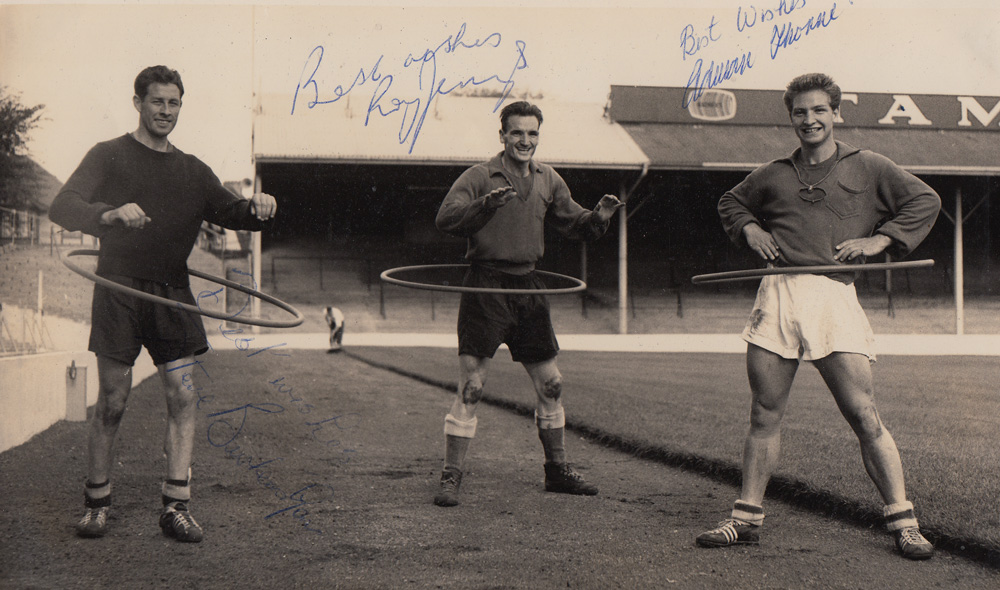
Rare photo: Hula hooping at the Goldstone

Here are Steve Burtenshaw, Roy Jennings and Adrian Thorne all getting fit at the Goldstone Ground:

hulahooping

Portslade-born, super-hoopin’ Steve Burtenshaw enjoyed a sixteen year career at Brighton as a wing-half from 1951 to 1964, being granted a testimonial match in November 1963. He became assistant coach the following year, before beginning a long association with Arsenal. He also had spells as coach at QPR and Everton.

In the centre, hip-gyratin’ Roy Jennings was an Albion colleague for almost all of that period, signing for the club in May 1952 before being released on a free transfer to Crawley at the end of the 1963/64 campaign. Signed initially as a full-back, Jennings’ conversion in a stopper centre-half in Christmas 1958 did so much to preserve the club’s hard-won Second Division status.

As for sharp-shootin’ Adrian Thorne, it was the five goals of this Hove lad in the thrashing of Watford in April 1958 that made sure Albion were to enter the Second Division for the first time. Making his debut in the January of the promotion year, Thorne made 84 appearances for the Albion, scoring 44 goals before putting in a transfer request and leaving for Plymouth Argyle in June 1961.

Tagged , ,

The inner game of Freddie Goodwin

freddiegoodwin2a

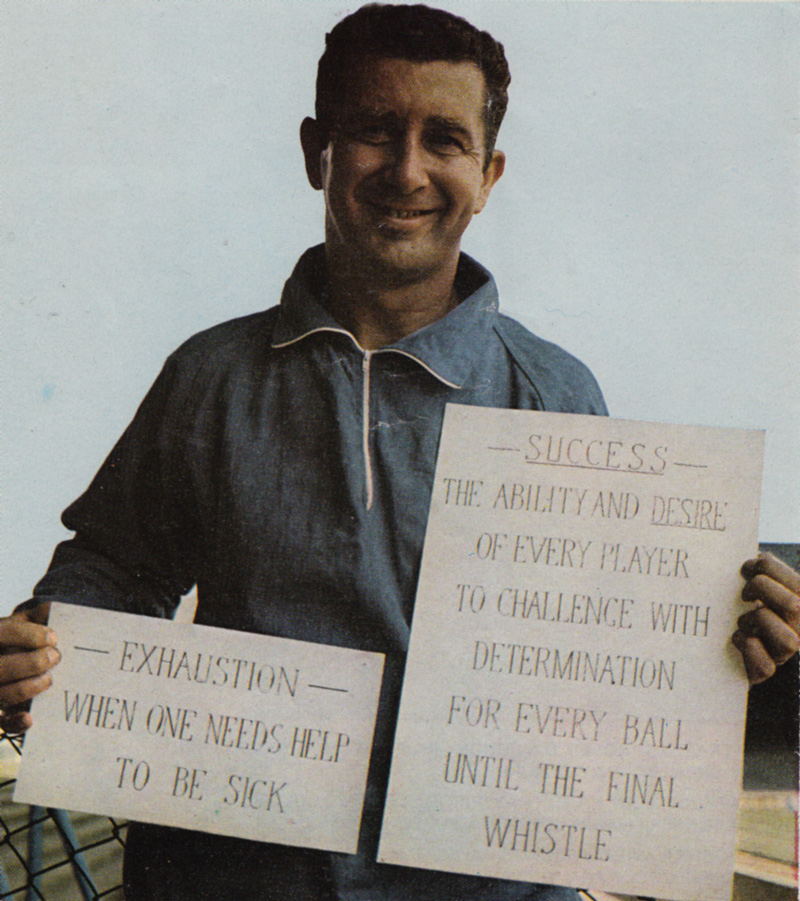
Years ahead of his time? Or patronising messages from a cod pychologist?

From Football League Review in the 1969/70 season, with photo by Peter Robinson:

Brighton manager Freddie Goodwin reckons he has part of the answer to easing pre-match dressing room tensions… a dose of philosophy and a touch of psychology.

For the walls of the home dressing room at the Goldstone Ground are decorated with the thoughts of manager Fred – philosophical titbits for his players.

Examples: “It’s tough at the top – it’s hell anywhere else.” … “We supply everything here except guts.” … “Exhaustion – when one needs help to be sick.”

Explains the young Brighton boss: “It’s an idea I picked up in the States. Try to condition players to think in depth about the game and life in general, and it helps everyone.”

The former Manchester United and Leeds defender who took over the Brighton job after a spell in America has taken a night-school course in psychology. “I am sure it helps in a job like this when you are dealing with people of different temperaments,” he says.

Does philosophy in the dressing room help results on the field? Says Fred: “It may just be coincidence but after I had put up the sayings on the wall last January, the team hit a good patch of form.”

So teams visiting Brighton this season beware.., you’ll be facing 11 players with this thought in mind: “Success for the club adds up to better money for everyone.”

Whatever the positive effects the sloganeering may have provided, they must have wore off by the time Albion’s promotion push from Division Three hit the rocks in late March 1970. By mid-April, it was exhausted. To note one of the messages in Goodwin’s hand, I’m not sure anyone needed help to be sick then.

Tagged

Kerslake: in the Seagulls’ shadow

Jackie Chan’s classic kung fu film ‘Snake in the Eagle’s Shadow’ hit the screens in 1978, the same year that up and coming full-back Mick Kerslake joined Brighton & Hove Albion. Now I have no idea whether the young Mick went to watch the action-packed martial arts comedy at, say, ABC Cinema on East Street with his new team mates. Even so, he must have hoped that there was an ‘old master’ at the football club that would help turn him from a raw talent into a champ.

mickkerslake

As a seventeen year old Fulham defender, Kerslake had made his League debut when he played against Orient in October 1975 in a 1-1 home draw. When his four years at Craven Cottage ended, he undoubtedly wished that an Albion club keen to augment its squad with his services would get to see his career blossom. As the promotion race in Division Two was hotting up, there was even a ‘Personality Parade’ profile on him in the Brighton v Charlton programme on 13th April 1979:

In any football club with ambition there needs to be players in the shadows waiting for their chance. History is full of unknowns having sensational debuts and then coming through to make a place their own.

Many current internationals have started in just this way and here at the Goldstone we have a young full-back who has spent this season waiting for his chance.

Mick Kerslake signed for the Albion last May after three seasons on the professional staff at Fulham. He came very close to playing in the first team just before Christmas and would have played against Queens’ Park Rangers in the friendly that was cancelled in January. Supporters though are still awaiting his debut in Albion’s first team.

Mick was born in Bethnal Green 21 years ago, the son of a docker. He has two brothers and a sister, and his younger brother is already showing talent on the soccer field. He’s a regular with Spurs youngsters and plays for his school in Stepney.

The younger brother mentioned in the last two sentences above is almost certainly David Kerslake, the former QPR, Swindon, Tottenham and Leeds right-back of the 1980s and 1990s, who is currently assistant manager at Cardiff City. Thanks to Paul from Cult Zeros for this information. On a visit to Wembley, Paul remembers seeing Mick’s bro as captain of England Schoolboys against West Germany in May 1981.

The article continues:

Mick himself went to St Mary’s and St Michael’s Primary School in Stepney and moved from there up to St John’s Secondary School. He first kicked a football at the tender age of 10 and played for both his school and for East London Schools. He gained representative honours at all ages up to 15 and was captain for his last two seasons.

He spent a short while with Chelsea as a schoolboy but on leaving school he signed apprentice professional forms with Fulham, then managed by Alex Stock. At the time, Alan Mullery was the senior player at Craven Cottage, while Ken Craggs, who originally spotted Mick, was Youth Team Manager.

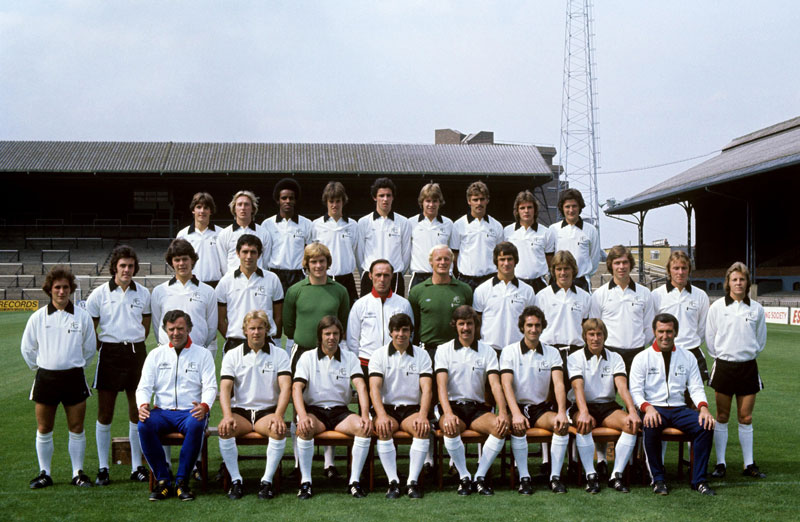
Craggs and Kerslake, as well as Barry Lloyd, are in this Fulham photo that AZ Gull found yesterday:

Fulham 1876

Fulham 1876: (Back row, l-r) Marcus Ellwood, Brian Greenaway, Tyrone James, Tony Mahoney, Tony Gale, Dennis Byatt, Viv Busby, Terry Bullivant, Michael Kerslake. (Middle row, l-r) Paul Howes, John Dowie, Steve Hatter, John Lacy, Richard Teale, Ron Woolnough (physio) Peter Mellor, Ernie Howe, John Mitchell, Steve Camp, John Margerrison, Steve Scrivens. (Front row, l-r) Ken Craggs (coach), Barry Lloyd, Les Barrett, Jimmy Conway, Alan Slough, Les Strong, John Cutbush, Bobby Campbell

After a year he signed full professional forms but in his time there he only played one full League game and had two more as substitute.

He played twice for England Youth XI against Wales three years ago alongside John Deehan, Glenn Hoddle and Gary Owen among others. In his one game for Fulham he played alongside Alan Mullery and Bobby Moore.

He had little hesitation in coming to the Goldstone when offered the chance and having been here almost a year has lodged with George and Bet Kirby who’ve accommodated so many Albion players over the years.

However, he hopes to get married in the near future to a London girl, Jane Wells, and in preparation he’s bought a flat in Clarendon Villas into which he expects to move shortly.

Away from football Mick plays a fair amount of tennis, weather permitting, and at school he was an outstanding athlete. He attained representative honours in the 100 metres and long jump.

He’s an ambitious young man who hopes to make the grade as a regular First Division player with the Albion.

Very, very sadly, he never got his chance for the Brighton. He was released at the end of the 1979/80 season and his subsequent career details are unknown. Nevertheless, like the nondescript and enigmatic Woody Allen film character ‘Zelig’, Kerslake has the distinction of having featured in numerous Albion team photos of the time, rubbing shoulders with the stars… while not many people looking back at the images really know who he was!

If you knew Mick or know what Mick did next, please get in touch either via the comments, email or on Twitter. It would be great to find out what he’s up to now. Kung-fu, probably!

In between George Aitken and Peter Ward

In between George Aitken and Peter Ward

Tagged , ,