Category Archives: Media Coverage

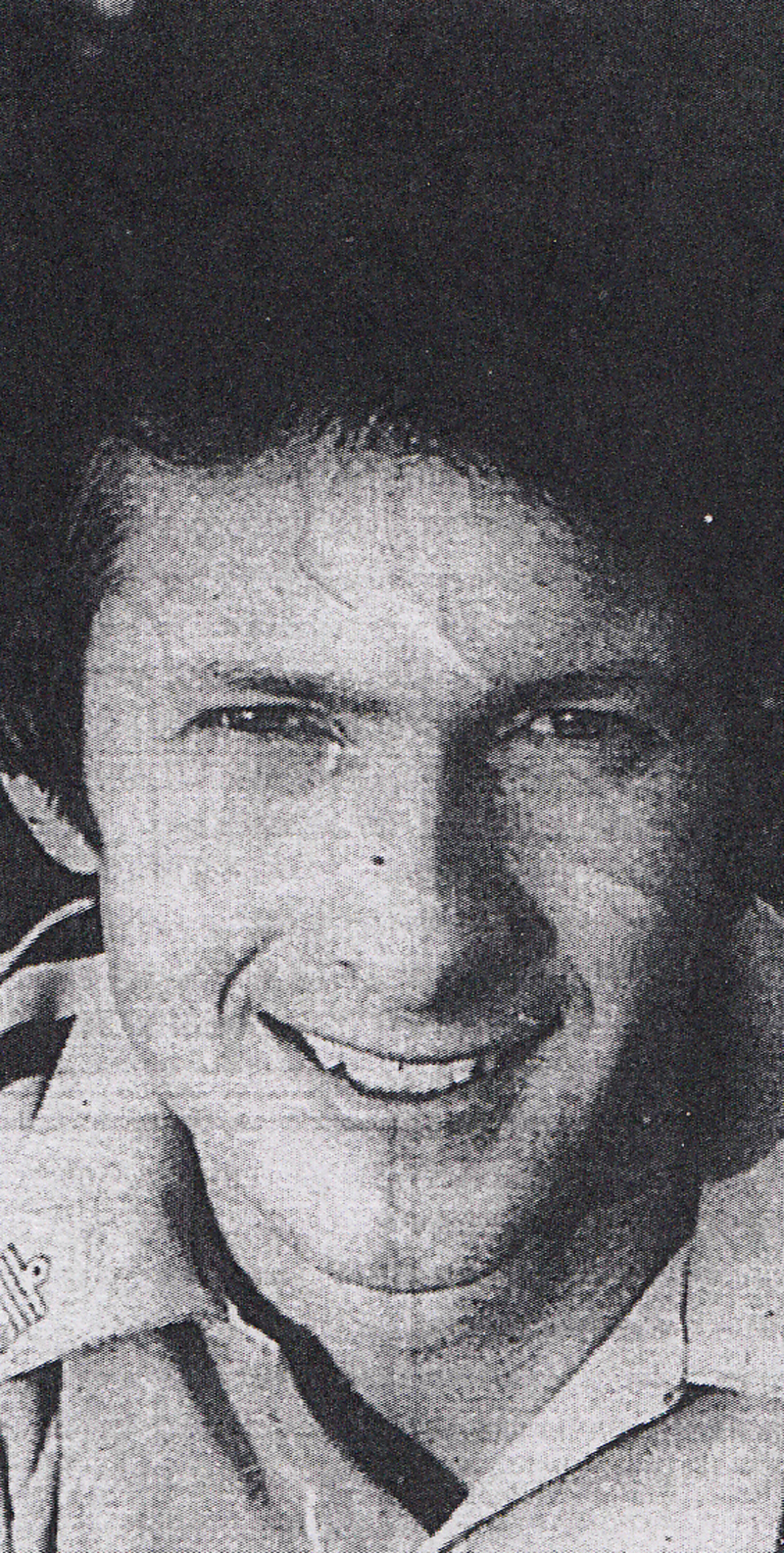
‘I want to bring that old excitement back’, says Mullery

An interview with Kevin Brennan in ‘Football Monthly magazine’ in August 1986:
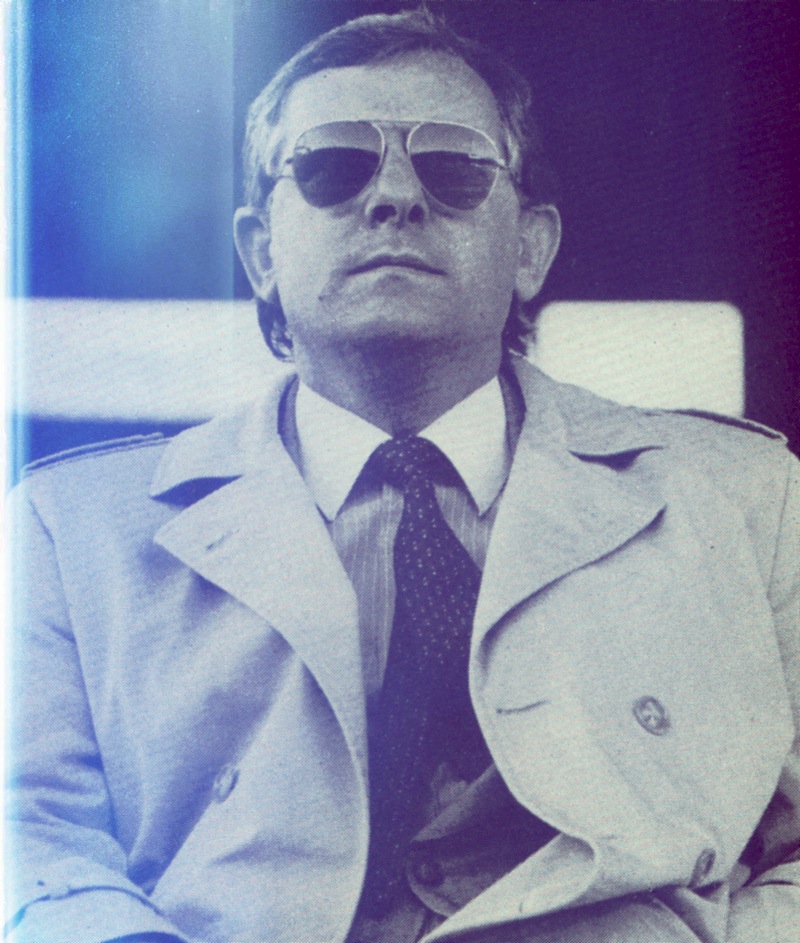
alanmulleryisbacka

A familiar face will be back on the managerial scene when the season opens later this month.

Alan Mullery is once again in the hot-seat at Brighton, almost ten years to the day after he first took over at the south coast club following a distinguished playing career.

During those ten years, Mullery has also had spells at Charlton, Crystal Palace and Queen’s Park Rangers.

His time at Loftus Road in charge of Rangers was a short one, lasting only six months. But during that time, the experience had a dramatic effect on the personality of Mullery.

“I changed completely as a person,” admits Mullery now. “I became an introvert. I was frightened to talk to people and I didn’t want to make decisions, all of which is very unlike me.” Mullery went to Rangers two years ago, following the departure of Terry Venables to Spanish side Barcelona. He knew it would be a hard act to follow, but had no real idea of just how difficult it would prove to be.

Mullery says now: “My job at Rangers was basically that of a coach.

And that wasn’t really the way I like to operate at a football club.

“I had the title of manager over my door but it didn’t really mean that. I couldn’t get involved in any of the other decisions concerning the club which I think a manager should know about.

“It’s sad to have to say it, really, but it’s probably the only club that I’ve been to where I didn’t manage to get close to the players I was in charge of.

“Terry Venables had built a tremendous system of play within the club, from the youth team right up to the first team players, and that made it very difficult for me to try and change anything.

“The players really only wanted to play the way they always had done. Now, I’m not knocking that, or Terry Venables for schooling them into a set pattern, but I do think it was a shame that I was given only six months in the job.”

Mullery was told that he was sacked by the Rangers chairman, Jim Gregory, just before Christmas, 1984. Not surprisingly, he remembers it as a miserable experience but one that also brought a degree of relief.

“‘In some ways, I was pleased when I got booted out,” he says now. “1 hadn’t been happy there and when a job starts to change you in the way that one was changing me, you have to wonder if it’s all worth it.”

It took Mullery three or four months before he started to watch football matches again. But once he did, the sport that had been so much a part of his life for so long started to take a grip once more.

“Football is like a drug for me,” says Mullery. “I was very fed-up with the game when I left Loftus Road. But when I did start watching matches again, I knew that, deep down, I wanted to get back if I could.'”

Mullery took a job outside of the game an¢ acted in a public relations capacity for some printing companies.

But he admits that he missed the everyday involvement that football had always brought him.

He says: “I enjoyed the time out of the game and I think it was good for me after what had happened. But ultimately, I missed things like the decision-making that I had always been used to.

“The good thing was that I became a “punter’ and I was able to see the game as an outsider for the first time since I became a professional.

“I went to matches as a fan and was able to see the game from a fan’s point of view. That was a great experience for me.

“Now I have a much better appreciation of what the fans want. I now understand why so many of them have started to move away from going to see matches in the way they used to.” Mullery’s chance to return to the game, and to the club which provided his happiest memories, came following a telephone call from a TV reporter in the Brighton area.

“He phoned one night out of the blue.” remembers Mullery. “He told me that he had just been to a press conference and heard that Chris Cattlin was leaving the club.

“He told me that if I wanted to apply for the job, I should write straight away.

“That was exactly what I did. And I can tell you that when I came for my interview and was then appointed, there couldn’t have been a happier man in the country.

“I know that it sounds a bit corny, but Brighton has always been the club that I wanted to manage ever since I first came here ten years ago.

“Stepping in the door again was like coming home for me. I know every manager says it after he has been appointed to a new job, but this was the one job that I would have run back to. I have very good memories of the club and I see no reason why I shouldn’t be happy here.”

Mullery left the club five years ago, when his relationship with the then chairman, Mike Bamber, began to deteriorate But he says that for the greater part of his stay at the Goldstone Ground, he has nothing but good memories.

“It was my first job as a manager and we had a ot of success, which was obviously a big help. We went from the Third Division to the First and it was the first time that the club had ever reached Division One.

“The people in the area responded to the team and I think we all enjoyed the expenence. In fact, the fans are one of the main reasons why I’ve always enjoyed being at Brighton.

“I don’t think the situation here at the club has changed too much since I first took over. I think I’ve got a good job to do, and I’m going to enjoy doing it.

“The chairman, Brian Bedson, has been great and he has told me that they want the club rebuilt from the bottom to the top. That sort of challenge suits me fine!”

Mullery brought a brand of exciting football to Brighton that gained success and provided entertainment for the fans of the seaside club.

It is something that he aims to bring back to a club that will be among many people’s tip for one of the promotion places in the Second Division next season.

“I want to bring those days back to Brighton again,” says Mullery with conviction. “I know the Seagulls’ public will respond if we give them the right product – and that must be entertainment.

“‘Of course, the public will want us to get promotion and I’d be delighted if we achieved that in my first season back in the job.

“But there’s no way I’m going to predict that we will get promoted. I’d love it to happen, of course, and I’ll do all I can to ensure that we get into the First Division at the end of the season.

But the main job for me at the club is a long-term one.

“The directors have said to me that their first priority is to get promotion. But the main priority is really to build the club for the future.”

After the bad experience at Queen’s Park Rangers, it is nice to see Mullery back in his old confident mood and eager to get on with the job he loves best – being in control of a football club.
Tagged

Ward’s England debut

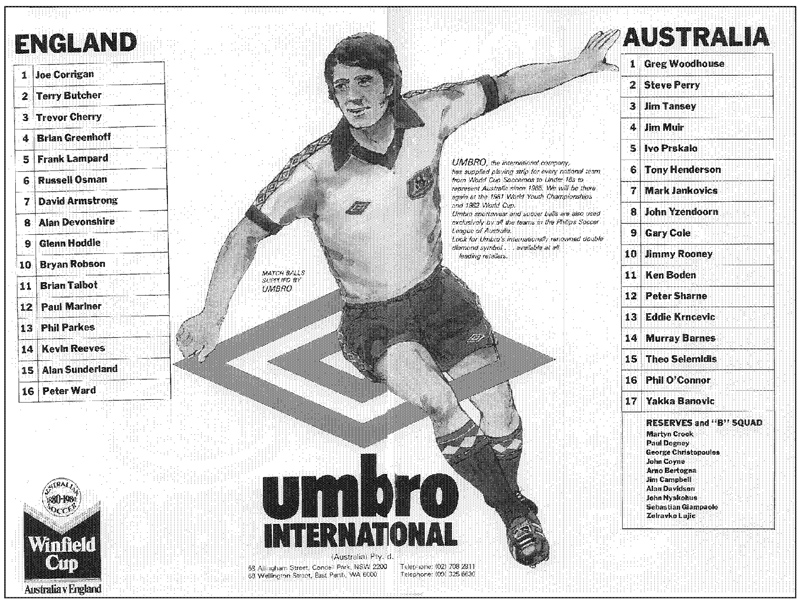
Here’s the centre pages of the Australia v England programme on Sydney Cricket Ground on 31st May 1980. Although a friendly in all but name, at the time the match formed a fixture in the Winfield Cup, a competition to celebrate the centenary of soccer in Australia:

wardaustralia

Towards the end, there was a five minute substitute appearance from Brighton & Hove Albion striker Peter Ward, aged 24:

At the time, it was the shortest England career. Current holder of this record is Martin Kelly (Liverpool) with two minutes in May 2012.

Tagged

Bertolini’s boots

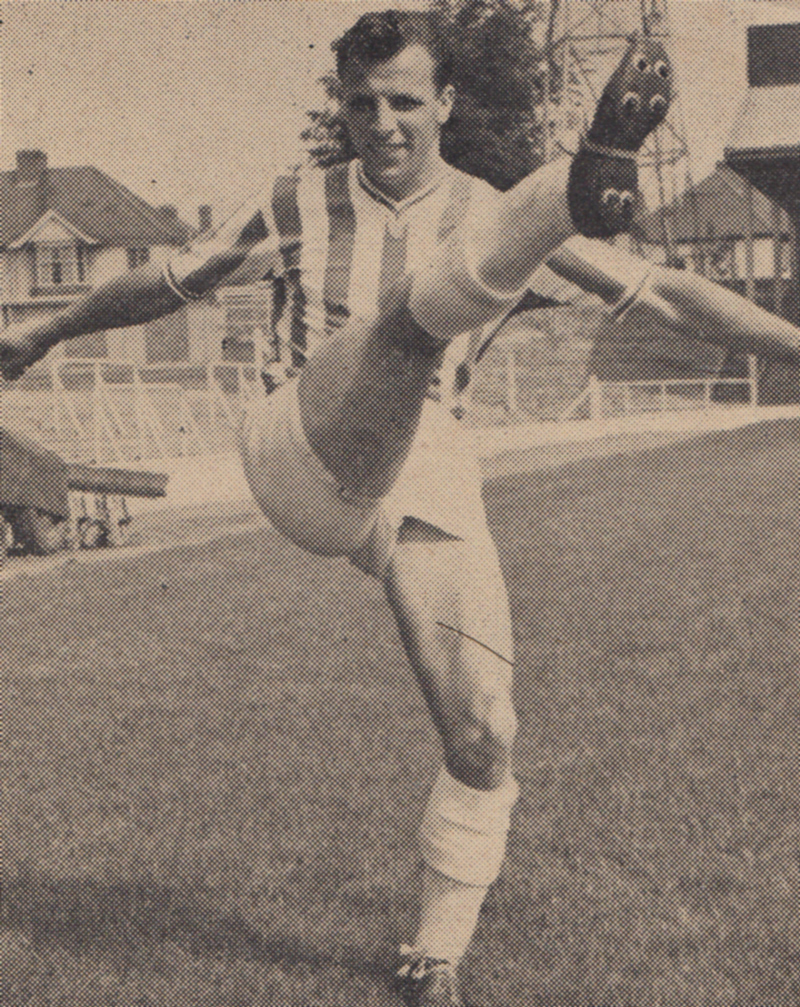
What a magnificent shot!

bertolini

Here is a profile of the Albion’s Alloa-born half-back with the Italian surname. Taken from Soccer Star on 12th August 1961:

Brighton & Hove Albion’s right-half Jack Bertolini completes ten years [sic] of top-flight soccer this year. A Scot, he began his senior career with Stirring Albion before accepting terms from the then Third Division (North) club Workington Town.

During his six years with the Reds, Bertolini became a favourite with the Borough Park crowd and it was not long before his style of play attracted the attention of scouts from • other League clubs.

Workington successfully resisted all approaches for him though they naturally did not wish to stand in the player’s way if he had wished to move on. Accordingly when Brighton came along with an offer for him in July 1958, and •he• agreed to move, he• was transferred to the Sussex town for a substantial fee. During the negotiations on this deal, Brighton transferred their South African Roy Tennant to Workington.

In his initial term with the Albion, Bertolini played in thirty games for the club’s League league side: a splendid achievement in this upgrade of soccer. The following term he was an ever-present in the side as, indeed, he proved to be last season.

Still only in his middle twenties, Bertolini will be one of the club’s key players.

Signed by Billy Lane, Bertolini ended up with a run of 193 consecutive appearances in the Albion side, before this outfield player record was finally broken by Peter O’Sullivan in 1974. He eventually made 279 appearances before losing his place in the 1965/66 season. A knee-ligament injury while turning out for the reserves ended his career in October 1965.

bertolini2

Tagged

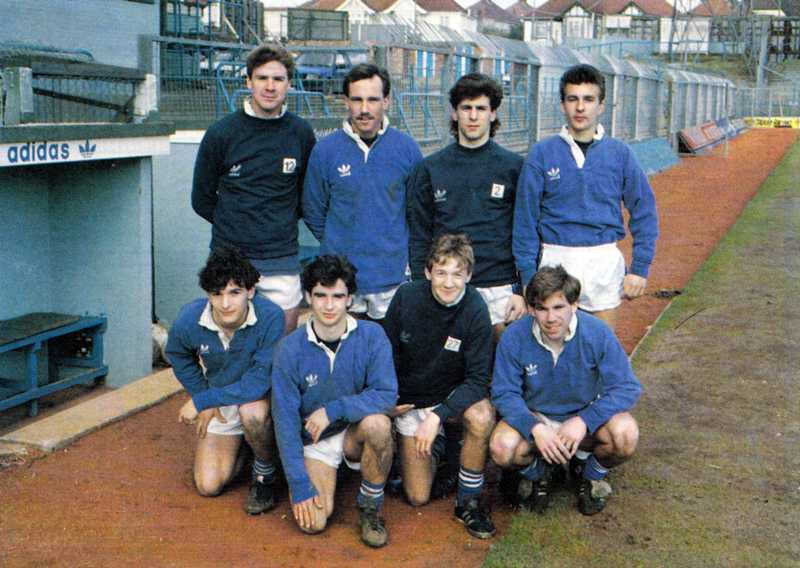
The Apprentices ’86

apprentices86

A splendid piece by Tony Norman that made it into the Brighton v Oldham programme of April 1986:

Doing an interview with Albion’s squad of young apprentices is anything but dull! With their youth, humour and obvious love of life, they are a very likeable team. Even after a tough training session, they are eager to talk about life at their new home… the Goldstone.

Apprentices have two years to prove themselves and managers always say that the most heartbreaking part of their job is having to tell a youngster that he simply does not have the skill to make the grade. But Albion’s AP take the rules of the game with a cheery acceptance.

‘It is important to keep a positive attitude,’ says young Barry Smith. “You do think about what will happen at the end of your apprenticeship, but the best thing is just to work hard and do your best to improve as a player.’

Professional football is an exciting career, but there is very little glamour in an apprentice’s everyday routine. This involves arriving at the ground at nine in the morning and cleaning the boots, and preparing for training. The lads are coached by George Aitken, who has helped Chris Cattlin to develop the strength of this club in many areas of youth football.

After the training, the AP’s return to the Goldstone, where they clean the boots and footballs, and do any necessary work around the dressing room area, before leaving at approximately 1.30pm. On home match days, all the boys come to the game and four of them work to hep the backroom team in any way they can.

The youngsters play in the South East Counties League, where they are guided by John Shepherd and Mick Fogden. The next step is a place in the Reserves and then comes the big step into first team football. Albion have nine apprentices and although they will not all make the grade with the club, it is obvious that they are thoroughly enjoying their time with the Seagulls. All the lads pay tribute to the help their families have given them in getting to this point, As for the future, our best wishes go with them all.

Here is a little information on those names to watch for the future…

David Gipp is 16 and comes from London He plays upfront and likes to relax by watching television. David is a fan ofthe soaps with Dallas and EastEnders rating a special mention.

Paul Dobinson is another Londoner. He joined the club a year ago and likes to play in midfield, Like most of the APs, Paul enjoys listening to soul music by artists like Luther Vandross.

Full-back Terry Spinks is another soul fan. Terry 17 is also half-way through his apprenticeship.

Danny Carter and Phil Lovell are the ether two Londoners. Danny 16, enjoys eating out and Phil, 17, is known as The Pie Man because he’s so fond of steak and kidney pie! AI the London lads have been found digs locally by the club and they say they are very happy with their respective host families.

Barry Smith, 17, Franco Massimo, 17, and Daren Newman, 17, are all from Sussex. Barry lives in Brighton and in the summer is a very useful all-rounder for Portslade Cricket Club. Daren hails from Newhaven and he loves heavy metal music, an interest he shares with his brother Paul. Franco Massimo is a Sussex sprint champion and he says his ambition is to make his hometown of Horsham famous!

Unfortunately, when I met the AP’s, Trevor Wood, 17, from Jersey, was out with a broken arm. But when the talented young ‘keeper is fit and well, he enjoys a round of golf. Quieter moments are spent listening to his collection of Dire Straits albums.

So that’s the Albion’s apprentice team. Let’s hope we see some of those names in our first team programme in the years to come.

After a few outings as an unused substitute, Daren Newman eventually made his debut in the number 5 shirt in the 2-0 home defeat to lowly Shrewsbury later that month. Coming off the bench was Franco Massimo, another debutant. While Newman made no more Albion appearances, Massimo made another substitute appearance the following season. And that was it for his Brighton career.

Perhaps the biggest hopes lay with striker David Gipp, who was finding goals easy to come by in the reserves. Surprisingly, it took until the tail end of 1986/87 for the Essex-born man to make his Seagulls debut, away at Blackburn as a sub. He almost scored with his first touch. However, after just three appearances in 1987/88 and was released in July 1989, dashing the dreams of another young Albion player.

Tagged , , ,

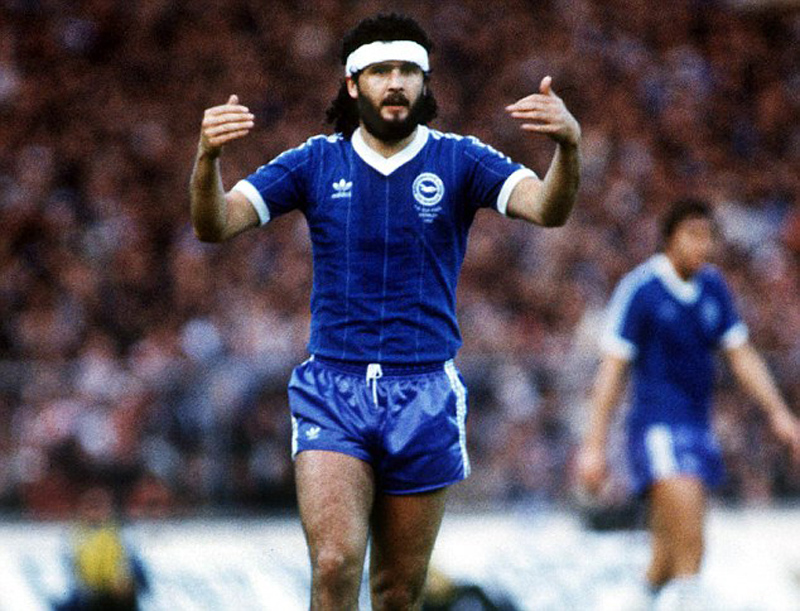
Steve Foster’s guide to the Brighton 1982/83 Cup Final team

stevefosterheadband

From the Daily Mirror on Saturday 21st May 1983:

Even though I’m unable to play in the final, I’ll be in Brighton’s dressing-room, helping to both motivate and calm the players.

i know the ones who have pre-match butterflies and the others, like Jimmy Case, who keep absolutely cool.
What are they like, these lads who foce the greatest game of their lives?

GRAHAM MOSELEY (goalkeeper): “Mose” is easy-going and always smiling. I’ve known him laugh when he’s had to pick the ball out of the net. But don’t be deceived. He might appear a bit casual, he can make saves that put him in the very top class – as he did against Sheffield Wednesday in the semi-final.

CHRIS RAMSEY (right back): We call him “Yifter” – have you seen the way Chris walks? Our most consistent player since he came into the side. He’s headstrong and missed the semi-final after a sending-off. But I wouldn’t want him to curb his aggression.

STEVE GATTING (central defender): To the lads, he is “Head”. It is big in relation to the size of his body. He’s always beaming, he’s a guy with a dry sense of humour who reads the game well, has good habits, and won’t panic.

GARY STEVENS (central defender): He is “Grease”, because he looks like a Spanish waiter, or “Matt” to his close friends. They know why! He is very composed on the ball and is developing in the same mould as Mark Lawrenson, now with Liverpool.

GRAHAM PEARCE (left back): To the rest of the team he is “Pleaty” because, he looks like Luton manager David Pleat. Graham is the quiet type. He has a great left foot and always wants main.

NEIL SMILLIE (midfield): Neil wears glasses off the pitch and is “Specky” to everyone at Brighton. We reckon he should wear them over his contact lenses when he plays. I’m only kidding. He is one of the quickest players’ I have ever seen. His pace will worry United.

JIMMY CASE (midfield): “Jimbo” is a hard man with a shot to match. I’ve seen people trying to split him in two. He has got up and laughed it off. If there was a war, I’d want him beside me in the trenches.

TONY GREALISH (midfield): “Sleeper” is the man I’d want on the other side of me in a war. He’s so honest, he accepts responsibility even when it’s not his fault. Tony is a natural leader. With me missing, he was the obvious choice to lead out the team at Wembley. He thrives on responsibility.

GARY. HOWLETT (midfield): Known as “Fish”–but I can’t say why. Ask one of the other players! He is an Irish lad with bundles of skill who will love the atmosphere at Wembley. He could be another Liam Brady in a couple of years.

GORDON SMITH (striker): “Smudger” has been at his best since coming back from a loan spell in Glasgow with Rangers. He has great cruse control, can destroy defenders with his skills. If he repeats his form of the semi-final, our players will all get winners’ medals.

MICHAEL ROBINSON (striker): “Migraine Mick” or “Fatty” at the Goldstone. He’s one big headache to us all. Seriously, because he is a good friend of mine, Robbo is a man for the big occasion. I hope he shows us all his teeth when he scores the winner.

GERRY RYAN (sub): is one of the most genuine guys in the game. A good finisher who won’t let us down if he has to come on.

Tagged

Division One – the only place to be for the Seagulls

On the eve of Brighton’s baptism in the top flight in August 1979, Graham Nickless of ‘Football Weekly News’ interviewed Alan Mullery:

alanmullery1979

The First Division welcomed back Alan Mullery on Saturday in Brighton’s historic meeting with Arsenal at the Goldstone Ground.

Muilery, a battling midfieid player for England, Spurs and Fulham, returns to the top flight as one of this country’s most exciting young managers.

And Sussex club Brighton and Hove Albion can count themselves extremely lucky that Muilery’s rise to fame in the managerial world started with them.

For Brighton have experienced phenomenal success under the cigar-smoking manager, who has achieved more for the Seagulls than any other manager – including Brian Clough.

Saturday’s clash with FA Cup winners Arsenal was a significant milestone in the club’s 79-year-old history, for it was Brighton’s first match in the First Division.

“The potential has always been here at Brighton but there has been no one to tap it until now,” says Muliery, who was awarded the MBE for services rendered to soccer three years ago.

“Brian Clough and Peter Taylor tried but failed,” he adds with a smile.

The unknown
The Seagulls, promoted from the Third to the First Division in three seasons are riding on the crest of a wave but are now treading unfamiliar territory.

“We’re looking forward to the challenge but it’s like going into the unknown,” the manager continued.

“We don’t know what to really expect even though we know so much about the clubs we shall meet this season.

“I’ve only got three players with First Division experience — but I’m not frightened by it. There’s only one division to play in, I’ve told my players it’s the only place to be for a player and a manager.” Mullery’s personal dream has certainly come true, and he more than anyone else connected with the ambitious seaside club, is looking forward to the challenge of playing in the hardest league in the world.

“I’m delighted to be back,” he said.

“Nothing has hindered me here at Brighton.

The directors are first class, they’ve been absolutely marvellous.

At the top
“I’m sure that success starts at the top and works down.”

The stocky boss nearly took Brighton up into the First Division in his first season at the club but saw his old club, Spurs cruelly rob his team of promotion by goal-difference on the last day of the 1977-78 season.

Now, just over a year later, Brighton are where they belong and ready to do battle for more honours to keep their incredibly loyal fans satisfied.

In preparation for the club’s biggest task to date the one-time England star, who once marked the famous Peie out of a World Cup match, has signed three new players – John Gregory (from Aston Villa), Steve Foster (Portsmouth) and Tony Knight (Dover).

“I have 17 to 18 players chasing 11 places and that suits me,” Mullery states confidently. “One more player could make it better, hut that will come in time.” And one player of whom the First Division may get a glimpse, and who Mullery rates as a brilliant young prospect, is defender Gary Stevens, 16.

stevens1979

Best header
“He’s a gem,” says Mullery. “He has a real big future in the game. Gary’s a good reader of the game, has lots of ability and can tackle hard. He is also the best header of the ball in the club.”

But will Gary break into the first team this season? “There is a possibility but I shall not rush things.”

Mullery, despite a daily round trip to Brighton from his Epsom home, has a deep sense of pride for his club who have never known life so good.

“Last season,” he reflects, “was the first time that Brighton had managed to keep their place in a higher division for more than one season. [not actually true. Also achieved after the 1957/58 promotion season]

“They were notoriously susceptible to going straight back down again a year after gaining promotion – now we’ve set a precedent at the club I intend to keep it that way,” added the man who certainly means business for Brighton and Hove Albion this season.

Tagged

Willie Young blows up

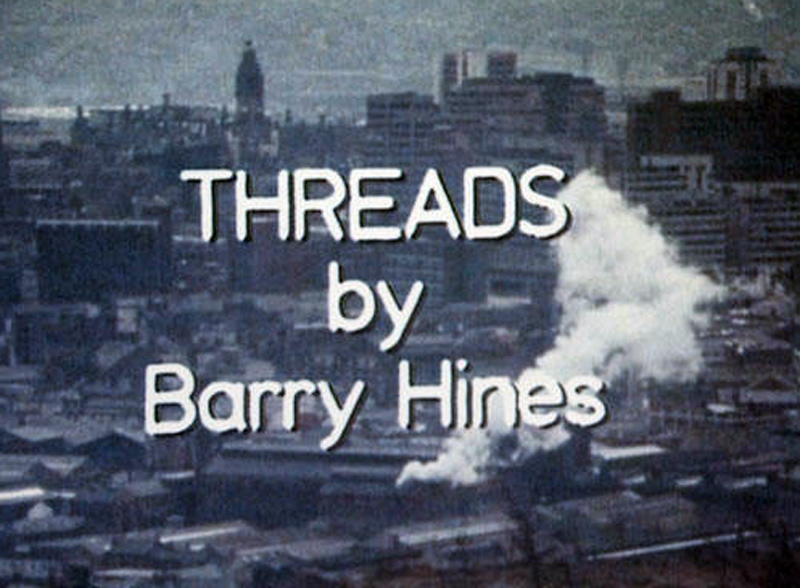
The BBC’s ‘Threads’ is a shockingly realistic docudrama from 1984 that tells the story of a nuclear strike on Britain. I remember watching this in my youth and I’m probably still traumatised by it!

threads

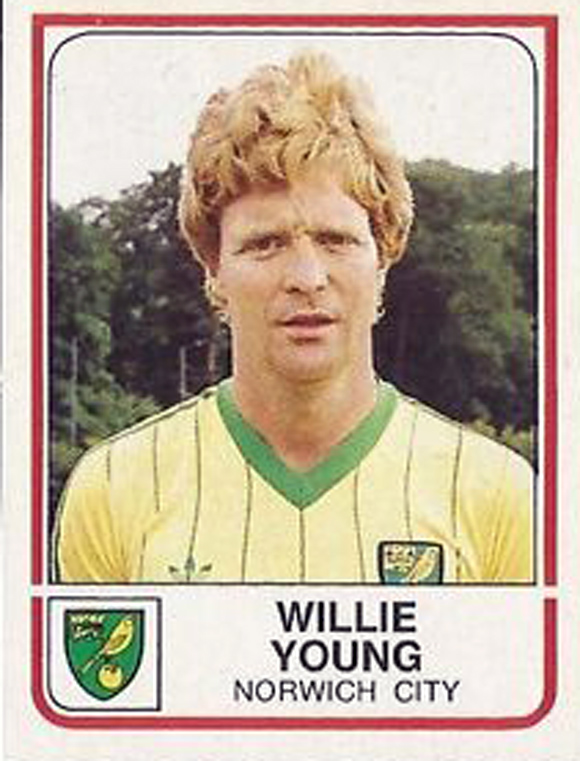
willieyoungAt the time of the film, Willie Young was a Norwich City defender who had joined Brighton on loan to stand-on for the suspended Steve Gatting. The start of ‘Threads’ features a young couple on top of a hill with Jimmy Kemp (Reece Dinsdale) turning over the station to hear the half-time football scores. On 3 minutes, you get to hear the Second Division score from Fratton Park – Portsmouth 0 Brighton 1, thanks to Danny Wilson’s penalty:

That’s as good as it got for the Seagulls as Willie gave a quite frankly apocalyptic performance in the second half with Brighton caving in 5-1 by full time. Here’s how John Vinicombe reported it in the Evening Argus:

Out of the shambles may come some good. If Cattlin had been undecided about taking Willie Young on contract this performance may well have made up his mind. Hitherto, Young had not let the side down in his previous three loan appearances, but Mark Hateley, ten years his junior, gave him a terrible runaround.

Brighton had taken the lead in the first half through a Danny Wilson but their defence started to creak:

The last 15 minutes of the first half saw Hateley starting to lose Willie Young with monotonous regularity. He began to look more fallible than ever when required to turn and radiated nothing like the confidence seen at Derby and Leeds. Following a booking at the half-hour for a foul on Hateley, Young was lucky not to be sent off when he bowled Hateley over from behind. Hateley was in a goalscoring position, and at the time, Albion were still in front.

Pompey, and Hateley in particular, started to play on Young’s slowness. A foul eventually led to Webb’s 58th minute equaliser, and when Hutchings’ clearance two minutes later reached Doyle 25 yards out the ball was thundered back past Corrigan.

The third goal saw Hateley turn Young and finish with his 27th goal in all football, which includes the England under-21s side.

In all, Portsmouth blitzed the Seagulls with five goals in a 13 minute spell. It was Willie Young’s last match for Brighton, with namesake Eric Young replacing him for the Grimsby match that followed, the last fixture within Willie’s short spell on the south coast.

Tagged ,

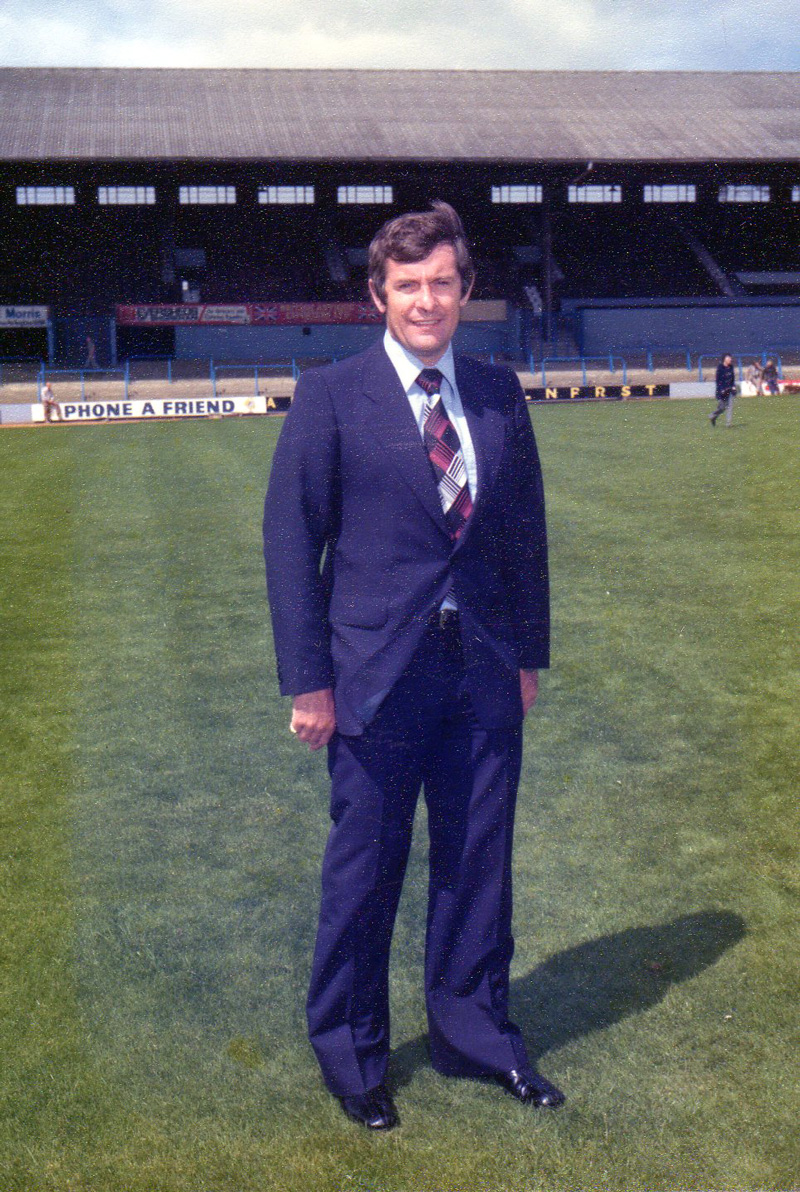
Here we go round the Mullery bush

Alan Mullery with his wife June and children Samantha (left) and Neal in the garden of their home at Cheam, Surrey,

Alan Mullery with his wife June and children Samantha (left) and Neal in the garden of their home at Cheam, Surrey,

As the 1976/77 season approached, new Brighton boss Alan Mullery spoke to Malcolm Folley of the Daily Express (10th August 1976):

In the three weeks Alan Mullery has been manager of Brighton he has salt with a procession of players wishing to air their grievances.

He could hardly have increased the demand for personal interviews had he promised trading stamps to anyone visiting his office.

Most of the callers wanted to tell their new manager that they felt they warranted first-team football. They were welcomed by Mullery, for he accurately deduced that there is nothing unhealthy about a club with ambitious players.

Yet he discovered one or two players had translated his arrival as a trial of strength to be resolved by unarmed combat.

Such as the player who went to him recently to ask for a rise. Not the most original reason for seeking an audience, granted but rather special in its own way.

There wasn’t a race of a smile on the man’s face as he presented his case. He needed an increase in pay he said, because he and his wife were thinking of increasing their family.

Somehow, Mullery controlled the urge to laugh aloud, “You’re thinking of increasing your family?” he asked in a fashion that did not require an answer.

“I can tell you what, you can come back when you actually have.”

“The lad left my office realising I wasn’t as gullible as he might have thought. He was just trying it on – but what he’d forgotten was that until a few months ago I’d have stood where he had.

“I had 10 players knock on my door last week to tell me they thought they should be in the first team. That was fine by me. I told them to go out and prove themselves.

“I won’t miss playing one bit,” he told me. “As manager, I’m now playing in 11 positions instead of one. I’m sure I shall use more energy watching Brighton than I used when I was out on the park myself.

But that does not mean that Mullery will allow himself to be submerged by demands which over the years have left a trail of broken spirits in the profession he has just joined.

“I’m lucky because when five o’clock comes I can get in my car, drive home, and leave all my worries behind me. The problem will still be there in the morning, so who’s the use in losing any sleep over them?”

Mullery has plenty going for him. He works for a board which cares, really cares, about the welfare and success of Brighton.

Chariman Mike Bamber and three directors travelled with the team to Torquay last weekend to watch a friendly. They are the team’s most loyal supporters.

Tagged

An interview with Jimmy Melia

jimmymelia1983

A few months ago I was lucky enough to interview Jimmy Melia for Viva Brighton magazine. The best bits can be read here.

However, there were some other questions and answers that didn’t make the final edit. Here are some of them:

Is it true that you were an Everton fan?
When i was at school i used to watch Everton. I was an Everton supporter. I joined the Liverpool ground staff at the age of 15 because I knew Bobby Campbell, who eventually went on to manage Chelsea. He was in the same street as me and we were big mates. He went to liverpool so I followed him there. Everton were down at the household too I was at because i was captain of Liverpol schoolboys and also played for England Schoolboys.

You had a great career at Liverpool, getting promotion to the First Division and eventually becoming English champions in 1964. Why did you leave in March 1964, before the season had finished?
I got an injury and wasn’t playing well and felt I needed a change and Shankly was the manager and I was sold to Wolves after ten years of service, for £50,000 – a lot of money in those days. I stayed at Wolves for one year. They fired Stan Cullis and I spoke on his behalf and they transferred me to Southampton and stayed there for five years. We won the Second Division and I got the goal that got us up, i was player manager at Aldershot for four years and had a few good cup runs, then to Crewe for a few years – it was very hard work. We had no money. Then I went to Dubai for three or four years, then to California, before coming to Brighton as chief scout. Then I got the manager’s job.

What was it like working as chief scout to Mullery and Bailey?
Mike was a good guy. He knew the game but he had a way of playing that didn’t go down very well with the supporters or people at the club. He did a good job the first year he took over. Second year wasn’t very good so when he left they put me in charge. Unfortunately, we didn’t do so well in the league although I made a lot of changes that got them playing a lot better, even though results didn’t go our way.

Was it a deliberate decision to take the lead when you were joint manager with George Aitken?
It wasn’t done officially but with my knowledge and background, George let me take over. The players should a lot of respect for me too.

What do you remember about getting to the Cup Final?
It was a great day. It was a tremendous thing because we’d never been there. Seeing all the supporters there at Wembley was a great day. We had a great time. it was a tremendous feat. Great memories. People still remember. They ask me, “When are we going to have another cup run and get to Wembley?” I always hope they can get there again and maybe win it. It looks like they’re getting everything right at the club, and the stadium and the finances are right and are very stable.

Could you have turned the club’s fortunes around the Second Division?
When we went to the Second Division we sold so many players. Gary Stevens left for Spurs, Robinson went to Liverpool. It’s a pity we didn’t just stabilise. and leave things alone for about three years because I could have built the club up. I had all the contacts and knew who I needed. i didn’t get the time.

And is it true you never had a contract?
I remember Mike Bamber saying ‘Let’s meet. I want to talk to you about a contract.’ So we met at lunch and saw his mother – we didn’t even talk about a contract! I was happy doing what I was doing. I didn’t feel I needed a contract. I made a couple of mistakes bringing people into the club who i shouldn’t have brought in, but hey! That’s life.

Can you give your version of what happened with Chris Cattlin? Was he picking the side?
The chairman wanted him to get involved with the coaching with me as the manager making the decisions. I still wanted to be outside all the time with the team. It was a bad mistake on my part to put him in but the chairman seemed to like him – it happens. i wanted to bring in Laurie Calloway, a good friend of mine who I trusted, knew the game and played the game, as my assistant but we couldn’t get that to happen so he brought in Chris. Things happen – thats the way it it and life goes on.

When you look back at your time with the Seagulls, how do you feel about it?
I really enjoyed my time at Brighton. It was terrific. As soon as I left Brighton I went to Portugal and won another championship with Belanedas – and then finished 5th in the Portuguese League – they were a very good couple of years. Winning two championship medals as a player and getting a team to the cup final and winning a championship. My career has been good, plus I’m still working – nowadays I’m teaching the kids at Liverpool FC America.

And finally… what became of the disco shoes?
They are still around, but they don’t get much use these days!

Tagged

Lovey Dovey!

alan dovey

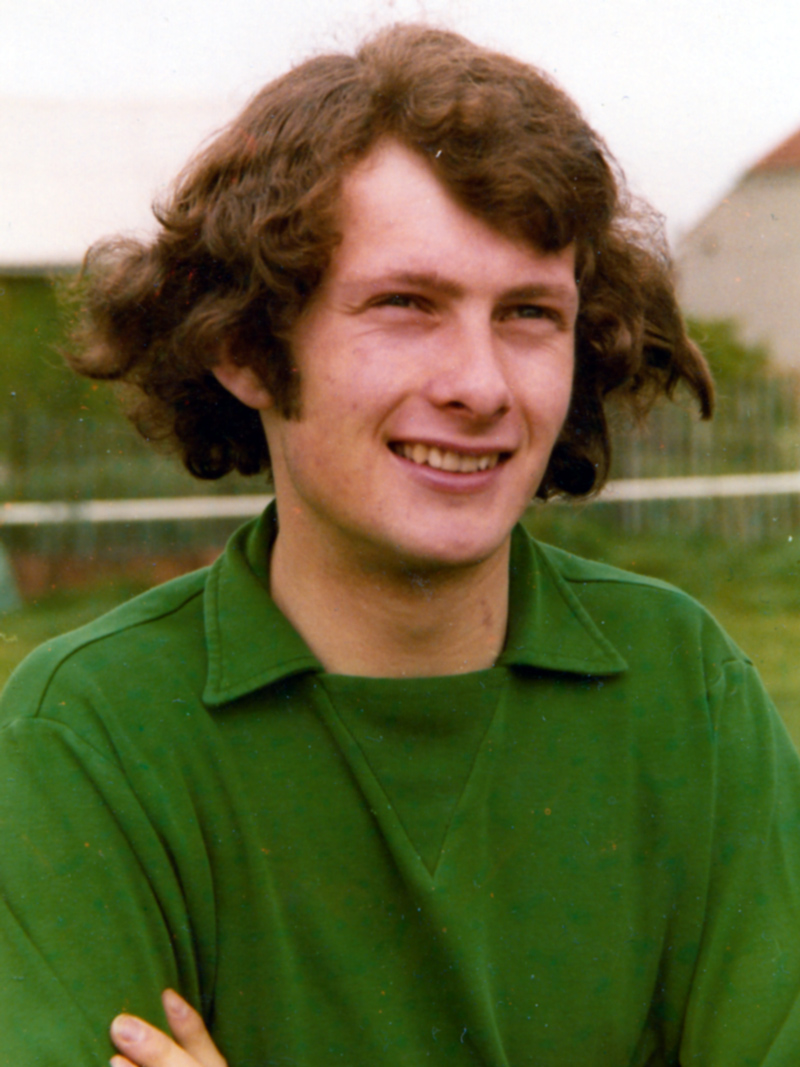
Alan Dovey was a 6ft tall teenage keeper, signed as a understudy to Brian Powney for £1,000 from Chelsea in July 1971. He had joined Chelsea straight from school following representative honours with Thurrock Boys. Facing competition from Peter Bonetti, Tommy Hughes and John Phillips (the latter two were to eventually join the Albion), Dovey failed to make a first team appearance for the Stamford Bridge side. After stand-in goalie Ian Seymour returned to Fulham, Dovey came to Brighton on loan as cover for Brian Powney in March 1971, before signing permanently for Brighton in July 1971 in a £1,000 deal. Dovey made his debut in the season’s penultimate match at Bristol Rovers in May 1971, before also playing the final match of the season to give him experience.

In 1971/72, having signed a permanent deal with Brighton, Dovey appeared against Norwich in the League Cup, making some daring saves despite the 0-2 defeat. Again he played twice in League matches, including a ‘Man of the Match’ performance at York.

His first game of the 1972/73 season was in the club’s nervy 2-1 victory over Exeter in the League Cup in August when a header by future Albion player Fred Binney past Dovey had given the Fourth Division side a shock lead. Just like in the two previous seasons, Dovey played just twice in the League that campaign, in the 0-4 defeats at Preston in November and Sunderland in January. When Tommy Hughes joined the Albion in February, Dovey was once again below his former Stamford Bridge team-mate in the goalkeeping pecking order. With limited first team action, Dovey was placed on the transfer list in March and was released at the end of the season to pursue a career in insurance.

He carried on playing locally, for Southwick and then Worthing. However, his spell with Worthing appeared to be coming to an end on 6th April 1984, according to the Evening Argus:

Alan Dovey faces the axe from Worthing’s goal after three seasons in their double promotion-winning squad.

Manager Barry Lloyd is set to bring back giant youngster Graham Bannatyne in place of the out-of-form Dovey for tomorrow’s Isthmian League premier division game with Harlow at Woodside Road.

Lloyd has been far from happy with the former Sussex keeper’s handling this season, and Dovey’s mistake at Sutton on Tuesday, when he let a shot bounce off his chest and into the net, may be the final straw for the Worthing boss.

“Alan has done exceptionally well for us over the past three years, but he’s not really aggressive enough in this premier division,” says Lloyd.

Dovey had joined Worthing at the same time as Lloyd, in 1981, from Southwick.

dovey2

Not sure what he’s up to these days but a thread on North Stand Chat suggests he’s a keen tennis player.

Tagged