Category Archives: Around The Goldstone

Brian Clough signs on at the Goldstone

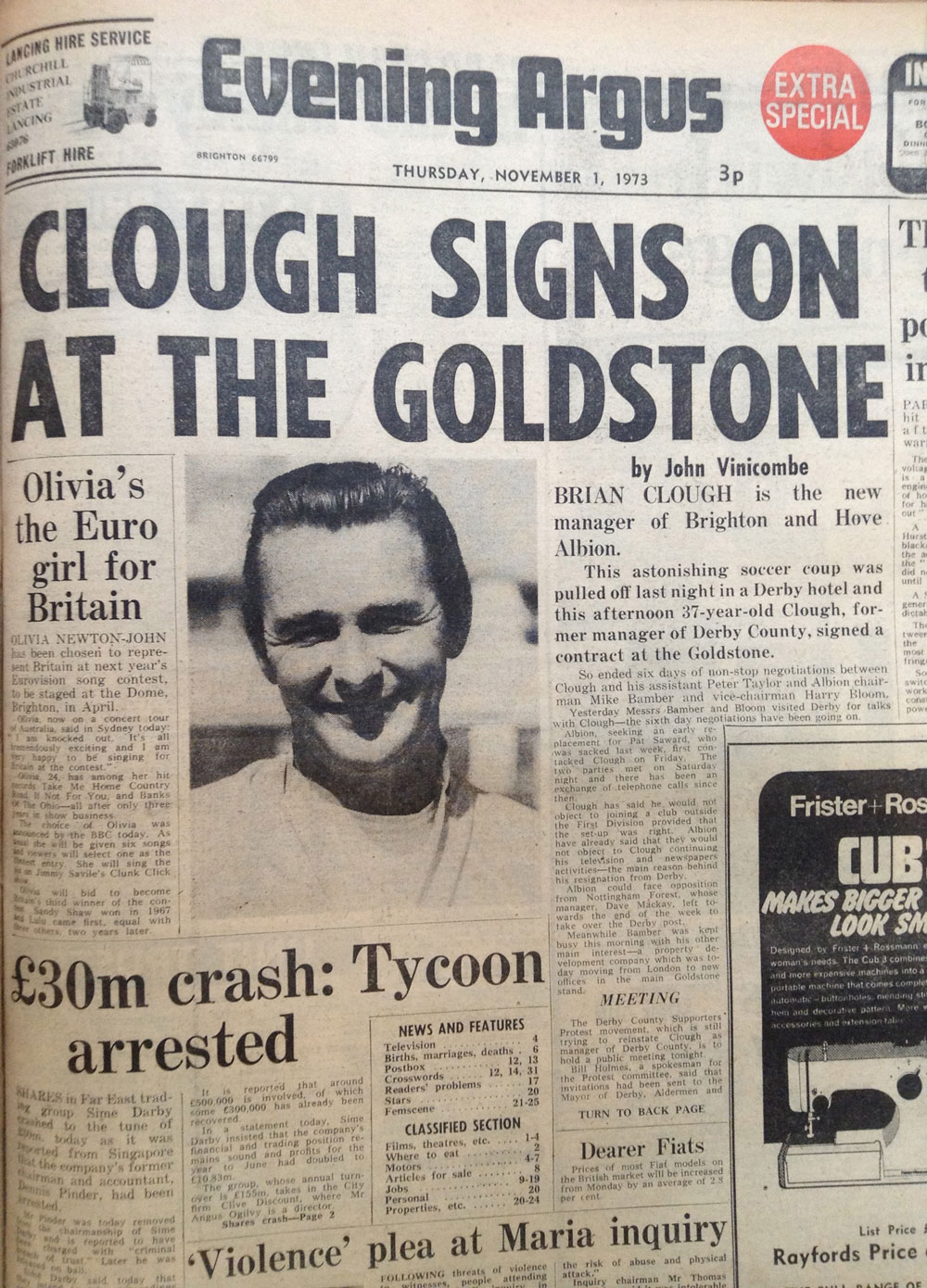
Here is the Evening Argus front page from exactly forty years ago, on 1st November 1973:

cloughsigns

Penning by far the biggest story of his journalist career, John Vinicombe wrote:

Brian Clough is the new manager of Brighton and Hove Albion.

This astonishing soccer coup was pulled off last night in a Derby hotel and this afternoon 37-year-old Clough, former manager of Derby County, signed a contract at the Goldstone.

So ended six days of non-stop negotiations between Clough and his assistant Peter Taylor and Albion chairman Mike Bamber and vice-chairman Harry Bloom.

Yesterday Messrs Bamber and Bloom visited Derby for talks with Clough – the sixth day negotiations have been going on.

Albion, seeking an early replacement for Pat Saward, who was sacked last week, first contacted Clough on Friday. The two parties met on Saturday night and there has been an exchange of telephone calls since then.

Clough has said he would not object to joining a club outside the First Division provided that the set-up was right. Albion have already said that they would not object to Clough continuing his television and newspaper activities – the main reason behind his resignation from Derby.

Albion could face opposition from Nottingham Forest, whose manager, Dave Mackay, left towards the end of the week to take over the Derby post.

Meanwhile, Bamber was kept busy this morning with his other main interest – a property development company which was today moving from London to new offices in the main Goldstone stand.

Tagged ,

Rare photo: Hula hooping at the Goldstone

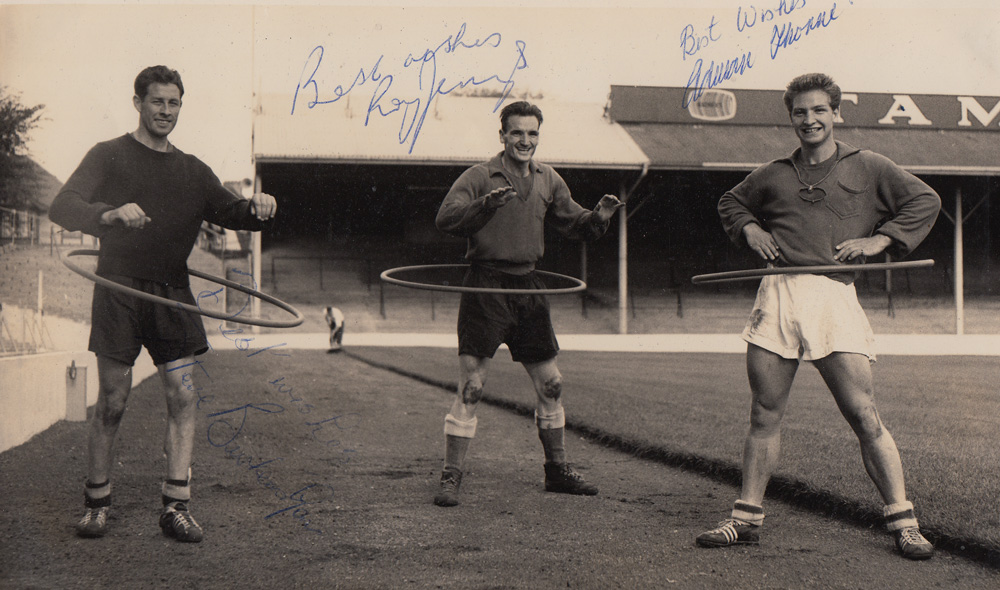
Here are Steve Burtenshaw, Roy Jennings and Adrian Thorne all getting fit at the Goldstone Ground:

hulahooping

Portslade-born, super-hoopin’ Steve Burtenshaw enjoyed a sixteen year career at Brighton as a wing-half from 1951 to 1964, being granted a testimonial match in November 1963. He became assistant coach the following year, before beginning a long association with Arsenal. He also had spells as coach at QPR and Everton.

In the centre, hip-gyratin’ Roy Jennings was an Albion colleague for almost all of that period, signing for the club in May 1952 before being released on a free transfer to Crawley at the end of the 1963/64 campaign. Signed initially as a full-back, Jennings’ conversion in a stopper centre-half in Christmas 1958 did so much to preserve the club’s hard-won Second Division status.

As for sharp-shootin’ Adrian Thorne, it was the five goals of this Hove lad in the thrashing of Watford in April 1958 that made sure Albion were to enter the Second Division for the first time. Making his debut in the January of the promotion year, Thorne made 84 appearances for the Albion, scoring 44 goals before putting in a transfer request and leaving for Plymouth Argyle in June 1961.

Tagged , ,

The inner game of Freddie Goodwin

freddiegoodwin2a

Years ahead of his time? Or patronising messages from a cod pychologist?

From Football League Review in the 1969/70 season, with photo by Peter Robinson:

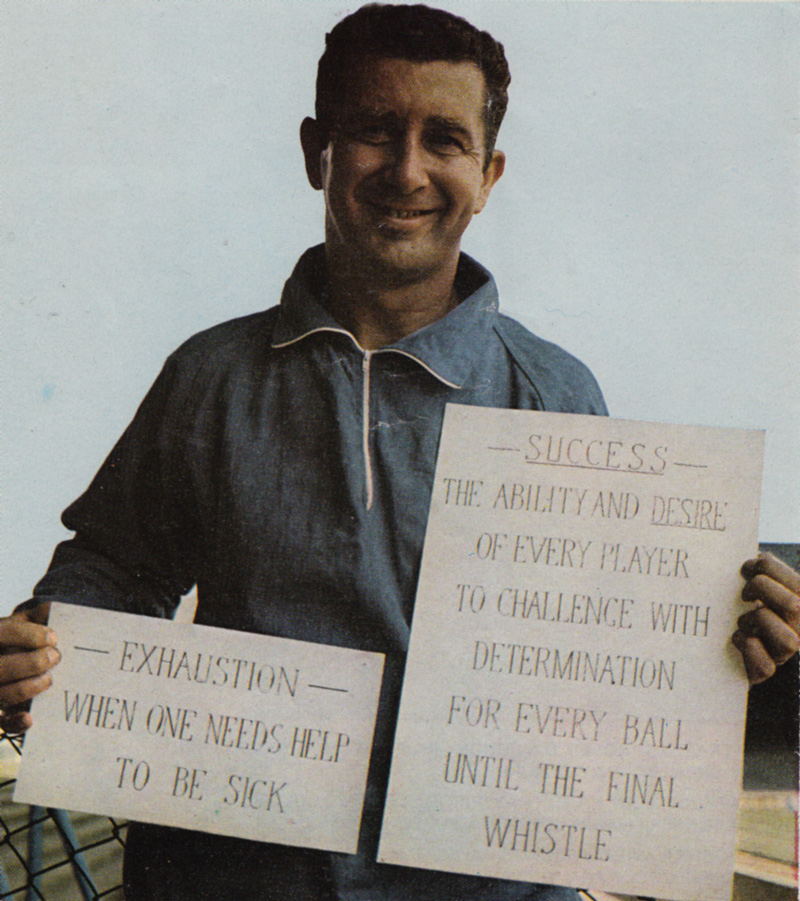
Brighton manager Freddie Goodwin reckons he has part of the answer to easing pre-match dressing room tensions… a dose of philosophy and a touch of psychology.

For the walls of the home dressing room at the Goldstone Ground are decorated with the thoughts of manager Fred – philosophical titbits for his players.

Examples: “It’s tough at the top – it’s hell anywhere else.” … “We supply everything here except guts.” … “Exhaustion – when one needs help to be sick.”

Explains the young Brighton boss: “It’s an idea I picked up in the States. Try to condition players to think in depth about the game and life in general, and it helps everyone.”

The former Manchester United and Leeds defender who took over the Brighton job after a spell in America has taken a night-school course in psychology. “I am sure it helps in a job like this when you are dealing with people of different temperaments,” he says.

Does philosophy in the dressing room help results on the field? Says Fred: “It may just be coincidence but after I had put up the sayings on the wall last January, the team hit a good patch of form.”

So teams visiting Brighton this season beware.., you’ll be facing 11 players with this thought in mind: “Success for the club adds up to better money for everyone.”

Whatever the positive effects the sloganeering may have provided, they must have wore off by the time Albion’s promotion push from Division Three hit the rocks in late March 1970. By mid-April, it was exhausted. To note one of the messages in Goodwin’s hand, I’m not sure anyone needed help to be sick then.

Tagged

Kerslake: in the Seagulls’ shadow

Jackie Chan’s classic kung fu film ‘Snake in the Eagle’s Shadow’ hit the screens in 1978, the same year that up and coming full-back Mick Kerslake joined Brighton & Hove Albion. Now I have no idea whether the young Mick went to watch the action-packed martial arts comedy at, say, ABC Cinema on East Street with his new team mates. Even so, he must have hoped that there was an ‘old master’ at the football club that would help turn him from a raw talent into a champ.

mickkerslake

As a seventeen year old Fulham defender, Kerslake had made his League debut when he played against Orient in October 1975 in a 1-1 home draw. When his four years at Craven Cottage ended, he undoubtedly wished that an Albion club keen to augment its squad with his services would get to see his career blossom. As the promotion race in Division Two was hotting up, there was even a ‘Personality Parade’ profile on him in the Brighton v Charlton programme on 13th April 1979:

In any football club with ambition there needs to be players in the shadows waiting for their chance. History is full of unknowns having sensational debuts and then coming through to make a place their own.

Many current internationals have started in just this way and here at the Goldstone we have a young full-back who has spent this season waiting for his chance.

Mick Kerslake signed for the Albion last May after three seasons on the professional staff at Fulham. He came very close to playing in the first team just before Christmas and would have played against Queens’ Park Rangers in the friendly that was cancelled in January. Supporters though are still awaiting his debut in Albion’s first team.

Mick was born in Bethnal Green 21 years ago, the son of a docker. He has two brothers and a sister, and his younger brother is already showing talent on the soccer field. He’s a regular with Spurs youngsters and plays for his school in Stepney.

The younger brother mentioned in the last two sentences above is almost certainly David Kerslake, the former QPR, Swindon, Tottenham and Leeds right-back of the 1980s and 1990s, who is currently assistant manager at Cardiff City. Thanks to Paul from Cult Zeros for this information. On a visit to Wembley, Paul remembers seeing Mick’s bro as captain of England Schoolboys against West Germany in May 1981.

The article continues:

Mick himself went to St Mary’s and St Michael’s Primary School in Stepney and moved from there up to St John’s Secondary School. He first kicked a football at the tender age of 10 and played for both his school and for East London Schools. He gained representative honours at all ages up to 15 and was captain for his last two seasons.

He spent a short while with Chelsea as a schoolboy but on leaving school he signed apprentice professional forms with Fulham, then managed by Alex Stock. At the time, Alan Mullery was the senior player at Craven Cottage, while Ken Craggs, who originally spotted Mick, was Youth Team Manager.

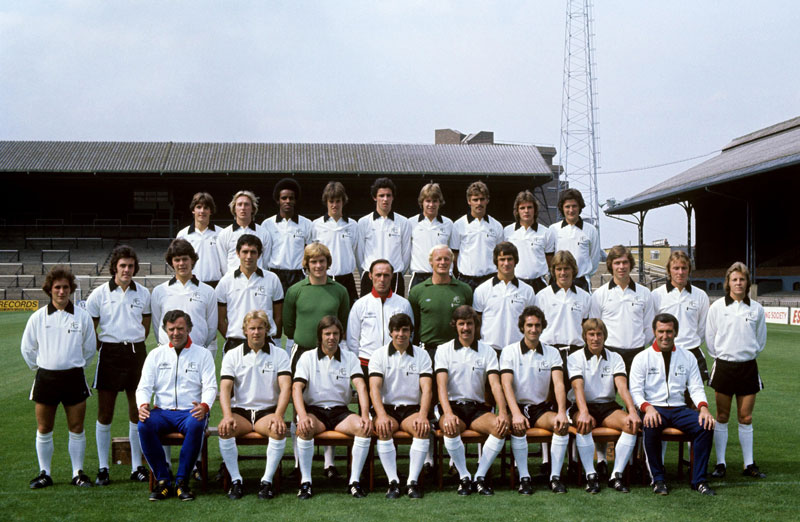
Craggs and Kerslake, as well as Barry Lloyd, are in this Fulham photo that AZ Gull found yesterday:

Fulham 1876

Fulham 1876: (Back row, l-r) Marcus Ellwood, Brian Greenaway, Tyrone James, Tony Mahoney, Tony Gale, Dennis Byatt, Viv Busby, Terry Bullivant, Michael Kerslake. (Middle row, l-r) Paul Howes, John Dowie, Steve Hatter, John Lacy, Richard Teale, Ron Woolnough (physio) Peter Mellor, Ernie Howe, John Mitchell, Steve Camp, John Margerrison, Steve Scrivens. (Front row, l-r) Ken Craggs (coach), Barry Lloyd, Les Barrett, Jimmy Conway, Alan Slough, Les Strong, John Cutbush, Bobby Campbell

After a year he signed full professional forms but in his time there he only played one full League game and had two more as substitute.

He played twice for England Youth XI against Wales three years ago alongside John Deehan, Glenn Hoddle and Gary Owen among others. In his one game for Fulham he played alongside Alan Mullery and Bobby Moore.

He had little hesitation in coming to the Goldstone when offered the chance and having been here almost a year has lodged with George and Bet Kirby who’ve accommodated so many Albion players over the years.

However, he hopes to get married in the near future to a London girl, Jane Wells, and in preparation he’s bought a flat in Clarendon Villas into which he expects to move shortly.

Away from football Mick plays a fair amount of tennis, weather permitting, and at school he was an outstanding athlete. He attained representative honours in the 100 metres and long jump.

He’s an ambitious young man who hopes to make the grade as a regular First Division player with the Albion.

Very, very sadly, he never got his chance for the Brighton. He was released at the end of the 1979/80 season and his subsequent career details are unknown. Nevertheless, like the nondescript and enigmatic Woody Allen film character ‘Zelig’, Kerslake has the distinction of having featured in numerous Albion team photos of the time, rubbing shoulders with the stars… while not many people looking back at the images really know who he was!

If you knew Mick or know what Mick did next, please get in touch either via the comments, email or on Twitter. It would be great to find out what he’s up to now. Kung-fu, probably!

In between George Aitken and Peter Ward

In between George Aitken and Peter Ward

Tagged , ,

Sergei superstar

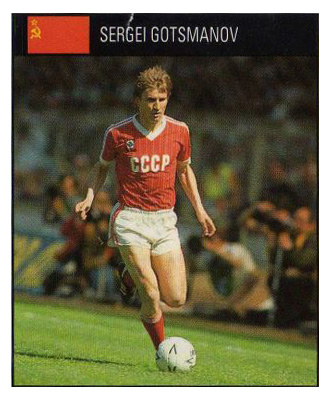
sergeigotsmanov2After breaking into the Dinamo Minsk side at the age of 17, the skilful Belorussian midfielder Sergei Anatolovich Gotsmanov played on over 350 occasions for his home city, as well as serving in the army and a short stint at Brest, near where his army base was. He also played 31 times for the USSR, scoring the first goal in England’s 2-0 home defeat at the end of the 1983/84, capitalising on Mike Duxbury’s calamitous attempt at cutting out a through ball.

Apart from this, the clip below is also particularly worth watching for a splendid run by Gotsmanov in the first half, skipping past two hapless England defenders:

A game changer back then, he was even more of a talisman when he arrived in Hove, on trial from Dinamo Minsk in February 1990. As a profile in the Brighton v Bradford matchday programme said a month later:

Already he is a favourite with the Albion fans. Even before he scored in his first two full games Sergei Gotsmanov only had to warm up as a substitute to send ripples of excitement down the Goldstone.

sergeigotsmanov

Gotsmanov’s two substitute appearances were at Sunderland and then at home with Middlesbrough, before his full debut in the 1-1 draw with Oldham at the Goldstone at the start of March. The programme continues:

Sergei the Seagull realises he is causing something of a stir. But being the centre of attention does not suit his modest nature. The team is what matters, he says. His excellent goal against Oldham, his first for the Albion, struck first time from a through pass, was a piece of quality finishing. However, Sergei dismisses the goal and the part he played in gaining a point. Through an interpreter he prefers to talk about the team: ‘Winning games is what counts,’ he says. ‘Yes, it was a good goal but at the end of a good move. And scoring is not enough if the team loses.’

Here is the goal against the in-form Latics in the 54th minute:

Not only did he open the scoring, Gotsmanov’s star performance had supporters singing his praises. ‘We’ve got a Russian international!’ they proudly chanted.

Oh his full debut against Oldham, where he scored in the 54th minute

Oh his full debut against Oldham…

His skill and vision helped to play in his team mates at times, when they were as quick-thinking as him

His skill and vision helped to play in his team mates at times… that’s when they were as quick-thinking as him!

A midfielder by trade, Gotsmanov was used by Barry Lloyd mainly in attack following an injury to Garry Nelson. With his outstanding control, accurate passing and vision, he looked several classes above the mere mortals of the Barclays Second Division that he was playing with. However, besides artistry, he also showed gutsiness. In the next match, against Plymouth Argyle, Gotsmanov was on the scoresheet again, using his quick reactions and determination to nick this winner:

However, it was undoubtedly the Hull City match at the start of April where he firmly placed his name deep into Albion folklore with an audacious piece of magic. After rounding the keeper with consummate ease, Gotsmanov impudently celebrated before putting the ball in the back of the net:

As Barry Lloyd said:

Call it cheek or a piece of pure theatre: what everyone surely recognised about Sergei Gotsmanov’s goal in last week’s home game against Hull was that it bore the hallmark of supreme confidence.

Much has been said about Sergei since he arrived at the Goldstone. Certainly, he is a player with whom we have been delighted and he is a superb example to other players here, both in skill, technique and dedication.

But the goal was something else! Skipping round tackles and holding your arms aloft BEFORE slotting the ball into the net is the stuff of which dreams are made.

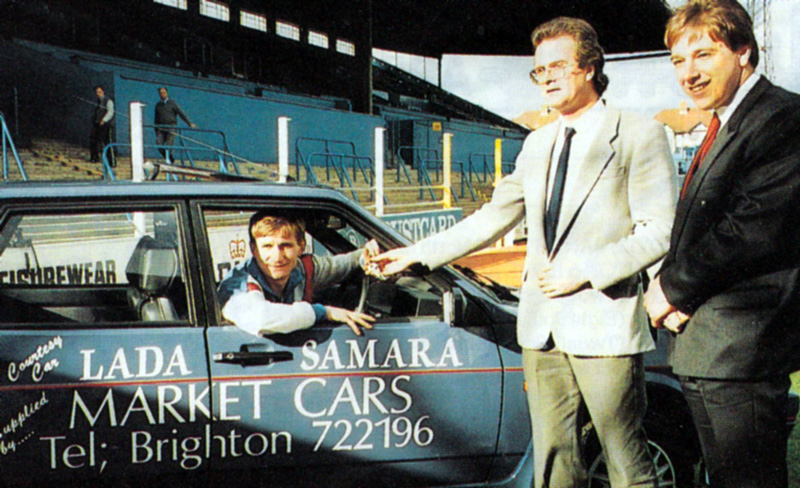
Could we possibly hold on to a star like this? Sadly, the answer was no. Everything was tried, including giving him the keys to a new Lada Samara, from Market Cars of Hove!

gotsmanov3

In the end, Albion were unable to match the terms that Southampton offered, and a £150,000 fee to Dinamo led to his unsuccessful spell at the Dell. In his brief Albion career, Gotsmanov signed off his goalscoring with this drive against Leeds in April, showing the technique and ability to find space that marked him as a class apart:

Tagged

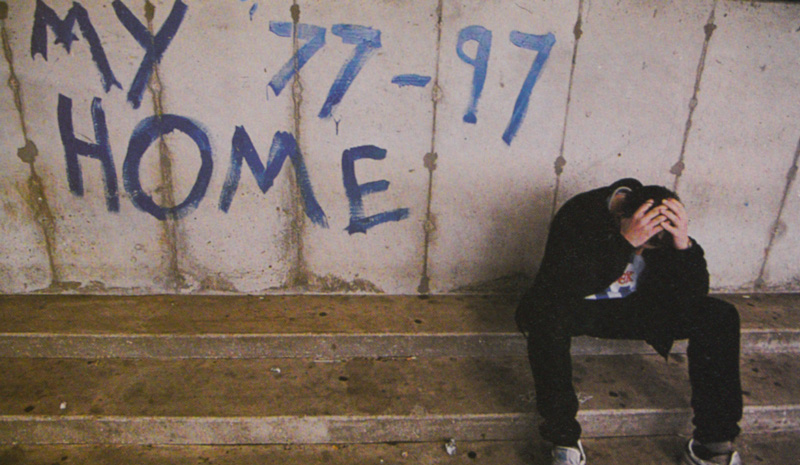
My 77-97 home

At the end of the 1996/97 season, Brighton wasn’t the only Football League club to lose their home. Bolton left Burnden Road, Derby County vacated the Baseball Ground, and Oxford, Stoke and Sunderland saw the last of their respective stadiums.

A fan and the terracing Bill Archer sold from under him.

A fan and the terracing Bill Archer sold from under him.

The big difference was that all those other clubs had a spanking new stadium to move into. The Albion had nowhere.

Here’s Total Football (July 1997)’s fact file on Brighton’s state of flux:

Old ground: Goldstone Ground
Final capacity: 11,500
Record gate: 36,747
Last game: Doncaster, April 26, 1997
New stadium: TBA
New capacity: TBA
Location: Who knows?

Background to move: The sale of the Goldstone to pay off debts of £6m sparked two years of protests. A month or so of groundsharing can’t be ruled out while a temporary location, either at the nearby Corals greyhound stadium, or perhaps Crawley Town’s new gaff, 20 miles north but still in Sussex, is organised. The consortium who wrested power from the old board include a representative of McAlpine’s, so when plans for The Seagulls’ new nest are revealed, expect something worth the wait.

We certainly got a great stadium in the end, but what a wait it turned out to be…

Tagged ,

No cash – but Brady’s aim is promotion

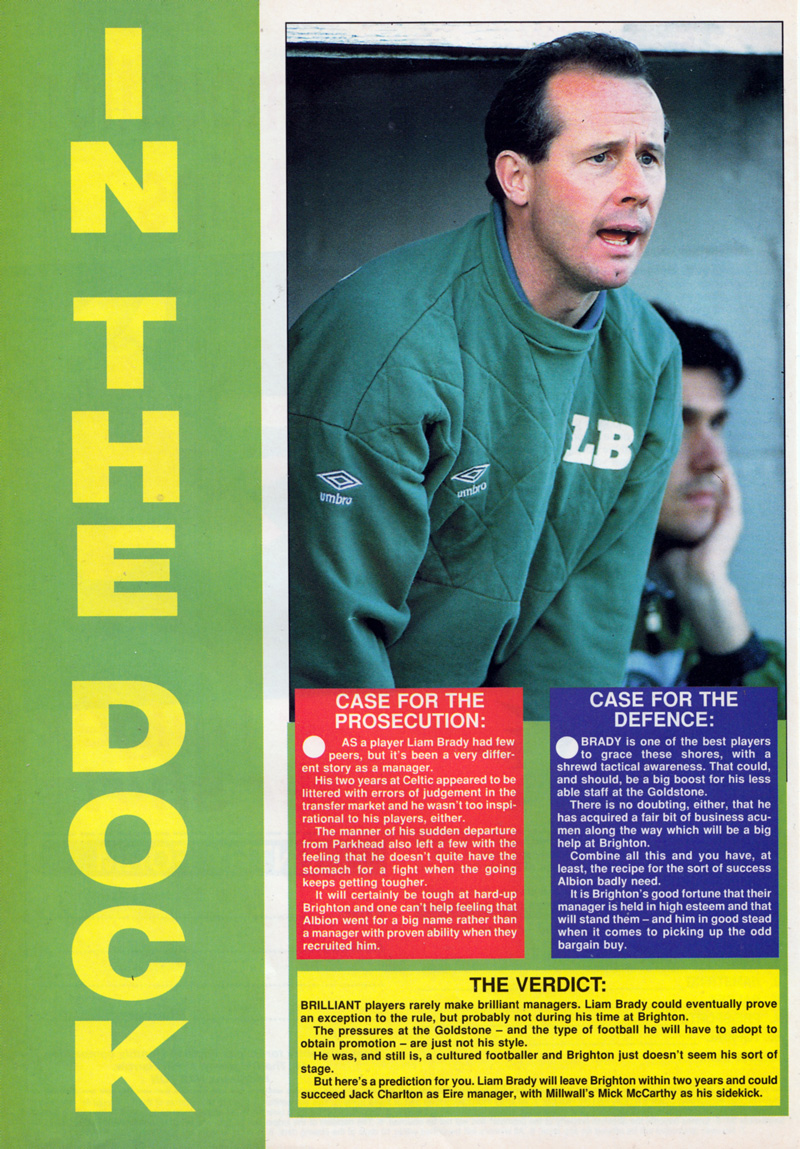
Football Monthly ran this interesting piece discussing the merits of Liam Brady’s managerial skills and his prospects at Brighton:

liambrady1

Colin Mafham’s excellent piece effectively captures the disparity between Brady the international superstar player and the unproven manager with barely two pennies to rub together at the Goldstone:

You couldn’t blame Liam Brady for wondering what might have been when he commentated on the World Cup finals in America.

There he was, the man who won 72 Ireland caps and also graced the soccer fields of England and Italy, rubbing shoulders with the sort of super stars he once mixed with regularly.

But any daydreams he may have had of returning to the high-life were abruptly ended.

He was brought down to earth with a thud when he flew back home to Brighton. Waiting to greet him there were a group of more humble pros and the prospect of a financial crisis.

For the seasiders, who won the imagination of the country 11 years ago in an FA Cup final clash against Manchester United and with a flamboyant manager called Jimmy Melia in white dancing shoes, are in real deep water again.

Brady, who took over the reins last season days after Albion escaped being folded up, returned to the fear that there might be no money to pay his players’ wages.

As it was they received their July salaries two days late.

It’s been one heck of a culture shock for the former stylish mid-fielder. One minute he was watching the likes of Baggio and Romario; the next he was trying to scratch together a few quid to keep less romantic heroes like Dean Wilkins, Kurt Nogan and Paul McCarthy.

As Brighton’s optimistic owner David Bellotti looks for a magic wand to keep the club afloat, so Brady searches for a miracle that will help lift his honest journeymen into the First Division [second tier] next season.

It is quite an astonishing turnaround for a man who was one of the highest paid players in the world when he was in Italy with Inter Milan and Juventus and splashed out more than £5 million trying to restore Celtic in his two ill-fated years as manager at Parkhead.

But he was honest enough to admit when he breezed into the Goldstone Ground last December: “1 have much to prove, haven’t I? I want to do it, otherwise I wouldn’t be here.” Liam signed a two year contract then with an undisclosed option at the end of it. And he remains confident. He reflects: “It was pretty hard deciding to leave Celtic. It was my first job in management and I will use the experience. The pressures are just as great here.

‘I’ve had 25 years in the game so far and I would like another 25; so I won’t be giving up without a fight, no matter what the hurdles are.

I plan to stay at Brighton rather longer than Brian Clough did” (42 days for those without long memories).

He’s already well ahead of that target – but can’t be certain how much longer the club will be around.

Despite promises from Mr Bellotti last season of a more stable future the edifice crumbled again at about the time Brady was returning from America. The club, the players were told, just didn’t have the readies to pay their wages on time.

But, and once again this is all new to Brady, the money was found and he kept his job – and his team.

The cause was, of course helped by a preseason visit from Spurs that attracted an 11,000-plus crowd – a couple of thousand more than Brighton need every week to break even.

Whether they get that depends on Brady’s ability to lift players of considerably less ability than himself, to heights that will take them into the First Division – and something more like the company the Irishman is used to keeping.

Brady couldn’t hide his yearnings after that Spurs match: “It was nice to play quality opposition again,” he said.

Well, if the bookies are any judge, there’s a fair chance he’ll be doing that NEXT season. Most rate Brighton’s odds of promotion at 12-1, with Birmingham, Stockport and Plymouth the only teams more fancied than the South coast club in the pre-season betting.

But even Liam Brady has to admit he’ll need a bit more luck than he’s had so far in his managerial career to lift Brighton.

Money – or the lack of it – has decreed that he has to make do with what he inherited. There have been no Celtic-style buys this close season.

The only new faces have arrived on free transfers – striker Junior McDougald and Jeffrey Minton, a midfielder, both from Spurs, plus Peter Smith, a youngster from non-League Swanley Town.

So, for the moment at any rate, Brady will have to live with his memories of Highbury, Juventus and the last World Cup.

But if he does get the breaks and Brighton do respond to his promptings there is the prospect of a brand new stadium to which he can look forward.

Money permitting, Brighton hope to move into that by the 1997/98 season. Whether Mr Brady will be with the team then remains to be seen.

Of course, predictions of Albion moving into their new stadium by 1997/98 were wildly over-optimistic, as were the pre-season dreams of promotion, although Brighton showed excellent form at the start of the 1994/95 campaign. Brady won the divisional Manager of the Month award in September 1994, before that famous 2-0 victory at Filbert Street over Premier League Leicester City.

The wheels came off thereafter as star striker Kurt Nogan once again went through a long goal drought and Albion faded badly that season, ending in 16th position. By 1995/96, the turmoil of the disastrous sale of the Goldstone and the disharmony at the club took their toll, not least on the players who found themselves in a relegation battle. Brady even found himself in the frontline to end a supporters’ half-time pitch protest. Despite retaining the backing of fans, he resigned in November 1995.

While it was almost an impossible job, Brady did not manage to disprove the dictum in the Football Monthly article’s verdict: ‘Brilliant managers rarely make brilliant managers.’

Tagged

Paul Clark – that’s ‘Petula’!

paulclarkvpalace

This illuminating profile was included in the Brighton v Bristol Rovers programme of 1977/78:

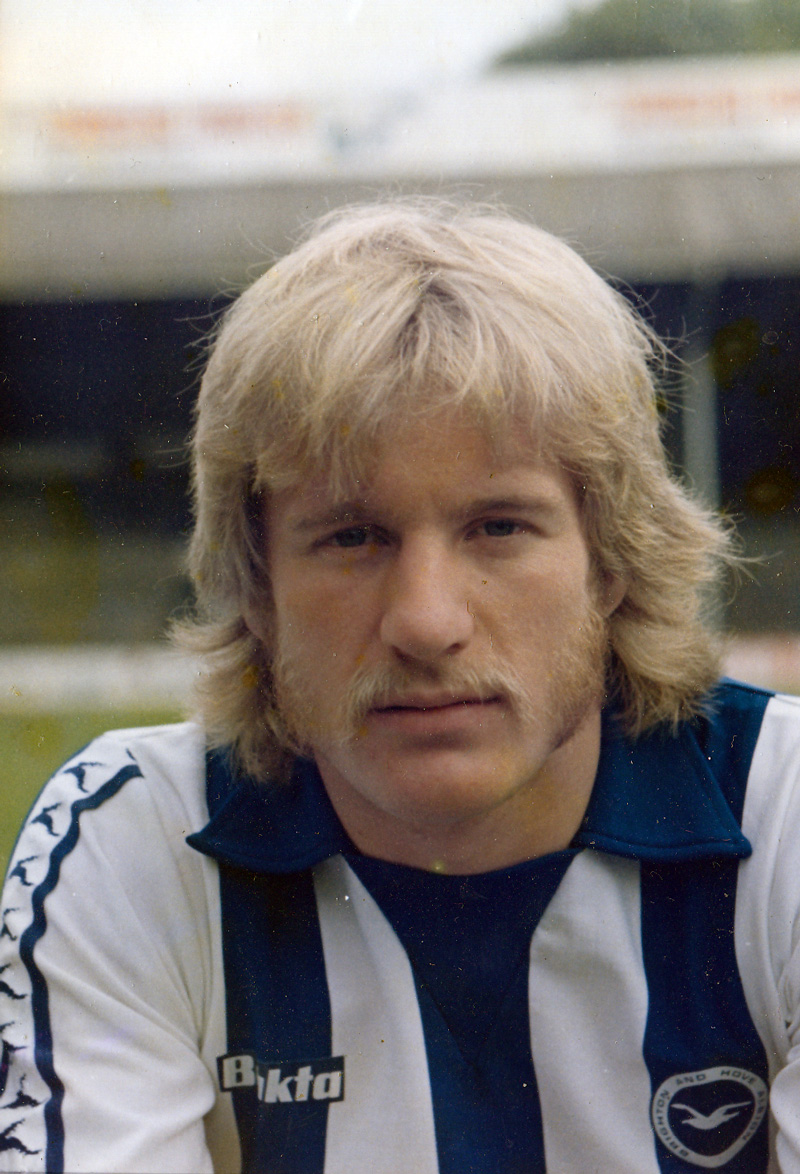
The youngest player currently in Albion’s first team squad is the thickset young man with the blonde locks who signed just a short while ago from Southend with Gerry Fell moving to the Essex club as part of the deal.

Paul was born on September 14, 1958 at South Benfleet and until now has lived all his life in Essex, his parents’ home being at Basildon. He attended Beauchamp Comprehensive School and before joining Southend United played Sunday Soccer locally for Beech United and Wickford Town. At school he represented England Schoolboys and went on to gain International honours too at Youth level.

Since moving to Albion, Paul has taken his own flat in Lancing and this means that his driving is very limited. The owner of a Capri, Paul says that driving is a hobby but his pet ‘hate’ is crashing his car. With his surname spelt without an ‘e” one of the younger Albion players has already given him the nickname “Petula’ but his musical tastes are very different from that lady.

If you’re expecting Phil Collins to be mentioned next, you’re in for a surprise…

The likes of Black Sabbath and Led Zeppelin are among his choices from the heavy rock scene while Clint Eastwood and David Hemmings are his favourite film stars. For one who comes from Southend it is perhaps hardly surprising that fish and chips together with Chinese dishes are his choices in the way of food.

Paul lists Australia as his favourite country having been there with the England Youth team and he has also been to Belgium, Holland and Monaco on tours.

His ambition is to one day make the full England side and hopefully to do so while playing for Brighton in the First Division.

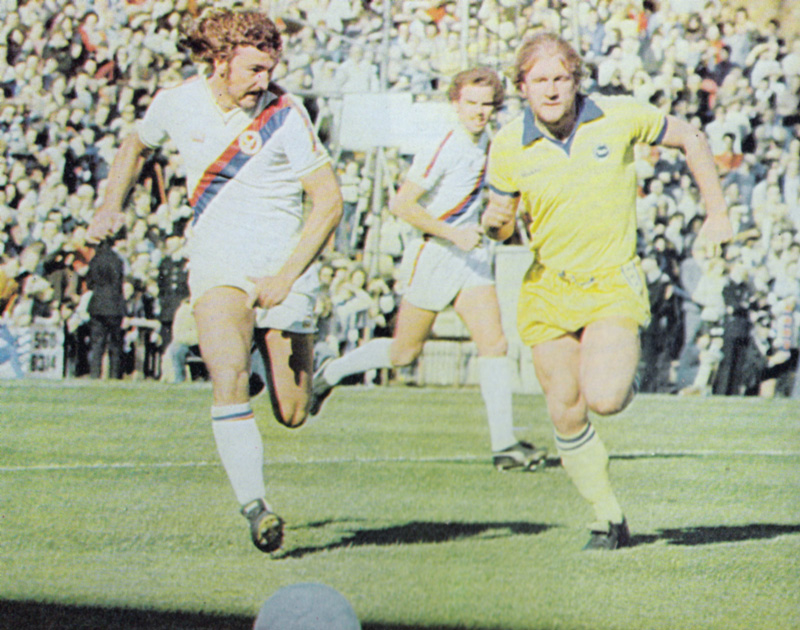
Paul Clark announced his arrival with a powerful display at White Hart Lane in in November 1977, and was a regular up to promotion to Division One in 1979. Dubbed ‘Tiger’ for his ferocious tackling, he conceded a penalty within three minutes of his experience of First Division football, away to Manchester City in August 1979. When he limped off at West Brom the following month, it seemed his all-action style was taking its toll on his body. In the end, Clark only made nine League appearances for the side in that campaign, and became something of a forgotten figure by the end of the season.

paulclark

Tagged

Draw your heroes… and get their autographs!

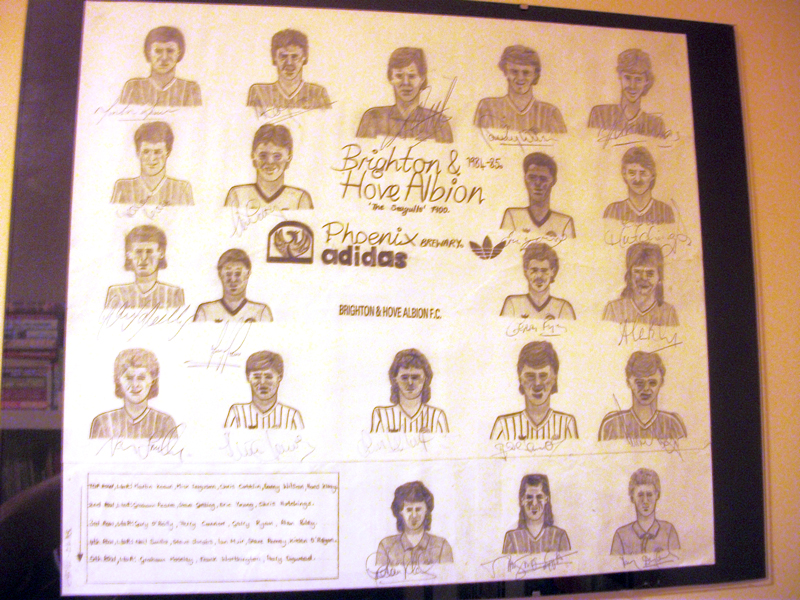
Which football fans haven’t had a go at illustrating their heroes with pencil and paper some time in their life? But not everyone was as enterprising as a young Christopher Worrall, who used his ingenuity to acquire the signatures of his heroes.

Chris sent me this photo yesterday evening:

autographs

In an attempt to stay ‘on message’, note this supporter’s respect for the commercial side of the game, with nods to Phoenix Brewery and Adidas, two great names associated with Albion in the mid-1980s. Both are highly evocative of those times and fondly remembered, unlike, say, Focus DIY in the 1990s.

Chris said:

This is my rather unique collection of Albion autographs from 1984/85. I drew the squad, rolled it up, shoved it in a tube and sent it to the Goldstone. Back it came, as requested, fully autographed and given the official club stamp.

Still to this day on my study wall, 29 years later! Keown, Ferguson, Cattlin, Wilson, Kraay, Pearce, Gatting, Young, Hutchings, O’Reilly, Connor, Ryan, Biley, Smillie, Jacobs, Muir, Penney, O’Regan, Moseley, Worthington and Digweed are all here, drawn in home, away and third kits.

A splendid, creative effort, Chris!

If, like Chris, you have self-produced Albion creations that you’ve kept (or anything else of potential interest!) feel free to email a photo to seagulls@me followed by .com

Tagged

Black day at the Goldstone Ground: Brighton v Chelsea 1983

chelsea5

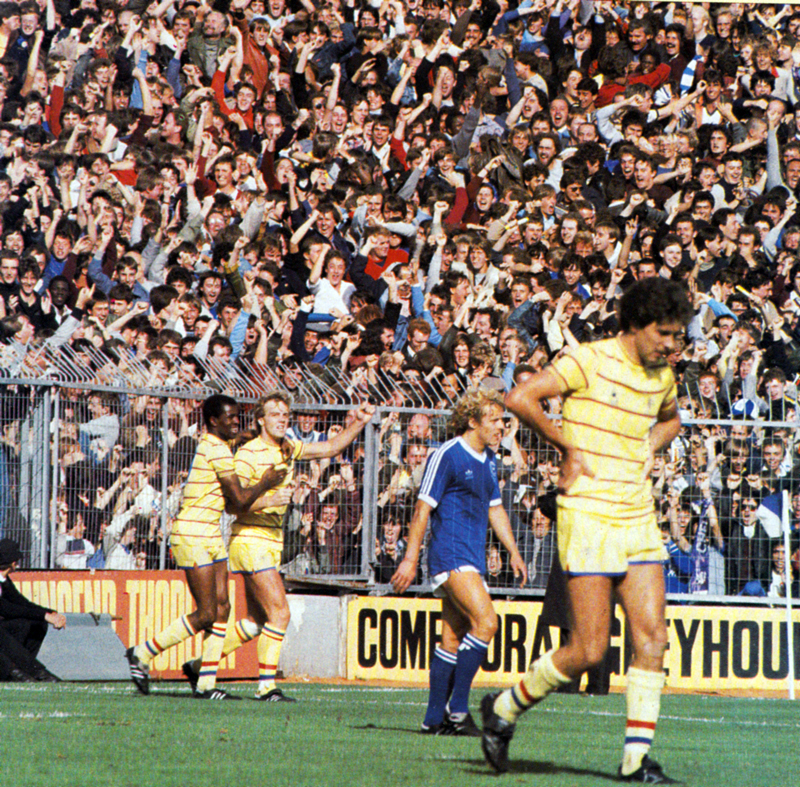
According to Tim Carder and Roger Harris’ ‘Seagulls!’ book, discussing the 1983/84 season:

An anonymous supporter took out a four-page advert in the Evening Argus on 2 September, appealing for more support and, in particular, for more vocal support; he wanted the game the following day to be a fun afternoon for everyone. He should not have wasted his money – it was the Chelsea match!’

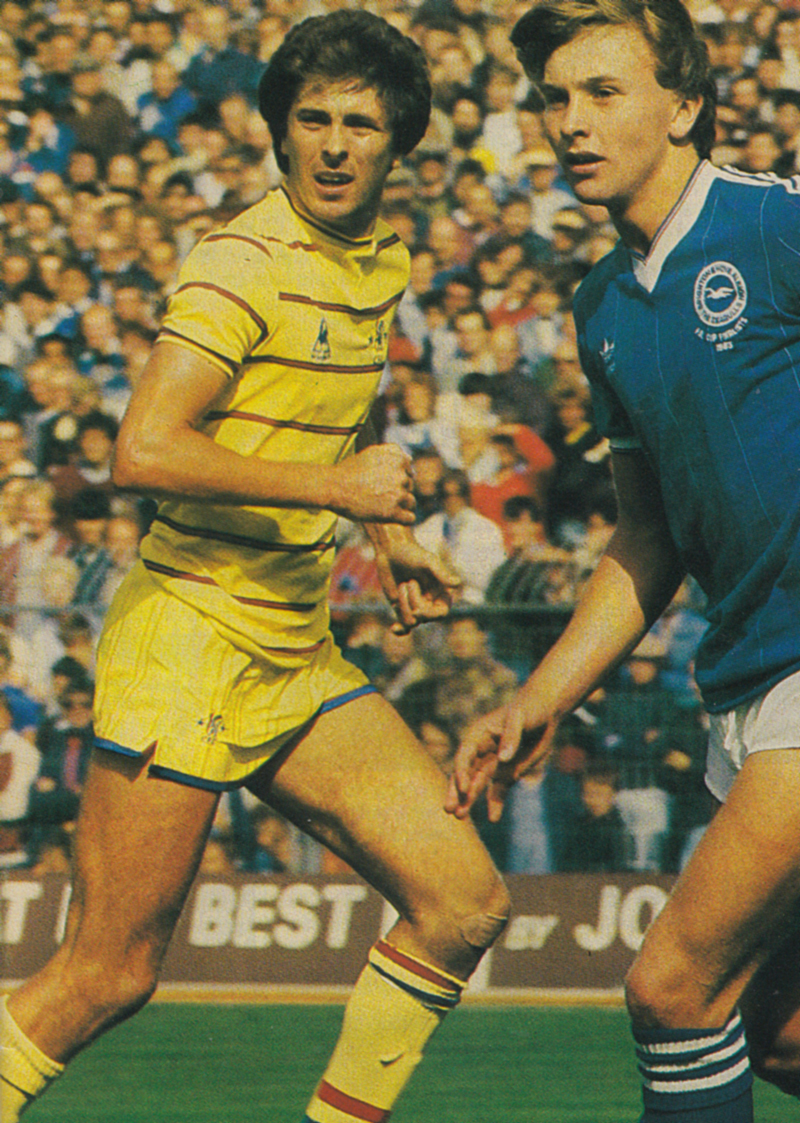
Thirty years to the day, it certainly seemed like a match to savour, the first ever Football League encounter between recent FA Cup Finalists Brighton against a resurgent Chelsea, with rising stars such as Kerry Dixon, David Speedie, Pat Nevin, Colin Pates and Nigel Spackman firing all cylinders alongside very experienced players such as John Hollins and Colin Lee (below):

chelsea4

The Blues had trounced Derby County 5-0 on the opening day of the season. However, the spectre of football hooliganism was to mar the Albion v Chelsea game. As authors Carder and Harris went on to say:

Friday night saw running battles between Chelsea followers, police and local youths; and the game was played in a brooding atmosphere before 20,874 people, 8,000 of them from London.

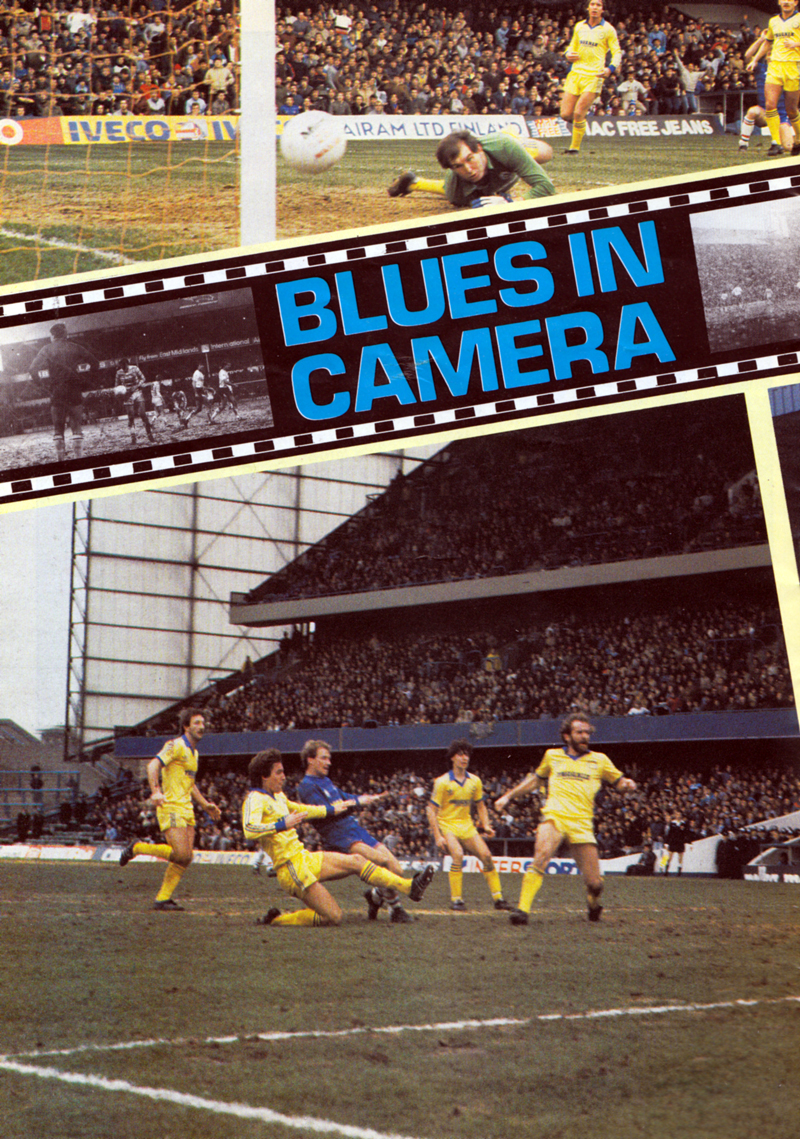
Played out in the sunshine, the highlight of the match for Brighton supporters was Alan Young’s spectacular banana shot after 76 minutes. Reporting in the Sunday Mirror, Pat Garrow wrote:

Chelsea were quickly in their stride and when the hapless Steve Foster handled in the box, Dixon gave the visitors the lead.

…a shaken Brighton stormed back. It started when Jimmy Case took a free kick that Niedzwiecki failed to hold and Young did the rest with a spectacular overhead kick.

Brighton’s joy was short-lived. A minute later Chelsea scored the winner. This time it was the consistent Clive Walker who squared the ball almost from the byeline across goal.

‘Keeper Digweed could only get his left hand to it and he pulled it down for Dixon to volley into the net.

chelsea1

The game was far from rough but referee Ken Baker kept bringing out his notebook.

Indeed, he showed the red card to one of the Chelsea players, which surprisingly drew fierce criticism from Brighton boss Jimmy Melia who said: “The referee was diabolical. The decision to send Canoville off for retaliation was terrible.”

But the drama did not end there. As Carder and Harris explained:

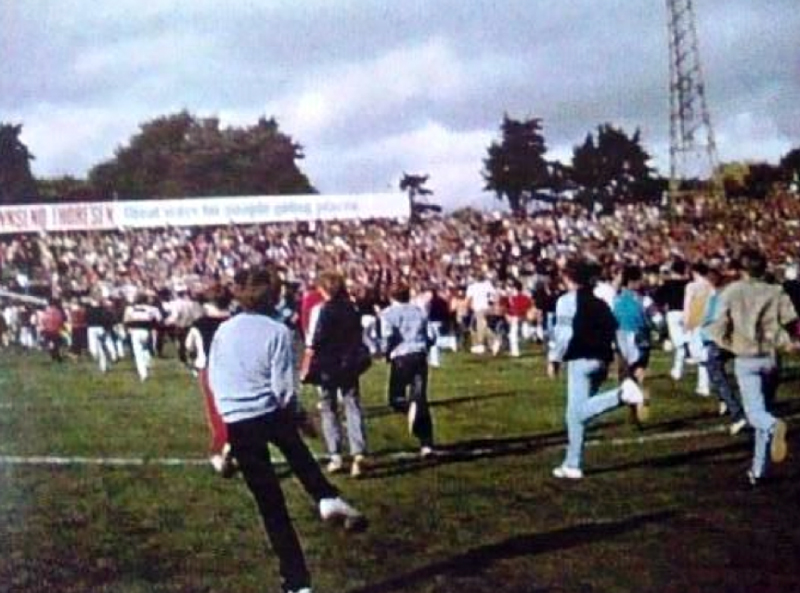
Chelsea supporters infiltrated all parts of the ground, and at the final whistle the hooligans invaded the pitch from all unfenced areas to launch a vicious attack on the hopelessly outnumbered police. By the time a police horse had managed to clear the pitch, seven constables were injured and the north goal was broken. It was the worst outbreak of violence ever seen at the Goldstone.

chelsea2a

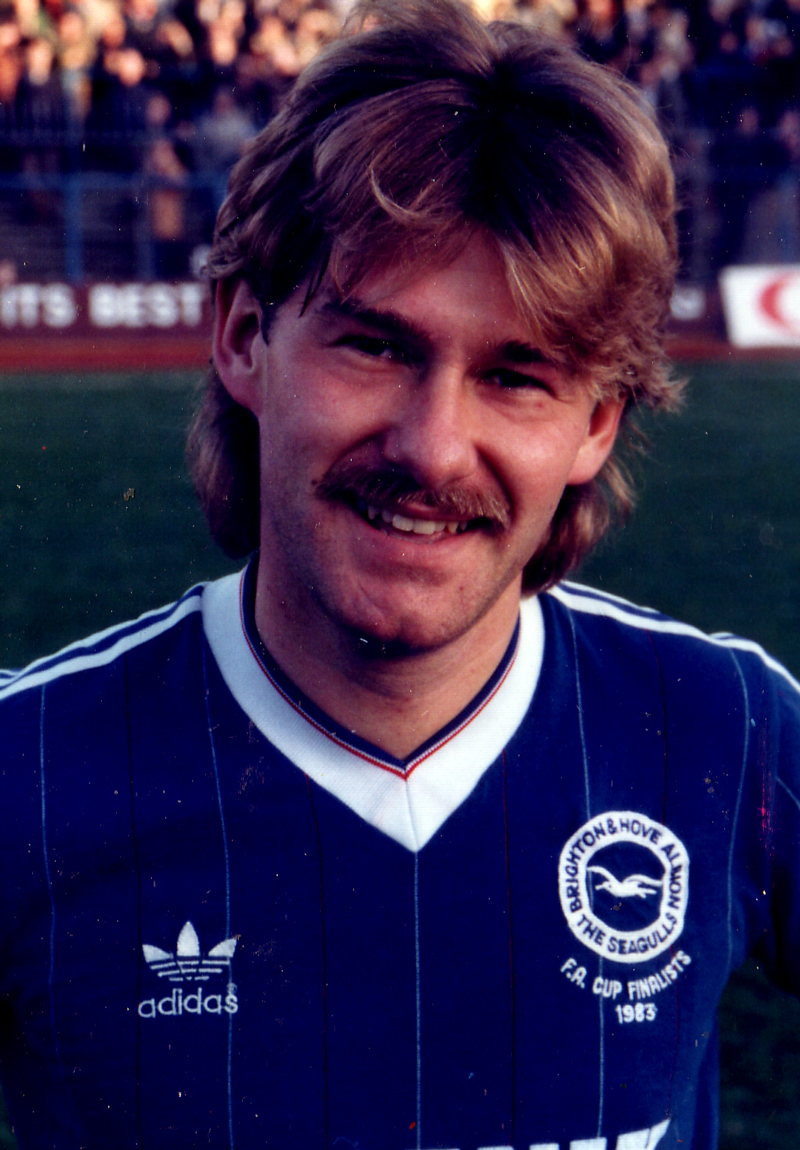
Chelsea’s left-back Chris Hutchings even got in on the act, and was charged with threatening and abusive behaviour for swearing at police trying to clear the pitch. According to an article by Spencer Vignes in the Brighton v Sheffield Wednesday programme in 2012/13, it started when he applauded the visiting support after the match, an act interpreted by a policeman as inciting further crowd trouble. As Hutchings said:

“All I did was clap them and this copper comes over and says ‘Get off the pitch at me.’ I said ‘No’ so he said ‘get off the pitch’ again and tried to help me on my way, and I told him to ‘Fuck off’ and ran down the tunnel. Next thing I know he’s nicking me!’

By the time the case was heard at Hove Magistrates Court, Chris Hutchings the Chelsea player had become an Albion player, signing for the Seagulls in a £50,000 deal in November 1983. I’m sure his signing on fee covered the £250 fine he received!

hutchings

With Hutchings a fixture at left-back, Brighton were eager to avenge the defeat in the corresponding fixture at Stamford Bridge on the last day of 1983. It was not to be as the sharpshooting David Speedie grabbed the winner to complete the League double over the Albion.

chelsea3

Tagged , ,