In ‘The Arsenal Story’ from 1972, a year after the Gunners had famously won the League and cup double, football journalist and author Deryk Brown wrote:
‘The Highbury of today is the best possible tribute to Herbert Chapman and the Arsenal of yesterday. Even today it is a temple of football. The present West Stand was opened by the Prince of Wales (later Edward VIII) in December 1932. The East Stand, the one the players come out of, was quietly opened before a match with Grimsby Town in October 1936. Even today it is a temple of football… It is hard to imagine how any young player who visits Highbury can avoid coming away with the impression that Arsenal is the club.
Hardly surprising for a club steeped in tradition and success that Arsenal’s playing record at Highbury was formidable. A home defeat sometimes happened, but a thrashing was rare. At the time, Arsenal’s record home defeat was 0-5 by Huddersfield Town in February 1925. It was a scoreline to be emulated by Chelsea against a young Gunners side in the League Cup in November 1999. Given this, Arsenal apart, it is hard to find in the record books which other club has scored six goals at Highbury… apart from Brighton!
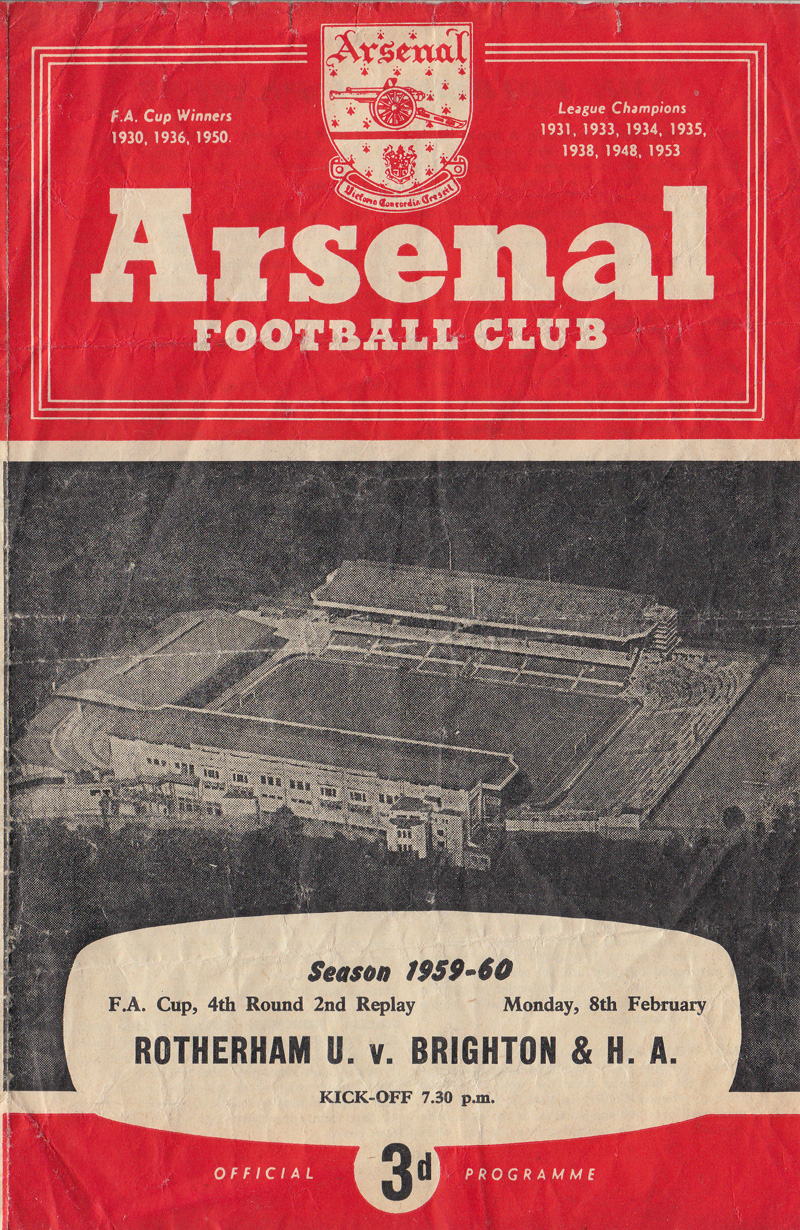
Ten years before Arsenal began their ‘double’ season, Brighton drew Rotherham at Millmoor in the FA Cup fourth round in 1960, having won at Bath in the previous round. While the Millers and Albion were both in Division Two, promotion candidates Rotherham were the undoubted favourites. Indeed, in the previous round the Millers had sensationally knocked out Arsenal after three matches, drawing 1-1 at Milmoor and 2-2 at Highbury before triumphing 2-0 at Hillsbrough.
However, Albion were not going to be overawed. As Roy Jennings said in Charles Buchan’s Football Monthly in December 1961:
‘We had been in three tremendous games against Rotherham. We had two gruelling drawn games of 1-1 against the tough Yorkshiremen at Millmoor and Goldstone Road [sic], and the second replay was at Highbury.’
On Monday evening on 8th February 1960, a bumper crowd of 32,864 travelled to Arsenal Stadium, where the Rotherham already had the advantage of experience, having held the Gunners there in the previous round. Under floodlights, the Brighton v Rotherham match was played in an incredible atmosphere. Jennings quipped:
‘To everyone’s surprise, we thrashed Rotherham 6-0 in that game. They must have been more tired than we were!’
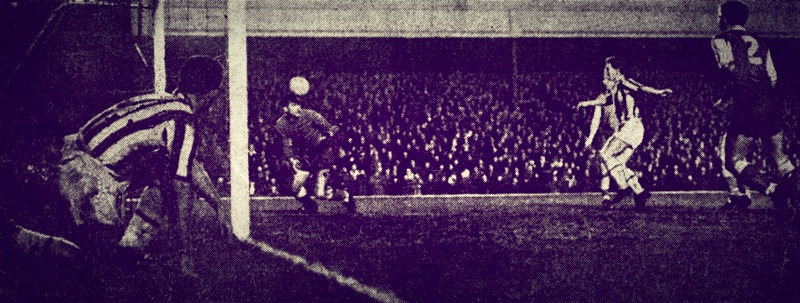
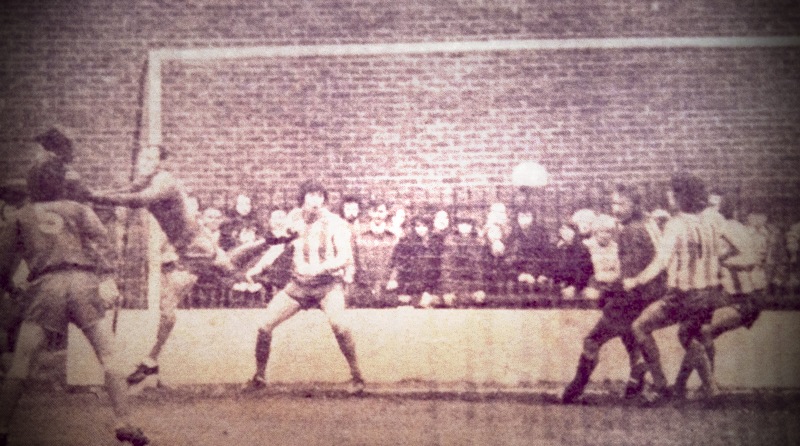
Albion’s fourth goal, scored by Adrian Thorne
Oh, how the floodgates opened! Adrian Thorne, who got both Albion goals in the first two matches, opened the scoring again. Brighton led 2-0 at half-time before a glorious spell of three goals in seven minutes early on in the second half turned the match into a famous triumph. Not least for Bill Curry, who hit a hat-trick or, indeed, outside-left Freddie Jones, who had joined Brighton from Arsenal in 1958 and scored on the night.
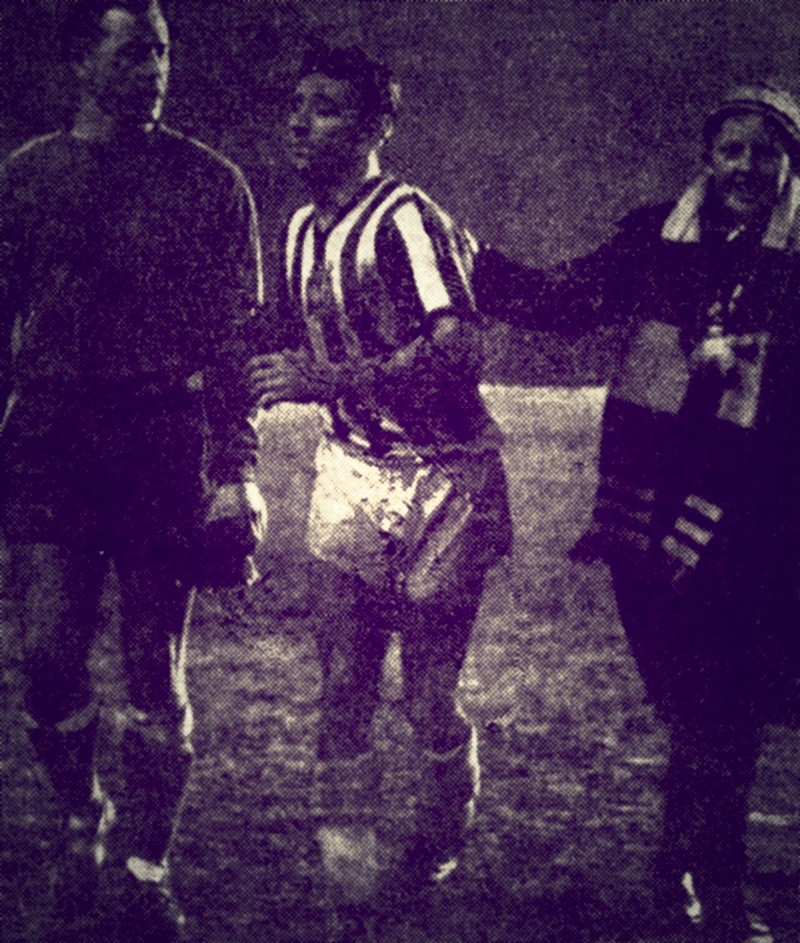
Rotherham’s Ironside gets caught up in Brighton’s celebrations. Here he is with Curry and a delighted Brighton supporter.
Brighton went down 2-1 at Preston in the next round, but nothing can take away from their feat of scoring six goals at Highbury, home of the Marbled Halls. It was better than anything that Arsenal managed that season.
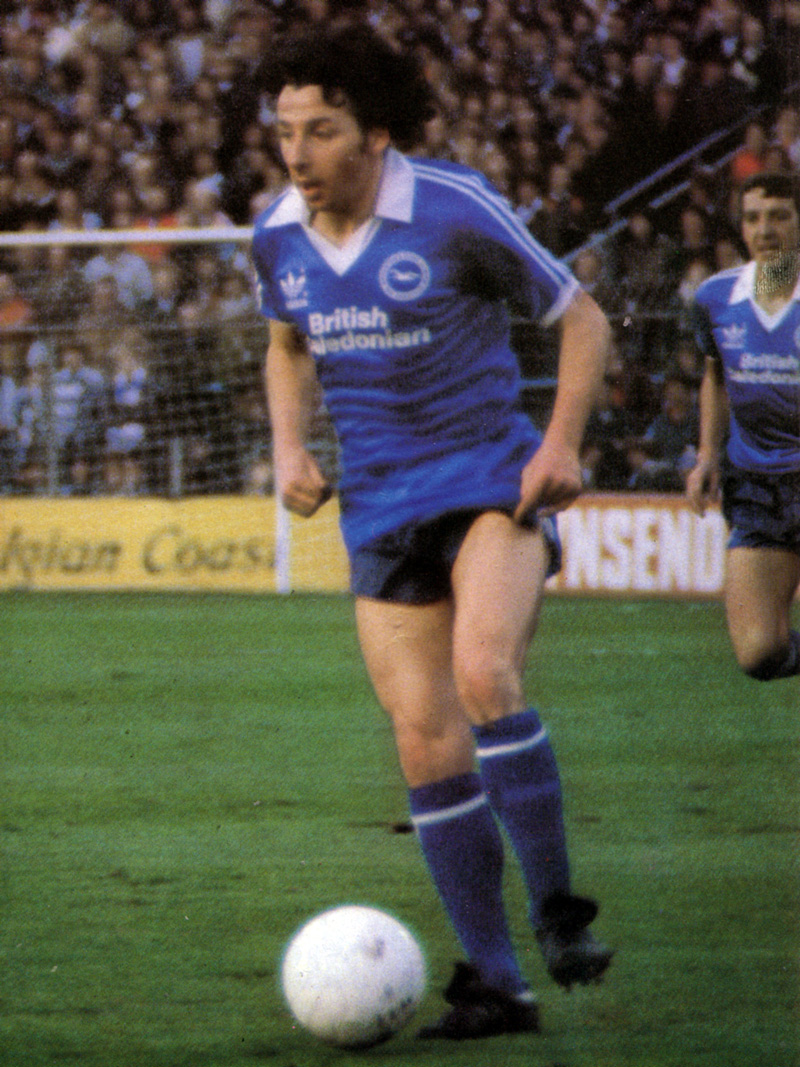
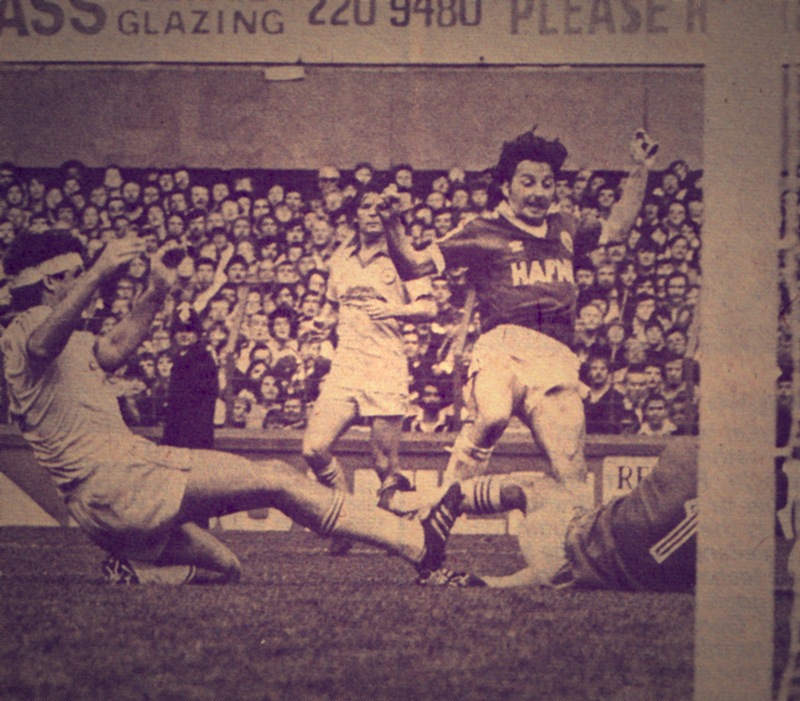
Mickey Thomas is a prime candidate for Albion’s biggest waste of money. After a brief four month spell at Everton, the impish Welsh international midfielder joined Brighton for £350,000 in November 1981. With hindsight, Thomas’ petulant behaviour at Goodison ought to have alerted Seagulls boss Mike Bailey that this spot of business was going to end in tears. Thomas’ enthusiastic words about Brighton at the end of this article from Shoot! Magazine sound rather hollow now:
Mickey Thomas’ love-affair at Goodison Park lasted less than four months.
He signed for Everton from Manchester United in July, and in early November was sent packing by Howard Kendall for refusing to play in a reserve team game.
The Everton boss was quick to defend his actions, “Thomas let me down, the players and the supporters,” he said. “I was not going to be told by anyone who played in my team.”
Thomas goes close against Brighton earlier on in the 1981/82 season
Thomas is now settling to life at Brighton following a £400,000 move.
“I didn’t want to leave Everton,” he told SHOOT, “But Howard Kendall didn’t leave me with much choice.”
The row that saw Thomas make a controversial exit from Goodison Park erupted when Kendall asked the Welsh international to play for the reserves.
Thomas had missed two games with a hamstring injury and Kendall wanted him to prove his fitness before putting him back in the senior team.
“I told the manager that I had never done that before and I wasn’t about to start,” says Thomas.
“At the time I believed my stand was right. But looking back on the decision, I suppose I was too hasty.”
Thomas did not play for the reserves, and Kendall, with a no-nonsense approach, showed him the door.
“He made it plain that I had no future at the club,” says Thomas.
“That disappointed me and when Brighton showed an interest I jumped at the chance of a fresh start.”
A lot of harsh things were said by both parties after the two had gone their separate ways. Thomas was reported to have muttered that forgetting Everton would not be too difficult because he had not enjoyed himself at the club.
“I didn’t say that,” storms Thomas. “I love Everton. I stood on the terraces as a boy and watched them. It was like a dream come true when I signed for them from Manchester United in the summer.
“What I said was that Everton were a part of my past, and I had to get on with the job at Brighton now.
“I didn’t get on with Howard Kendall, but that’s a different thing.
“I never knew where I stood with him and I don’t think I was alone. I think he wanted to sell somebody around the time that I was pushed out and I gave him the excuse he needed. I’m sorry about that.
“But I still love Everton and their supporters, who were very good to me. I wish them well.”
The Kendall/Thomas row could not have come at a better time for Mike Bailey. He wanted to balance the left-side of the midfield at Brighton and Thomas fitted the bill perfectly.
“He’s building a team quite capable of living with the best.
‘My problem now is settling again. I had just bought a house on Merseyside which we hadn’t moved into.
“I was looking forward to getting out of the hotel that my wife, son and I had been living |n. Now I’ve got all that again, it takes its toll you know.”
Thomas is determined to knuckle down and prove that Everton were wrong to let him go.
“It’s a big challenge. The set-up at Brighton is nothing like it was at Goodison, but it’s a friendly little club and the South Coast is a lovely place to live,” he says.
“I’ve signed a four-year contract and have every intention of seeing it out. I want success and Brighton can provide it.”
One of the few bright spots of Thomas’ brief stay on the South Coast was his diving header against Barnet in the FA Cup 3rd Round replay in January 1982:
However, his wife failed to settle in the area and Thomas failed to appear for the match with Notts County in April. He also went AWOL on at least three other occasions. Regarding the County game, Mike Bailey expressed his annoyance via his programme notes against Manchester United, later in the month:
The absence of Mike Thomas from our side last Saturday may have surprised many of our supporters. I can appreciate that it must have been difficult for our fans to follow the Thomas affair in recent weeks, so perhaps a few words of explanation about events of last week might not go amiss.
In truth, since we agreed to put Mike on the transfer list he ahas been training regularly with everyone else and things seemed to be going quite OK.
Indeed, Mike’s performances on the field had been very encouraging. However after the Easter games the lads were given two days off and told to report back on the Thursday.
We received a phone call from Thomas’ wife a day later to say that he was ill. If the call had been received on the Thursday I might have understood but he should have been at the Goldstone on that day and wasn’t here.
Prior to that, after the Arsenal match, he had asked permission to return to North Wales for his son’s birthday with permission to report direct to Aston Villa on the Monday. This he did and after the match he again returned to North Wales.
We feel that we have gone out of our way to help the player and allow him to settle his domestic affairs but now I feel we have been completely let down and for me… enough is enough.
This interpretation is challenged by Thomas in his autobiography ‘Kick-ups, Hiccups, Lock-Ups’. He blamed Brighton for plying him with drinks to get him to sign for a club he didn’t wish to join and, rather than domestic strife, suggested that going AWOL was merely a tactic to force the club’s hand into releasing him.
Unsurprisingly, Thomas left Brighton for Stoke in a £200,000 deal in the summer. To rub salt into the wounds, when the Albion played City in the early stages of the following season, Thomas turned in an outstanding performance and scored a goal in an emphatic 3-0 victory for the Potters:
The only upside to this story if that when Thomas left the Goldstone, he showed some semblance of a conscience. In his autobiography, he said:
“I was off. But not before one final unexpected act on my part. When the contract was finally sorted and I was released, I refused to take the signing-on fee, which was due to me. I told them to keep the money. I was entitled to £25,000 but I didn’t take a penny from them. It was a rash gesture on my part for all the trouble I had caused Brighton. I wasn’t going to take the piss entirely and pocket a hefty cheque I didn’t believe I warranted. That was one hell of an expensive way to say sorry.”
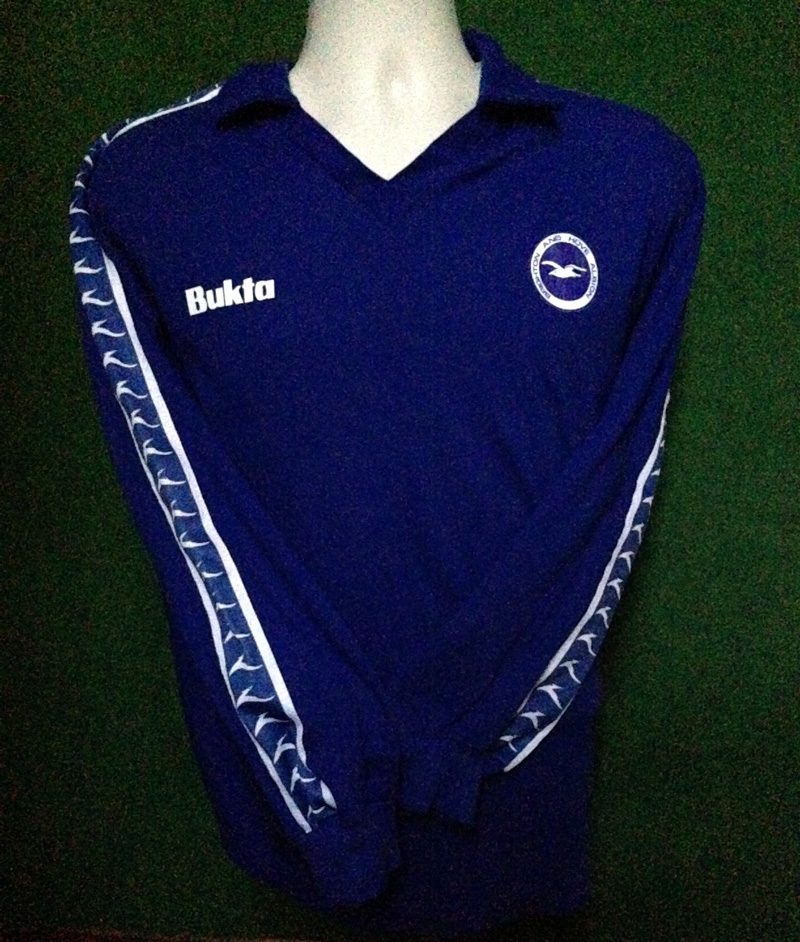
It seems slightly absurd that a team that plays in blue and white would choose an away kit that was …blue and white. However, that’s how things were in 1977 when Bukta won the contract for supplying Brighton & Hove Albion’s kit:
The advantage was that the Seagulls could maintain their home colours (albeit not their home kit) on away trips to Southampton, Sunderland, Stoke and Crystal Palace in the Second Division in 1977/78. The downside was that it necessitated that Bukta supplied Albion with the extravagance of a third kit, with red shirts, for matches at the likes of Oldham and Millwall.
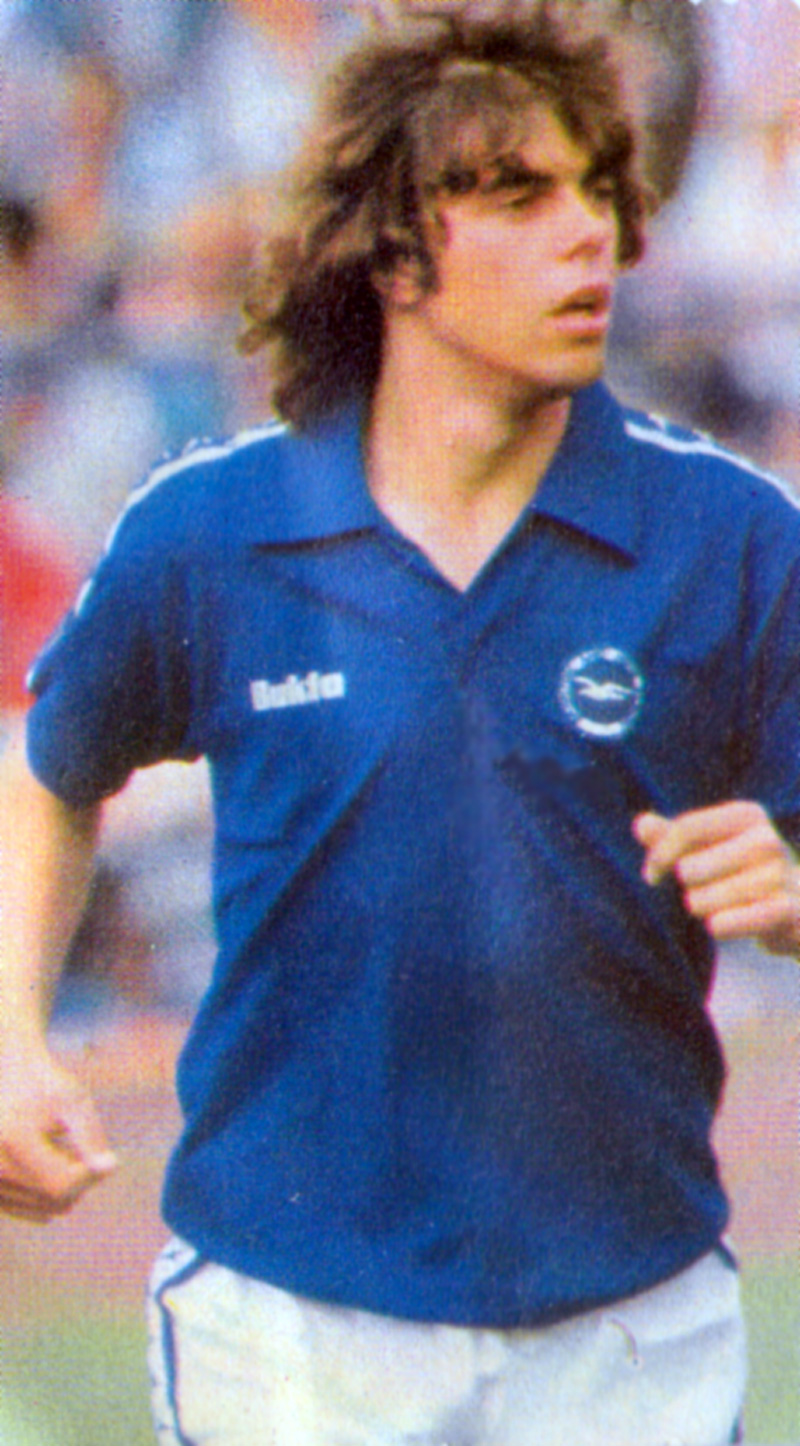
This blue number was very smart indeed, with the white Buks down the sleeves looking rather like the white seagull on the new round crest. It made its debut on the opening of the league campaign, at the Dell, for Brighton’s well-earned 1-1 draw with Southampton. By the time of Albion’s match at Sunderland on 1st October 1977, Peter Ward had hit a rich vein of goalscoring form, with four goals in three matches.
At Roker Park, this exquisite first half goal was testament to Wardy’s close control, speed on the turn and deadly finishing:
The strike made the score 2-0 and put Albion on top of Division Two, at the time the highest Football League placing in the club’s history.
By the following month, the blue away kit was worn, strangely, with white shorts and red socks for the famous 0-0 draw with Tottenham Hotspur in November 1978, in front of 48,613 fans, still Albion’s highest ever league attendance. Hate to say it, it made us look like Portsmouth, although we were far, far better than the Pompey side of that time!
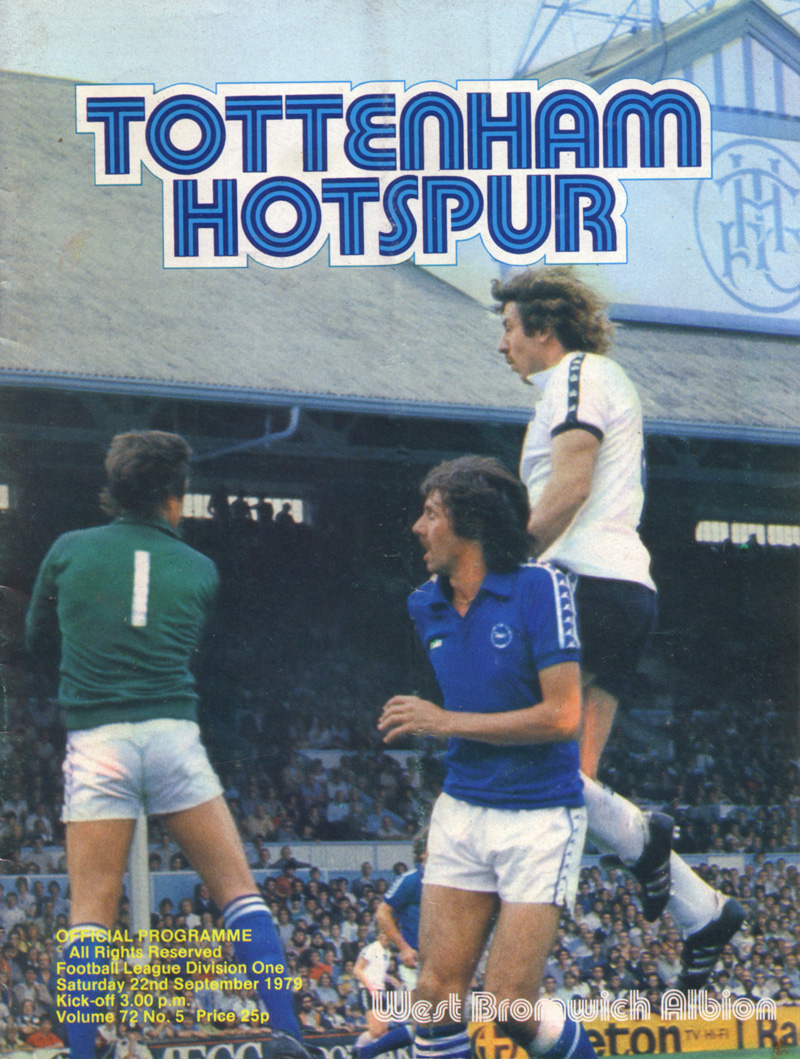
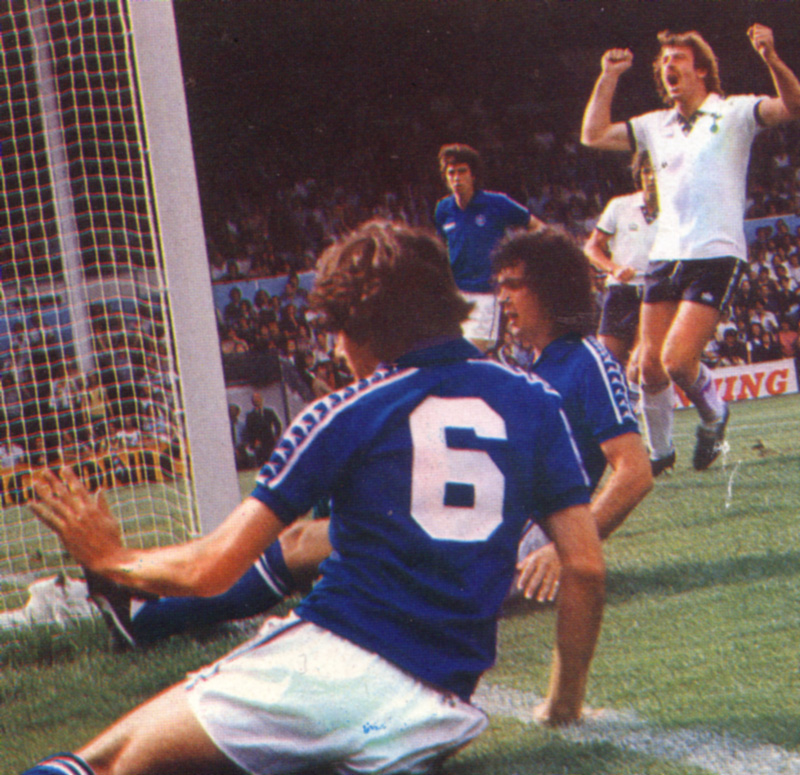
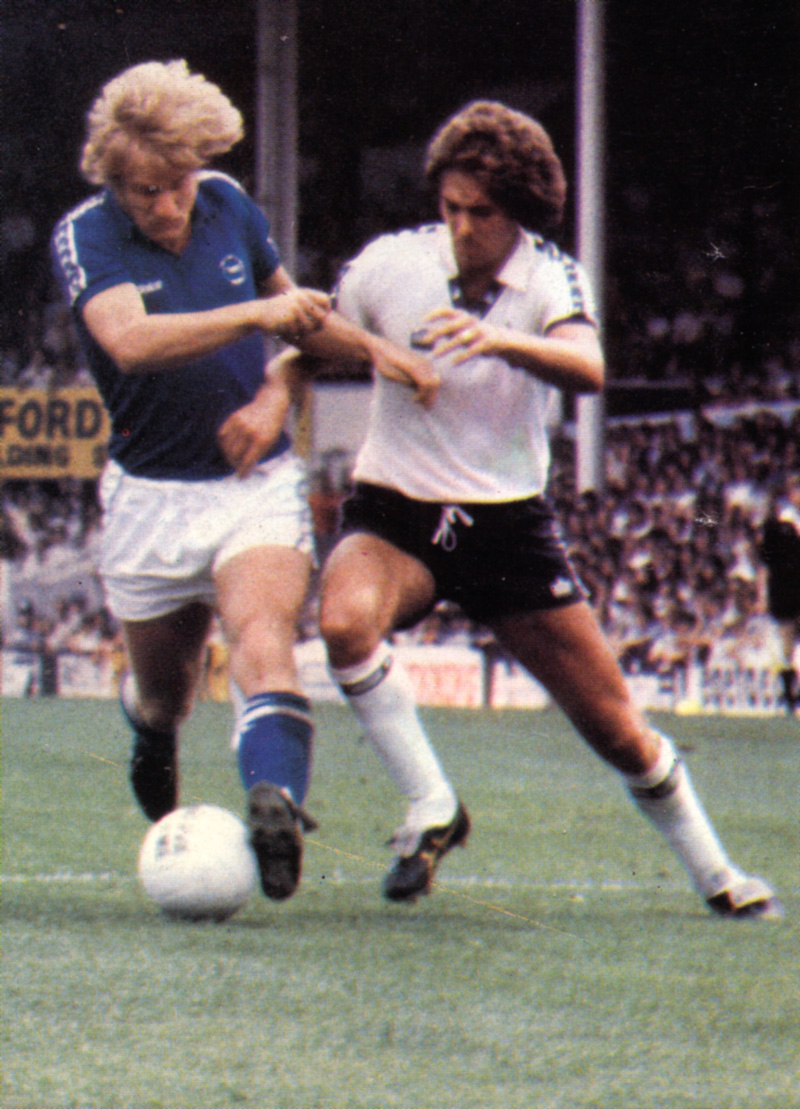
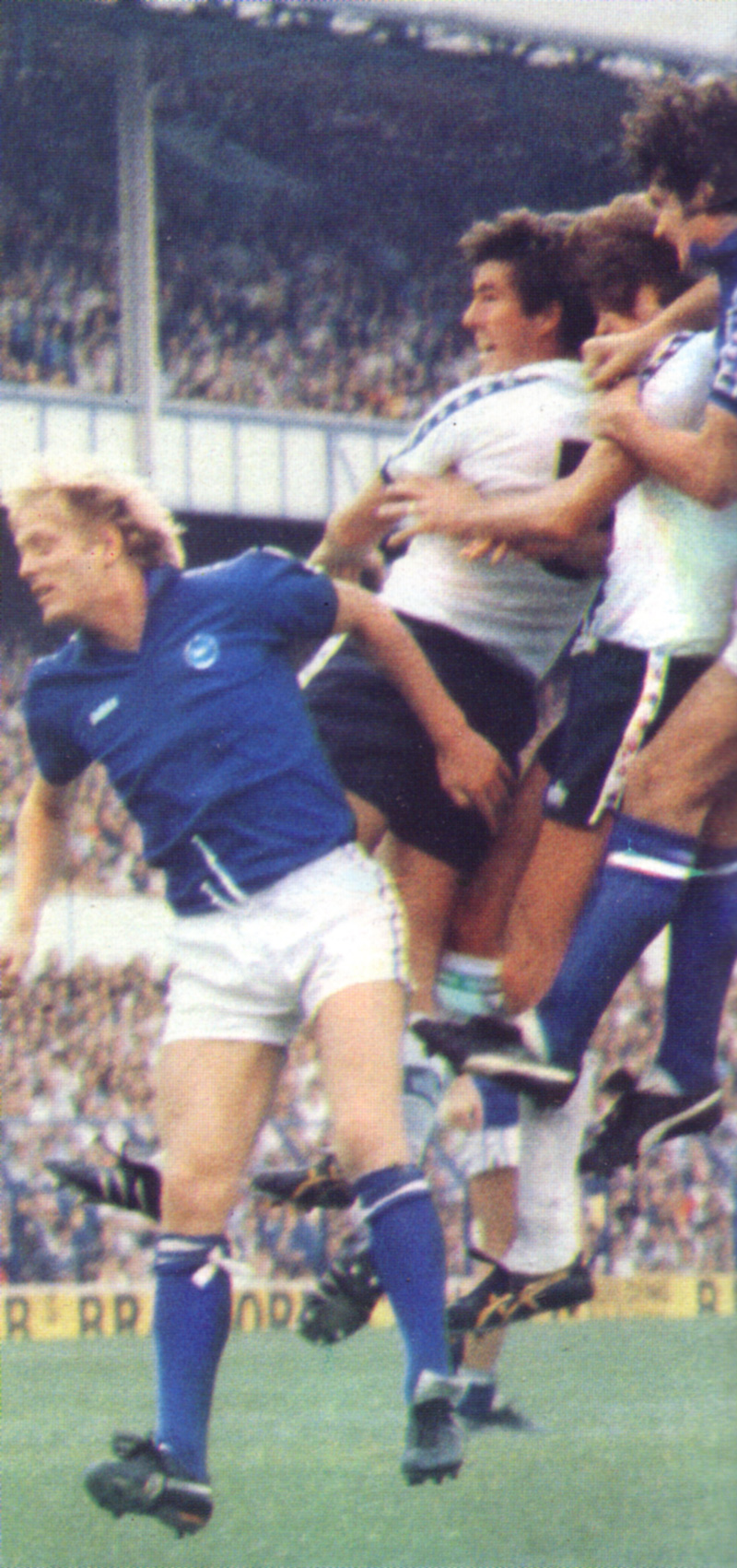
Two seasons later, in September 1979, the Spurs v Albion match at White Hart Lane was a First Division fixture, which the Seagulls lost 2-1 despite Horton’s goal. Here’s some images from the game:
In the summer of 1980, Adidas had taken over the deal for supplying Brighton’s kits. After three seasons, the blue Bukta away shirt was no more but the spirit of it lived on: the new Albion home shirt was a plain royal blue jersey.
Oops! Powney misses a cross but Gall and O’Sullivan are on hand at the far post to clear.
Amazing to recall that Brian Clough’s previous away Cup tie, as Derby boss, was in the European Cup Semi-Final against Juventus. From Turin to Walton-on-Thames in the space of a few months. Here is John Vinicombe’s match report of the first match of the notorious cup tie with Walton and Hersham, from 24th November 1973, 40 years today:
Albion are indeed fortunate to be meeting Walton and Hersham a second time in the FA Cup. The Amateur Cup holders very nearly succeeded at the first time of asking in knocking them out, but Albion should decide the issue in Wednesday’s Goldstone replay.
However, one says ‘should’ in the assumption that they will not fail again to master elementary facets of the game. It is a familiar, but no less valid theme of manager Brian Clough that sides which do not get shots on target do not win matches.
Saturday’s shot-shy display played right into the hands of Walton, who harried and chased with commendable spirit until referee Gordon Kew’s whistle called a temporary halt to the proceedings in semi-darkness when neither side had scored.
Albion had given Gary Bloom remarkably little to do and Brian Powney was by far the busiest goalkeeper. He was the man who kept Albion in the Cup. Yet, after only seven seconds Powney lay flat on his face, watching in dismay as the ball snuggled into the back of the net.
It was the almost classic, storybook start for the underdogs. Straight from the kick-off the ball was knocked back to Dave Bassett and he struck it firm and high towards Albion’s goal. Russell Perkins jerked his heavy limbs into a gallop and down came the ball, bounced and, in cricketing parlance, “did a bit off the seam.”
Powney was on the edge of the six-yard box when it bounced over his head, and Perkins went by joyously to find the net and salute an unbelieving crowd.
Albion were goggle-eyed as Mr Kew pointed towards the centre-spot. In the Press accommodation and overspill, with reporters still trying to find seats, 50 pairs of eyes glued to 50 watches and the timings ranged from seven to 30 seconds. Down went eyes to books, and pens moved swiftly to record the event.
But, alas for Walton, it was not a goal. Mr Kew’s right arm indicated a foul. He explained afterwards: ‘I did not allow a goal because the centre-forward jumped at the goalkeeper.’
Mr Kew is a stickler for detail and Albion can thank their lucky stars he is. Perkins could only reach the bounching ball by jumping and it looked a good goal to most of the 6,500 crowd.
When it was clear that Walton had not scored the crowd felt cheated. They turned on Clough and screamed abuse at him for coaching from the line.
The rest of the game was rent with most ungenteel tones from a district where there are more stockbrokers to the acre than you can shake a stick at.
Afterwards the disappointment showed in the faces. The lugubrious countenance of Eric Sykes reflected Walton’s feelings. He played the straight man’s role on cue and said Walton should have won. And for once Clough devilled judgment without causing a furore.
He said: ‘I am very pleased to be still in the Cup. Walton had enough football to keep us occupied. They did a very good job. Brian Powney earned his cash today.’ Then he asked for Scotch and water and retired to the dressing room.
So the big match has come and gone from Walton-on-Thames. It will not be remembered although Walton summoned all their resources and Perkins went close to winning it four minutes into the restart with a half-volley that flew narrowly past the post.
While Albion were fighting for their reputations at Walton, the marchers were parading in Derby – 1,000 still bent on restoring Clough to the throne he abdicated a month ago.
As the skies darkened over this trim council-owned ground with such a beautiful playing surface, Clough must have felt the pulses surge briefly again. George Ley outstripped a host of red shirts to rifle an ankle-high 20 harder only a foot wide. Then Walton stood stock still, accusers and accused pointing to what might have been.
There was precious little they had to fear from the recognised strikers, and Peter O’Sullivan the most skilful player afield, wasted his midfield talents to a distressing degree. Overlaps from John Templeman and Ley were what really worried Walton who alone possessed the traditional cup-tie spirit on the day.
Walton and Hersham: G Bloom, D Sargent, C Lambert, W Edwards, D Bassett, C Woffinden, W Smith, R Perkins, C Foskett, D Morris. Sub: R Wingate.
And, for the first time on YouTube, I can now show you some super-rare footage from this match. There’s not much of it, there’s no sound, and it doesn’t include the disallowed goal:
Before the home match with Everton in October 1980, Gordon Smith received The Sun’s Golden Ball award for his hat-trick at Coventry City three days before. Making the presentation was a man who knew all about finding the net, Jimmy Greaves, who hit 44 goals in just 57 matches for England:
It was the second hat-trick of Smith’s career, having scored three of Rangers’ six against Aberdeen two years previously. It was also Albion’s second ever hat-trick in the top flight, following Peter Ward’s three at Molineux in 1979/80.
The result at Highfield Road, in front of just 11,462 supporters, seemed rather unpromising when Coventry raced to a rather flattering 2-0 half-time lead. At the far post, the unmarked Paul Dyson had nodded in Tommy Hutchison’s drive to give the Sky Blues the lead. Then, just before the interval, a lay-off by Mark Hateley set Garry Thompson up to curl a beautiful 20 harder past Albion keeper Graham Moseley. In the second half, Steve Hunt capitalised on a Mark Lawrenson mistake to set up Hutchison for Coventry’s third. Game over… or was it?
As Jack Welling of the Sunday People reported:
Coventry, in front of their smallest crowd in the First Division reckoned without Brighton skipper Horton. He drove his men and fashioned things for the mighty Smith to finish off. The first goal came when Horton slid the ball to Smith to score with Coventry’s defence in a mess.
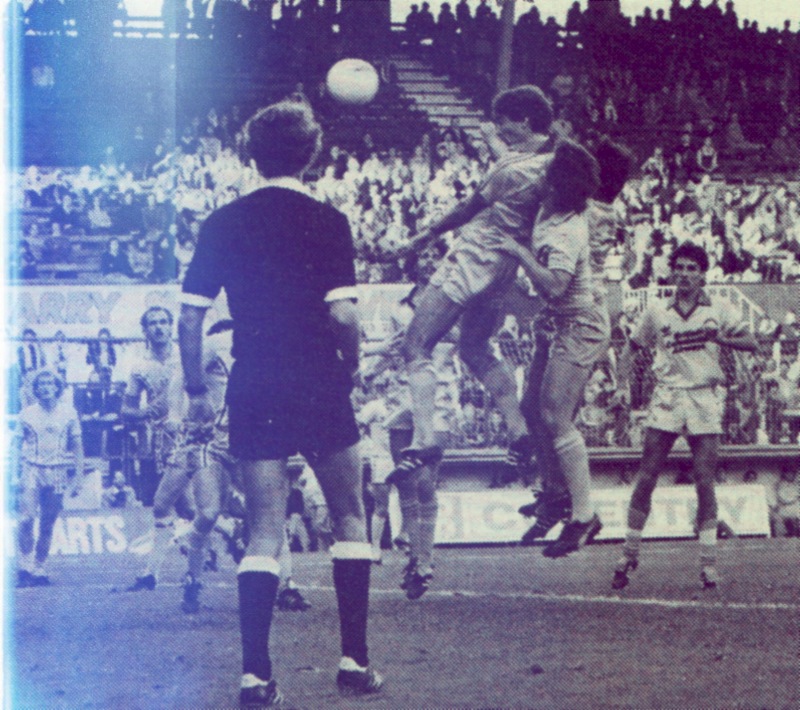
Then Dyson was beaten by Ward and there was Smith to finish the move with goal number two. With the match almost over, Williams floated a free-kick over to the far post and Smith went up amid a clutch of Brighton players to score.
The equaliser! And Smith does score.
The three goals in 19 minutes rocked a Coventry crowd that had been chanting ‘We want five’. Alan Mullery summed up his never-say-die approach when he said:
‘All the way through I didn’t think we would lose. Even at half-time when we were two down, I told the lads they could still win it.’
Smith, a £400,000 signing in the summer, even had a chance to win the match late on, something he regrets to this day. He beat Coventry keeper Les Sealey with a fine header but a defender cleared it off the line. Neverthless, he is proud of his goals that afternoon. After the match, he said:
‘We never deserved to be three goals behind, although I admit I was surprised that we got them back. It was a matter of persevering and that’s what we did. Now I’ve got seven goals for Brighton and when the manager bought me he said he expected me to get 12 goals this season so I haven’t got far to go.’
Over the years, Nick Szczepanik has established himself as a respected sports writer for The Guardian, The Times and Sunday Times. He now mainly contributes to The Independent. However in November 1980, before he had made his name as a journalist, this Brighton & Hove Albion supporter was out of work. It gave him time to write this passionate piece to Mike Bamber, the Albion chairman, about the sharp drop in attendances at the Goldstone during the 1980/81 campaign. The letter later appeared in the Brighton v Sunderland programme on 6th December:
Dear Mr Bamber,
The people of this area have been accused in the past of being negative – but now it seems to me that people are making ridiculous excuses to justify their own apathy and defeatism; thankfully, not everyone feels the same way, but having read today’s Evening Argus, I felt I had to let you know that SOME people remain, and intend to remain, loyal Albion supporters.
I have followed the club since the late 60s – even then, in my early teens and with the value of money as it was, if anyone had promised me Division One soccer at the Goldstone for £2.00 per match, I (and others no doubt) would have considered it cheap at the price – but how some people can forget how far we have come so soon baffles me as I’m sure it baffles you.
Although currently unemployed, I managed to afford a Terrace Season Ticket this year, and have no difficulties or worries about taking my eight-year-old godson along when he wants to come. Those people who are full of excuses about inflation, hooliganism and other largely mythical evils, are in my opinion, beneath the contempt of genuine supporters -and there are 12,000 of us at least. Obviously we’ll have a moan sometimes (unlike many of the team’s and manager’s stay-away critics, we’ll have earned the right with our £2.00) but we’ll BE THERE and probably as frustrated as you at all the people who aren’t.
While I am writing, perhaps you could convey the best wishes and appreciation of my friends and myself to John Gregory. His decision to stay with the Albion was a great thing for the club and we hope he will play for us for many seasons to come; unlike some so-called supporters on the SW Terraces we think we recognise a player of First Division class and quality when we see one! (And the next Captain, perhaps?) Keep up the good work.
Yours sincerely,
Nick Szczepanik
The novelty of First Division football had appeared to wear off for many Albion supporters in 1980/81 as they faced up to the reality that Brighton were no longer almost invincible at home.
The drop in attendances at the Goldstone was sharp. For example, in 1979/80, when Brighton played Middlesbrough, Ipswich and Manchester United at home, the gates were 20,427, 23,608 and 29,670. When they played the same opponents in 1980/81, in November, home attendances fell to 12,112, 17,055 and 23,277 respectively.
As if to add credence to the issue, just 13,903 supporters watched Michael Robinson score the opener in Brighton’s 2-1 victory over Sunderland in early December:
With such a massive decline in gate receipts, it was no surprise that Albion could not hold on to players of the calibre of John Gregory for much longer. This was especially after the substantial outlay at the start of the season. The financial bubble was about to burst, and Albion would need all the loyal and resilient supporters it could get.
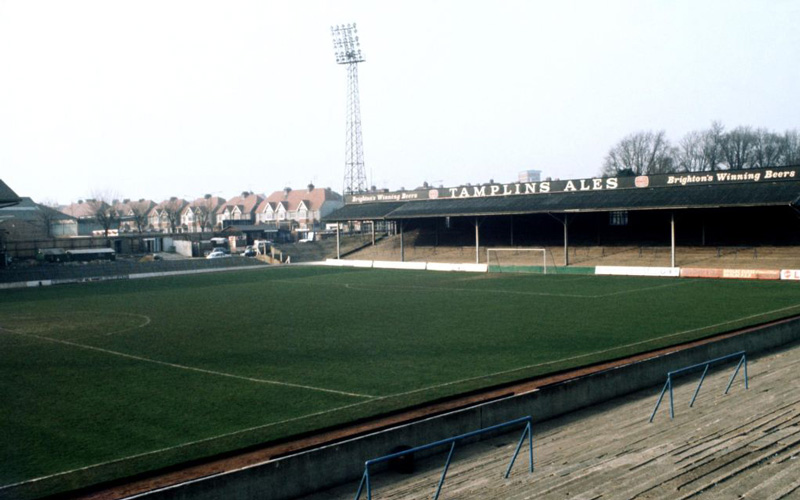
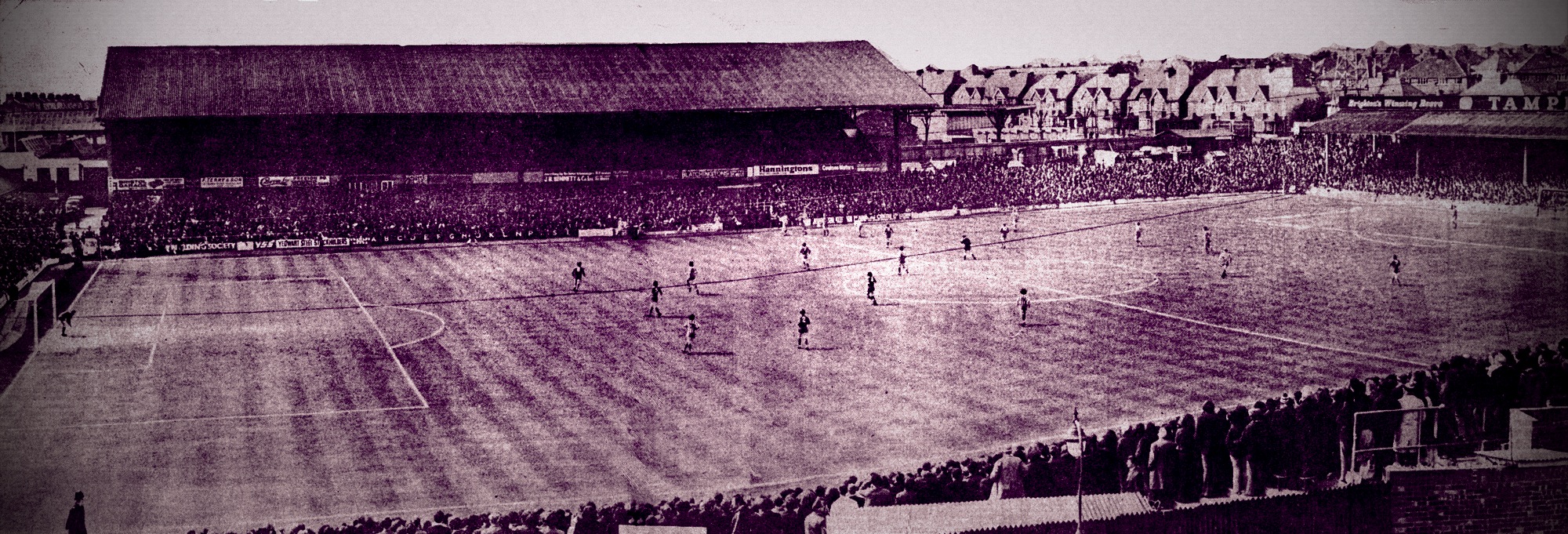
With its rather jolly looking Tamplin’s brewery advert and clear view of many people’s homes and gardens, the Goldstone Ground in 1972 may not look like an intimidating sight. However, it is where Brighton & Hove Albion showed sufficient form to clinch promotion from the Third Division in 1971/72. Pat Saward’s men won an impressive fifteen home league matches out of 23, with the Goldstone roaring the side on in the decisive 1-1 draw with Rochdale in May.
An Evening Argus supplement was issued to celebrate the newly won Division Two status. Its centre-spread featured a magnificent image of three stands of the Goldstone. I’m not sure if this image below does it justice. Click on it to get an enlarged version to see a lot more detail:
If you look closely, you can see that the club kept supporters up-to-date with the alphabetised half-time scores on the side of the pitch.
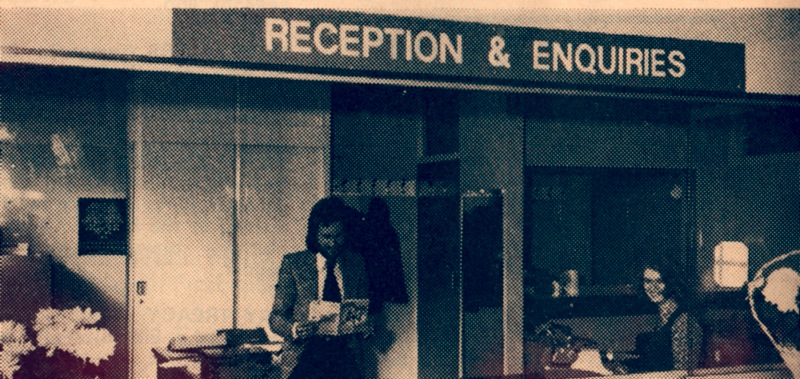
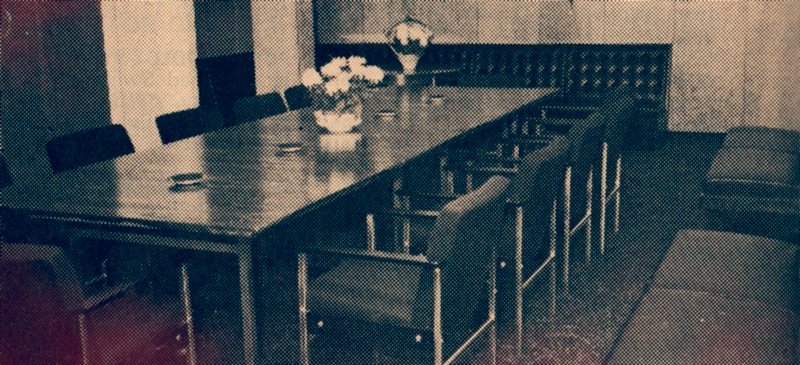
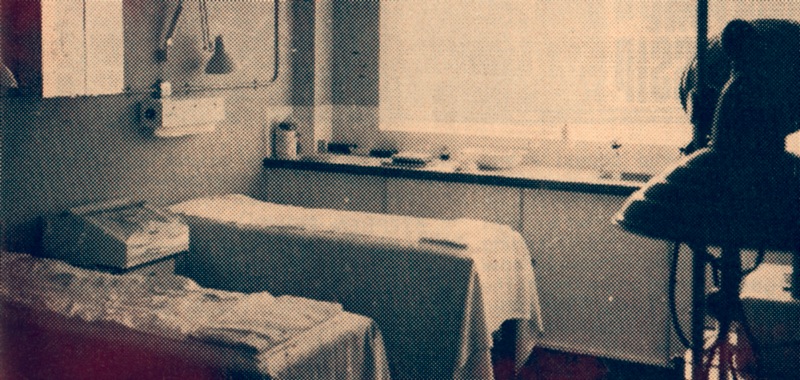
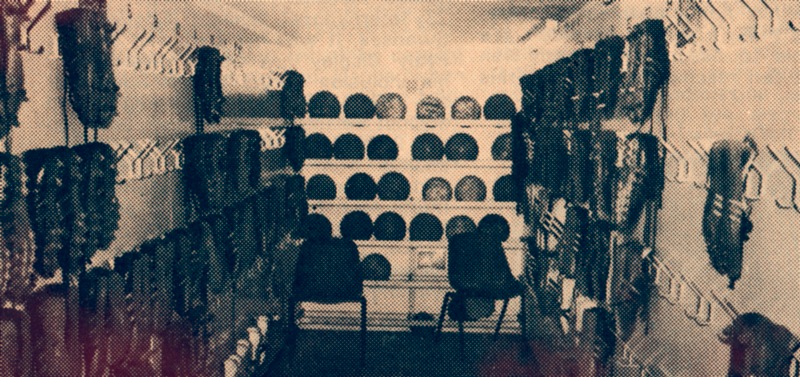
Promotion in 1971/72 was a shock to many at the Albion. Considerable money was spent and much building work was done in the summer to ensure that the spartan facilities were not an embarrassment in the Second Division:
Reception and general office
Board room
Treatment room
Players’ boot room
I don’t know about you, but these renovations don’t look that impressive!
Still, it was probably the best that could be done. There was a lot less money to play about with at the club compared to later on in the decade.
Thank your lucky stars that the future looks bright for Brighton. The current set-up is quite unlike what it was in the mid-1990s when it was increasingly difficult to write about the club without using the word ‘beleaguered.’
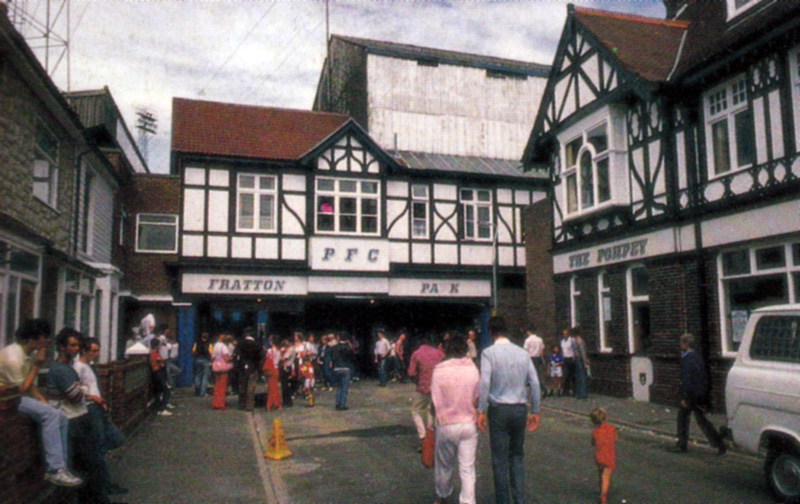
This article by Andrew Arlidge from 1995/96 captures the horror as a soon-to-be homeless Brighton face up to the prospect of playing home matches in Portsmouth, with the recent demise of Maidstone hanging in the air:
Brighton’s shell-shocked players and fans are still finding it hard to come to terms with the club’s plans to sell the Goldstone Ground and share Portsmouth’s Fratton Park from next season.
Albion’s chief executive David Bellotti says the Second Division club are now £6 million in debt and the only way for them to survive within their own resources is to sell the Goldstone – their home for 93 years.
Bellotti claims there are now provisional contracts in place for the sale, and that is why they have secured a provisional agreement to play at Portsmouth, but he stresses that temporary facilities much nearer to the Goldstone are being examined.
A possible location is the Hove greyhound stadium, less than a mile from the Goldstone, but vanous hurdles need to be overcome before a safety certificate can be granted.
As well as an agreement from owners Corals, Brighton would need land from the adjoining Alliance and Leicester Building Society, a new stand for 5,000 supporters and financial help from Hove Council.
Fans have been quick to oppose the prospect of making a 100-mile round trip to Fratton Park for home matches by staging a pitch invasion and demonstrations. But Bellotti emphasises going to Portsmouth would be a last resort.
He said: “If there is any chance of accommodating the club at the greyhound stadium, or anywhere else nearby, we shall make every effort to do so. Ground-sharing at Portsmouth is a safety-net but if there is no alterntive we shall be going there in 1996.”
Brighton have been told by the Football League that they will not sanction the ground-share unless they receive guarantees that the club will be building a new stadium in the town. So far a site for Brighton’s proposed 30,000 seater multi-purpose ground has not been identified and the League say they need to know the situation well before next June when Brighton are due to leave the Goldstone.
League spokesman Chris Worley confirms that regulations state new clubs must play in their home town while establishing themselves in the League. but the League would do all they could to help established sides, like Brighton, survive.
The League are anxious to avoid a repeat of the situation which led to the demise of Maidstone three years ago. The Third Division outfit were allowed to ground-share at non-league Dartford but their plans for a new stadium in the town never came to fruition, and the club eventually resigned from the League after going out of business.
Said Worley: “Brighton moving to Portsmouth is not ideal because of the distance supporters would have to travel. But it wouldn’t be a major obstacle as long as there were cast-iron guarantees from Brighton about the future.
“There would be no sanction from us until we were satisfied that the club had planning approval for a new ground and we had an idea when building would begin.”
Bnghton say they have to repay more than £4 million worth of debt by next June, but the total amount they owe is approaching £6 million because of other debts which are to be met on different timescales.
Bellotti maintains the only thing that prevented Albion from folding in 1993 was a financial re-structuring. This resulted in Greg Stanley and Bi!l Archer becoming the only shareholders in the club.
Said Bellotti: “They had a clear determination, whch rernalns to this day, that the first and foremost objective was to have a winning team and obtain Premier League status.
“A second objective was to build a new stadium fit for Premier League football. The Goldstone Ground cannot be developed as a football stadium.
Funding the debts in a ground that cannot be developed is not a viable proposition. The debts become repayable in the summer of 1996. They were incurred over many years and resulted in several High Court appearances in 1993.
“Since those days in the High Court nobody has offered to help with our debts and no true supporter would expect us to simply wait for the inevitable winding-up order finishing us off at the end of this season. We must maintain Albion as a League club at whatever sacrifice.”
Bellotti claimed club chairman Archer and president Stanley would Invest money on the club provided Albion has the council’s support to build a new stadium.
He added: “By the close season in 1996/97, the shareholders will make available more money than ever before for manager Liam Brady to buy players to strengthen the team for a real push for promotion.
“Other clubs succeeding with plans for new grounds have nearly all had planning and financial help from their local authormes. I urge our fans to contact the leaders of Bnghton and Hove councils requesting their heip in both the short term, with a move to the greyhound stadium, and in the longer term with a move to a permanent stadium.”
A step in the right direction has been the setting up of a Sports Development Trust with the aim of attracbng funds for the new stadium.
Meanwhile, Brady has gone into his second full season in charge having only added loan players Gary Bull and Greg Berry to his squad. His sole cash signing since taking over 21 months ago has been winger Stuart Storer, a £15,000 buy from Exeter last season, and Albion’s plight would be even worse without veteran battlers Steve Foster and John Byrne.
Brady commented: “It’s ironic because I had all this stadium talk when I was manager at Celtic. It didn’t help me there and it’s not helping at the moment. I wish I couid manage in calmer circumstances.
The former Republic of Ireland star admits this is a critical period in Albion’s history but he and his staff remain committed and won’t be quitting.
He confessed: “The situation at Brighton is of a very big concern to me, though it’s really out of my hands. I don’t have any role in decision-making as regards which way the club is going.
“Whether the right decisions have been made I am not prepared to say at the moment. I think we have got to give a little bit more time for things to develop.
“My job is to get results. Although we haven’t made a very good start to the season, I believe in the players and fee! we can c!imb the table to challenge for those play-off positions.”
Despite Brady’s attempt to sound optimistic, Brighton’s playing prospects were bleak. He did not survive the season as the club were relegated to the bottom division at the end of 1995/96.
After Clough and Taylor took over at Brighton in 1973/74, the club received an unprecedented number of column inches for a Third Division side fighting a relegation battle. Here’s an article entitled ‘Clough miracle wanted… but it will take time’:
Brian Clough and Peter Taylor are not expected to work an overnight miracle on Brighton. But the immediate effect they had on the Third Division club was little short of unbelievable.
Not only did three times the normal gate see Brighton’s first match under the new regime but the players admitted the mere arrival of the two had given them a new lease of life.
More than 16,000 saw Brighton draw 0-0 with York and they cheered virtually every good move made by their team. With that kind of support, Brighton must be on the right road to success.
If that was a triumph for Clough, then so was Brighton’s performance. The man himself was fairly satisfied. He said: “The lads played remarkably well considering it wasn’t an easy match for them. We were all a bit tense. I was delighted with their enthusiasm and courage and this performance has certainly given us something to work on.”
The effect that Clough had in the dressing room was described as “incredible” by Barry Bridges. “I did more running about in this game than I had in the previous 10 matches,” admitted Bridges. “I’m 32 now, but with this chap geeing me up I reckon I can go on playing for several more years. We were a bit on edge before the game and the first thing he told us was to relax. Afterwards he told us he was pleased with the effort we showed and we can work from here and go places.
“Though I was sorry to see Pat Saward go – he was a great coach – I think Brian’s got what it takes to make us a good side. He’s just what the club have been waiting for.”
Brighton chairman Mike Bamber, who talked Clough and Taylor into joining, says Brighton have acquired: “the best football parmership in the world.” And Bamber added: “We’re hoping for the very best, but we are not expecting them to perform miracles overnight.” But it seems already that small miracles are about to happen in this South coast holiday resort.
Such an assertion was given weight in the next match against Huddersfield, on 10th November 1973, at Leeds Road, when Brighton stormed back from 2-0 down. Minus the skills of Frank Worthington, the Terriers had slid down two divisions in two seasons, been relegated alongside Albion in a mutually cataclysmic 1972/73 campaign. However, against Brighton, Huddersfield seemed to be running away with it, when Terry Dolan scored on 38 minutes and then Phil Summerhill doubled the margin ten minutes after half-time.
However, the lead was not to last, due to some hitherto unseen Albion resilience. Ken Beamish headed Albion back into the game 25 minutes from the end and Bridges earned the point with a searing shot from the right wing following a pass from the impressive George Ley.
Three days later, Brighton travelled to Walsall for a Tuesday evening match, achieving a morale-boosting victory at Fellows Park in the pouring rain. As John Vinicombe reported:
Albion gave manager Brian Clough his first Division III win at Walsall last night when Pat Hilton headed the only goal of a hard-fought match 12 minutes from time. Said Clough: “They fought very hard. I was delighted with them; they showed a bit of heart.”
A deserved victory saw Hilton with most cause to celebrate… it was his first-ever League goal in 12 appearances (three last season). His header from Lammie Robertson’s free-kick was beautifully placed and crowned a lot of hard work. An unobstrusive player, Hilton ran hard on a number of decoy runs to pull out defenders. Albion’s approach was altogether more skilful than Walsall’s but in terms of effort both teams gave everything.
The goal from man-of-the-match Hilton was enough to move Albion two places higher, to seventeenth in Division Three. With another bumper crowd at the Goldstone expected on the Saturday against Chesterfield, and an easy FA Cup draw against the amateurs Walton & Hersham just announced, things were definitely looking up.
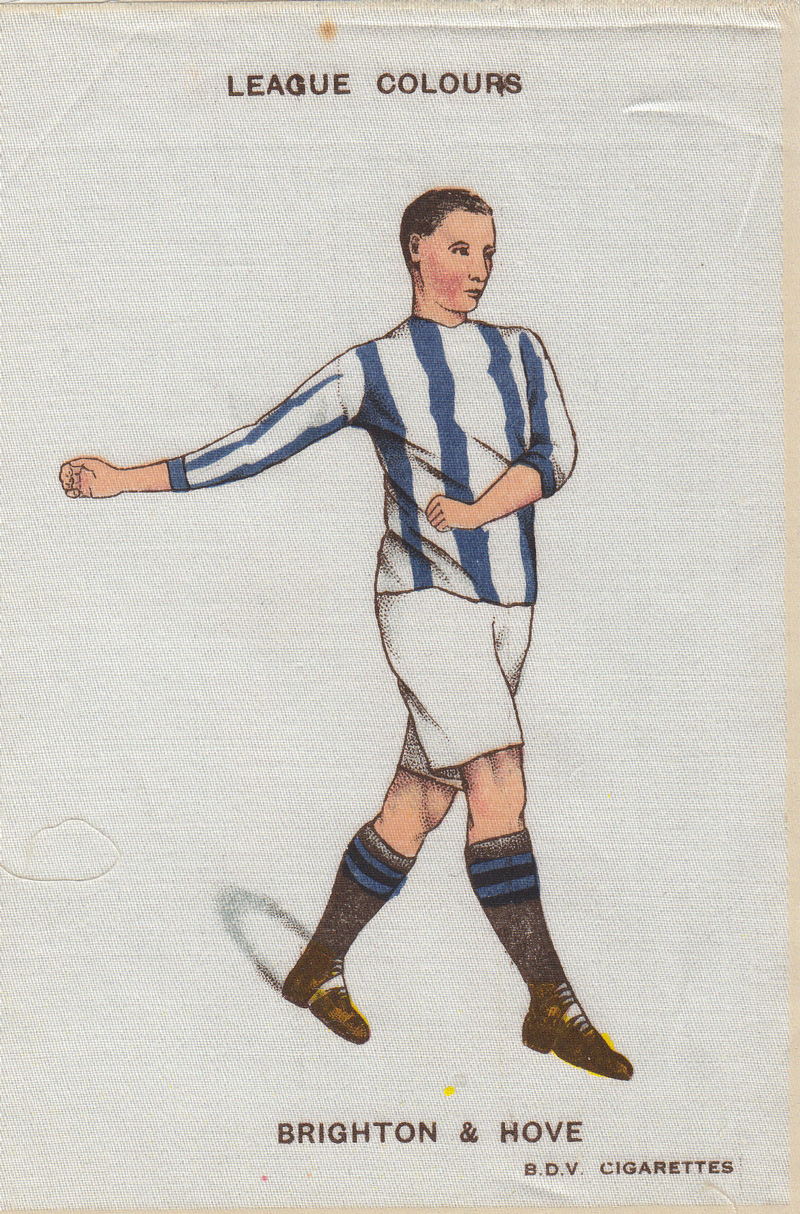
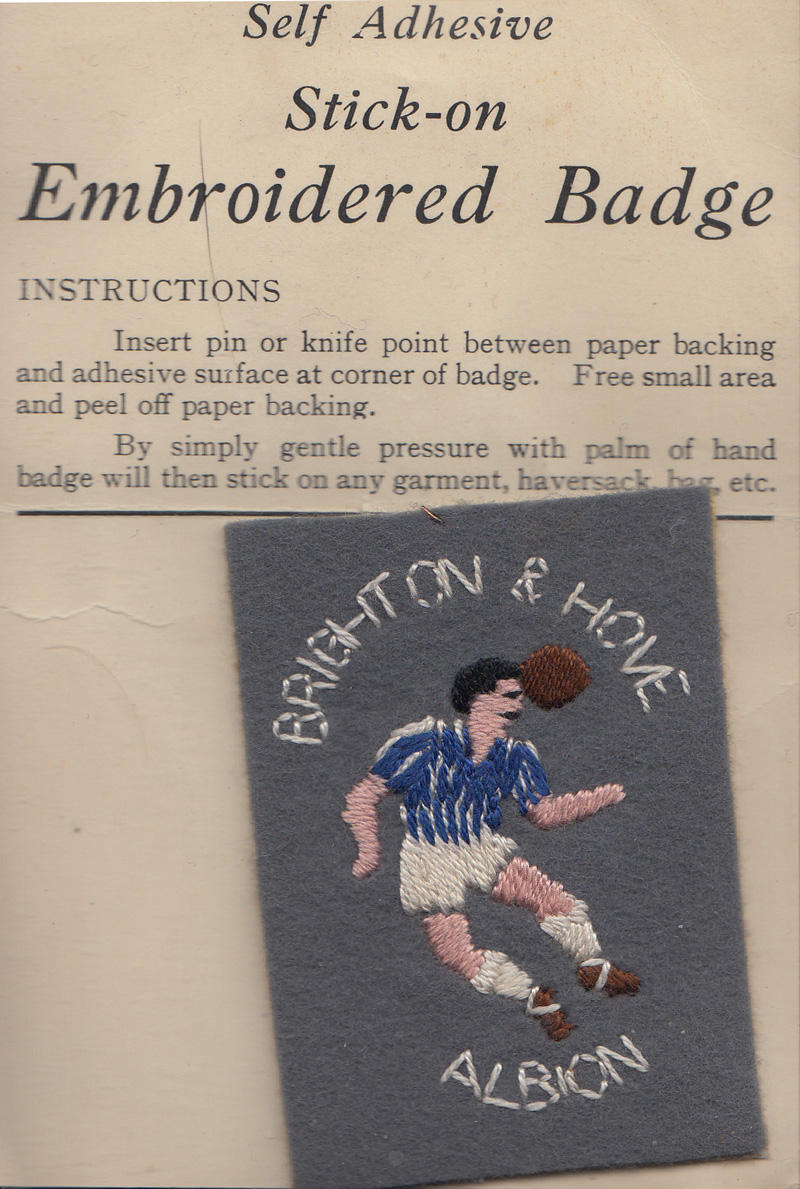
Once, sew on football-themed patches must have been all the rage, judging from these striking designs lent to me by Nick from Fishersgate. We kick off with this printed cloth by B.D.V Cigarettes, featuring an Albion player sporting broad white stripes:
Then, to the other extreme, a rather messy interpretation of the stripes, makes this Albion shirt look like a Luton away shirt from the 1990s:
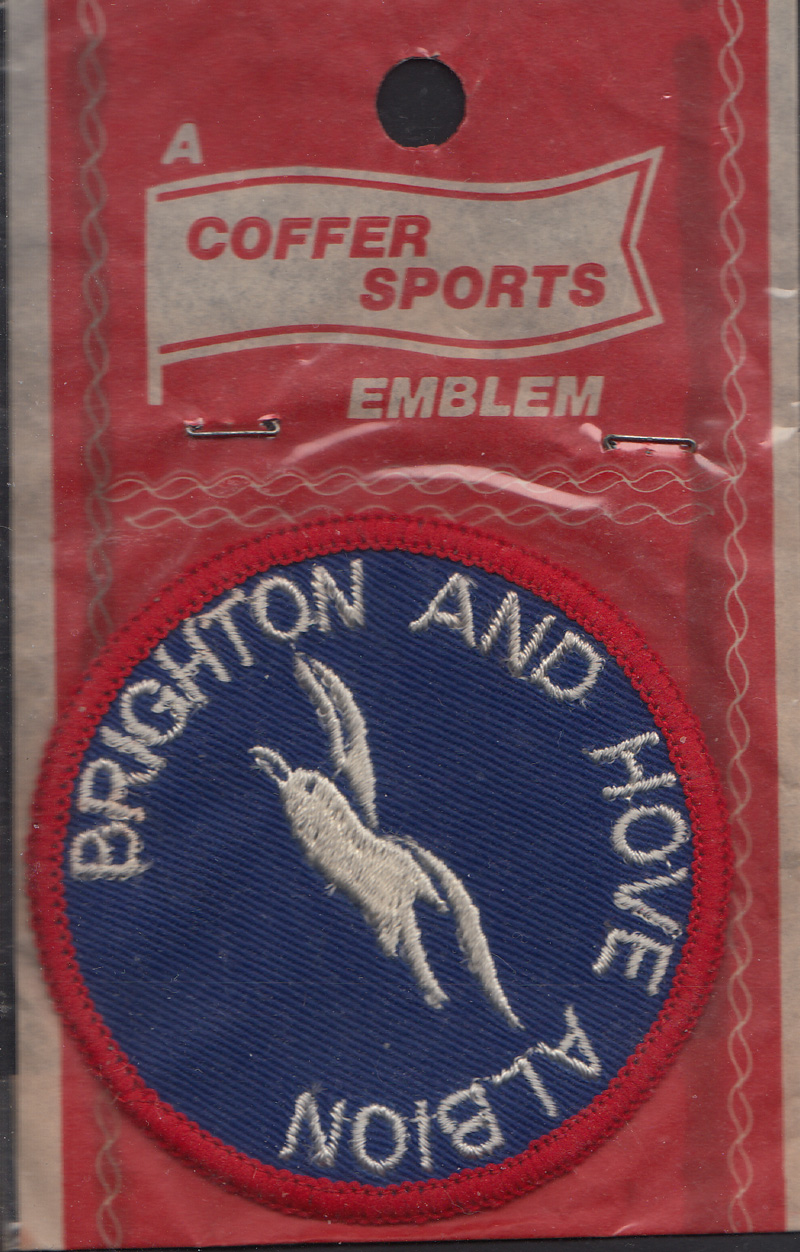
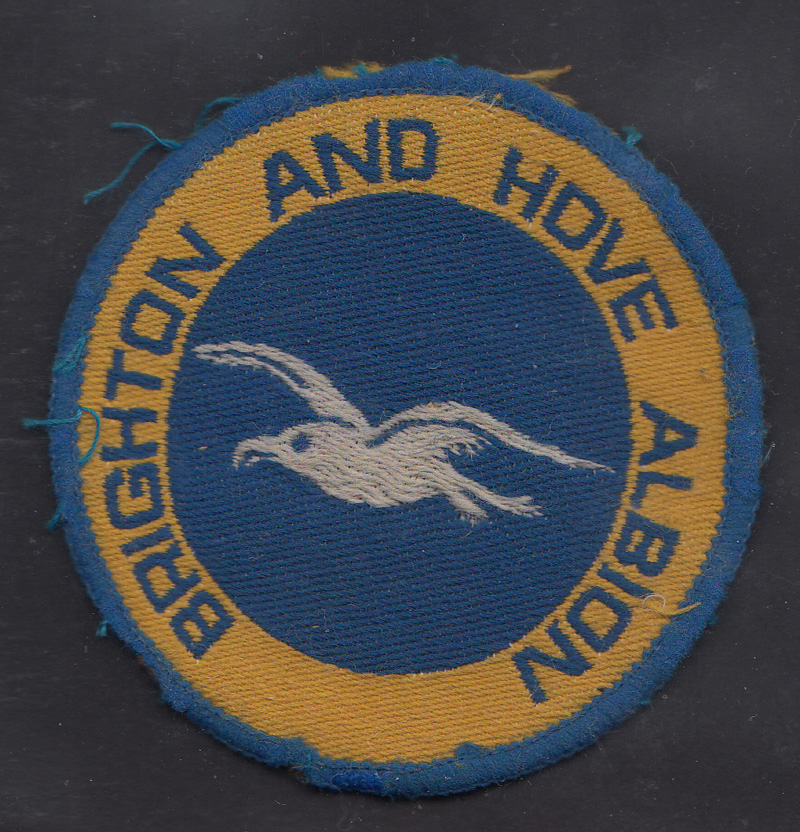
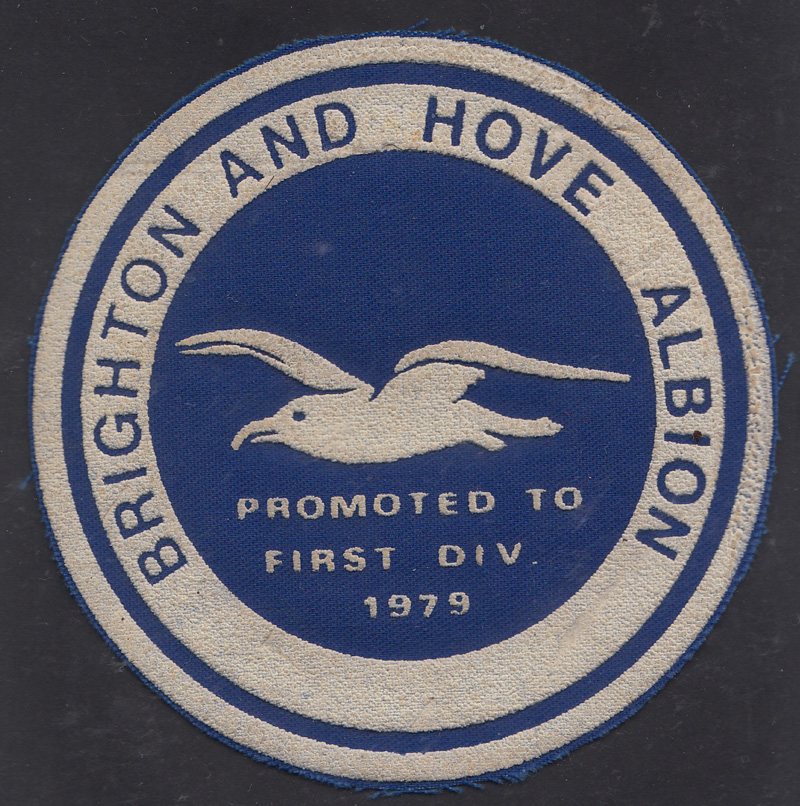
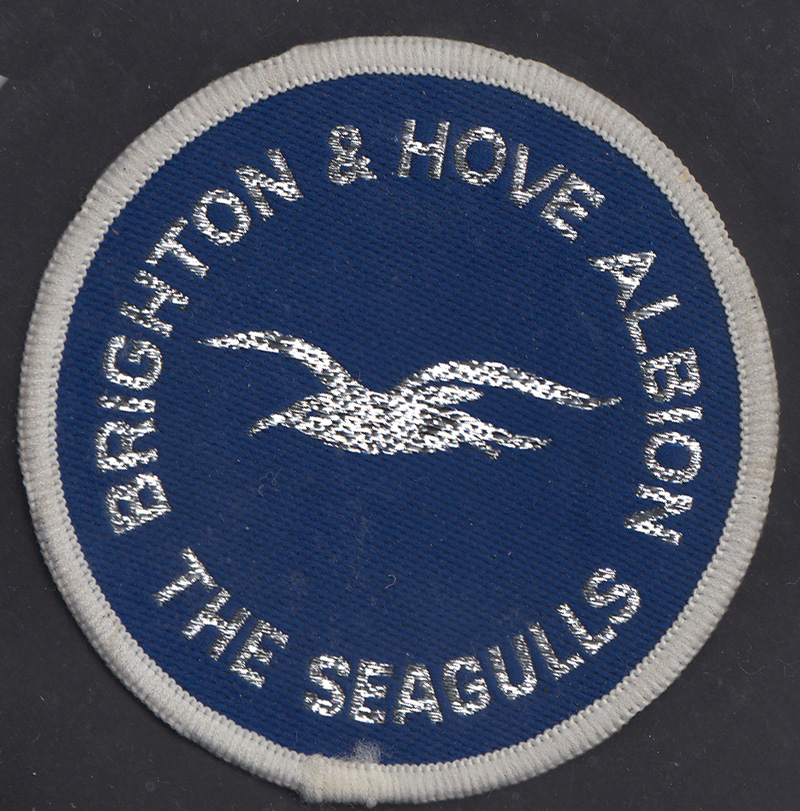
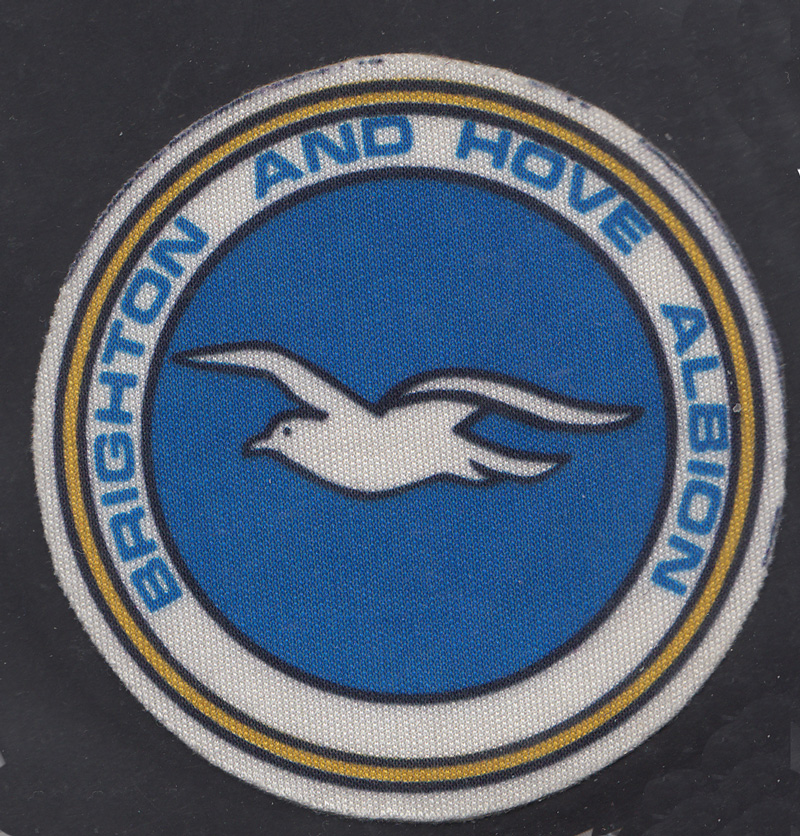
However, it is the classic round badge with the seagull facing left that was undoubtedly the most popular for sewing on jackets, jeans and bags. Here is a plethora of interpretations and re-interpretations of the crest that first made it onto the Albion player’s shirt in 1977:
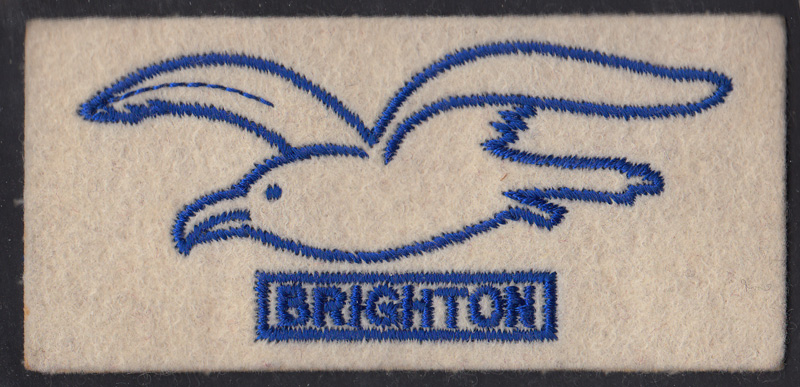
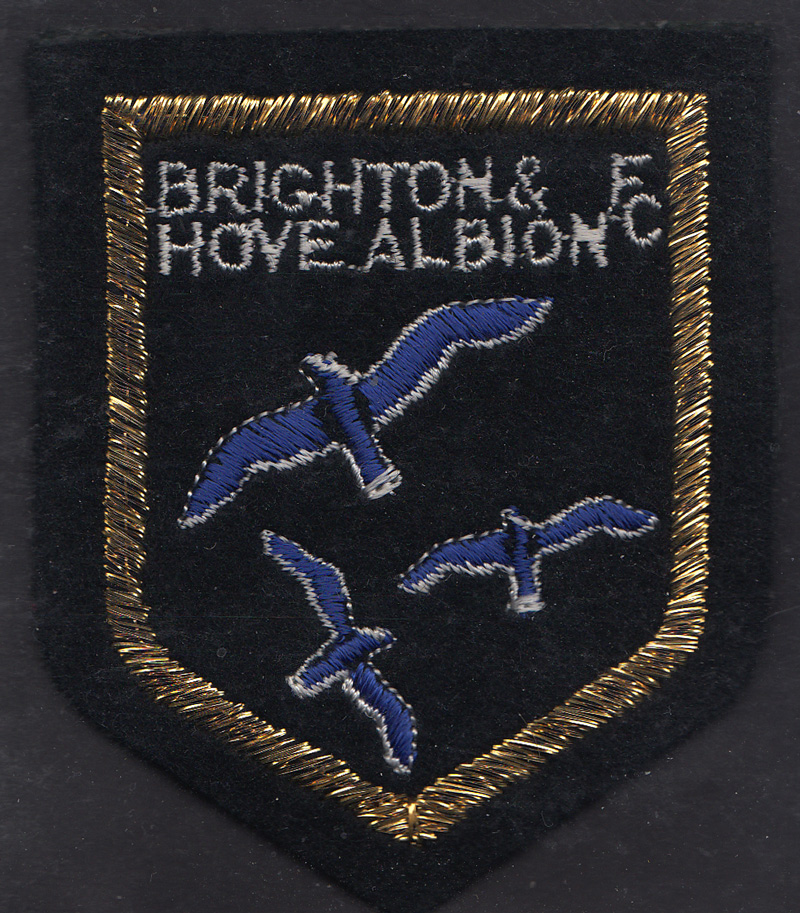
But if you were bored of the circle badge, you could rebel by going for these unofficial rectangular and shield designs, with the latter definitely catching the eye:
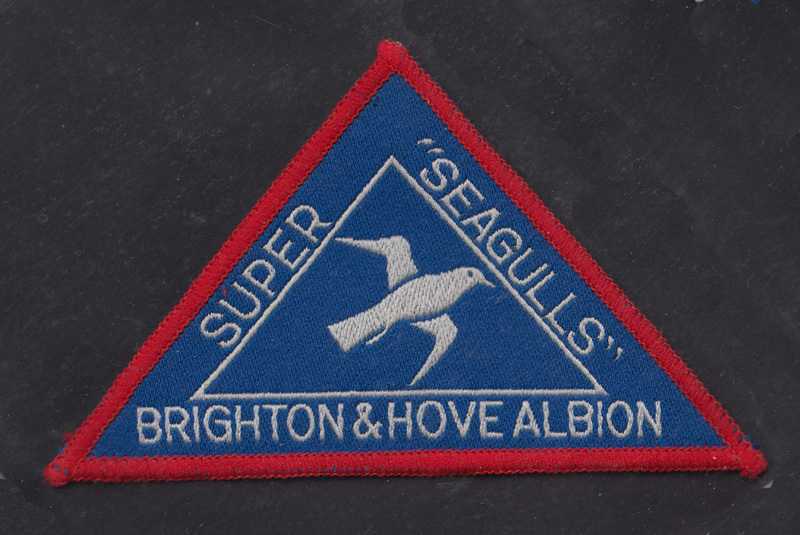
Or even a triangle! One of the first Albion seagulls to face right.
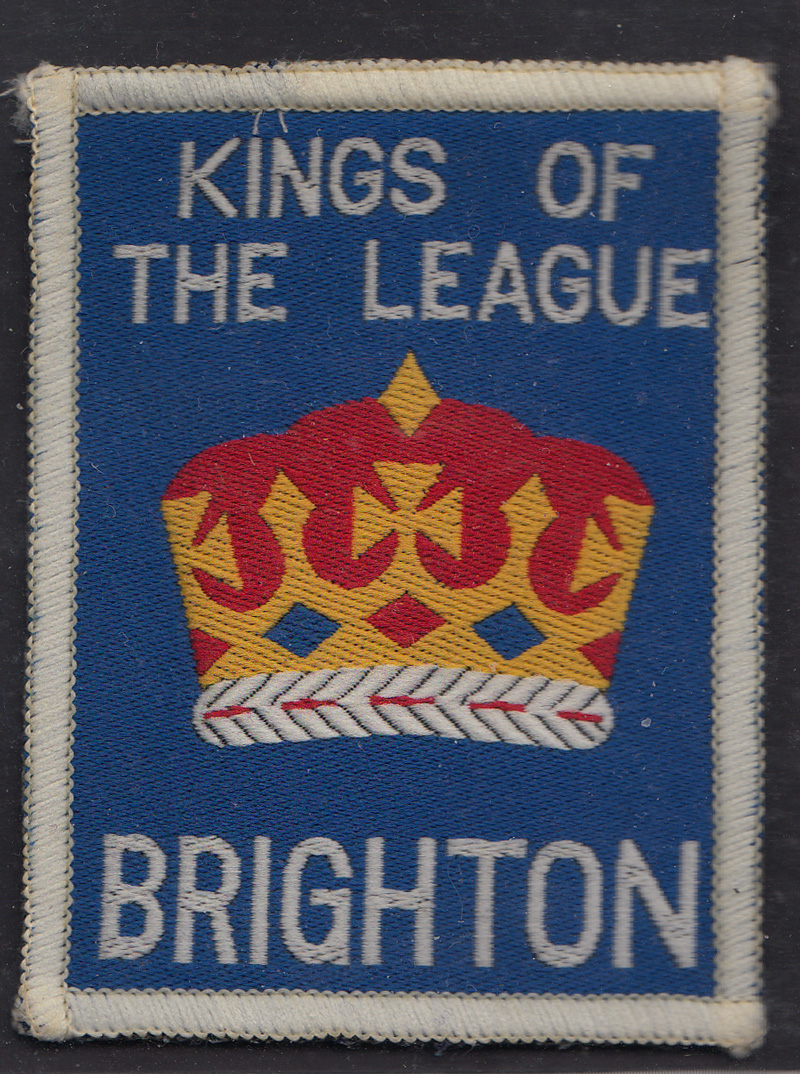
And look! Here’s a familiar sight for users of this blog who’ve been reading it from the beginning. The ‘King of the League’ patch from an exquisite Brighton tortoise!
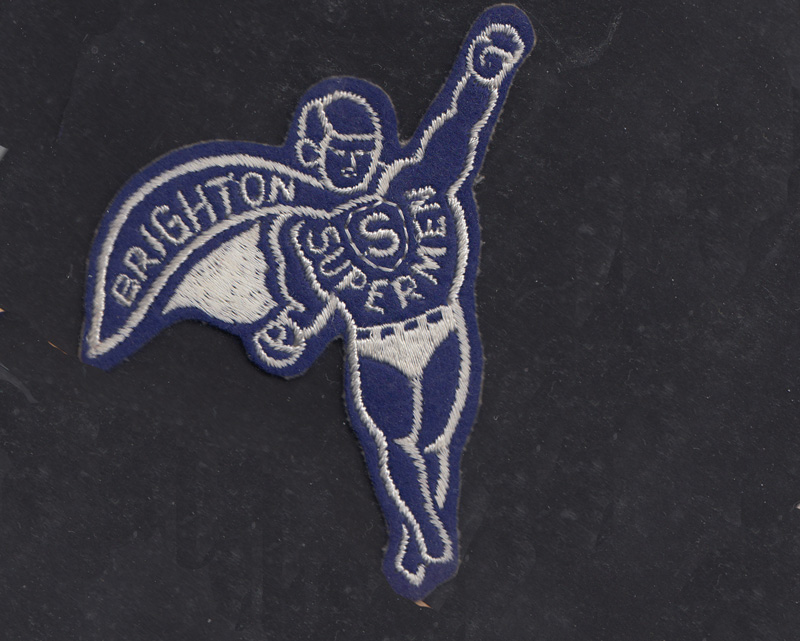
And who wouldn’t want this imaginative Y-fronted Superman for sewing onto their favourite underpants?
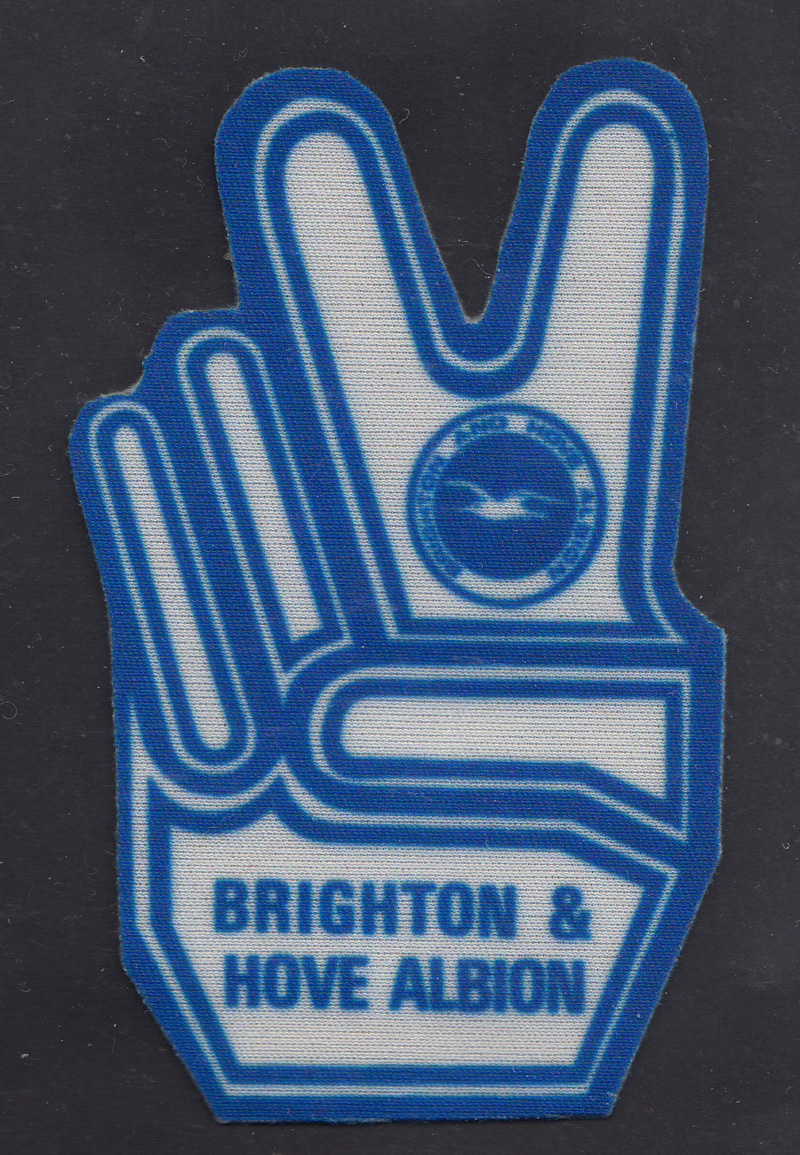
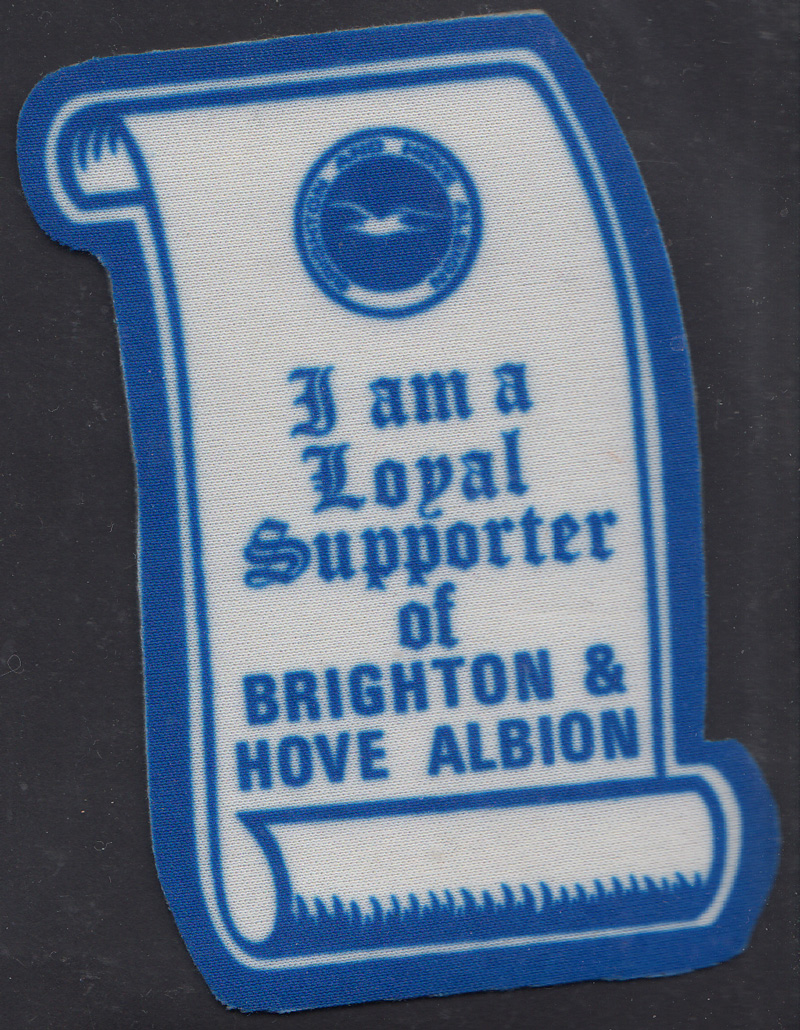
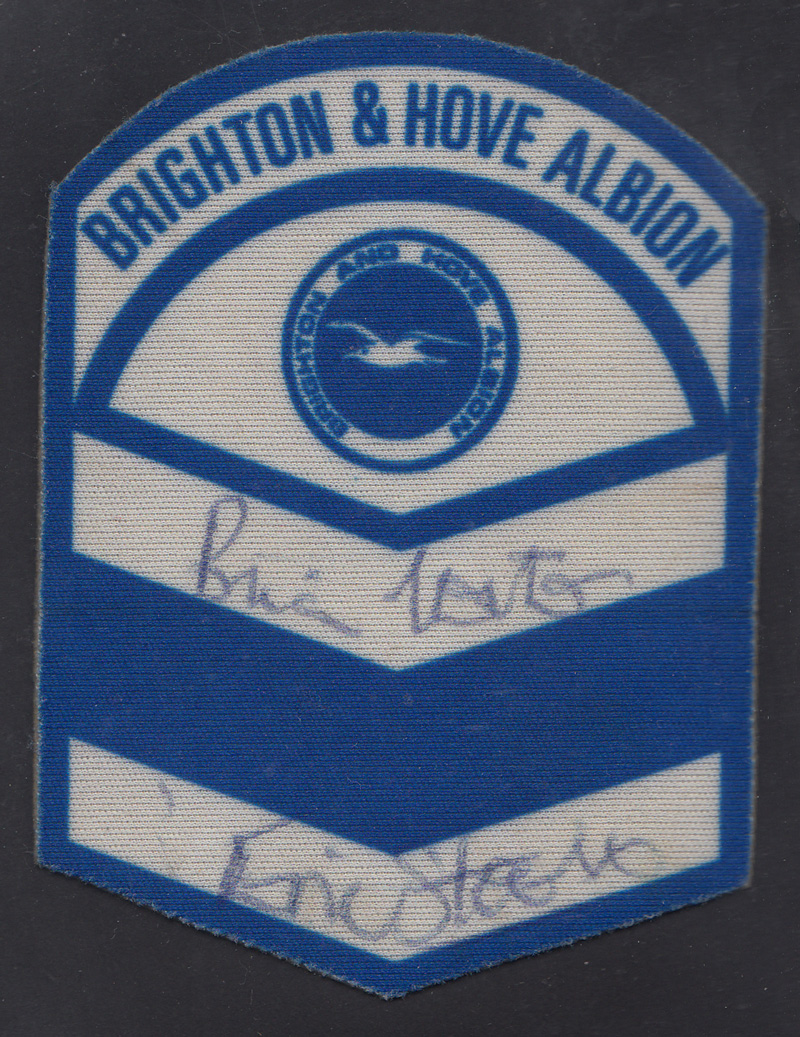
Finally, there are these three military-themed items. V for victory, a pledge of allegiance and some army sergeant stripes, the latter signed by Eric Steele:
This was amble proof that in the 1970s and 1980s, when it came to patches for enhancing your clothes and school bags, Brighton & Hove Albion definitely had things covered. Respect to anyone who had all fifteen stitched onto one garment…




 The Goldstone Wrap