Author Archives: Goldstone Rapper

All is forgiven, by Rollo and Ramsey

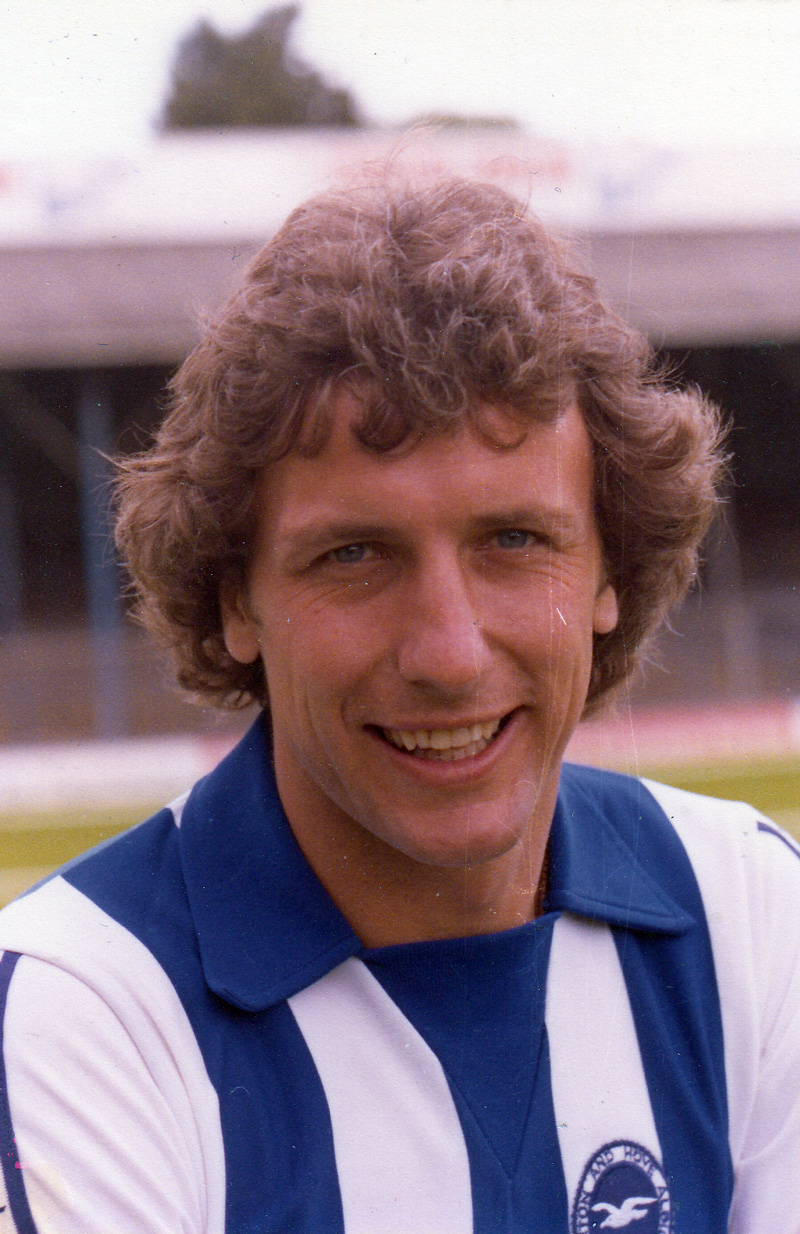
A scratched photo of King Rollo

A scratched photo of King Rollo

You may be interested in reading an interview of Andy Rollings by me in the current Viva Brighton magazine (January / February 2014).

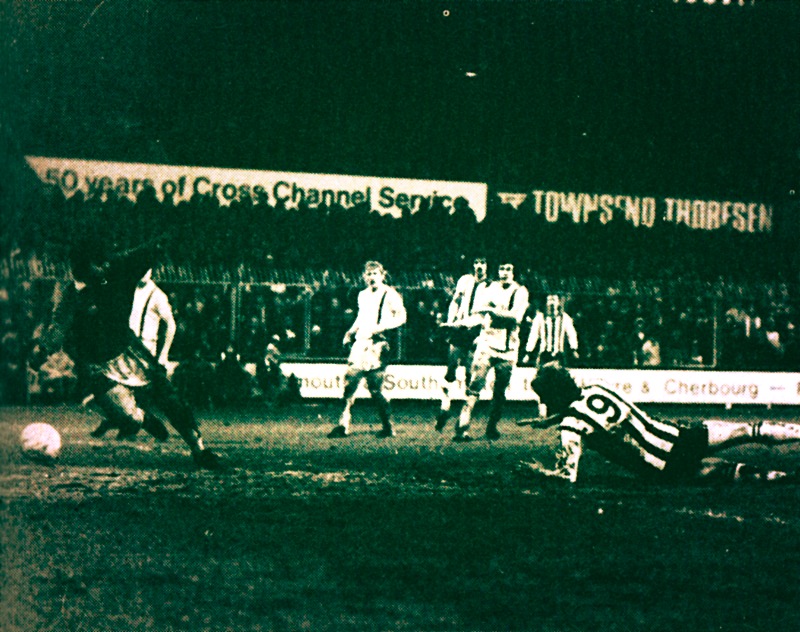
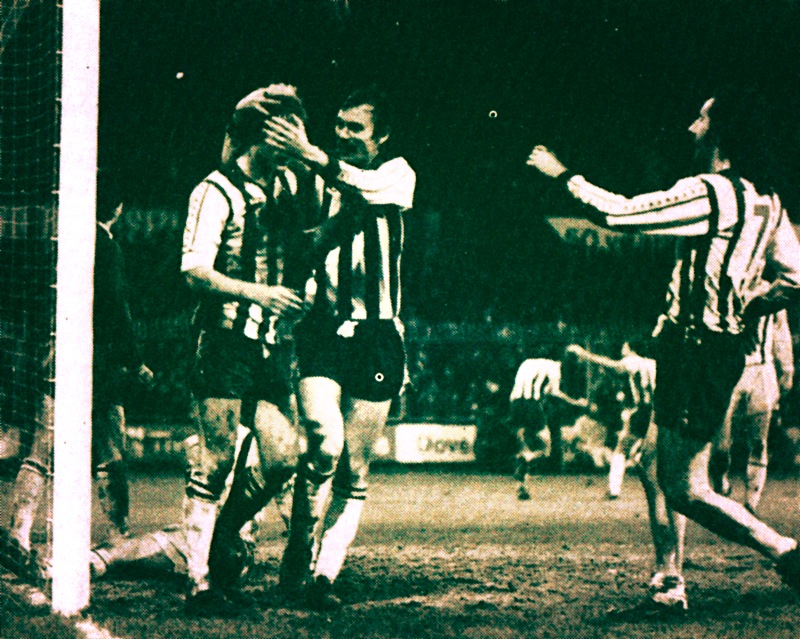
When I spoke to ‘Rollo’ last month, I was eager to ask him about his notorious clash with Justin Fashanu in October 1979 in Andy’s penultimate match for the Seagulls. You can see the no holds barred battle below:

In his match report at the time, John Vinicombe drew attention to something underhand that may have contributed to the injuries sustained:

Nobody in authority seemed to have a clear view. Suddenly, Rollings was lying on the ground and then taken off holding his nose. A clue was spotted by Albion’s club doctor, Herzl Sless. He later asked (referee) Daniels if he had spotted a large signet ring Fashanu was wearing.

In Sless’s opinion, the ring should have been taken off before the start or covered by a protective tape. Daniels said it had gone unnoticed and thanked Sless for his observation. The piece worn by Fashanu was likened to a knuckleduster and could easily have accounted for the injury to Rollings’ nose.

However, when I met Andy, he wasn’t able to confirm it either way:

“I couldnt tell you to this day. I always used wear a ring but always had it taped up. With Justin Fashanu it wasn’t a big nugget. It could have been an elbow. I didn’t have too many issues. Football then was that type of game, about winning your battle. Sometimes people will overstep the mark. That was their choice. It was a bit sad for that to be my last Goldstone game, but what a way to go!”

Rollings left for Swindon at the end of the 1979/80 season before turning out for Portsmouth, Torquay, Brentford and Maidstone.
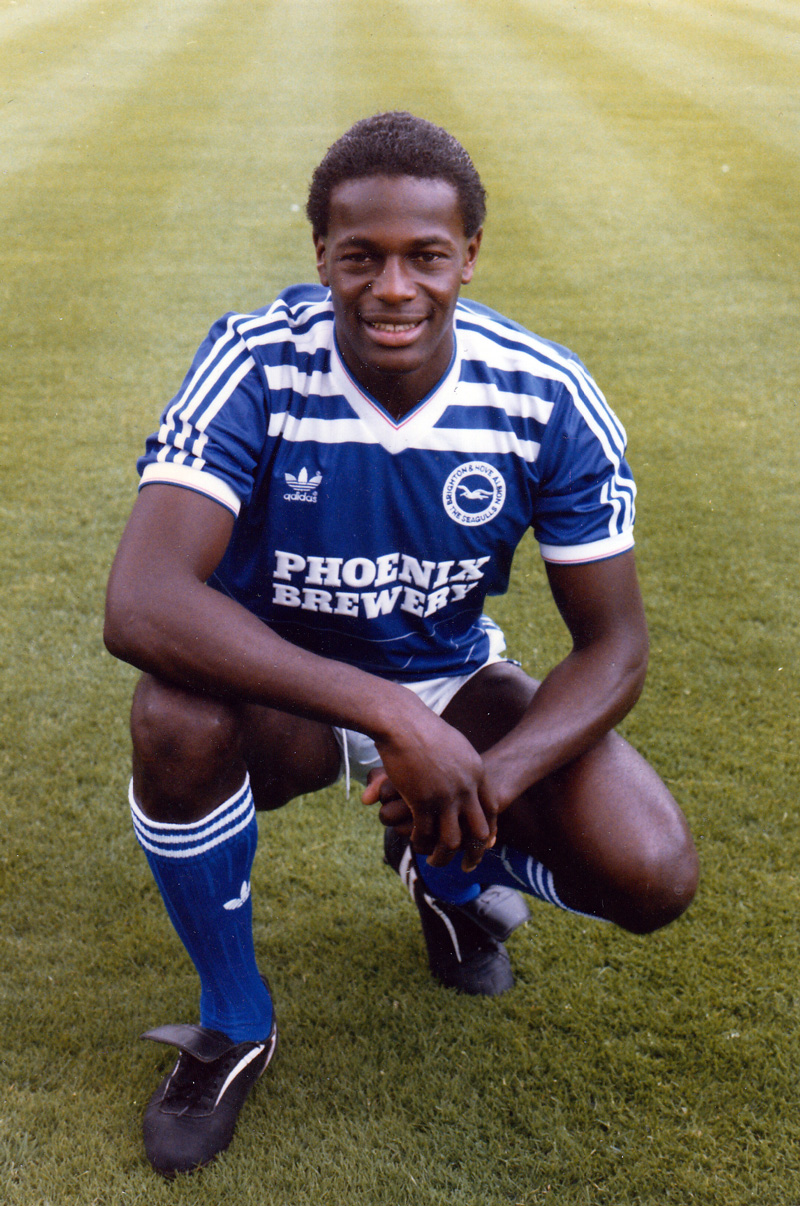
justinfashanu4

Unexpectedly, Andy rejoined Brighton as a non-contract player under Alan Mullery in 1986/87. I wonder if he encountered Justin Fashanu again, who was in the process of retiring through injury from the game in July 1986. Awkward moments in the dressing room? Stand-offs in the canteen? Andy says no:

“The only time I did encounter him was when I was with Portsmouth. We won the Third Division Championship. and they took us all to Marbella with girlfriends and wives. Funnily enough, he was over there. We shook hands. We didn’t hold any grudges and both accepted that what happened was all part of the game.”

Very magnanimous.
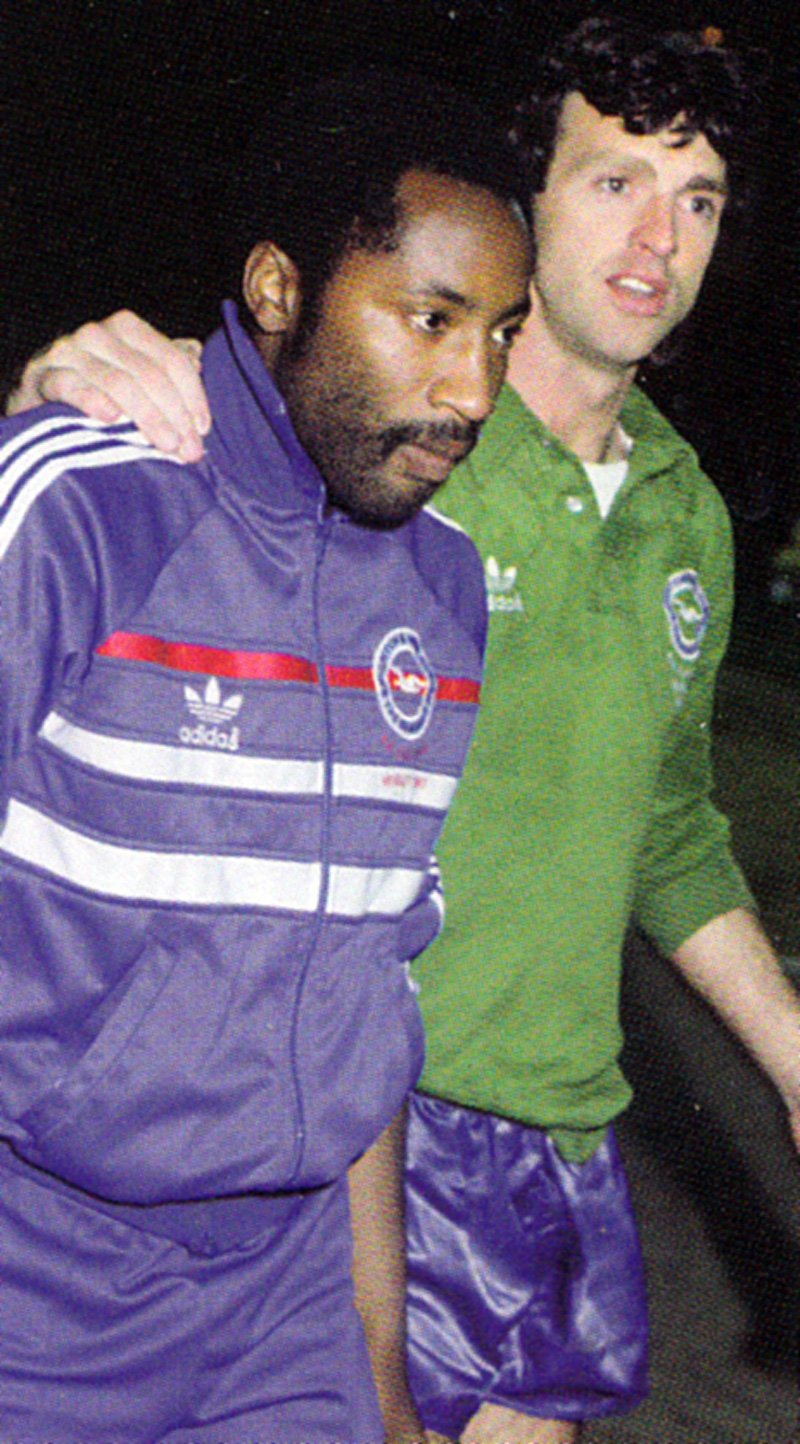
chrisramsey

Likewise with Chris Ramsey, currently U21s coach at Tottenham Hotspur who helped in a caretaker team once Andre Villas-Boas was sacked. As you’ll recall, Whiteside’s awful foul on Ramsey in the 1983 FA Cup Final caused Brighton’s right-back to be substituted. Some say that it resulted in Manchester United’s equaliser. I certainly feel that Ramsey would not have been outmuscled by the waif-like Arnold Muhren, the way that Gerry Ryan was, before the Dutchman’s diagonal ball for Ray Wilkins’s goal to put united ahead. In Brighton’s matchday programme v Oldham on 24th October 2009, Ramsey said:

I saw Norman Whiteside about 12 years after (the Final) at a PFA do and we had a good laugh about it (Whiteside’s foul). We exchanged autographs and he wrote on my card ‘You went in high but I went in higher!’ To be fair he says in his book that he never intentionally went out to hurt anyone in his career, and that the only person he actually ended up hurting was me.

At the end of the day neither of us were angels, were we? I had my moments- I had a lot of moments come to think of it (Chris was sent off five times during his Albion career)! They were different times and the game was a lot more physical then, so those things used to happen unfortunately.

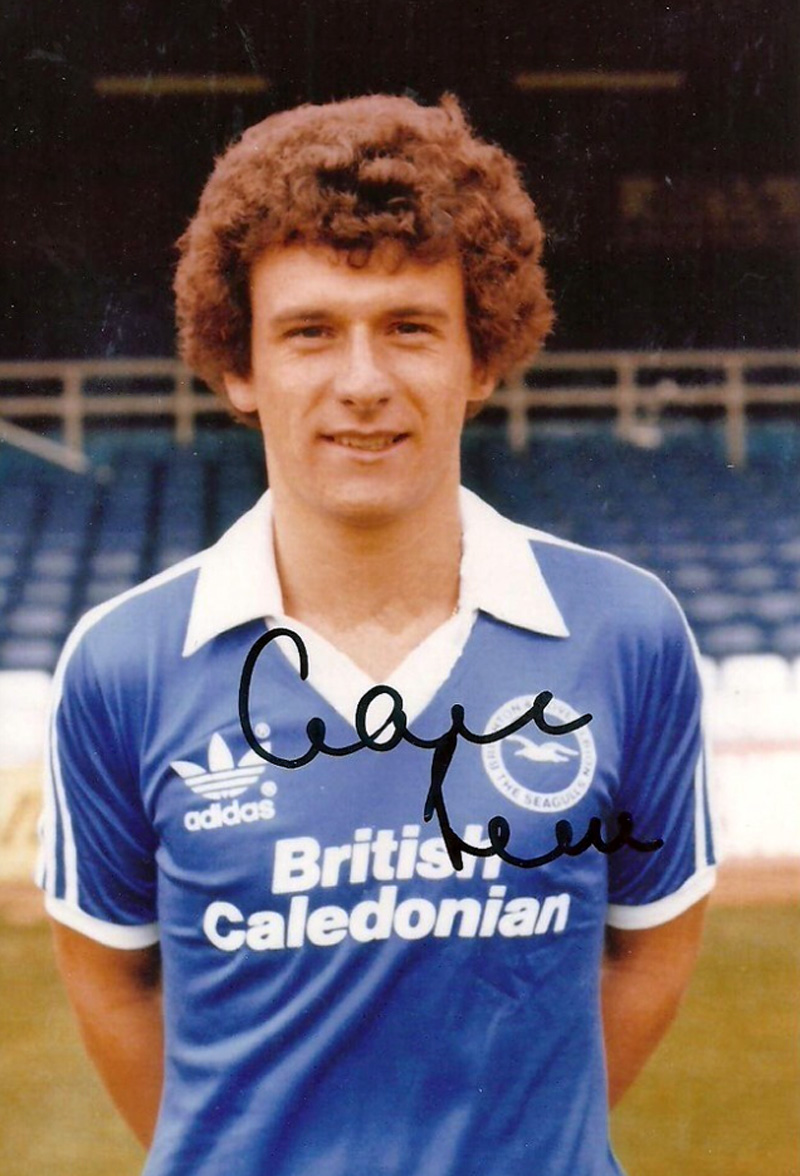
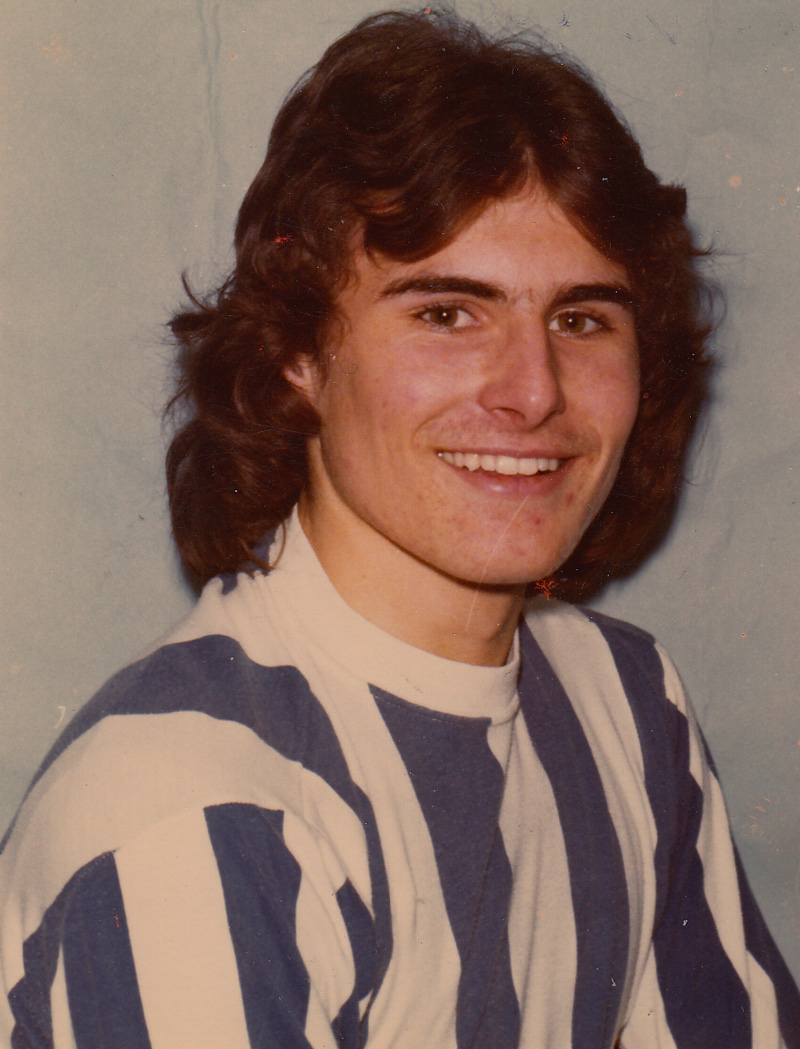
I suppose it’s not that surprising Ramsey was so relaxed about it. Off the field, he certainly knew how to chill out. Here he is listening to reggae music on his Sony Walkman!
Tagged ,

Rare Video: Brighton v Barnet (1981-82) FA Cup Replay

Having drawn at Underhill three days before, Brighton faced non-Leaguers Barnet in a Third Round Replay in the FA Cup at the Goldstone on 5th January 1982.

The match was originally going to play second fiddle on ITV’s Sports Special to the scheduled match between Middlesbrough and QPR. When that was called off in mid-afternoon, an extra two cameras were rushed to the Goldstone and installed at 7.15pm.

In this footage from the early part of the first half, note the playing of the Match of the Day theme tune over the tannoy during this broadcast for TVS!

It was TVS’s first ever visit to the Goldstone, after taking over the contract from Southern TV. In the match programme against Everton a month later, the news section stated:

A reasonable request has been received by your match announcer from ITV’s Brian Moore. Normally at the Goldstone such football favourites as ‘You’ll Never Walk Alone’ and the theme to BB’c “Match of the Day’ have been among the musical offerings on the PA system.

However, the playing of ‘Match of the Day’ has apparently caused some problems when ITV have been showing line-ups prior to kick-off.

When the ‘Beeb’ come to the Goldstone we also promise not to play the ‘Big Match’ theme, Jubilation.

As for Michael Robinson, his knee injury meant he missed the next six matches, eventually returning as substitute in the 1-0 home defeat to Nottingham Forest in February. Remember the goalscorer? Yes, Peter Ward.

How Albion could have done with a Peter Ward in this first-half. As it was, their main chances came from mix-ups between the Bees defenders and keeper Gary Phillips. Interesting to see the clash between Graham Pearce and Jimmy Case. A year later, Case commented on how difficult Pearce made it for him during this game. He probably won his respect here:

With the 0-0 scoreline at half-time, Barnet must have fancied their chances, but a sloppy clearance gave Mickey Thomas one of his few happy moments in his time at Brighton:

As the match reached its finale, Albion increased their lead:

Unlike the commentator here, Albion’s match announcer Tony Millard harshly called the second goal as an own goal. As Millard later wrote:

Your match announcer received some friendly ribbing concerning the announcement of Albion’s second goal against Barnet. At the time, the announcement was… ‘Albion’s second goal on 67 minutes, a Jimmy Case shot deflected into his own net by Kevin Millet.’

Well, Jimmy was keen that the goal should count as his and it is now accepted in football that a goal is only ‘credited’ to a defender if the original shot would not have gone in if the defender had not been there.

Well, Jimmy’s shot would almost have broken the net if Millet hadn’t been there, so the goal quite definitely goes to Jimmy Case, his fourth of the season.

Best goal of the match, was undoubtedly Gary Sargent’s dribble and sizzling finish that made Foster and Moseley look like fools.

After the match, Barnet boss Barry Fry said: ‘We defended very well but Brighton were different class.’ Mike Bailey was a relieved man, stating: ‘The penalty came just at the right time for us.’

An upshot of the game was that the Bees full-back Graham Pearce, transfer-listed at the time, signed for Brighton. Accompanied by Fry to the Goldstone, he took a little while before deciding to take the plunge into League football. As the programme for the Oxford match in the fourth round put it:

With an income from his full-time job as sprinter and also from part-time football, it needed a little thought for the 21 year old to enter the comparative insecurity of the professional game. Graham couldn’t join our staff immediately as he had to serve out a full week’s notice with his employers first and they couldn’t afford to release him early.

Pearce playing left-back for England? Has a nice ring to it.

Pearce playing left-back for England? Has a nice ring to it.

Tagged , ,

Of Swans and Seagulls

Over recent seasons, many Brighton fans have admired Swansea City’s exciting brand of football as an enhanced, more incisive version of their own team’s possession game. Back in the late 1970s and early 1980s, skilful play apart, the key parallel was that both relatively small, modest clubs were enjoying their halcyon years. With the illustrious John Toshack and Alan Mullery as the respective managers, both the Swans and Seagulls had enjoyed meteoric rises to get to the top flight. By 1981/82, both clubs finished in their highest ever placing in the Football League. The sky was the limit, or so it seemed.

On Tuesday 9th May 1979, Brighton played Swansea in Mick Conway’s testimonial match with the Albion players still on cloud nine. It was three days after the Seagulls had completed the two-year journey from Division Three to Division One. Ex-Albion winger Conway was known for his dangerous crosses and speedy runs. Aged just 17 years and 45 days, he had made his Brighton league debut against Nottingham Forest in May 1973 just as Albion were sliding back to Division Three after one inauspicious season. In the number seven shirt, he marked the occasion with the equalising goal as Brighton came back from 0-2 down.

mickyconway

mickconway4a

Despite this, this promising wide player only made one substitute appearance for the Albion first-team thereafter and joined Swansea for £3,000 in December 1975. He helped the Welsh side to win promotion from Division Four in 1977/78 under manager Harry Griffiths before injuries suffered in a car crash in April 1978, and subsequently against Barnsley in an attempted comeback, eventually forced Conway to retire.

Even without Conway’s services, Swansea were promoted from Division Three at the first time of asking in 1978/79 under new player-boss John Toshack. With players of the quality of Jeremy Charles, Robbie James and Leighton James, the Swans played attacking football that won over many neutrals. Just as Albion had secured a place to the top flight with that famous 3-1 victory at Newcastle in 1979, it was a televised win with the same scoreline at Preston in 1981 that took the Welsh club to the top flight for the very first time.

When 1981/82 kicked off, Albion were supposedly the more senior club, beginning their third season in Division One. However, aided and abetted by new signings such as the very experienced Alan Curtis and Bob Latchford, the Welsh newcomers picked their pockets on 1st September 1981, coming away from the Goldstone with a 2-1 victory:

As Steve Curry in the Daily Express reported:

Swansea lifted Welsh hearts and broke a few in Brighton as their First Division charge gathered momentum last night.

John Toshack’s heroes came from the valleys to the seaside on a tide of determination.

And if their victory at the Goldstone Ground did not have the carnival atmosphere of Saturday’s five-goal romp against Leeds, it was in its own way, just as distinguished.

They provided an early and impressive encore to Saturday’s show-stopping performance with two goals in the first 15 minutes. And when Brighton ruffled the Swans’ feathers they hit back heaving and hissing to survive second-half pressure.

Andy Ritchie scored in the 34th minute, after Steve Foster had headed down Gerry Ryan’s free-kick, but an equaliser proved beyond the home side.

And so the Swans’ honeymoon period continued. When the return fixture was played at Vetch Field in November, Mike Bailey’s ultra-defensive Seagulls had tightened up at the back, securing a 0-0 draw. The high-flying Welsh side were in third place, although they held first position on six different occasions during this famous 1981/82 season. Playing rather more cautious football than Swansea, Brighton were also getting giddy, standing in 10th place and pushing for a UEFA Cup position.

By the end of the season, Swansea City landed in 6th position and Brighton 13th place in Division One, both clubs’ highest ever finish.

After that, it was downhill from there. Swansea were beset by an injury crisis the following season. They were also hampered by a transfer ban imposed by the Football League for defaulting on their payment instalments to Everton in the signing of Bob Latchford and Garry Stanley for £275,000. Perhaps this was not surprising. Both clubs suffered tremendously from the general fall in football attendances while trying to pay First Division wages. Partly as a result, the form of both Swansea and Brighton fell away in 1982/83. They played out a 1-1 stalemate at the Goldstone in October 1982. As you can see, Robinson apart, there was a distinct lack of the kind of penetrating attacking play and flair that had propelled both sides into the top flight:

When Jimmy Melia’s Brighton turned the tables on the Swans with a 2-1 win at Vetch Field in March 1983, with Robinson and Case scoring, it was the Sussex side’s first League victory since December, and their only away win in Division One that season. On a downward spiral, the Albion stood in 20th place and the Welsh side were only one place above, going through a similar run of dismal form. Unsurprisingly, both clubs were relegated at the end of the season, with the Seagulls bottom.

The following season in Division Two, while Brighton stopped the rot under new boss Chris Cattlin, Swansea crashed and burned. Toshack gave a Swans debut to 23 year-old ex-Chelsea defender Gary Chivers (who would later play with distinction for the Albion) in the 3-1 home defeat by Brighton in September 1983. Alan Young and Terry Connor (2) got the Seagulls’ goals. A month later, Toshack resigned. The two clubs met again in the FA Cup, at the Goldstone in January 1984, with Terry Connor scoring a stupendous volley:

Relegated from Division Two, the Swans were in free fall. Despite bringing in ex-Brighton misfit Ray McHale to strengthen the side in 1984/85 with his experience, new boss John Bond could not stop the decline. Interestingly, he released Dean Saunders at the end of the season, something that would prove great news for Albion boss Chris Cattlin, who snapped him up.

When 1986/87 kicked off, Swansea, victims of three relegations in four seasons, had fallen down to the Fourth Division, back to where it all began. A season later, Brighton were back down to Division Three. By 1996/97, both Brighton and Swansea were in the basement league, fighting to survive near the bottom. Should the Seagulls get promotion to the top flight this season, their renaissance will be complete, just as it has been for the Swans in recent years. I’m sure Mick Conway, a popular player with both sides, would drink to that.

Tagged , , ,

Ken helps Albion out of doldrums

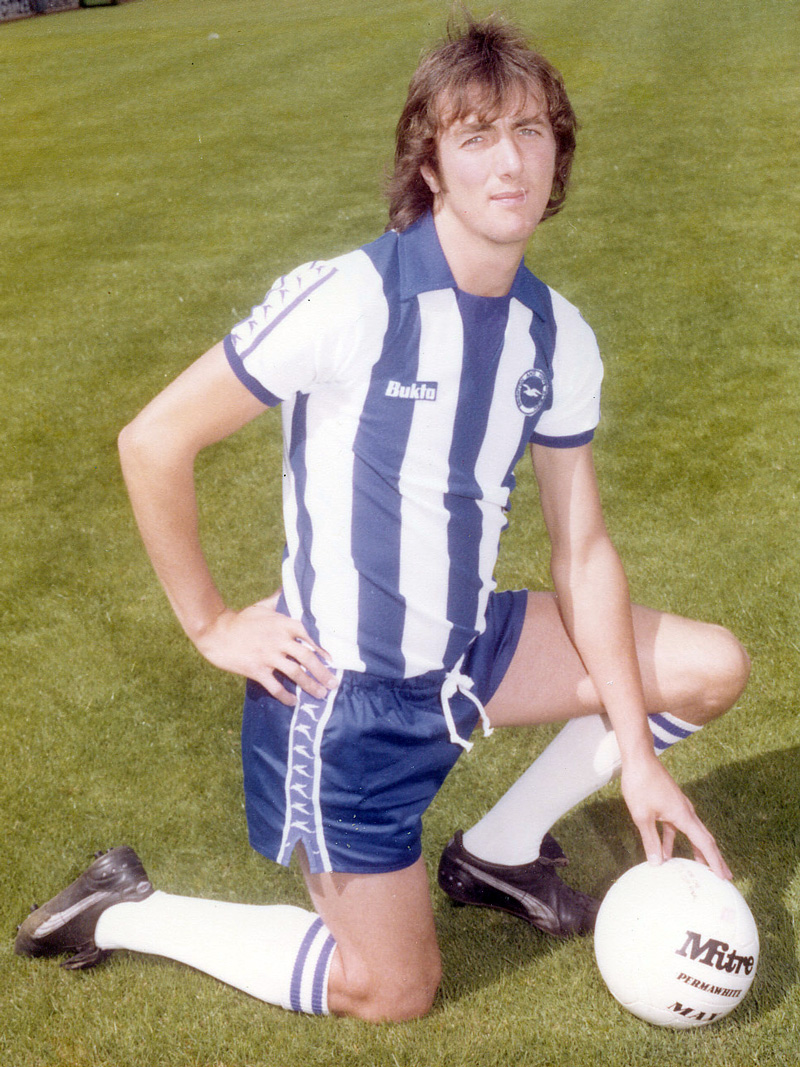
What a stylish pose!

kentiler

While hardly remembered as a star player during Albion’s glory years, right-back Ken Tiler certainly played his part as Albion escaped the mediocrity of fighting to survive in Division Three in the mid-1970s.

At a time when the Goldstone was short of class, he was signed from Chesterfield by Peter Taylor in November 1974 and valued at £45,000 in a deal that took Billy McEwan and Ronnie Welch in the opposite direction.

Tiler settled quickly, showing the kind of form and know-how that steered Brighton away from the drop zone in the New Year. With the side being rapidly rebuilt by Taylor, things were on the up. Together with Harry Wilson on the other flank, the two full-backs are best remembered for their roles in the promotion near-miss of 1975/76 and then, a year later, when Brighton finished as runners-up. With Joe Kinnear out of favour under Alan Mullery, Tiler played 38 League matches in that glorious 1976/77 season.

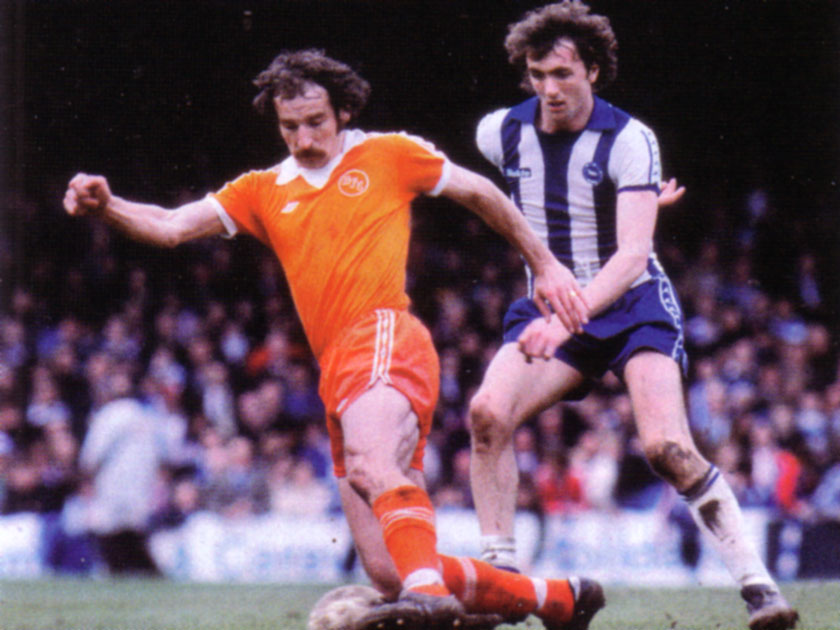
In the Second Division, Tiler started the first 16 League matches before suddenly being dropped in favour of Chris Cattlin. In January 1978, he asked for a transfer but was restored for the final seven matches of the season. Here he is in action against Bob Hatton of Blackpool on the last day:

blackpool_tiler

Despite beginning as first choice in the 1978/79 campaign, Tiler was not able to shake off the competition from Chris Cattlin forever. Brighton had a mediocre start, falling as low as 12th at the end of November. When the ‘Cat’ was restored to the right-back slot at the start of December 1978, it solidified the defence immeasurably and this spelt the end for Tiler’s time at Brighton. He didn’t play another match for the Seagulls and left for Rotherham in a £15,000 deal in July 1979.

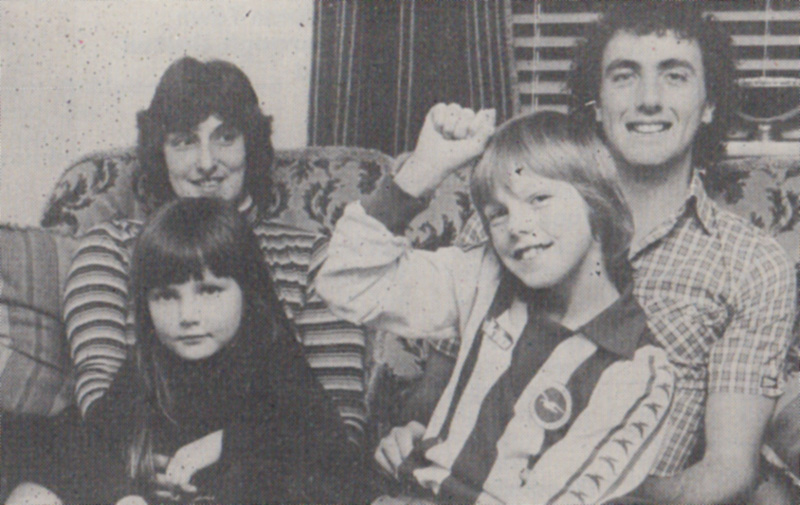
In his 151 appearances, he never got on the scoresheet for the Albion, but attacking intent did exist in his family. Here he is with his family, including eight-year-old son Carl Tiler, who later made it as a centre-back with Barnsley, Nottingham Forest and Sheffield United:

kentiler8

At the time, Carl played as an orthodox left-winger. Ken said of his son:

“He already has the skill to beat me all ends up”

Perhaps it was this frank admission that confirmed Alan Mullery was right to go with Cattlin for the rest of the season!

Tagged ,

Rare FA Cup Video: Barnet v Brighton (1981/82)

grahampearce

On 2nd January 1982, 4,800 came to see a very tricky FA Cup tie for the Seagulls, on a sloping muddy pitch. It was a match that offered good potential for an explosive giant-killing.

John Motson had started his career in sports journalism with a local newspaper in Barnet, so he must have relished getting behind the mike before this FA Cup Third Round cup tie that pitted the non-Leaguers against First Division Brighton.

After the humiliation at the hands of Walton and Hersham and Leatherhead not so many years before, I doubt many of Brighton’s fans thought it was going to be an easy afternoon.

Barnet were in the Alliance Premier League at the time. In goal was Gary Phillips who was rejected by Brighton when Alan Mullery was in charge. Left-back Graham Pearce (left), aged 22, was keen to make a good impression, especially as the highlights would be on Match of the Day. Maybe a league manager would be interest in his services. Up front was the very skilful Gary Sargent. And, of course, in the dug-out was manager Barry Fry who was taking the Bees to the furthest they had ever been in this cup competition:

After the match, John Vincombe wrote in the Evening Argus:

Instead of a clean, quick and easy kill, Albion found themselves sucked into a war of attrition in the mud. Conditions were the ultimate leveller, but Barnet’s spirit was unquenchable.

They refused to be over-awed at playing hosts to a First Division club and this will go down as possibly the most heroic performance in their history.

Albion simply could not adjust, often making it difficult for themselves bv over elaboration and not paying heed to the classic axiom; ‘Make it simple, make it quick.’

Instead Barnet showed rather more enterprise and Robinson, on his return, could not have wished for a more redoubtable opponent than Campbell who blocked the path to goal quite superbly.

Meanwhile, Barnet manager Barry Fry fumed at the lowly crowd figure, which was half of Underhill’s capacity:

‘It’s a ioke, I’m very disappointed. If anyone let us down it was the Barnet public.’

Even so, Fry was delighted with the result. He said:

‘It would have been an injustice had we lost. We battled, played a bit of football at times and had possibly the two best chances in the match’.

Amazing to think that a season later, Pearce would be appearing for Brighton at the FA Cup Final at Wembley.

Tagged

Happy New Year …with Albion Calendar 1980!

Short of Peter O’Sullivan, Teddy Maybank and Gary Williams turning up at your door tipsily singing ‘Auld Lang Syne’, what finer retro Albion way to see in the New Year than an invitation for you to feast your eyes on a Brighton football calendar from 1980?

In 1979/80, a company called Print For Sport Ltd launched some lavish A2-sized Soccer Action Calendars for each First Division club, some ‘top’ Second Division clubs (West Ham, Leicester, Sunderland, Newcastle and Burnley, Luton and QPR) and the England team. For just £2.49 each, you received one for your favourite team with twelve colour action shots of first-team players.

The item, advertised heavily in the likes of Shoot! Magazine and Match Weekly, also included red ‘You-Fix’ stickers allowing fans to mark match dates and opponents on the calendar itself. I suppose they could have pre-printed the fixtures directly onto the relevant dates themselves but this was what counted as ‘fun’ and ‘interactive’ in those days!

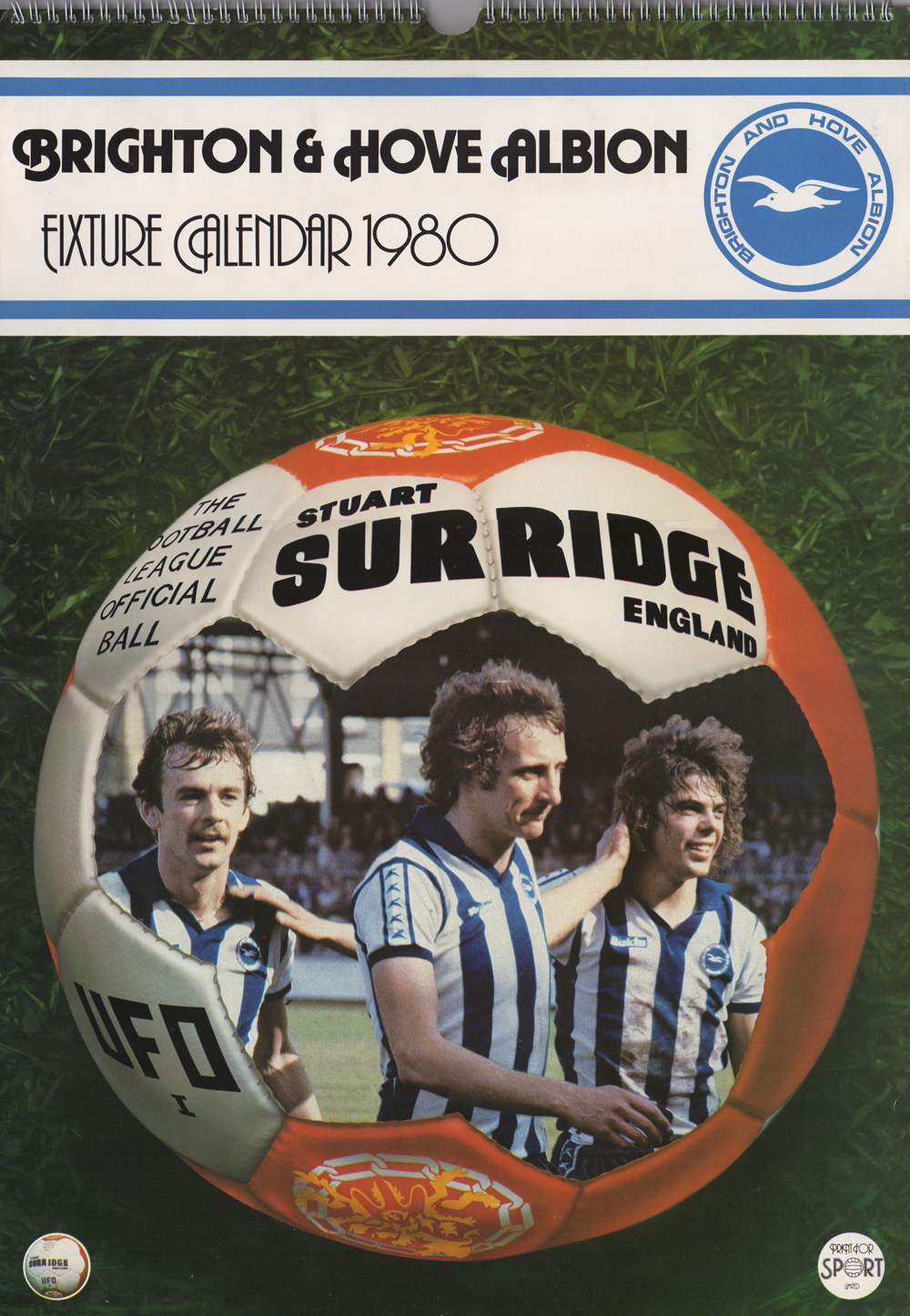
Here is the Brighton & Hove Albion calendar, lovingly scanned by yours truly:

calendarcover1

In a clever, eye-catching design, Malcolm Poskett, Chris Cattlin and Peter Ward are the cover stars.

calendar-1jan

Then into January is… ermm, Brian Horton with a full head of hair in the perm? Well, it’s definitely Nobby’s signature on the bottom right but, as Alan Wares (Albion Roar) from North Stand Chat has identified, it’s Andy Rollings blocking the shot from Orient’s Alan Whittle in a memorable 3-3 draw. Peter O’Sullivan and Mark Lawrenson are in the background, along with Clark’s hair!

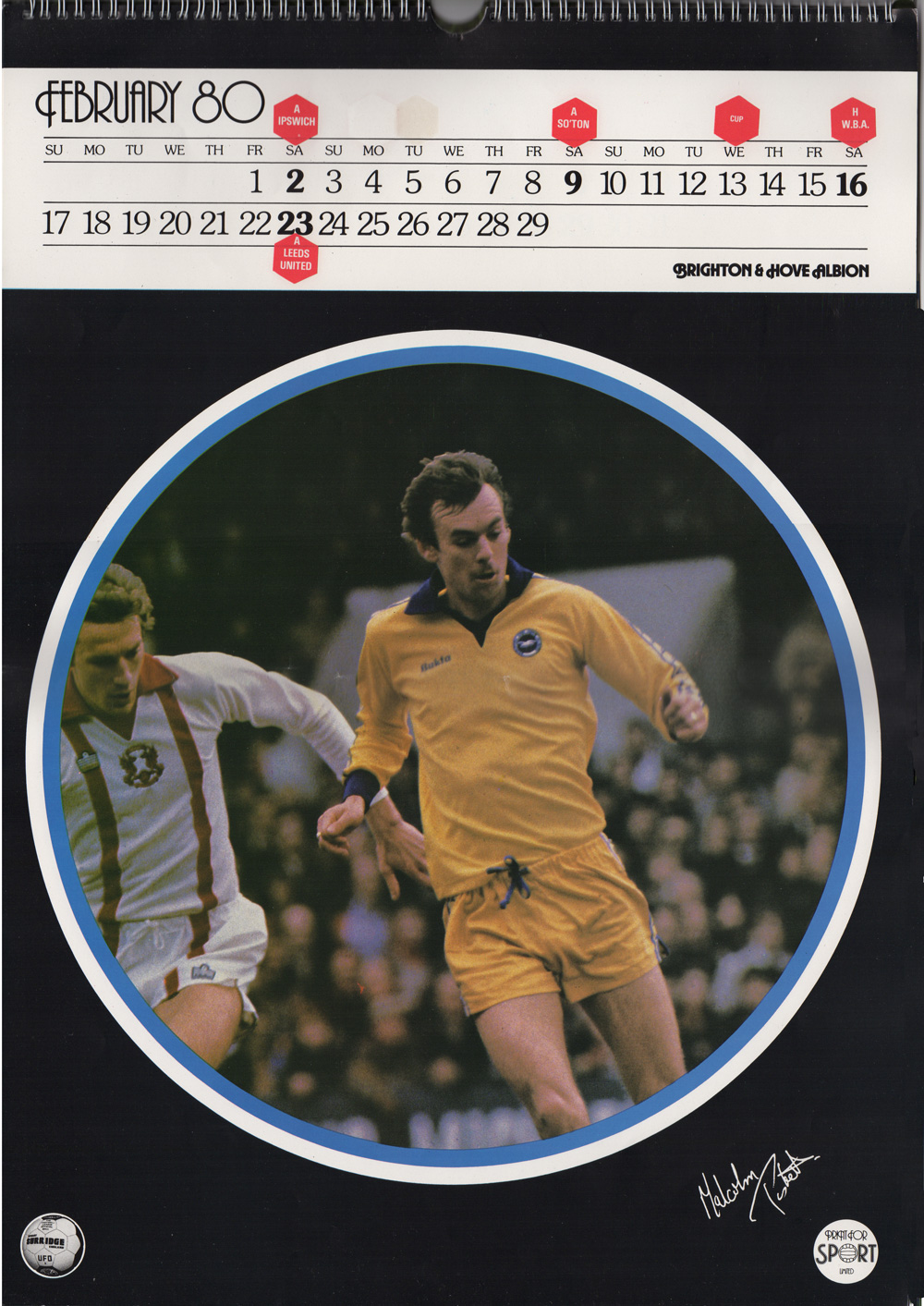
calendar-2feb

Next up is Malcolm Poskett, also in action against Orient, out to prove Alan Mullery was right to prefer him to Wardy in the number eight shirt for this match.

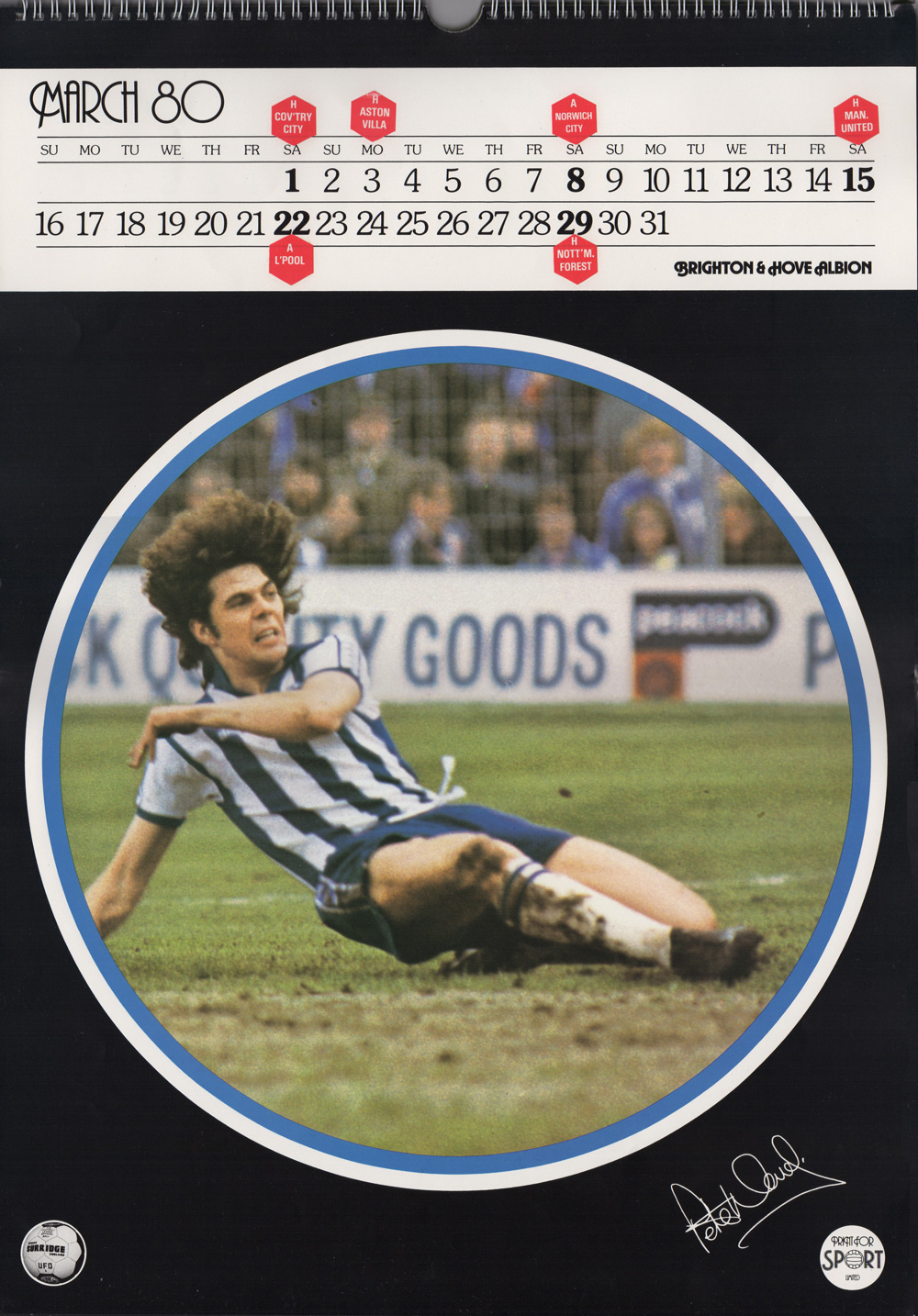
calendar-3mar

When Peter Ward does show up in March, it’s on a bad hair day.

calendar-4apr

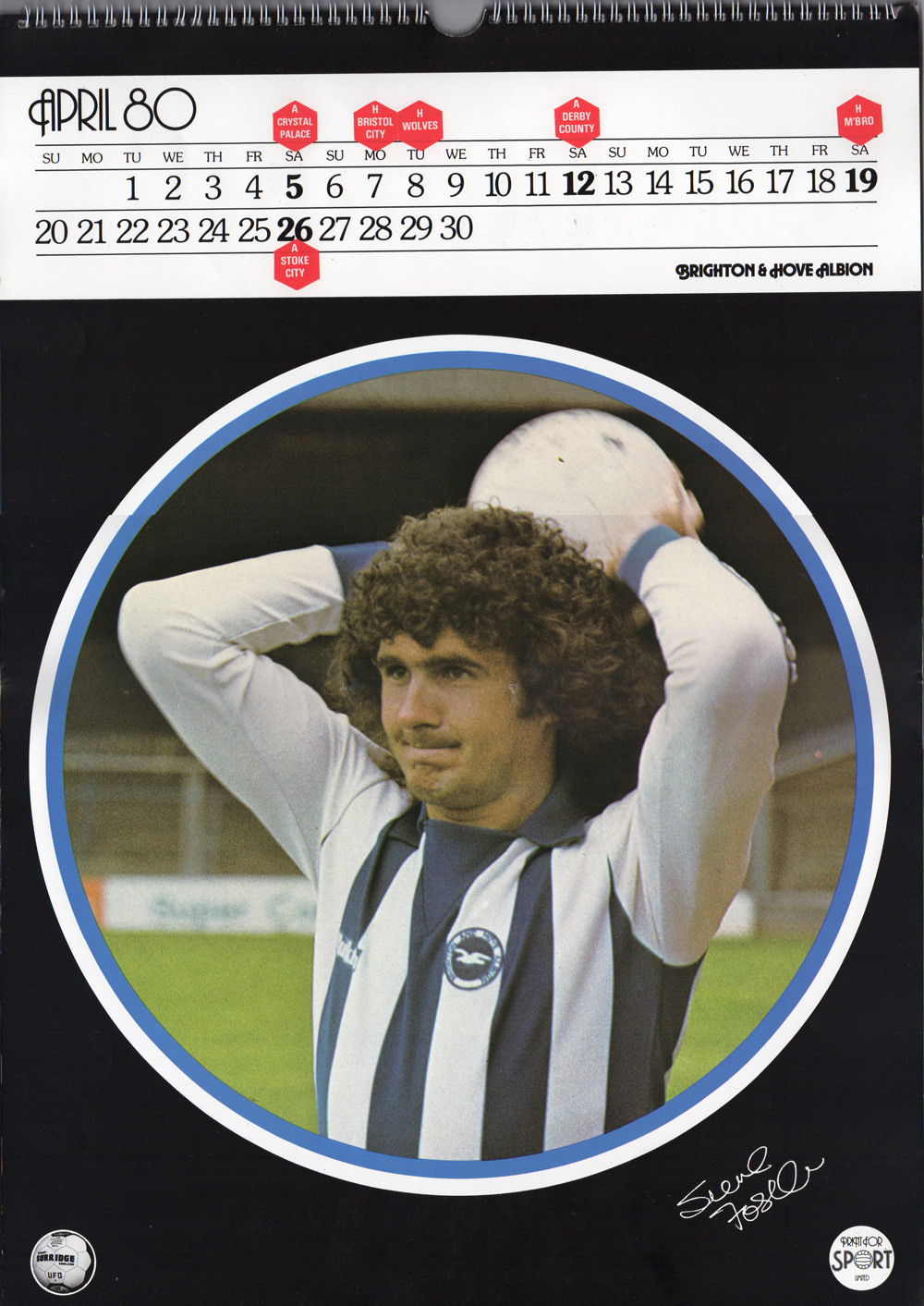
Steve Foster had signed for the Seagulls in pre-season in the summer of 1979. Without a genuine match appearance for Brighton to his name yet, he strikes a pose for the camera instead.

calendar-5may

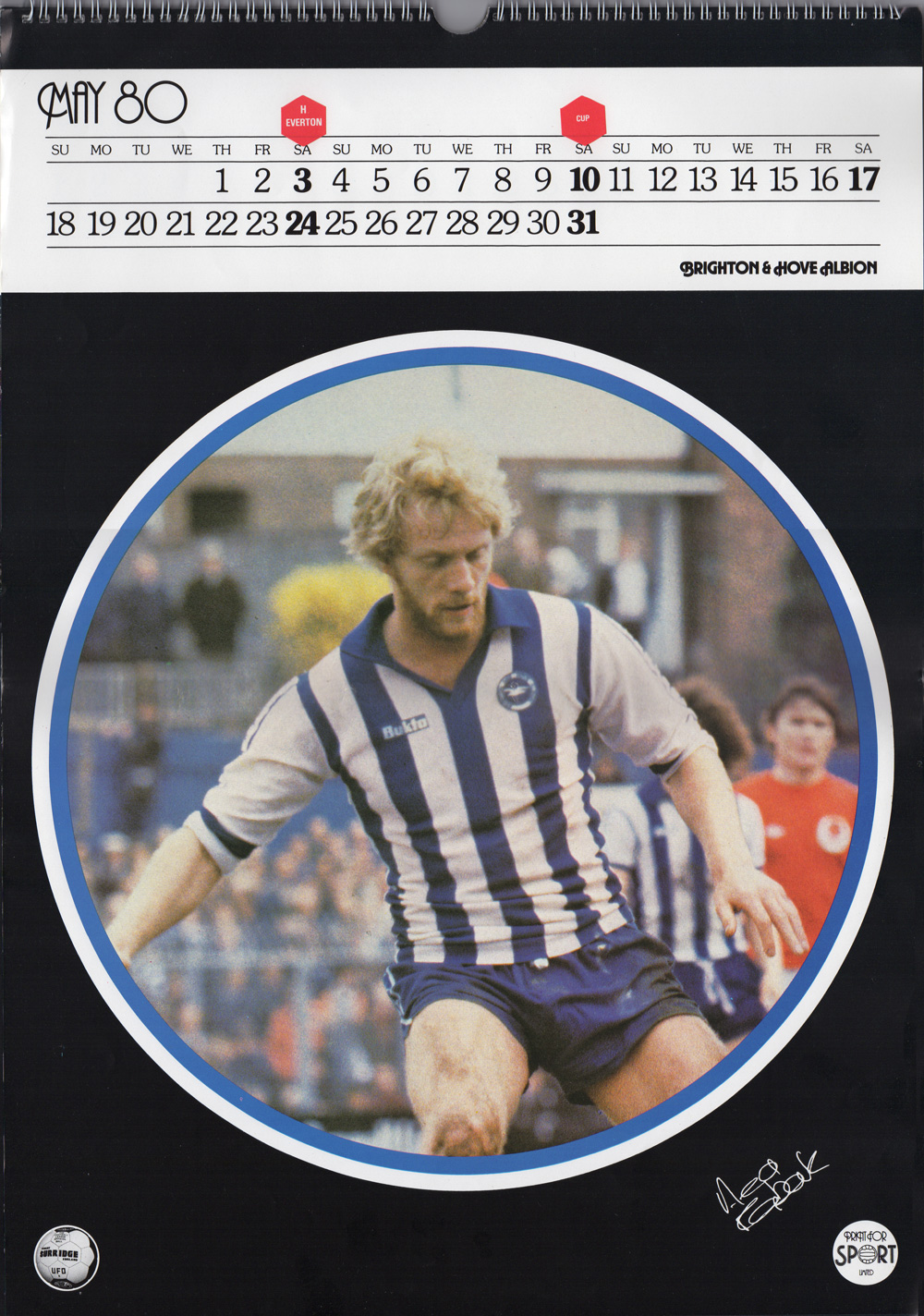
In the same Blackburn game where he scored a goal in the midst of a smoke bomb going off, here’s Teddy Maybank challenging for the ball.

calendar-6jun

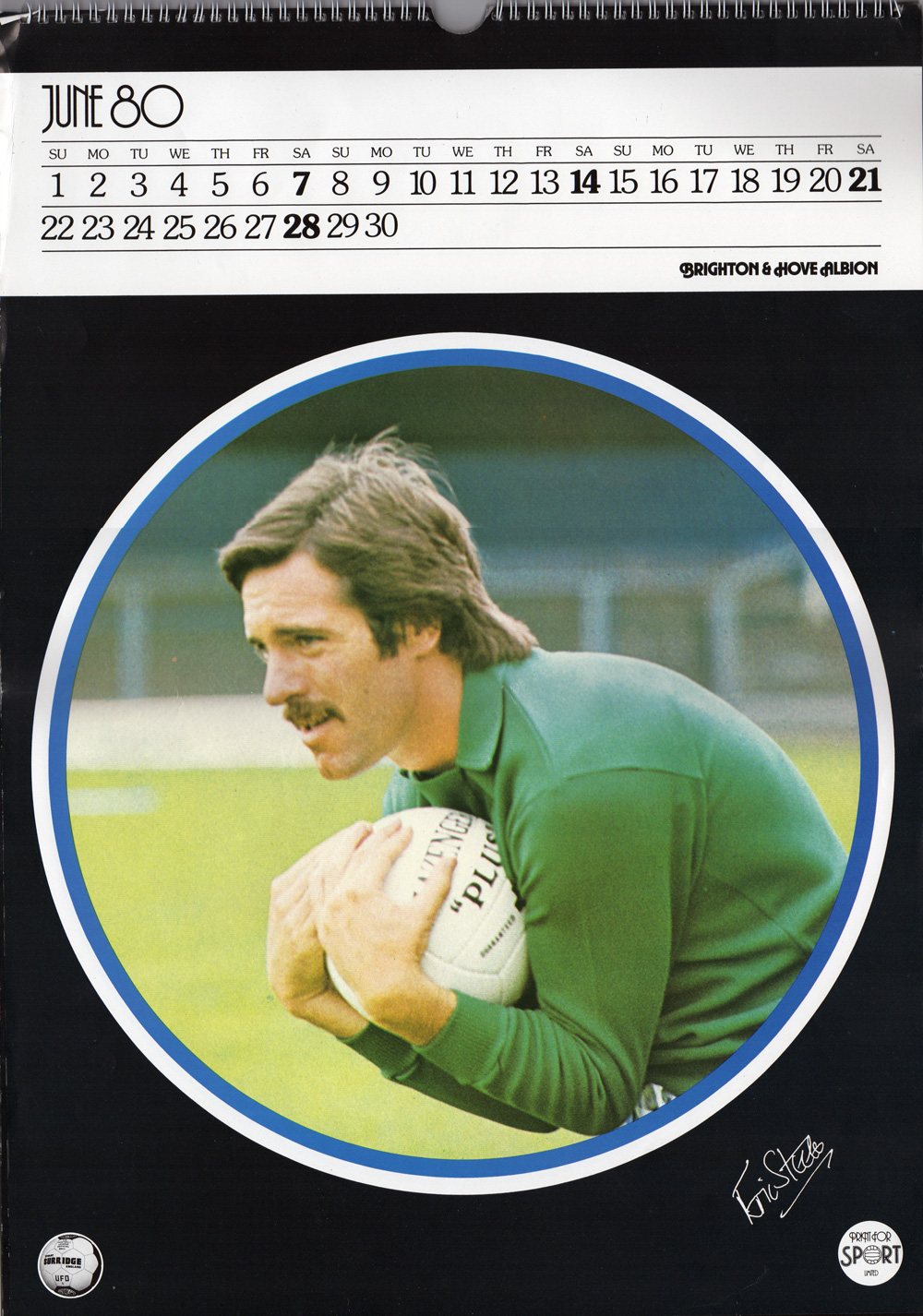
Eric Steele shows a safe pair of hands for the camera.

calendar-7jul

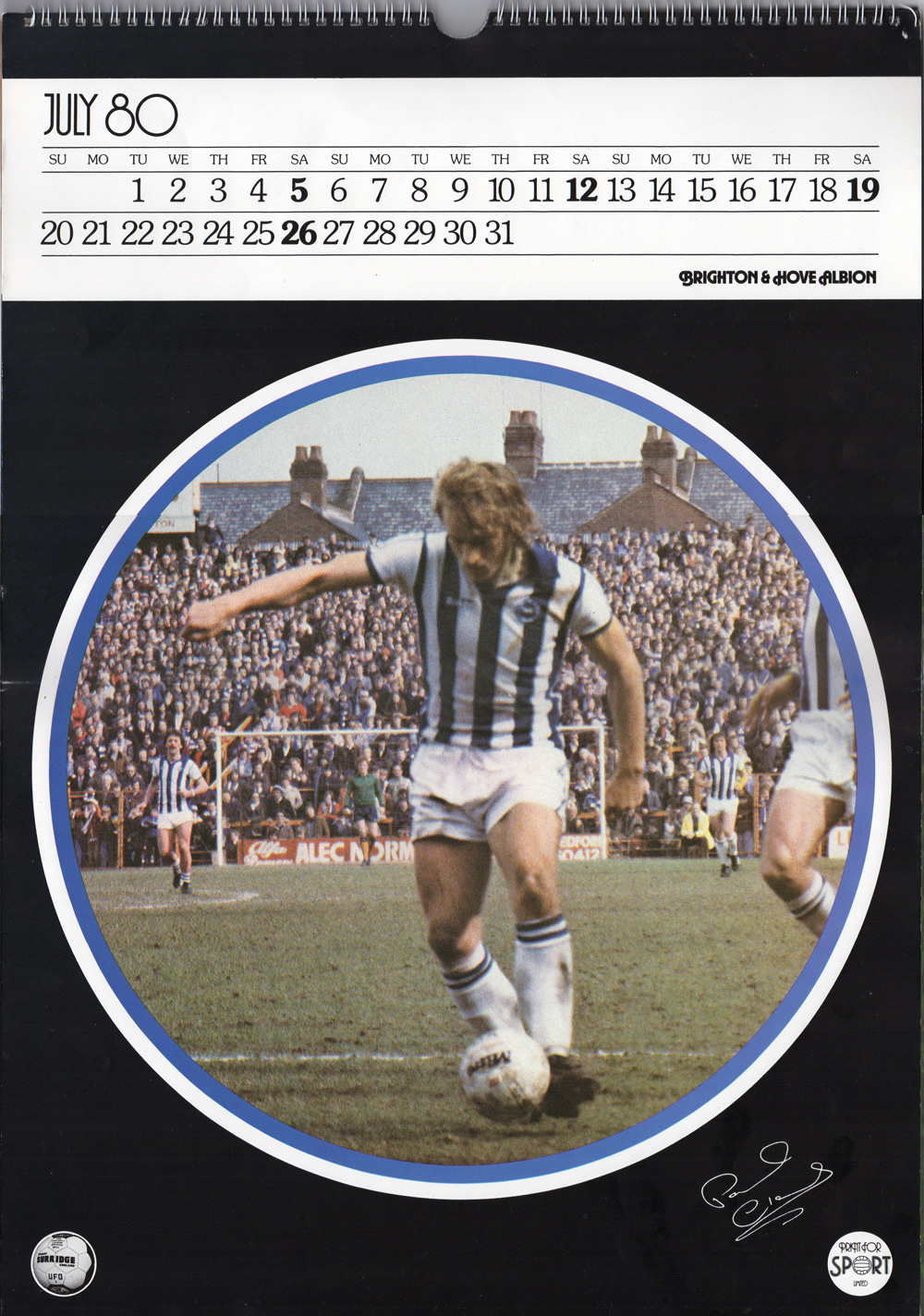
‘Viking’ Paul Clark on the ball, possibly against Luton in April 1979.

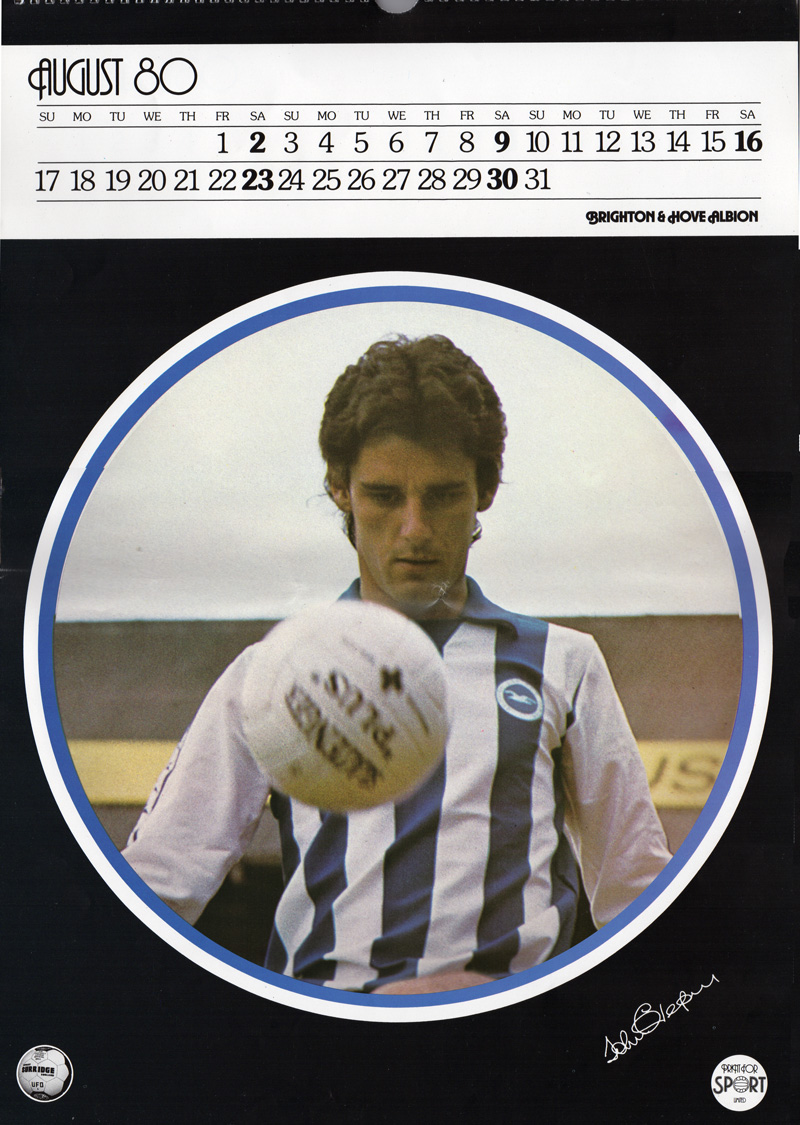
calendar-8aug

New signing John Gregory juggles the ball.

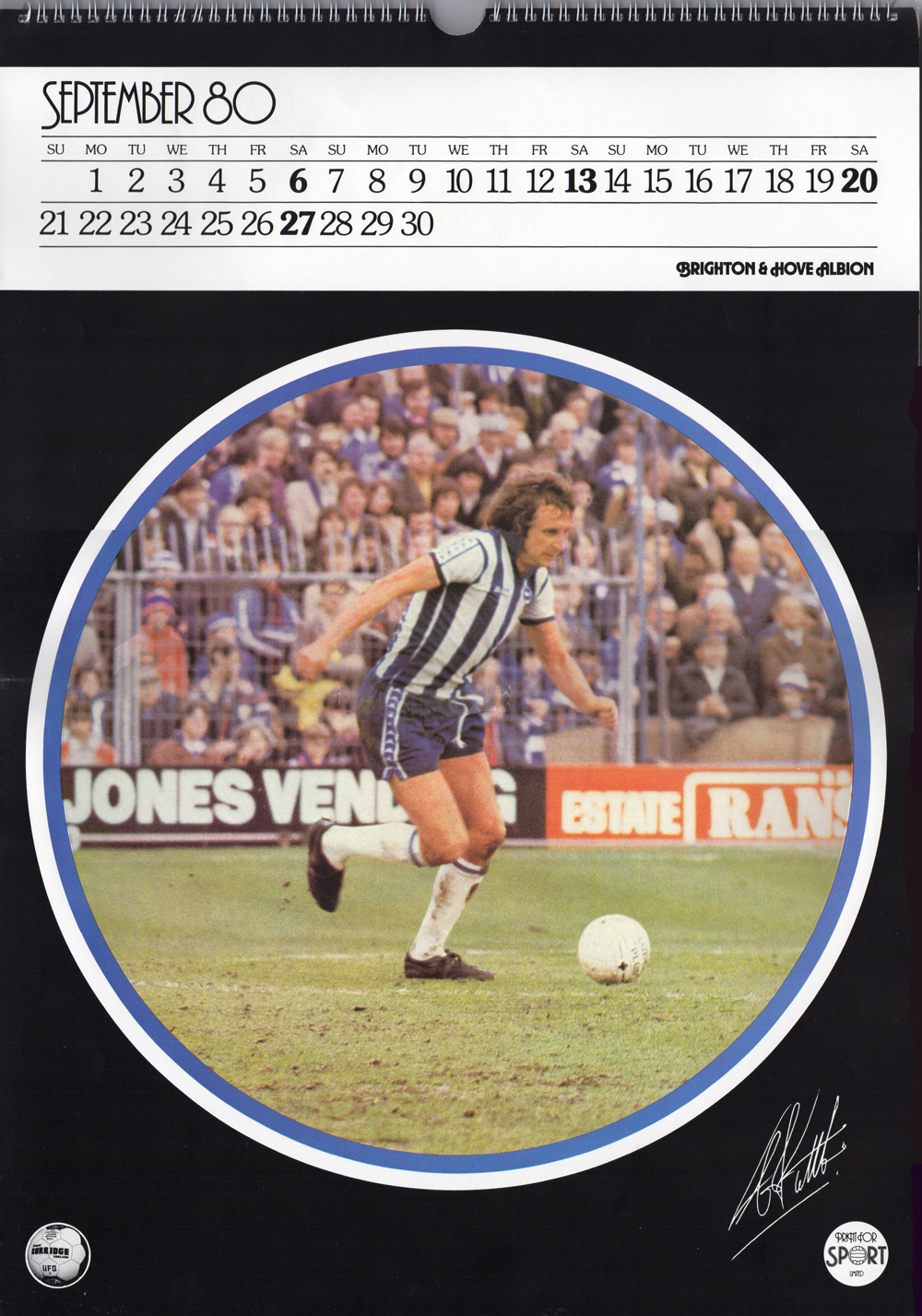
calendar-9sep

Veteran Chris Cattlin is star of the month for September 1980 even though his Albion playing were over by then.

calendar-10oct

Gary Williams carries the ball out against Blackburn.

calendar-11nov

Proving his acting skills are no better than his punditry skills, Mark Lawrenson fakes celebrating a goal!

calendar-12dec

And finally, Gerry Ryan goes for a dribble.

As you can see, 1st January 1980 fell on a Tuesday, whereas 1st January 2014 is a Wednesday, so you’ll be disappointed if you were hoping to print this out and use it, unamended, as your calendar for the New Year. Significantly, 1980 was also a leap year so you’ll have to wait all the way until 2036 before this calendar fits the bill again. Never mind! I hope that you are patient. In the meantime, Happy New Year!

Tagged , , , , , , , , , , ,

Goodbye to the 1970s! Super Albion smash City

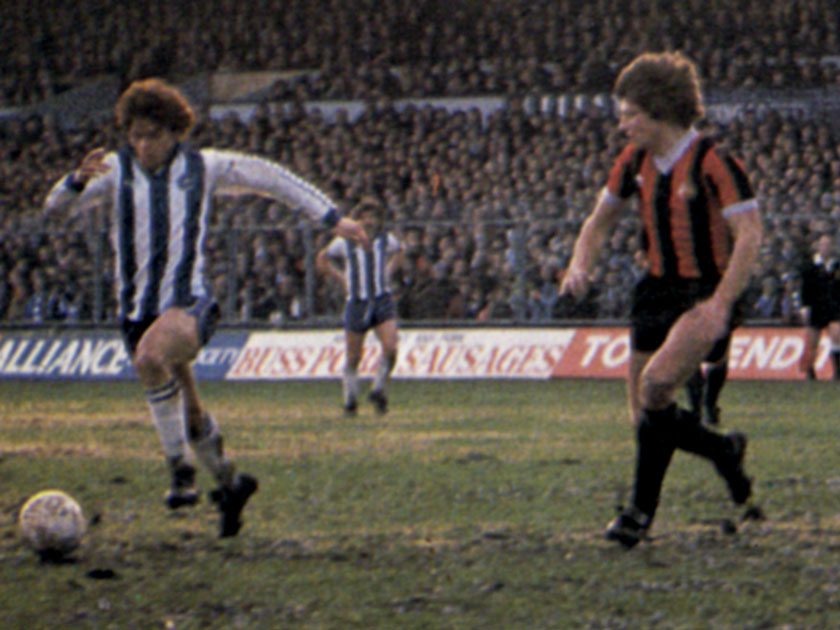
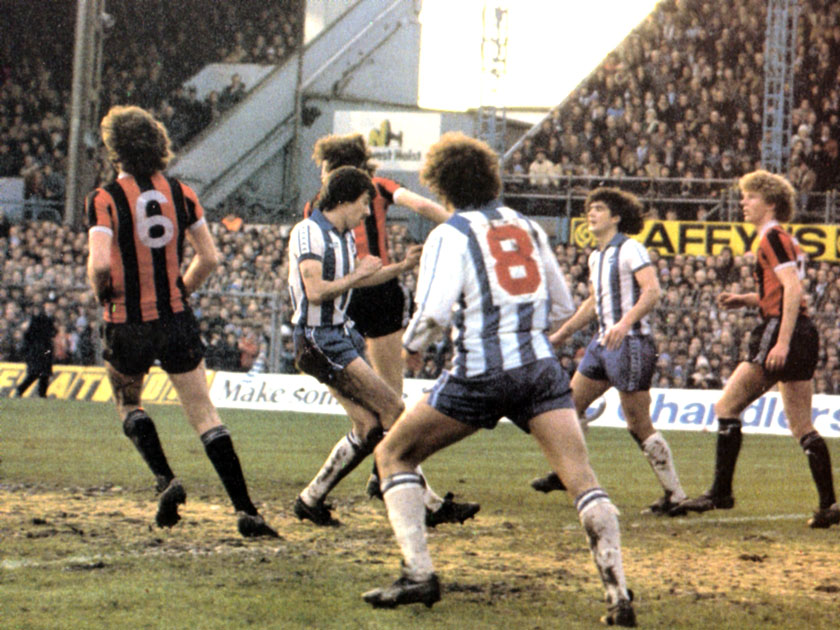
mancity2v2

They were heady at the Albion in December 1979. When the decade had started, the side was in the Third Division and now it had rocketed up to the giddy heights of the top flight. When the then current campaign had started, the Seagulls looked like relegation fodder. However, in the Christmas season, a resurgent Brighton played like nothing short of champions. Having trounced Wolves and Crystal Palace, two top-half sides, they proceeded to wipe the floor with Manchester City.

Here is a piece from the Daily Express that perfectly captures the delight in Sussex at the magnificent turnaround at the club:

As the decade draws to a close it is fitting to reflect on the fortunes of Sussex’s only League club whose First Division lifeline has grown progresslvely stronger over Christmas.

When the seventies were new Albion enjoyed a brief flirtation with the Second Division.

Once again they resumed an all too familiar Division Three tag, but as the influence of the incoming chairman, Mike Bamber, began to be felt a fresh picture took shape.• The management team of Clough and Taylor halted a headlong plunge towards the Fourth Division and achieved vital breathing space with a crash programme and Taylor, alone, had a near miss in 1975-76.

Success
The Alan Mullery touchstone brought unprecedented success with two promotion seasons out of three and then, inevitably, came the slump.
•
Anything less on merely a nodding acquaintance with the best company in the country would be expecting too much.

As Mullery said during the •darkest moments: “Our mistake is in treating famous clubs on reputations, and not as 11 players.”

Albion are no longer overawed in their present suroundings. It has taken them half the season to acclimatise and pick up very much in the same fashion as last Christmas – maximum points from three games, and ten goals.

Last year the spurt sent them towards promotion; this time they have taken a further important step away from the rock bottom strugglers.

The yawning chasm of relegation has receded, but Mullery knows that the fight must continue, and any relaxation at this stage could be fatal.

Nevertheless, these last three games have seen Albion play more like a team better suited among championship contenders than down among the no-hopers.

In nine days they have demolished Wolves, Crystal Palace and now Manchester City, all clubs in the top half of the table.

Once might have been a fluke, but we have seen enough lately to measure Albion’s growing stature. On current form they are in a grossly false position, and while the prevailing mood is with them, they need fear no side.

In a splendid match, particutarly a memorable first half, Albion outclassed City who may yet feel the chill breath of relegation waft through the plush carpeted corridors of Maine Road.

For Mullery, at Albion’s helm, could well come the accolade of Manager of the Month.

He has motivated his players to work out their own salvation and instilled that priceless asset – self-confidence.

Fluency
Even bearing in mind some of those high scoring Second and Third Division days, I cannot recall seeing Albion play so well as a team-as that opening 45 minutes against City.

Malcolm Allison, declined to grant interviews and preferred to keep his own counsel. Just as well.

There was nothing he could fairly say after his team succumbed to Albion’s fluency. In fact, they could have gone down by a good siX goals such was their lack of method and application.

The impetus of a goal inside half a minute leaves its mark and once Ray Clarke had profited by terribly slack marking to convert Mark Lawrenson’s centre, the crowd and team became as one.

For the first time this season the Goldstone really got behind Albion.

They had been wound-up by the Palace defeat, and suddenly here, was a killing thrust before many had time to settle.

City went to pieces after Clarke’s first goal. Eager to drive forward Sully missed from Brian Horton, and Joe Corrigan saved point blank from Peter Ward.

Then he got down well to the irrepressible Ward on two occasions. Next it was Gerry Ryan opening the way for Ward again, but his finishing let City off the hook.

Thirst
A player with such a thirst Ward now has for goals eouldn’t keep missing, and at 27 minutes he scored his fifth in three straight outings.

The build-ups were coming from all points of the compass, especially a series of penetrating long passes and centres by John Gregory.

Just past the half hour, Clarke whipped in a third when Ryan, Ward and Sully were involved, and the North Stand chorussed: “You’re worse than Palace.”

There haven’t been many occasions when the fans have been able to rub it in, and they made the most of it this time.

They were momentarily silenced by Stuart Lee pulling one back for City, and just before the break, Graham Moseley made a daring save that prevented the lead being whittled to one.

A rare miscue by the normally composed Steve Foster let Gary Power in, and Moseley raced from his line to make a brave stop on the edge of the box.

Fears that Tommy Caton’s tackle on Lawrenson in the dying seconds of the half would prevent his reappearance were assuaged.

mancity

Early in the restart, Ward laid on delightful pass for Lawrenson to surge through the cloying mud and hit Corrigan’s bar.

There were still enough City heads still held high to make a game of it, but the result was put beyond doubt by the best goal of the match.

It was scored by Ryan who ran half the length of the pitch after gathering a throw from Moseley.

Had a Liverpool player scored it, I’ve no doubt it would be hailed as the goal of the century or some such exaggeration.

This was a masterly effort from a player who contributed much by strong running and intelligent passing.

He collected nine in 34 outings as a winger last term, but hasn’t had much luck so far.

When one player, in this case, Ward, starts to buzz, it rubs off.

The positions he reached prompted Sully to spray a series of fan-tailed passes from midfield, and Clarke, after nine games with Ward, now has settled to becoming an intuitive partner.

Ward kept turning the defence at will long after Ryan’s goal had passed Corrigan.

He was after another hat-trick, but I reckon he has done enough to prod England manager Ron Greenwood.

The Hortons of football, don’t gain international honours, but he’s as good a pro as you’ll find anywhere, and better than most.

Albion: Moseley; Gregory, Wiiliams. Horton. Foster Stevens. Ryan, Ward, Clarke, Lawrenson, O’Sullivan. ‘ Sub: Stille for Horton (injured), 76 minutes.
Manchester City: Corrigan; Ranson, Donachie, Bennett, Caton, Booth, Henry, Daley, Power. Reid, Lee. Sub: MacKenzie.

Attendance: 28.093.

Here is the first and last goal from the match:

I hope to get full highlights of this game soon. When I do, I’ll share here!

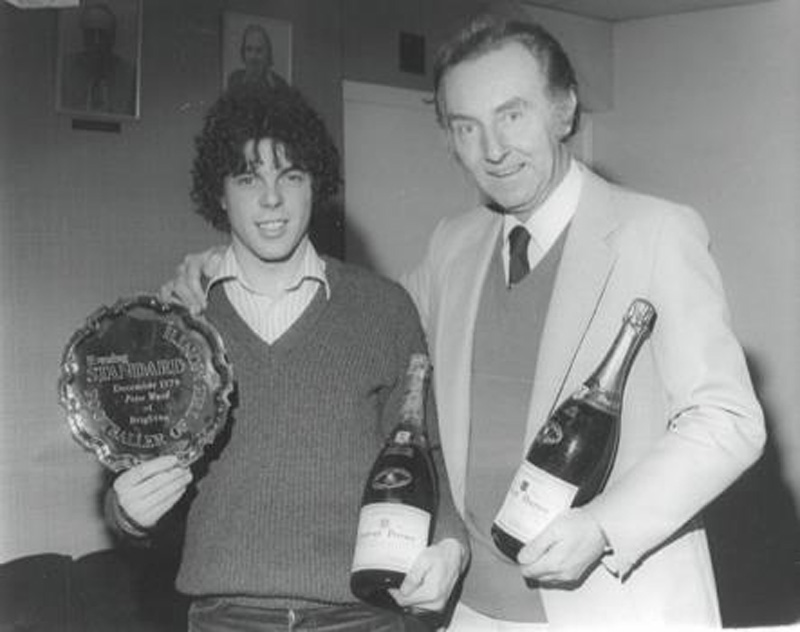
One accolade that came out of the glorious form was that Peter Ward ended up receiving the Evening Standard player award for December 1979. Here he is with chairman Mike Bamber and two bottles of bubbly:

wardaward

Well done, Wardy!

In the meantime, I’d like to wish you all a Happy New Year. Roll on the 1980s!

Tagged , , ,

Kieran shows Wednesday his disco feet

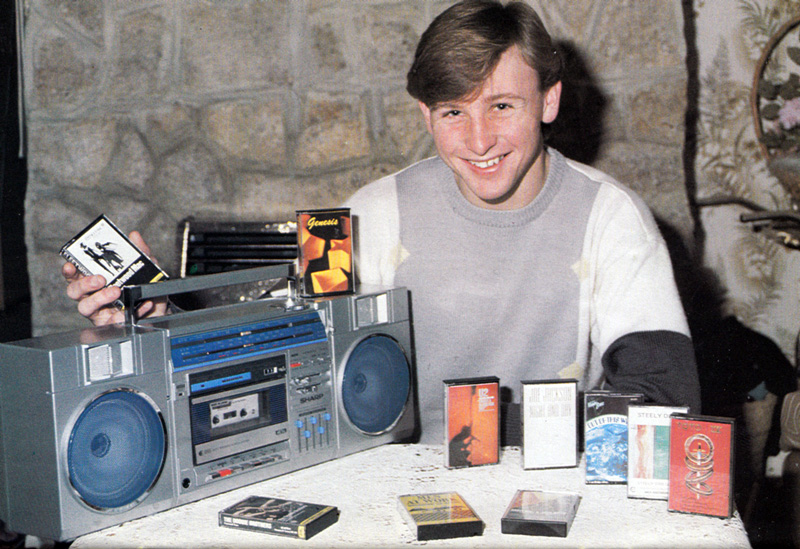
Bit of a hustler on dance floor was that shy, introverted right-back Kieran O’Regan, who looked barely 15 when he broke into the Brighton first team on the last day of the 1982/83 league season. Here he is surrounded by lots of cassettes, proclaiming to love music but being bit of a wallflower when it came to boogieing on down:

oregan

When it comes to relaxing, Kieran O’Regan’s got it taped! He’s a great music lover, but one song you’ll never hear when he’s around is the Sound of Silence! ‘I play music all day long, when I’m relaxing,’ he explains. ‘I don’t listen to the radio very much. There’s too much of a mixture. You get good records, then they’ll play something you don’t like. So, I’d rather play cassettes by my favourite groups.

I like a lot of different groups, but most of the tapes I buy are by well-known singers like Bob Marley, Stevie Wonder, Genesis and Fleetwood Mac. I like watching rock shows on TV too, like Top of The Pops and the Tube.’ With his obvious love of pop music, is Kieran keen on dancing? Is he, perhaps, the secret John Travolta of the Albion side?

‘No, definitely not,’ he laughs. ‘I’m not a great one for dancing. I’m happier to sit back and listen to the music. I’ve never wanted to join a group or be up there on the stage singing. I didn’t even join the school choir. I’m happy just to be in the audience.’

Yeah, right. Late on at Hillsborough in February 1984, however, Kieran strutted his funky stuff, showing the kind of fleet-footed magic that could only be learned by dancing in his bedroom in time to his favourite music:

The article, from the Brighton v Swansea programme in February 1984, continues:

Kieran has made tremendous progress during the 18 months he has spent at the Albion. The highlight of his career to date was his International debut for the Republic of Ireland last November. ‘That was just a few days after my 20th birthday, so it was a very nice present.

My debut got a lot of publicity back home in Cork. My mum and dad, and three sisters live there, and I think they were proud of me.’

Kieran comes from a very close family and he admits he was very homesick when he first came to the South Coast. ‘It wasn’t easy at first. I missed my family and friends back in Ireland. But my landlady, Mrs McLeod, did everything she could to help me settle down. I’ve been living at her house since joining Brighton. I feel like one of the family now.’

It always takes time to settle in a new town, but Kieran has plenty of friends in Brighton now. His best mate is another of Albion’s talented young Irish players, Gary Howlett.

‘The other players call us Tweedle Dee and Tweedle Dum, because we’re always together. When the weather’s fine, we beth enjoy a round of golf, but in the winter, we’re more likely to play a game of squash. We both like going to see other teams play too.

‘Gary Stevens is helping me with his promotions company and Gary Howlett and I go up and see him playing for Spurs when we can. We both like their attractive style of play.’

Away from soccer, Kieran is easy-going and a little shy. But he comes to life when he runs out onto the field for a game. ‘I realise how lucky I am,’ he says.

‘Football is my hobby, but I get paid for playing and I’m starting to see the world now too. Life is all about enjoying what you do and there’s nothing I’d rather do than play football.’

At the age of 20 and with an exciting career stretching out in front of him, Kieran’s view of life can be summed up in two words.., sweet music!

Over the next few seasons, O’Regan showed he could also do a good job in midfield. However, he failed to fully establish himself in the Brighton side. When the club was relegated at the end of 1986/87, O’Regan left for Swindon Town, still only 23.

oregan3

Tagged

Teddy’s hat-trick triumph

maybank15

Argus journalist John Vinicombe was in a happy mood, describing Brighton’s 5-0 annihilation of Cardiff City in December 1978. Helped by three goals from Teddy Maybank, the handsome result put the Seagulls in third place in Division Two:

Albion’s form in the two Christmas matches – at Charlton and yesterday against Cardiff City at the Goldstone – was nothing less than superb.

From the 3-0 success at The Valley, where Malcolm Poskett scored a second half hat-trick, Albion carried on where they left off when Cardiff arrived at the Goldstone.

And there to greet them was a numbing goal in the first 23 seconds by Gary Williams and Teddy Maybank bagging his first hat-trick for the club.

But for the courage of goalkeeper Ron Healey, City would have been taken for a cricket score.

The 5-0 victory was easily Albion’s most convincing display so far and helped lift them to third spot in the table as all the results went their way.

Before a ball was kicked, Albion knew that close rivals West Ham had crashed to a shock home defeat at the hands of Orient.

Albion needed six goals to eclipse them on goal difference alone, and the situation now is that Brighton have won more games (12) than any other side. On this form they face the New Year with confidence.

If Charlton were just as comprehensively outclassed as Cardiff, it should be borne in mind that Charlton picked up yesterday to take a point at Stoke.

Other results in Albion’s favour were the 1-0 defeat of Newcastle United at Bramall Lane and Sunderland dropping a point at home to Leicester City.

And while West Ham came tumbling down, there was a similar upset at Selhurst Park, where leaders Crystal Palace suffered a 1-0 defeat by Bristol Rovers.

This is a traditional time for crazy results, but there was no hint of Albion slipping up. I cannot recall them playing so consistently welt for the entire 90 minutes as Cardiff reeled under a succession of tremendous blows.

Never mind Cardiff’s bad away record… they had toppled Fulham in their previous match and are desperate to avoid the drop.

Not once did they remotely look like upsetting Albion’s approach, and it was realty a case of how many goals would finish in City’s net.

The three deposited by Maybank will do wonders for his morale. In a twinkling, a much-maligned player has earned many new admirers, although those who watch the side home and away will testify to his voracious work rate.

Significantly, Mark Lawrenson played a part in all three Maybank goals, and if there is a more gifted player in the division, I have yet to see him.

maybank2nda

When Maybank headed Albion’s second at 23 minutes it was his first at home for nearly a year! He last hit the Go!dstone net on January 21 against Mansfield and it is almost four months since he scored away from home.

The way has been far from easy for Maybank, but now that the spell is broken I look forward to his luck changing.

Although his damaged ankle ligaments are healed, there was no place for Peter Ward. How could Alan Mullery have changed the side that dazzled at Charlton? Now he has what managers like to call a ‘nice problem’. With nearly half the season remaining there will be plenty of chances for Ward to get back, but the good of the club comes first and personal feelings second.

It must be satisfying for Mullery to have found the touch with his players at such an important time. Aibion were long overdue for a good Christmas. but I don’t think even the most devoted fan thought in terms of two wins and eight goals!

The heavy conditions yesterday suited Albion, and skipper Brian Horton showed himself master of the long ball. Peter Sayer and Peter O’Sullivan ran and worked so hard that there was nothing for Cardiff to create. And Lawrenson, always ready to go on runs at Charlton. was equally hungry yesterday. He inspired that much confidence in Andy Rollings to mind the shop with the ever vigilant Chris Catilin to provide additional cover.

Twelve minutes from the end, Lawrenson limped off with a touch of cramp. It was a wise move to pull him out at that stage, as Cardiff’s defence lay in tatters.

Without any buses, the crowd was kept down to 20,172, but surely there must be a good 28,000 for Saturday’s visit of Newcastle.

They should prove a sterner test than Charlton or Cardiff, but in this mood I doubt if Albion care very much who they play.

Shrewd Mullery had the players in on Christmas morning to be weighed. Not one was a pound over – testimony to their professionalism. I lost count of the bails on Cardiff’s goal. Lawrenson hit the post early on, and midway through the first hall Poskett’s shot was deflected on to the bar. Two other Poskett efforts missed by narrow margins, and twice Maybank went very close and so, for good measure, did Cattlin.

When referee Tony Cox sounded the final whistle it was a merciful release for Cardiff, who were reduced to the stature of a park team.

One minute: The stopwatch showed 23 seconds when Williams hit a swerving shot from just inside the box from a pinpointed Poskett centre (1-0).
Twenty three minutes: A long ball from Lawrenson found Sayer and he quickly picked up Sully. When the ball came over to the far post, Maybank was in with his head (2-0).
Forty three minutes: A finely worked move involving five players ended when Ryan flicked across for Maybank. He pitched headlong when he shoved in the back by Roberts, and Horton nearly took the back of the net out from the spot (3-0).
Forty-eight minutes: A run of 20, maybe 25 yards by Lawrenson took him down the right, and the hard, low cross was met by Maybank with a diving header (4-0).

Jubilant Maybank completes his hat-trick

Jubilant Maybank completes his hat-trick

Sixty-two minutes: An almost identical move: Lawrenson raiding yet again, and Maybank getting in to force the ball home (5-0).

Albion: Moseley; Cattlin, Williams, Horton, Rollings, Lawrenson, Ryan. Poskett, Maybank, Sayer, O’Sullivan. Sub: Clark for Lawrenson (withdrawn), 78 minutes.
Cardiff City: Healey; Thomas, Pethard, Campbell, Roberts, Larmour. Attley, Stevens, Evans, Dwyer, Lewis. Sub: Bishop for Stevens (withdrawn), 63 minutes.
Referee: Mr T. Cox (South Croydon).
Bookings: Campbell (foul).
Attendance: 20,172
Albion Jackpot: Pink 88107 – £105; yellow, 1609 – £57.50; pink, 94905 – £34.50; yellow. 3819 – £23.

From his moment of triumph, Teddy Maybank didn’t quite run into a rich vein of goalscoring form. He popped up with the opener against Leicester City in early February at the Goldstone before embarking on another fruitless spell in front of goal. A sending off against Sheffield United in March threatened to curtail his participation in the final run-in as Mullery moved quickly to sign Martin Chivers as a stop-gap.

However, three goals in the last four matches meant Maybank ended the season with a bang. It was ample reward for a forward who unselfishly did the donkey work to create space for his more fleet-footed colleagues.

Tagged , , , ,

Zillwood March – oldest winger in town

zillwoodmarcha

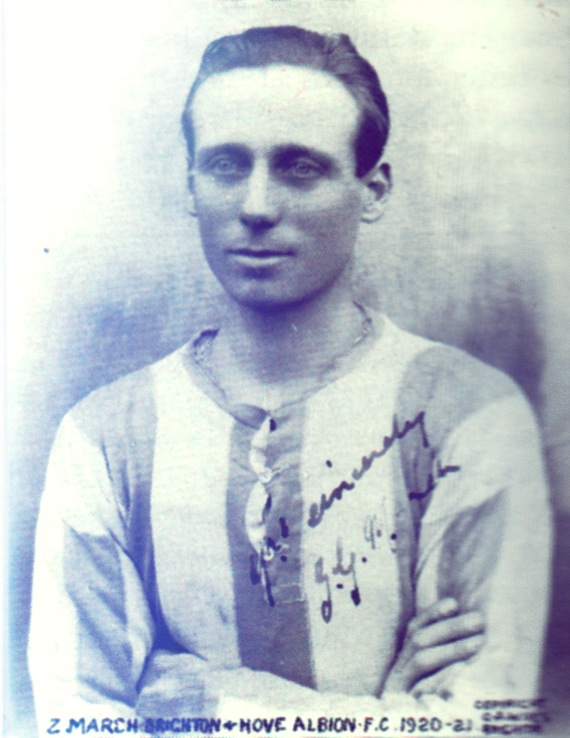
From the Daily Express on 26th October 1992, I found this piece on George Zillwood March, known as ‘Zach March’ who played for Brighton from 1913 to 1922 as an outside-right.

He was born in Bosham, Sussex, on 25th October 1892, and reached the grand old age of one hundred by the time of this article by Barry Flatman:

England’s oldest living ex-League footballer was getting ready to hang up his boots even before Wembley’s famous white horse had first been shod.

Had he not chosen to work on past his retirement date, he could have drawn his pension before the birth of the Busby Babes.

By the time Gazzamania struck, he was more excited about receiving a telegram from the Queen.

By Zillwood March, ex-Brighton and Hove Albion and Portmsouth, never once resorted to ‘it was better i my days’ for his 100th birthday speech.

Zillwood, or Zach, as he was known at the Goldstone and Fratton Park either side of the First World War, proudly celebrated his century yesterday. As he looked back he said: “I was not a bad player then but I’d like to say I would have been better if I’d played today.

“When I played everyone’s role in the team was very rigid. I was the left winger and you weren’t there for anything else but getting the ball, dribbling it down the wing past the full-back and then crossing for the centre-forward.

“If you went wandering in front of the flank you’d soon get a telling off. And I would have loved to play in those lovely light boots without the big hard toe cap, kicking those nice new balls which don’t get heavy with mud and water.”

Zillwood hails from the seaside Sussex village of Bosham and was snapped up by Brighton when 21. The very next summer Jack Robson, the boss who signed him, moved to Manchester United, and wanted to take his discovery with him.

Zillwood, still working as a builder for the family firm, refused and stayed at Brighton in the South West Combination before enlisting for the Royal Sussex Regiment to fight in the trenches.

Mention of war brings the only trace of anger from this happy old man. “The only people who started wars should have been left to fight them. It’s the most terrible thing I have ever seen because men just become animals.”

A hat-trick against Watford is his proudest memory, alongside being Brighton’s highest paid player at £4 a week.

Zillwood often fell prey to the full-back’s sliding tackle, a tactic he believes should be abolished.

It was the heavy lunge of one Moses Russell from Plymouth Argyle that enede his career. “I was getting a bit slower and he managed to kick me in the mouth and knock me out. I thought, ‘that’s enough'”

zillwood100But Zillwood never lost his enthusiasm for the game and still watches matches on TV. “There are players in the game nowadays who have so much skill, none more than Gazza. He’s an exhibitionist, a real star.”

His theory for long life? “It’s all down to a bit of luck and enjoying yourself. I loved my football career, I loved my building work and I love life.”

March died at the grand old age of 101 in Bognor Regis on 18th September 1994.

Tagged