Monthly Archives: December 2013

Video: Brighton 3-0 Norwich – a flying start for Jimmy Melia’s circus

It's Jimmy Media!

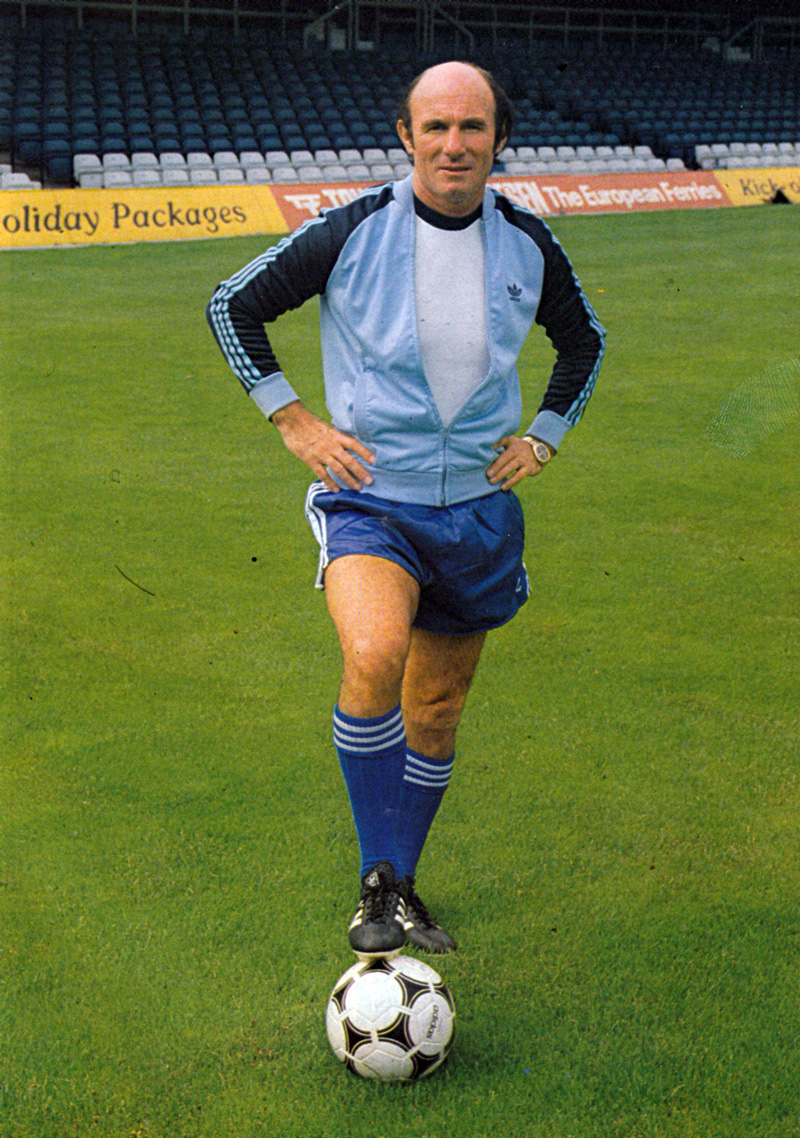
It’s Jimmy Melia – but no disco shoes here

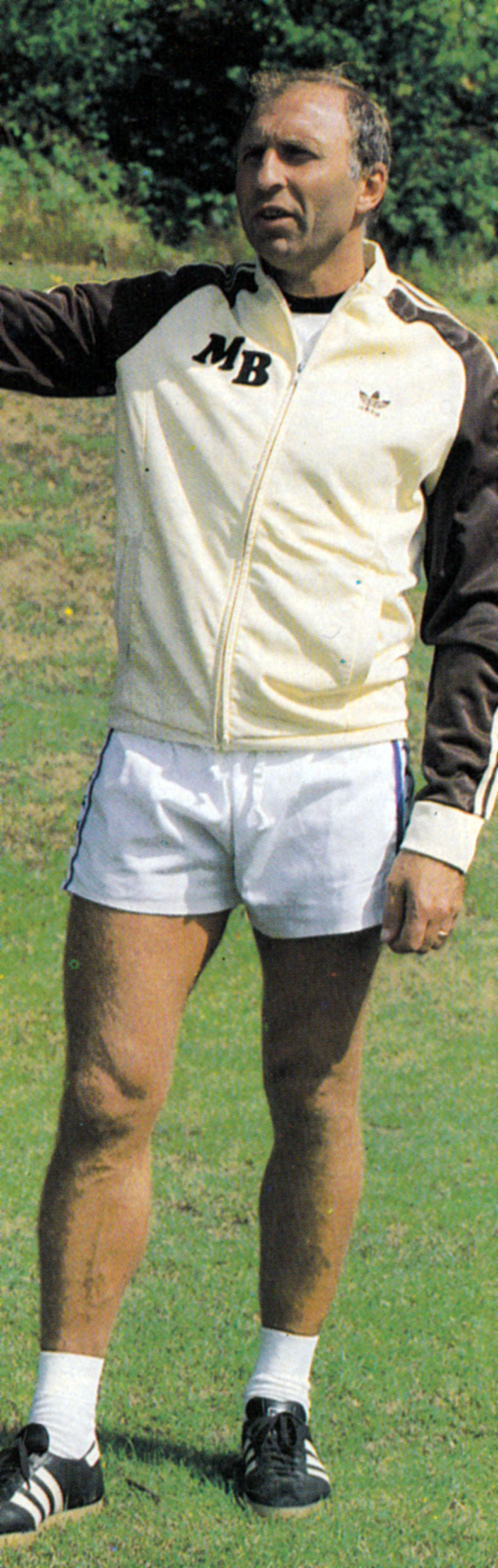
It was boss Mike Bailey out, Jimmy Melia and George Aitken in, come December 1982. Having previously served as chief scout and chief coach, Brighton’s temporary managers helped to lift the gloom over the Goldstone Ground, caused by poor results, falling crowds and growing disharmony within the side:

Brighton are fighting for First Division survival after the departure of manager Mike Bailey. What hope for the club that brought football glory to Sussex by climbing from the Third Division to the First in three years but have since fought desperately to avoid relegation. SHOOT investigates Brighton’s catalogue of problems and turns the spotlight on Mike Bamber, the chairman who wants to be manager as well.

When Brighton were promoted to the First Division three seasons ago it seemed like a Iicence for the club to print money.

They had been magnificently supported, but the crowds melted away as two gritty battles against relegation were fought by Alan Mullery.

Then, last season under Mike Bailey, Brighton appeared to have turned the corner in finishing a respectable 13th, the highest position in their history.

Now, following Bailey’s departure early last month, Brighton, amid falling gates, are fighting all over again to establish themselves.

Alarmingly, there are cracks appearing in the Goldstone structure, and some disgruntled fans have even said they’d be better off in the Third Division.

It is a fact that Brighton have never attracted 30,000 crowd since they went up, yet there is well-heeled catchment area that hasn’t been visibly hit by the recession.

The season was only a few weeks old when two key international players, Steve Foster and Michael Robinson, asked for transfers. Then Nell McNab said the chairman’s involvement extended too far. McNab alleged that he picked the team.
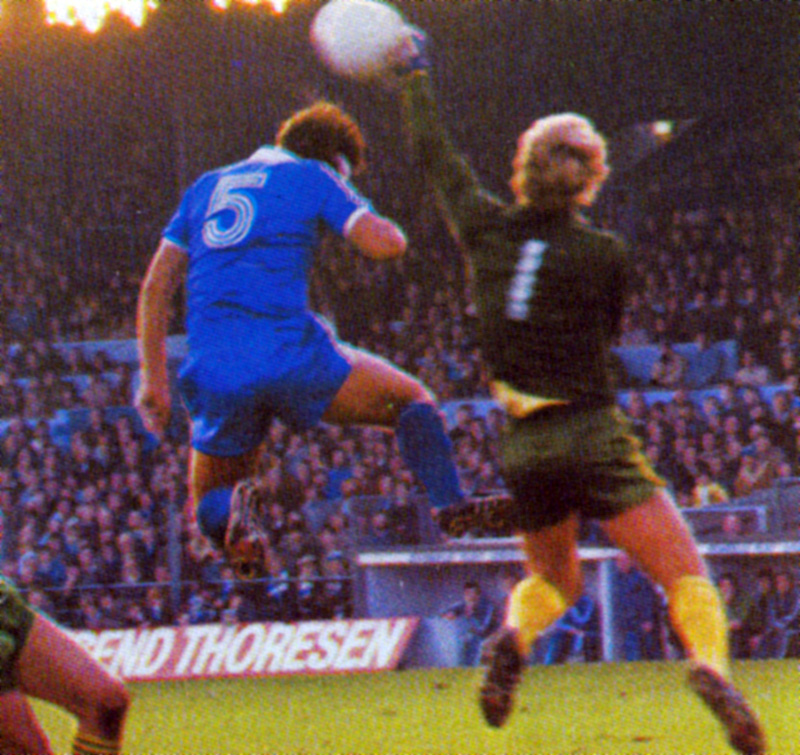
Foster - staying for now

Foster – staying for now

The fuss died down, and Foster and Robinson later said they were willing to stay. McNab, who is also on a lengthy contract, turned down a move sending him to Newcastle on loan, and has since joined Leeds United on a temporary transfer.

While the basis of Foster’s gripe was money he considered a rise was due after getting into England’s World Cup squad, Robinson’s quarrel, besides being financial, raised other questions.

He accused the club of lacking ambition, and this was triggered when Bamber refused to back Bailey up in giving Charlie George a month’s trial.
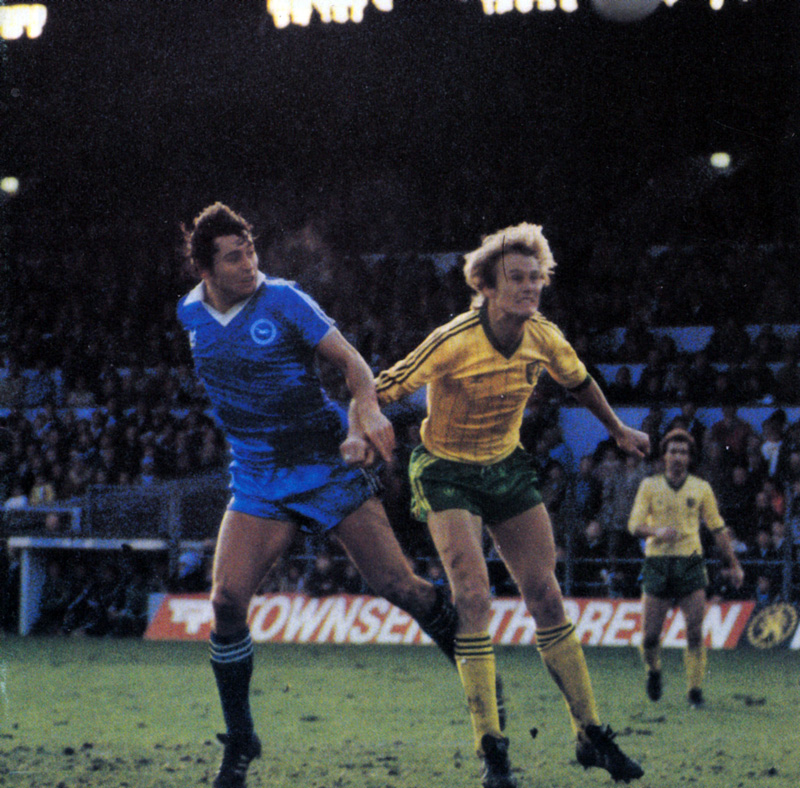
Robinson: Want-away striker

Robinson: Want-away striker

It was Robinson’s opinion that the chairman should also have given Bailey a contract. After putting his cards on the table, it looked as though Robinson would leave.

But he declined a berth at Sunderland, and was later wooed by Arsenal and QPR.

Foster’s dispute had been settled previously, and he did not identify with Robinson all the way. But McNab’s bluntness in challenging his chairman was a blockbuster.
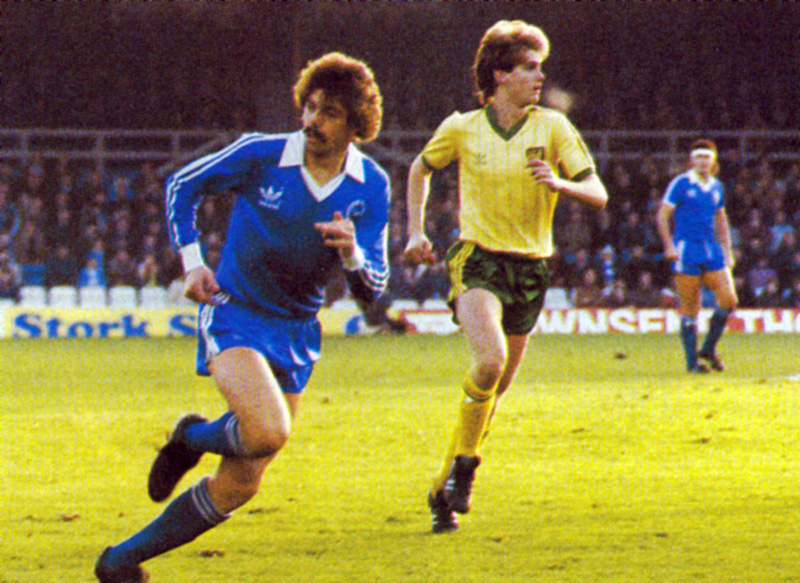
Ward returns

Ward returns, replacing the Ward-replacement Andy Ritchie

Bamber brought about the return of Peter Ward, Brighton’s former record scorer, on loan from Nottingham Forest.

He saw him as not only a vital crowd-puller, but the man to link-up best with Robinson.

Brighton have only got him until the end of next month, but he did the business by scoring the winner against Manchester United on November 6 when the gate was a satisfying 18,398 – an increase of 8,000. The inclusion of Ward put Andy Ritchie’s nose temporarily out of joint, Brighton’s most expensive signing at £500,000 from Old Trafford stayed in the reserves for six weeks and only re-appeared when Bailey left.

And another big-money player, Gordon Smith, who cost £400,000 from Rangers, went back to Glasgow on a temporary transfer.

The principal reason was to help Rangers in the Scottish League Cup Final against Celtic. But all Smith got was a runners-up medal that was stolen the same night when his car was vandalised.

Smith, like most Brighton players, is also on a long engagement. But he’s in a whirl.

“When I get back to Brighton, I’ll have to introduce myself as a new signing.”

Perhaps Brighton’s biggest mistake was signing Mickey Thomas from Everton. Over £400,000 was involved, and the Wales international couldn’t put a foot right.

He gave domestic reasons for several acts of truancy that held Brighton up to ridicule. Fines and suspensions didn’t bring him into line. But once transferred to Stoke, Thomas showed his real worth.

Then he relaxed, and said: “Joining Brighton was the worst period of my life. Last season was just a horror story for me. I felt trapped there. They were in such a hurry to sign me, and soon everything got me down. And the system they played was so defensive that I got bored. I admit I was out of order in taking time off, but I should never have gone there in the first place.”

Brighton cannot afford another mistake like that, and it is very doubtful they will be able to recoup anything comparable to the fee paid for Smith.

Bamber disclaims responsibility, saying the down-turn in the market has put many clubs in trouble, and Brighton are no exception.

He is hoping that Jimmy Melia, in temporary charge, can lift the side…

The Melia era got off to a glorious start with an emphatic 3-0 victory over Norwich City on 11th December 1982, a win that suggested the side, now more attacking, had turned over a new leaf in the League. Here you can enjoy highlights from this match, Albion’s biggest victory in Division One that season:

Enjoy Jimmy Case’s rocket with his left foot, the close control and creative play of Peter Ward, and Andy Ritchie’s curling free-kick.

Unfortunately, it proved a false dawn. Albion failed to win their next ten League matches, a poor run that plunged the club from 18th to bottom of the division by the start of March. By then the media circus over the FA Cup run gripped the club and First Division survival became of secondary importance.
Tagged , , , , , ,

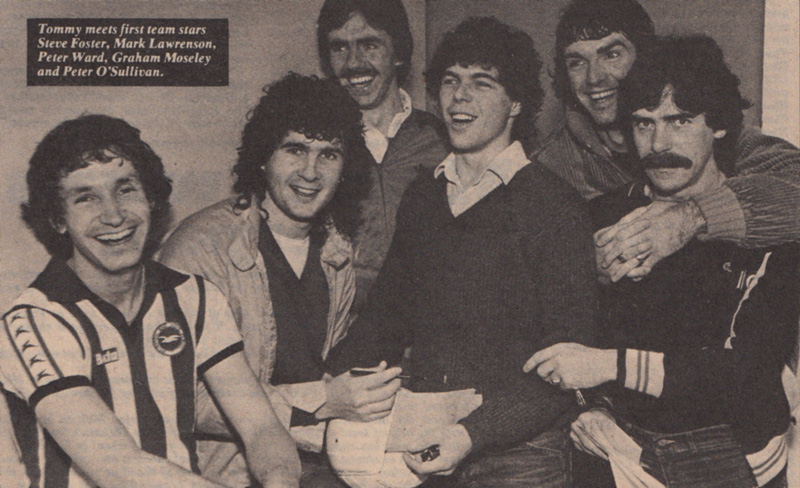
Dream signing… children’s TV star Tommy Boyd joins the Seagulls!

magpie2

Rescued from Shoot! magazine in 1979/80:

“This is a dream come true,” said Tommy Boyd, as he stood proudly on the Goldstone pitch, wearing the blue and white shirt of his favourite club, Brighton & Hove Albion. “The number of times I’ve stood on those terraces, wondering what it would be like to be out here. Well, now I know. It’s a great feeling!”

Thanks to the hospitality of Alan Mullery and his team, SHOOT was able to give the Magpie TV star a super day with the South Coast Seagulls.

His first call was at Alan Mullery’s office, where he also met assistant-manager, Ken Craggs.

After ‘signing on’ for The Seagulls, Tommy met the rest of the first team squad. Star defenders, John Gregory and Steve Foster, decided to check on Tommy’s fitness with a workout in the gym and afterwards he was happy to enjoy a relaxing cup of tea with skipper, Brian Horton.

“The thing I liked most was the happy atmosphere I found at the club,” Tommy said, later. “I think a lot of that stems from Alan Mullery. He’s a man with an open, friendly personality. He loves to laugh, but more than anything, he loves the game.

“I really enjoyed meeting him. He’s always been a hero of mine. He was a great player. Do you remember the way he marked Pele out of the game in Mexico, in 1970? I defy anyone to name a player who could have done a better job on the day. Mullery was so versatile. He could do the lot.

“Now, it’s great to see he’s carried his two best qualities, that’s skill at the job and a natural enthusiasm, into the world of management. I’m sure he loves every minute of what he’s doing.” Another Goldstone personality Tommy rates very highly is Brian Horton.

“Brian’s always had his critics and he has proved them wrong. I saw him make his debut for the club, when he was bought for peanuts from Port Vale. He impressed me right away. He’s got all the qualities you Io0k for in a captain.

“When Brighton won promotion from the Third, some critics wondared hew Brian would get on in the Second Division. Well, he was a driving force there and it was the same story last season. He’s a fine player.”

Tommy started supporting Brighton when he was just atoddler. During his student days, at Sussex Umversity, he loved to spend his Saturday afternoons relaxing with The Seagulls.

“The funniest aftemoon I’ve ever spent at the Goldstone was during our college Rag Week,” he chuckled. “We did some collecting on the terraces for charity, before a match. My friend was singing and playing the guitar and I was going round with the tin. Most of the fans were happy to give us money … as long as we promised to go away and annoy someone else!”

Like most of us, Tommy dreamed of becoming a professional footballer, when he was at school. “The closest I’ve come was a charity match last summer, when I was marking the great Bobby Charlton. I thought I was fit, but even when he was dribbling the ball, Bobby could leave me standing.

“So, I’ll never make a top player, But SHOOT made one dream come true for me. I’ll really feel at home the next time I go to the Goldstone. When I’m cheering the players from the terraces, I’ll be able to use their first names!”

magpie3

Tagged , , ,

Bailey’s side blows hot and cold

mikebailey8

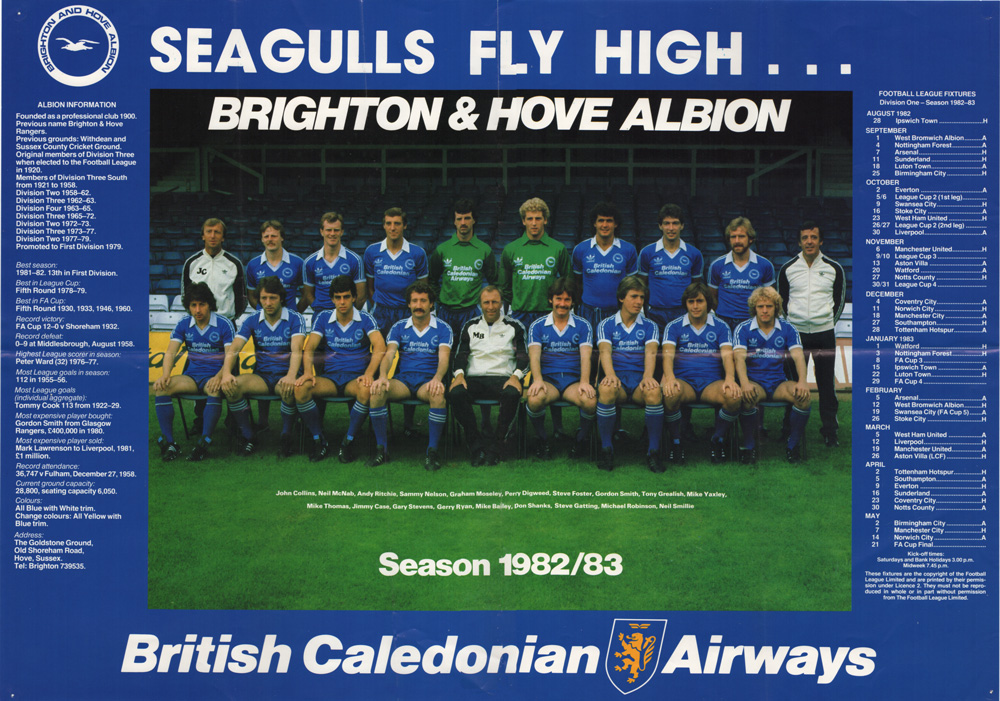
In Shoot! Magazine in November 1982, the publication put Mike Bailey’s reign under the spotlight, as the club struggled to string together a run of good results in the First Division. Unbeaten at home in the League at the Goldstone, the side regularly suffered hammerings away from home, losing 0-5 at WBA, 0-4 at Nottingham Forest and 0-5 at Luton in the early months:

It’s hard not to feel some sympathy for Mike Bailey, Brighton’s 11th manager since the War.

He gained a fine reputation as an attacking wing-half with Wolverhampton Wanderers, and before that Charlton Athletic. He was at his best at the time when English football was rich in midfield talent, a factor which prevented him from winning more than two full England caps to add to his five appearances for the Under-23s.

Bailey has found management a far harder proposition. He did well to steer Charlton to promotion from the Third Division in the 1980-81 season, a success story that persuaded Brighton chairman Mike Bamber that he was the man to replace Alan Mullery.

He inherited a bed of thorns when he breezed confidently into the Goldstone Ground in June 1981.

They narrowly escaped relegation from the First Division two months earlier and there was no reason to believe he would lead them into calmer waters the following season.

As it turned out, Brighton finished in a highly respectable mid-table position at the end of the 1981-82 season, unbeaten in 26 of their 42 League games.

Bailey, in common with other bosses of less wealthy First Division clubs, has had to summon all his reserves of energy and enterprise to consolidate Brighton as a First Division side.

Unfortunately, his 18-month reign has given him heartache and happiness in equal proportions. One moment Brighton send one of the mightier First Division clubs crashing in unexpected defeat – as they did in beating title-chasing Manchester United last month – the next, the manager has to wrestle with some crisis that threatens both his, and the club’s, future.

Mike Bailey’s enterprise in signing Mickey Thomas from Everton, Jimmy Case from Liverpool and Tony Grealish from Luton was warmly applauded by the Brighton fans.

Sadly, they did not always fulfil their manager’s vote of confidence. Thomas was transferred to Stoke after a short, unhappy stay and neither Case nor Grealish have turned on the power they did at their previous clubs.

The atmosphere at the club this season has not always been as happy as in the past. Stalwart first teamers Steve Foster and Michael Robinson both declared they want to leave before the start of the season, and they might well have gone if rival First Division clubs were not feeling the same economic pinch.

Fortunately for Brighton, they stayed. Foster to shore up a defence that ships water whenever he is out of the team, and Robinson to lead an attack that lacks punch if he is missing.

Brighton appear to have solved most of their problems and can look back on their start with some satisfaction. League victories over Arsenal, West Ham and Manchester United were marvellous tonic for Bailey, who smarted from crushing defats at West Bromwich Albion, Nottingham Forest, Luton and Stoke.

Peter Ward’s arrival from Forest, on loan unit February, also served to brighten the gloom shrouding the Goldstone. His first goal for the club could hardly have been better timed, a rising drive past a bewildered Gary Bailey to send United to defeat:

That pleased the Brighton boss, who roundly praised the players, especially Robinson, Steve Gatting “the most accomplished player we’ve got”, Grealish, Gordon Smith and midfield player Neil McNab, “a superb player when he plays two-touch and doesn’t go it alone.”

No manager works harder than Mike Bailey and no boss deserves to be given more time to establish the consistency Brighton need if they are not to continue worrying their fans to death.

Unfortunately for Bailey, he could not restore the club to health. Attendances continued to fall as Bailey struggled to shrug off the accusation that his side was ‘boring.’ Results also turned for the worse. The unbeaten home run in Division One fell at the end of November, with Albion going down 2-0. On 4th December 1982, the Brighton side slid to a fourth successive defeat, another 2-0 scoreline, this time at Coventry. Two days later, Bailey left the Goldstone by ‘mutual consent’, alongside coaches John Collins and Brian Eastick.

It was a sad end to the regime of the man who had taken Albion to its loftiest ever League placing the season before. It really was it for the Wisbech-born man. Bailey never managed a League club again, having once flown the Seagulls so high…

1982-83squad

Tagged

Brighton have got it right this time!

Brighton are on their way back to the First Division – and when they get there this time, they mean to stay there.

So says journalist Tony Pullein, writing for ‘Football Monthly’, the world’s greatest soccer magazine, according to its strap line, in February 1986. He was convinced of this view after speaking with Albion chairman Bryan Bedson and manager Chris Cattlin, as the season entered spring and the Sussex club dreamed of promotion.

Bedson thinks the future's so bright he'll be wearing shades

Bedson thinks the future’s so bright he’ll be wearing shades

“All our planning over the past couple of years has been geared to putting Brighton into the First Division and establishing the club at that level,” explained chairman Bryan Bedson.

“When the club previously reached the top, they did it with quite a few expensive signings. But those players grew old and were worth very little in the transfer market.That was one of the reasons why the club was so heavily in debt. When I took over, we had 32 players on our books, many of them being paid far too much.I can tell you that I took over enormous debts. We had to take care of these and now, they are being carried by the directors. We had to trim the staff and get the housekeeping right. We have spent a lot of energy on our lottery scheme, which is now one of the most successful in the country. We have new completely restructured the club financially and are very optimistic for the future.”

Brighton have a good chance of winning promotion this season but, should they miss, there is little doubt they will make it next term.

Visiting the Goldstone Ground recently, I could sense the feeling of optimism around the place. With five wins in their previous six games including that fine 2-0 F.A. Cup success at Newcastle – the feeling was that they have got it right this time.

Smudge, with Chris Cattlin

Smudge, with Chris Cattlin

“The pleasing thing for me,” smiled manager Chris Cattlin, “is that we have won four of our last five away games.” That was no surprise to Brighton’s travelling supporters, who have become accustomed to seeing their side attack the opposition both at home and away.

“My policy is to go at the opposition right from the start,” explained Cattlin.”I don’t care whether we are home or away. Our tactics are the same. The important thing for us all is that the game is made entertaining. We have to put the game before individual club ambitions. Football has had many problems. One of the reasons is that it has not been marketed in the right way. We have got to make people want to come to the ground to see a good game. There is too much talk about sponsors. As far as I’m concerned, the only sponsors I want to see are fans pouring in through our turnstiles. That’s what the professional game is all about,” added Cattlin.

Certainly, there has been a tremendous transformation at the Goldstone Ground since Cattlin took over as manager in November, 1983. The Seagulls were third from bottom of the Second Division at the time. Though few people realised it, the club was on the verge of closure.

“That’s right,” shrugged Cattlin. “If we had gone down again, we might have become another Swansea or Bristol City. It was as serious as that.” “Brighton were saddled with too many old players, many earning far too much money for what they were contributing. I sold an old team and have bought a new team of my own. I had to pick them up from the lower divisions and from reserve teams. But I chose players with the right attitude and players who would be proud to play for Brighton.

“I set myself two targets. One was to ensure the club survived. The other was to set up a youth policy that would provide players for the future.”

The latter will probably prove to be the most important contribution made by Brighton’s live-wire manager in the long term. Few local-born players have made the first-team in modern times and the whole of the current first-team squad came from other clubs.

George Petchey was brought in as youth development officer to set the scheme in motion and is still in charge of recruitment, though he is also coach to the first-team. John Shepherd, the former Millwall, Brighton and Gillingham player, runs the yeuth team on a part-time basis.

“Of course, it will be some time before we see real results,” says Cattlin. “But I am hopeful that we shall find many first-team players from this source in the future.”

At the moment, Cattlin still has to find his players elsewhere. Last summer, he sold Nell Smillie to Watford for £ 110,000 and bought Justin Fashanu from Notts County for a similar fee.

mortimer

“I also signed my old Coventry friend Dennis Mortimer on a free transfer. He is such a fine player with the right attitude,” said the Seagulls boss.

Ray Houghton - one that got away

Ray Houghton – one that got away

“I got Dean Saunders from Swansea on a free, so my summer dealings cost the club nothing. I would dearly have liked to have signed John Gregory from Q.P.R. and Fulham’s Ray Houghton. But the fact was, we couldn’t afford them,” shrugged Cattlin.

“I was disappointed because, at the moment, I am £300,000 in credit on my transfer transactions. But, besides being a football manager, I am also a businessman and I accept that the board has had to make cuts – just like the Government!”

Cattlin spent his distinguished playing career With Burnley, Huddersfield, Coventry and Brighton. A leftback, he also won England Under-23 honours. When he retired in 1979, he left the club to go into business locally. He later returned to the Goldstone Ground as coach and in November, 1983, he became manager.

“It has been difficult at times,” he admits. “In the old days when the club went through a lowspell, they would spend £400,000 on a new player. I can’t do that. This season, we have been crippled by injuries. Strikers Gerry Ryan and Terry Conner both broke a leg. Fashanu had a knee operation, Steve Gatting a pelvic injury. Chris Hutchings broke an arm and now he’s out with a cartilage injury. In the circumstances, it’s not suprising we received a few set-backs during the early weeks.”

At the turn of the year, Brighton were fielding a settled team for the first time. And it showed in results.

Of the game generally, Cattlin feels football needs to take a good look at itself.

“We have got to market the game and we needed TV to help. We’ve got to run our clubs on a businesslike basis and, most important of all, we have to examine the product we are selling football. I’m absolutely convinced that football has a great future. We have to stop being too cautious. Here at Brighton, we are all willing to have a go. To take chances. All right, we shall make mistakes. But the game is about winning and that means you have to attack.”

The Seagulls’ boss is confident his side can succeed this season. “In the Second Division, we want to win the Championship,” he emphasises. “We enter the F.A. Cup because we want to win it. We are going for both this season.”

Cattlin concedes that Portsmouth and Norwich seem likely to take two of the promotion places. “It looks that way at the moment, but there’s a long way to go. I’m proud of my team. They are all playing for Brighton. Playing to win every game. Of course we can win promotion.”

Will the current side be good enough to hold its place if it does go up this year? Cattlin is realistic: “I think we would have to spend a bit to strengthen it. The youth policy has not been going long enough yet to provide First Division players. But if you look at the First Division, there are about seven really outstanding clubs. I’m sure we can survive among the others when we first go up. It’s really a question of organisation, of using your assets to the best advantage.”

It seems clear that when Brighton do regain their First Division status, they will not again have to live on a clay-today basis, hoping for survival.

Now, they know their future is in good hands.

1986

In the end, Brighton did not achieve promotion and Cattlin got the sack in the summer of 1986.

Tagged , ,

John Gregory: ‘So tough to turn my back on Brighton’

johngregory8a

John Gregory is back as an employee in Sussex, as the new manager of Crawley Town. I doubt any Brighton & Hove Albion fans will have anything positive to say about his exploits as a manager, following the bitter saga over the signing of Gareth Barry.

Nevertheless, Gregory served the Albion with distinction as a player in defence and, occasionally, in midfield. In Match Weekly (18 July 1981), he expressed warmth for the side he was leaving:

QPR’s new £300,000 signing John Gregory told this week of his pain at leaving First Division Brighton.

“It was a wrench – I found it difficult to turn my back on the lads at Brighton,” admitted the former Aston Villa and Northampton defender.

“I enjoyed two years at the Goldstone Ground and made many friends, but the prospect of a new challenge with Rangers appealed to me.”

And as John prepared to pack his bags for London he tipped his former team-mates for a bright First Division future.

“The team has yet to reach their full potential but when they do Brighton will be •a force to be reckoned with.”

Lest we forget, before he left Brighton, he plundered a couple of goals for the Seagulls in the famous 3-0 thrashing of relegated Crystal Palace in April 1981, which helped enormously in the club retaining its top flight status:

The article in Match continues:

Moving from Brighton was •a shock for John. “I know Alan Mullery turned down •a bid – but •a couple of days after he resigned chairman Mike Bamber accepted OPR’s offer.

“I hadn’t asked for a move so the news that I was to be allowed to go was quite a surprise,” he added.

In joining Rangers John is meeting up with one of his boyhood heroes – former Spurs player Terry Venables.

“I used to watch from the terraces at White Hart Lane and my favourite players were Terry and Alan Mullery – it’s ironic that I should end up playing for both of them. Terry’s an ambitious manager and he’s determined to get QPR beck where they belong – in the First Division. The fact he’s spent so much money on now players shows how determined he is – I’m very excited about the prospect of playing for them.

“I don’t know much about the Second Division although I see that I’ll be visiting •a few old haunts. When I played for Northampton I went to such places as Rotherham and Grimsby – and I’ll be back again next season.”

John isn’t so €concerned about taking •a drop from the First Division to the Second. “Rangers are a First Division set up and I’m sure we’ll be back soon.”

He’ll also be re-united with his former Aston Villa team-mate, goalkeeper John Burridge.

“We’ve been on the phone to each other •a couple of times since the move and I’m really looking forward to seeing him again,” said John, who made 59 full League appearances for Villa.

This season is an experimental one for the Loftus Road club because they become the first team in the Football League to play their home games on artificial turf.

“I’m told it’s very similar to playing on grass but come February or March I’m sure it’ll give us an advantage because it won’t suffer the effects of the weather.

“Another plus is that we’ll be able to train on all season and that’s got to be •a bonus,” said John.

By the end of Gregory’s first season at QPR, 1981/82, the side reached the FA Cup Final against Spurs, and the utility man hit the woodwork at Wembley. It took until the following season before the Loftus Road side clinched promotion to Division One. The prospect of playing against his old side at Brighton did not materialise as the Seagulls were relegated. However, Gregory was re-united briefly with Alan Mullery who was QPR boss for a traumatic six months in 1984. There was even talk of trying to bring Gregory back to the Albion during the Chris Cattlin era in the mid-1980s, but the club could not afford him.

Gregory then became a hot topic of conversation for Seagulls fans when he became Aston Villa manager. Although Gareth Barry was signed by previous boss Brian Little, he made his League debut under Gregory. Gregory incensed followers of the Albion when he said that Dick Knight ‘wouldn’t know Gareth Barry if he stood on Brighton beach in a blue and white striped shirt, a ball under his arm and a seagull on his head.’ He later added:

“We got absolutely robbed at the time by Brighton. He was substitute for Brighton youth team once. Suddenly Bryan Jones, the youth development officer at Villa, took him from there and he came to us. We tried to agree compensation and we couldn’t. When I put him in the first team his valuation went through the roof. Brighton were very shrewd and they knew the longer they left it the more they’d make because Barry was doing so well.

“Also at the start of the season he got called up by Glenn Hoddle to train with the England squad and that put his valuation up even more. We’d already paid £100,000 at the time and we ended up paying £1 million for him. That sounds cheap now when you see what he’s achieved, but it should’ve been a lot less.”

With the current news of Nelson Mandela’s death ringing in people’s ears, many people are taking to social media to praise the way the former president of South Africa walked the path of forgiveness and reconciliation. Now that Brighton is a thriving club once more, safely into its new stadium, I wonder how many Brighton fans would be willing to seek reconciliation with John Gregory. Who could be open to forgive him for his comments about Aston Villa’s attempt to prise Gareth Barry from cash-strapped Albion without compensation all those years ago?

Tagged

New executive boxes in the North Stand!

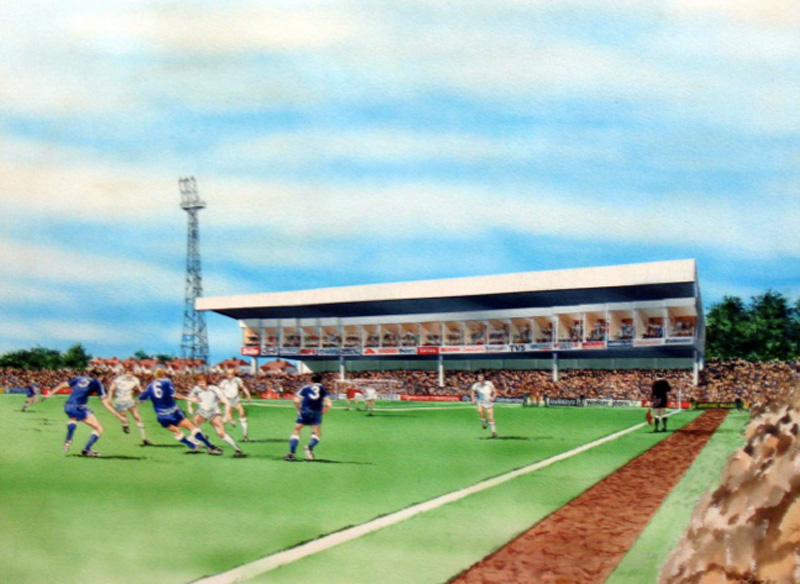
At the Goldstone Ground, the old North Stand was demolished in 1980 as it was deemed structurally unsafe by East Sussex County Council. This image is from a watercolour painting saved from a house clearance of ex-Albion chairman Bryan Bedson. It gives a fascinating artist’s impression of how the old structure’s replacement might have looked:

goldstoneredeveloped

If you study it carefully, you can see twenty executive boxes above advertising boards for companies such as TVS and Caffyns.

I’m not sure how public this image was at the time. It might have seemed all a bit ‘pie in the sky’ as this protest banner suggested. The banner was seen draped over the railings in 1982/83, as Brighton departed the top flight:

northstandroof3

In the end, a plain roof was built over the North Stand. But for those still dreaming of executive boxes in the North Stand: the drawing board went that-a-way!

Tagged ,

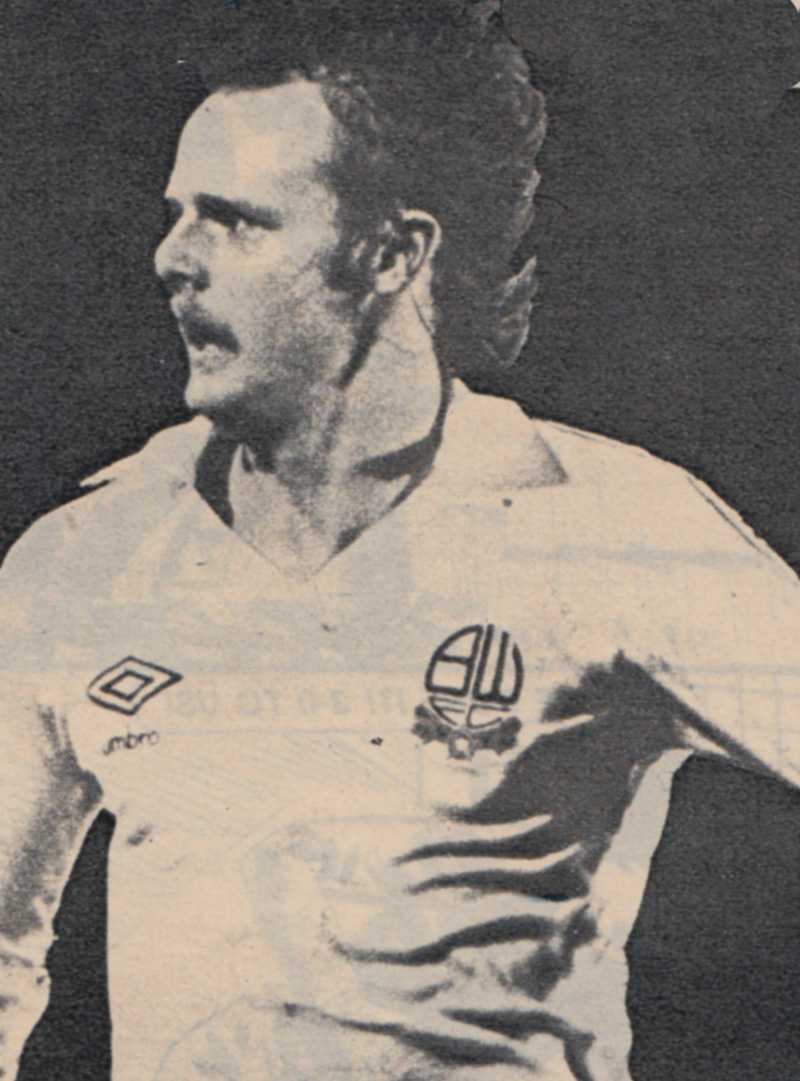
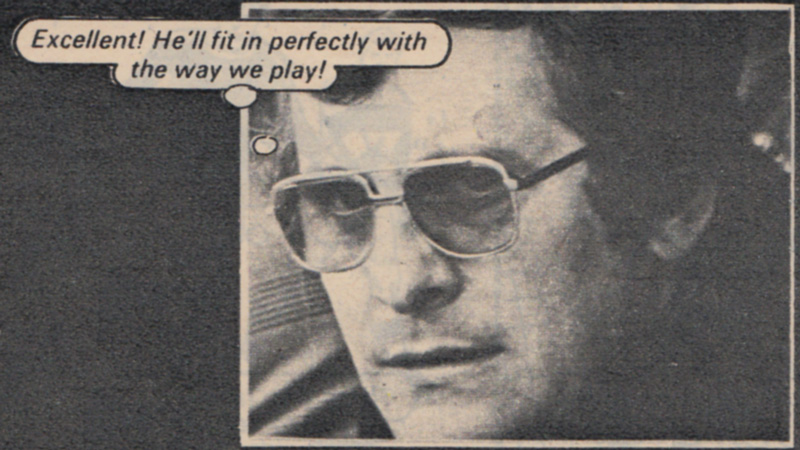
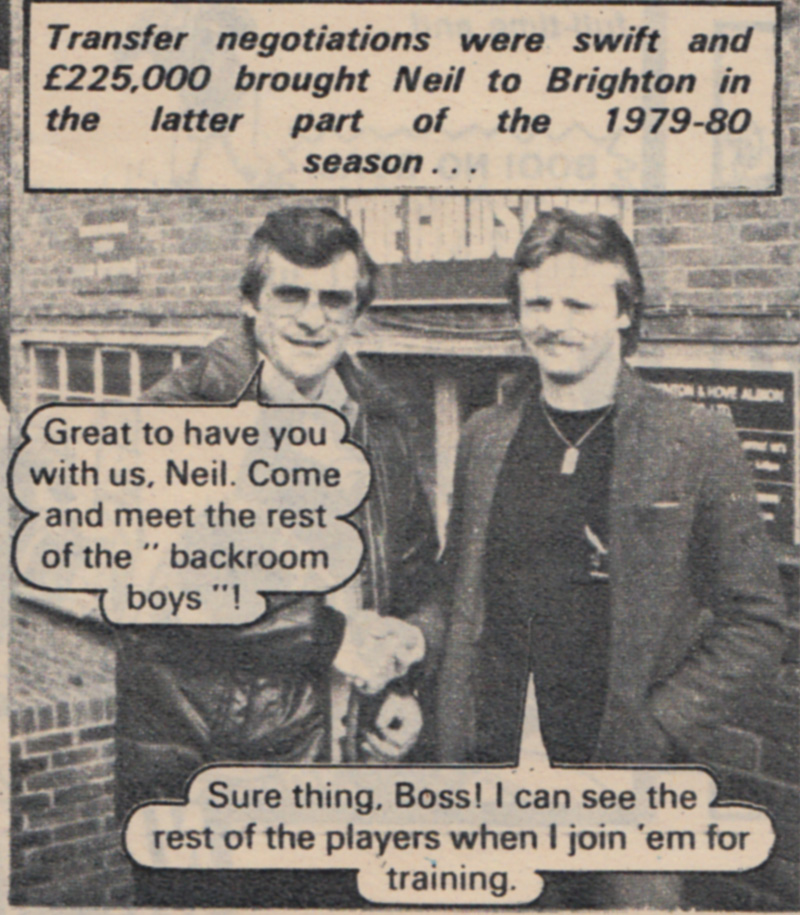
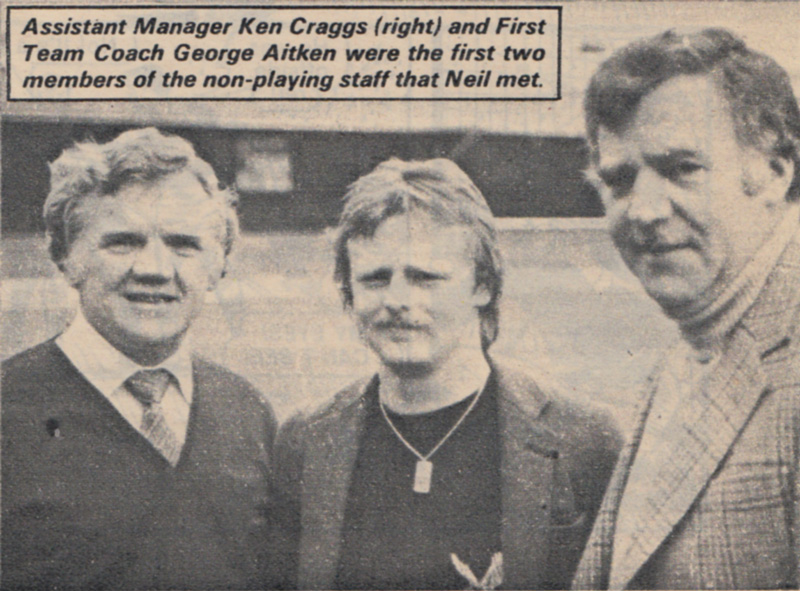
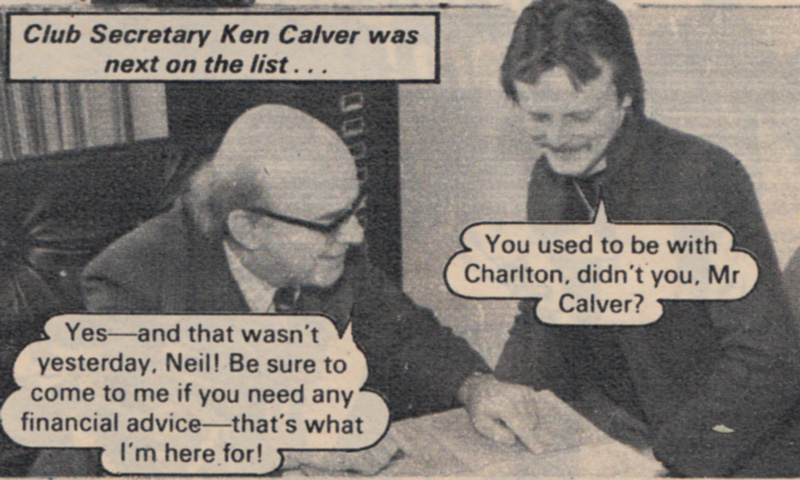
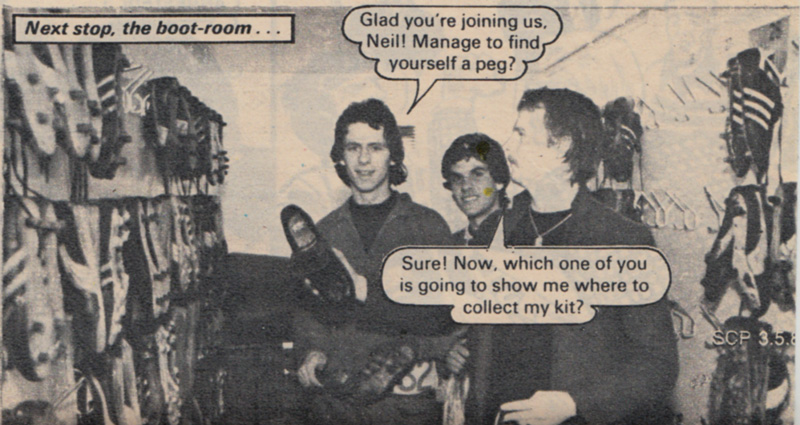
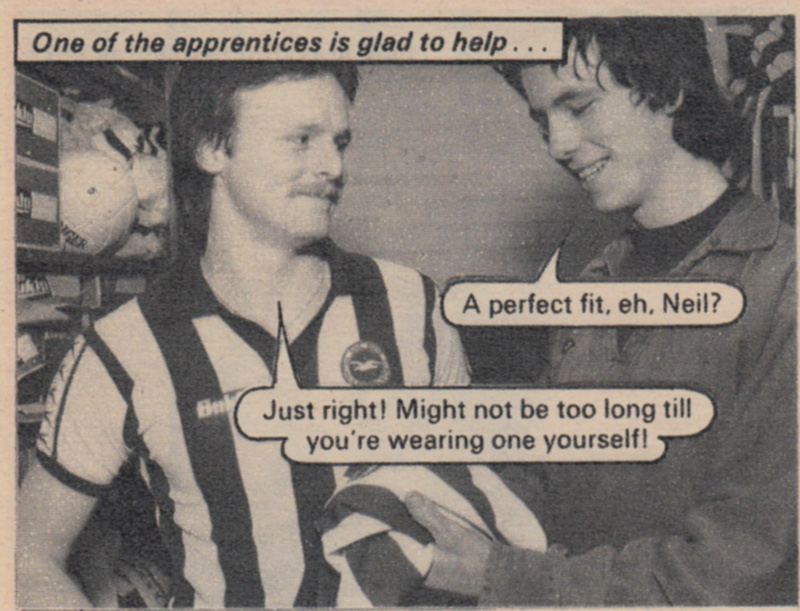
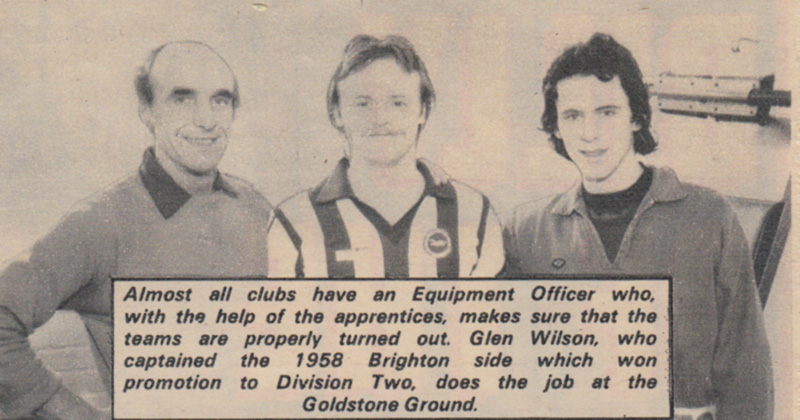
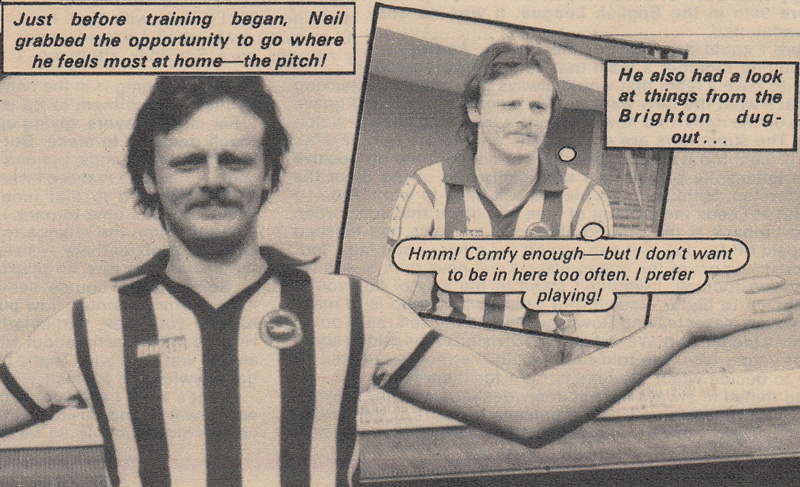
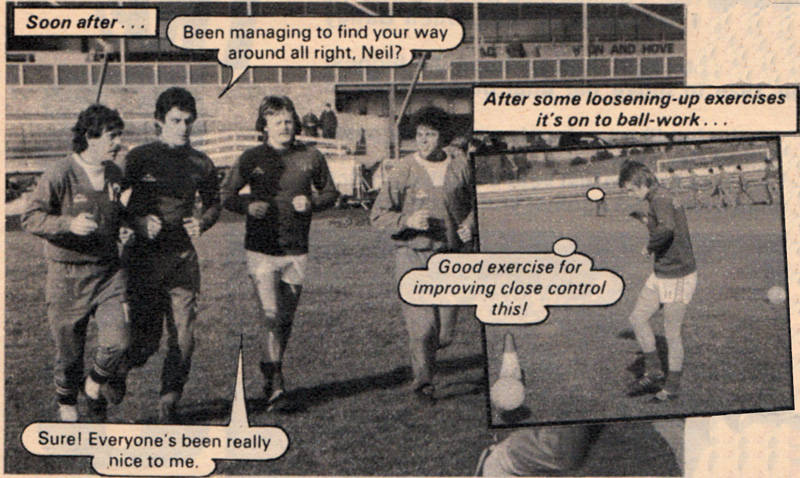
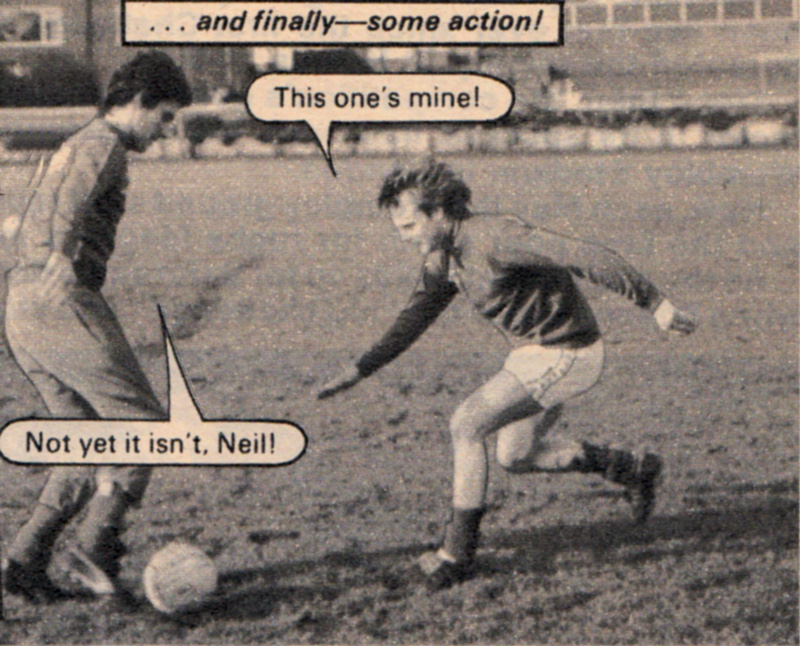
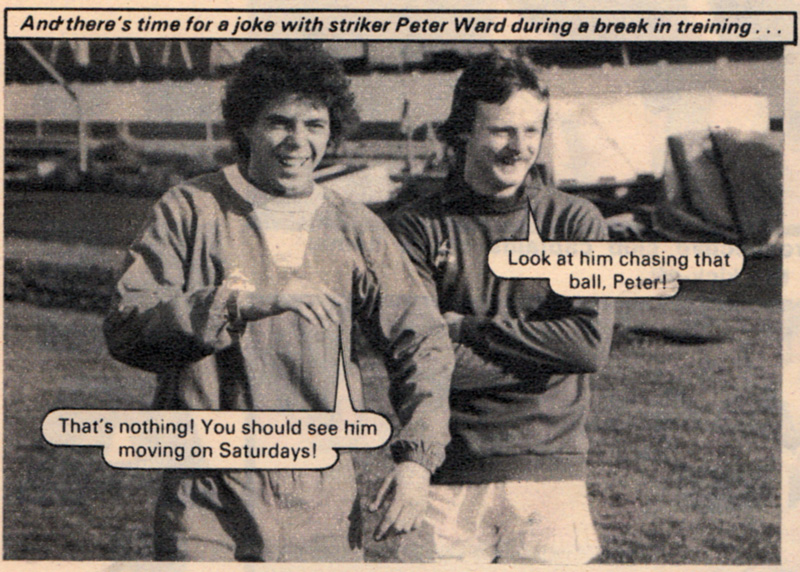
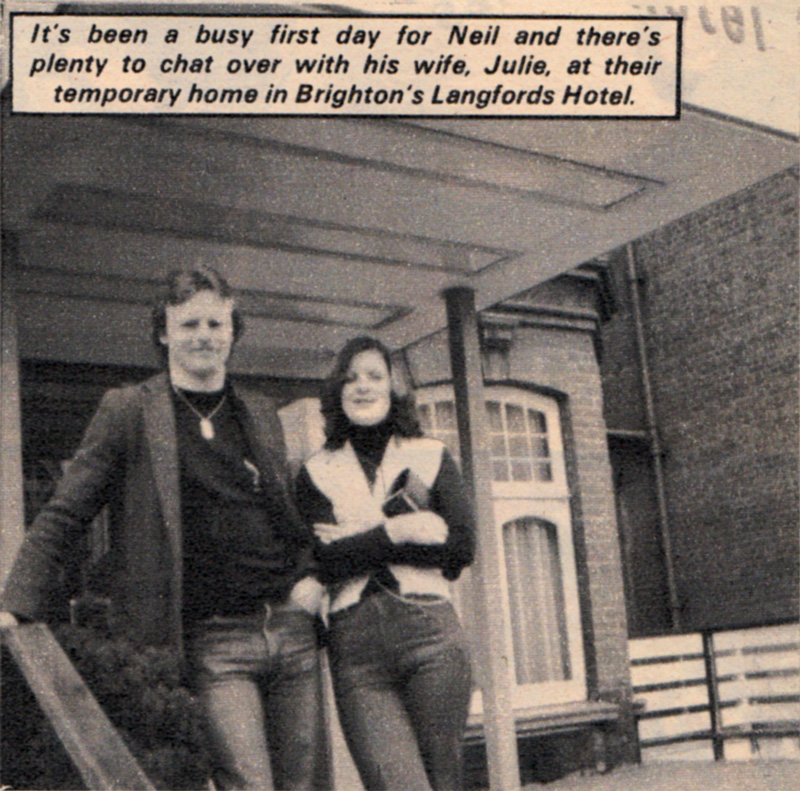
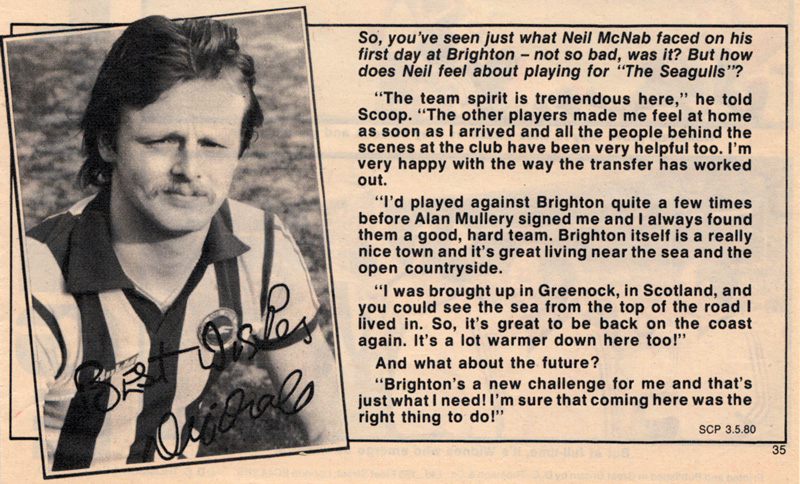
Photo story of Neil McNab’s transfer from Bolton to Brighton in 1980

From the pages of Scoop magazine in 1979/80:

mcbabcomic6

mcbabcomic5

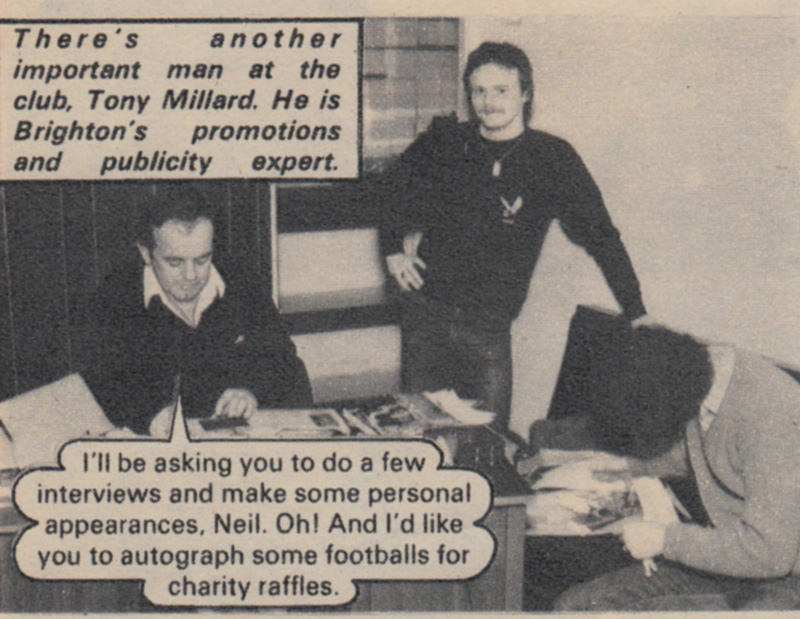
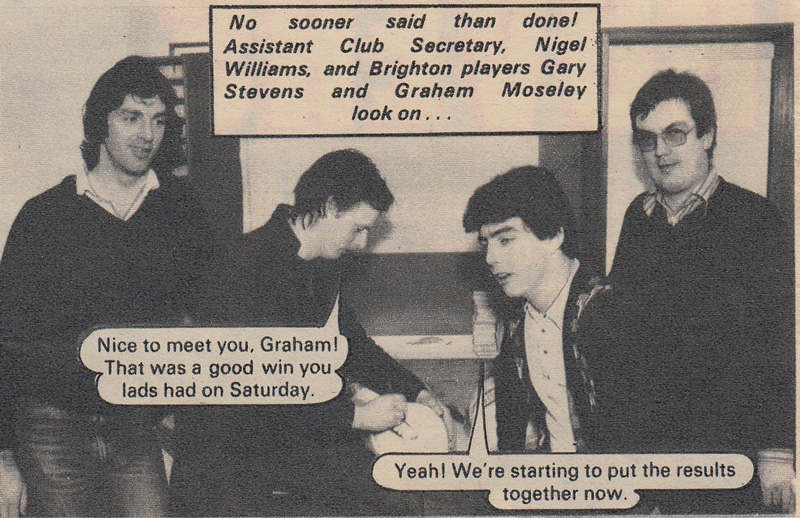
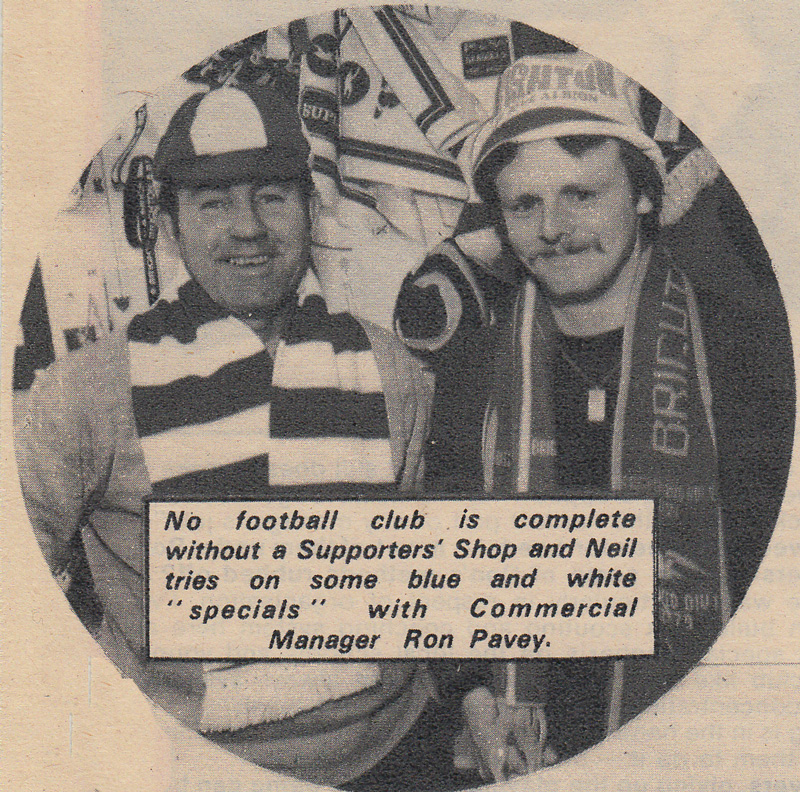
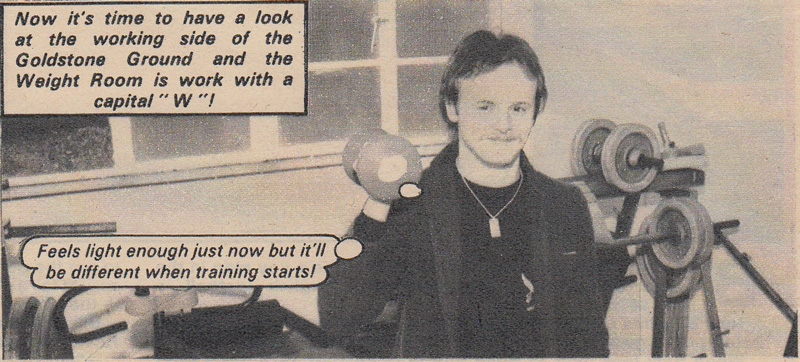
Ever wondered how a newly-transferred player faces his first day at a new club? Scoop takes you behind the scenes.

In the fast-flowing action of an English First Division match, players on the field have no time for anything but the game they’re involved in. Sometimes, however, from a section of the crowd, calculating eyes will be watching the every movement of one player. Such was the case with Bolton’s Neil McNab who, having unknowingly displayed his football skills under the watchful gaze of Alan Mullery, was about to become the new boy at Brighton.

mcbabcomica

mcbabcomicb

mcbabcomicc

mcbabcomicd

mcnabcomice

mcnabcomicf

mcnabcomicg

mcnabcomich

mcnabcomici

mcnabcomicj

mcnabcomick

mcnabcomicl

mcnabcomicm

mcnabcomic4

mcnabcomicn

mcnabcomico

Tagged

Seagull Lloyd chirps again

In 1988/89, Shoot! magazine told the remarkable story of Brighton’s surprising renaissance under manager Barry Lloyd, a man who took over three months to record his first win as Seagulls boss:

barrylloyd1988

Brighton manager Barry Lloyd currently has the chirpy air of someone who has cheated the gallows – and well he might, for a year ago he was on soccer’s Death Row.

Having taken over an already ailing club in January 1987, Lloyd had to wait 15 matches before The Seagulls finally gave him his first victory in charge – a run which left them firmly anchored at the bottom of Division Two.

By the end of the season, crowds had slumped to less than 6,000 and most of those who bothered to turn up did so only to call for Lloyd’s head as The Seagulls took a swallow-dive into the Third Division.

Yet, 12 months later, the condemned man was a local hero, with nearly 20,000 fans filling the Goldstone Ground as Albion won their last game of the season to claim promotion following a late run.

With hindsight, despite calls for Lloyd to be sacked, he probably had one of the safest jobs in the country in 1986/87. After Mullery was sacked, it appears that Barry Lloyd’s task to the end of the season was to decimate the side by replacing its high earners with reserve players and non-league signings, even if it meant relegation to Division Three, which it did. Hence the introduction of untried players such as Kevan Brown (Southampton), Robert Isaac (Chelsea), John Crumplin (Bognor Regis Town), Richard Tiltman (Maidstone) and Ian Chapman. Unsurprisingly, Albion finished bottom but having slashed the wage bill, Lloyd kept his job.

With Lloyd reflecting on Albion’s regaining of its Second Division status, the Shoot! article continues:

The former Fulham player says: “The Second Division is a tough League – but it should be an attractive one, with plenty of sides with recent First Division experience.”

Last term’s revival came after Lloyd had made major changes at Brighton and one of them proved to be an inspiration.

“Sometimes you get a little break, and Garry Nelson was one of them,” says Lloyd•.

garrynelson5

Nelson, who cost £70,000 from Plymouth before the season started, scored 32 goals and proved a revelation as a striker after years as a left-sided midfielder.

Former Southend goalkeeper John Keeley, playing his first full season back in the game after dropping out to combine taxi driving with playing for non-League Chelmsford, was another star performer.

keeley1

And although Brighton are struggling to reproduce last season’s form, Nelson, Keeley and the experience of Alan Curbishley, Kevin Bremner and Steve Getting – who has signed a new contract – could well have The Seagulls crowing again.

Lloyd had much to smile about come May. Seen by many as certs for relegation, Brighton finished a creditable 19th position in the Second Division in 1988/89, even after a dismal start. Next campaign, with expectations still low, the Seagulls finished one place higher, with Sergei Gotsmanov’s brief spell cementing Lloyd’s reputation as a man with an eye for a bargain. Nobody, not even the most optimist fan with blue-tinted specs, could have predicted that Albion would mount a promotion push the season after, in 1990/91, but they did. In the Play-Off Final in the sunshine at Wembley against Notts County in June 1991, the club stood one game away from Division One. It was at this point that the Barry Lloyd success story ended. The game was lost and within twelve months, after an exodus of key players, the Seagulls were back to third tier football.

Tagged , ,

Colour photo from 1969: Brighton v Barnsley

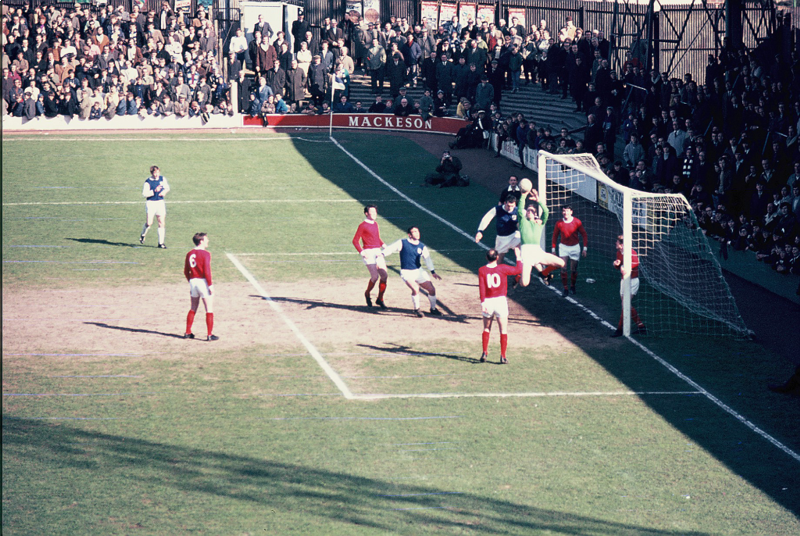
Here’s a stunning photo from 5th April 1969 in match with Barnsley at the Goldstone Ground, with an excellent view of the South East corner:

brighton barnsley 1969

The photo is from QueenSpark’s Brighton & Hove Photographic Collection

With a Tykes player on each post, it looks like the Yorkshiremen are defending a corner. Unlike what is common practice nowadays, it seems that back in the 1960s the attacking side did not throw that many players forward for this set-piece. At least from this photo, anyway. From left to right, The Albion players are Dave Armstrong, Alex Dawson and John Napier.

Dawson looks ready to pounce on any indecision. Legend has it that this is a scenario that would often lead to ball and goalkeeper in the back of the net!

The match ended in a 4-1 victory for the Albion in front of 11,410 supporters. Armstrong, Spearritt, Turner and Dawson scored. Having stood in 23rd position on 14th December 1968, the win took Freddie Goodwin’s side to sixth position in Division Three. However, poor form in the last three matches, and other teams having games in hand, meant that Albion eventually finished 12th.

Tagged , , ,

King Connor the Younger

terryconnor86

In November 1986, Terry Connor was selected as an over-age player for England Under-21s, and scored an excellent goal in the 1-1 draw with Yugoslavia in Peterborough. That month, the powerful centre-forward was interviewed in Shoot! magazine:

Brighton’s new England Under-21 cap Terry Connor – an over age player – is horrified at the thought of being called a “veteran”.

“Don’t call me that,” he pleads. “I’m one of the young ones.”

A veteran he isn’t, but it’s a common mistake to assume that he might be older than 24 – his birthday coming just two days before the European championship game with Yugoslavia.

At least one club visiting the Goldstone Ground this season thought he was probably a few years older.

Explained manager Alan Mullery: “You tend to forget that Terry was only 17 when he made his debut for Leeds United:’ “I got such an early break at Leeds because the club were rebuilding their side after those days when they were riding high,” says Connor.

“Eddie Gray was still in the team when I came in. He was the model professional. It was terrific to have someone with his experience alongside you.

“It was Eddie who sold me in part exchange for Andy Ritchie. It turned out to be a good move for both of us. Andy is still scoring at Leeds and I’m happy at Brighton.

“I would like to get 2O goals this season – that’s my target. And if we get it together we could challenge for promotion,” adds Connor.

“We played ever so well against Nottingham Forest in the Littlewoods Cup at Brighton, drawing 0-0, but then went to O1dham and were terrible.

“It’s a problem for us finding consistency. In some matches we’ve learned we just cannot rely on our football. We’ve got to battle. That’s a point Alan Mullery has driven home.”

Watching Connor it’s tempting to believe he must receive special sprint training.

But Connor doesn’t even use spikes, revealing: “A lot of players wear them to help their speed but not me.

“I train in boots. And when do you ever sprint 100 yards in a match? It’s short distance speed that’s important. Quickness off the mark is one of the most vital assets in a striker’s armoury.

“I’m delighted with my international recognition but it’s success at Brighton that’s important for all of us.”

Despite that encouraging showing against Nottingham Forest at the Goldstone, success proved elusive for the Seagulls as the season became increasingly traumatic. In an infamous stitch-up, Alan Mullery was replaced by Barry Lloyd in January 1987 and it was all downhill from there. Bearing the full force of a cost-cutting drive, the depleted Albion side plummeted down the Division Two table and were relegated.

Connor performed admirably, though, amassing a very creditable nine goals in 38 League matches for a struggling side. Unsurprisingly, he was voted ‘Player of the Season’ before joining Portsmouth, newly promoted to the First Division, in July 1987. The fee was £200,000. Not bad for an old man!

Tagged