Category Archives: Media Coverage

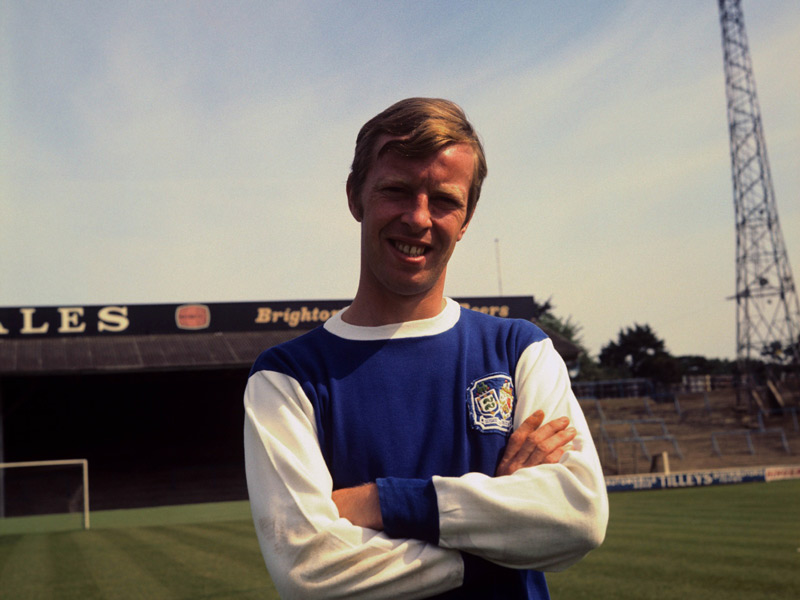
North meets South with Nobby Lawton

nobbylawton

From Goal Magazine article ‘North moves in on the South Coast’:

Brighton is one of the most cosmopolitan neighbourhoods in the British Isles, so perhaps it is appropriate that they have a man from the North as captain of their Third Division Football side.

‘Nobby” Lawton is the thoughtful new brain, signed from Preston North End last year, to succeed the industrious Dave Turner, as skipper on Brighton’s sea front. Nobby is the ideal link-man, much appreciated by new manager Freddie Goodwin. Both of douse, are ex-Manchester United stars.

His display for Preston in the 1964 Cup Final brought comparisons with Eddie Colman, one of the victims of the air disaster and Nobby’s own personal hero. His natural wing-half foraging was responsible for many Preston achievements, although he is happier in the scheming position up front. At inside-left, he has settled down into his former position at Brighton with relish and is an ideal link with the attacking probes of Turner and the sharp shooting of Napier or Livesey.

His Brighton form at first was hampered by a knee injury, but it has made him all the more determined to prove his worth before a southern audience. The Brighton fans are not quite so loyal as in Manchester and Preston – or so numerous – but they know a talented worker and schemer when they see one. Nobby Lawton has fitted into the Brighton scheme, especially as more spirit and stamina needs to be installed if they are ever to get into a higher division.

Nobby Lawton is always ready to give one hundred per cent in the interests of the club.

His family are happily settled into a Shoreham bungalow and he is one of the most contented northerners to settle into a southern club.

That 21-day suspension handed out to Nobby last week means he misses the Cup game which is punishment in itself. Nobby will be have to be patient until the weekend before Christmas. It’s a lesson that he will painfully learn.

Anyone know what this 21-day suspension was about?

By the time he joined Brighton, he had little pace, but could still ghost past players. Using his vast experience, Lawton was available to receive a passes, even in the most crowded of midfields.

He is remembered by some Brighton fans for scoring an incredible volley against Shrewsbury from the half-line in February 1969 when future Albion keeper John Phillips’ kick-out was returned with interest. After losing his place under Pat Saward in 1970/71, Nobby requested a transfer. He eventually joined Lincoln in February 1971 before retiring the following year.

He died in April 2006, aged 66.

Tagged

Eric Steele, the ‘executive’ fashion king!

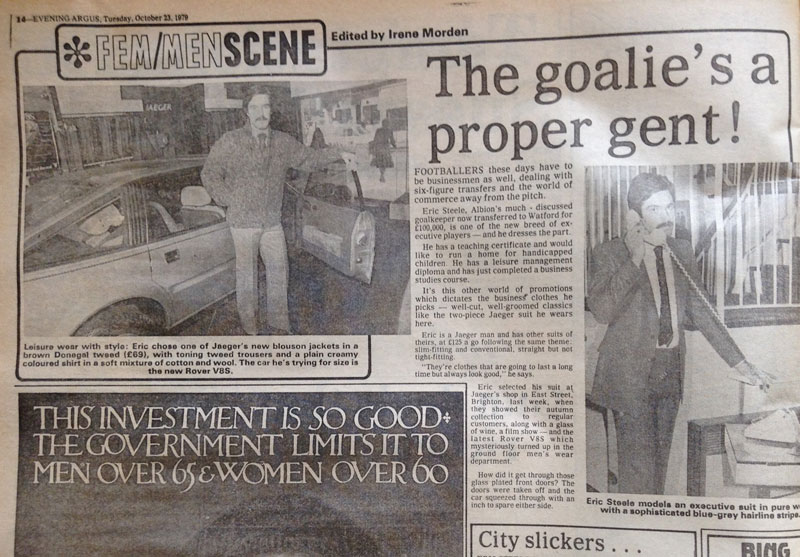
As Eric Steele made his way to Watford in October 1979, within weeks of his clash with team-mate Gary Williams at Old Trafford, Albion fans were given something to chuckle over when they saw this piece in the women’s page of the Evening Argus:

ericsteele1

Eric Steele models an executive suit in pure wool, with a sophisticated blue-grey hairline stripe.

The goalie’s a proper gent! By Irene Morden

Footballers these days have to be businessmen as well, dealing with six-figure transfers and the world of commerce away from the pitch.

Eric Steele, Albion’s much-discussed goalkeeper now transferred to Watford for £100,000 is one of the new breed of executive players – and he dresses the part.

He has a teaching degree and would like to run a hospital for handicapped children. He has a leisure management diploma and has just completed a business studies course.

It’s this other world of promotions which dictates the business clothes he picks – well-cut, well-groomed classics like the two-piece Jaeger suit he wears here.

ericsteele2

Leisure wear with style: Eric chose one of Jaeger’s new blouson jackets in a brown Donegal tweed (£69), with toning tweed trousers and a plain creamy coloured shirt in a soft mixture of cotton and wool. The car he’s trying for size is the new Rover V8S.

Eric is a Jaegar man and has other suits of theirs, at £125 a go following the same theme: slim-fitting and conventional, straight but not tight-fitting.

‘They’re clothes that are going to last a long time but always look good,’ he says.

Eric selected his suit at Jaeger’s shop in East Street, Brighton, last week, when they showed their autumn collection to regular customers, along with a glass of wine, a film show – and the latest Rover V8S which mysteriously turned up in the ground floor men’s wear department.

How did it get through those glass plated front doors? The doors were taken off and the car squeezed through with an inch to spare either side.

ericsteele3

The article even got a mention in the 1979/80 match programme v Arsenal (League Cup). It said: “There is no truth in the rumour circulating that Eric Steele departed from the Goldstone solely to avoid the snide remarks of his team-mates following his appearance last week as the subject matter of the Women’s page in The Evening Argus.”

Tagged ,

The Book of Football: Part 2 (Norman Gall)

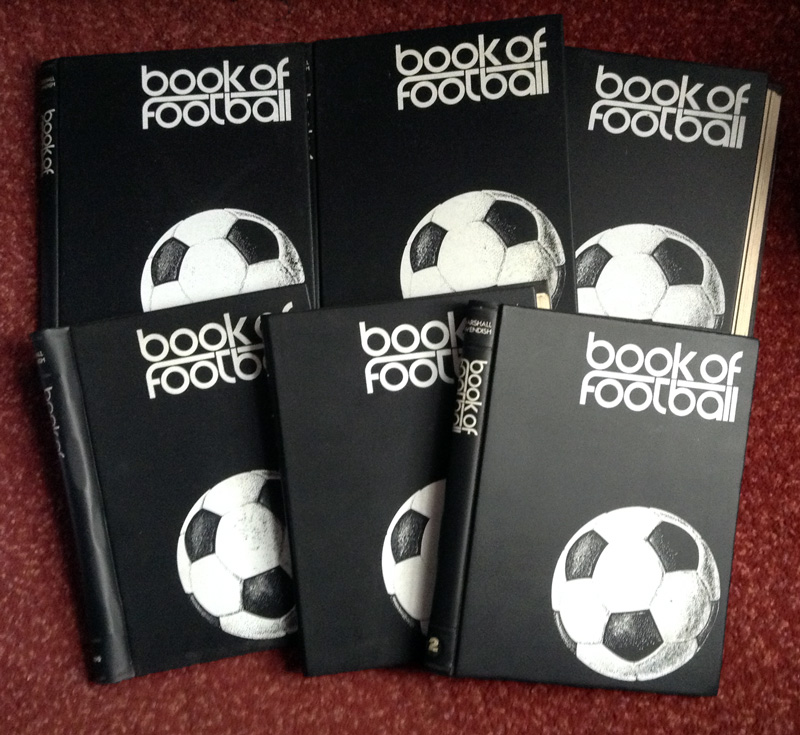
bookoffootball2

In the early 1970s, Marshall Cavendish brought out a magnificent partwork called ‘Book of Football’. Covering all aspects of the game, such as club histories, the development of tactics and strategy, and profiles of many players at different levels of the game, writers such as Martin Tyler, Brian Glanville and Phil Soar created an authoritative snapshot of how the game was back then. Accompanied by photo captions, the widespread use of colour photography and diagrams was revolutionary at the time when most magazines were in dull monochrome. This was a point that Phil Shelley, of oldfootballshirts.com was keen to emphasise when he kindly leant me all five volumes a couple of months ago.

The idea with ‘Book of Football’ was that each week, you’d buy one part of a 75-part set of journals that formed a football encyclopaedia, housed in five stylish black binders. Much of the text and photos were later repurposed for the book ‘The Story of Football’ by Soar and Tyler, published in 1986.

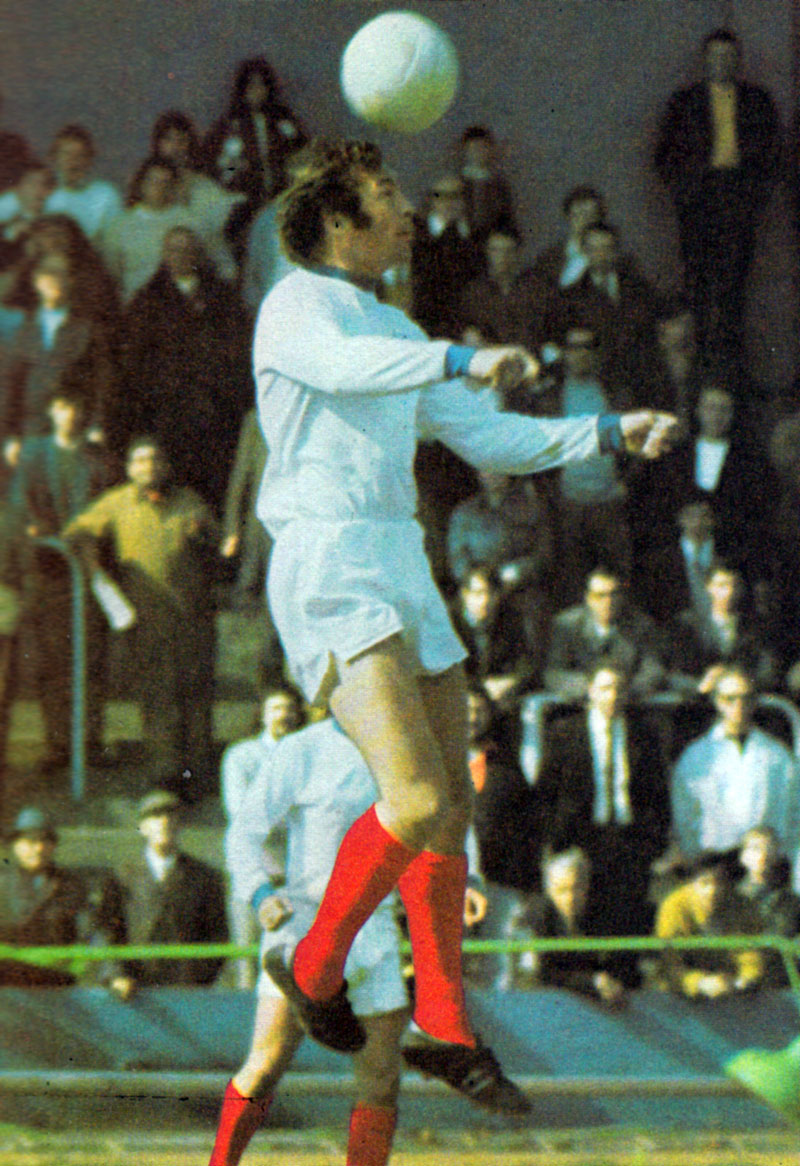
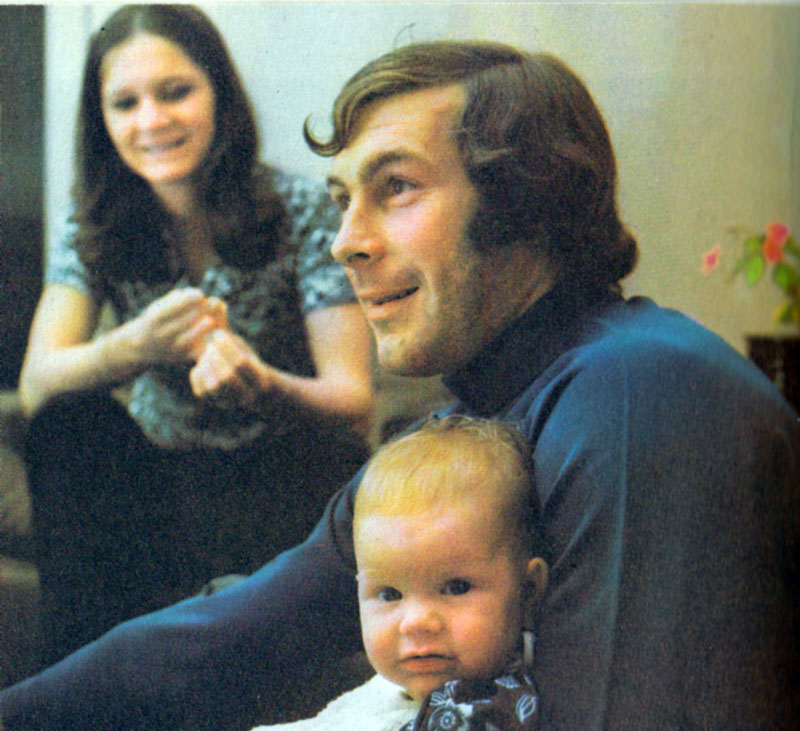
Albion fans didn’t have to wait long to see their club featured in ‘Book of Football’. In the second issue, ‘Football star, football satellite’ compared and contrasted the careers of Arsenal striker Ray Kennedy and Brighton’s Norman Gall. There were also this photo of Gall heading away a Bristol Rovers attack at the tail end of the 1970/71 campaign.

bookoffootball-1v2

Of the central defender, it says:

In March 1962, when he was 19, he was approached by Brighton and Hove Albion, then also in the Second Division. He went south this time, liked what he saw of the resort town, and signed. “They offered me good money and I just jumped at it,” he explains. He joined a club then on the slide to Division Three. He was not able to do much to help. Gall did not get out of the reserves in his first season nor for much of his second. But on his twentieth birthday he made his League debut. Gall played in three consecutive games in place of Roy Jennings, a ten-year veteran with the club. All the games were lost and Brighton were in trouble at the foot of the table. His memories of his first home game are not happy: “As soon as I went on the pitch they booed and during the kick-about they were on my back. They chanted, ‘We want Jennings.’ I played quite well, but it affected my play a bit and I think it ruined me for the rest of the season. Anyway, I was dropped right after that.”

However, Gall did establish himself and a local newspaper is quoted as singing his praises:

“The complete footballer, quiet on the ground and decisive in the air. Few people get past him. Gall’s strength is in his marvellous timing and crispness of tackling. Mobility is another strong point and he has the legs of most attackers. An intelligent fellow, he reads the game with uncanny precision and is invariably in the right place at the right time. His coolness infuses confidence among his fellow defenders and he seldom wastes the ball in distribution.”

One of the things I didn’t know before reading the article was the fact he was cleared of assault in court after a scuffle with a spectator during a promotion battle at Rochdale in 1968 when he was ‘dragged over the barrier and into the crowd.’

bookoffootball-3v2

Gall is portrayed as married to Jackie, a local girl, with a baby daughter Sarah, and living in a modern house in the village of Upper Beeding in the South Downs. He worries a bit about what he will do for a job once he reaches 33 or 34. ‘Still, there’s always non-League football.’ he adds.

bookoffootball-3v3

In this highly candid interview, Gall also shares the fact he would not recommend the life of professional football to any son of his, and says he only really enjoyed about 15 of the 40 games he played in the previous year. He also openly describes what it is like being a lower league player:

“A lot of times you feel you want a move because of the attitude of the club, or the manager. If you don’t get the money you ask for, again you want to get out. Then if the club’s not doing too well, you think you can do better and you want to move. Then you get stuck in a rut and you decide to get away to get your game going again. Or, simply, you might get bored. Then one day, a new manager comes and the place is different overnight, so you stay.”

When he said that, I’m pretty sure he must have had Pat Saward in mind.

Tagged

John Gregory says, ‘I know my place at Brighton’

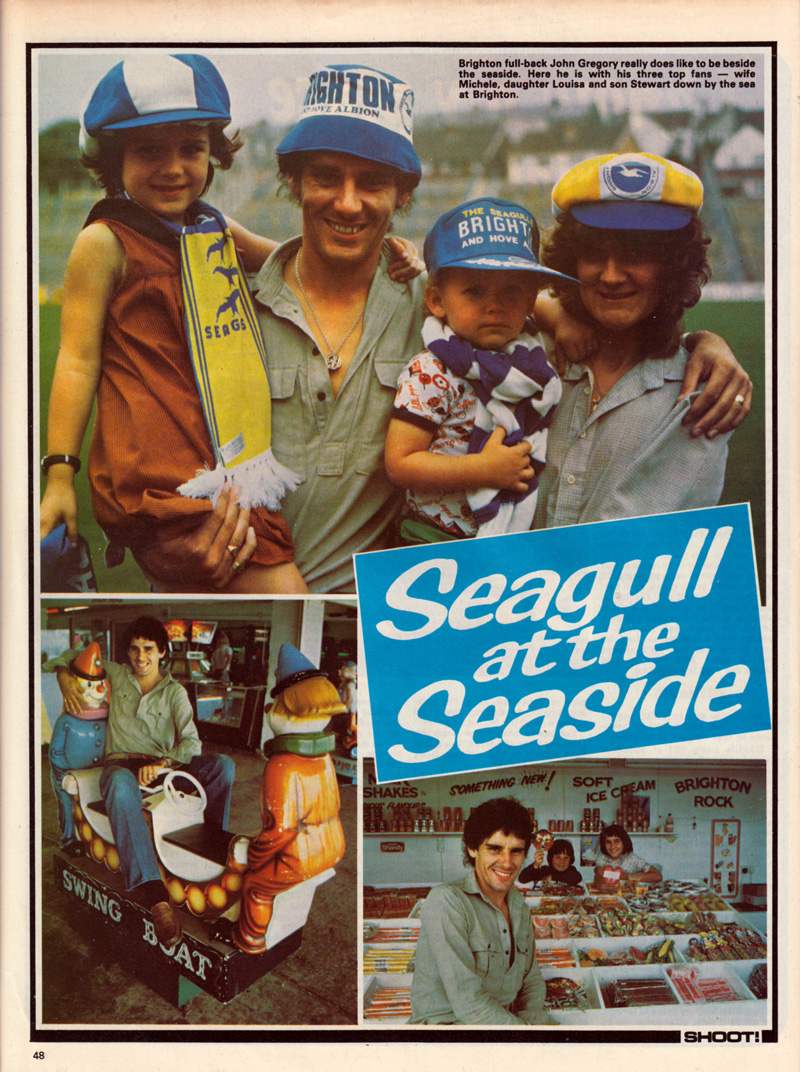
johngregory1

No doubt it’s rather bittersweet to see these pictures of John Gregory clearly enjoying his time at Brighton, especially as many Albion fans do not forgive him for his acts as Aston Villa boss in 1997 for trying to prise Gareth Barry from the cash-strapped Seagulls without having to pay any compensation. In the end, an acrimonious transfer led to Brighton receiving £1 million plus a sell-on clause.

johngregory2

Things were a lot different in 1979 when First Division survival was boosted by the summer signing of John Gregory from Aston Villa.

“I wore every shirt at Villa. I never had an established position. I was always in the side, but there was a lot of switching around. When Alan Mullery came in for me, he made it clear he wanted me to play at right-back. Now I’m looking forward to settling down and doing a good job in that position.

“We caught a cold in our first match against Arsenal, when we lost 4-0,” he admits. “It was men against boys that day. A couple of days later, the manager got us together to watch the match on video tape. After 23 minutes, he stopped the recording and asked if anyone had seen Arsenal have a shot. They hadn’t. He switched it on again and Arsenal’s first shot shot was in the corner of the net. They had two more chances before half-time and put them both away. That’s the difference between the First Division and the Second.

“But we’re learning with every match and we’re getting more confident. There’s a more professional attitude about us now. We’ve got the ability to become a good First Division side.”

As everyone knows, Brighton appeared in the FA Cup Final in 1983. You may also recall that Gregory got his chance the year before, playing for QPR against Spurs. It is often forgotten that he even hit the crossbar in the replay with a deliciously delicate volleyed lob.

Tagged

Match Cover: Andy Ritchie (3 April 1982)

match cover 1

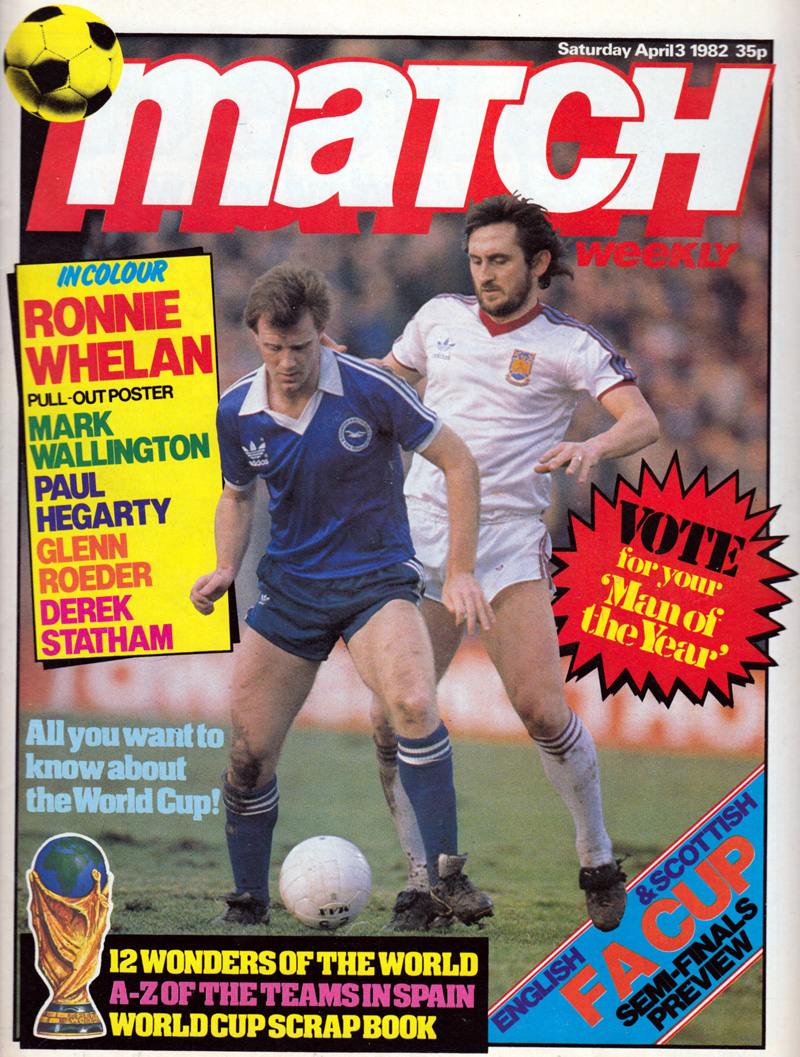
Would Andy Ritchie have been your ‘Man of the Year’? Albion supporters voted him their Rediffusion Player of the Season for 1981/82, even though they never quite took him to their hearts like they did with Peter Ward.

Below is a quote from him in Match Weekly the following season:

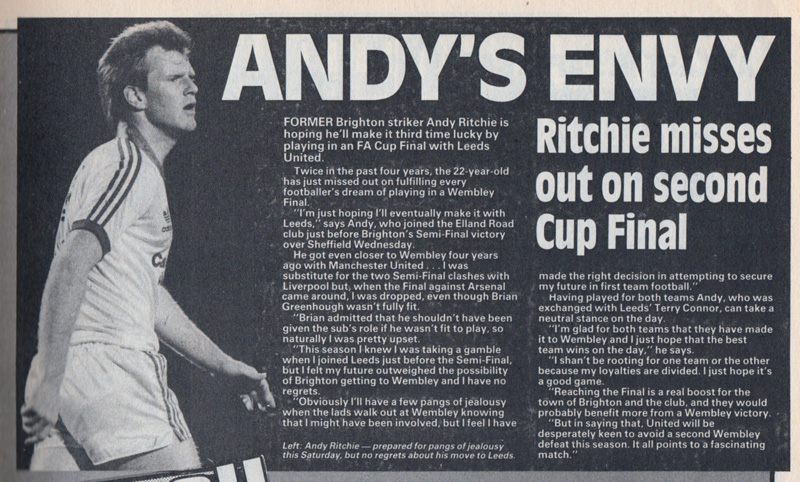
“Reaching the Cup Final is a real boost for the town of Brighton and the club, and they would probably benefit more from a Wembley victory.

ritchie

However, heartbreakingly for him, Ritchie’s departure to Leeds on transfer deadline day in 1983 meant that the young striker missed out an a chance of a Cup Final place against Manchester United. He also missed out in 1979 with Man United when Brian Greenhoff took his place. “I’m just hoping I’ll eventually make it with Leeds.” Unfortunately, he did not achieve this career ambition with Leeds, with them losing an FA Cup Semi-Final against Coventry in 1987.

By way of consolation, the now balding Ritchie did make it to Wembley with Oldham in the League Cup Final against Nottingham Forest in 1990. Much deserved after all those near-misses.

Tagged

Brighton’s ‘Preston mob’

prestonmob1

From Shoot! Magazine in 1978/79:

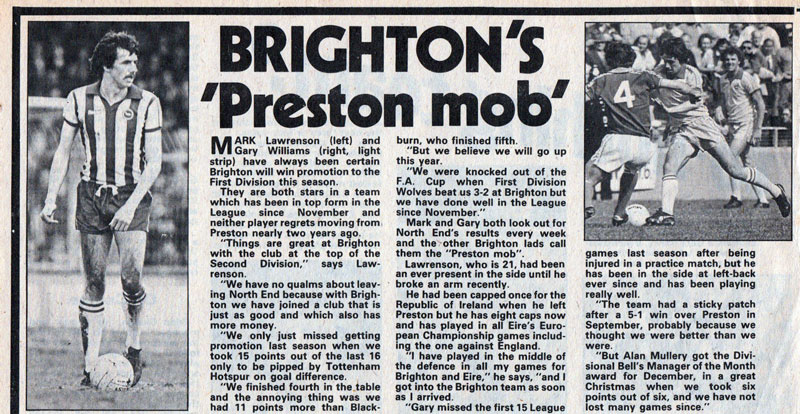
Mark Lawrenson and Gary Williams have always been certain Brighton will win promotion to the First Division this season.

They are both stars in a team which has been in top form in the League since November and neither player regrets moving from Preston nearly two years ago.

“Things are great at Brighton with the club at the top of the Second Division.” says Lawrenson.

“We have no qualms about leaving Preston North End because with Brighton we have joined a club that is just as good and which also has more money.

“We only just missed getting promotion last season when we took 15 points out of the last 16 only to be pipped by Tottenham Hotspur on goal difference.”

“The team had a sticky patch after the 5-1 win over Preston in September, probably because we thought we were better than we were.”

“But Alan Mullery got the Divisional Bell’s Manager of the Month award for December, in a great Christmas when we took six points out of six, and we have not lost many matches since.”

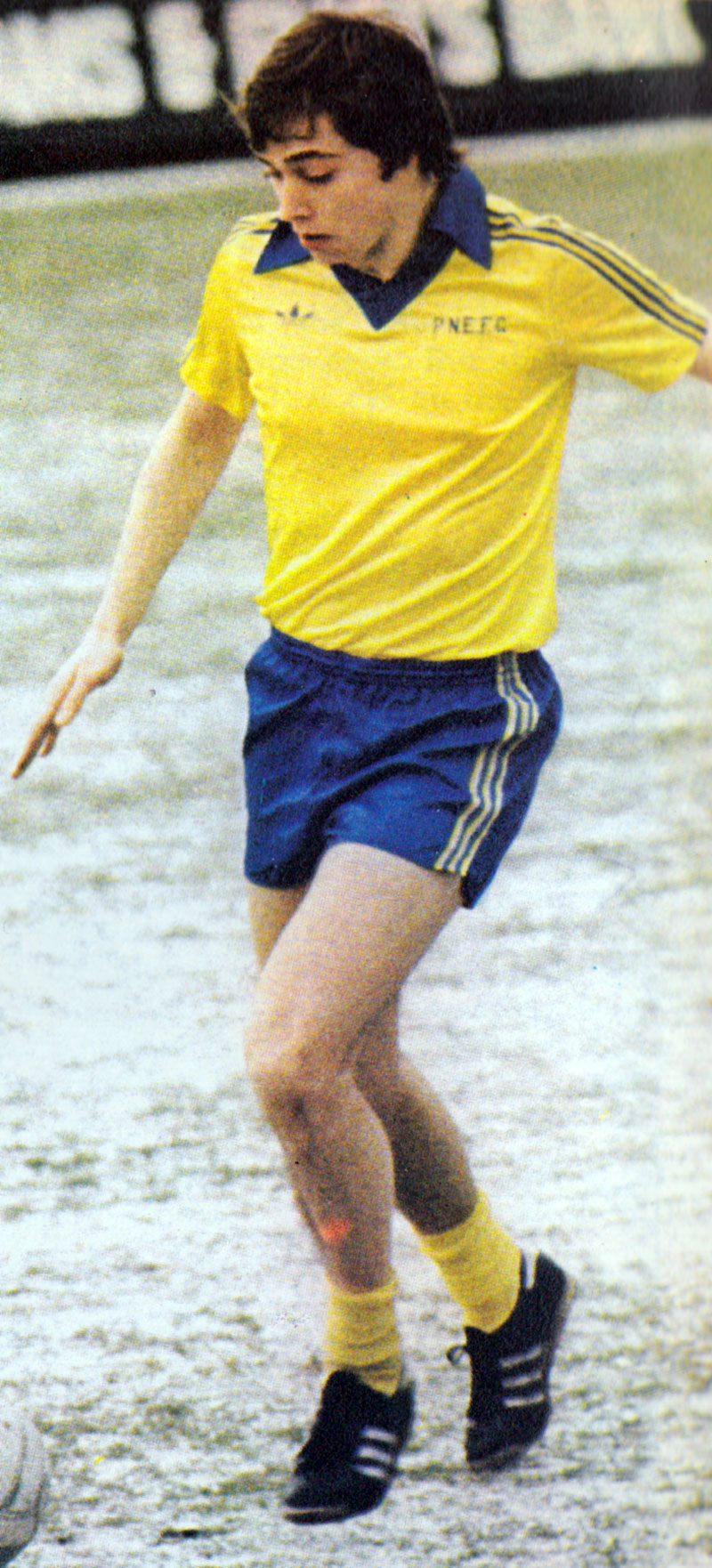
In 1978/79, just like Lawrenson and Williams at Brighton, bustling centre-forward Michael Robinson had hoped to get into the First Division himself with Preston. However, the Lilywhites suffered a terrible start. Nevertheless, he was sure he had nothing to fear. As he said to Football Handbook (Part 31): “I can’t see how we are going to go down. We have only the poor sides to play.” Speaking of the 5-1 score at the Goldstone, he added, “There’s nothing to fear because only Brighton have hammered us.” Preston eventually finished seventh, helped by winning the return match at Deepdale 1-0 in February.

robinsonpreston

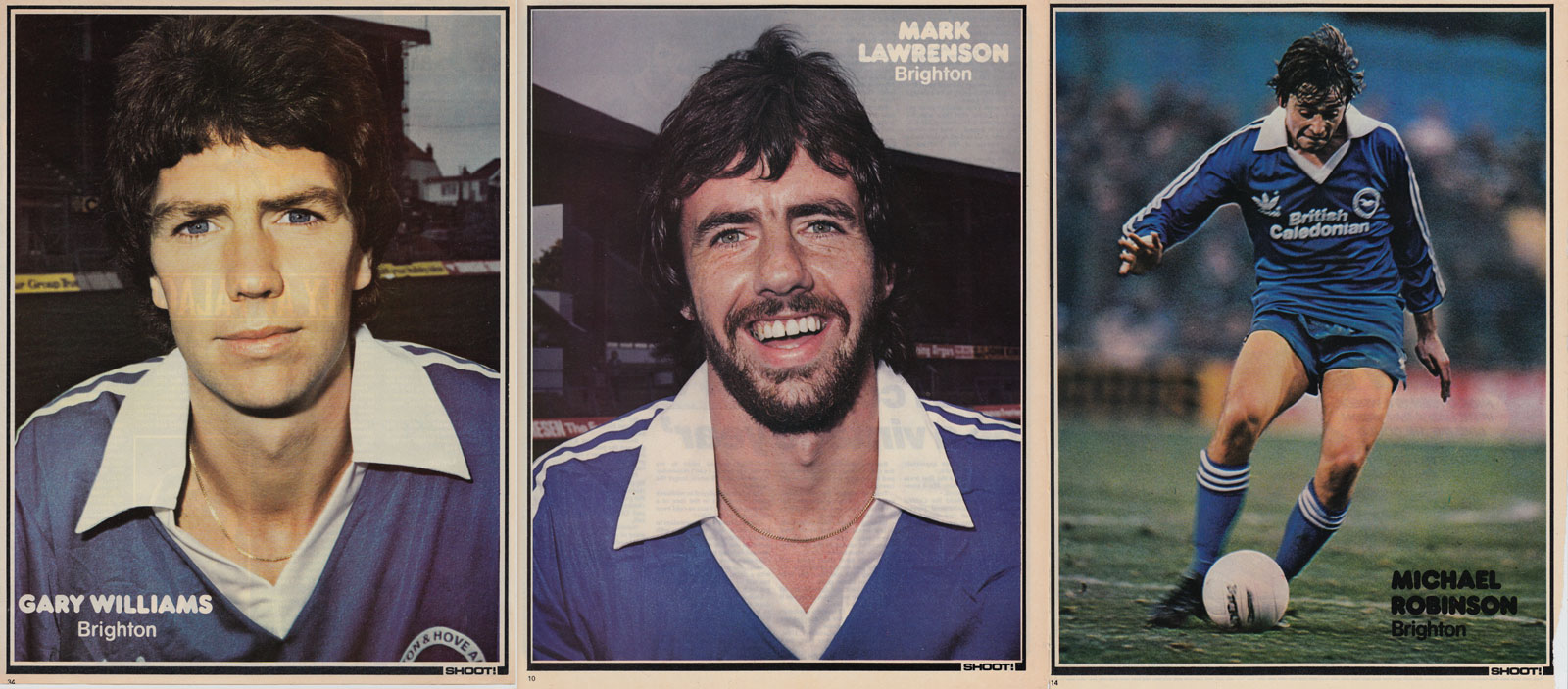
The Preston holy trinity was complete when Williams and Lawrenson were eventually joined at the Albion in the summer of 1980 by Robinson who arrived at the Goldstone via an unhappy spell at Manchester City.

prestonmob1600

Tagged , ,

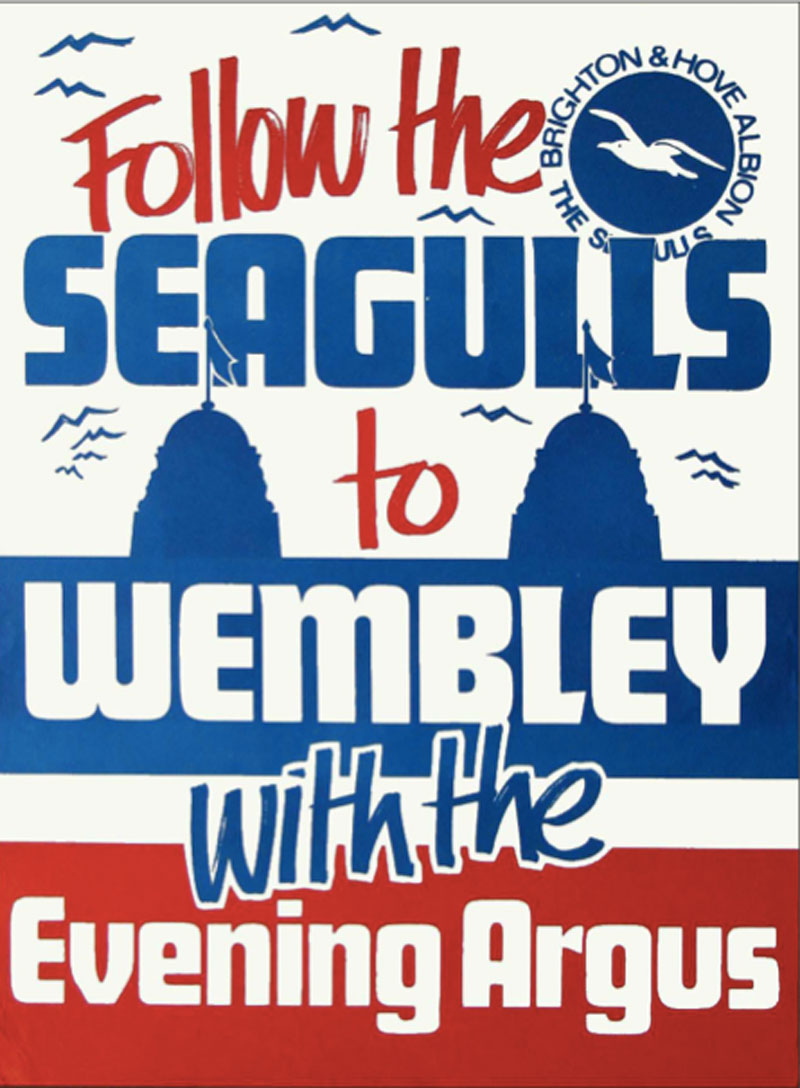
Evening Argus Newspaper stand poster

followtheseagulls

A beautiful effort from the local newspaper in 1983.

Tagged

Third Division Brighton are first-class, says Phil Beal

philbeal

From Shoot! magazine:

A gladiatorial display by Phil Beal for his new club Brighton, against Rotherham, was loudly acclaimed by the supporters who revelled in the strength and guile the ex-Spurs player had brought to their side.

The immensely experienced Beal had wielded a pattern of play that sent the supporters home humming happily, relishing the 3-0 win and calculating the prospects of the new season.

Beal went home happy too: “It’s a great feeling to have a crowd behind you like that. Their reaction impressed me just like everything else did when I visited the club for the first time to meet manager Peter Taylor.

“I knew nothing at all about the club and, to be honest, I thought it might be a tin-shed type of place. What an eye-opener it turned out to be!

“I had imagined the Third Division to be a big step-down, not just in terms of football but in everything else too. But I found they had new offices, new dressing rooms and medical rooms and when they travel they go first class, stay in first class hotels and even use the same coach company as Spurs.

“The set-up is easily as good as many First Division clubs. The pitch, for instance, is a nice size and allows you to make room to play. Some pitches are tight and cramped but not at the Goldstone Ground.

“When I saw how great things were off the field I felt they must want the same quality on it and that persuaded me. Like Tottenham, Brighton aim to play football.. which is what I am all for.”

On page 104 of ‘An Autobiography’ (1985), Alan Mullery paints a rather different picture of Beal’s reasoning behind joining the club:

I was a new manager and a few of the senior professionals tried to ‘find me out’. I had played in the same Spurs side as Joe Kinnear and Phil Beal and couldn’t believe the money they were earning at Brighton in the Third Division. Brian Clough and Peter Taylor, who had managed the club together for a short period, had given some of the senior professionals amazing signing-on fees. Kinnear was one and I got the impression that he and one or two others had gone to Brighton to take the easy way out. They had been enticed away from big clubs with massive signing-on fees between £5,000 and £20,000.

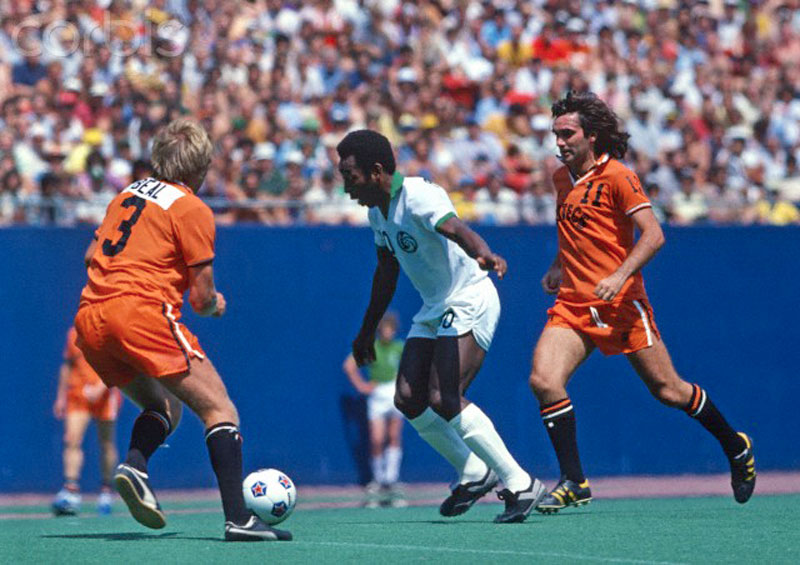
After his storming game against Rotherham on the opening day of the 1975/76 season, Beal lost his place at the start of September under Peter Taylor, making just eight League appearances. Under Mullery, the following season, he played just one League match although he did figure as right-back in the famous League Cup win against Ipswich at the Goldstone. And then, after being much more accepting of Mullery’s axe than, say, Kinnear, Beal was off …to the United States for spells with Los Angeles Aztecs and Memphis Rogues.

For the Aztecs, here he is using all the know-how he learnt at the Goldstone to try to take on Pele.

philbeal3

Tagged

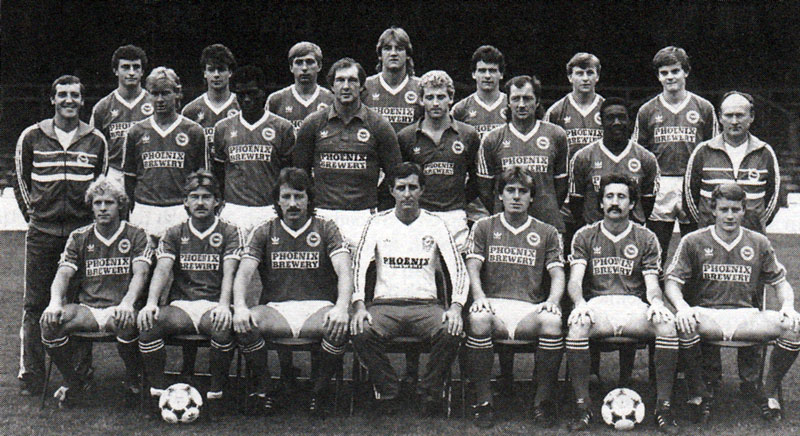
Ken Armstrong, the Albion player that never was

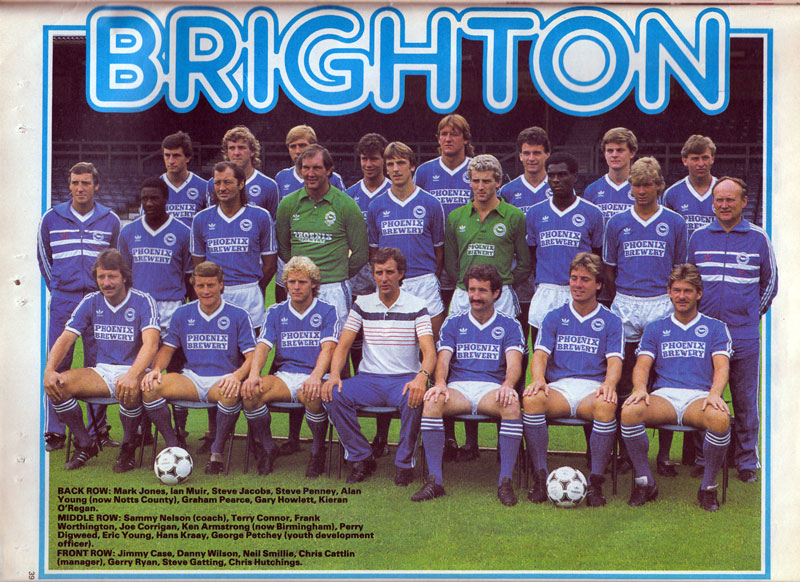
Sandwiched between keepers Corrigan and Digweed, here’s 6ft 3 defender Ken Armstrong in the Brighton team photo for Shoot! Magazine in 1984/85:

kenarmstrong

The photoshoot took place during the advanced stages of negotiation of his transfer from Southampton, where he played with future Albion stars Frank Worthington and Ian Baird. Unfortunately, the deal for Armstrong fell through and we never got to see the centre-half in action for us at the Goldstone. (Mind you, we didn’t get to watch Corrigan and Digweed either during the campaign, as Graham Moseley – strangely absent here – was ever-present and ‘Big Joe’ was given a free transfer).

It was not the last transfer shenanigans for Armstrong who later joined Walsall from Birmingham for £10,000 in February 1986, broke his ankle in his first training session, and retired from the game nine months later aged just 27.

1984-85

A restaged team photo of the one below was subsequently taken, minus Armstrong:

1984-85v2

Tagged

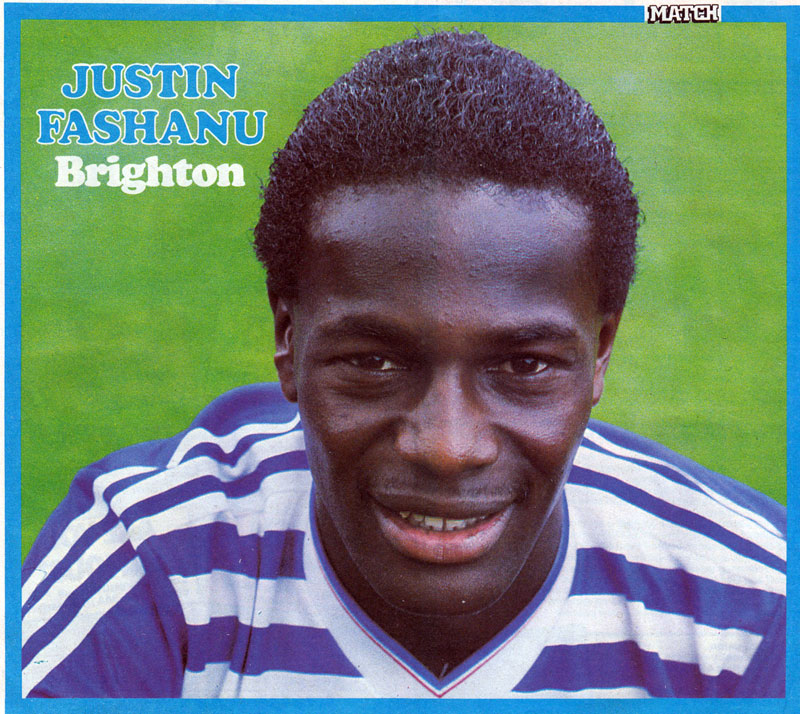
They love tough-guy Justin Fashanu at Brighton

justinfashanu

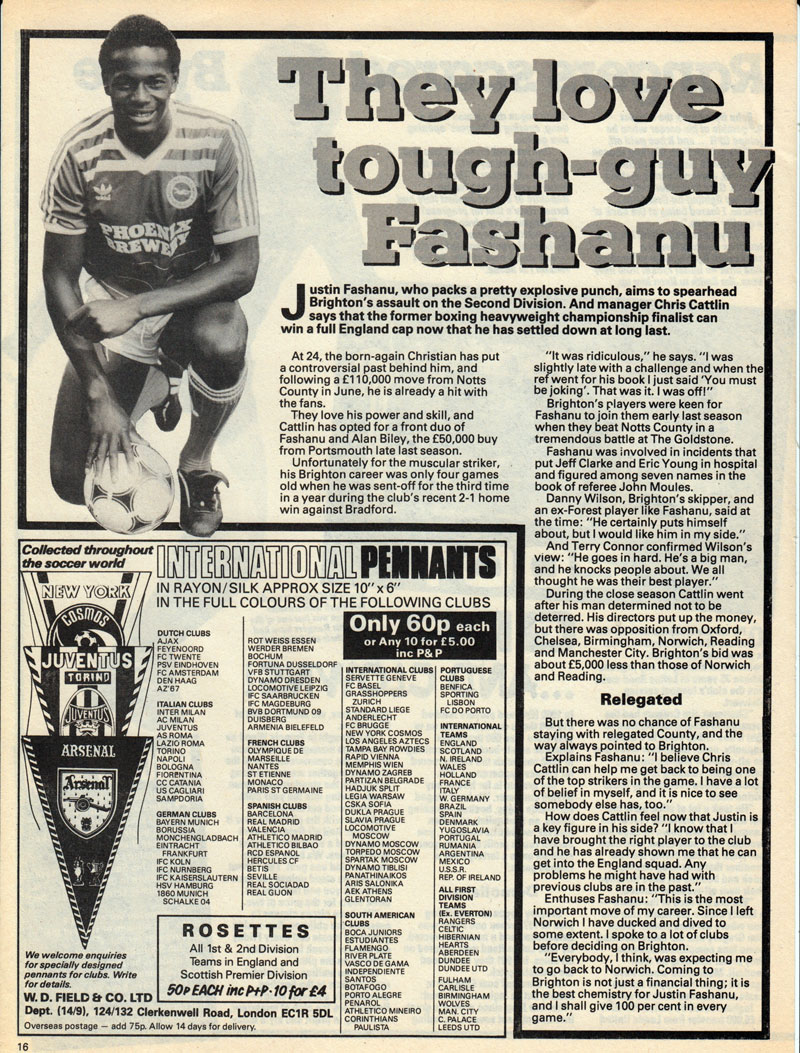
From Shoot! Magazine in 1985/86:

“At 24, the born-again Christian has put a controversial past behind him, and following a £110,000 move from Notts County in June, he is already a hit with the fans.

They love his power and skill, and Cattlin has opted for a front duo of Fashanu and Alan Biley, the £50,000 buy from Portsmouth late last season.

Unfortunately for the muscular striker, his Brighton career was only four games old when he was sent off for the third time in a year during the club’s recent 2-1 home win over Bradford.

“It was a ridiculous decision,” he says. “I was slightly late with a challenge and when the ref went for his book I just said, “You must be joking.” That was it. I was off!”

Brighton’s players were keen for Fashanu to join them early last season when they beat Notts County in a tremendous battle at The Goldstone.

Fashanu was involved in incidents that put Jeff Clarke and Eric Young in hospital and figured among seven names in the book of referee John Moules.

Danny Wilson, Brighton’s skipper, and an ex-Forest player like Fashanu, said at the time: “He certainly puts himself about, but I would like him in my side.”

Enthuses Fashanu: “This is the most important move of my career. Coming to Brighton is not just a financial thing; it is the best chemistry for Justin Fashanu, and I shall give 100% in every game.”

justinfashanu2

Tagged