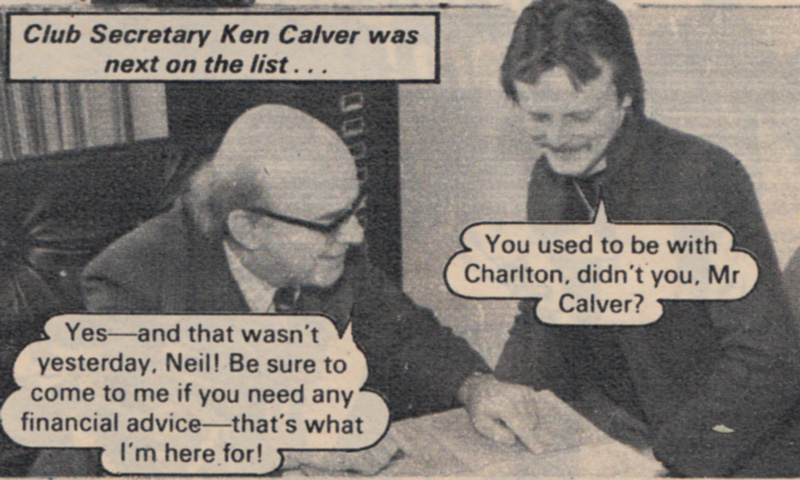
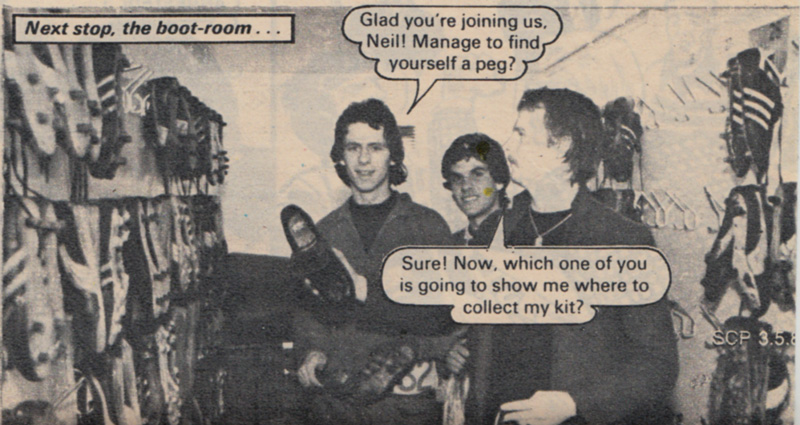
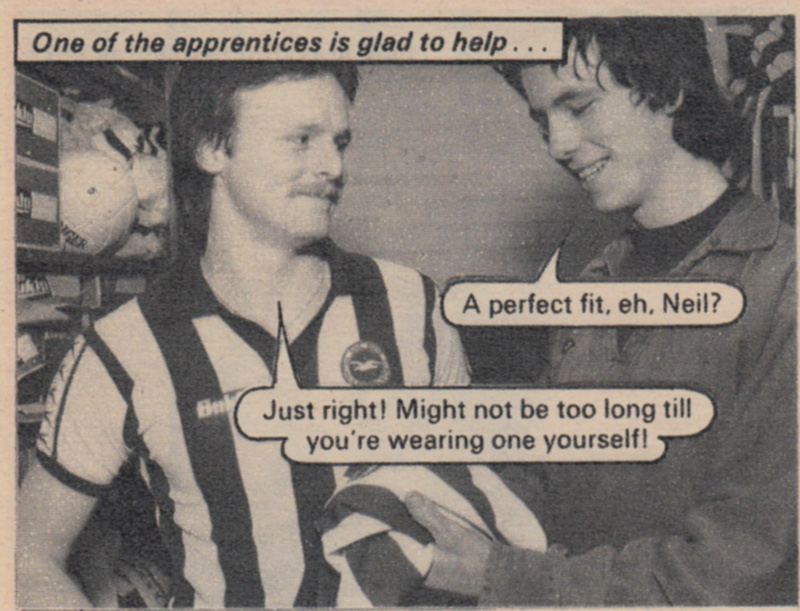
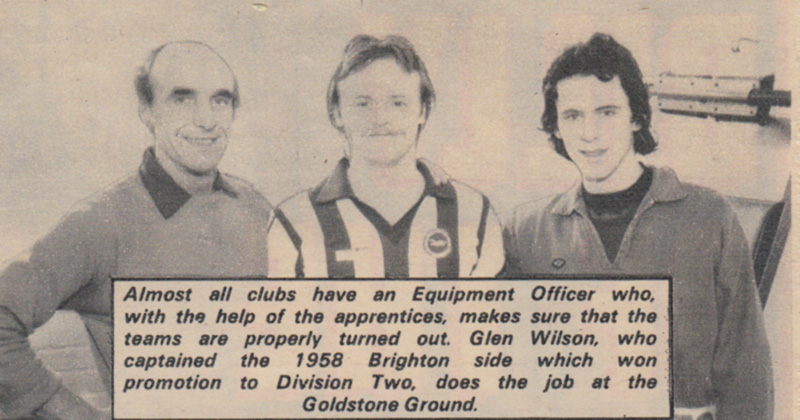
Ever wondered how a newly-transferred player faces his first day at a new club? Scoop takes you behind the scenes.
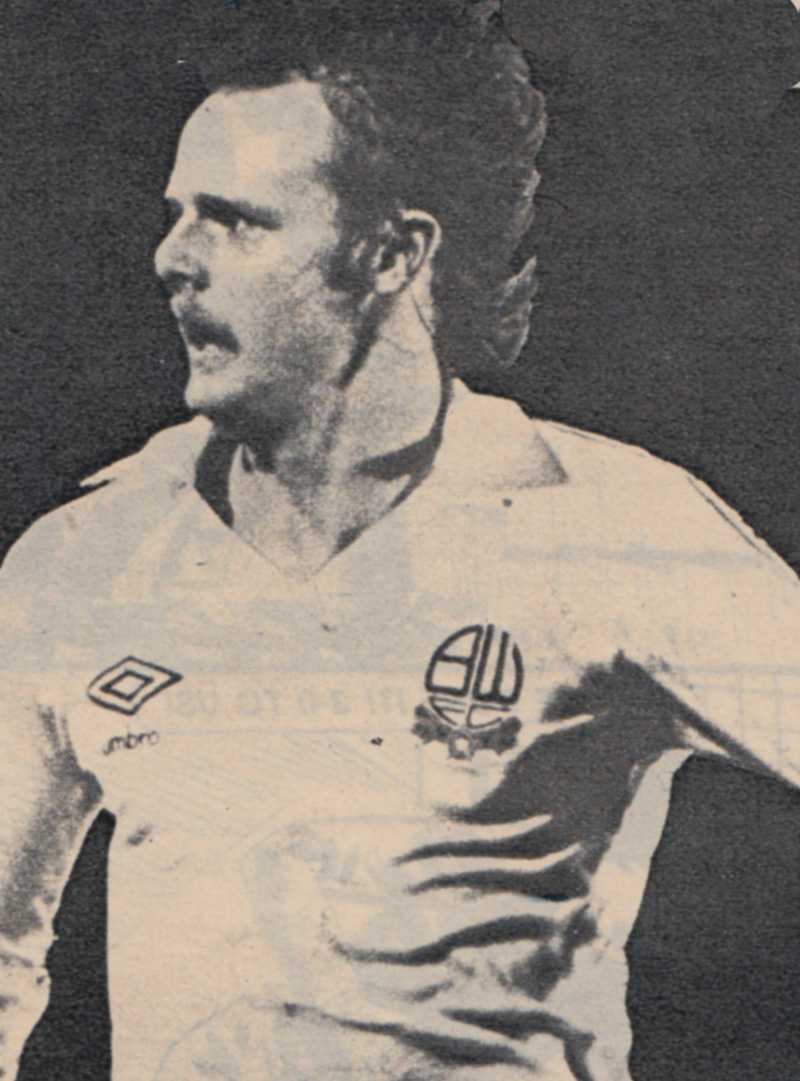
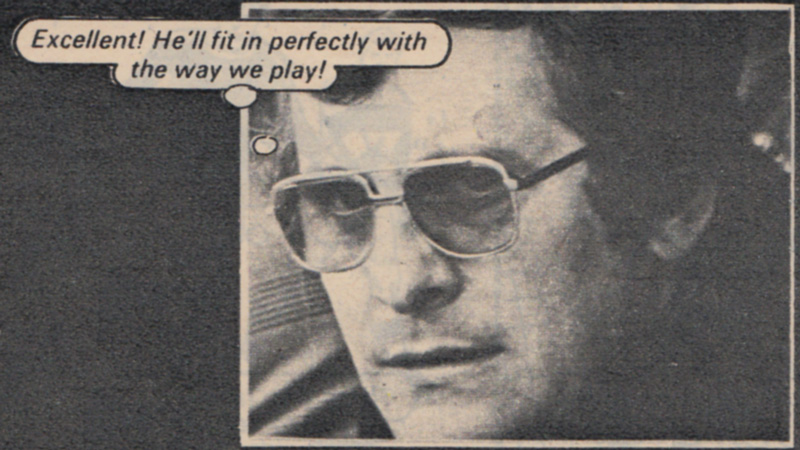
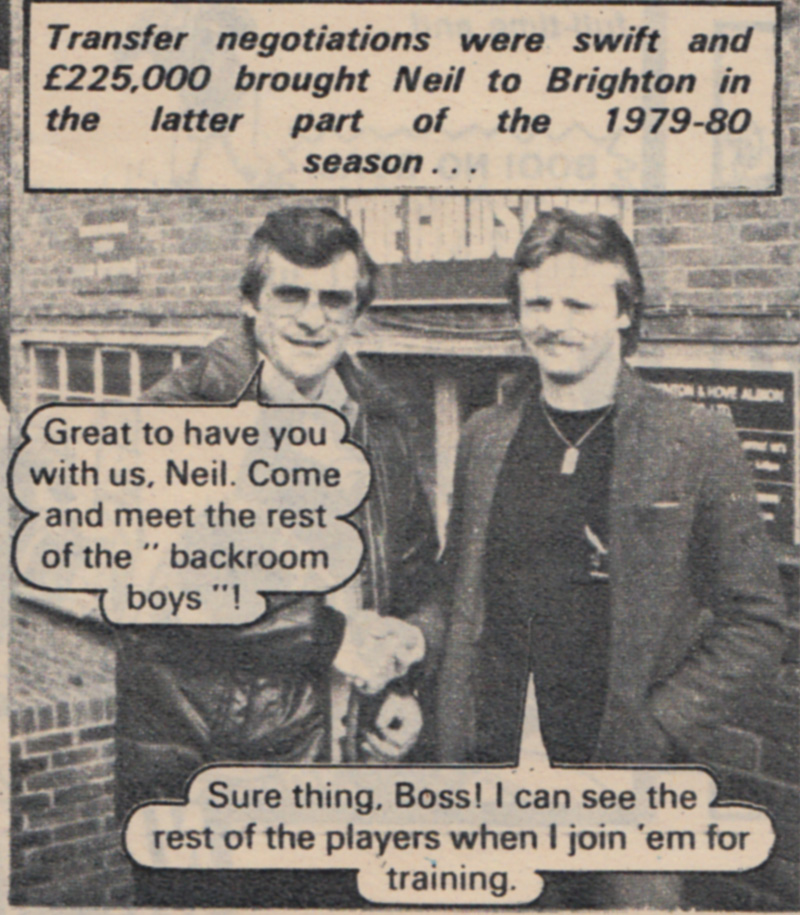
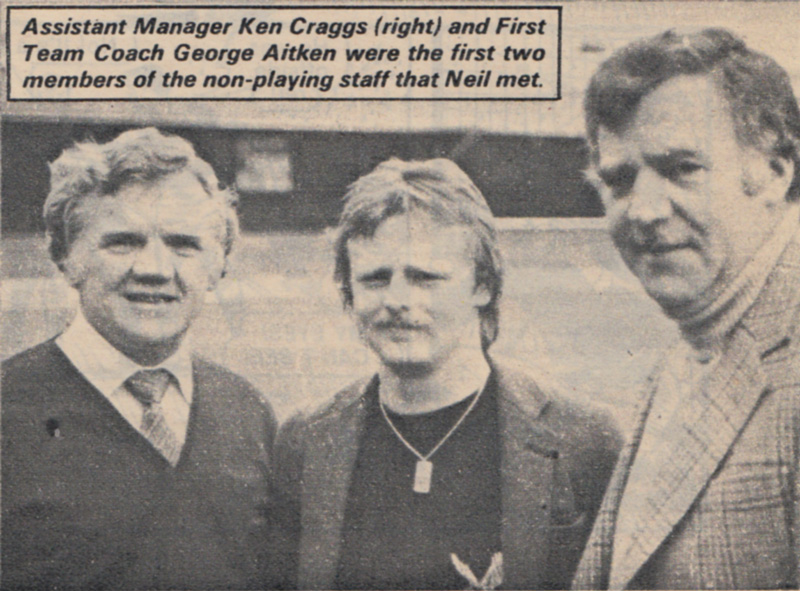
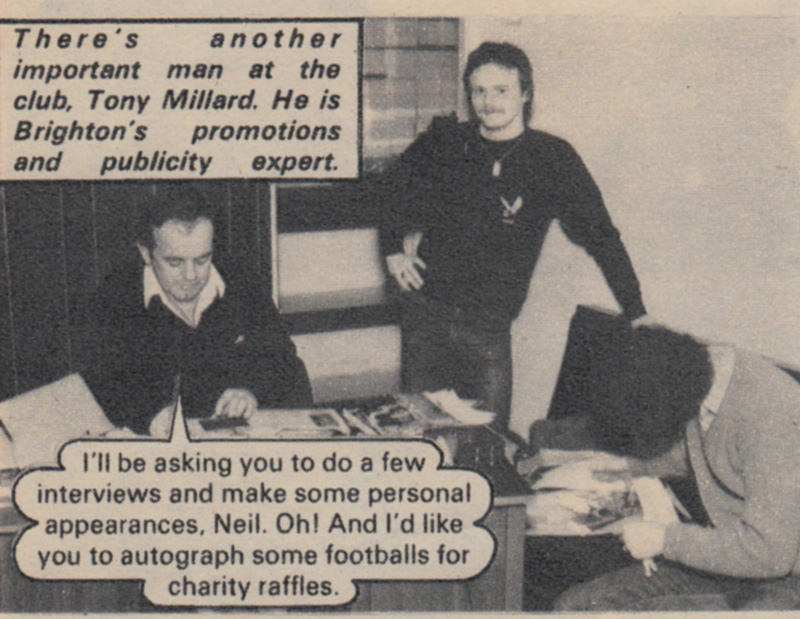
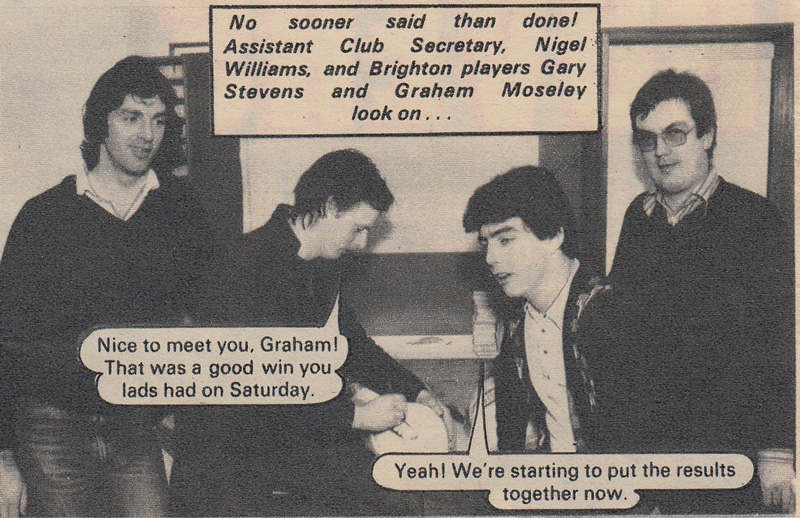
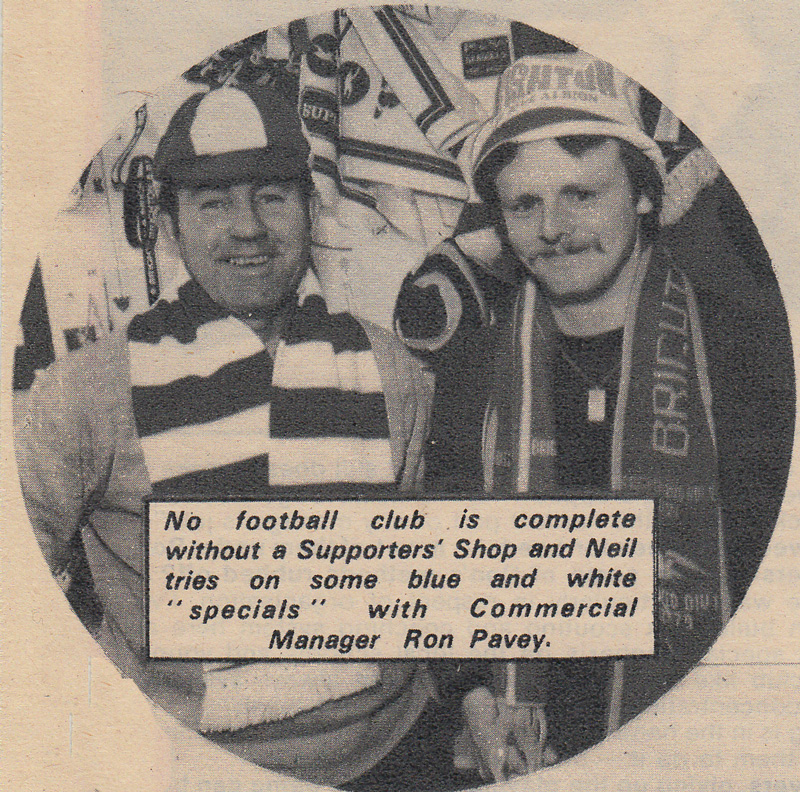
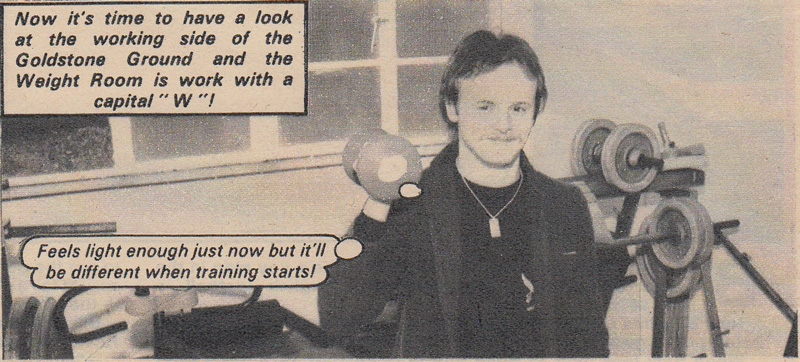
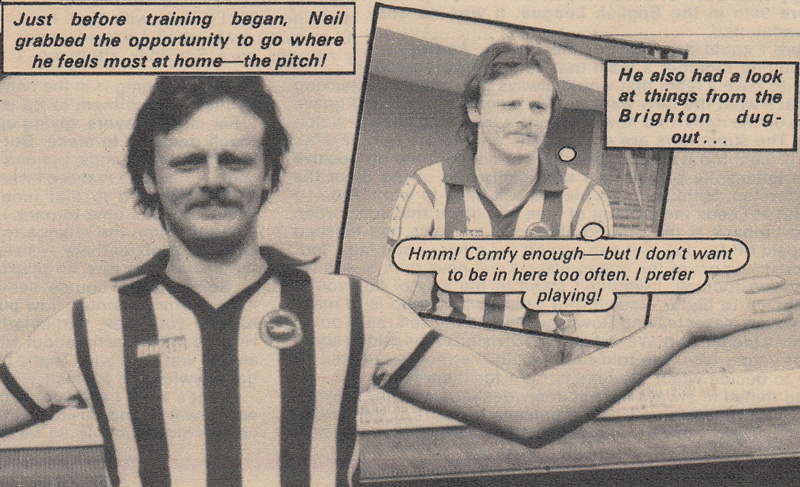
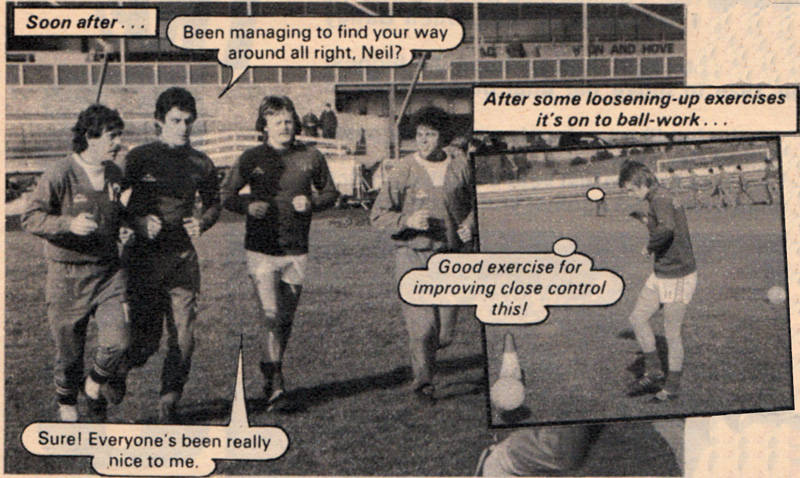
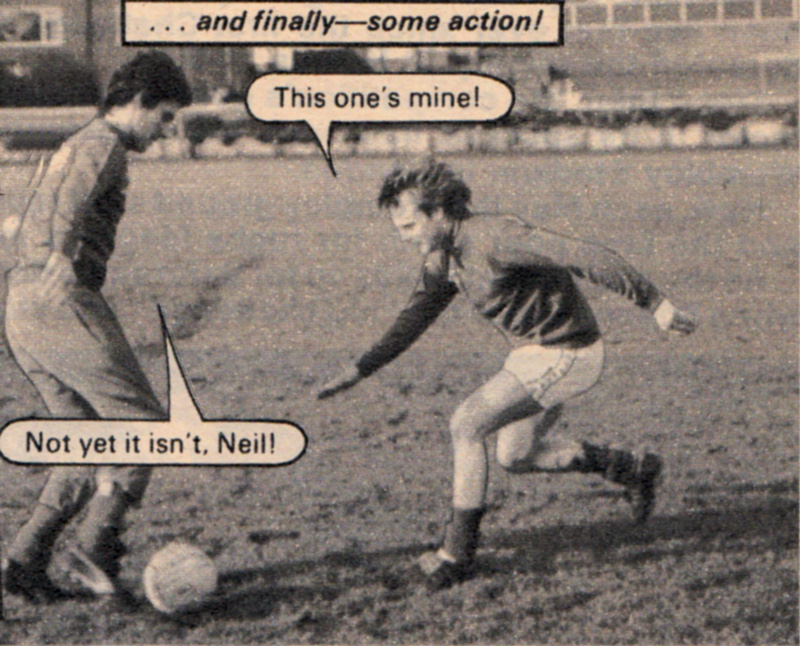
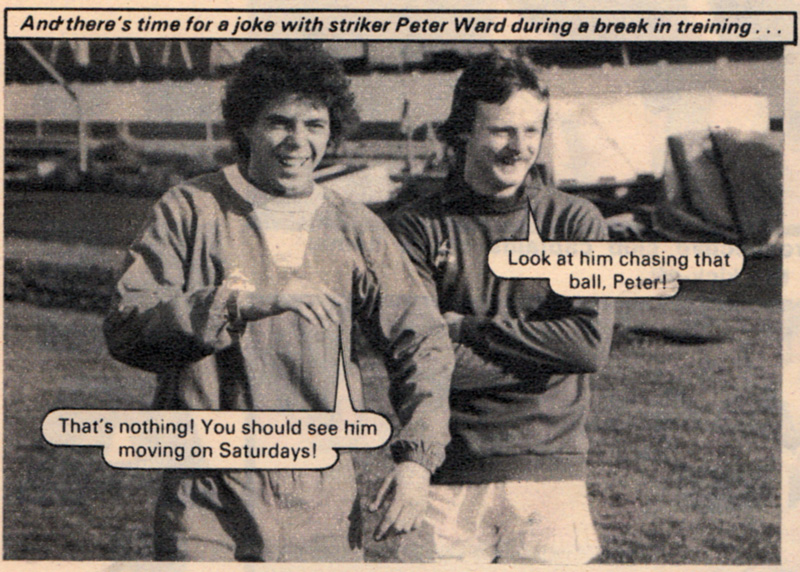
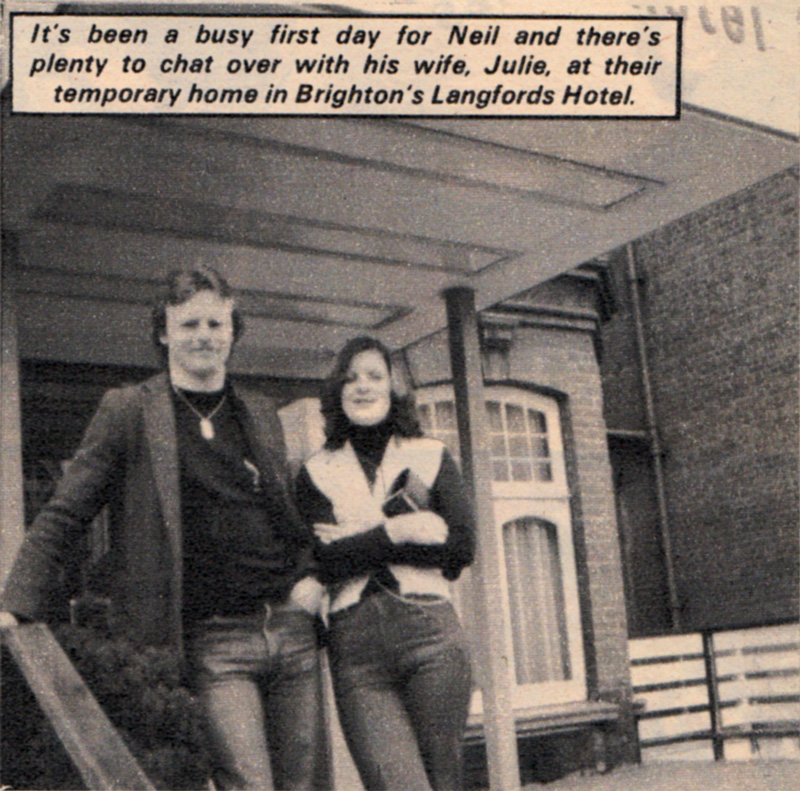
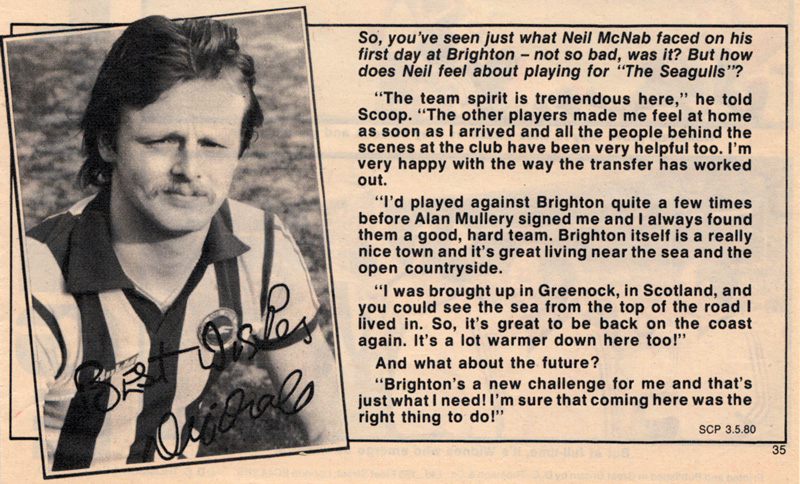
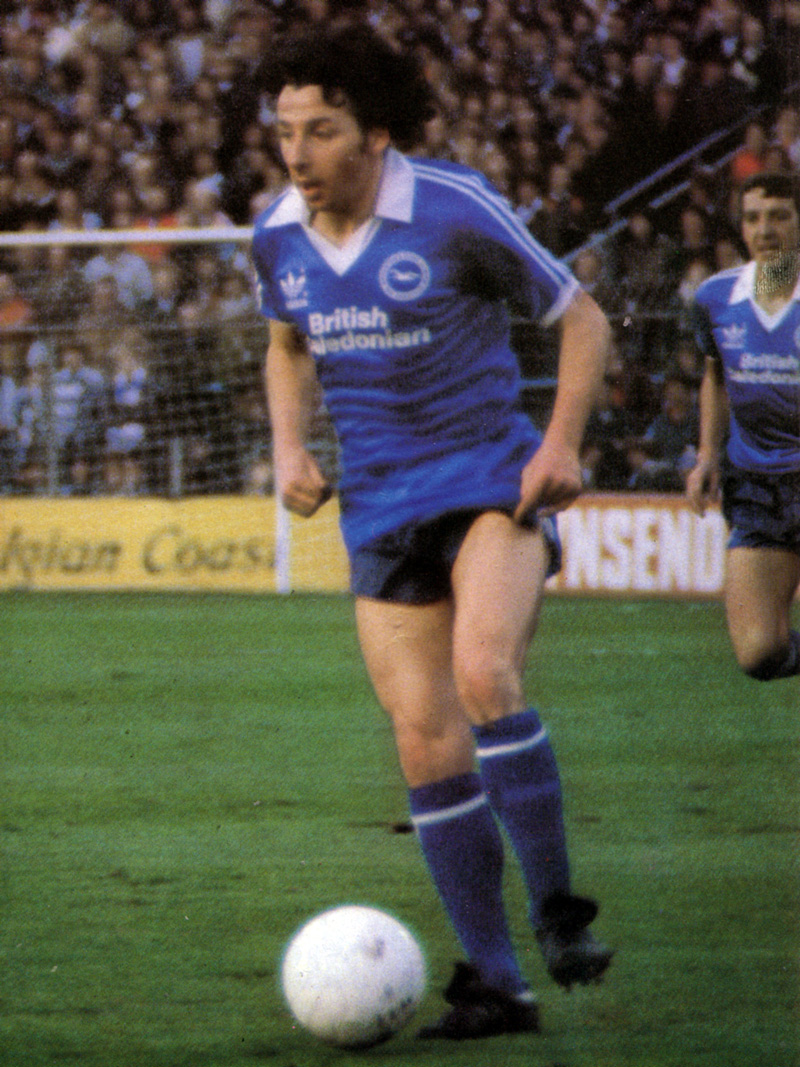
In the fast-flowing action of an English First Division match, players on the field have no time for anything but the game they’re involved in. Sometimes, however, from a section of the crowd, calculating eyes will be watching the every movement of one player. Such was the case with Bolton’s Neil McNab who, having unknowingly displayed his football skills under the watchful gaze of Alan Mullery, was about to become the new boy at Brighton.
In 1988/89, Shoot! magazine told the remarkable story of Brighton’s surprising renaissance under manager Barry Lloyd, a man who took over three months to record his first win as Seagulls boss:
Brighton manager Barry Lloyd currently has the chirpy air of someone who has cheated the gallows – and well he might, for a year ago he was on soccer’s Death Row.
Having taken over an already ailing club in January 1987, Lloyd had to wait 15 matches before The Seagulls finally gave him his first victory in charge – a run which left them firmly anchored at the bottom of Division Two.
By the end of the season, crowds had slumped to less than 6,000 and most of those who bothered to turn up did so only to call for Lloyd’s head as The Seagulls took a swallow-dive into the Third Division.
Yet, 12 months later, the condemned man was a local hero, with nearly 20,000 fans filling the Goldstone Ground as Albion won their last game of the season to claim promotion following a late run.
With hindsight, despite calls for Lloyd to be sacked, he probably had one of the safest jobs in the country in 1986/87. After Mullery was sacked, it appears that Barry Lloyd’s task to the end of the season was to decimate the side by replacing its high earners with reserve players and non-league signings, even if it meant relegation to Division Three, which it did. Hence the introduction of untried players such as Kevan Brown (Southampton), Robert Isaac (Chelsea), John Crumplin (Bognor Regis Town), Richard Tiltman (Maidstone) and Ian Chapman. Unsurprisingly, Albion finished bottom but having slashed the wage bill, Lloyd kept his job.
With Lloyd reflecting on Albion’s regaining of its Second Division status, the Shoot! article continues:
The former Fulham player says: “The Second Division is a tough League – but it should be an attractive one, with plenty of sides with recent First Division experience.”
Last term’s revival came after Lloyd had made major changes at Brighton and one of them proved to be an inspiration.
“Sometimes you get a little break, and Garry Nelson was one of them,” says Lloyd.
Nelson, who cost £70,000 from Plymouth before the season started, scored 32 goals and proved a revelation as a striker after years as a left-sided midfielder.
Former Southend goalkeeper John Keeley, playing his first full season back in the game after dropping out to combine taxi driving with playing for non-League Chelmsford, was another star performer.
And although Brighton are struggling to reproduce last season’s form, Nelson, Keeley and the experience of Alan Curbishley, Kevin Bremner and Steve Getting – who has signed a new contract – could well have The Seagulls crowing again.
Lloyd had much to smile about come May. Seen by many as certs for relegation, Brighton finished a creditable 19th position in the Second Division in 1988/89, even after a dismal start. Next campaign, with expectations still low, the Seagulls finished one place higher, with Sergei Gotsmanov’s brief spell cementing Lloyd’s reputation as a man with an eye for a bargain. Nobody, not even the most optimist fan with blue-tinted specs, could have predicted that Albion would mount a promotion push the season after, in 1990/91, but they did. In the Play-Off Final in the sunshine at Wembley against Notts County in June 1991, the club stood one game away from Division One. It was at this point that the Barry Lloyd success story ended. The game was lost and within twelve months, after an exodus of key players, the Seagulls were back to third tier football.
In November 1986, Terry Connor was selected as an over-age player for England Under-21s, and scored an excellent goal in the 1-1 draw with Yugoslavia in Peterborough. That month, the powerful centre-forward was interviewed in Shoot! magazine:
Brighton’s new England Under-21 cap Terry Connor – an over age player – is horrified at the thought of being called a “veteran”.
“Don’t call me that,” he pleads. “I’m one of the young ones.”
A veteran he isn’t, but it’s a common mistake to assume that he might be older than 24 – his birthday coming just two days before the European championship game with Yugoslavia.
At least one club visiting the Goldstone Ground this season thought he was probably a few years older.
Explained manager Alan Mullery: “You tend to forget that Terry was only 17 when he made his debut for Leeds United:’ “I got such an early break at Leeds because the club were rebuilding their side after those days when they were riding high,” says Connor.
“Eddie Gray was still in the team when I came in. He was the model professional. It was terrific to have someone with his experience alongside you.
“It was Eddie who sold me in part exchange for Andy Ritchie. It turned out to be a good move for both of us. Andy is still scoring at Leeds and I’m happy at Brighton.
“I would like to get 2O goals this season – that’s my target. And if we get it together we could challenge for promotion,” adds Connor.
“We played ever so well against Nottingham Forest in the Littlewoods Cup at Brighton, drawing 0-0, but then went to O1dham and were terrible.
“It’s a problem for us finding consistency. In some matches we’ve learned we just cannot rely on our football. We’ve got to battle. That’s a point Alan Mullery has driven home.”
Watching Connor it’s tempting to believe he must receive special sprint training.
But Connor doesn’t even use spikes, revealing: “A lot of players wear them to help their speed but not me.
“I train in boots. And when do you ever sprint 100 yards in a match? It’s short distance speed that’s important. Quickness off the mark is one of the most vital assets in a striker’s armoury.
“I’m delighted with my international recognition but it’s success at Brighton that’s important for all of us.”
Despite that encouraging showing against Nottingham Forest at the Goldstone, success proved elusive for the Seagulls as the season became increasingly traumatic. In an infamous stitch-up, Alan Mullery was replaced by Barry Lloyd in January 1987 and it was all downhill from there. Bearing the full force of a cost-cutting drive, the depleted Albion side plummeted down the Division Two table and were relegated.
Connor performed admirably, though, amassing a very creditable nine goals in 38 League matches for a struggling side. Unsurprisingly, he was voted ‘Player of the Season’ before joining Portsmouth, newly promoted to the First Division, in July 1987. The fee was £200,000. Not bad for an old man!
Hot on the heels of the 4-0 collapse against Walton and Hersham in the FA Cup, Brighton faced Don Megson’s high-flying Bristol Rovers at the Goldstone. It was an encounter that happened exactly forty years today, on 1st December 1973.
Here, I’ve put together a YouTube video of ten minutes of ‘highlights’ that featured on The Big Match the following day:
Enjoy once more Norman Gall’s rather blatant fouling on the first goal, while still getting nowhere near Alan Warboys. Or that hopeless ‘defensive’ wall on the free-kick. Or the amazing 55 yard back-pass at the start of the second half!
Much has been written about this memorable match in the years since. What is often forgotten is that Alan Warboys almost hit number nine for Bristol Rovers:
Strangely, all the goals in this game were scored by players in Albion shirts. This was because Bristol Rovers’ red and white away kit was deemed by ITV’s producers to be too similar to Brighton’s blue and white shirts, for those watching in black and white.
Dissecting the televised humiliation, John Vinicombe was at his eloquent best in the Evening Argus on the Monday morning that followed:
The danger at the Goldstone is that the cure prescribed by Dr Clough might kill the patient…
That Albion were ailing before Clough took over is beyond doubt. But has the latest emetic proved too much of a purgative? It would appear so.
The stomachs are too weak for the Clough medicine, which wasn’t exactly sweetened after the 8-2 thrashing by Bristol Rovers – the heaviest home defeat in the history of the club.
This is the only tangible explanation I can offer after this second astonishing collapse in the space of four days.
Albion are clearly the sick men of the Third Division – a disturbing state of affairs in a town famous for its health-giving ozone. Doctor Clough may have arrived too late to prevent Burke and Hare carrying off the body.
The Walton and Rovers defeats, which must be bracketed together, are frightening to portend. Albion are back to square one – not for the first time – and the consequences of failure by a club so heavily in the red do not bear thinking about.
Clough can never have thought his Brighton venture would turn out like this. When he emerged from speaking to his players the anger was concealed by the controlled pitch of his voice. He did his best not to sound too much like the man engaged on mission impossible.
To rebuild is his task, and in view of the massive structural weaknesses, he has to demolish the very foundations of the side and begin afresh. In the process Albion will lose more matches, but never, let it be hoped, surrender as they did against Rovers.
It doesn’t matter very much what Clough says, although his shattered players hang on every word: it is the remedies he applies that count. But he makes it clear he will not be rushed into quick signings. “I was ashamed for the town and the club that 11 players could play like that. I feel sick. We were pathetic. This side hasn’t got enough heart to fill a thimble. There are no magic wands,” he said.
On Saturday, at Tranmere, Clough will send his players out in the hope of getting a result. They know full well how he feels about them. Here is an other example: “It was the most humiliating 90 minutes of my career. We have plans to sign players. But nobody will be signed for the sake of signing. I will play before we do that, or my bairn will…”
And he even showed contempt for his players by saying: “You couldn’t have got their centre-forward off if you had shot him. And he got his stitches by heading one of our defenders.”
Clough has, in his fashion, leaned over backwards to speak up for his players. But what happened between Wednesday and going out against Rovers did not provide the necessary stiffening for a match with the Third Division leaders. In these two matches Albion were unrecognisable.
The haircuts follow Clough’s own severe tonsorial style. Now the players look like a mission from the Hare Krishna temple. Shorn of their locks, they must don the hair shirt and do penance.
To some it must all seem a bad dream, but Clough isn’t going to disappear like a big, big genie. “…I’ll be here for a long, long time. They had better get used to it.”
Clough’s shock treatment pushes players through and beyond the pain barrier. This was done with Ken Beamish in the Chesterfield match when he returned to the field with an ankle injury. Bert Parker, the physiotherapist, who has assisted the club for some time, protested and no longer attends matches.
The players know that to go down now is not to take a breather, although to be fair to Beamish on this occasion he was out for the next two matches. But it illustrates my point that Clough is turning the Goldstone upside down in the firm belief that this is the only way to put the club on its feet.
Paradoxically, Clough is right. The process will continue to be painful but there must not be so much destruction as to take the club into the Fourth Division.
The hangover from this chastening by a fine Rovers side is bad enough. To Rovers goes the credit for a club record League win and a new Third Division mark of 19 straight games without a defeat.
To Colin Dobson, freed by Albion when a broken ankle looked like ending his career, the accolade for a thinking player. He masterminded the operation in unbelievably generous space. Bruce Bannister knifed through for the early, killing goals, and Alan Warboys, superbly balanced and fast on the slightly frozen pitch, looked the perfect striker, taking his four goals so cleanly.
The fifth, sixth, seventh and eighth goals were from Warboys, Bannister the first, third and fourth. He knows the eight-goal feeling well enough… ask Bournemouth. Three years ago he helped Bradford City beat them 8-1, but at least on Valley Parade.
What happened at the Goldstone was the worst home defeat in the Football League since Wolves scuppered Cardiff 9-1 at Ninian Park in a First Division match in 1955-56.
It is a day that will only be recalled by Albion fans with infinite pain. Already rival supporters must be working out what rhymes with EIGHT. Perhaps they can set the words to the Dead March…
Goalchart Five minutes: Dobson set it up. Warboys streaked down the left wing, beat Gall near the bye-line, and BANNISTER timed his run splendidly to fire the first goal, 0-1.
Twelve mintes: Dobson again seeing situations light years before Albion. He took Warboys’ pass, and laid on a pinpointed centre for FEARNLEY’s header.
Twenty minutes: A deceptive shot by O’SULLIVAN that swerved and kept low gave Albion a brief hope of checking Rovers, 1-2.
Twenty-nine minutes: A strong overlap by Jacobs spelled danger when Ley missed his tackle and from the cross BANNISTER’s head did the rest, 1-3.
Thirty-two minutes: Powney failed to hold a hard, low free-kick from Warboys, and BANNISTER tapped the rebound into the net, 1-4.
Thirty-nine minutes: Another Dobson centre, and WARBOYS started his own personal rampage, 1-5.
Fifty-five minutes: Bannister the goalscorer turned goal maker by laying this one on for WARBOYS, 1-6.
Sixty-three minutes: WARBOYS went through on a pass from Parsons like a thoroughbred. Out came Powney, but he had no chance, 1-7.
Seventy minutes: Albion appealed for offside against WARBOYS but he went on strongly, 1-8.
Eighty-seven minutes: A floating Towner centre, and RONNIE HOWELL banged in a well-taken goal, 2-8.
On ‘The Big Match’, Brian Clough braved the TV cameras, having verbally demolished his players at the press conference the evening before:
Although the match was a disaster for the Albion, son Nigel Clough was more upbeat, saying Brighton did ‘all right’ despite getting hit for eight…
With his acceptance of such dire football, it’s probably good enough reason for Nigel not to be allowed anywhere near the Brighton manager’s position!
A week after the match, Albion were thrashed 4-1 at Tranmere before succumbing to single goal defeats against Watford and Aldershot. Brighton slipped to 20th position in Division Three, one place above the drop zone. As for Bristol Rovers, their fine form continued. Unsurprisingly, they were promoted with a game to spare. Rovers finished the season with the return fixture against Brighton. Rovers fans expected another humbling of Brighton but it never materialised. Albion’s Lamie Robertson opened the scoring after a neat one-two with Ken Beamish on 19 minutes. It took Bruce Bannister’s late penalty to level the score.
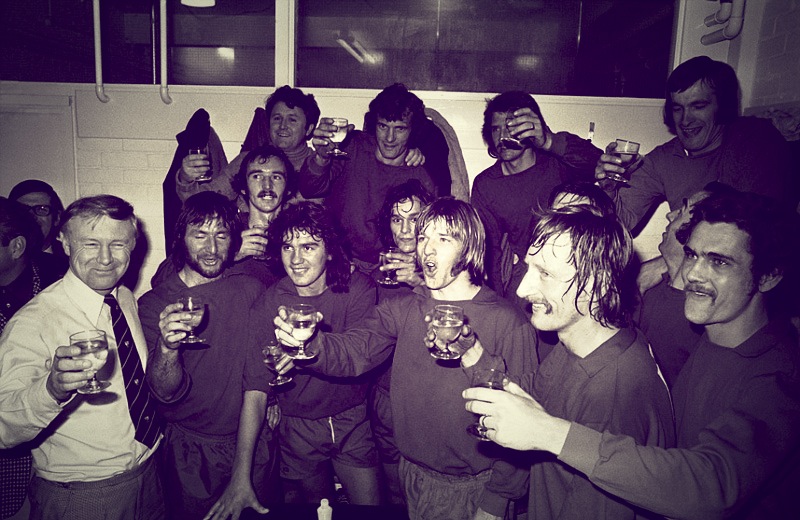
Here are their promotion celebrations after the unexpectedly close match:
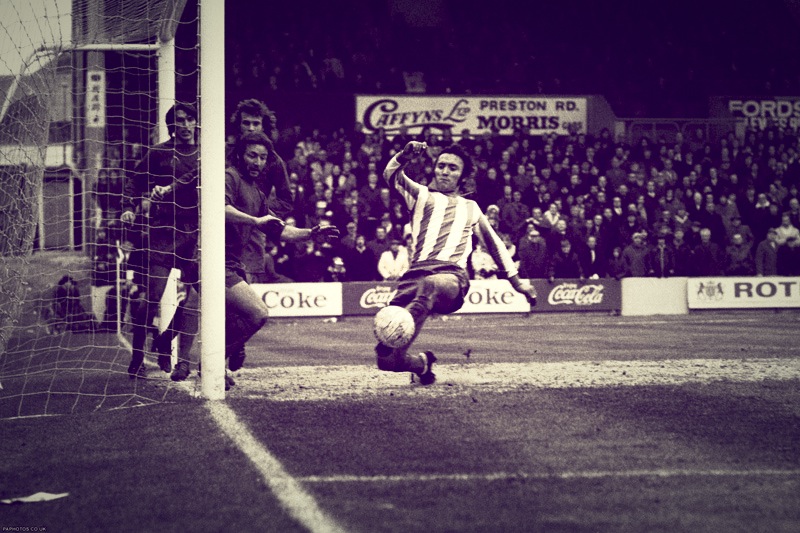
Here’s Ted MacDougall of AFC Bournemouth, a scorer of nine goals against Margate in the FA Cup during the season, closely watched by Albion’s Ian Goodwin on 1st April 1972:
The 1971/72 season had begun well for the side previously known as Bournemouth and Boscombe FC. Newly promoted from the Fourth Division, it was a case of ‘Cherries on top’ as John Bond’s men headed Division Three after eleven matches, with 17 points. Notts County and Aston Villa both had 15 while Brighton were well down the table with 12 points.
Pat Saward’s Brighton closed the gap when they defeated Bournemouth 2-0 at the Goldstone Ground on 27th December 1971 aided by goals from Kit Napier and Peter O’Sullivan before a bumper 30,600 crowd. Thanks to this score, Notts County, Fourth Division champions the previous season, looked like they might make it two league titles in two when they took over the leadership in the New Year. In a triumph for the new boys, could they and Bournemouth both gain successive promotions come May? The answer was no. County suffered an injury jinx that put David Needham, Willie Carlin and star striker Tony Hateley out of action, and their results suffered. From the middle of February they drew six and lost two matches in an eight-match winless streak. It cost County dearly.
As for Bournemouth, Ted MacDougall, buddied up front with Phil Boyer, was attracting a great deal of interest, and not just for this advert, found on the back of the Bournemouth v Brighton programme!
As Tommy Lawton said:
“This fellow keeps scoring goals and if you can hit goals consistently whether it is in the First or Fourth Division you have to be good.”
However, even with such a phenomenal strike force, the Cherries suffered a downturn. In the Official Football League Book 1972-73, it says:
Bournemouth started to quake when the final crunch came. Whatever the reason, Bond’s side could not recapture the consistency and winning form of those heady early days. One of the key games was when Brighton went to Dean Court on Easter Sunday. A Bournemouth win could have changed many things, but Brighton drew 1-1.
Bertie Lutton: A crucial equaliser at Bournemouth
The draw was part of Bournemouth’s poor spell when they drew four and lost two out of six matches from the middle of March, just as the season was hotting up. The Official Football League Book continues:
And what of Brighton, the team from the South Coast holiday playground that had laboured too long in the soccer backwaters? Pat Saward agrees that their biggest asset all season was that no one was tipping them for promotion until the final stages: “So we had none of the pressures Bournemouth, Villa and Notts had. We crept up unnoticed and this was our trump card.” But Saward freely admitted: “We had an awful lapse when we lost two games on the trot to Oldham and Bradford City. It came at a bad time and it was make or break from then. Our next game was against Villa and I made drastic changes.” The television watching millions saw the result… a fine stylish win for Brighton in what must have been one of the games of the season in any Division.
Saward played another trump card hours before the transfer deadline. ‘The fans were crying out for new faces but everyone must have thought I had decided to try for promotion with the 14 players I already had.” Agatha Christie could not have come up with a better final and Saward swooped and signed Irish international Bertie Lutton from Wolverhampton Wanderers and a player who must have been an unknown quantity to the Goldstone Road fans… Tranmere Rovers’ Ken Beamish.
Beamish is a forward very much in the modern mould. Not big, but stocky and packed full of explosive sprinting power, a terrific shot and great appetite for the game. “They were both last ditch signings and Ken made an astonishing difference,” says Saward. “I spent only £41,000 in getting my promotion side together so we were very much Villa’s poor relations in that sense.
“Notts County were the team that surprised me. I just don’t know why they fell away so badly in the end for they had all-important matches in hand. Bournemonth were the most skilful side we faced.”
Saward puts down his team’s success to: “Dogged determination to succeed from all the players. We stamped out inconsistency. I got rid of ten of the players I inherited and got together a team built on character. That’s the key quality, apart from skill of course, as far as I’m concerned.”
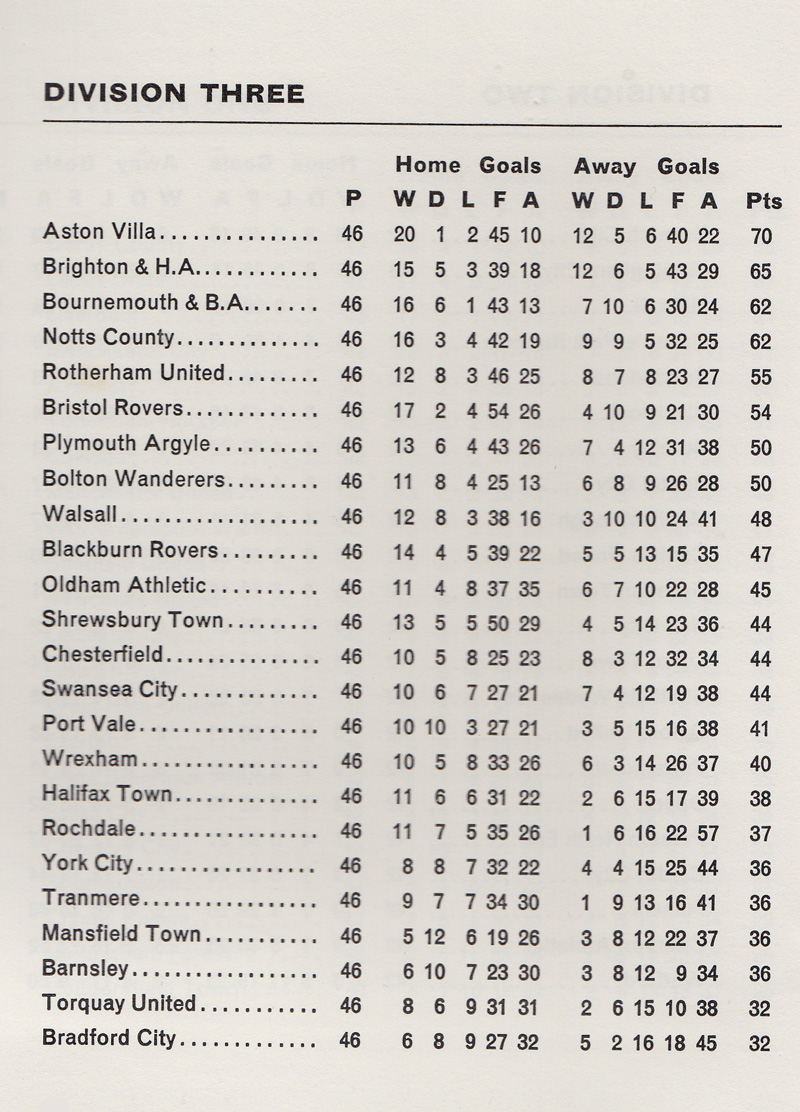
With just two clubs going up, here is the final table for one of the greatest promotion races in Division Three, one that pulled huge crowds:
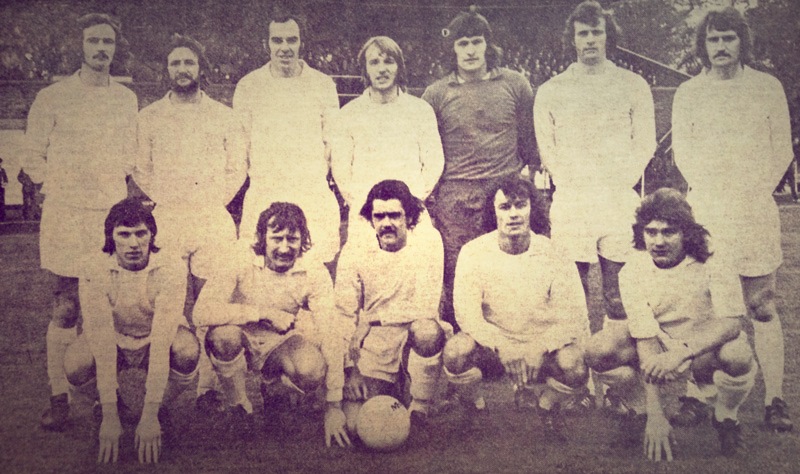
Here is the team photo of amateurs Walton and Hersham, with ex-Albion players Colin Woffinden and Dave Sargent, plus future football manager Dave Bassett in the back row. And, in the front row, if Brighton supporters were not familiar with Clive Foskett at the start of the FA Cup 1st Round replay at the Goldstone, his name would be on everyone’s lips by the end.
Back row: Colin Woffinden, Dave Sargent, Russell Perkins, Dave Bassett, Gary Bloom, David Donaldson, Chris Lambert. Front row: Billy Edwards, Dave Morris, Bob Wingate, Clive Foskett, Willie Smith.
Forty years today, the Argus carried its match report of one of the most shameful displays in the club’s history. Having got lucky in scraping a 0-0 draw in Walton, Brian Clough’s Brighton & Hove Albion contrived to lose 4-0 at home to the Isthmian League side who had won the FA Amateur Cup in 1972/73. The match was played at 1.45pm on Wednesday afternoon as the country’s power crisis meant floodlight use could not be guaranteed.
In a piece titled ‘Albion’s worst in 75 years of cup history’, John Vinicombe described the nightmare performance. Read it and weep!
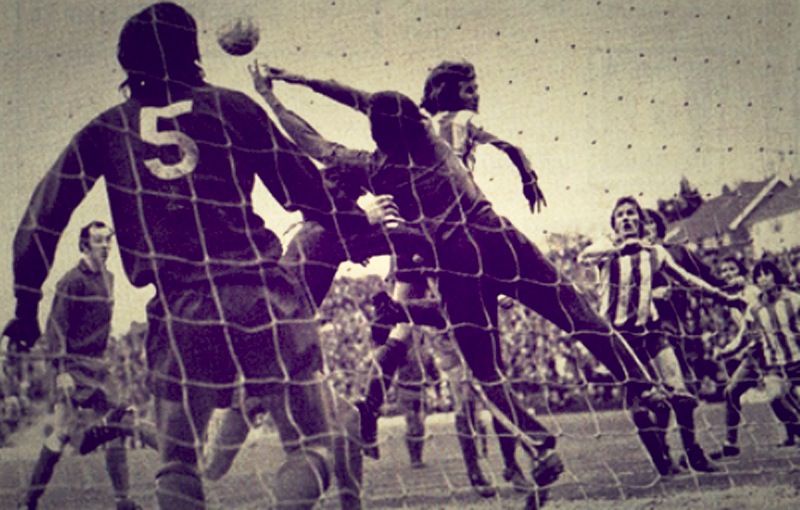
Ronnie Howell challenges for a high ball in the Walton goalmouth, with Lammie Robertson in attendance
Albion’s total humiliation by amateurs Walton and Hersham was the worst defeat suffered by the club since they entered the FA Cup as Brighton United in season 1898-99 [sic].
The manner in which they were swept aside and plunged to a 4-0 First Round replay defeat stunned the 9.857 Goldstone crowd. For Walton’s jubilant fans, who had come prepared for the worst, it turned into a storybook occasion.
There was always a feeling of anxiety about this momentous second meeting that began at the unusual hour of 1.45. Albion’s supporters were strangely muted from the start, and the sparsely populated North Stand, without its youthful choir, hardly made themselves heard.
A sense of foreboding gripped the fans when schoolmaster Russell Perkins stooped to conquer after 20 minutes, and the tie turned into nightmarish proportions for Albion when Clive Foskett, a 28 year-old joiner who works at the British Natural History Museum, hammered a hat-trick in the last eight minutes.
Perkins heads the opener
The result gives Walton a place in the record-books as sensation makers of the first order. But where does that leave Albion?
The club have entered into an exciting new era with one of the best managers in the game. Yesterday’s display was too bad to be true. Some players gave everything; others did not.
Afterwards Clough betrayed no emotion. He is too well disciplined for that. When he spoke of his ‘poor lads’ it was his way of expressing the deep-felt understanding he has for the position of the professional who is always expected to win such confrontations.
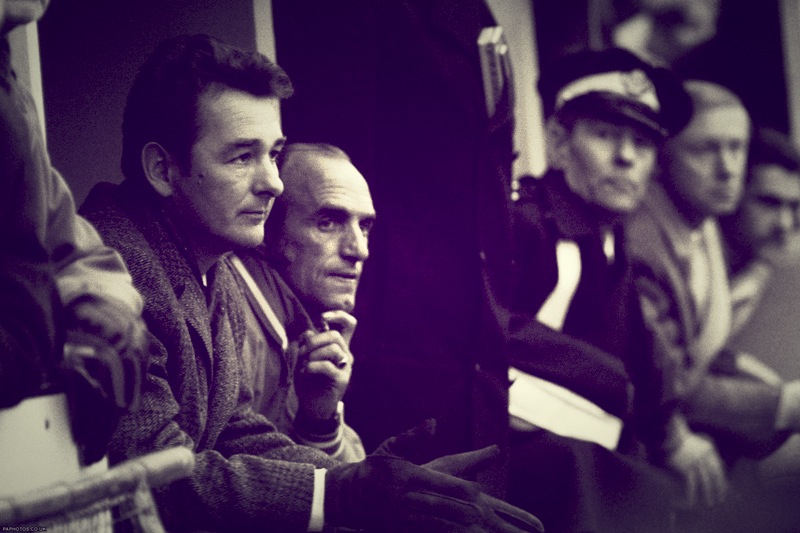
The Clough honeymoon is over as he watches the 4-0 defeat with Glen Wilson.
What he says privately to his players can only be imagined; the point is that with such a small staff there is not a lot he can do right now.
Until Clough and assistant Peter Taylor move permanently to Brighton, the full impact of their presence will not be felt by the players. The side have yet to score at home under Clough. When Albion were without a manager for a short time, they hammered Southport 4-0. That was just over a month ago.
Is there some sort of moral here? Has the arrival of a man so steeped in success, and possessing such a reputation, suddenly caused the players to seize up?
A goal blight of 270 minutes at the Goldstone is a curious state of affairs, and in the context of this debacle pinpoint the structural weaknesses of the side.
Albion lost to Walton primarily because the midfield was wanting, while up front only Tony Towner, the substitute, provided the sort of service that wins matches.
Pat Hilton did all that could reasonably be expected of him, but elsewhere were performances that must have brought an angry blush to Clough’s cheeks.
The dramatic Foskett hat-trick came at a time when Albion were pushing numbers up in a frantic attempt to equalise. They had more of the game territorially than Walton, but failed to use the ball as well.
In midfield they were outsmarted. Only in terms of fitness were Albion superior, and they relied too much on running Walton off their feet.
Walton absorbed the pressure like a sponge, had men of heart and character, and not a few players who showed a greater desire for the ball when it was obvious somebody was going to be hurt…
The turning point came early in the second half when Barry Bridges just failed to divert a loose ball past the heroic Gary Bloom. Albion never went so close to scoring again, despite a stream of flag kicks.
Walton and Hersham goalkeeper Gary Bloom misses a cross, as Barry Bridges just fails to score at the near post.
Yet only minutes before hand Foskett had missed an open goal. He blamed himself afterwards and seemed more concerned about that mistake than basking in the glory of a hat-trick.
Foskett has not enjoyed much of Walton’s limelight. He was on the substitute’s bench at Wembley at the end of a strange season that saw him score 23 goals before Christmas and then lose his edge completely.
Foskett said: “This is the highlight of my career, although nothing can make up for not playing in a final at Wembley. I was left so much space at the back by Brighton, and I had all the time to think about all three goals.”
His goals, demonstrated perfect versatility, two with the right foot, the last one from the left foot.
Albion were hit by a thigh injury to Stephen Piper ten minutes from the interval. There is little doubt Towner would have come on anyway, but Piper’s loss weakened the defence.
Eddie Spearritt switched to partner Norman Gall, Peter O’Sullivan moved to the left-wing, and Bridges slotted into the midfield.
Walton prospered as a result, and seldom can such an experienced international player like Bridges have cause to be so dissatisfied with his contribution to a game. In my book it was nil…
The grim message for Albion is that Clough has a monumental task ahead. Realist as he is, there can be no illusions on yesterday’s score. Perhaps it is a blessing in disguise.
There is time to prevent the rot spreading further. But I’ll wager Clough never expected it to be like this…
Goalchart
Twenty minutes: Smith’s corner was flicked on by Lambert. Powney failed to make contact and Gall was the wrong side of Perkins who got down like an old man with lumbago to head the simplest of goals. 0-1.
Eighty-two minutes: A long ball out of defence caught Albion upfield. Walton had Foskett and Perkins haring through the middle, and with Powney unprotected, Foskett scored from a precise Perkins pass. 0-2.
Eighty-four minutes: The same long ball caught Albion napping again, this time it was Smith who put Foskett away to crack a beauty. 0-3.
Eighty-nine minutes: Just to show it was no fluke, Foskett broke away again. The long ball came from Morris, and away went Foskett to drill in his best goal. 0-4.
Walton and Hersham: G Bloom, D Sargent, C Lambert, D Donalson, W Edwards, D Bassett, C Woffinden, W Smith, R Perkins, C Foskett, D Morris. Sub R Wingate.
Referee: Mr GC Kew (Amersham).
Bookings: Ley (foul).
Walton and Hersham players raise a cheer to their 4-0 win in the dressing room
Years later, in Brian Clough’s ‘Autobiography’ (1994), he recalled comedian Eric Sykes’ lucky escape after the match:
‘I was involved in a first round FA Cup tie against mighty Walton and Hersham! A bunch of bloody amateurs, and they beat us 4-0. I’ve had some bad days in football but that must have been one of the worst. He won’t know it until he reads this, or until a pal reads it and tells him, but comedian Eric Sykes had never been in greater danger of a smack in the mouth than he was that day. I think he was president of the Walton club, or at least held some position there. Anyway, he was perfectly entitled to feel chuffed, having seen the little team of nobodies produce possibly the greatest result in their history and one of the big Cup upsets of the day.
As I walked through a passage after the match I could hear his raised voice as he stood with a phone in his hand, obviously giving me some right stick. I heard him gloating about something about ‘Cloughie… ha, ha, ha.’ I had never met him in my life but I’d laughed my socks off whenever I saw him on TV – and still do when they play the old clips. But that afternoon I would have taken great delight in punching him. If only I had shown similar self-control, years later, on that infamous night when supporters invaded the pitch at Nottingham Forest!’
Oh, and have I mentioned that video footage of this cup replay does exist? It clearly should be banned, though! It’s only sixteen seconds and there is no sound. I’ll leave you to decide whether to be regretful or thankful that it doesn’t feature any of the goals:
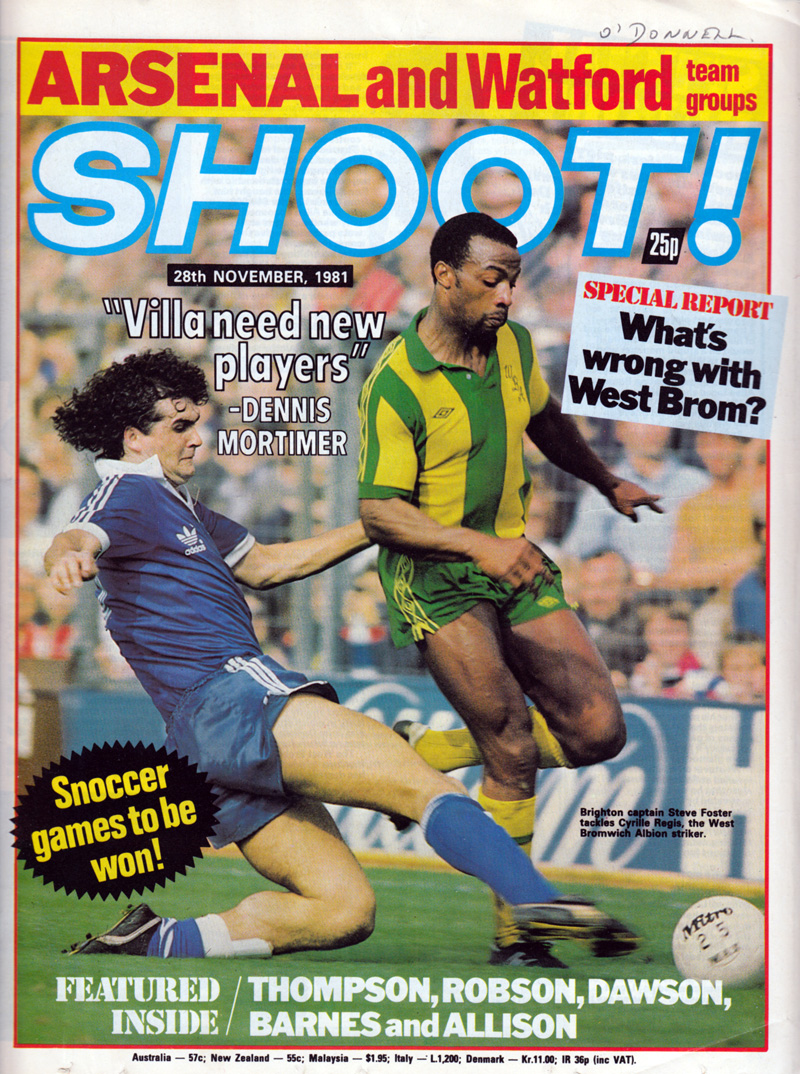
In the season of this front cover, 1981/82, Shoot! published an article claiming ‘Captain Foster loves to nag!’:
Steve Foster has welcomed the job of Brighton captain as a major boost to his own form. Whether his team-mates wholeheartedly agree with the choice is open to rather more doubt.
Foster says, tongue slightly in cheek: “The lads reckon I nag them just a bit more than I used to.
They say I’m getting on their nerves these days, but that doesn’t matter, if we do the business and my shouting has helped in any way, it will have been worthwhile.”
Foster’s team-mates are, of course, joking. They recognise the immense contribution of the big central defender. And “Fozzie’, as he is known to the Brighton players, believes the captaincy will help him become an even greater asset to Brighton’s cause this season.
“A lot of players wouldn’t want the captaincy. I’ve heard them say they don’t produce their best form when they’re worried about what the other lads are doing. But it works the other way for me. I feel a greater sense of responsibility. I feel that if I want the other lads to try s bit harder during a match, they have to see me doing just that. So I’ve found it has helped me improve,” says Foster.
“I used to shout all the time anyway, to encourage the lads. The only difference now, is that I’m the official skipper and I have to do it. I find I have concentrated more since I took over as captain.”
Brighton have introduced a new, tighter defensive system under new manager Mike Bailey. Foster believes it will help the Sussex club establish themselves in the First Division without the fear of relegation which has dogged them for the past couple of seasons.
“We have to keep our discipline at the back much more under Mike Bailey,” says Foster. “Defenders can still go forward, but there has to be plenty of cover at the back before we can move up.” Foster recognises the immense task he faces to succeed as skipper to the extent Brian Horton managed. Foster says: “Brian was a great leader.
“He had such respect from other players that I can only hope to gain half as much. The lads reckon I’ve always been a moaner on the field, but I won’t complain if the results go for us, So it’s up to the lads – if they don’t want me to nag them, they’ll have to produce the form which means plenty of points!”
“I think our bigger squad and greater experience will be vital this season. We feel confident and have more players available. You must have strength in depth in this Division, and we are now getting that. It could make a big difference to us.”
In ‘The Arsenal Story’ from 1972, a year after the Gunners had famously won the League and cup double, football journalist and author Deryk Brown wrote:
‘The Highbury of today is the best possible tribute to Herbert Chapman and the Arsenal of yesterday. Even today it is a temple of football. The present West Stand was opened by the Prince of Wales (later Edward VIII) in December 1932. The East Stand, the one the players come out of, was quietly opened before a match with Grimsby Town in October 1936. Even today it is a temple of football… It is hard to imagine how any young player who visits Highbury can avoid coming away with the impression that Arsenal is the club.
Hardly surprising for a club steeped in tradition and success that Arsenal’s playing record at Highbury was formidable. A home defeat sometimes happened, but a thrashing was rare. At the time, Arsenal’s record home defeat was 0-5 by Huddersfield Town in February 1925. It was a scoreline to be emulated by Chelsea against a young Gunners side in the League Cup in November 1999. Given this, Arsenal apart, it is hard to find in the record books which other club has scored six goals at Highbury… apart from Brighton!
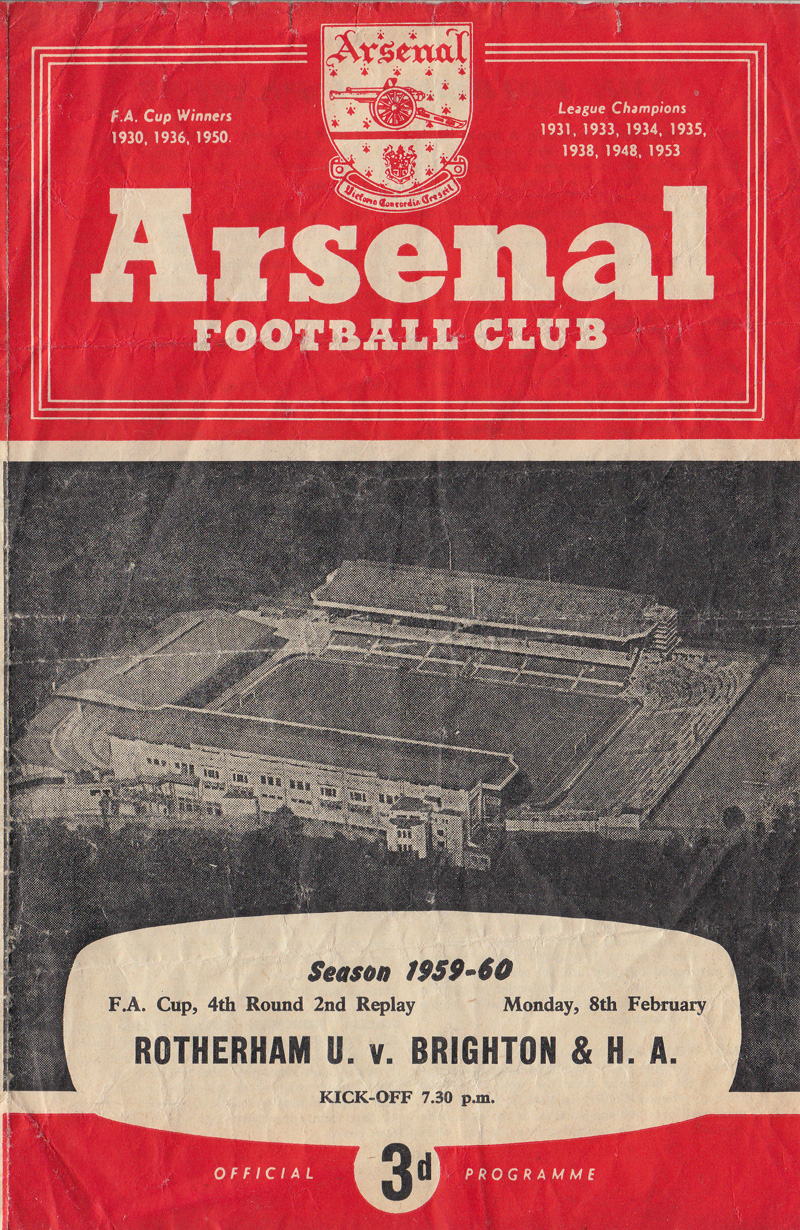
Ten years before Arsenal began their ‘double’ season, Brighton drew Rotherham at Millmoor in the FA Cup fourth round in 1960, having won at Bath in the previous round. While the Millers and Albion were both in Division Two, promotion candidates Rotherham were the undoubted favourites. Indeed, in the previous round the Millers had sensationally knocked out Arsenal after three matches, drawing 1-1 at Milmoor and 2-2 at Highbury before triumphing 2-0 at Hillsbrough.
However, Albion were not going to be overawed. As Roy Jennings said in Charles Buchan’s Football Monthly in December 1961:
‘We had been in three tremendous games against Rotherham. We had two gruelling drawn games of 1-1 against the tough Yorkshiremen at Millmoor and Goldstone Road [sic], and the second replay was at Highbury.’
On Monday evening on 8th February 1960, a bumper crowd of 32,864 travelled to Arsenal Stadium, where the Rotherham already had the advantage of experience, having held the Gunners there in the previous round. Under floodlights, the Brighton v Rotherham match was played in an incredible atmosphere. Jennings quipped:
‘To everyone’s surprise, we thrashed Rotherham 6-0 in that game. They must have been more tired than we were!’
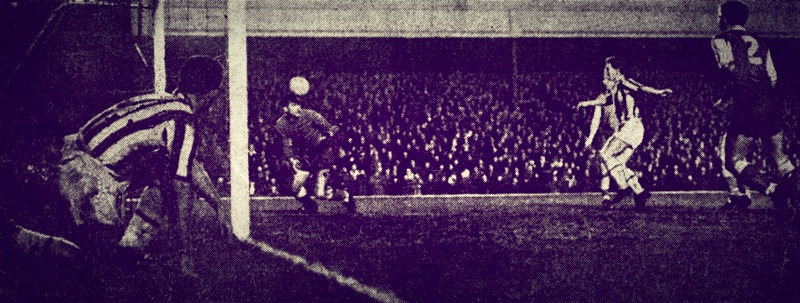
Albion’s fourth goal, scored by Adrian Thorne
Oh, how the floodgates opened! Adrian Thorne, who got both Albion goals in the first two matches, opened the scoring again. Brighton led 2-0 at half-time before a glorious spell of three goals in seven minutes early on in the second half turned the match into a famous triumph. Not least for Bill Curry, who hit a hat-trick or, indeed, outside-left Freddie Jones, who had joined Brighton from Arsenal in 1958 and scored on the night.
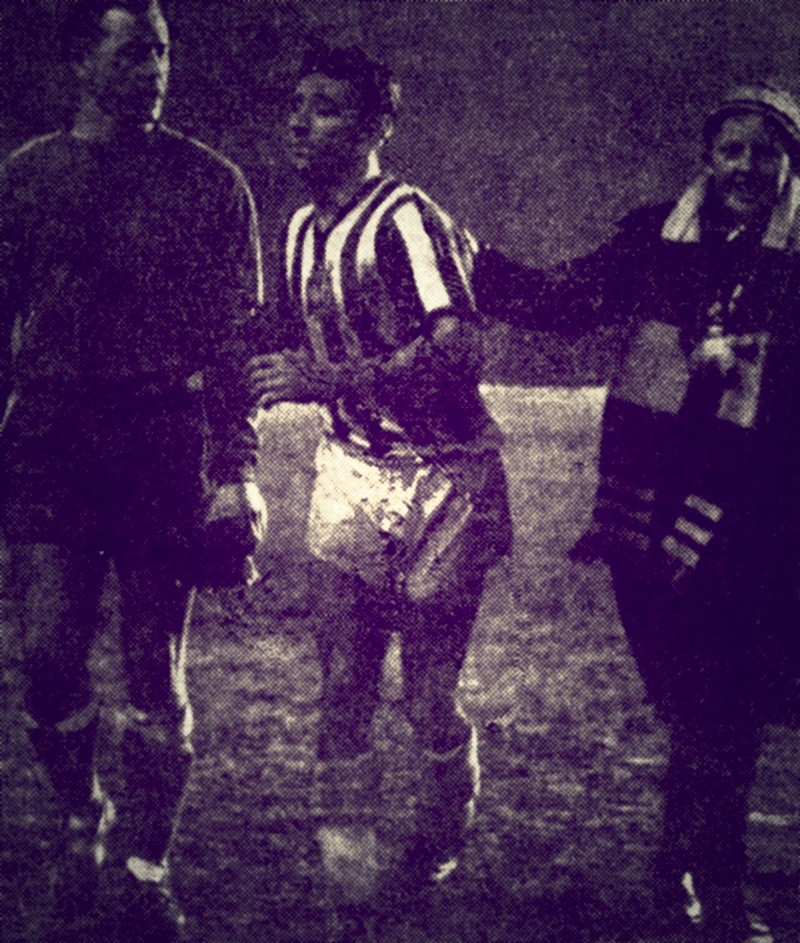
Rotherham’s Ironside gets caught up in Brighton’s celebrations. Here he is with Curry and a delighted Brighton supporter.
Brighton went down 2-1 at Preston in the next round, but nothing can take away from their feat of scoring six goals at Highbury, home of the Marbled Halls. It was better than anything that Arsenal managed that season.
Mickey Thomas is a prime candidate for Albion’s biggest waste of money. After a brief four month spell at Everton, the impish Welsh international midfielder joined Brighton for £350,000 in November 1981. With hindsight, Thomas’ petulant behaviour at Goodison ought to have alerted Seagulls boss Mike Bailey that this spot of business was going to end in tears. Thomas’ enthusiastic words about Brighton at the end of this article from Shoot! Magazine sound rather hollow now:
Mickey Thomas’ love-affair at Goodison Park lasted less than four months.
He signed for Everton from Manchester United in July, and in early November was sent packing by Howard Kendall for refusing to play in a reserve team game.
The Everton boss was quick to defend his actions, “Thomas let me down, the players and the supporters,” he said. “I was not going to be told by anyone who played in my team.”
Thomas goes close against Brighton earlier on in the 1981/82 season
Thomas is now settling to life at Brighton following a £400,000 move.
“I didn’t want to leave Everton,” he told SHOOT, “But Howard Kendall didn’t leave me with much choice.”
The row that saw Thomas make a controversial exit from Goodison Park erupted when Kendall asked the Welsh international to play for the reserves.
Thomas had missed two games with a hamstring injury and Kendall wanted him to prove his fitness before putting him back in the senior team.
“I told the manager that I had never done that before and I wasn’t about to start,” says Thomas.
“At the time I believed my stand was right. But looking back on the decision, I suppose I was too hasty.”
Thomas did not play for the reserves, and Kendall, with a no-nonsense approach, showed him the door.
“He made it plain that I had no future at the club,” says Thomas.
“That disappointed me and when Brighton showed an interest I jumped at the chance of a fresh start.”
A lot of harsh things were said by both parties after the two had gone their separate ways. Thomas was reported to have muttered that forgetting Everton would not be too difficult because he had not enjoyed himself at the club.
“I didn’t say that,” storms Thomas. “I love Everton. I stood on the terraces as a boy and watched them. It was like a dream come true when I signed for them from Manchester United in the summer.
“What I said was that Everton were a part of my past, and I had to get on with the job at Brighton now.
“I didn’t get on with Howard Kendall, but that’s a different thing.
“I never knew where I stood with him and I don’t think I was alone. I think he wanted to sell somebody around the time that I was pushed out and I gave him the excuse he needed. I’m sorry about that.
“But I still love Everton and their supporters, who were very good to me. I wish them well.”
The Kendall/Thomas row could not have come at a better time for Mike Bailey. He wanted to balance the left-side of the midfield at Brighton and Thomas fitted the bill perfectly.
“He’s building a team quite capable of living with the best.
‘My problem now is settling again. I had just bought a house on Merseyside which we hadn’t moved into.
“I was looking forward to getting out of the hotel that my wife, son and I had been living |n. Now I’ve got all that again, it takes its toll you know.”
Thomas is determined to knuckle down and prove that Everton were wrong to let him go.
“It’s a big challenge. The set-up at Brighton is nothing like it was at Goodison, but it’s a friendly little club and the South Coast is a lovely place to live,” he says.
“I’ve signed a four-year contract and have every intention of seeing it out. I want success and Brighton can provide it.”
One of the few bright spots of Thomas’ brief stay on the South Coast was his diving header against Barnet in the FA Cup 3rd Round replay in January 1982:
However, his wife failed to settle in the area and Thomas failed to appear for the match with Notts County in April. He also went AWOL on at least three other occasions. Regarding the County game, Mike Bailey expressed his annoyance via his programme notes against Manchester United, later in the month:
The absence of Mike Thomas from our side last Saturday may have surprised many of our supporters. I can appreciate that it must have been difficult for our fans to follow the Thomas affair in recent weeks, so perhaps a few words of explanation about events of last week might not go amiss.
In truth, since we agreed to put Mike on the transfer list he ahas been training regularly with everyone else and things seemed to be going quite OK.
Indeed, Mike’s performances on the field had been very encouraging. However after the Easter games the lads were given two days off and told to report back on the Thursday.
We received a phone call from Thomas’ wife a day later to say that he was ill. If the call had been received on the Thursday I might have understood but he should have been at the Goldstone on that day and wasn’t here.
Prior to that, after the Arsenal match, he had asked permission to return to North Wales for his son’s birthday with permission to report direct to Aston Villa on the Monday. This he did and after the match he again returned to North Wales.
We feel that we have gone out of our way to help the player and allow him to settle his domestic affairs but now I feel we have been completely let down and for me… enough is enough.
This interpretation is challenged by Thomas in his autobiography ‘Kick-ups, Hiccups, Lock-Ups’. He blamed Brighton for plying him with drinks to get him to sign for a club he didn’t wish to join and, rather than domestic strife, suggested that going AWOL was merely a tactic to force the club’s hand into releasing him.
Unsurprisingly, Thomas left Brighton for Stoke in a £200,000 deal in the summer. To rub salt into the wounds, when the Albion played City in the early stages of the following season, Thomas turned in an outstanding performance and scored a goal in an emphatic 3-0 victory for the Potters:
The only upside to this story if that when Thomas left the Goldstone, he showed some semblance of a conscience. In his autobiography, he said:
“I was off. But not before one final unexpected act on my part. When the contract was finally sorted and I was released, I refused to take the signing-on fee, which was due to me. I told them to keep the money. I was entitled to £25,000 but I didn’t take a penny from them. It was a rash gesture on my part for all the trouble I had caused Brighton. I wasn’t going to take the piss entirely and pocket a hefty cheque I didn’t believe I warranted. That was one hell of an expensive way to say sorry.”
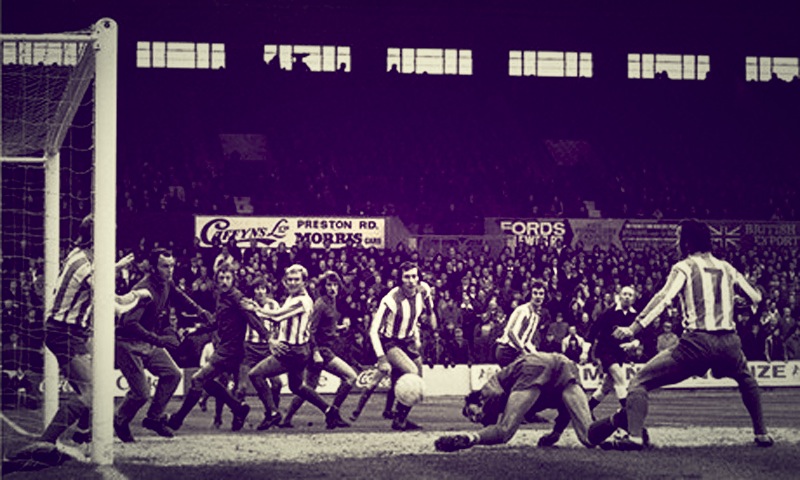
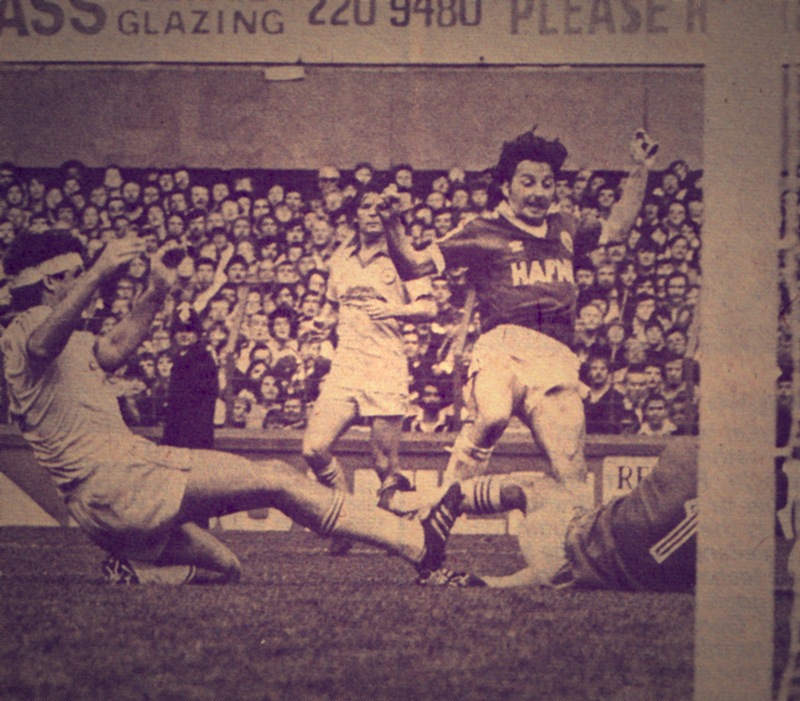
Oops! Powney misses a cross but Gall and O’Sullivan are on hand at the far post to clear.
Amazing to recall that Brian Clough’s previous away Cup tie, as Derby boss, was in the European Cup Semi-Final against Juventus. From Turin to Walton-on-Thames in the space of a few months. Here is John Vinicombe’s match report of the first match of the notorious cup tie with Walton and Hersham, from 24th November 1973, 40 years today:
Albion are indeed fortunate to be meeting Walton and Hersham a second time in the FA Cup. The Amateur Cup holders very nearly succeeded at the first time of asking in knocking them out, but Albion should decide the issue in Wednesday’s Goldstone replay.
However, one says ‘should’ in the assumption that they will not fail again to master elementary facets of the game. It is a familiar, but no less valid theme of manager Brian Clough that sides which do not get shots on target do not win matches.
Saturday’s shot-shy display played right into the hands of Walton, who harried and chased with commendable spirit until referee Gordon Kew’s whistle called a temporary halt to the proceedings in semi-darkness when neither side had scored.
Albion had given Gary Bloom remarkably little to do and Brian Powney was by far the busiest goalkeeper. He was the man who kept Albion in the Cup. Yet, after only seven seconds Powney lay flat on his face, watching in dismay as the ball snuggled into the back of the net.
It was the almost classic, storybook start for the underdogs. Straight from the kick-off the ball was knocked back to Dave Bassett and he struck it firm and high towards Albion’s goal. Russell Perkins jerked his heavy limbs into a gallop and down came the ball, bounced and, in cricketing parlance, “did a bit off the seam.”
Powney was on the edge of the six-yard box when it bounced over his head, and Perkins went by joyously to find the net and salute an unbelieving crowd.
Albion were goggle-eyed as Mr Kew pointed towards the centre-spot. In the Press accommodation and overspill, with reporters still trying to find seats, 50 pairs of eyes glued to 50 watches and the timings ranged from seven to 30 seconds. Down went eyes to books, and pens moved swiftly to record the event.
But, alas for Walton, it was not a goal. Mr Kew’s right arm indicated a foul. He explained afterwards: ‘I did not allow a goal because the centre-forward jumped at the goalkeeper.’
Mr Kew is a stickler for detail and Albion can thank their lucky stars he is. Perkins could only reach the bounching ball by jumping and it looked a good goal to most of the 6,500 crowd.
When it was clear that Walton had not scored the crowd felt cheated. They turned on Clough and screamed abuse at him for coaching from the line.
The rest of the game was rent with most ungenteel tones from a district where there are more stockbrokers to the acre than you can shake a stick at.
Afterwards the disappointment showed in the faces. The lugubrious countenance of Eric Sykes reflected Walton’s feelings. He played the straight man’s role on cue and said Walton should have won. And for once Clough devilled judgment without causing a furore.
He said: ‘I am very pleased to be still in the Cup. Walton had enough football to keep us occupied. They did a very good job. Brian Powney earned his cash today.’ Then he asked for Scotch and water and retired to the dressing room.
So the big match has come and gone from Walton-on-Thames. It will not be remembered although Walton summoned all their resources and Perkins went close to winning it four minutes into the restart with a half-volley that flew narrowly past the post.
While Albion were fighting for their reputations at Walton, the marchers were parading in Derby – 1,000 still bent on restoring Clough to the throne he abdicated a month ago.
As the skies darkened over this trim council-owned ground with such a beautiful playing surface, Clough must have felt the pulses surge briefly again. George Ley outstripped a host of red shirts to rifle an ankle-high 20 harder only a foot wide. Then Walton stood stock still, accusers and accused pointing to what might have been.
There was precious little they had to fear from the recognised strikers, and Peter O’Sullivan the most skilful player afield, wasted his midfield talents to a distressing degree. Overlaps from John Templeman and Ley were what really worried Walton who alone possessed the traditional cup-tie spirit on the day.
Walton and Hersham: G Bloom, D Sargent, C Lambert, W Edwards, D Bassett, C Woffinden, W Smith, R Perkins, C Foskett, D Morris. Sub: R Wingate.
And, for the first time on YouTube, I can now show you some super-rare footage from this match. There’s not much of it, there’s no sound, and it doesn’t include the disallowed goal:





 The Goldstone Wrap