Author Archives: Goldstone Rapper

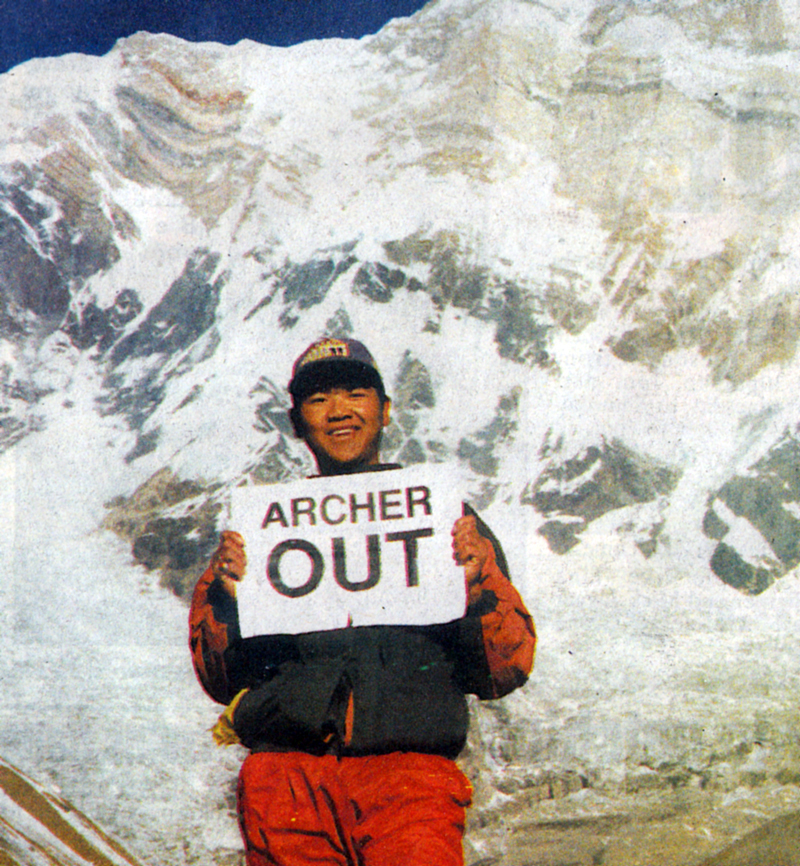
Mountain pressure on Bill Archer!

archerout

From the Evening Argus, 20th February 1997:

Albion fans must be beginning to think getting rid of chairman Bill Archer is a bit like climbing Mount Everest.

Well now the anti-Archer campaign has even reached the Sherpas of Nepal, thanks to long-serving Seagulls supporter Mel Hempleman.

The mother-of-two from Henfield, a fan since 1968, sent us this picture taken by a friend.

The mountain in the background is actually Annapurna 1, but the message is still the same.

Mel said: “I am a passionate Albion fan and a very good friend of mine was climbing the Himilayas, so I gave him a banner to take.

He had a bit of a hard time making the Sherpa understand what it was all about, but he got there in the end!”

(Thanks to Jim who supplied me with newspapers that featured this and other articles from the mid-1990s).

Tagged

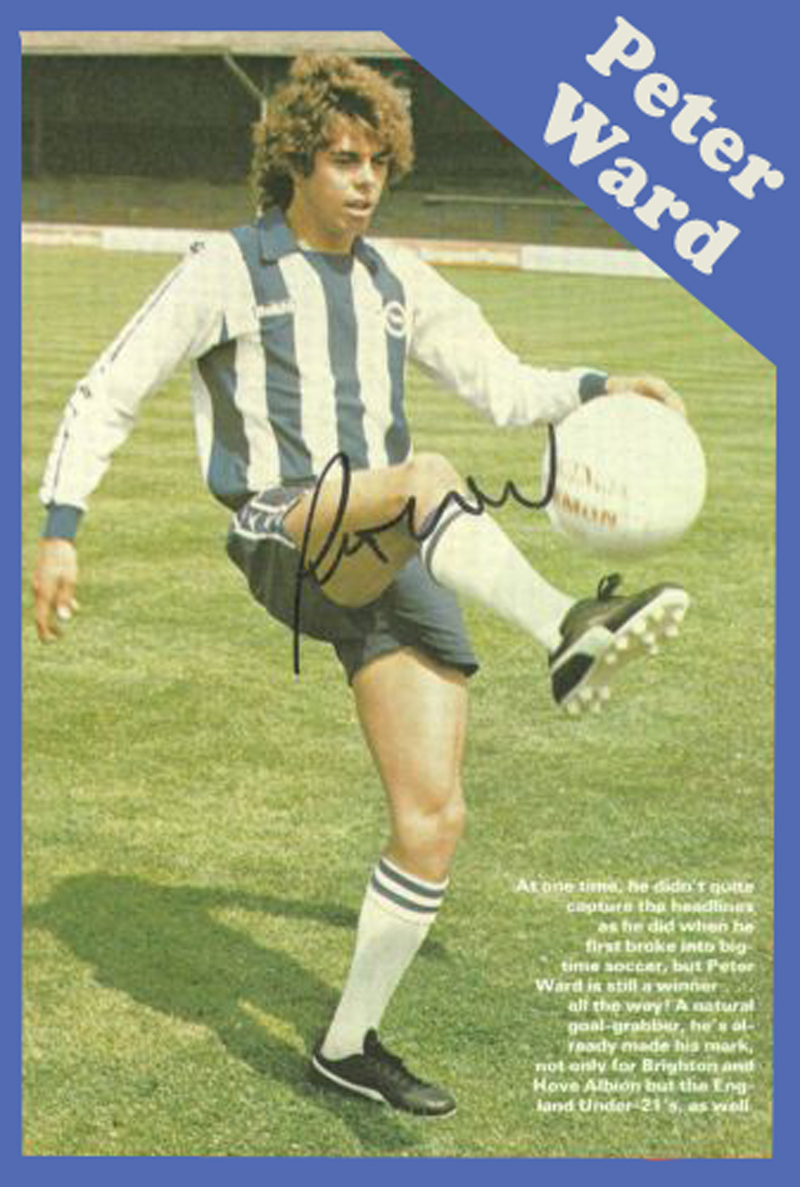
Selling Peter Ward? Mullery gets death threat

ward_juggle2

On the eve of Brighton’s debut in the top flight in 1979 came this unsettling story. Alex Montgomery reports:

Alan Mullery reluctantly put brilliant striker Peter Ward up for sale last night and then prepared to man the Brighton barricades.

The South Coast club, newly promoted to the First Division, expect a storm of abuse from their fans who adore Ward – rated in the £750,000 class.

Mullery admitted that he has already had one death threat warning him against ever selling Ward.
But it seems certain now that the former Young England star will be leaving the Goldstone and the odds are that he will join Kevin Keegan, Dave Watson and Laurie Cunningham on the big money trail into European football.

Watson’s new club Werner Bremen have already contacted Brighton and Cologne are another West German side who have been asking questions about Ward.

But first, top English clubs like European champions Nottingham Forest will get the chance to put their money where only their mouths have been so far.

Mullery made no secret at his deep disappointment and said: “I don’t take the death threat seriously of course. But it highlights the depth of feeling there is surrounding Peter down here.

“I can understand it. he is a top class player and I don’t want to lose him. But I have no alternative but to transfer-list him because he wants to leave and it is not my policy to hold onto a player in these circumstances.”

Ward himself would only say: “I’ve thought about it over carefully and have decided my future lies away from Brighton.”

Happily, Ward settled his differences and hit an impressive sixteen First Division goals in 1979/80, capping his enhanced reputation by appearing for the full England side in the close season friendly against Australia.

Tagged ,

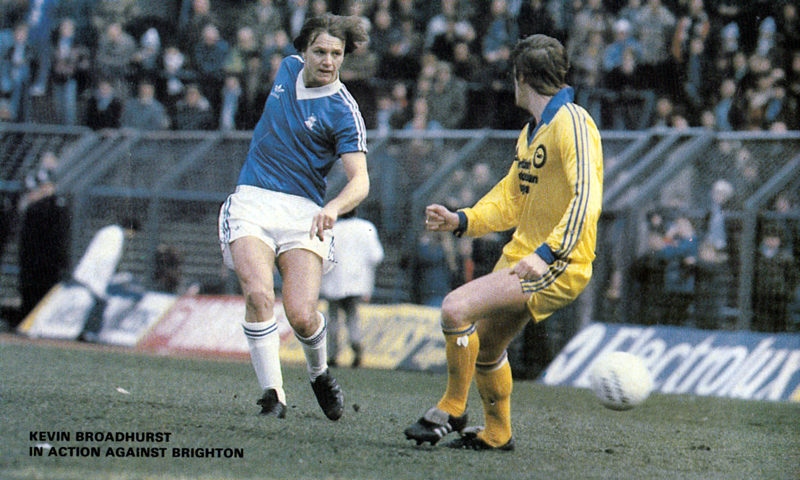
Colour photos: Birmingham v Brighton 1980/81

As Alan Mullery said to Neil Harman, of the Evening Mail, in 1980/81:

“We may be desperate for points, but we are not a desperate side. We won’t go down. I have always felt, despite our setbacks that we are not far behind the best teams around. Now we’ve got to prove it. Either we have been unlucky or we are not good enough. I think we’ve been unlucky.”

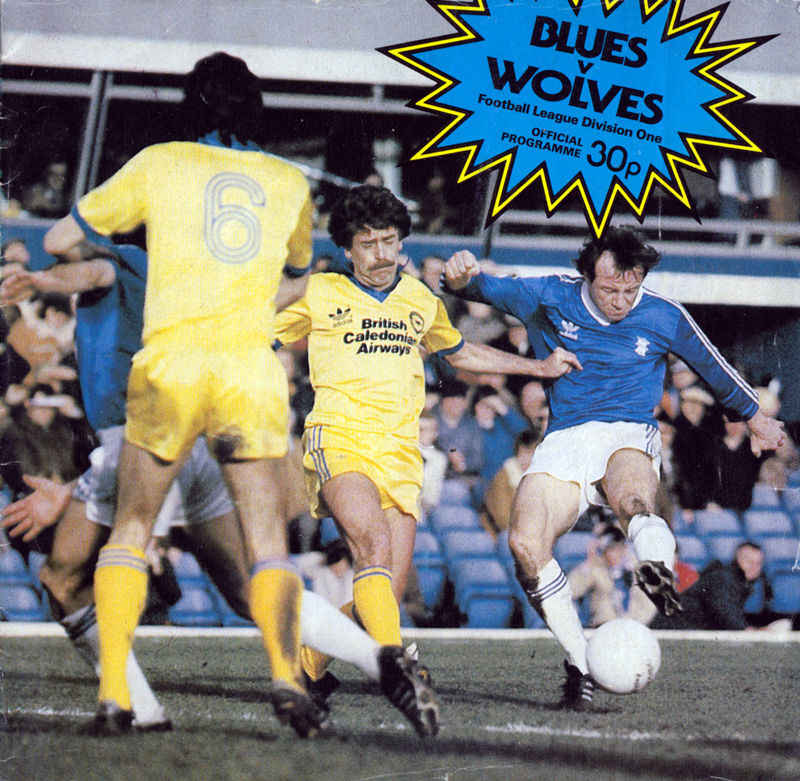
His words appeared in the matchday programme for the clash at St Andrews, on 7th February 1981, only the second ever League game between the sides. The first ended in a 2-2 draw at the Goldstone earlier in the season. Albion scorers were Neil McNab and Mark Lawrenson.

By the time of this return match in Division One, Brighton stood in 19th position, one place above the relegation zone. Birmingham were one place above the Seagulls but crucially had a four point cushion.

Just like in the 2013/14 season, Albion had a new yellow away kit and sponsor to show off. Here’s Peter O’Sullivan trying to stop a Blues attack.

birmingham1

Albion went down 2-1, with goals from Tony Evans and future Seagull Alan Curbishley ensuring a fifth straight defeat for the south coast side. Converting a low cross from the overlapping John Gregory, Michael Robinson got a consolation goal for Brighton 19 minutes from time. It was a frustrating afternoon at St Andrews for the Albion, who found the opposing goalkeeper Jeff Wealands in inspired form.

By the end of the season, the Blues had cemented their First Division status, pushing up to 13th position, although this was overshadowed by their neighbours Aston Villa carrying off with the First Division title.

Given the number of times Wealands had thwarted the Seagulls during the February match, it certainly gave credence to Mullery’s assertion that Brighton were unlucky that season. However, the Albion boss’ contention that his side would not get relegated also proved true. Four wins out of four at the end of the season made sure of this. As Neil Harman said of Mullery at the end of his piece in the programme:

“He isn’t wrong all that often.”

birmingham2

Tagged , ,

The Brighton goalkeeper shirt of the late 1970s

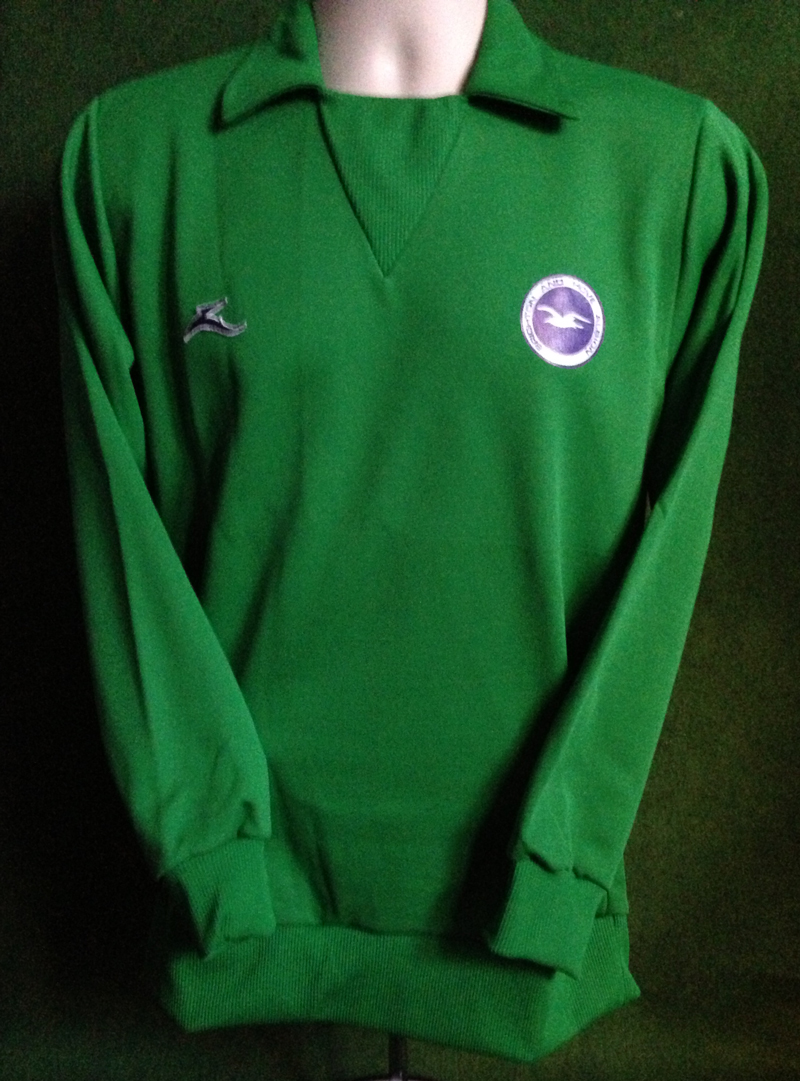
Once I found a green Bukta jersey with black logo on eBay, there was no stopping me! I won the auction for a tenner in late July and then hatched plans to get the classic round Seagulls badge added – and hey presto! – I now have a replica of the goalkeeper top worn during the late 1970s. And yes, I appreciate the number of people for whom this has any sartorial interest is probably rather limited.

ericsteeleshirt

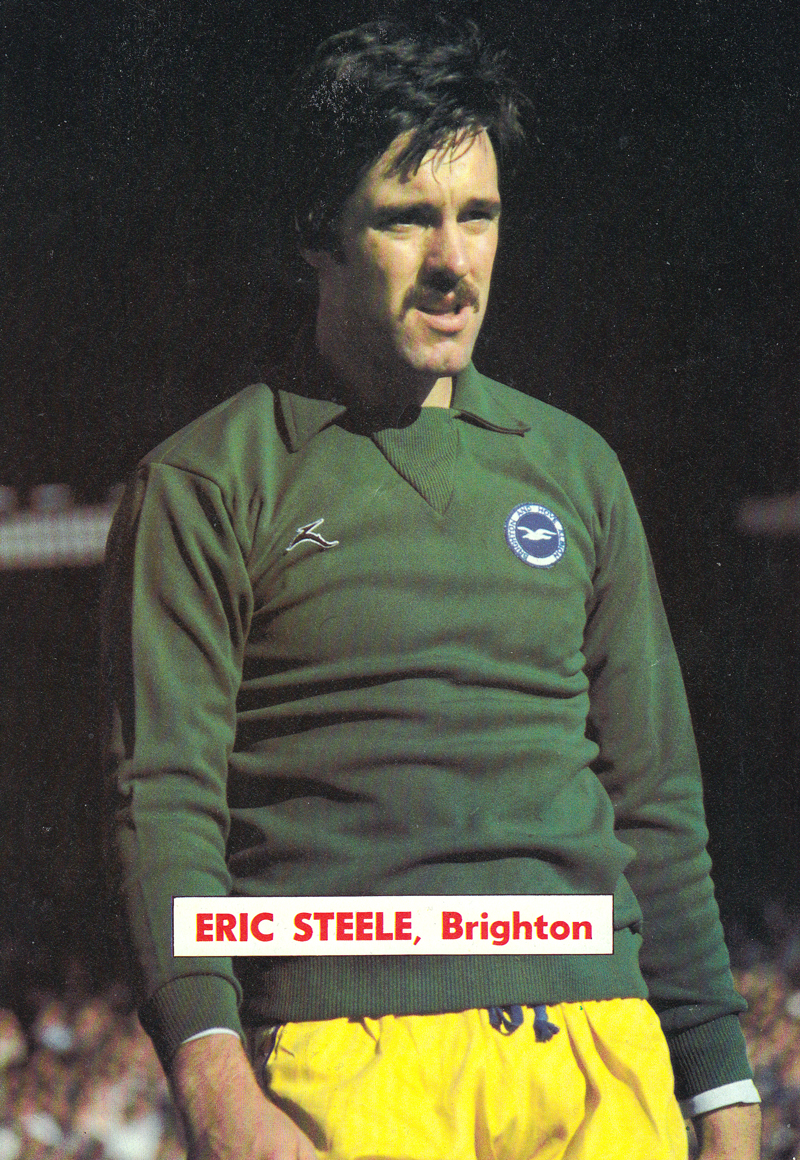
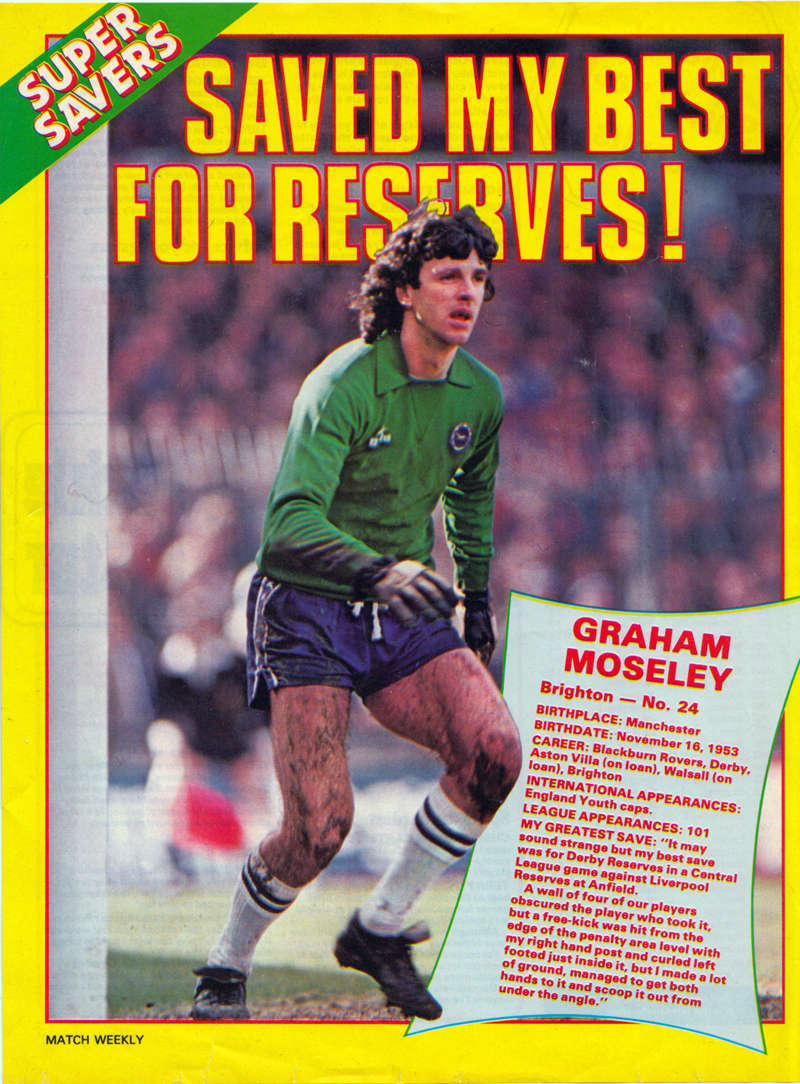
As far as minor variations, the tight-fitting top was worn by goalkeeping rivals Graham Moseley and Eric Steele from the 1977/78 to 1979/80, sometimes with the Bukta lettering, and sometimes with the Buk symbol…

ericsteele

Sometimes, it featured both the Buk and logotype, as Graham Moseley ably demonstrates…

grahammoseley

There was even a red version, for the times when Brighton played a team with green on their kit, such as Norwich City. The Old Football Shirts website includes the red goalkeeper’s top here.

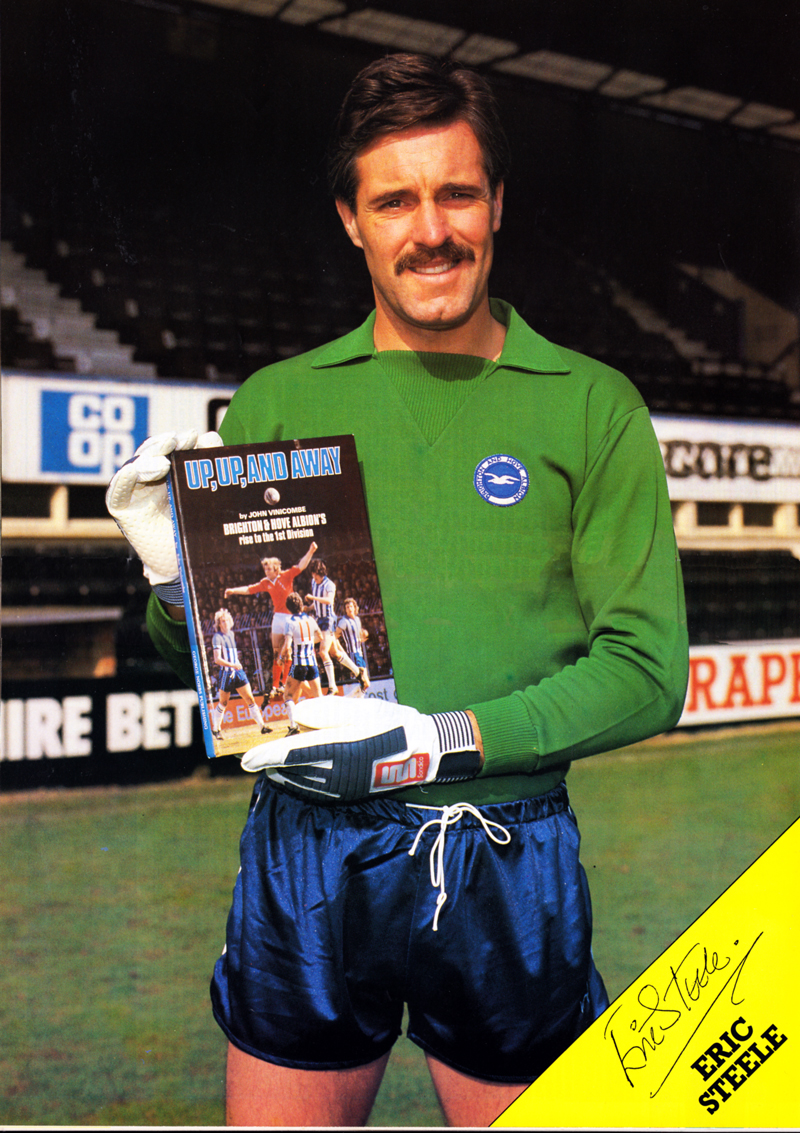
Green or red, it would be a stretch to describe the goalkeeper’s shirt as a design classic. However, it’s undoubtedly associated with the good times at the Goldstone, so much so that there was even an Eric Steele poster in the centrefold in the Derby v Brighton programme of October 1986, with him proudly wearing his Albion clobber seven years on together while showing off John Vinicombe’s ‘Up, Up and Away’ book celebrating Brighton’s rise to Division One in 1979. You read it right – a Brighton poster in a Derby County programme!

ericsteele-book

(Although those shorts look rather like the blue Bukta ones, they’re actually Derby’s of 1986/87).

Talking to Harry Brown, Steele is optimistic about Derby’s chances that season:

“Things are on the move here,” Eric says confidently. “It reminds me of my very happy stay at Brighton. I was part of the Seagulls set up from February 1976 till October 1979, when I moved on to Watford. In that time we moved from the Third to the First Division in three seasons, and I have very happy memories of the Goldstone and its fans. We packed them in up to 25,000 in fact, and I can see it all stirring again just like that here at the Baseball Ground.

Eric believes, as most of his team mates do, that Derby County can equal Brighton’s feat, and maybe even improve on it, by going from Third to First in two seasons. “I want to taste yet another Third to First Divsion success, and I believe it is ‘on.’ That’s why I stayed here to battle it out with Mark (Wallington).

Last May’s promotion here was the fifth in which Eric has been involved during his career – the two with Brighton; from the Fourth to the Third with Peterborough; and from the Second to the First with Watford. He reckons he will contribute to the sixth right here at the Baseball Ground.

He sees the same sort of individual flair emerging here as it did at the Goldstone when he was a Brighton player. “Then we had Mark Lawrenson, who has gone on to great things at Liverpool, Derby-born Peter Ward who was getting us goals galore, Welsh international Peter O’Sullivan, and Brian Horton, now the player-manager at Hull.”

Steele made it promotion number six when with Derby County who won the Second Division championship in 1986/87. He left for Southend at the end of that campaign. When he was loaned to Mansfield in March 1988, he made one last appearance at the Goldstone.

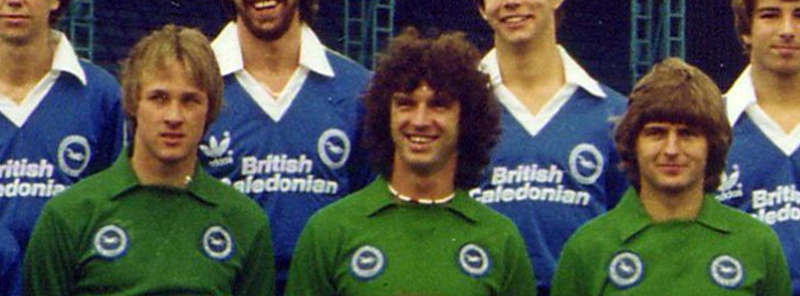
As for the Seagulls’ Bukta goalkeeper shirt, it officially gave way when Brighton switched to Adidas from the start of 1980/81. However, in the pre-season photo shoot for that campaign, the green Adidas shirt was clearly not yet ready and so an extra Albion badge had to be sewn on to conceal the Bukta logo, to create a rather bizarre look. That’s one retro Albion goalkeeper’s top I won’t be emulating!

Tony Knight, Graham Moseley and John Phillips

Tony Knight, Graham Moseley and John Phillips with a seagull on each nipple

Tagged , , ,

FKS’ last hurrah: Soccer 83-84 stickers

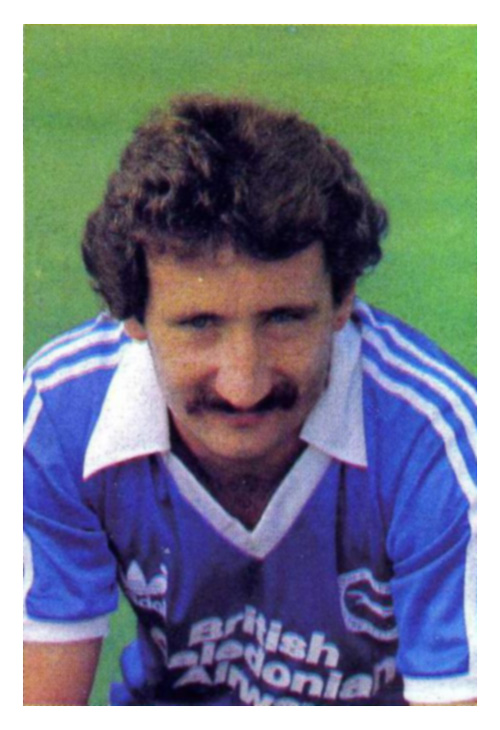
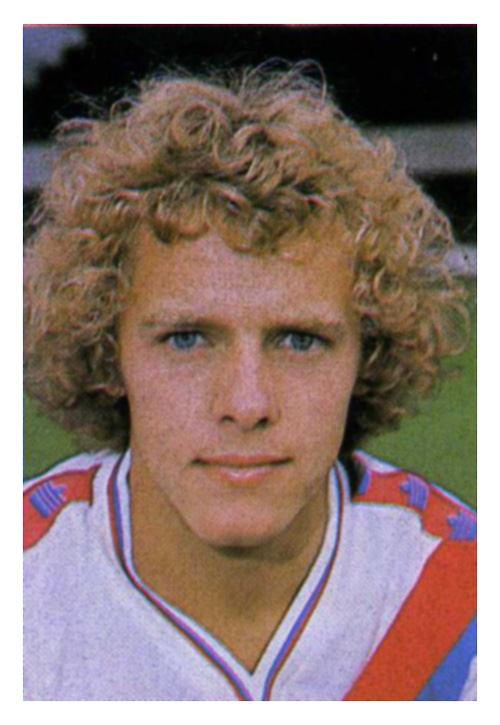
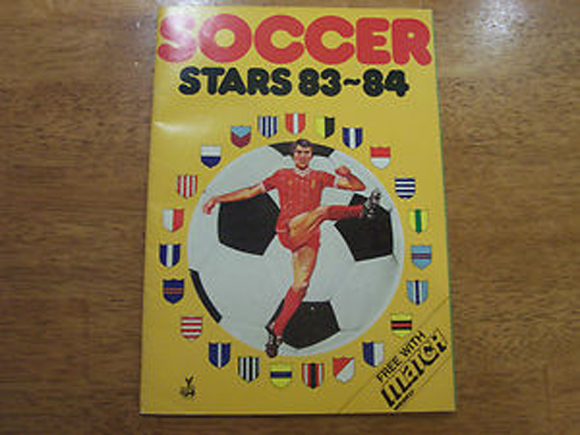
Poor FKS. They once dominated the ’70s football sticker scene with fabulously grandiose album titles such as ‘The Wonderful World of Soccer Stars Gala Collection.’ Which suitably sideburned and flared young kid wouldn’t want to be in on that? By 1983/84, probably due to the intense competition from Panini, FKS had reached the end of the line with the rather dubious ‘Soccer 83-84’ series. Following on from their ‘Soccer 82′, it appears that they were trying to cover two seasons’ worth of top flight soccer with this inept collection. Here are the Brighton players:

Graham Moseley

Graham Moseley

Chris Ramsey

Chris Ramsey

Graham Pearce

Graham Pearce

A stray ball seems to be trying its darnedest to try to muscle in on the limelight behind Moseley’s shoulder. But is this really true? As you can see, the grass behind Moseley and Ramsey looks suspiciously unnatural in its greenness, especially as the unaltered green on the side of Ramsey’s arm rather gives the game away. The mixture of the head and shoulders shots of these players and the zoom-in on Graham Pearce’s head bestow an untidy look for this collection. No wonder Chris Ramsey looks uncomfortable.

Steve Gatting

Steve Gatting

Tony Grealish

Tony Grealish

Steve Foster

Steve Foster

Similar gripes with Messrs Gatting, Grealish and Foster here. Given where FKS had appeared to have swiped their photo shot of Tony Grealish from, you can understand why they had to put on a faux-grass background.

Gary Stevens

Gary Stevens

Jimmy Case

Jimmy Case

Gary Howlett

Gary Howlett

A nice, genuine photo of Jimmy Case, fresh from the barbers, follows another manipulated one of Gary Stevens. And whoa! An intensely dim shot of a young and rather frail-looking Gary Howlett. Suffice to say, if you met him in a dark alleyway, I don’t think you’d be that scared.

Michael Robinson

Michael Robinson

Gordon Smith

Gordon Smith

Gerry Ryan

Gerry Ryan

Some more bog-standard and doctored head and shoulders shots of some of Albion’s attackers follow. It’s like FKS were trying very hard to emulate Panini here, whereas some of the action shots that the company had previously used would probably have been more interesting to the young collector.

Neil Smillie

Neil Smillie

And then the final insult! Sticking in a shot of a player in a Crystal Palace kit on a Brighton page. Yeah, thanks, FKS! A bit like putting a sticker of Mo Johnston in a Celtic shirt within a Rangers sticker double-spread, I don’t think that would have gone down too well on the south coast at the time.

No need to be too resentful to FKS, though, after a stay that had lasted since the late 1960s. The company had introduced new ideas such as actual albums for affixing your stickers, something we take for granted today. Now, though, the game was up.

soccer83-84

Tagged , , , , , , , , , , , ,

Penney drop – Steve hands in transfer request

stevepenney

With the exact poor man-management approach that Garry Nelson would later document, Barry Lloyd dropped Northern Ireland’s World Cup winger Steve Penney 45 minutes before the Albion’s home match with Bournemouth in September 1988. It led to Penney handing in a transfer request. As John Vinicombe reported:

A day of confusion and disappointment at the Goldstone ended on an acrimonious note with Steve Penney saying he would never play for Barry Lloyd again.

Penney, who had been relegated to the subs’ bench together with Paul Wood, then left to join Billy Bingham’s squad for Wednesday’s World Cup game against Eire in Belfast.

Penney repeated his request for a transfer. He had asked to leave in May 1987 when Albion went into the Third Division. This time, he put his point of view to chairman Dudley Sizen, and later publicly slated the club.

“The way things are going here at the moment is absolutely ridiculous,” he said.

He maintained he was being unfairly treated by Lloyd and that his dropping coincided with playing a target man in Gerry Armstrong.

That switch, according to Penney, didn’t make sense as he is the principal provider of crosses.

“There are other things involved, including financial details. I was told only three-quarters of an hour before playing that I was not playing, and it seems I’ve been made the scapegoat with Paul Wood.

“The way I’m being treated at the moment is ridiculous. The manager had to put me on; we were two-nil down and it could have been a couple more.”

If Lloyd gets a reasonable offer for Penney, he will have no hesitation in selling, and that has been the situation for some time now.

The story also made the back pages of the News of the World, with Penney saying:

The manager told me I was dropped when I came in. It was completely out of the blue. I felt on Wednesday against Southend in the Littlewoods Cup that I played my best game of the season. I got in enough crosses to win but we just don’t have a target man.”

The Bournemouth game was also memorable for the fact that Perry Digweed failed to turn up from his home in Chelsea. As a result, John Keeley, who had injured a finger in training on the Friday, had to answer a late SOS and even had to send a friend to his home to retrieve his contact lenses.

With all the drama, it was hardly surprising that Bournemouth opened up a two-goal lead at the Goldstone through Mark Newson and Shaun Brooks. After Penney came on, Gary Chivers halved the deficit after 66 minutes.

The game against the Cherries was the fifth in a dismal run where Brighton lost all of their opening eight matches of the 1988/89 season. Despite his vow that “I’ve definitely played my last game for manager Barry Lloyd,” Penney regained his place in mid-November in a surprise 3-2 victory at Ipswich, before scoring in the next match in the 3-0 drubbing of Sunderland at home.

His deteriorating relationship with Barry Lloyd is documented well in Spencer Vignes’ superb ‘A Few Good Men’ book, where he recounts another occasion when Barry Lloyd attempted to damage Penney’s likelihood of being selected for his country, by substituting the winger and complaining of his lack of effort to Billy Bingham, the Northern Ireland boss. Bingham replied to Lloyd:

Steve will be playing on Wednesday night because he’s played 15 games for me and that’s not his character.

In the end, knee injuries took their toll on Penney, and his appearance for the Albion in the return fixture with Bournemouth on 2nd January 1989 proved his last for the club. He was given a free transfer towards the end of the 1990/91 season. Nevertheless, the tricky winger who so mesmerised the Liverpool defence on national TV in the FA Cup in 1984, is still remembered with great affection by Seagulls fans.

Tagged

‘I expect the bullet’ – Cattlin’s confession

chriscattlin

In this revealing interview from 1983, Chris Cattlin shows a mixture of realism and determination as he replaces Jimmy Melia as Brighton boss:

Chris Cattlin has no illusions about the struggle he faces in trying to steer 1983 Cup Finalists Brighton back to the First Division.

“I shall do my best until the bullet comes,” he says bluntly.

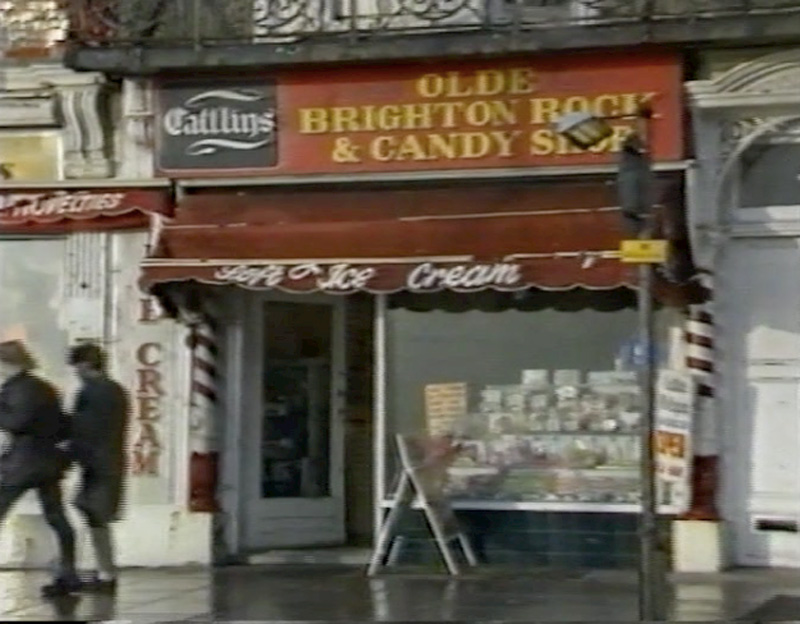
Cattlin, the former Huddersfield, Coventry and Brighton defender who has spent recent years building up a thriving rock selling business (see image below) in the Sussex seaside town, has move into his new job as successor to Jimmy Melia with such caution that a casual observer could be forgiven for believing that the Goldstone Ground has been relayed with mines left over from the Falklands war.

rockshop

Chris Cattlin is arguably the most unpopular manager to be appointed in the history of the game. And none of it is his fault.

Appointed last summer as chief coach, he was given Melia’s job when the Brighton manager walked out last month.

“I didn’t ask to do the job. I was given the job, and having got used to it, I’ll do it to the best of my ability,” explains Cattlin.

“I want to let the dust settle, and then try to get the club straightened out.”

His priority is to win promotion to the First Division and get the club into Europe. But he confesses that the current side, unless stiffened up by two or three new players, is not good enough to gain promotion this season.

“They said Watford didn’t have potential to do anything. Look what happened. Look what Bobby Robson did for Ipswich Town in his time there. One of the best things that happened to Brighton was to get to the Cup Final. It has given us tradition, and Jimmy Melia and the team must be congratulated for that.”

He is looking for new players of “substance” and will not confine his scouting to Brighton. His priority is to find a defender and midfield player.

In the meantime, he confesses to being happy with the quality of many of the Brighton team.

Cattlin’s coach-like appraisal of his squad is fascinating:-

Goalkeeper Joe Corrigan – “Marvellous professional.”

Full-back Kieran O’Regan – “infectious enthusiasm with a will to win.”

Steve Gatting – “A First Division player who needs a kick occasionally. Educated left foot.”

Eric Young – “Lots of potential. He has played against Frank Stapleton and Mark Falco and learns with every game.”

Graham Pearce – “A steady player. Won’t let you down.”

Tony Grealish and Jimmy Case – “Two great professionals. Dedicated.”

Neil Smillie – “Pacey Winger. Doesn’t always produce what he is capable of.”

Gerry Ryan – “Scores goals. He’s lost half a yard of pace. At 28, he has stopped working at his game. I want to get more out of him – and I will.”

Terry Connor – “A shy lad, he has done well, but can improve. Great potential.”

Gordon Smith – “Cost £400,000. Needs to play with more passion. Can score goals.”

Alan Young – “Aggressive striker.”

“I want to pour some concrete into the club to give it the solid foundations it needs. I want to do that before I get the sack, as I inevitably will. Most managers do.

“I have no fear of the sack. I was invited back to the club by the chairman and now i have got the bit between the teeth.”

Chris Cattlin, one of the few managers to be appointed without a fanfare of trumpets, deserves to be given a chance.

But with the smell of cordite fresh around the Goldstone, the most sceptical Brighton supporter would not give much for his long term future.

1983-84_v2

Cattlin certainly steadied the ship in 1983/84. A side that had fallen to 16th position in the Second Division in October 1983, Melia’s last as manager, recovered to 9th by the end of the campaign. The new manager, with assistant Sammy Nelson, had instilled a new discipline into the running of the team, something that bore fruit in a famous, handsome 2-0 win over Liverpool in the FA Cup in January. All was set for a promotion push the following season.

Tagged

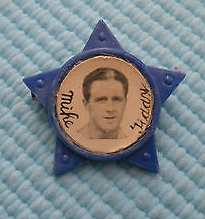
Mike Tiddy, Brighton’s manic feet preacher, says: ‘Play the game hard but play it straight’

miketiddy

“Tiddy’s late! Tiddy, Tiddy, where can he be?”
“Sorry I’m late, I was preaching in Patcham”

When he wasn’t dashing down the flank as an outside-right for Brighton in the late 1950s and early 1960s, the grey-haired (at least in the middle!) Mike Tiddy was a Methodist lay-preacher. He had spells at Torquay, Cardiff and Arsenal before joining Brighton in October 1958. Because of his role as a preacher, he did not figure in Christmas and Easter fixtures.

In this article, from Charles Buchan’s Football Monthly, he discusses the manner in which his work for the Church colours his personal attitude towards football, how he is treated by other players and what he thinks of spectators:

tiddyI work for the Church when I am not playing football, and many people cannot understand how I can combine the two. They ask me why I take part in professional football when there is so much talk of matches being fixed and of players taking bribes.

Well, there is good and bad in everything, in sport no less than in other aspects of life. As a Christian I try to live up to my beliefs in a practical way, and I feel should be interested in trying to do some good in whatever activities I follow.

One of the great lessons to be learned in life is to play the game the straight way. Play it hard if you like, take knocks and give some back – but always in a fair manner and without vicious retaliation.

miketiddy2

There was a time – not so very long ago – when I didn’t play Soccer hard enough. Maybe I was trying to be too much of a gentleman. But some of the fans began to think I was afraid of getting “stuck in”.

Now I play the game hard. Football, after all, is a man’s game, the finest in the world when played in the right spirit of keen competition. These days I go into the tackle with more zest and bite, and I am enjoying my game even more.

Call it muscular Christianity if you like…

I can’t help feeling that I have a first-class opportunity of trying, in my small way, to get over a message – through example – to thousands of people. I don’t have to say a word. If I can play the game hard and fairly then I have achieved something.

Sometimes I hear a spectator shout something and perhaps refer to me as a ‘parson’. That makes me feel good, and gives me something to live up to.

I remember playing against a back who hit me right, left and centre. Eventually, we both sprawled on the turf, and he grunted: “You amaze me, Tiddy. I keep kicking you, but you don’t do anything about it.”

At the end of the game he came over for a handshake and we have been pals since then.

Mark you, I am often tempted to lose my temper but I am certain that my Church upbringing helps me to keep it in check.

The great majority of professional footballers are fine fellows. They are healthy sportsmen with good morals. Ignore the tales you hear of drinking and immorality among players.

Take it from me that most of the lads live for their football, and keep themselves fit in the mind as well as body.

How do they react to my views? I receive respect from them, int he dressing room and on the field.

Some people might think of chaps like me as being prudes or cissies. Well, I can only say that I have always felt I have been one of the boys with all the clubs I have played for.

I like to join in the fun and leg-pulling. I like to play in the card ‘schools’ on long away trips.

I get a lot out of football, but the biggest thing is learning to take defeat as as well as success. We haven;t started to conquer life until we can do this in the right spirit.

And here I think I ought to pass on this same advice to certain spectators! They take defeat with far less grace than most players.

I don’t think television will take most of the fans from the terraces, for there is nothing quite like the real thing… the electric Soccer atmosphere and letting off steam.

That’s a good old British safety valve!

My advice to young players is: Play football the best way by doing the easy thing slickly and accurately. But I must warn you that the easy things in football can be the most difficult.

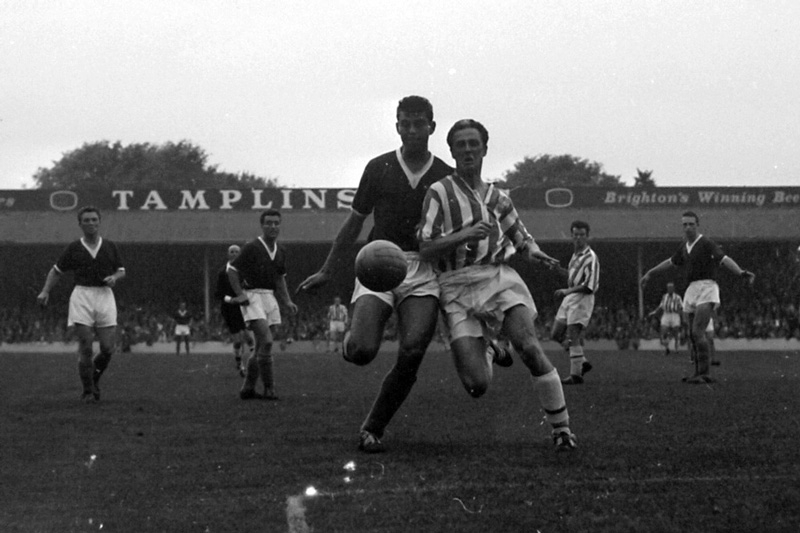
Interesting to read Tiddy’s dismissal of the impact of television on football. He must have been thinking of the rather ropey TV coverage of the FA Cup game between Brighton (in the dark shirts) with Bath (stripes) which managed to – scandalously! – miss his winning goal:

The record attendance at Twerton Park, 18,020, also ably demonstrated that there is no substitute for seeing a game in person.

Tagged

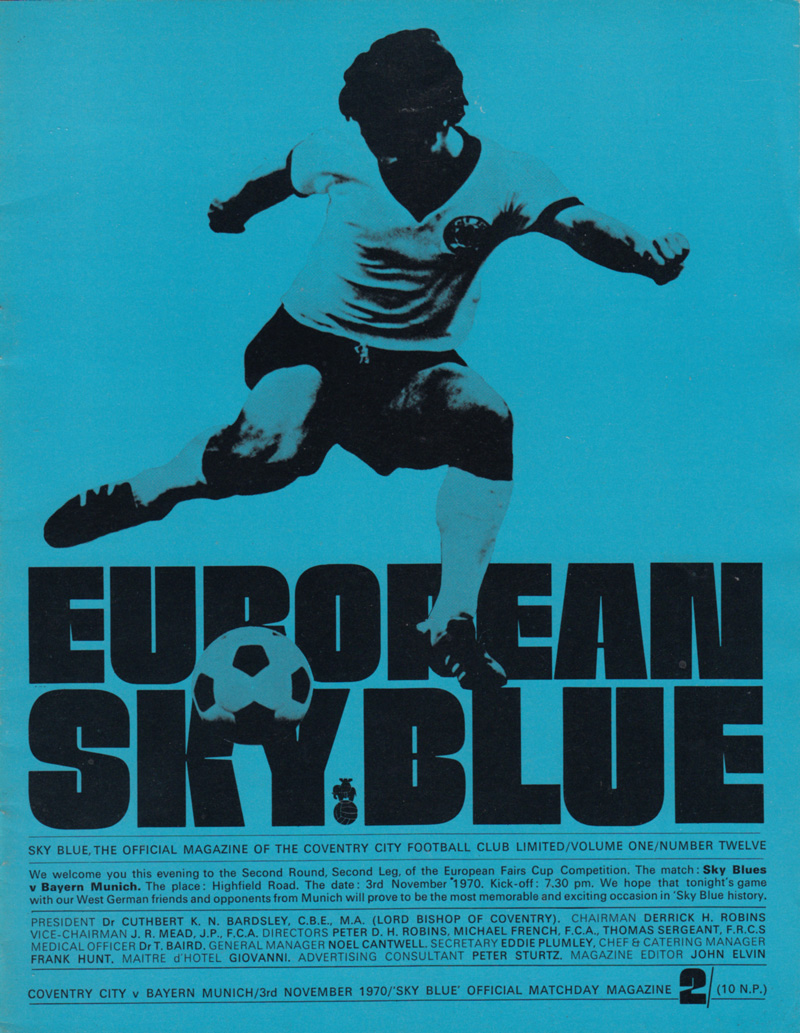
European Sky Blues – the future Albion stars that beat Bayern Munich

The proof-readers must have been on holiday, because the matchday programme for Brighton’s recent pre-season friendly with Norwich City carried this juicy blunder:

Norwich are the only English side to have beaten Bayern Munich in European competition.

Well, apart from Arsenal, Aston Villa, Chelsea, Everton, Manchester United and Tottenham, of course. Three of those were in the final of the European Cup (or Champions League), so it was a sizeable gaffe that deserves to be squelched. And, in an act that might inspire some Jimmy Hill chin-stroking style incredulity, Coventry City have also defeated Bayern Munich. Yes, that’s right. And it was in the decade when Bayern were crowned champions of Europe three times. What is more, the Sky Blues did it with a quite a few players who went on to ply their trade with Brighton & Hove Albion several years later.
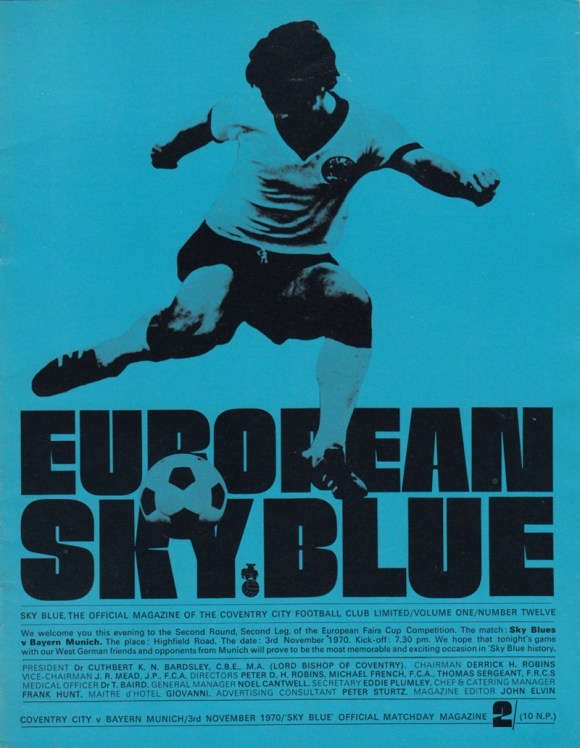
europeanskyblue

Autumn 1970. Ex-Eire international midfielder Pat Saward had recently left the coaching staff at Coventry City, where he had nurtured the youngsters of Highfield Road to the FA Youth Cup Final for the second time in three seasons. However, now a much bigger challenge loomed, as the prospect of relegation threatened to engulf his first campaign as Brighton manager. Having finished fifth in the previous campaign under Freddie Goodwin, Albion had started 1970/71 with a measly two wins in ten matches. So Saward went back to old club to replenish his side in the face of an injury crisis. He emerged with the reserves’ tough centre-half Ian Goodwin on loan. As John Vinicombe wrote of Saward in the Evening Argus:

He well remembered Goodwin, a 6ft central defender, who at 20 was still learning his trade. Goodwin, all 13st of him, had lost his first team place after four appearances when City splashed £100,000 on Wednesday’s Wilf Smith.

The transfer struck a chord with Saward, who during his career at City had tried to sign Goodwin’s younger brother. Ian only turned up at Highfield Road as a driver for the 15-year-old kid. Saward recalled: “We happened to be short of a player and asked Ian to show us what he could do and he turned in such a good performance that he had a month’s trial and stayed.”

Two years later Goodwin answered Saward’s SOS and breezed into the office, declaring: “Have no fear, Goodwin is here.” That self introduction was typical of Goodwin, who became a breath of fresh air to Albion’s dressing room.

“You can relax,” he beamed. “From now on it’s going to be wins all the way.” Now Saward was no mean motivator himself, but with Goodwin having joined the ranks, initially on a short-term arrangement, spirits began to soar.

Goodwin’s boast proved empty as Albion continued to fall, from 17th place in early November to as low as 23rd in late March 1971 before rallying to finish a respectable 14th position.

As for Coventry, the Sky Blues had much, much bigger fish to fry. The Midlanders had finished sixth in the First Division in 1969/70, which opened the way to the first and only European campaign in their history, in the Inter-Cities Fairs Cup. Once they progressed past the first round, having beaten Trakia Plovdiv 4-1 in Bulgaria before a 2-0 win at Highfield Road, Coventry then drew mighty Bayern Munich.

The Sky Blues line-up at the Olympic Stadium in Munich was:
McManus, Coop, Cattlin, Machin, Blockley, Strong, Hunt, Carr, Martin, O’Rourke, Clements.
cov-chriscattlin2So that’s three players there that went on to join Brighton. Left-back on the night was the ever-dependable Chris Cattlin. He had a distinguished career at Highfield Road after signing from Huddersfield for a record fee for a full-back, £80,000, in March 1968. On the Sent From Coventry blog he said recently: “I was a long, lanky lump and I wouldn’t dive in. I’d trap the attackers in the corner then wallop them. I had a great relationship with the fans at Coventry. They knew what they were going to get from me.” He was transferred to Brighton for no fee in summer 1976 as Peter Taylor’s last signing for the Albion, and his stiffening of the defence (when ousting Ken Tiler from right-back mid-way through the season) made such a huge contribution to Brighton clinching promotion to Division One in 1978/79.
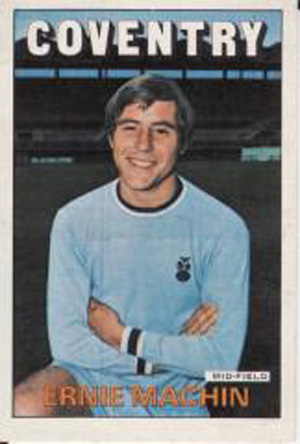
cov-machinMidfielder Ernie Machin also played in Germany on that evening. This energetic and skilful player eventually came to the Goldstone Ground via Plymouth in summer 1974. Although he was appointed captain, he never settled on the south coast, and still lived in Coventry and trained in the Midlands. Released at his own request in 1976, he eventually returned to Coventry briefly as youth team coach.
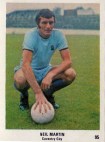
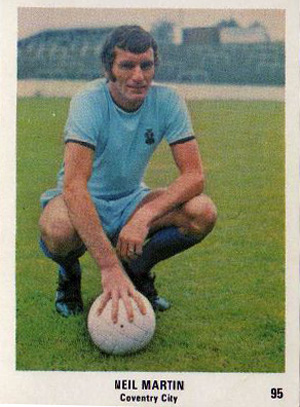
cov_neilmartinCoventry’s lanky striker Neil Martin also didn’t last very long as an Albion player. Signed by Taylor in summer 1975 as a freebie from Nottingham Forest, he left for arch rivals Crystal Palace in March 1976 after losing his place.

In the first leg, Coventry went down 6-1 to Bayern.

For the return leg, Neil Martin kept his place and scored the winner in a famous 2-1 victory. Cattlin and Machin dropped out, and Wilf Smith and Dennis Mortimer were promoted to the side:
Glazier, Coop, Smith, Mortimer, Blockley, Hill, Hunt (Joicey sub), Carr, Martin, O’Rourke, Clements.
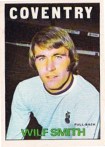
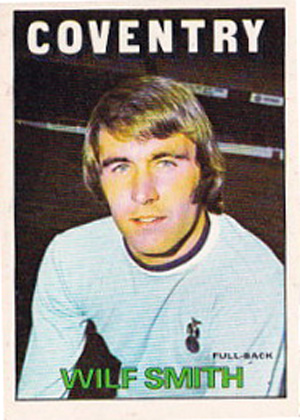
cov-Wilf-SmithWilf Smith had been born as Wilfred Schmidt in Neumünster, Germany before his parents decided to Anglicise his name. He had joined Coventry from Sheffield Wednesday for £100,000, a record fee for a full-back, in summer 1970. It was this move that led to unsettled Goodwin joining Pat Saward’s Albion. The classy Smith also came to Albion on loan from Coventry in October 1974, but Albion could not afford the fee to make the deal permanent.
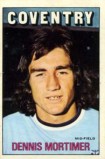
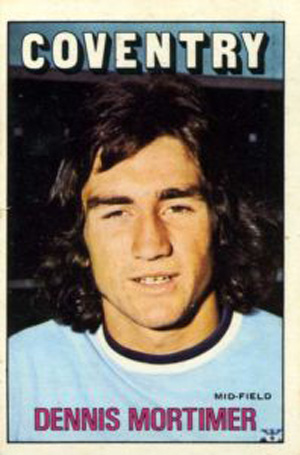
cov-mortimerFinally in this exodus-of-sorts to the Goldstone, Dennis Mortimer. At the time of the Bayern clashes, he was just eighteen years old, eventually playing 193 Division One games for the Sky Blues before a successful move to Aston Villa. He joined Albion much later in 1985, signed by Chris Cattlin, now Brighton manager, on a free transfer. By that time, Mortimer was reaching the end of his career and yet his powerful performances with Brighton made him a firm favourite at the Goldstone Ground. The influential midfielder had already notched up another victory over Bayern Munich, in the 1982 European Cup Final as Villa skipper.

Tagged , , , , , ,

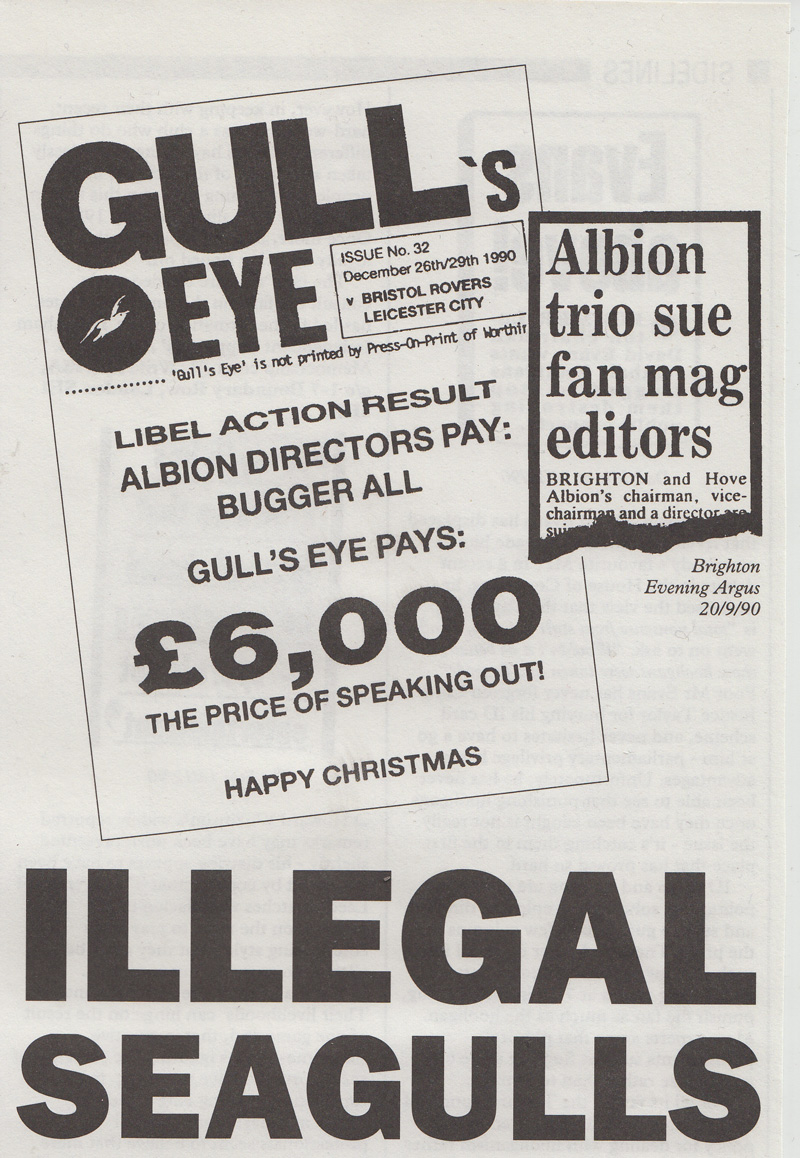
The Albion directors sue Gull’s Eye fanzine

illegalseagulls1

I think this is from When Saturday Comes. Atilla The Stockbroker had been kind enough to give me permission to reprint this article by him:

I suppose it was going to happen to some fanzine or other eventually, but it still feels very strange. As Gull’s Eye editor Peter Kennard and myself met up with FSA lawyer Peter Jackson on the steps of the High Courts of Justice in London, I could hardly believe it could come to this, even more so as we sat in the stiffly formal atmosphere of Court 14 as a public apology was made on behalf of the fanzine while Brighton and Hove director John Campbell looked on. The ponderous sledgehammer of the British libel laws descended with all its force on, well, a nut: sixteen sides of erratically typed A5 sold by a bunch of enthusiasts outside the Goldstone on alternate Saturdays.

The judge certainly felt the occasion worthy of humorous comment: “We don’t need the jury, do we?” he smiled as the court rose after the proceedings, total duration around two minutes. The court reporter was grinning too. Rather less funny, though, was the cost for £6,000 in legal costs…

That was the final act in a long-running saga, an apology in open court being just one of the conditions imposed on Gull’s Eye as of an out-of-court settlement, leaving the fanzine’s co-editors, Ian Hart and Peter Kennard, to pay the legal costs of the Brighton directors.

The libel consisted of a series of allegations about the directors’ activities, couched in humorous language but taken oh, so seriously by the board; better leave it there, I am advised, although I was not aware that my phrase “there is a stench of decomposing flounder in the air” could possibly be viewed as libellous. It is certainly true that, these days, an ancient and dilapidated flatfish would make a far more appropriate symbol for our beloved Brighton and Hove Albion than the soaring seagull of popular legend.

There can be no doubt that the club has enormous potential. In the 1970s, as the Seagulls hovered near the top of the Third Division with Peter Ward and Ian Mellor leading the line, crowds of over 30,000 poured regularly into the Goldstone. Just two years ago, when the club bounced back from relegation to the Third Division at the first attempt, 20,000 people saw the final game of the season against Bristol Rovers. All it takes is a sniff of success for the crowds to start pouring in – and this is hardly surprising since Brighton is the only League club in Sussex, one of the largest (and wealthiest) counties in England.

However, such sniffs have been few and far between since Gordon Smith’s famous 1983 Cup Final miss, and now gates are averaging well below five figures, with debts of over £3m. As usual, the powers that be refuse to discuss the clubs financial position with supporters, and appear unable or unwilling to attract new faces onto the board. Huge debts continue to be cited as the reason for Brighton going absolutely, and spectacularly, nowhere.

All very frustrating – and that’s where Gull’s Eye comes in. They have consistently campaigned for a change in regime and for a dialogue with supporters (personally I’d like to see the club taken over by Brighton Council a la Halifax, but anything is better than the present situation). Gull’s Eye is caustic, passionate and occasionally way over the top, but its editors have spoken out in a way which has certainly struck a chord with the fans (average sales are currently around 2,000 per issue). It is without doubt a thorn in the side of the board, and this ridiculous libel action is a clear attempt to intimidate it out of existence.

The action of a bunch of wealthy businessmen who seek to squeeze £6,000 out of a couple of young fans, one of whom is currently unemployed, leaves a very big nasty taste in the mouth indeed; and I am sure directors of other clubs are following the case with interest.

So please support the Gull’s Eye Fighting Fund. And if you’re a band, comedian, Lithuanian nose flute virtuoso or other top entertainer willing to perform at a benefit concert, please get in touch also. We need all the support we can get; and remember, an injury to one is an injury to all. Fanzine readers of the world, unite!

Happily, the matter was resolved speedily. As Lenny Rider said on North Stand Chat a couple of days ago:

Our readers rallied round: bucket collections, benefit gigs, the odd dinner and a charity auction including donations from Robert Maxwell and Stuart Hall, proving there’s a little bit of good in everybody. Paid it all off inside 18 months, but a lesson in life learnt: it’s not about whether you are right or wrong. It’s about who’s got the most money. Nearly a quarter of a century later, if TSLR got sued, if I believed what they were writing was true, I would back them every way possible.

Tagged