Author Archives: Goldstone Rapper

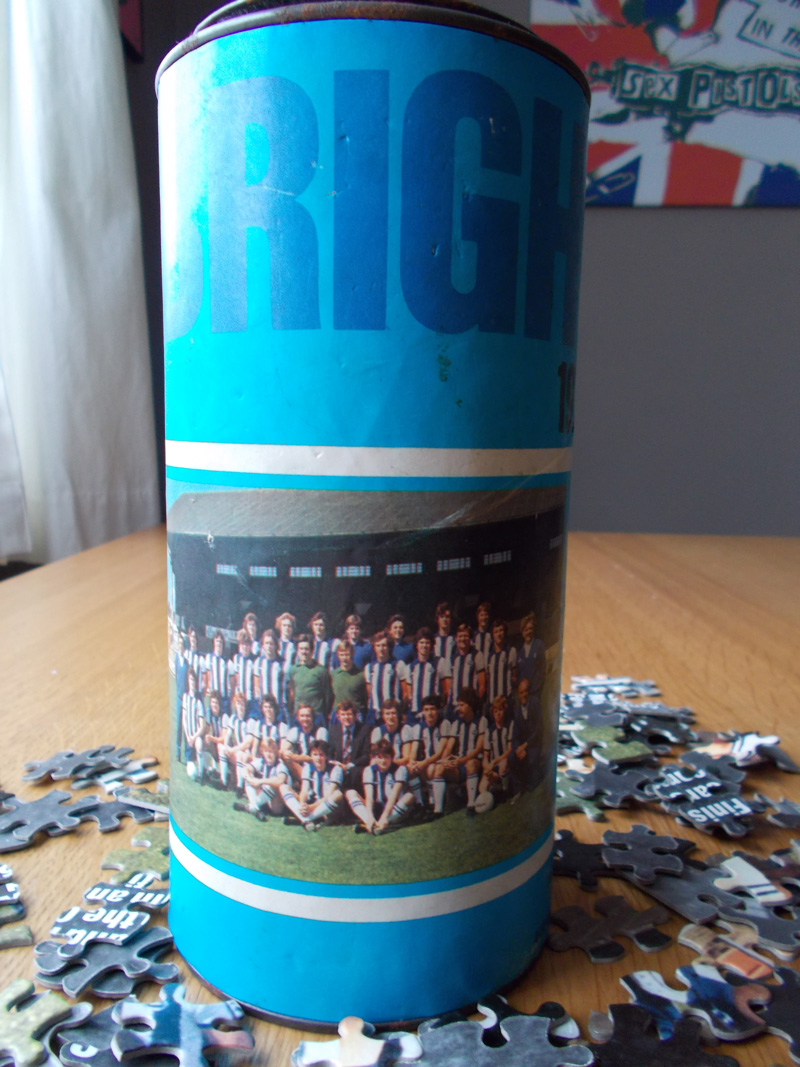
Brighton & Hove Albion jigsaw puzzle of 1977/78

Congratulations to historian Tim Carder on the successful launch of the Brighton & Hove Albion museum at the Amex last night.

The museum is situated through Dick’s Bar on the North Stand and captures the history of the club in a very vivid way.

On North Stand Chat, one user Henfield One summed it perfectly when he said:

The Museum is quite simply brilliant – and huge thanks and gratitude goes to Tim for all his hard work and belief to bring it to reality. It is exactly how a museum should be – interactive, fresh, bright, nostalgic but tracing the history of the Club in a lively (non-cobwebby way).

A real supporter’s museum – a museum for all.

Well done Tim, thank you.

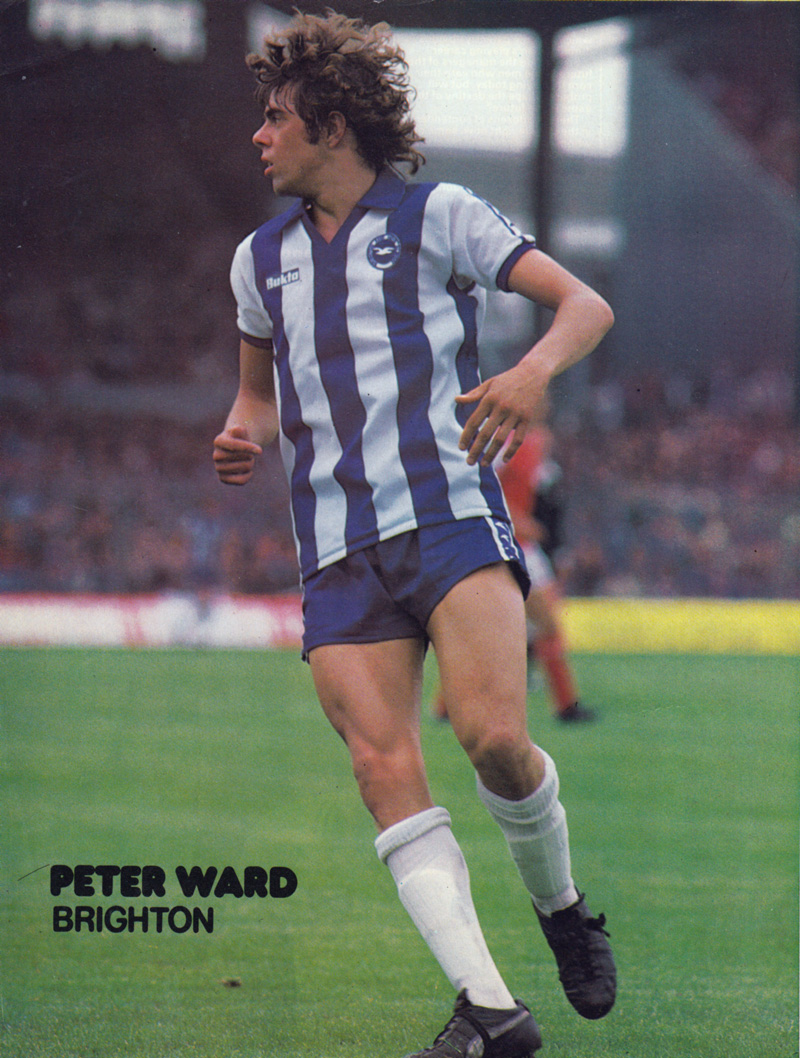
There were many interesting items, such as the shirts of Norman Gall, Chris Cattlin, Peter Ward, Tony Grealish and Steve Penney, models of the Goldstone and Withdean, an Albion fan’s bedroom full of memorabilia, as well as video and audio features. Many, many collectors’ items I hadn’t seen before.

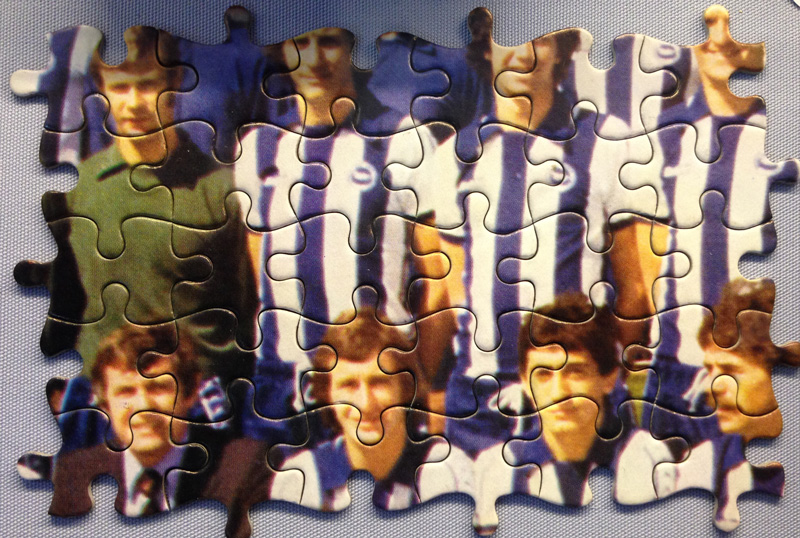
Tantalisingly, you may have seen 32 pieces of this Albion jigsaw:

jigsaw1

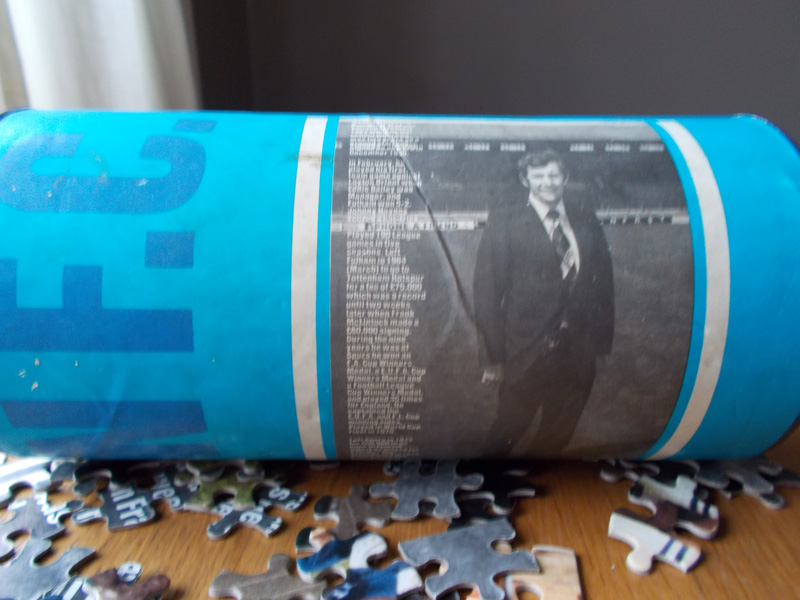
And if you want to see more, well, a few months ago, Brighton supporter Karl Wood was kind enough to send me these photos of the 1977/78 jigsaw puzzle that came in a tube:

jigsaw2

With colour team group on one side, and a monochrome image of Alan Mullery on the other, it would have high on my Christmas list had I been around in 1977!

jigsaw3

I wonder if anyone was tempted to ask Mullers at the launch last night: was Teddy Maybank really the missing piece?

Tagged

A jolly good Mellor

ianmellor5

As a rising star in the media, the ever so smooth Des Lynam was getting lots of gigs. Not only did he commentate for the BBC on the Brighton v West Bromwich Albion match in August 1980, the ubiquitous Albion fan and Grandstand presenter also penned an article for the match day programme as a guest writer. In it, he recalled striker Ian Mellor, whose interplay with Peter Ward played such a pivotal part of the 1976/77 promotion season:

One of the most pleasant aspects of working with the ‘Match of the Day’ team, is the chance it gives one, to meet old friends.

A fortnight ago, while reporting the Second Division match between Sheffield Wednesday and Newcastle United, I bumped into a very old friend of Brighton & Hove Albion, a man who I feel had a remarkable bearing on the club’s current unprecedented successful run, Ian Mellor – ‘Spider’ to his mates, now playing for Wednesday.

Except for the very newest Brighton supporters among you, I am sure that nearly all will have a great regard for Ian. it was in Brighton’s promotion season from Division Three that Peter Ward broke the club’s scoring record, very much aided and abetted by Mellor who also found the time and skill to notch 12 League goals for himself.

It was the beginning of the best spell in the club’s history and Mellor’s part in ‘assisting’ Peter, who, after all, was playing in his first full season, should never be underestimated.

Ian Mellor turned professional in December 1969, when he was 19, with Manchester City. Malcolm Allison had not so long before, taken City to the League title – and Mellor joined one of the most elite groups of players in the country. Lee, Summerbee, Bell, Marsh and Young were just some of the star names there at the time. In fact Ian feels it was the success of the elegant Young, scorer of the winning goal in the 1969 Cup Final against Leicester, that influenced him joining City. Ian, like Nell, is over six feet tall, but slight and wiry, not the archetype football build at all. City, however were prepared to give Ian a chance, when other clubs were thinking that he didn’t quite look the part. As Ian put it, ‘One tall skinny lad had done the trick for them, and they felt I could do the same.’

Here is Mellor scoring for Manchester City against Arsenal in 1971/72:

Lynam continues:

Ian had a good run in the City first team, but subsequently joined Norwich City. There, after Ron Saunders departed however, things didn’t work out so well and he was delighted when Brian Clough and Peter Taylor brought him to Brighton, then of course in Division Three, and not so very far away, at one stage, from Division Four.

He remembers his first match for the club avidly. Old rivals Crystal Palace, whose success in recent years has matched Albion’s, were the opponents at the Goldstone, 25,000 fans were there, and as Ian relates it: ‘Palace were running all over us. It was remarkable that they weren’t about three goals up. Then in the second-half I got the ball some 35 yards out, went on a run, beat a couple of players and scored probably the most memorable goal of my life.’

Albion won 1-0, and if justice wasn’t exactly served by the scoreline, Mellor himself could not have had a better introduction to the south coast fans.

Well, the promotion season from Division Three was a ‘heady’ one and Ian recalls that he has never known a team spirit like it anywhere, although he feels that Sheffield Wednesday are getting close to it. ‘The Goldstone fans were so good to us,’ he remembers, ‘and that year was the happiest in my playing career.’

ianmellor77

Subsequently came the disappointment of being left out of Brighton’s Division Two team, following the signing of Teddy Maybank. “I honestly felt that Teddy was not a better player than me and I was hurt’. But magnaminously, Ian also admits that the manager lives or dies by his decisions and team selection and he bears absolutely no grudge at all against either Alan Mullery (‘His record is second to none’), or Mike Bamber (‘You won’t find a more direct, honest, or knowledgeable club chairman in the game’).

In fact Ian could have stayed at Brighton and who knows, may well have worked his way back into the first team.

However, he decided to take up the offer of first team football with Chester. ‘The other reason I went back North was because I felt that if there were only a couple of playing years left, then both myself and my wife Sue would like to spend them near to our families and it would also give our parents a chance to get to know our children, Simon (now five and born at the Sussex County Hospital) and Louise (now three and born at Southlands).’

It seems to me to be no coincidence at all, that while Mellor played at Chester, a young forward called Ian Edwards, now with Wrexham and a full Welsh International began to light fires in Division Three. And nowadays, he’s at it again. Last season, Terry Curran knocked home 25 goals for Sheffield Wednesday with Ian playing alongside him as they won promotion to Division Two, and Ian also found time to slot in 11 for himself.

While Ian Mellor may not be one of the outstanding stars of League football, he’ll perhaps be recalled by the fans of those clubs with whom he’s played as more of a star-maker.

I know the Goldstone fans will remember with affection – The Spider touch.

Mellor subsequently joined Bradford City on a free transfer in May 1982, before winding down his career with Tsun Wan (Hong Kong), Worksop, Matlock Town and Gainsborough.

Tagged ,

Brighton first day covers from the 1970s, 1980s and 1990s

With the issuing of Doctor Who ‘first day covers’ earlier this year, the BBC website gave a nice explanation of what this potentially puzzling format is about:

To the uninitiated it may appear a strange obsession. It is the collection of special stamps on the day of their issue displayed on a special envelope, known as a “cover”.

First day cover fans must make sure they buy them on the day. They stick them onto a special envelope and write the address they want it posted to. It can be just one stamp or the entire series.

Crucially, the envelope needs to bear a special postmark that is only available on the day. For the Doctor Who launch, Royal Mail is offering special postmarks in the hometowns of the 11 actors who have played the Doctor.

Once the handstamp has been applied, the letter can be posted to the person. Arriving in the post at the collector’s house guarantees authenticity.

Understood? Yes, Doctor.

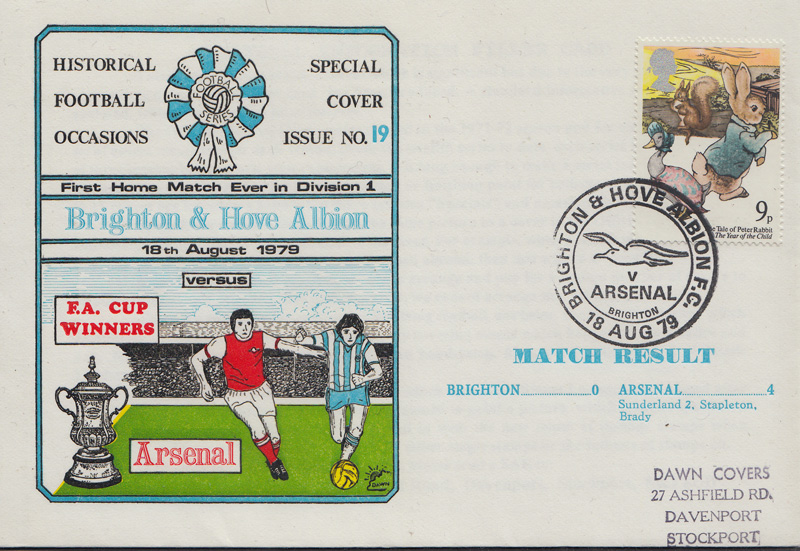
The Goldstone Wrap has previously featured a first day cover commemorating Brighton’s debut in the First Division in 1979 against Arsenal.

Thanks to Albion fan and collector Nick Spiller, we are back with five more specially designed Brighton-related envelopes covering significant games.

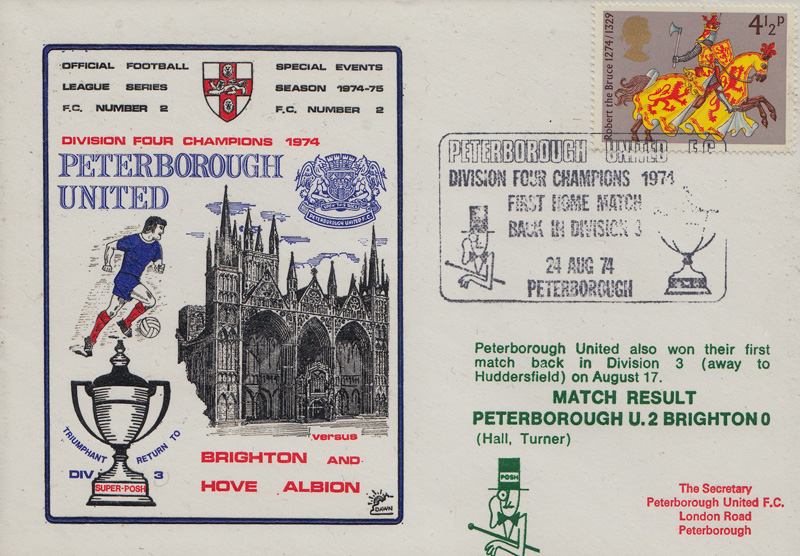
Having said that, this one from August 1974, in a 2-0 defeat at Peterborough, could hardly be deemed a memorable occasion from a Brighton perspective. Although it was the first league away trip as go-it-alone boss for Peter Taylor, the match itself match hardly figures in the memory bank:

firstdaycoverpeterborough

The loss began an appalling run of eight consecutive away defeats for Brighton in Division Three in 1974/75. Away form continued to be poor for the rest of Taylor’s reign, and it took Alan Mullery’s fire and managerial ability to turn this around. Five years on, with this achieved in the Third and Second Division, Albion were now a force in the Football League, gaining promotion twice in three years. This second cover was devised to herald the dawn of First Division football to the Goldstone in August 1979:

firstdaydivonedebut

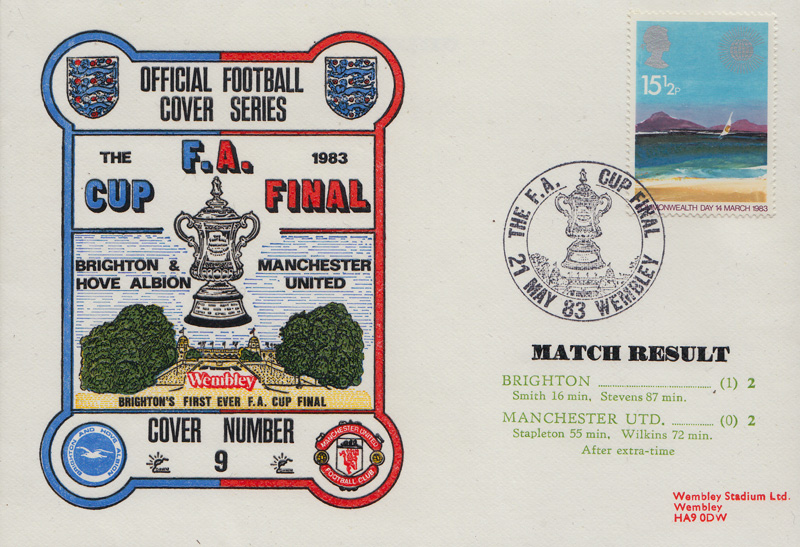
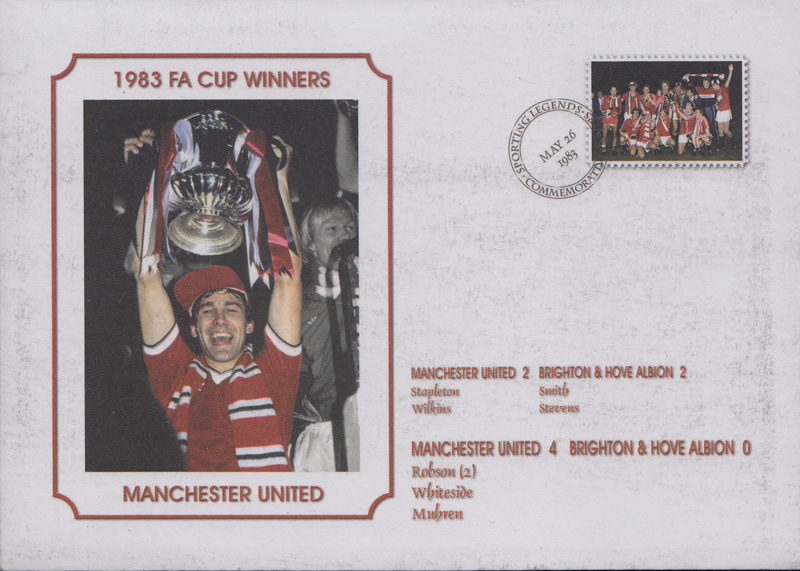
Stylistically, though, with its hand-drawn players, it wasn’t far removed from the Peterborough first day cover. By May 1983, however, the curtain had come down on Brighton’s spell as a top flight club. Even so, the club garnered enormous exposure through its appearance at the season’s FA Cup Final, and this included three (count ’em!) first day covers issued.

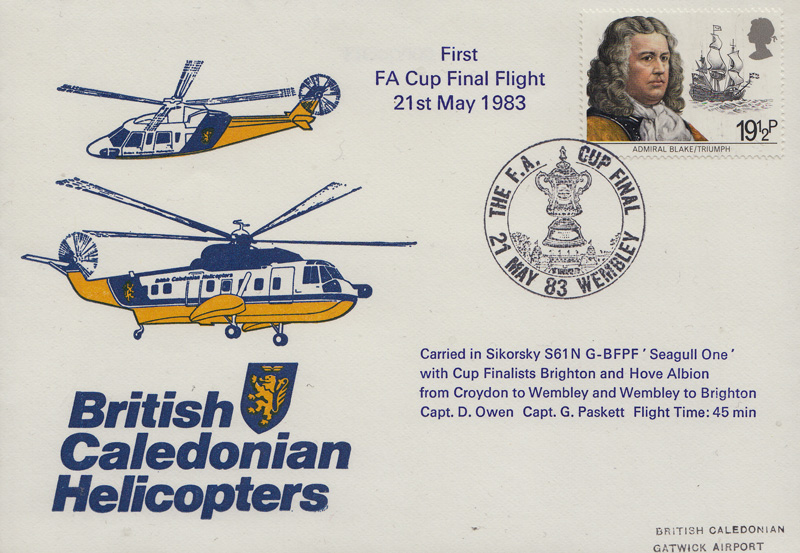
The first of these is a splendid design promoting club sponsors British Caledonian Airways and marking the famous transportation of the Brighton team to Wembley. It is extremely rare although you will be able to see it on display at the Albion museum at the Amex from next week:

firstdaycoverhelicopter

firstdaycoverfacupfinal1

firstdaycovercupfinal

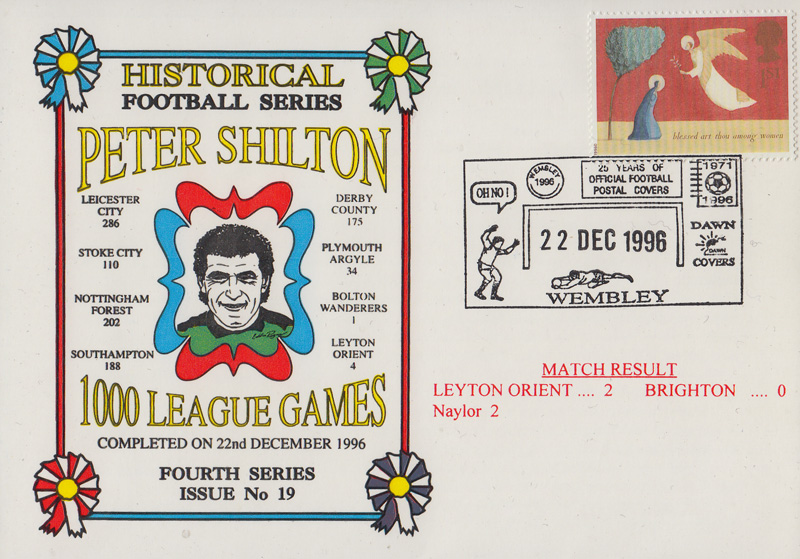
Finally, some thirteen years later, another design was issued to mark goalkeeping legend Peter Shilton, then of Leyton Orient, playing his 1,000th League match, against Brighton:

firstdaycovershilton

Again we lost, just like against Peterborough, Arsenal and Manchester United (eventually) before. If superstitious, it may make you ponder if some kind of crazy first day cover jinx affected Brighton in the 1970s, 1980s and 1990s. It is certainly questionable how much fondness there can be in posting and receiving an artefact that reminds you of results not going your way. With Gordon Smith’s fluffed shot in the first game and then the FA Cup Final Replay in 1983, there is no doubt we already had tears for souvenirs.

Tagged

Miracles can still happen

gerryryan9

It was one of the shocks of the season in 1979/80. Nottingham Forest, European Cup holders, had been unbeaten at the City Ground in the League since returning to Division One. Brighton, newcomers to the top flight, had endured a difficult start, without a win in their last nine League matches, and at the bottom of the table.

Well, you know the rest. It proved the turning point as the reshaped Seagulls, Suddaby in defence, with Lawrenson in midfield and Clarke up front, embarked on a run that took them clear of the relegation positions by Boxing Day. However, it all began with this result at the City Ground, as reported by John Vinicombe in the Evening Argus:

The astounding result at Nottingham was certainly no fluke and may hopefully hoist morale to cope with the critical situation facing the club. If Albion can go from their worst performance to upset the European champions in such sensational fashion, there is, surely, reason to hope for better things.

After a week of intense activity at the Goldstone. including abortive transfer deals concerning Peter Ward, the signing of Peter Suddaby and suspension of Teddy Maybank, it looks as though Albion are getting down to the essential task of putting their own house in order.

And not before time. Alan Mullery made four changes for the Forest game, having satisfied himself that Mark Lawrenson was fit and Suddaby was the man to step into the breach.

In almost no time at all, the team has changed dramatically, and the new spirit brought about by the shake-up was much in evidence at the City Ground.

The return of Lawrenson, to play for the first time in midfield made for greater fluency, but Mullery still has not got the side quite right. A training injury prevented John Gregory from turning out.

Almost without exception Albion were unrecognisable from the outfit that conceded 11 goals in the previous three matches.

gerryryan5a

They thrived on Gerry Ryan’s 12th minute goal, and, while Forest dominated territorially, we were treated to the spectacle of every man jack battling to keep Forest out instead of abject surrender.

At 31, Suddaby has brought a much needed wise old head to the defence. On the evidence of this one game, he did well to contain Garry Birtles.

Alongside, Steve Foster needed no second bidding to give his all. For a 21 year old, Foster reads a game well, and he encourages by example. He is one to watch for the future, and I don’t just mean Albion.

Good enough to be selected for England Under-21’s last season, he is better placed in First Division to display his improving talents to advantage.

The way Ward has been play!ng lately has given him and his admirers less satisfaction than usual. But at Forest he teased and tormented the club whose manager, Brian Clough, pulled out of last week’s deal.

The way in which Ward turned the defence, took players on and lasted the pace in heavy going suggested that he wanted to prove Clough wrong again and again and again.

Why Ward did not go to Forest is not at all clear after a week of bitter recriminations. There was indignation from chairman Mike Bamber, and a remark by Clough on ITV that he had tried to contact Muliery: “I could never get through to him.” •

Afterwards, Bamber proferred his hand to Clough and thanked him for not signing Ward. “‘You have done us a great favour.”

Yet. only a week previously Ward’s morale was low after a swap with Gerry Daly had fallen through, and the chairman dropped the broadest of hints that there was no place at the club for disenchanted players.

Now, after the Forest victory, the mood has changed, which is nothing surprising in the kaleidoscope world of football.

All managers don’t lie and cheat in the manner suggested by Tommy Docherty, but some peculiar strokes are pulled. I hope now that we have heard the last of the will he – won’t – he – go stories surrounding Ward.

He has a vital role to play in Albion’s battle for survival, and I don’t think it wilt take much now for Mullery to get a settled side.

For a start, the goalkeeper question is resolved, and Graham Moseley is undisputed No. 1. It was Moseley’s penalty save a minute from the break that changed the course of the entire match. Had he not taken a hint from Lawrenson, who thought John Robertson’s kick would go to his left, then we might have seen a different result.

Albion never gave Forest an inch, but the stimulus of an equaliser might well have buried them at the bottom. Now they have handed that unenviable place to Bolton.

Only one step up, maybe, but vital progression. At last, there is a ray of light, although Ipswich and Derby, second and third from bottom, are three points clear.

The selection of Lawrenson for right midfield poses the question of where Gregory will slot in. It is unthinkable that a fully fit Gregory could not command a place, and the arrival of new faces and emergence of the tremendously promising Gary Stevens means there is fierce competition.

This is a vital ingredient, and now the squad, numerically speaking at least, is more in keeping with a First Division roster.

So, the age of miracles is not past. It was Forest’s first home licking in 52 League matches since April 1977, in the Second Division when Cardiff did the trick.

A so-necessary first away League win for Albion was their first since they clinched promotion in the final match at Newcastle. The rapture then was matched by the sheer incredulity at Forest.

The sight of Ryan wrong footing Peter Shilton and just giving the ball enough pace to carry over the line left Forest numb.

The decision of referee Alan Seville in awarding Forest a penalty rendered Albion speechless; well. almost. It appeared to me, both at the time and watching Match of the Day, that Foster made a legitimate challenge and did not push Larry Lloyd down.

Judging by Lloyd’s size, it would need a steam shovel to knock him off balance.

Martin O’Neill sandwiched between them, and when Seville blew and pointed to the spot Lloyd walked away pondering the unpredictability of football.

It was a moment when all that Albion had striven for could have been erased with one grotesquely harsh decision.

Fortunate!y, Moseley heeded Lawrenson’s advice, and Albion went in ten-get tall. He had earlier saved one-handed from David Needham, who hit a post shortly after Ryan goal.

At half-time, Clough withdrew Tony Woodcock whose last appearance it was before joining Cologne in a £650,000 transfer.

The arrival of Ian Bowyer. the sub, improved Forest’s urgency, and two-thirds of the way through they slung everything at Albion.

It was then that Stevens cleared virtually off the line from Birtles, and as the climax boiled Foster’s head was everywhere.

When Albion went off, they were greeted on the touchline by Bamber, while Mullery roared his appreciation from the stand, where he must remain by FA decree until the end of the year.

Perhaps when he comes down, Albion will go up.

Ryan’s gem
Twelve minutes: The fleet-footed Ward pierced Forest, and the move was carried on by Lawrenson and Horton. From the chip, Clarke headed down to Ryan, who withstood a heavy challenge from Lloyd. Having wriggled through, Ryan placed his clincher to perfection. The gentleness of the touch only increased Forest’s agony. 0-1.

Tagged , ,

Dave Hollins – ‘I’m glad my father didn’t see me let in 9 goals’

On August 23rd 1958, Albion captain Glen Wilson led the side out at Ayresome Park as Brighton made their Second Division debut:

boro-wilson1

Unfortunately, the newly promoted side were pulverised 9-0 with future Albion manager Brian helping himself to five goals on the day. Here he is celebrating after netting his fifth:

boro-clough1

At the receiving end of these nine goals was Brighton keeper Dave Hollins, the older brother to John who eventually became a renowned midfield player with Chelsea, Arsenal, QPR and England. After being an understudy to the long-serving Eric Gill, the Bangor-born Dave Hollins was making his fifth appearance for the Albion. In Charles Buchan’s Football Monthly, he told his story:

Soccer has been getting a lot of knocks from critics in the past few years, but I know there is a lot of sentiment in the game, and plenty of sportsmen ready to give a youngster a helping hand.

When I joined Brighton from Merrow, a little club near Guildford, the first-team goalkeeping job was held by Eric Gill. He carried on to play a record number of 247 consecutive matches.

He always had a word of encouragement for me. And, when his long run was ended because of injury and I went into the League side. Eric was always ready with friendly advice or congratulation.

Why, he even invited me to stay at the Brighton hotel he had taken over. There, I had every comfort and our friendship grew even closer when I eventually took over his job in the Brighton goal.

He never resented it.

Eric Gill is just one of the many fine sportsmen I have met in professional football.

When Brighton played their first match in the Second Division I was in goal, The result is one no Brighton follower will forget. We were trounced 9–0 by Middlesbrough! I felt like hiding …. would have welcomed an underground tunnel to escape from Ayresome Park. And, when I got back to Sussex, 1 was half inclined to wear dark glasses! But Gill steadied me. “You have a long way to go in this game, Dave,” he said. “This sort of thing can happen to anyone, Fight back!”

Near the end of that Middlesbrough match I had heard a shout which didn’t amuse me at the time, but which seems funny now. A chap with powerful lungs yelled: “‘Don’t worry, Brighton. If Boro get ten they’ll declare!” At Brighton I was also lucky to have the backing of our manager, Mr. Billy Lane. He had faith in me, and that means a lot to a youngster i was only 17 when I joined the club.

I think my good run of luck in football started on the day 1 was born, My father. Bill Hollins, was a Wolves goalkeeper, and he always helped me with my game.

My early memories are of him showing me the way to keep goal. and then standing behind my net, offering advice and criticism.

Dad always emphasised my bad points and was a little sparing with his praise. Looking back, I can see just how right he was to be like that.

“Concentrate always concentrate.” he would say. “Keep your eye on the ball. always keep your eye on the ball.” I was glad dad wasn’t at that Middlesbrough match!

One of dad’s clubs was Bangor City and when he was with them I was born a Welshman.

A few months later the family moved on and I admit here that for many years it meant nothing to me to have been born in Wales.

I didn’t even appreciate that I was a Welshman until the day – the most exciting day of my life when I was picked to play for the Welsh Under-23 team against Scotland at Wrexham.

I don’t speak a word of Welsh and I was scared that my team-mates might start shouting instructions in that language.

But all was well, and I will never forget the way in which Jimmy Murphy, our team manager, inspired as in the dressing room in English! “You are playing for Wales now,” he said and his pre-match talk was terrific.

Now I understand why little Wales has so many great performances to her credit. And I learned something more of the Welsh fervour when we lined up in the pouring rain while the crowd sang “Land of my Fathers.” If I had not felt like a Welshman before then I do now and am proud of it.

Perhaps I am too young to give advice. but I feel that boys must be really keen on the game to succeed. And they require plenty of determination to fight against the bad times when they come.

Luck can play a big part, too. I have had my share even to catching a manager’s eye when I was only 12.
Mr. Lane was signing my big brother, Roy, for Brighton when I said: ‘What about me?'”

He replied: “Play hard and maybe I’ll be back for you as well.” The day came when he sent for me.

Yes, there’s plenty to be said in favour of the game. Take it from me – Soccer’s all right!

davehollins3

Tagged , , ,

New horizons for Peter Ward

soccerprince1

With the 1979/80 season approaching, Peter Ward was on the transfer list. However, as he told Tony Norman, he withdrew his request and signed a two-year contract:

“I’d been unsettled and I hadn’t been seeing eye-to-eye with the manager,” he explained, “so I wanted to move. I couldn’t tell you whether anyone came in for me or not.

“But as our first game in Division One got closer, I realised just how much I wanted to play. I was training hard and playing well. I wanted to be there. I like Brighton. There’s a good atmosphere between the players, and the club’s ambitious. So, I decided to stay and prove myself in the First Division with them.” Alan Mullery was happy to welcome Peter back into his tong-term planning.

“They seem to let you play more at this level, until you get into the final third of the field. Then it’s very tight. You can’t dawdle on the ball, or it’ll be whipped away from you. The game’s much quicker. You’ve got to sharpen up mentally, as well as physically.There’s a lot more to think about.

“But, at the same time, I think it’s important to carry on playing your natural game. I’ve got the freedom to do that at Brighton. I know I’m a bit greedy sometimes. The lads will have a moan and I’ll give them a little smile. There are times when I could lay off an easy ball, but I’ll try to go on my own, or have a shot.” But surely his willingness to try the unexpected has been rewarded with some spectacular goals?

“Yes,” he grinned, “it’s alright when it comes off. But there are plenty of other times ~when you’re left looking a bit silly!” Ward’s early season form was patchy. But it was clear he relished the challenge of playing in the First Division.

“It’s a thrill going to play at big stadiums like Anfield and Old Trafford. When I was a kid, I used to travel up to watch United, from Derby. That was in the days of Law, Best and Charlton. It’s got a nice ring to it, hasn’t it? They were my heroes. When they played, the atmosphere was tremendous.

“Now, I love playing in front of big crowds. It gees you up. I remember playing a night match at Oldham last year. There were about 4,000 there. We won, but it was depressing playing to empty terraces. I love the big match atmosphere. Driving through the crowds, then running out onto the pitch before the game. That’s a great feeling.”

Like the street kids around the Goldstone Ground, Ward scored a thousand Cup Final goals in his childhood fantasies. But there were times when playing in the First Division seemed as likely as a relaxing stroll on the Moon.

“I was always one of the smallest kids at school. When the selectors for Derby schoolboys used to come along, they’d pick about six lads for the trials. We had a good side and I was always one of the top scorers, but I never got picked.”

How did he feel about that? “It didn’t bother me.”

But surely it hurt his pride?

“Yes, I suppose it did really. I’d see the other lads going off for their trials and I’d think, ‘bloody hell…’ It made me play better. In those days, you had to be big and strong to get in the Derby side.”

Ward’s size, or rather the lack of it, weighed heavily in the minds of those around him.

“I remember going to see the headmaster, just before I left school. He asked me what I wanted to be. I Said a professional footballer.

He told me not to be so stupid. I was too small.”

Suitably filled with confidence, Ward left school at the age of 15, and joined Rolls Royce on a four-year engineering apprenticeship.

“I gave up my dreams of making it as a player. I thought that was it. I was playing for Burton Albion in the Southern League and working different shifts at the factory. Clocking in and clocking out. Sometimes I’d be up at six in the morning to get to work on time. I was stuck in the factory all day, doing a monotonous job. I never want to do that again. It drove me crackers.”

Those were dark, uninspiring days, but in May, 1975, Peter Taylor heard of Ward’s potential and decided to give the youngster his chance at Brighton. The results were spectacular. Ward scored 32 League goals in his first full season, as Brighton won promotion. He was again leading goalscorer in the two Second Division campaigns.

“I got off to a good start, scoring in 50 seconds on my debut at Hereford. The cameras were there and we stopped off at a hotel in London to see the game, on the way home. It’s a peculiar feeling seeing yourself on TV for the first time. I was sitting there thinking, ‘I don’t look like that, do I?’ ” With his stylish play and good looks, Ward soon found himself cradled lovingly in the arm of the publicity machine. He was a star, eagerly making up for lost time.

In September 1977, he made his international debut for England Under-21’s, against Norway.

“That’s one of my happiest memories. The match was played at Brighton and that might have swayed my selection, but I scored a hat-trick and really enjoyed the game. There were some good players in the side. Up front, we had Barnes and Cunningham on the wings, with John Deehan and myself in the middle.

“A month later, I was looking forward to playing for the Under-21’s again, when I was called up for the full squad. I went to Luxembourg with them. It was a great experience, but I wasn’t picked to play. And that was it. I haven’t got a look-in since.” Another disappointment, but Ward remains typically philosophical about his international future.

“I’ve just got to do it for Brighton in the First Division. If I’m playing well and doing my job, which is scoring a few goals, I might get the chance of a call up.

“I’m sure the side can hold its own this year. The club’s destined to go places. They’ve got the money and the resources to do well. From my own point of view, I’m enjoying playing up front with Teddy Maybank now. He’s taken a lot of weight off me. He’s a skilful player, much better than a lot of people think.” This season is providing Ward with his greatest test to date, but there’s nothing new about his main motivating force.

“I want to score goals. That’s still the biggest thrill for me. When I don’t score, I feel a bit flat, even when we’ve won the game. I want to score every week. I’m sure Ted’s the same. You couldn’t be a striker if you didn’t think that way. But when it comes right down to it, I.’m lucky. I still go out and enjoy playing. We’re in a short-lived profession. I want to make the most of it.”

With half an eye on the future, Ward has enrolled for a small business management course especially designed to help players shape fresh careers when their playing days over. Not for him the factory. Not again.

peterward79

Tagged ,

Video: Brighton 3-0 Norwich – a flying start for Jimmy Melia’s circus

It's Jimmy Media!

It’s Jimmy Melia – but no disco shoes here

It was boss Mike Bailey out, Jimmy Melia and George Aitken in, come December 1982. Having previously served as chief scout and chief coach, Brighton’s temporary managers helped to lift the gloom over the Goldstone Ground, caused by poor results, falling crowds and growing disharmony within the side:

Brighton are fighting for First Division survival after the departure of manager Mike Bailey. What hope for the club that brought football glory to Sussex by climbing from the Third Division to the First in three years but have since fought desperately to avoid relegation. SHOOT investigates Brighton’s catalogue of problems and turns the spotlight on Mike Bamber, the chairman who wants to be manager as well.

When Brighton were promoted to the First Division three seasons ago it seemed like a Iicence for the club to print money.

They had been magnificently supported, but the crowds melted away as two gritty battles against relegation were fought by Alan Mullery.

Then, last season under Mike Bailey, Brighton appeared to have turned the corner in finishing a respectable 13th, the highest position in their history.

Now, following Bailey’s departure early last month, Brighton, amid falling gates, are fighting all over again to establish themselves.

Alarmingly, there are cracks appearing in the Goldstone structure, and some disgruntled fans have even said they’d be better off in the Third Division.

It is a fact that Brighton have never attracted 30,000 crowd since they went up, yet there is well-heeled catchment area that hasn’t been visibly hit by the recession.

The season was only a few weeks old when two key international players, Steve Foster and Michael Robinson, asked for transfers. Then Nell McNab said the chairman’s involvement extended too far. McNab alleged that he picked the team.

Foster - staying for now

Foster – staying for now

The fuss died down, and Foster and Robinson later said they were willing to stay. McNab, who is also on a lengthy contract, turned down a move sending him to Newcastle on loan, and has since joined Leeds United on a temporary transfer.

While the basis of Foster’s gripe was money he considered a rise was due after getting into England’s World Cup squad, Robinson’s quarrel, besides being financial, raised other questions.

He accused the club of lacking ambition, and this was triggered when Bamber refused to back Bailey up in giving Charlie George a month’s trial.

Robinson: Want-away striker

Robinson: Want-away striker

It was Robinson’s opinion that the chairman should also have given Bailey a contract. After putting his cards on the table, it looked as though Robinson would leave.

But he declined a berth at Sunderland, and was later wooed by Arsenal and QPR.

Foster’s dispute had been settled previously, and he did not identify with Robinson all the way. But McNab’s bluntness in challenging his chairman was a blockbuster.

Ward returns

Ward returns, replacing the Ward-replacement Andy Ritchie

Bamber brought about the return of Peter Ward, Brighton’s former record scorer, on loan from Nottingham Forest.

He saw him as not only a vital crowd-puller, but the man to link-up best with Robinson.

Brighton have only got him until the end of next month, but he did the business by scoring the winner against Manchester United on November 6 when the gate was a satisfying 18,398 – an increase of 8,000. The inclusion of Ward put Andy Ritchie’s nose temporarily out of joint, Brighton’s most expensive signing at £500,000 from Old Trafford stayed in the reserves for six weeks and only re-appeared when Bailey left.

And another big-money player, Gordon Smith, who cost £400,000 from Rangers, went back to Glasgow on a temporary transfer.

The principal reason was to help Rangers in the Scottish League Cup Final against Celtic. But all Smith got was a runners-up medal that was stolen the same night when his car was vandalised.

Smith, like most Brighton players, is also on a long engagement. But he’s in a whirl.

“When I get back to Brighton, I’ll have to introduce myself as a new signing.”

Perhaps Brighton’s biggest mistake was signing Mickey Thomas from Everton. Over £400,000 was involved, and the Wales international couldn’t put a foot right.

He gave domestic reasons for several acts of truancy that held Brighton up to ridicule. Fines and suspensions didn’t bring him into line. But once transferred to Stoke, Thomas showed his real worth.

Then he relaxed, and said: “Joining Brighton was the worst period of my life. Last season was just a horror story for me. I felt trapped there. They were in such a hurry to sign me, and soon everything got me down. And the system they played was so defensive that I got bored. I admit I was out of order in taking time off, but I should never have gone there in the first place.”

Brighton cannot afford another mistake like that, and it is very doubtful they will be able to recoup anything comparable to the fee paid for Smith.

Bamber disclaims responsibility, saying the down-turn in the market has put many clubs in trouble, and Brighton are no exception.

He is hoping that Jimmy Melia, in temporary charge, can lift the side…

The Melia era got off to a glorious start with an emphatic 3-0 victory over Norwich City on 11th December 1982, a win that suggested the side, now more attacking, had turned over a new leaf in the League. Here you can enjoy highlights from this match, Albion’s biggest victory in Division One that season:

Enjoy Jimmy Case’s rocket with his left foot, the close control and creative play of Peter Ward, and Andy Ritchie’s curling free-kick.

Unfortunately, it proved a false dawn. Albion failed to win their next ten League matches, a poor run that plunged the club from 18th to bottom of the division by the start of March. By then the media circus over the FA Cup run gripped the club and First Division survival became of secondary importance.

Tagged , , , , , ,

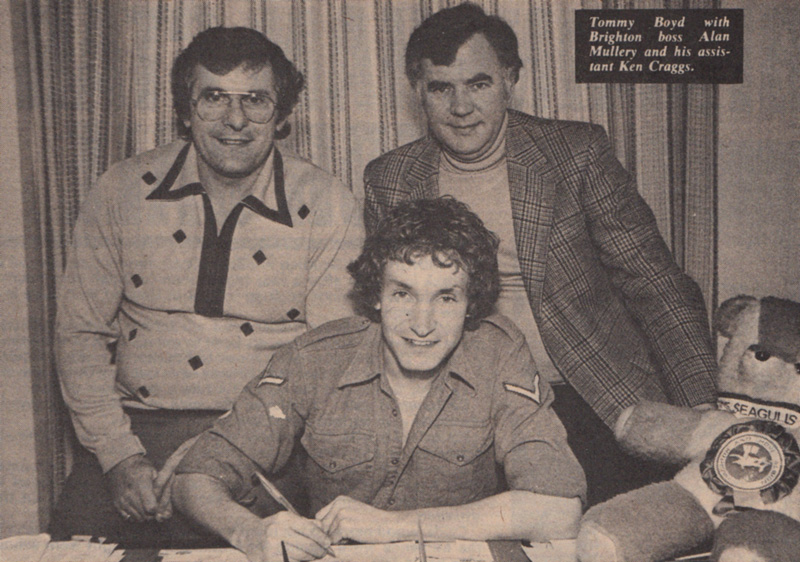
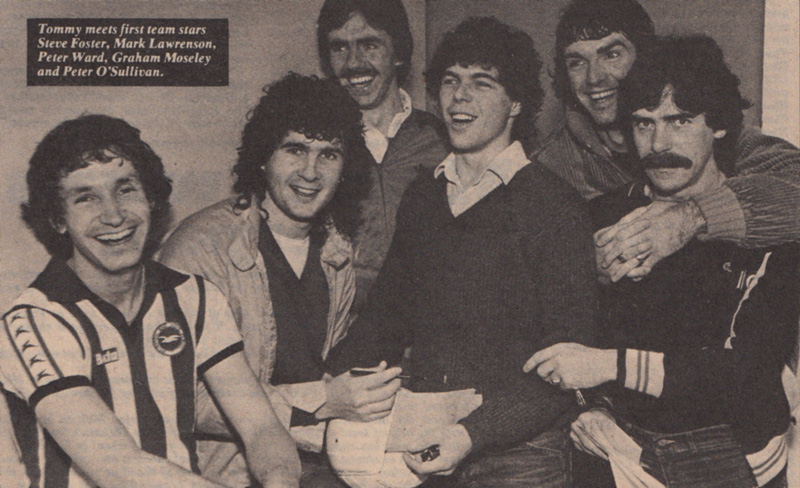
Dream signing… children’s TV star Tommy Boyd joins the Seagulls!

magpie2

Rescued from Shoot! magazine in 1979/80:

“This is a dream come true,” said Tommy Boyd, as he stood proudly on the Goldstone pitch, wearing the blue and white shirt of his favourite club, Brighton & Hove Albion. “The number of times I’ve stood on those terraces, wondering what it would be like to be out here. Well, now I know. It’s a great feeling!”

Thanks to the hospitality of Alan Mullery and his team, SHOOT was able to give the Magpie TV star a super day with the South Coast Seagulls.

His first call was at Alan Mullery’s office, where he also met assistant-manager, Ken Craggs.

After ‘signing on’ for The Seagulls, Tommy met the rest of the first team squad. Star defenders, John Gregory and Steve Foster, decided to check on Tommy’s fitness with a workout in the gym and afterwards he was happy to enjoy a relaxing cup of tea with skipper, Brian Horton.

“The thing I liked most was the happy atmosphere I found at the club,” Tommy said, later. “I think a lot of that stems from Alan Mullery. He’s a man with an open, friendly personality. He loves to laugh, but more than anything, he loves the game.

“I really enjoyed meeting him. He’s always been a hero of mine. He was a great player. Do you remember the way he marked Pele out of the game in Mexico, in 1970? I defy anyone to name a player who could have done a better job on the day. Mullery was so versatile. He could do the lot.

“Now, it’s great to see he’s carried his two best qualities, that’s skill at the job and a natural enthusiasm, into the world of management. I’m sure he loves every minute of what he’s doing.” Another Goldstone personality Tommy rates very highly is Brian Horton.

“Brian’s always had his critics and he has proved them wrong. I saw him make his debut for the club, when he was bought for peanuts from Port Vale. He impressed me right away. He’s got all the qualities you Io0k for in a captain.

“When Brighton won promotion from the Third, some critics wondared hew Brian would get on in the Second Division. Well, he was a driving force there and it was the same story last season. He’s a fine player.”

Tommy started supporting Brighton when he was just atoddler. During his student days, at Sussex Umversity, he loved to spend his Saturday afternoons relaxing with The Seagulls.

“The funniest aftemoon I’ve ever spent at the Goldstone was during our college Rag Week,” he chuckled. “We did some collecting on the terraces for charity, before a match. My friend was singing and playing the guitar and I was going round with the tin. Most of the fans were happy to give us money … as long as we promised to go away and annoy someone else!”

Like most of us, Tommy dreamed of becoming a professional footballer, when he was at school. “The closest I’ve come was a charity match last summer, when I was marking the great Bobby Charlton. I thought I was fit, but even when he was dribbling the ball, Bobby could leave me standing.

“So, I’ll never make a top player, But SHOOT made one dream come true for me. I’ll really feel at home the next time I go to the Goldstone. When I’m cheering the players from the terraces, I’ll be able to use their first names!”

magpie3

Tagged , , ,

Bailey’s side blows hot and cold

mikebailey8

In Shoot! Magazine in November 1982, the publication put Mike Bailey’s reign under the spotlight, as the club struggled to string together a run of good results in the First Division. Unbeaten at home in the League at the Goldstone, the side regularly suffered hammerings away from home, losing 0-5 at WBA, 0-4 at Nottingham Forest and 0-5 at Luton in the early months:

It’s hard not to feel some sympathy for Mike Bailey, Brighton’s 11th manager since the War.

He gained a fine reputation as an attacking wing-half with Wolverhampton Wanderers, and before that Charlton Athletic. He was at his best at the time when English football was rich in midfield talent, a factor which prevented him from winning more than two full England caps to add to his five appearances for the Under-23s.

Bailey has found management a far harder proposition. He did well to steer Charlton to promotion from the Third Division in the 1980-81 season, a success story that persuaded Brighton chairman Mike Bamber that he was the man to replace Alan Mullery.

He inherited a bed of thorns when he breezed confidently into the Goldstone Ground in June 1981.

They narrowly escaped relegation from the First Division two months earlier and there was no reason to believe he would lead them into calmer waters the following season.

As it turned out, Brighton finished in a highly respectable mid-table position at the end of the 1981-82 season, unbeaten in 26 of their 42 League games.

Bailey, in common with other bosses of less wealthy First Division clubs, has had to summon all his reserves of energy and enterprise to consolidate Brighton as a First Division side.

Unfortunately, his 18-month reign has given him heartache and happiness in equal proportions. One moment Brighton send one of the mightier First Division clubs crashing in unexpected defeat – as they did in beating title-chasing Manchester United last month – the next, the manager has to wrestle with some crisis that threatens both his, and the club’s, future.

Mike Bailey’s enterprise in signing Mickey Thomas from Everton, Jimmy Case from Liverpool and Tony Grealish from Luton was warmly applauded by the Brighton fans.

Sadly, they did not always fulfil their manager’s vote of confidence. Thomas was transferred to Stoke after a short, unhappy stay and neither Case nor Grealish have turned on the power they did at their previous clubs.

The atmosphere at the club this season has not always been as happy as in the past. Stalwart first teamers Steve Foster and Michael Robinson both declared they want to leave before the start of the season, and they might well have gone if rival First Division clubs were not feeling the same economic pinch.

Fortunately for Brighton, they stayed. Foster to shore up a defence that ships water whenever he is out of the team, and Robinson to lead an attack that lacks punch if he is missing.

Brighton appear to have solved most of their problems and can look back on their start with some satisfaction. League victories over Arsenal, West Ham and Manchester United were marvellous tonic for Bailey, who smarted from crushing defats at West Bromwich Albion, Nottingham Forest, Luton and Stoke.

Peter Ward’s arrival from Forest, on loan unit February, also served to brighten the gloom shrouding the Goldstone. His first goal for the club could hardly have been better timed, a rising drive past a bewildered Gary Bailey to send United to defeat:

That pleased the Brighton boss, who roundly praised the players, especially Robinson, Steve Gatting “the most accomplished player we’ve got”, Grealish, Gordon Smith and midfield player Neil McNab, “a superb player when he plays two-touch and doesn’t go it alone.”

No manager works harder than Mike Bailey and no boss deserves to be given more time to establish the consistency Brighton need if they are not to continue worrying their fans to death.

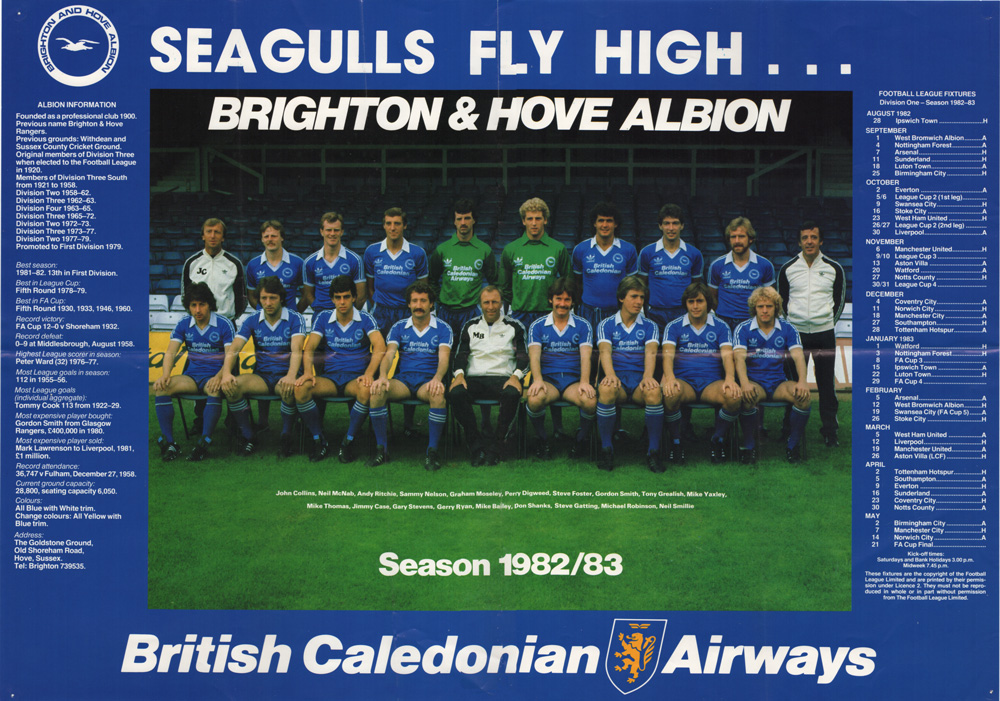
Unfortunately for Bailey, he could not restore the club to health. Attendances continued to fall as Bailey struggled to shrug off the accusation that his side was ‘boring.’ Results also turned for the worse. The unbeaten home run in Division One fell at the end of November, with Albion going down 2-0. On 4th December 1982, the Brighton side slid to a fourth successive defeat, another 2-0 scoreline, this time at Coventry. Two days later, Bailey left the Goldstone by ‘mutual consent’, alongside coaches John Collins and Brian Eastick.

It was a sad end to the regime of the man who had taken Albion to its loftiest ever League placing the season before. It really was it for the Wisbech-born man. Bailey never managed a League club again, having once flown the Seagulls so high…

1982-83squad

Tagged

Brighton have got it right this time!

Brighton are on their way back to the First Division – and when they get there this time, they mean to stay there.

So says journalist Tony Pullein, writing for ‘Football Monthly’, the world’s greatest soccer magazine, according to its strap line, in February 1986. He was convinced of this view after speaking with Albion chairman Bryan Bedson and manager Chris Cattlin, as the season entered spring and the Sussex club dreamed of promotion.

Bedson thinks the future's so bright he'll be wearing shades

Bedson thinks the future’s so bright he’ll be wearing shades

“All our planning over the past couple of years has been geared to putting Brighton into the First Division and establishing the club at that level,” explained chairman Bryan Bedson.

“When the club previously reached the top, they did it with quite a few expensive signings. But those players grew old and were worth very little in the transfer market.That was one of the reasons why the club was so heavily in debt. When I took over, we had 32 players on our books, many of them being paid far too much.I can tell you that I took over enormous debts. We had to take care of these and now, they are being carried by the directors. We had to trim the staff and get the housekeeping right. We have spent a lot of energy on our lottery scheme, which is now one of the most successful in the country. We have new completely restructured the club financially and are very optimistic for the future.”

Brighton have a good chance of winning promotion this season but, should they miss, there is little doubt they will make it next term.

Visiting the Goldstone Ground recently, I could sense the feeling of optimism around the place. With five wins in their previous six games including that fine 2-0 F.A. Cup success at Newcastle – the feeling was that they have got it right this time.

Smudge, with Chris Cattlin

Smudge, with Chris Cattlin

“The pleasing thing for me,” smiled manager Chris Cattlin, “is that we have won four of our last five away games.” That was no surprise to Brighton’s travelling supporters, who have become accustomed to seeing their side attack the opposition both at home and away.

“My policy is to go at the opposition right from the start,” explained Cattlin.”I don’t care whether we are home or away. Our tactics are the same. The important thing for us all is that the game is made entertaining. We have to put the game before individual club ambitions. Football has had many problems. One of the reasons is that it has not been marketed in the right way. We have got to make people want to come to the ground to see a good game. There is too much talk about sponsors. As far as I’m concerned, the only sponsors I want to see are fans pouring in through our turnstiles. That’s what the professional game is all about,” added Cattlin.

Certainly, there has been a tremendous transformation at the Goldstone Ground since Cattlin took over as manager in November, 1983. The Seagulls were third from bottom of the Second Division at the time. Though few people realised it, the club was on the verge of closure.

“That’s right,” shrugged Cattlin. “If we had gone down again, we might have become another Swansea or Bristol City. It was as serious as that.” “Brighton were saddled with too many old players, many earning far too much money for what they were contributing. I sold an old team and have bought a new team of my own. I had to pick them up from the lower divisions and from reserve teams. But I chose players with the right attitude and players who would be proud to play for Brighton.

“I set myself two targets. One was to ensure the club survived. The other was to set up a youth policy that would provide players for the future.”

The latter will probably prove to be the most important contribution made by Brighton’s live-wire manager in the long term. Few local-born players have made the first-team in modern times and the whole of the current first-team squad came from other clubs.

George Petchey was brought in as youth development officer to set the scheme in motion and is still in charge of recruitment, though he is also coach to the first-team. John Shepherd, the former Millwall, Brighton and Gillingham player, runs the yeuth team on a part-time basis.

“Of course, it will be some time before we see real results,” says Cattlin. “But I am hopeful that we shall find many first-team players from this source in the future.”

At the moment, Cattlin still has to find his players elsewhere. Last summer, he sold Nell Smillie to Watford for £ 110,000 and bought Justin Fashanu from Notts County for a similar fee.

mortimer

“I also signed my old Coventry friend Dennis Mortimer on a free transfer. He is such a fine player with the right attitude,” said the Seagulls boss.

Ray Houghton - one that got away

Ray Houghton – one that got away

“I got Dean Saunders from Swansea on a free, so my summer dealings cost the club nothing. I would dearly have liked to have signed John Gregory from Q.P.R. and Fulham’s Ray Houghton. But the fact was, we couldn’t afford them,” shrugged Cattlin.

“I was disappointed because, at the moment, I am £300,000 in credit on my transfer transactions. But, besides being a football manager, I am also a businessman and I accept that the board has had to make cuts – just like the Government!”

Cattlin spent his distinguished playing career With Burnley, Huddersfield, Coventry and Brighton. A leftback, he also won England Under-23 honours. When he retired in 1979, he left the club to go into business locally. He later returned to the Goldstone Ground as coach and in November, 1983, he became manager.

“It has been difficult at times,” he admits. “In the old days when the club went through a lowspell, they would spend £400,000 on a new player. I can’t do that. This season, we have been crippled by injuries. Strikers Gerry Ryan and Terry Conner both broke a leg. Fashanu had a knee operation, Steve Gatting a pelvic injury. Chris Hutchings broke an arm and now he’s out with a cartilage injury. In the circumstances, it’s not suprising we received a few set-backs during the early weeks.”

At the turn of the year, Brighton were fielding a settled team for the first time. And it showed in results.

Of the game generally, Cattlin feels football needs to take a good look at itself.

“We have got to market the game and we needed TV to help. We’ve got to run our clubs on a businesslike basis and, most important of all, we have to examine the product we are selling football. I’m absolutely convinced that football has a great future. We have to stop being too cautious. Here at Brighton, we are all willing to have a go. To take chances. All right, we shall make mistakes. But the game is about winning and that means you have to attack.”

The Seagulls’ boss is confident his side can succeed this season. “In the Second Division, we want to win the Championship,” he emphasises. “We enter the F.A. Cup because we want to win it. We are going for both this season.”

Cattlin concedes that Portsmouth and Norwich seem likely to take two of the promotion places. “It looks that way at the moment, but there’s a long way to go. I’m proud of my team. They are all playing for Brighton. Playing to win every game. Of course we can win promotion.”

Will the current side be good enough to hold its place if it does go up this year? Cattlin is realistic: “I think we would have to spend a bit to strengthen it. The youth policy has not been going long enough yet to provide First Division players. But if you look at the First Division, there are about seven really outstanding clubs. I’m sure we can survive among the others when we first go up. It’s really a question of organisation, of using your assets to the best advantage.”

It seems clear that when Brighton do regain their First Division status, they will not again have to live on a clay-today basis, hoping for survival.

Now, they know their future is in good hands.

1986

In the end, Brighton did not achieve promotion and Cattlin got the sack in the summer of 1986.

Tagged , ,