Author Archives: Goldstone Rapper

Energy drinks, Albion’s secret weapon in 1969!

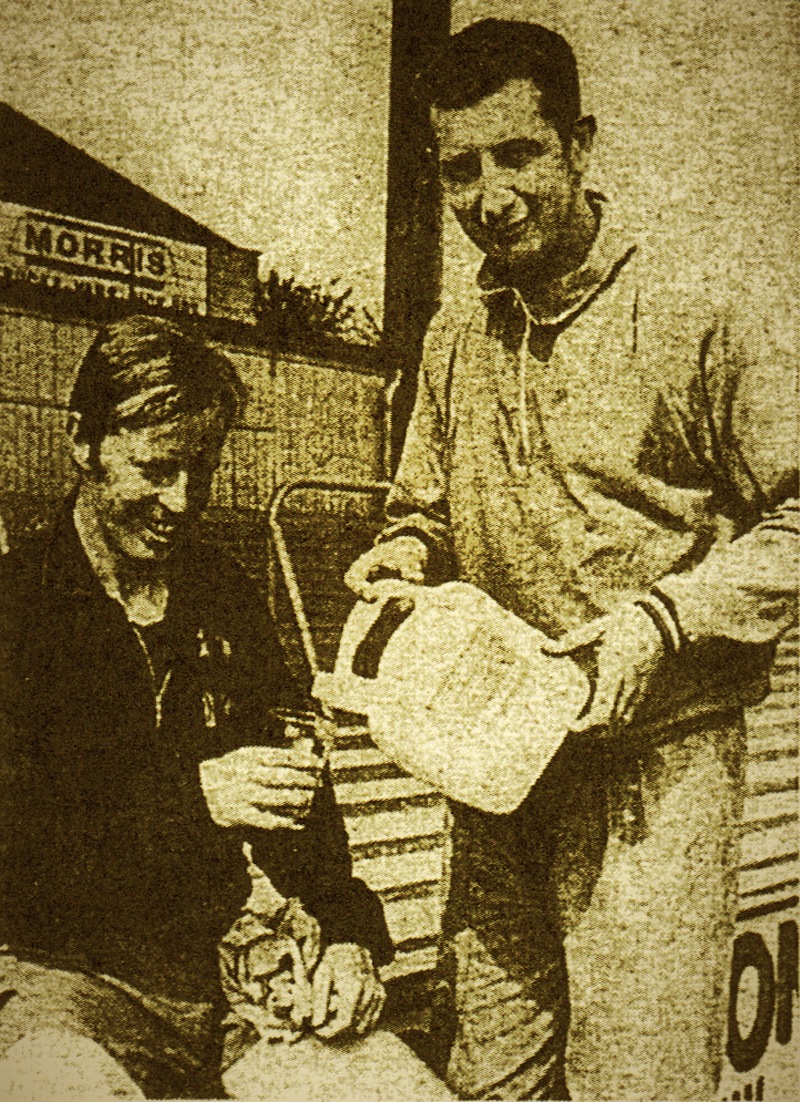
Skipper Nobby Lawton has his energy drink poured by manager Freddie Goodwin

Skipper Nobby Lawton has his energy drink poured by manager Freddie Goodwin

An Argus piece in September 1969, by John Vinicombe and Alan Jones. It was published in the week before Brighton’s much anticipated League Cup tie against First Division giants Wolverhampton Wanderers:

How come they’re unbeaten in the first eight matches? What’s so special about the Goldstone outfit that Brighton’s start is a talking point all over the country?

The fact that Albion have drawn Wolves in the League Cup has set everybody talking. People who wouldn’t ordinarily go outside the back door to see Albion now want tickets. Residents half a mile from the ground have been offered money for use of their drives o the night of the match.

No doubt tickets will go at inflated prices on a mini black market. Suddenly it is the in thing to watch a side who were in danger of finishing Third Division chumps in the middle of last season.
Come Wednesday, September 24, and a 35,000 capacity crowd will see Albion battle with Wolves for the right to enter the fourth round of the competition. The fervour building-up is more on par with an FA Cup semi-final. That’s football for you, up one day, down the next.

The fundamental answer to all the questions about Albion’s current high-riding spot is, of course, that the club is jus beginning to benefit from the systematic preparation begun by manager Freddie Goodwin and his staff way back in the summer.

Goodwin believes in thorough, painstaking attention to detail. He’s not one for the instant method. But that isn’t to say Freddie scorns everything trendy, or that he is one of those ivory tower figures who conduct affairs from a remote office. He’s a players’ manager through and through, and one innovation may partly explain Albion’s fitness.

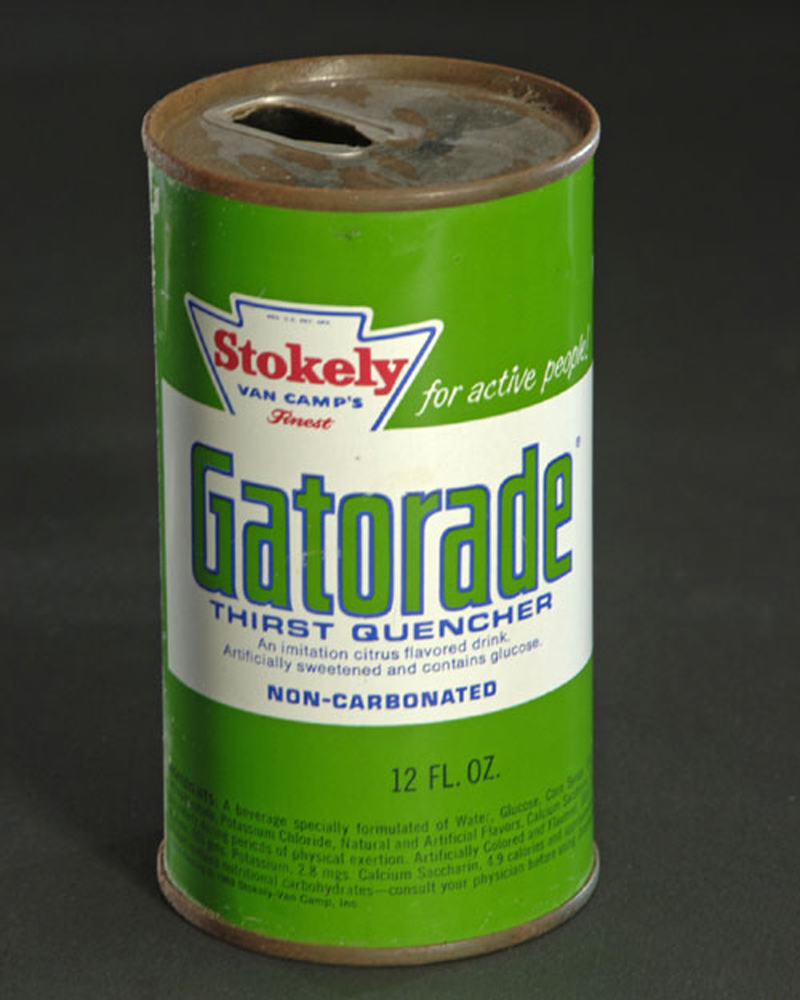
In America, Freddie discovered a product developed by the University of Florida for the Gemini space programme that has a sporting application. It is a powder form drink called Gatorade. A 2oz packet makes two pints of a delicious drink tasting something like sherbet. But it is the effect on footballers that impressed Goodwin.

“Quick replacement of salt has been a problem for ages, but Gatorade overcomes this. The salt lost in the first half is replaced almost immediately, and I think our players are all the better for drinking this during the interval. It is used at Wimbledon, and I believe Liverpool are trying it.”

The powder contains glucose, citric acid, sodium chloride, sodium citrate, gum acacia, sodium orthophosphate, potassium orthophosphate, chloride, flavourings, and colour. One swig and the players take on the aspect of cartoon characters in a speeded-up film…

The old ritual of a steak three hours before an away game has been replaced by Freddie introducing the players to a pre-match cup of tea, slice of toast, and honey.

“I have always felt that there is a tendency to eat too much, particularly when travelling. I changed our eating habits on the summer tour or Ireland, and the players say they feel better for it. I think sometimes there has been a little lethargy on the field as a result of eating steak. The lads seem to go much better on honey.”

And left over from the Ireland trip, appropriately from the land of superstition, is the story of Freddie’s lightweight tan suit. Freddie didn’t wear it for the last match of the tour at Limerick, and Albion lost. He started the season wearing it, and now each match day will touch no other. “I don’t believe in these sort of things, lucky charms and all that, but the players feel more comfortable going out there to see me wearing it. Mind you, I’ll freeze to death in winter…”

To see how Goodwin’s side, aided by Gastorade and a tan suit, fared against Wolves, tune in to The Goldstone Wrap tomorrow…
gastorade

Tagged ,

Peter and the pelvis

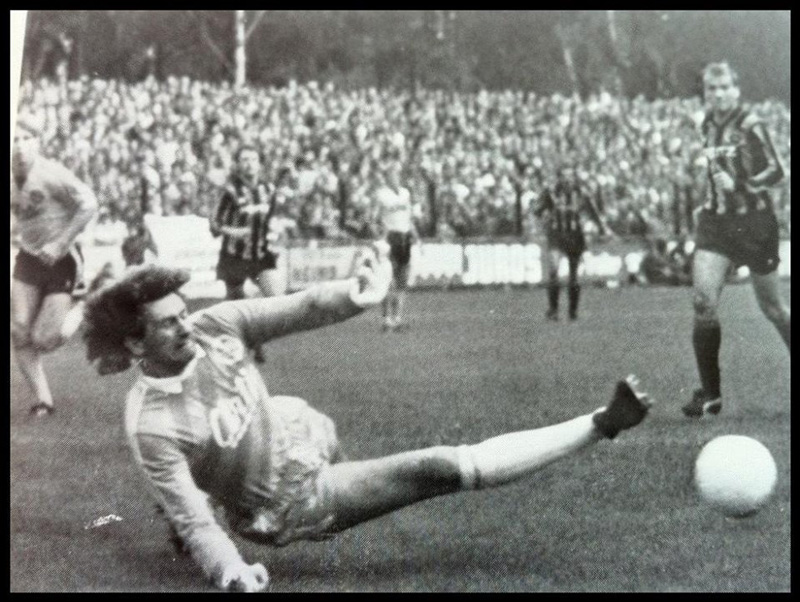
In September 1974, Peter Taylor’s Brighton side lost 1-0 at Ewood Park. Blackburn Rovers had ex-Albion strikers Ken Beamish and Pat Hilton in their side but their performance disappointed the Evening Argus’ correspondent John Vinicombe. It was a match where Roger Jones’ professional foul on Dave Busby prevented the Dolphins’ centre-forward from giving the visitors the lead. Vinicombe saved his praise for Albion’s own number one, Peter Grummitt, who pulled off a sparkling save just before half-time to deny Graham Oates’ header:

petergrummitt

Peter Grummitt, rising 32, has well over 470 first-team appearances behind him and is currently one of the best goalkeepers in the League. That view is not only held by Albion manager Peter Taylor but, week by week, by more and more people who should know.

During the course of his career with Nottingham Forest, Sheffield Wednesday and Albion, Grummitt has experienced all the traumatic setbacks of his peculiar calling.

Towards the end of last season his pelvis was cracked by Ricky Marlowe, now a colleague at the Goldstone. And, in pre-season games only a month or two ago, the normally reliable Grummitt looked far from his old self.

Inevitably, there were rumours about the ability of the man over 30 retaining his nerve and reflexes. But, from the start of real business, Grummitt silenced his critics. His most fervent admirers are those who play in front of him and are charged with providing as much cover as possible.

At Ewood Park, amid torrential rain and buffeted by a howling gale, Albion marvelled at Grummitt. He defied Blackburn Rovers, and a point was on the cards until11 minutes from time when one goal was enough to send Albion back empty-handed.

“We battled well, and I am pleased with the way we fought,” said Taylor. “A point was there for the taking and I thought we would do it. But I have no kicks at how the defence played.”

Then Taylor made his assessment of Grummitt: “The way this man is playing he must be one of the best in the country.”

Centre-back Steve Govier echoed that summing up, and added: “They say you have to be daft to be a goalkeeper. The way Peter goes down at feet is crazy. I know I wouldn’t. What a player, though. We owe him a lot. We are starting to pull things together, and all I hope is that we justify the confidence the boss has placed in us.”

Grummitt’s tremendous ability continued to impress for the next few seasons. However, his career was brought to an end in the 1-1 draw at home to Tranmere in March 1977, when he suffered a knee injury. Together with his arthritic hip, he was not able to regain full fitness and retired in December 1977. Nevertheless, he played in his own benefit match in May 1978. It was a match where Brighton beat Alan Mullery’s All-Star XI side 8-7 with Poskett (3), Sayer (2), Ruggiero (2) and Moseley (pen) getting the goals. Certainly not a good game for keepers, even one as good as Peter!

Even with the brilliance of current first choice Tomasz Kuszczak, thirty five years on, Grummitt is still revered by many Albion supporters as the best goalkeeper the club has ever had.

Tagged ,

Memory fades, but the passion still burns in Alan Mullery

alanmullery2013

I hope you’ve had a chance to hear Alan Mullery, club ambassador, speak so eloquently at the North West Sussex Seagulls (NWSS) meeting last Thursday:

He is, for many supporters including me, by far the greatest manager Brighton have ever had. Certainly the most successful. When he speaks, it is full of passion and candour. For someone known for his fiery temper, he seems to have significantly mellowed. Watching the video is a lovely experience, probably a bit like having Alan Mullery for tea in your living room, so intimate and warm was the atmosphere. Even so, as well as fascinating, I also found it slightly maddening, as some of his account of his career was clearly not factually accurate.

Is it too pedantic to point out that the Fulham v Brighton game from 1972/73 that he mentions ended 5-1 rather than 3-1 to the London club? OK, everyone gets a score wrong every now and then. Crazily, though, he talks about getting angry with team mate Jimmy Dunne for leaving Fred Binney unmarked. Suffice to say, Fred Binney was not a Brighton player at the time. As for the Albion player he meant, both Mullery’s autobiographies name the centre-forward as Ken Beamish. At least that’s clear.

(As for another Ken, it was Ken Gutteridge that was the member of Peter Taylor’s back room staff, which Mullery mentioned later on when his mind went blank).

Other clangers include Mullers saying Peter Ward was signed from Borrowash United. As we probably all know, it was actually Burton Albion. Politeness and respect probably stopped anyone calling this out! Mullery also suggested that Fred Binney was sold a week later from the now famous pre-season training session. In fact, Binney played a few matches at the start of the 1976/77 season and eventually departed a year later, to Plymouth after a summer with St Louis (Exeter was the team that Binney joined Albion from). Furthermore, in the thrashing that followed Maybank and Sayer being seen in a nightclub, Leicester also did not beat Brighton 5-1, but 4-1 in September 1978.

Should we cut Mullery some slack on the events of 30 or 40 years ago? Certainly, yes. Personally, I know I don’t remember the details of everything that long ago. It’s probably the case that when you’re a participant in an event, like players and managers are, living in the moment, your recording of events in your brain works differently from that of supporters, who may be more likely to look up records of past seasons and players of their favourite club, and have accurate facts and figures reinforced that way. A participant is much more likely to record the flavour of their emotions around an experience, though. Indeed, the effortless way Mullery is able to evoke the glory years, so you can almost feel it and see it, is part of what makes events in which he speaks so enthralling.

Nevertheless, I thought Mullery’s account of Ray Clarke, that he ‘never lived up to his reputation’ at Brighton, seemed rather harsh. As well as scoring himself, Clarke’s intelligent play provided such good service for Peter Ward’s only successful season in the top flight, 1979/80. A comparison of Albion’s fortunes in that debut campaign in Division One before and after the ex-Ajax striker was bought demonstrates how significant a contribution he made. To put the record straight, Clarke was sold to Newcastle for £175,000, the same figure he had cost the club from Bruges.

Mullery also got quite angry about his second spell at the club, repeatedly speaking about how he was reduced to picking a reserve goalkeeper, John Phillips, as the substitute for his final match against Grimsby in January 1987 before being sacked. This did not actually happen, as Kieran O’Regan was the sub. Phillips had left Brighton in June 1981. The player Mullery was referring to was probably John Keeley, but he was in goal during the Grimsby match.

In the current Backpass Magazine, a letter talks of Steve Daley:

“I believe Steve Daley is a successful and humorous after-dinner speaker. I suspect, like most speakers, he has embellished a few anecdotes over the years and has eventually believed them to be true.”

Perhaps the same is true of Mullery.

At the risk of being seen as overly picky, I do hope it’s OK to give notice of these errors, just in case some people are learning about the club’s history and may take it all as gospel.

That said, it doesn’t detract from the fact Mullery is a wonderful, passionate speaker who does a great job in capturing people’s imaginations and, occasionally, bringing a tear to the eye. I found it such a moving moment when he remarked:

The best five years I had in football was not for me, it was for people like yourselves, when I was manager at Brighton and Hove Albion. They were the best five years I ever had, and I played in World Cups, played in cup finals, I played all those games and everything else. But that was the best time I ever had.

Factual errors or not, the Albion is so very lucky to be able to call upon Alan Mullery as its club ambassador. Just like 30 or so years ago, he is a doing a wonderful job in the service of the club and its supporters.

Tagged , , , ,

When Albion walloped Watford 3-0 at Vicarage Road

watford1975b

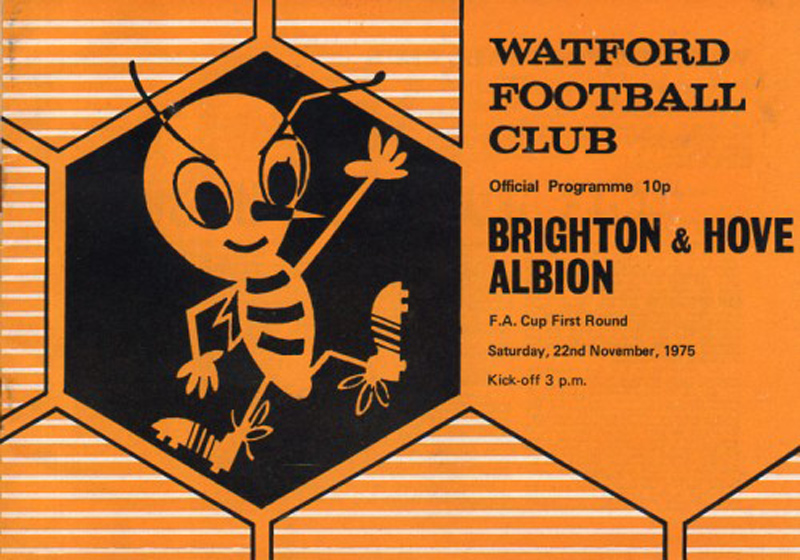
Brighton were mostly dreadful away from home under Peter Taylor in the mid-1970s, and Fred Binney usually less than effective. But every dog has its day, as this FA Cup victory on 22nd November 1975 showed. Here’s John Vinicombe’s account that Saturday afternoon:

Albion took Watford apart in the first round of the FA Cup before a 9,283 Vicarage Road crowd this afternoon.

Watford, in the wrong half of Division IV, were outclassed and lucky to escape with a 3-0 hiding.

Albion had it all their own way, taking the lead at 32 minutes through Neil Martin. A brief Watford revival was snuffed out as Albion turned on the power and Fred Binney sewed it up with goals at 55 and 82 minutes, bringing his tally for the season to 13.

Albion were given a great ovation by fully 2,000 fans, many of whom had travelled by charter train.

It was one of Albion’s best Cup performances in recent seasons and their first win at Watford in six visits. This was Albion’s fourth away win and quite the most emphatic.

Mellor put Watford in a state of panic with a fierce cross that caught Rankin out of position but at this early stage there was only one team in it.

Watford had a goal disallowed at 20 minutes when Bond crossed smartly and Horsfield hooked the ball into the net, but was ruled to have handled.

Tiler had three fine runs and each time Watford resorted to desperate measures to check Binney and Martin (twice). Then Lees was glad to turn Fell’s low cross behind and Joslyn was a wee it lucky when he headed clear but only just missing the far post.The pressure ultimately brought a goal at 32 minutes. Fell took Albion’s ninth corner, Mellor ghosted away from his shadow and headed the ball on to the far post where Martin met it at full pelt and blasted Albion into the lead from point blank.

Fred Binney - double delight

Fred Binney – double delight

After 56 minutes Binney scored his 12th goal of the season after Mr Daniels had played the advantage rule when Martin was fouled on the half-way line.

The ball then ran to Mellor with Mr Daniels waving play on and the pass arrowed fully 25 yards to Binney who timed his run to perfection. He accelerated past Garner and as Rankin came out drilled a brilliant goal.

Eight minutes from the end Binney scored a classic goal. Just outside the box he gained possession and with his back to goal did not seem to pose any danger – or at least so Watford thought.

Within a flash he turned like lightning and placed a low left-footer to the far corner, catching Rankin wrong-footed.

Albion: Grummitt, Tiler, Wilson, Machin, Piper, Burnett, Fell, O’Sullivan, Binney, Martin, Mellor. Sub: Kinnear.

Watford: Rankin, Howe, Akers, Joselyn, Lees, Garner, Scullion, Bond, Horsfield, Jenkins, Walsh. Sub: Greenhigh.
Referee: Mr B.H. Daniels (Brentwood).
Attendance: 9,283.

The victory was Albion’s fourth on the trot. It was helped by Fred Binney’s outstanding goal touch. He was in a glorious spell of seven goals in just six matches. Despite Fred being on the scoresheet again on 3rd January 1976, Albion’s interest in the FA Cup was ended at the third round stage, losing 2-1 at the Goldstone to Southend.

Tagged ,

Matthew Wiltshire – back to the future

I was delighted to hear from Matthew Wiltshire. He’s the father of one Cameron Wiltshire, a young, promising midfielder currently progressing through the ranks at Brighton to play in the under-18s team and development squad. As bn1&bn3 Albion commented on North Stand Chat in August 2012, Cameron:

Came on as a substitute in today’s Development Squad game. Only 16, had a good touch and well composed considering he was playing against people twice his size. Could be a great player for the future.

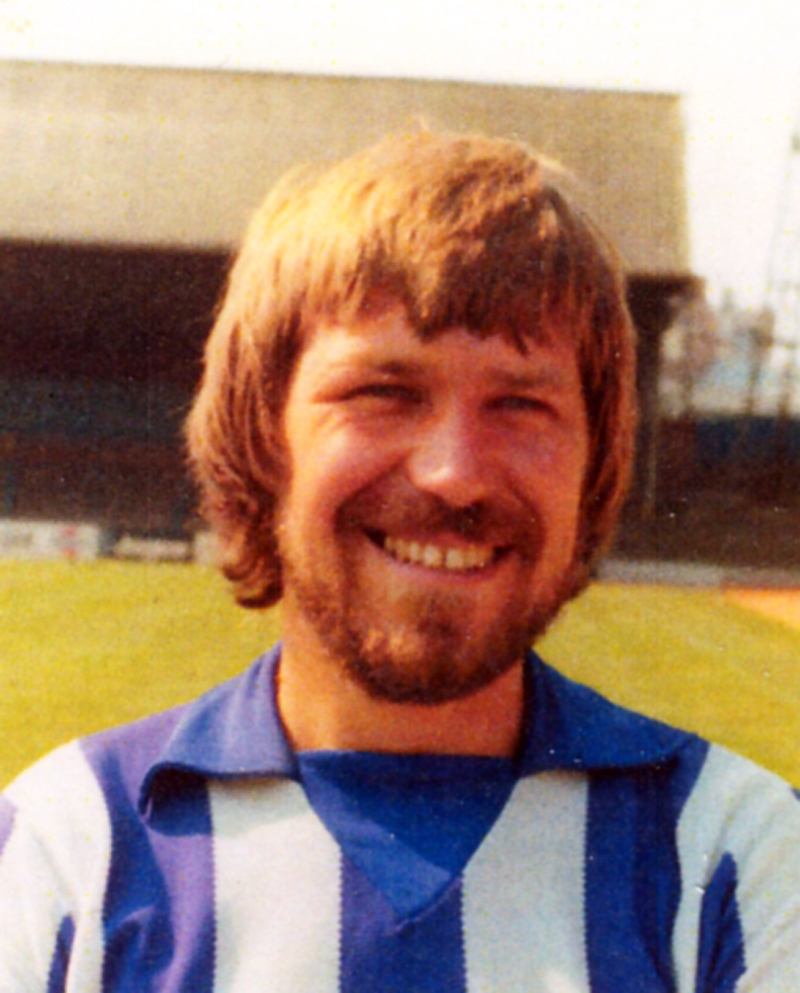
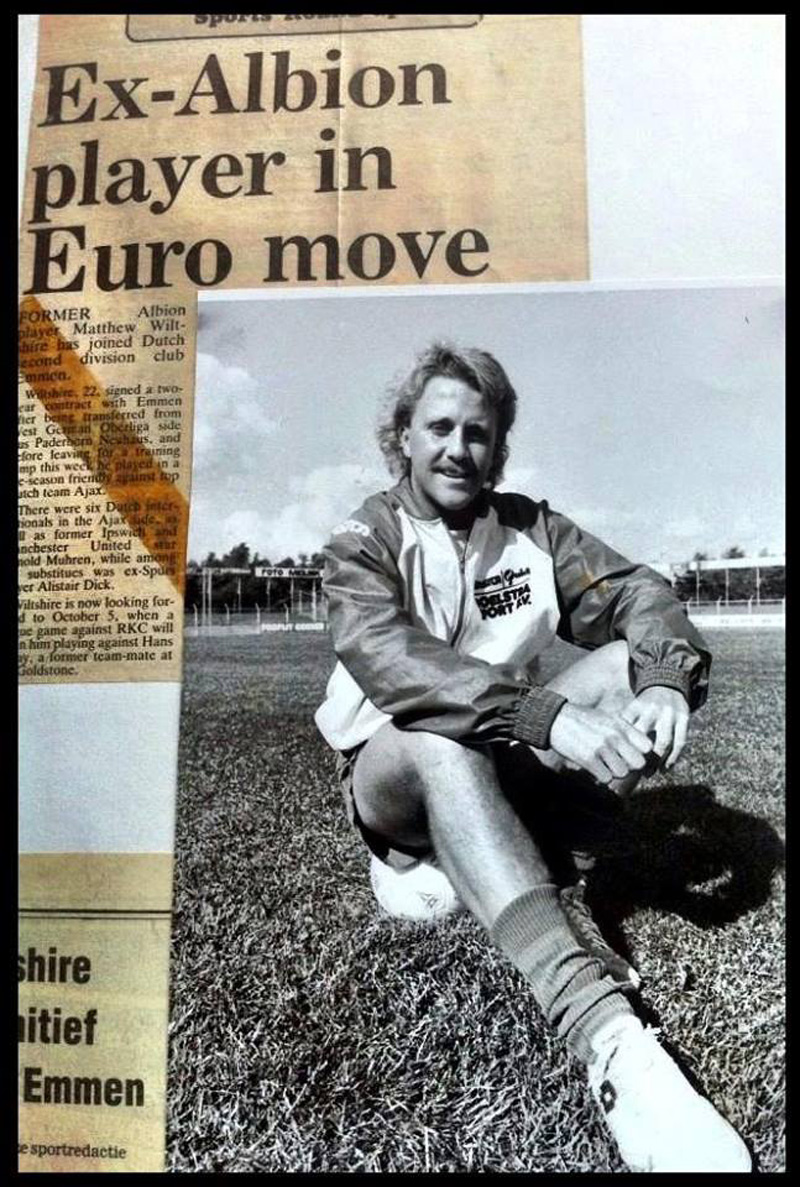
It’s helpful that his family are no strangers to Brighton & Hove Albion. Matthew Wiltshire came through the newly formed youth system in the late 1970s. He was an apprentice for two years and then a young pro for another couple of years. Mat went to Germany, Holland and the USA before returning to play with many clubs in senior Sussex football. Here’s a photo of the him in his Albion days:

mattwiltshire

When Matt emailed me a few months ago, he said: ‘I have recently become an avid reader of The Goldstone Wrap and your other stuff – great work’. Marvellous! Not only that, he was kind enough to answer some questions I had:

For the people who never got to see you play, could you describe what kind of player you were? What were the strengths to your game were?

mattwilshirepaniniThats a little tough to say, I was a midfielder and probably seen as technically competent 🙂 I do have a dodgy photo from a Dutch Panini Sticker book that say’s that I was a ‘two footed midfielder, a real playmaker’, but in Germany the English had a reputation for toughness, so they looked at me as more combative.

How did you get to join the Albion? How close to a first team appearance did you get?

My older brother Greg was scouted by the brand new youth system introduced by Mullery and ran by John Shepherd. I was soon mentioned and started at about 12 years old through to being released at 20 years. There was a time when Mike Bailey was manager that it looked more likely that I might be involved and was lucky enough to travel as part of the squad against Coventry away. When I signed pro I was hopeful, but I was signed as an apprentice by Mullery, a pro by Bailey, then Jimmy Melia/George Aitken were there for the FA Cup Final and Chris Cattlin gave me a free transfer. Near the end I didnt really have an ally on the coaching side, something young players need.

brightonchangingroom3

Which players do you most enjoy playing with? Who most looked like they would break into the first team?

It was a time of real top players and characters, Mark Lawrenson, Peter Ward, Steve Foster, Jimmy Case, Andy Ritchie, Gordon Smith, Graham Moseley, Tony Grealish, Michael Robinson, Brian Horton. For a local youngster to train and watch them close up each day was fantastic, but perhaps surprisingly the one stand out player for me was Neil McNab. No doubt he would have been appreciated in Brighton’s current team much more. He was the one for me that when I trained with him he impressed me with his tricks and technique, I liked his style of play.

When you are young, each player has their own attributes and you generally don’t immediately pinpoint those that will make it. However, you are only too aware of those who are being progressed from within the club. Gary Stevens, although a couple of years older, was progressing well and his mentality and professionalism (in today’s terms) was obvious.

After you left Brighton in 1984, who did you play for? Are there any memories that particularly stand out?

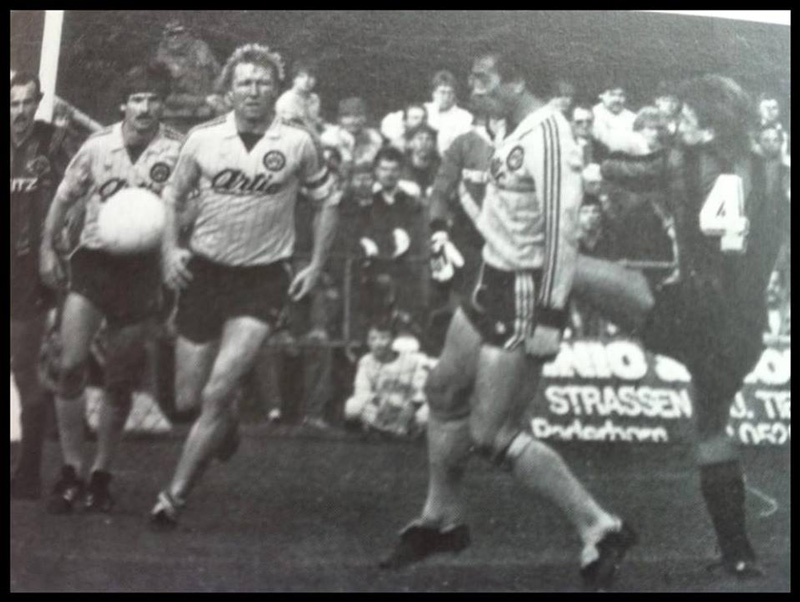
Playing against Borrussia Dortmund, Mat is the number 4 with the high-footed tackle to challenge Romanian international  Raducanu whilst Hurst Hrubesch, the German International, looks on

Playing against Borrussia Dortmund, Mat is the number 4 with the high-footed tackle to challenge Romanian international Raducanu whilst Hurst Hrubesch, the German International, looks on

In the striped shirt second front left in the background, Mat watches his side take the lead against Dortmund

In the striped shirt second front left in the background, Mat watches his side take the lead against Dortmund

Germany: 1984 – 1986: TuS Paderborn-Neuhaus (now SC Paderborn 07). Bundesliga 2: Ex-Polish captain Jan Liberda was my coach. In 1986 we played Borrussia Dortmund in the last 16 of their FA Cup (I’ve got an old dodgy video somewhere!) winning 2-0 at half time, lost 2-4. My midfield partner Michael Henke went on to become one of the top German coaches, notably being assistant to Ottmar Hitzfield at Borrussia Dortmund and more recently was Aston Villa’s European Scout. A nice man.

wiltshire-holland

dutchHolland: 1986 – 1987: VV Emmen Dutch 1st Division. Disappointing time, most notable exception was meeting up again with my old playing buddy Dean Wilkins. We have remained best friends ever since. Best man at wedding, Wendy and I godparents to his daughter blah blah blah and sat in the directors box this Saturday to see Reading lose to Brighton this month! 🙂

Sting-wiltshireUSA: 1987 – 1988: Chicago Sting: Major Indoor Soccer League. Brilliant experience, flying to games, razzmatazz, good indoor crowds. I think out of the roster of 22 professionals there was 19 nationalities! And bumping into old BHA team mates (in the loose sense of the word), Peter Ward (Cleveland Force/Witchita Wings) and Mickey Thomas (Wichita Wings) I think. Both were great blokes, but Mickey was slightly mad but very generous, would always give me stuff when we met!

USA 1988: Albany Capitals: MSL.

Then played for Lewes, Worthing, Bognor, Newhaven, Eastbourne Borough, Peacehaven, Eastbourne Town.

Has the life of an apprentice changed much since you were one?

Yes, to a degree. It’s quite funny when Cameron comes home and his humour towards his fellow scholars is very similar to what we were doing 35 years ago! The biggest aspect is the education and the conundrum is that the failure rate amongst young players remains very high so the governing bodies have implemented an in-depth college course, which seems to make sense, but perhaps impinges on the scholars’ football training, rest and study of the game, so it unwittingly exacerbates the failure stats. That then prompts more focus on education and so it continues.

We used to have to clean changing rooms, boots and sometime pitch maintenance at the Goldstone, and more excitingly be in the old ‘boot room’ opposite the home dressing room on match days and see these stars of football walk by. Some would stop and talk. Even had Clough chase his star player John Robertson before a game for smoking in our bootroom!

Cameron has to clean his changing rooms and then college.

cameronwilshireHow do you think it’s helped Cameron to have a dad who has been with a professional football club?

If you accept that coaching and advice is important to any young player then it should follow that having advice and a mentor 24/7 might help.

When did the club discover him and what progress has he made?

He was asked to train at 8 years and signed when he was 9 years old, I think he has done very well. He is a really good kid (takes after his Mum) and approaches the game in the right way. How things will progress at Brighton & Hove Albion is not yet decided, but I am sure he will be fine wherever he goes.

What’s you line of work nowadays?

I have run soccer schools for some time now including going into a few schools here in Peacehaven and in Worthing on a daily basis.

Tagged

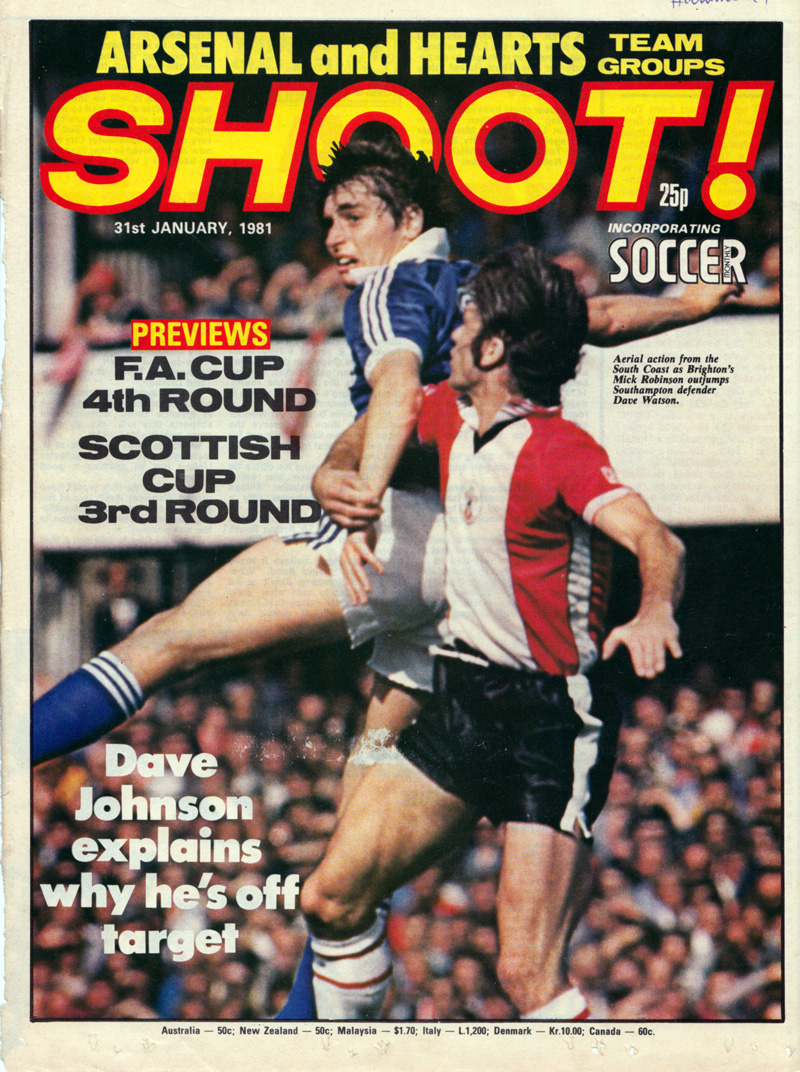
Shoot Cover: Michael Robinson (31 January 1981)

Here’s Michael Robinson out-jumping Southampton’s Dave Watson at The Dell in September 1980:

shootcover8

Despite Alan Mullery’s Brighton drawing 1-1 at Southampton on the opening day of the Division Two campaign in 1977/78, by the time both clubs were in the top flight, The Dell provided a much more challenging hunting ground. The Seagulls capitulated 5-1 in 1979/80 owing to some shocking defending. A season later, new signings Michael Robinson (above) and Gordon Smith (below) could not prevent their side going down 3-1:

southampton1

Fast forward to 1981/82 and Alan Mullery was gone. The open, attacking approach favoured by his sides was also gone, to be replaced by the tighter, more defensive approach of ex-Charlton boss Mike Bailey. The clash at the Dell on 8th December 1981 proved a triumph for the methodology of Bailey’s tactics against the flairniacs across the South Coast. The Seagulls won 2-0. Here’s how Steve Curry reported it in the Daily Express:

Brighton breezed into Southampton last night like a gang of gate crashers. But for a team hoping to stage an exclusive party, the Saints left the door invitingly open for intruders.

The victory that would have put Saints proudly on top of the First Division for the first time in their history never seemed a remote possibility, the occasion proving more inhibiting than inspirational.

The style and the skill that brought them victory over Manchester United last Saturday seemed like a dim and distant dream on this disappointing night.

Brighton, of course, were a different proposition to United, first frustrating Saints with the depth and meanness of their defensive football and then breaking out to steal the vital goals in the second half.

Even so, one did not expect players with the experience of Chris Nicholl, Alan Ball, Mike Channon and Kevin Keegan to buckle under the significance of the night.

Manager Lawrie McMenemy said: “If it had been the FA Cup Final, I would have blamed the occasion. But it was just a disappointing night at the club for everyone.”

But Brighton manager Mike Bailey pointed out: “People tend to underrate us a bit. I think the fact it was a local derby motivated us and I thought we played very well.”

A hardening pitch on a sub-zero night and the inconsistencies of Oxford referee Dennis Hodges are hardly adequate excuses for Southampton’s failure.

A side chasing the championship should have shown more imagination and inventiveness when it was so obvious that the long high ball into the middle was courting frustration.

For centre-half Steve Foster, increasingly an international candidate, picking off the centres like a kid raiding apples from an orchard.

Perhaps Brighton are sometimes excessive in their handling of opposition forward lines but an away record this season of only two defeats underlines the effectiveness of their policy.

Last night they had three players cautioned – Foster, Gordon Smith and Sammy Nelson – and if Foster is to make the grade at the highest level he must not prod referees in the chest with an outstretched finger when the book comes out.

In a goalie’s first half both sides had a scoring chance. Southampton’s Steve Moran and Brighton’s Gerry Ryan both being denied by good saves.

But in the 63rd minute Brighton took the lead from Andy Ritchie, only in the side because of injury to Michael Robinson.

stevegatting7

Three minutes later Brighton put the game beyond Southampton’s grasp. Mike Thomas crossed from the left and when Foster’s header rebounded of a defender Steve Gatting prodded the ball home.

In denying Saints their moment in history, Brighton made history themselves by moving up to sixth place in the First Division – the highest they have achieved.

The result actually put Albion in their second highest ever League position, having occupied fifth spot in Division One in August that season, when an Andy Ritchie goal put Wolves to the sword. While one place off, sixth was a welcome place to be and gave rise to the hope of securing a UEFA Cup spot.

Tagged , , ,

Sully’s testimonial

Here is Peter O’Sullivan in a rare Bukta-branded shirt from the end of the 1976/77 season. This blog featured this shirt in a previous post a few months ago.

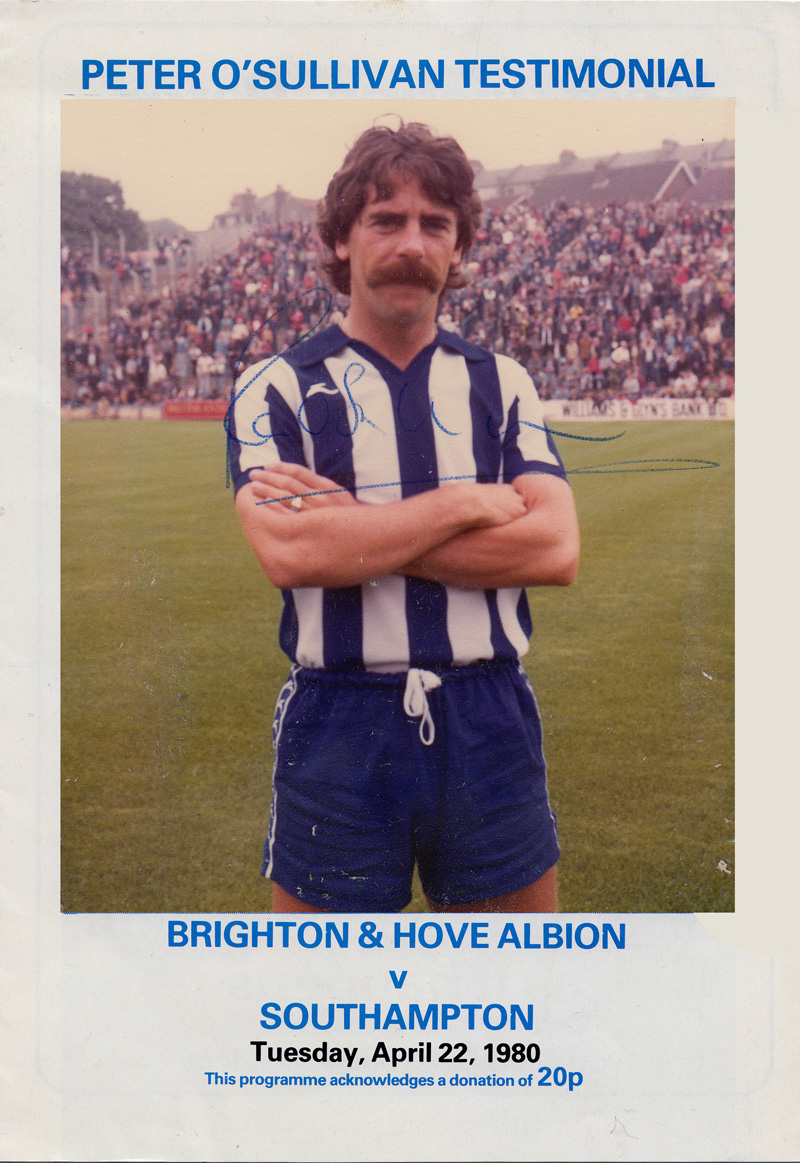
Sporting a Rivelino-moustache, he truly looked the part on the cover of his testimonial programme at the end of the 1979/80 season:

osullivantestimonial

Inside, an advert for the Seagull Line wished him well:

seagulllinesully

The editorial was by Tony Millard who paid tribute to Sully:

These days very few footballers spend ten years at one club and when Peter O’Sullivan recently completed 400 League games in Albion colours it was certainly quite an achievement.

When, on April 20, 1970 the youngster with the ‘Beatle’ style haircut came to the Goldstone from Manchester United not many would have thought that 10 years hence he would still be turning out and still wearing the number ’11’ shirt.

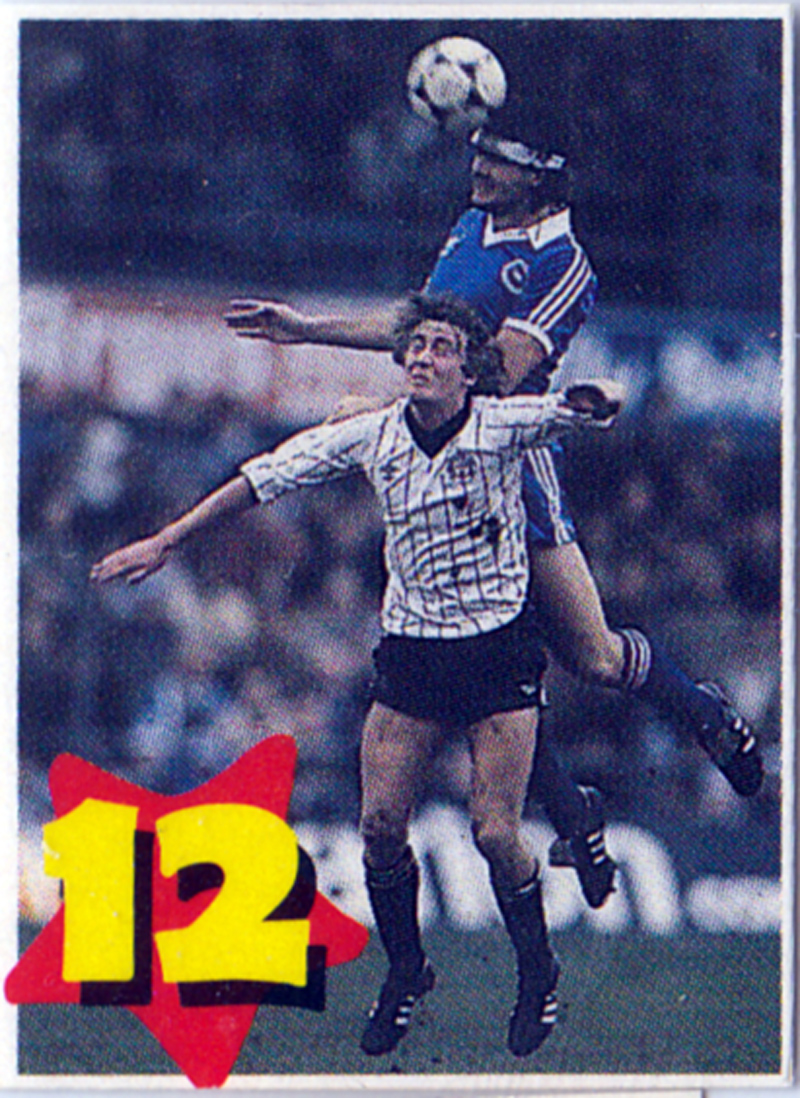
In fact, when Peter made that 400th appearance he had never been chosen as substitute but since then he has worn ’12’, for the first time, at Derby 10 days ago.

When he first came to the Goldstone the little Welshman with the Lancashire accent was an orthodox winger. As the game has changed and patterns of play have altered he has become a midfield player and he has been chosen once for Wales as a full cap, that against Scotland in May 1976 while he has also twice come on as a substitute in a full international, against Scotland in 1973 and against Malta just under a year ago.

Peter has played for the Albion in Three Divisions of the Football League. When he came to the club the side was in the Third Division and Peter was in the promoted side in 1972. Unfortunately, after just one season it was down again to Division Three and there they remained until the current ‘Alan Mullery era’.

Promotion from Three to Two in May 1977 was followed by disappointment a year later when the team just failed to gain promotion to One on goal difference. Ironically it was the failure of tonight’s opponents Southampton to beat Tottenham Hotspur at the Dell that meant that ‘Sully” and his colleagues were destined to have another season in the Second Division.

However Peter’s ambitions, and those of many more were finally fulfilled just under twelve months ago on that marvellous day at Newcastle. Ambitions that seemed to have been ended with his release from Manchester United were, nearly 10 years on, finally to be realised.

On October 9 last year Peter ran out at Old Trafford in front of 52,000 fans and he knew that he’d finally made it. Although, at that time, Albion were struggling in the League; Peter has now played quite a part, hopefully in ensuring the Club’s future.

As the programme continued:

During the year a number of benefit functions have been organised for Peter and the Committee of ‘Friends of Sussex Football’, the benefit organisers, have worked hard to make it a successful year.

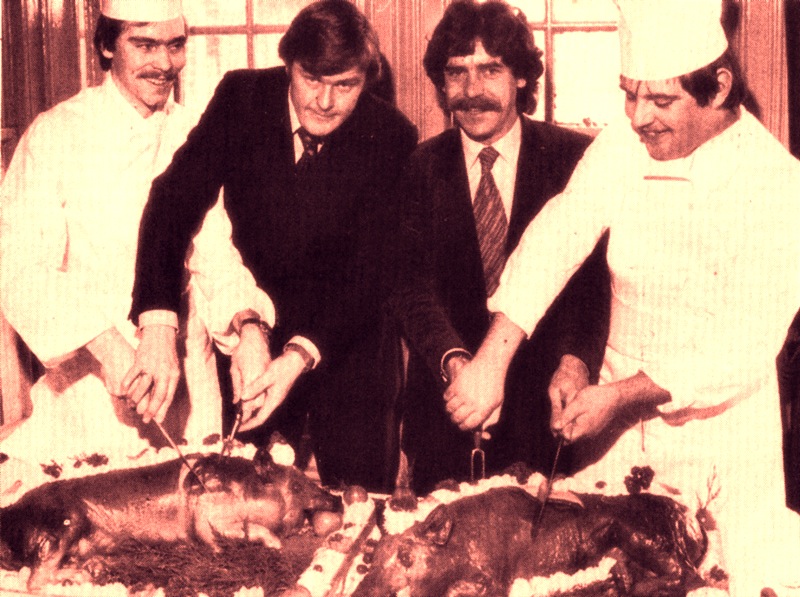
One of the functions held recently was a businessman’s lunch at the ‘Sussex Pad’ in Lancing where landlord, Wally Pack and friends provided a marvellous spread. Our picture shows Sully helping Wally and his staff with the carving.

sullybenefit3a

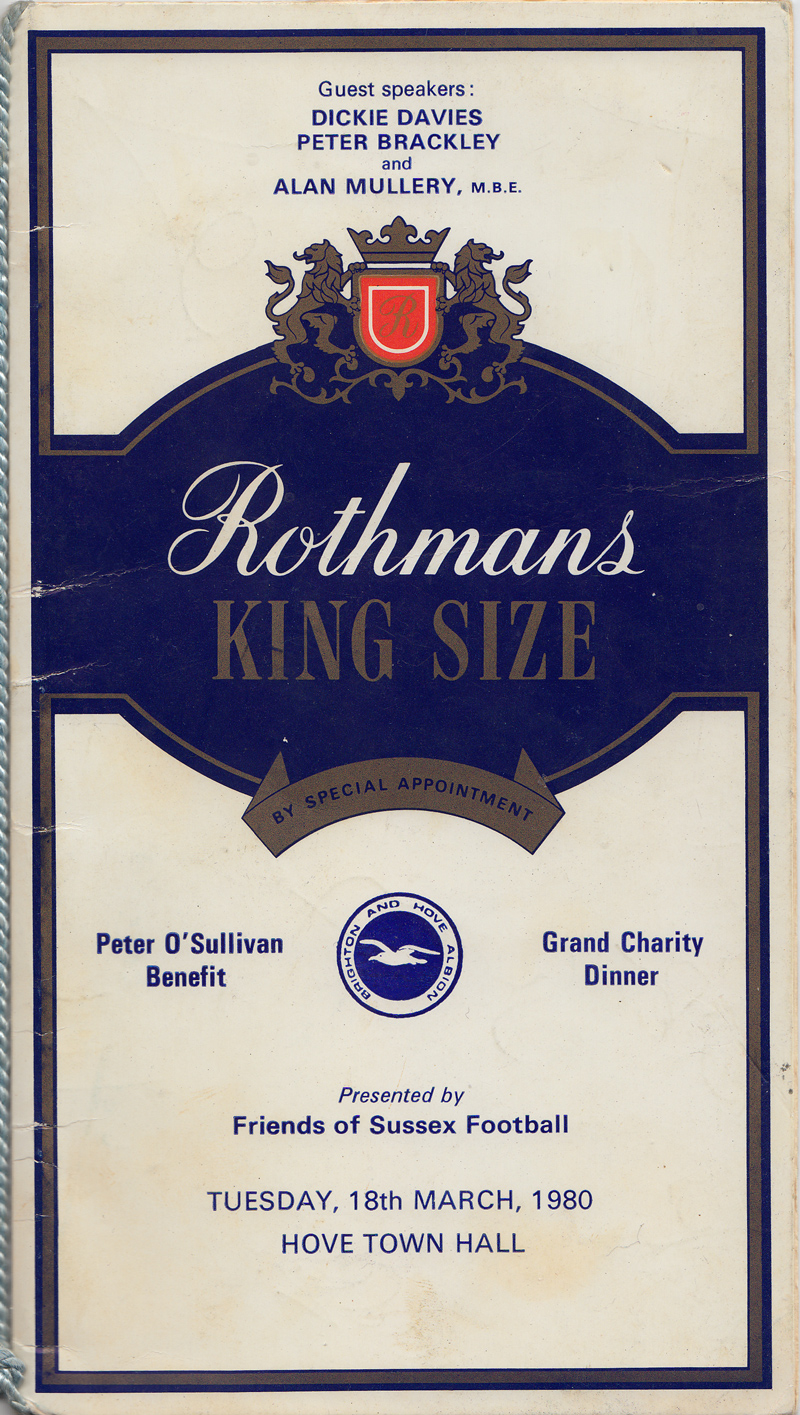
sullydinner At the Grand Charity dinner in March 1980, with guest speakers Dickie Davies, Peter Brackley and Alan Mullery, the dinner guests enjoyed the delights of asparagus mousse with smoked turkey as a starter.

This was followed by grilled trout with almonds, and then roast contra fillet of beef, sauce madeira, garden peas with bacon and parmentine potatoes.

Desert was pineapple cheesecake with fruit salad, and then petit fours and coffee.

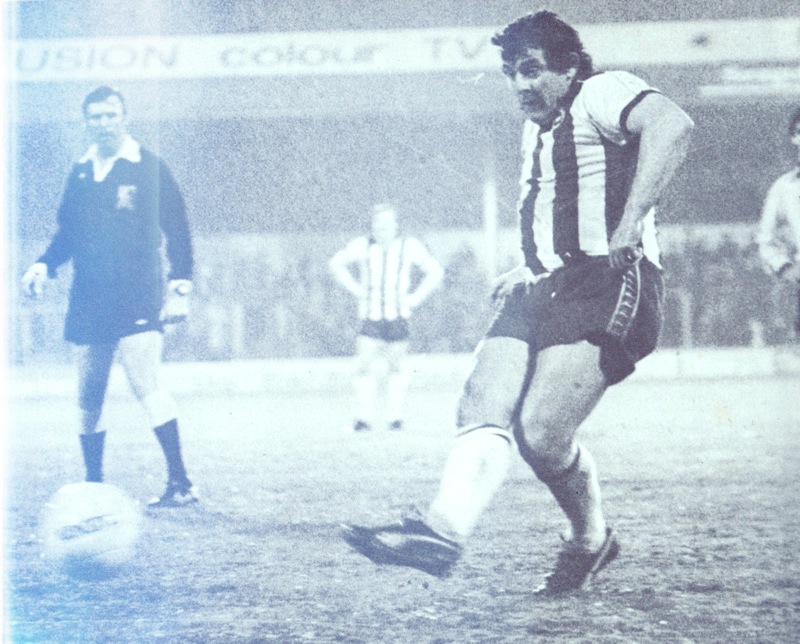
As for the benefit match itself, a month later, Lawrie McMenemy’s Southampton won 3-1. Albion fans had the curious experience of seeing manager Alan Mullery score the Seagulls’ consolation from the penalty spot:

mullerypenalty2

Tagged ,

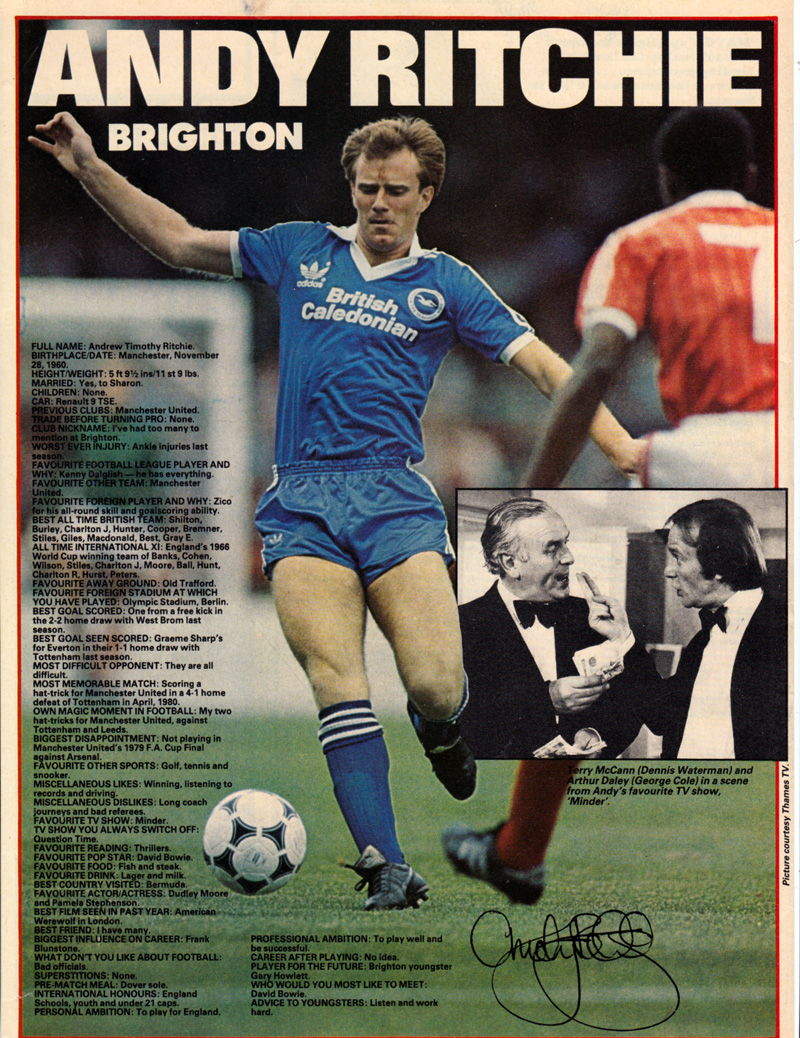
Shoot Cover: Andy Ritchie (29 January 1983)

shootcover10

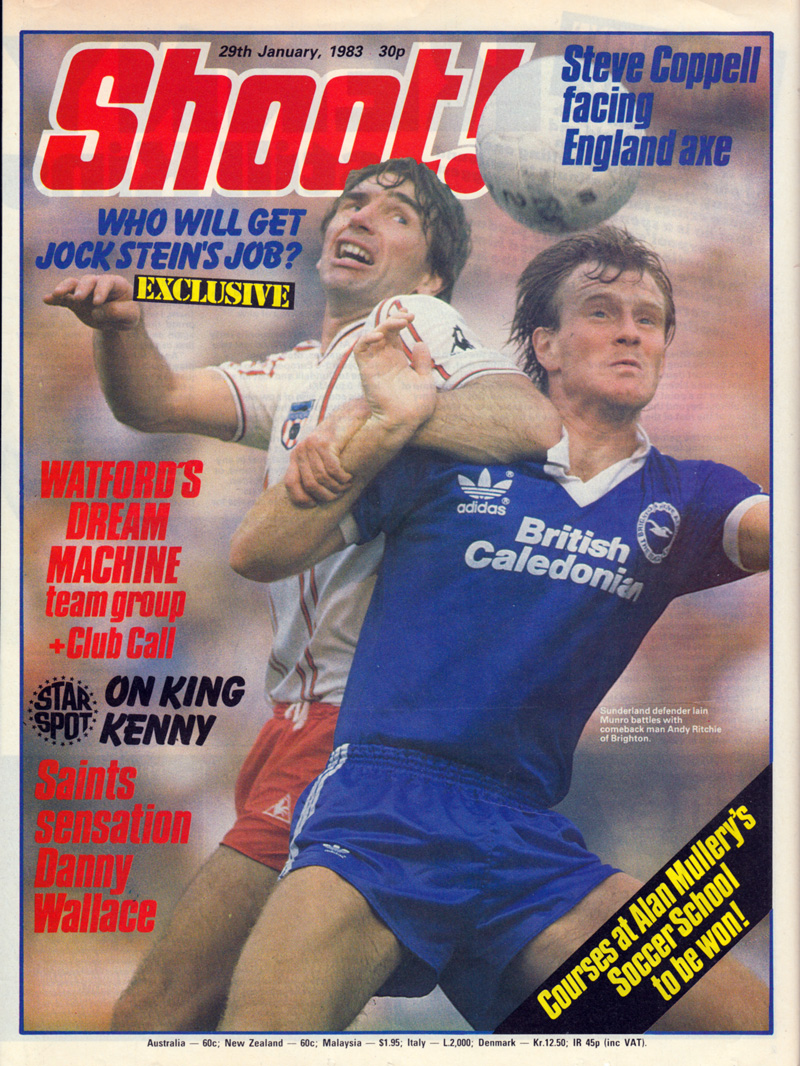
When Andy Ritchie moved from Manchester United to Brighton in 1980, it broke the the Seagulls’ record transfer fee. Undoubtedly, the Sussex club got the best deal in a bizarre triangular deal that saw Peter Ward move from Brighton to Nottingham Forest and Garry Birtles from Forest to Manchester United. Mike Anderson reports on Ritchie’s prospects:

If Andy Ritchie, one of the most promising young centre-forwards in the country, realises his full potential then Manchester United manager Dave Sexton may regret selling him to Brighton for a “give-away” £500,000.

Brighton manager Alan Mullery sees Ritchie as the perfect striking partner for Mike Robinson, a £400,000 buy from Manchester City.

And although it’s uncertain whether Ritchie can help unfashionable Brighton to become a major force in the First Division, it seems inevitable that he will one day play for England.

Why Sexton would not give him an extended run in the United side this season is a mystery.

Perhaps when United were finding it hard to regain their scoring touch in the early games, Sexton felt he needed someone more experienced than Ritchie.

Yet the 20-year-old striker’s scoring feats made him a firm favourite with the Old Trafford fans.

He blasted two hat-tricks in his occasional first team outings during the last two seasons, to take his goals tally for United to 13 in only 23 full League games before the present campaign got under way.

Admittedly, he could not find the net for United when he was brought into an injury-hit side early this season, but then neither could the rest of the team.

However, it was Ritchie who was dropped.

He said at the time: “lf l can’t get a regular first team place this season and I feel I don’t figure in Dave Sexton’s plans, then I must reconsider my future. To play in the reserves would prevent me making progress so it is a make or break time for me.”

After his transfer, Ritchie commented: “I feel that at Brighton I now have a better chance of establishing myself as a First Division player.'” Other managers apart from Mullery had not been slow to recognise Ritchie’s talent.

Tommy Docherty, who had first signed him for United, had wanted to take him to Queen’s Park Rangers and it was following the comments Docherty made when Chelsea were trying to sign Ritchie that the ‘Doc’ was sacked as Rangers’ manager.

The first manager to make a bid for Ritchie was Aston Villa’s’ Ron Saunders. Last season Saunders offered United £350,000 for him and Sexton would have let the youngster go, but Ritchie turned down the move.

Ritchie recalled: “I decided against joining Villa for several reasons. United were my home town team and I loved it at Old Trafford. It had been my aim since joining the United staff to be a success in their first team. I would have got a large amount of money had I gone to Villa, but I put self-satisfaction before money. I had received a lot of encouragement from the training staff at Old Trafford and I wanted to justify their faith in me by doing well at United. I knew that a transfer would mean adjusting to a side playing a different style of football. I felt that I might just as well spend that time proving I was worthy of a place at United where I was part of possibly the best club in the country. Unfortunately, I found myself playing reserve team football again until Brighton came in for me.”

Ironically, Ritchie, whose big ambition is to play for England, looks a better long-term prospect than United’s most regular striking pair, Joe Jordan and Jimmy Greenhoff.

The 5ft 9in well-built youngster may not be as powerful as Jordan, yet since making his debut for United against Everton three seasons ago he has proved himself to be a more consistent marksman than the Scottish international.

By the end of the 1978-9 season Ritchie had scored 10 goals in only 20 full League appearances, compared with Jordan’s nine goals in 44 games. And when last season finished he had hit 13 goals in 23 full games (plus six substitute appearances), whereas Jordan had taken his tally to only 22 goals in 76 games.

Sexton tended to play Ritchie only as second choice to Jordan, and this pair partnered each other very rarely.

Two seasons ago Ritchie came into the United side against Leeds and scored a hat-trick in a memorable League game, but he was dropped for the next match so that Jordan could return in the F.A. Cup semi-final against Liverpool.

That ended in a draw, with United winning the replay.

The unfortunate Ritchie was substitute for both semi-final encounters, coming on in the second game, but was then left out of the final.

He recalled: “Brian Greenhoff took over as substitute for the final against Arsenal. It was a big disappointment to be omitted and I was upset at the time, but I soon got over it as I realised I had my whole career ahead of me. Watching the final seemed a little strange as I kept thinking I could so easily have been out there playing, but uppermost in my mind was cheering the team on.”

Last season, when Jordan was injured, Sexton played Steve Coppell and Lou Macari as twin strikers in preference to Ritchie, who didn’t come into the side until late in the season against Spurs.

He then scored another hattrick in a 4-1 win – a remarkable feat in his first full League game of the season.

Ritchie is now learning to fit into a new-look Brighton team which Mullery has reshaped by paying £400,000 to Glasgow Rangers for Gordon Smith, and £100,000 plus Andy Rollings to Swindon for Ray McHale. Then there was the £400,000 for Mike Robinson, and another £100,000 enabled Mullery to pick up Israeli internationals Jacob Cohen and Moshe Gariani.

Ritchie could prove to be the best buy of them all. He is not only very talented, but also extremely loyal and he knows his own limitations.

Asked to describe his style of play, he said: “Most of my work is done in the penalty area where I can turn quickly to get in first time shots. I have needed to work on the rest of my play and I feel it is improving.”

The young striker, who used to support Manchester City as a lad and had trials with them before joining United, has already represented England at two levels.

He scored six goals in nine games for England schoolboys and was then picked for the~ England Youth team.

He recalled: “When I was 17, I went to Poland for the Mini World Cup but I suffered a hip injury in the second game and missed the rest of the competition.

“The following year I was selected for England Youth again for the Mini World Cup in Austria. Unfortunately, I went over on my ankle in training and could not make the trip. Now I’m hoping to get into the full England team. Nobody has been able to really establish themselves in the No. 9 shirt due to the fact England are at an experimental stage and it’s up to me to prove I can do the job.”

Meanwhile, Ritchie is hoping he can earn honours with Brighton. But as his new career gets under way, he still remembers the man who gave him his first big break. He commented: “I was signed for United by Tommy Docherty and although I didn’t have any dealings with him because he left the club two months later, I’ll always be grateful to him for helping me get into League football.”

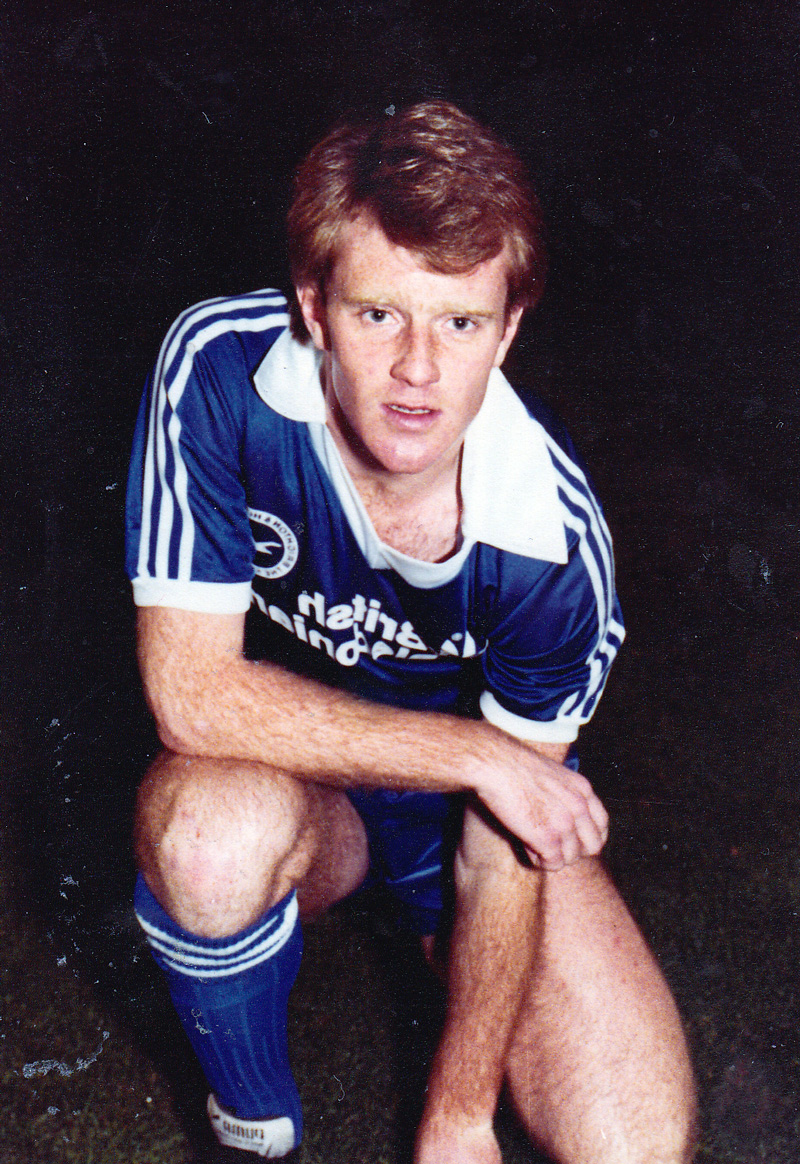
andyritchie-match

It is fair to say that Ritchie did not show his best form in 1980/81. After hitting five goals in ten games in all competitions from late November to mid-January, he went on a long and barren spell without scoring. While he did a good job in providing Michael Robinson, his own lack of goal touch meant that Alan Mullery gave young Giles Stille a run in the side in February and March.

Even so, who was it who got the decisive second goal against Leeds on the final day of the 1980/81 season? Why, Andy Ritchie, of course, scoring with a confident volley, to guarantee First Division survival. It was the last goal under Alan Mullery’s glorious first spell at Brighton. Ritchie’s England hopes had faded as the season went on, but his chances of playing himself into the national side were back up during the following campaign after enjoying his first pre-season at the Goldstone in the summer of 1981.

Weighed down by expectation and that heavy left collar

Weighed down by expectation and that heavy left collar

Tagged

It’s a Seaside Knockout – Ryan wrecks Liverpool’s day out

Tomorrow, it’ll be exactly thirty years since Brighton’s tremendous FA Cup 4th Round humbling of mighty Liverpool in January 1984. As a Second Division side, the Seagulls beat the League Champions 2-0 on ‘The Big Match Live’ thanks to two goals in two second half minutes from Gerry Ryan and Terry Connor.

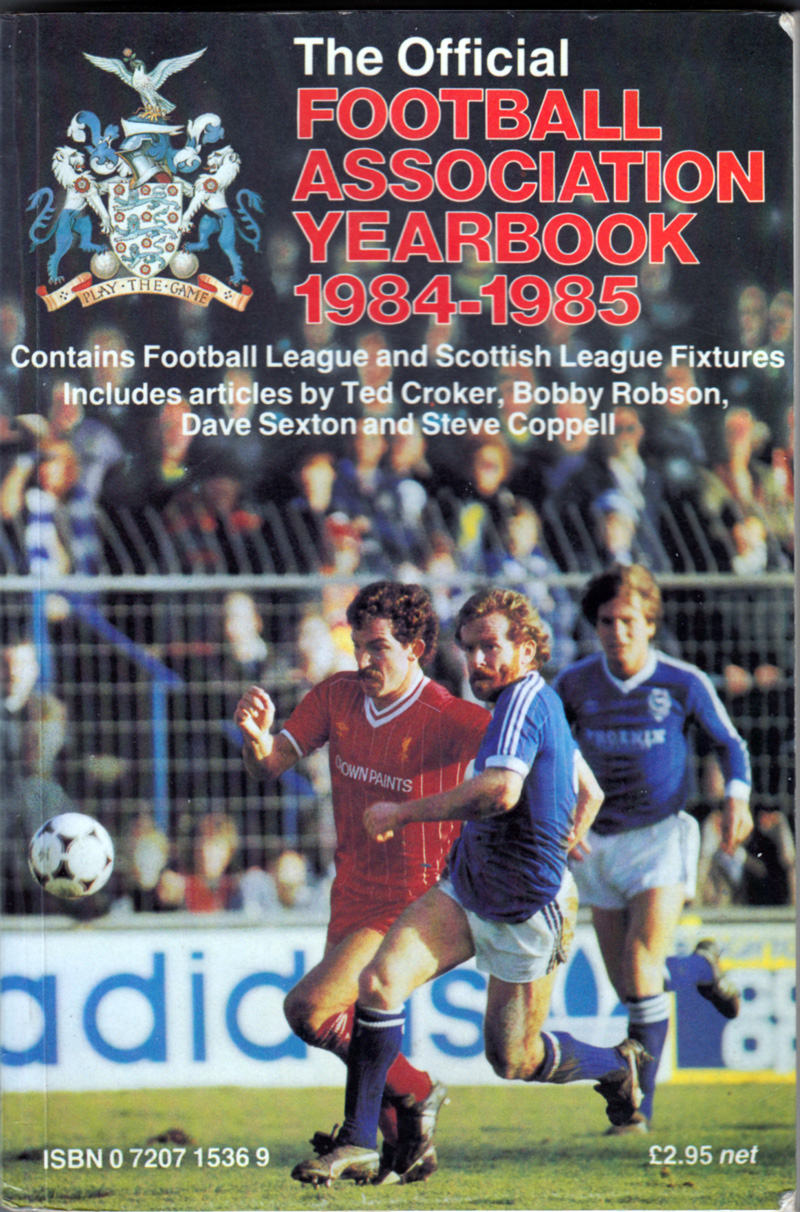
A great image from the game can be found on the Football Association Yearbook 1984-1985, with Tony Grealish in a midfield tussle with Graeme Souness, while Steve Gatting watches on:

fayearbook

Meanwhile, Match Weekly covered the game in its feature article the following fortnight, via interviews with Gerry Ryan and Jimmy Case:

Gerry Ryan and Terry Connor celebrate after the match

Gerry Ryan and Terry Connor celebrate after the match

Seaside sensations Brighton capped a season of shocks when, for the second year in succession, they sent FA Cup favourites Liverpool spinning out of the competition.

“Match” brings you the inside stories and the best pictures from the Fourth Round stunner.

Seagulls hero Gerry Ryan came down to earth this week to re-live his FA Cup fairy tale.

Gerry set South coast Brighton on their way to yet another sensational Cup victory over Liverpool by scoring the opening – against the League champlons for the second year running.

The Irish international rocked Anfield last year with Brighton’s opener in the Fifth Round… and he repeated the trick in this season’s tie at the Goldstone Ground.

And the scourge of Liverpool admits: “It’s unbelievable. To beat the best team in Europe twice in the FA Cup is magnificent, but to score on both occasions really puts the icing on the cake for me. I*11 never forget it.

“The goal at Liverpool was a simple tap-in after some great work by Michael Robinson but it will always be special because it helped set up a victory at Anfleld •.. and not many teams achieve that•.

“My effort last week was more spectacular, although I thought the referee was going to blow for offside when Tony Grealish lobbed the ball over the heads of Mark Lawrenson and Alan Hansen.

liverpool1984v3

“Fortunately, Phil Neal had played me on so I raced towards the penalty area and struck the ball past Bruce Grobbelaer.”

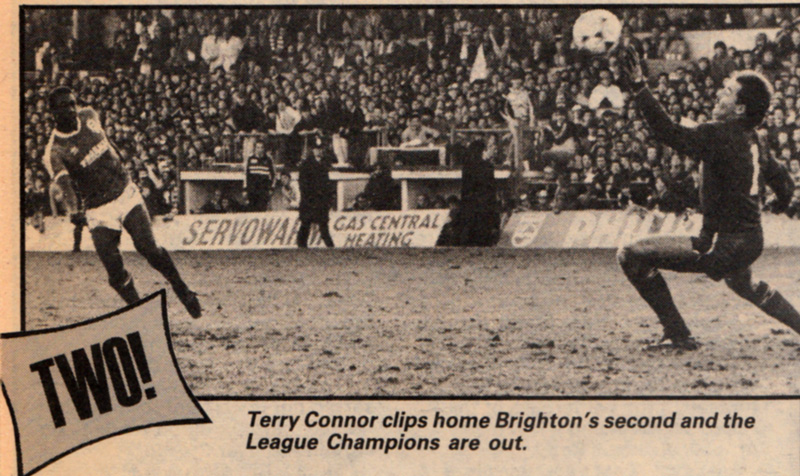
And just 60 seconds later, the Second Division club had wrapped up another sensational victory when Terry Connor put Brighton 2-0 ahead.

liverpool1984v4

“Even though that goal killed them off, the rest of the game was very nerve-racking.”

Gerry admits that the early departure of skipper Graeme Souness with a hamstring injury had a big bearing on the result. He says: “Graeme is a major influence on the side and his loss unsettled them.

“This victory was more satisfying than the one at Anfield because we deserved to win. Last season we were very lucky because we were under the cosh for most of the 90 minutes.

“Liverpool could have been over-anxious. Our win at Anfleld last season hurt their pride and they must have been really keyed up to beat us.

“Even though we’ve beaten them twice in the last year, I still regard them as the best. I thoroughly expect them to finish the season as League Champions and European Cup holders.

“Brighton have done the rest of the teams still left in the FA Cup a big favour by knocking out the favourites and Gerry says: “Anyone can win it now – even us.

The Second Division club’s win has once again got the South coast fans buzzing and dreaming of s dramatic return to Wembley, where they were beaten last season 4-0 by Manchester United in a replay.

‘There aren’t many quality teams left in the Cup now and we must fancy our chances because we’ve got players here who can rise to the big occasion; “But I’m afraid to think about the prospect of returning to Wembley at this early stage,” says Gerry, who joined Brighton from Derby for £80,000.

“Before dreaming of another Wembley visit, we’ve got a few more games to play and Watford are going to be really tough in the next round.”

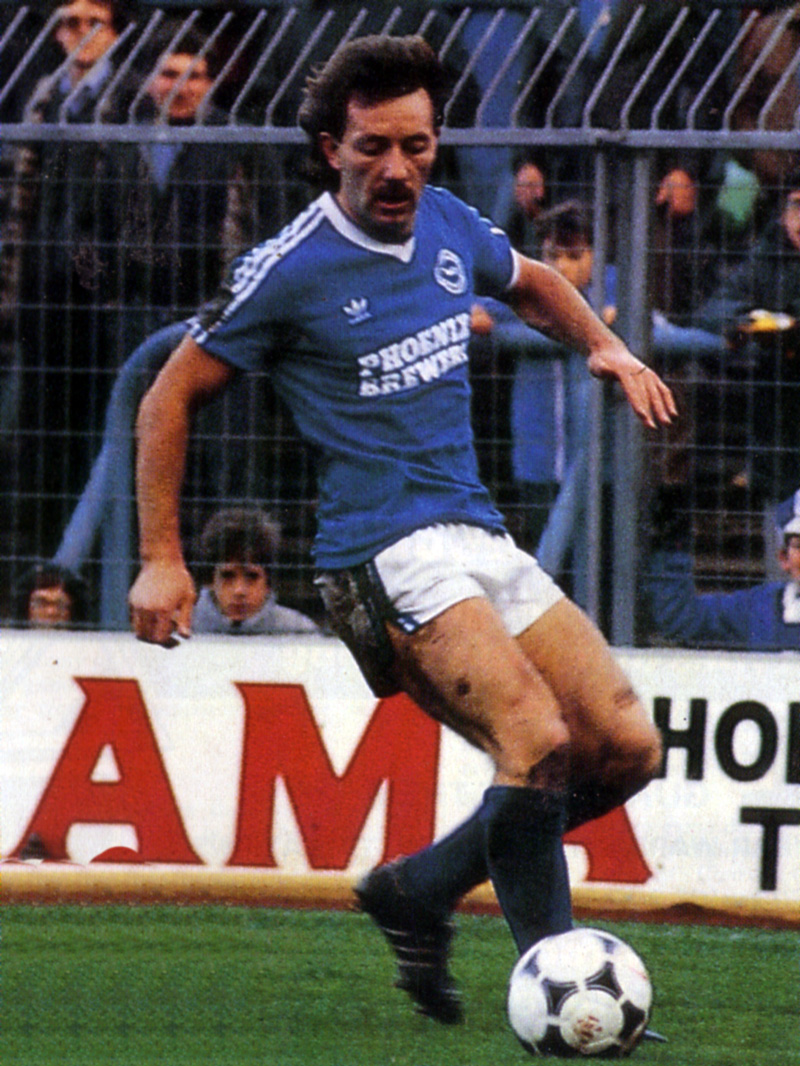
jimmycase84-85

‘It’s anyone’s Cup,’ says Jimmy Case
Jimmy Case believes Brighton can take Liverpool’s place in the FA Cup Final … so taking the glorious ride down Wembley Way for the second year in succession.

Explains Jimmy: “Most people would have forecast Liverpool as one of the finalists.

“Having beaten them again, we SHOULD go all the way. No disrespects to our next opponents Watford but that’s the feeling at the club now.

“Looking at the teams left in the competition, it’s anyone’s Cup.” Jimmy was speaking just 24 hours after Brighton’s latest shock victory over the League champions and he told ‘Match’: “It still hasn’t sunk in. I just can’t believe it.

“This has to be an even greater achievement than when we knocked them out of the Cup last season.

“People might have thought us lucky last time but this proved it was no fluke.

“The lads were really keyed-up and it was a really great all-round team performance.

“Against a team like Liverpool, every player has to be on top form and, on this occasion, everyone played their part.

“It was certainly one of our best performances of the season.

“The defence kept Ian Rush and Michael Robinson pretty quiet and, in goal, Joe Corrigan made some vital saves at crucial times.

“The midfield was biting all the time and wide men Neil Smillie and Steve Penney were both on song.

“It seemed to stun Liverpool when we scored our second goal but they slowly started coming back into the game.

“They put on a lot of pressure in the last quarter of an hour but I would say they began the game a little apprehensively.” Jimmy could only watch from the sidelines as he served out a one-match suspension and, as the celebrations died down, he admitted his problem now could be getting back in the team …

“I’m still in the Cup but, after that last performance, who knows if I’ll be selected for the next tie?”

Tagged , ,

Extended video highlights – Brighton 4-0 Manchester City (FA Cup, 1983)

manchestercity

In January 1983, Brighton followed on from their FA Cup replay victory at Newcastle by demolishing Manchester City 4-0 at the Goldstone in the Fourth Round. In his autobiography ‘Big Joe’, Joe Corrigan, the City keeper, revealed unrest within the City camp prior to the tie:

In the previous road we’d seen off Sunderland after a replay but a Sunday morning training session at Maine Road prior to the game showed how badly things had deteriorated at the club and should have made events after the game at Brighton not quite so surprising. As we trained, Nicky Reid and John Bond had an argument that threatened to get out of hand, and that resulted in a nasty half hour of action with some players intent on hurting one another.

Brighton hammered us 4-0 in the cup tie. It was a dreadful day and an awful, disjointed performance by all of us. As we left the pitch Alex Williams walked over to console me and I said, ‘It’s yours now, kid. I won’t be here for much longer.’

‘What do you mean by that?’ he asked. I explained that the cup exit would mean cost-cutting exercises and I’d be one of them. I assured him I would be on my way before long and, within three months, that’s exactly what happened.

It was all smiles from the Brighton perspective, however. Here’s how John Vinicombe reported the match in the Evening Argus at the time:

The 217th FA Cup-tie in Albion’s 82-year-old history will long be remembered for the majestic manner in which Manchester City were despatched.

Thus an equally famous occasion 58 years ago at the Goldstone was averaged. Then, in a third-round tie, Third Division Albion were crushed 5-1 after previously performing the prodigious feat of knocking out Everton.

No doubt the degree of satisfaction warmed the cockles of any old-timer’s heart to see the record put straight, for it ever a side were comprehensively beaten it was Manchester City.

I doubt if John Bond, who departed in utter misery, contemplated for one moment the total destruction of his team.

On the day, i thought, they sold him short and, seeing no way past Albion, an air of surrender was discernible.

There was the misfortune of losing skipper Paul Power with damaged knee ligaments at the half-hour after a tackle with the uncompromising Chris Ramsey, but that alone could not explain City’s astonishing collapse.

Peter Bodak, the sub, caused one or two problems with his crosses, but at no time were Albion in danger after taking such a firm grip.

Had a goal at 57 minutes been allowed, then Mike Robinson would have scored a hat-trick and Albion finished even more convincing than 4-0 winners.

Surprised
The revelation was Steve Gatting, playing only the third game of his League career at left-back.

I think Gatting had two games at No.3 in his first season at Arsenal. Having been omitted lately, and then moved to say that he didn’t fancy staying unless he is in the team, maybe Gatting will have a re-think. Apart from Pearce, and among defenders, Gatting is the only natural left-sided player in the squad, and I must say he surprised me with the quality of his play.

In my book, the star was Jimmy Case on a day when there were so many stellar performances. Since Melia took over and got on the Merseyspeak wavelength with Case, his involvement has become greater with every match.

He ripped the heart out of City’s experienced midfield together with Tony Grealish. At training, Grealish is the first player the five-a-side skippers automatically ask for.

To be so highly esteemed by colleagues has to be earned, and never let it be forgotten that it was Grealish who set such a sterling example by his leadership at Newcastle.

He won ball after ball against City, and exhibited fine control in setting up the third goal for Robinson with just over 20 minutes remaining.

By then City were skint, and Robinson finished them off rather as a matador puts the bull out of its misery.

The eighth-minute opener by Case that deflected off Kevin Reeves was a piece of overdue luck and Neil Smillie’s continuing improvement was signalled by his first goal for the club before the break.

foster83

Worried
Just before, Steve Foster suffered a painful dead leg. At first, there were fears it might be a pulled hamstring, but it was nonetheless worrying. It might have slowed him a pace or two, but his attitude remained unchanged.

City vainly tried to unsettle him: an elbow in the eye was the prime example, but nothing worried Foster, and certainly nothing diverted Gary Stevens from that much admired elegance that made City’s England candidate, Tommy Caton, look so average.

As the physical element was introduced by despairing City, so they derived no change from Ramsey.

Gordon Smith used his incisive eye for an opening to set up a rich assortment of passes, while Andy Ritchie and Robinson created havoc in the box.

The one dodgy moment came early into the second half when Steve Kinsey hit a post. Had it gone in, Albion’s lead would have been cut to 2-1.

When it did not, the white flags were fluttering, and it might have been appropriate had Bond tossed in the towel as well.

Albion: Moseley, Ramsey, Gatting, Grealish, Foster, Stevens, Case, Ritchie, Robinson, Smith, Smillie. Sub: Ryan.

Manchester City: Corgan, Ranson, Bond, Reid, Power, Caton, Tueart, Reeves, Cross, Kinsey. Sub: Bodak for Power (injured, 31 minutes)

Well, John Bond did toss in the towel, resigning after this capitulation by the Seagulls.

And now, for the first time on YouTube, here are 20 minutes of highlights from this match to savour:

Tagged , , , , ,