Category Archives: Photo Opportunities

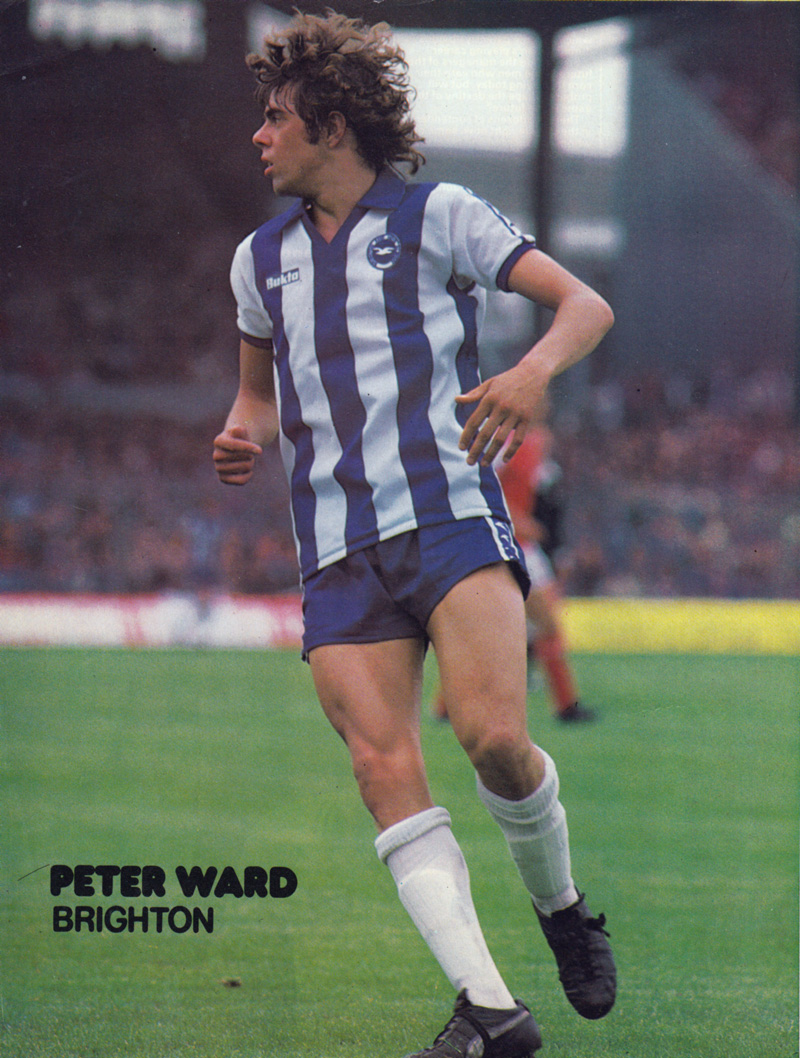
New horizons for Peter Ward

soccerprince1

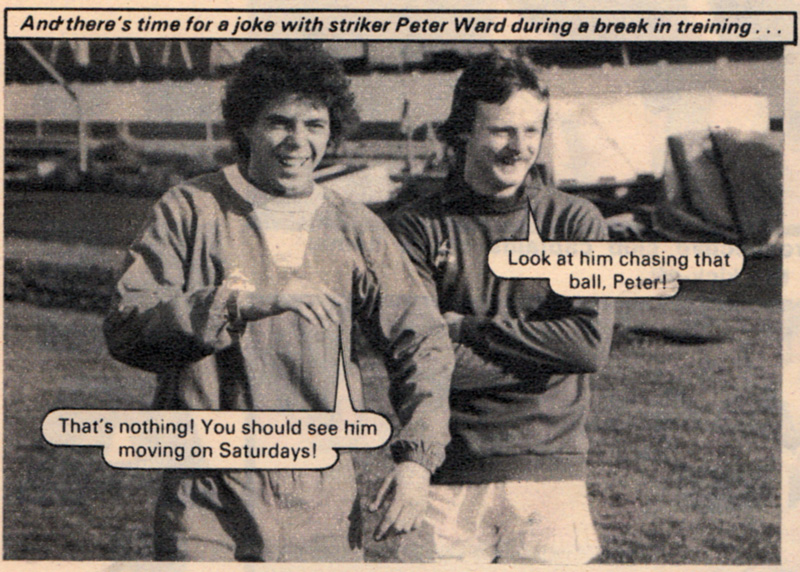
With the 1979/80 season approaching, Peter Ward was on the transfer list. However, as he told Tony Norman, he withdrew his request and signed a two-year contract:

“I’d been unsettled and I hadn’t been seeing eye-to-eye with the manager,” he explained, “so I wanted to move. I couldn’t tell you whether anyone came in for me or not.

“But as our first game in Division One got closer, I realised just how much I wanted to play. I was training hard and playing well. I wanted to be there. I like Brighton. There’s a good atmosphere between the players, and the club’s ambitious. So, I decided to stay and prove myself in the First Division with them.” Alan Mullery was happy to welcome Peter back into his tong-term planning.

“They seem to let you play more at this level, until you get into the final third of the field. Then it’s very tight. You can’t dawdle on the ball, or it’ll be whipped away from you. The game’s much quicker. You’ve got to sharpen up mentally, as well as physically.There’s a lot more to think about.

“But, at the same time, I think it’s important to carry on playing your natural game. I’ve got the freedom to do that at Brighton. I know I’m a bit greedy sometimes. The lads will have a moan and I’ll give them a little smile. There are times when I could lay off an easy ball, but I’ll try to go on my own, or have a shot.” But surely his willingness to try the unexpected has been rewarded with some spectacular goals?

“Yes,” he grinned, “it’s alright when it comes off. But there are plenty of other times ~when you’re left looking a bit silly!” Ward’s early season form was patchy. But it was clear he relished the challenge of playing in the First Division.

“It’s a thrill going to play at big stadiums like Anfield and Old Trafford. When I was a kid, I used to travel up to watch United, from Derby. That was in the days of Law, Best and Charlton. It’s got a nice ring to it, hasn’t it? They were my heroes. When they played, the atmosphere was tremendous.

“Now, I love playing in front of big crowds. It gees you up. I remember playing a night match at Oldham last year. There were about 4,000 there. We won, but it was depressing playing to empty terraces. I love the big match atmosphere. Driving through the crowds, then running out onto the pitch before the game. That’s a great feeling.”

Like the street kids around the Goldstone Ground, Ward scored a thousand Cup Final goals in his childhood fantasies. But there were times when playing in the First Division seemed as likely as a relaxing stroll on the Moon.

“I was always one of the smallest kids at school. When the selectors for Derby schoolboys used to come along, they’d pick about six lads for the trials. We had a good side and I was always one of the top scorers, but I never got picked.”

How did he feel about that? “It didn’t bother me.”

But surely it hurt his pride?

“Yes, I suppose it did really. I’d see the other lads going off for their trials and I’d think, ‘bloody hell…’ It made me play better. In those days, you had to be big and strong to get in the Derby side.”

Ward’s size, or rather the lack of it, weighed heavily in the minds of those around him.

“I remember going to see the headmaster, just before I left school. He asked me what I wanted to be. I Said a professional footballer.

He told me not to be so stupid. I was too small.”

Suitably filled with confidence, Ward left school at the age of 15, and joined Rolls Royce on a four-year engineering apprenticeship.

“I gave up my dreams of making it as a player. I thought that was it. I was playing for Burton Albion in the Southern League and working different shifts at the factory. Clocking in and clocking out. Sometimes I’d be up at six in the morning to get to work on time. I was stuck in the factory all day, doing a monotonous job. I never want to do that again. It drove me crackers.”

Those were dark, uninspiring days, but in May, 1975, Peter Taylor heard of Ward’s potential and decided to give the youngster his chance at Brighton. The results were spectacular. Ward scored 32 League goals in his first full season, as Brighton won promotion. He was again leading goalscorer in the two Second Division campaigns.

“I got off to a good start, scoring in 50 seconds on my debut at Hereford. The cameras were there and we stopped off at a hotel in London to see the game, on the way home. It’s a peculiar feeling seeing yourself on TV for the first time. I was sitting there thinking, ‘I don’t look like that, do I?’ ” With his stylish play and good looks, Ward soon found himself cradled lovingly in the arm of the publicity machine. He was a star, eagerly making up for lost time.

In September 1977, he made his international debut for England Under-21’s, against Norway.

“That’s one of my happiest memories. The match was played at Brighton and that might have swayed my selection, but I scored a hat-trick and really enjoyed the game. There were some good players in the side. Up front, we had Barnes and Cunningham on the wings, with John Deehan and myself in the middle.

“A month later, I was looking forward to playing for the Under-21’s again, when I was called up for the full squad. I went to Luxembourg with them. It was a great experience, but I wasn’t picked to play. And that was it. I haven’t got a look-in since.” Another disappointment, but Ward remains typically philosophical about his international future.

“I’ve just got to do it for Brighton in the First Division. If I’m playing well and doing my job, which is scoring a few goals, I might get the chance of a call up.

“I’m sure the side can hold its own this year. The club’s destined to go places. They’ve got the money and the resources to do well. From my own point of view, I’m enjoying playing up front with Teddy Maybank now. He’s taken a lot of weight off me. He’s a skilful player, much better than a lot of people think.” This season is providing Ward with his greatest test to date, but there’s nothing new about his main motivating force.

“I want to score goals. That’s still the biggest thrill for me. When I don’t score, I feel a bit flat, even when we’ve won the game. I want to score every week. I’m sure Ted’s the same. You couldn’t be a striker if you didn’t think that way. But when it comes right down to it, I.’m lucky. I still go out and enjoy playing. We’re in a short-lived profession. I want to make the most of it.”

With half an eye on the future, Ward has enrolled for a small business management course especially designed to help players shape fresh careers when their playing days over. Not for him the factory. Not again.
peterward79

Tagged ,

Dream signing… children’s TV star Tommy Boyd joins the Seagulls!

magpie2

Rescued from Shoot! magazine in 1979/80:

“This is a dream come true,” said Tommy Boyd, as he stood proudly on the Goldstone pitch, wearing the blue and white shirt of his favourite club, Brighton & Hove Albion. “The number of times I’ve stood on those terraces, wondering what it would be like to be out here. Well, now I know. It’s a great feeling!”

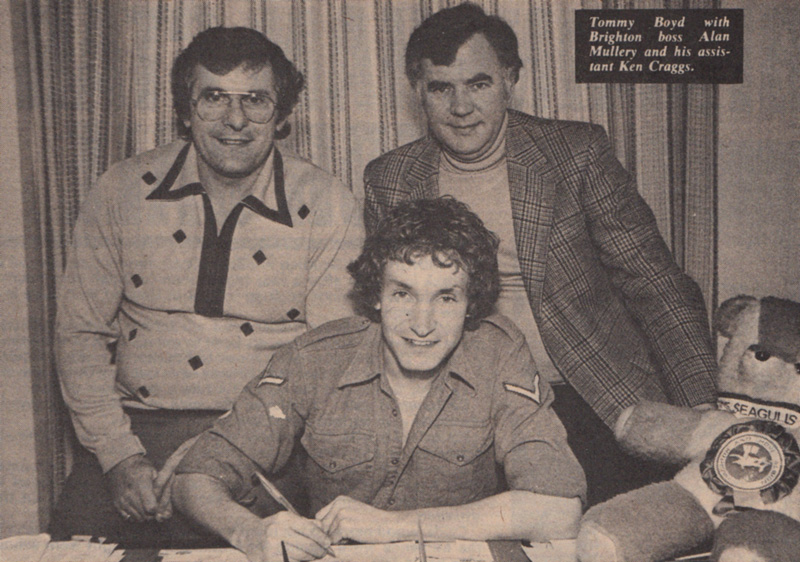
Thanks to the hospitality of Alan Mullery and his team, SHOOT was able to give the Magpie TV star a super day with the South Coast Seagulls.

His first call was at Alan Mullery’s office, where he also met assistant-manager, Ken Craggs.

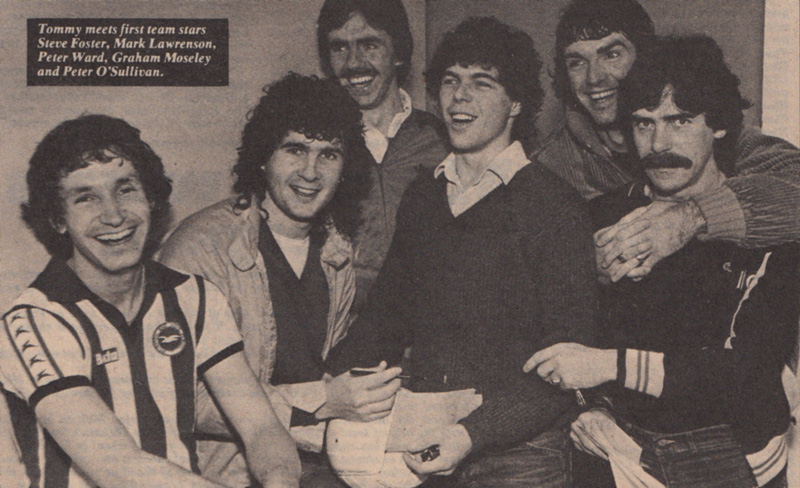
After ‘signing on’ for The Seagulls, Tommy met the rest of the first team squad. Star defenders, John Gregory and Steve Foster, decided to check on Tommy’s fitness with a workout in the gym and afterwards he was happy to enjoy a relaxing cup of tea with skipper, Brian Horton.

“The thing I liked most was the happy atmosphere I found at the club,” Tommy said, later. “I think a lot of that stems from Alan Mullery. He’s a man with an open, friendly personality. He loves to laugh, but more than anything, he loves the game.

“I really enjoyed meeting him. He’s always been a hero of mine. He was a great player. Do you remember the way he marked Pele out of the game in Mexico, in 1970? I defy anyone to name a player who could have done a better job on the day. Mullery was so versatile. He could do the lot.

“Now, it’s great to see he’s carried his two best qualities, that’s skill at the job and a natural enthusiasm, into the world of management. I’m sure he loves every minute of what he’s doing.” Another Goldstone personality Tommy rates very highly is Brian Horton.

“Brian’s always had his critics and he has proved them wrong. I saw him make his debut for the club, when he was bought for peanuts from Port Vale. He impressed me right away. He’s got all the qualities you Io0k for in a captain.

“When Brighton won promotion from the Third, some critics wondared hew Brian would get on in the Second Division. Well, he was a driving force there and it was the same story last season. He’s a fine player.”

Tommy started supporting Brighton when he was just atoddler. During his student days, at Sussex Umversity, he loved to spend his Saturday afternoons relaxing with The Seagulls.

“The funniest aftemoon I’ve ever spent at the Goldstone was during our college Rag Week,” he chuckled. “We did some collecting on the terraces for charity, before a match. My friend was singing and playing the guitar and I was going round with the tin. Most of the fans were happy to give us money … as long as we promised to go away and annoy someone else!”

Like most of us, Tommy dreamed of becoming a professional footballer, when he was at school. “The closest I’ve come was a charity match last summer, when I was marking the great Bobby Charlton. I thought I was fit, but even when he was dribbling the ball, Bobby could leave me standing.

“So, I’ll never make a top player, But SHOOT made one dream come true for me. I’ll really feel at home the next time I go to the Goldstone. When I’m cheering the players from the terraces, I’ll be able to use their first names!”

magpie3

Tagged , , ,

Brighton have got it right this time!

Brighton are on their way back to the First Division – and when they get there this time, they mean to stay there.

So says journalist Tony Pullein, writing for ‘Football Monthly’, the world’s greatest soccer magazine, according to its strap line, in February 1986. He was convinced of this view after speaking with Albion chairman Bryan Bedson and manager Chris Cattlin, as the season entered spring and the Sussex club dreamed of promotion.

Bedson thinks the future's so bright he'll be wearing shades

Bedson thinks the future’s so bright he’ll be wearing shades

“All our planning over the past couple of years has been geared to putting Brighton into the First Division and establishing the club at that level,” explained chairman Bryan Bedson.

“When the club previously reached the top, they did it with quite a few expensive signings. But those players grew old and were worth very little in the transfer market.That was one of the reasons why the club was so heavily in debt. When I took over, we had 32 players on our books, many of them being paid far too much.I can tell you that I took over enormous debts. We had to take care of these and now, they are being carried by the directors. We had to trim the staff and get the housekeeping right. We have spent a lot of energy on our lottery scheme, which is now one of the most successful in the country. We have new completely restructured the club financially and are very optimistic for the future.”

Brighton have a good chance of winning promotion this season but, should they miss, there is little doubt they will make it next term.

Visiting the Goldstone Ground recently, I could sense the feeling of optimism around the place. With five wins in their previous six games including that fine 2-0 F.A. Cup success at Newcastle – the feeling was that they have got it right this time.

Smudge, with Chris Cattlin

Smudge, with Chris Cattlin

“The pleasing thing for me,” smiled manager Chris Cattlin, “is that we have won four of our last five away games.” That was no surprise to Brighton’s travelling supporters, who have become accustomed to seeing their side attack the opposition both at home and away.

“My policy is to go at the opposition right from the start,” explained Cattlin.”I don’t care whether we are home or away. Our tactics are the same. The important thing for us all is that the game is made entertaining. We have to put the game before individual club ambitions. Football has had many problems. One of the reasons is that it has not been marketed in the right way. We have got to make people want to come to the ground to see a good game. There is too much talk about sponsors. As far as I’m concerned, the only sponsors I want to see are fans pouring in through our turnstiles. That’s what the professional game is all about,” added Cattlin.

Certainly, there has been a tremendous transformation at the Goldstone Ground since Cattlin took over as manager in November, 1983. The Seagulls were third from bottom of the Second Division at the time. Though few people realised it, the club was on the verge of closure.

“That’s right,” shrugged Cattlin. “If we had gone down again, we might have become another Swansea or Bristol City. It was as serious as that.” “Brighton were saddled with too many old players, many earning far too much money for what they were contributing. I sold an old team and have bought a new team of my own. I had to pick them up from the lower divisions and from reserve teams. But I chose players with the right attitude and players who would be proud to play for Brighton.

“I set myself two targets. One was to ensure the club survived. The other was to set up a youth policy that would provide players for the future.”

The latter will probably prove to be the most important contribution made by Brighton’s live-wire manager in the long term. Few local-born players have made the first-team in modern times and the whole of the current first-team squad came from other clubs.

George Petchey was brought in as youth development officer to set the scheme in motion and is still in charge of recruitment, though he is also coach to the first-team. John Shepherd, the former Millwall, Brighton and Gillingham player, runs the yeuth team on a part-time basis.

“Of course, it will be some time before we see real results,” says Cattlin. “But I am hopeful that we shall find many first-team players from this source in the future.”

At the moment, Cattlin still has to find his players elsewhere. Last summer, he sold Nell Smillie to Watford for £ 110,000 and bought Justin Fashanu from Notts County for a similar fee.

mortimer

“I also signed my old Coventry friend Dennis Mortimer on a free transfer. He is such a fine player with the right attitude,” said the Seagulls boss.

Ray Houghton - one that got away

Ray Houghton – one that got away

“I got Dean Saunders from Swansea on a free, so my summer dealings cost the club nothing. I would dearly have liked to have signed John Gregory from Q.P.R. and Fulham’s Ray Houghton. But the fact was, we couldn’t afford them,” shrugged Cattlin.

“I was disappointed because, at the moment, I am £300,000 in credit on my transfer transactions. But, besides being a football manager, I am also a businessman and I accept that the board has had to make cuts – just like the Government!”

Cattlin spent his distinguished playing career With Burnley, Huddersfield, Coventry and Brighton. A leftback, he also won England Under-23 honours. When he retired in 1979, he left the club to go into business locally. He later returned to the Goldstone Ground as coach and in November, 1983, he became manager.

“It has been difficult at times,” he admits. “In the old days when the club went through a lowspell, they would spend £400,000 on a new player. I can’t do that. This season, we have been crippled by injuries. Strikers Gerry Ryan and Terry Conner both broke a leg. Fashanu had a knee operation, Steve Gatting a pelvic injury. Chris Hutchings broke an arm and now he’s out with a cartilage injury. In the circumstances, it’s not suprising we received a few set-backs during the early weeks.”

At the turn of the year, Brighton were fielding a settled team for the first time. And it showed in results.

Of the game generally, Cattlin feels football needs to take a good look at itself.

“We have got to market the game and we needed TV to help. We’ve got to run our clubs on a businesslike basis and, most important of all, we have to examine the product we are selling football. I’m absolutely convinced that football has a great future. We have to stop being too cautious. Here at Brighton, we are all willing to have a go. To take chances. All right, we shall make mistakes. But the game is about winning and that means you have to attack.”

The Seagulls’ boss is confident his side can succeed this season. “In the Second Division, we want to win the Championship,” he emphasises. “We enter the F.A. Cup because we want to win it. We are going for both this season.”

Cattlin concedes that Portsmouth and Norwich seem likely to take two of the promotion places. “It looks that way at the moment, but there’s a long way to go. I’m proud of my team. They are all playing for Brighton. Playing to win every game. Of course we can win promotion.”

Will the current side be good enough to hold its place if it does go up this year? Cattlin is realistic: “I think we would have to spend a bit to strengthen it. The youth policy has not been going long enough yet to provide First Division players. But if you look at the First Division, there are about seven really outstanding clubs. I’m sure we can survive among the others when we first go up. It’s really a question of organisation, of using your assets to the best advantage.”

It seems clear that when Brighton do regain their First Division status, they will not again have to live on a clay-today basis, hoping for survival.

Now, they know their future is in good hands.

1986

In the end, Brighton did not achieve promotion and Cattlin got the sack in the summer of 1986.

Tagged , ,

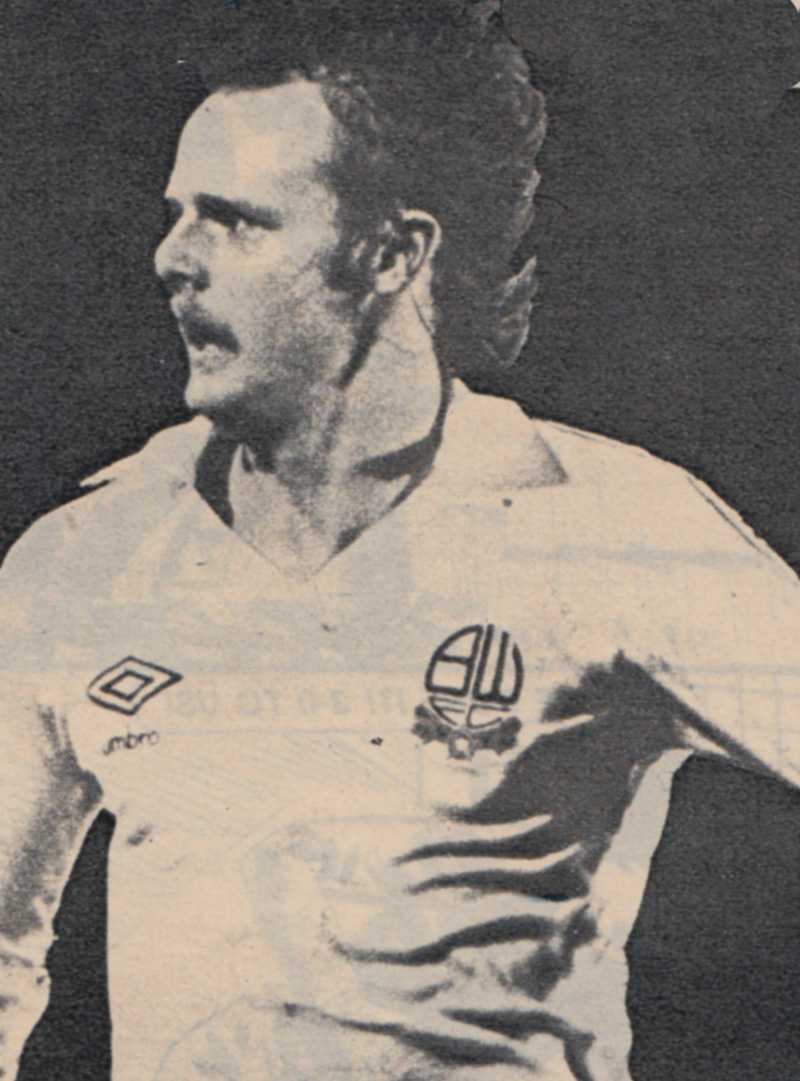
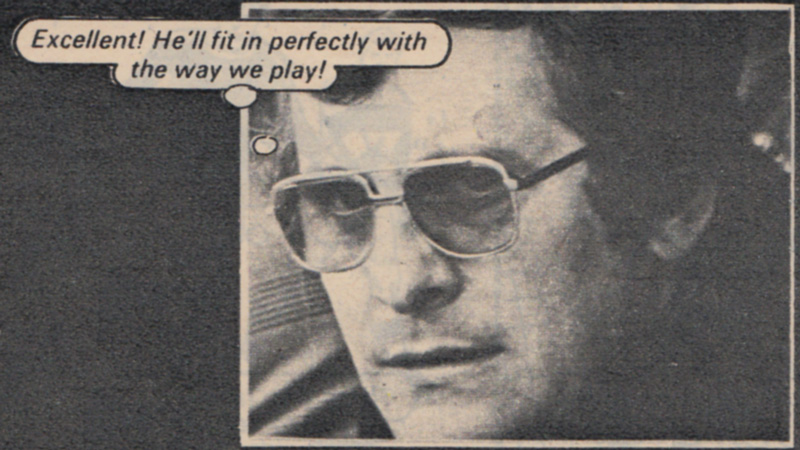
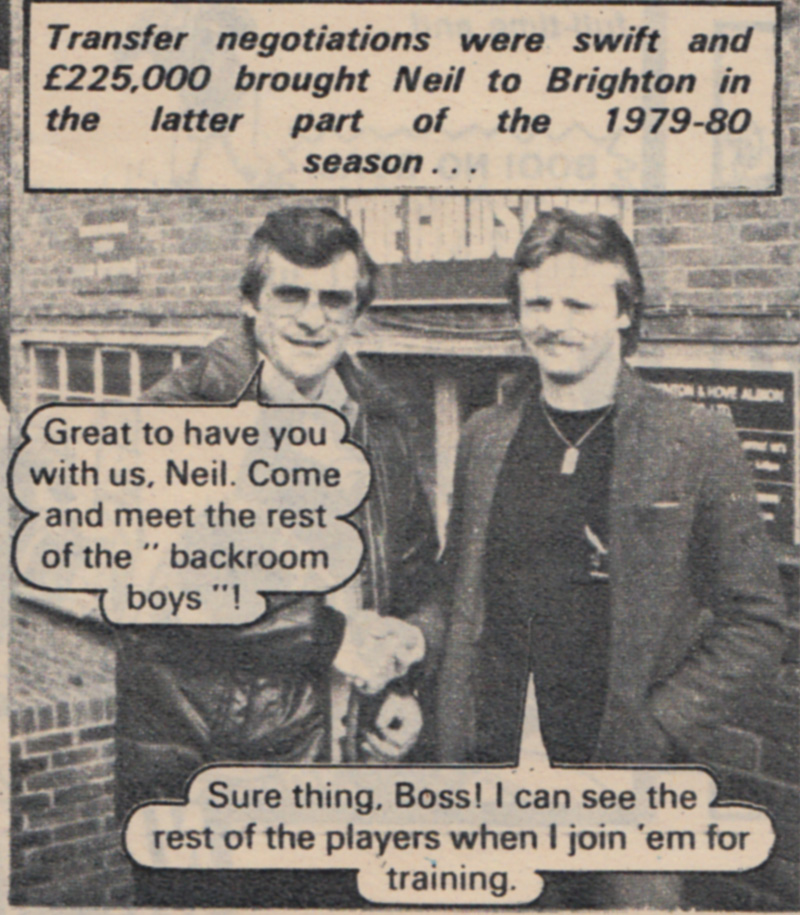
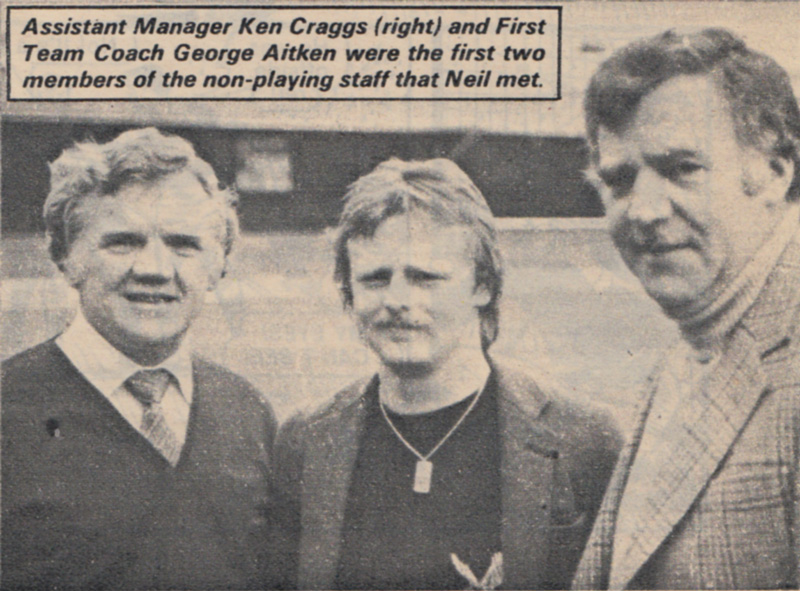
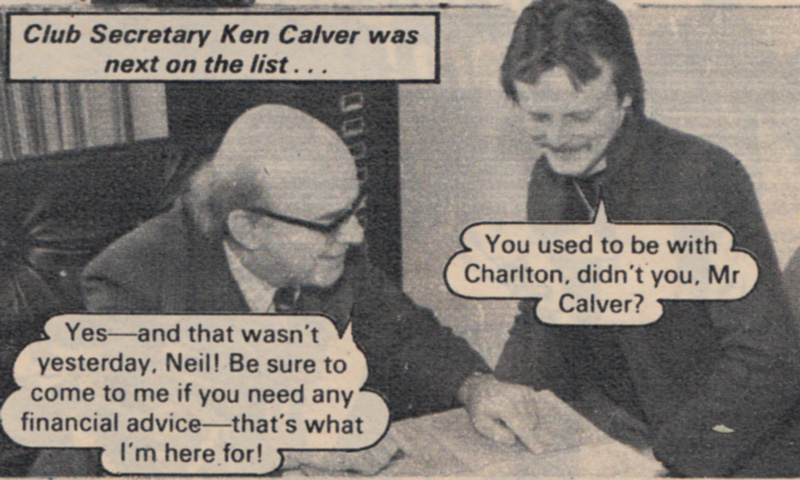
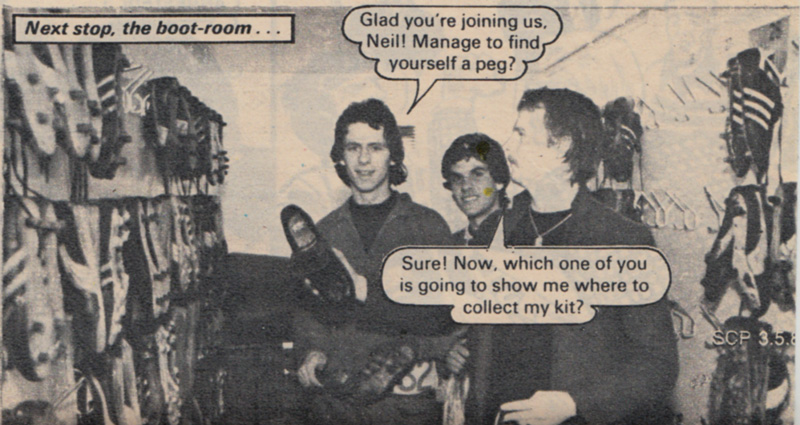
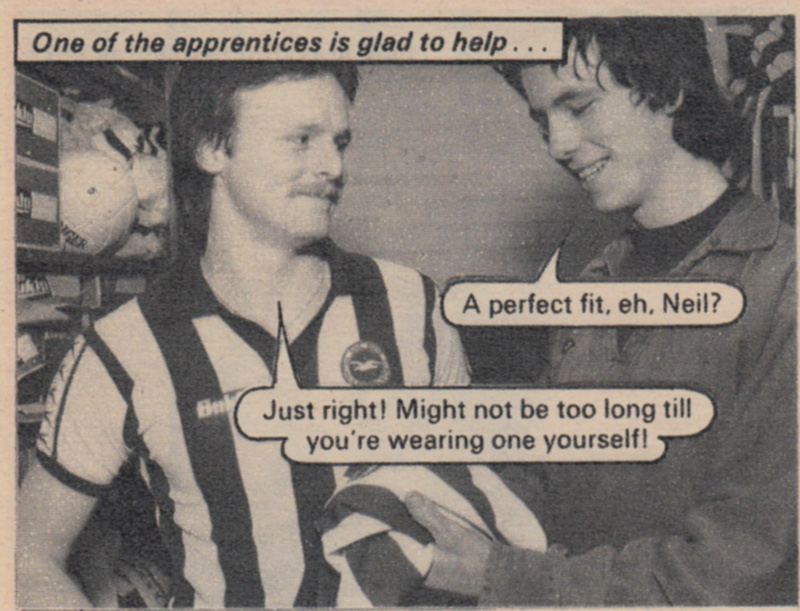
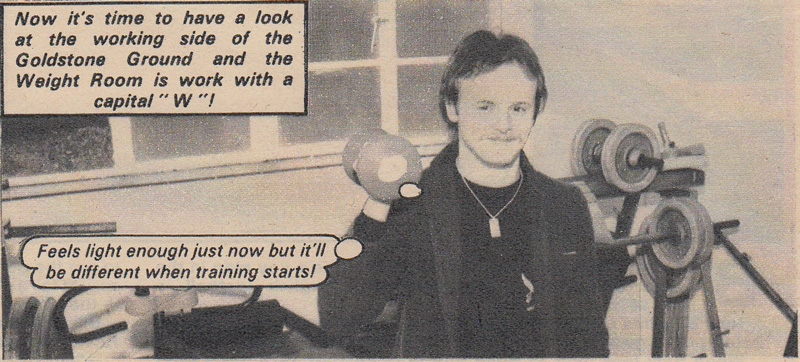
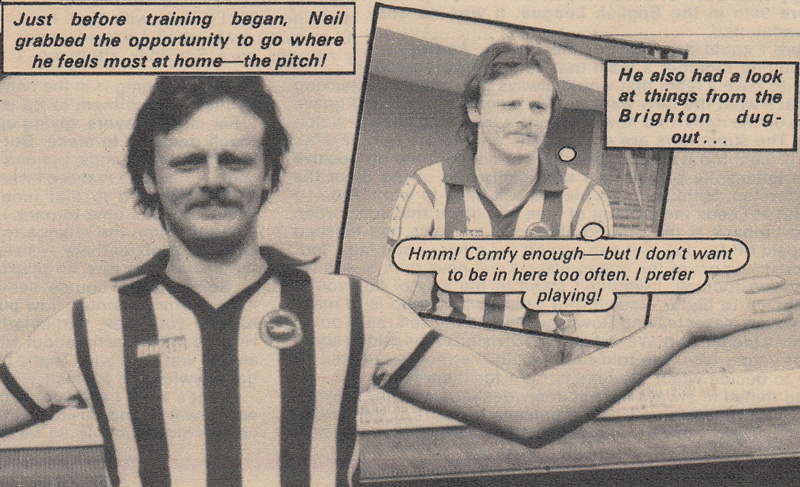
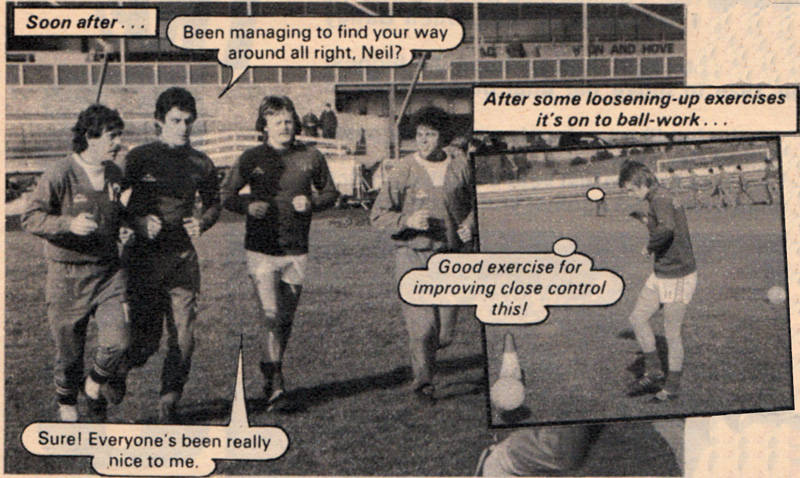
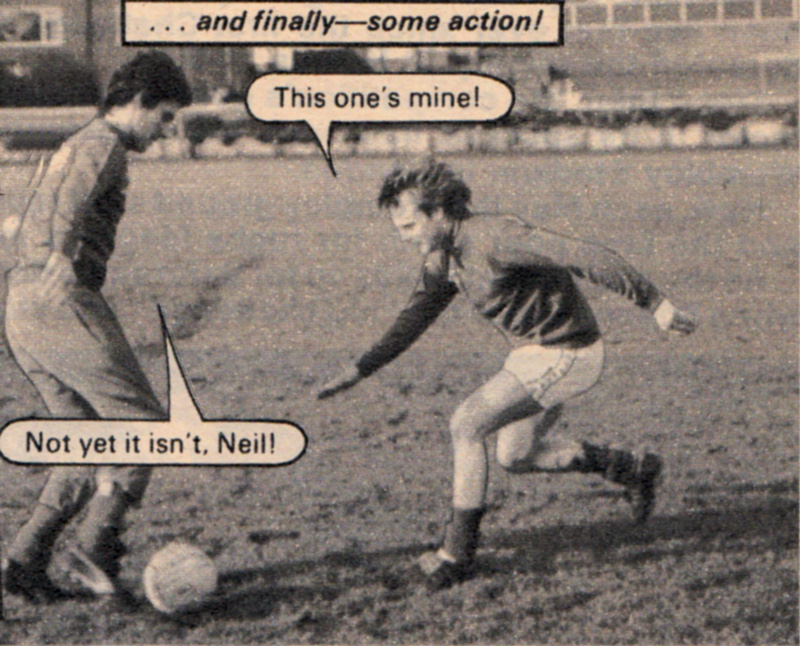
Photo story of Neil McNab’s transfer from Bolton to Brighton in 1980

From the pages of Scoop magazine in 1979/80:

mcbabcomic6

mcbabcomic5

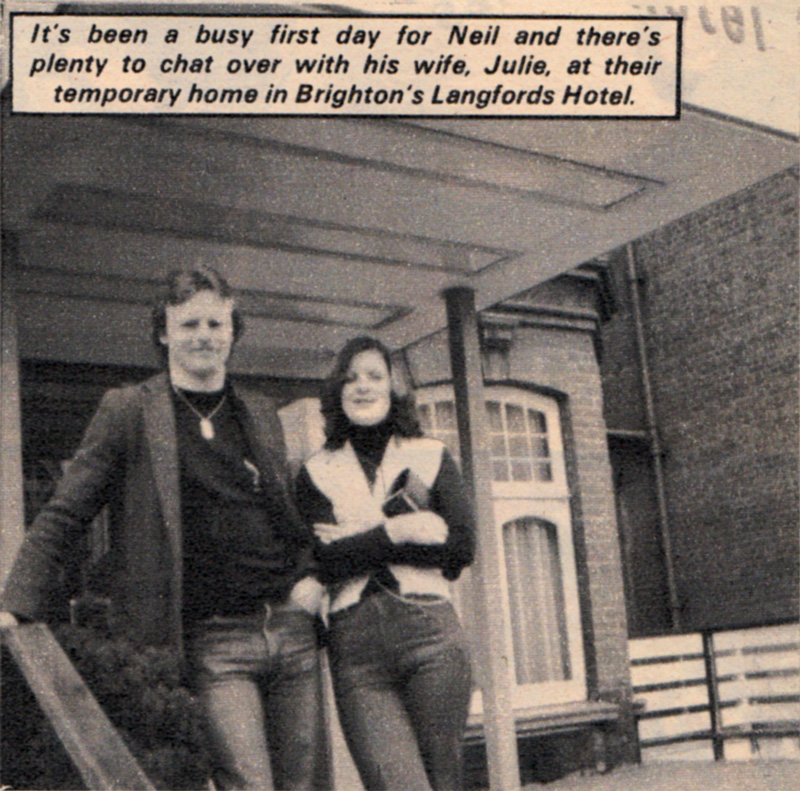
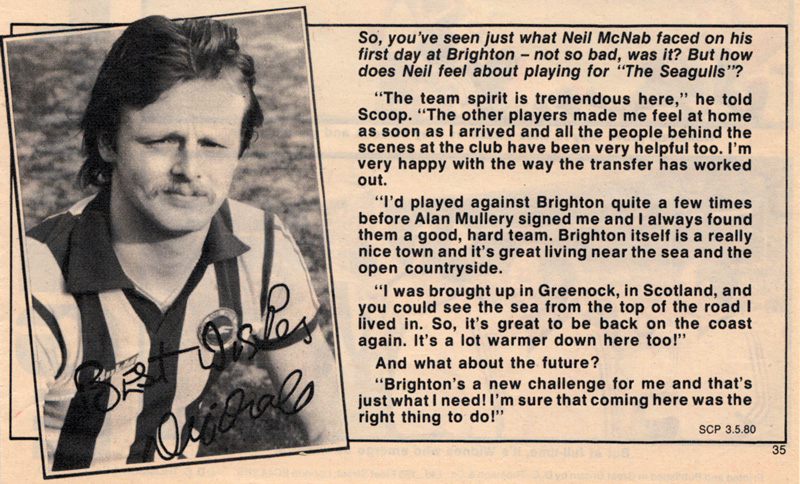
Ever wondered how a newly-transferred player faces his first day at a new club? Scoop takes you behind the scenes.

In the fast-flowing action of an English First Division match, players on the field have no time for anything but the game they’re involved in. Sometimes, however, from a section of the crowd, calculating eyes will be watching the every movement of one player. Such was the case with Bolton’s Neil McNab who, having unknowingly displayed his football skills under the watchful gaze of Alan Mullery, was about to become the new boy at Brighton.

mcbabcomica

mcbabcomicb

mcbabcomicc

mcbabcomicd

mcnabcomice

mcnabcomicf

mcnabcomicg

mcnabcomich

mcnabcomici

mcnabcomicj

mcnabcomick

mcnabcomicl

mcnabcomicm

mcnabcomic4

mcnabcomicn

mcnabcomico

Tagged

King Connor the Younger

terryconnor86

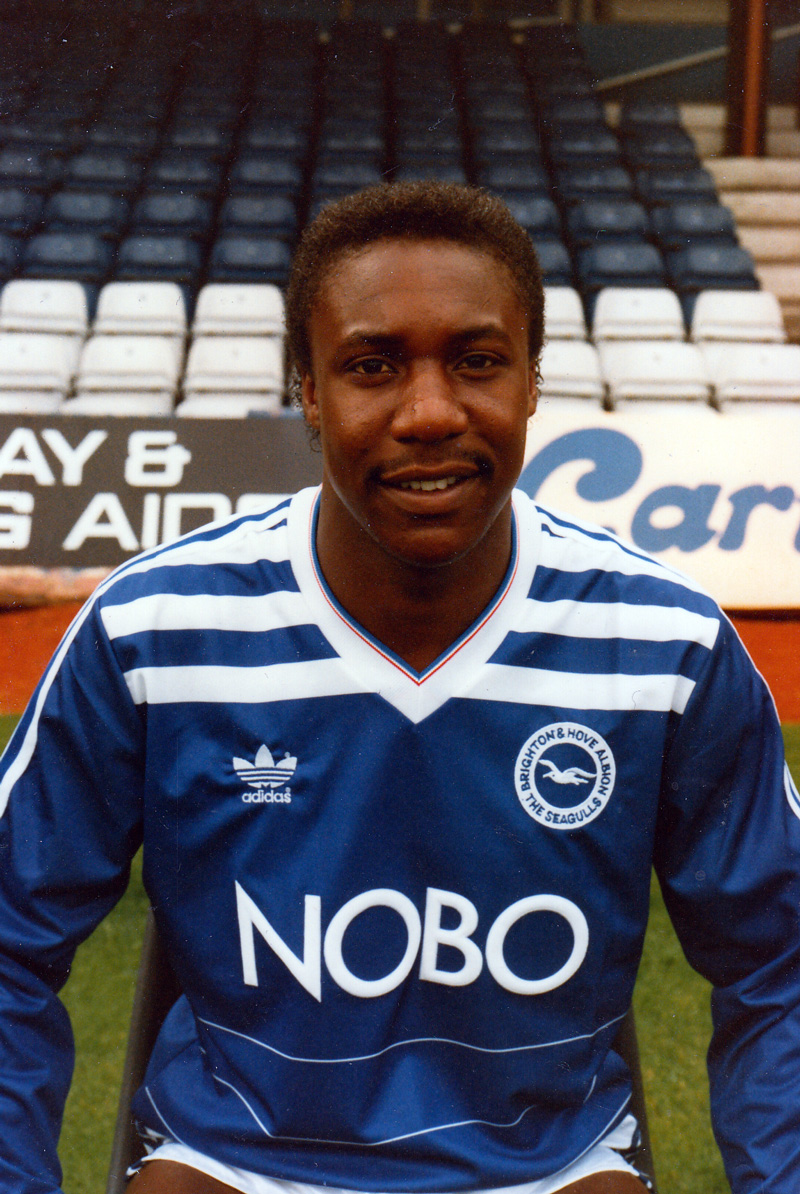
In November 1986, Terry Connor was selected as an over-age player for England Under-21s, and scored an excellent goal in the 1-1 draw with Yugoslavia in Peterborough. That month, the powerful centre-forward was interviewed in Shoot! magazine:

Brighton’s new England Under-21 cap Terry Connor – an over age player – is horrified at the thought of being called a “veteran”.

“Don’t call me that,” he pleads. “I’m one of the young ones.”

A veteran he isn’t, but it’s a common mistake to assume that he might be older than 24 – his birthday coming just two days before the European championship game with Yugoslavia.

At least one club visiting the Goldstone Ground this season thought he was probably a few years older.

Explained manager Alan Mullery: “You tend to forget that Terry was only 17 when he made his debut for Leeds United:’ “I got such an early break at Leeds because the club were rebuilding their side after those days when they were riding high,” says Connor.

“Eddie Gray was still in the team when I came in. He was the model professional. It was terrific to have someone with his experience alongside you.

“It was Eddie who sold me in part exchange for Andy Ritchie. It turned out to be a good move for both of us. Andy is still scoring at Leeds and I’m happy at Brighton.

“I would like to get 2O goals this season – that’s my target. And if we get it together we could challenge for promotion,” adds Connor.

“We played ever so well against Nottingham Forest in the Littlewoods Cup at Brighton, drawing 0-0, but then went to O1dham and were terrible.

“It’s a problem for us finding consistency. In some matches we’ve learned we just cannot rely on our football. We’ve got to battle. That’s a point Alan Mullery has driven home.”

Watching Connor it’s tempting to believe he must receive special sprint training.

But Connor doesn’t even use spikes, revealing: “A lot of players wear them to help their speed but not me.

“I train in boots. And when do you ever sprint 100 yards in a match? It’s short distance speed that’s important. Quickness off the mark is one of the most vital assets in a striker’s armoury.

“I’m delighted with my international recognition but it’s success at Brighton that’s important for all of us.”

Despite that encouraging showing against Nottingham Forest at the Goldstone, success proved elusive for the Seagulls as the season became increasingly traumatic. In an infamous stitch-up, Alan Mullery was replaced by Barry Lloyd in January 1987 and it was all downhill from there. Bearing the full force of a cost-cutting drive, the depleted Albion side plummeted down the Division Two table and were relegated.

Connor performed admirably, though, amassing a very creditable nine goals in 38 League matches for a struggling side. Unsurprisingly, he was voted ‘Player of the Season’ before joining Portsmouth, newly promoted to the First Division, in July 1987. The fee was £200,000. Not bad for an old man!

Tagged

1973: Brighton 0-4 Walton & Hersham – Albion’s worst FA Cup defeat

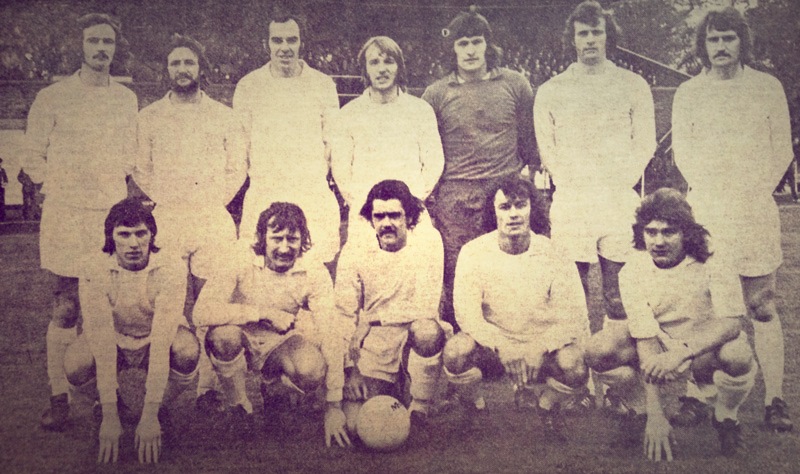
Here is the team photo of amateurs Walton and Hersham, with ex-Albion players Colin Woffinden and Dave Sargent, plus future football manager Dave Bassett in the back row. And, in the front row, if Brighton supporters were not familiar with Clive Foskett at the start of the FA Cup 1st Round replay at the Goldstone, his name would be on everyone’s lips by the end.

Back row: Colin Woffinden, Dave Sargent, Russell Perkins, Dave Bassett, Gary Bloom, David Donaldson, Chris Lambert. Front row: Billy Edwards, Dave Morris, Bob Wingate, Clive Foskett, Willie Smith.

Back row: Colin Woffinden, Dave Sargent, Russell Perkins, Dave Bassett, Gary Bloom, David Donaldson, Chris Lambert.
Front row: Billy Edwards, Dave Morris, Bob Wingate, Clive Foskett, Willie Smith.

Forty years today, the Argus carried its match report of one of the most shameful displays in the club’s history. Having got lucky in scraping a 0-0 draw in Walton, Brian Clough’s Brighton & Hove Albion contrived to lose 4-0 at home to the Isthmian League side who had won the FA Amateur Cup in 1972/73. The match was played at 1.45pm on Wednesday afternoon as the country’s power crisis meant floodlight use could not be guaranteed.

In a piece titled ‘Albion’s worst in 75 years of cup history’, John Vinicombe described the nightmare performance. Read it and weep!

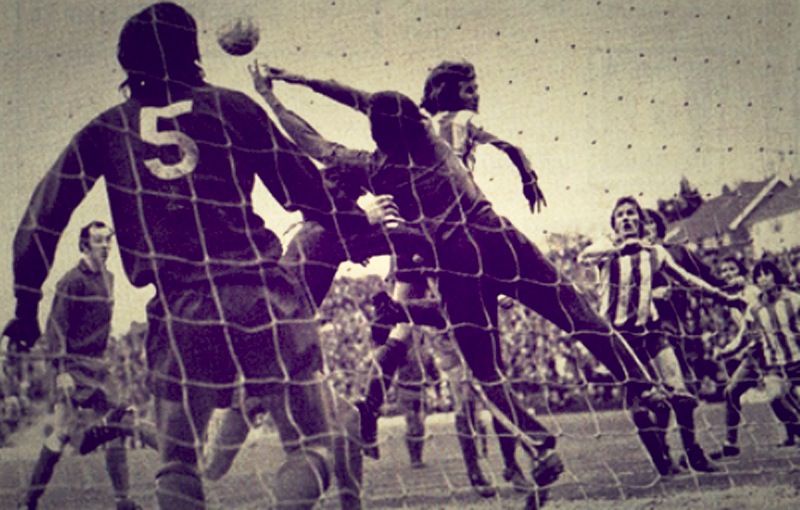
Ronnie Howell challenges for a high ball in the Walton goalmouth, with Lammie Robertson in attendance

Ronnie Howell challenges for a high ball in the Walton goalmouth, with Lammie Robertson in attendance

Albion’s total humiliation by amateurs Walton and Hersham was the worst defeat suffered by the club since they entered the FA Cup as Brighton United in season 1898-99 [sic].

The manner in which they were swept aside and plunged to a 4-0 First Round replay defeat stunned the 9.857 Goldstone crowd. For Walton’s jubilant fans, who had come prepared for the worst, it turned into a storybook occasion.

There was always a feeling of anxiety about this momentous second meeting that began at the unusual hour of 1.45. Albion’s supporters were strangely muted from the start, and the sparsely populated North Stand, without its youthful choir, hardly made themselves heard.

A sense of foreboding gripped the fans when schoolmaster Russell Perkins stooped to conquer after 20 minutes, and the tie turned into nightmarish proportions for Albion when Clive Foskett, a 28 year-old joiner who works at the British Natural History Museum, hammered a hat-trick in the last eight minutes.

Perkins heads the opener

Perkins heads the opener

The result gives Walton a place in the record-books as sensation makers of the first order. But where does that leave Albion?

The club have entered into an exciting new era with one of the best managers in the game. Yesterday’s display was too bad to be true. Some players gave everything; others did not.

Afterwards Clough betrayed no emotion. He is too well disciplined for that. When he spoke of his ‘poor lads’ it was his way of expressing the deep-felt understanding he has for the position of the professional who is always expected to win such confrontations.

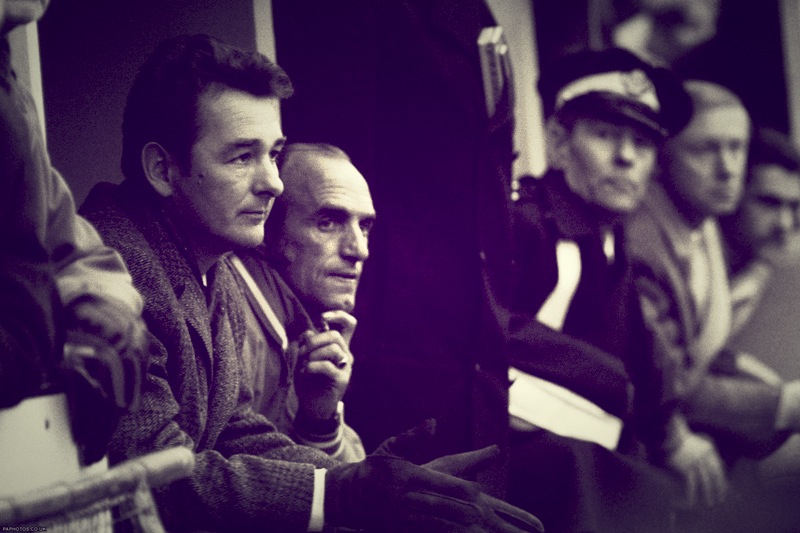
The Clough honeymoon is over as he watches the 4-0 defeat with Glen Wilson.

The Clough honeymoon is over as he watches the 4-0 defeat with Glen Wilson.

What he says privately to his players can only be imagined; the point is that with such a small staff there is not a lot he can do right now.

Until Clough and assistant Peter Taylor move permanently to Brighton, the full impact of their presence will not be felt by the players. The side have yet to score at home under Clough. When Albion were without a manager for a short time, they hammered Southport 4-0. That was just over a month ago.

Is there some sort of moral here? Has the arrival of a man so steeped in success, and possessing such a reputation, suddenly caused the players to seize up?

A goal blight of 270 minutes at the Goldstone is a curious state of affairs, and in the context of this debacle pinpoint the structural weaknesses of the side.

Albion lost to Walton primarily because the midfield was wanting, while up front only Tony Towner, the substitute, provided the sort of service that wins matches.

Pat Hilton did all that could reasonably be expected of him, but elsewhere were performances that must have brought an angry blush to Clough’s cheeks.

The dramatic Foskett hat-trick came at a time when Albion were pushing numbers up in a frantic attempt to equalise. They had more of the game territorially than Walton, but failed to use the ball as well.

In midfield they were outsmarted. Only in terms of fitness were Albion superior, and they relied too much on running Walton off their feet.

Walton absorbed the pressure like a sponge, had men of heart and character, and not a few players who showed a greater desire for the ball when it was obvious somebody was going to be hurt…

The turning point came early in the second half when Barry Bridges just failed to divert a loose ball past the heroic Gary Bloom. Albion never went so close to scoring again, despite a stream of flag kicks.

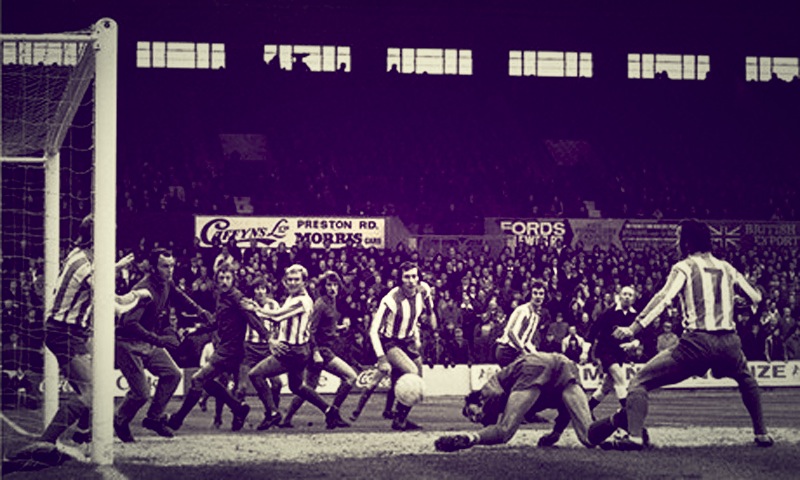
Walton and Hersham goalkeeper Gary Bloom misses a cross, as Barry Bridges just fails to score at the near post.

Walton and Hersham goalkeeper Gary Bloom misses a cross, as Barry Bridges just fails to score at the near post.

Yet only minutes before hand Foskett had missed an open goal. He blamed himself afterwards and seemed more concerned about that mistake than basking in the glory of a hat-trick.

Foskett has not enjoyed much of Walton’s limelight. He was on the substitute’s bench at Wembley at the end of a strange season that saw him score 23 goals before Christmas and then lose his edge completely.

Foskett said: “This is the highlight of my career, although nothing can make up for not playing in a final at Wembley. I was left so much space at the back by Brighton, and I had all the time to think about all three goals.”

His goals, demonstrated perfect versatility, two with the right foot, the last one from the left foot.

Albion were hit by a thigh injury to Stephen Piper ten minutes from the interval. There is little doubt Towner would have come on anyway, but Piper’s loss weakened the defence.

Eddie Spearritt switched to partner Norman Gall, Peter O’Sullivan moved to the left-wing, and Bridges slotted into the midfield.

Walton prospered as a result, and seldom can such an experienced international player like Bridges have cause to be so dissatisfied with his contribution to a game. In my book it was nil…

The grim message for Albion is that Clough has a monumental task ahead. Realist as he is, there can be no illusions on yesterday’s score. Perhaps it is a blessing in disguise.

There is time to prevent the rot spreading further. But I’ll wager Clough never expected it to be like this…

Goalchart
Twenty minutes:
Smith’s corner was flicked on by Lambert. Powney failed to make contact and Gall was the wrong side of Perkins who got down like an old man with lumbago to head the simplest of goals. 0-1.

Eighty-two minutes: A long ball out of defence caught Albion upfield. Walton had Foskett and Perkins haring through the middle, and with Powney unprotected, Foskett scored from a precise Perkins pass. 0-2.

Eighty-four minutes: The same long ball caught Albion napping again, this time it was Smith who put Foskett away to crack a beauty. 0-3.

Eighty-nine minutes: Just to show it was no fluke, Foskett broke away again. The long ball came from Morris, and away went Foskett to drill in his best goal. 0-4.
Albion: Powney; Templeman, Ley, Spearritt, Gall, Piper, Bridges, Howell (R), Hilton, Robertson, O’Sullivan. Sub: Towner for Piper (injured) 35 minutes.

Walton and Hersham: G Bloom, D Sargent, C Lambert, D Donalson, W Edwards, D Bassett, C Woffinden, W Smith, R Perkins, C Foskett, D Morris. Sub R Wingate.

Referee: Mr GC Kew (Amersham).

Bookings: Ley (foul).

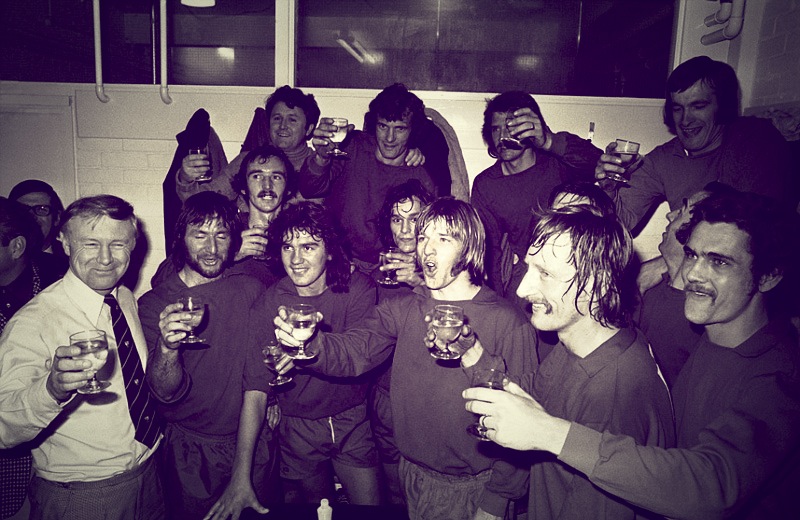
Walton and Hersham players raise a cheer to their 4-0 win in the dressing room

Walton and Hersham players raise a cheer to their 4-0 win in the dressing room

Years later, in Brian Clough’s ‘Autobiography’ (1994), he recalled comedian Eric Sykes’ lucky escape after the match:

‘I was involved in a first round FA Cup tie against mighty Walton and Hersham! A bunch of bloody amateurs, and they beat us 4-0. I’ve had some bad days in football but that must have been one of the worst. He won’t know it until he reads this, or until a pal reads it and tells him, but comedian Eric Sykes had never been in greater danger of a smack in the mouth than he was that day. I think he was president of the Walton club, or at least held some position there. Anyway, he was perfectly entitled to feel chuffed, having seen the little team of nobodies produce possibly the greatest result in their history and one of the big Cup upsets of the day.

As I walked through a passage after the match I could hear his raised voice as he stood with a phone in his hand, obviously giving me some right stick. I heard him gloating about something about ‘Cloughie… ha, ha, ha.’ I had never met him in my life but I’d laughed my socks off whenever I saw him on TV – and still do when they play the old clips. But that afternoon I would have taken great delight in punching him. If only I had shown similar self-control, years later, on that infamous night when supporters invaded the pitch at Nottingham Forest!’

Oh, and have I mentioned that video footage of this cup replay does exist? It clearly should be banned, though! It’s only sixteen seconds and there is no sound. I’ll leave you to decide whether to be regretful or thankful that it doesn’t feature any of the goals:

Tagged

Gordon Smith turns set-back into a comeback

Before the home match with Everton in October 1980, Gordon Smith received The Sun’s Golden Ball award for his hat-trick at Coventry City three days before. Making the presentation was a man who knew all about finding the net, Jimmy Greaves, who hit 44 goals in just 57 matches for England:

gordonsmith15b

It was the second hat-trick of Smith’s career, having scored three of Rangers’ six against Aberdeen two years previously. It was also Albion’s second ever hat-trick in the top flight, following Peter Ward’s three at Molineux in 1979/80.

The result at Highfield Road, in front of just 11,462 supporters, seemed rather unpromising when Coventry raced to a rather flattering 2-0 half-time lead. At the far post, the unmarked Paul Dyson had nodded in Tommy Hutchison’s drive to give the Sky Blues the lead. Then, just before the interval, a lay-off by Mark Hateley set Garry Thompson up to curl a beautiful 20 harder past Albion keeper Graham Moseley. In the second half, Steve Hunt capitalised on a Mark Lawrenson mistake to set up Hutchison for Coventry’s third. Game over… or was it?

As Jack Welling of the Sunday People reported:

Coventry, in front of their smallest crowd in the First Division reckoned without Brighton skipper Horton. He drove his men and fashioned things for the mighty Smith to finish off. The first goal came when Horton slid the ball to Smith to score with Coventry’s defence in a mess.

Then Dyson was beaten by Ward and there was Smith to finish the move with goal number two. With the match almost over, Williams floated a free-kick over to the far post and Smith went up amid a clutch of Brighton players to score.

The equaliser! And Smith does score.

The equaliser! And Smith does score.

The three goals in 19 minutes rocked a Coventry crowd that had been chanting ‘We want five’. Alan Mullery summed up his never-say-die approach when he said:

‘All the way through I didn’t think we would lose. Even at half-time when we were two down, I told the lads they could still win it.’

Smith, a £400,000 signing in the summer, even had a chance to win the match late on, something he regrets to this day. He beat Coventry keeper Les Sealey with a fine header but a defender cleared it off the line. Neverthless, he is proud of his goals that afternoon. After the match, he said:

‘We never deserved to be three goals behind, although I admit I was surprised that we got them back. It was a matter of persevering and that’s what we did. Now I’ve got seven goals for Brighton and when the manager bought me he said he expected me to get 12 goals this season so I haven’t got far to go.’

Tagged ,

Pat Hilton seals Clough’s first win as Brighton boss

Pat Hilton... Clough's first match winner

Pat Hilton… Clough’s first match winner

After Clough and Taylor took over at Brighton in 1973/74, the club received an unprecedented number of column inches for a Third Division side fighting a relegation battle. Here’s an article entitled ‘Clough miracle wanted… but it will take time’:

Brian Clough and Peter Taylor are not expected to work an overnight miracle on Brighton. But the immediate effect they had on the Third Division club was little short of unbelievable.

Not only did three times the normal gate see Brighton’s first match under the new regime but the players admitted the mere arrival of the two had given them a new lease of life.

More than 16,000 saw Brighton draw 0-0 with York and they cheered virtually every good move made by their team. With that kind of support, Brighton must be on the right road to success.

If that was a triumph for Clough, then so was Brighton’s performance. The man himself was fairly satisfied. He said: “The lads played remarkably well considering it wasn’t an easy match for them. We were all a bit tense. I was delighted with their enthusiasm and courage and this performance has certainly given us something to work on.”

The effect that Clough had in the dressing room was described as “incredible” by Barry Bridges. “I did more running about in this game than I had in the previous 10 matches,” admitted Bridges. “I’m 32 now, but with this chap geeing me up I reckon I can go on playing for several more years. We were a bit on edge before the game and the first thing he told us was to relax. Afterwards he told us he was pleased with the effort we showed and we can work from here and go places. •

“Though I was sorry to see Pat Saward go – he was a great coach – I think Brian’s got what it takes to make us a good side. He’s just what the club have been waiting for.”

Brighton chairman Mike Bamber, who talked Clough and Taylor into joining, says Brighton have acquired: “the best football parmership in the world.” And Bamber added: “We’re hoping for the very best, but we are not expecting them to perform miracles overnight.” But it seems •already that small miracles are about to happen in this South coast holiday resort.

Such an assertion was given weight in the next match against Huddersfield, on 10th November 1973, at Leeds Road, when Brighton stormed back from 2-0 down. Minus the skills of Frank Worthington, the Terriers had slid down two divisions in two seasons, been relegated alongside Albion in a mutually cataclysmic 1972/73 campaign. However, against Brighton, Huddersfield seemed to be running away with it, when Terry Dolan scored on 38 minutes and then Phil Summerhill doubled the margin ten minutes after half-time.

However, the lead was not to last, due to some hitherto unseen Albion resilience. Ken Beamish headed Albion back into the game 25 minutes from the end and Bridges earned the point with a searing shot from the right wing following a pass from the impressive George Ley.

Three days later, Brighton travelled to Walsall for a Tuesday evening match, achieving a morale-boosting victory at Fellows Park in the pouring rain. As John Vinicombe reported:
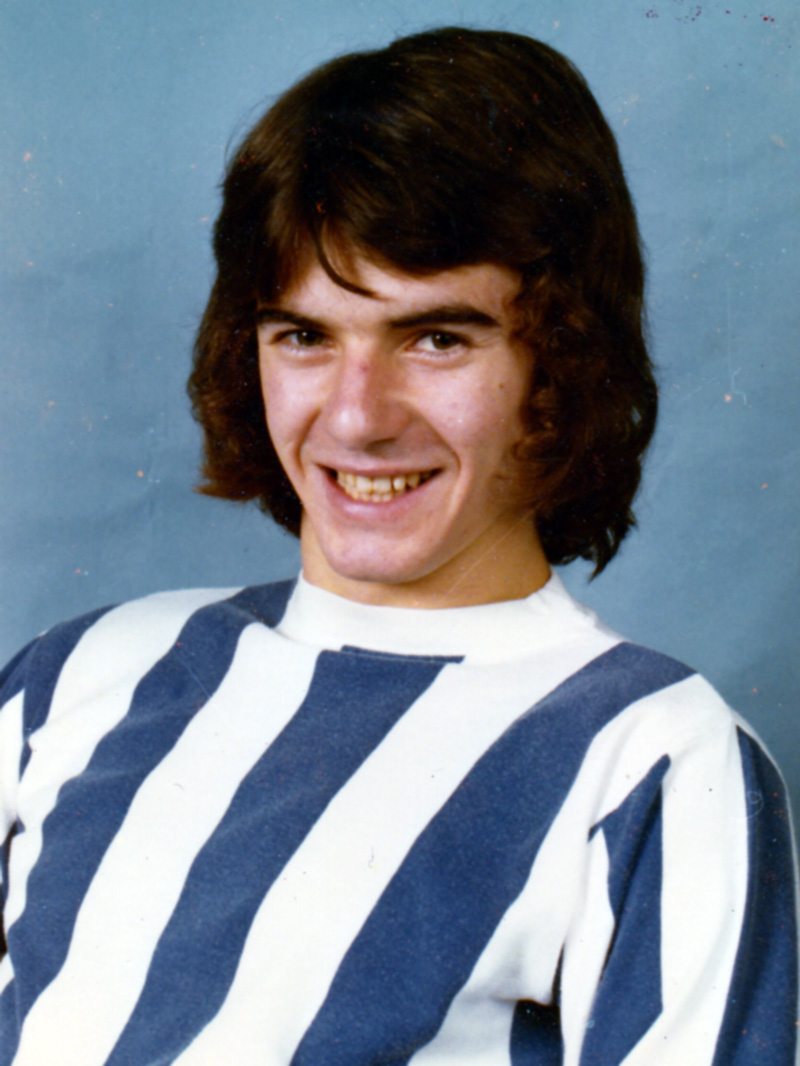
Albion gave manager Brian Clough his first Division III win at Walsall last night when Pat Hilton headed the only goal of a hard-fought match 12 minutes from time. Said Clough: “They fought very hard. I was delighted with them; they showed a bit of heart.”

A deserved victory saw Hilton with most cause to celebrate… it was his first-ever League goal in 12 appearances (three last season). His header from Lammie Robertson’s free-kick was beautifully placed and crowned a lot of hard work. An unobstrusive player, Hilton ran hard on a number of decoy runs to pull out defenders. Albion’s approach was altogether more skilful than Walsall’s but in terms of effort both teams gave everything.

The goal from man-of-the-match Hilton was enough to move Albion two places higher, to seventeenth in Division Three. With another bumper crowd at the Goldstone expected on the Saturday against Chesterfield, and an easy FA Cup draw against the amateurs Walton & Hersham just announced, things were definitely looking up.

Tagged , ,

Brighton saviour Suddaby

petersuddaby

Thirty-four years ago today, centre-back Peter Suddaby made his Brighton debut in the famous 1-0 victory over Nottingham Forest at the City Ground. In this interview from Shoot! Magazine (6 January 1980), he lifts the lid on turning from a reserve in the Third Division to first choice in the top flight:

Peter Suddaby can’t thank Blackpool manager Stan Tennant enough – for dropping him!

For when Suddaby moved into the reserves to make way for Jackie Ashurst, Brighton manager Alan Mullery couldn’t move quick enough to snap up the commanding centre-half.

“Looking back, I suppose it was a blessing in disguise,” said Suddaby. “My career wasn’t going anywhere, and a move to the First Division was the perfect remedy.”

Suddaby’s arrival at the Goldstone Ground had an immediate impact on Brighton’s previously unhappy first season at the top. In his first game he helped Brighton end Nottingham Forest’s 51-game unbeaten home League record, and successive victories during the Christmas period against Wolves and Crystal Palace took the club out of the bottom three for the first time this season.

“I tried getting Peter last season to help our promotion bid,” Mullery explained. “He’s a tremendous winner and is just the sort of player we needed.

“But Bob Stokoe wouldn’t let him go which is why I was delighted when he suddenly became available in November.”

Suddaby admits that he has always been impressed with Brighton’s potential, and wanted to play in the First Division since Blackpool lost their place in the top flight.

“Obviously it wasn’t easy to adjust after playing two games in the reserves and I was sad about leaving Blackpool. But it was made clear to me that I was fourth in line for the centre-half position, so I made up my mind to move if the opportunity arose.

“Coming to Brighton cost me a testimonial,” Suddaby continued, “but this didn’t mean as much to me as Blackpool thought it might.

“I wanted a challenge and still felt I had something to offer which is why it didn’t worry me to join a struggling club. There’s still plenty of time for Brighton to move out of trouble which is what I think will happen as there’s a superb spirit in the club,” Suddaby commented.

Suddaby admits that life in the Third Division had proved hard for Blackpool. “The boardroom troubles inevitably rubbed off on the players and gave the club an unsettled atmosphere. The trouble is that neither the players nor the public have come to terms with the fact that Blackpool are a Third Division club,” Suddaby pointed out.

“When we were relegated it was only through a series of freak results which is why last season was something of a settling-in period. Even though there aren’t many medals in the club’s cupboard there’s a lot of tradition and people still talk of the team in the 50s.”

Suddaby modestly refused to accept that his move was a significant factor in Brighton taking what could be ten crucial points out of 14 in their battle for First Division survival.

“Forest are a very good side, but we defended well against them and had that little bit of luck we needed. But I thought that everyone in the Brighton side buckled down and gave everything that day.”

Suddaby’s fun loving approach to life, which makes it hard to believe he became a bookworm to study for a University honours degree, not only explains his long stay at Bloomfield Road but also why he bears no bitterness towards his former club.

“I desperately hope they do well as I had such happy memories but I would like to think they’ll miss me,” he added.

“Certainly, things are beginning to click at Brighton, and I’m sure we will survive this season. Alan Mullery has given me a chance to prove myself in the best League in the world, and i certainly do not wish to let him down now.”

Sadly, we never got to see him in this shirt

Sadly, we never got to see him in this shirt

Suddaby definitely didn’t let Brighton down. His strong, determined tackling and ability in the air at the heart of defence was an important factor in moving Albion up the table. It also released Mark Lawrenson to play in midfield. However, in May 1980, Suddaby slipped a disc and, as a result, was released by the club. Had he been able to continue First Division football, perhaps 1980/81 would have been not have have been a campaign of so much struggle.

He briefly returned to the Goldstone in 1986/87 as chief coach under Alan Mullery and held onto his position until the end of the season, even when Barry Lloyd took over.

Tagged

Eric Potts – from New Brighton to Brighton

eric_potts

From the Brighton v Luton programme in September 1977:

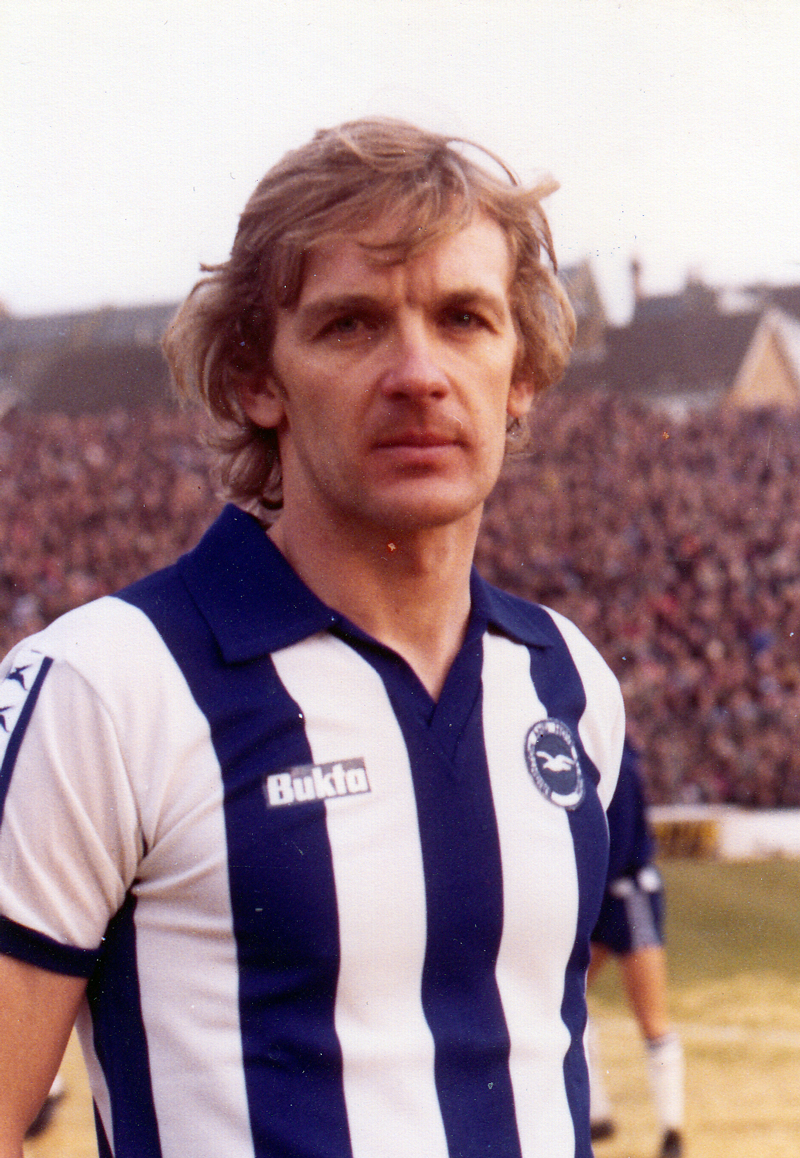
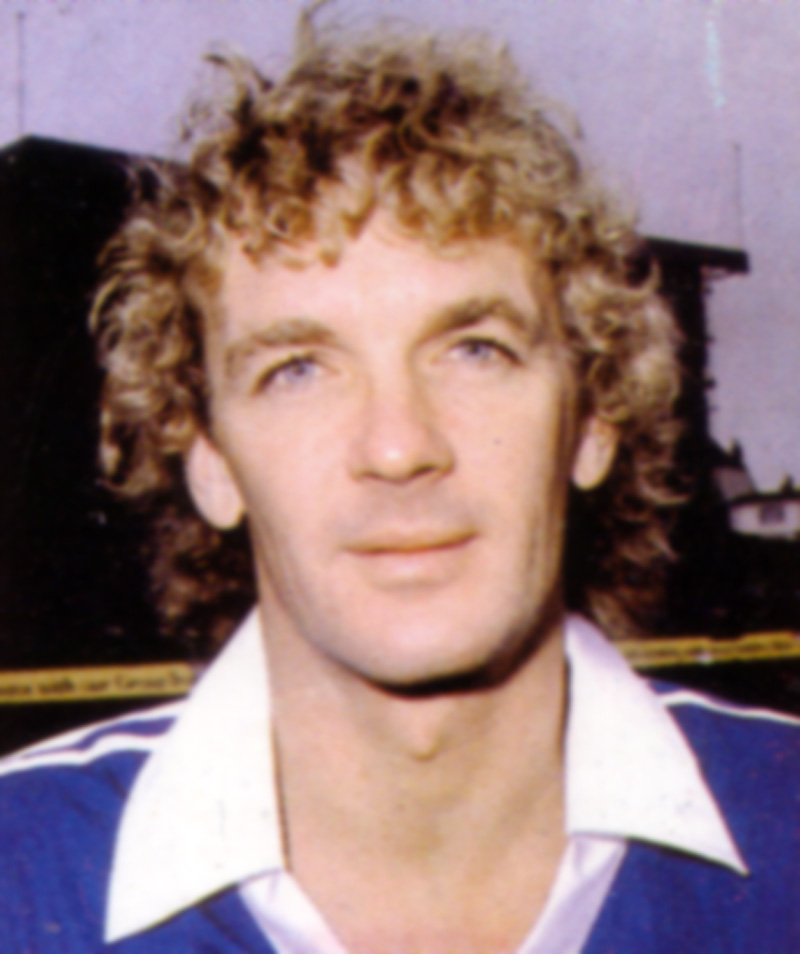
Eric Potts joined the Albion from Sheffield Wednesday in June this year. His energetic and busy style of play had made him a real favourite with the Hillsborough crowd and in 1976 the knowledgeable Yorkshire fans voted him ‘Player of the Year’. Before joining Wednesday he had spells with Oswestry, New Brighton and Blackpool but throughout his career to date representative honours have always eluded him.

Christened Eric Stanley, he was born in Liverpool on March 16, 1950 and was educated in that famous city. In fact, the latter part of his schooldays were spent at the Anfield Comprehensive School, within a stone’s throw of that shrine of football, the home of Liverpool FC.

The Potts household gives the man of the house plenty of female company as, in addition to wife Linda, Eric has two lovely daughters, Jennifer and Deborah. Pop music often provides the home entertainment and Eric admits to being a fan of most brands of this kind of music.

For relaxation filmgoing features among Eric’s interests and he lists Kirk Douglas and Natalie Wood as the stars he enjoys most. If asked his favourite country Sweden is the immediate answer. Where likes end dislikes are concerned among foods fish and steak are his most popular dishes.

Fascinating stuff!

Like many of Albion’s very happy squad, Eric’s main ambition is to play first division football with the Seagulls but looking back the high spot of his career was playing against the legendary Pele when with Sheffield Wednesday.

In ‘A Light in the North – Seven Years With Aberdeen’, Alex Ferguson wrote a fine summary of what a ‘supersub’ was, when he described bringing on eventual match winner John Hewitt against Bayern Munich on a famous night in 1982/83:

‘John is a tremendous substitute and although he lacks the consistency for a full game, he can come on and change a match and often score. Some players are not good substitutes. They are not used to it mainly because they take a long time to get warmed up and cannot get into the swing of a game, but John is excellent is this role.’

Go back five years, and into the English Second Division, and that description would have been apt for Eric Potts. The winger and midfielder played for Brighton & Hove Albion for just that one season, in 1977/78, and yet he claims a place in club folklore for his goalscoring exploits as substitute.

Joining Brighton from the Owls in a £14,000 deal, the red-headed signing made his Albion debut as the number seven in the club’s opening fixture, at Cambridge in the League Cup. In the next round’s replay at Oldham, he notched up his first goal for the Seagulls. The 5ft 5in winger held onto his starting place until he lost out to Tony Towner for the visit to Tottenham in November. From this point onwards, Potts only started five more matches for Brighton, such was the form of Towner, and it was in the number twelve shirt that Potts made his most memorable impact.

He scored Brighton’s second against Scarborough in the 3-0 win in the FA Cup 3rd Round in January 1978. Then, sensationally, he hit two goals in the last two minutes against Sunderland the following month, as Albion overturned a 1-0 deficit, after future Brighton loanee Jeff Clarke had given the Rokerites the lead. I know that match was televised by Southern TV but, sadly, I haven’t yet been able to track down the video footage. All I can offer is this image of the flame-haired one celebrating his winner:

pottssupersub2

Returned by Alan Mullery to the starting line-up, Potts opened the scoring against Stoke in a 2-1 win at the Goldstone in March. Then, combining well with John Ruggiero, Potts hit the late, solitary goal at Blackburn that these produced delirious scenes amongst the visiting players:

pottsgoalvblackburn2

And how did his manager reward his match winner for the next match? Yes, by dropping him to the bench for the Tottenham game, for the second time that season. Nevertheless, unperturbed, when he came on, ‘Supersub’ scored in the second half to clinch a famous 3-1 win. And that concluded Potts’ goalscoring at Brighton. Five League goals, four of which were as substitute.
Here he is, in action in his Albion swan song, against Blackpool on the final day of the season:

blackpool_potts

Once the season ended, he joined Preston for £37,000 in August 1978 before closing his Football League career with Burnley from 1980 and Bury for two seasons from 1982.

Tagged