Author Archives: Goldstone Rapper

Heady Edwards!

headyedwards

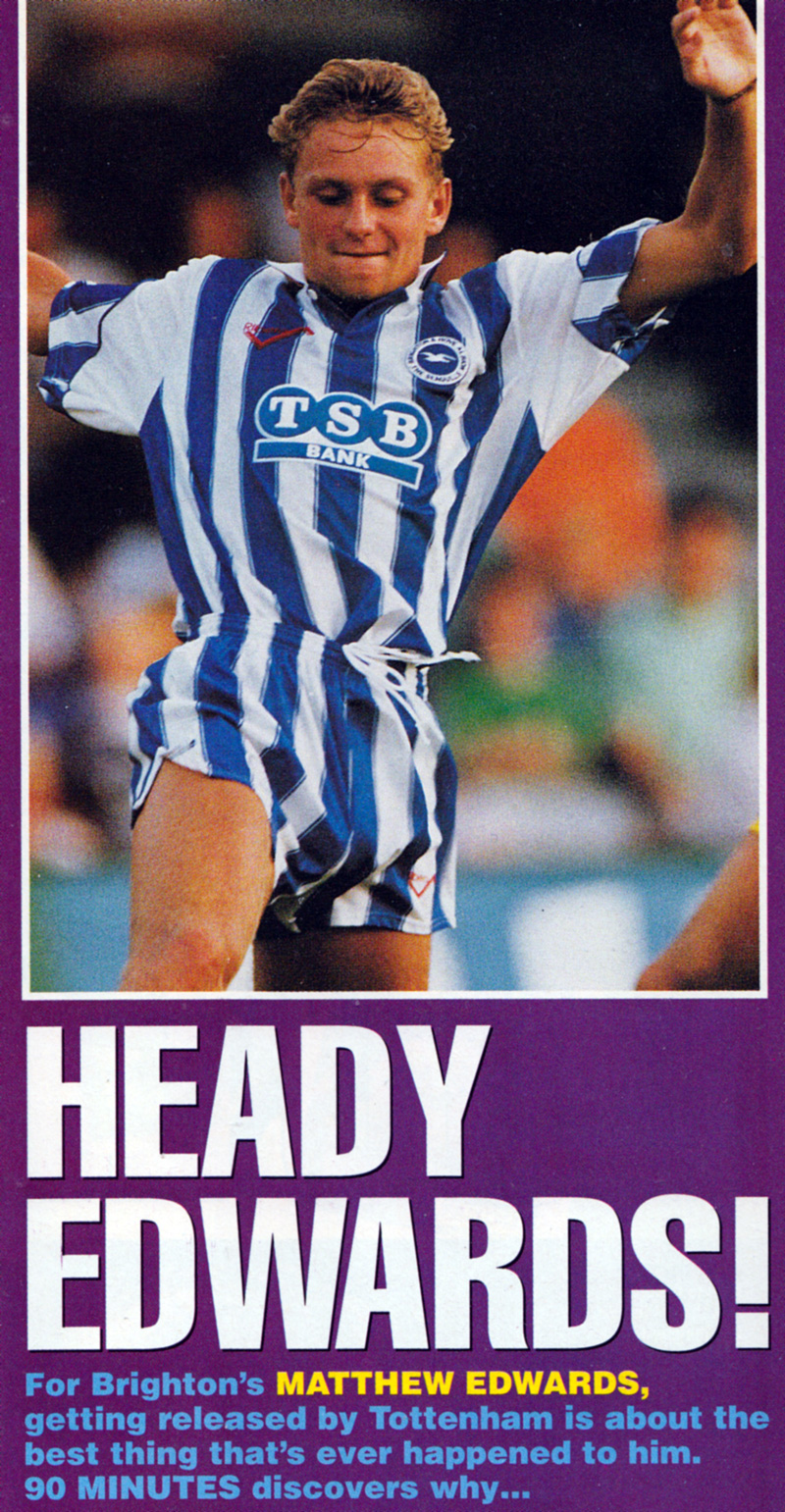
In a piece by Mike Donovan for 90 Minutes magazine (Issue 127) 31 October 1992:

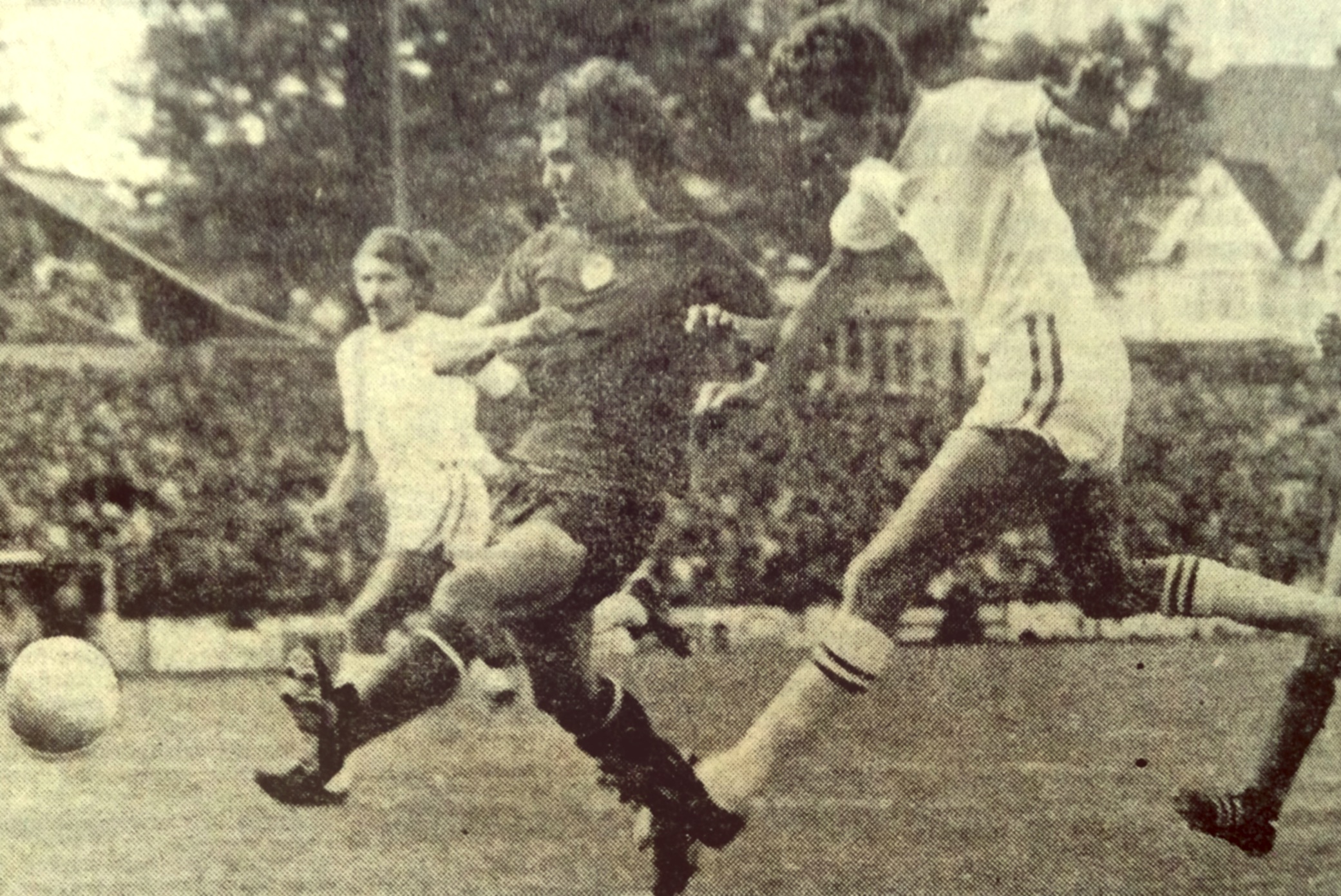
OK, it’s quiz time. Name four players to have left Spurs since the end of last season. Well, you got Gazza and Lineker straight away, and remembered Paul Stewart without too much trouble – but you’re stuck now aren’t you? But come on… what about Matthew Edwards?

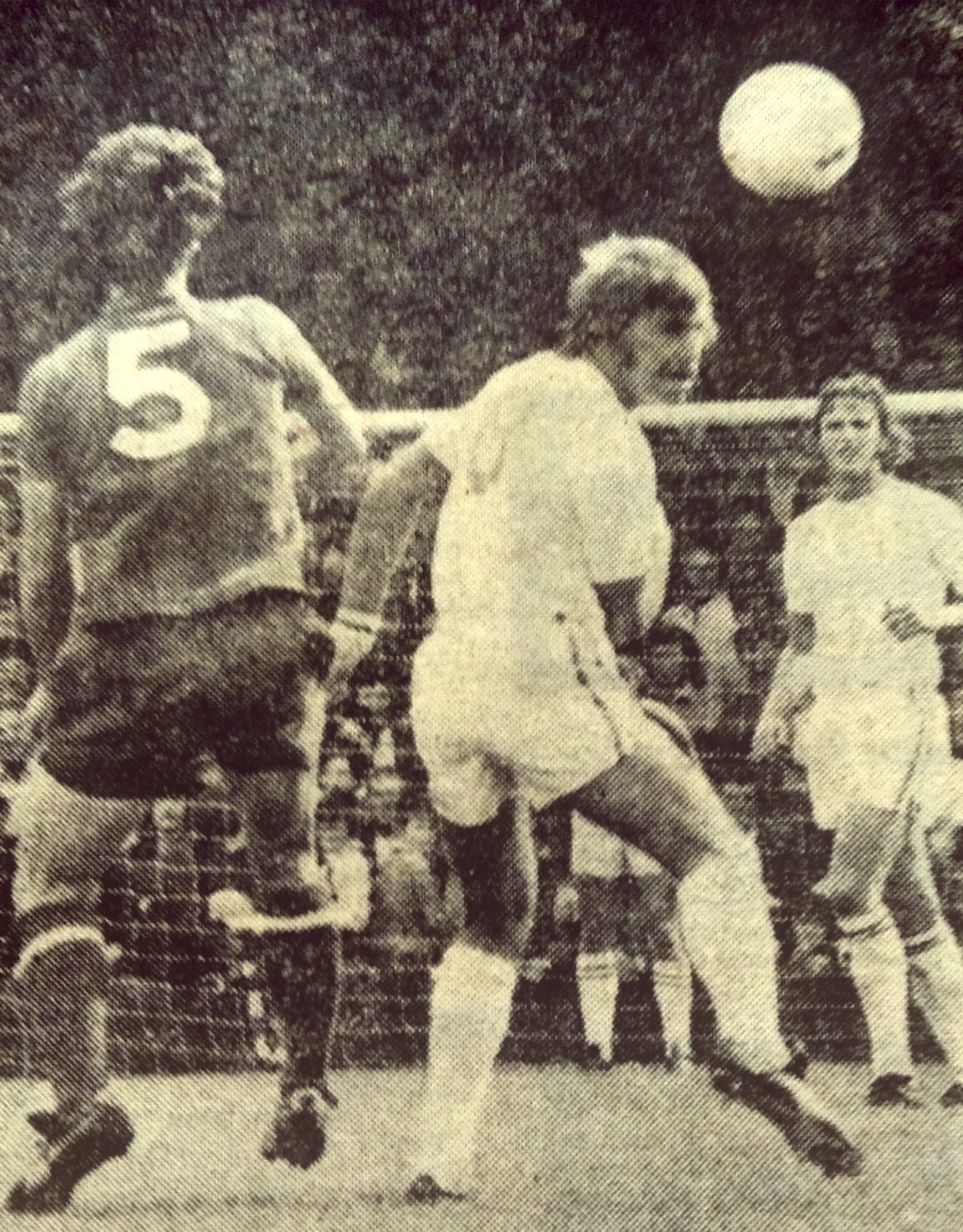
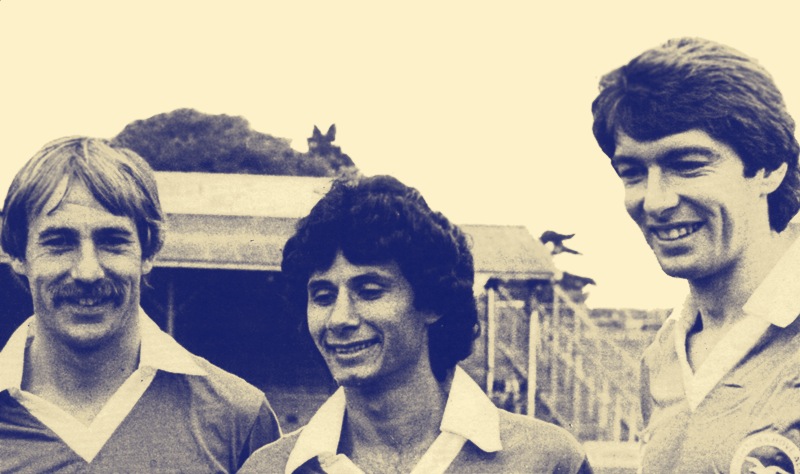
Just to jog your memory, he’s the 21-year-old striker who joined Brighton on a free from Tottenham in the summer – and hasn’t looked back since. Legend has it that he decided to leave White Hart Lane the day his then-boss, Peter Shreeves, couldn’t remember who he was. Now his pace and skill have got the Goldstone fans singing his name, with the Seagulls making an encouraging, if unspectacular, start to their Second Division season.

“It’s been a great move for me,” he says. “It’s just fantastic to be a regular part of a first team squad.

“At Spurs I didn’t get a look in. The nearest I got was when I went to Everton last year as a member of the squad. It seemed that no matter how hard you tried, no matter what you did, it wouldn’t get you anywhere. And that’s not a nice feeling.

“Also, Spurs had so many players that we were divided up at training, but at Albion there’s a smaller squad and we all train together. There’s a great team spirit.

“And it’s helped me come out of my shell. At Spurs I was a bit in awe of the stars and really you had to be full of yourself to make your face fit.

“It’s hard to motivate yourself in front of an empty stadium with the reserves. But at Brighton it’s totally different.

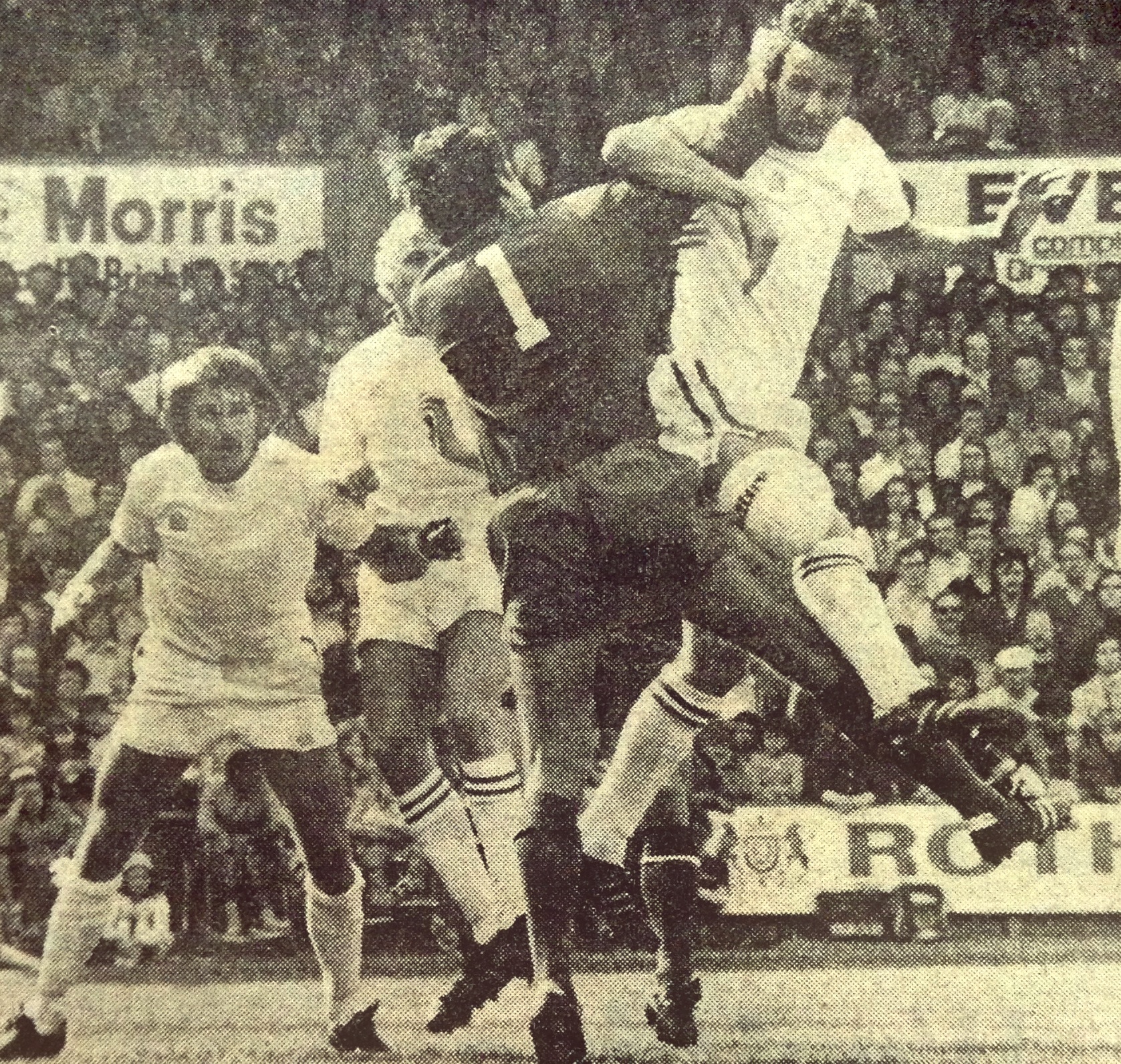
It certainly was different when the Seagulls met the mighty Manchester United in the second round of the Coca-Cola Cup recently. Over 16,000 packed into the Goldstone ground as Albion held United to a 1-1 draw in the first leg, before going down 1-0 in the return at Old Trafford. Guess who scored Brighton’s goal…

“I loved getting the headlines against United,” admits Edwards. “Now, I want lots more!”

The utility forward was in the limelight again when he scored the only goal in a south coast derby in the Third Round of the FA Cup against Portsmouth.

However, he was released at the end of the 1993/94 campaign.

Edwards later had spells with Kettering Town, Walton & Hersham and Enfield. He is currently Business Development Manager at Advanced Ticketing, a position he has held since November 2010.

On LinkedIn he says “I am responsible for new business helping professional sports clubs and venues implement TALENT our integrated Ticketing and CRM solution.” As many fans know, Talent Sport are responsible for the Albion’s ticketing system. I wonder what part he has played in all of this…

Tagged

An Albion lampshade, the ultimate ’70s accessory

Gordon, a Brighton & Hove Albion fan who I had the pleasure of playing football with on Friday evenings a few years ago, has a wonderful Albion artefact to show. He asks, provocatively:

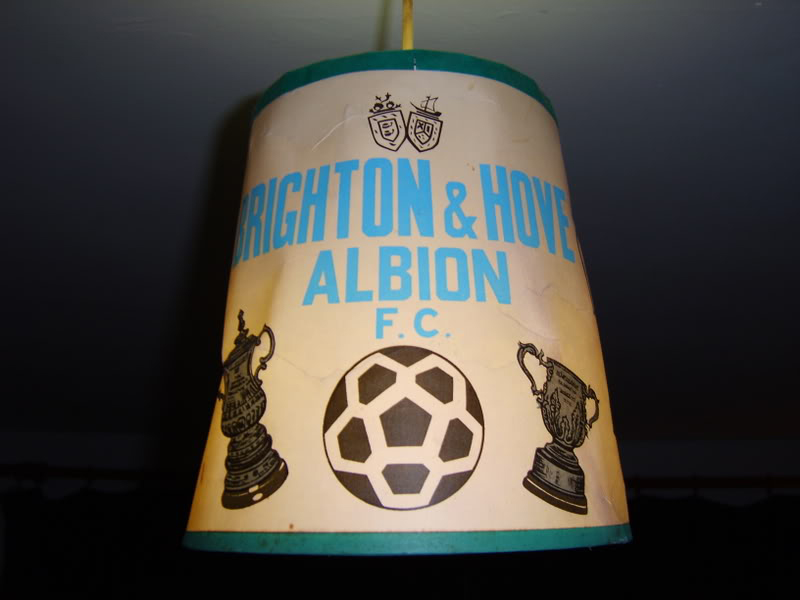
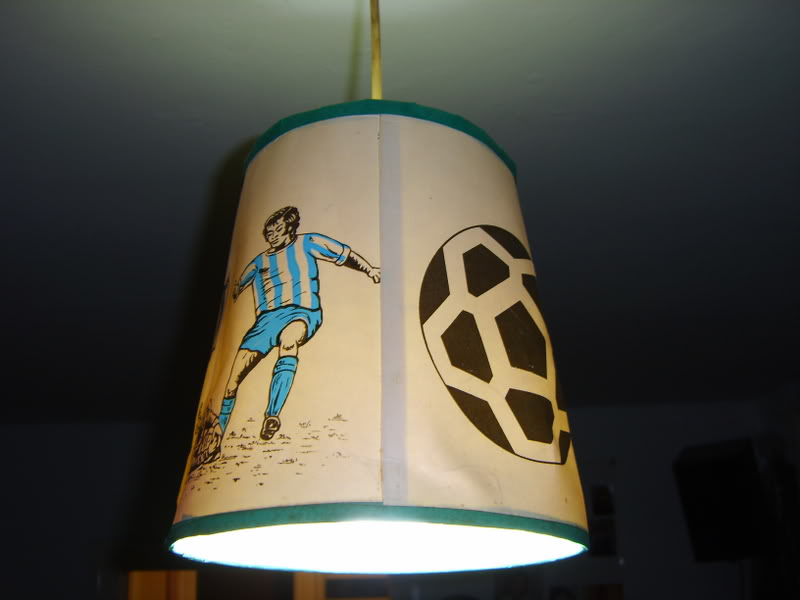
‘Can someone date my Brighton & Hove Albion lampshade? I don’t mean take it out for a few drinks… I mean hazard a guess as to its era. It’s made of off-white card, with a mid green edging top and bottom, that wraps round the metal wire rings, the top one having the mounting for the bulb holder…

Printed on it is a little football, a larger football, a BHA player challenging a goalkeeper, who is on the floor, four (4) Cups, which I take to be The FA Cup, The League Cup, The 1st. Division Trophy and possibly the European Cup and ‘BRIGHTON & HOVE ALBION FC’ with the old double heraldic symbol above this text…’

Here are some photos of this lavish item:

lampshade1

lampshade2

So it was a decorative article to commemorate the time when Brighton & Hove Albion had triumphed in four major club competitions… yes, that would certainly narrow it down. Sadly, I believe that the trophies were mere wishful thinking. But that doesn’t mean we can’t get pretty close to when the lampshade went on sale…

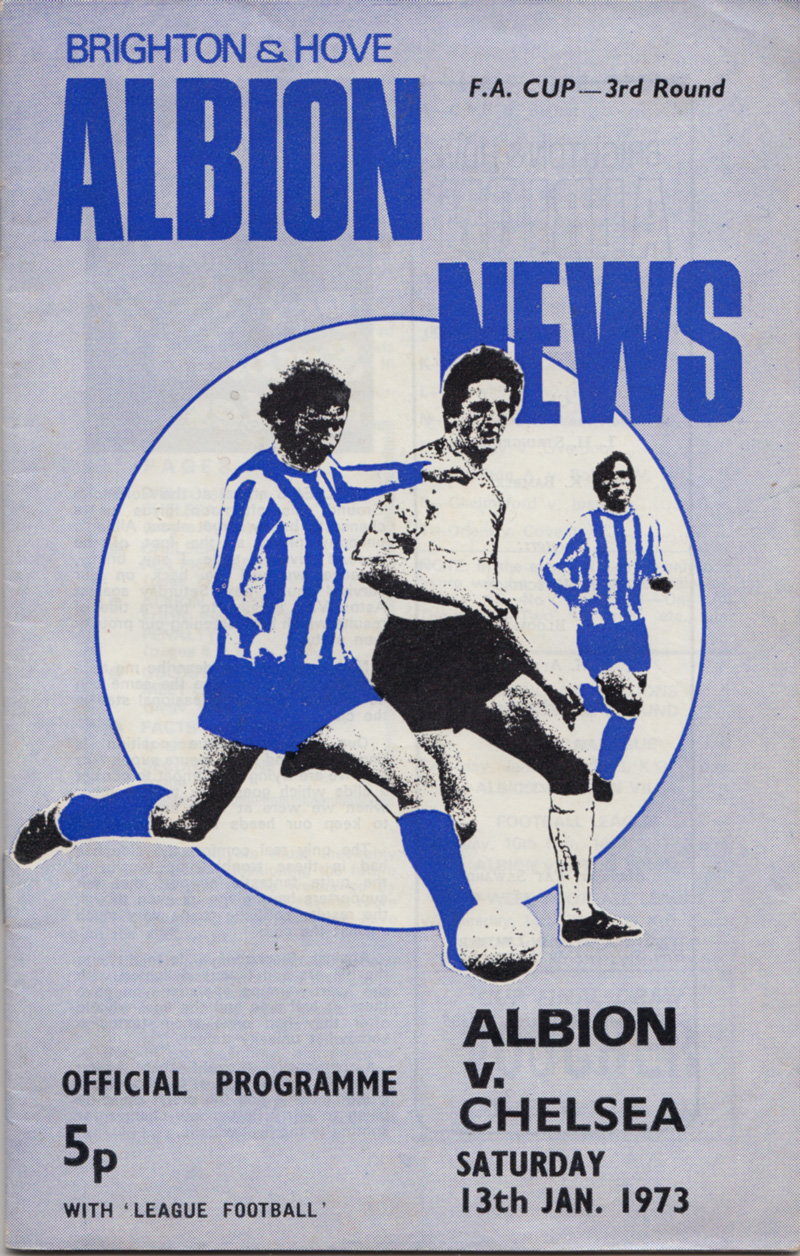
As a connoisseur of the typefaces of Albion programmes from the 1970s (no, not really! I promise), I can exclusively reveal the font on the lampshade is Compacta SB-Regular. This font was used on the cover from the early 1970s up to the end of the 1973/74 season, which doesn’t narrow things down by that much. However, matching the graphical style of the illustrations, with its mixture of a blue spot colour and black, with those in vogue on the cover of the programmes, I’d offer an educated guess to suggest the lampshade came from the 1972/73 campaign:

chelsea1973

With that in mind, it was perfect for reading your programme or League Football (formerly Football League Review) in the fading light. But this small pleasure was soon in doubt. The restrictions to electricity consumption caused by the Three Day Working Week made this a luxury during the following season.

Tagged

‘The Leatherhead Lip’ strikes Brighton

The goal that put Brighton out of the FA Cup: Leatherhead's Chris Kelly (right) hits the 65th minute winner

The goal that put Brighton out of the FA Cup: Leatherhead’s Chris Kelly (right) hits the 65th minute winner

If you thought Brighton’s defeat to Newport County last night was bad enough, you’d be right. Still, at least the capitulation wasn’t against non-League opposition. Yesterday, Brighton failed to silence Justin Edinburgh who had been mouthing off about the Albion in the media before the match. Thirty eight and a half years ago, it was Leatherhead’s Chris Kelly who was adding spice to a cup competition by making some brash statements in the media.

Below is John Vinicombe’s report from the Evening Argus in January 1975, reporting on Albion’s humiliating 1-0 defeat to Leatherhead at the Goldstone Ground in the FA Cup:

Albion, perhaps more than most clubs, are now all too painfully aware of the narrowing gap between those in and outside the Football League.

Last season it was Walton and Hersham who cut them down to size in that traditional leveller the FA Cup. While the Walton defeat numbed everyone at the Goldstone, it was put down to several reasons that had little or nothing to do with how the team actually played.

The new managers had only just arrived and there was an air of upheaval scarcely conducive to getting minds right, as the saying goes. There was a degree of truth in this, and so Walton was written off as “one of those days.”

Well, Leatherhead have knocked the bottom out of that argument. They deservedly ended Albion’s hopes of a fouth round place and now face Leicester City – either at Crystal Palace or at Filbert Street.

When a manager says afterwards that he is both disgusted and ashamed of his team on the day, it leaves very little for me to say.

I think the best course of action is to quote Peter Taylor verbatim, and then add my own two cents worth on an extraordinary day that saw all five non-League clubs survive the round, with Leatherhead and Wimbledon, the real shock performers at Burnley, going through.

This is what Taylor said after the 1-0 defeat that dazed most of a 20,491 crowd who paid £11,035.15.

“We were outfought and outplayed. I am disgusted with the Brighton side and full of admiration for the opposition. We didn’t play five minutes’ football. Leatherhead played it honestly, and showed plenty of heart and fight.

“We have no excuses whatsoever. The onus was on us to win it by heart, and then show our skills. But we didn’t put two balls together. Leatherhead fought cleanly and fairly.

“Beforehand, I thought the mood was right. Leatherhead played exactly as we anticipated. But when it came to matching them by heart and taking them by skill, it didn’t work. I don’t mind getting beaten, but I don’t like being outfought. Cup football is a different game. I am ashamed of them.”

Mr Taylor went on to pinpoint character deficiencies, and how honest Leatherhead were in their approach. He then made this important point:

“What advantage Leatherhead had was that they appreciated what hard work means. All their players have a job in the week. It would be good for my players to clock in at eight and leave at five in the evening… which some of them might be doing shortly. Having a job makes players outside the League realise what it is to work for a living.

“I thought we had seen the last of the Walton days at Brighton. Evidently, we have not, but it is not the end of the world.”

Dave Reid nips in and robs Ian Mellor as he streaks forward.

Dave Reid nips in and robs Ian Mellor as he streaks forward.

Brighton starting line-up for that day was Peter Grummitt, Ken Tiler, Harry Wilson, Tommy Mason, Steve Piper, Graham Winstanley, Tony Towner, Peter O’Sullivan, Fred Binney, Ian Mellor and Jim Walker. Substitute was Marlowe who came on for Mason in the 70th minute.

On North Stand Chat, one user going by the name ‘Freddie Goodwin’ said:

Having suffered to Walton the previous year there was no way this would happen again as the team, under Peter Taylor, was taking shape. Over 20,000 turned up to see us thrash this motley crew from Surrey but, as mentioned above, it just didn’t happen. We were poor but everything we tried failed to come off and there was that air of inevitability that they would score. It was a really depressing game and I was of the opinion that those players should never play for Albion again…except that team had the likes of Sully, Rollings, Piper and more who went on to be part of the glory years.

Tagged

Blimey O’Reilly… Gary’s back at Goldstone!

garyoreilly

From the Argus ‘Go For It Seagulls!’ pre-season preview of 1991/92:

There is a touch of Blarney about Gary O’Reilly’s return to Albion on a free transfer from arch rivals Crystal Palace. Believe it or not, the 30-year-old defender played for both England and the Republic of Ireland as a schoolboy.

The reason? Gary’s father hails from Dublin, but his mother is English.

Isleworth-born O’Reilly, who joins a strong Eire contingent at the Goldstone, took his first significant step towards stardom in an Essex Boys team.

Arsenal wanted him on associate schoolboy form, but their North London neighbours, Spurs, snapped him up at the age of 13. Among O’Reilly’s youth team-mates at White Hart Lane were Kerry Dixon and Mick Hazard. Nobody’s fool, he had the offer of a sports scholarship at Columbia University before signing for Spurs as a full pro.

O’Reilly made 45 first-team appearances in five seasons at Tottenham, including the Charity Shield at Wembley against Liverpool and a quarter-final victory in the UEFA Cup over German giants Bayern Munich.

But the arrival of Gary Stevens, ironically from Albion, and the now-retired Danny Thomas, led to him requesting a transfer, even though he still had two years of his contract remaining.

A willing listener, O’Reilly’s mentor during his stay at White Hart lane was Osvaldo Ardiles, now manager at Newcastle.

“Fear is a big killer in the game, and I learned a lot about that from playing against Ardiles in practice games and listening to him afterwards,” he said.

Albion’s then manager, Chris Cattlin, bought O’Reilly for £45,000 in August 1984. Cattlin recalls: “I watched him eight times before signing him, and six times with Tottenham Reserves he had stinkers. But I thought then he had great potential.”

He made 79 appearances in three seasons with Albion, scoring three goals. He was virtually an ever-present for the first two seasons, but injuries, including a worrying hamstring condition, restricted him to just eight games in the ill-fated 1986-87 season.

O’Reilly was a popular figure at the Goldstone with a social conscience. He led a campaign to help youngsters fight drug addiction and was president of the Junior Seagulls.

Supporters were upset when he joined Palace for £40,000 on January 3 1987.

Albion were in dire need of cash at the time, and his move came just two days before Alan Mullery was sacked in his second spell as manager.

O’Reilly played 70 times in his first four seasons at Selhurst Park and scored Palace’s opening goal in the 1989-90 FA Cup Final against Manchester United.

But he did not figure in Steve Coppell’s plans once last season and had just one game on loan with Birmingham City.

Now the versatile 5ft 11in. defender, who has been given a two-year contract by Barry Lloyd, is intent on holding down a regular place in Albion’s line-up.

“There’s no substitute for first-team football,” he said. “There is nothing like playing regularly to give a player the right degree of confidence.”

On returning to Brighton, Gary O’Reilly played in the crazy 5-4 friendly victory over mighty Steaua Bucharest in August 1991:

gary o'reilly

The classy defender then made 31 appearances for the club in the highly disappointing relegation season of 1991/92. He scored three times, including the only goal against Plymouth in November 1991, but a series of unsuccessful knee operations led to him retiring from the game in April 1993. Since hanging up his boots, he embarked on a successful broadcasting career for Sky, BBC and Trans World International’s Premier League international feed.

O’Reilly had underlined his credentials as a man of principle by supporting the fans’ campaign against the Albion board in 1996/97. As he said to the Argus in 2001:

“I recall going back (to the Goldstone) as a broadcaster for the Fans United match against Hartlepool in February 1997. I twisted Sky’s arm to be there because I knew it would be a great day. It was. There were 10,000 fans from Europe as well as all over the country to show support for a club going through bad times. The Goldstone was special. When it was full it was vibrant, full of excitement and possibilities until the last game. After they pulled it down I couldn’t bring myself to go to the retail park they built in its place until I had to take a bike back for my daughter Grace, who was born on a Saturday Albion beat Swansea. When the bulldozers went in it was devastating.”

No wonder in 2009, while on Radio 5 Live’s ‘Fighting Talk,’ when asked “Who is the one person whose hand you would refuse to shake?”, he said “Ex-Brighton and Hove Albion Chief Executive, David Bellotti.”

Well said, Gary.

Tagged , , ,

Albion top trumps

On Wikipedia, Top Trumps is described as this:

Top Trumps is a card game. Each card contains a list of numerical data, and the aim of the game is to compare these values in order to try to trump and win an opponent’s card. For example, in a pack based on cars, each card shows a different model of car, and the stats and data may include its engine size, its weight, its length, and its top speed. The cards may deliver camouflaged learning, or learning through play, as reading about the facts on the cards, and enhancing memory and maths skills through the use of comparing the data, adds an educational benefit.

So, was this the gateway drug to statto-esque nerdism or an exciting, social way to develop knowledge of the world?

Oh, definitely the latter!

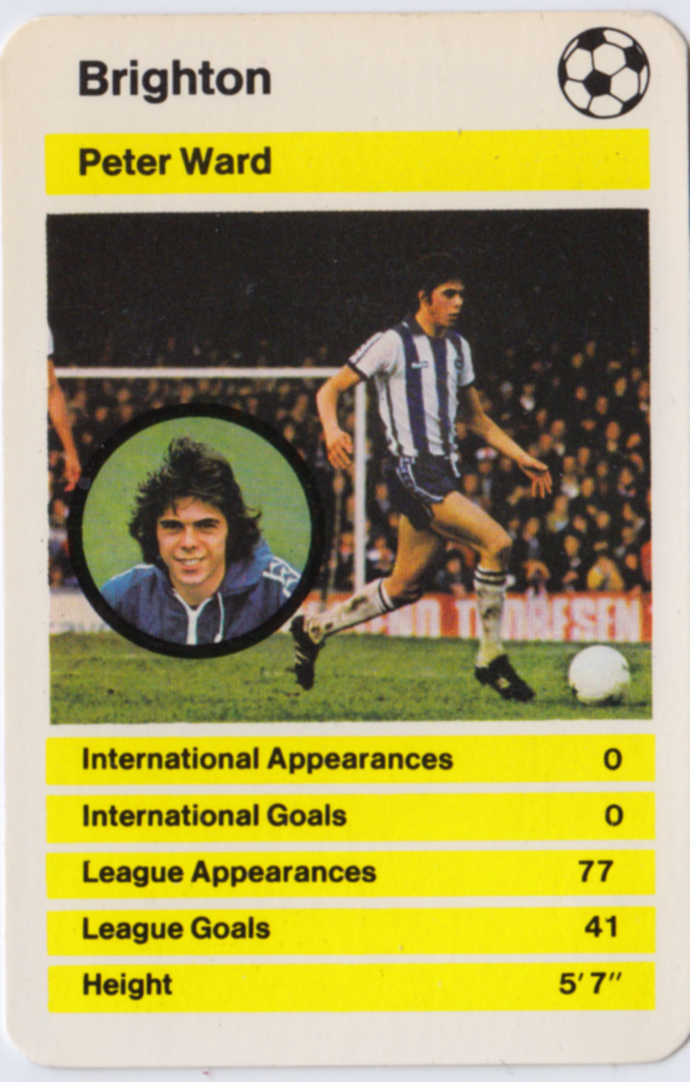
If you were playing Top Trumps in the late 1970s, you’d have had a chance to play with not just one, but two Peter Ward. The first features the young rapscallion showing off his dribbling skills in the yellow Bukta away kit, and also looking pleased as Punch in his towelly blue hooded top in the inset…

toptrumps-ward1

Then, curiously, although Ward added another sixteen League goals in 1979/80, not to mention his one international appearance in the close season, his total only went up by fifteen goals here…

toptrumps-ward2

Perhaps, the card came out in mid-April 1980, then.

But just to show that the Albion team wasn’t just the Peter Ward show, Teddy Maybank is also featured on a card…

toptrumps-maybank

In his biography, Ward said:

Teddy was a good player and Mullery loved him. I was struggling to score when Teddy came into the side but I was playing OK. We were only scoring a goal a game, whereas we had been used to getting two, three or four goals every time we played at the Goldstone. The defenders were better and we weren’t getting as many chances, but I didn’t doubt that I would start scoring again.

Finally, boo!

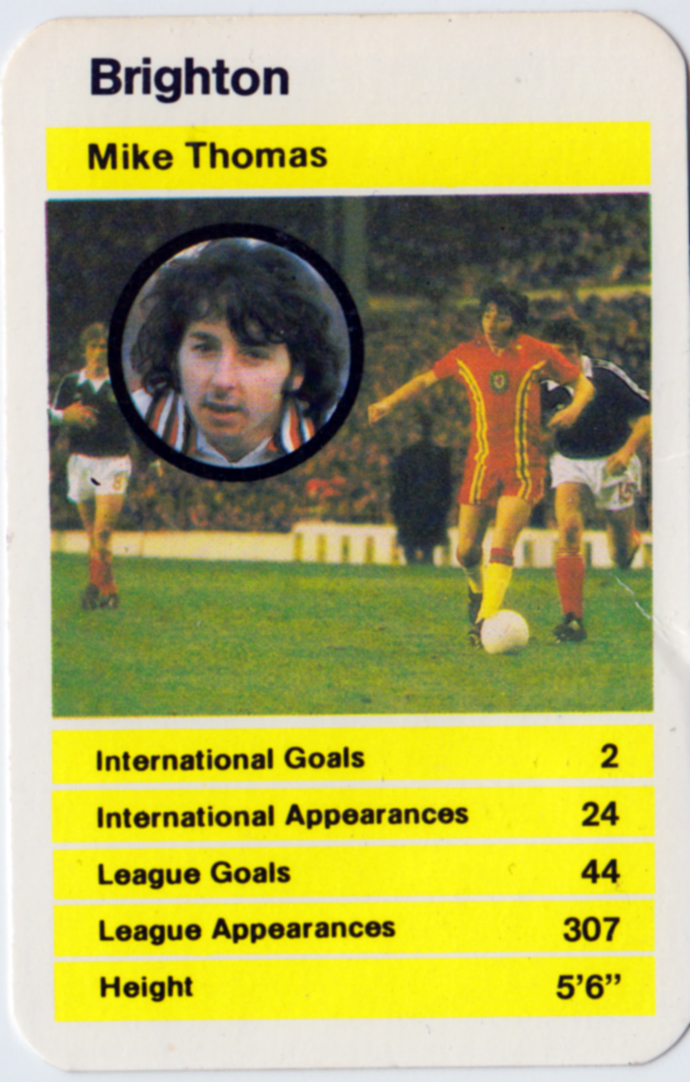
toptrumps-thomas

Here’s a Top Trump card of Mickey Thomas, in his Wales garb, and it’s not surprising considering his short stay at the Goldstone. If points were given for turning out to be poor value for money for us, at £350,000 from Everton, then the undoubted talented but troubled midfielder would have been hard to have trumped. As long as his card didn’t go AWOL…

Tagged , ,

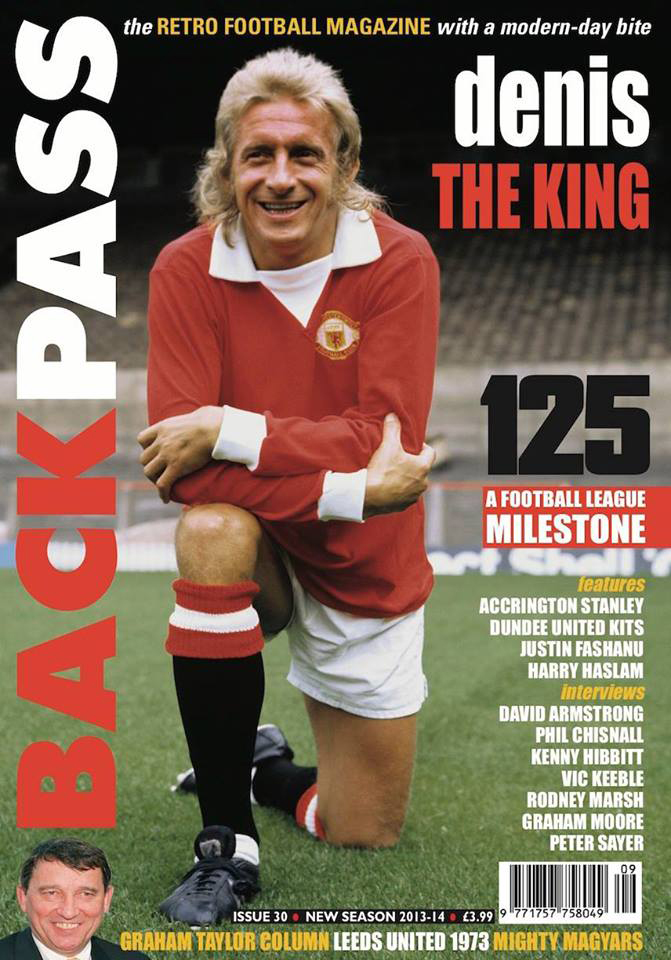
Peter Sayer, Justin Fashanu and Alan Mullery in the new Backpass magazine

backpassdenis

It’s a lovely feeling to be filled with expectation about a new edition of a magazine that’s about to hit the newsstands. I don’t know about you, but football-wise, I haven’t felt this way since 90 Minutes magazine died a death in the 1990s and Tuesday mornings were never quite the same again. In a previous post, I have documented the excellent coverage Brighton & Hove Albion has received in past issues.

With its first edition of the new season, a refreshed Backpass Magazine is now up to issue 30, and now defines itself as ‘the retro football magazine with a modern-day bite.’

In terms of Brighton interest, there is a great interview with Peter Sayer. A substantial part of the article recalls his wonderful winner for Cardiff against Tottenham in the FA Cup in 1977:

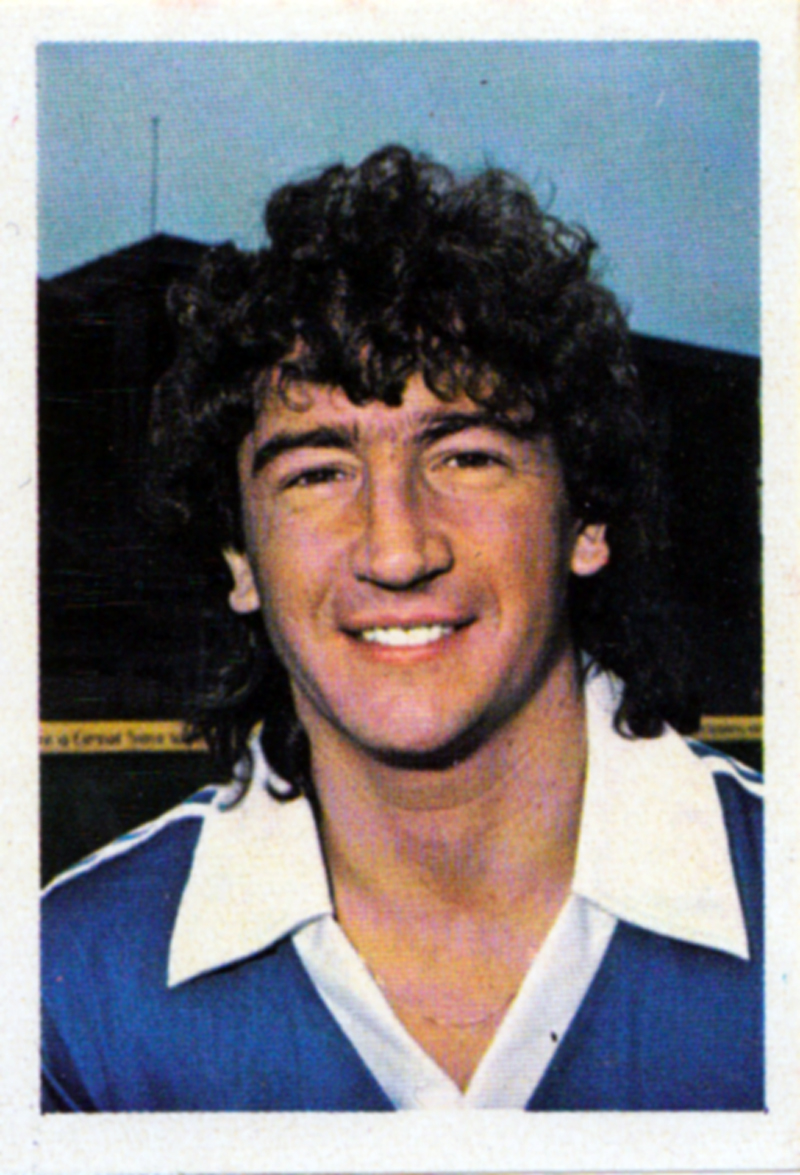
Albion fans chiefly remember Peter’s magical wing-play in the late 1970s while playing in Brighton’s blue and white stripes. Even so, I have found an FKS Soccer ’82 sticker of Peter in the B-Cal Brighton shirt of the early 1980s:

petersayer2

However, Albion fans didn’t get much of a chance to see him in it as he was an unused substitute on the opening day of the 1980/81 season against Wolves and made no further appearances for the first team before departing for Preston.

Nevertheless, he speaks well of his years at the Goldstone Ground:

It was an excellent time at Brighton. There were some very good players at the club and I was playing well. I especially remember when we won promotion to the old First Division at Newcastle in 1978-79. We had our own train which we used to travel to away games on! It was great for team morale.”

When Albion struggled to maintain their place in the First Division, Peter lost his place in the side:

I ended up in the reserves even though I was playing well. I got asked to go to Newcastle but failed the medical. The club then had an opportunity to sell me to Preston and they perhaps felt they needed to offload some players. Maybe I should have dug my heels in and fought.

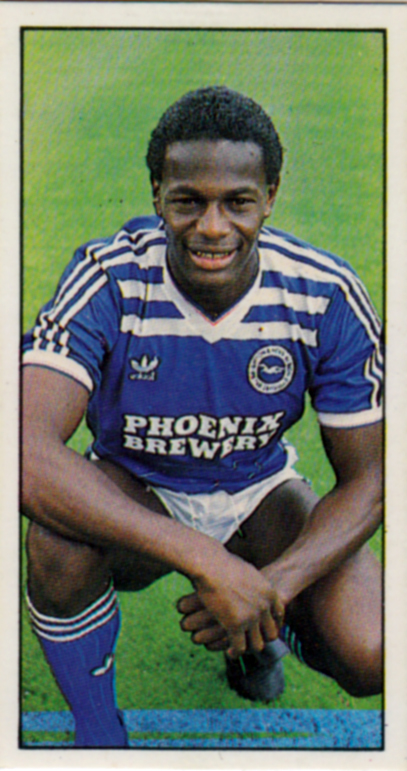
justinfashanu3Elsewhere, Jim Read’s fascinating biography of Justin Fashanu covers the latter part of the striker’s career and strongly argues against the myth that seems to be grown that some of the main facts known of Fashanu:
a) He was a promising footballer (as shown by the ‘Goal of the Season’ against Liverpool)
b) He came out as gay
c) His manager at Nottingham Forest, Brian Clough, and his brother John were far from supportive.
d) He committed suicide

were somehow all linked and that coming out as gay led to his death as be became ostracised from the football community. The details of Fashanu’s life, especially his struggle with injury (he actually retired from the professional game when he was released by Brighton) and his particularly brand of religion, not to mention the varying social values of football fans and players, show that things were far more complicated than that.

Spencer Vignes writes a splendid piece about ‘football specials’, the trains that carried the team and supporters to away matches in the 1970s and 1980s. He mentions the Seagulls Specials and there is a lovely quote from Mark Lawrenson about the party on the train after Brighton clinched promotion to Division One with a 3-1 win at Newcastle.

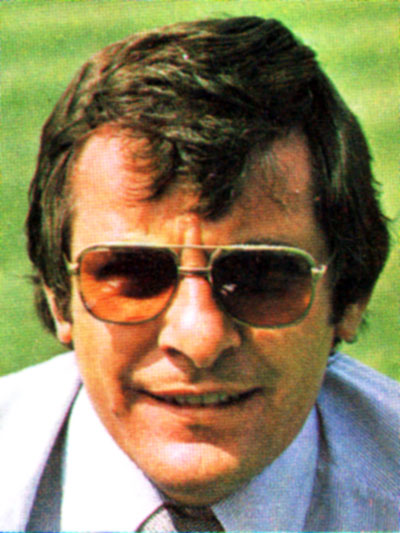
mullery_bigAs Alan Mullery said in his latter autobiography:

“We travelled home by train and The Seagull Special became The Paralytic Express. There was champagne everywhere. The journey back seemed to take a lifetime, but nobody cared. I walked the length of the train with the team, thanking the fans for their support. Everyone who was on that train will remember it forever.

Presenter Alan Mullery is also the ‘star’ of a low budget video nasty reviewed by Chris O from the Football Attic.

Finally, the magazine also charts the fall and heartwarming rise of Newport County, Brighton & Hove Albion’s League Cup opponents on Tuesday evening.

So, if this has whetted your appetite, feel free to nip off to the newsagent now. Or subscribe online via www.backpassmagazine.co.uk. Just £3.99.

Tagged , ,

Storybook start for new-look Albion in 1974

Ian Mellor's left foot flashes and the winner is on its way. Two Palace defenders are left struggling

Ian Mellor’s left foot flashes and the winner is on its way. Two Palace defenders are left struggling

Here’s a classic John Vinicombe match report on the opening day of the season in August 1974. It was Peter Taylor’s first competitive match in charge of the Albion and he saw the Dolphins record a sweet 1-0 victory over Crystal Palace. Back then, the rivalry was hotting up. The bumper attendance giving a good indication of the interest from each set of supporters:

Never in the 74 years history of the club, have Brighton and Hove Albion made such a momentous start to a season. A 26,235 crowd paid £11,000 to see virtually a brand-new team defeat superior Crystal Palace by an Ian Mellor goal in the 69th minute – the first time in ten seasons that Albion have started with a win.

On two counts Albion can feel a high degree of satisfaction: The team displayed sterling character to beat Palace, who were playing in the First Division two seasons ago; and the attendance was bettered by only eight turn-outs in Division One.

The last time Albion kicked-off with a win was season 1964-65 when Barrow were beaten 3-1 before a 20,058 Goldstone gate. Bobby Smith pulled the crowds in and obliged with two corking goals. Albion remained unbeaten at home in going to win the Fourth Divison championship.

The Argus public respond quicker than most to the big occasion, the opportunity to relish flair, and until half-time they were still coming in dribs and drabs to swell the shirt-sleeved throng.

Palace, of course, were attended by a large crowd, despite the misfortunes of the past two seasons, and the inevitable clashes in the North Stand where police did a splendid job in keeping rival factions apart.

This is the ugly side of football, the tedious side of the game that only deters decent spectators from enjoying a match. Given the same set of circumstances 10 years ago, before violence became a way of life for a vicious minority, there would have been 30,000 for the start.

Overall, Football League attendances were down on the corresponding time last season. But Albion, as usual, are very, very far from being an average club. The directors hoped for 25,000, and were not disappointed. They badly need money after massive expenditure of the past few months and happily the public responded by keeping their side of the bargain.

From a playing point of view, one should not expect too much. There will not be many cleverer sides in the Third Division than Palace, nor do I expect to see teams capable of generating industry on the Brighton side.

Peter Taylor and trainer-coach Gerry Clarke have quickly assessed the strengths and weaknesses – hence great emphasis in pre-season training on work rate. It will take time to achieve a blend of skill, and Taylor only knows this too well. But every crowd loves a trier, and Albion had eleven who never knew when they were beaten.

Any doubts about Peter Grummitt after the Ipswich game were dispelled. he kept superbly. Explained Taylor: “Under the amount of pressure to which we were subjected, it was a tremendous show of character on our part. We were outplayed for long spells. But I saw nobody hide. I was waiting for the first one, and he would have been off. Peter Grummitt kept us in the game. He never mishandled, or put a foot wrong, and inspired the back-four. We played, and beat, the best side in the Third Division, make no mistake about that. That’s why we have such good prospects. All we are lacking is know-how. I wish we could have had Ernie Machin on when we scored, somebody to control the game our way.”

Malcolm Allison talking to Taylor in his office afterwards, was remarkably restrained, considering the number of chances wasted by his feeble attack. The bitterness was unmistakable as he recalled the Mel Blyth goal disallowed by referee Robert Perkin. “There was no way that goal could have been offside, no way. Alan Whittle headed on to the bar, and the ball went back out to Mel and he knocked it in. Whittle wasn’t interfering with play.”

From the sidelines Blyth’s shot looked perfectly legal, but Mr Perkin indicated that Whittle was the offender, and after 37 minutes Albion were let off the hook for the umpteenth time. Mick Hill had missed a couple, Whittle and Don Rogers squandered equally good chances, and when Allison was asked the answer, he retorted “Rodney Marsh and Francis Lee.”

The fact that Mellor netted the winner was not lost on Allison: “I remember Spider when I was at Manchester City. I didn’t want to see him leave for Norwich. Directors force you to do that sort of thing, then they sack you. Spider was a late developer, but his timing is so good now.”

It is not surprising that the owner of such long legs and thin frame as Mellor should be dubbed as Spider by his mates. He is a player of deceptive pace, and is at his most dangerous off the ball. The goal was created out of nothing.

Fred Binney flashes a header wide after beating Derek Jeffries.

Fred Binney flashes a header wide after beating Derek Jeffries.

Around him vigorous Ricky Marlowe and busy Fred Binney put in an unselfish 90 minutes, and the transformation promised in Peter O’Sullivan was there for all to see. There is far greater urgency about O’Sullivan, as Taylor has promised.

Elsewhere the theme was work, and not once did a player lose control when confronted by higher skills. Rogers often threatened, but the old hands were not far wrong in saying that he seldom has a good match against Albion. For me, Whittle was the chief danger in a side that badly needed power.

Let Allison have the last word: “I cannot remember Brighton having a chance. The goal wasn’t a chance, but they kept battling away, and I give Brighton’s front players full marks for fighting against the odds.”

Albion: Grummitt, Piper, Wilson, McEwan, Rollings, Govier, Welch, Binney, Marlowe, Mellor, O’Sullivan. Sub: Towner.
Crystal Palace: Hammond, Mulligan, Jump, Johnson, Jeffreys, Blyth, Whittle, Lindsay, Hill, Rogers, Taylor. Sub: Swindlehurst for Hill (58 minutes)
Referee: Mr R. N. Perkin (Stafford)
Bookings: Taylor (foul)
Attendance: 26,235

Crystal Palace goalkeeper Paul Hammond misses his punch and the ball runs down between him and Albion's Andy Rollings as Fred Binney and Ricky Marlowe move in following a corner at the Goldstone.

Crystal Palace goalkeeper Paul Hammond misses his punch and the ball runs down between him and Albion’s Andy Rollings as Fred Binney and Ricky Marlowe move in following a corner at the Goldstone.

Tagged , ,

New arrivals hold the key in 1980/81

newsigning1980v2

The 1980/81 Albion squad was probably the strongest in the club’s history. At least on paper. With their first season of top flight football behind them, Brighton looked to build on their experience, and were bolstered by Michael Robinson and Gordon Smith, two £400,000 captures. The Robinson-Ward striking partnership appeared to promise an avalanche of goals while Mark Lawrenson and Steve Foster seemed likely to keep things solid at the back.

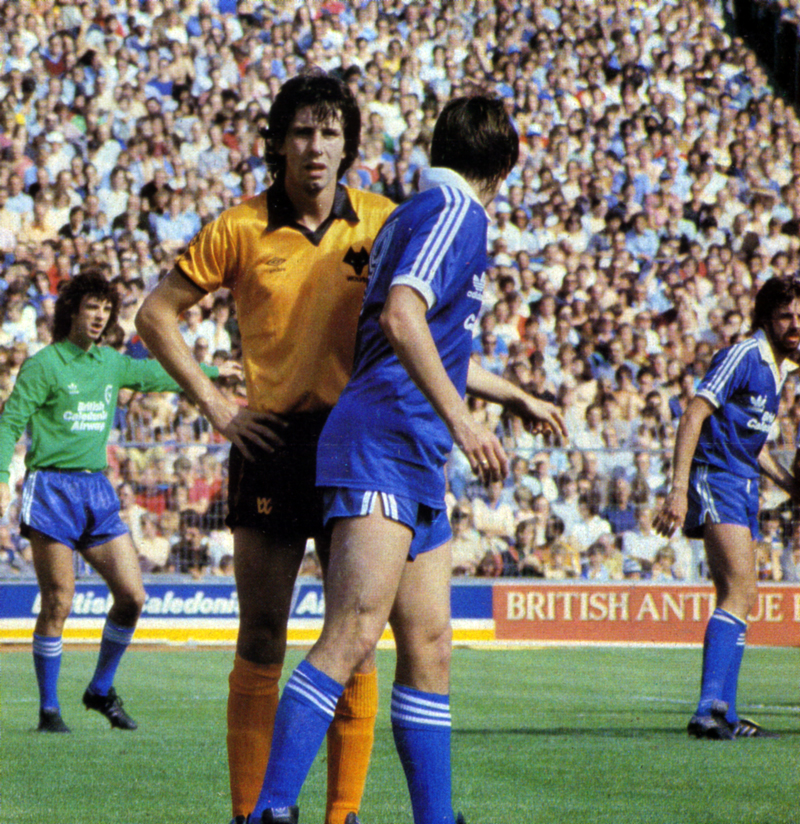
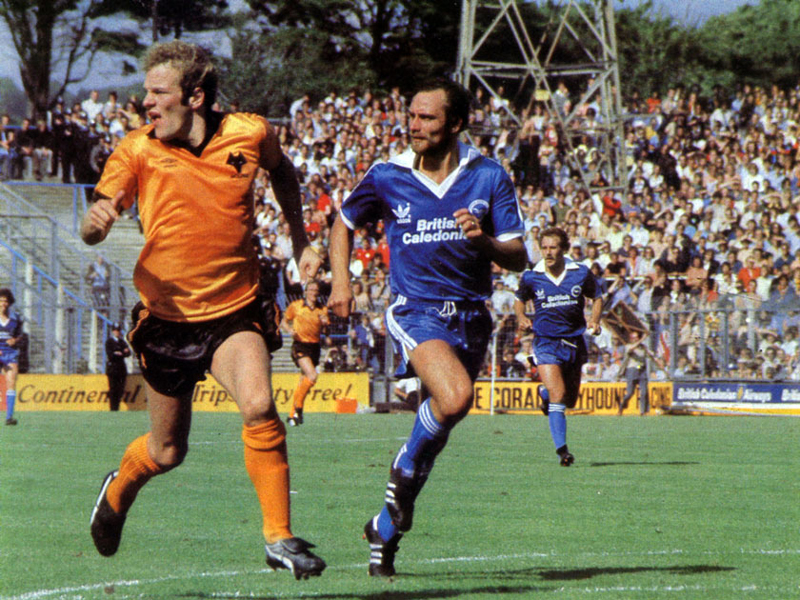
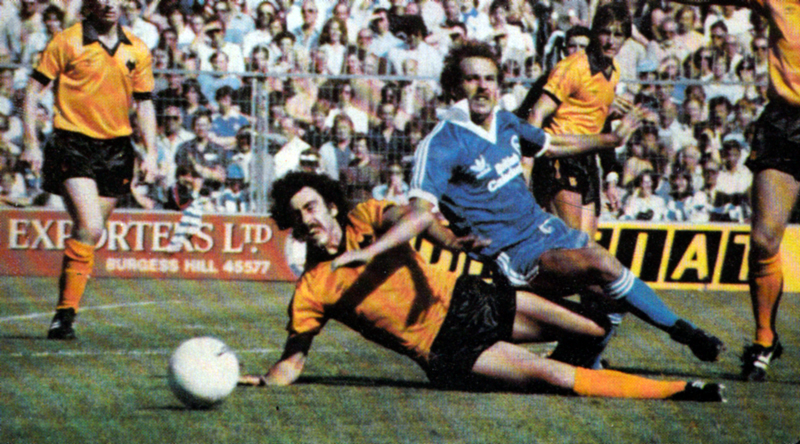
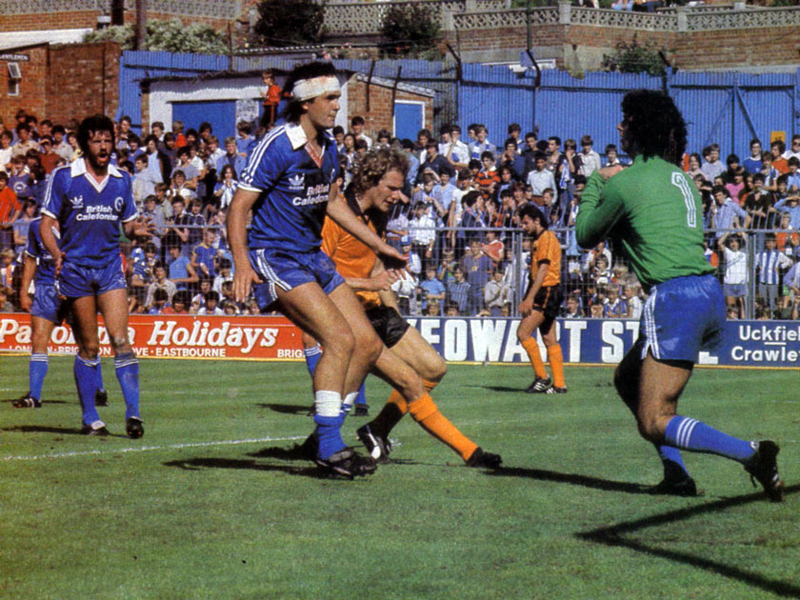
It certainly didn’t pan out that way, which is perhaps testament to the outstanding contributions that Ray Clarke and Peter Suddaby made to the Brighton side. They both had a profound effect on Albion’s season when they joined mid-way in 1979/80. Their departures certainly coincided with a downturn in Albion fortunes, despite the opening day success, a comfortable 2-0 victory over Wolverhampton Wanderers in the sunshine at the Goldstone in August 1980.

An outstanding article by Dave Spurdens dissects the functioning of the Brighton team at the time:

Last season the First Division induced in Brighton the sort of timorous insecurity common to squatters awaiting removal from their borrowed abode.

No mean appraiser of life’s realities in the big league, Alan Mullery saw clearly that reinforcements would have to be moved up if Brighton was to grow from a rather crotchety tenant to an established mortgagee.

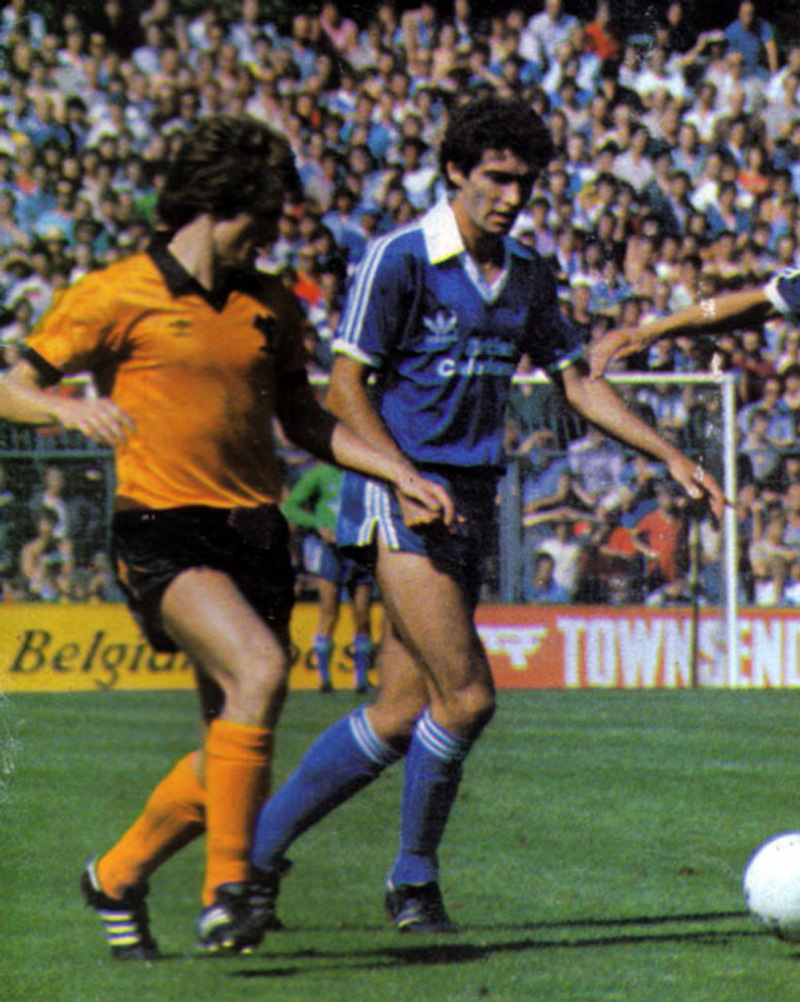
The departures of Ray Clarke, Peter Suddaby and Andy Rollings to pastures new heralded the expected re-jig and after a series of wrangles Mullery forked out a million pounds and came up with Gordon Smith, signed from Rangers, Ray McHale, the generator behind Swindon’s surge, Moshe Gariani, spotted in Israel during a club trip and finally, after much ado, Michael Robinson (below, middle), the Manchester City reject, unloaded by Malcolm Allison in a cut price deal.
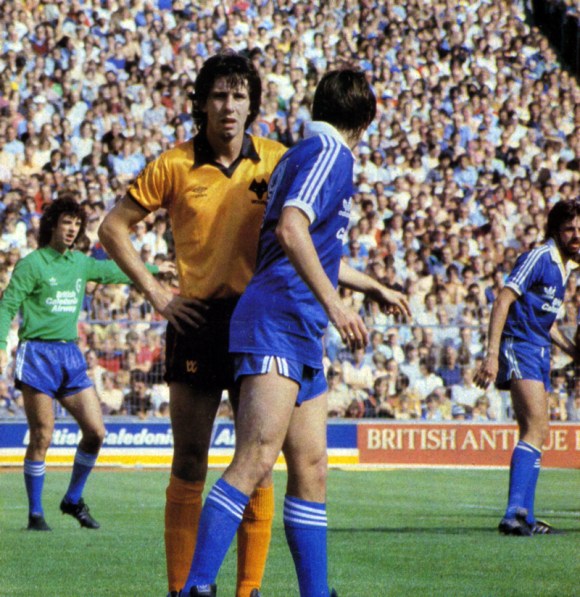
wolves3

Robinson went to the Goldstone Ground hopefully to prove that Allison had been right to buy him in the first place, but hopefully remiss in sending him packing after one short season.

Apart from those four it’s the same Brighton and at the end of the day success will depend on these players being better than those they have replaced, coupled with the experience of more prolonged First Division status.

Mullery’s prognostications that Brighton will cause a few surprises started off with a bang when Wolves, the team many tip to challenge the leaders, were reminded that the supposed no-hopers from the south would certainly not help them in their aspirations and were duly beaten by them 2-0.

The blend looked good. Smith, everybody in Brighton averred, was another Trevor Brooking. McHale’s industry was commendable and Robinson, if nothing else, confirmed that he was unlikely in the next few years to halve his value again. Robinson, whom nobody apart from Malcolm Allison thought a near million-pound player, now has to prove that he is a near half-million player.

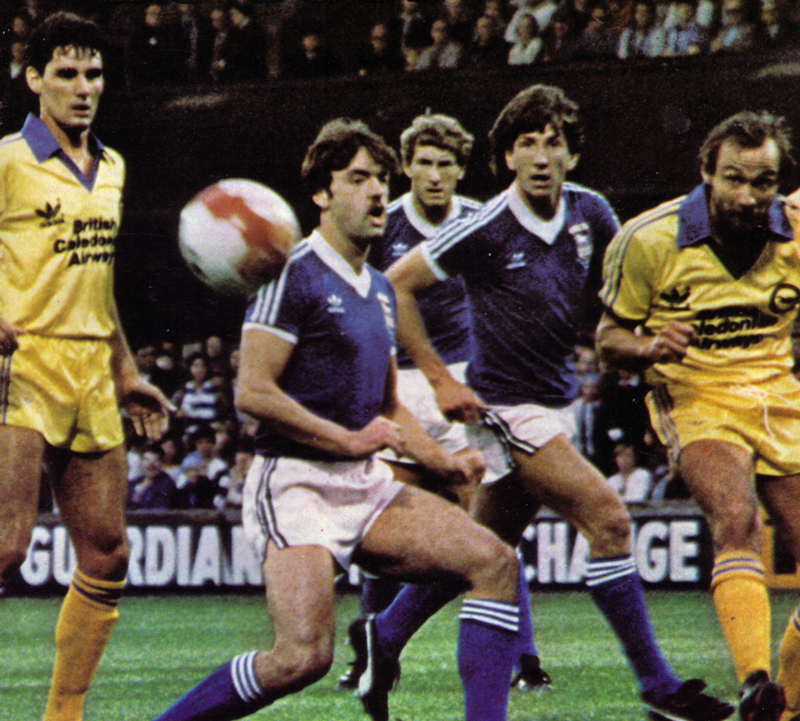
The next game was not so auspicious but nevertheless, despite defeat, demonstrated Brighton’s senior status against another of this year’s tips for the great ‘Nick the title off Liverpool’ campaign, Ipswich.

Taken all round in victory and defeat, this new-look Brighton is a tight outfit with a very solid back four, a midfield that is directed by skipper Brian Horton and a front line that once gets to know itself could produce problems for even the best.
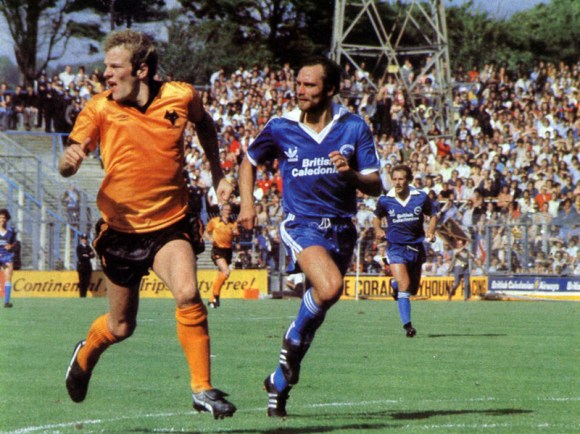
wolves7

Horton (above), a ubiquitous character, has an influence in the three lines slotting into the back whenever Mark Lawrenson takes off for advanced territory, running the midfield and going on occasional forays behind his front three whenever the opportunity presents itself.

In four seasons at Brighton, since he arrived from Port Vale, he has matured into an integrating force with a strong sense of how to exploit time and space. His influence gives Brighton a varied tempo and a less predictable pattern of advance.
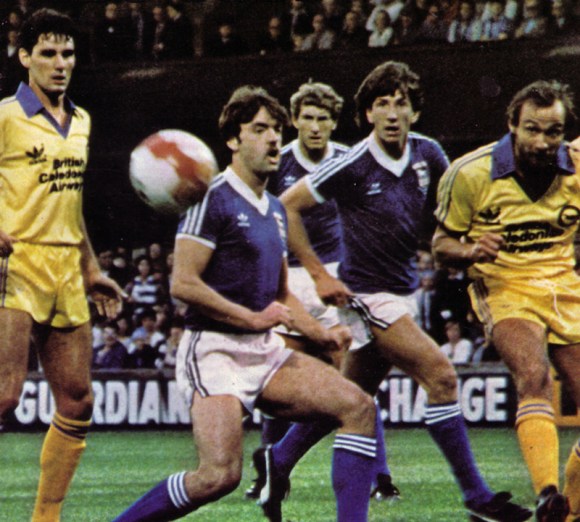
ipswich

Horton (above) plays a complete midfield role and his defensive work is tenacious and very professional.

Unlike his two midfield colleagues, who allow players to steal goalside oblivious of the pressure it puts on the back four players, Horton is an expert tracker and uses his experience to transfer marking responsibilities when he feels he is being pulled too far away from crucial zones.
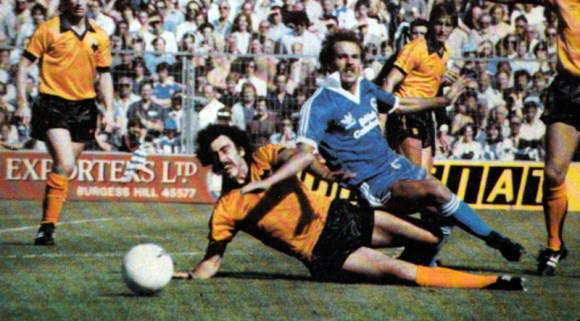
raymchale

McHale (above), though he operated well forward, is an industrious player busily looking for possession from the man with the ball, but he is not so aware of the damage those without the ball can do.

Neil McNab falls into the same trap of being less than attentive to those who ghost behind his area of concentration. On the ball, he has the look of threatening competence as he moves forward with control. The final pass is often less incisive than anticipated, and some of his forward probes are too easily read by those who should be troubled by them.

Brighton’s build-up when started by Horton or full-back John Gregory is patient and constructive, but tends to be a fifteen-yard game which is easily closed down by good defenders or by teams that fall off and vacate the midfield space.

With a build-up like this, one waits frustratingly for the breakthrough from the back or the run into space which has been created by the diagonal drift of their build up.

So often play develops from the right to left, dragging opposition players with it and leaving large spaces into which back or midfield players should be running in order to exploit opportunities on the blind side.

Even when they are developing their game around the midfield, and where the opposition is turned minimally, there is still a great need for play to be switched once the options have closed down on one flank or the other.

If there was a major reason, in their second game, why their opponents could sit reasonably comfortably it was this tendency to attack in straight lines.
ipswich1

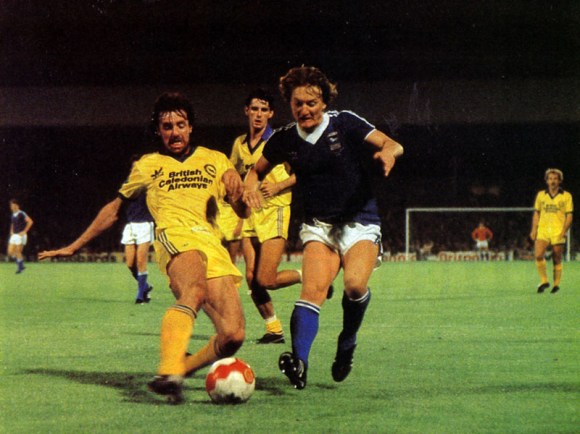
It has been generally accepted by the Seasiders that (above) Lawrenson’s best role is at the centre of the back four.

Certainly with he and Steve Foster at the heart of the defence there is a solidarity that will stand them in good stead whenever they play.

Brighton’s resources probably dictate this policy, lacking the luxury of being able to use players in their perfect role.

I thought Lawrenson playing in front of the two centre-backs last season was more effective because of the strength of his forward runs, and he didn’t have the worry of leaving gaps at the back.
wolves5

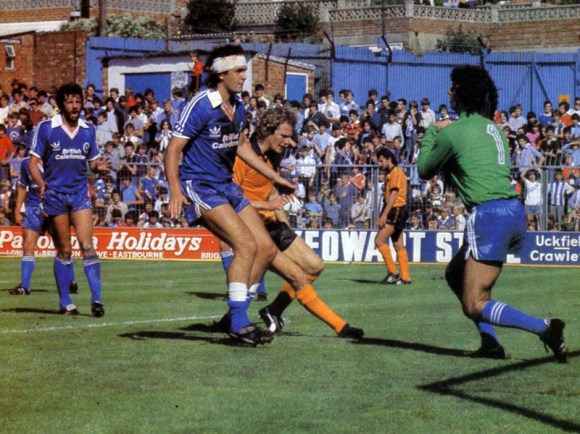
Foster (above) is playing better than ever alongside Lawrenson, with tireless courage and aggression.

There are those who feel him to be one of the best young centre-backs in the country. Against Ipswich, it was interesting to see him with the two favourite contenders for the spots currently held so securely by Thompson and Watson.

Under far greater pressure, Foster made several early errors – especially when it came to picking up high balls on the edge of the box. But once he settled down, he looked the equal to anybody aspiring to international status.
wolves4

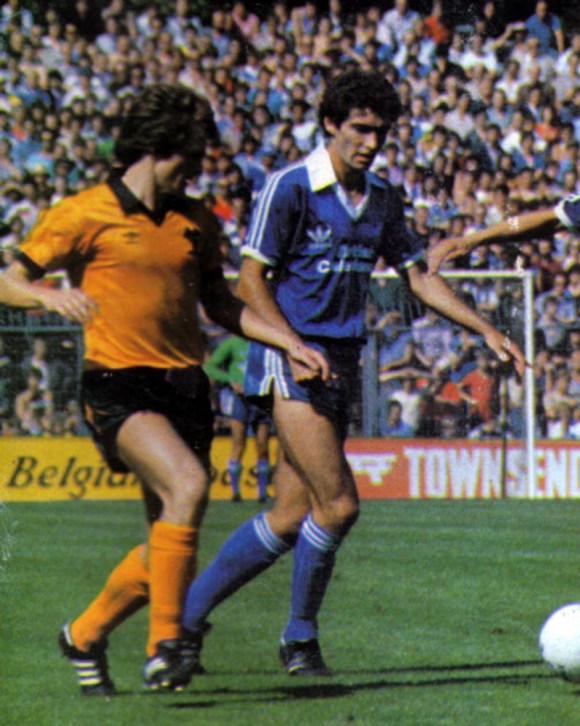
At full back, Gregory (above) turn in his usually immaculate performance both defensively and creatively when he plays the ball forward, but his energy in getting forward into good space seems seriously curtailed. Whether through disinclination or orders, only the player and his manager can know.
wolves1

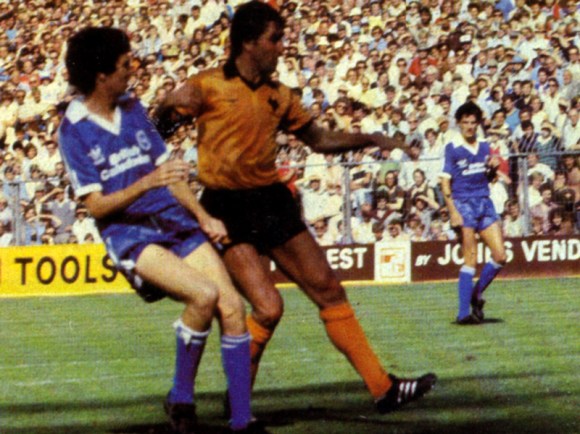
On the other flank, young Gary Williams (above) gives the impression that, unless he tightens up on his jockeying to players who run at him withthe ball, he could be in for a skinning before the season gets much older.

The rest of his game seems to be developing well and the way he linked up with the centre-back in the middle when his partner had been pulled out wide suggests he is learning his craft quickly.
wolves2

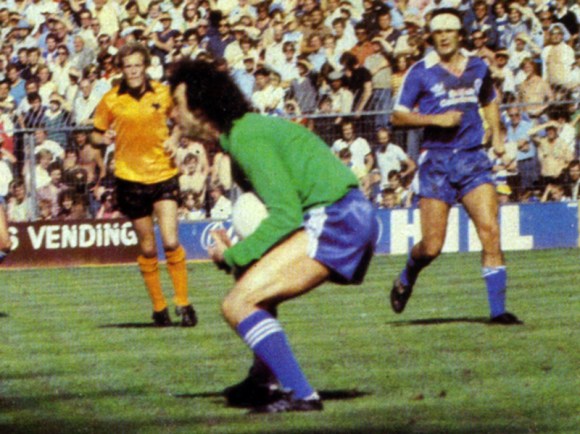
Behind this promising back four Graham Moseley (above) looks quick and agile, enjoying the confidence of those in front of him.

There are times when he could be more positive in his communication but I suspect his diffidence may be prompted by the perpetual dialogue conducted by Foster just in front of him.

The 1980/81 season turned out to be another one of struggle as Brighton’s reshaped side blew hot and cold in the First Division. After the opening day victory over Wolves, it took another six games to record another League victory. Peter Ward left for Nottingham Forest in the middle of a ten match winless spell from late September that saw Brighton vacate the League Cup and marooned at the bottom of Division One by mid-November. Then, a surprise 1-0 win over League leaders Ipswich Town kick-started a brief run of good form. After another slump in the New Year, when Brighton won just twice in fifteen matches, the Seagulls saved themselves with a miraculous spell of four wins in four matches at the end of the season.

This late form showed what Mullery’s most accomplished looking side was capable of. However, it was not without its flaws, as journalist Dave Spurdens capably showed. Although Michael Robinson came good with 22 goals, this did not fully paper over the cracks. When Mike Bailey took over in the summer of 1981, another re-jig of the squad was in the pipeline.

Tagged , , , , , , , , , ,

From Alan Young’s autobiography: Jimmy Case goes AWOL

During 1983/84, Brighton & Hove Albion had three Youngs in their squad: Eric Young, Willie Young and Alan Young, none of whom were related! In a seldom seen aligning of the stars in March 1984, all three made the starting line-up in the fixtures against Manchester City, Derby County and Leeds United. It proved a winning combination as Albion drew 1-1 against promotion-chasing City before thrashing both Derby and Leeds 3-0.

Scoring a powerful volley from a Gary Howlett cross in the second half against Derby was Alan Young, a burly striker who was exceptional in the air, yet also had fine technique on the ground. The Scot had been signed by Jimmy Melia in a £150,000 deal for Brighton from Sheffield United in August 1983 as a replacement for Michael Robinson. He announced his arrival at the south coast club in September 1983 with a spectacular overhead kick in his debut against Chelsea.

alan_young

Although he had only one season at the Goldstone Ground, and was in and out of the side with injuries, he was regularly on the scoresheet when playing for Brighton. Thanks to Simon Kimber, who has allowed me to share an extract from Alan Young’s autobiography ‘Youngy’:

I didn’t realise until I looked recently that my goal return at Brighton was pretty decent; I got 12 goals in 26 matches and I really enjoyed my time at Brighton.

The supporters were still recovering from losing the FA Cup Final to Manchester United in 1983 (this was the game when Gordon Smith should have won the Cup for Brighton with a late chance when he was one on one with Gary Bailey) and the whole euphoria of the day and the occasion. I’m not saying that Brighton isn’t a proper football club but in Brighton the football was viewed as part of the entertainment industry. The football they tried to play reflected that and if the fans weren’t being entertained then they got at the players and the manager.

At Brighton we played with a lot of freedom. There were no restrictions. We were allowed to make our own decisions on the pitch. We had the players with the right experience to do that and I’m thinking of international players like Corrigan, Ryan, Grealish and experienced lads like Jimmy Case and Steve Foster. The football was very enjoyable there and never more so than when Jimmy Case and I were playing together; I loved playing with Jimmy. He was very quiet and has a hearing aid because he doesn’t hear too well.

I remember we finished training one day and headed off to Woody’s as usual and then on to the gentlemen’s club for a game of pool. Then everyone starting to drift away and by ten o’clock in the evening there are only about six of us left. (Bear in mind that we didn’t have mobile phones back then so you couldn’t phone up to let anyone know you were going to be late.)

jimmycase9

So I got home and Karen asked me where I had been so I told her and then she asked me if Jimmy had been with us because Lana (Jimmy’s wife) had been on the phone asking if we knew where he was. I told her not to worry because he left same time as me and would probably be home any time soon. The next day Jimmy is nowhere to be seen and nobody knows where he is. So there is a little bit of panic around. Nobody has a clue where he has gone until the following morning at training when Jimmy saunters in, whistling and acting as if nothing is wrong. So I asked him: “Jim, where the f*ck have you been?” and he looks at me and says “What do you mean?.”

I said “Jim, nobody knows where you have been, we’ve been panicking”.

Then he smiles and goes. “Ha! The Avenue” and I’m like “The Avenue? What Avenue?” and he says “The f*cking Avenue de Champs Elysee!.” Then he tells us how, after we all went our separate ways that night he fancied going to Paris! So he went up to Gatwick and jumped on a plane to Paris. He showed us the stamp in his passport to prove it – he had gone to Paris for a day just because he could and he fancied it.

On the pitch he was different class though. I once saw him on the receiving end of a dreadful challenge when a guy (I forget who) tried to get the ball off him and put his studs down the back of his calf and Achilles. That really bloody hurts and Jim just let the ball roll away and turned on this guy and, through gritted teeth, said “Don’t you ever, ever f*cking do that to me again!” and then he turned and went after the ball and got it back before it went out. I watched this going on and the guy was sh*tting himself. That is the only time I have really seen one professional footballer genuinely scared of another. Because Jimmy could be a hard bastard and really knew how to look after himself.

He used to do about two hundred sit ups every days after training. He would wear one of those polystyrene bags that you get from the dry cleaners when he did them. He got me in to it as well!

If you are interested in reading more, you can buy ‘Youngy,’ the Alan Young autobiography here on the accompanying site.

You can also order a rather wonderful Alan Young t-shirt from Cult Zeros.

1984-85v3

Back row: Mark Jones, Steve Penney, Steve Jacobs, Alan Young, Graham Pearce, Kieran O’Regan, Gary Howlett;

Middle row: Sammy Nelson (coach), Hans Kraay, Eric Young, Joe Corrigan, Perry Digweed, Frank Worthington, Terry Connor, George Petchey (youth development officer);

Front row: Neil Smillie, Chris Hutchings, Jimmy Case, Chris Cattlin (manager), Steve Gatting, Gerry Ryan, Danny Wilson.

Tagged ,

EastEnders’ Anita Dobson meets Albion gals

angie

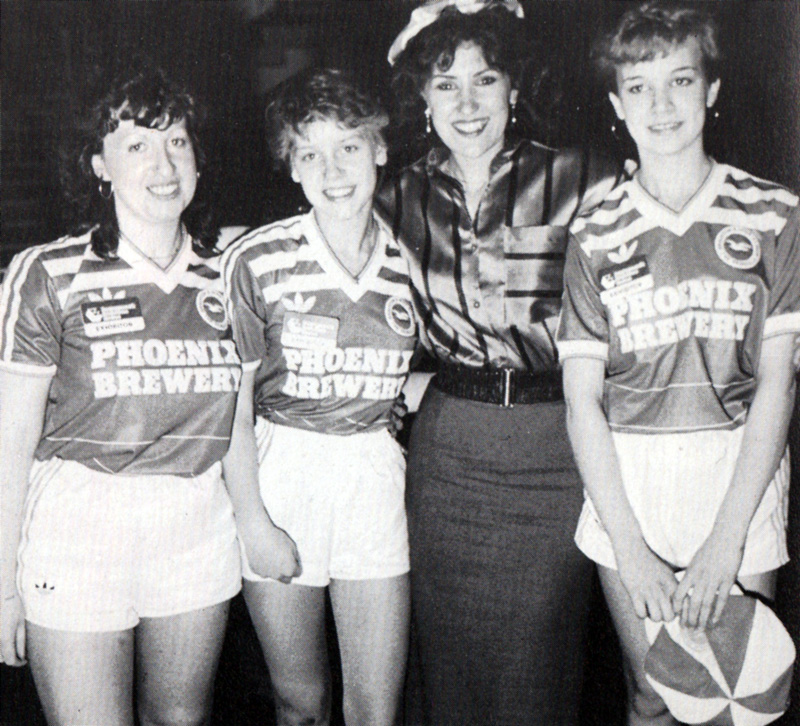
From the Brighton v Peterborough programme in March 1986:

Our feature photo shows some very attractive young ladies on the Supporters’ Stand at the Brighton Ideal Home Exhibition three weeks ago. Gill Lacey, Claire Williams and Kieron Dorey are wearing the Albion shirts but the ‘gal with a smile’ in plain clothes is Angie from EastEnders, screen wife of ‘Dirty Den’, otherwise (known as) actress Anita Dobson.

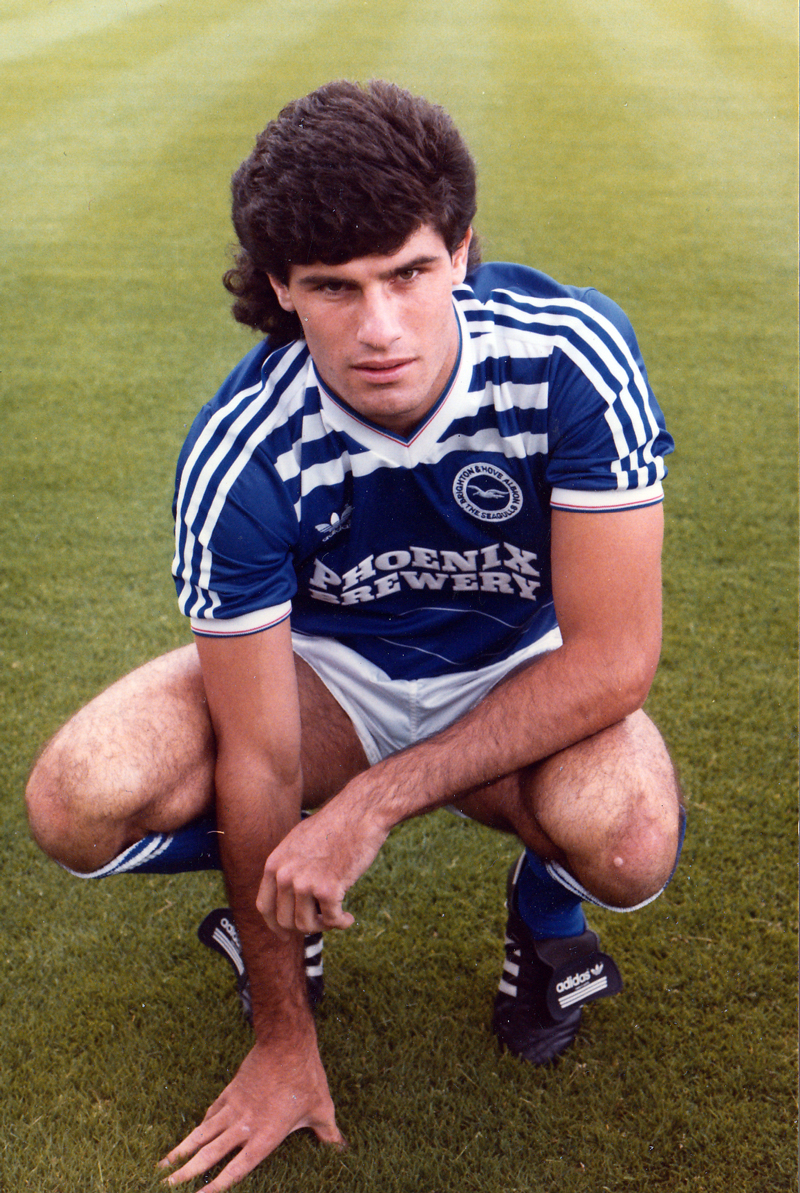
Maybe the fans could have interested her in securing a deal for Phoenix Brewery at the Queen Vic!

Tagged