Author Archives: Goldstone Rapper

John Gregory: ‘So tough to turn my back on Brighton’

johngregory8a

John Gregory is back as an employee in Sussex, as the new manager of Crawley Town. I doubt any Brighton & Hove Albion fans will have anything positive to say about his exploits as a manager, following the bitter saga over the signing of Gareth Barry.

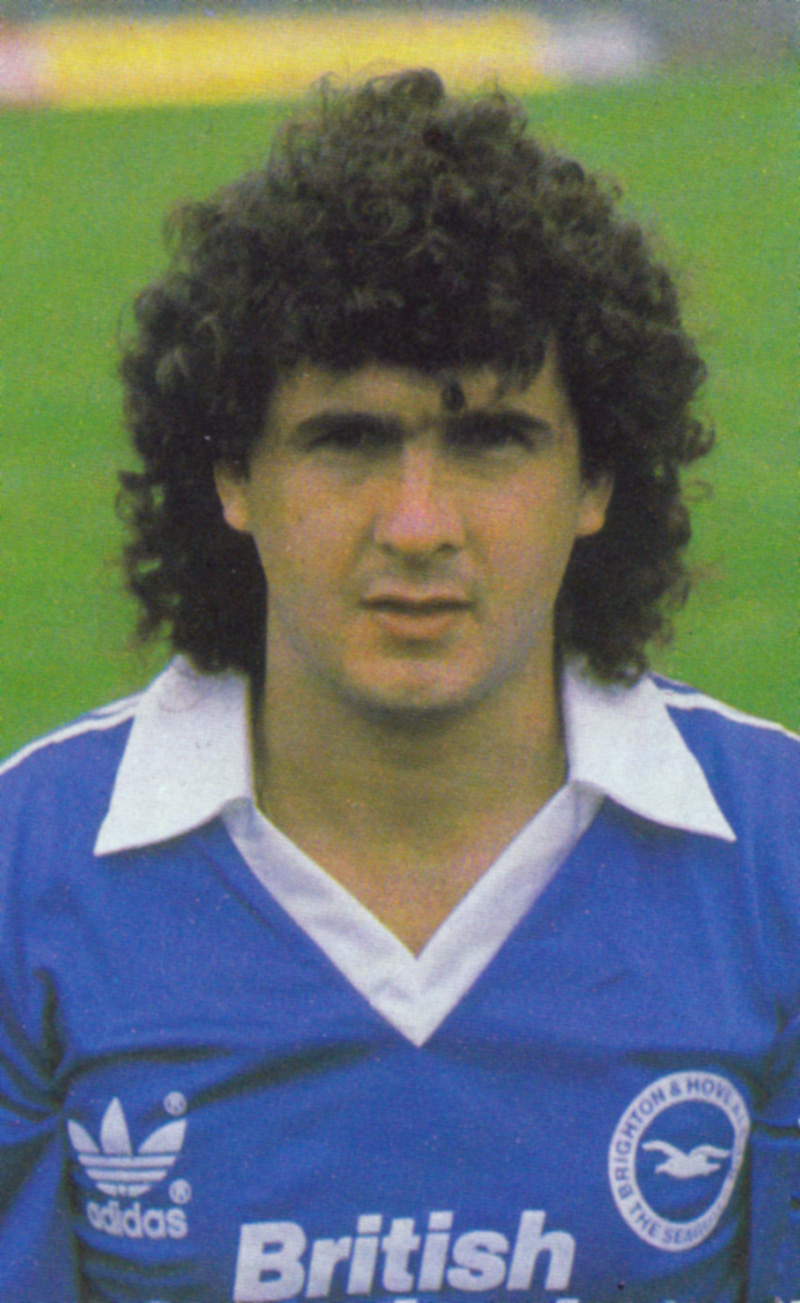
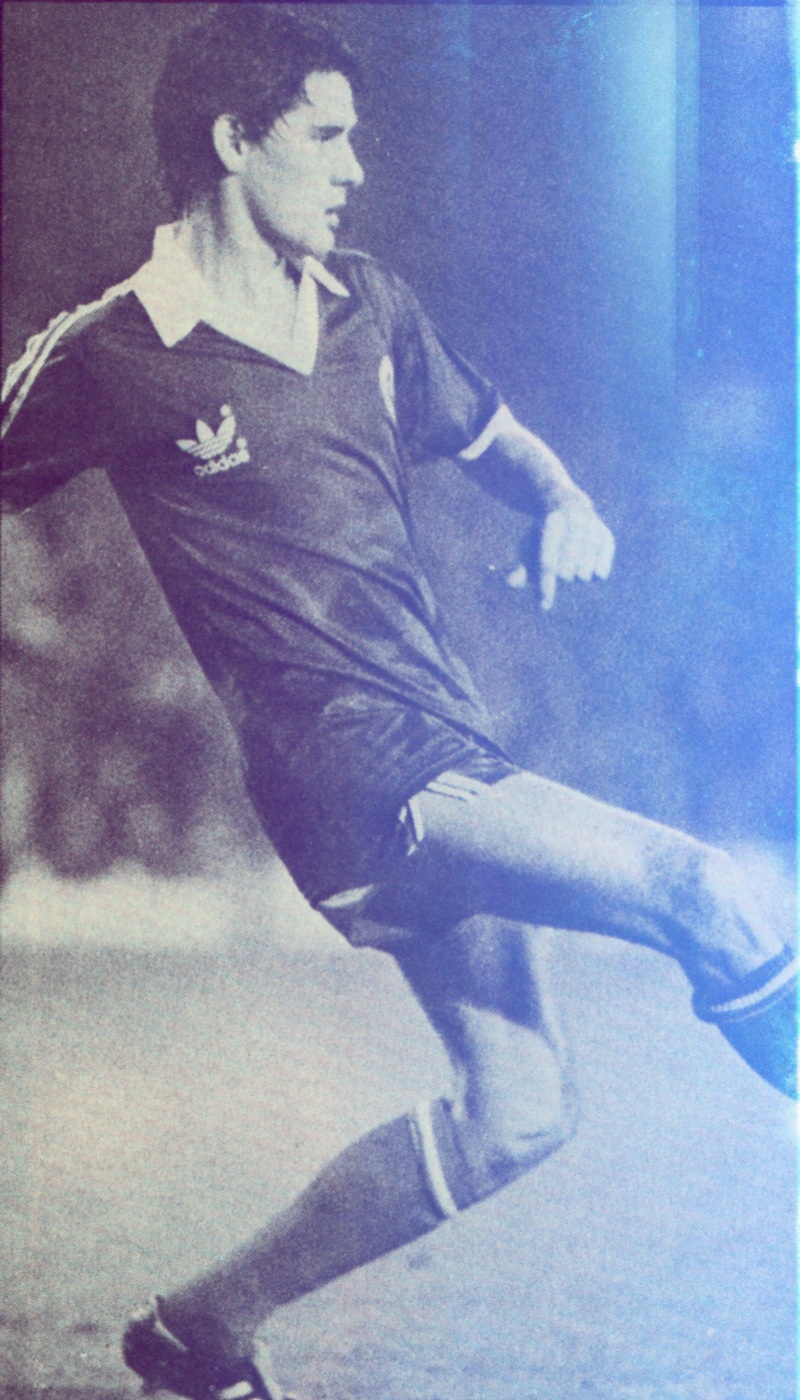
Nevertheless, Gregory served the Albion with distinction as a player in defence and, occasionally, in midfield. In Match Weekly (18 July 1981), he expressed warmth for the side he was leaving:

QPR’s new £300,000 signing John Gregory told this week of his pain at leaving First Division Brighton.

“It was a wrench – I found it difficult to turn my back on the lads at Brighton,” admitted the former Aston Villa and Northampton defender.

“I enjoyed two years at the Goldstone Ground and made many friends, but the prospect of a new challenge with Rangers appealed to me.”

And as John prepared to pack his bags for London he tipped his former team-mates for a bright First Division future.

“The team has yet to reach their full potential but when they do Brighton will be •a force to be reckoned with.”

Lest we forget, before he left Brighton, he plundered a couple of goals for the Seagulls in the famous 3-0 thrashing of relegated Crystal Palace in April 1981, which helped enormously in the club retaining its top flight status:

The article in Match continues:

Moving from Brighton was •a shock for John. “I know Alan Mullery turned down •a bid – but •a couple of days after he resigned chairman Mike Bamber accepted OPR’s offer.

“I hadn’t asked for a move so the news that I was to be allowed to go was quite a surprise,” he added.

In joining Rangers John is meeting up with one of his boyhood heroes – former Spurs player Terry Venables.

“I used to watch from the terraces at White Hart Lane and my favourite players were Terry and Alan Mullery – it’s ironic that I should end up playing for both of them. Terry’s an ambitious manager and he’s determined to get QPR beck where they belong – in the First Division. The fact he’s spent so much money on now players shows how determined he is – I’m very excited about the prospect of playing for them.

“I don’t know much about the Second Division although I see that I’ll be visiting •a few old haunts. When I played for Northampton I went to such places as Rotherham and Grimsby – and I’ll be back again next season.”

John isn’t so €concerned about taking •a drop from the First Division to the Second. “Rangers are a First Division set up and I’m sure we’ll be back soon.”

He’ll also be re-united with his former Aston Villa team-mate, goalkeeper John Burridge.

“We’ve been on the phone to each other •a couple of times since the move and I’m really looking forward to seeing him again,” said John, who made 59 full League appearances for Villa.

This season is an experimental one for the Loftus Road club because they become the first team in the Football League to play their home games on artificial turf.

“I’m told it’s very similar to playing on grass but come February or March I’m sure it’ll give us an advantage because it won’t suffer the effects of the weather.

“Another plus is that we’ll be able to train on all season and that’s got to be •a bonus,” said John.

By the end of Gregory’s first season at QPR, 1981/82, the side reached the FA Cup Final against Spurs, and the utility man hit the woodwork at Wembley. It took until the following season before the Loftus Road side clinched promotion to Division One. The prospect of playing against his old side at Brighton did not materialise as the Seagulls were relegated. However, Gregory was re-united briefly with Alan Mullery who was QPR boss for a traumatic six months in 1984. There was even talk of trying to bring Gregory back to the Albion during the Chris Cattlin era in the mid-1980s, but the club could not afford him.

Gregory then became a hot topic of conversation for Seagulls fans when he became Aston Villa manager. Although Gareth Barry was signed by previous boss Brian Little, he made his League debut under Gregory. Gregory incensed followers of the Albion when he said that Dick Knight ‘wouldn’t know Gareth Barry if he stood on Brighton beach in a blue and white striped shirt, a ball under his arm and a seagull on his head.’ He later added:

“We got absolutely robbed at the time by Brighton. He was substitute for Brighton youth team once. Suddenly Bryan Jones, the youth development officer at Villa, took him from there and he came to us. We tried to agree compensation and we couldn’t. When I put him in the first team his valuation went through the roof. Brighton were very shrewd and they knew the longer they left it the more they’d make because Barry was doing so well.

“Also at the start of the season he got called up by Glenn Hoddle to train with the England squad and that put his valuation up even more. We’d already paid £100,000 at the time and we ended up paying £1 million for him. That sounds cheap now when you see what he’s achieved, but it should’ve been a lot less.”

With the current news of Nelson Mandela’s death ringing in people’s ears, many people are taking to social media to praise the way the former president of South Africa walked the path of forgiveness and reconciliation. Now that Brighton is a thriving club once more, safely into its new stadium, I wonder how many Brighton fans would be willing to seek reconciliation with John Gregory. Who could be open to forgive him for his comments about Aston Villa’s attempt to prise Gareth Barry from cash-strapped Albion without compensation all those years ago?

Tagged

New executive boxes in the North Stand!

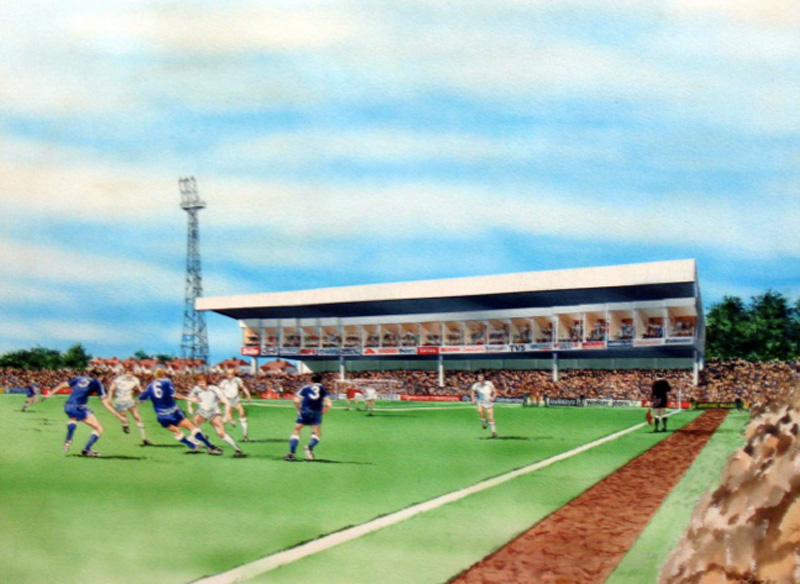
At the Goldstone Ground, the old North Stand was demolished in 1980 as it was deemed structurally unsafe by East Sussex County Council. This image is from a watercolour painting saved from a house clearance of ex-Albion chairman Bryan Bedson. It gives a fascinating artist’s impression of how the old structure’s replacement might have looked:

goldstoneredeveloped

If you study it carefully, you can see twenty executive boxes above advertising boards for companies such as TVS and Caffyns.

I’m not sure how public this image was at the time. It might have seemed all a bit ‘pie in the sky’ as this protest banner suggested. The banner was seen draped over the railings in 1982/83, as Brighton departed the top flight:

northstandroof3

In the end, a plain roof was built over the North Stand. But for those still dreaming of executive boxes in the North Stand: the drawing board went that-a-way!

Tagged ,

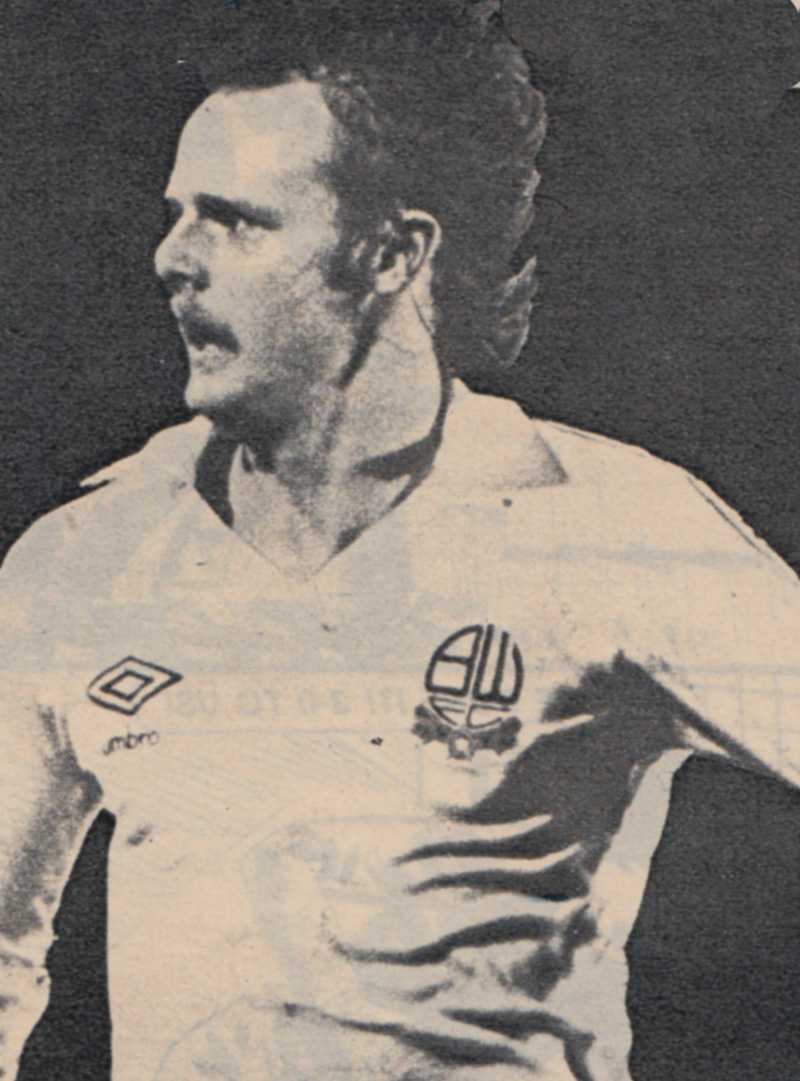
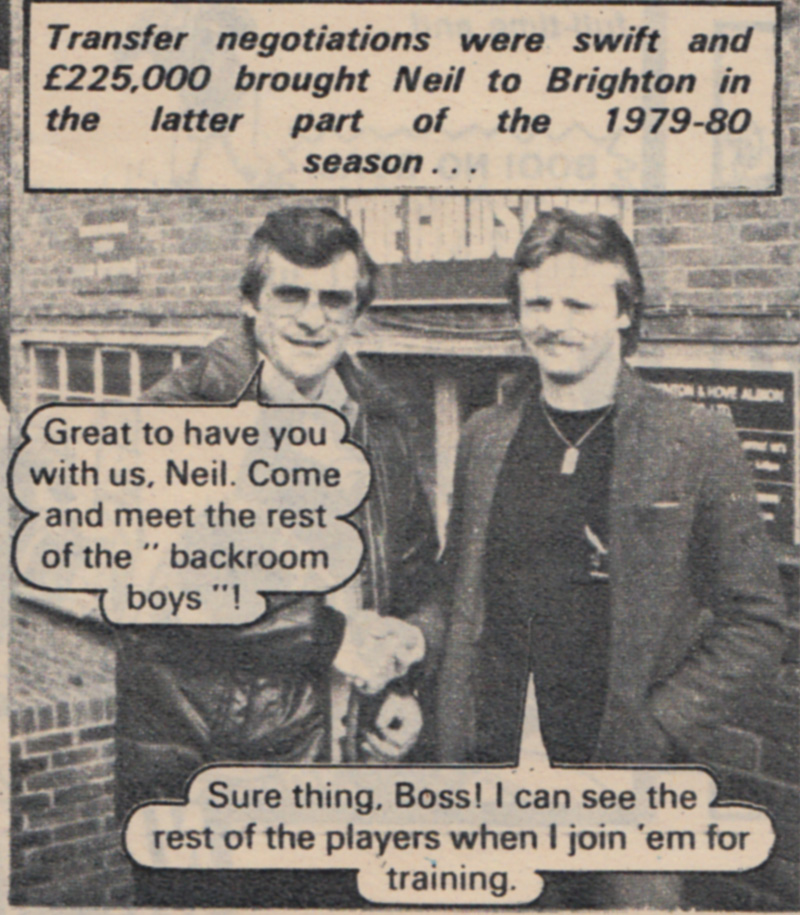
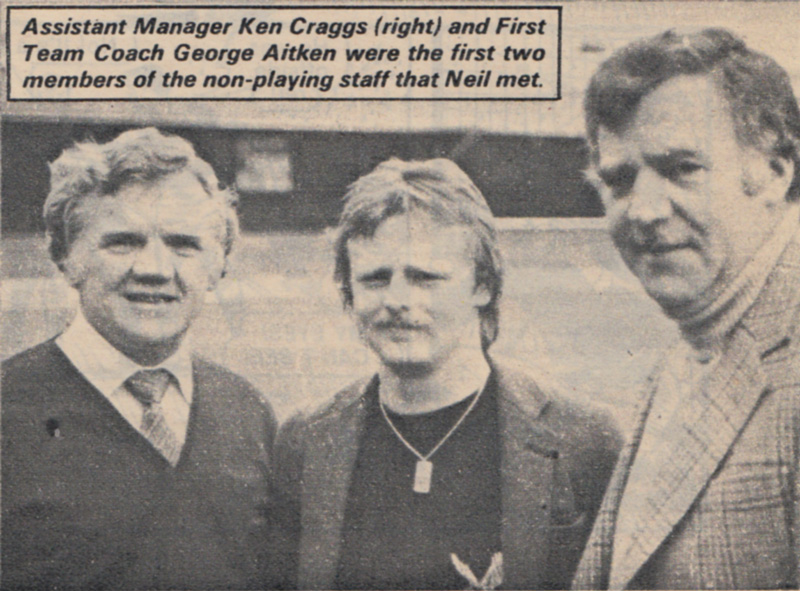
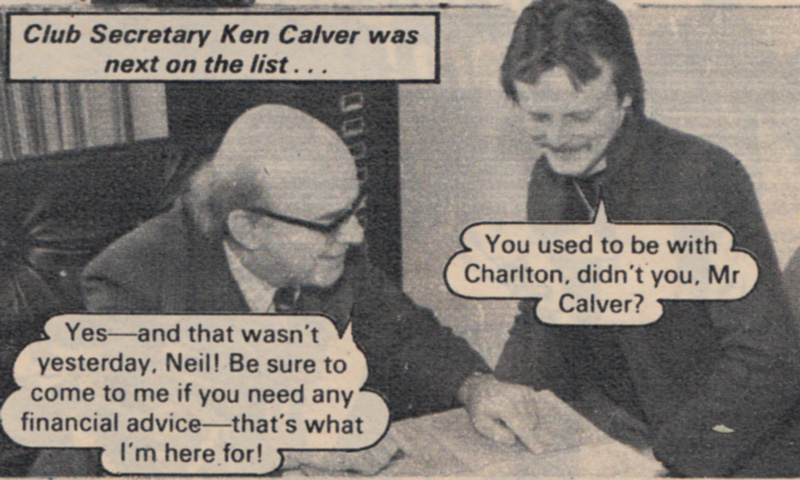
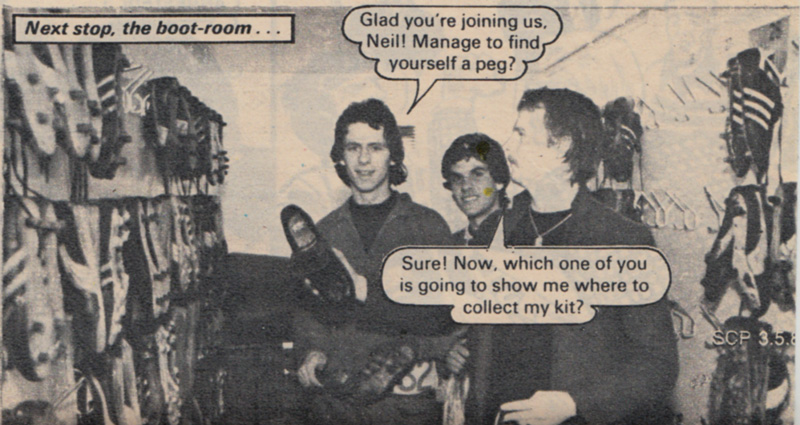
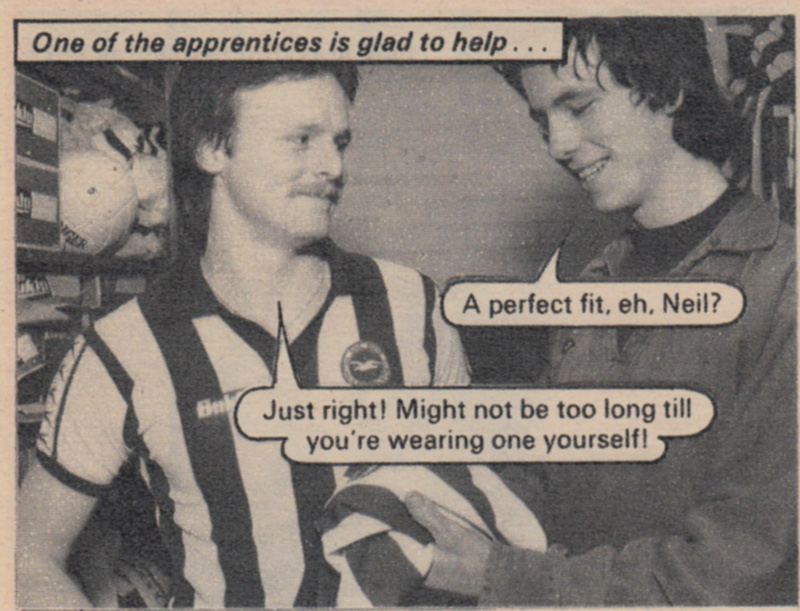
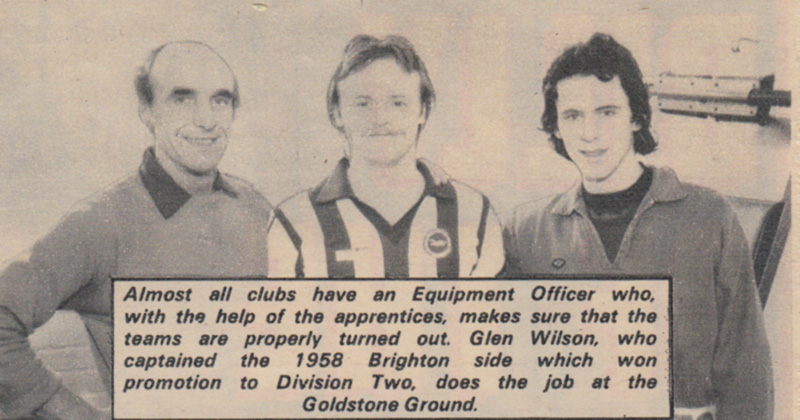
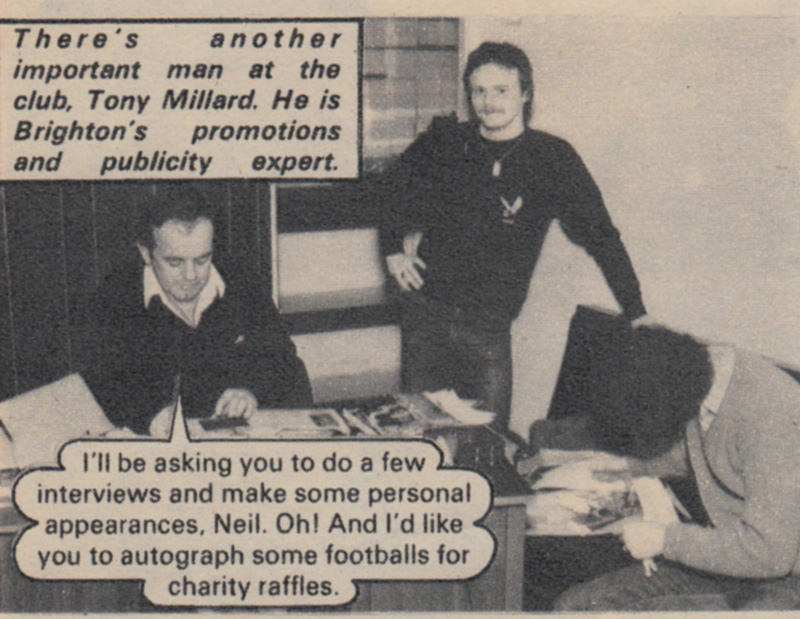
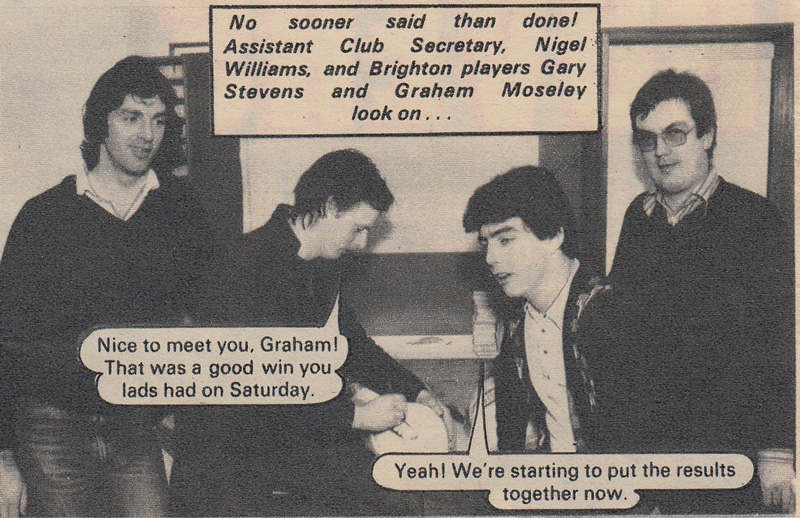
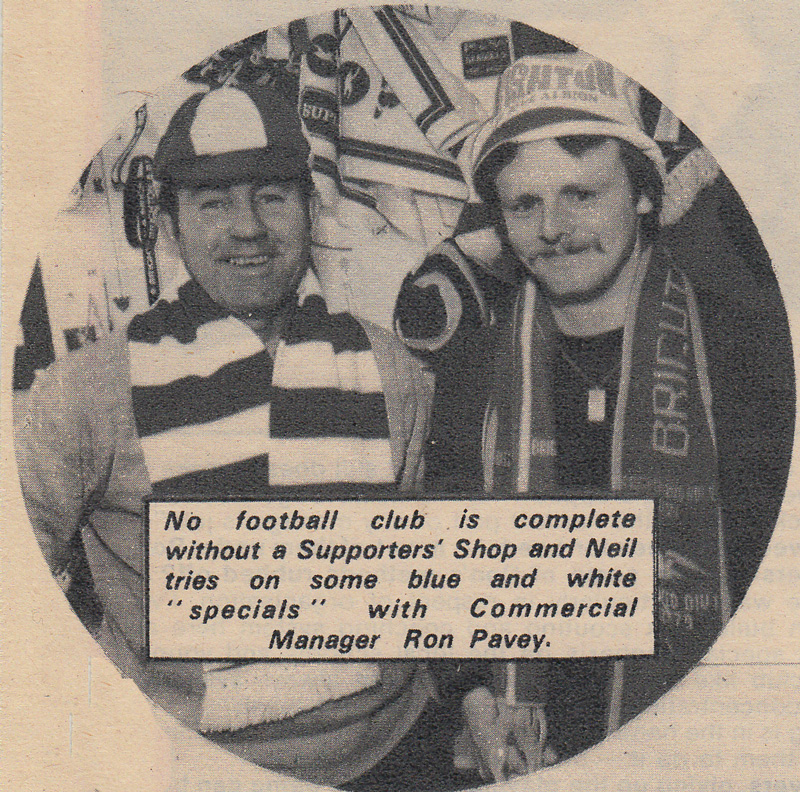
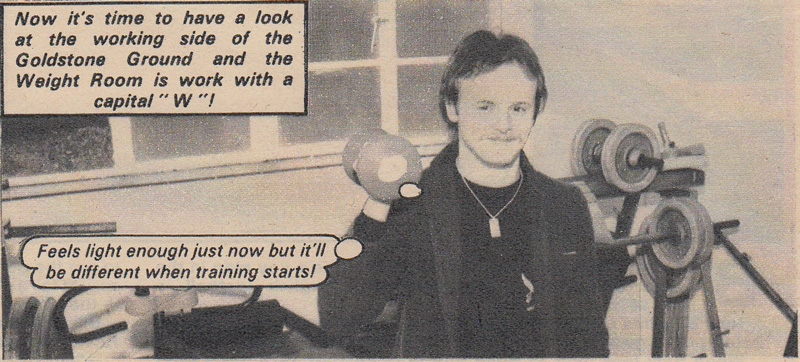
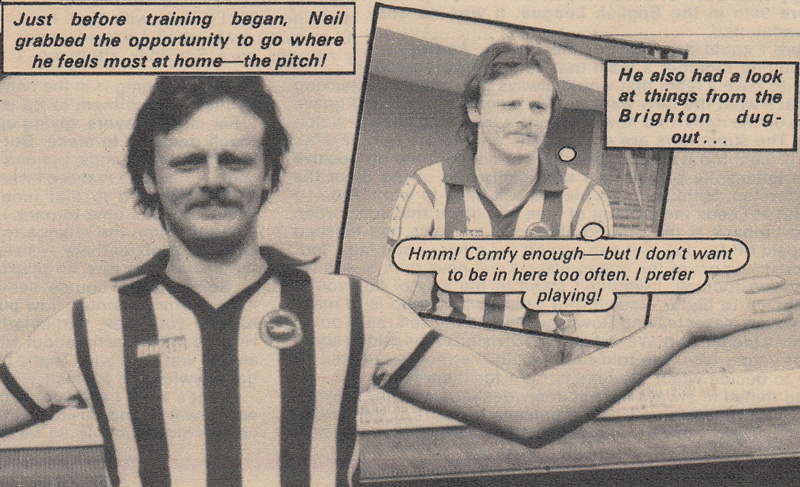
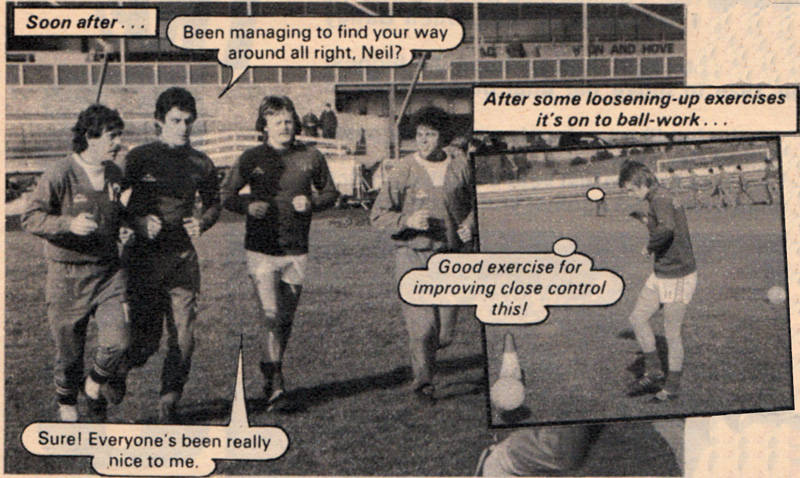
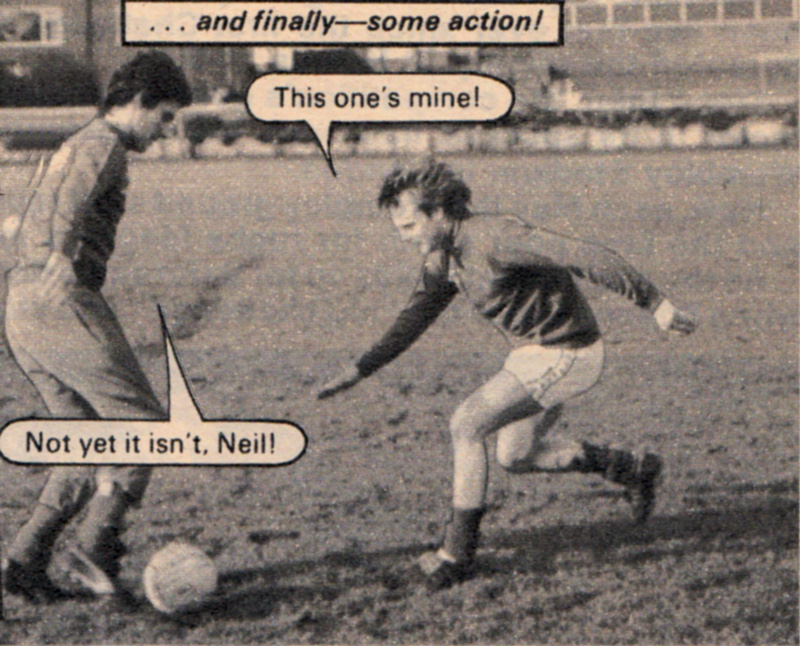
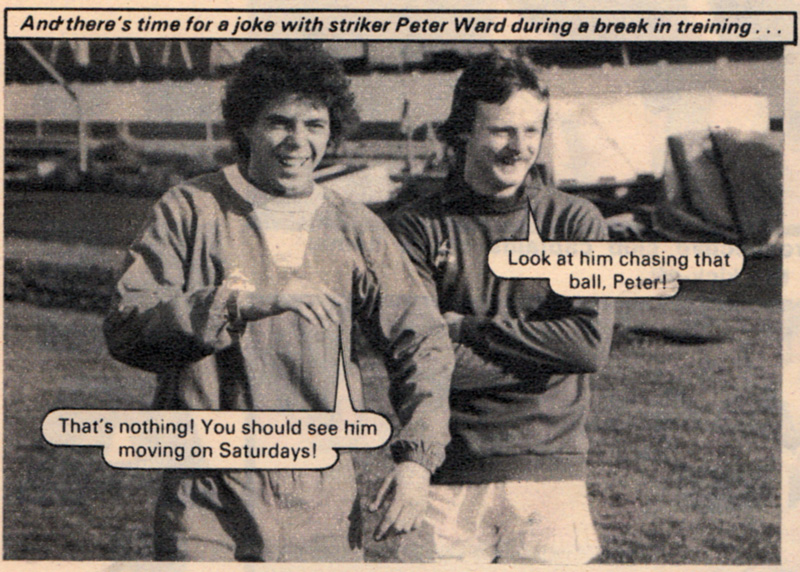
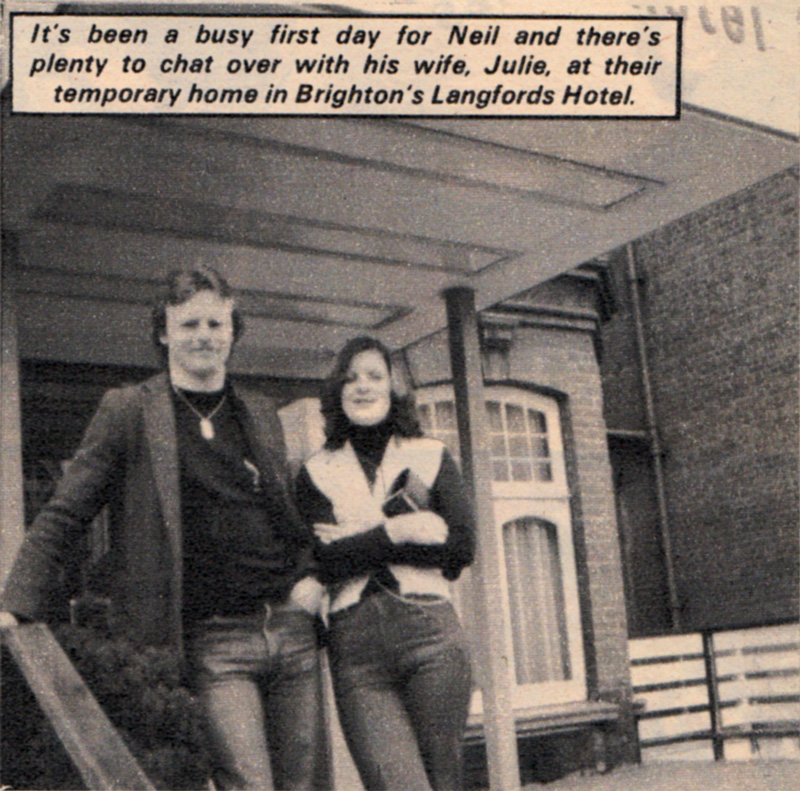
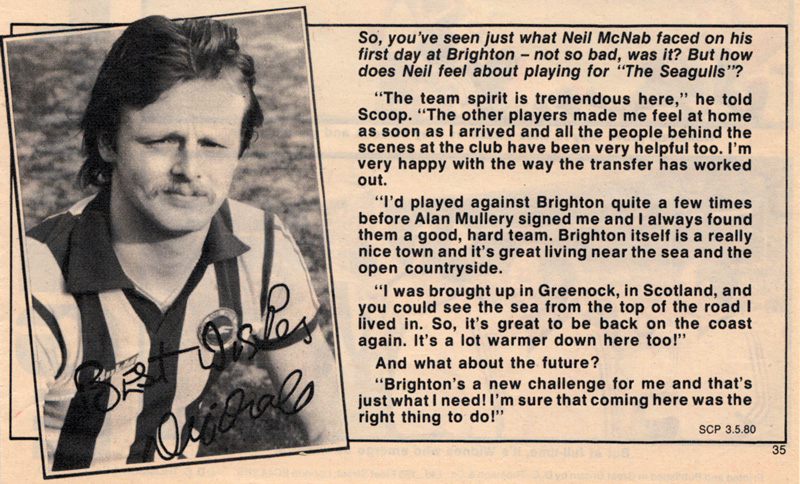
Photo story of Neil McNab’s transfer from Bolton to Brighton in 1980

From the pages of Scoop magazine in 1979/80:

mcbabcomic6

mcbabcomic5

Ever wondered how a newly-transferred player faces his first day at a new club? Scoop takes you behind the scenes.
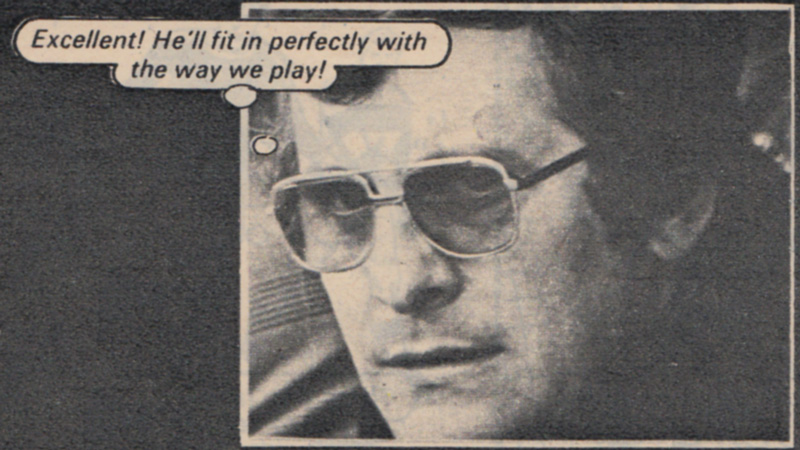
In the fast-flowing action of an English First Division match, players on the field have no time for anything but the game they’re involved in. Sometimes, however, from a section of the crowd, calculating eyes will be watching the every movement of one player. Such was the case with Bolton’s Neil McNab who, having unknowingly displayed his football skills under the watchful gaze of Alan Mullery, was about to become the new boy at Brighton.

mcbabcomica

mcbabcomicb

mcbabcomicc

mcbabcomicd

mcnabcomice

mcnabcomicf

mcnabcomicg

mcnabcomich

mcnabcomici

mcnabcomicj

mcnabcomick

mcnabcomicl

mcnabcomicm

mcnabcomic4

mcnabcomicn

mcnabcomico

Tagged

Seagull Lloyd chirps again

In 1988/89, Shoot! magazine told the remarkable story of Brighton’s surprising renaissance under manager Barry Lloyd, a man who took over three months to record his first win as Seagulls boss:

barrylloyd1988

Brighton manager Barry Lloyd currently has the chirpy air of someone who has cheated the gallows – and well he might, for a year ago he was on soccer’s Death Row.

Having taken over an already ailing club in January 1987, Lloyd had to wait 15 matches before The Seagulls finally gave him his first victory in charge – a run which left them firmly anchored at the bottom of Division Two.

By the end of the season, crowds had slumped to less than 6,000 and most of those who bothered to turn up did so only to call for Lloyd’s head as The Seagulls took a swallow-dive into the Third Division.

Yet, 12 months later, the condemned man was a local hero, with nearly 20,000 fans filling the Goldstone Ground as Albion won their last game of the season to claim promotion following a late run.

With hindsight, despite calls for Lloyd to be sacked, he probably had one of the safest jobs in the country in 1986/87. After Mullery was sacked, it appears that Barry Lloyd’s task to the end of the season was to decimate the side by replacing its high earners with reserve players and non-league signings, even if it meant relegation to Division Three, which it did. Hence the introduction of untried players such as Kevan Brown (Southampton), Robert Isaac (Chelsea), John Crumplin (Bognor Regis Town), Richard Tiltman (Maidstone) and Ian Chapman. Unsurprisingly, Albion finished bottom but having slashed the wage bill, Lloyd kept his job.

With Lloyd reflecting on Albion’s regaining of its Second Division status, the Shoot! article continues:

The former Fulham player says: “The Second Division is a tough League – but it should be an attractive one, with plenty of sides with recent First Division experience.”

Last term’s revival came after Lloyd had made major changes at Brighton and one of them proved to be an inspiration.

“Sometimes you get a little break, and Garry Nelson was one of them,” says Lloyd•.

garrynelson5

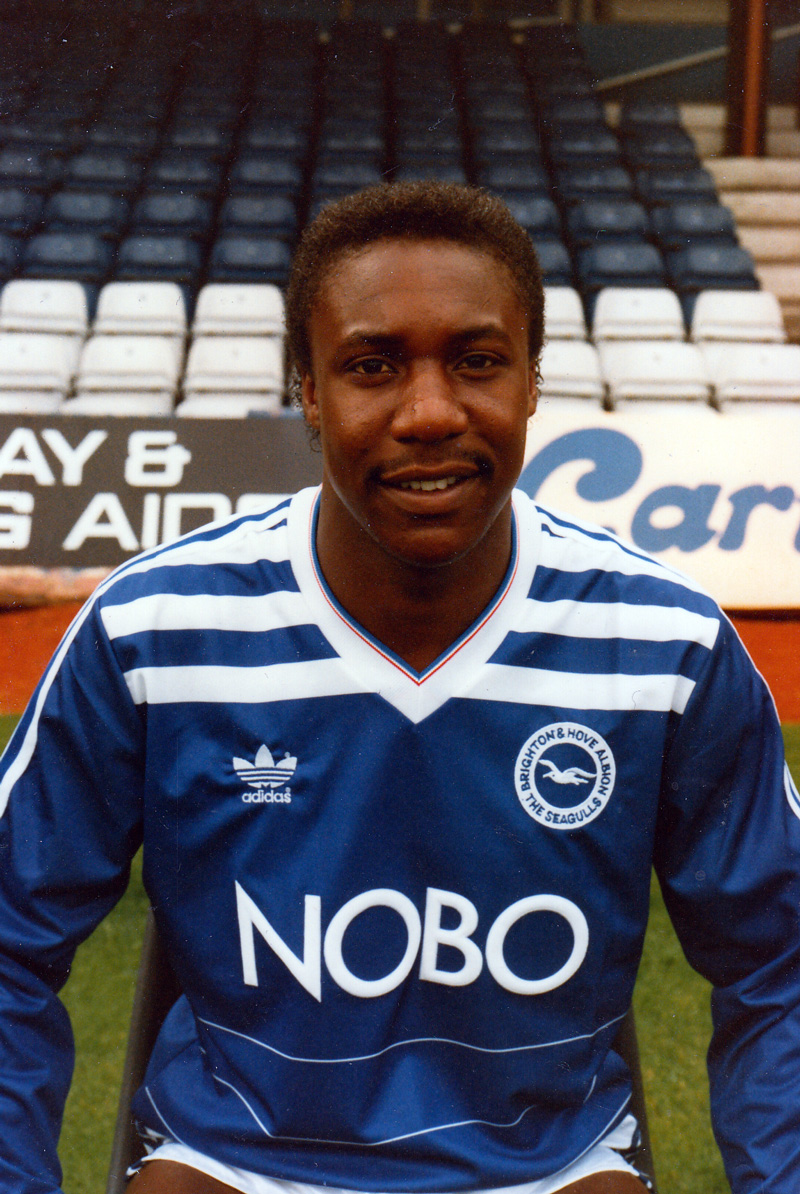
Nelson, who cost £70,000 from Plymouth before the season started, scored 32 goals and proved a revelation as a striker after years as a left-sided midfielder.

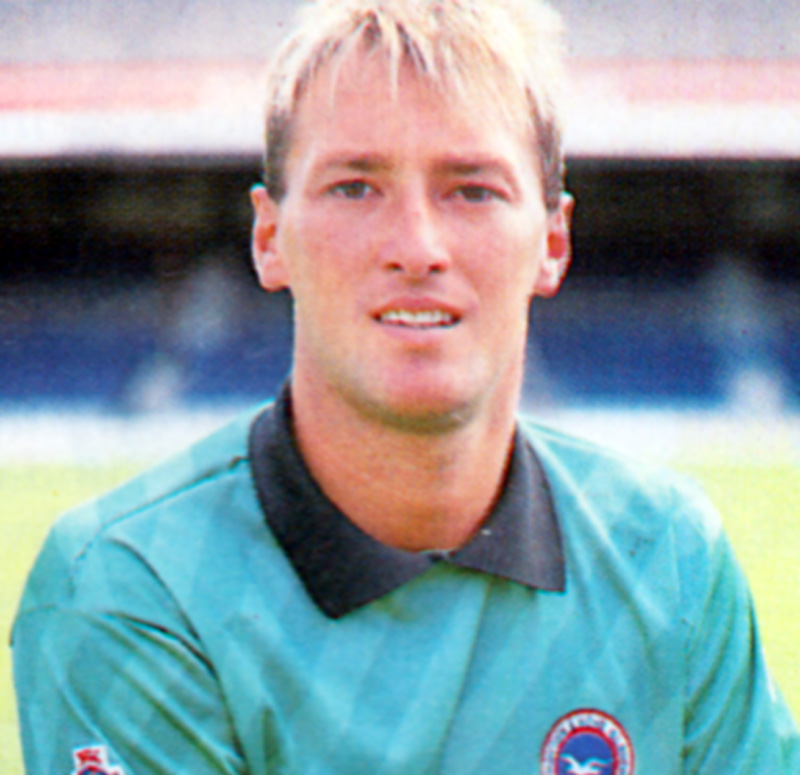
Former Southend goalkeeper John Keeley, playing his first full season back in the game after dropping out to combine taxi driving with playing for non-League Chelmsford, was another star performer.

keeley1

And although Brighton are struggling to reproduce last season’s form, Nelson, Keeley and the experience of Alan Curbishley, Kevin Bremner and Steve Getting – who has signed a new contract – could well have The Seagulls crowing again.

Lloyd had much to smile about come May. Seen by many as certs for relegation, Brighton finished a creditable 19th position in the Second Division in 1988/89, even after a dismal start. Next campaign, with expectations still low, the Seagulls finished one place higher, with Sergei Gotsmanov’s brief spell cementing Lloyd’s reputation as a man with an eye for a bargain. Nobody, not even the most optimist fan with blue-tinted specs, could have predicted that Albion would mount a promotion push the season after, in 1990/91, but they did. In the Play-Off Final in the sunshine at Wembley against Notts County in June 1991, the club stood one game away from Division One. It was at this point that the Barry Lloyd success story ended. The game was lost and within twelve months, after an exodus of key players, the Seagulls were back to third tier football.

Tagged , ,

Colour photo from 1969: Brighton v Barnsley

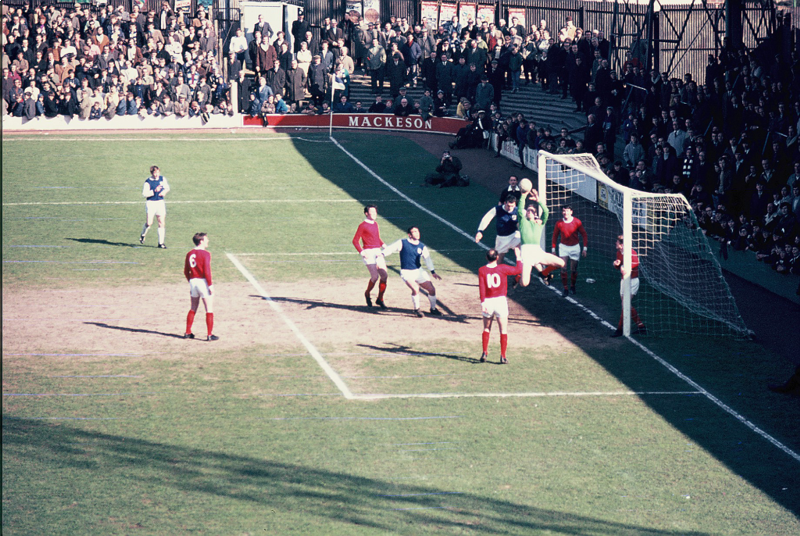
Here’s a stunning photo from 5th April 1969 in match with Barnsley at the Goldstone Ground, with an excellent view of the South East corner:

brighton barnsley 1969

The photo is from QueenSpark’s Brighton & Hove Photographic Collection

With a Tykes player on each post, it looks like the Yorkshiremen are defending a corner. Unlike what is common practice nowadays, it seems that back in the 1960s the attacking side did not throw that many players forward for this set-piece. At least from this photo, anyway. From left to right, The Albion players are Dave Armstrong, Alex Dawson and John Napier.

Dawson looks ready to pounce on any indecision. Legend has it that this is a scenario that would often lead to ball and goalkeeper in the back of the net!

The match ended in a 4-1 victory for the Albion in front of 11,410 supporters. Armstrong, Spearritt, Turner and Dawson scored. Having stood in 23rd position on 14th December 1968, the win took Freddie Goodwin’s side to sixth position in Division Three. However, poor form in the last three matches, and other teams having games in hand, meant that Albion eventually finished 12th.

Tagged , , ,

King Connor the Younger

terryconnor86

In November 1986, Terry Connor was selected as an over-age player for England Under-21s, and scored an excellent goal in the 1-1 draw with Yugoslavia in Peterborough. That month, the powerful centre-forward was interviewed in Shoot! magazine:

Brighton’s new England Under-21 cap Terry Connor – an over age player – is horrified at the thought of being called a “veteran”.

“Don’t call me that,” he pleads. “I’m one of the young ones.”

A veteran he isn’t, but it’s a common mistake to assume that he might be older than 24 – his birthday coming just two days before the European championship game with Yugoslavia.

At least one club visiting the Goldstone Ground this season thought he was probably a few years older.

Explained manager Alan Mullery: “You tend to forget that Terry was only 17 when he made his debut for Leeds United:’ “I got such an early break at Leeds because the club were rebuilding their side after those days when they were riding high,” says Connor.

“Eddie Gray was still in the team when I came in. He was the model professional. It was terrific to have someone with his experience alongside you.

“It was Eddie who sold me in part exchange for Andy Ritchie. It turned out to be a good move for both of us. Andy is still scoring at Leeds and I’m happy at Brighton.

“I would like to get 2O goals this season – that’s my target. And if we get it together we could challenge for promotion,” adds Connor.

“We played ever so well against Nottingham Forest in the Littlewoods Cup at Brighton, drawing 0-0, but then went to O1dham and were terrible.

“It’s a problem for us finding consistency. In some matches we’ve learned we just cannot rely on our football. We’ve got to battle. That’s a point Alan Mullery has driven home.”

Watching Connor it’s tempting to believe he must receive special sprint training.

But Connor doesn’t even use spikes, revealing: “A lot of players wear them to help their speed but not me.

“I train in boots. And when do you ever sprint 100 yards in a match? It’s short distance speed that’s important. Quickness off the mark is one of the most vital assets in a striker’s armoury.

“I’m delighted with my international recognition but it’s success at Brighton that’s important for all of us.”

Despite that encouraging showing against Nottingham Forest at the Goldstone, success proved elusive for the Seagulls as the season became increasingly traumatic. In an infamous stitch-up, Alan Mullery was replaced by Barry Lloyd in January 1987 and it was all downhill from there. Bearing the full force of a cost-cutting drive, the depleted Albion side plummeted down the Division Two table and were relegated.

Connor performed admirably, though, amassing a very creditable nine goals in 38 League matches for a struggling side. Unsurprisingly, he was voted ‘Player of the Season’ before joining Portsmouth, newly promoted to the First Division, in July 1987. The fee was £200,000. Not bad for an old man!

Tagged

Will the Clough cure kill the patient? Brighton 2-8 Bristol Rovers

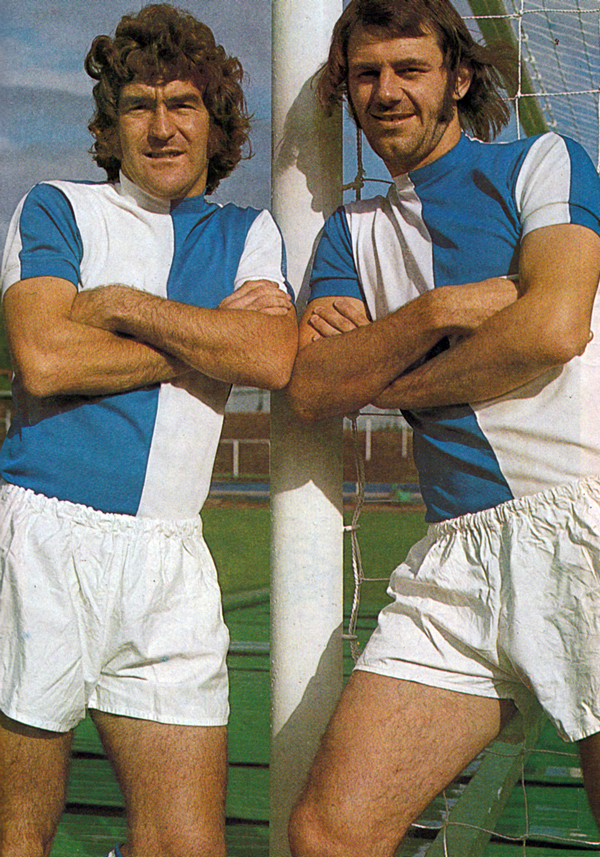
Bruce 'Grab' Bannister and Alan 'Smash' Warboys

Bruce ‘Grab’ Bannister and Alan ‘Smash’ Warboys

Hot on the heels of the 4-0 collapse against Walton and Hersham in the FA Cup, Brighton faced Don Megson’s high-flying Bristol Rovers at the Goldstone. It was an encounter that happened exactly forty years today, on 1st December 1973.

Here, I’ve put together a YouTube video of ten minutes of ‘highlights’ that featured on The Big Match the following day:

Enjoy once more Norman Gall’s rather blatant fouling on the first goal, while still getting nowhere near Alan Warboys. Or that hopeless ‘defensive’ wall on the free-kick. Or the amazing 55 yard back-pass at the start of the second half!

Much has been written about this memorable match in the years since. What is often forgotten is that Alan Warboys almost hit number nine for Bristol Rovers:

Strangely, all the goals in this game were scored by players in Albion shirts. This was because Bristol Rovers’ red and white away kit was deemed by ITV’s producers to be too similar to Brighton’s blue and white shirts, for those watching in black and white.

Dissecting the televised humiliation, John Vinicombe was at his eloquent best in the Evening Argus on the Monday morning that followed:

The danger at the Goldstone is that the cure prescribed by Dr Clough might kill the patient…

That Albion were ailing before Clough took over is beyond doubt. But has the latest emetic proved too much of a purgative? It would appear so.

The stomachs are too weak for the Clough medicine, which wasn’t exactly sweetened after the 8-2 thrashing by Bristol Rovers – the heaviest home defeat in the history of the club.

This is the only tangible explanation I can offer after this second astonishing collapse in the space of four days.

Albion are clearly the sick men of the Third Division – a disturbing state of affairs in a town famous for its health-giving ozone. Doctor Clough may have arrived too late to prevent Burke and Hare carrying off the body.

The Walton and Rovers defeats, which must be bracketed together, are frightening to portend. Albion are back to square one – not for the first time – and the consequences of failure by a club so heavily in the red do not bear thinking about.

Clough can never have thought his Brighton venture would turn out like this. When he emerged from speaking to his players the anger was concealed by the controlled pitch of his voice. He did his best not to sound too much like the man engaged on mission impossible.

To rebuild is his task, and in view of the massive structural weaknesses, he has to demolish the very foundations of the side and begin afresh. In the process Albion will lose more matches, but never, let it be hoped, surrender as they did against Rovers.

It doesn’t matter very much what Clough says, although his shattered players hang on every word: it is the remedies he applies that count. But he makes it clear he will not be rushed into quick signings. “I was ashamed for the town and the club that 11 players could play like that. I feel sick. We were pathetic. This side hasn’t got enough heart to fill a thimble. There are no magic wands,” he said.

On Saturday, at Tranmere, Clough will send his players out in the hope of getting a result. They know full well how he feels about them. Here is an other example: “It was the most humiliating 90 minutes of my career. We have plans to sign players. But nobody will be signed for the sake of signing. I will play before we do that, or my bairn will…”

And he even showed contempt for his players by saying: “You couldn’t have got their centre-forward off if you had shot him. And he got his stitches by heading one of our defenders.”

Clough has, in his fashion, leaned over backwards to speak up for his players. But what happened between Wednesday and going out against Rovers did not provide the necessary stiffening for a match with the Third Division leaders. In these two matches Albion were unrecognisable.

The haircuts follow Clough’s own severe tonsorial style. Now the players look like a mission from the Hare Krishna temple. Shorn of their locks, they must don the hair shirt and do penance.

To some it must all seem a bad dream, but Clough isn’t going to disappear like a big, big genie. “…I’ll be here for a long, long time. They had better get used to it.”

Clough’s shock treatment pushes players through and beyond the pain barrier. This was done with Ken Beamish in the Chesterfield match when he returned to the field with an ankle injury. Bert Parker, the physiotherapist, who has assisted the club for some time, protested and no longer attends matches.

The players know that to go down now is not to take a breather, although to be fair to Beamish on this occasion he was out for the next two matches. But it illustrates my point that Clough is turning the Goldstone upside down in the firm belief that this is the only way to put the club on its feet.

Paradoxically, Clough is right. The process will continue to be painful but there must not be so much destruction as to take the club into the Fourth Division.

The hangover from this chastening by a fine Rovers side is bad enough. To Rovers goes the credit for a club record League win and a new Third Division mark of 19 straight games without a defeat.

To Colin Dobson, freed by Albion when a broken ankle looked like ending his career, the accolade for a thinking player. He masterminded the operation in unbelievably generous space. Bruce Bannister knifed through for the early, killing goals, and Alan Warboys, superbly balanced and fast on the slightly frozen pitch, looked the perfect striker, taking his four goals so cleanly.

The fifth, sixth, seventh and eighth goals were from Warboys, Bannister the first, third and fourth. He knows the eight-goal feeling well enough… ask Bournemouth. Three years ago he helped Bradford City beat them 8-1, but at least on Valley Parade.

What happened at the Goldstone was the worst home defeat in the Football League since Wolves scuppered Cardiff 9-1 at Ninian Park in a First Division match in 1955-56.

It is a day that will only be recalled by Albion fans with infinite pain. Already rival supporters must be working out what rhymes with EIGHT. Perhaps they can set the words to the Dead March…

Goalchart
Five minutes: Dobson set it up. Warboys streaked down the left wing, beat Gall near the bye-line, and BANNISTER timed his run splendidly to fire the first goal, 0-1.

Twelve mintes: Dobson again seeing situations light years before Albion. He took Warboys’ pass, and laid on a pinpointed centre for FEARNLEY’s header.

Twenty minutes: A deceptive shot by O’SULLIVAN that swerved and kept low gave Albion a brief hope of checking Rovers, 1-2.

Twenty-nine minutes: A strong overlap by Jacobs spelled danger when Ley missed his tackle and from the cross BANNISTER’s head did the rest, 1-3.

Thirty-two minutes: Powney failed to hold a hard, low free-kick from Warboys, and BANNISTER tapped the rebound into the net, 1-4.

Thirty-nine minutes: Another Dobson centre, and WARBOYS started his own personal rampage, 1-5.

Fifty-five minutes: Bannister the goalscorer turned goal maker by laying this one on for WARBOYS, 1-6.

Sixty-three minutes: WARBOYS went through on a pass from Parsons like a thoroughbred. Out came Powney, but he had no chance, 1-7.

Seventy minutes: Albion appealed for offside against WARBOYS but he went on strongly, 1-8.

Eighty-seven minutes: A floating Towner centre, and RONNIE HOWELL banged in a well-taken goal, 2-8.

Albion: Powney; Templeman, Ley, Spearritt, Gall, Howell (R), Towner, Beamish, Hilton, Robertson, O’Sullivan. Sub: Howell (G) for Ley (withdrawn), 45 minutes.

Bristol Rovers: Eadie, Jacobs, Parsons, Green, Taylor, Prince, Fearnley, Stanton, Warboys, Bannister, Dobson. Sub: John.

Attendance: 10,762.

Referee: Mr T.W. Dawes (Suffolk)

On ‘The Big Match’, Brian Clough braved the TV cameras, having verbally demolished his players at the press conference the evening before:

Although the match was a disaster for the Albion, son Nigel Clough was more upbeat, saying Brighton did ‘all right’ despite getting hit for eight…

With his acceptance of such dire football, it’s probably good enough reason for Nigel not to be allowed anywhere near the Brighton manager’s position!

A week after the match, Albion were thrashed 4-1 at Tranmere before succumbing to single goal defeats against Watford and Aldershot. Brighton slipped to 20th position in Division Three, one place above the drop zone. As for Bristol Rovers, their fine form continued. Unsurprisingly, they were promoted with a game to spare. Rovers finished the season with the return fixture against Brighton. Rovers fans expected another humbling of Brighton but it never materialised. Albion’s Lamie Robertson opened the scoring after a neat one-two with Ken Beamish on 19 minutes. It took Bruce Bannister’s late penalty to level the score.

Here are their promotion celebrations after the unexpectedly close match:

Tagged , , ,

AFC Bournemouth v Brighton, 1972

Here’s Ted MacDougall of AFC Bournemouth, a scorer of nine goals against Margate in the FA Cup during the season, closely watched by Albion’s Ian Goodwin on 1st April 1972:

bournemouth-h-goodwin

The 1971/72 season had begun well for the side previously known as Bournemouth and Boscombe FC. Newly promoted from the Fourth Division, it was a case of ‘Cherries on top’ as John Bond’s men headed Division Three after eleven matches, with 17 points. Notts County and Aston Villa both had 15 while Brighton were well down the table with 12 points.

bournemouthprog

Pat Saward’s Brighton closed the gap when they defeated Bournemouth 2-0 at the Goldstone Ground on 27th December 1971 aided by goals from Kit Napier and Peter O’Sullivan before a bumper 30,600 crowd. Thanks to this score, Notts County, Fourth Division champions the previous season, looked like they might make it two league titles in two when they took over the leadership in the New Year. In a triumph for the new boys, could they and Bournemouth both gain successive promotions come May? The answer was no. County suffered an injury jinx that put David Needham, Willie Carlin and star striker Tony Hateley out of action, and their results suffered. From the middle of February they drew six and lost two matches in an eight-match winless streak. It cost County dearly.

As for Bournemouth, Ted MacDougall, buddied up front with Phil Boyer, was attracting a great deal of interest, and not just for this advert, found on the back of the Bournemouth v Brighton programme!

bournemouthskins

As Tommy Lawton said:

“This fellow keeps scoring goals and if you can hit goals consistently whether it is in the First or Fourth Division you have to be good.”

However, even with such a phenomenal strike force, the Cherries suffered a downturn. In the Official Football League Book 1972-73, it says:

Bournemouth started to quake when the final crunch came. Whatever the reason, Bond’s side could not recapture the consistency and winning form of those heady early days. One of the key games was when Brighton went to Dean Court on Easter Sunday. A Bournemouth win could have changed many things, but Brighton drew 1-1.

Bertie Lutton: A crucial equaliser at Bournemouth

Bertie Lutton: A crucial equaliser at Bournemouth

The draw was part of Bournemouth’s poor spell when they drew four and lost two out of six matches from the middle of March, just as the season was hotting up. The Official Football League Book continues:

And what of Brighton, the team from the South Coast holiday playground that had laboured too long in the soccer backwaters? Pat Saward agrees that their biggest asset all season was that no one was tipping them for promotion until the final stages: “So we had none of the pressures Bournemouth, Villa and Notts had. We crept up unnoticed and this was our trump card.” But Saward freely admitted: “We had an awful lapse when we lost two games on the trot to Oldham and Bradford City. It came at a bad time and it was make or break from then. Our next game was against Villa and I made drastic changes.” The television watching millions saw the result… a fine stylish win for Brighton in what must have been one of the games of the season in any Division.

Saward played another trump card hours before the transfer deadline. ‘The fans were crying out for new faces but everyone must have thought I had decided to try for promotion with the 14 players I already had.” Agatha Christie could not have come up with a better final and Saward swooped and signed Irish international Bertie Lutton from Wolverhampton Wanderers and a player who must have been an unknown quantity to the Goldstone Road fans… Tranmere Rovers’ Ken Beamish.

Beamish is a forward very much in the modern mould. Not big, but stocky and packed full of explosive sprinting power, a terrific shot and great appetite for the game. “They were both last ditch signings and Ken made an astonishing difference,” says Saward. “I spent only £41,000 in getting my promotion side together so we were very much Villa’s poor relations in that sense.

“Notts County were the team that surprised me. I just don’t know why they fell away so badly in the end for they had all-important matches in hand. Bournemonth were the most skilful side we faced.”

Saward puts down his team’s success to: “Dogged determination to succeed from all the players. We stamped out inconsistency. I got rid of ten of the players I inherited and got together a team built on character. That’s the key quality, apart from skill of course, as far as I’m concerned.”

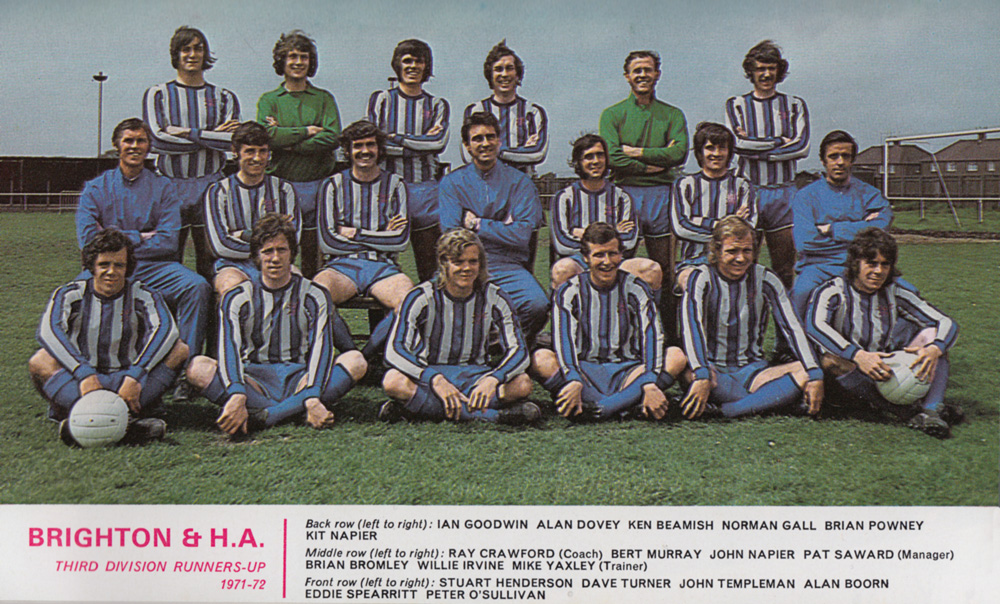
1971-72squadv6

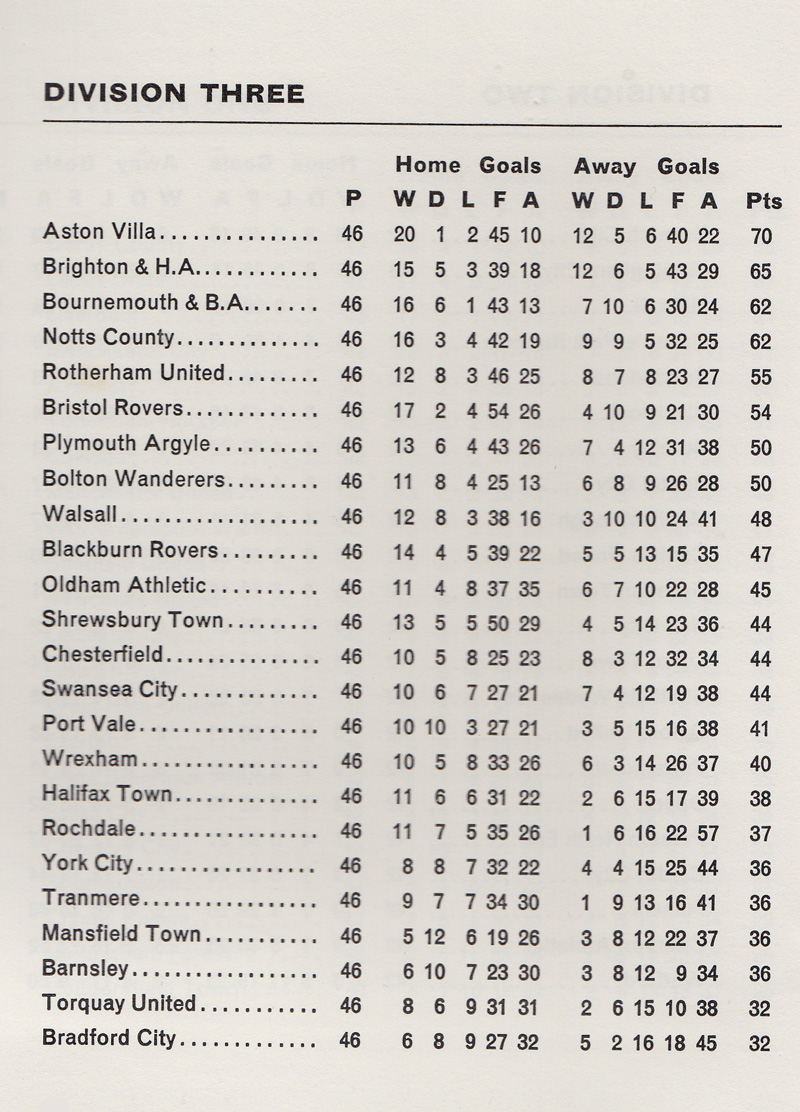
With just two clubs going up, here is the final table for one of the greatest promotion races in Division Three, one that pulled huge crowds:

finaltable

Tagged , ,

1973: Brighton 0-4 Walton & Hersham – Albion’s worst FA Cup defeat

Here is the team photo of amateurs Walton and Hersham, with ex-Albion players Colin Woffinden and Dave Sargent, plus future football manager Dave Bassett in the back row. And, in the front row, if Brighton supporters were not familiar with Clive Foskett at the start of the FA Cup 1st Round replay at the Goldstone, his name would be on everyone’s lips by the end.

Back row: Colin Woffinden, Dave Sargent, Russell Perkins, Dave Bassett, Gary Bloom, David Donaldson, Chris Lambert. Front row: Billy Edwards, Dave Morris, Bob Wingate, Clive Foskett, Willie Smith.

Back row: Colin Woffinden, Dave Sargent, Russell Perkins, Dave Bassett, Gary Bloom, David Donaldson, Chris Lambert.
Front row: Billy Edwards, Dave Morris, Bob Wingate, Clive Foskett, Willie Smith.

Forty years today, the Argus carried its match report of one of the most shameful displays in the club’s history. Having got lucky in scraping a 0-0 draw in Walton, Brian Clough’s Brighton & Hove Albion contrived to lose 4-0 at home to the Isthmian League side who had won the FA Amateur Cup in 1972/73. The match was played at 1.45pm on Wednesday afternoon as the country’s power crisis meant floodlight use could not be guaranteed.

In a piece titled ‘Albion’s worst in 75 years of cup history’, John Vinicombe described the nightmare performance. Read it and weep!

Ronnie Howell challenges for a high ball in the Walton goalmouth, with Lammie Robertson in attendance

Ronnie Howell challenges for a high ball in the Walton goalmouth, with Lammie Robertson in attendance

Albion’s total humiliation by amateurs Walton and Hersham was the worst defeat suffered by the club since they entered the FA Cup as Brighton United in season 1898-99 [sic].

The manner in which they were swept aside and plunged to a 4-0 First Round replay defeat stunned the 9.857 Goldstone crowd. For Walton’s jubilant fans, who had come prepared for the worst, it turned into a storybook occasion.

There was always a feeling of anxiety about this momentous second meeting that began at the unusual hour of 1.45. Albion’s supporters were strangely muted from the start, and the sparsely populated North Stand, without its youthful choir, hardly made themselves heard.

A sense of foreboding gripped the fans when schoolmaster Russell Perkins stooped to conquer after 20 minutes, and the tie turned into nightmarish proportions for Albion when Clive Foskett, a 28 year-old joiner who works at the British Natural History Museum, hammered a hat-trick in the last eight minutes.

Perkins heads the opener

Perkins heads the opener

The result gives Walton a place in the record-books as sensation makers of the first order. But where does that leave Albion?

The club have entered into an exciting new era with one of the best managers in the game. Yesterday’s display was too bad to be true. Some players gave everything; others did not.

Afterwards Clough betrayed no emotion. He is too well disciplined for that. When he spoke of his ‘poor lads’ it was his way of expressing the deep-felt understanding he has for the position of the professional who is always expected to win such confrontations.

The Clough honeymoon is over as he watches the 4-0 defeat with Glen Wilson.

The Clough honeymoon is over as he watches the 4-0 defeat with Glen Wilson.

What he says privately to his players can only be imagined; the point is that with such a small staff there is not a lot he can do right now.

Until Clough and assistant Peter Taylor move permanently to Brighton, the full impact of their presence will not be felt by the players. The side have yet to score at home under Clough. When Albion were without a manager for a short time, they hammered Southport 4-0. That was just over a month ago.

Is there some sort of moral here? Has the arrival of a man so steeped in success, and possessing such a reputation, suddenly caused the players to seize up?

A goal blight of 270 minutes at the Goldstone is a curious state of affairs, and in the context of this debacle pinpoint the structural weaknesses of the side.

Albion lost to Walton primarily because the midfield was wanting, while up front only Tony Towner, the substitute, provided the sort of service that wins matches.

Pat Hilton did all that could reasonably be expected of him, but elsewhere were performances that must have brought an angry blush to Clough’s cheeks.

The dramatic Foskett hat-trick came at a time when Albion were pushing numbers up in a frantic attempt to equalise. They had more of the game territorially than Walton, but failed to use the ball as well.

In midfield they were outsmarted. Only in terms of fitness were Albion superior, and they relied too much on running Walton off their feet.

Walton absorbed the pressure like a sponge, had men of heart and character, and not a few players who showed a greater desire for the ball when it was obvious somebody was going to be hurt…

The turning point came early in the second half when Barry Bridges just failed to divert a loose ball past the heroic Gary Bloom. Albion never went so close to scoring again, despite a stream of flag kicks.

Walton and Hersham goalkeeper Gary Bloom misses a cross, as Barry Bridges just fails to score at the near post.

Walton and Hersham goalkeeper Gary Bloom misses a cross, as Barry Bridges just fails to score at the near post.

Yet only minutes before hand Foskett had missed an open goal. He blamed himself afterwards and seemed more concerned about that mistake than basking in the glory of a hat-trick.

Foskett has not enjoyed much of Walton’s limelight. He was on the substitute’s bench at Wembley at the end of a strange season that saw him score 23 goals before Christmas and then lose his edge completely.

Foskett said: “This is the highlight of my career, although nothing can make up for not playing in a final at Wembley. I was left so much space at the back by Brighton, and I had all the time to think about all three goals.”

His goals, demonstrated perfect versatility, two with the right foot, the last one from the left foot.

Albion were hit by a thigh injury to Stephen Piper ten minutes from the interval. There is little doubt Towner would have come on anyway, but Piper’s loss weakened the defence.

Eddie Spearritt switched to partner Norman Gall, Peter O’Sullivan moved to the left-wing, and Bridges slotted into the midfield.

Walton prospered as a result, and seldom can such an experienced international player like Bridges have cause to be so dissatisfied with his contribution to a game. In my book it was nil…

The grim message for Albion is that Clough has a monumental task ahead. Realist as he is, there can be no illusions on yesterday’s score. Perhaps it is a blessing in disguise.

There is time to prevent the rot spreading further. But I’ll wager Clough never expected it to be like this…

Goalchart
Twenty minutes:
Smith’s corner was flicked on by Lambert. Powney failed to make contact and Gall was the wrong side of Perkins who got down like an old man with lumbago to head the simplest of goals. 0-1.

Eighty-two minutes: A long ball out of defence caught Albion upfield. Walton had Foskett and Perkins haring through the middle, and with Powney unprotected, Foskett scored from a precise Perkins pass. 0-2.

Eighty-four minutes: The same long ball caught Albion napping again, this time it was Smith who put Foskett away to crack a beauty. 0-3.

Eighty-nine minutes: Just to show it was no fluke, Foskett broke away again. The long ball came from Morris, and away went Foskett to drill in his best goal. 0-4.

Albion: Powney; Templeman, Ley, Spearritt, Gall, Piper, Bridges, Howell (R), Hilton, Robertson, O’Sullivan. Sub: Towner for Piper (injured) 35 minutes.

Walton and Hersham: G Bloom, D Sargent, C Lambert, D Donalson, W Edwards, D Bassett, C Woffinden, W Smith, R Perkins, C Foskett, D Morris. Sub R Wingate.

Referee: Mr GC Kew (Amersham).

Bookings: Ley (foul).

Walton and Hersham players raise a cheer to their 4-0 win in the dressing room

Walton and Hersham players raise a cheer to their 4-0 win in the dressing room

Years later, in Brian Clough’s ‘Autobiography’ (1994), he recalled comedian Eric Sykes’ lucky escape after the match:

‘I was involved in a first round FA Cup tie against mighty Walton and Hersham! A bunch of bloody amateurs, and they beat us 4-0. I’ve had some bad days in football but that must have been one of the worst. He won’t know it until he reads this, or until a pal reads it and tells him, but comedian Eric Sykes had never been in greater danger of a smack in the mouth than he was that day. I think he was president of the Walton club, or at least held some position there. Anyway, he was perfectly entitled to feel chuffed, having seen the little team of nobodies produce possibly the greatest result in their history and one of the big Cup upsets of the day.

As I walked through a passage after the match I could hear his raised voice as he stood with a phone in his hand, obviously giving me some right stick. I heard him gloating about something about ‘Cloughie… ha, ha, ha.’ I had never met him in my life but I’d laughed my socks off whenever I saw him on TV – and still do when they play the old clips. But that afternoon I would have taken great delight in punching him. If only I had shown similar self-control, years later, on that infamous night when supporters invaded the pitch at Nottingham Forest!’

Oh, and have I mentioned that video footage of this cup replay does exist? It clearly should be banned, though! It’s only sixteen seconds and there is no sound. I’ll leave you to decide whether to be regretful or thankful that it doesn’t feature any of the goals:

Tagged

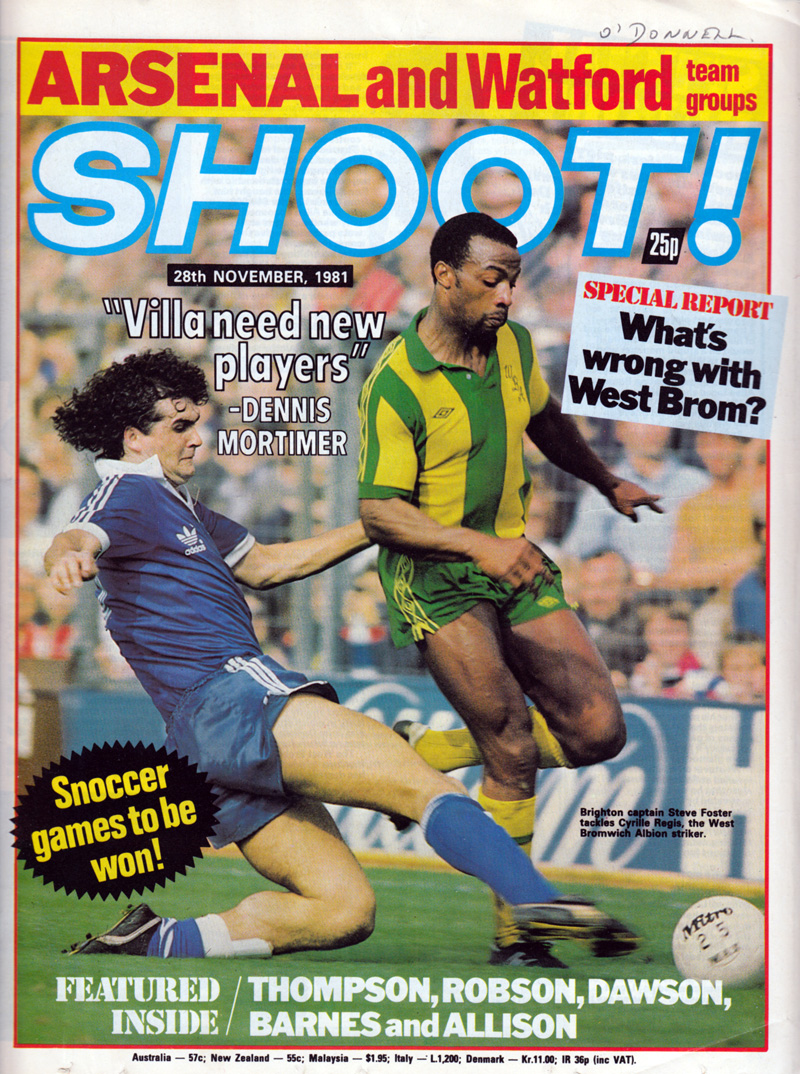
Shoot Cover: Steve Foster (28 November 1981)

shootcover2

In the season of this front cover, 1981/82, Shoot! published an article claiming ‘Captain Foster loves to nag!’:

Steve Foster has welcomed the job of Brighton captain as a major boost to his own form. Whether his team-mates wholeheartedly agree with the choice is open to rather more doubt.

Foster says, tongue slightly in cheek: “The lads reckon I nag them just a bit more than I used to.
They say I’m getting on their nerves these days, but that doesn’t matter, if we do the business and my shouting has helped in any way, it will have been worthwhile.”

Foster’s team-mates are, of course, joking. They recognise the immense contribution of the big central defender. And “Fozzie’, as he is known to the Brighton players, believes the captaincy will help him become an even greater asset to Brighton’s cause this season.

“A lot of players wouldn’t want the captaincy. I’ve heard them say they don’t produce their best form when they’re worried about what the other lads are doing. But it works the other way for me. I feel a greater sense of responsibility. I feel that if I want the other lads to try s bit harder during a match, they have to see me doing just that. So I’ve found it has helped me improve,” says Foster.

“I used to shout all the time anyway, to encourage the lads. The only difference now, is that I’m the official skipper and I have to do it. I find I have concentrated more since I took over as captain.”

Brighton have introduced a new, tighter defensive system under new manager Mike Bailey. Foster believes it will help the Sussex club establish themselves in the First Division without the fear of relegation which has dogged them for the past couple of seasons.

“We have to keep our discipline at the back much more under Mike Bailey,” says Foster. “Defenders can still go forward, but there has to be plenty of cover at the back before we can move up.” Foster recognises the immense task he faces to succeed as skipper to the extent Brian Horton managed. Foster says: “Brian was a great leader.

“He had such respect from other players that I can only hope to gain half as much. The lads reckon I’ve always been a moaner on the field, but I won’t complain if the results go for us, So it’s up to the lads – if they don’t want me to nag them, they’ll have to produce the form which means plenty of points!”

“I think our bigger squad and greater experience will be vital this season. We feel confident and have more players available. You must have strength in depth in this Division, and we are now getting that. It could make a big difference to us.”

stevefoster82

Tagged