In the 1970s and 1980s, the Evening Argus newspaper was living in the dark ages compared with the lesser known West Sussex Gazette, which sometimes offered glorious technicolor coverage of Brighton & Hove Albion. I have a wonderful edition that shows the 1979 promotion parade in colour, but I’ll save that for another time.
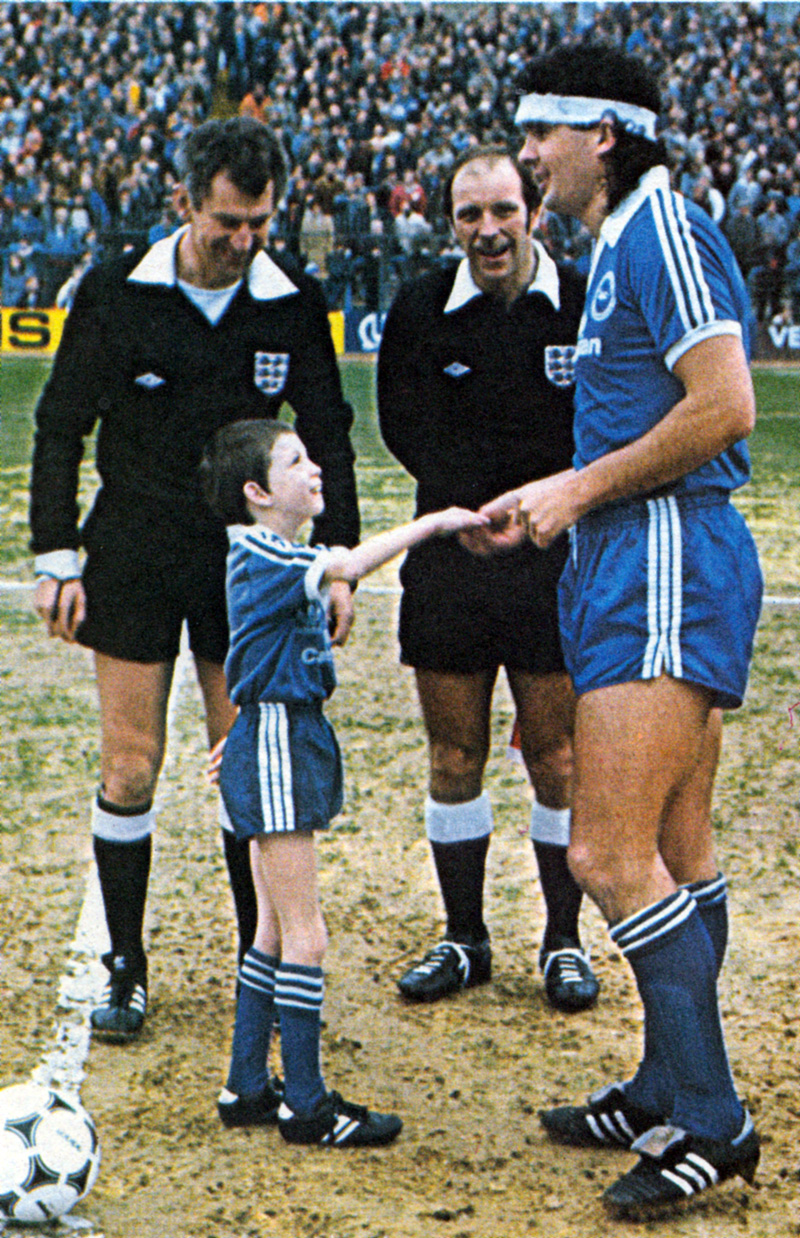
Rolling on four years, Brighton were still in the First Division, but struggling to maintain its place in such lofty heights. Nevertheless, they were still hero-worshipped by Seagulls fans lucky enough to be growing up in the town at the time. On Thursday 27 January 1983, the West Sussex Gazette reported on a young mascot’s big day, one where he was made highly welcome by towering Albion skipper Steve Foster:
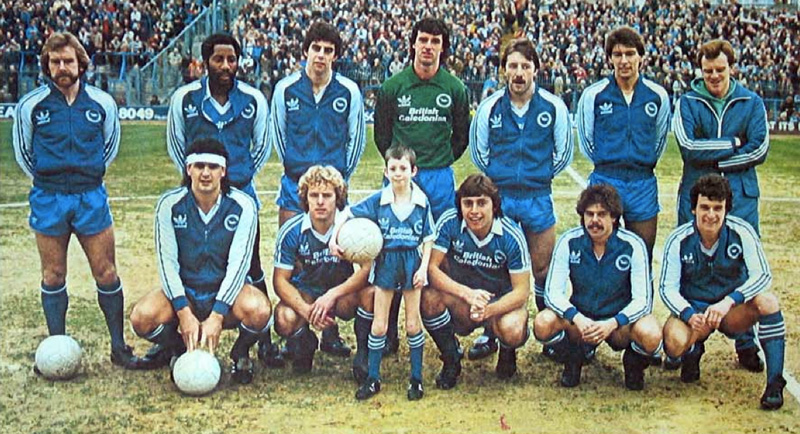
A dream came true for ten-year-old Jason Byrne on Saturday. He changed into football kit and led out the Brighton & Hove Albion team before their match against Luton.
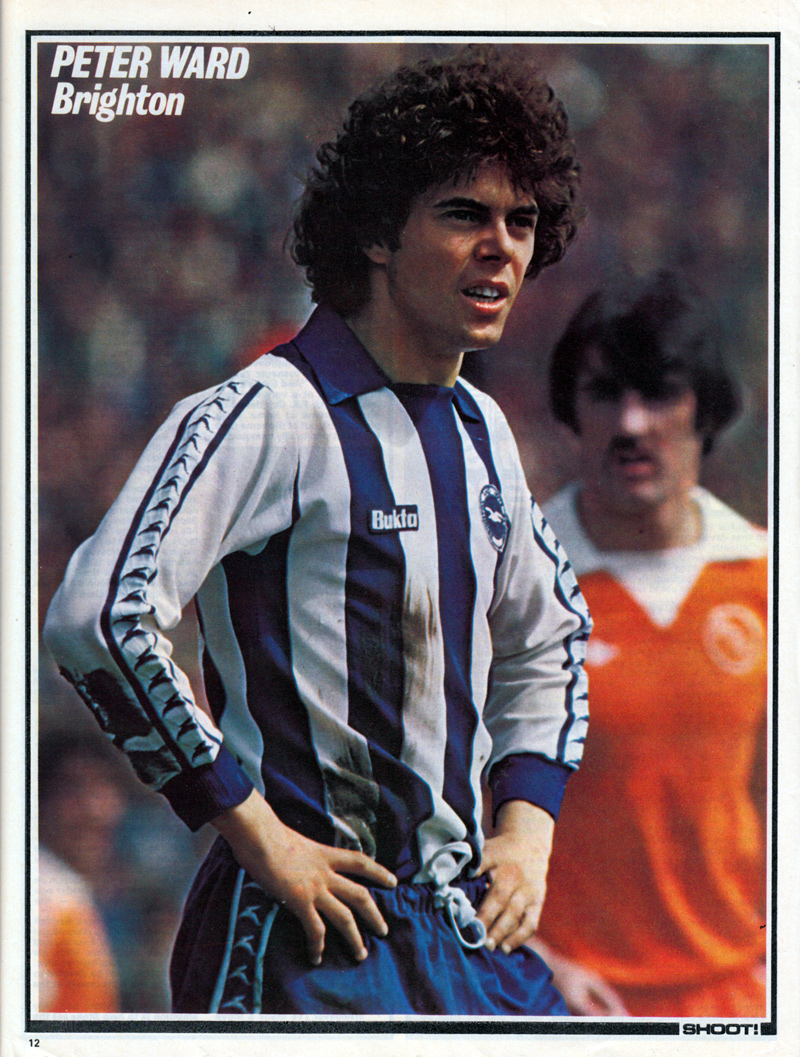
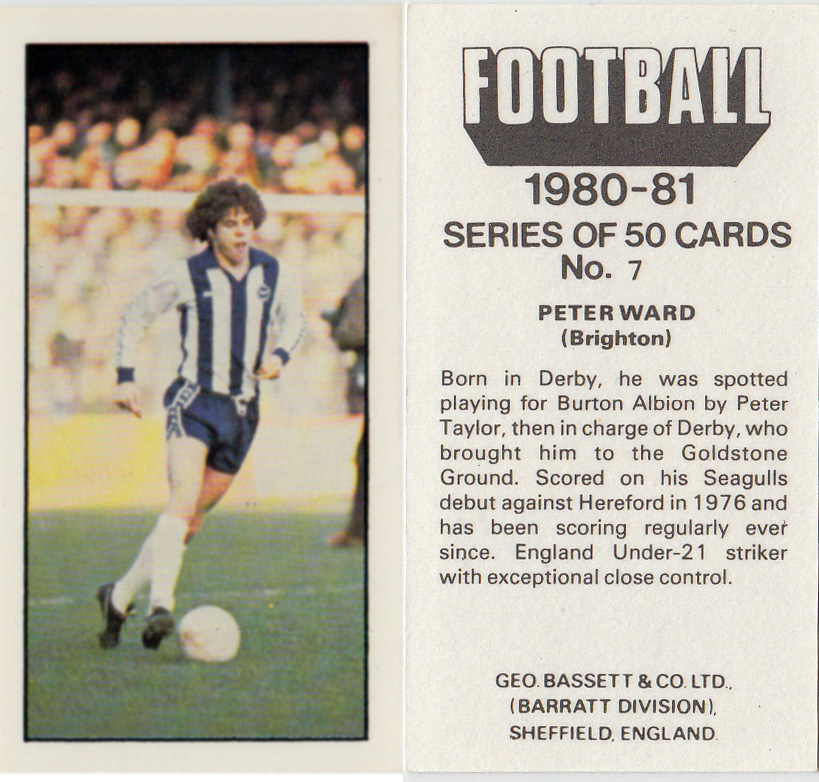
Jason, who lives in Coombes Road, Steyning, regularly watches all the team’s home matches and has longed to meet his hero, player Peter Ward.
His grandfather, Mr Ernest Lidbetter, of Storrington, tried to arrange a meeting with the team by writing to Jimmy Savile. But when that failed he wrote direct to Brighton and Hove Albion themselves.
Yes, you read that right. Just as well!
So, Jason became mascot for the day to the team he avidly supports – and it was a double celebration for his family. His debut before the crowd was on his mother’s birthday.
“It could not have been a better birthday present. When I watched him lead the team out I was overwhelmed and it brought tears to my eyes, says Mrs Sandra Byrne after the match.
Jason’s father, Mr Michael Byrne, was also there to watch his son have a kick around with the Brighton team before the match. He had bought tickets for all of Jason’s grandparents so they could watch.
Jason is a very keen footballer and players for the under-11 team for Steyning Strikers. He is a pupil at Steyning Junior School.
He had his autograph taken with his team, and Peter Ward, and with the referee and now has a referee’s whistle from the match to remind him of his big day.
He kissed the coin for good luck before it was spun to start the game – but the two goals it brought Brighton was not enough: they lost 2-4.
An insightful piece by Tony Norman, capturing what it was like being a famous footballer in Brighton in the late 1970s, courtesy of an interview with Peter Ward:
“You should have got here earlier, Wayne,” said the street kid, outside the Goldstone.
A smile creased his grubby face, as he held out a battered autograph album in triumph. “I got Peter Ward. Magic!”
There’s only one star in Brighton. In the bars along the shoreline, they’ll nod approvingly of Gregory, or the skill of O’Sullivan. But there’s only one Peter Ward.
“He signed twice for me,” crowed the street kid. “You should have been here, Wayne.”
Wayne said nothing. He just shuffled awkwardly, trying to hide his disappointment and envy. He felt like a losing captain at Wembley, when the wrong man walks up the stairs and lifts the Cup. Deep inside, Wayne was sick as a parrot!
“Most of the supporters are with me, said Ward later, as we drove back along the south coast to his home. “I know they’re on my side. They expect a little more from me. They want me to turn it on every week, but that’s impossible. Extra pressure? I suppose so, but it doesn’t worry me. I go out there and do my best. It’s as simple as that.”
But, of course, it really isn’t so easy to live with the pressure of being a being a star, in a town where First Division football is still a novelty.
“When I go out, they’s always someone asking for an autograph. If I go to a club for a game of snooker or darts, I can hear people saying: ‘Look over there, it’s Peter Ward’. But if you go to the same places a few times, the novelty wears off and people leave you alone.”
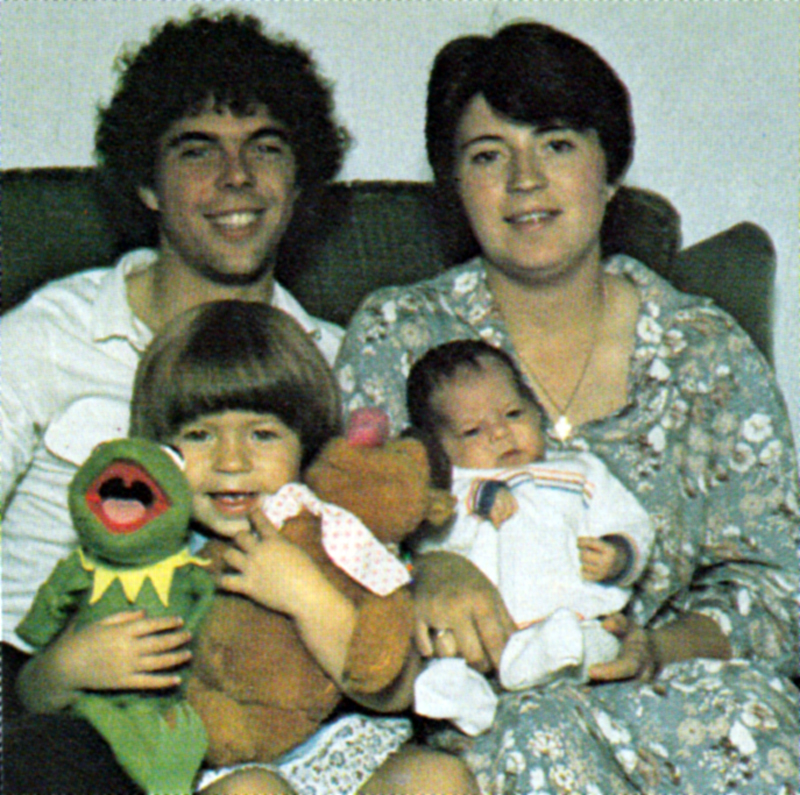
It seems to be Ward’s policy to play down his star status in Brighton. But he lives the kind of goldfish bowl life that drove Best to drink. perhaps the biggest steadying influence on Ward is his happy home life, with his wife, Sue, and their two daughters, Rachael, 3, and Rebekah.
Best lived in a magnificent, empty shell. Ward’s home is his haven.
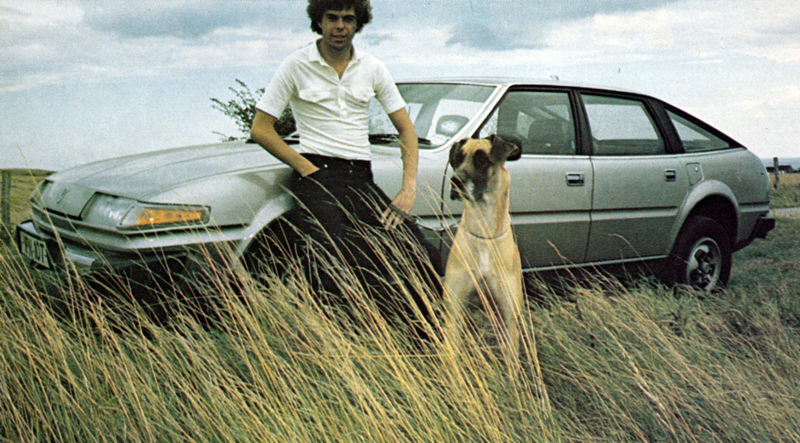
“I try to forget everything, when I get home. I’ve got my family to think about. Brighton’s a nice place to live. We’re buying a new house and we’ll be even nearer the Downs then. I like going up there and taking our dog, Sumi, for a run. I’ve joined a local fishing club too. I’ve only been out a few times, but that’s another good way to relax.
“I think I’m pretty easy-going. Nothing really bothers me, I enjoy taking it easy at home, doing a crossword, listening to records, or watching TV. I’ve bought one of those video recorders, so I can watch my favourite shows, like Fawlty Towers anytime I like.
“When you’re well-known, things can cut into your private life. You get reporters ringing you at home and that sort of thing, but I don’t mind. The only time it bothered me was when I was on the list, last summer. I took the phone off the hook. I knew I’d be inundated with calls.”
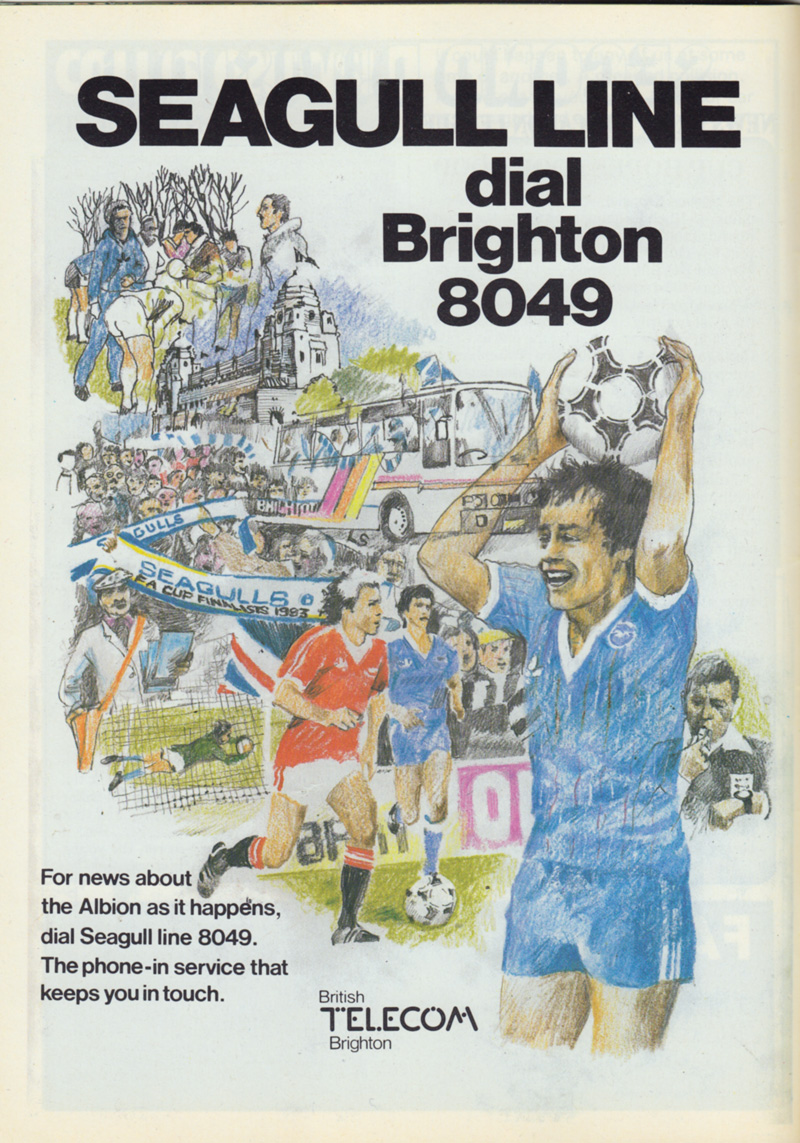
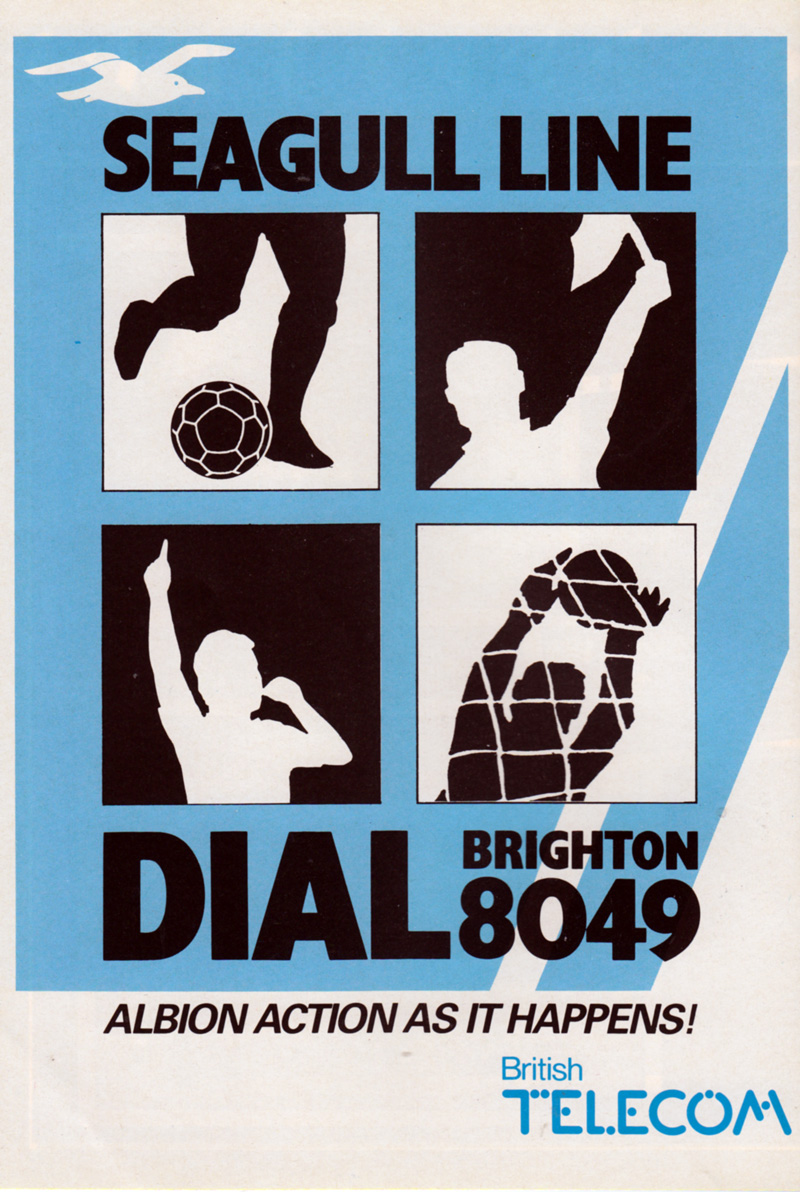
In the days before the internet took hold, finding out the up-to-date news about your club was a lot harder. The Seagull Line, Brighton 8049 was set up by the Post Office on 13 April 1979 and was one of the first of its kind in the country.
In the Brighton v Bristol Rovers programme from that month, it said:
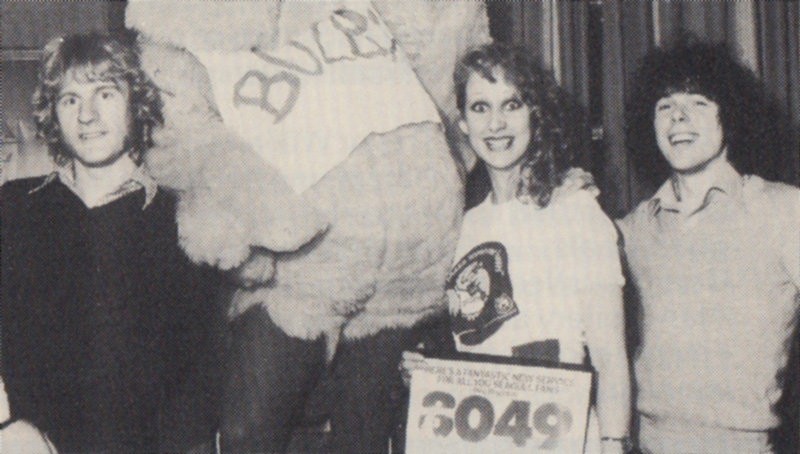
The service started this week and 24 hours a day information may be heard on Brighton & Hove Albion, simply by dialling 8049… remember it rhymes… 8049, the Seagull line. Last Monday at the Adur hotel when our weekly lottery draw was held there was a chance to know just what Buzby is all about and to hear about the Seagull line. Our picture shows Paul Clark and Peter Ward happily accompanied by a young lady who is clearly hoping to ‘Make someone happy.’
Ahem!
With his catchphrase ‘And it’s bad news for the Albion’, often heard when reporting on an away fixture, commentator and programme editor Tony Millard is remembered as the mouthpiece of the premium rate service. He’d begin “You’ve called the Seagull Line on Brighton 8049, that’s the number for Albion information every day… 24 hours a day…” After informing fans of the telephone number that they know about because they’ve just dialled it, he would then precede to waffle on about various matters of little interest, such as how the reserves got on, the groundsman’s opinion on the state of the pitch before next Saturday’s game before… FINALLY!… giving supporters the news they wanted at the end. Devious tactics, Tony!
“You’ve called the Seagull Line on Brighton 8049. The line for Albion information everyday, 24 hours a day. Later we’ll have news from Wembley where the Albion were playing Manchester United in the F.A. Cup final, but first, the results of Seagull Lottery number 762 drawn by assistant physio Mike Yaxley at the Swan pub in Falmer…”
With the high calls costs incurred, there are several stories of young Brighton followers getting into trouble with their parents for running up huge phone bills. Some fans even reminisce about their parents suspecting that they were calling premium rate sex lines! The mums and dads were only persuaded otherwise by calling the number themselves, ‘although Millard did breathe quite heavily if I recall,’ adds Easy 10, another Albion supporter.
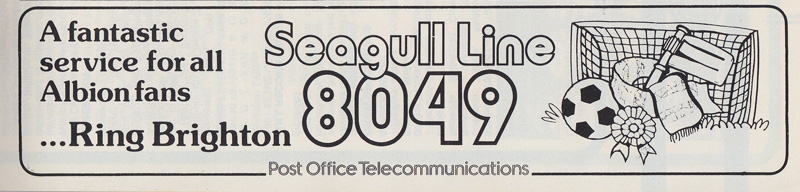
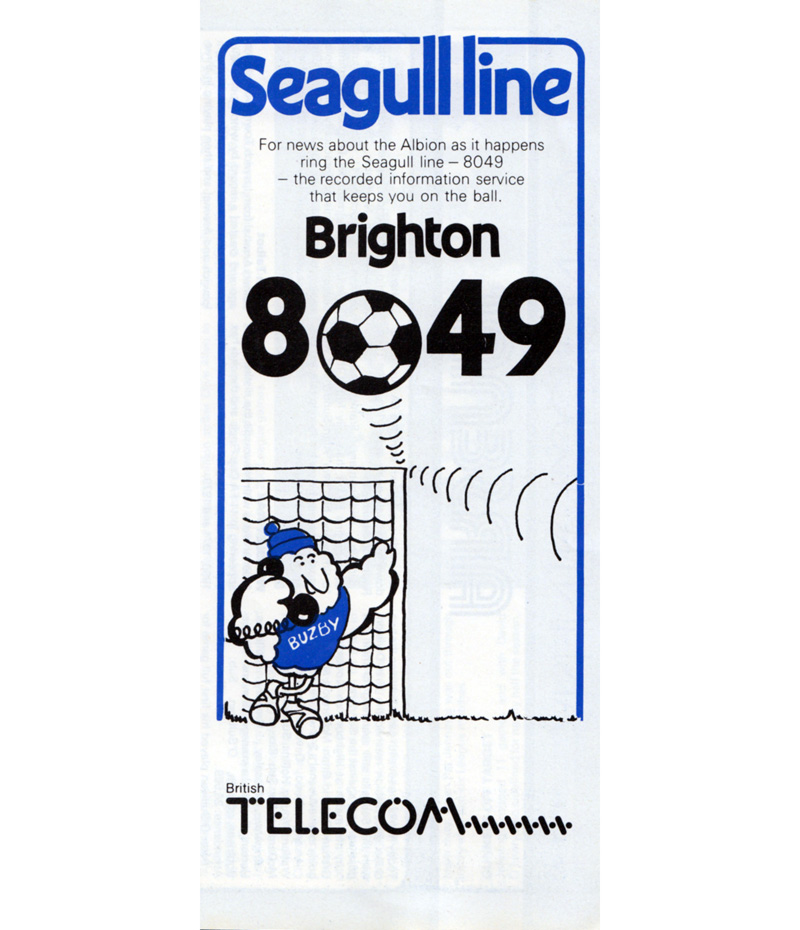
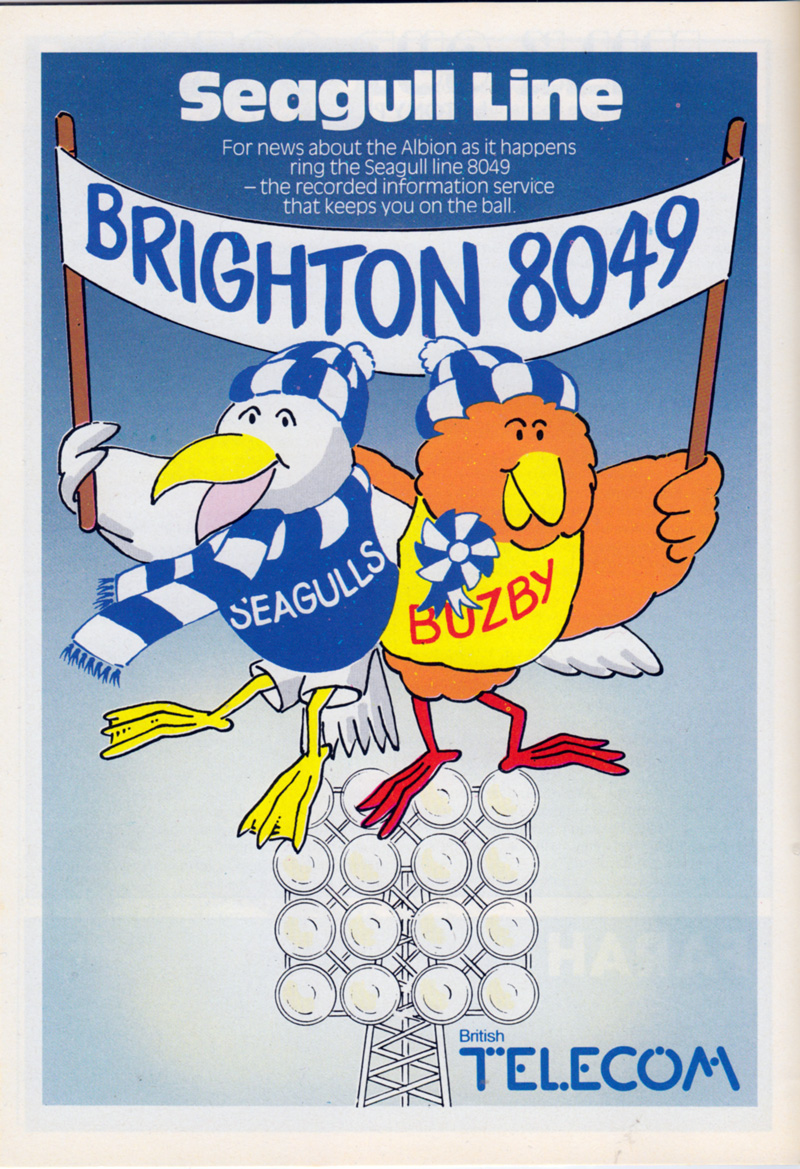
Even though it was a premium rate service, this rather significant detail did not feature in the adverts in the matchday programme. Neverthless, some wonderful artwork appeared advertising the service. Seagull Line was replaced by a more general, premium rate service called Sussex Sportsline in 1987/88 before making a comeback two seasons later on 0898 and 0891 numbers. Anyway, enjoy this stroll down Seagull Line Memory Lane…
I had a lovely surprise while walking past the Seagulls Store on Queen’s Road, Brighton, yesterday when I spied this glorious short-sleeved wonder gleaming in the shop window.
Was it an original 1978-80 Brighton away shirt and therefore a display item (i.e. not for sale)? Although it would have been lovely to see an original in person, thankfully, no. Manufactured by Toffs, it turned out that this beauty was a new reproduction that could be mine (or yours) to wear for £39.99. They definitely kept that quiet! It’s neither currently for sale on the Brighton & Hove Albion Seagulls Direct store website nor on the Toffs site. And, in case you’re wondering, and from a 1970s timewarp, not from David Rose Sports either.
Instinctively (and not suspiciously at all, I promise!), I gave the garment the once-over to compare it to the original (well, what I recall of an original, having seen a photo of one on Phil Shelley’s excellent Old Football Shirts site). Sure, it isn’t made of that nasty scratchy material that Bukta shirts of the late 1970s were made out of. And the badge and manufacturer’s logo could have been closer to the collar. But other than that, it’s a very faithful rendition of the shirt Brighton wore back in the day.
And hallelujah! Toffs have finally sorted out my decades-long complaint with the Brighton badge on their Albion shirts having a superflous white and blue ring around the badge. Above, as you can see, there is no annoying blue stroke around another unnecessary white border around the badge. If you wish to be pedantic, you could point out that it’s not quite the shirt that Brighton wore when they clinched promotion to the First Division with a win at Newcastle in 1978/79. During that season, the Brighton yellow shirt had the Bukta lettering but not the buk graphic above:
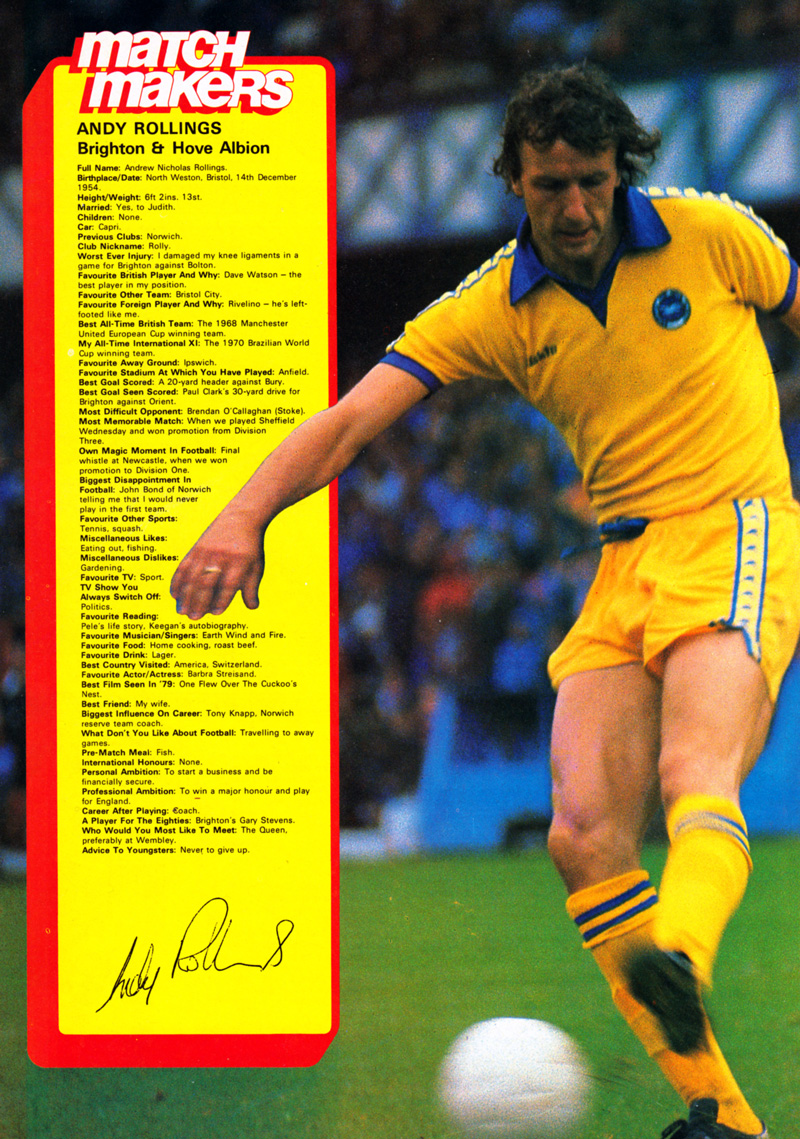
But you’d have to be super-picky not to want to pretend to be Brian Horton powering a bullet of a near-post header or Gerry Ryan slamming the ball into the Newcastle goal while wearing this shirt in the park. You may even wish to pretend to be Andy Rollings, who in Match Magazine, chooses as the magic moment of his career: ‘Final whistle at Newcastle, when we won promotion to Division One’:
It’d be getting into dangerous levels of football shirt-spottery to know that it was in 1979/80, the club’s first in the top flight, when the buk appeared above the logotype, just like on the Toffs reproduction. Games when this yellow shirt was worn include the match at Manchester United, when an altercation took place between Seagulls team-mates Eric Steele and Gary Williams. Not really an incident to re-enact in a ‘Phoenix From The Flames’-style, I don’t think. More happily, the shirt was also worn during this 2-0 win at Bolton in January 1980:
As a shirt design, this Toffs / Bukta garment has many things going for it. Just like on the original, the flared collar also added a touch of ’70s panache. The buks down the sleeves always looked great, not least because they resemble a line of seagulls from a distance. In fact, the production quality now is even better than the original sewn-on band where the yellow contrast on the blue buks down the sleeves always seemed too lemony to match the rest of the shirt. Perhaps the overall design would have looked more coherent with a yellow and blue badge, instead of white and blue, although that seemingly slapdash approach (or deliberate retro styling) is now being emulated in the new yellow Brighton shirt for 2013/14.
And, question on supporters’ lips: will the 2014 team emulate the side of the late Seventies and early 1980s? I’m unsure, but if Brighton make it up this time, they may need to exercise caution at times, but not cowardice. And, on the road, they will need to exhibit other positive characteristics associated with the colour yellow, such as hope, optimism and energy, traits the Albion side of 1978-80 had in abundance.
The pulsating atmosphere of the home match against Blackpool at the end of the 1977/78 season will live long in the memory. High-flying Brighton needed to win at the Goldstone Ground to stand a chance of eclipsing Southampton or Tottenham. Although they won 2-1 it was not enough to give the side promotion to Division One.
Teenager Dave Jenkins, in an extract from ‘He Shot, He Scored’ by Matthew Horner, page 78:
During the Blackpool game, a few of my 17-year old mates and I were once again worshipping Wardy in the North Stand.
Yet again, in a desperate tense game, Wardy came to the rescue with a piece of typical fleet-footed magic. As the ball sped into the net, the North Stand erupted with even more thunder than had been usual in those fabulous years under Taylor and then Mullers. The surge from the back of the stand lifted us fully 10 steps down that crumbling terrace.
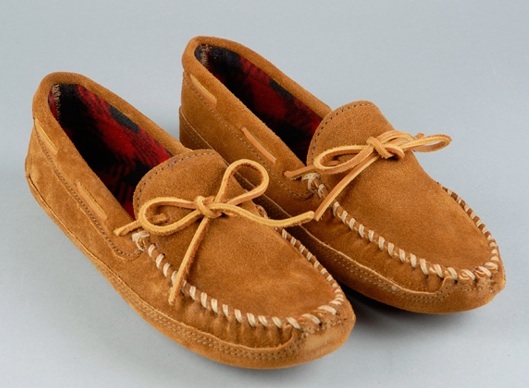
As I was being carried down towards the pitch in a state of delirium, I remember the feeling of my new and very expensive Ravel of Western Road moccasins being ripped from my feet by thousands of equally out-of-control Brightonians.
Needless to say, I never saw those shoes again: I had to walk back to central Brighton barefoot.
Not really feeling up to much, we decided to have a beer of commiseration in Shades (now the Pavilion Tavern). Unlike today, a bloke taking to the pubs and clubs without any shoes was a bit unusual in 1978.
It turned out to be a hugely successful evening with some of the town’s best-looking girls, and even the bouncers in the Queen Anne pub let me in shoeless in Wranglers (very unusual) – all because of my response to the obvious question ‘What happened to your shoes?’ My answer was, ‘I lost my shoes because of Peter Ward.’
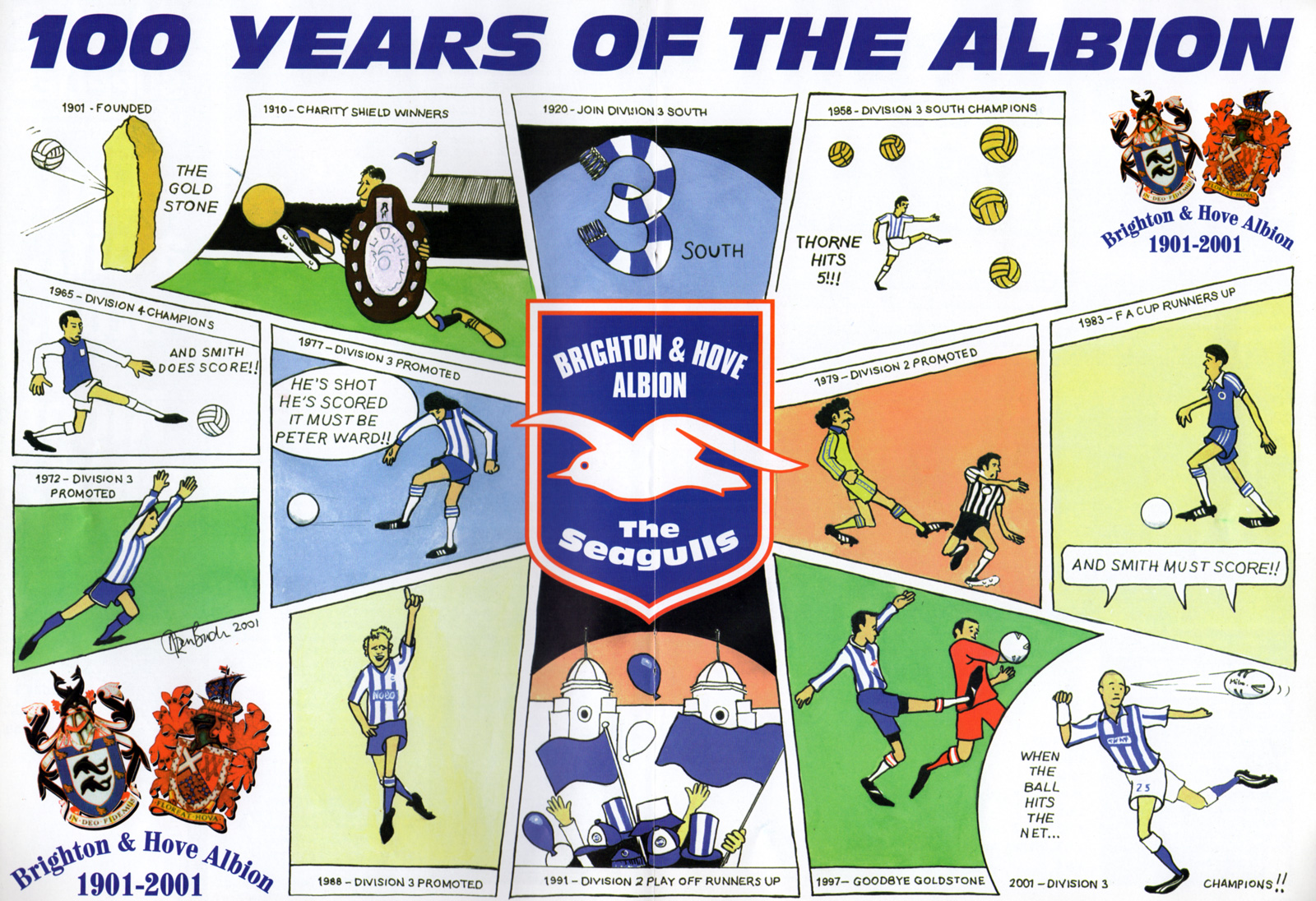
It’s strange that Ray Clarke seems almost a forgotten striker in Brighton’s history. Fans waxing lyrical about the late 1970s speak in high regard for the Peter Ward-Ian Mellor striking partnership that terrorised Third Division defences in 1976/77. They also talk glowingly of Michael Robinson’s swashbuckling centre-forward style and, of course, Gordon Smith’s famous chance in 1983.
But where is the praise for Ray Clarke, the striker that helped turn Peter Ward from a struggling top flight striker into a force in Division One?
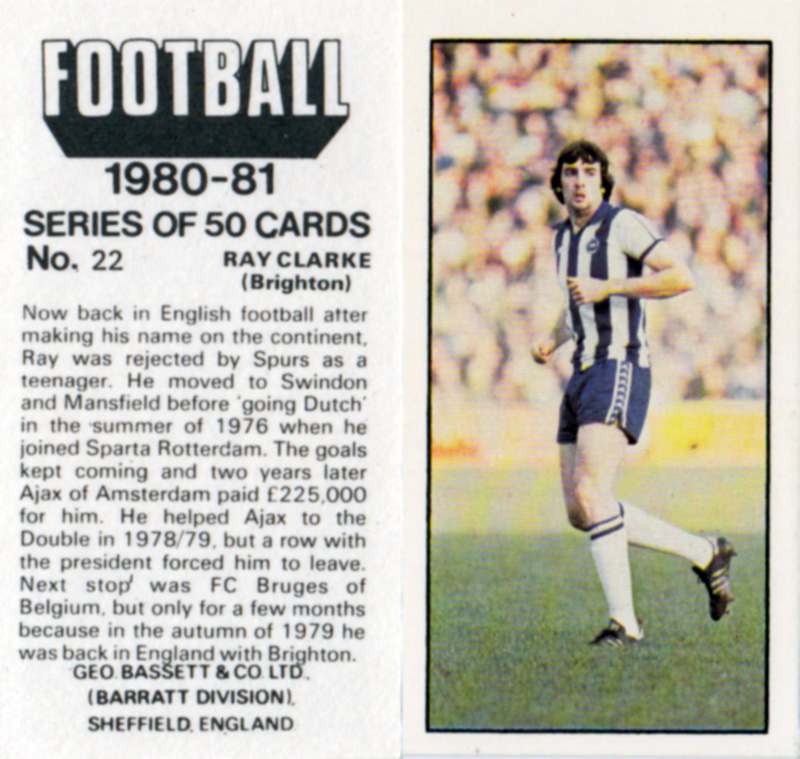
Clarke’s 28 goals for Mansfield fired the Stags to the Fourth Division Championship in 1974/75 and his 24 goals the following campaign contributed immensely to keeping the side in the Third Division. This led to a remarkable £80,000 transfer to Sparta Rotterdam in Holland in July 1976, where he was top scorer (with 16 and 24 goals) in each of his two seasons there.
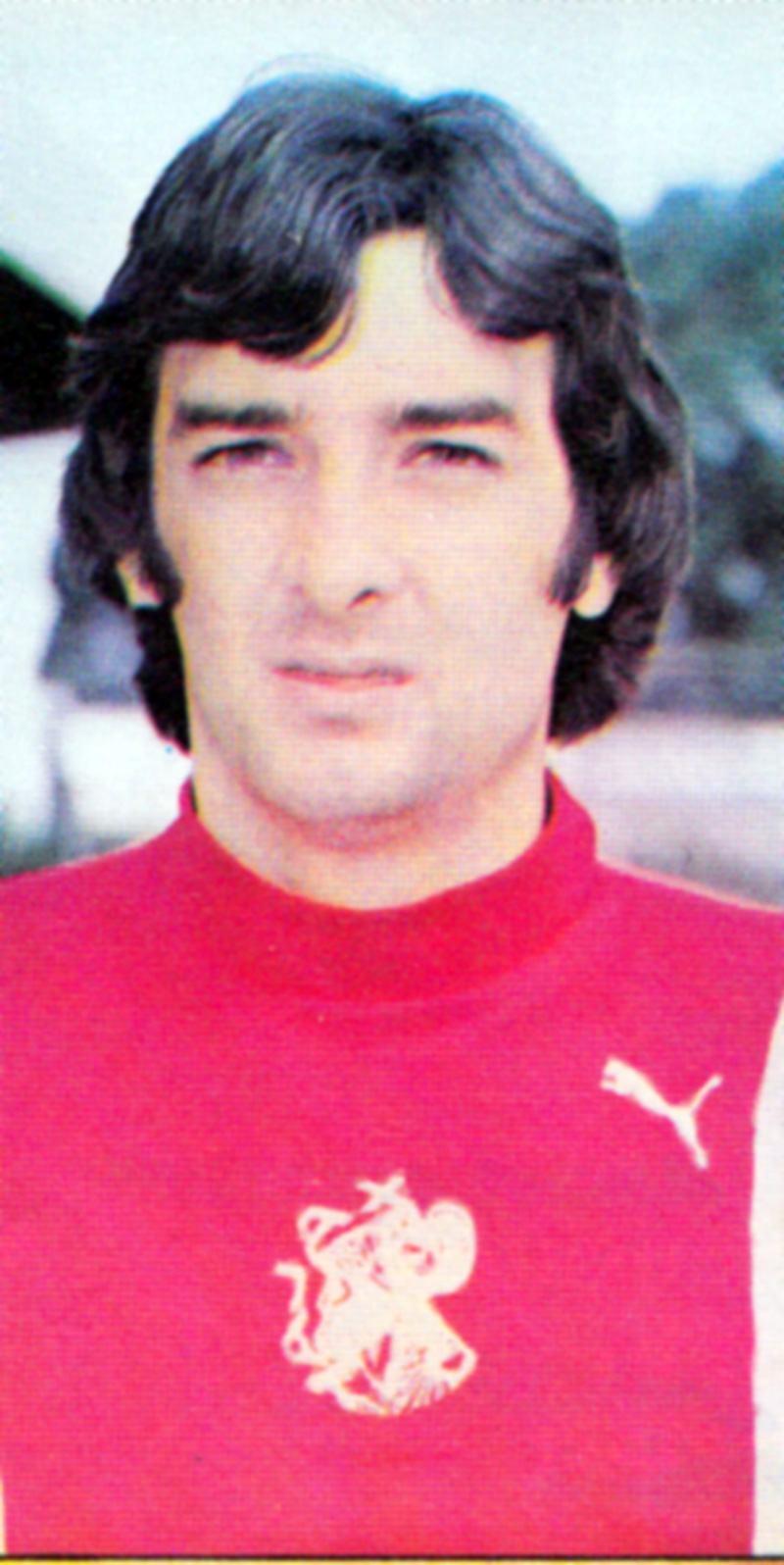
In Marshall Cavendish’s Football Handbook Part 59, there’s a fascinating piece about Ajax in the late 1970s under coach Cor Brom, as the new generation struggled to gain recognition while living in the shadow of the ‘Total Football’ side of Cruyff et al, plus this magnificent photo of Ray Clarke, looking for all the world like a ’70s fashion king in his Ajax get-up.
Londoner Ray Clarke, the player Brom had brought with him from Sparta of Rotterdam, was also the target of criticism inside the club. Clarke, once rejected by Spurs, is a strong and unselfish striker with an excellent scoring record. Last season he finished as Ajax’s top scorer with 38 goals – 26 in the league, six in the cup, six in the UEFA Cup – but during the summer they sold him to Bruges for £200,000.
Clarke spent only one season with Ajax… and early on he had problems adjusting. ‘One problem was that the quality here is so much higher than anything I’ve been used to before,’ he said. ‘Ajax have some fabulous players – Rudi Krol, for example… I don’t think it’s possible to appreciate just how good he is until you’ve played with him. It was only in the last three or four months that I started to play the way I know I can.’ Clarke’s 26 league goals put him second only to European Golden Boot winner Kees Kist of Alkmaar in the Dutch League.
Clarke’s spell in Belgium at Bruges was very brief as Alan Mullery snapped him up for Brighton in October 1979 for £175,000. As John Vinicombe wrote in ‘Super Seagulls’:
He spent only five months with Bruges and admitted that it had been a mistake not to go straight back to England. ‘It was quite an upset then for me to leave Ajax. I had heard a whisper they wanted to buy some new players and that they intended to raise the money by selling me. So I thought that if that was their attitude, I might as well accept the offer Bruges had made me.’
Before Clarke’s arrival at the Goldstone, Brighton & Hove Albion were finding life tough in the top flight, bottom after twelve matches, having recently shipped four goals at home to Norwich City. However, as Vinicombe continues:
The arrival of Clarke was a vital injection and his cheerfulness did much to cast off the blues. He was a fresh mind looking at Albion’s situation, and reminded despairing fans: ‘It is ridiculous for people to write Brighton off at this stage. I remember in my second season at Mansfield the team was bottom after 26 games with only 16 points, but in our last 20 games we won 15 and drew five and finished sixth (sic: 11th) from top.’ That was the sort of fighting talk people wanted to hear on the eve of a second meeting with Arsenal.
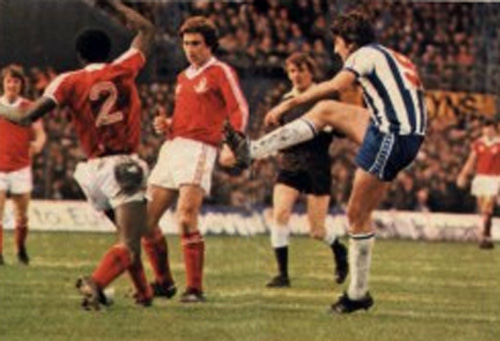
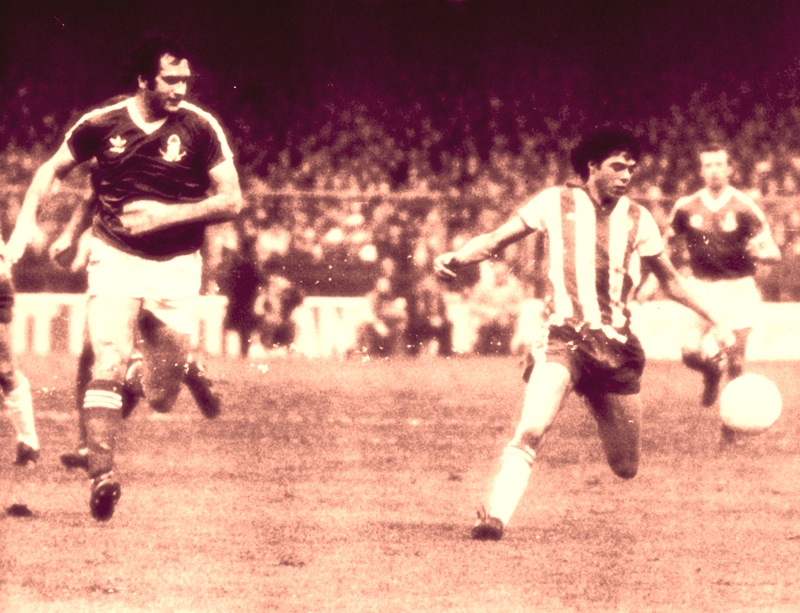
Ray Clarke made his Brighton debut in a 3-0 defeat at Arsenal, but scored a consolation goal against League Champions Liverpool in the next match at the Goldstone in November 1979. Then came the match that was the turning point of the season. Albion travelled to City Ground to European Champions Nottingham Forest more in hope than expectation, and pulled off a sensational result, winning 1-0. See the picture on the right for Clarke having a shot under the watchful eye of Viv Anderson and Martin O’Neill. It was Forest’s first home defeat in Division One since they were promoted to the top flight in April 1977.
Clarke’s strength and selfless play had a profound effect on Peter Ward. Before partnering up with Clarke, Ward was finding it hard against First Division defences. He had only scored twice in twelve Division One matches. Supported by Clarke’s hold up play and service, Albion’s star player transformed into a striker that hit around one goal every two games in Division One, quite a useful asset to have to get Albion climbing up the table. By the end of the season, in the games playing alongside Clarke, Peter Ward scored fourteen times in only thirty First Division matches, an exceptional tally in a team in the lower half of the table. Clarke himself weighed in with eight League goals as Brighton finished in sixteenth position, comfortably safe from relegation. He even managed to score against his old club Mansfield in the FA Cup, something that he finds bittersweet.
In Matthew Horner’s ‘He Shot, He Scored, the biography of Peter Ward,’ Ward says:
‘Ray was a good player – not at all flash , just a sound, straightforward target man. I liked playing with him and after he joined and Teddy (Maybank) left, we played every game together. I hadn’t had a regular partner since Ian Mellor in the Third Division and it helped to have some consistency. When I played alongside Ray I probably played the best football of my Brighton career – it was a shame that he left so soon.’
Here’s an example of a chance Ray Clarke fashioned for Ward:
Clarke was sold to Newcastle United in July 1980, perhaps as an outcome of seeing a specialist. As an interview with Spencer Vignes in the Brighton v Preston programme from 2004/5 says: ‘The specialist told him it was his hips which, to cut a long story short, were disintegrating. He might have four years left, or just 12 months. It was hard to tell’ and to make things worse Clarke was uninsured so Brighton would not receive a penny if he broke down while with the club. Maybe that is why he was sold so quickly. Perhaps Mullery was determined to buy Michael Robinson anyway. What is clear, however, is that without Clarke as a striking partner, Peter Ward went back to a low scoring rate in the First Division. Partnered with Robinson, Ward got one goal in eleven League matches at the start of 1980/81 before being sold to Nottingham Forest where, again, he was far from prolific. Neither did he hit a rich scoring vein on his loan spell back at Brighton in 1982/83 when he scored just two goals in 16 Division One matches. As for Clarke, his spell at Newcastle was over when he broke down with injury after only fourteen matches in 1980/81. He was just 28 when his playing career ended.
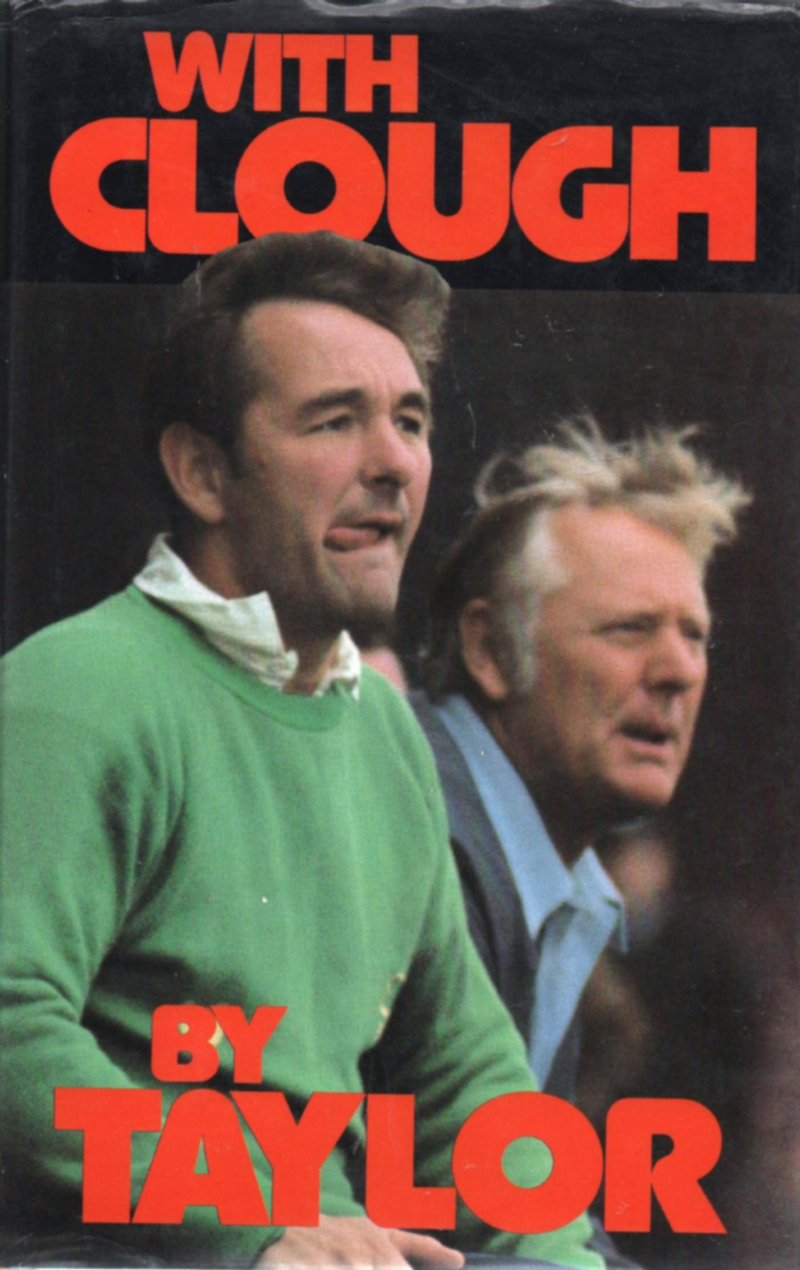
Fascinating extract from this book by Peter Taylor first published in 1980:
I wish Peter Ward had signed for us earlier. I saw Ward slotting straight into Woodcock’s position, with Trevor Francis striking from midfield; everything about the deal looked right, yet everything went wrong.
I had signed Ward for Brighton from Burton Albion – a deal that came about through appointing Ken Gutteridge, Burton’s manager, as a coach at Brighton. He told me, ‘I’ve two or three players at Burton who are good enough for the Third Division. They are Ward, Corrigan and Pollard. Clubs have looked but turned them down. Now will you have a look?’ I sent my assistant manager Brian Daykin, who watched them in an away match and gave the thumbs down. Gutteridge, though, persisted and said, ‘You must rate me to have fetched me all the way from Burton to Brighton so at least give me the satisfaction of seeing these three for yourself.’
There was no answer to that, so I went to Burton and watched them in the second leg of the FA Trophy semi-final against Buxton, whose centre-half was Peter Swan, the old England player. Swan gave Ward a hard time and Burton lost, but I still thought, ‘Yes, he’ll do.’ Burton played at Maidstone four days later and I took Brian Daykin with me. He’d seen Ward once and voted no; I’d seen him once and voted yes, so it seemed a good idea to watch him together. The pitch was bad; Burton, who had turned up with a scratch side, were bad; and Ward was bad – yet he still showed a few class touches, enough to make him worth a £4,000 gamble.
Ward has scored a hat-trick for England Under-21s and had a place in the full England squad but I don’t think he’ll realise his full potential because of inconsistency. Yet I like him. He is very good with his back to goal because he can turn and lick defenders and finish. That’s a rare quality – sticking it in the net.
I thought he would be good value for Forest at £300,000, the price I agreed with Brighton chairman Mike Bamber on the night before leaving for a European Cup tie in Romania. The signing was arranged for the day after our return but, shortly after landing, I heard a story that Derby were hoping to exchange Gerry Daly, their Irish midfield player, for Ward. Efforts to contact Alan Mullery, Brighton’s manager, were unsuccessful, which made me suspicious. Then Brian, for the first time in our partnership, doubted my judgement and asked, ‘Are you right about Ward?’
I felt floored and insulted. ‘Right?’ I shouted. ”I’ve got every detail about him except his fingerprints. I’ve bought him once; I’ve played him. He’s tried and tested. I know him as well as I know you’ – and with that, I left the ground. Brian, on seeing my conviction and eagerness to complete the deal, then got in touch himself with Mullery and Bamber but found them no longer anxious to sell, because Ward was returning to form. He played at Forest in November and gave a dazzling display in Brighton’s 1-0 win. This was our first home defeat in the League for fifty-one consecutive matches, stretching back to April 1977. Mullery said afterwards, ‘You couldn’t have him for £600,000.’
Every Albion fan over a certain age knows the famous Brighton home shirt of the late 1970s, with the buks running down the white sleeves and round Seagulls badge. But what about this one?
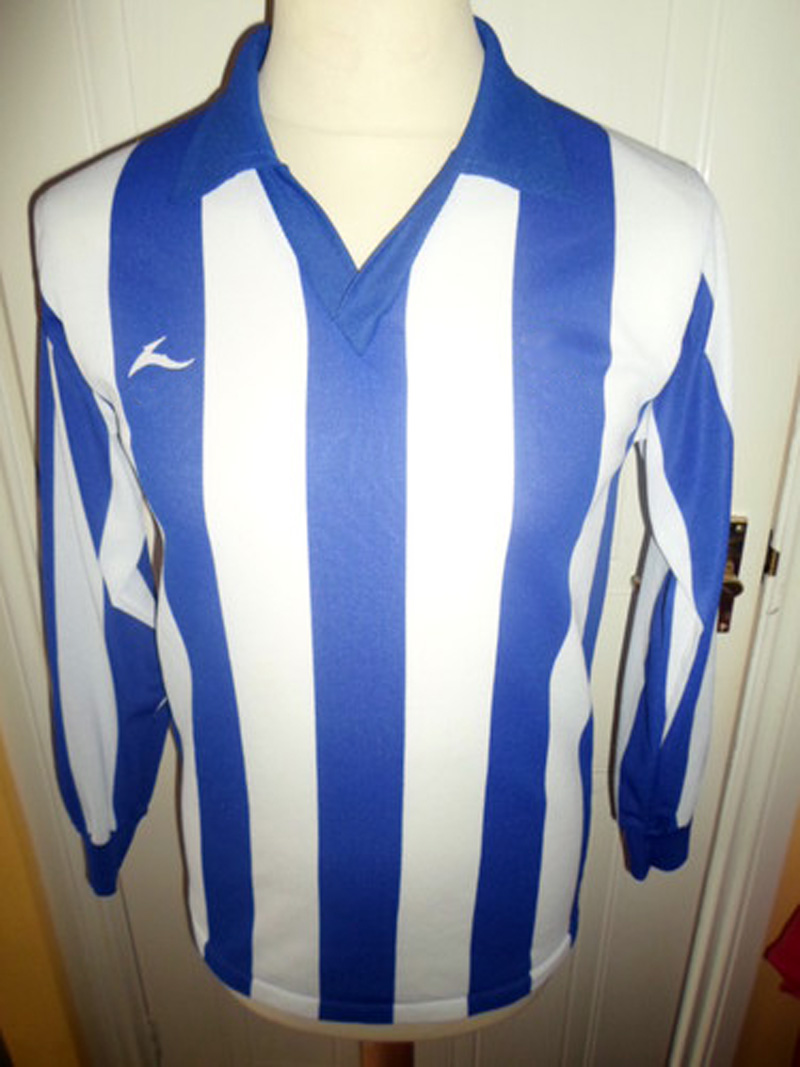
Well, this shirt design, with blue and white striped sleeves and no buks down t’sleeves (and no badge either!) was also an Albion home shirt of the Mullery years.
In 1976/77, Brighton had crazily inconsistent manufacturers’ branding on their kit. White or black Umbro logos adorned the home shirts. Then, sometimes, there was no branding (maybe some ironed on logos fell off!). At other times, there was an Umbro logo on the shirts and a Bukta logo on the shorts. And sometimes, different Albion players in the same game had different combinations. It was an absolute mess! Certainly wasn’t someone with OCD in charge of the player’s kit.
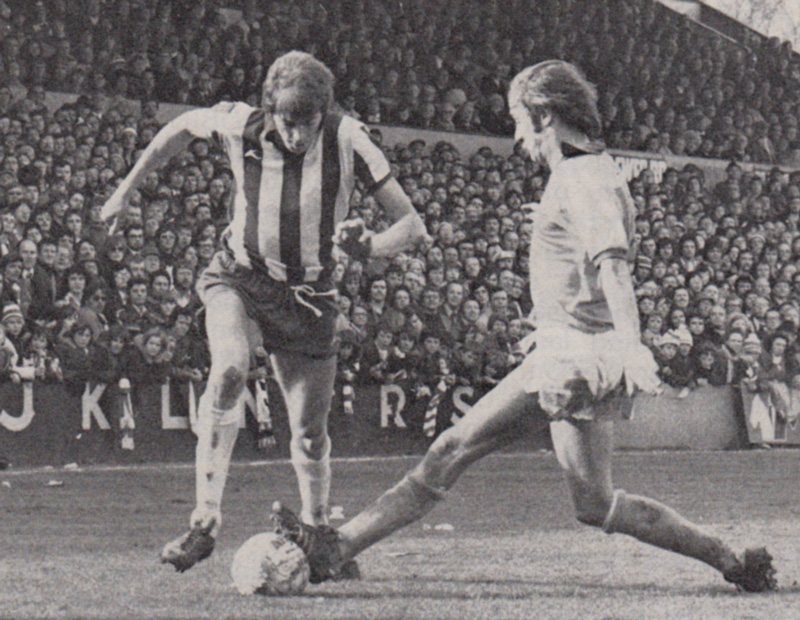
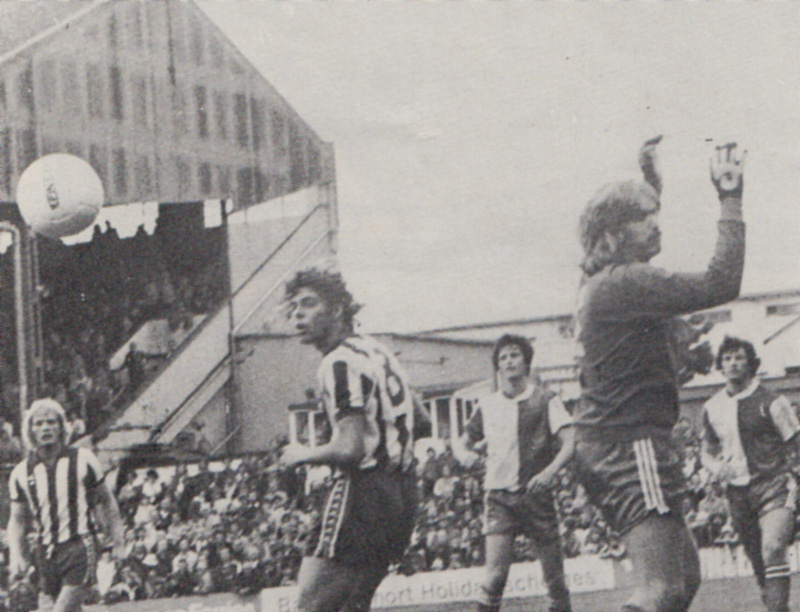
Around April 1977, though, for the first ever time, some Brighton players had the Bukta logo on their shirts. Why does this matter? It doesn’t other than it means this was the first ever Albion Bukta shirt. For example, here’s Ian Mellor in action against eventual Third Division champions Mansfield:
(Infuriatingly, other players in the same game, such as Peter Ward, did not have this logo on their shirt. His was unbranded).
However, Ward did get to wear this Bukta-stripey-sleeved shirt over a year later in August 1978, in a pre-season friendly against Queen’s Park Rangers at the Goldstone.
By that time, the classic Buk-sleeved Bukta shirt, that we all know and love, had been worn for a good year within its three year lifespan. So it’s a mystery why the first ever Bukta design made a brief revival, now with shorts that didn’t particularly match its aesthetics. Probably to confuse Albion shirt connoisseurs thirty-five years down the line, I expect! Yeah, that’d be it.
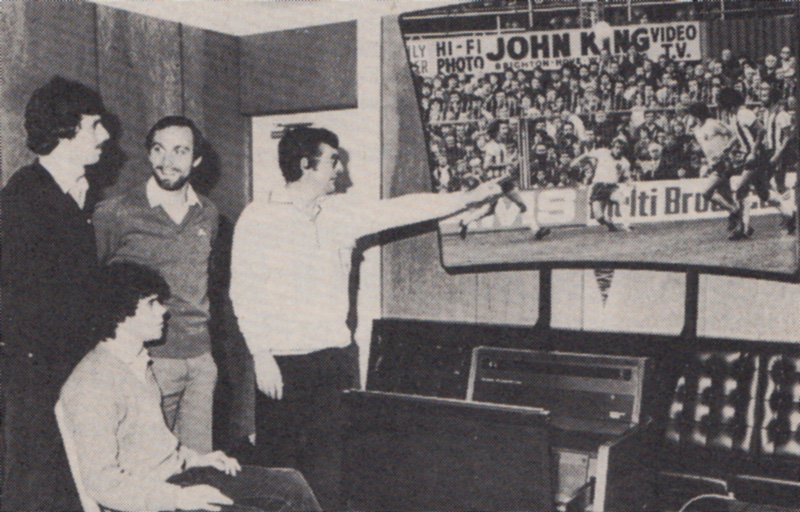
In a scene befitting a ’70s sci-fi movie, Alan Mullery goes over footage of a recent match with some of his star players. As the Brighton v Nottingham Forest programme from 1979/80 reports:
Every home game at the Goldstone is recorded on video by John King Films and Manager Alan Mullery spends a considerable time looking through the replays for tactical purposes.
John King are now marketing a brand new form of television. It is the biggest screen on the market operating on a sophisticated projection system. Our picture shows Alan with players Mark Lawrenson, Peter Ward and Brian Horton viewing the action of a recent match and envying the chance of such a set at him.
If the picture quality was really as good as that, JKF were really ahead of their time. And whatever happened to all the video footage from Albion’s first in the top flight? If only it still survived…



 The Goldstone Wrap