Short of Peter O’Sullivan, Teddy Maybank and Gary Williams turning up at your door tipsily singing ‘Auld Lang Syne’, what finer retro Albion way to see in the New Year than an invitation for you to feast your eyes on a Brighton football calendar from 1980?
In 1979/80, a company called Print For Sport Ltd launched some lavish A2-sized Soccer Action Calendars for each First Division club, some ‘top’ Second Division clubs (West Ham, Leicester, Sunderland, Newcastle and Burnley, Luton and QPR) and the England team. For just £2.49 each, you received one for your favourite team with twelve colour action shots of first-team players.
The item, advertised heavily in the likes of Shoot! Magazine and Match Weekly, also included red ‘You-Fix’ stickers allowing fans to mark match dates and opponents on the calendar itself. I suppose they could have pre-printed the fixtures directly onto the relevant dates themselves but this was what counted as ‘fun’ and ‘interactive’ in those days!
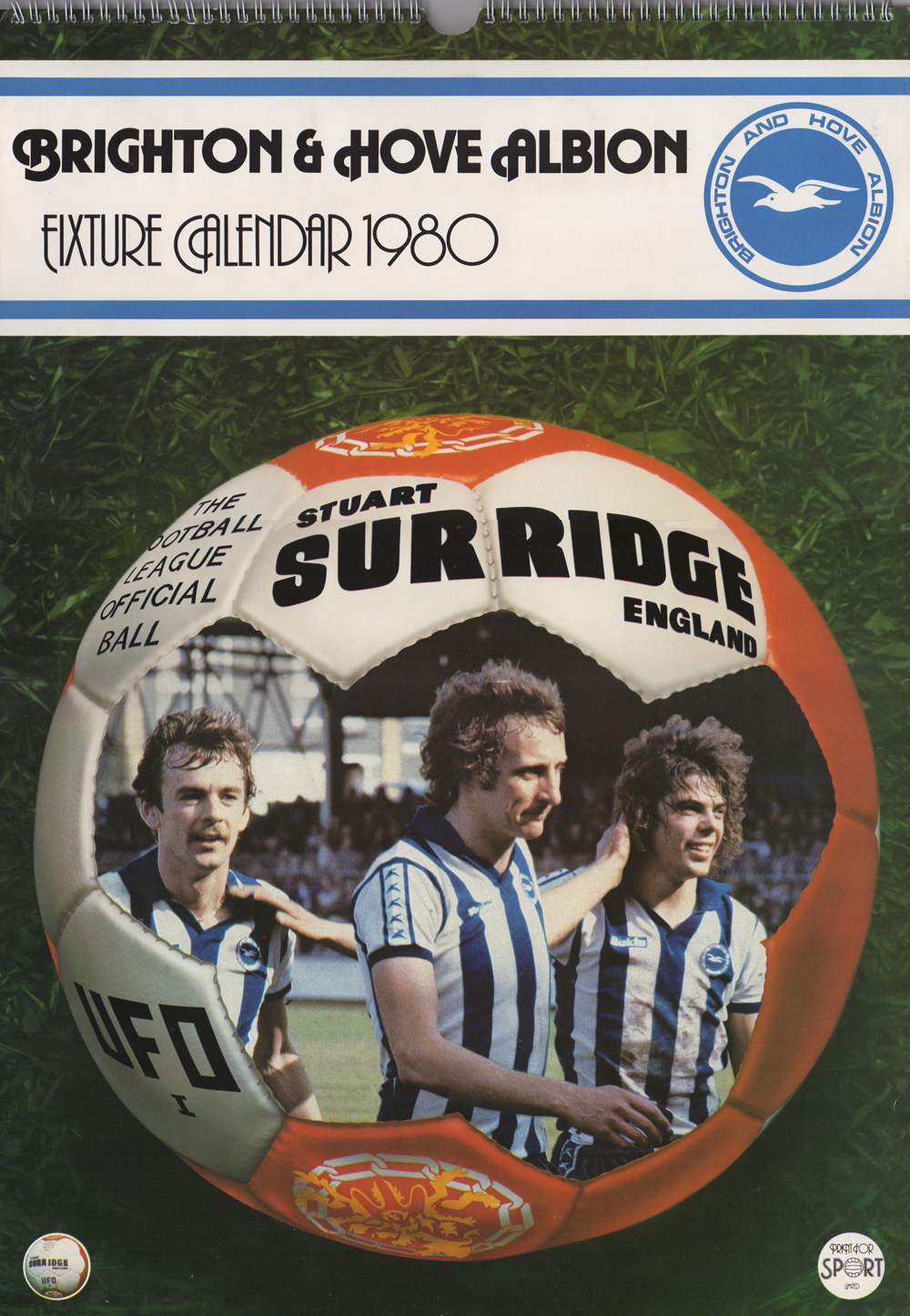
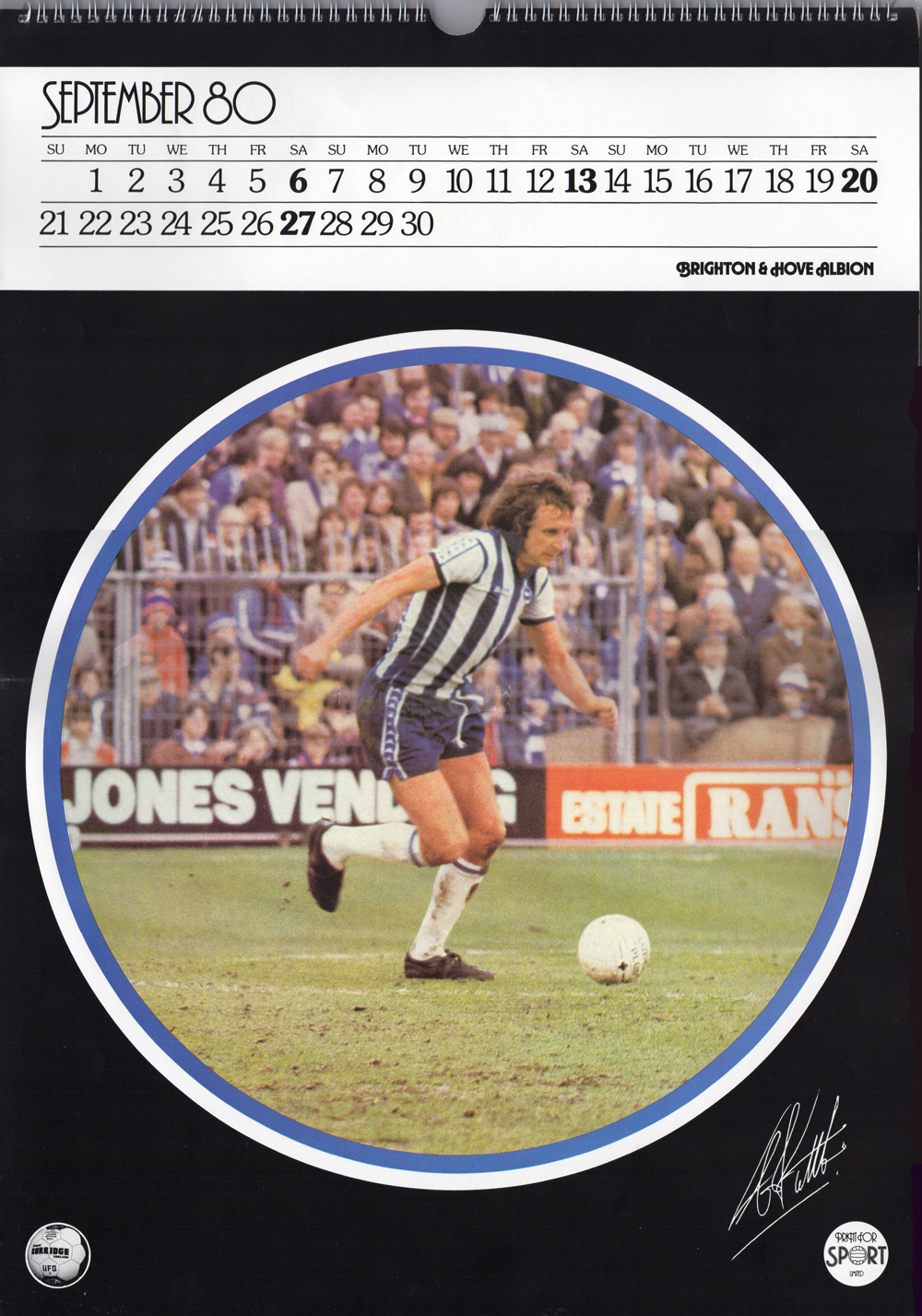
Here is the Brighton & Hove Albion calendar, lovingly scanned by yours truly:
In a clever, eye-catching design, Malcolm Poskett, Chris Cattlin and Peter Ward are the cover stars.
Then into January is… ermm, Brian Horton with a full head of hair in the perm? Well, it’s definitely Nobby’s signature on the bottom right but, as Alan Wares (Albion Roar) from North Stand Chat has identified, it’s Andy Rollings blocking the shot from Orient’s Alan Whittle in a memorable 3-3 draw. Peter O’Sullivan and Mark Lawrenson are in the background, along with Clark’s hair!
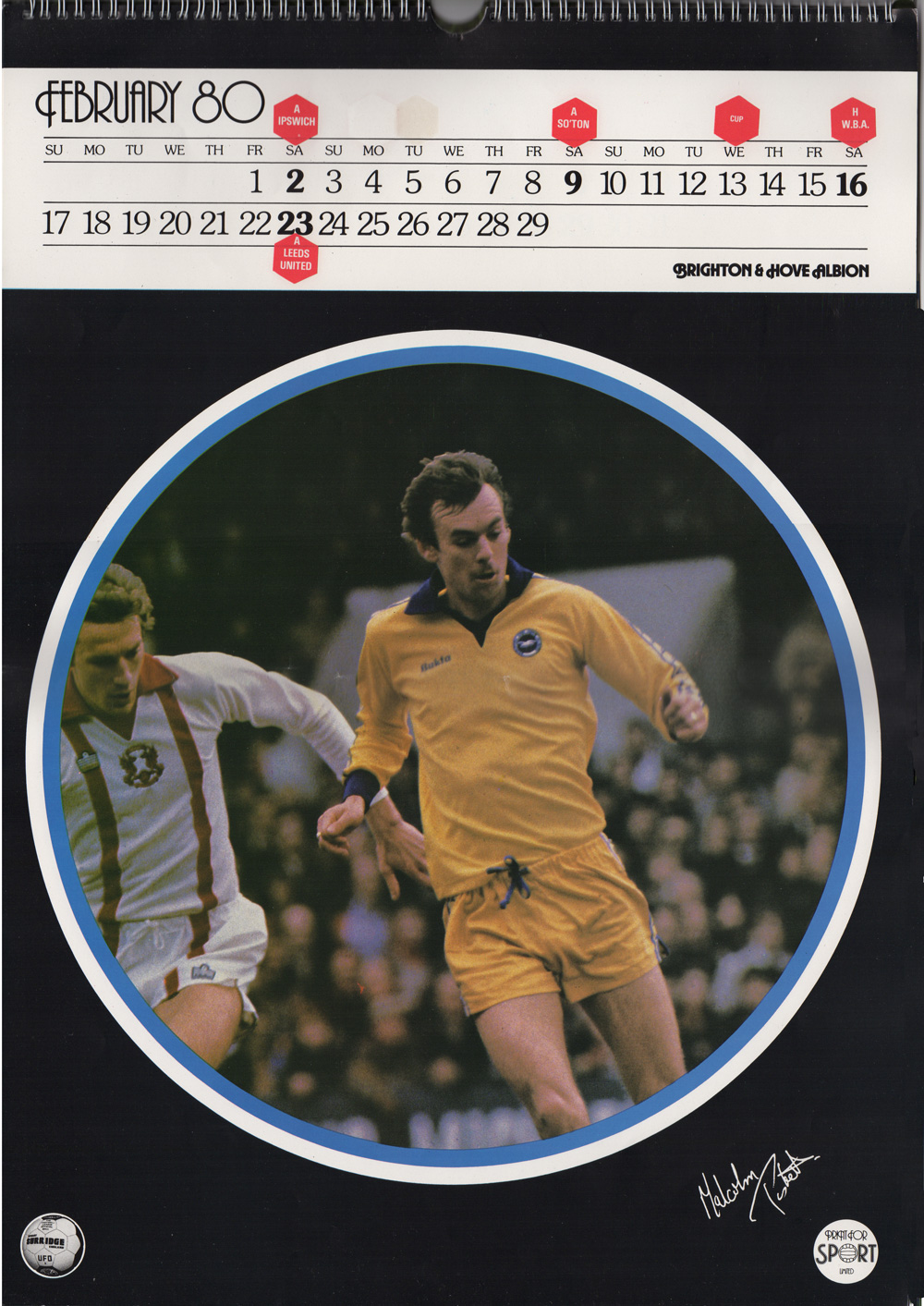
Next up is Malcolm Poskett, also in action against Orient, out to prove Alan Mullery was right to prefer him to Wardy in the number eight shirt for this match.
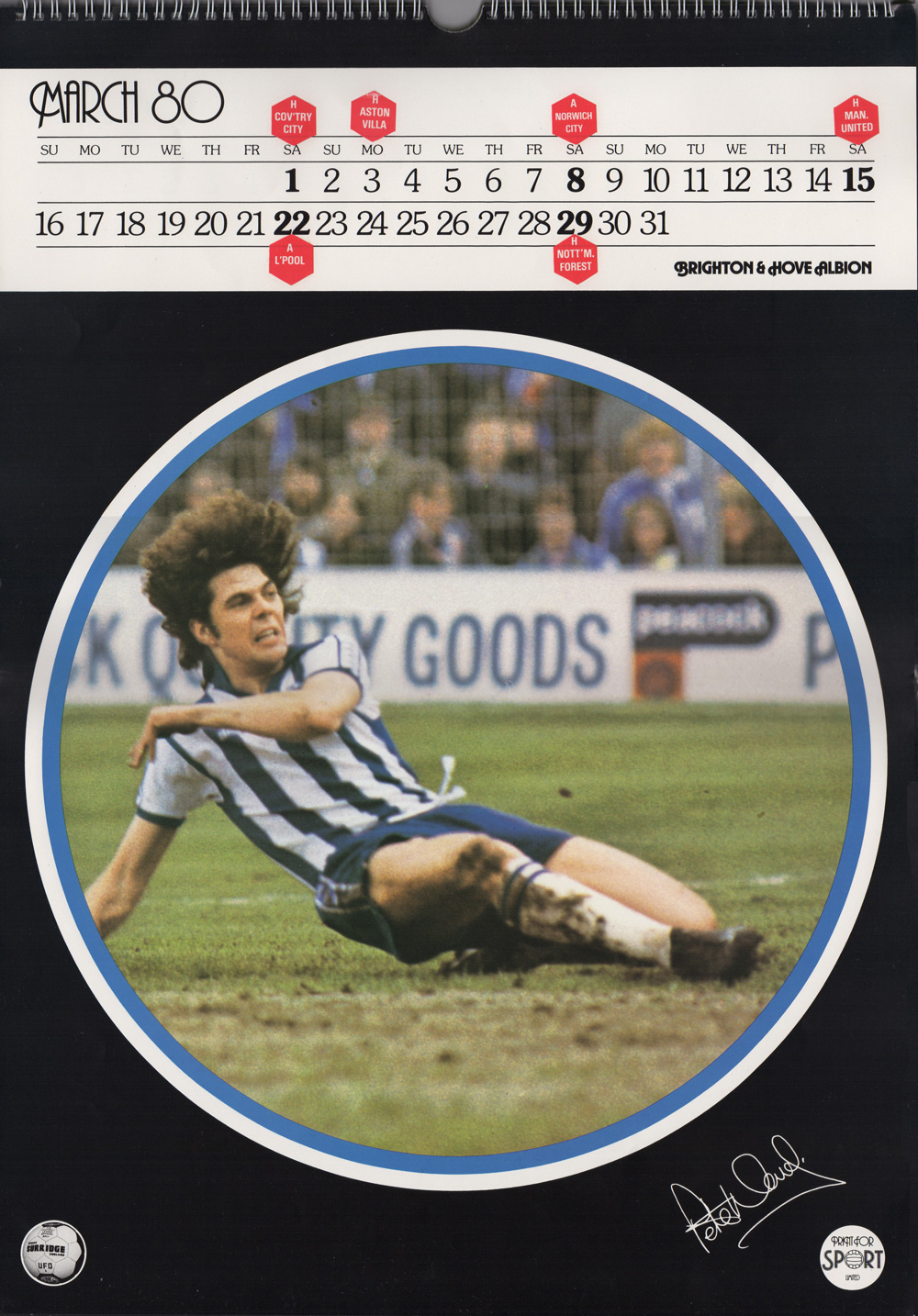
When Peter Ward does show up in March, it’s on a bad hair day.
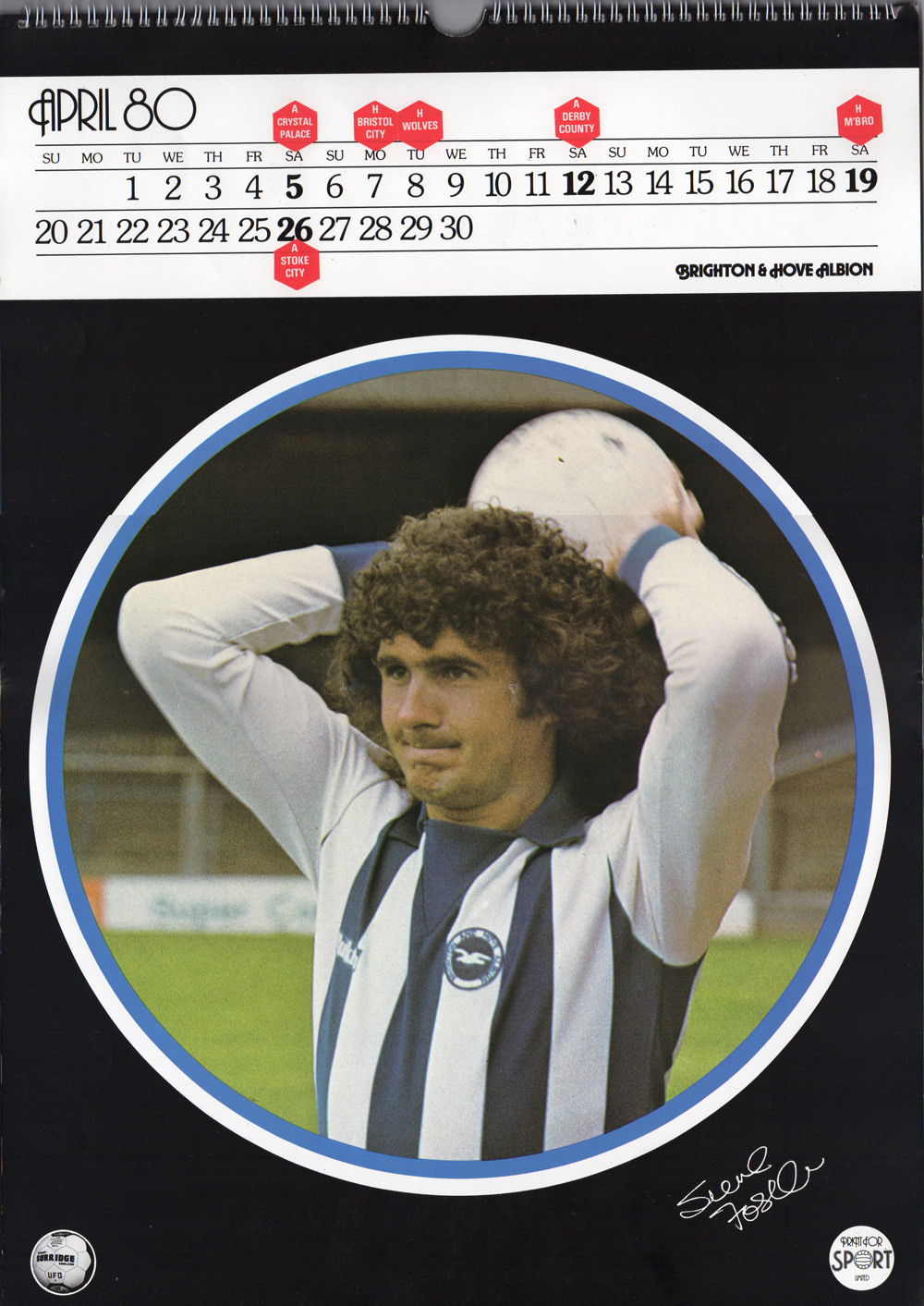
Steve Foster had signed for the Seagulls in pre-season in the summer of 1979. Without a genuine match appearance for Brighton to his name yet, he strikes a pose for the camera instead.
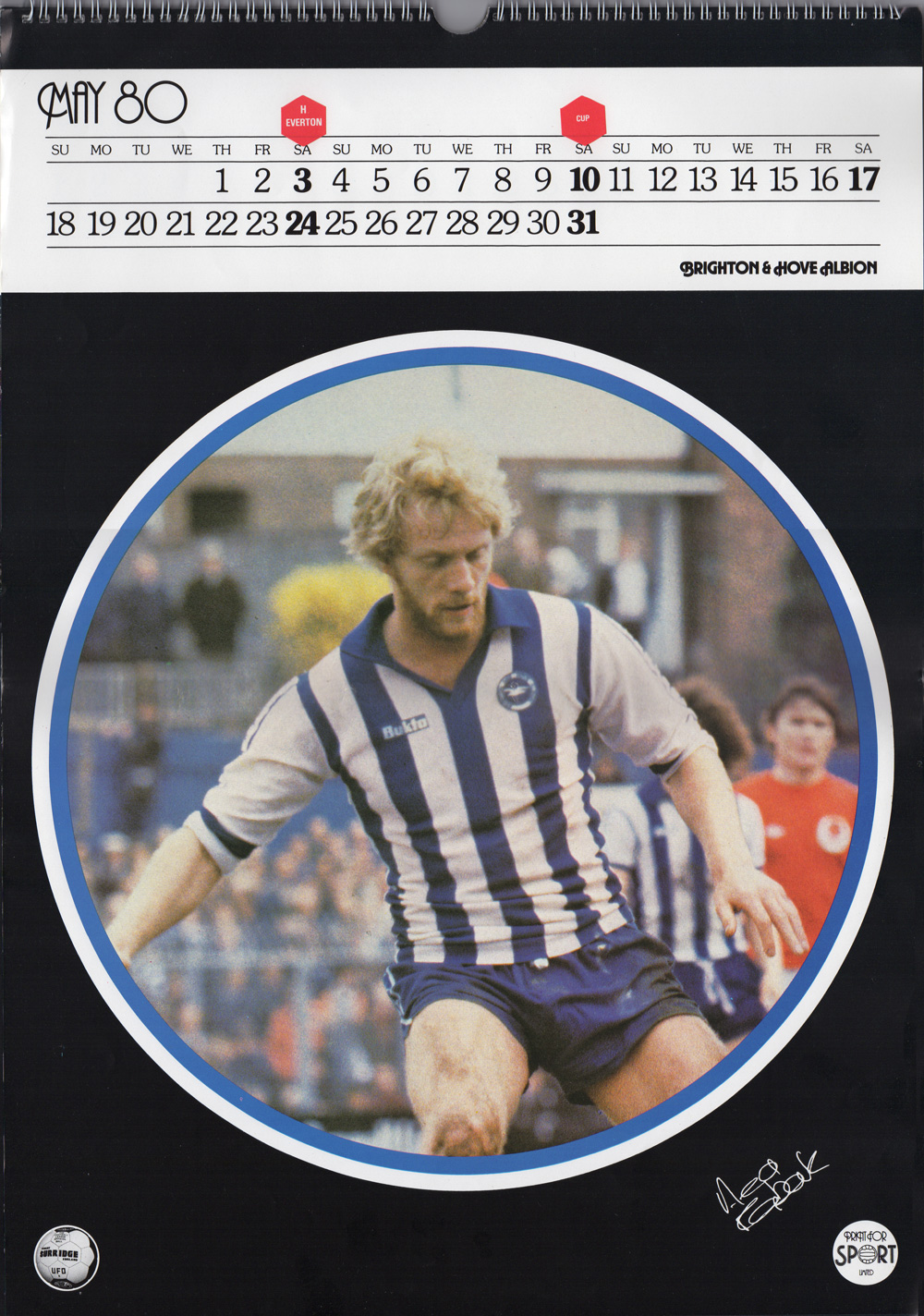
In the same Blackburn game where he scored a goal in the midst of a smoke bomb going off, here’s Teddy Maybank challenging for the ball.
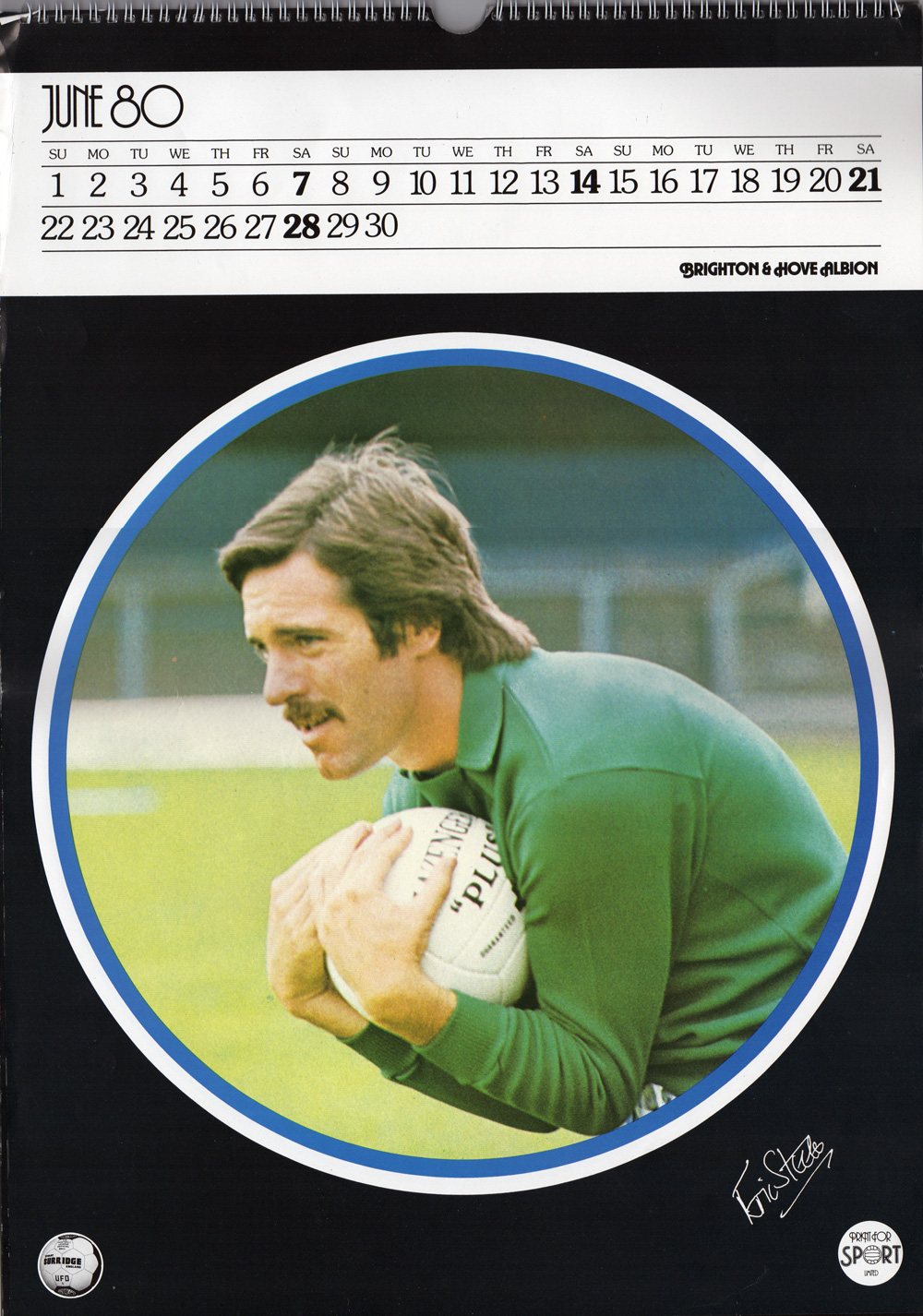
Eric Steele shows a safe pair of hands for the camera.
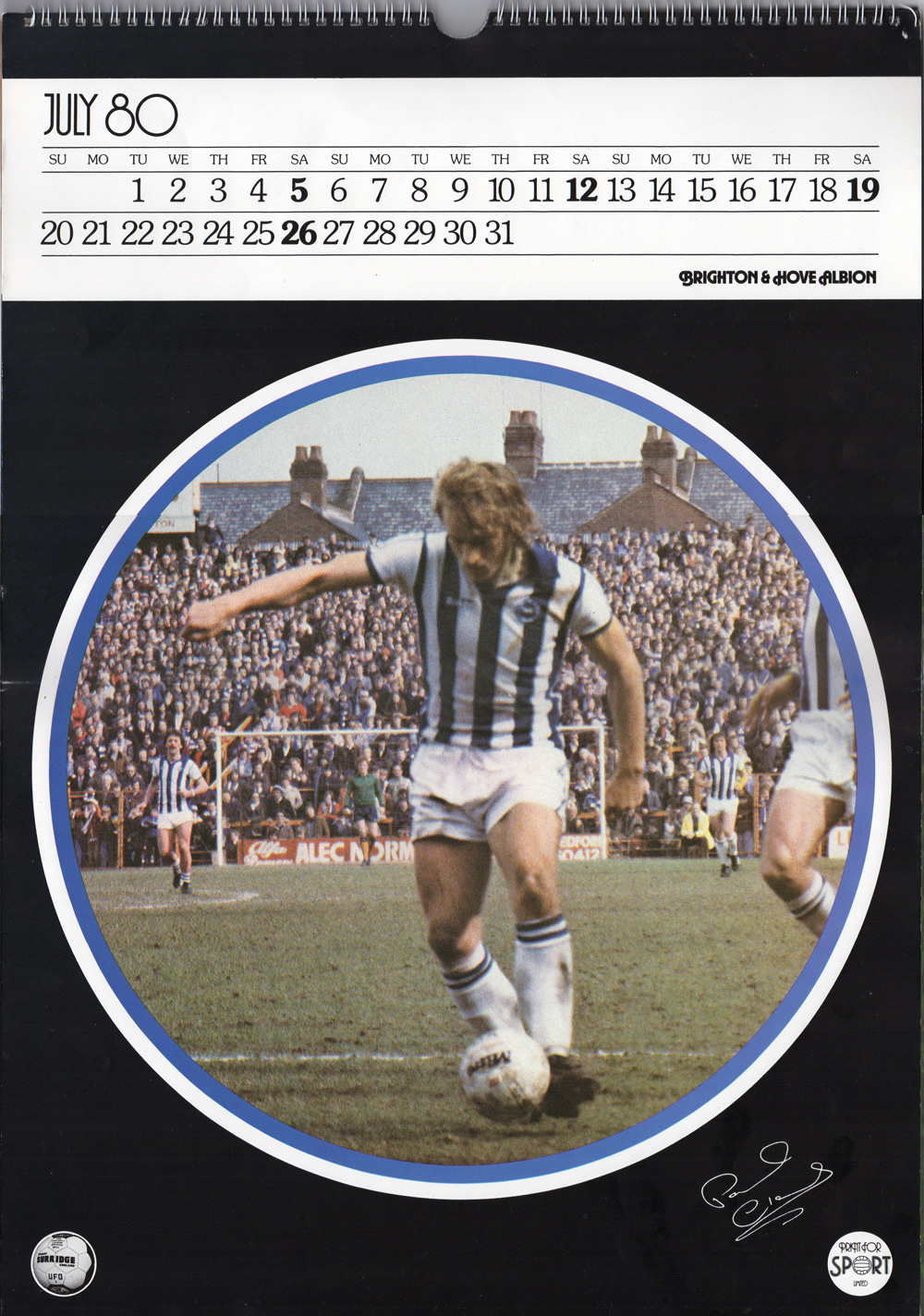
‘Viking’ Paul Clark on the ball, possibly against Luton in April 1979.
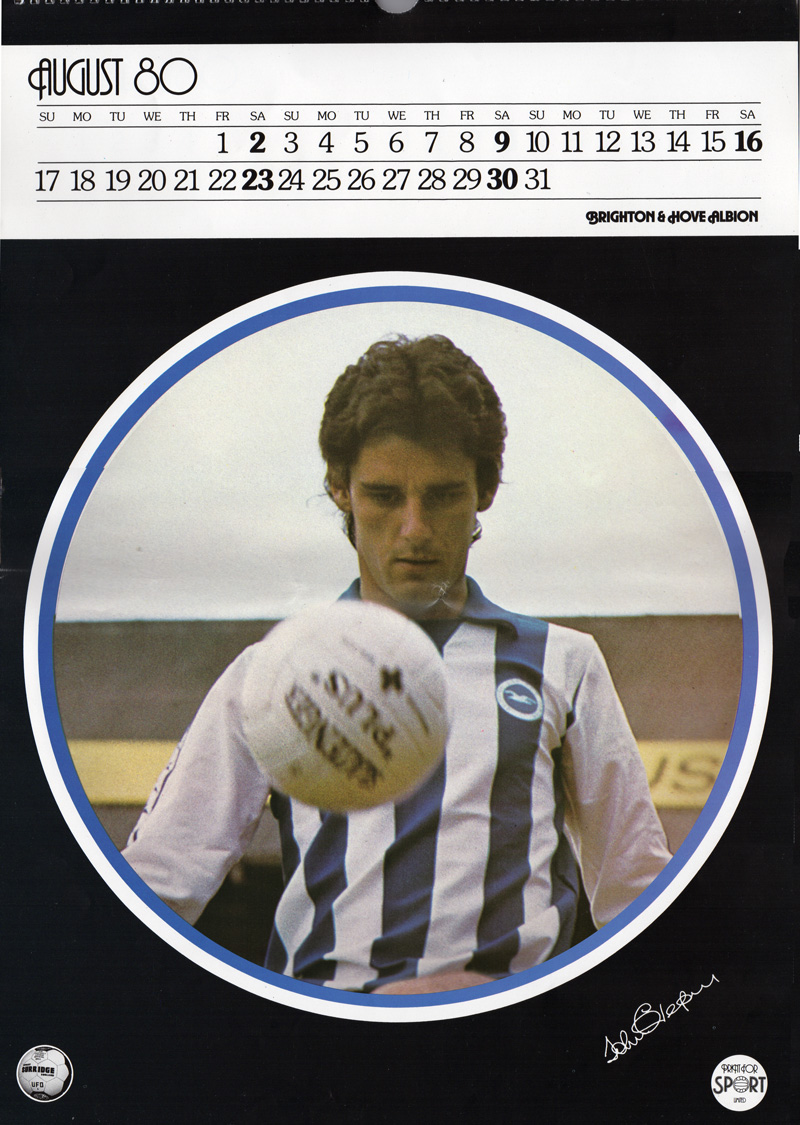
New signing John Gregory juggles the ball.
Veteran Chris Cattlin is star of the month for September 1980 even though his Albion playing were over by then.
Gary Williams carries the ball out against Blackburn.
Proving his acting skills are no better than his punditry skills, Mark Lawrenson fakes celebrating a goal!
And finally, Gerry Ryan goes for a dribble.
As you can see, 1st January 1980 fell on a Tuesday, whereas 1st January 2014 is a Wednesday, so you’ll be disappointed if you were hoping to print this out and use it, unamended, as your calendar for the New Year. Significantly, 1980 was also a leap year so you’ll have to wait all the way until 2036 before this calendar fits the bill again. Never mind! I hope that you are patient. In the meantime, Happy New Year!
Hot on the heels of the 4-0 collapse against Walton and Hersham in the FA Cup, Brighton faced Don Megson’s high-flying Bristol Rovers at the Goldstone. It was an encounter that happened exactly forty years today, on 1st December 1973.
Here, I’ve put together a YouTube video of ten minutes of ‘highlights’ that featured on The Big Match the following day:
Enjoy once more Norman Gall’s rather blatant fouling on the first goal, while still getting nowhere near Alan Warboys. Or that hopeless ‘defensive’ wall on the free-kick. Or the amazing 55 yard back-pass at the start of the second half!
Much has been written about this memorable match in the years since. What is often forgotten is that Alan Warboys almost hit number nine for Bristol Rovers:
Strangely, all the goals in this game were scored by players in Albion shirts. This was because Bristol Rovers’ red and white away kit was deemed by ITV’s producers to be too similar to Brighton’s blue and white shirts, for those watching in black and white.
Dissecting the televised humiliation, John Vinicombe was at his eloquent best in the Evening Argus on the Monday morning that followed:
The danger at the Goldstone is that the cure prescribed by Dr Clough might kill the patient…
That Albion were ailing before Clough took over is beyond doubt. But has the latest emetic proved too much of a purgative? It would appear so.
The stomachs are too weak for the Clough medicine, which wasn’t exactly sweetened after the 8-2 thrashing by Bristol Rovers – the heaviest home defeat in the history of the club.
This is the only tangible explanation I can offer after this second astonishing collapse in the space of four days.
Albion are clearly the sick men of the Third Division – a disturbing state of affairs in a town famous for its health-giving ozone. Doctor Clough may have arrived too late to prevent Burke and Hare carrying off the body.
The Walton and Rovers defeats, which must be bracketed together, are frightening to portend. Albion are back to square one – not for the first time – and the consequences of failure by a club so heavily in the red do not bear thinking about.
Clough can never have thought his Brighton venture would turn out like this. When he emerged from speaking to his players the anger was concealed by the controlled pitch of his voice. He did his best not to sound too much like the man engaged on mission impossible.
To rebuild is his task, and in view of the massive structural weaknesses, he has to demolish the very foundations of the side and begin afresh. In the process Albion will lose more matches, but never, let it be hoped, surrender as they did against Rovers.
It doesn’t matter very much what Clough says, although his shattered players hang on every word: it is the remedies he applies that count. But he makes it clear he will not be rushed into quick signings. “I was ashamed for the town and the club that 11 players could play like that. I feel sick. We were pathetic. This side hasn’t got enough heart to fill a thimble. There are no magic wands,” he said.
On Saturday, at Tranmere, Clough will send his players out in the hope of getting a result. They know full well how he feels about them. Here is an other example: “It was the most humiliating 90 minutes of my career. We have plans to sign players. But nobody will be signed for the sake of signing. I will play before we do that, or my bairn will…”
And he even showed contempt for his players by saying: “You couldn’t have got their centre-forward off if you had shot him. And he got his stitches by heading one of our defenders.”
Clough has, in his fashion, leaned over backwards to speak up for his players. But what happened between Wednesday and going out against Rovers did not provide the necessary stiffening for a match with the Third Division leaders. In these two matches Albion were unrecognisable.
The haircuts follow Clough’s own severe tonsorial style. Now the players look like a mission from the Hare Krishna temple. Shorn of their locks, they must don the hair shirt and do penance.
To some it must all seem a bad dream, but Clough isn’t going to disappear like a big, big genie. “…I’ll be here for a long, long time. They had better get used to it.”
Clough’s shock treatment pushes players through and beyond the pain barrier. This was done with Ken Beamish in the Chesterfield match when he returned to the field with an ankle injury. Bert Parker, the physiotherapist, who has assisted the club for some time, protested and no longer attends matches.
The players know that to go down now is not to take a breather, although to be fair to Beamish on this occasion he was out for the next two matches. But it illustrates my point that Clough is turning the Goldstone upside down in the firm belief that this is the only way to put the club on its feet.
Paradoxically, Clough is right. The process will continue to be painful but there must not be so much destruction as to take the club into the Fourth Division.
The hangover from this chastening by a fine Rovers side is bad enough. To Rovers goes the credit for a club record League win and a new Third Division mark of 19 straight games without a defeat.
To Colin Dobson, freed by Albion when a broken ankle looked like ending his career, the accolade for a thinking player. He masterminded the operation in unbelievably generous space. Bruce Bannister knifed through for the early, killing goals, and Alan Warboys, superbly balanced and fast on the slightly frozen pitch, looked the perfect striker, taking his four goals so cleanly.
The fifth, sixth, seventh and eighth goals were from Warboys, Bannister the first, third and fourth. He knows the eight-goal feeling well enough… ask Bournemouth. Three years ago he helped Bradford City beat them 8-1, but at least on Valley Parade.
What happened at the Goldstone was the worst home defeat in the Football League since Wolves scuppered Cardiff 9-1 at Ninian Park in a First Division match in 1955-56.
It is a day that will only be recalled by Albion fans with infinite pain. Already rival supporters must be working out what rhymes with EIGHT. Perhaps they can set the words to the Dead March…
Goalchart Five minutes: Dobson set it up. Warboys streaked down the left wing, beat Gall near the bye-line, and BANNISTER timed his run splendidly to fire the first goal, 0-1.
Twelve mintes: Dobson again seeing situations light years before Albion. He took Warboys’ pass, and laid on a pinpointed centre for FEARNLEY’s header.
Twenty minutes: A deceptive shot by O’SULLIVAN that swerved and kept low gave Albion a brief hope of checking Rovers, 1-2.
Twenty-nine minutes: A strong overlap by Jacobs spelled danger when Ley missed his tackle and from the cross BANNISTER’s head did the rest, 1-3.
Thirty-two minutes: Powney failed to hold a hard, low free-kick from Warboys, and BANNISTER tapped the rebound into the net, 1-4.
Thirty-nine minutes: Another Dobson centre, and WARBOYS started his own personal rampage, 1-5.
Fifty-five minutes: Bannister the goalscorer turned goal maker by laying this one on for WARBOYS, 1-6.
Sixty-three minutes: WARBOYS went through on a pass from Parsons like a thoroughbred. Out came Powney, but he had no chance, 1-7.
Seventy minutes: Albion appealed for offside against WARBOYS but he went on strongly, 1-8.
Eighty-seven minutes: A floating Towner centre, and RONNIE HOWELL banged in a well-taken goal, 2-8.
On ‘The Big Match’, Brian Clough braved the TV cameras, having verbally demolished his players at the press conference the evening before:
Although the match was a disaster for the Albion, son Nigel Clough was more upbeat, saying Brighton did ‘all right’ despite getting hit for eight…
With his acceptance of such dire football, it’s probably good enough reason for Nigel not to be allowed anywhere near the Brighton manager’s position!
A week after the match, Albion were thrashed 4-1 at Tranmere before succumbing to single goal defeats against Watford and Aldershot. Brighton slipped to 20th position in Division Three, one place above the drop zone. As for Bristol Rovers, their fine form continued. Unsurprisingly, they were promoted with a game to spare. Rovers finished the season with the return fixture against Brighton. Rovers fans expected another humbling of Brighton but it never materialised. Albion’s Lamie Robertson opened the scoring after a neat one-two with Ken Beamish on 19 minutes. It took Bruce Bannister’s late penalty to level the score.
Here are their promotion celebrations after the unexpectedly close match:
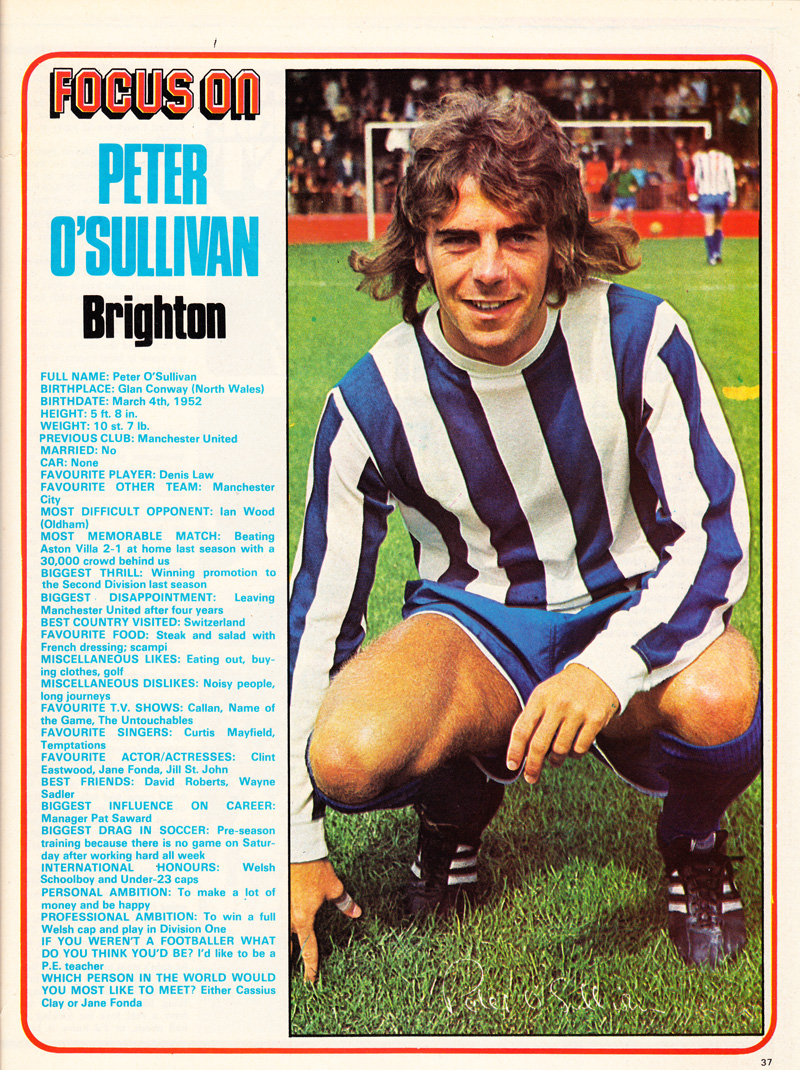
Here’s Peter O’Sullivan, brimming with confidence ahead of the 1972/73 season:
Note his professional ambition was to ‘win a full Welsh cap and play in Division One.’ The latter happened much later in his career but getting full international honours was to come his way much earlier, in March 1973, despite the Albion making a pig’s ear of competing in the Second Division.
Shoot! magazine revisited Sully the following season, 1973/74, after Brighton had landed back with a bump in the Third Division. By the time of the interview, Pat Saward had made his exit, Brian Clough had arrived, and the Welsh winger and midfielder was buzzing with optimism about the new appointment:
Towards the end of last season, Peter O’Sullivan was on the verge of asking Brighton for a move. In three seasons with the club he had tasted the headed heights of success.
There was promotion from the Third Division, five Welsh Under-23 caps plus a full international against Scotland. But just as quickly, a dream of further success faded as Brighton surrendered their Second Division status after just one season.
“I was bitterly disappointed at that,” said 22-year-old O’Sullivan.
“It seemed at last I was getting over the depression of being in the Manchester United reserves for four years when life began to turn sour again.”
O’Sullivan, who hails from Colwyn Bay in North Wales, thought hard about his future, and after Brighton’s dismal start to the current campaign, wanted away. In these days when forward talent is so precious there would have been no lack of bidders for the young winger’s talents.
Then Brian Clough arrived.
“Suddenly the whole atmosphere down at Goldstone Road changed,” explained Peter. “And I am sure that under Mr Clough and Peter Taylor, Brighton can really do well again.
“I’ve been impressed with their ideas, and they have completely overhauled the set up down here.
Now I am more than happy to stay – that is if Mr. Clough still wants me and help Brighton back into the big time.
“The potential down here is enormous and I am sure we will realise it under Mr. Clough.”
Peter can have few worries about whether Brian Clough will keep him.
Peter also points to the huge crowds Brighton can draw when they are getting results as a sign that the club have all the ingredients of a top flight side.
“Some of our home games have been watched by 30,000 fans.
That is a marvellous total for the Third Division. It just shows what we can do if we are successful.
“Once that confidence comes flowing back we will give them something to cheer about. I can’t promise goals, but I can promise 100 per cent effort to get them.”
O’Sullivan was ever-present in 1973/74, hitting four goals, including Albion’s first goal in the infamous 8-2 home defeat to Bristol Rovers. His excellent dribble and drive brought the score back to 2-1 to the visitors. Not for the first or last time, Sully’s creativity with giving hope to the Albion.
Well, here’s a treat for you. The match report from the Evening Argus, by Sydney Spicer, after the famous rout in front of the Match of the Day cameras on 18th September 1976. Brighton scored 7 – yes, (seven)!
Alan Mullery must be a past master at giving players a rocket! Brighton were being held to a 2-2 draw by lowly York at half-time – and then manager Mullery went into the Goldstone Ground dressing room to talk to his boys. The result? Albion swept to an impressive triumph with five more goals.
This put them back on top of the Third Division.
Afterwards, Mullery said: “I had a few words to say in the interval! They went out for the second half with an entirely different attitude.
“After we scored the third goal, the floodgates were open. I don’t think we will ever play much better. It was superb.”
Indeed, it was.
Peter Ward beats a defender to get in a shot.
In a splendid team performance 20 year-old Peter Ward, so quick in turning with the ball, was outstanding. Peter O’Sullivan and the leggy Ian Mellor in his first full game of the season were thoroughly impressive and substitute Gerry Fell who replaced centre forward Fred Binney after 50 minutes led the bemused York defence a merry dance.
Pas de deux in the York City penalty area with goalkeeper Graham Crawford looking on.
This was an inspired substitution by Mullery, who explained: “Fell was eager to get on and run at them and I felt he could pass them on the flanks.” It all went to plan.
Brighton went ahead in 22 minutes with a delightful goal. Ward, seemingly hemmed in, turned smartly and sped past two defenders before lodging the ball in the far corner.
Five minutes later Steve Piper rammed home the second from Brian Horton’s free kick and Brighton looked to be on their way.
Not just yet, though. Dennis Burnett breasted down a Jimmy Seal cross which he could have headed clear and there was Jim Hinch a yard or two out to slam the ball home on the half hour.
To the further embarrassment of Brighton, Piper dallied over a clearance and Brian Pollard nipped in and scored from an acute angle.
After the break we saw a supercharged Brighton. In the 50th minute O’Sullivan took a pass from Ward to score from 30 yards, and Ward would have quickly added a fourth had not Peter Scott run across to kick away for a corner.
But after 60 minutes a sweeping move – so typical of Brighton’s more open play in this half – involving Ward and O’Sullivan, resulted in the simplest of chances for Mellor.
Three minutes later O’Sullivan crossed for Fell to head the fifth and, with Brighton taking the York defence apart with ridiculous ease, Ward scored from an O’Sullivan pass in 71 minutes and, to complete the slaughter, Mellor headed home Fell’s centre five minutes from the end.
Ian Mellor goes through despite being impeded by the York defenders.
York’s Northern Ireland international defender Peter Scott let in the scorers for the last two, and his afternoon’s misery was increased by a booking for upending Fell on one of his deadly runs. James was also booked for dissent.
Wilf McGuinness, York’s manager, put on a brave face on this crashing defeat, admitted: “Every time Brighton attacked in the second half they looked like scoring.”
As Alan Mullery said to Neil Harman, of the Evening Mail, in 1980/81:
“We may be desperate for points, but we are not a desperate side. We won’t go down. I have always felt, despite our setbacks that we are not far behind the best teams around. Now we’ve got to prove it. Either we have been unlucky or we are not good enough. I think we’ve been unlucky.”
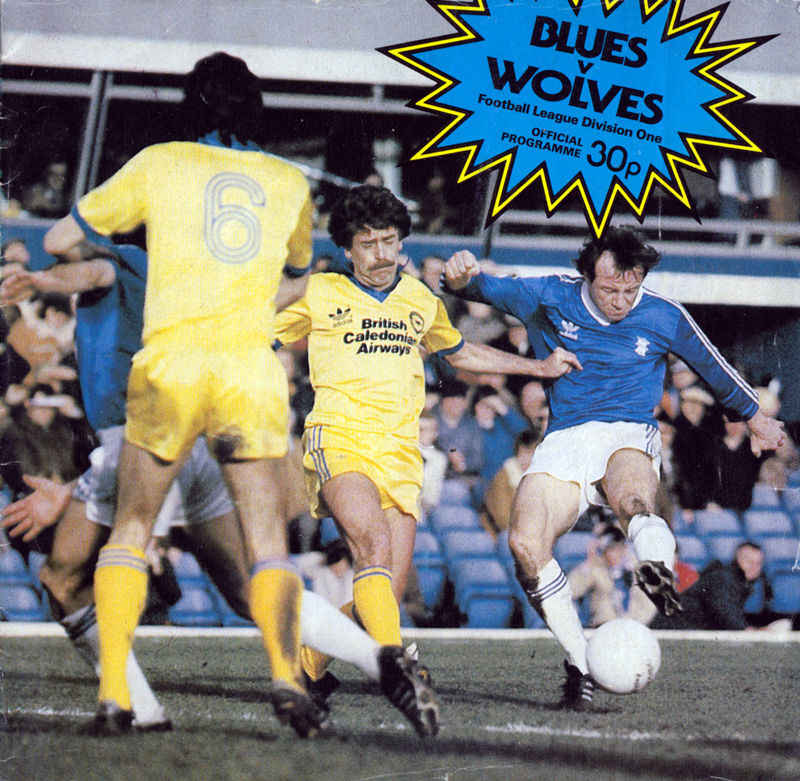
His words appeared in the matchday programme for the clash at St Andrews, on 7th February 1981, only the second ever League game between the sides. The first ended in a 2-2 draw at the Goldstone earlier in the season. Albion scorers were Neil McNab and Mark Lawrenson.
By the time of this return match in Division One, Brighton stood in 19th position, one place above the relegation zone. Birmingham were one place above the Seagulls but crucially had a four point cushion.
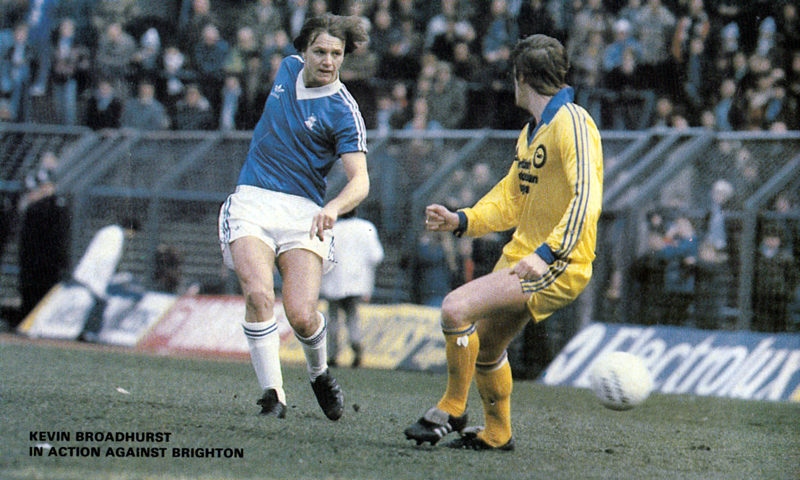
Just like in the 2013/14 season, Albion had a new yellow away kit and sponsor to show off. Here’s Peter O’Sullivan trying to stop a Blues attack.
Albion went down 2-1, with goals from Tony Evans and future Seagull Alan Curbishley ensuring a fifth straight defeat for the south coast side. Converting a low cross from the overlapping John Gregory, Michael Robinson got a consolation goal for Brighton 19 minutes from time. It was a frustrating afternoon at St Andrews for the Albion, who found the opposing goalkeeper Jeff Wealands in inspired form.
By the end of the season, the Blues had cemented their First Division status, pushing up to 13th position, although this was overshadowed by their neighbours Aston Villa carrying off with the First Division title.
Given the number of times Wealands had thwarted the Seagulls during the February match, it certainly gave credence to Mullery’s assertion that Brighton were unlucky that season. However, the Albion boss’ contention that his side would not get relegated also proved true. Four wins out of four at the end of the season made sure of this. As Neil Harman said of Mullery at the end of his piece in the programme:
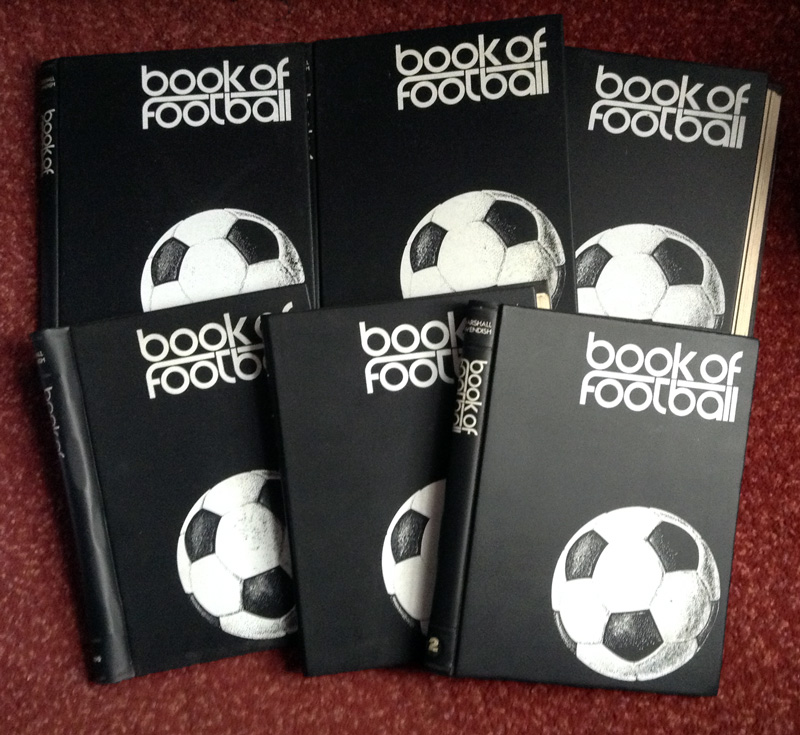
As covered in a previous post about the life and times of Norman Gall, the Book of Football was a weekly partwork from the early 1970s, building up to an authoritative encyclopaedia of the game over the course of 75 weeks. I bet, if you around then and had collected every issue over a year and half, you’d quite rightly have been very satisfied with yourself. And wouldn’t think anything of it as you proceeded to bring all six volumes down the pub and proceeded to bore your friends with your newly acquired knowledge on football tactics, club histories and goalscoring feats…!
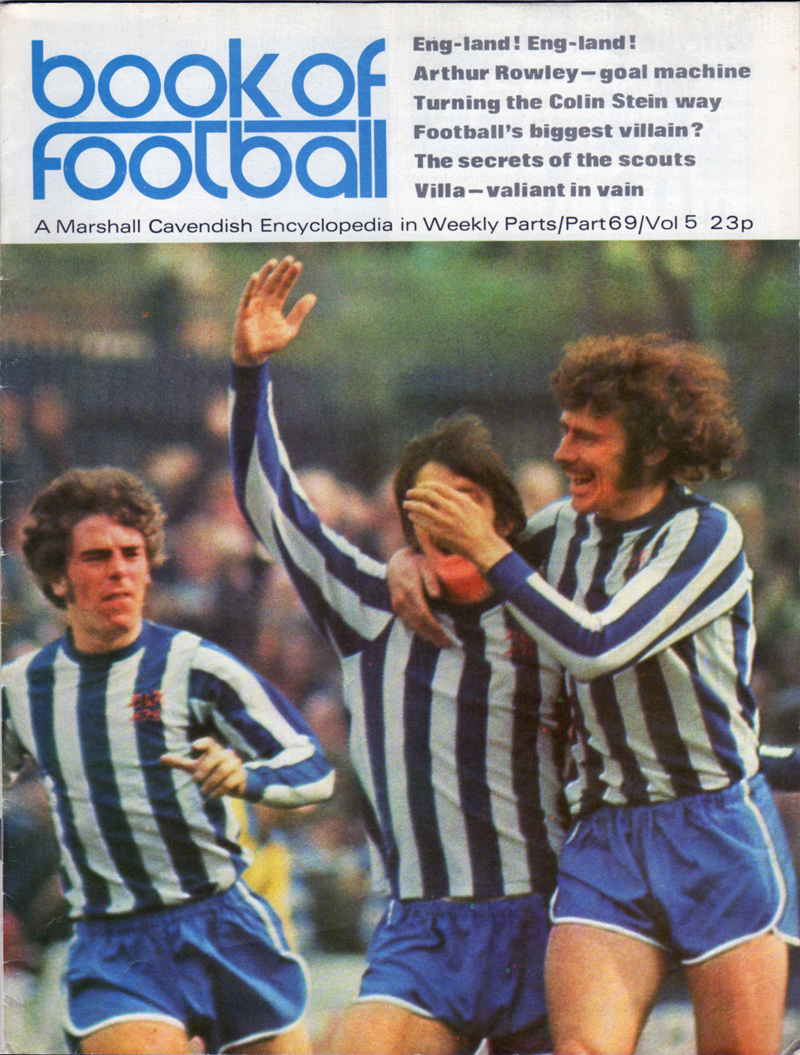
Nearing the end of the completion of Marshall Cavendish’s series, came Part 69 which featured Peter O’Sullivan, Willie Irvine (face partially concealed) and Kit Napier, three happy men in their running shorts, celebrating an astonishing team-goal in March 1972.
As the inside cover says:
One of the highlights of the 1971-72 season for Brighton. Kit Napier congratulates Willie Irvine after his goal which gave Brighton the lead in the vital promotion match against Aston Villa. Brighton won 2-1 and Irvine’s fine goal was featured on Match of the Day.
And what a diamond of a goal it was!
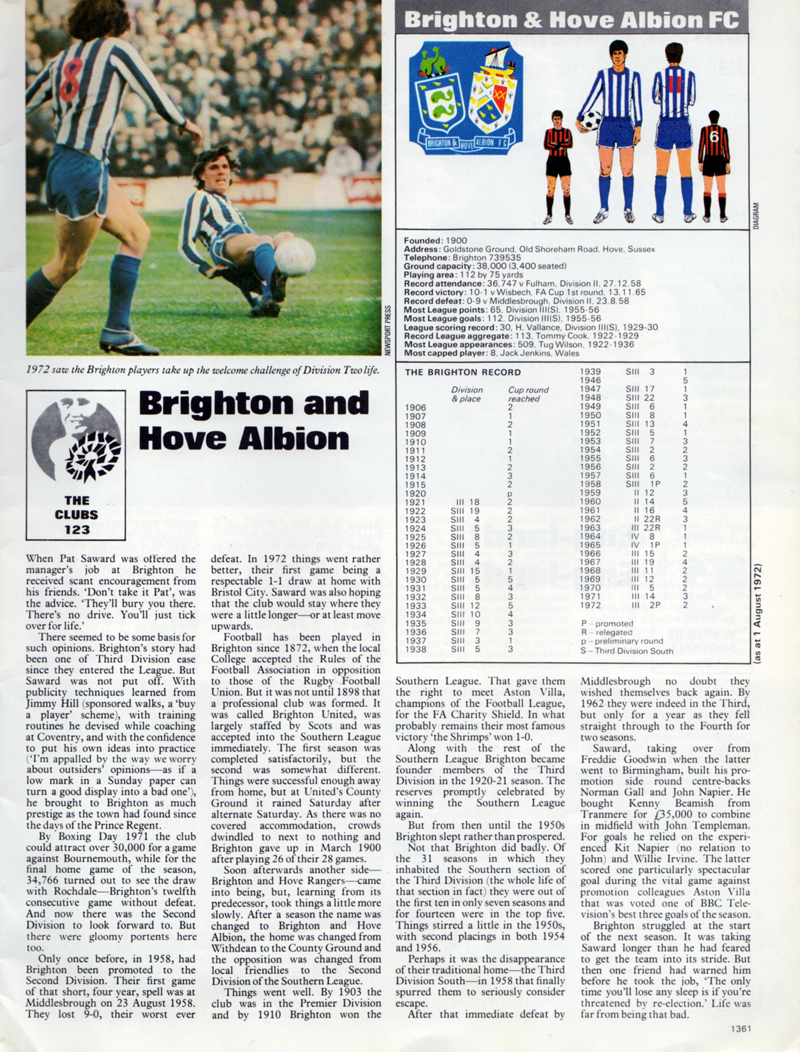
Inside we are treated to another colour photo (of Kit Napier, number 8, and Ken Beamish, on the floor) plus a potted history of Brighton & Hove Albion. Written very concisely, it charts a local Brighton college’s acceptance of the Rules of Association Football in 1872 (yes, the dark ages before Brighton & Hove Albion were formed), through to the creation of the club, the Southern League days, Brighton winning the Charity Shield (also against Villa), through to victory in Division Three (South) in 1958, to Pat Saward’s then current struggles as his charges flopped in the early months of Second Division football in 1972/73.
There are also some excellent illustrations of the coat of arms the club used in the 1960s and early 1970s, as well as some mostly accurate drawings of the home and away kit (persnickety alert: the only omissions were the red lettering on the home shirt and some white hoops from the away socks). Together with Brighton’s season-by-season record in the League and FA Cup, it all makes for a splendid portrayal of what the Albion was like back then and its relative stature to other club within the football world. And if you want more, there’s all the other 74 parts you can read too!
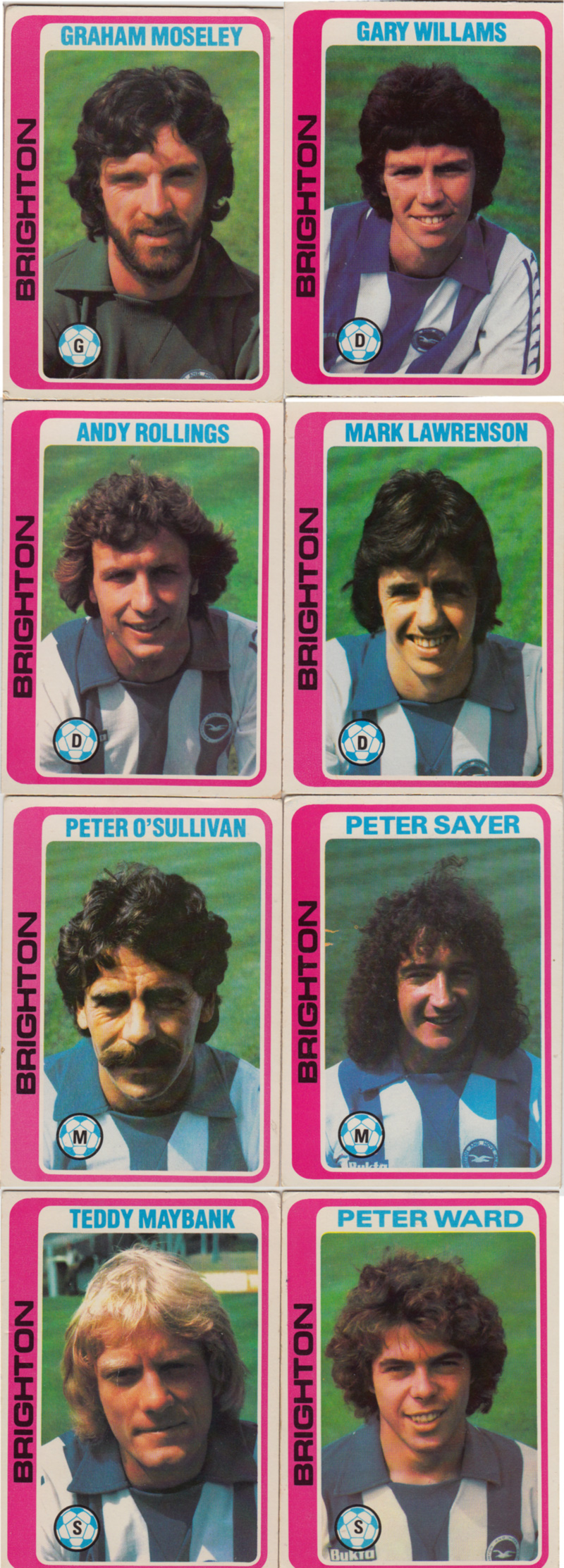
We knew we had made it as a football club when Topps issued cards of eight first-teamers in 1978/79. Enclosed in a daring pink border, Topps cards perfectly captured the vibe of the 1970s with its use of bright garish colours and popular typefaces of that time.
So enjoy Peter Sayer’s quite magnificent perm, the rare sight of Graham Moseley with a beard and Sully proving himself to be the Welsh answer to Tom Selleck, never mind Rivelino. But, wait, no Brian Horton?
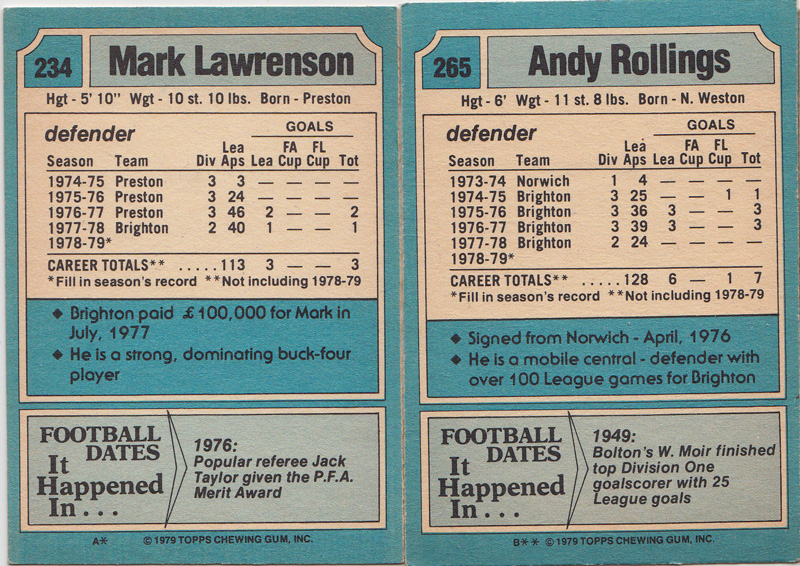
The backs of the cards featured all the vital career stats up to the end of the 1977/78 season plus some bullet points:







 The Goldstone Wrap