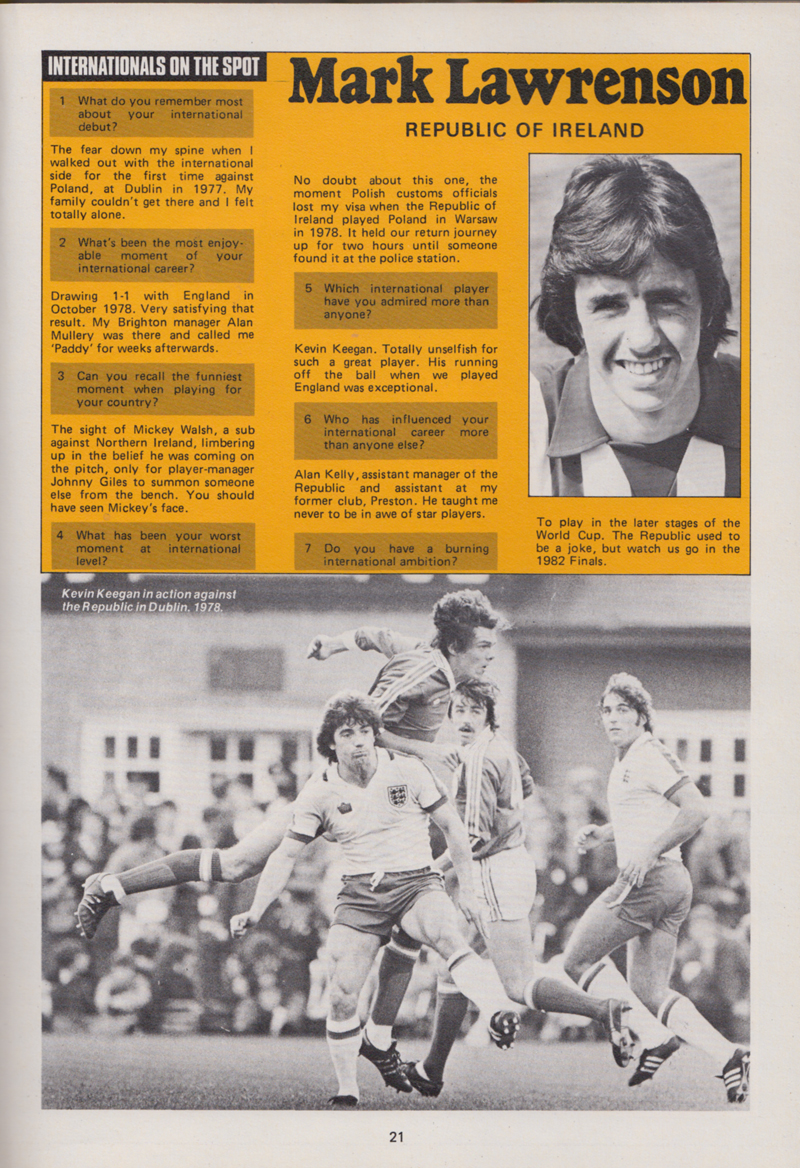
What do you remember most about your international debut?
The fear down my spine when I walked out with the international side for the first time against Poland, at Dublin in 1977. My family couldn’t get there and I felt totally alone.
Cripes!
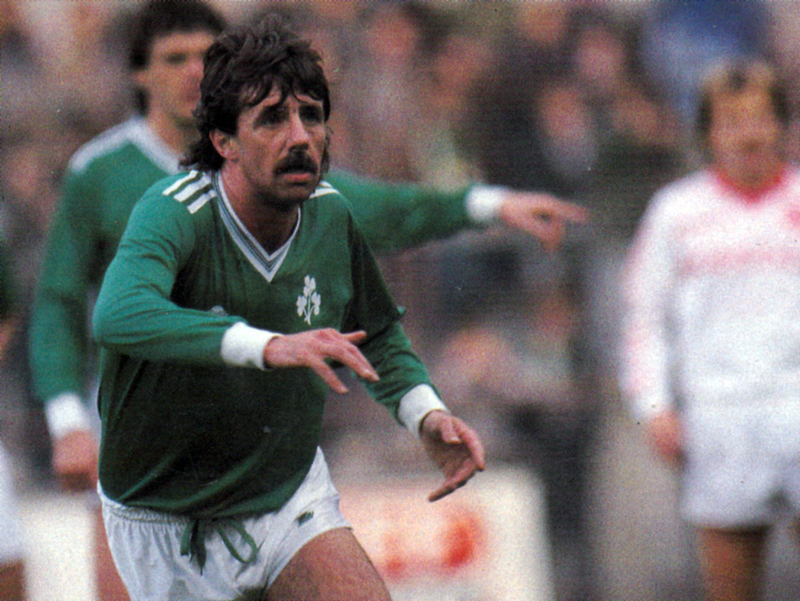
His first cap was while with Preston North End. Hopefully, Brighton would have looked after him better. Although Mark was born in Preston, his mother was from Eire. The defender (and sometime midfielder) went on to make 39 appearances for the Republic of Ireland, scoring five goals from 1977 to 1987.
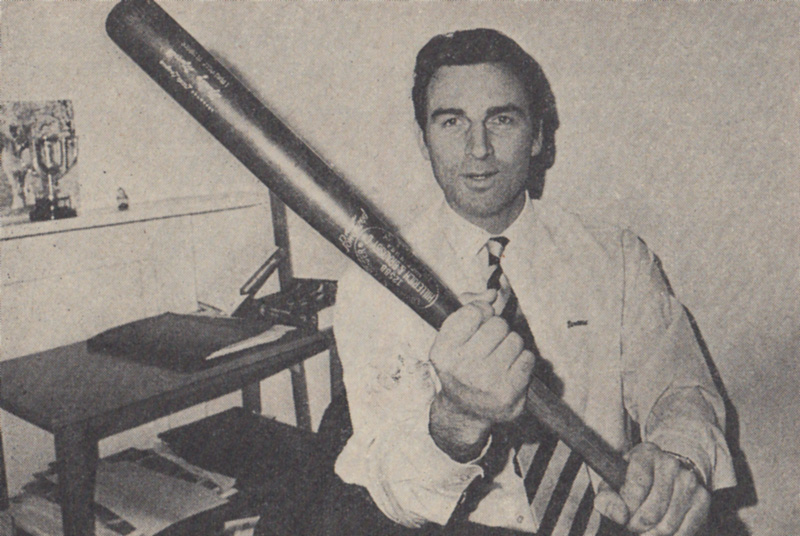
Here’s manager Pat Saward showing off a momento from an American trip that went a long way towards changing his football thinking. As he said in Football League Review in 1972:
“I asked a lot of questions from people in the know. They told me you have to think big to get anywhere. We think big. We may be a Third Division team but we all think in terms of being a First Division outfit. If you don’t think big in football you’ll never win anything.”
Saward was a highly respected player with Millwall, Aston Villa, Huddersfield Town and Coventry City before hanging up his boots at the age of 33 to break into management as assistant to Noel Cantwell at Coventry. There his re-education in the game began. On a close-season tour to the United States, he realised the extent to which English football has to catch up on the public relations side. “I learned a hell of a lot out there. They get into a frenzy about the game in America because they’re so involved. This is how I want everyone at Brighton to be now.”
“My big mistake when I came here was still thinking in terms of the First Division. I had a First Division outlook and did not adapt at first to the differing problems of the Third Division. But it was a natural mistake to make. We’ve had no money to speak of for rebuilding. Everyone is looking for the best, aiming for Mount Everest, but you have to adjust your sights. Even so, not every player will do for me. I want players with character, the Maurice Setters type.
“We loaned Brian Bromley from Portsmouth before eventually signing him permanently and it was the best move I’ve made. You know, I look on players in two ways. There are some I feel uneasy about when they get the ball, others I sit back and watch quite relaxed. Brian is one of the latter. He’s an exceptional player, one who instils and builds confidence in those around him. He can do anything I ask for because he has both ability …and character.”
“I realise now how teachers feel when they see all their thoughts and ideas, all their long hours of patient work bearing fruit. Management is a vocation. You get wonderful satisfaction out of moulding players to your ideals. When you see young kids coming through and developing you get a fantastic feeling of satisfaction. It’s great.”
Saward’s positive approach spurred Brighton to winning promotion to the Second Division in 1972, after a season of all-out attacking play that yielded 43 away goals in the League.
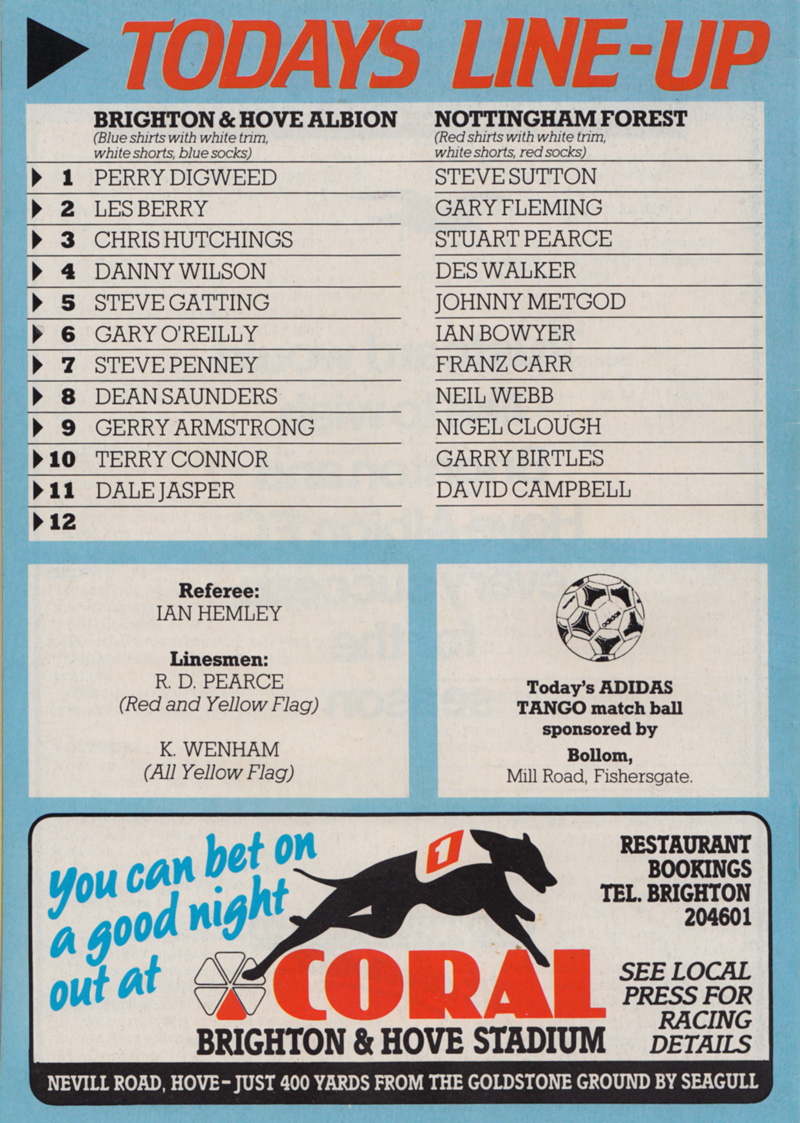
Here’s the back of the programme for the first leg of the Brighton’s cup tie against Brian Clough’s Nottingham Forest in the Littlewoods Cup in 1986.
Take a glance at the name of the linesman with the red and yellow flag, R.D. Pearce. Surely just a coincidence that he has the same surname as Forest’s left back? Or is it?!
Writing in ‘Psycho,’ his autobiography, Stuart Pearce explains how his brother Ray took up football officiating, eventually finding his way to running the line at the Goldstone Ground:
He progressed through non-league into the Football League and ran the line in top matches. The big age difference between us meant that when he was asked the usual questions about whether he had any relatives in the game he answered quite truthfully that he had not.
I’m not sure that makes complete sense, unless Ray Pearce was only ever asked the question only once, before Stuart became a pro…
Anyway, the punk-lovin’, tough tacklin’ Pearce continues:
A trivia question that would flummox even the most knowledgeable football fan is when did two brothers take part in the same game with one playing and one officiating? It happened to us when he ran the line in a Nottingham Forest League Cup tie at Brighton. He disallowed a goal for Brighton! I had no fears, however, about his honesty. He would err on the side of Brighton rather than favour me.
No one knew, apart from the Forest team. It was funny running up the wing and having my brother alongside me on the touchline. He could have booked me because I kept taking the mickey out of him – ‘Oi, you ginger dickhead,’ is one thing I remember calling him. Perhaps it is a good thing that he never became a League referee because it would have come out eventually that he was my brother.
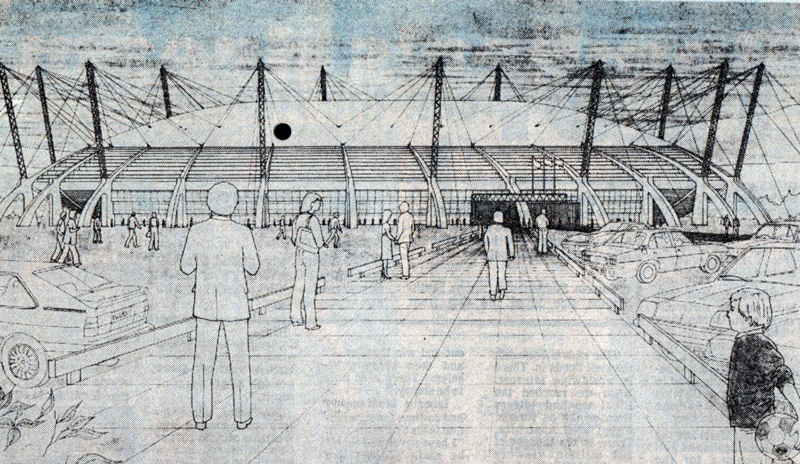
I found this amazing artist’s impression of the club’s proposed new home in a copy of the Evening Argus in 1983. It’s rather laughable now to see the suggested design captured by this rather primitive looking sketch. Even more laughable that it’s so talked up:
Architects will tour the United States before drawing up final plans for Albion’s £8 million super stadium.
Henry Carn, of the Hove firm of Morgan, Carn and Partners, believes a two-month stay would be needed to catch up with advances in design.
They are determined not to make mistakes like that which occurred with one U.S. stadium which generated its own atmosphere… and thunderstorms.
Albion’s planned stadium is currently designed with 25,000 seats, although Chairman Mike Bamber might opt for 20,000 seats and space for 10,000 standing fans.
Areas under the seating would be for office use or other sporting activities. Around the playing pitch would be a running track to attract local and regional athletics meetings.
I wonder at what point was a consensus reached that athletics tracks spelled bad news, with the cost to the atmosphere at football games eclipsing the financial gain of athletics events. Certainly not in 1983. At least not here. Of course, Brighton fans did end up watching home games on a pitch surrounded by an athletics track – at Withdean Stadium from 1999 to 2011.
The structure above ground would be ringed by precast concrete arms. Between these would be overlapping concrete planks which allow in air but keep out rain. The roof cover would be made of polycarbonate translucent sheeting hung from steel masts and cables.
That would be some eyesore! If we had got this design, would we have been stuck with it?
The sheeting would allow natural light through to the playing area while artificial lighting would be slung below the inner edge of the overlapping concrete roof planks.
Like Mr Bamber, Mr Carn believes fans now demand much better facilities than the Goldstone Ground offers.
“It’s not necesarily just the men who want to see matches now. Soccer is much more a family activity and you need facilities that accommodate families and cut out the aggro we see at grounds today,” he says.
In April 1983, East Sussex County Council’s Policy and Resources Committee offered to hold talks with the club on a new home. It was envisaged that the stadium could be built at any of half a dozen sites on the outskirts of Brighton. Mike Bamber most favoured the site of Waterhall, off Mill Hill:
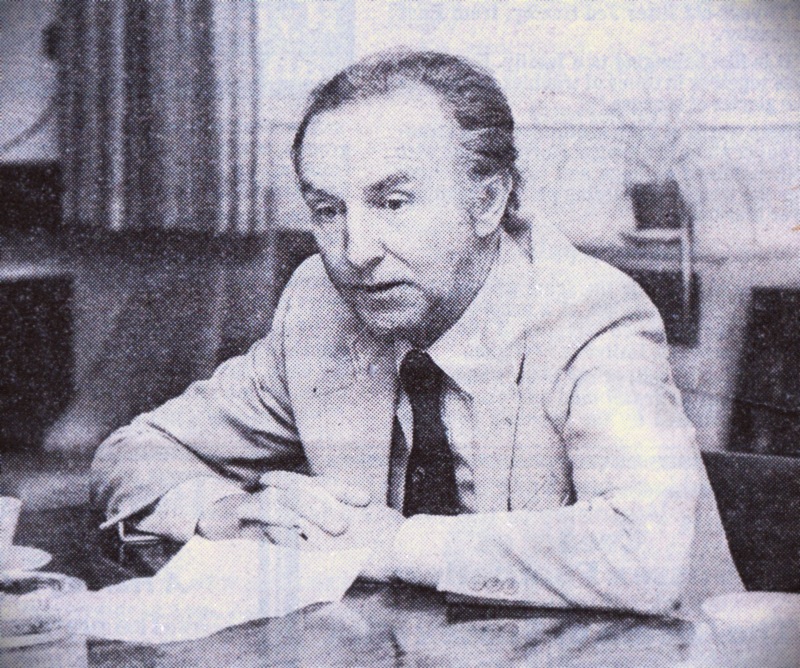
Close to the proposed Brighton bypass and the main Brighton-London rail line, the site would be easy for fans to reach. But it’s not just soccer fans that would benefit from the development, Sitting in his plush American-style offices in Hove Street, the property millionaire outlined his thoughts on how the stadium would be financed and its variety of uses.
“All we would need from council is the land – the rest won’t cost a penny,” he said.
A supermarket concern would pay for the stadium in exchange for approval to build a giant superstore. Parking space for thousands of cars would be provided for shoppers in the daytime and fans in the evening or at weekends. The development would be set low in the valley to protect the natural beauty of the surrounding Downs. And with soccer being played only once or twice a week, the complex would become a multi-purpose community centre.
Gyms, squash courts, athletics tracks and clubs could be established at the stadium and the main hall would cater to community events and major entertainment. It’s a concept well advanced in North America and one the Government in this country is thought to favour. There would be other benefits for Albion. The sale of the Goldstone would wipe out the club’s debts and put them back into black.
Youth team football pitches adjoining the new stadium could provide valuable prospects for the team. Mr Bamber rejects the idea that the complex would drive trade out of the town centre and he insists the facilities will generate their own business. “I expect to get opposition but I believe we will win through in the end,” he said. “We have a team in the FA Cup Final. All that’s missing is a decent ground. The new stadium will be great for the community and I’m convinced it will bring back the missing fans.”
His big dream since becoming chairman eight years ago, Mr Bamber believes the stadium could be the first of many in Britain and would rival some of the greatest centres in Europe. “People are much more upmarket these days,” he said. “The days of the cloth-cap terraces and the cup of tea and hotdog stands are over.”
Sadly. relegation from Division One, financial difficulties and boardroom unrest took their toll on Mike Bamber. He suffered a heart attack in March 1984 and resigned as chairman and director in July, citing ‘major and mutual disagreements on policy.’ As a result, his plans for a stadium never got off the ground.
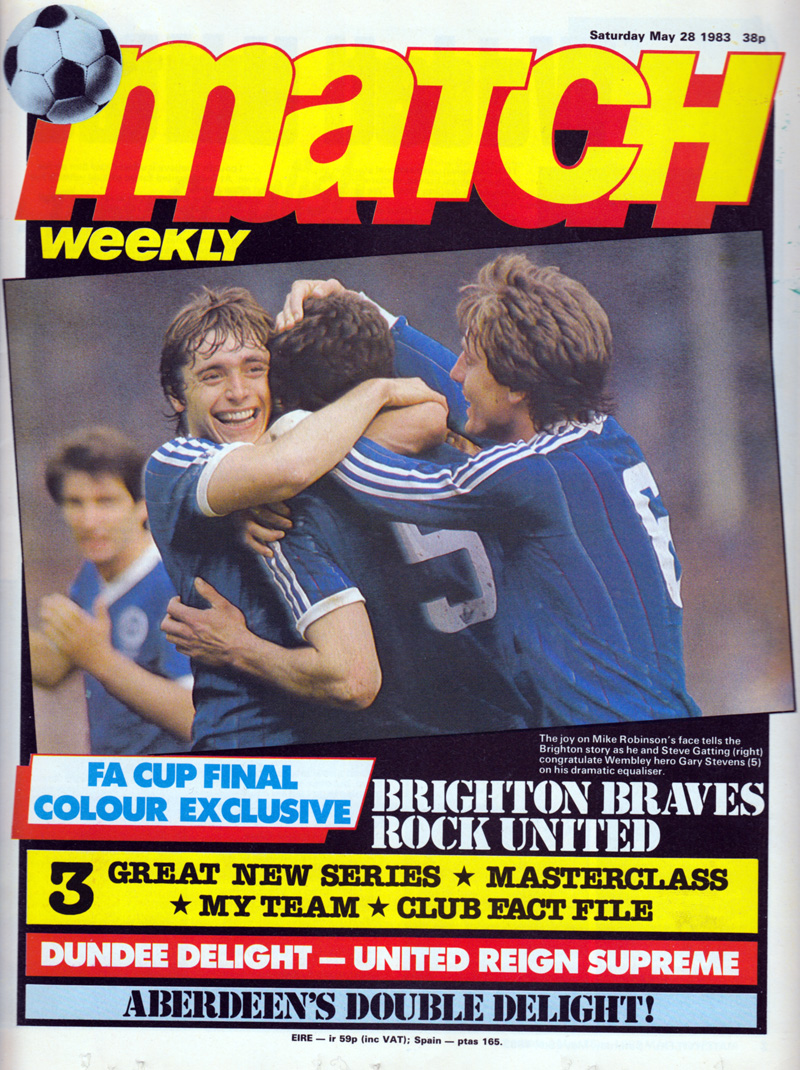
A quite magnificent cover capturing the joy of a Brighton team scoring at Wembley. Gordon Smith, in the background, gives polite applause. His moment of truth was still to come.
Inside the magazine, Tony Grealish declares, ‘We let United off the hook,’ while the magazine takes the credit for an uncanny prediction the week before:
It will have come as no shock to ‘Match’ readers that Brighton took an early lead against Manchester United. We told you it was on the cards last week in an exclusive guide to the goal power of each side.
This is what we said: ‘Brighton re the faster starters and may well go a goal up inside 15 minutes but United are worth an equaliser on past form.
After the break it could be United’s turn to go ahead, but ‘Seagulls’ fans shouldn’t despair if their team is behind with just fifteen minutes to go, because that’s when the underdogs from the South coast are most likely to hit the net.’
Uncanny! It sounds like the work of clairvoyant Eva Petulengro…
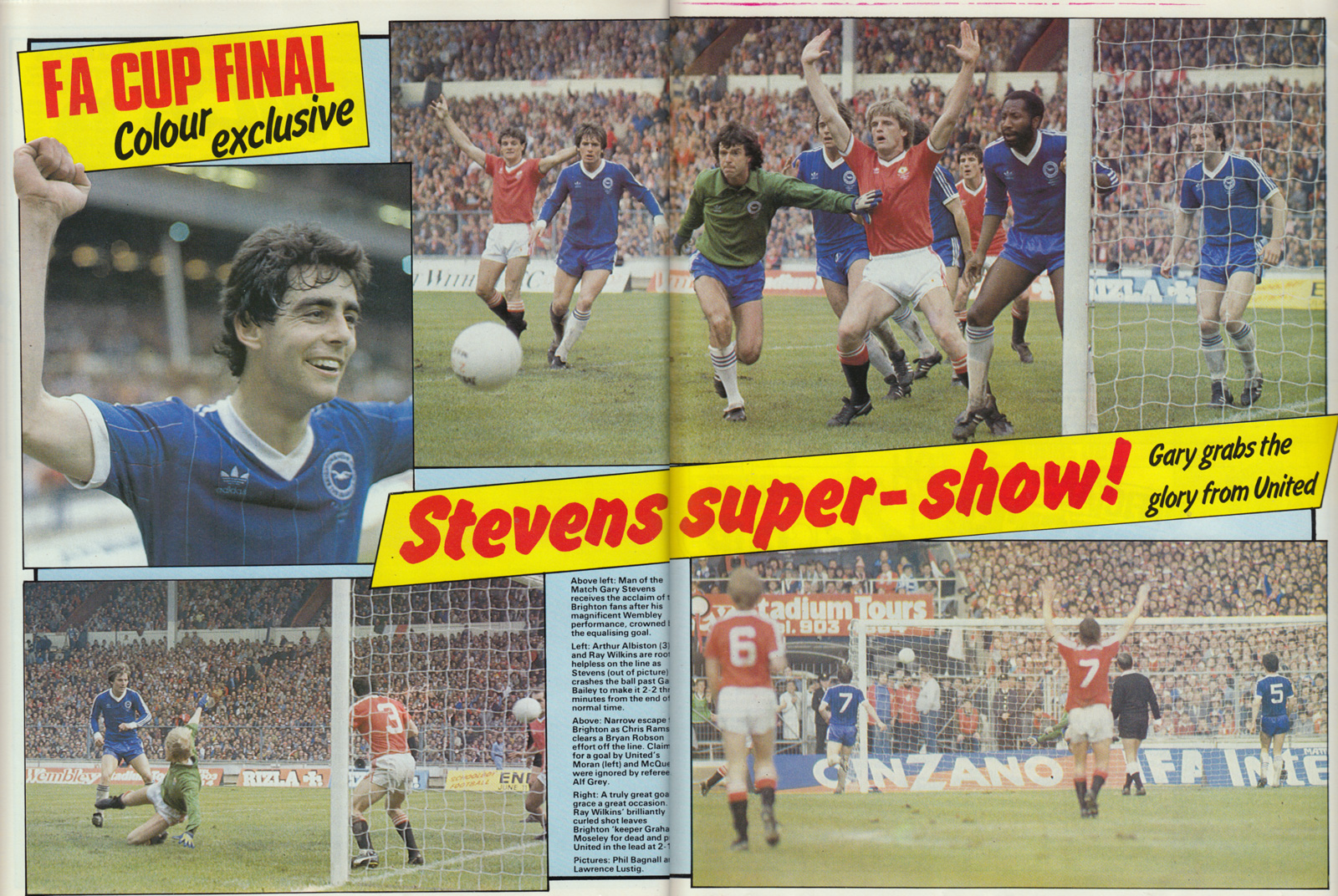
Inside, there is also a glorious colour two-page spread.
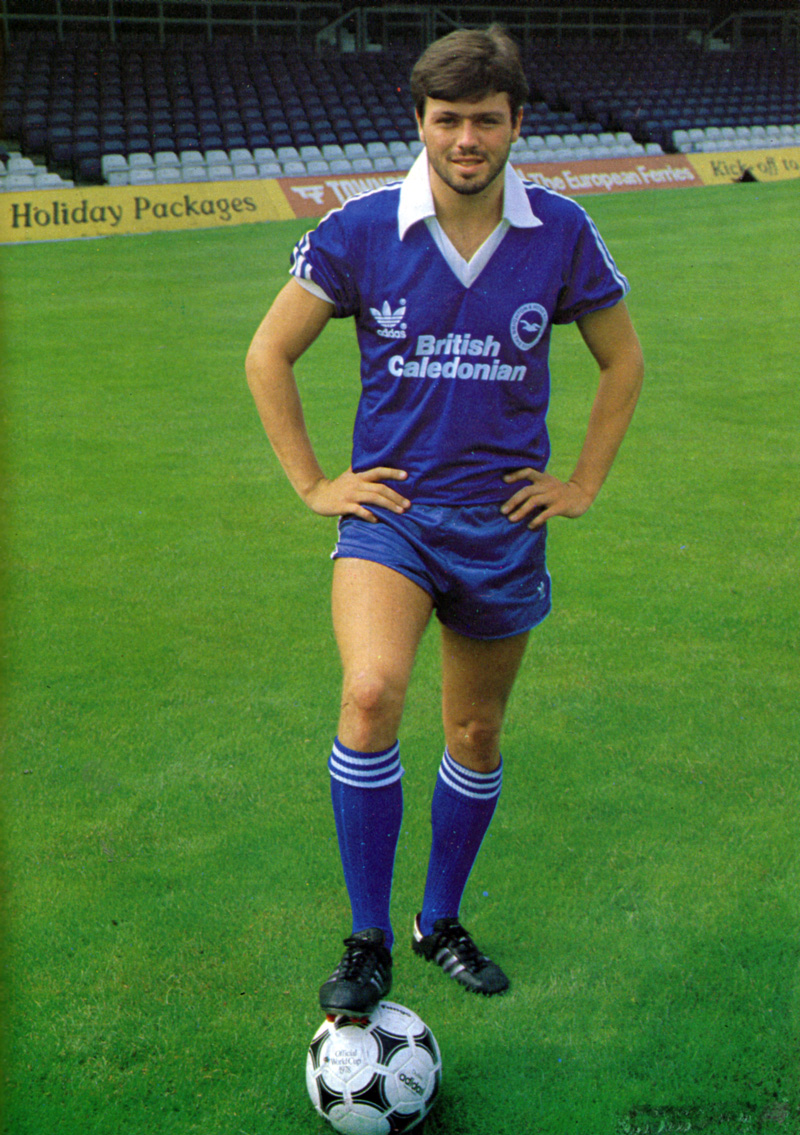
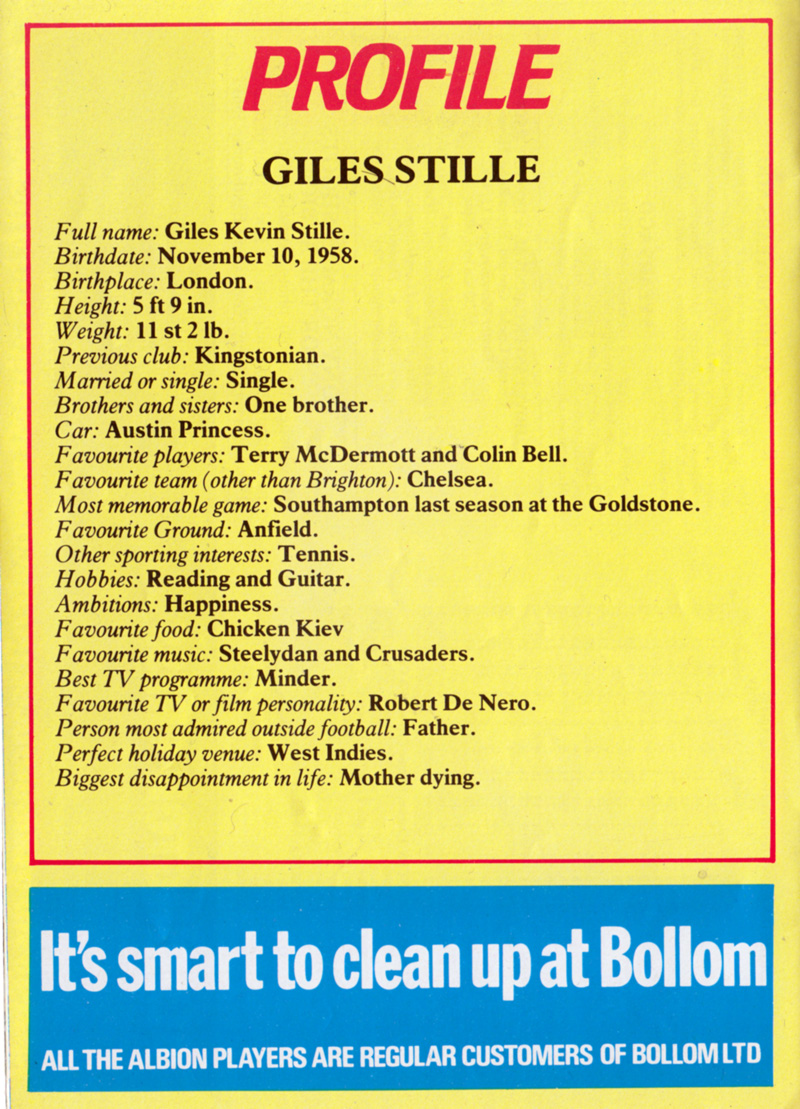
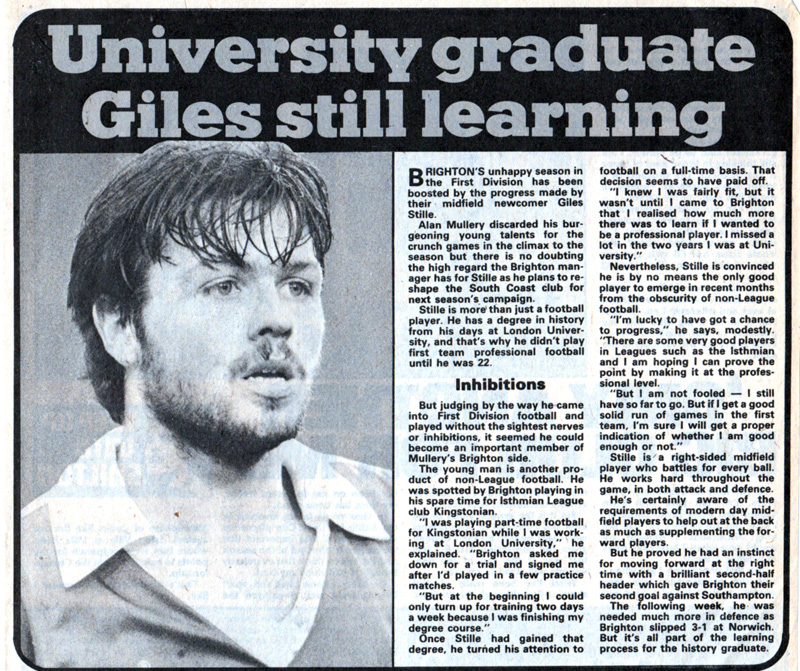
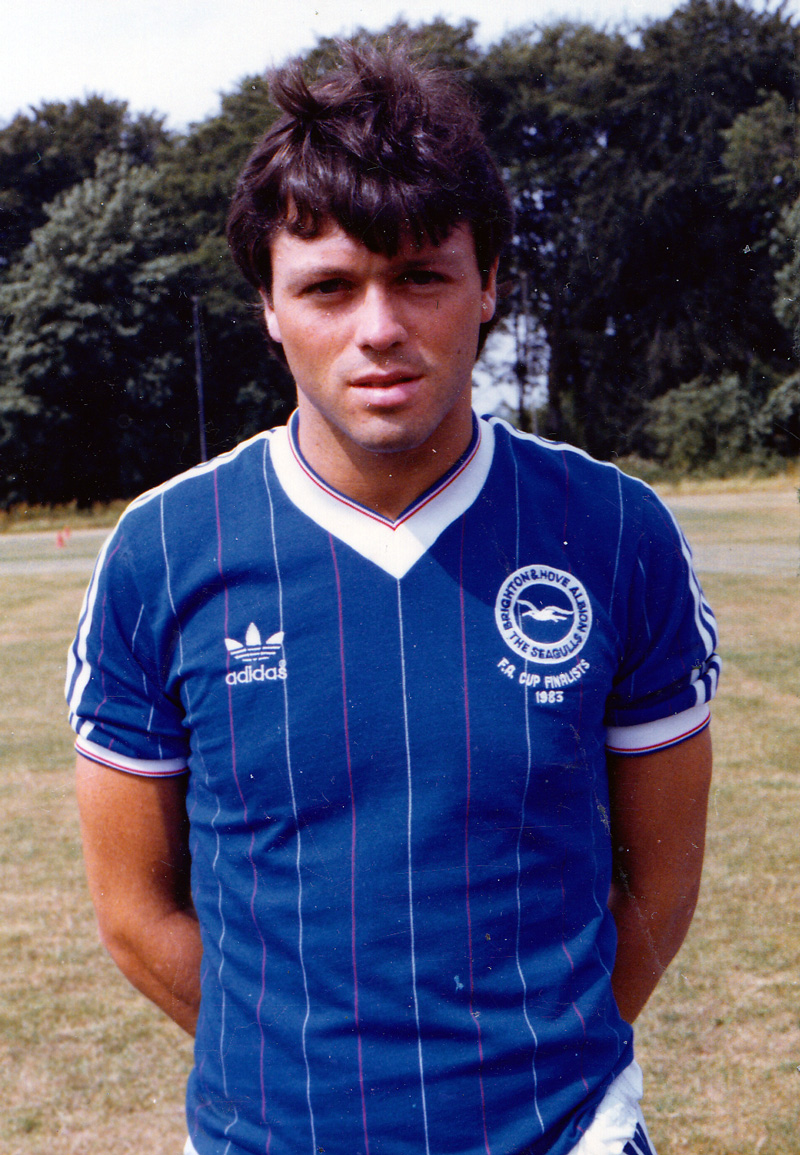
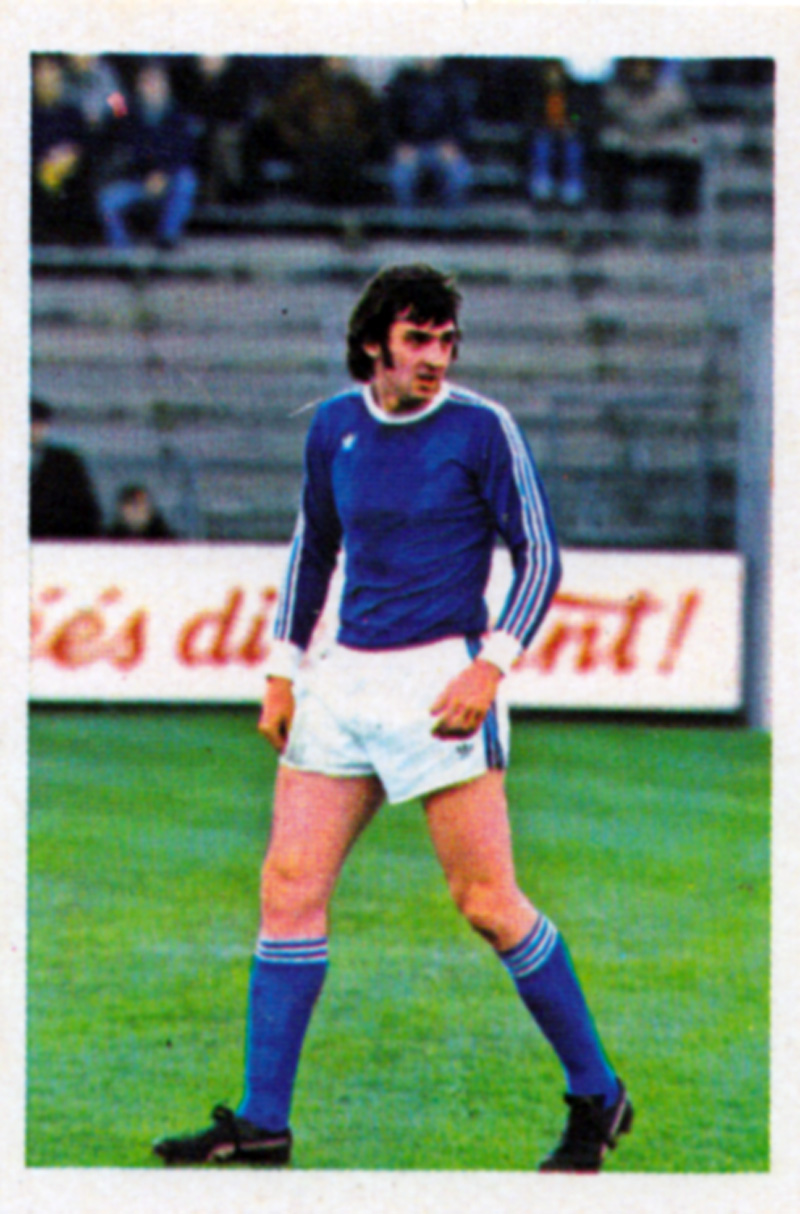
Here’s the magnificently named Giles Stille, fan of Steely Dan, chicken kiev and Minder, proudly showing off the resplendent flared collars of the adidas British Caledonian kit of the early 1980s.
The young bearded Brighton midfielder made his debut as a substitute in December 1979 against Manchester City. Then he really made an impact the following season with a burst of three goals in five matches as he enjoyed an extended run in the side in February and March 1981.
Shoot! Magazine took up the story:
Brighton’s unhappy season in the First Divsion has been boosted by the progress made by their midfield newcomer Giles Stille.
Alan Mullery discarded his burgeoning young talents for the crunch games in the climax to the season but there is no doubting the high regard the Brighton manager has for Stille as he plans to reshape the South Coast club for next season’s campaign.
Stille is more than just a football player. He has a degree in history from his days at London University, and that’s why he didn’t play first team professional football until he was 22.
“I was playing part-time football for Kingstonian while I was working at London University,” he explained. “Brighton asked me down for a trial and signed me after I’d played in a few practice matches. But at the beginning I could only turn up for training two days a week because I was finishing my degree course. I knew I was fairly fit, but it wasn’t until I came to Brighton that I realised how much more there was to learn if I wanted to be a professional player.”
Stille is a right-sided midfield player who battles for every ball. He works hard throughout the game, in both attack and defence. He proved he had an instinct for moving forward at the right time with a brilliant second half header which gave Brighton their second goal against Southampton.
There was to be no new season for Mullery to help develop Stille as Mike Bailey became Albion boss, and Stille only made three League starts in 1981/82. The first of these was a home game with Leeds United, and Stille’s first half winner kept Albion soaring high in ninth position. In 1982, he had to cope with being diagnosed as diabetic. Nevertheless, Stille stayed on as a fringe player in the side before a back injury forced his retirement from League football by December 1984.
Stille currently works as a football coach in Sweden. If you’re a Giles Stille fan, I’ve seen that you can buy a t-shirt featuring him at Cult Zeros.
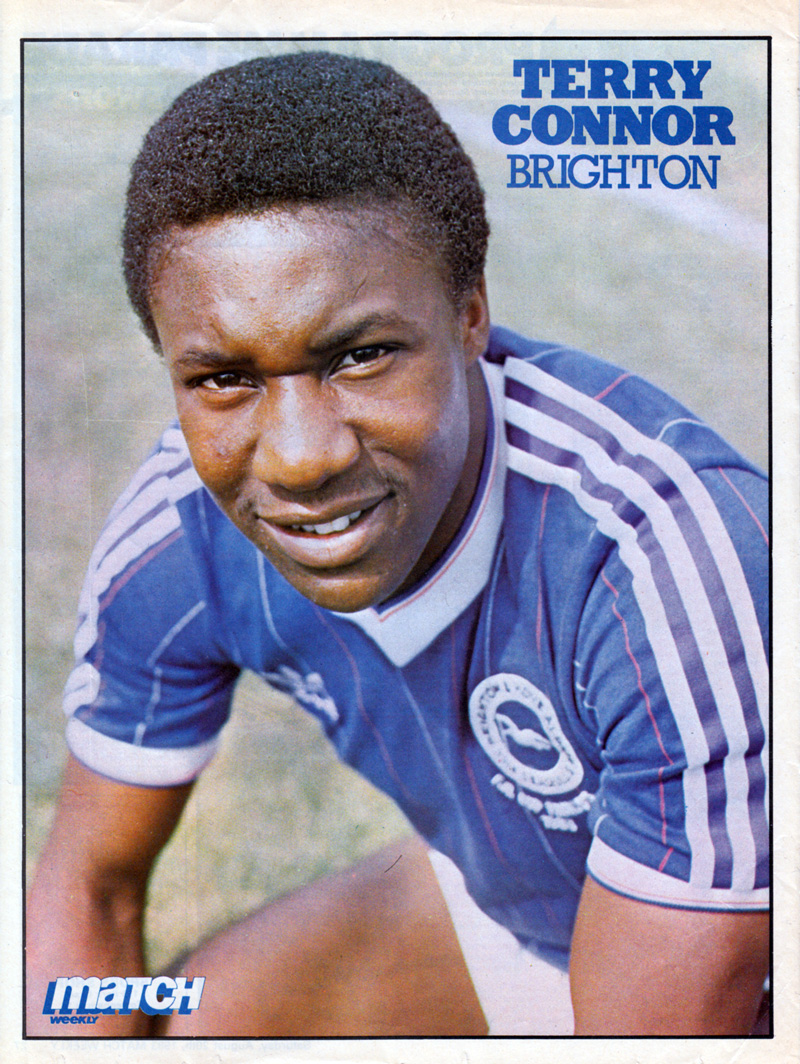
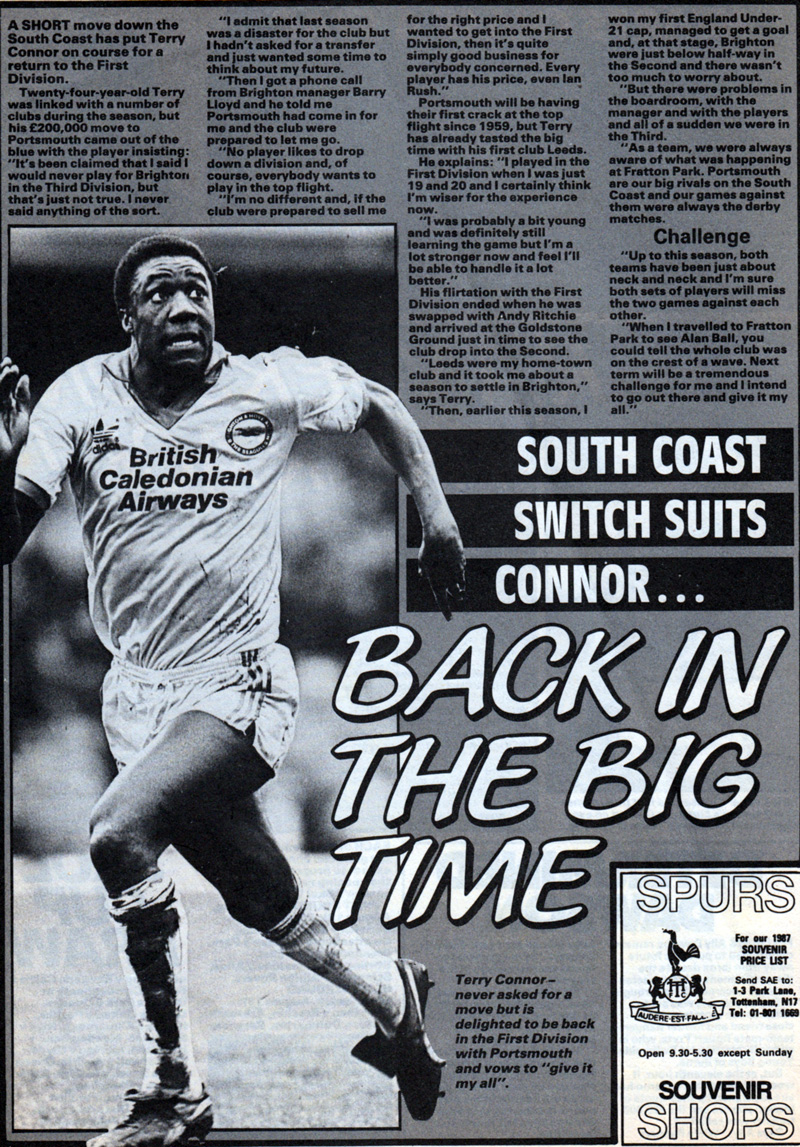
It was a sad day for Albion fans when goalscorer Terry Connor left relegated Brighton for Portsmouth. From summer 1987 (I’m not sure if it’s from Shoot! or Match):
A short move down the South Coast has put Terry Connor on course for a return to the First Division. Twenty-four-year-old Terry was linked with a number of clubs during the season, but his £200,000 move to Portsmouth came out of the blue with the player insisting: “It’s been claimed that I said I would never play for Brighton in the Third Division, but that’s just not true. I never said anything of the sort. I admit that last season was a disaster for the club but I hadn’t asked for a transfer and just wanted some time to think about my future. Then I got a call from Brighton manager Barry Lloyd and he told me Portsmouth had come in for me and the club were prepared to let me go. No player likes to drop down a division and, of course, everybody wants to play in the top flight. I’m no different and, if the club were prepared to sell me for the right price and I wanted to get into the First Division, then it’s quite simply good business for all concerned.”
Connor had previously experienced top flight football with Leeds and Brighton:
His flirtation with the First Division ended when he was swapped with Andy Ritchie and arrived at the Goldstone ground just in time to see the club drop in the Second. “Leeds were my home-town club and it took me about a season to settle in Brighton,” says Terry. “Then, earlier this season, I won my first England Under-21 cap, managed to get a goal and, at that stage, Brighton were just below half-way in the Second and there wasn’t too much to worry about. But there were problems in the boardroom, with the manager and with the players and all of a sudden we were in the Third.
The move did not go well for Connor. Having been relegated from Division One with Leeds in 1982 and Brighton in 1983, he made it an unwelcome hat-trick as Portsmouth under Alan Ball crashed out of the top flight after just one season, in 1988. As a manager, of course, the ex-Goldstone favourite was also in charge of Wolverhampton Wanderers as caretaker boss as the side slid out of the Premier League in 2012.
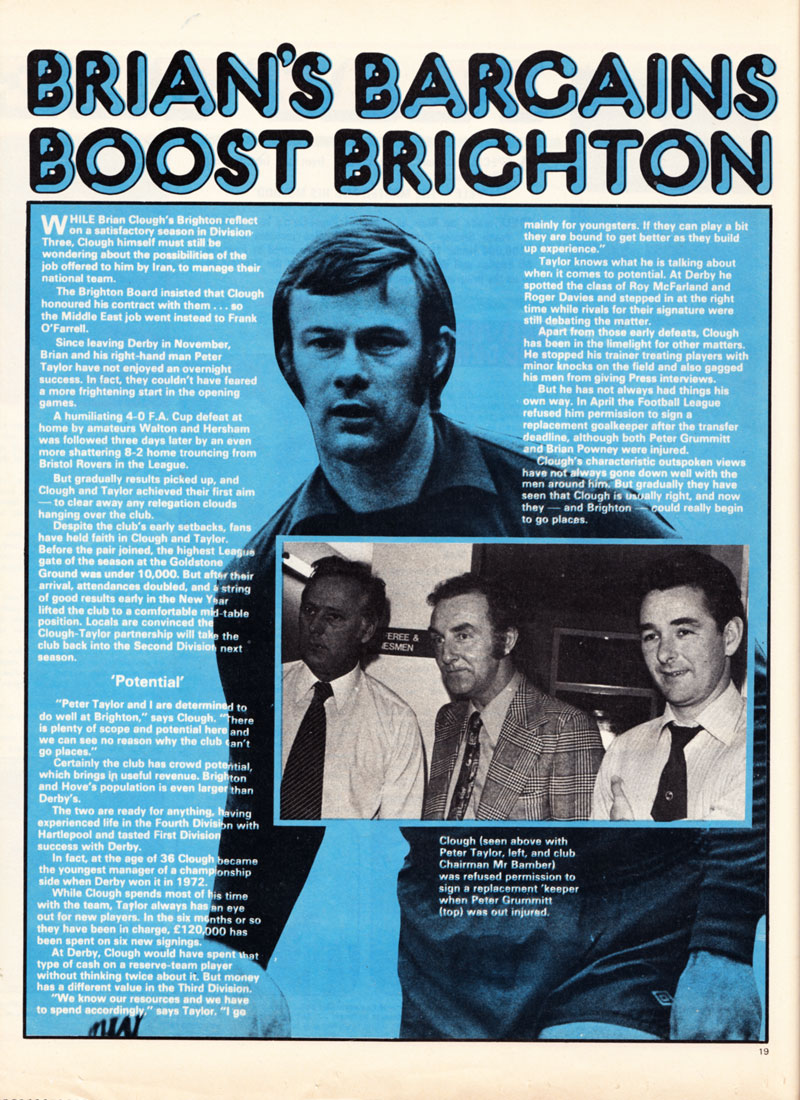
An interesting article from Shoot! in 1974, with some striking cyan and black design work:
Since leaving Derby in November, Brian and his right-hand man Peter Taylor have not enjoyed an overnight success. In fact, they couldn’t have feared a more frightening start in the opening games. A humiliating 4-0 FA Cup defeat at home by amateurs Walton and Hersham was followed three days later by an even more shattering 8-2 home trouncing from Bristol Rovers in the League.
But gradually results picked up, and Clough and Taylor achieved their first aim – to clear away any relegation clods hanging over the club.
“Peter Taylor and I are determined to do well at Brighton, says Clough. “There is plenty of scope and potential here and we can see no reason why this club can’t go places.”
Certainly the club has crowd potential, which brings in useful revenue. Brighton & Hove’s population is even larger than Derby’s.
“We know our resources and we have to spend accordingly,” says Taylor. “I go mainly for youngsters. If they can play a bit they are bound to get better as they build up experience.”
Apart from those early defeats, Clough has been in the limelight for other matters. He stopped his trainer treating players with minor knocks on the field and also gagged his men from giving Press interviews.
But he has not always had things his own way. In April the Football League refused him permission to sign a replacement goalkeeper after the transfer deadly, although both Peter Grummitt and Brian Powney were injured.
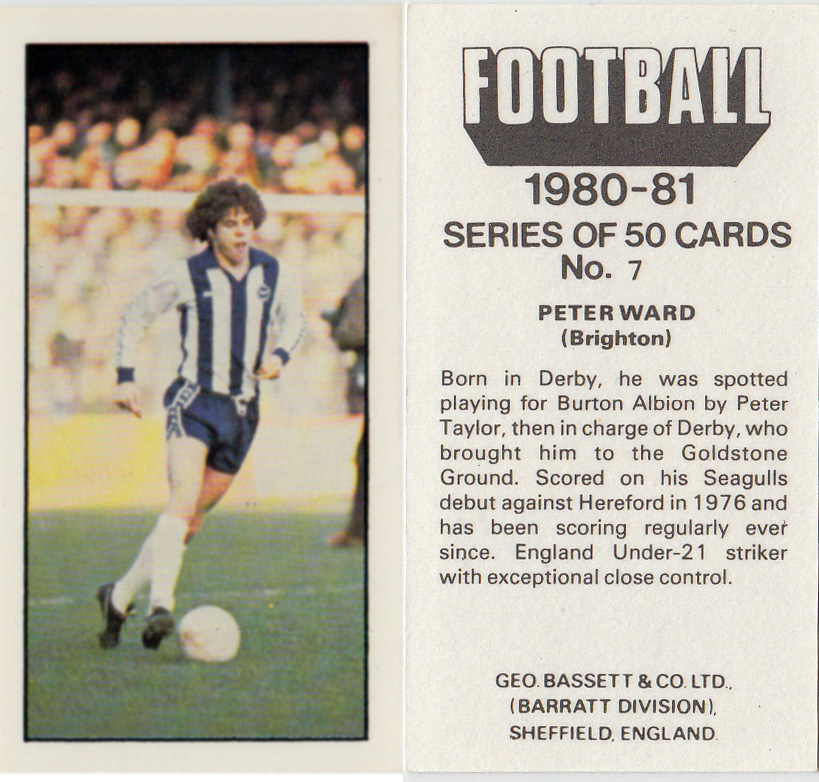
It’s strange that Ray Clarke seems almost a forgotten striker in Brighton’s history. Fans waxing lyrical about the late 1970s speak in high regard for the Peter Ward-Ian Mellor striking partnership that terrorised Third Division defences in 1976/77. They also talk glowingly of Michael Robinson’s swashbuckling centre-forward style and, of course, Gordon Smith’s famous chance in 1983.
But where is the praise for Ray Clarke, the striker that helped turn Peter Ward from a struggling top flight striker into a force in Division One?
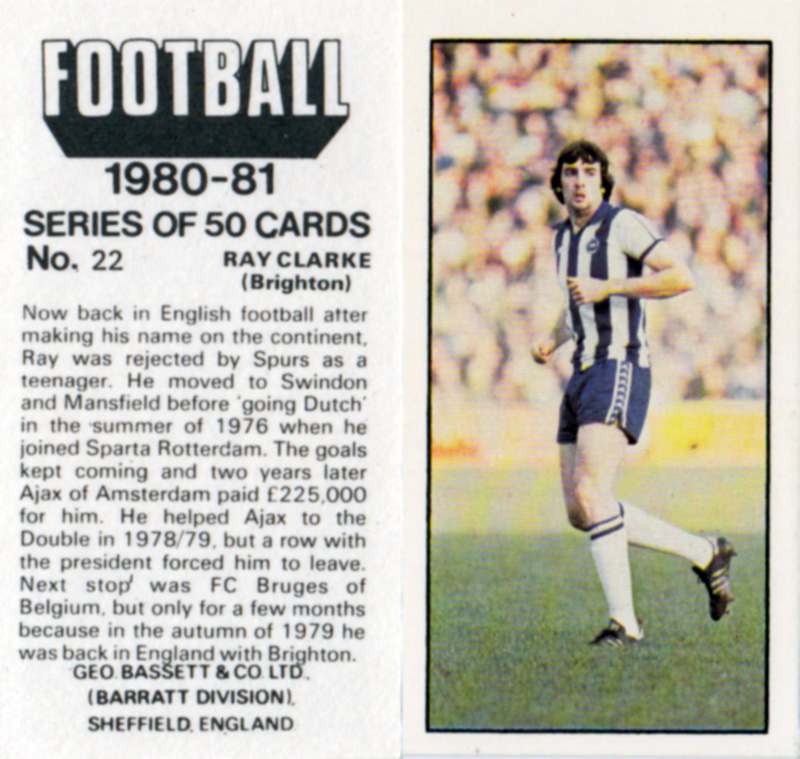
Clarke’s 28 goals for Mansfield fired the Stags to the Fourth Division Championship in 1974/75 and his 24 goals the following campaign contributed immensely to keeping the side in the Third Division. This led to a remarkable £80,000 transfer to Sparta Rotterdam in Holland in July 1976, where he was top scorer (with 16 and 24 goals) in each of his two seasons there.
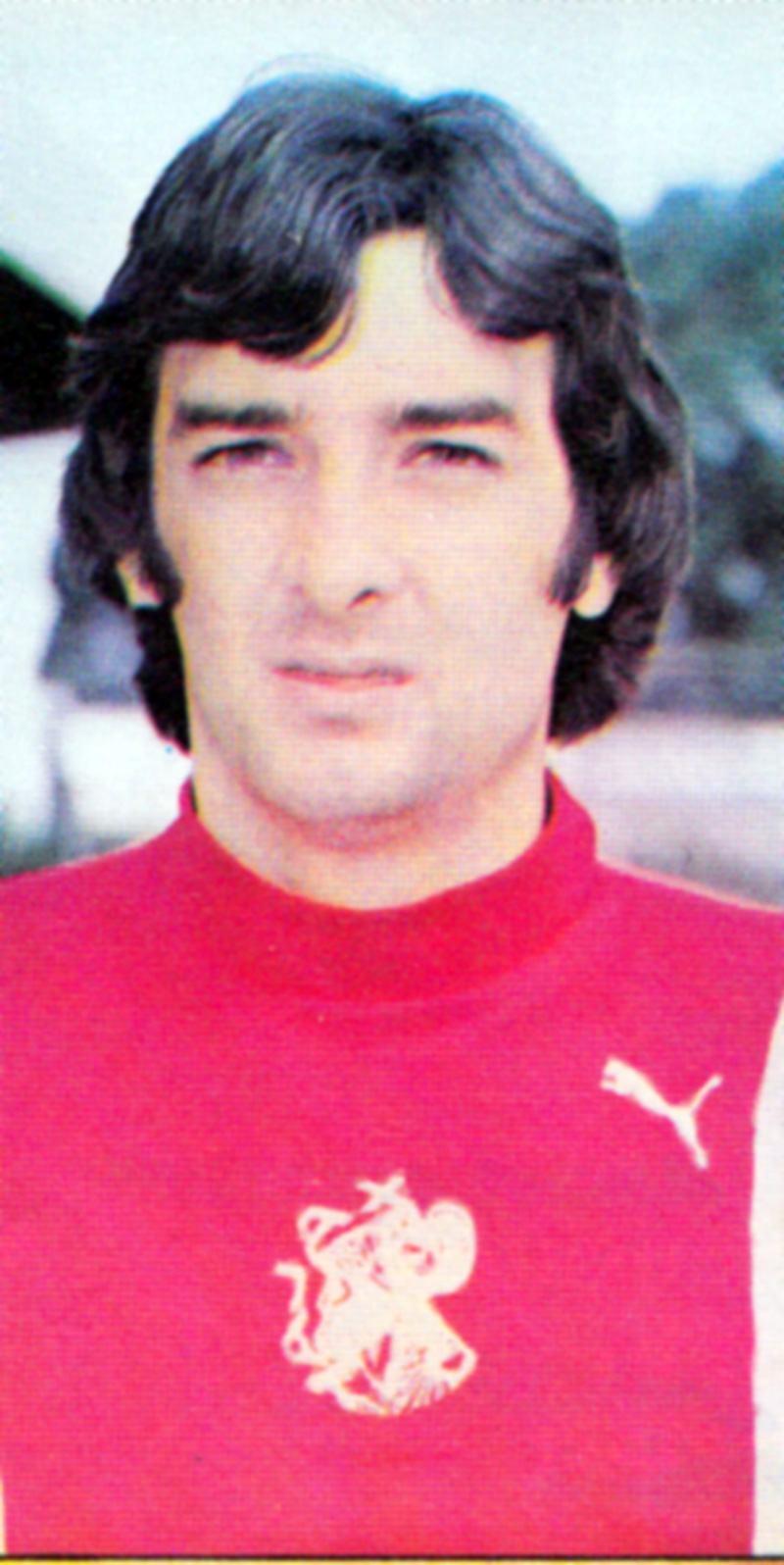
In Marshall Cavendish’s Football Handbook Part 59, there’s a fascinating piece about Ajax in the late 1970s under coach Cor Brom, as the new generation struggled to gain recognition while living in the shadow of the ‘Total Football’ side of Cruyff et al, plus this magnificent photo of Ray Clarke, looking for all the world like a ’70s fashion king in his Ajax get-up.
Londoner Ray Clarke, the player Brom had brought with him from Sparta of Rotterdam, was also the target of criticism inside the club. Clarke, once rejected by Spurs, is a strong and unselfish striker with an excellent scoring record. Last season he finished as Ajax’s top scorer with 38 goals – 26 in the league, six in the cup, six in the UEFA Cup – but during the summer they sold him to Bruges for £200,000.
Clarke spent only one season with Ajax… and early on he had problems adjusting. ‘One problem was that the quality here is so much higher than anything I’ve been used to before,’ he said. ‘Ajax have some fabulous players – Rudi Krol, for example… I don’t think it’s possible to appreciate just how good he is until you’ve played with him. It was only in the last three or four months that I started to play the way I know I can.’ Clarke’s 26 league goals put him second only to European Golden Boot winner Kees Kist of Alkmaar in the Dutch League.
Clarke’s spell in Belgium at Bruges was very brief as Alan Mullery snapped him up for Brighton in October 1979 for £175,000. As John Vinicombe wrote in ‘Super Seagulls’:
He spent only five months with Bruges and admitted that it had been a mistake not to go straight back to England. ‘It was quite an upset then for me to leave Ajax. I had heard a whisper they wanted to buy some new players and that they intended to raise the money by selling me. So I thought that if that was their attitude, I might as well accept the offer Bruges had made me.’
Before Clarke’s arrival at the Goldstone, Brighton & Hove Albion were finding life tough in the top flight, bottom after twelve matches, having recently shipped four goals at home to Norwich City. However, as Vinicombe continues:
The arrival of Clarke was a vital injection and his cheerfulness did much to cast off the blues. He was a fresh mind looking at Albion’s situation, and reminded despairing fans: ‘It is ridiculous for people to write Brighton off at this stage. I remember in my second season at Mansfield the team was bottom after 26 games with only 16 points, but in our last 20 games we won 15 and drew five and finished sixth (sic: 11th) from top.’ That was the sort of fighting talk people wanted to hear on the eve of a second meeting with Arsenal.
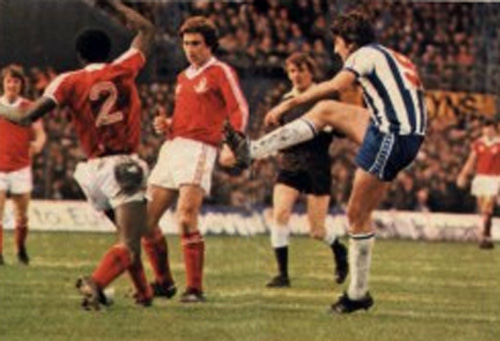
Ray Clarke made his Brighton debut in a 3-0 defeat at Arsenal, but scored a consolation goal against League Champions Liverpool in the next match at the Goldstone in November 1979. Then came the match that was the turning point of the season. Albion travelled to City Ground to European Champions Nottingham Forest more in hope than expectation, and pulled off a sensational result, winning 1-0. See the picture on the right for Clarke having a shot under the watchful eye of Viv Anderson and Martin O’Neill. It was Forest’s first home defeat in Division One since they were promoted to the top flight in April 1977.
Clarke’s strength and selfless play had a profound effect on Peter Ward. Before partnering up with Clarke, Ward was finding it hard against First Division defences. He had only scored twice in twelve Division One matches. Supported by Clarke’s hold up play and service, Albion’s star player transformed into a striker that hit around one goal every two games in Division One, quite a useful asset to have to get Albion climbing up the table. By the end of the season, in the games playing alongside Clarke, Peter Ward scored fourteen times in only thirty First Division matches, an exceptional tally in a team in the lower half of the table. Clarke himself weighed in with eight League goals as Brighton finished in sixteenth position, comfortably safe from relegation. He even managed to score against his old club Mansfield in the FA Cup, something that he finds bittersweet.
In Matthew Horner’s ‘He Shot, He Scored, the biography of Peter Ward,’ Ward says:
‘Ray was a good player – not at all flash , just a sound, straightforward target man. I liked playing with him and after he joined and Teddy (Maybank) left, we played every game together. I hadn’t had a regular partner since Ian Mellor in the Third Division and it helped to have some consistency. When I played alongside Ray I probably played the best football of my Brighton career – it was a shame that he left so soon.’
Here’s an example of a chance Ray Clarke fashioned for Ward:
Clarke was sold to Newcastle United in July 1980, perhaps as an outcome of seeing a specialist. As an interview with Spencer Vignes in the Brighton v Preston programme from 2004/5 says: ‘The specialist told him it was his hips which, to cut a long story short, were disintegrating. He might have four years left, or just 12 months. It was hard to tell’ and to make things worse Clarke was uninsured so Brighton would not receive a penny if he broke down while with the club. Maybe that is why he was sold so quickly. Perhaps Mullery was determined to buy Michael Robinson anyway. What is clear, however, is that without Clarke as a striking partner, Peter Ward went back to a low scoring rate in the First Division. Partnered with Robinson, Ward got one goal in eleven League matches at the start of 1980/81 before being sold to Nottingham Forest where, again, he was far from prolific. Neither did he hit a rich scoring vein on his loan spell back at Brighton in 1982/83 when he scored just two goals in 16 Division One matches. As for Clarke, his spell at Newcastle was over when he broke down with injury after only fourteen matches in 1980/81. He was just 28 when his playing career ended.
The recent consternation over excrement being used to write the words ‘We Hate Palace’ in the Crystal Palace changing room at the recent play-off match at the Amex stadium echoes some stories often told about the last-but-one match of maverick footballer Robin Friday, who played for Reading and Cardiff City.
Friday, the forward seen by some as one of the most gifted footballers of the 1970s, was involved in Reading’s epic League Cup 1st round tussle with Peter Taylor’s Brighton in August and September 1974. It stretched to three replays. Eventually, the Royals triumphed 3-2 at the Goldstone despite Ricky Marlowe hitting two goals for the Albion. In the Reading Evening Post, it was reported:
“When Murray’s shot hit the post, this time jubilant Robin Friday was there, sliding on his back to push it in the goal. When it was all over Friday lay stretched out on the turf…”
The performances of this colourful character helped Reading win promotion from the Fourth Division in 1975/76. In 1976/77, Reading made a great start to the campaign, reaching 3rd spot by early October, but began to falter and were eventually relegated. Friday played in Reading’s 3-1 home defeat to Alan Mullery’s Albion side in November 1976, with the Royals failing to make the most of their very good chances. As his dip in form and disciplinary problems continued, however, Friday joined Second Division Cardiff City in December 1976.
His star burned brightly at times at Cardiff but he suffered a mystery virus that laid him low for several months. His return match, his penultimate game for the Bluebirds, came against Brighton in October 1977. However, it was another Welshman who won the rave reviews. In the Daily Mirror:
Cardiff hit by Welsh wizard
Brighton 4-0 Cardiff
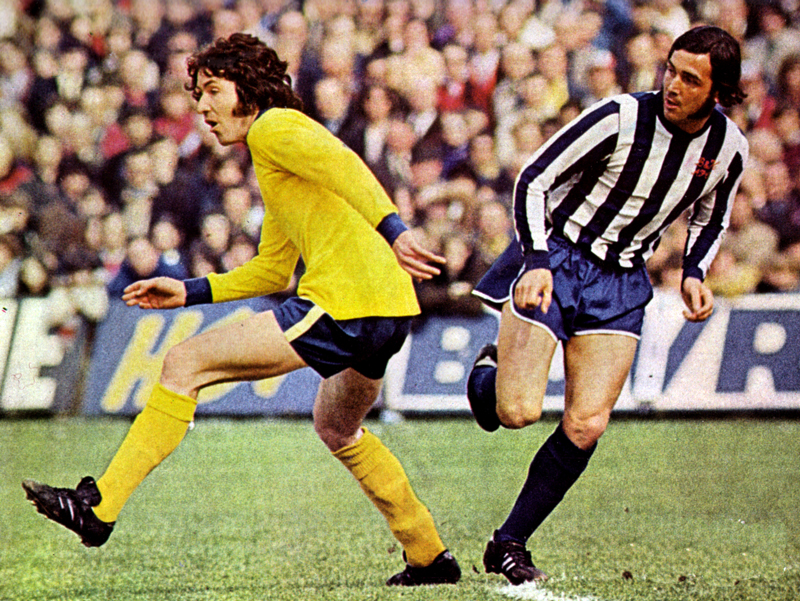
This was a case of a Welsh side torn apart by a Welsh international. Brighton’s Peter O’Sullivan scored twice and tormented a Cardiff team which looked to have big problems. To make things worse, Robin Friday, the striker Cardiff hoped would lift them on his return after a long illness, was sent off after 55 minutes. He clashed with Brighton’s Mark Lawrenson in midfield and got the red card from referee Alan Robinson after kicking out in retaliation. Alan Campbell, Cardiff’s most effective player, was booked for protesting. Said manager Alan Mullery: “Sully was brilliant – surely there is no midfield man in the country playing better.” Brighton’s other scorers were Peter Ward and Ian Mellor.
Friday had been sent off for kicking Mark Lawrenson in the face. From Bluebirds Banter:
Robin Friday was fed up. He’d been sent off after falling out with Brighton’s Mark Lawrenson at their old Goldstone Road ground in 1977 – and took it out on his own team-mates! They returned to the away dressing room after the final whistle and discovered that Friday had thrown all of their clothes, everything he could find, into the team bath.
“There had been quite a battle between Robin and Brighton’s Lawrenson,” said David Giles, who was in the Bluebirds squad. “I was on the bench and went on for Steve Grapes when we were 2-0 down in front of nearly 23,000 spectators.
“It all flared up just after half-time when Lawrenson tackled Robin and he didn’t like the challenge. So he kicked out and was sent off.
“We lost 4-0 and when we got back to the dressing room we knew Jimmy Andrews would have something to say. One of the lads went into the shower room to get out of the way and he shouted ‘Robin’s thrown all our clothes into the bath’.
“Brighton had a big plunge bath and all our gear was floating in it. We wrung our underwear out and had to put that on. The rest of our stuff was soaked and we borrowed tracksuits from Brighton to wear home.
“Robin got a club suspension for that.”
Legend also has it that Friday broke into Brighton’s dressing room and defecated in Mark Lawrenson’s bag! (See The Bleacher Report: Robin Friday.
Surprisngly, in Paolo Hewitt and Paul McGuigan’s book about Friday, ‘The Greatest Footballer You Never Saw,’ there is no mention of the incidents in the home dressing room and the away one.
Perhaps it’s because it didn’t happen. Roger Titford has put together a very wonderful 50-page photo-essay called ‘The Legend of Robin Friday’ which traces exactly how the legend of ‘the greatest footballer you never saw’ came about and where it’s turning into pure myth. Well worth the £3 price for the digital read. It says:
“It’s the mainly anti-hero charisma that drives the legend nowadays. Just as a terrorist of one generation becomes a politician of the next so today’s football world takes just the bits it wants from the legend of Robin Friday. This is where the legend takes its wings and flies into the world of myth, exaggeration and putting together incidents that happened separately. The thing with Bobby Moore – over in a moment. No, he didn’t kiss the policeman after the wonder goal, as it says on YouTube. And no, despite what it says on some punk football T-shirt website, he didn’t crap in Mark Lawrenson’s kit-bag after being sent off. Dishonourably, arguably out of character, he kicked the young Brighton centre-half in the face as he lay on the ground. No one then knew that Lawrenson would turn into an establishment BBC pundit of somewhat complacent and annoying nature – so maybe that’s what makes it ‘funny’ for some today.”
And yes, it mentions him doing a poo in the Mansfield bath but not in the Brighton bath in the game above.
Clearly, though, Mullery was not at all impressed with Friday:
“The foul by Friday was one of the worst I have ever seen. He kicked my player in the face when he was on the ground! How can you defend that sort of behaviour?”
But he was impressed by the performance of another Welsh Bluebird, Peter Sayer, who the Albion signed four months later. In April 1978, finishing fourth, Albion missed out on promotion out of Division Two by goal difference despite beating Blackpool on the last day of the season. The result relegated Blackpool, helping Cardiff to beat the drop by a single point.



 The Goldstone Wrap